Latest News

News

McGill Social work student alleges racial profiling by police

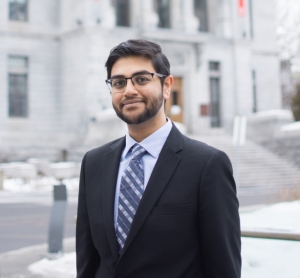
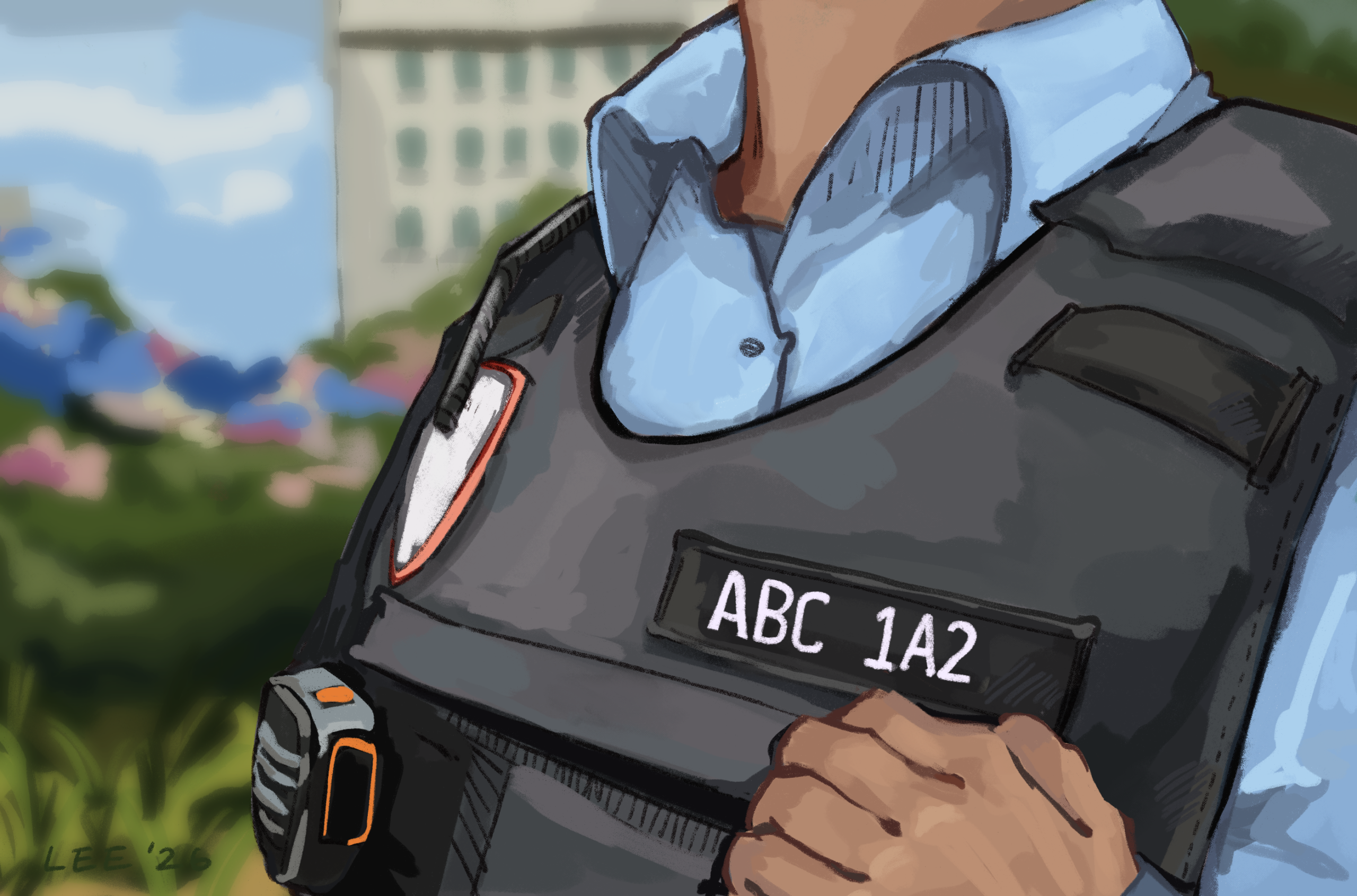
As Jean Kagame, U3 Social Work, drove to Toronto with two friends on Nov. 21, Ontario Provincial Police (OPP) pulled him over and charged him with stunt driving at over 170 km/hour. Kagame maintains that he did not exceed 120 km/hour and alleges that he was racially profiled by the member of the OPP who pulled him over.

According to Kagame, the officer stopped him and took his license without introducing himself. Only after calling a truck to tow Kagame’s car did the arresting officer explain that Kagame was being charged with stunt driving and that, in line with Ontario’s Highway Traffic Act, his vehicle was being impounded. Upon asking for clarification, Kagame alleges that the officer swore at him and acted aggressively.

“It was disappointing in so many ways,” Kagame said. “I have been driving for a while, [and] I have never had any interaction with any police officers. They don’t get paid to terrorize us. I only had this positive image of what Canada is branded to be [….] I should feel safe, but it’s exactly the opposite.”

Kagame said that the arresting officer’s partner apologized for his coworker’s behaviour, confiding that he would have handled the arrest differently and offering to drive the group to a train station.

“I don’t know where I would be if it wasn’t for the [other officer],” Kagame said. “He did what I felt was right, and he acted professionally. Me and my friends are really thankful for him.”

In addition to having his rental car impounded for a week, Kagame faces a fine of up to $10,000 and up to six months of jail time if found guilty. McGill’s Black Students’ Network (BSN) and the Social Work Students’ Association (SWSA) have started a GoFundMe campaign to help cover Kagame’s legal and car rental fees, raising over $1,400 since Nov. 30. Further, Kagame’s account of the incident received almost 400 shares on Facebook.

“I want to thank people,” Kagame said. “When such a thing happens, you can feel so alone and so isolated [….] Seeing people’s responses and people sending me messages of support, people telling me their stories […] I think the issue is way bigger than everyone thinks [….] All I can hope is to get justice and to make sure that the officer is held accountable for what he did to me and my friends.”

Following the arrest, Kagame was unable to file a complaint with the OPP.

“I said, ‘could you tell me the full names of the officers, because they didn’t introduce themselves to us,’” Kagame said. “[The officer taking the complaint] said, ‘we introduce ourselves by driving the cars with the lights on top.’”

Disappointed, Kagame is filing a complaint with the Ontario Human Rights Commission and the Office of the Independent Police Review Director.

“I felt so attacked,” Kagame said. “There was some extra motivation behind [the arrest….] I’m going to do anything I can to defend my name. I can only hope that the Human Rights Commission and the Office of the Independent Police Review Director takes a closer look at this and makes sure that [the officer] is held accountable for treating us the way we were treated.”

Fo Niemi, co-founder and executive director of the Centre for Research-Action on Race Relations (CRARR), argues that Canadian police departments need to acknowledge their own diversity problems to tackle profiling.

“First, [police departments] should admit that [racial profiling] exists,” Niemi said. “Secondly, they have to recognize that they are there to serve and protect the community, and, to do that, they have to reflect the community.”

Niemi believes that attitudes of police departments have hardened since the anti-police brutality protests in 2012.

“Police departments have become more militarized,” Niemi said. “Hardening of attitudes leads to less training, less outreach, less community relations, […and] less internal review of conduct that seems to be explicitly unprofessional, unethical, illegal, and abusive. Police chiefs are no longer concerned with being accountable to the community.”

Niemi is concerned that Kagame’s case will disappear from the public’s attention, leaving him without adequate support.

“This is something we see very often with young people caught up in racial profiling situations,” Niemi said. “The reaction online will be spontaneous, [and] certain groups will come forward stating their support [….But], after Christmas, no one will remember the case [….] They are left alone to bear the burden of the legal consequences and other emotional and psychological effects.”

Christelle Tessono, President of McGill’s BSN, believes that eradicating racial profiling starts with increasing the average citizen’s awareness of its prevalence.

“Open your eyes to the realities of profiling and harassment,” Tessono wrote in an email to The McGill Tribune. “Learn about how people are being racially profiled both on campus and outside of campus. Allyship begins when you understand your environment […and] when you unpack your thoughts and assumptions.”

Kagame
Editorial, Opinion

Standing with Kagame against police brutality

Social work student and former president of the McGill African Students’ Society (MASS) Jean Kagame is facing charges of stunt driving after the Ontario Provincial Police (OPP) stopped him on his way to Toronto on Nov. 21. During the interaction, one of the officers repeatedly yelled and swore at the group, and Kagame’s car began to be towed while he and his friend were still inside it. According to Kagame, another police officer came over to apologize for his colleague’s behaviour. The incident, which has circulated widely on Facebook, illustrates the reality that many McGill students are vulnerable to racialized police harassment. For many people of colour in Montreal and beyond, racial profiling is inevitable, and McGill must stand in solidarity with Kagame and other marginalized students on and off-campus.

The harassment that Kagame faced follows countless reports of racial profiling and police brutality in Montreal. Joel Debellefeuille, a black resident of Longueuil, is a repeated victim of police racial profiling while driving his BMW: He has been pulled over by Montreal police three times since 2009, and Quebec’s Human Rights Commission found each event unjustified. In 2017, after responding to a report that Pierre Coriolan was shouting and breaking things in his apartment, a Service de police de la Ville de Montréal (SPVM) officer shot and killed him. In Aug. 2018, Nicholas Gibbs was shot by police responding to a call about a fight in Montreal’s Notre-Dame-de-Grâce neighbourhood (NDG). Cellphone footage of the situation shows no visible attempts by police to de-escalate the situation. Even Montreal’s annual march against police brutality led to injuries and at least three arrests this year.  

The McGill community has rallied in support of Kagame; his initial Facebook post has almost 400 shares as of press time, and the Student’s Society of McGill University (SSMU), the Black Students’ Network (BSN), and the McGill Social Work Students Association (SWSA) have all released statements in support of Kagame. Kagame is currently set to appear in court on Dec. 13, and is working with the Center for Research-Action on Race Relations (CRARR) to file a complaint against the officer. These groups are also supporting his legal efforts by running a GoFundMe campaign to help Kagame finance his defence. Most incidents of racial profiling go unnoticed or without institutional support, and it is commendable that the McGill community mobilized so quickly.

Students, associations, and other campus groups should sustain this momentum and support for Kagame. SSMU’s Know Your Rights campaign and other legal information services on campus should consider increasing their focus on educating students of colour about their rights when interacting with police—The McGill Daily published a “What To Do if You’re Arrested” guide in their joint issue on police brutality with Le Délit. Moreover, student organizations should avoid having police presence at their events; if police presence is for whatever reason unavoidable, such as at a protest, organizations have a responsibility to notify potential attendees in advance to make events as accessible as possible to people of colour.

Students, especially white students, have a responsibility to acknowledge their own privilege and use it for positive change. There is immense power in being an active bystander: Students should call out police when they witness violence against a person of colour. Police brutality is a community problem, and allies have a responsibility to create safe spaces for people of colour to speak about their experiences. Working toward a better future for people of colour is a responsibility that all of us share, no matter our identity.

Letter to the Editor: No, there is no “quest for monolingual domination” in Québec
Letters to the Editor, Opinion

Letter to the Editor: The wrong elephant in the room

Morality and politics are inextricably tied. In Plato’s Republic, the political arrangement of the city-state serves to elucidate justice and the Good, positioning politics as ontologically prior to morality—a relationship that also seems to hold in Marxist thought. In utilitarian thought—and much of contemporary conceptions of politics— morality comes first and tells us what is politically legitimate.

However we conceive of the relationship between morality and politics, there is something ridiculous to drawing a stark distinction between the two as Erica Stefano sought to do in “The elephant in the room.” The article, in which she decries the judgement conservative students face in the university, draws a narrative link between the growing view that politics are “synonymous with morality and values” and hostility toward conservatives.

“The theoretical gap between moral values and stances on government policies is often neglected. Believing in something universal, such as wanting to help others, means different things for different people in the realm of politics,” the article reads.

It is difficult to disagree that there is a conceptual difference between morality and politics, of course. Utilitarians and Kantian deontologists agree that murder should be outlawed despite operating under wildly different moral frameworks. And two utilitarians who don’t have the same knowledge of the facts may support different political positions for that reason.

But the existence of a conceptual difference doesn’t mean that one idea does not significantly shape the other. Being against same-sex marriage is a political stance, but it tells us a whole lot about people’s morality. Being in favour of administrative detention—detention without trial or due process, often of indefinite length—also says a whole lot about people. It tells me that they, as Stefano’s article puts it, “ultimately want the best for themselves and those they love”—but apparently for no one else.

Because we hash out our collective treatment of others in the political arena, it is an arena where justice either obtains or fails because of the very policies we propose. Advocating for policies which treat others as “less than” not because of and proportionate to any moral fault, but because of who they are is plainly unjust. Injustice is a mark of immorality.

If we must withhold judgement of others for their political position, then we cannot  judge those whose immorality operates at arm’s length through the apparatus of the state. Although we can all agree that murder is evil, it is not murderers who cause the most harm in this world, but political actors. Political actors, not isolated individuals, legitimated genocide and, just south of the Canadian border, concentration camps for migrant children.

This, perhaps, is the elephant in the room. Politically abhorrent positions knowingly held are constitutive of immorality. If you are finding yourself rejected by others because of the positions you adopt, perhaps the problem isn’t intolerance to differing opinions. Perhaps it is instead that your politics are an indelible stain on your moral character.


Features

We’ll sleep when we’re dead

Puffy-eyed and greasy-haired, a McGill student emerges into the crisp morning air after a night spent holed up in the library. The half-semester’s worth of lectures they just watched were tedious, but, with the help of 1.5X accelerated audio-visual speed, they were preferable to a biweekly trek to Leacock 132. The caffeine pills are beginning to wear off, so they start to head home for a pre-quiz nap. Almost reaching the Milton gates, the student remembers their term paper due next week. Perhaps, they realize, it might be a good idea to plan on another all-nighter tonight.
Consultation
Commentary, Opinion

Consultation in name only at the joint Board-Senate meeting

On Nov. 14, McGill University held its annual Senate and Board of Governors joint meeting, bringing together the university’s highest academic and financial administrative bodies, respectively. Each year, the two bodies convene to discuss a topic that relates to the university’s mission; I attended as an undergraduate senator from the Faculty of Arts. This year’s topic: How McGill could transform itself for a world of lifelong learning. If these sound like buzzwords, that’s because they are. As a concept, lifelong learning is broad, however, during the Joint Board-Senate meeting, it was often interpreted as the development of critical thinking skills and emotional intelligence that students carry with them for the rest of their lives. As noted by the many attendees, the world is changing rapidly, and its future depends on individuals’ ability to challenge norms and predict innovative solutions to unpredictable problems. The consensus of the meeting was that McGill needs to work harder to help students develop these lifelong skills.

As a student and member of the McGill Senate, I find it hypocritical that the university is apparently so eager to help students challenge societal norms through innovative ideas, yet the minute these students’ ideas challenge the university’s norms, they are met with skepticism or aggressively avoided. Student-led movements like #ChangeTheName and divestment are progressive ideas that question McGill’s current mode of operation and its governing procedures, but the administration’s responses to both have been lacking.

Despite the Senate’s Sept. 12 endorsement of divestment, the Board of Governors declined to call  a conference committee with the Senate as required by the University Statutes. Instead, they chose not to vote on the matter of divestment, pointing to a semantic distinction in the motion that passed at Senate to indicate that there was no technical ‘disagreement.’ Climate change will not wait for the Committee to Advise on Matters of Social Responsibility (CAMSR) to finish deliberating. Similarly, when the Call to Action 21 of the 2017 Task Force on Indigenous Studies and Indigenous Education advised McGill to begin the process of changing their men’s varsity team name, the university postponed a decision until the report of the Working Group on the Principles of Commemoration and Renaming comes out at the end of 2018. A true commitment to lifelong learning should involve recognizing the innovation behind these movements and effective engagement with student activism and concerns.

As I was walking out of the meeting, I overheard an attendee say that they were disappointed with the roundtable groups’ lack of suggestions for immediate action to transform McGill for a world of lifelong learning. Admittedly, I found this amusing. Attendees suggested plenty of immediate actions, but they never made it past the brainstorming phase. I even articulated to my discussion table that there is no a lack of student innovation, but a lack of administrative action. However, I was dismissed.

If McGill continues to consistently ignore students’ efforts to engage in critical thinking and innovation, students will be discouraged from using these skills to affect change outside the university. Adapting to a world of lifelong learning does not just mean increasing external partnerships, such as exchange programs and job training, as suggested by attendees of the Joint Board-Senate meeting. To prove their commitment to lifelong learning, McGill must listen to its community. True progress doesn’t happen in roundtable meetings at the Faculty Club. It happens through sit-ins, open letters, and student consultations. So far, the university administration has shown that it is ready to change others, but it is evident that they are not yet prepared to change themselves.

McGill, News

TEDx McGill brings in experts to talk development

On Nov. 24, TEDx McGill hosted a conference entitled Climbing Ladders, which featured 10 presentations and performances by scholars, journalists, and students.


Emilie Nicolas

Emilie Nicolas, a board member of the socially progressive Broadbent Institute think tank and co-founder of Quebéc inclusif, a non-profit organization that advocates for inclusivity for minorities in Quebec, disputed the myth that racism rarely occurs in Canada. Nicolas recalled how members of her predominantly-white neighbourhood showed prejudice against her and discussed how black women are misrepresented in media.

“The moment I started school, I started hearing the n-word on the schoolyard,” Nicolas said. “By the time I was a teenager, I straightened my hair. I thought that, perhaps, if my hair was natural, it would make people laugh and stare.”

Nicolas argued that Canada’s history of discriminatory policies is not sufficiently represented in school curricula. According to her, the false belief that everyone has equal opportunities hurts marginalized children by making them feel inadequate.

Charles Mann

Science journalist Charles C. Mann explained how the global population reaching 10 billion people might influence humanity’s survival. He separated the common concerns over the future of our species into two categories: ‘Wizards’ and ‘prophets.’ While wizards emphasize the promise of technology in ensuring access to necessary resources, prophets regard changing global habits as the best solution to climate change.

“Wizards and prophets have been butting their heads together for decades, but they believe that technology is key to a successful future,” Mann said. “The trouble is [that] they envision different types of technology and different types of futures.”

Though he admits that this is a simplification of a complex debate, Mann described cooperation between both camps as fundamental.

“One [solution] might be [that] each side agrees to accept the fundamental premises of the other,” Mann said. “Wizards and prophets working together have many paths to success. And success would mean much more than mere survival, important though that is.”


Oren Hodes

McGill student Oren Hodes delivered his talk on the importance of mental resilience—the ability to bounce back from difficult experiences. After returning from his semester abroad in Barcelona, Hodes was faced with a series of demanding circumstances that took a toll on his mental well-being.

“I was riding a high, […] but the second I stepped back in Montreal, everything started to crash down on me,” Hodes said. “My father was diagnosed with cancer; his father—my grandfather—found a tumour in his body; and, I was asked to step in to my parents’ divorce as power of attorney.”

Hodes gave the audience advice that helped him through his difficulties: Finding a creative outlet, maintaining one’s mental health, and working toward personal goals.

“These three things are something that can be done everyday,” Hodes said. “And I genuinely believe that every person in this room can achieve their wildest dreams.”


Susanna Zaraysky

Susanna Zaraysky, author of Language is Music and One-eyed Princess, spoke to her audience about being born with strabismus, a disorder causing misalignment of the eyes. At the age of 29, she read an article by British neurologist Dr. Oliver Sacks explaining that those with her visual disability are ‘stereo-blind’; unable to see with both eyes at the same time and, thus, have no depth perception.

“There’s this phrase [that] ignorance is bliss” Zaraysky said. “When it comes to your health, medial ignorance is not bliss. I was absolutely devastated. How could I have lived this long without knowing I was partially blind?”

With corrective lenses and vision therapy, Zaraysky was able to train her eyes to work together and her brain to process vision from both eyes. In her presentation, she urged medical schools to further educate physicians about visual disabilities to avoid misdiagnosis in children.

Science & Technology

Seemingly-redundant organ discovered to influence development

Scientists have long wondered about the function of rudimentary structures which have no apparent use, such as organs like the appendix and tonsils. In On The Origin of Species, Charles Darwin hypothesized that these vestigial structures are remnants of our evolutionary past and explained their presence using his widely-accepted theory of natural selection.

A team of McGill biologists recently published a paper in Nature suggesting a need to re-examine this idea. Their lab discovered that a seemingly-useless structure in ants—specifically, the rudimentary wing discs—determines the social caste that an ant develops into, such as a soldier or worker ant. Hence, the wing discs determine body size, lifespan, and other characteristics that correspond to the ant’s role.

They also found that the discs can regulate the balance of social groups based on an environment’s demands. In response to environmental stressors, ants release pheromones that influence the signals produced by rudimentary wing discs of ants in the colony. Consequently, the colony can increase its worker-to-soldier ratio on demand.

Ehab Abouheif, professor in the Department of Biology and co-author of the paper, explained that the scientific community has left this area of evolutionary biology largely untouched.

“We have to cast a different eye on this whole class of biology that has been sitting dormant for 100 years,” Abouheif said.

Scientists have yet to find similar unassuming organs influencing growth and development in the human species. Abouheif believes that observing such a phenomenon would be particularly difficult, crediting the examinability of ants for his sizeable discovery.

“Different organisms make different biological phenomena obvious,” Abouheif said.

In the Pheidole genus of ants, minor workers and soldiers have two distinct morphologies, which prompted Abouheif’s investigation into the developmental switchpoint that leads to their differentiation.

Barbara McClintock, an American scientist and geneticist, was, similarly, able to discover transposable elements in DNA sequences thanks to traits within the species of corn she was studying, making the phenomenon salient to observe.

Although most research on human vestiges has been inconclusive, there have been reports of the human appendix sending out signals during development. The function of these signals is still unknown.

If the seemingly-redundant organs in humans work like an ant’s wing discs, Abouheif believes it would have huge implications for medicine. He postulates that, by understanding the signalling function of rudimentary structures, scientists could develop interventions for developmental processes that have gone awry, such as in the case of premature births.

While potential implications of their findings are vast, Abouheif expects that garnering medical interest and investigation in this area will be gradual.

“Medical research is extremely conservative,” Abouheif said. “It’s not like tomorrow doctors [will say] ‘[We’ve] got to look [at rudiments].’”

On Oct. 9, Minister of Science and Sport Kirsty Duncan announced a $558 million investment from the federal government in discovery science. This investment supports the Natural Sciences and Engineering Research Council of Canada (NSERC) Discovery Grants program, which provides funding to researchers, like Abouheif, who work on projects with long-term goals.  

Abouheif, however, believes this investment is insufficient and strongly advocates for the importance of discovery-based research in producing medical developments. He points out that, like his discovery in Pheidole ants, many pivotal findings in science are often stumbled upon in unexpected territories of research.

“Sometimes, when we’re looking for something, we’re looking under the light,” Abouheif said. “We’re looking in obvious places, but that’s not always where the answer will be.”

Beyond the bubble, Commentary, Opinion

New urbanist schemes for transit-oriented teens

On Nov. 19, Montreal mayor Valérie Plante announced, to the outrage of downtown business owners, that the city council has decided to pursue her plan to redesign St. Catherine Street by widening sidewalks to 6.5 metres and reducing traffic to a single lane. This transportation proposal accompanied a host of other initiatives proposed by Plante, such as building a new metro line and banning car traffic on Mount Royal. For Montrealers, especially students, these proposed changes will promote increased accessibility, affordability, and safety in the city. Designing a city that suits the needs of students and youth is designing a city fit for the future.

Despite their clear advantages, Plante’s actions have been met with intense pushback. Opponents of the metro and St. Catherine renovations, including Ensemble Montréal, a municipal political party, and Destination centre-ville, an association representing 8,000 downtown businesses, warn of high costs and reductions in economic activity. However, their fears are unfounded. Numerous cities such as New York, Amsterdam, and Hong Kong have already proven the vast environmental and health benefits of building public infrastructure that favours pedestrians and reduces the need for personal automobiles. What these cities share, and what Montreal is reluctantly moving toward, is a willingness to put people first by focusing on public transit systems and alternative commuting methods. Contrary to what Ensemble Montréal and other opposition groups may claim about the economic dangers of removing parking, research has proven that cities that encourage foot traffic actually see an increase in consumer activity as well as more community interaction.

Designing walkways and bike lanes increases pedestrian and cyclist traffic, lowers obesity rates, and reduces carbon dioxide emissions. Cities like Barcelona, which turned 40-acre grid sections into pedestrian-first neighbourhoods by limiting truck access and speed limits, saw reduced environmental impacts as well as increased economic activity in each section. Looking at cities around the world proves that Montreal still has a long way to go before it can become a leader in innovative city design.

University students are reliant on public transport: 90 per cent of McGill students cite using public transit instead of cars, and many choose to walk or bike to school. For most students, owning a car is infeasible in both cost and convenience. Without reliable transit infrastructure, it becomes impossible for students to get around efficiently and safely. Even after graduating, many students continue to work in major cities and therefore continue to rely on public transit. Millennials’ affinity for public transit has even entered the sphere of popular culture and memes. The Facebook meme group called ‘New Urbanist Memes for Transit-Oriented Teens’  boasts over 127,000 current members. NUMTOTs, the nickname for its members, gather on the Facebook group to share memes and to fantasize about new transportation developments and cities with efficient transit systems. Students, millennials, and even NUMTOTs are examples of how youth are moving toward an efficient future, and city planners should follow suit.

As cities like Montreal continue to grow and cater to a more socially-aware population, it becomes clear that cities will need to adapt to their younger inhabitants. A shift toward communal forms of transportation, rather than individual vehicles, will be necessary to accommodate a growing urban population. The needs of today’s students directly reflect those of tomorrow’s workforce. Only by creating infrastructure with youth in mind can cities continue to thrive in the future.

McGill, News

CAMSR reconsidering divestment

The Committee to Advise on Matters of Social Responsibility (CAMSR), a governance body mandated to make recommendations to the McGill Board of Governors (BoG) on socially-responsible investing, announced on Nov. 1 that it would be compiling a second investigation into divestment from fossil fuels. CAMSR decided to reconsider their stance in light of the current context and recent developments regarding climate change. The decision follows the McGill Senate endorsing divestment at their Sept. 12 meeting. Divestment would entail retracting investments from any company that profits from fossil fuels. The act of divestment has been successful against other social ills in the past, notably against companies profiting from cigarette sales and the South African apartheid.

Although the BoG has repeatedly expressed opposition to divestment, some members have spoken out in favour of it. At the Board’s Oct. 4 meeting, Ehab Lotayef, an administrative and support staff representative to the BoG, suggested that a motion for divestment should be put directly to the Board instead of waiting for CAMSR to further investigate.

“I did not see a reason for sending [this] question to CAMSR,” Lotayef wrote in an email to The McGill Tribune. “The Senate motion is clear, and [divestment] enjoys wide support within the McGill community. I had hoped […] that the Board would vote in support of divestment [….] It is not a question of bypassing CAMSR, but a question of urgency. Time is not [on] humanity’s side, and I feel a personal and collective responsibility toward future generations.”

Annabelle Couture-Guillet, U3 Arts and Science and member of Divest McGill, believes that students have the power to pressure their universities to change.

“We have the IPCC report that was released a month ago […and] it’s so clear that we need changes,” Couture-Guillet said. “As students, we have individual capacities for change, but, as students at McGill, we have this potential to use institutional power, to have our big, well-reputed university take a stand and send a strong political message.”

Couture-Guillet points out that CAMSR’s last report took testimonials from six individuals with expertise primarily in green chemistry and sustainability but not in ethical investing. The names of the individuals were kept private, so the BoG did not know whose testimonials CAMSR’s report was based on when voting on divestment.

“This time, the testimonials should be transparent,” Couture-Guillet said. “This time, the testimonials should be backed up by basic academic rigour. [The last report contained only] opinion claims [….] It was quite embarrassing.”

Lotayef believes that McGill should make the decision quickly to set an example for other institutions.

“I would like to see a […] fast and transparent process as CAMSR and the Board deal with this question,” Lotayef said. “I have high hopes that both the Board and CAMSR understand the importance of the issue and the advantage of McGill being at the forefront of the environmental movement [and that the university will set] an example for others.”

Couture-Guillet expressed concerns over potential conflicts of interest within CAMSR, stating that the Committee needs to rebuild trust with the McGill community.

“[CAMSR’s] new chair, Cynthia Price Verreault, has worked for Petro-Canada for 18 years,” Couture-Guillet said. “We hope […] that they will disclose any conflicts of interest and that they will come up with the best decision […] for McGill.

Associate Director of the Secretariat Kevin Dobie, speaking on behalf of the BoG’s Secretary General, asserted that CAMSR has provisions in place to ensure transparency and community input.

“The Board has developed […] practices that aim to promote transparency and accountability when it comes to Board […] business,” Dobie wrote in an email to the Tribune. “For several years, the Board has been holding annual forums with student associations.”

Students can submit their questions to the BoG at their next community consultation, which is scheduled for Feb. 14, 2019. CAMSR members expect to submit their report during the next academic year.

Read the latest issue

Read the latest issue