Latest News

McGill, News

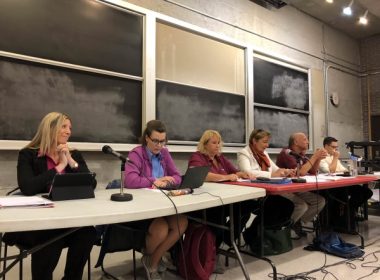
Forum on future renaming draws debate

A diverse group including McGill alumni, professors, varsity athletes, and campus groups representing racialized students met on Sept. 12 in New Chancellor Day Hall to give feedback on a draft report suggesting principles for future commemoration and renaming initiatives on campus.

The report was published by the Working Group on Principles of Commemoration and Renaming. The group was formed last January under the recommendation of the Task Force on Indigenous Studies and Education and out of an acknowledgment of the need to reconsider inappropriate names for teams, buildings, scholarships, and other university structures.

While most attendees had come for specific debates over renaming, such as the controversy over the men’s varsity teams being named ‘Redmen,’ the co-chairs of the Working Group continually reiterated that their responsibility was only forming principles and not to make concrete decisions.

“The mandate we have from the Provost is not to consider any particular case,” Robert Leckey, Working Group co-chair and dean of the Faculty of Law, said. “It’s always interesting to hear what people bring to a meeting, but we’re fundamentally trying to move forward with our job to put forward the draft we have in December to the community.”

However, Students’ Society of McGill University (SSMU) Indigenous Affairs Commissioner and Vice President of the McGill rowing team Tomas Jirousek pointed to the need for urgent changes.

“As I can personally attest to as an Indigenous varsity athlete, the continued usage of [‘Redmen’] creates immediate discomfort, anxiety, and anger,” Jirousek said. “The continued dragging out of the process only further serves to alienate and isolate Indigenous peoples and Indigenous students [….] While you are debating and launching these working groups and all these further studies, the students are being hurt.”

Meanwhile, the varsity athletes argued that their perspective was not being sufficiently taken into account.

“It’s been brought up that the Aboriginals haven’t been fully incorporated into the discussion here, and I understand that they should have a say in it,” varsity hockey player Nathanael Halbert said. “I […] would also hope that the other side, the students, alumni, varsity players who wear the actual colors would get a say in how it would make them feel.”

Other attendees, including SSMU VP External Marina Cupido, raised questions about the representativeness of the working group’s composition. Of the six Working Group members present at the meeting, five were white faculty and staff, while one was a black undergraduate student representative. While an Indigenous professor was consulted in the creation of the report, she was unable to attend meetings consistently. The Working Group has yet to meet with any Indigenous or racialized off-campus groups.

“I was interested in [where] the report says the Working Group ‘regretted that the invited committee groups supposed to represent the interests of racialized or Indigenous groups off-campus did not follow up on its invitations,’” Cupido said. “I was wondering if […that] suggests a problem with the way consultation was done.”

Debate also extended to the language in the draft report about “rehabilitating formerly problematic names.” While many in favour of keeping ‘Redmen’ claimed that the name referenced McGill’s Scottish heritage and should be interpreted as such, other parties argued that problematic names cannot be rehabilitated or reinterpreted. Both the participants in the town hall and the members of the Working Group found common ground in reflecting on the significance of how names and commemorative practices at McGill are perceived both by its community and the outside world.

“I use [the name ‘Redmen’] as an example to show people how backwards McGill is, still, when I’m back home in my Indigenous community,” Denzel Sutherland-Wilson, U3 Arts, said. “People don’t believe me that our sports team is called the ‘Redmen’ [….] I hope you know that when you say ‘I’m really proud to be wearing this and supporting this.’”

The Working Group is still accepting suggestions for changes to their draft by email until the end of September.

Off the Board, Opinion

You are what you eat

Dairy, fish, sesame seeds, poppy seeds, tree nuts, peanuts, and shellfish. Seven rules for feeding me, or rather, what not to feed me—seven allergens that are ingrained in my memory. This list is a part of who I am. And no, it’s not easy navigating the world of food with a list of allergies like mine. Still, my parents never wanted my allergies to hold me back from culinary experiences; other kids I met at Food Allergy Canada meetings weren’t awarded the same comfort. It is both in spite and because of my allergies that food is essential to who I am.

Navigating allergies is even more complicated when considering my Jewish heritage, a culture that is famously food-centric and reluctant when it comes to compromising. When I asked my uncle if the Purim (Jewish Halloween) treat I wanted to eat was pareve—meaning dairy and meat-free—he gave me the go-ahead, so I dove right into a poppy seed hamantaschen. You may recall that I am allergic to poppy seeds, which landed me in the hospital for several hours.

Still, the foods I eat paint a picture of who I am, whether they’re the ones that I have to live without or the ones I can’t live without. Compiling a list of my favourite foods pulls from a thousand different sources.

This is why recipes get passed down generations, something I’m intimately familiar in the context of my Jewish heritage. My family talks about my great-grandmother’s matzo ball soup and her potato kugel with reverence. But what doesn’t always get passed down are the little things—the spices, the personal flair. Try making someone else’s recipe: It probably won’t taste the same. Highly personal and familiar, home cooking is a sign of comfort.

While eating homemade food shielded me from a scary world of dairy and poppy seeds, I still find risks exciting. Going to restaurants is an adventure I enjoy. Eating safely means giving every waiter a laundry list of restrictions and in exchange, eating safely means listening to the restaurant staff explain their processes for avoiding cross-contamination.

Because of my allergies, travel is thrilling too. My dad and I venture yearly across the United States, touring different Major League Baseball stadiums. In our time in those cities, we seek out spots featured on food shows hosted by Guy Fieri and Anthony Bourdain—two electric personalities with a penchant for creativity and adventure. But, for all their great choices, I have to do my own extra layer of digging. A hamburger bun mustn’t have seeds; a dessert mustn’t have nuts. It adds a twist to our search.

It has been about 10 years since an allergist told me I could eat dairy. I celebrated the occasion with a party, complete with a cheeseburger main course. Now, the food has worked its way into my diet. I stopped drinking soy milk, and I love a good plate of nachos. In fact, nine-year-old me wouldn’t believe you if you told him how much dairy I now consume. I’ve shed plenty of other allergies over too; continuously trying new foods is exciting.

With fewer allergies and 19 years worth of bad allergy experiences, I am equipped to handle my food choices independently. Food is not a restriction, but something that connects me to others. Last March, when picking out an apartment for the school year, my roommate and I settled in at Schwartz’s Deli to discuss our options. In an unfamiliar situation, I chose familiar food for me, a safe option. Smoked meat is so good—and getting to share my heritage with my roommate was pretty good, too.

Student Life

Your weekend by metro: The green line edition

The gateway to the next weekend getaway is only a couple blocks from campus at the McGill Metro Station. Grab a pal and an STM day pass and enjoy a day-long expedition with The McGill Tribune’s five-stop green line itinerary.

First stop: Lionel-Groulx

8:30 a.m.: Situated by the Lachine Canal, the Saint-Henri neighbourhood brings the small-town charm to Montreal. Fuel up for the day at Restaurant Greenspot on Rue Notre-Dame Ouest. You can choose from their selection of classic breakfast food, sip on your morning coffee, and immerse yourself in the timeless atmosphere of this old-school diner. In addition to eight-dollar breakfast platters, face-sized pancakes, and classic omelettes, this spot also offers top-notch lunch and dinner menus, including an exhaustive poutine selection, served after 11 a.m.

9:30 a.m.: Before winter begins, take advantage of Atwater Market’s outdoor area. The popular farmers market buzzes with an assortment of fresh produce, plants, local delicacies, and bakeries—everything you need for this week’s grocery trip. Grab a panini and coffee for a second breakfast at Brûlerie Aux Quatre Vents, pick up your bulk food essentials at Le Vrac du Marché, and stop and smell the roses at Angel Jardins.

Second stop: Place-des-Arts

10:15 a.m.: Squeeze in a study session at the Anticafé on Rue Sainte-Catherine Ouest. This public workspace charges you by time increments, rather than amount of food and drinks consumed, and is perfect for the student on a budget. Three hours at the café costs eight dollars, with an infinite array of cookies, bagels, lattes, and espressos all at your disposal.

Next, visit the Musée D’Art Contemporain de Montréal and take a gander at their collection of contemporary art from Canada and around the world. The fall exhibition, Manifesto,” featuring artists Françoise Sullivan and Julian Rosefeldt, will open on Oct. 20.

Third stop: Saint Laurent

1:30 p.m.: Satisfy both your shopping needs and your stomach at Eva-B, an eclectic thrift store always overflowing with the latest vintage trends. With two floors full of clothes, it won’t be hard to find your fall wardrobe while still keeping your student budget in mind. Additionally, their in-store café features lunch options such as soups, sandwiches, and dumplings, each under 10 dollars.

Fourth stop: Beaudry

3 p.m.: Located in the Gay Village, indulge in dessert from Cacao 70 on Rue Sainte-Catherine Est, an eatery that specializes in chocolate delights. Between dessert pizzas, cheesecakes, waffles, fondue, and ice cream, you’ll want to save some room for a post-lunch treat. The restaurant also serves brunch until 4 p.m. as well as savoury options, such as crepes, until closing time if you aren’t craving sweet food.

Fifth stop: Pie IX

4 p.m.: Once the stage for the 1976 Summer Olympics, Olympic Park hosts a diverse array of attractions, events, and activities. Attend an outdoor event, such as the “First Fridays” food truck festival that convenes on the first Friday of every month at the Esplanade Financière Sun Life. Alternatively, explore ecosystems from around the world at the Biodome, or take a ride up Montreal Tower, the tallest inclined tower in the world. Illuminate your evening at the Botanical Garden’s “Garden of Lights,” featuring dazzling light displays and sculptures in the First Nations, Japanese, and Chinese Gardens.

Science & Technology

The immaculate conception of the internet: A balancing act

On Sept. 13, the Redpath Museum hosted Derek Ruths, a McGill professor of computer science and director of the Centre for Social and Cultural Data Science, who addressed a pertinent problem of our technological world: The dark side of the internet.

According to Ruths, the three most substantial issues with the internet are behavioural tracking where websites record your web-browsing information, referring to websites tracking their users’ web-browsing information, aggressive behaviour such as harassment and hate speech, and misinformation or manipulation via bots.

A regular social media user has likely had the off-putting experience of seeing an ad related to something they Googled an hour earlier. According to Ruths, this occurs as a result of ad networks which track internet activity and enable advertisers to provide more personalized ads. Some see this strategy as a minor annoyance, while others see it as creepy or even a violation of privacy. However, these nuisances are necessary costs for free services, flexibility of expression, and right to access.

“Advertising has enabled an unprecedented level of innovation on the internet,” Ruths said.

Everything we take for granted as free online is funded by ads. There is no such thing as a free lunch: If you’re not paying for something directly, you’re still paying another way. On the internet, subjection to ads is a form of payment.

On the streaming service Spotify, for example, paying customers can listen to their favourite songs anywhere and anytime, uninterrupted. Those who don’t pay must instead listen to an advertisement every 30 minutes. A choice arises between paying to avoid ads and tolerating them. Ultimately, the decision lies between paying with one’s money or with one’s time.

With many internet users being hesitating to pay for online services to begin with, ignoring irritating ads has become an acceptable pastime. However, looking past the hate speech that infiltrates many internet spaces is significantly more of a challenge, both ethically and technically.  Ruths pointed out that simply agreeing on what qualifies as threatening behaviour on the web is extremely difficult. The moderation of offensive content can come at the cost of freedom of expression. Furthermore, what most can agree constitutes offensive content may be too nuanced for digital detection tools to catch.

Although Facebook and Twitter use the report feature to minimize hate speech on their platforms, Ruths exposed an unintentional result of monitoring content. According to him, it is not uncommon in authoritarian regimes, such as Myanmar and Vietnam, for the government to censor content that they believe threatens their power. As a result, moderating material on the internet raises questions over who gets to decide what counts as hate speech and what the criteria are.

Another issue plaguing the internet is the current trend of fake news that misinforms and manipulates the public’s knowledge.         

“The three core problems with misinformation are detecting it, detecting accounts that propagate it, and presenting information responsibly,” Ruths said.

Identifying bots, software that can automatically and rapidly perform internet tasks, is a key challenge of fighting online manipulation. Bots have the ability to borrow words from real users to appear human or human enough to fool the technology trying to detect them.       

In conclusion, Ruths reminded attendees that finding an acceptable trade-off between accessible, free services and the internet’s darker underbelly is crucial to ushering the internet into a less malevolent era.

Know Your Athlete, Sports

Know Your Athlete: June Gleed

Typically, golf is not the first sport to come to mind when thinking of McGill athletics. However, fourth-year June Gleed made waves on the McGill athletic scene when she hit a hole-in-one at the Omnium Rouge-et-Or on Aug. 30 in Quebec City—the first ever for McGill golf.

For Gleed, a native of Newmarket, Ontario, golfing has always been a way of life.

“Golf has really been a big part of my family life growing up,” Gleed said “All my siblings play, and my father plays, so growing up, golf was always playing on TV, and we were playing it a lot. It’s always really fun and competitive between us in a really loving way, so that’s how I got myself into it.”

The Omnium is an annual competition between top golfers from universities in Quebec. It was the first of the 2018-19 golf season, and Gleed left her mark early. She hit her hole-in-one on the seventeenth hole of the Cap Rouge Golf Club in Quebec, which, due to a bizarre problem, was one of the first holes she played that day.

“It was an odd morning,” Gleed said. “My teammate and I couldn’t get out of our hotel room. We were up and ready to go, and we couldn’t open our door, and neither could our coach or the maintenance staff. Around 45 minutes later, they were taking a crowbar to our door to open it up, so it was an intense start to the morning.”

As a result, McGill was forced to start on the course’s back nine holes and were still fresh by the time they reached the 181-yard 17th hole. Gleed felt positive about her tee shot toward the hole, but was hesitant to get her hopes up.

“I knew I’d hit it well, and one of our coaches was saying that it was in, but I was unsure, and the other girls I was playing with didn’t really react, so you don’t want to get all excited and have it not [go] in,” Gleed chuckled. “We went up there and my coach said, ‘it’s in, it’s in’ so I started to get a little bit more excited after that, once I actually realized that it was in the hole.”

Following her impressive feat, Gleed had trouble staying focused on finishing her round.

“After that, it was hard to keep my emotions in,” Gleed said. “I was really excited, but it’s a long game, so you have to keep your cool, […] and keep playing every single shot, but once the round was over, I was very excited.”

Gleed draws inspiration from the recent victories of Canadian female golfers, such as Brooke Henderson.

“Brooke is around my age and we played in a lot of the same tournaments growing up,” Gleed said. “I never played with her, but it’s so inspiring to see how well she’s doing, and she’s representing Canada so well.”

Gleed will be graduating with a major in political science, specializing in Canadian politics. Off the golf course, she has stayed active on campus: She was president of Young Liberals of McGill and currently sits on the National Board for the Young Liberals of Canada as Vice-President policy. Gleed will conclude her McGill golfing career when she graduates, but she will never stop playing the game she loves.

“I would love to go to law school and continue my studies,” Gleed said. “But, wherever that takes me, I know that I’ll always keep playing.”

Arts & Entertainment, Music

Vikki Gilmore’s ‘Someone’ is a life-affirming portrait of young adulthood

possible to pursue creative growth alongside academic demands—yet U3 McGill psychology student Vikki Gilmore is doing just that. The McGill Tribune sat down with the singer-songwriter to talk about her new EP, Someone, and the inspiration behind her work.

With Someone, Gilmore articulates themes common among those her age: Struggles in letting go of the past, navigating love, and the simultaneous fear and elation that come with breaking free from one’s comfort zone.

“I find [that this EP is] like a journal entry from this segment of my life,”Gilmore said.

It’s an apt comparison, considering the EP’s raw vulnerability, as well as Gilmore’s creative process. Much like a diary, Gilmore begins writing the lyrics of a song first. For Someone, she drew inspiration from listening to the stories of people around her and relating them to her own experiences, weaving together a narrative that is both personal and relatable.

“Someone walks into our lives and changes how we see,” Gilmore sings in her title track, elegantly summarizing a universal experience and inviting listeners to resonate with her work.

“I find it’s nice to write about something that people can interpret in a million different ways,” Gilmore said.

Even for Gilmore, her songs are constantly lending themselves to new interpretations.

“Every time I listen to [the EP], or every time I play it, it’ll mean something different to me,” she said.

From a lyrical standpoint, Someone is an insightful exploration of a single chapter in a much larger story. Gilmore sings of love and pain, of loss and longing, and finishes with a farewell to old comforts with “Home.” It is a bittersweet conclusion, that allows for the close of one narrative to make way for the beginning of another.

Gilmore admits that as a self-taught musician, instrumentation does not come as easily as writing lyrics. Listeners can hear that she’s still learning: Someone’s melodies are relatively simple. However, in a world in which popular music is often gimmicky and overproduced, simplicity isn’t necessarily a disadvantage. Gilmore’s stripped-down arrangements lend her work a raw, yet sophisticated quality, drawing attention to the beautiful timbre of her voice and amplifying her emotional honesty.

Gilmore expresses immense gratitude for her producer, fellow Montreal indie musician Mathieu LeGuerrier, and his understanding of her artistic vision.

“I was able to tell him, ‘This is what I have in my head, this is the idea I have, I don’t know how to explain it musically,’ […] and he did it, and it was amazing,” Gilmore said.

A Montreal native, Gilmore cites the city’s unique artistic backdrop as a major influence. She describes an incredibly positive, supportive experience within the local music scene.

“You can do absolutely anything and people will include you,” Gilmore said.

In forging her identity as a musician, Gilmore is inspired by the music of her upbringing as well as the local music sphere.

“I was raised on folk music, so that’s where I kind of lean […] but I find in Montreal we have a beautiful indie scene,” Gilmore said. “I’ve tried taking a lot of inspiration from that, merging the two.”

She urges fellow young musicians to take advantage of the opportunities of such a vibrant scene.

“In Montreal, we have a lot of opportunities to just get out there,” Gilmore said. “People are really willing to support local art. If you reach out and put yourself out there, this is probably the city to do it.”

Gilmore plans on attending graduate school post-McGill, continuing her music while pursuing her interest in psychology.

“I know a lot of people have their professional careers and their music careers on the side,” Gilmore said. “If I can do that at McGill, I can do it in the real world too.”

Gilmore’s two EPs, Where You’re From and her new release Someone, are available now across all music platforms.

Science & Technology

Smart pump improves insulin delivery to diabetics

With frequent needle pricks and the need for meticulously-managed blood sugar levels, most type 1 diabetics lead lives of constant monitoring and planning. Unlike type 2 diabetes, type 1 often develops during childhood and cannot be controlled simply by changes to diet and exercise, although it can be mitigated. Until researchers can discover a permanent solution to the chronic disease, studies continue to look for ways to ameliorate the lifestyle of those living with the condition. Ahmad Haidar, an assistant professor in the Department of Biomedical Engineering at McGill, and his team are leading the way with a new method to deliver insulin, a hormone that allows the body to control blood-sugar levels.

Presently, type 1 diabetics choose one of two ways to administer insulinby injection or by pump. The former option is the most common, although frequent injections can be difficult. Injections are typically administered twice a day to begin with, and, later in the prognosis, three or four times a day, usually half an hour before meals. Timely insulin administration can prevent or delay the onset of eye, kidney, or nerve damage associated with diabetes. Meanwhile, insulin pumps, which are attached to the body, are pre-programmed to release a certain amount of insulin throughout the day. Diabetics wear pumps under their skin via a catheter. Pump users receive steady levels of insulin throughout the day and press a button to receive a larger dose of insulin prior to mealtimes.  Pumps minimize user involvement throughout the day, however, they are more expensive than injections.

While the pumps and injections provide regular insulin delivery, they are not fool-proof treatment methods. The body’s need for insulin may fluctuate based on factors which alter the amount of blood glucose available such as diet, exercise, and one’s emotional state.

“On average, people with the best available therapy spend about 40 to 50 per cent of the time within the target [insulin] range, and the remaining 50 per cent, which is 12 hours a day, either above or below the target range,” Haidar said. “What we’ve found is that it is extremely difficult for people to get insulin at [the] right times.”

The solution that Haidar and his colleagues are working on is a smart insulin pump which acts as an artificial pancreas. In healthy individuals, the pancreas continuously monitors and releases amounts of insulin according to current blood-sugar levels. Likewise, the smart pump system detects insulin levels and adjusts the amount of insulin released. The smart pump combines three elements: The conventional pump, a continuous glucose monitoring system, and an algorithm developed by Haidar’s lab.

“Every 10 minutes, [the algorithm determines] the optimal amount of insulin that aims to bring sugar levels into target range,” Haidar said.

This summer, Haidar’s lab tested their algorithm at Camp Carowanis, a summer camp that aims to empower young insulin-dependent diabetics in Sainte-Agathe-des-Monts.

In the short-term study his team conducted, Haidar described an improvement in the overnight blood-sugar control. Additionally, the study found that users reported better psychosocial outcomes, including improved quality of life and wellness, and less anxiety.

While the product still requires more testing before it can be made available to the public, Haidar’s lab is already working on a more advanced system, which uses multiple hormones including glucagon and pramlintide, to enable better hormone regulation. Pramlintide slows meal absorption, while glucagon raises blood sugar levels by signalling the conversion of stored forms of sugars in cells into blood glucose.

“With [just] insulin, it’s like driving a car with only gasoline, but then [adding] glucagon, you now have brakes. You have more control,” Haidar said.

Although adding these two hormones to the system would certainly be more expensive it would enable better regulation of sugar levels and hence better health outcomes for those living with the chronic condition.

Science & Technology

Sounds fishy: Omega-3s and the fish reduction industry

Omega-3s have a storied reputation in the nutrition world. Studies claim that the fatty acids found primarily in fish can help fight inflammation, improve brain health, and may even prevent heart disease.

Since 2002, the American Heart Association has recommended two servings of fish a week, or, for those who detest the taste, omega-3 fish oil supplements. The first major assertion of fish oils’  health benefits dates back to the 1970s, when Danish chemists Hans Olaf Bang and Jorn Dyerberg found a high concentration of omega-3 fats in a Greenlandic Inuit community with a low rate of heart disease.

However, Joe Schwarcz, director of McGill’s Office for Science and Society and a professor in the Department of Chemistry, pointed out that the study was a classic case of confusing cause and effect. While the researchers said that omega-3s may explain the low incidence of heart disease, they never confirmed it. In fact, it was later found that the community did not have reduced rates of heart disease.

“The only way a cause and effect relationship can be established is by mounting randomized, placebo-controlled trials,” Schwarcz wrote in an email to The McGill Tribune.

Since the 1970s, there have been many such trials. While the early studies showed benefits in consuming omega-3s, many recent ones have not. In an interview with National Public Radio (NPR), author Paul Greenberg discussed how, in the past ten or fifteen years, many meta-analyses—studies that group previous studies together to extrapolate larger findings—have concluded that omega-3s have a very limited effect. Even the American Heart Association has made an effort to rephrase its recommendations, stating that fish oil supplements are only significantly beneficial to those diagnosed with cardiovascular disease.

On top of that, the fish-reduction industry—which boils small fish into oil for use in supplements and animal feed—is largely unsustainable.

According to Greenberg, about a quarter of the fish we catch are used in the fish reduction industry. Many are keystone species, which means that other species’ populations are highly dependent on them for survival.

According to Denis Roy, a fish ecologist and assistant professor in McGill’s Department of Natural Resource Sciences, many of the world’s commercial fisheries—the reduction industry included—have either collapsed or are on the verge of collapsing. For him, it’s important to understand the ecological implications of fisheries management.

“I think one of the major issues with the way in which a lot of fisheries are managed is that we just don’t have enough basic information on the actual species themselves, [and] also [on] how those species use their environment,” Roy said.

Sustainable fisheries must pay close attention to the reproduction of the species as well as the number of fish that the environment can support, known as the carrying capacity. Overfishing can cause populations to crash and regenerate at much lower carrying capacities. To complicate management decisions, fisheries assure the livelihood of about 10-12 per cent of the world’s population, expanding the stakes of the fishing industry beyond the environmental implications of collapse.

For those still adamant about the benefits of omega-3 supplements, it might be a worthwhile and environmentally proactive venture to try algal oil instead since, through aquatic food chains, algae is the origin of the omega-3s found in fish.

Contrary to recent evidence and to the detriment of the environment, omega-3s are still riding the popularity wave of the supplement industry, which has largely been successful due to its lack of regulations. Yet, their superstar status may be spreading thin.

Student Life

Keeping Montrealers cycling

Around Montreal, local communities are organizing bike-co-ops to get city-dwellers moving. In the downtown area alone, Concordia and McGill Universities both host co-ops designed to make everyday bicycling more accessible to a wider range of people. In fulfilling this mission, the volunteer-run projects have become an integral part of the Montreal student and biker communities.

Montreal is home to a multitude of volunteer-run spaces where cyclists can receive assistance in repairing and maintaining their rides. Among them are Concordia’s Right to Move/La Voie Libre and McGill’s The Flat Bike Collective, where cyclists can get help fixing their bicycles, gain skills in bike mechanics, and even build their own bike in a community setting, no matter their skill level. The co-ops aim to keep cycling an affordable mode of transportation for all Montrealers, regardless of their background.

These downtown co-ops were founded, in part, as educational centres. According to Flat volunteer Athar Ejaz Qureshi (U3 Engineering), the goal of volunteering is to empower people with relevant skills to take on projects of their own.

“There’s no minimum requirement on what you need to know,” Ejaz Qureshi said. “We’ve had instances where we’ve had people come in who don’t know anything, and they’re willing to put the time in, and by the end of the shift, they know how to fix a flat.”

At both organizations, patrons can come buy frames at each stage of the building process. Visitors can also start their own bicycle building projects, with volunteers there to guide them along the way. For long-term projects, the co-op offers storage space for bikes and tools.

In their efforts to become more accessible, the bike collectives have also established a more public presence on Montreal campuses. The Flat has a bike parts vending machine located in the Burnside basement, which allows students to obtain the parts they need outside of the cooperative’s operating hours.

“The vending machine […] was started with seed funding from the Sustainable Projects fund,” Ejaz Qureshi said. “[The machine is] full of bike tubes and brake parts [for students to purchase].”

Several current Montreal co-op volunteers started out as members, coming in to fix their bikes. Myke Wilder has now been a regular for eight years. During his involvement, he eventually took the Right to Move’s mechanics class and started showing other people the ropes.

“I would come in to fix my bike, and people who were volunteers would help me,” Wilder said. “[As a volunteer], I can see when people are doing the kinds of things that I would do. Over the years, I’ve learned a fair bit about bikes, and every week I learn from the people who come into the shop to fix bikes.’”

In addition to providing open studio space, both Concordia’s Right to Move and McGill’s The Flat Bike Collective host nights designated for specific groups. The Right to Move opens the shop exclusively to women/trans/femme (WTF)-identifying people every Wednesday. The use of the specific word “femme” illustrates that they strive to offer a bilingual service to the Montreal community. The Flat hosts a similar event, Women Trans Queer (WTQ) Night, on the first Wednesday of every month, that welcomes members of the group. These initiatives both  create a greater sense of community within the collectives and uphold their inclusive missions.

“There are some people who are not comfortable in the shop on an evening […] where it’s just four guys, and there aren’t a lot of women,” Wilder said.

These downtown co-ops allow Montrealers to hone a new skill, encourage environmentally-friendly transportation, make cycling a more affordable alternative, and create a welcoming community.

News

McGill cancels classes in accordance with the Election Act

On Oct. 1, residents across Quebec will head to the polls to vote in the province’s forty-second general election for the National Assembly of Quebec. In accordance with Section 306  of the Election Act, McGill University will be cancelling all classes, laboratories, and examinations for its students on election day.


Élections Québec has been working on an awareness campaign to encourage young voters to cast their ballots since Aug. 31. Section 306 is one of several tactics to encourage democratic participation in youth from ages 18 to 24, a demographic that has increasingly yielded relatively low voter turnout.


“Last general elections in 2014, 71 per cent of electors voted,” Julie St-Arnaud Drolet, Élections Québec spokesperson, said. “Nevertheless, on average a little over 55 per cent of the youth aged from 18 to 24 voted. This realization is cause for concern for our democracy.”


The campaigns cater to young people with the use of videos, which feature influencers popular with the age group.

“We need to get the attention of young people to bring them to our website to give them information and encourage them to vote,” St- Arnaud Drolet said. “For the youth component, the costs are $700,000 for investment and production.”


Valérie-Anne Mahéo, guest researcher at the Université de Montréal’s Department of Political Science, believes several factors have affected youth turnout including changes in values, failure of political parties to engage young people, and lack of education.

“Due to changes in values, citizens have become more critical of political institutions and political parties,” Mahéo said. “We have seen this happening for a few decades now in many Western democracies. In former generations, voting was seen as a civic duty [….] Now more and more younger people think it’s a personal choice. Voting may not be as important as it used to be for previous generations.”


Mahéo also pointed to a National Youth Survey prepared by Nielsen Consumer Insights for Elections Canada which found that only 29 per cent of the youth aged 18 to 34 had been contacted by a political party or candidate during the 2015 federal election, compared to 59 per cent of the older adults who were contacted.


“We know that face to face contact and personal mobilization is a big and important factor to explain why people show up to a polling station,” Mahéo said.


Education is also strongly correlated with voting. The National Youth Survey Report shows that 86 per cent of those who hold a university degree voted in the 2011 general election compared to only 69 per cent of those who held just a high school diploma.

“Education builds political engagement capacities in different ways,”  Mahéo said. “[In] university, you develop critical thinking skills, information search abilities, your ability to debate, your ability to communicate and to analyze information, […and] you tend to develop a network that is more educated and more interested in the election.”

Mahéo emphasized that a representative only functions if citizens exercise their voting rights.  

“Representative democracy is the world we live in,” Mahéo said. “So, if citizens do not take part in it, the government would not be as representative as they should or could be.”

According to Fabrice Labeau, interim deputy provost (Student Life and Learning), the cancellation of classes is unlikely to have a negative effect on academics at McGill.  


“Professors were informed of the government’s requirement late last year in order to allow them time to adjust their curriculum accordingly,” Labeau said. “As each faculty’s requirements, structures, and schedules differ significantly, so do their chosen methods for mitigating the impact of the cancellation.”  

Read the latest issue

Read the latest issue