

Latest News

Hockey, Sports

NHL offseason recap

Johnny Hockey comes home

Two years of trade speculation finally drew to a close when John Tavares reached free agency this summer. After almost a decade in New York, the superstar centre opted to leave the Islanders and sign a seven-year, $77 million contract with his hometown Toronto Maple Leafs. Despite salary cap concerns, the Maple Leafs pulled the trigger on one of the biggest free-agent signings in NHL history. Tavares will join a loaded forward core, consisting of Auston Matthews, Mitch Marner, and possibly William Nylander, too, that will be competitive for years to come.


Karlsson to California

The Ottawa Senators finally traded Erik Karlsson to the San Jose Sharks on Sept. 13 for a number of players and draft picks. Though he had one of his lowest-ever point totals in the 2017-18 season, in the past decade Karlsson has been one of the league’s best defencemen and will be joining a Sharks blueline comprised of fellow stars Brent Burns and Marc-Édouard Vlasic. Karlsson’s acquisition complements the Sharks’ strong existing forward corps and goaltending well—and elevates them to true Stanley Cup contention potential.

#MelnykOut and other Senators problems

This past offseason has been rough on the Senators and their fans. Following the season’s end, news of a major locker-room rift between Karlsson and Mike Hoffman broke, forcing the team to trade each player away. Both Karlsson and Hoffman’s statuses as stars should have fetched the Senators hefty returns, but, in both cases, the yields were underwhelming. As a result, many fans demanded that General Manager Pierre Dorion and owner Eugene Melnyk leave the organization. To make matters worse, Jean-Gabriel Pageau, one of the Senators’ best remaining players, suffered a long-term Achilles tendon injury in training earlier this month. It’s going to be a long season in Ottawa.

The rebuilding Habs

Montreal Canadiens General Manager Marc Bergevin has often come under fire for trading key players for questionable returns. Early in June, he dealt winger Alex Galchenyuk to the Arizona Coyotes for centre Max Domi: Despite the Habs’ well-documented need for centre depth, critics pointed out that Domi had significantly less trade value than Galchenyuk and that the trade should have been more than a one-for-one swap. Later on at the draft, Bergevin reached to select centre Jesperi Kotkaniemi with the third overall pick despite many more NHL-ready players being available. Fortunately, he ended the summer by pulling off a legitimately good trade, sending captain Max Pacioretty to the Vegas Golden Knights for left-winger Tomáš Tatar, skilled prospect Nick Suzuki, and a draft pick.

Ilya’s back

Ever since his abrupt departure from the NHL for his native Russia in 2013, Ilya Kovalchuk has hinted at returning to the league numerous times. This summer, he went through with the move. Amidst the chaos surrounding Tavares on July 1, Kovalchuk quietly signed a three-year, $18.75 million contract with the Los Angeles Kings. There may be issues: Kovalchuk will be 35 years old when the season begins, and history has not been not kind to aging players. That said, Kovalchuk put up stellar numbers during his five seasons with SKA St. Petersburg of the Kontinental Hockey League, and the Kings can reasonably hope that he will be a reliable contributor to an offensive lineup that desperately needs more scoring.

Art, Arts & Entertainment, Private

How Balenciaga set the standard for an entire industry

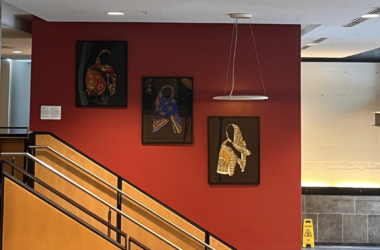
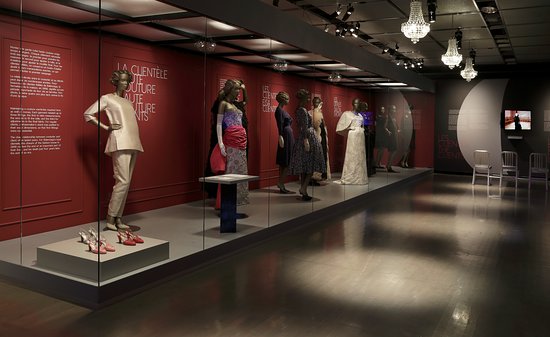
To the uninitiated, haute couture might conjure up images of haughty snobs sporting wildly-impractical clothing or ankle-breaking six-inch stilettos. The elusive nature of high fashion makes it difficult to categorize—often toeing the line between wearable and absurd, Balenciaga’s designs muddle this already contentious definition. Balenciaga: Master of Couture, on display from now until Oct. 14 at the McCord Museum, seeks to establish a definitive vision of high fashion for its audience.

Master of Couture highlights the work of prolific designer Cristóbal Balenciaga, and the subsequent movements that the fashion icon inspired. Near the entrance, museum-goers can pick up programs with over 150 informative blurbs corresponding to the attire on display. The x-ray dissections are particularly notable, revealing the clothing’s internal compositions and illustrating the groundbreaking technique and clever structural details within Balenciaga’s designs.

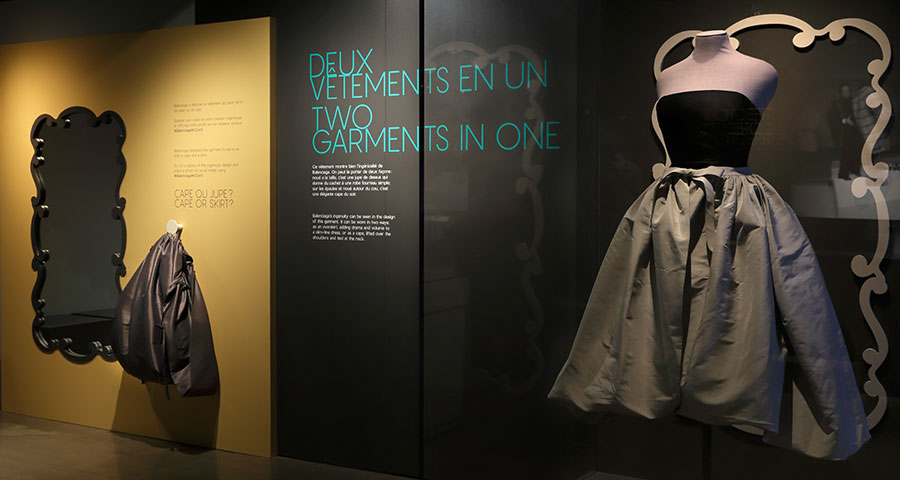
The collection itself combines an eclectic array of colours, fabrics, forms, and functions, containing illustrious ball-room gowns, subdued office suits, and seasonal casual wear. Nearly every piece of clothing is proof of Balenciaga’s purposefulness, his eye for detail, and fearless experimentation. The exhibition conveys all three of these values in one specific garment: A loose fitting knee-high dress cinched at the waist with forearm-length sleeves. Balenciaga intended to give the wearer comfortable maneuverability and ample room for showing off jewelry and accessories without compromising aesthetics.

The exhibition encourages audiences to engage with the artist’s work. An otherwise straightforward timeline of Balenciaga’s life features a silver garment next to a mirror titled, “Cape or Skirt?” The question invites patrons to try on the item in order to find out. It’s difficult to maneuver, but the item can, in fact, be worn as both. The garment highlights Balenciaga’s interest in multi-functionality—he wanted garments to be used differently for every occasion. Viewers can also take a cut-out paper template to make a miniature “One-Seam Coat” at home. These interactive elements highlight the importance of practicality, making the art more accessible.

Surprisingly, none of the clothing is as comically-outrageous as one might expect. Balenciaga’s sense for a functional design, if at times too lavish for casual use, never feels too ridiculous to actually wear. However, the portion of the exhibition dedicated to designers influenced by Balenciaga, such as Nicolas Ghesquière, Alexander McQueen, and Demna Gvasalia, pushes the bounds of absurdity. Here, viewers can find dresses shaped like broccoli stalks or clock tower bells. Like Balenciaga, these designers bring their own spin to conventional wear, and their outlandish costumes are meant to push the boundaries of convention.

Above all, Master of Couture illustrates the importance of artistic intent. Balenciaga’s approach to fashion, and his involvement in every facet of the creative process, exemplify his prowess as a creative genius.


Balenciaga: Master of Couture runs from June 15 to Oct. 14 at the McCord Museum (690 Sherbrooke St W). Student Tickets $14.

Out on the Town, Student Life

Montreal hosts annual Pizza Fest

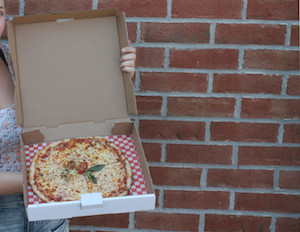
With its varied European influences, Montreal is a renowned destination for food lovers. Poutine, smoked meat sandwiches, and bagels—there are guilty pleasures in every corner of the city. One classic dish that never disappoints is pizza; everybody has a beloved variation. From Sept. 11 to 24, over 50 pizzerias competed in Montreal’s annual Pizza Fest—an event to celebrate pizza and those who make it.

This year’s Pizza Fest showcased a variety of dishes from around the Montreal area. While many restaurants chose to focus on classic, high-quality ingredients, some adventurous chefs took a more creative and ambitious route with variations on toppings such as oysters, meatballs, and pickles.

Judges and foodies alike had the opportunity to eat their way through the city. Every participating restaurant created an original pizza for the event and at the end, a panel of judges selected a winner. Last year, the winner was Kesté, a pizzeria located in Mile-End, which won audiences over with its Napoli pie. Pizza connoisseur and founder of Brooklyn restaurant Roberta’s, Anthony Falco was the lead judge for the 2018 competition.

In addition to the experts, festival visitors were also encouraged to vote for their favourite restaurant online. Attendees could sample the offerings available at the participating restaurants across the city, and collect stamps in their ‘pizza passports’ for a chance to win a trip to Naples.

Il Pranzetto, a pizzeria located in a Chinatown basement, was among the most popular contestants. The venue is casual, efficient, and—for the three hours it is open during lunchtime—busy. Their original pizza included sausage, peppers, basil, ricotta, and fresh tomato. The minimalist choice proved wise as this simple, yet satisfying creation drew a bustling crowd.  

“It was very easy to create this pizza, I tried to use everything that we make homemade,” owner Sabrina Suola explained. “That’s our own sausage, the basil is from our garden, and the peppers we bought from the farmer’s market. We roast them on our grill, which is quite a long process.”

Also participating in the event was La Medusa, a restaurant located on Drummond Ave., only a 10-15 minute walk from McGill’s main campus. Former Canadian prime minister Brian Mulroney has been known to visit this hidden gem. The eatery is also well-known for its decadent house-made gelato, which is popular with their customers. Their original creation was a mozzarella, tomato, sopressata, and maple syrup pizza: A perfect combination of spicy, salty, and sweet flavours.

“It’s all about the combination of flavours,” La Medusa owner Giuseppe D’Addario said. “Real Italian pizzas are made with wooden stoves like [ours].”

Perhaps it’s not the popular opinion on a website, or a ‘best pizza’ award, but the dedication and thought put towards the authentic and flavourful experience encompassed in every bite that makes the perfect pizza.

“It’s a very simple thing, but also a complex thing,” D’Adderio said. “Pizza is a big word. It’s like saying car. You have a Honda and a Ferrari, they both bring you to the destination, but it just depends on the bells and whistles you want on it.”

Whether diners are craving a great bite of lunch hidden under the streets or an artisanal pie at an elegant pizzeria, Pizza Fest proved that Montreal has it all. Moreover, the diverse offerings at the event showed the city that delicious pizza doesn’t have to be traditional.

Science & Technology

Giant floating boom boosts Ocean Cleanup efforts

For decades, a solution to the problem of marine plastic pollution has seemed out of reach. Fortunately, Boyan Slat, an entrepreneur from the Netherlands, has invented a floating device that removes garbage from the surface of the ocean.

Slat was 16 years old when he scuba dived in the Mediterranean Sea and saw more plastic bags than fish, an observation which prompted his novel invention.

In 2013, Slat started The Ocean Cleanup, an organization dedicated to developing new environmental technologies such as Slat’s floating device. Since then, the Ocean Cleanup has received nearly USD$35 million in funding from major sponsors including Marc Benioff, the chief executive of Salesforce.com, and Peter Thiel, the co-founder of PayPal. The organization now employs more than 70 engineers, researchers, scientists, and computational modellers to meet its ambitious goal: To clean up 90 per cent of the Great Pacific Garbage Patch by 2040.

Slat’s floating device consists of a 600 metre long boom, a floating tube used to contain or divert material such as trash, aquatic plants, and oil to collection areas. Wind and waves push the floating device, trapping the floating plastic in its three-metre deep skirt.

The device was officially launched on Sept. 8 from San Francisco and is headed for the Great Pacific Garbage Patch between California and Hawaii. A support vessel will remove the collected plastic, and bring it back to land to recycle the waste into consumer products.

The launch of the device has brought widespread media attention to the devastating impact of plastic pollution on marine ecosystems.

We are just starting to learn what effects plastic pollution might have on marine life,” Eric Galbraith, an Earth Systems professor at Universitat Autònoma de Barcelona, wrote in an email to The McGill Tribune. “Large pieces of plastic definitely interfere with the feeding of large animals [….] From seabirds to turtles to whales, large animals have been found accidentally eating plastics to the point where it can block their digestion, causing death. We don’t really know just how bad small plastic particles might be, but there are signs that they can affect the feeding of zooplankton (very small animals) and can potentially harbour toxins.”

Although the floating device seems promising, it has its limitations. The device’s skirt is designed to allow aquatic organisms to swim underneath, but some scientists are concerned that marine life will still get trapped. Others believe that this device is a good start to tackling ocean pollution, but not enough to solve the problem.

“When you look at the infrastructure they propose, it drifts at the surface and has a giant net, but they mention it only goes three metres below the surface of the ocean,” Carolina Dufour, an assistant professor in McGill’s Department of Atmospheric and Oceanic Sciences, said. “We know that plastic can be found at any depth, including at the bottom. So a major concern would be, what do we do with the plastic below three metres deep?”

Although Dufour expressed support for any technology that can help clean up the oceans, she stressed the importance of taking individual and collective action to stop plastic pollution in the first place. She cautioned against people becoming complacent in thinking technological advancements will solve every environmental problem.

Slat has responded to criticisms with data from The Ocean Cleanup’s voluntary Environmental Impact Assessment, which says the impact on marine life will be minimal, while acknowledging that any new technology will experience setbacks and subsequent improvements.

While this invention is a step forward for ocean cleanup efforts, stopping plastic pollution at its source remains a difficult task that requires major changes to reliance on single-use, disposable plastics. Nonetheless, inventors such as Slat are making waves in the world of ocean conservation and inspiring others to take action on pressing environmental issues.

Montreal, News

Shooting on St. Laurent shocks students

On Sept. 16 at about 2 a.m, a 27-year-old man was shot on Boul. St. Laurent. The shooting took place close to the intersection of St. Laurent and Avenue des Pins. A media relations officer from the Service de Police de la Ville de Montréal (SPVM) said on Friday that the victim is known to the police and is no longer in critical condition. The officer also said that there are currently no known suspects and that the police have made no arrests.

“There were a lot of people on Boul. St. Laurent that night because the street was closed to the cars, so it was a pedestrian area,” the officer said. “So, a few witnesses have been finally localized in the crowd.”

The officer also stated that detectives are in the process of meeting with witnesses and the victim to further advance the investigation.

Boul. St. Laurent is home to many bars and clubs, such as Cafe Campus, Muzique, and Tokyo, that are popular weekend destinations for McGill students. Gabriel Helfant, U2 Arts, was at Apartment 200, a club close to the crime scene on the night of the shooting.
“While going out for a quick breather with my friends, our conversation was interrupted by the sound of three gunshots,” Helfant said. “I noticed that everyone started running away from the centre of the block and we followed suit.”

The shooting was disturbing for Helfant and his friends.

“A few of my friends saw the events from a window above the club, where you could actually see the body and the blood,” Helfant said. “I have friends who saw more graphic versions of the event, and they were really troubled by it, more than I was, and I can’t imagine having to deal with that [….] They’re a bit traumatized from that.”

Helfant explained that the event was particularly unsettling given the familiarity of St. Laurent.

“I think most of us McGill students think of St. Laurent as a safe area to be in and kind of, part of the McGill/Montreal community,” Helfant said. “To add an unsafe connotation to the area is a bit unsettling.”

For female students, events like these may add another layer of fear. According to Statistics Canada, women who frequent bars or clubs often face a higher rate of sexual assault, and one in four victims report their assaults happening at bars or restaurants.

“I feel like already it’s so scary being a girl on St. Laurent just walking around [at night], and, to know that there’s an added dimension of weapons like guns, it’s a lot [scarier],” Amandri Dahanayake, U1 Science, said.

U1 Music student Laura Varas was asleep at the time of the shooting, and only heard about the event a couple of days after. She believes that the police should be making more of an effort to raise awareness about gun violence incidents, especially to those who live in her area.

“It’s actually a little scary because I live there, and so many people walk by,” Varas said.  “I don’t know how to describe it because it’s not necessarily a fear, it’s more of a wariness which I think comes from the fact that the shootings aren’t necessarily broadcasted that well to the neighbourhood. Maybe if they were better broadcasted and if I were awake at that time it would be different, but, […] I didn’t really hear anything about it until a few days afterward.”

In a message to the The McGill Tribune a local bouncer, who chose to remain anonymous due to safety concerns, explained that crimes like these hurt the club scene.

“It’s dangerous,” the bouncer said. “It’s scary because it is supposed to be safe.”

News, SSMU

Meet the Execs

Tre Mansdoerfer – President

What have you done this summer?

“I spent time working on new initiatives, improving our internal documentation/structures, and finding space for student groups on campus. Regarding new initiatives, I reached out to over 70 student body presidents across Canada and the US to learn about what initiatives they have at their schools [….] Our internal documentation was severely outdated, I spent time collecting and verifying numerous sessions of the Board of Directors and Legislative Councils from previous years [….] Finally, [VP Student Life Sophia Esterle and I] spent significant time finding building space on campus. Working with [campus groups…], we are hoping to mitigate the impact of not having a SSMU building.”

What are you working on now?

“Two of [SSMU’s new] committees include the Fall Reading Week Committee and Governance Reform Committee [….] We’re hoping to engage on the fall reading week conversation more seriously than what was done in previous years [….We’re working on] the Governance Reform Committee, which VP University Affairs Jacob Shapiro has committed significant time to. We’re hoping to critically evaluate SSMU’s governance structures and work on reforming the structure of groups like the Board of Directors.”

What challenges do you foresee this year?

“The biggest challenge for this year is the building closure. Not having a building significantly hurts clubs, services, and operations such as Gerts. Knowing this, [Sophia Esterle and I] have spent a lot of our time […] helping groups get additional space on campus. We’ll continue to put our time into helping out clubs and services as much as we can so that student life on campus is not severely impacted.”


Sophia Esterle – Vice-President Student Life

What have you done this summer?

“I took on a lot of the communication with both our clubs and within SSMU, [and also with our banks]. [We’ve been looking] to find space, and I’ve coordinated with all of our student groups to [hear] their needs [….] I also worked […] to clean up our list of clubs and make sure we had an updated list of everything, and also worked […] on the new interface/login system they are developing for clubs. Finally, [I worked on] Activities Night. The change of locations was quite a challenge, [and,] this year [,] I attempted to organize it a bit more by assigning tables and publishing a set floor plan with all of the groups, as well as creating an entirely new layout and organization of the tables [….] I hope everyone enjoyed the event!”

What are you working on now?

“Right now, my main priority is building space. I want to make sure that as many groups as possible can function and be successful this year. We also have mental illness awareness week at the end of the month […] being organized for the first time, which is very exciting. Additionally, I’ve been working with Rez Life to set up an event in residences centered around mental health throughout the year.”
Creative, McGill, News

McGill Tribune Weekly News Update | Ep.1

This week, Managing Editor Calvin Trottier-Chi talks us through some of the most important news on campus!

Senate’s vote to support divestment from fossil fuels, increased discrimination and harassment claims, calls to rename the McGill Redmen, and classes being cancelled due to the Quebec Election!

Stay tuned for more, next Thursday.

Campus Spotlight, Student Life

The making of OAP: More than beer and barbecue

From Aug. 27 to Sept. 7, the sloping field behind the Roddick Gates once again transformed into McGill’s Open Air Pub (OAP). OAP, the university’s biannual student-run barbecue, is a major logistical challenge handled by a small army of engineering students.

This year, the scene at OAP was one of controlled chaos. Lower Field was redolent with the aromas of food trucks, and the endless beer and barbecue from the nearby tents. Behind the scenes, volunteers coordinated with the university, secured the necessary liquor permits, transported beer and food, organized cooking and clean up, and a thousand other tasks that make McGill’s biggest weeklong party a reality. The dedicated volunteers say that they donate their time to McGill to make a difference.

Students stream into OAP throughout the event’s 11-day run, generating revenues for the Engineering Undergraduate Society (EUS). Profits from the Fall semester go toward funding various engineering clubs and design teams. According to OAP managers Malcolm McClintock (Engineering U5) and Austin L’Ecuyer (Engineering U5) it takes a group effort between volunteers and university groups to host the event.

“We work with McGill in a lot of ways to make this event happen, but it is run by the EUS,” McClintock said.

This year, the organizers aimed to promote inclusivity for everyone to feel welcome. McClintock pointed to practical measures that have been taken to open OAP to a wider audience.

“Over the past few years, the managers have been focusing on ways to introduce alternative activities to OAP for people who choose not to drink,” McClintock said. “We included a variety of non-alcoholic [beverage] options, from iced tea to kombucha. We’re also putting more focus [on] having day events [….] We want OAP to be an event with drinking, not for drinking.”

The coordinating team worked to better cater to McGill’s diverse community with a wider array of musical offerings. According to L’Ecuyer, they also wanted to introduce a greater variety of entertainment at the event, after criticism that there was too much homogeneity at last year’s OAPhorum.

“We’re always exploring ways to include a wide range of musical genres and performers,” L’Ecuyer said. “We’re actively aware of the demographics of our performers. We try our best to include marginalized groups, so that everyone has a chance to show off their talents. We’re always looking for ways to be more inclusive, [and] we try and work in new feedback every year.”

To the organizers, their efforts to broaden OAP’s appeal have elevated the event from a casual social celebration to an important community-building event. According to L’Ecuyer, the event has recently evolved to reflect this inclusive spirit.  

“[OAP is] a place where all McGill students, graduates, alumni, and new students alike, can enjoy food, beer, and music,” L’Ecuyer said. “Every year we try and integrate new McGill groups into OAP because this is a place for the students [run] by the students.”

Football, Men's Varsity, Sports

Redmen football overtaken by Stingers 33-26

On Sept. 15, the McGill Redmen (1-2) faced the Concordia Stingers (2-1) for the 50th annual Shaughnessy Cup. The Redmen gave their crosstown rivals a run for their money, but ultimately lost 33-26.

The first half saw limited offence from both sides. McGill struggled to move the ball across the field, sustaining only two drives of over 20 yards. Meanwhile, Concordia had more success in their end, but faltered in scoring range: The Stingers put up just three points on as many trips into Redmen territory. Much of McGill’s defensive strength came from its eight sacks, thanks to strong play up front and in the secondary.

“Whenever you can get sacks, that means you covered well in the back end, [because] the quarterback didn’t have anybody open, and vice versa,” Assistant Coach Joe Hagins said. “[If] you can get there [quickly, it] means you don’t have to cover as long.”

Despite both offences’ ineffectiveness, each side still racked up points. Soon after Concordia took a safety to open scoring, second-year defensive back Chris Mbiya blocked a field-goal attempt, scooped it up, and scampered 64 yards for a touchdown to end the first quarter up 9-0. Later, McGill recovered a fumbled punt return at the Concordia 40. The offence took it from there, moving the ball into the end zone in five plays, bookended by key receptions from second-year running back Daniel Adesegun.

The timely offensive spurt gave the Redmen a commanding 16-3 lead after the extra point, but McGill did not get to enjoy that lead a single play longer; Concordia took the ensuing kickoff to the house for a 107-yard touchdown. After forcing a McGill safety, the Stingers had closed the gap to 16-12 before halftime. That kickoff return proved to be the turning point in the game.

“I think if that return doesn’t happen, we make some plays,” Hagins said. “The defence had great momentum, and [on] offence, we were starting to get rolling, but they took that and just rode that high the rest of the first half, into the second half, until the end.”

With the new half came steadier offensive play from the Stingers, who finished three long drives with touchdowns. The Redmen’s defensive performance was noticeably different from one half to the other.

“First half, I think we did well,” fourth-year linebacker Kamba Katchelewa said. “We tried to put a lot of pressure on them and create confidence. The second half, we kind of slowed down and didn’t play to our standard, and it hurt us on the scoreboard.”

Although McGill scored just 10 points in the second half, the offence began to look more promising. The team’s best series took just three plays to drive 66 yards into the end zone.

“We could’ve done it all game long, but on this drive, everything was on point,” fifth-year receiver Remi Bertellin said.

Unfortunately for McGill, the offence had trouble holding its rhythm, and couldn’t sustain its lead or close the gap once Concordia pulled ahead in the fourth.

“We were on top, we just didn’t make that play to put the game away or make that play to put us in a position to put the game away,” Hagins said. “They made that play to keep it close and that play to overtake us.”

McGill will now turn its sights to a Sept. 23 matchup with the Université Laval Rouge et Or (3-0) at Stade Peps in Quebec City.


Moment of the game

Third-year receiver Jeremy Sauvageau paired a twisting, 34-yard grab with a subsequent 29-yard catch-and-run to set up fourth-year receiver Jacob Dwinnell for a toe-dragging touchdown in the back of the end zone.

Quotable

“We played consistently, but didn’t make the plays we needed to make, and that was the difference today [….] We’re a really young group, so they made the plays, [and] we didn’t make the plays.” – Assistant Coach Joe Hagins on the team’s youth

Stat corner

McGill’s eight sacks came from seven different defensive contributors.

Read the latest issue

Read the latest issue