

Latest News

Behind the Bench, Hockey, Sports

Remembering Ken Dryden: Canadiens legend and McGill alum

Ken Dryden, the towering goaltender who backstopped the Montreal Canadiens to six Stanley Cups and became the calm heart of a dynasty, died on Sept. 5 at 78 following a battle with cancer. More than a hockey player, Dryden was a symbol of Montreal’s golden age. An athlete, intellectual, and leader, his presence still echoes throughout the city.

Dryden was larger than life in both frame and character. At six foot four, he commanded the crease with quiet authority, his face hidden behind a goalie’s pretzel mask that revealed little and shielded even less. His poise became the stuff of legend.

Born in Hamilton, Ontario, in 1947, Dryden was drafted by the Boston Bruins in 1964 before his rights were traded to Montreal. Prior to entering the big leagues, he pursued a history degree at Cornell University, while guiding the Big Red to their first national championship in 1967. But when Dryden finally donned his Canadiens jersey, few expected the extensive impact he would make.

Dryden had just six regular-season games under his belt when he was thrown into the 1971 National Hockey League (NHL) playoffs against the defending champion Bruins, led by Bobby Orr and Phil Esposito. Montreal was not expected to last. But Dryden, 23 years old and unshaken, outduelled the league’s best. He carried the Habs to the Stanley Cup title and was named the postseason’s most valuable player, winning the Conn Smythe Trophy

The following year, Dryden earned the Calder Trophy as rookie of the year, having been ineligible in his first season without enough regular-season games. No one else has ever captured the Stanley Cup, Conn Smythe, and Calder in that order; it was a remarkable feat, unlikely to be replicated.

But Dryden did not stop there. He won the Vezina Trophy as the NHL’s top goaltender five times. He recorded 258 wins and 46 shutouts in 397 games

From 1976 to 1979, the Canadiens won four straight Cups. Dryden’s style in net throughout these victories was not flashy, but cerebral. He employed a ‘stand-up’ style, focusing on anticipation and positioning, and rarely relying on sprawling saves. His intelligence and confidence in goal made Dryden a unifying presence in a city divided by language and culture, where the Canadiens were a shared source of pride.

Dryden was never only an athlete. While tending goal at night, he studied law at McGill University by day, often seen in the Forum with textbooks under his arm. When a contract dispute impacted Dryden’s play in 1973, he stepped away from the Canadiens for a season to complete his degree and article at a Toronto law firm

In his post-hockey career, Dryden’s relationship with McGill endured. Decades later, he returned to the university to teach “Making the Future”—a course that challenged its students to transform their visions into action, and think critically about the version of Canada that awaited them. His dedication to activism also helped launchFSCI 198: Climate Crisis and Climate Actions,” a course that continues to shape how students confront urgent environmental issues today.

Dryden retired definitively from hockey in 1979 at just 31, before carving out a second act as an author, lawyer, commentator, and public servant. His 1983 book, The Game, is still hailed the finest book ever written on hockey, as it blends sport with reflections on culture, pressure, and identity. He later became president of the Toronto Maple Leafs, entered politics as a federal cabinet minister, and in 2013, was named an Officer of the Order of Canada. He was inducted into the Hockey Hall of Fame in 1983, and his No. 29 jersey was raised to the rafters of the Bell Centre in 2007.

Numbers alone cannot define Ken Dryden. Montreal remembers the calm presence he displayed in the crease. McGill remembers the scholar who inspired students to dream boldly. And Canada remembers a man who stood tall—for the game, for his community, and for the future he helped shape.

Dryden is survived by his wife, two children, and four grandchildren.

We will always remember the quiet courage and grace he showed in life, and in facing cancer. Thank you, Mr. Dryden. Your spirit will continue to inspire generations to come.

Student Life

Keep your friends close and your enemies closer!

They walk among us, disguised as men. They whisper in accents you don’t recognize and laugh at jokes no one finds funny. Rumour has it that McGill students have superior, bigger ears for listening, while Concordia students have pointier elbows indicative of too much time spent doing studio art. 

McGill x Concordia is the only truly convincing love story of our generation—enemies turned lovers of Montreal’s dark-academia sphere. Both are anglophone, both victims of tuition hikes. As two schools with highly international student populations, they are the highly unlikely downtown darlings of the Montreal imagination. 

Welcome to Concordia 101—The Tribune’s crash course for McGill students looking to co-opt the best Concordia has to offer!

Studying Surrounded by the Enemy

You would need an extra pair of hands to count the number of times a Concordia student has complained about a McGillian using their libraries. Open to the public everyday from 7:00 a.m.-11:00 p.m., both the Webster and Vanier Libraries have quickly become popular spaces for McGill students looking to study. What many people don’t know is that Concordia’s online event calendar lists many drop-in offerings that don’t require a Concordia ID to register; nearly once a month, the Vanier Library on Loyola hosts Therapy Dog drop-in at VL-101 from 11:30 a.m.-1:30 p.m. and VR gaming on the third floor. The Webster Library on the Sir George Williams Campus hosts the Fibre Arts Technology Club every Tuesday afternoon from 2:00 p.m.-4:45 p.m. at the Technology Sandbox room, for those interested in knitting, crocheting and “integrated work with wearable technology.”

Though currently closed, the Concordia Greenhouse in the Henry F. Hall rooftop is another study space option that brings a touch of greenery even in winter, with a grand reopening anticipated by the end of Winter 2025. 

Creativity without a Prerequisite

Looking for a space to get creative? At two permanent Concordia Art Hive studios, a pair of creative art therapists host four weekly free walk-in non-directed art sessions. Alongside these time-slots, they offer approximately ten pop-up events per term at varying spaces on Concordia campus to facilitate community bonding. 

For those who would rather admire than create art, the Leonard and Bina Ellen Art Gallery offers free contemporary exhibitions, while the Concordia Film Festival hosted by the Mel Hoppenheim School of Cinema is the longest running student film festival in North America, also free to attend. 

You Aren’t What You Eat

If you’re looking for a quick meal, the People’s Potato Kitchen is a vegan soup kitchen at Hall building H-700 that offers donation meals from Monday to Thursday from 12:30 p.m.-2:00 p.m., as well as a food bank every second Friday. On the Loyola Campus, the Hive Cafe Co-op has a similar free vegan meal offering on Fridays from 12:30 p.m.-1:30 p.m. on the SC building’s second floor.

Though initiated in 2015 by two McGill psychology students, Vent over Tea has since become a Concordia-run service, offering one-hour anonymous, non-judgemental listening sessions with trained volunteers at a cafe of your choice. The service is free—you just need to cover the cost of your own drink. Whether you prefer to meet downtown, in the West Island, or online, Vent over Tea offers a safe space to feel heard and serves as an example of the meaningful collaboration that can emerge when McGill and Concordia are able to realize their responsibilities to a shared Montreal community.

A school by any other name would smell as sweet. Beneath the banners and rivalries which obscure what unites us, we are all struggling students trying to navigate the unfamiliar, hostile environment of being young dreamers. Though there is comfort in school pride, there is shame in personal apathy. University is an opportunity to discover yourself, and that journey begins with fostering an understanding of the shared challenges that every student faces. One person’s success is never another’s failure. To share resources, spaces, and support is more than an act of generosity; it is an act of student solidarity—a respectful acknowledgement of our mutual struggle which spares no one. It’s time that we ask not what we can do for our schools, but what our schools can do for us

Student Life

Refreshing third spaces in Montreal that decenter alcohol 

After weeks of OAP, McGill Frosh, working your way through Piknic Électronik’s 2025 lineup, and filling university friends in on your summer drama over drinks, your start to September may have been drenched with alcohol. Getting back to Montreal, it can be hard to escape the pressure to enjoy the city’s liquored-up nightlife and McGill’s drinking-centric events. In case you’ve been needing a reset, The Tribune is here to offer you a list of third spaces not focused on alcohol consumption. Ordered from lowest to highest in price, these venues and activities around the city offer a refreshing alternative to drinking, for individuals and groups alike.

Page Break at De Stiil Booksellers

Every Wednesday, regulars of the Plateau’s beautifully curated English bookstore, De Stiil, find themselves eagerly lining up at the shop’s checkout counter to dispose of their cellphones. This is Page Break—hosted weekly at 7:00 p.m., though the seasoned attendee knows to get there for 6:30—a rare and precious opportunity to cuddle up with a good book, all distractions circumvented. For $5 CAD, De Stiil’s staff will confiscate your devices and point you to a corner of the store, where you can nest in cushions or a comfortable chair with your book of the moment. Once everyone is settled in with a glass of lemonade or water, the shopkeepers will lock De Stiil’s doors and turn on mellow jazz music. Page Break’s hour of total, communal immersion in your book flies by magically fast, after which you can mingle with your fellow technophobes and discuss what about your books most deeply engrossed you that evening.

Cinéma Moderne

Cinéma Moderne’s innovative, independent programming is always worth a watch. This cozy movie theatre offers a perfect escape from the gloomiest of days—both emotional and weather-wise. In any given week, the cinema’s programming will range from local and experimental films to cult classics and current fan favourites, making it hard to decide what to buy a $14 CAD ticket for first. Nevertheless, be sure to keep an eye out for the theatre’s monthly Queer Cinema Club, which hosts screenings of emerging and canonical 2SLGBTQIA+ films to spotlight and celebrate queer narratives and creators in the industry. While not the most conversation-appropriate activity, Cinéma Moderne’s Mile End location lends itself well to a post-movie snack with friends at ICONOGLACE—but don’t forget to enjoy the theatre’s popcorn sprinkled with paprika during your show.

Innocere Yoga

For a more introspective option, try a hot yoga or pilates class at Innocere. Tucked away up an unassuming staircase on the pedestrian stretch of Prince Arthur, Innocere’s beautiful space is expansive and full of sun. Their flow options range from beginner-friendly overviews of foundational yoga poses to dynamic vinyasa practice, all in a studio that grounds any level of session in high-intensity movement. After your class, lounge in Innocere’s cushioned, lamplit reception area and enjoy aromatic herbal tea while chatting with your classmates. Though typically a more expensive outing, Innocere frequently offers discounted class packages, and commonly hosts $11 CAD Community Classes taught by newer instructors—cheaper than the average Montreal cocktail.

Late-night ice skating and dim sum
A big group of friends on a Friday winter’s evening can never go wrong by heading to the Quartier des spectacles at Place des Arts. With no cover-charge, you just need to bring your own skates—or rent a pair there for $15 CAD—to enjoy the city’s largest refrigerated ice rink, alongside skaters of all ages and experience levels. With digital art illuminating its surface and hot chocolate sold right beside its locker rooms, the Esplanade Tranquille offers skaters a relaxed, social, and quintessential winter experience as they work up an appetite skating laps around the rink. Enter a post-skate dim sum date in nearby Chinatown, where many delicious restaurants stay open past the rink’s mid-evening close: Late enough that you can get into your spot of choice without requiring a promoter to get you on the guest list.

McGill, News, SSMU

First SSMU Legislative Council meeting of the year discusses proposed edits to Accountability Plan

The first Students’ Society of McGill University (SSMU) Legislative Council (LC) meeting of the academic year began on Sept. 11 by introducing all in attendance, with 16 out of 34 voting members on the Council present.

Speaker Jonathan Dong and Deputy Speaker Yasmin Beeai could not be present in person, so President Dymetri Taylor assumed the Speaker role. Over Zoom, Dong announced that he will be resigning as Speaker to become the LC’s Accountability Commissioner as of Sept. 15. His successor will be Acadia Knickerbocker.

After adopting the meeting’s agenda, the council moved on to an announcement by Commissaire aux Affaires francophones Maëla Dube, who discussed how the committee is dedicated to making meetings more accessible for French speakers. 

A representative from Agence Voltaic, the photography organization responsible for graduation and class photos at McGill, then gave a presentation. The representative pointed out that the studio takes appointments for graduation pictures year-round, yet most students book for November or March, leading to scheduling congestion. In order to encourage students to utilize the agency more efficiently, SSMU’s Communications staff created faculty-specific posters in collaboration with Agence Voltaic, explaining how to register for pictures.

The council next discussed two motions on the table, both of which were brought forth by Taylor. The Motion Regarding the Adoption of the Standing Rules for the 2025-2026 Legislative Council and General Assemblies (GA) sought to add more strict regulations for decorum and procedure to these meetings, such as requiring presented reports to include deadlines. Vice-President (VP) University Affairs Susan Aloudat questioned the motion’s language, noting that some rules were referred to with “should” and others “must,” which called into confusion which aspects of the motion were optional. 

“For example, the rules say we [must] close our laptops for guest speakers, but everyone’s laptop was open [during the Agence Voltaire presentation],” Aloudat said. “So, do we want to go back and review this?”

Taylor responded that SSMU should enforce all regulations listed to make governance events run smoother, and that since the motion had not yet been passed, the rules were not currently in effect. 

VP Clubs and Services Hamza Abu Alkhair motioned for a five-minute recess so council members could re-read the bill for questioning, after which Aloudat asked if the Accountability Commissioner would be enforcing the mandates listed in the motion. Dong responded that the members themselves will be responsible for submitting reports to the Parliamentarian when fellow members fail to follow the Accountability Plan. 

“This is something that is changing in the administration section of the new [Internal Regulations] of governance, [that] the executives will be reporting at every meeting,” Dong said.

Aloudat asked to amend the motion by removing the section prohibiting snapping, clapping, and knocking on desks at GAs, and the section prohibiting council members from having their laptops open. Taylor made these amendments, and the bill passed, with all except Abu Alkhair in favour.

The council then discussed the Motion Regarding the Legislative Council Committee Allocations. Council members decided which student committee they will stand on, as all are mandated to participate in at least one. No one volunteered to join the Board of Directors, leaving one seat still vacant.

Moment of the Meeting: Taylor concluded by introducing a notice of the Motion Regarding Edits to the Accountability Plan and Committee Terms of Reference, before ceding his time to the current Accountability Commissioner, Asma Khamis. The motion seeks to implement revised guidelines for how the Accountability Committee must process, communicate, and address complaints regarding SSMU operations—stipulating that the Committee must present reports to the LC on an as-needed basis for matters of public interest like reports against councillors, and otherwise as per the Committee’s regular reporting schedule.

Soundbite: “[The Motion Regarding Edits] was mainly spurred by the fact that I don’t necessarily have the authority to enact accountability recommendations. I can only suggest and recommend. It’s up to the councils to determine a course of action.”—Khamis, on the importance of revising the SSMU Accountability Plan. 

A previous version of this article’s headline stated that the LC approved edits to the SSMU Accountability Plan. In fact, the Accountability Plan was only discussed by the Council as a notice of motion, and thus not ratified. As well, a previous version of this article stated that if the motion were approved, the Accountability Committee would have to present monthly reports to the LC. In fact, the notice of motion outlined that the Accountability Committee must present reports to the LC on an as-needed basis—in matters of public interest—and otherwise as per their regular reporting schedule. The Tribune regrets these errors.

Arts & Entertainment, Books, Poetry

Robyn Sarah’s ‘We’re Somewhere Else Now’ explores pandemic-era Montreal through poetry

On Sept. 2, Canadian writer, musician, and poet Robyn Sarah released her first new poetry collection in a decade titled We’re Somewhere Else Now. She won both the 2015 Governor General’s Award for poetry and the Canadian Jewish Literary Award for poetry, and in 2025, her work was nominated for the National Magazine Award, a testament to her writing. Her highly anticipated collection delves into the intricacies of human life, frequently reflecting on the COVID-19 pandemic and the lockdown in a major city such as Montreal. The new work is simultaneously raw and emotionally vulnerable, while also displaying Sarah’s stylistic and poetic talents.

Sarah’s familiarity with Montreal seeps into her poems and grounds the work in an intricately crafted setting. She attended McGill University and has lived in Montreal for many years; this love and concern for the city is reflected in her careful consideration of location. Sarah places her poems in specific areas—and even streets of the city—creating a map of life in Montreal. 

Containing poems written from 2016 to 2024, the collection is split into two distinct parts. The first half is comprised of a series of short poems exploring the central themes of grief, memory, nostalgia, and change. These universal concepts are depicted through mundane scenes of everyday life rooted in specificity, heavy imagery, and metaphors. The book opens with “Chandelier”: “I woke up one day and the world was out there, roaring and / being the world, almost as though nothing had happened,” setting the tone for the pieces that follow. This poem confronts the idea that, despite catastrophic change in the world, there is a natural human desire to ignore it and move forward with life. Sarah writes, “It was a kind of chandelier that hung there above our heads [….] But no one was looking up.” While this poem captures the audience’s attention by opening the collection on a dramatic and bleak note, the work as a whole shifts between tones of despair and hopefulness, depicting the multifaceted human reaction to change and modern life.

These pieces also grapple with current societal anxieties. The collection is dedicated to “my generation,” and several poems reflect on the emotional weight of lockdown, as well as the overwhelming nature of change. In “In Lockdown,” the speaker recalls finding graffiti in both French and English, documenting the bleak and depressing experiences of isolation during the pandemic in Montreal. In contrast, other poems, such as “Street Hockey on Hutchison and Villeneuve, 1981,” draw on memories of a past Montreal to show that things have not always been this desolate. The two poems create a deep contrast, emphasizing what has been lost. 

While the first explores a myriad of themes, illustrating highly specific events, the second half features only one poem titled “Into the Wilderness”—the true heart of the collection. This long, meandering poem is broken into six sections, at times going from highly philosophical and abstract to a more grounded style that mirrors the complex thought patterns of the speaker. While the poem attempts to explore ideas of religious faith, hope, and the human experience, the most intriguing part is the personified character of ‘Doubt.’ Sarah varies her descriptions of Doubt across stanzas, describing him as “a tall, lean, androgynous fiddler,” “the Prince of Nonsense,” and “a jester.” This fluid characterization allows Sarah to profoundly analyze her emotional experiences.

This collection grapples with contemporary life in a way that is both stylized and vulnerable, prompting the reader to reflect on their own lives and emotional experiences. These works form a cohesive unit, connected through shared themes and images, without feeling repetitive. Sarah’s ability to tie scenes of everyday life to highly abstract concepts and ideas results in compelling poems. 

We’re Somewhere Else Now is now available for purchase online.

Baseball, Know Your Coach, Sports

Know Your Coach: Christopher Haddad

When Christopher Haddad walks onto the diamond, he brings more than a clipboard and a lineup card. The McGill baseball head coach, now in his second season at the helm, carries with him the weight of the program’s history, the lessons of his own playing days, and a belief that joy is as essential as discipline.

Haddad’s ties to McGill run deep. From 2009-2012, he shone on the field as a student-athlete, balancing his love for baseball with the academic rigour of one of Canada’s most demanding universities. 

“I was smart enough to get by without doing many of the readings,” he joked in an interview with The Tribune, “but McGill gave me the chance to grow, both as a player and as a person.” 

Haddad’s decision to attend McGill was shaped by his CEGEP peers at John Abbott College and his early fascination with sports psychology—a field he would later pursue through a master’s degree in human kinetics and recreation.

After completing his master’s, Haddad cycled through teaching and coaching roles at Pierrefonds Baseball Club and Dawson College before returning full circle to McGill. Initially, Haddad admitted, the leap to university coaching was daunting. 

“At the CEGEP level, you have a lot more support staff,” he recalled. “At McGill, the responsibilities are heavier, [with] recruiting, administration, [and] gear orders. I wasn’t prepared at first, but the Athletics Department has been patient, and, over time, I’ve grown into [the role]. Now, I wouldn’t want it any other way.”

Haddad’s coaching framework can be summed up in two words: “Fun and detailed.” 

“If you enjoy something, you’re going to work harder for it. That’s the fun,” he explained. “But the detail is just as important. Whether you [are completing] ten reps or a hundred, make them the best reps you can. It’s about quality and intent.” 

For Haddad, enjoyment and precision are not opposites, but work in harmony to build resilient and well-rounded athletes. This perspective is especially important for the upcoming 2025-2026 season, a self-described “rebuild year” for McGill baseball. When 15 key players graduated last spring—enough to make a starting lineup—Haddad entered this season with only two returning starters. 

“It’s not easy to bring in half a new squad and get them performing the way you want,” he admitted. 

Yet Haddad sees opportunity in the challenge. 

“I always had to find ways to beat bigger, stronger players,” he shared. “I’m trying to instill a mentality of finding the way, no matter the odds in this group. I don’t want athletes who constantly ask, ‘What did I do wrong?’ I want them to think for themselves, to be self-motivated, to become aware of their own game.” 

Off the field, Haddad is equally concerned with the team’s balance. He remembers stepping away from McGill’s baseball program in his final year as a student to focus on academics, and he makes sure his players also know that school comes first. 

“I’ve seen too many athletes burn out from overtraining and overthinking,” Haddad emphasized. “If the game stops being fun, no one performs at their best.”

Haddad is candid about the obstacles facing McGill baseball, beyond his roster. University baseball in Quebec is at a crossroads. Rival programs have folded, Concordia’s team is suspended, and the province is teetering on the edge of lacking a legitimate league. 

“It’s frustrating because there’s talent in Quebec,” Haddad said. “But without a sustainable league, we’re left piecing together a 30-game exhibition schedule. I don’t want to see baseball fail at McGill or anywhere else.”

Despite this uncertainty, Haddad remains grounded in what matters most for his players: The experience. 

“There’s nothing like being on a varsity team, [experiencing] the friendships, the late practices, the chaos of balancing class and competition,” Haddad expressed. “You miss it when it’s gone.” 

In the end, that is the heart of Haddad’s philosophy: Fun and detail, challenge and growth. McGill baseball may be rebuilding, but with a coach who blends rigour with positivity, the program’s future looks as promising as its past.

Science & Technology

Normal results, hidden illness: Rethinking bloodwork in anorexia nervosa

Blood tests are the cornerstone of modern medicine, often relied on as objective indicators of health. In patients with anorexia nervosa (AN), however, these numbers may be misleading.

A new study from Montreal’s Douglas Institute, published in the Journal of Psychiatry & Neuroscience, found that women with anorexia nervosa had higher serum levels of vitamin B12 and betaine—results that would otherwise be reassuring if they were not masking malnourishment.

For Howard Steiger, senior author of the study and psychologist at the Douglas Institute, this paradox highlights the complex ways biology and lived experience intersect in patients with AN. 

Steiger’s study compared 162 women divided into three groups: 64 with active AN, 49 in remission, and 49 who had never experienced an eating disorder. The group with active AN included both restrictive and binge-purge subtypes. The researchers note no subgroup differences. The sample size, however, may have been too small to detect such differences. Importantly, no participants were taking dietary supplements.

The sample was limited to women, who represent the majority of AN cases. Socially, women face heightened cultural pressures around body size and appearance. Biologically, sex-based differences also play a role in AN susceptibility—a confounding factor for which Steiger’s design accounted.

Steiger explained in an interview with The Tribune that prenatal hormone exposure can shape later susceptibility. He pointed to research linking a ‘feminized’ digit ratio—where the index finger is longer than the ring finger, suggesting greater exposure to estrogen in the womb—with heightened eating disorder risk.

Results showed that those with active AN had higher B12 and betaine levels as compared to healthy controls. Concerningly, B12 levels remained elevated even a year into remission. This persistence raises questions about whether AN leaves lasting biological traces, even after remission.

Under normal conditions, nutrients like B12 and betaine get used up and help regulate DNA methylation, a chemical, epigenetic process that influences which genes are expressed. 

“If you think of a [piano] keyboard, it’s a fixed thing. It has 88 keys, nothing’s going to change that, but depending on which keys you play, you can get a lot of different tunes,” Steiger said. “I like to think of the epigenome as the environment playing on a 30,000-key DNA keyboard, constantly changing and reprogramming and resetting what’s being expressed.”

In AN, this regulatory relationship between nutrients and DNA methylation breaks down. Elevated nutrient levels may not indicate better nutrition, but can instead signal problems with how the body processes and uses these vitamins. When cells cannot properly absorb nutrients from the bloodstream, vitamins accumulate in the blood rather than reaching the tissues that need them. 

The study explains that this disruption has also been observed in autoimmune diseases such as lupus and rheumatoid arthritis, where inflammation disrupts normal vitamin transport. Given that AN affects cellular metabolism and has links to immune dysfunction, similar mechanisms may be at play, though the underlying biology remains unclear.

The study also found hints of lasting epigenetic effects: Even over 12 months into remission, the B12-methylation relationship remained altered. Still, Steiger stressed that biology is not fatalistic: His previous, larger-scale research shows that DNA methylation disruptions associated with AN reverse with recovery.

“Epigenetic processes can explain how you go from a genotype, a genetic susceptibility, to a phenotype, a full-blown eating disorder, and back,” Steiger said.

For clinicians, these findings are a warning: Normal bloodwork may not reveal the true nutritional state of someone with an eating disorder. Numbers alone cannot capture the lived experience of the illness—an experience that plays, and sometimes creates dissonance with, the very keys of biology. 

“People with eating disorders often have a hard time getting access to well-informed care,” Steiger added. “There’s a tendency to blame them [….] This work really helps us to understand that it’s not weakness. It’s not a moral weakness, it’s not a lack of effort, and it’s not bad parenting. It’s biology. But it’s biology that is changeable.”

The paradox of normal-looking bloodwork underscores how complex and misunderstood anorexia nervosa can be; it is not a choice, recovery is possible, and biology is not destiny.

McGill, News, PGSS

PGSS hosts first meeting of the academic year, recognizing two new student associations

McGill’s Post-Graduate Students’ Society (PGSS) convened for their first meeting of the academic year in the ballroom of Thomson House on Sept. 10, where they discussed their plans for the months to come and reported on how they prepared for these goals over the summer. 

The meeting began as Zoe Neubauer, External Affairs Officer, announced a collaboration they planned with the McGill Community Council: An anti-austerity rally on Oct. 1, from 12:00-1:00 p.m. at the Roddick Gates. Neubauer explained how the rally will address McGill’s ongoing budget cuts and austerity policies, as well as the first of a series of university layoffs in response to McGill’s deficit

The meeting then moved to an announcement of the Association of Graduate Students Employed at McGill (AGSEM)’s priorities for the academic year. PGSS Councillor for the Department of Philosophy and AGSEM Representative Molly Dea Stephenson presented these primary concerns, stressing the importance of the union’s existence. 

“[Student workers] can sometimes feel like [AGSEM] is just this separate thing, but the fact is it is this membership, and it only works when its membership gets involved,” Stephenson said. “So I’m here to give you some ideas on ways to get involved.” 

Stephenson went on to describe numerous paths for members’ involvement, including showing up to the occasional rally or assembly, or working as a delegate for one’s given department. This task is vital, as the delegate role is one of the basic functioning units of AGSEM, connecting the workers within the society to the society membership as a whole. 

Next, after PGSS members motioned to approve routine ratifications of the PGSS Society Policy Manual as well as the 2025-2026 Executive-Commissioner Work Plan, the meeting covered motions to recognize two new Post-Graduate Student Associations (PGSAs). 

The first motion recognized the Kinesiology and Physical Education Graduate Student Association (KPEG) as a new PGSA. KPEG’s membership recently reached 25 members—the minimum requirement allowing a graduate association to be recognized as a PGSA, per guidelines outlined in the PGSS Bylaws and Society Affairs Manual

Councillor for the Association of Postdoctoral Fellows of McGill University Emily MacLeod raised a concern about how the recognition of a new PGSA would affect funding for existing PGSAs. Secretary-General Sheheryar Ahmed responded by clarifying how the budget process works within PGSS. 

“The way PGSAs’ funding works is that we’re paying $10 [CAD] on our student statements that basically is returned to the statement vis-à-vis their PGSA’s funding,” Ahmed explained. 

Ahmed continued to describe how KPEG was previously part of a broader PGSA, and after reaching the minimum membership requirement, now has the ability to operate as its own branch. Following Ahmed’s explanation, the motion passed, formally establishing KPEG as a PGSA. 

The following motion to recognize a second PGSA, the Sustainability in Engineering and Design Student Society (SEADSS), was then brought to attendees’ attention. SEADSS Representative Camille Nepveu described how the society also recently reached the mandatory minimum of 25 members. She conveyed her excitement about SEADSS becoming a PGSA as the motion was passed. 

Moment of the Meeting: In his Secretary-General Report to the Council, Ahmed announced the creation of an informal PGSAs Working Group composed of members of the PGSS Executive Committee. These members delivered an updated PGSS presentation, created by the Member Support Commissioner Kali Heale, at over 25 events such as departmental orientations with the goal of increasing engagement with the society. Ahmed reported that the Working Group will soon plan an event for the executives of all PGSAs later in the Fall term.

Soundbite: “Austerity policies have already negatively affected McGill, [in the] learning and working environment, and as austerity continues to be implemented, these kinds of effects will only increase. [We are] trying to come together and demonstrate to the administration that we do not accept this austerity climate, [and that] there are alternatives, that there are better ways to organize.” — Zoe Neubauer, External Affairs Officer.

Montreal, News

McGill researchers and students discuss limits to Montreal’s bike infrastructure

As classes begin this Fall term, BIXI bikes return as a typical transport choice for McGill students. Montreal is often ranked among the most bikeable cities in North America, with more than 1,000 kilometres of cycling infrastructure across the city. BIXI, the city’s station-based bike-sharing system, hosts 12,600 bikes and almost 1,000 stations.

Many McGill students have described the common challenges of navigating BIXI services: Searching for an open dock, struggling to enter and stay in bike lanes, or finding bikes unavailable when they need them. Despite these issues, BIXI remains one of the most common ways for students to get around.

On June 11, PhD candidate Daniel Romm and colleagues at McGill’s Department of Geography published a new study in the Journal of Cycling and Micromobility Research. Romm and his co-authors found that approximately 97.7 per cent of road space in Montreal is dedicated to automobiles, while only 2.3 per cent is allocated to micromobility infrastructure—largely bike lanes. Yet, micromobility methods of transport account for just 4.92 per cent of total trips taken, highlighting the current insufficiency of cycling infrastructure despite high demand.

In a written statement to The Tribune, Romm explained why inadequate bike lanes pose a problem for many potential users in Montreal. 

“Insufficient bike infrastructure has two main harms: it discourages travel by bicycle, which provides people with more options and flexibility for how they get around […], and it threatens the safety of cyclists,” Romm wrote. 

Romm’s study also shows that even if Montreal were to double its bike lanes, cars would still occupy more than 90 per cent of the municipality’s roadspace. 

“There is room—and need—for both private vehicle ownership and sharing systems for micromobility,” Romm wrote. “They serve different populations and needs. [….] Encouraging more travellers to use non-car modes ultimately promises to ease traffic problems, as one more cyclist is potentially one less driver.”

Students at McGill also offered accounts of their experiences with Montreal’s bike lane infrastructure. Will Coward, U2 Engineering, noted in a written statement to The Tribune that Montreal’s biking culture is pleasant, despite micromobility challenges in the city.

“Although construction sometimes interferes with bike lanes and BIXI stations, biking around campus and the Plateau is still enjoyable,” he wrote. 

Tatiana Bejarano, U2 Engineering, emphasized in a written statement to The Tribune that BIXI still needs to expand its services around campus to better cater to McGill’s student population.

“[BIXI’s] infrastructure around the main student areas remains insufficient, and the lack of docking spaces at BIXI stations can cause significant distress for university commuters,” Bejarano wrote. 

Romm highlighted that the study also aims to help government officials and city planners make better decisions regarding micromobility infrastructure, especially in areas where biking is an essential mode of transportation, such as around campus and Milton-Parc. 

“The orientation of our study is to assist policy-makers, advocates, and others in communicating about street space, including possible changes to it by installing new infrastructure,” Romm wrote. 

Kevin Manaugh, McGill Geography professor and research co-lead with the McGill Sustainability Systems Initiative, explained in a written statement to The Tribune that Montreal’s city policies must better address micromobility. 

“Policies should ensure that cycling is treated as a core mode of transportation, not an afterthought,” Manaugh wrote. “That means dedicated budgets, city-wide planning, integration with transit, and measures to ensure equity—so that infrastructure isn’t concentrated only in central or wealthier areas.”

Romm stressed the importance of Montreal’s upcoming municipal elections in dictating the future of the city’s micromobility infrastructure, which may give McGill students hope for safer and more accessible cycling support around campus. 

“Whether or not the city continues to invest in protecting cyclists and encouraging non-automotive travel rests, in part, on the results of this next election,” Romm wrote. 

Romm further expressed his hope that Montreal will follow the global urban trend of reducing reliance on cars in favour of safer, more accessible micromobility. 

“There is a strong, growing global movement to reform our cities away from car dominance, and this is likely to continue on a global scale regardless of the [Montreal municipal] election,” Romm wrote. “The question is if Montreal will lead the way, as it has among North American cities, or fall behind.”

Student Life

A guide to healthy and happy roommate cohabitation

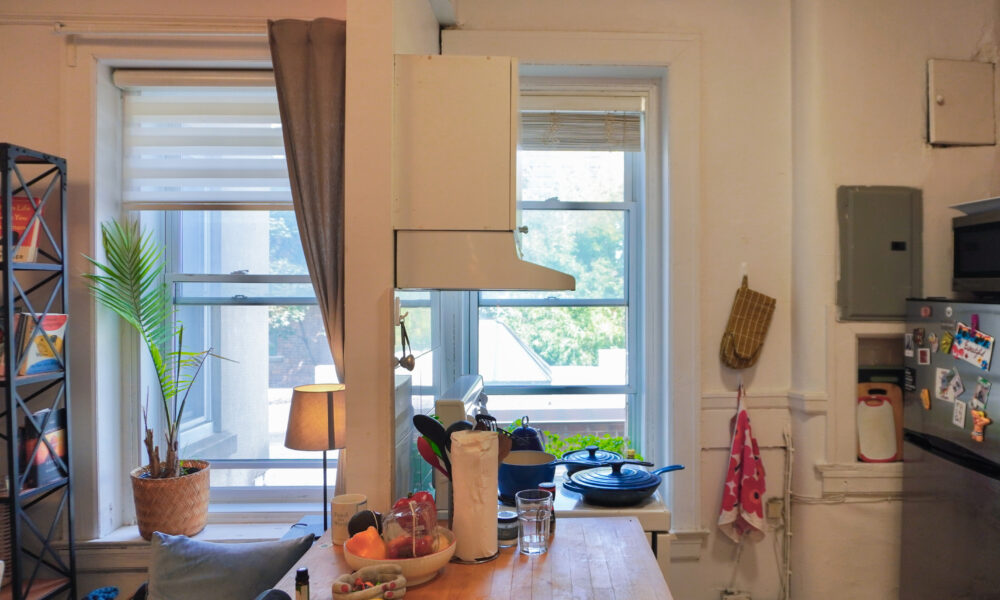
We’re three weeks into the fall semester, and routines are already beginning to shuffle into place, whether that be dusty old study habits or the arrival of household responsibilities that come with living in shared spaces. For many McGill students, living with roommates is an exciting opportunity, a marker of newfound independence and adulthood. With this in mind, it’s important to remember that not everyone is prepared to be entering a shared living space for what may be their first time. Here is The Tribune’s guide to healthy and happy cohabitation.

Take advantage of accessible and free resources

The McGill Roommate Agreement Contract gets those awkward first conversations flowing, offering questions about cleanliness and visitors that are crucial when sharing a dorm or apartment with a stranger.

In an interview with The Tribune, Amelia Gourlay, U0 Arts, explained, “[The Roommate Contract] got the ball rolling on just conversation in general and how [my roommate and I] both wanted to cohabitate.”

If you’re sharing groceries and other expenses with your roommates, take advantage of free apps like Anylist and Splitwise to keep your finances and fridges organized. 

Be mindful that communal spaces are indeed communal

Nobody wants to live in a messy space, whether it’s a cluttered bathroom sink or crumbs all over the kitchen table. Keep this in mind, and clean up after yourself. 

“Be responsible and slightly hyper-aware of how you act [in shared spaces] and what you put out, from cleaning something to the way you speak. Be aware, true to who you are, and honest with yourself,” Ilia Mehr Bakhsh, U2 Arts, said in an interview with The Tribune

Making a chore chart is an easy way to divide daily and weekly tasks like taking the garbage out, cleaning the bathroom, and doing the dishes.

Embrace communication rather than fear it

For many of us, bringing up our roommate’s annoying habit can feel incredibly daunting. While this feeling is completely valid, strong relationships depend on honest communication. 

In an interview with The Tribune, Bakhsh added, “If you see your roommate do something wrong, don’t let that define them for you. But, also be open and be communicative and tell your roommate. Please, please, please communicate.”

Allow for trial and error

Sharing a living space is bound to be a continuous learning curve. Not every first attempt at task division will be a success; give yourself the space to grow with your roommates. Good things take time—Rome wasn’t built in a day, after all.

A common concern for those with roommates is how to go about grocery shopping. Some people prefer to buy and cook everything for themselves, whereas others prefer sharing groceries and cooking meals together.  

In an interview with The Tribune, Isabel Burns, U2 Arts, explained that she and her housemates are still figuring this out. 

“Our biggest concern right now is food. Splitting food and figuring out how we do that financially because food is expensive, and there [are] things that some people like that others don’t. That was a point of contention. Now we have switched to people buying their own food.” 

It is okay to change your mind; make mistakes and navigate cohabitation through trial and error. Be flexible and generous with your roommates and yourself.

Strive for a positive perspective
Reframing your opinion on having roommates can help uplift your experience. Roommates can be a lot of fun if you let them be; they can turn an apartment into a home. Even if you and your roommates are not destined to be best friends, consider the built-in companionship that their presence provides. Let your roommate situation be an opportunity for you to learn more about yourself and how you interact with others.

Read the latest issue

Read the latest issue