Latest News

Commentary, Opinion

“Should I stay or should I go?” An Uber story

Back in the simpler days of September 2016, the incorporation of Uber into Quebec’s transportation sector created an upheaval in the province’s usually peacefully monotonous system. After first threatening to shut Uber down, the Quebec government only agreed to a one-year “Pilot Project” with the ride-hailing service—demonstrating that Quebec has long been hesitant to integrate Uber into its transportation sector. Currently, many are concerned by Uber’s announcement that it may not renew its licence with Quebec on Oct. 14—the day the pilot project expires—due to stricter guidelines from the government. However, Uber’s presence in Quebec has become a staple not only for the part-time drivers who have begun to rely on the additional source of income, but also for university students seeking Uber’s convenient and relatively affordable transportation model.

Discussion has centred around the question of whether Uber will stay or go. The situation may seem like an ultimatum, but Uber and Quebec can and should compromise. It is a difficult proposition, but one with mutual benefit. Quebec should recognize the effectiveness of Uber’s business model and its convenience in cities like Montreal. Likewise, Uber must accommodate Quebec’s stricter policies and compromise, because keeping the ride-sharing start-up in the province will ultimately benefit both parties.

The Quebec government’s bureaucratic policies and Uber’s ultra-modern blasé resistance to these policies is evocative of debates between baby-boomers and millennials. This antagonism has created a scenario in which neither party will be victorious come Oct.14—potentially Uber’s last day operating in the province—if the company does not comply with Quebec’s stricter policies, including longer training hours for drivers and background checks conducted by the police instead of Uber itself. Uber states that if the province does not make its policies more lenient, it will cease operations, which will leave both Uber drivers and users in limbo. Ultimately, Uber should be accommodating of the province, because of its success here: Montreal residents have used its services 423,000 times in the last quarter. Similarly, Quebec would benefit from being more lenient to a company that has brought $7.2 million in revenue to the province during the pilot project’s first year.

Uber’s stance that the province’s regulations are unmanageable seems like conjecture and a convenient way to pander to the public; its complaints that the regulations would “break the company’s business model” seem to suggest a reluctance to compromise in lieu of an actual threat to the company. Quebec’s policies are not unreasonable either: An increase of training hours for drivers from 20 to 35, and criminal background checks conducted by the police instead of a private company, are security  measures that would concretely benefit the public. They are not simply old-fashioned motions, as Uber’s rhetoric suggests. Rider safety shouldn’t be a point of contention for a company that has faced scandals involving following safety regulations and obeying laws in recent years that have lead to other major cities, such as London leaving the start-up due to similar concerns regarding background checks for drivers.

The reputations of both Uber and Quebec stand to be damaged if Uber chooses to leave the province. For Quebec, it sends out the message to other companies and start-ups that the province’s bylaws are strict and unyielding, potentially harming both the progression and economy of the province. For Uber, its stubbornness against compromising on training hours and regulations suggests a lack of concern for local laws. That’s not a viable option for a company which has only been actively embraced by two other provinces in Canada, as it could potentially solidify the hesitance of provinces with major markets such as British Columbia.

Ultimately the conflict between Uber and Quebec is a power struggle, but it need not be zero-sum. This struggle risks resulting in the loss of affordable transportation for university students, but both parties must realize that this will not benefit either of them in the long run.


Sruthi is a U0 Civil Engineering student. Although her ultimate goals involve building bridges and saving the world, her current hobbies include watching TV, playing the violin, and trying to figure out how seven years worth of French language classes have suddenly left her since arriving in Montreal.


Features

Who lives, who dies, who tells your story

The iconic song that concludes Hamilton, “Who Lives, Who Dies, Who Tells Your Story,” elicits a fundamental inspiration for creativity—the idea of sonder, that each individual is living a life as complex and intricate as our own. I myself wonder whether or not my stories will matter, and marvel at the vast number of narratives to which I will never have access. I fantasize about capturing an emotion that others have experienced but could not decipher. I imagine my words, tugging the soft skin of a cheek into a smile. The first time I saw Hamilton, the play moved me to tears; hearing the amalgamation of powerful instruments and voices, in the name of storytelling, reconnected me with the power of the written word.
This anecdote represents a common sentiment among aspiring 21st-century writers. While the dream of one day publishing—or even creating a finished work at all—floats at the forefront of writers’ thoughts, the reality is far from encouraging. In 2012, bibliographic information provider R. R. Bowker calculated the publication of 2,352,797 books in the United States alone, with 49,553 of them being fiction. This value does not include books published online, nor written song lyrics, nor blog posts.
With so many writers constantly at work, distinguishing between their works and styles might seem challenging. However, each author comes from a different background and approaches the same task from a different angle. Ultimately, each writer has a different story to tell, and a unique way of telling it.
“The connected impulses to understand my own thoughts by entering into a strange sort of conversation with the page, and the desire to tell stories to an audience [initially made me write],” Naben Ruthnum, who received his Masters degree in English Literature at McGill in 2011, wrote in an email to The McGill Tribune. Ruthnum’s novella, Cinema Rex, won both The Malahat Review’s 2012 Novella Contest, as well as the 2013 Writers’ Trust of Canada/McClelland & Stewart Journey Prize. Now, the author writes fiction professionally.

Out on the Town, Student Life

Librarie Wescott: A hidden treasure of St-Laurent

On the corner of Duluth Avenue and St-Laurent Boulevard, a hidden treasure of Montreal has been lying low for over 25 years: Librarie Wescott. The small, independently-owned used bookstore has an unbelievable collection of works on topics ranging from Buddhism to Italian geography—a disarray of texts that is almost unbelievable at first sight. Piles of publications top every possible surface, creating a maze of literature to investigate. Decorated with an array of knick-knacks like plants, stuffed toys, and airplanes, the bookstore has more character than most others in Montreal.

For Alex Yiannoutsos, U3 Arts and a regular customer at Wescott, the bookstore is more than just charming—it’s a gateway to another world.

“[Librarie] Wescott is a disorganized mess of just books,” Yiannoutsos said. “From the floor to the ceiling, every inch is covered [….] You don't know what you'll pick up or where it will transport you, so the store is just a mode of transportation to this other world.”

As a used bookstore, Librarie Wescott is able to offer low prices that appeal to the Plateau’s student population. While the store offers a limited selection of textbooks and specialized books, most students come in to find something to read for pleasure—and the students who shop at the library play a crucial economic role, according to Terry Wescott, owner of the bookstore.

“Without students, I don’t think the bookstore would survive,” Wescott said. “[The bookstore scene in Montreal is] shrinking because rents are going up [and paying] employees [is] expensive.”

In recent years,  Librarie Wescott has faced challenges remaining open. After incurring rent hikes in 2011, Wescott revealed that he is still looking for somewhere to eventually move the store.

“[The] landlord wants to raise the rent, so I may be closing, [but] I'm looking for another location in the area,” Wescott said. “I don't know what the fate of the bookstore is.”

The popularity of e-books and online shopping also endangers small bookstores like Librarie Wescott. Wescott used to sell books online, but after the 2008 economic crash, sales dropped, and their online store shut down. Wescott hasn’t attempted to re-open it since.

Despite the convenience of online bookstores, it is hard to replace the feeling of flipping through the pages of a physical book. And though Amazon and Indigo may offer  publications delivered right to your door, the uniformity of chain retailers lacks the charm of an independent bookstore and misses out on the character and history of used books, something Librarie Wescott embraces.

Among the store’s vast collection of novels to atlases to cookbooks, history and classic literature are the most popular choices. Since they are close to the owner’s heart, those two genres tend to take up the most shelf space. And while not everything sells, there is something for everyone at Westcott.

“I love books,” Wescott said. “Everyday I’m getting in new books [….] I always keep books until they get sold [….] Maybe the right person [for the book] will come along [….] Sometimes I keep a book for 10 years and then someone comes along and says, ‘Hey, this is just the book I was looking for.’"

Science & Technology

Decoding social media and mental health with artificial intelligence

Recent developments in the field of artificial intelligence (AI) are revolutionizing mental health care. A team of researchers from the University of Ottawa, the University of Alberta, and the University of Montpellier in France are developing an AI software that scans social media platforms and flags posts that can suggest mental illness. Diana Inkpen, professor at the University of Ottawa School of Electrical Engineering and Computer Science, is spearheading the project.

Inkpen explained that as the software receives new data, it becomes more adept at gathering information and making predictions.

Artificial intelligence systems can learn from data,” Inkpen wrote in an email to The McGill Tribune. “For example, if the AI system is provided with many examples of texts posted on social media that reflect signs of mental illness, the system can learn a predictive model. Detecting strong and persistent negative emotions can be a sign of mental illness or other behavioral problems. We are looking for the best methods to develop predictive models for different kinds of issues—depression, [suicidal] intentions, self-harm, [and] cyberbullying.”

With Facebook’s recent creation of its first Canadian AI research laboratory in Montreal, the importance of AI technologies is unquestionable. Inkpen remains optimistic about the future of artificial intelligence and its role in mental health care. She believes the software she and her team developed can provide a beneficial diagnostic tool for healthcare professionals.

AI [systems] are and can be used even more to help people,” Inkpen wrote. “Signs of mental illness can be detected early and help can be offered in order to prevent these problems before they become serious. Another scenario is for doctors to use AI systems to monitor their patients’ social media accounts, with their consent. In this way, doctors would base their diagnostics on the findings of the AI systems and on their own knowledge and intuition in the same time.”

Despite the available resources, the stigma surrounding mental health keeps many of those affected from seeking professional help. Robert Whitley, principal investigator of the Social Psychiatry Research and Interest Group (SPRING) and assistant professor in the Department of Psychiatry at McGill, researches that stigma. Most notably, his work deals with barriers to facilitators of healthcare. According to Whitley, the fear of judgement and ridicule prevents  people with mental illnesses from seeing a clinician.

The onset of these mental illnesses may be due to the influence of social media. Numerous studies over the years have shown that social media use may be associated with mental health issues. In accordance with a 2015 study, Whitley states that there is a correlation between depression and social media use: Those who spent more time online had a higher risk of depression.

“Sadly, a lot of social media provokes feelings of envy and the famous phrase the [young] generation coined the ‘fear of missing out.’” Whitley said. “People on social media are not a true representation of reality. It’s a refracted representation whereby people present the highlights of their lives. My hope is that people like me will put this information out there and then people, young people especially, will learn about it and minimize their time on social media and maximize things that are much [healthier] such as playing sports, socializing, [or] reading.”

As the influence of social media continues to increase, it is imperative that signs of mental illness be detected before they become serious. Although advances in AI systems cannot replace an actual clinician, software such as the one designed by Inkpen and her team demonstrate great diagnostic potential.

Arts & Entertainment, Theatre

‘Persephone Bound’ encourages conversation about consent

According to the McGill University Safety Report for 2015-2016, there were only two cases of sexual assault on both the downtown and MacDonald campuses combined. This is a mere fraction of the reported safety incidents on campus. However, Sexual Assault Statistics in Canada reported that only six assaults for every 100 are reported. And unfortunately, it’s understandable why these statistics are so disheartening. Looking at recent events at  Canadian universities like Western or Queen’s,

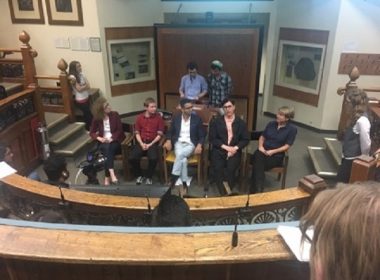
sexual violence cases are, as mentioned numerous times by the play’s narrator—too often cases of “her word against his”—creating an atmosphere of distrust surrounding issues of consent. This statement is repeated throughout Persephone Bound, a play and panel discussion put on by The Office for Sexual Violence Response, Support and Education (O-SVRSE) on Oct. 5. 

The narrative aerial performance serves as an entry point into a sensitive subject. Telling the story of a young college freshman, the performer and playwright Léda Davies used ropes to display her interpretation of a modern Persephone. Davies took inspiration from the Greek myth of Persephone, in which Persephone’s abduction is witnessed by many people—including her father Zeus—but they all choose to remain silent so as to not cause tension or conflict. This reasoning is frighteningly similar to how many people continue to turn a blind eye to sexual assaults. It reminds us that despite the myth being written in approximately the seventh century BC, the issue of consent is even more relevant today. 

Persephone Bound explores the myriad of emotions, questions, and trauma that survivors of sexual assault experience. Coming forward with disclosures of assault is a monumental obstacle in itself. Yet—as explained in the discussion panel post-performance—legal and social systems consistently fail in supporting survivors. The process of having a sexual assault case pass through the court system takes approximately three years from initiation to completion, with the survivor constantly having to relive their trauma. 

Davies has performed in theatre, dance, and circus for over 10 years, and has lived in Montreal since 2013. Co-writing Persephone Bound, Jed Tomlinson works as a freelance actor, clown, drummer, and theatre artist. By introducing various perspectives around sexual consent, both playwrights hope to cultivate a dialogue surrounding sexual violence, reporting the assaults, and providing resources. The narrative performance jumped from the past to present, re-enacting the sexual assault itself, then following Persephone as she is interrogated. Intrusive questions such as how many times Persephone peed that evening, or what she was wearing at the party, allowed the audience to see the doubt survivors face as they are forced to relive their trauma through rape kits and interviews. 

The panel discussion shed light on the realities experienced by survivors of sexual violence. The panel of four experts—including performer Léda Davies—explored many aspects surrounding consent, including the specific science behind how trauma affects the brain. The panelists examined how identity, social status, and sexual orientation can cause differences between the stories of survivors. They acknowledged that the play’s character Persephone, a white middle-class heterosexual who attends a college party, is a narrow glimpse into  the multifaceted ways in which sexual violence affects survivors’ lived experiences. 

As a concluding event for this year’s fourth annual #ConsentMcGill Campaign, Persephone Bound allowed for an inclusive and open discussion surrounding sexual consent. The O-SVRSE has been serving the McGill community since November 2016, and aims to provide students, faculty, and staff impacted by sexual violence with crisis and reporting support. 


For more information, visit mcgill.ca/osvrse

Commentary, Opinion

Dear Quebec, give Jagmeet Singh a fair shot

The New Democratic Party (NDP) has been in hibernation since the last federal election. It shed several pounds in Parliament—from 103 to 44 seats after the 2015 election—and ran its it’s base’s enthusiasm enthusiasm dry, leaving a skeleton of good policy remaining but little charisma.

In this weak position, the NDP took its biggest gamble yet. Its members elected Jagmeet Singh—a charismatic, fashionable knight in a three-piece suit of armour—as their federal leader. This was a momentous occasion in Canadian history, as Singh became the first non-white leader of a major political party. And Singh didn’t win by a small margin: He received 53.8 per cent of the vote, winning on the first ballot—a feat matched only by Jack Layton and Tommy Douglas.

In addition to being a young up-and-comer from Ontario, Singh is also a practicing Sikh, who proudly wears a brightly-coloured turban and carries a kirpan by his side. Many Quebecois—on both sides of the political spectrum—seem to take issue with that. For example, Longueuil-Saint-Hubert NDP member of parliament (MP) Pierre Nantel recently expressed his belief that Singh’s turban and kirpan were incompatible with what Quebecers expect of their public leaders. Of course, government institutions cannot discriminate against citizens or confer certain advantages based on religious belief. This doesn’t mean, however, that government officials cannot hold religious beliefs themselves—just that those beliefs cannot influence their public policy.

Nantel’s comments come from a widely held—and indeed legislated—Quebecois belief that church and state should be separate. But, in questioning the ability of privately religious individuals to hold public positions of power, Nantel and a growing minority of Quebecois terribly misinterpret the meaning of these laws, which originate from Quebec’s strong secularist values. This rhetoric is dangerous, as it only inflames existing racial and ethnic tensions in this province.


If the Quebecois reject Singh only because of his religion, it sends a message to all religious minorities in Quebec that don’t fully belong to the larger community or aren’t accepted in positions of power.

Singh is entitled to practice his religion while in public office. The only requirement is that government institutions under his oversight cannot discriminate against people who have different religious beliefs than he has. Singh is not looking to marginalize anyone: His viral slogan is #LoveAndCourage.

Quebecers have a right to choose the candidate they deem the most fit to be party leader. If Singh’s turban gets in the way of his policies, then voters have the right to disregard his candidacy. But, Singh’s policies have nothing to do with religion; as a candidate, he ran on universal pharmacare and anti-climate change commitments. If the Quebecois reject Singh only because of his religion, it sends a message to all religious minorities in Quebec that don’t fully belong to the larger community or aren’t accepted in positions of power. In an age when identity politics seems to be the norm, this will have terrible ramifications for everyone.

Race relations have steadily worsened in Quebec over the past several years. In Quebec City, for instance, there were 113 hate crimes or suspected hate crimes reported for the first half of 2017, compared to the 137 hate crimes reported for all of 2016, according to the Montreal Gazette. The vast majority of hate crimes are directed at a religion, with race and ethnicity being the second greatest target. Even once-inclusive local politicians have become less tolerant, partly contributing to heightened racial tensions in the province. Following the stabbing of a Michigan police officer by a Montrealer allegedly shouting an Islamic phrase, Premier Philippe Couillard changed his supportive tone for Muslims. A CBC article quotes him saying, “Unfortunately, you cannot disconnect this type of event, terrorism, from Islam in general.”

If Singh’s candidacy stirs more controversy and hateful discussion in Quebec, then it will only contribute to existing feelings of marginalization held by visible minorities. Instead, Singh’s openness about his religion must promote a frank and positive discussion about race. Quebec has an opportunity to restore relations with marginalized communities throughout the province. But, this productive discussion only starts when Quebec acknowledges its problem with discrimination, rather than merely masking the issue under the guise of state secularism.

Singh’s nomination presents a real test for Quebec to stand by the diversity and inclusivity its citizens voted for theoretically with Justin Trudeau.

Jagmeet Singh deserves a fair shot. Let’s give him one.


Janson is a U0 student in the Faculty of Sciences. Hailing from Calgary, Alberta, Janson enjoys hiking and sightseeing in Banff National Park.


News, PGSS

PGSS Secretary-General resigns following accident

On Oct. 2, the Post-graduate Students’ Society (PGSS) announced the resignation of PGSS secretary-general Jacob Lavigne by email and Facebook. According to PGSS Financial Affairs Officer Matthew Satterthwaite, Lavigne was forced to step down due to extenuating consequences of an accident he was in over the summer. The executives regret Lavigne’s departure but there is no animosity between the parties.

In September, Lavigne took a 30-day leave that is allotted to every PGSS officer with hopes of eventually returning to his position, leaving his duties to be divided among the other five PGSS executives. Now following his official resignation, the PGSS’ Society Activities Manual mandates that a Chief Returning Officer (CRO) must commence nominations for a new Officer in a by-election within 10 days of the vacancy. The election must also take place within the next five weeks. Satterthwaite confirmed that the procedure for electing a new Secretary-General will continue along these lines, with an election tentatively scheduled to be completed by early November.

Lavigne’s priorities, as he expressed in his election platform, included advocating for graduate student space on campus, promoting problem-solving and innovation within the student body through events like hackathons, and enforcing adherence to by-laws such as the requirement that PGSS documents be made publicly available. According to Satterthwaite, PGSS executives have already advanced with several of these objectives in Lavigne’s absence.

“We’ve made some good progress in the human resources department,” Satterthwaite said. “We had a number of key positions to fill in the office this summer [….] Another priority that [Lavigne] had identified was reviewing our governing documents, which was something we have not had the chance to do yet just because we’ve had this unfortunate incident but it’s something that we’re going to try to get back to in the near future.”

Students’ Society of McGill University (SSMU) Vice-President University Affairs Isabelle Oke often works with PGSS to convey student needs and concerns to the McGill administration. From her external perspective, she reported that the other PGSS executives were handling Lavigne’s absence well.

“It seems like they have a pretty strong team and had coordinated different people taking up [Lavigne’s] responsibilities,” Oke said. “There wasn’t any negative consequence [for PGSS and SSMU’s] relationship. As teams, we’re pretty open with each other, and he obviously had to do what he had to do. I don’t think anyone’s holding that against him.”

Lavigne also played a major role in founding the McGill Additive Manufacturing Students’ Society (MAMSS), a group which consolidated all of the 3D printing resources available at McGill into a centralized, accessible system. According to Thomas Feribault-Ménard, who is on the MAMSS Board of Directors, Lavigne’s determination contributed to his success both in MAMSS and PGSS.

“In MAMSS he was the president, a great leader,” Feribault-Ménard said. “He would just start to do things nobody thought was possible. You would think ‘oh, that’s such a big mountain to climb,’ but he would do it.”

Satterthwaite also expressed his sorrow about Lavigne’s absence from the PGSS executive team.

“It’s really an unfortunate situation,” Satterthwaite said. “[Lavigne] was a great person to have at the PGSS and we’re definitely going to miss him. It’s really too bad that he was not able to complete his term because I think he would have been able to do some great things at the PGSS and we’re sorry to see him go.”

Private, Student Life

Engineering Fair Trade Corner empowers global communities one cup of joe at a time

Located in a cozy nook between the Frank Dawson Adams Building and the McConnell Engineering Building near the University entrance, the Fair Trade Corner (FTC) is a hidden gem that offers organic and fair-trade beverages and pastries at an affordable cost.

The FTC operates Mondays through Fridays from 10 a.m. to 2 p.m., selling sweet snacks, hot coffee, and tea—all sourced from fair-trade dealers around the world. Started by the McGill chapter of Engineers Without Borders (MEWB), the entirely volunteer-run shop has helped increase the accessibility of fair-trade products on campus. MEWB’s ultimate goal is to contribute to sustainable international development, and selling food produced in developing countries in an equitable manner is a key step in realizing this.

On the global market, obtaining fair-trade certification from non-governmental organizations, like Fairtrade International, involves a process that ensures the farmers and workers who create the products have decent working conditions and receive fair wages. Each time a product is sold, a percentage of the profit—known as the Fairtrade Premium—goes directly toward farmers’ communities. This concept is widely deployed among the global fair-trade community; the premium is often used to develop a community’s infrastructure or provide them with necessities they need.

Among MEWB’s other events and initiatives—like the World’s Largest Fair Trade Bake Sale—shopping at the FTC is a way of challenging the status quo in global consumption, which often overlooks workers’ exploitation in the global market.

“[FTC’s attraction] really comes down to the fact that [we serve] sustainable, organic coffee,” Thomas Bahen, U2 Engineering student and FTC vice president, said. “So you know it is creating a positive impact in the community that grows it. It’s just really accessible, and it’s delicious coffee.”

Additionally, the FTC is completely donation-based. Rather than paying fixed prices for coffee, tea, and hot chocolate, customers contribute what they can. Fair-trade products are often expensive, but the FTC makes a consistent effort to keep the goods accessible and affordable for students. Moreover, the FTC uses a punch card system in which students receive a free cup of coffee for every five cups previously purchased. To incentivize eco-friendliness, customers who bring their own reusable mug receive two stamps each time they stop for coffee. Even so, the FTC remains a well-kept secret; many students simply don’t realize how available and open it is.

“[The café] is affordable,” Bahen said. “I see a long line at Dispatch every day and I don’t think people know they can get coffee for much cheaper just down the hall.”

Part of the secrecy of the FTC is in its corner space, which can be easy for the eyes to miss if rushing swiftly through the hallways of McConnell Engineering. According to Luna Taguchi, U2 Science student and venture lead of MEWB’s Fair Trade team, the origins of how FTC obtained this particular space are a mystery to even the team itself.

“[Our space] is one of the biggest [MEWB] mysteries ever because it used to be a porter’s office,” Taguchi said. “That’s why it has kind of a cozy atmosphere, but nobody in our chapter or team knows how we got the space in the first place. So, it’ll remain a mystery forever.”

For Taguchi, fair-trade is important because it ultimately leads to economic empowerment for the communities that produce and sell their commodities. The FTC prides itself in being a part of this development.

“Often small-scale farmers in the developing world are taken advantage of by private sectors,” Taguchi said. “I define fair-trade as a trading system that tries to address that issue [….] The [fair-trade] system creates a sense of autonomy amongst the farmers and works to empower them.”

Science & Technology

The ups and downs of child-parent relationships

The first bond a baby forms in life is with its parents. For that reason, the impacts of parenting on childhood development—both positive and negative—come as no surprise.

Findings from one of the largest and  most recent studies on childhood maltreatment in Canada indicate that 13 per cent of children and youth served by the Ontario child welfare system exhibited aggression; a figure which remains significantly higher than the estimated population values of one to four per cent. In addition, six per cent of maltreated adolescents were involved in the youth justice system. Neglect by parents, the study shows, may factor into youth aggression and criminal behaviour.

Five forms of abuse were investigated in children for whom child protection agencies had been called: Physical abuse, sexual abuse, neglect, emotional maltreatment, and intimate partner violence.

“The children who are showing aggressive behaviour are struggling in a lot of domains,” Melissa Van Wert, a post doctoral fellow from McGill University and manager of the Ontario branch of the Canadian Incidence Study of Reported Child Abuse and Neglect, said.

Looking below the surface level, symptoms of abuse are quite multifaceted.

“While aggressive behaviour is the most overt result of abuse, internalizing behaviours and mental health issues such as depression and anxiety are also frequent occurrences,” Van Wert said. “They might even look different than normal children due to the maltreatment they have faced.”

Abuse can have varying effects, depending on its duration and the developmental stage of the child.

Many of the teenagers in this position had previously been investigated for maltreatment, specifically noting violence in early childhood and neglect in their teenage years. They lacked community, extended family support, and likely lived in poverty.

Vilifying abusive parents is nonetheless an easy and common act, despite the complex layers that may exist behind that parental behavior.

“It is hard to take care of a […] child, especially in cases of extreme poverty and chaotic, high-stress environments,” Van Wert said.

Neglect, in the context of this study, means that parents could not take care of their children, especially without community support—not that they were bad parents. Essential services that affect development, such as child care and health care, can be inaccessible to families in need, despite social welfare systems in Canada.

Van Wert also pointed out the need for increased accessibility and quality in preventative mental health services, family support services, and community access points for future families.

Family environments affect the development of a child positively as well; a loving, nurturing environment is highly beneficial to child development.

“There is certainly a spectrum of parenting behaviours and quality,” Van Wert said.

During adolescent development, many positive parenting strategies exist, including a positive attachment relationship with an infant, and exposing kids to early childhood learning opportunities.

In teenage years, monitoring behaviour is important—as pointed out by the effects of neglect shown in the study—but it should be done without extreme harshness, according to Van Wert. Considering parenting in its context is critical, as it does not happen in a vacuum. Healthy child development requires both community and parental support.

Developing comprehensive support for families is the next step in this area of research. Often, children at risk are already involved in child protection and their situation has to be addressed from a different angle.

“My research now is from the education perspective,” Van Wert said. “Primary health care is another important aspect of early preventative systems.”

Off the Board, Opinion

What I’m thankful for this Thanksgiving

This past weekend, as I sunk into a puffy chair to nurse my protruding belly much too full of turkey, mashed potatoes, and other Thanksgiving delicacies, I closed my eyes and took a moment to fulfill the holiday’s second mandate—being thankful for what I have. My four years at McGill seem to have passed with reckless abandon, in a blur of Bronfman days and Gerts nights. As an international student, I’ve been lucky to live, study, and work abroad in Canada and Europe, specialize in what I’m most interested in as my major, and satisfy my random curiosities with electives. I’ve met more fascinating and inspiring people than I can count, both in and out of class, and gained more from my peers than in any of my top courses. I have even managed to rationalize the many gripe-inducing aspects of the McGill experience that every student faces as something to be grateful for: If nothing else, they bring us all together and build character.

But, as I lay there with a stitch, breathing deeply and trying to keep down that extra helping of apple pie, what I kept coming back to was how thankful I am for the friends I’ve made at McGill—and how little would be the same without them. Nothing has been more responsible for keeping me happy and motivated and for helping me grow than my closest friends. University is a unique place: From first encounters during Frosh and in Rez, to the new colleagues and classmates you meet in your last year, it almost seems designed to put each student in front of as many potential friends as possible. Besides the daily geographic proximity with a relatively small group of peers, there’s much to be said for facing the same experiences—good and bad—at an impressionable time of our lives.

After graduating from high school and coming out from under my parents’ wing, I got a rush of what felt like real independence for the first time. But, it didn’t take long to recognize that that autonomy came with its fair share of challenges as well. Figuring out how to stay on top of schoolwork and other pursuits, feed and clothe myself, and discover who I was as an independent person were scary. I soon realized, however, that everyone around me was going through the same process. That shared experience brought me closer with my newly-encountered McGill friends. Looking back, I now see that we grew together and supported each other simply by being equally confused by the same Minerva menus or simple cooking instructions. With each new chapter of my McGill career, those and other friends have been along for the journey.

University is a formative and impressionable time. Like trees planted very close and forming around each other as they grow, I can reflect and appreciate how my friends and I have influenced each other.

University is a formative and impressionable time. Like trees planted very close and forming around each other as they grow, I can reflect and appreciate how my friends and I have influenced each other. Over the last nearly four years, we’ve grown together to fill the empty airspace of becoming our own confident individuals that some might call “adults.” Like someone who moves to a different region and involuntarily picks up the local accent, the hours of hanging out, studying and working together, and talking about our issues—big and small—have subconsciously given me a part of them to always carry in who I am, and vice versa. My views have formed and evolved, I’ve learned what’s important to me and what isn’t, and I’ve grown into someone ready to face the world—all thanks to my friends.

Reclining further in my post-Thanksgiving-meal recovery chair, I couldn’t help thinking that I’ll never make friends like these again. Once we’re scattered off into the workforce or further studies, we’ll be surrounded by others who have just left their own groups of close formative friends. No other time will we be in an environment where we’re a blank slate among other blank slates, just waiting to rub off on each other. But, I’ll always have my people, living close by, or keeping in touch from afar. That’s what I’m thankful for this Thanksgiving, and all the Thanksgivings to come.


Nicholas Jasinski is a fourth-year Economics and Finance student who goes back and forth day-to-day changing his mind about whether he’s happy to be graduating or not.


Read the latest issue

Read the latest issue