


Latest News

Science & Technology

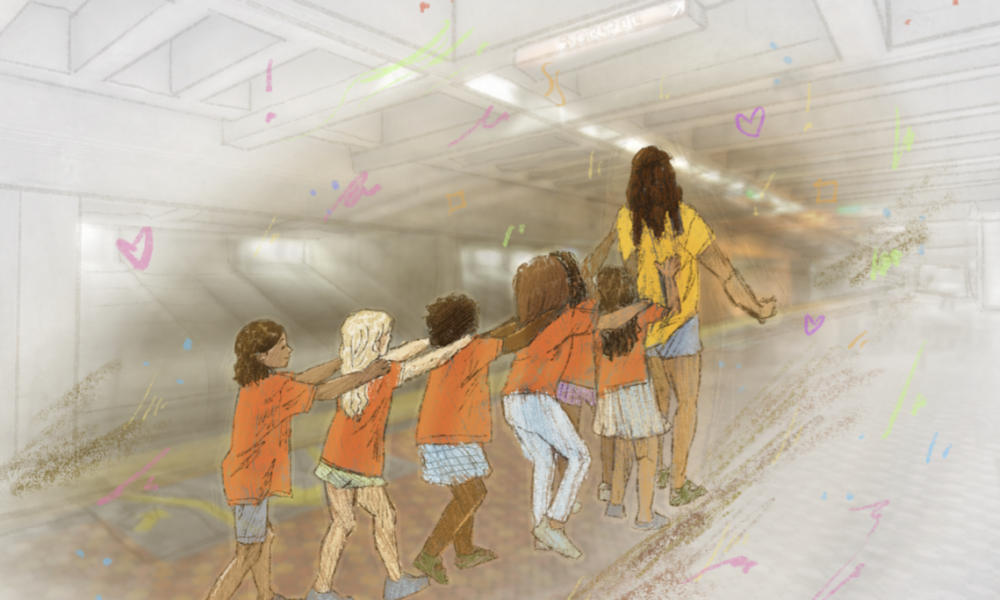
Montreal day camp fosters feelings of belonging among refugee children

Summer camp is a quintessential Canadian experience, whether you find yourself sleeping in a log cabin deep in the woods or roaming around the city visiting different museums and monuments. Camp allows individuals to build lifelong friendships and create lasting memories, all while immersing themselves in Canada’s natural and man-made wonders. 

It is no surprise, then, that summer camps provide an excellent means of cultural and social integration for newcomers to Canada. For asylum seekers, summer camps offer a low-stress environment to learn about and adapt to a new place, incorporating fun and community bonding throughout the process.  

In a recent study published in the International Journal of Intercultural Relations, Hend Alqawasma, a PhD student in McGill’s School of Social Work, explored how newly arrived Syrian and Palestinian refugee children experienced a sense of belonging at Camp Cosmos, a summer day camp in Montreal. 

“Belonging is an important component of social integration,” Majorie Aude Rabiau, assistant professor in McGill’s School of Social Work and co-author of the study, said in an interview with The Tribune. “I see belonging as the connection to others, the story we tell ourselves about who we are in the community, and how we fit into the community.”

The overarching goal of the study was to discern what facilitated feelings of belonging among refugee children and families in a recreational context. Throughout their interviews with the children, their families, and the camp counsellors, the researchers found that three primary concepts were involved in fostering a sense of belonging: Inclusion, relationships, and environmental mastery.

Refugee children worked together to improve their language abilities, which ultimately increased community bonding and their sense of inclusion. The camp staff and campers formed meaningful relationships, as the staff ensured the children’s voices were acknowledged. Additionally, the camp included many activities that explored Montreal’s cultural offerings and its transportation systems. Consequently, the campers felt they had a better handle on the city by the time the camp had ended. 

Camp Cosmos gave the researchers a unique opportunity to observe how positive experiences in a recreational setting affect social behaviours, namely because of the ethos on which the camp is built: It was specifically designed to ensure these children feel welcomed.

“By default, there was an anti-oppressive philosophy or approach to the way the camp was set up [….] The counsellors also have similar lived experiences, they are also refugees,” Rabiau said. “This aspect of shared experiences or shared languages, I feel like it really gives a secure base for the kids to have an initial feeling of belonging and inclusion, where they can then explore and grow more language skills and mastery.”

Another crucial component is that these programs are accessible regardless of economic status. Camp Cosmos uses a sliding scale payment system, adjusting the costs based on family financial capacity, thereby reducing economic barriers. 

The camp sets itself apart from other settings—such as school—in that it teaches the campers about Montreal’s cultural norms while celebrating their own cultural backgrounds. The environment is explicitly designed to be conducive to both learning and having fun. 

 “Their own cultural background is celebrated in that space, which I don’t think is necessarily felt all the time in other spaces [….] It offers a place where they do feel, from the beginning, accepted, respected, and valued, and then they can grow their confidence and their mastery of different skills, including language and making friends and understanding how the city works, for example,” Rabiau noted.

PhD Student Alqawasma, who led the study, drew motivation from her personal experience to study how refugee children experience belonging.

“As a Palestinian woman whose parents were exiled and who was always worried to lose my Palestinian status, I always wondered what helps us feel like we belong to a certain place or a community, and what would support my sense of belonging to Montreal,” Alqawasma wrote in an email to The Tribune.

Ultimately, this study underscores the need for culturally sensitive recreational programs such as Camp Cosmos for facilitating social integration and belonging among newcomers.


McGill, News, Recap

McGill to charge students for Fall Convocation guests, despite spring backlash

On May 8, Interim Deputy Provost (Student Life and Learning) Angela Campbell emailed graduating students that they must pay $25 CAD to bring two guests to the Tomlinson Fieldhouse Spring 2025 Convocation ceremonies. This update, along with ceremony timing changes, sparked outrage amongst attendees, who expected the four free guest tickets and Lower Field graduations that McGill has historically provided. Students whose guests had already booked travel to Montreal scrambled to obtain extra tickets.

The next day, Campbell sent another email to affected students, announcing that McGill would waive ticket costs and reinstate the four guest allowance. Campbell also acknowledged the university could have managed Convocation planning “more effectively.”

Henry Olsen, a Spring 2025 Faculty of Arts graduate, called McGill’s initial decision to charge students for guests “money farming” in a written statement to The Tribune.

“Even when [McGill] had to rent out the Bell Centre [in 2024], a building they didn’t even own, the [graduation] tickets were free!” Olsen wrote. “It’s obvious they’re trying to fix their financial books.” 

In a written statement to The Tribune, the McGill Media Relations Office (MRO) explained why Convocation was not held on the Lower Field.

“The decision to hold Convocation at the Fieldhouse in Spring 2025 was made after considering a number of elements, including the significant construction work underway on campus,” the MRO wrote.

Olsen posited that McGill only reversed changes to Spring Convocation when some incoming alumni pledged to withhold future university donations.

“It’s only when the brand name ‘McGill’ is hurt by publications of their incompetency […] that they change,” Olsen wrote.

An upcoming McGill graduate who wished to remain unnamed shared in a written statement to The Tribune how disappointing they found McGill’s renewed decision to charge students for guests at Fall 2025 Convocation, held at Salle Wilfrid-Pelletier.

“In light of the reaction for the Spring Convocation, this feels like a slap in the face,” the student wrote.

News, The Tribune Explains

The Tribune Explains: Pregnancy care for McGill students 

This article serves as an informational resource only and does not provide medical advice. Please consult a medical professional for more information on pregnancy care in your community.

Following an exploration of childcare services on campus and a guide to abortion access for McGill students, The Tribune finds it vital to publish a Tribune Explains on access to pregnancy care. Although the tiny, cramped seats of Leacock 132 do not paint a pregnancy-friendly picture of campus, there are several avenues for specialized pregnancy care at McGill. 

Where can students find emergency pregnancy resources on campus? 

The McGill University Health Centre (MUHC) has an Obstetrics department designed for high risk pregnancies. Accessing pregnancy care at the MUHC requires a referral from a physician, which patients can obtain at a walk-in clinic. However, for a pregnancy that is not high risk, the department will direct patients to a different obstetrician. 

For early pregnancies, the MUHC provides specialized care through their Early Pregnancy Rapid Assessment Clinic (EPRAC), which supports pregnant people under 18 weeks experiencing abnormal symptoms like bleeding or severe cramping. The appointment slots at the EPRAC are first come, first served on a daily basis, open Monday through Friday mornings. 

For pregnancies past 18 weeks that require emergency support, students can access the MUHC’s Birthing Centre. Emergency circumstances include a patient’s water breaking, vaginal bleeding, or other worrying symptoms as listed on the MUHC’s website. Patients can contact The Birthing Centre by phone 24 hours a day, seven days a week. 

What other resources does the MUHC provide? 

Aside from the numerous clinics within the MUHC’s Obstetrics department that provide care in cases of extreme or complicated pregnancies, the MUHC also offers educational resources for those experiencing a first-time pregnancy. These resources outline how to register as a patient—with the MUHC or an outside hospital—how to support newborn diets, and how to breastfeed. Recognizing the intense changes pregnancy can bring about, the MUHC provides resources for mental health support during pregnancy, support following miscarriages, and legal contacts for cases of domestic violence. 

Where can I go for pregnancy support in greater Montreal?

For most pregnancies that are past 18 weeks and not high risk, one must seek an obstetrician beyond McGill. For example, Centre hospitalier universitaire Sainte-Justine is one of the top pediatric hospitals in North America, situated behind Mont Royal on Decelles Avenue. Sainte-Justine provides patients obstetric care from the beginning of pregnancy to the end, with specialists available. 

How can I access accommodations as an expecting parent? 

McGill has a set of accommodation guidelines to assist with pregnant students’ needs. The guidelines note that pregnant students are responsible for reaching out to their department’s Student Affairs Office, whose specific Undergraduate Program Director will meet with the student to decide in advance where they can make accommodations. The student must provide medical documentation of pregnancy to the Office.

Where can I find financial support? 

Patients can apply for financial reimbursement through most health insurance plans, including McGill-provided international health insurance, after they have paid for treatment. 

If a pregnant student is employed, applying for the Quebec Parental Insurance Plan during pregnancy can help ease the financial load of taking care of a newborn baby. In order to apply, one must be a Quebec resident, and have either stopped working or expect to experience a 40 per cent decrease in income following the birth. 

For more information on resources for pregnant students, visit the MUHC website. If you need urgent medical support, call 911.

Commentary, Opinion

Canada, union-busting won’t fly

On Saturday, Aug. 16, over 10,000 flight attendants went on strike in protest of Air Canada’s longstanding refusal to pay employees for their “ground work,” a term describing the labour obligations flight attendants execute while preparing the aircraft prior to take-off and after landing. The average flight attendant completes over 400 hours of unpaid ground work every year. This disgrace to the Canada Labour Code is a major striker grievance—alongside, more generally, the pursuit of wage and benefit increases. The strike held impressive economic leverage: Air Canada was forced to cancel over 3,000 flights, leading to the disruption of an estimated 500,000 customers’ flight plans and a loss of $40 million CAD in revenue for each day of the strike.

Strikes are a legally protected collective bargaining strategy under the Canadian Charter of Rights and Freedoms. Their ability to create profit-related discomfort for recalcitrant corporations is a widely accepted method of achieving just outcomes in the face of employer-employee power imbalances. Yet, a mere 12 hours after the Air Canada strike began, Minister of Jobs and Families Patty Hajdu declared the strike unlawful for its interruption of Canadian industrial activity, issued a back-to-work order, and forced the two parties to enter binding arbitration. Thousands of flight attendants elected to defy Hajdu’s orders and continue striking, but the question remains: Why should the Government of Canada feel empowered to union-bust due to economic disruption, a fundamental feature of strikes?

Hajdu’s power is derived from Canada Labour Code Section 107, through which Ministers in her position—via the Canada Industrial Relations Board (CIRB)—can force the end of strikes and declare mandatory negotiation periods in cases of major harm to Canadian industry. This is not the first time meddling legal action by the Canadian government has interrupted a strike: Section 107 has been invoked in several other labour disputes, including the recent Canada Post strike in 2024. Hajdu is not incorrect to interpret the hundreds of millions of dollars lost due to the strike as constituting an event with profound impact on Canadian business. However, her choice to invoke Section 107 does not speak to an empathy with travelers who endured flight cancellations nor to a dire urgency to resume air travel. Rather, the issuance of a back-to-work order reveals a disturbing governmental distaste for union activity. After all, weather has shut down airports in Canada for longer than the government allowed Air Canada flight attendants to strike.

Overuse of Section 107 has systematically undermined workers’ rights for over 40 years, most principally the right to free and fair collective bargaining as guaranteed under the Canadian Bill of Rights. However, as is evidenced by the Air Canada flight attendants union’s continuance of their strike, Section 107 is no longer even enforceable. By striking despite the threat of legal consequences, the Air Canada flight attendants have proven that unions need not capitulate to institutional intimidation—a precedent that will shape the behaviours and strategies of labour associations for decades to come.

Furthermore, the Air Canada strike has revealed that unions achieve more equitable deals through inter-party discourse than through deals influenced by government intervention. In the days following the flight attendants’ defiance of the CIRB’s back-to-work order, the airline pledged a 38 per cent overall increase in wages alongside an offer of ground pay at 50 per cent of the employees’ hourly rates. Although the Air Canada union ultimately declined this offer, seeking 100 per cent compensation for their work on the tarmac, the unprecedented magnitude of this tentative deal speaks to the increased bargaining capacity made available to the union through persistent striking in the face of government-led union-busting. 

So, McGill students, when you find yourself stuck for hours in YUL due to strike-related flight cancellations, or even waiting for classes to resume during the next faculty union strike, remain supportive and empathetic. The inconvenience of a delay pales in comparison to the cruciality of fair working conditions. In fact, union members and employers will achieve an equitable resolution more efficiently—and more justly—if they are empowered to engage in free discourse, unhindered by government overstep.

Editorial, Opinion

McGill must confront its hand in human torture

//Content warning: Medical abuse, racial and colonial violence//

After decades of institutional negligence, a new class-action lawsuit presents McGill with the opportunity to formally address its role in the human torture experiments conducted through the CIA-funded MKUltra program. Given this opening for reparative action, McGill must reconcile its historic and ongoing violence towards the Indigenous communities whose children were disproportionately represented as victims of the program.

Dr. Donald Ewen Cameron designed and led the MKUltra experiments at McGill University. Though allegedly aimed at addressing schizophrenia, these experiments were funded by the CIA with motives of ‘mind control’ through inhumane human “depatterning” procedures—including the erasure of memory through extreme high-voltage shocks, hallucinogenic drugs, sensory deprivation, and sedatives

In July, Quebec Superior Court Judge Dominique Poulin authorized a class-action lawsuit against Royal Victoria Hospital, McGill University, and the federal government for their enablement of these unethical human psychological experiments, administered at McGill’s Allan Memorial Institute between 1948 and 1964. The plaintiffs are demanding compensatory damages for all patients of the experiments, as well as their family members and dependants.

This lawsuit marks the first major action within the Canadian judicial system to condemn the MKUltra program while simultaneously holding the institutions who oversaw the program directly accountable for comprehensive financial reparations. In the 1980s, 300 survivors filed for compensation from the Canadian government, yet only nine received financial reparation; the CIA maintained that its actions were appropriate at the time. Of the 300 survivors, 250 were denied compensation altogether due to failure to produce the required medical documents—many of which were destroyed by the CIA in the 1970s.

A large number of the MKUltra victims were Indigenous children taken from residential schools, many of whose bodies were never recovered. In May, the Kanien’kehá:ka Kahnistensera (Mohawk Mothers) alleged evidence of potential human remains from these experiments at the Royal Victoria Hospital, where McGill’s $870-million CAD New Vic Project renovation is underway. This latest report uncovers a third type of evidence of human remains detected by remote sensing technologies during the Mohawk Mothers’ years-long legal battle with McGill. The findings reinforce the Mohawk Mothers’ rightful and scientifically-founded authority in determining the proper approach to investigations at the New Vic site. 

McGill, however, has not only been dismissive of the Mohawk Mothers’ demands and evidence of human remains, but has also failed to formally acknowledge the central role the university played in orchestrating the MKUltra program. In fact, the McGill University Health Centre (MUHC) claims that Dr. Cameron worked in an “independent manner,” asserting that the hospital was not his legal employer, despite Dr. Cameron being the acting chairman of the McGill psychiatry department while conducting the MKUltra experiments in the university’s facilities. The Canadian government has been similarly negligent of its role in the human torture experiments—dismissing lawsuits and calling survivors’ claims of abuse ‘unfounded’—despite providing half a million dollars in funding to the program, equivalent to $4 million CAD today.

McGill’s institutional disregard for its violent colonial past is epitomized by its relentless prioritization of the New Vic Project. Despite facing massive budget cuts and almost $200 million CAD in projected deficits, resulting in hundreds of layoffs and a hiring freeze, McGill has maintained that the New Vic Project remains a “priority.” As the Mohawk Mothers demand the most fundamental rights to investigate their land, McGill continues to prioritize its settler colonial agenda while destroying and building over the site of torture at McGill’s hand

This new class-action lawsuit plays the crucial role not only of demanding formal justice for all victims of the MKUltra experiments, but also of rejecting the idea that the program was an isolated abuse of the past. Instead, it centres justice for the victims and survivors of the program as a pressing issue of //today//. 

As an institution, McGill cannot continue to give lip service to reconciliation while proceeding with construction atop alleged unmarked Indigenous graves, dismissing the Mohawk Mothers, and denying its own essential role in the MKUltra experiments. It must commit to the investigation of potential remains on the New Vic site and make a formal public acknowledgement of—and apology for—its role in the experiments. 

McGill professors, as individuals with immense intellectual influence, must also give a platform to education on McGill’s colonial legacy on Tiohtià:ke land, and Canada’s abuse of First Nations’ unceded territories. The unconscionable abuses of MKUltra cannot be marginal or absent in any lecture hall at the university which facilitated it, and neither can the past and ongoing battles of Indigenous communities like the Mohawk Mothers—battles given sparse and often antagonistic coverage in the media. 

Finally, as students, it is our responsibility to educate ourselves and each other about the horrific abuses that occurred at the university in which we are all enrolled, as well as the continuing history of the land we walk on. 

Album Reviews, Arts & Entertainment, Books, Film and TV, Music

What we liked this summer break

The Summer I Turned Pretty Season 3 – Bianca Sugunasiri, Arts and Entertainment Editor

This summer brought sun, sea, and the newest season of Jenny Han and Gabrielle Stanton’s show The Summer I Turned Pretty, perhaps more appropriately named ‘The Summer I Made Poor Decisions.’ Season 3 follows Isabel “Belly” Conklin’s (Lola Tung) ‘bridezilla’ moment as she tries to navigate wedding planning with her man-child fiance. By this point, after watching Belly ping-pong between the two brothers she grew up with while trying to detangle her feelings, you find yourself wondering how someone could possibly have such disregard for the emotions of those around her. Not to mention the playboy tendencies of Jeremiah Fisher (Gavin Casalegno) being continually questionable. And why can’t Conrad Fisher (Christopher Briney) simply let go of this girl who is causing him so much heartbreak and dissatisfaction? Despite none of the characters having particularly redeeming qualities, and actually seeming to regress in terms of character development, it nonetheless sparked visceral anticipation for every Wednesday night. Perhaps there is a certain comfort taken from watching young people falling in and out of love so messily. Ultimately, it is within that jumble of imperfection that brings viewers back every week.

The Emperor of Gladness by Ocean Vuong – Norah Adams, Staff Writer

As a university student cresting the wave from the former half of my degree into the latter, it is safe to say that I am experiencing my share of aimlessness. Ocean Vuong’s new novel, The Emperor of Gladness, offered a new perspective on aimlessness. The novel reframes youth not as a collection of regrettable actions but instead as an exploration of how one can grow from their mistakes. The novel centres around nineteen-year-old Hai—a drug-addled college dropout and first-generation American born to Vietnamese immigrants. It begins with him standing at a precipice, both literally and figuratively, atop a bridge in Connecticut contemplating suicide before his death is prevented by an elderly Lithuanian woman named Grazina. Throughout The Emperor of Gladness, Vuong’s protagonist discovers the act of giving himself grace, realizing that his choices and blunders do not define him. Vuong places an emphasis on the merit that relationships provide over the ostensible importance of typically commendable achievements. He prioritizes lesser explored dynamics such as intergenerational friendships, the bond between cousins, and workplace camaraderie. This novel, though spanning through the four seasons, stands out to me as a summer read. In a space where you have all too much time to ponder every mistake in the past and all of the possible misjudgements stretching ahead in your future, Ocean Vuong’s The Emperor of Gladness offers a safe haven of love, second chances, and ultimately, forgiveness. 

Think Of Mist by Dorothea Paas – Alexandra Lasser, Contributor

Dorothea Paas’s 2024 album Think Of Mist offers mesmerizing harmonies and touching lyrics. The album takes listeners on a journey through gentle vocals over the sound of a band unaccompanied by percussion. This choice transforms the album into a kind of meditation, perfect for the long summer days uninterrupted by the usual stress of assignments and exams. The tracks crescendo to the middle of the album with standout song “Made of Mist,” which consists of a progression of sung chords without lyrics. The acoustics she achieves with the slow-changing chords building on top of each other is reminiscent of a choir piece echoing through a large cathedral. The dissonant harmonies throughout the album reflect the vulnerability of her lyrics, and offer listeners an intimate portrait of her thoughts. The Toronto-based musician also released an instrumental version of the album in May where listeners are invited to focus on the band behind her, without lyrics stealing the focus away. Another remarkable song from the album is  Autumn Roses,” a deceptively upbeat piece that drifts between moods and tempos. While the artist has not yet seen widespread fame, her unique sound earned her a spot on The Polaris Music Prize Album Long List for the best of Canadian music.

Student Life

Don’t have A/C? Here are the best places in Montreal to cool down

The rays of an unforgiving sun have descended upon Montreal. The air, hot and heavy, depletes you of energy, sweat, and sanity. In an attempt to escape this stagnant summer heat, you duck into your apartment. But alas, what should be your sanctuary from the elements proves to be only artifice: you have no A/C. How, then, will you find solace in this humid, feverish heat without the comfort of cold air blasting over you? 

Worry not, students with hot apartments. //The Tribune// has you covered with five spots to beat the lingering summer heat while exploring Montreal. 

Dip your dogs in the local pool

Country clubs and fancy gyms are not the only places you can relax by the water. Montreal’s public-pool system provides clean and safe facilities throughout the city, all without charging you a cent. Whether you are interested in lane-swimming, jumping off the diving board, or simply having a laid-back day in the water, the neighbourhood pool is the place to go. While many of Montreal’s outdoor pools are set to close at the beginning of the school year, you can still make a splash at one of the many indoor pools the city has to offer. 

Enjoy great art at Musée des Beaux-Arts Montréal

Exhausted from soaking up the summer heat? Why not soak up the masterpieces of the art world instead? Montreal’s Musée des Beaux-Arts offers a journey through art history, culture, and climate-controlled exhibition spaces. From Renaissance-age works by the old masters to contemporary Indigenous art, you are sure to find majesty anywhere you go in this museum’s excellent collection. And with free admission to most exhibitions for those under 25, it is the perfect activity for the student on a budget. 

Support independent cinema at Cinéma Du Parc

Whether you are a //bona fide// cinephile or a casual moviegoer, Milton-Parc’s Cinema du Parc has something for everyone. Conveniently located under New Residence Hall in Les Galeries du Parc, the theatre offers three screens, $11 CAD student tickets, and a wide range of films. If you are a real film buff, check out their ongoing “Minuit Au Parc” program for re-screenings of popular favourites and cult classics. Their upcoming series, entitled “Creatures,” features films which showcase the diverse world of monsters within the horror genre from Sep. 5 to Nov. 2.

Explore different environments in the Biodôme

Brave the coasts of Labrador, the maple forests of the Laurentides, the islands of Canada’s sub-Antarctic region, and more—all in a single day at Montreal’s famed Biodome, housed in the iconic Olympic Stadium. You cannot control the weather outside, but with a student ticket for just $14.50 CAD, you can explore the flora and fauna of more temperate biomes. With guided activities like penguin feeding times and natural history exhibits, a visit to the Biodome should be on every overheated Montrealer’s bucket list. 

Winter sports in the summer at Atrium le 1000

Busy and bustling downtown Montreal might be the last place you would expect to escape the heat—unless you know about the indoor ice-skating rink that remains open all year. Located on the first floor of the 1000 Building lies Atrium le 1000, a lively rink under a magnificent glass atrium. With rentals available, upbeat music, and an animated atmosphere, Atrium le 1000 makes the perfect activity both for winter enthusiasts and anyone tired of run-of-the-mill summer activities. 

Off the Board, Opinion

Serious reflections

The worst insult I ever received was at a parent-teacher conference. My third-grade teacher joked that I was “very serious” about school. I would have preferred it if she failed me. 

Taking something seriously was, to me, horrifying. It was an insurmountably embarrassing hallmark of someone uncool, someone self-important who lacked the airy and ironic character that makes people likable. As such, I was determined to rid myself of this distasteful habit.

As it turns out, I’m still bad at this. When I applied to be Editor-in-Chief of The Tribune, I came to my three-hour interview armed with a 42-page editorial plan; I told my friends I had a couple of bullet points. 

Fabienne de Cartier, on the other hand, brought 73 pages, unflinchingly. 

Fabienne was a journalist, an essayist, a poet, an athlete, an artist, and a friend. Though I did not know her for very long, she had an exceptional talent for slipping past the perimeter people keep around themselves. 

The first time we spoke was at a party. I had been crying about something so important I’ve now forgotten, and Fabienne pulled me aside, sat me down on the couch, and listened to me for hours until she was certain I was okay. She didn’t have to take me seriously, but she did—that was just how she was. She did nothing half-heartedly, and her care always reached far and ardently towards those around her. From then on, she always offered a warm smile across the newsroom, and in the midst of stressful editorial board meetings and late-night editing, her presence made me braver. 

I came to understand seriousness differently because of Fabienne. I used to see it as something rigid and cold, but the way she sailed through the world rewrote that. Her seriousness wasn’t heavy or joyless. It was resilient, but never stiff. It was intensity in its warmest form, born out of love and care and humility. 

Fabienne’s seriousness manifested in the care she brought to her writing and the thought she poured into our paper. She covered stories others were afraid to—Palestine mobilization at McGill, the Mohawk Mothers case, campus unions, and trans healthcare—with a kind of grace and thoughtfulness that eludes most journalists. 

Her seriousness showed in her journalistic rigour, but also in her joy. It shone in how she talked about her aunt and uncle’s puppet show, lighting up with excitement, until I—someone quite uneasy around puppets—found myself excited too. It showed when she married her long-time partner, committing with love and devotion, because anything worth doing is worth doing wholly. And that is what Fabienne taught me: That seriousness, when best executed, is an act of love. Having something or someone you care about enough to take seriously is not something to be embarrassed by—it’s something to be proud of. It is the coolest thing a person can have, and one of the surest marks of a life well-lived. 

Fabienne passed away three weeks ago after a long and unfair battle with cancer. I grieve the conversations we’ll never have and the edits we’ll never make side-by-side. The loss is immeasurable and devastating, and there is no beauty to be found in it that wouldn’t be outweighed by the beauty of having her around. Still, I search for it—mostly in her 73 pages.

What I’ve found in these notes is the tireless call to take our work seriously: To make the nitpicky, meticulous edits; to spend the extra hour perfecting our drawings; to call ourselves journalists without the student in front. They show me that the seriousness we put into our craft, whatever our craft may be, can grant us a kind of immortality. In that way, Fabienne is still here. By giving her best to everything she loved, she left a piece of herself behind that no cancer or death or passage of time can ever take away. 

Now, when I catch myself in the scary act of taking something seriously, I feel her warm smile from across the newsroom once again—dazzling as ever—and it makes me braver. 

Donations to the Fabienne de Cartier Poetry Award can be made at fabiennedecartier.com.

Science & Technology

A new approach to chronic pain management in children and teens

Chronic pain is not unique to adults; it affects millions of children and teenagers worldwide. In fact, about one in four children will experience a period of chronic pain—pain which lasts three months or more—at least once in their lives. This often-invisible burden can interfere with school, friendships, physical activity, and emotional well-being, significantly impacting quality of life.

When improperly treated, chronic pain affects more than just the child. It can ripple through families, causing stress, disrupting daily routines, and leading to financial hardship. Over time, poorly treated pain can also increase the risk of chronic health issues and may even shorten life expectancy.

However, there is growing hope for chronic pain treatment through Pain Neuroscience Education (PNE): A method designed to help people understand what pain really is, why it happens, and how the brain and body interact when experiencing it. While PNE and its applications have been well documented in adults, much less is known about its effectiveness in younger populations. At the forefront of this emerging area, researchers at McGill University are now spearheading efforts to explore how to adapt PNE to help children and adolescents living with chronic pain. 

“Key strategies of PNE include the use of simple explanations, metaphors, images, interactive games, videos, and stories to teach concepts like how the brain processes pain, the role of emotions and thoughts, and how active coping strategies can help manage pain,” Felipe Reis, adjunct professor at McGill’s School of Physical and Occupational Therapy, explained in a written statement to The Tribune.

Noticing the lack of research on PNE for children and teens, Reis designed a study to explore how this promising educational approach is being used in pediatric settings.

“Our study addresses the lack of information about how PNE is delivered to children and adolescents,” Reis shared. “While PNE is well-studied in adults with chronic pain, there was very limited knowledge about what topics are covered, how the education is adapted for younger audiences, and how it is delivered in pediatric populations.” 

The findings revealed wide variation in how PNE is designed and delivered to younger patients. Most programs addressed essential topics including psychological and social factors, pain-related concepts, coping mechanisms, and neurophysiology—how pain works in the body.

Some also included more advanced ideas, such as how pain shifts from acute to chronic and the brain’s ability to adapt through neuroplasticity.

When it came to the delivery of PNE, Reis found that programs used a wide range of methods.

“PNE was delivered through slideshows, educational videos, booklets, board games, comic books, virtual reality, and even mobile applications,” Reis wrote. “These strategies often aimed to make complex concepts more engaging and understandable for younger audiences by using visuals, storytelling, and interactive formats.” 

The length and number of sessions also differed from adult programs. In children, PNE was usually delivered in one to six sessions, each lasting between 8 and 60 minutes—shorter and more concise than typical adult sessions. These adjustments can better align with children’s developmental stages and attention spans.

“The diversity in content, formats, and dosage reflects the early stage of research in this area and highlights the need for more standardized and developmentally sensitive approaches when implementing PNE for children and adolescents,” Reis noted.

His study is the first to map out exactly how PNE is being used with younger populations, providing an important foundation for future research and clinical work. 

Looking ahead, Reis recommends that future studies focus on outcomes that matter most to young patients and their families, such as pain levels, physical activity, sleep quality, emotional health, stress, and family dynamics.

“Based on our findings, future studies should prioritize the development of age-specific PNE interventions that are carefully tailored to children’s cognitive and emotional development,” Reis wrote. “More research is needed to determine the optimal “dosage”; that is, the ideal number and duration of sessions to maximize learning and behavioral change in children and adolescents.” 

His team also suggests that clinical trials explore how PNE works on its own as well as alongside other treatments like exercise. These studies will be key to understanding just how effective PNE can be in helping young people manage pain and lead healthier, more empowered lives.

Read the latest issue

Read the latest issue