

Latest News

Football, Know Your Athlete, Sports

Know Your Athlete: Eloa Latendresse-Regimbald

Eloa Latendresse-Regimbald, U3 Education (Physical & Health), has been a standout on the Redbirds football team from the moment he stepped on campus. After winning the Réseau du sport étudiant du Québec (RSEQ)’s Most Outstanding Player award and being selected for Vanier College’s CEGEP Division 1 All-Star Team, Latendresse-Regimbald continued his success at McGill, becoming the university’s third football player to win the Peter Gorman Trophy, awarded to the U SPORTS Rookie of the Year. 

The lefty quarterback is a Montreal native whose football origins trace back to his time as a youngster in Saint-Laurent. 

“I started at seven, eight years old […] in small community ball,” Latendresse-Regimbald said in an interview with The Tribune. “I [played] many positions, tried different things, especially […] in city ball, [where] you need to play offence and defence, and it’s only in high school where [quarterback] became my main focus.” 

This experience playing multiple positions helped Latendresse-Regimbald excel when he eventually played quarterback full-time, as he is now a dual-threat quarterback who can make plays both running and throwing the football.

Following Latendresse-Regimbald’s last season at Vanier, he was faced with the daunting decision of choosing where his university football future would lie. Being able to play weekly in his hometown, in front of friends and family, ended up being a major factor in his decision to join the up-and-coming Redbirds.

“When I did my recruiting process […] I thought about leaving, but then I was like, ‘Why leave when I can play with some guys from Montreal, some people I’ve met before, and my family’s always there?’” Latendresse-Regimbald said.

Since starting with the Redbirds, Latendresse-Regimbald has thrown for almost 5,700 yards, ran for nearly 2,000, and posted 44 total touchdowns. He broke Thomas Barbeau’s 46-year-old school record for rushing touchdowns in a 38-22 victory over Sherbrooke Vert & Or on Aug. 22. This came as news to Latendresse-Regimbald.

“I actually didn’t know I broke [the] record till after the game […] but it’s a huge milestone,” he shared. “It’s been a couple of decades back, which is pretty cool [to be able to] break this and bring it back to the present.”

Latendresse-Regimbald also emphasized that this accomplishment would not have been possible without the people around him.

“Every touchdown is a team effort,” Latendresse-Regimbald stated. “My teammates were there to block, […] coaches were there to make a small play [in the] play calling, and at the end of the day, it’s all about the execution. So it’s a huge personal milestone, but [there’s] also a good team aspect to it.”

In a few short years, Latendresse-Regimbald has risen from Rookie of the Year to an unforgettable player in Redbirds program history. He has grown both in his on-field role as quarterback, and in his role as a team leader off the field.

“You need to build a strong connection as a quarterback, because there’s only one quarterback on the field […] you want to get to know everyone,” Latendresse-Regimbald told The Tribune. “[My teammates] know that [my] door is always open for them to come up and to chat about anything and everything [they] want. You want your teammates to feel supported.”

The Redbirds face a challenging slate of games this season, and are looking to improve on their fortunes from the past few years. Despite Latendresse-Regimbald’s individual success, the team is a combined 5–20 in his time at McGill. He is confident that this year, the tide of the program can turn.

Coach [Alex] Surprenant is really, really [pulling] some strings out there and […] it’s really coming together,” Latendresse-Regimbald reported. “It’s really amazing to see what it’s like, to be part of [building a program], and really having the chance to see and witness everything and be a pillar in it.”


McGill, News

Negotiations continue over QPIRG and McGill’s MoA

In January 2025, McGill Interim Deputy Provost (Student Life & Learning) Angela Campbell issued a notice of default of McGill’s Memorandum of Agreement (MoA) with the Quebec Public Interest Research Group (QPIRG) at McGill. The university warned QPIRG that it will suspend the student funding that QPIRG receives if the organization continues to support Students for Palestine’s Honour and Resistance (SPHR).

SPHR is one of QPIRG’s 17 working groups, which are collectives of students and community members selected annually by QPIRG to receive financial and administrative support from the organization. 

In an interview with The Tribune, Nelly Wat, an outreach coordinator at QPIRG, explained that McGill issued QPIRG a notice of default because McGill views SPHR to have breached the university’s Code of Student Conduct.

“[McGill is] saying that by [QPIRG] supporting SPHR […] by providing funding and resources, we are effectively also in breach of the Code of Conduct, and therefore in breach of our Memorandum of Agreement with McGill,” Wat said.

Wat then described QPIRG’s attempts to negotiate with Campbell and McGill’s Dean of Students, Tony Mittermaier, after McGill issued the notice of default. They reported that two student representatives of QPIRG met with McGill twice in a non-legal setting. According to Wat, both meetings ended in a stalemate.

“[McGill was] saying that […] [we] have to cease providing any funding to SPHR, [that we] have to notify them in writing and provide a read receipt that they have, in fact, received this, that [we are] no longer supporting them,” Wat said. “And until [we] do this, [QPIRG] cannot book events on campus. That was a consequence that [McGill] invented to impose on us, to give us a bit of a sense of urgency, or to pressure us.”

Carl Bystram, a community research and working groups coordinator at QPIRG, explained to The Tribune that the next step QPIRG is taking is to contest the notice of default through arbitration.

“McGill can’t say we’re in breach of contracts, and they can’t declare that unilaterally,” Bystram said. “This actually has to be […] found by an arbitrator or judge. On top of that, there has been a fight to just get McGill to stand by, to obey the [MoA]. So now it is also a procedural issue.”

Bystram also shared that the legal costs of arbitration will be a challenge to QPIRG.

“Arbitration costs $950 [CAD] an hour,” Bystram said. “Bringing small, grassroots social justice groups into court is a way of paralyzing them financially. So regardless of the outcome of the actual arbitration, even if it goes into our favor, we will have lost an enormous amount of resources for this.”

As a result, QPIRG has launched a legal fundraiser, aiming to raise $15,450 CAD to support their legal efforts. As of Sept. 3, they have raised $10,559 CAD, with major donors including Queer McGill and The Association of Graduate Students Employed at McGill.

In a written statement to The Tribune, McGill’s Media Relations Office (MRO) reiterated that SPHR is unaffiliated with McGill and that the university supports rightful protest on campus, despite its decision to issue QPIRG a notice of default.

“The QPIRG MoA was terminated because of its [expression of] support, including financial support, for SPHR,” the MRO wrote. “[….] To be clear, McGill is firmly committed to freedom of expression and has no issue with lawful activism and protest regardless of the cause.”

In an interview with The Tribune, former Students’ Society of McGill University (SSMU) Vice President External Affairs Hugo-Victor Solomon pointed out similarities between QPIRG’s and SSMU’s respective conflicts with McGill.

“This fight that QPIRG is going through is identical to the fight that SSMU went through,” Solomon said. “In the default letter that [Campbell] sent to QPIRG, she actually […] just sent a copy of what she had sent [SSMU] [….] It’s unsettling to say the least.”

Bystram also noted a pattern of McGill exercising legal tactics against student groups. 

“Court cases aren’t things that necessarily a lot of universities do, like the kind of constant threat over [MoAs], it’s actually quite McGill-specific,” Bystram said. “This is a part of a financial weight that they add on student resources. It is also an extremely expensive procedure on their end, and they keep on doing this while they claim to be broke.”

Bystram further outlined how QPIRG will proceed if they are to be found in default during arbitration. They mentioned how McGill is exploiting its policies to target student activist groups.

“There [would be] a procedure where we [would have to] restructure the organization until it is in compliance with the contract,” Bystram explained. “We have interpreted this as meaning that we would have to drop SPHR [as a working group] [….] [McGill’s] Code of Conduct is not meant to be used against a group. They’re really changing the rules so that they can have exceptions where they’re able to repress political action on campus.”

Solomon highlighted QPIRG’s dedication to social and environmental justice, and its important place in life at McGill.

“Oppressing student mobilization on baseless claims should never be tacitly accepted or normalized,” Solomon said. “[QPIRG has] become an invaluable part of the fabric of this community. It’s not the first time that McGill has tried to go after them [….] The fact that they’ve been around for decades is a testament to how invaluable their presence is.”

Research Briefs, Science & Technology

Bad balance? Blame your concussion

Concussions: Either you have had one, or you know someone who has. These injuries are incredibly common—particularly in high-contact sports such as football, hockey, and rugby—and they can leave lasting, debilitating impacts. Yet, despite their dangers, concussions are hard to objectively identify by a third party, making them difficult for coaches and sports medicine professionals to manage. 

However, a paper recently published in Medical & Biological Engineering & Computing by orthopaedic surgeon and McGill Professor Paul Martineau shows that concussion symptoms may not be as unidentifiable as they are currently perceived.

This article came about in a very roundabout way; some might say it was a happy accident. As an orthopaedic surgeon, concussions are outside of Martineau’s specialty. His research centres on the knee and preventing ACL injuries, with his current project focusing on ACL injury prevention through the use of an AI prediction model.

The AI model was trained with data collected from McGill varsity athletes over the course of a decade. However, what Martineau was expecting to be two data sets—high-risk athletes versus low-risk athletes—turned out to be three: There was a mystery third group of athletes who were neither high nor low risk, they just jumped differently.

“The third group that popped up that the AI model found, when we looked back, turned out to have a history of concussions [rather than] a present concussion, a concussion they are supposed to be fully recovered from,” Martineau said in an interview with The Tribune.

This third group of previously concussed athletes had empirically worse balance than their non-concussed peers. They took longer to regain their balance after doing a single-leg jump on their non-dominant leg, with a mean difference of 0.35 seconds.

The significance of this data is twofold. First, it shows that concussions have negative impacts on athletes years after they are sustained. Whether these effects are caused by the concussions themselves or simply concussion treatment protocol is still to be determined, but the cause of the change is less pressing than the change itself. 

“These findings show [previously concussed athletes] are not jumping like their healthy, elite teammates anymore,” Martineau explained.

Secondly, this data shows that the impact of concussions is measurable. Current sideline concussion assessment techniques rely on rapid screening: Reading, memory, and eye-movement tests. These tests can be effective, but they are unfortunately not foolproof.

While athletes recognize the health dangers of a concussion, they often see a concussion as nothing more than time spent on the bench. Because of this, many athletes “sandbag” their baseline concussion tests: They purposely get low scores, meaning that if they sustain a concussion, the impacts are less noticeable. 

“Concussion history is less objective because a player may not voluntarily tell you, because it may lead to that player being taken out of play or not being cleared to play,” Martineau told The Tribune. “So there’s this concept and this literature behind, you know, sandbagging your concussion history.” 

Sandbagging is a dangerous practice, but has been considered unpreventable. Martineau’s study has the potential to change this. 

“These were preliminary findings, but we’re continuing to delve into them and properly tease them out,” Martineau explained.

Martineau is hopeful that the ACL injury prevention app he and his team have developed for athletes will eventually incorporate some concussion history analysis. 

“We’re not including any concussion-related features to start, just because all of this was preliminary data and stuff like that,” Martineau said. “So right now, [the app] is really ACL injury prevention specific, and then we’ll continue to work behind the scenes and see how [concussion-related features] can be included in future iterations.” 

Ultimately, Martineau’s findings have begun to shed light on the previously hidden impacts of concussions. The detrimental effects concussions have are now shown to be correlated with long-lasting balance issues—something well worth avoiding if at all possible.

This being said, if you have been concussed in the past and you happen to have notoriously bad balance, Martineau’s findings have given you the excuse you have been looking for: You hit your head when you were twelve, and now you struggle to stand on one leg. 

Arts & Entertainment, Music

Rainy OAP performance rinses away pretenses

Despite the cold open that Montreal student band The Longest Year was supposed to deliver as the first act of the day, the audience who crowded around the tented Open Air Pub (OAP) stage on Thursday afternoon had seemingly already warmed. Even more surprisingly, their wet hair was plastered to their foreheads, and their damp jeans bunched uncomfortably at their knees. The vitality amongst McGill students attending OAP was due to a surprise opener that trickled in that Thursday: The Rain. 

Before the OAP musical set began, I sat perched under the drooping umbrella of a friend, socks getting wetter and frustration mounting. With my backpack sitting in the sopping grass at my feet and thoughts of what that could do to my laptop filling my mind, I pondered skipping the show entirely. That being said, with a beer in hand and this article to write, I decided to stick it out; I’m not made of sugar, after all!

The show started off with a fizzling intensity, showgoers’ energy ramping up vigorously as the sound of guitar crashed around them. Music eddied in tendrils throughout the quad, blending seamlessly with the thunder booming overhead. Quick streaks of lightning were confused with the flashes of bright lights upon the stage. The spirit of their audience brought out the best in The Longest Year, each member seeming to thrash their heads harder from one song to the next. The band played a set including original songs as well as covers from bands such as Radiohead and The Strokes—Julia Gribrinski’s powerful voice making the songs their own. 

August’s last dose of summer storm seemed to provide for the crowd a cleanse of inhibitions. Perfectly styled hair was reduced to limp strands; makeup looks melted into nothing but smeared pigment. The only thing left was the music, and so they danced. All around me, students shimmied and shook like no one was watching, the slight haze cooked up by the dampness in the air creating the feeling as if we were in a world alone. Despite being sheltered under the tent of the stage, when asked about his performance, bassist of The Longest Year Noah Aldinger first noted the weather.

When the last whine from the amp rang out, there was nothing but wide grins. Friends laughed amongst each other while others hollered at the band to play just one more song. Walking home from the show—truthfully more like jogging, as I fantasised about dry pyjamas—I was struck by the pure energy of the people who attended. It was one void of self-consciousness, the destruction of image enacted by the rain allowing people to fully let loose. 

Returning to campus this semester, I have noticed a strong emphasis on polished presentation. People confess that they feel they should have more friends at this point in university, or that they are sad that they haven’t bought a pair of Hunter Boots—they are back in style, after all. I cannot call myself exempt from this, already finding it hard to turn down social engagements for the fear of losing friendships or being perceived as too much of a homebody. 

Last Thursday afternoon, drenched and dancing under a lit up sky, needs to be something that is brought into our lives this school year. Let us ditch the barriers that self-perception and insecurity construct between us and having a good time.

Commentary, Opinion

Canada, union-busting won’t fly

On Saturday, Aug. 16, over 10,000 flight attendants went on strike in protest of Air Canada’s longstanding refusal to pay employees for their “ground work,” a term describing the labour obligations flight attendants execute while preparing the aircraft prior to take-off and after landing. The average flight attendant completes over 400 hours of unpaid ground work every year. This disgrace to the Canada Labour Code is a major striker grievance—alongside, more generally, the pursuit of wage and benefit increases. The strike held impressive economic leverage: Air Canada was forced to cancel over 3,000 flights, leading to the disruption of an estimated 500,000 customers’ flight plans and a loss of $40 million CAD in revenue for each day of the strike.

Strikes are a legally protected collective bargaining strategy under the Canadian Charter of Rights and Freedoms. Their ability to create profit-related discomfort for recalcitrant corporations is a widely accepted method of achieving just outcomes in the face of employer-employee power imbalances. Yet, a mere 12 hours after the Air Canada strike began, Minister of Jobs and Families Patty Hajdu declared the strike unlawful for its interruption of Canadian industrial activity, issued a back-to-work order, and forced the two parties to enter binding arbitration. Thousands of flight attendants elected to defy Hajdu’s orders and continue striking, but the question remains: Why should the Government of Canada feel empowered to union-bust due to economic disruption, a fundamental feature of strikes?

Hajdu’s power is derived from Canada Labour Code Section 107, through which Ministers in her position—via the Canada Industrial Relations Board (CIRB)—can force the end of strikes and declare mandatory negotiation periods in cases of major harm to Canadian industry. This is not the first time meddling legal action by the Canadian government has interrupted a strike: Section 107 has been invoked in several other labour disputes, including the recent Canada Post strike in 2024. Hajdu is not incorrect to interpret the hundreds of millions of dollars lost due to the strike as constituting an event with profound impact on Canadian business. However, her choice to invoke Section 107 does not speak to an empathy with travelers who endured flight cancellations nor to a dire urgency to resume air travel. Rather, the issuance of a back-to-work order reveals a disturbing governmental distaste for union activity. After all, weather has shut down airports in Canada for longer than the government allowed Air Canada flight attendants to strike.

Overuse of Section 107 has systematically undermined workers’ rights for over 40 years, most principally the right to free and fair collective bargaining as guaranteed under the Canadian Bill of Rights. However, as is evidenced by the Air Canada flight attendants union’s continuance of their strike, Section 107 is no longer even enforceable. By striking despite the threat of legal consequences, the Air Canada flight attendants have proven that unions need not capitulate to institutional intimidation—a precedent that will shape the behaviours and strategies of labour associations for decades to come.

Furthermore, the Air Canada strike has revealed that unions achieve more equitable deals through inter-party discourse than through deals influenced by government intervention. In the days following the flight attendants’ defiance of the CIRB’s back-to-work order, the airline pledged a 38 per cent overall increase in wages alongside an offer of ground pay at 50 per cent of the employees’ hourly rates. Although the Air Canada union ultimately declined this offer, seeking 100 per cent compensation for their work on the tarmac, the unprecedented magnitude of this tentative deal speaks to the increased bargaining capacity made available to the union through persistent striking in the face of government-led union-busting. 

So, McGill students, when you find yourself stuck for hours in YUL due to strike-related flight cancellations, or even waiting for classes to resume during the next faculty union strike, remain supportive and empathetic. The inconvenience of a delay pales in comparison to the cruciality of fair working conditions. In fact, union members and employers will achieve an equitable resolution more efficiently—and more justly—if they are empowered to engage in free discourse, unhindered by government overstep.

McGill, News, Recap

McGill to charge students for Fall Convocation guests, despite spring backlash

On May 8, Interim Deputy Provost (Student Life and Learning) Angela Campbell emailed graduating students that they must pay $25 CAD to bring two guests to the Tomlinson Fieldhouse Spring 2025 Convocation ceremonies. This update, along with ceremony timing changes, sparked outrage amongst attendees, who expected the four free guest tickets and Lower Field graduations that McGill has historically provided. Students whose guests had already booked travel to Montreal scrambled to obtain extra tickets.

The next day, Campbell sent another email to affected students, announcing that McGill would waive ticket costs and reinstate the four guest allowance. Campbell also acknowledged the university could have managed Convocation planning “more effectively.”

Henry Olsen, a Spring 2025 Faculty of Arts graduate, called McGill’s initial decision to charge students for guests “money farming” in a written statement to The Tribune.

“Even when [McGill] had to rent out the Bell Centre [in 2024], a building they didn’t even own, the [graduation] tickets were free!” Olsen wrote. “It’s obvious they’re trying to fix their financial books.” 

In a written statement to The Tribune, the McGill Media Relations Office (MRO) explained why Convocation was not held on the Lower Field.

“The decision to hold Convocation at the Fieldhouse in Spring 2025 was made after considering a number of elements, including the significant construction work underway on campus,” the MRO wrote.

Olsen posited that McGill only reversed changes to Spring Convocation when some incoming alumni pledged to withhold future university donations.

“It’s only when the brand name ‘McGill’ is hurt by publications of their incompetency […] that they change,” Olsen wrote.

An upcoming McGill graduate who wished to remain unnamed shared in a written statement to The Tribune how disappointing they found McGill’s renewed decision to charge students for guests at Fall 2025 Convocation, held at Salle Wilfrid-Pelletier.

“In light of the reaction for the Spring Convocation, this feels like a slap in the face,” the student wrote.

News, The Tribune Explains

The Tribune Explains: Pregnancy care for McGill students 

This article serves as an informational resource only and does not provide medical advice. Please consult a medical professional for more information on pregnancy care in your community.

Following an exploration of childcare services on campus and a guide to abortion access for McGill students, The Tribune finds it vital to publish a Tribune Explains on access to pregnancy care. Although the tiny, cramped seats of Leacock 132 do not paint a pregnancy-friendly picture of campus, there are several avenues for specialized pregnancy care at McGill. 

Where can students find emergency pregnancy resources on campus? 

The McGill University Health Centre (MUHC) has an Obstetrics department designed for high risk pregnancies. Accessing pregnancy care at the MUHC requires a referral from a physician, which patients can obtain at a walk-in clinic. However, for a pregnancy that is not high risk, the department will direct patients to a different obstetrician. 

For early pregnancies, the MUHC provides specialized care through their Early Pregnancy Rapid Assessment Clinic (EPRAC), which supports pregnant people under 18 weeks experiencing abnormal symptoms like bleeding or severe cramping. The appointment slots at the EPRAC are first come, first served on a daily basis, open Monday through Friday mornings. 

For pregnancies past 18 weeks that require emergency support, students can access the MUHC’s Birthing Centre. Emergency circumstances include a patient’s water breaking, vaginal bleeding, or other worrying symptoms as listed on the MUHC’s website. Patients can contact The Birthing Centre by phone 24 hours a day, seven days a week. 

What other resources does the MUHC provide? 

Aside from the numerous clinics within the MUHC’s Obstetrics department that provide care in cases of extreme or complicated pregnancies, the MUHC also offers educational resources for those experiencing a first-time pregnancy. These resources outline how to register as a patient—with the MUHC or an outside hospital—how to support newborn diets, and how to breastfeed. Recognizing the intense changes pregnancy can bring about, the MUHC provides resources for mental health support during pregnancy, support following miscarriages, and legal contacts for cases of domestic violence. 

Where can I go for pregnancy support in greater Montreal?

For most pregnancies that are past 18 weeks and not high risk, one must seek an obstetrician beyond McGill. For example, Centre hospitalier universitaire Sainte-Justine is one of the top pediatric hospitals in North America, situated behind Mont Royal on Decelles Avenue. Sainte-Justine provides patients obstetric care from the beginning of pregnancy to the end, with specialists available. 

How can I access accommodations as an expecting parent? 

McGill has a set of accommodation guidelines to assist with pregnant students’ needs. The guidelines note that pregnant students are responsible for reaching out to their department’s Student Affairs Office, whose specific Undergraduate Program Director will meet with the student to decide in advance where they can make accommodations. The student must provide medical documentation of pregnancy to the Office.

Where can I find financial support? 

Patients can apply for financial reimbursement through most health insurance plans, including McGill-provided international health insurance, after they have paid for treatment. 

If a pregnant student is employed, applying for the Quebec Parental Insurance Plan during pregnancy can help ease the financial load of taking care of a newborn baby. In order to apply, one must be a Quebec resident, and have either stopped working or expect to experience a 40 per cent decrease in income following the birth. 

For more information on resources for pregnant students, visit the MUHC website. If you need urgent medical support, call 911.

Science & Technology

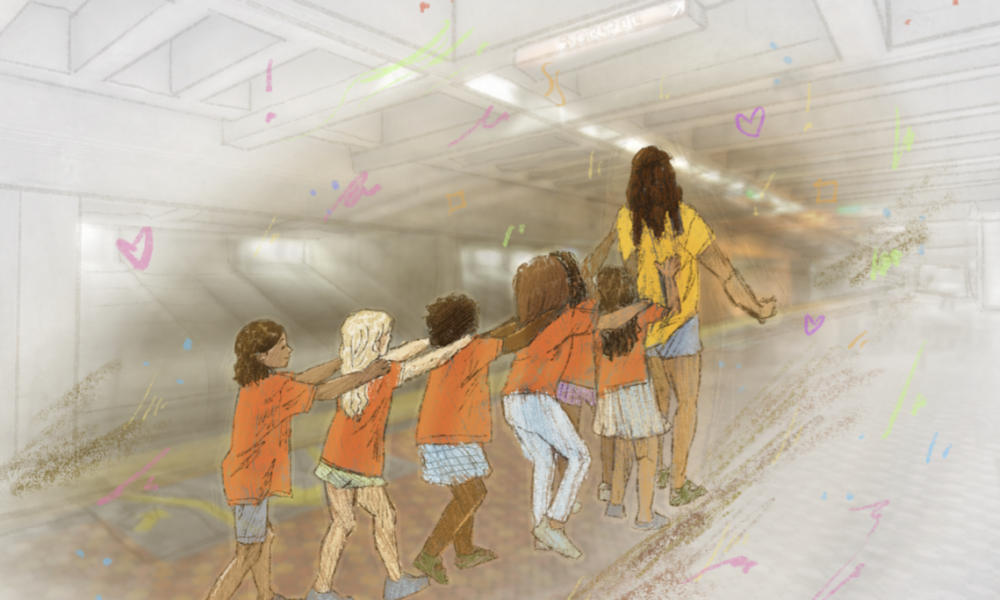
Montreal day camp fosters feelings of belonging among refugee children

Summer camp is a quintessential Canadian experience, whether you find yourself sleeping in a log cabin deep in the woods or roaming around the city visiting different museums and monuments. Camp allows individuals to build lifelong friendships and create lasting memories, all while immersing themselves in Canada’s natural and man-made wonders. 

It is no surprise, then, that summer camps provide an excellent means of cultural and social integration for newcomers to Canada. For asylum seekers, summer camps offer a low-stress environment to learn about and adapt to a new place, incorporating fun and community bonding throughout the process.  

In a recent study published in the International Journal of Intercultural Relations, Hend Alqawasma, a PhD student in McGill’s School of Social Work, explored how newly arrived Syrian and Palestinian refugee children experienced a sense of belonging at Camp Cosmos, a summer day camp in Montreal. 

“Belonging is an important component of social integration,” Majorie Aude Rabiau, assistant professor in McGill’s School of Social Work and co-author of the study, said in an interview with The Tribune. “I see belonging as the connection to others, the story we tell ourselves about who we are in the community, and how we fit into the community.”

The overarching goal of the study was to discern what facilitated feelings of belonging among refugee children and families in a recreational context. Throughout their interviews with the children, their families, and the camp counsellors, the researchers found that three primary concepts were involved in fostering a sense of belonging: Inclusion, relationships, and environmental mastery.

Refugee children worked together to improve their language abilities, which ultimately increased community bonding and their sense of inclusion. The camp staff and campers formed meaningful relationships, as the staff ensured the children’s voices were acknowledged. Additionally, the camp included many activities that explored Montreal’s cultural offerings and its transportation systems. Consequently, the campers felt they had a better handle on the city by the time the camp had ended. 

Camp Cosmos gave the researchers a unique opportunity to observe how positive experiences in a recreational setting affect social behaviours, namely because of the ethos on which the camp is built: It was specifically designed to ensure these children feel welcomed.

“By default, there was an anti-oppressive philosophy or approach to the way the camp was set up [….] The counsellors also have similar lived experiences, they are also refugees,” Rabiau said. “This aspect of shared experiences or shared languages, I feel like it really gives a secure base for the kids to have an initial feeling of belonging and inclusion, where they can then explore and grow more language skills and mastery.”

Another crucial component is that these programs are accessible regardless of economic status. Camp Cosmos uses a sliding scale payment system, adjusting the costs based on family financial capacity, thereby reducing economic barriers. 

The camp sets itself apart from other settings—such as school—in that it teaches the campers about Montreal’s cultural norms while celebrating their own cultural backgrounds. The environment is explicitly designed to be conducive to both learning and having fun. 

 “Their own cultural background is celebrated in that space, which I don’t think is necessarily felt all the time in other spaces [….] It offers a place where they do feel, from the beginning, accepted, respected, and valued, and then they can grow their confidence and their mastery of different skills, including language and making friends and understanding how the city works, for example,” Rabiau noted.

PhD Student Alqawasma, who led the study, drew motivation from her personal experience to study how refugee children experience belonging.

“As a Palestinian woman whose parents were exiled and who was always worried to lose my Palestinian status, I always wondered what helps us feel like we belong to a certain place or a community, and what would support my sense of belonging to Montreal,” Alqawasma wrote in an email to The Tribune.

Ultimately, this study underscores the need for culturally sensitive recreational programs such as Camp Cosmos for facilitating social integration and belonging among newcomers.

Editorial, Opinion

McGill must confront its hand in human torture

//Content warning: Medical abuse, racial and colonial violence//

After decades of institutional negligence, a new class-action lawsuit presents McGill with the opportunity to formally address its role in the human torture experiments conducted through the CIA-funded MKUltra program. Given this opening for reparative action, McGill must reconcile its historic and ongoing violence towards the Indigenous communities whose children were disproportionately represented as victims of the program.

Dr. Donald Ewen Cameron designed and led the MKUltra experiments at McGill University. Though allegedly aimed at addressing schizophrenia, these experiments were funded by the CIA with motives of ‘mind control’ through inhumane human “depatterning” procedures—including the erasure of memory through extreme high-voltage shocks, hallucinogenic drugs, sensory deprivation, and sedatives

In July, Quebec Superior Court Judge Dominique Poulin authorized a class-action lawsuit against Royal Victoria Hospital, McGill University, and the federal government for their enablement of these unethical human psychological experiments, administered at McGill’s Allan Memorial Institute between 1948 and 1964. The plaintiffs are demanding compensatory damages for all patients of the experiments, as well as their family members and dependants.

This lawsuit marks the first major action within the Canadian judicial system to condemn the MKUltra program while simultaneously holding the institutions who oversaw the program directly accountable for comprehensive financial reparations. In the 1980s, 300 survivors filed for compensation from the Canadian government, yet only nine received financial reparation; the CIA maintained that its actions were appropriate at the time. Of the 300 survivors, 250 were denied compensation altogether due to failure to produce the required medical documents—many of which were destroyed by the CIA in the 1970s.

A large number of the MKUltra victims were Indigenous children taken from residential schools, many of whose bodies were never recovered. In May, the Kanien’kehá:ka Kahnistensera (Mohawk Mothers) alleged evidence of potential human remains from these experiments at the Royal Victoria Hospital, where McGill’s $870-million CAD New Vic Project renovation is underway. This latest report uncovers a third type of evidence of human remains detected by remote sensing technologies during the Mohawk Mothers’ years-long legal battle with McGill. The findings reinforce the Mohawk Mothers’ rightful and scientifically-founded authority in determining the proper approach to investigations at the New Vic site. 

McGill, however, has not only been dismissive of the Mohawk Mothers’ demands and evidence of human remains, but has also failed to formally acknowledge the central role the university played in orchestrating the MKUltra program. In fact, the McGill University Health Centre (MUHC) claims that Dr. Cameron worked in an “independent manner,” asserting that the hospital was not his legal employer, despite Dr. Cameron being the acting chairman of the McGill psychiatry department while conducting the MKUltra experiments in the university’s facilities. The Canadian government has been similarly negligent of its role in the human torture experiments—dismissing lawsuits and calling survivors’ claims of abuse ‘unfounded’—despite providing half a million dollars in funding to the program, equivalent to $4 million CAD today.

McGill’s institutional disregard for its violent colonial past is epitomized by its relentless prioritization of the New Vic Project. Despite facing massive budget cuts and almost $200 million CAD in projected deficits, resulting in hundreds of layoffs and a hiring freeze, McGill has maintained that the New Vic Project remains a “priority.” As the Mohawk Mothers demand the most fundamental rights to investigate their land, McGill continues to prioritize its settler colonial agenda while destroying and building over the site of torture at McGill’s hand

This new class-action lawsuit plays the crucial role not only of demanding formal justice for all victims of the MKUltra experiments, but also of rejecting the idea that the program was an isolated abuse of the past. Instead, it centres justice for the victims and survivors of the program as a pressing issue of //today//. 

As an institution, McGill cannot continue to give lip service to reconciliation while proceeding with construction atop alleged unmarked Indigenous graves, dismissing the Mohawk Mothers, and denying its own essential role in the MKUltra experiments. It must commit to the investigation of potential remains on the New Vic site and make a formal public acknowledgement of—and apology for—its role in the experiments. 

McGill professors, as individuals with immense intellectual influence, must also give a platform to education on McGill’s colonial legacy on Tiohtià:ke land, and Canada’s abuse of First Nations’ unceded territories. The unconscionable abuses of MKUltra cannot be marginal or absent in any lecture hall at the university which facilitated it, and neither can the past and ongoing battles of Indigenous communities like the Mohawk Mothers—battles given sparse and often antagonistic coverage in the media. 

Finally, as students, it is our responsibility to educate ourselves and each other about the horrific abuses that occurred at the university in which we are all enrolled, as well as the continuing history of the land we walk on. 

Album Reviews, Arts & Entertainment, Books, Film and TV, Music

What we liked this summer break

The Summer I Turned Pretty Season 3 – Bianca Sugunasiri, Arts and Entertainment Editor

This summer brought sun, sea, and the newest season of Jenny Han and Gabrielle Stanton’s show The Summer I Turned Pretty, perhaps more appropriately named ‘The Summer I Made Poor Decisions.’ Season 3 follows Isabel “Belly” Conklin’s (Lola Tung) ‘bridezilla’ moment as she tries to navigate wedding planning with her man-child fiance. By this point, after watching Belly ping-pong between the two brothers she grew up with while trying to detangle her feelings, you find yourself wondering how someone could possibly have such disregard for the emotions of those around her. Not to mention the playboy tendencies of Jeremiah Fisher (Gavin Casalegno) being continually questionable. And why can’t Conrad Fisher (Christopher Briney) simply let go of this girl who is causing him so much heartbreak and dissatisfaction? Despite none of the characters having particularly redeeming qualities, and actually seeming to regress in terms of character development, it nonetheless sparked visceral anticipation for every Wednesday night. Perhaps there is a certain comfort taken from watching young people falling in and out of love so messily. Ultimately, it is within that jumble of imperfection that brings viewers back every week.

The Emperor of Gladness by Ocean Vuong – Norah Adams, Staff Writer

As a university student cresting the wave from the former half of my degree into the latter, it is safe to say that I am experiencing my share of aimlessness. Ocean Vuong’s new novel, The Emperor of Gladness, offered a new perspective on aimlessness. The novel reframes youth not as a collection of regrettable actions but instead as an exploration of how one can grow from their mistakes. The novel centres around nineteen-year-old Hai—a drug-addled college dropout and first-generation American born to Vietnamese immigrants. It begins with him standing at a precipice, both literally and figuratively, atop a bridge in Connecticut contemplating suicide before his death is prevented by an elderly Lithuanian woman named Grazina. Throughout The Emperor of Gladness, Vuong’s protagonist discovers the act of giving himself grace, realizing that his choices and blunders do not define him. Vuong places an emphasis on the merit that relationships provide over the ostensible importance of typically commendable achievements. He prioritizes lesser explored dynamics such as intergenerational friendships, the bond between cousins, and workplace camaraderie. This novel, though spanning through the four seasons, stands out to me as a summer read. In a space where you have all too much time to ponder every mistake in the past and all of the possible misjudgements stretching ahead in your future, Ocean Vuong’s The Emperor of Gladness offers a safe haven of love, second chances, and ultimately, forgiveness. 

Think Of Mist by Dorothea Paas – Alexandra Lasser, Contributor

Dorothea Paas’s 2024 album Think Of Mist offers mesmerizing harmonies and touching lyrics. The album takes listeners on a journey through gentle vocals over the sound of a band unaccompanied by percussion. This choice transforms the album into a kind of meditation, perfect for the long summer days uninterrupted by the usual stress of assignments and exams. The tracks crescendo to the middle of the album with standout song “Made of Mist,” which consists of a progression of sung chords without lyrics. The acoustics she achieves with the slow-changing chords building on top of each other is reminiscent of a choir piece echoing through a large cathedral. The dissonant harmonies throughout the album reflect the vulnerability of her lyrics, and offer listeners an intimate portrait of her thoughts. The Toronto-based musician also released an instrumental version of the album in May where listeners are invited to focus on the band behind her, without lyrics stealing the focus away. Another remarkable song from the album is  Autumn Roses,” a deceptively upbeat piece that drifts between moods and tempos. While the artist has not yet seen widespread fame, her unique sound earned her a spot on The Polaris Music Prize Album Long List for the best of Canadian music.

Read the latest issue

Read the latest issue