Latest News

Arts & Entertainment, Theatre

Play review: ‘Angélique’ demands that Canada confront a painful past

There’s a smug detachment that accompanies the way a lot of Canadians talk about their past. Despite our country's tradition of violence and systematic oppression, many Canadians perceive our history to be bemusedly boring—something to be admired from afar but never thoroughly confronted or engaged with. We too often have the tendency to excuse our country’s complicity in history’s great systems of oppression, to lay the blame of race, class, and gender-based injustices squarely at the feet of our neighbour to the South. Even now, when Canada is seemingly beset on all sides by the bigotry and hatred of radical right-wing populism, many of us point to our Liberal Prime Minister and government and multicultural values and say “it could never happen here.” 

This attitude is what makes Angélique such an important play for this particular political moment. Written by the late Lorena Gale in 1998, the play is an unflinching, stomach-churning look at Canada’s complicity in the international tragedy of slavery. It tells the story of Marie-Josèph Angélique, a slave who arrived in Montreal in the summer of 1730 at the age of 20. There, she faced physical and sexual violence, bondage, and degradation before she was ultimately hanged on trumped up charges of setting fire to the city of Montreal. 

Steeped in such violent and grotesque subject matter, Angélique is often hard to watch. The production’s stark, white lighting and sparse staging provide a viewing experience that feels both cold and claustrophobic, forcing the viewer to face the play’s atrocities directly. 

Nevertheless, the play’s multivalent and deeply complex performances elevate its characters above simple victims and monsters. Jenny Brizard in particular plays the title character with a revelatory ferocity, depicting a young woman who never fully succumbs to despair despite her abhorrent circumstances. This is a play about black pain and white oppression, but Angélique never feels like a placeholder for political aims. Indeed, she suffers terribly, but also finds fleeting joy in the darkest of places. It’s a delicate balancing act, but one that Brizard performs with effortless grace. Her spellbinding performance provides a steady base for the play’s ambitious structure to build upon.

Far from a simple period piece, Angélique juxtaposes Canada’s history of slavery with modern racial issues. This is done almost literally in the play’s costuming, where colonial jackets blend with modern outerwear and town criers morph into newscasters at the drop of a hat. With the exception of some forced moments in the play’s final act, for the most part this is done elegantly, successfully reshaping the way the viewer sees contemporary Canada as well as its past.

Angélique is a tour-de-force, both politically relevant and emotionally resonant. Though essentially a play about the past, it contains an important map towards a better future for our country, one where black pain is not trivialized and black voices are not silenced. In a society where ‘multiculturalism’ is often used as a crutch to avoid having meaningful discussions about race, it is powerful, essential viewing. 

Angelique, a co-production between Tableau D'Hôte Theatre and Black Theatre Workshop​, is playing in The Studio at the Segal Centre for the Performing Arts at 5170 Chemin de la Côte Ste Catherine until April 2. Tickets are $27 general admission, $24 for seniors, and $22 for students and union members. Visit www.blacktheatreworkshop.ca/angelique/ for more information. 


News, SSMU

SSMU Restructuring: How the addition of VP Operations affected SSMU

Near the end of the 2015-2016 term, the Students’ Society of McGill University (SSMU) Legislative Council amended the SSMU constitution to separate the Vice-President (VP) Finance & Operations portfolio into two new positions starting in 2016-2017: VP Finance and VP Operations, which has been renamed as VP Sustainability & Operations.

Currently, the VP Operations Portfolio oversees the revenue-generating operations of SSMU, including Gerts, Sadie’s, and MiniCourses. Although these responsibilities have always existed under VP Finance & Operations, previous executives were unable to focus on both finances and operations because of the overarching scope of the portfolio.

Last year’s executives were also heavily affected by the absence of a General Manager (GM) in the fall semester. Zach Houston, the 2015-2016 VP Finance & Operations, was unable to properly manage building operations since the demands of finances alone became too overwhelming. Kimber Bialik, the 2015-2016 VP Clubs & Services, which was restructured to become VP Student Life in 2016-2017, became responsible for facilities during crises. As a result, the current VP Operations Sacha Magder was trained collectively by Bialik and Houston due to their respective knowledge of facilities and finances.

“[….] Since Zach [Houston] was more involved with finances, he really didn’t have enough information [on operations],” Magder said. “Kimber was in charge of buildings only when crises came up, [and] did not have time to do long-term building plans. September and October was a huge adjustment period.”

MiniCourses were especially affected by Magder’s difficult transition. He has since improved its low registration rate of 224 in the Fall 2016 to 406 in the winter semester.

“I take [the low registration rate] as partially my own responsibility,” Magder said. “But at the time, we did try our best. Now, at least, I feel confident enough to train my successors, so that they don't have that lack of knowledge when they start in September.”

Since the splitting of the VP Finance & Operations portfolio, Magder has also taken over the sustainability objectives, which were originally under the President’s portfolio. He has worked on issues such as waste management and community outreach.

“I am in charge of supervising the environment commissioner, who runs the environment committee [.…] And work very closely with the McGill Office of Sustainability, Magder said. “I am also organizing the SSMU Courtyard Garden Project that is [being developed] in the back of the SSMU Building.”

The division of responsibilities and the addition of a seventh executive has also allowed current VP Finance Niall Carolan to concentrate solely on budgets and administrative work, such as cheque requests. At the end of his term, Carolan will set the budget for next year’s executive.

“In the end of the year, we are hoping to post a $100,000 surplus above breakeven,” Carolan said. “The money will be invested back into the Capital Expenditures Reserves Fund. Any money beyond the surplus will be invested back into the society. I would like to see more investments into student resources next year, as this year the staff has faced challenges of budget constraints from last year’s deficit.”

Despite the separation, VP Finance and VP Operations are still closely related: While VP Operations handles the day-to-day affairs, VP Finance oversees the monthly profits to make sure they align with the set targets. For the upcoming year, VP Finance and VP Sustainability & Operations, and will likely remain close.

“We can put more of an emphasis on sustainability and physical spaces, which is great,” VP Operations-elect Anuradha Mallik said. “Considering [that VP Finance-elect] Arisha [Khan] and I have an established relationship already, I feel like collaboration will be easy and effective.”

Joke

Parkour MiniCourse coming soon to McTavish

In an attempt to capitalize on the ongoing construction on McTavish, the Students’ Society of McGill University (SSMU) is rolling out a brand new MiniCourse: Campus Parkour. The course promises to be an exciting opportunity for both thrill-seekers and students just trying to get to class on time. 

The course has been in development since this year’s McTavish construction project began, when Earl Paxton, McGill alumnus and parkour aficionado, pitched the idea to SSMU. Paxton was inspired in part by his own experience as a self-employed parkour teacher, but also by a preexisting university workshop on student safety when navigating campus constriction sites.

“I thought the safety thing was great because McTavish really is a danger-zone right now,” Paxton said. “But then I was like, why bother with safety, when we could teach students how to get through that danger-zone in, like, the sickest ways possible?”

The MiniCourse will cover the three J’s of parkour–jumping off of stuff, jogging unnecessarily, and ‘just doing it’–and teach students to apply them specifically to McTavish terrain. Example exercises include free-climbing the fences around construction zones, backflipping off of moving bulldozers, and successfully scaling the metal staircase currently in place outside the Brown Building. 

Much like McTavish itself, developing the course has been an uphill and rocky process. SSMU initially rejected Paxton’s pitch unanimously, out of student safety and liability concerns, but when the construction safety workshops folded due to insufficient funding, Paxton’s parkour training was considered as a less expensive alternative.

“It’s not about the money, though,” Megan Green, SSMU representative, promised in a statement to /The Tribune/. “It’s about the fun. Who doesn’t want to learn parkour?”

Neither Green nor Paxton commented on early interest polling, which revealed that 89 per cent of students “had little to no interest” in learning parkour. 

Even after getting off the ground, the course faced setbacks. An early trial course landed one participant in the hospital, after attempting a pretty sweet 360 jump from the top flight of the metal stairs to the SSMU entrance. 

The incident could have shut the project down altogether. However, it was later found that the student, who suffered a broken collarbone and two fractured wrists, was not actually participating in the course—he was just running late for a midterm. 

Registration for the MiniCourse opens next month, and will remain open as long as McTavish construction continues. 

This article is a work of satire and is part of the joke issue. 

Joke

U3 Engineering student posts Facebook status about distrust in new SSMU executive, citing ‘predominantly female executive’

U3 Engineering student Jack Martin recently posted a status on Facebook expressing his distrust in the newly elected Students’ Society of McGill University (SSMU) executive team for the 2017-18 school year. 

“I don’t usually post things like this on Facebook, but recent events have alarmed me to a place that I feel like I need to comment,” Martin’s status read. “I’m disappointed in the student body for its choice to elect an executive that is not truly representative of the student body. McGill’s campus is so truly diverse—how will an executive that consists almost solely of one gender address the needs of myself and fellow brethren next year?” 

Martin’s status raised questions among his friends and followers about his views on gender equality. One friend quickly responded to this in the comments section, alleging that his claims were misogynistic and distrusting of female leadership. Martin quickly responded to this, citing his views on gender equality.

“Look, I’m all for female equality, and I even consider myself pretty liberal—but ultimately this campus is only 51 per cent female,” Martin wrote in the comment thread. “A SSMU executive that doesn’t represent the true demographic makeup of this campus is really not OK. Call me a snowflake, but I don’t feel like I can trust the new SSMU. Where do I fit into this? This doesn’t feel like a safe space for me. Men’s issues matter too.” 

Martin went further in the comment thread to refer to himself as a feminist at a later point, citing his love for women, especially for his mother and sister. 

“I don’t know why what I’m saying is so bad, guys,” Martin wrote. “I’m a feminist. Hands down. I have a mother and a sister. I’ve loved every woman I’ve ever dated—though some of them may have been crazy. I still think that feminism is gender equality. EQUALITY. That means equal men, equal women. Not an all-female SSMU. When will people understand this?” 

Though six of the seven 2016-17 SSMU executives were male, this seemed not to be a factor in Martin’s line of thinking. According to his roommate, Emily Sanders, with whom he shares a modest apartment on Avenue Lorne, Martin did not know about this, and seemed unmoved after hearing about it.

“[Martin] has been complaining about this all-female SSMU executive thing for literal days now,” Sanders said. “When is he going to learn to shut the fuck right up? I asked him how he felt about this year’s [mostly] male SSMU and he said he didn’t know about that, but that he didn’t think that was a relevant fact to consider. Now, I myself am not sure where I stand on this whole ‘gender’ thing, but he’s just annoying as shit and I think he needs to move the fuck on.” 

When approached for comment after the fact, Martin declined, citing a lack of time due to his rigorous engineering program. Though his status received significant backlash in the comments section, he remained unbent when navigating through the comments, taking the time to respond to each one. Boasting four likes and one “Wow” reaction, Martin left his status up publicly even after the commenting died down.

This article is a work of satire and is part of the Joke Issue.

Joke

New McGill passwords require six letters, three numbers, and $5 donation

With a mandated password reset for McGill students, the administration has found the perfect opportunity to ameliorate the university’s budget concerns. When students go into Minerva to enter in a new password, $5 will now be charged to their student account. Following the grand success of McGill24, the McGill PR department is re-invigorated to demand more money from its students.

“It’s only $5,” McGill Financial Officer Burt Smith explained. “Seeing how many Fac-O bracelets were on campus we know that all our students can afford this small contribution.”

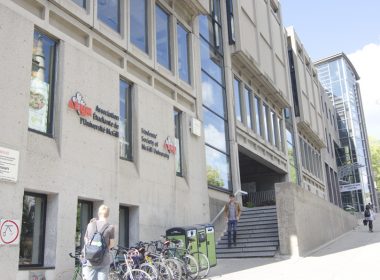
The new campaign will be dedicated to facility improvements, such as the staircase outside of the Brown Building.

“We recognized that the walk outside from the University Centre to Dr. Penfield has not been aesthetically pleasing for many students,” Smith admitted. “From the revenue generated from the password reset, we’ll be able to tile the staircase.”

The password resets were ordered after the administration discovered phishing attempts made by amateur hackers. The extra “!” character at the end of McGill passwords will hopefully stave off future security concerns.

However, the $5 charge added to the password reset has not come without controversy.

“I’ve already had to add an extra emoji to my password,” Stew Jones, U0 Arts, said. “I don’t want to pay $5 on top of that!”

Administrators have issued thinly veiled threats that if students fail to create a new password, with the mandatory $5 fee, they may be locked out of their McGill accounts or face minor security threats, including pop-ups.

“We still have the power to send Farmville invitations,” Smith warned.

This article is a work of satire and is part of the Joke Issue. 

Joke

McGill releases ‘Fill-in-the-blank’ statement to be used for next McGill scandal

On March 27, the McGill administration released a partly-blank statement for students to use when condemning of any future scandals. An explanation accompanying the statement clarifies that after the series of recent scandals involving McGill and the Students’ Society of McGill University (SSMU), the administration has decided to no longer release individual statements.

Now, if students would like the university to issue a statement condemning any future scandals, they can simply print out the statement template, and fill in the blanks with the details of the new controversy. 

“Dear Member of the McGill community,” the statement begins, “We were shocked and disappointed to hear of the recent [insert behaviour that is considered reprehensible] by [name of individual/organization here].”

The statement goes on to explain that this hypothetical offence constitutes an infringement of whichever values the university currently stands for.

“We would like to remind the community that McGill stands in steadfast support of [value or principle that this action violated], and/or strongly condemns [prejudice or misconception that this action furthered].”

When asked for comment, McGill Principal Stephanie Fournier explained that the new statement policy would save the administration the valuable time it currently spends issuing condemnations of the various missteps of its students and faculty.

“With students filling out our statements of condemnation for us, administrators will now be able to focus on more important issues facing the University.” Fournier said. “I’m personally looking forward to our project to increase the incline of University Street, and the upcoming unveiling of our memorial for Flood Girl.”

If the new statement does not solve McGill’s public relations issues, Fournier noted that she would consider releasing a statement disassociating the University from itself. 

This article is a work of satire and is part of the Joke Issue. 

Martlets, Men's Varsity, Sports

Know Your Athlete: Marty the Martlet

McGill is known for fostering success stories in academia and athletics alike and, proof that birds of a feather flock together, Marty the Martlet is no exception. Marty is just like most McGill students: He juggles the rigour of school with having fun and a full-time job—one that isdesigned to entertain us loyal McGill sports fans. But Marty wasn’t always a silly goose; he used to chicken out every time he was in the spotlight.

“Believe it or not, I was really shy when I was a wee hatchling,” Marty said. “I couldn’t fly as well as the other birds, I wasn’t as smart, and I’d be teased about that.”

Salvation for Marty came through dance. He began shaking his feathers and listening to musicals at which point he heard the song “Dancing Through Life.”

“That beat just got me grooving and made me smile, it’s a pretty ‘wicked’ song,” Marty said.

Since 2005, Marty has been on a mission to spread the song’s message and make people stop worrying about school. Though his dance moves might be strange, crowds flock to see him.

“I love seeing people excited when I show up,” Marty said. “I get bombarded to take pictures and dance with them. I love seeing people laugh at my silliness, [….] even [McGill Principal] Suzanne [Fortier] says I have great dance moves!”

While the prancing around is certainly fun, Marty trains hard to be there. Despite his cuddly exterior, he works his tail off to stay in shape.

“I have to hit the gym often to really keep my muscles tight and my cardio up, or else I can’t dance and cheer,” Marty said. “No one wants a soft Marty.”

When he’s not putting in reps  at the gym or dancing around campus, Marty is grinding out his school work at McLennan.

“I’m a busy bird with big dreams,” Marty said. “I’m keeping my GPA in the 3.6 to 4.0 range.”

Marty somehow also finds the time for other endeavours and the occasional chick flick. 

“I’m actually collecting research and drafting my first book!” Marty said. “But of course when I’m not sticking my beak in books and research, I’m in front of the TV watching Netflix.”

Marty certainly sets an admirable example for all high achieving McGill students. On one wing, he’s known for having fun and letting loose, but on the other, he pushes himself to soar to new academic heights. In this respect, Marty’s advice to McGill first-year hatchlings could also benefit upper-years.

“Come out and support your [McGill] teams!” Marty says. “The games are so fun and you get so much McGill swag. Also, take risks with your classes. You’ll never know when that random elective you pick will become your favourite class!”

Indeed, sometimes the best ideas can come from just winging it.  For everyone at McGill, you need to leap from your nest if you want to fly, and don’t be afraid to ruffle some feathers along the way. 


McGill Tribune: Cardio or weights?
Marty: Both! Got to keep my heart healthy to keep up the sick dancing, but got to keep my body trim for the ladies.
 
MT: Favourite Montreal poutine?
Marty: Duck, sugar coated fries, and lots of maple syrup. My cousins weren’t too happy about the duck, but man those little floaters are tasty!
 
MT: “McGill once McGill twice” cheer or “I’d rather be a Redman” cheer?
Marty: “McGill once McGill twice” because I can dance around to that. I can’t speak, which is why I love to dance. I let my sick moves do the talking.
Hockey, Sports

The NHL’s point system woes

With five minutes left to play in the third period, the Toronto Maple Leafs and the Montreal Canadiens are tied 2-2. In the midst of a close playoff race, both teams are looking to grab any precious points they can to push them into the postseason. In such a tight contest with back-and-forth chances all game, the final minutes should have the crowd on the edge of their seats, squeezing anyone around them as the teams go full throttle trying to pull ahead. Instead, both retreat into a defensive shell, no longer taking any chances, as they let the final few minutes wind down before overtime.

This is the reality of most NHL games that are tied in the final minutes of regulation. Teams take advantage of the NHL’s point system, staying cautious and stalling until they can get a guaranteed one point in overtime. Since a win in overtime, or in the shootout, is worth the same two points as a regulation win, and a loss in this scenario grants one point, there’s no reason to risk losing in regulation and miss out on a point that requires just holding out a few more minutes. Essentially, a game that ends in regulation is worth two points, but for some inexplicable reason, overtime or shootout games dole out a combined three points—two for the winner and one for the loser.

With nearly 25 per cent of NHL games from 2005 to now going to overtime, this system makes it difficult for teams to try and move up in the standings when their opponents can just stall until overtime and clinch at least one point. It’s commonplace for teams with less than five minutes remaining in regulation to just buckle down and wait for the third-period buzzer when the game is tied. The NHL needs to change this point system in order to prevent teams from taking advantage of this flaw.

An easy solution to the league’s problem would be the switch to the aptly-named “three points for a win” system. Similar to European soccer leagues, an NHL team that wins in regulation would receive three points while an overtime winner would be awarded two and the extra-time loser would still receive one. Thus, winning a game in regulation would be worth more than winning a game in overtime or a shootout. According to a 2007 Canadian Press article, NHL general managers flirted with this idea back in 2004, but support for the measure vanished while other, more drastic rule changes such as the shootout, were adopted.

Adding an extra point for a regulation win would provide an extra incentive for teams to try to push forward in the third period of games that are tied, especially for those fighting for playoff berths. Games approaching overtime would once again become exciting, with some teams on the brink of the postseason possibly pulling their goalie in order to get all three points. A team that looks bound to be eliminated from postseason contention could suddenly be back in the race by stringing together a series of regulation wins. Fans may be disappointed to see less overtime hockey and fewer shootouts but the added intensity at the end of regulation will make up for the lack of extra time.

Read the latest issue

Read the latest issue