Latest News

News

AGSEM rally encourages progress in ongoing workers’ rights negotiations with McGill

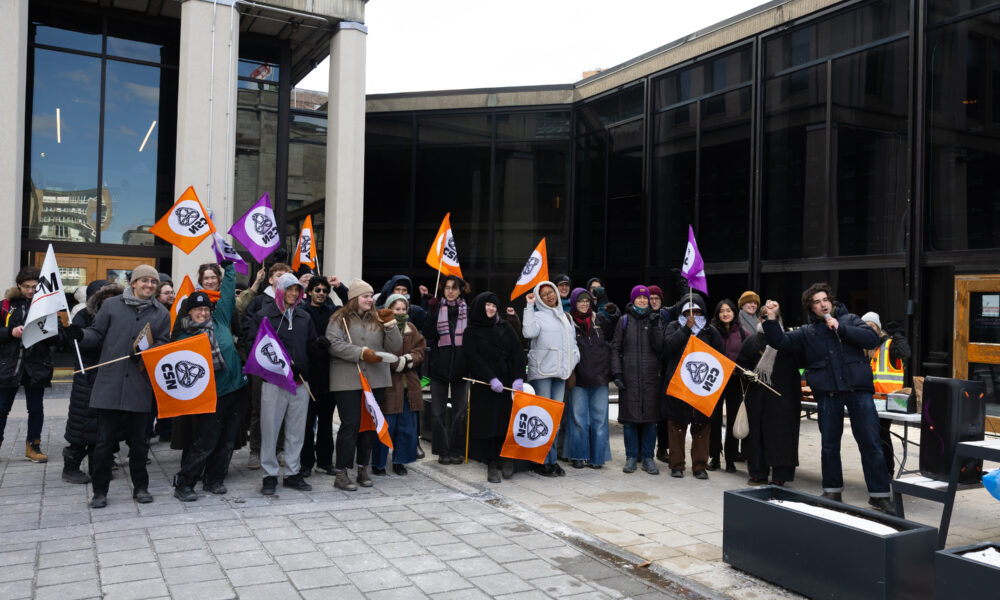
On March 18, approximately 40 McGill students, workers, and faculty members gathered outside the Leacock Building for the Association of Graduate Students Employed at McGill (AGSEM)’s rally. The rally, which advocated for a budget increase for the wages of graduate student workers, was timed to coincide with a McGill Senate meeting scheduled at 2:30 p.m. the same day.

Protesters gathered in support of AGSEM’s ongoing negotiations with McGill, as did speakers from the bargaining team. AGSEM’s negotiations occur through open bargaining, allowing all union members to participate. 

In a speech to the crowd, Donald Morard III, a PhD candidate in History and Classical Studies and member of AGSEM’s Unit 3 bargaining team, explained the importance of putting pressure on the Senate to further AGSEM’s cause. Morard is also running for the role of Secretary General in the ongoing Post-Graduate Students’ Society elections.

“Student senators and allies up on the faculty were able to block the worst proposed changes to the code of student conduct and discipline,” Morard said. “Senators are able to push these upper administrators to directly answer for these [wages] cuts [….] Politics are zero replacement for student activism and organized labour. But these bodies can serve as useful tools for information and to put pressure on the powers that be.”

In August 2024, over 1,000 academic casual workers at McGill unionized and formed AGSEM’s Unit 3. Nikaela Lange, a Master’s student in Political Science at McGill who is also a mobilization officer at AGSEM and a teacher’s assistant, explained what’s at stake in an interview with The Tribune.

“We’re a union made up of around 4,000 workers at McGill,” Lange said. “We’re here today for our workers in Unit 3, which are course-based academic casuals. They are currently negotiating their first ever contract, and frankly, we did not like McGill’s monetary offer. We think they deserve better so we’re rallying today to try and get them that raise.”

Emma Moore, U3 Arts student and member of the bargaining team, then addressed the crowd to speak on the progress AGSEM hoped to make for Unit 3 workers, which consists of academic casuals such as graders, tutors, course assistants, and graduate teaching fellows.

“Workers told us they needed stronger health and safety protections so people can do their job in safe working conditions,” Moore said. “They told us they needed clear job expectations and protections against overwork so workers are not made to work more than what they’re paid for.”

Lange then highlighted the specifics of what Unit 3 workers want included in their new contracts. 

“Better working conditions for these workers, protections against harassment and discrimination. But a raise seems to be one of the biggest issues for our workers. Some of them are making minimum wage,” Lange said.

AGSEM’s negotiations with McGill began in September 2023 following the expiration of the organization’s collective agreement with McGill in July of that year, after which they came to a new agreement that expired on Dec. 1, 2025. Since then, AGSEM’s efforts have focused on improvements for Unit 2 and 3 workers, Unit 2 comprising McGill’s invigilators.

Moore informed the crowd of McGill’s response to the suggested pay increase at the March 11 bargaining session. 

“Last week we tabled our wage proposal, moving us into the monetary phase of bargaining. Today McGill came back with an offer that was offensive,” Moore said. “McGill made it clear to us today that they do not care to pay you enough to live on.”

At this bargaining session, McGill recommended a pay scale structure, offering a range of wages for each position. The starting wage offered was $18.67 CAD per hour. Comparatively, at Concordia University, workers in a similar position are paid $32.68 CAD per hour, increasing to $35.25 CAD per hour after May 31, 2026. At the University of Toronto, the pay is around $53.92 CAD per hour. 

While AGSEM’s negotiations primarily focus on wage increases for workers at McGill, better treatment of workers and students is part of their fight as well, such as in the case of McGill’s new proposed identification (ID) policy. This policy will require anyone with a McGill ID to carry their card while on university property. Authorized personnel—including McGill faculty and staff, invigilators, and campus security—may request an ID for the alleged purpose of upholding the campus’s integrity, university policies, and cases of physical safety. 

Morard elaborated on AGSEM’s opposition to the proposed identification policy when addressing the crowd. 

“Today there will be a push by pro-democracy senators to fight against the upper administration’s proposed ID policy,” Morard said. “We’re into fighting the ID policy. Tell [the Senate], support the fight against it.”

In the Feb. 4 bargaining session, AGSEM focused on Unit 3 workers. The union successfully tabled workload forms to help reduce excessive workloads for employed students, outline clear job expectations, and better explain how hours are allocated. AGSEM also tabled to negotiate Article 8, which addresses workplace grievances.  However, little progress was made for Article 6, which addresses harassment, discrimination, and sexual violence. AGSEM proposed specific language against deadnaming, but McGill rejected their proposal. 

On Feb. 9, AGSEM began negotiations for a new invigilator contract. AGSEM proposed a salary raise to $26 CAD per hour for invigilators, a minimum number of shifts, and a minimum invigilator-to-student ratio. McGill’s initial proposal included a requirement for a 48-hour notice for shift cancellations and mandatory supervisor approval for overtime. 

Following this negotiation session, AGSEM released an update stating their stance on McGill’s proposals.

“While last-minute absences and no-shows can create additional stress for other invigilators, we believe the real solution is addressing the root causes. Fair wages and improved working conditions are the best way to reduce no-shows and increase reliability,” AGSEM wrote. “McGill has also proposed language aimed at preventing overtime that is not pre-approved in writing by a supervisor. We are determined to fight McGill on this proposal and win contract language that does not restrict the ability of invigilators to work.”

On Feb. 18, the final bargaining session before the tabling of monetary clauses occurred. The session again began with the trading of proposals. McGill’s workload proposal, when compared to AGSEM’s, was limited in specifications and lacked development, according to AGSEM’s report following the session. AGSEM reintroduced their proposal to amend Article 6 to include more explicit language against deadnaming and pronoun misuse. McGill’s position remained unchanged.

On Feb. 27, negotiations focused on contracts during which McGill opened the floor to longer-term contracts, according to AGSEM representatives in their negotiation coverage report.

“McGill indicated that they are open to discussing the possibility of contracts that last longer than a single semester. They acknowledged that there may be mutual benefit in exploring longer-term arrangements,” AGSEM wrote. “However, they expressed concerns about guaranteeing minimum numbers of shifts or hours beyond a single semester.”

Their most recent session on March 9 focused on shift distribution. The next negotiation session on March 27 will focus on contract length and sexual violence policies. 

With the negotiations ongoing, Moore emphasized the importance of AGSEM’s fight for their workers and called on members to participate in future bargaining sessions. 

“Our union took the time to understand the lived reality of our members. Through conversations with workers, general assemblies, and organizing across campus, we heard clearly what people needed in a first contract,” Moore said. “AGSEM cares for your Unit 3 bargaining team. We will fight for you and we need you in this pivotal time. Sign up for open bargaining. Come to the next session and watch McGill sweat.”

Off the Board, Opinion

The art of figuring it out

In the summer of 1969, a group of musicians walked on stage at the Montreux Jazz Festival in Switzerland with nothing short of a half-formed idea. In a last-minute effort, pianist Les McCann, bassist Leroy Vinnegar, and drummer Donald Dean recruited trumpeter Benny Bailey and saxophonist Eddie Harris to perform an impromptu hour-long set. The group had never played or rehearsed together for even so much as a minute; even the set list was not fully established. Yet, without hesitation, McCann counted in the band with the baseline for their first tune, Compared to What, and the group figured it out from there. 

The performance was so spontaneous that, after the song and the roar of applause that followed, McCann made a brief clarification about their next number, Cold Duck Time

“Alright, we’re gonna try a new song. This is a song written by Eddie Harris, and today is the first time we ever saw it. So, with your help, we just might do it.”

The performance—which, by happenstance, was recorded in its entirety—was released under the name Swiss Movement later that year and became a best-selling album. 

The nature of this performance is not something unbeknownst to jazz musicians—after all, a fundamental aspect of the genre is improvisation. But improvisation and its accompanying excitement are not exclusive to jazz, or live music for that matter.

Improvisation is one of the fundamental roots of elation. In sports, the biggest plays are made in the heat of the moment, when a player must make a split-second decision to secure a goal, basket, or point. A stand-up comedian’s prowess is often measured by their ability to engage in crowd-work, offering witty comebacks to drunk audience members. To surprise spectators, even movies offer the illusion of characters making a last-ditch effort to save their universe through unforeseen tactics. Such an ability to improvise, when executed with confidence and precision, distinguishes people in their fields and awes observers who could only dream of doing something similar. 

While these moments are most frequently felt in crowds, the act of stepping into realms of uncertainty should not be reserved for the highest-stakes environments.

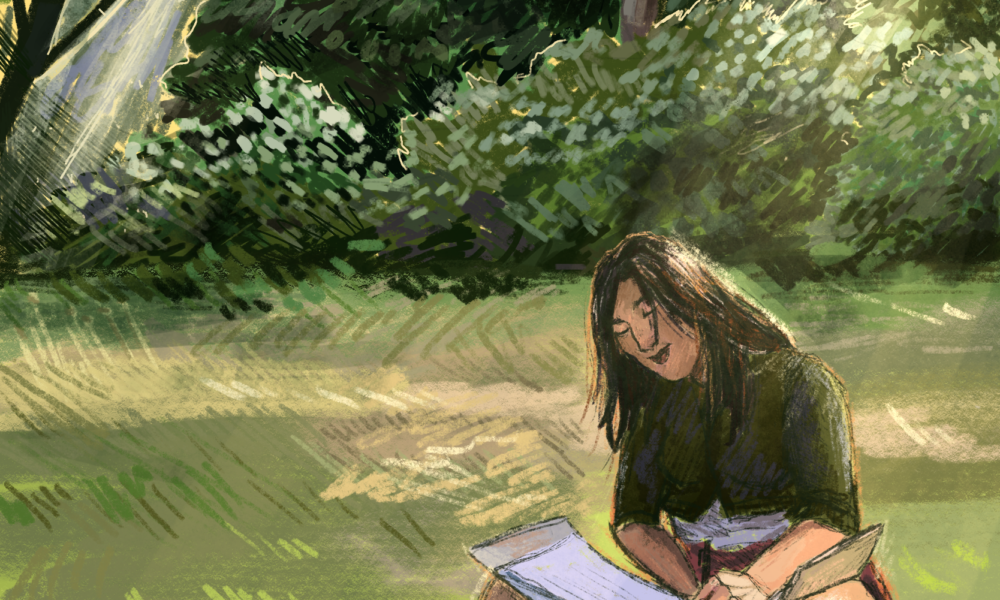
When I explain the concept of life drawing to people, I am often asked why I enjoy it. Instinctively, the first thing I point to is that from the moment the model is fixed in place and the timer begins, I am utterly terrified. I find myself staring, trying to recall the various lessons on form and proportions I was taught years ago. In this moment of defeat, where I have convinced myself I know nothing, I turn to other solutions. I might meticulously fixate on the contours of their face, I might mentally retrace the composition 15 times, and I might even engage in an internal debate about whether to focus on the negative space. But, eventually, my pencil finds the paper, and, line by line, I piece it all together. 

Whether lasting 45 or just 15 minutes, a pose requires a certain level of patience. It equally calls for a willingness to accept the decisions made in the moment, to trust in one’s ability, and to be present in an exercise that intrinsically connects the mind to one’s fingertips. It is a practice I love because it scares me, and however good or bad I might think my work is, it still represents a moment when I walked onto a stage, unsure of where it would lead me.

What makes improvisation so powerful is that it toes the line between control and uncertainty. Understanding a framework is only a preliminary step; what follows is learning to understand yourself. Engaging with the practice, redefining what it means to set limits for yourself, and finding a place for improvisation in your creative endeavours all allow for these limits to be tested, reshaped, and abandoned. 

Should you feel doubt about the things you create, know that when McCann got off that Montreux stage, he feared his performance was less than satisfactory. It was not until he took a step back and listened to the tape that he began to understand how much joy he brought to the world that day.

Student Life

Titilope Sonuga explores motherhood, storytelling, and the art of remembering at DESA panel

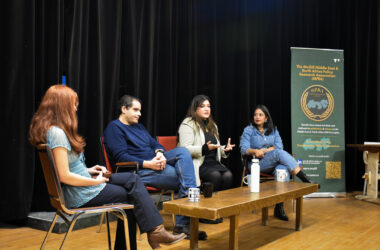
On March 19, the Department of English Student Association (DESA) hosted a guest lecture featuring Titilope Sonuga, a Nigerian-Canadian poet and playwright. Sonuga has previously been appointed Poet Laureate by the Edmonton Arts Council, and she was also the first poet to perform at a Nigerian presidential inauguration. This lecture marks the beginning of DESA’s new Annual African and Diasporic Literature Lecture Series, which will explore regionally specific African literary and poetic traditions.

The event began with DESA president Moyọ Alabi, who addressed the lack of engagement with African and diasporic literature in McGill’s academic field.

“The [lecture series] initiative aims to address gaps in the curriculum by creating space for African and diasporic literary voices, and by providing opportunities for students to engage directly with contemporary writers and their work,” Alabi said. 

The microphone was then passed to Sonuga, who started by explaining her atypical entrance into the world of poetry.

“I studied civil engineering. I built roads and bridges, and would write poems in the margins of construction drawings on the side of the road, lamenting my choices and thinking, ‘Why didn’t I study something else, why didn’t I study literature?’” she asked. “I’m a poet whose work is preoccupied with this idea of memory, womanhood, all of our inheritance, and I believe that the spoken word is powerful and prophetic [….] It’s important for me to advocate for this idea of an expanded literary imagination.”

Sonuga underscored her pride in telling and amplifying the stories of West Africa.

“I am blessed to stand in the oral tradition of West African speakers, this lineage of women who are custodians of memory, of lineage, of myth,” Sonuga said. “They are the keepers of songs, of stories that have kept us and buoyed us across oceans […] I speak in stories and poems, and so tonight will be a blend of both, a blend of my personal history and my arrival in this place, and my thoughts about poetry and art and the power that it has.”

Sonuga then recited her poem. She emphasized how Yorùbá—her mother tongue—allowed her to navigate her sense of belonging in the margins of two cultures.

“A poem takes on the attributes of every mouth that it passes through. It is coloured by every finger that grazes the page,” she said. “This dynamic edit made by the living for those left behind to translate what was etched in stone on clay, what was spoken in West Africa.”

She continued by describing a transformation in the language she grew up with and the language she is now most comfortable with.

“In my twenties, I wrote poems on the streets of my childhood, I wrote my way back to myself in a tongue that was not the one my grandmother gave me, but a one I had created for myself, and I let my contradiction sit side by side,” she said. “I found new spaces for parts of me that didn’t quite fit, and I offered myself grace for all the ways I had forgotten and the ways that I never will.”

After the recitation, Amber Rose Johnson, Assistant Professor in the Department of English, moderated a Q&A session with Sonuga, where she shared her own interpretation of Sonuga’s poem.

“This idea of often being a little out of place, a little out of place in the engineering job, and then out of place in the poetry world, and a woman who was too much water, and left-handed and gap-toothed and always being a little kind of on the outside [.…] It is a privilege in some way,” Johnson said.

Sonuga reminded the audience that art shines in the margins, and that emerging artists must not be afraid of failing. They must reposition the periphery as the centre, all the while pushing themselves out of their comfort zone.

“Do it again so you could do it better,” Sonuga said. “There’s no better time than right now. Just do the thing.”

Speaker and DESA president Moyọ Alabi is an editor at The Tribune and was not involved in the editing or publication of this article.

Research Briefs, Science & Technology

Burnout and mentorship gaps for marginalized clinician-scientist trainees

MD-PhD and MD-MSc programs—where students pursue a Doctor of Medicine (MD) alongside either a Master of Science (MSc) or Doctor of Philosophy (PhD)—are becoming increasingly recognized for their academic and career-centric benefits. These programs train physicians with strong scientific research backgrounds, equipping graduates with a unique skillset.

However, these courses of study are particularly challenging, typically taking seven to eight years to complete. Students typically begin with two years of pre-clinical medical school, followed by MSc or PhD coursework, after which they return to complete their final years of medical school.

A past study found that students who self-report a marginalized identity have higher rates of burnout and are most likely to experience mistreatment. This is a pattern that Zaid A.M. Al-Azzawi, an MD-PhD student in McGill’s Department of Neurology and Neurosurgery, and Mimosa Luigi, a MD-PhD student in McGill’s Department of Psychiatry, sought to explore in their recent study, published in BMC Medical Education.

In an interview with The Tribune,the two sat down to discuss their inspiration for this project and their results.

“[Our inspiration] really stemmed from the lack of data on the intersection between MD-PhDs and students’ marginalized identities. When you look at the literature, there’s either little data reported, or it’s very institution-specific,” Al-Azzawi explained. “The way in which the reporting is done is not consistent across studies. That was [our] main motivation.”

Al-Azzawai and Luigi analyzed data from an online survey distributed by the Clinician-Investigator Trainee Association of Canada (CITAC) to gain insights that could inform future decision-making from people who manage MD-PhDs and MD-MScs. They included identifying as a woman, living with a disability, being a visible minority, not being born in Canada, and being a primary caregiver as contributing to marginalization.

After analyzing the data, Al-Azzawai and Luigi concluded that MD-PhDs and MD-MSc trainees in Canada face clear challenges, including a lack of institutional support, financial barriers, and a lack of adequate mentorship, with a majority declaring a marginalized identity. Furthermore, marginalized identity trainees responded with more dissatisfaction towards mentorship due to the program’s discontinuity. This structure creates gaps in support, reduces the number of mentors who are of a marginalized identity, and overlooks the added barriers marginalized students face. Their findings underscore the importance of administrators’ approach to these training programs.

The study found that 78 per cent of the trainees identified with one marginalizing factor, and 47 per cent with at least two, showing how many students navigate these already demanding programs while facing overlapping barriers. 

“What we found was actually many PhD [students] come and identify with multiple marginalized identities, and that their experiences are reflective of that. Greater marginalized identity identification found greater difficulties or multiple needs that were unmet,” Luigi said.

In tandem with marginalization factors, the researchers examined data concerning trainees’ satisfaction with the quality and experience of the program, mentorship needs, worries about imposter syndrome, and financial stressors.

They found the pattern of decreasing trainee-experience satisfaction aligned with multiple marginalized identities—a direct correlation to past research. Notably, those who identify as having a disability or as a primary caregiver would not participate in the program again due to dissatisfaction with the lack of accommodations provided.

“The issue that comes with a program like this is discontinuity. Needing help with transition points was one of them as well. In Canada, at least, there’s usually an interruption in medical training or the PhD portion as you go along this path. People [returning after] their PhD [coursework] will often find some kind of dissonance with their medical cohort that did not have that interruption or vice versa,” Al-Azzawi added.

This research is pivotal in addressing broad data gaps. With advances in targeted support and surveys that would oversee ongoing issues in these programs, diverse clinician-scientist trainees could thrive without systemic barriers. For now, the study calls for institutions to strengthen mentorship within national networks and to improve funding for MD-PhD and MD-MSc students.

Montreal, News

Montrealers rallying against U.S.-Israel strikes in Middle East call for Canadian neutrality

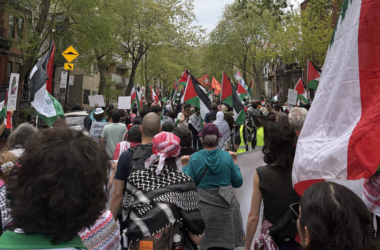
Hundreds gathered at Dorchester Square on March 21 at 1:30 p.m. to protest what organizers described as a war led by the U.S. and Israel across the Middle East. Demonstrators filled the downtown park with Palestinian flags, anti-war banners, and chants of “Ceasefire now” and “Ça suffit” to voice their opposition to military operations targeting Iran and Lebanon, and to condemn Canada’s role in the escalation. 

The rally was organized by a coalition of grassroots groups: Coalition du Québec Urgence Palestine, Collectif Échec à la guerre, Divest for Palestine, and the Palestinian Youth Movement. They framed the demonstration as part of a broader international movement against war, militarism, and Western intervention. 

According to the United Nations, more than 1,000 people have been killed and over 2,500 injured in Lebanon since early March, with more than 1.2 million displaced. Aid agencies warn that continued escalation could push up to 45 million people worldwide into acute hunger, as supply chains and fuel costs would be disrupted. 

Strikes have also targeted Iranian infrastructure, including nuclear facilities. For many demonstrators, these developments were central to their decision to take to the streets. In an interview with The Tribune, Boutaïna Chafi, the media representative for the protest, explained that the loss of human life is what brought many onto the streets. 

“We’re talking about the tens of thousands of people in Lebanon from the south being displaced, and people living in makeshift tents and on the beach, and being bombed every day in Beirut,” Chafi said. “In Iran, we are talking about critical infrastructure for daily life to be sustained that are being purposefully destroyed by Israel and the U.S.”

International agencies have echoed concerns about civilian harm. UN officials report that airstrikes have destroyed residential buildings in densely populated areas, often killing entire families. In Lebanon, dozens of healthcare workers have been killed, while hundreds of schools are now being used as shelters for displaced families. 

A central theme of the protest was Canada’s perceived complicity in the conflict. Demonstrators accused the federal government of supporting U.S. and Israeli military efforts through arms exports and political alignments. 

Two demonstrators, Lisa D. and Sam B., who were at the protest with the Revolutionary Communist Party, emphasized Canada’s complicity in the war. 

“Canada has a responsibility to stop sending arms to Israel and the U.S., and to stop the world from helping and protecting Israel on building sites,” said Lisa D. 

Sam B. added: “I think that what people want to show today is that the Canadian people don’t want this war. Nobody wants war. It gives us, as people, nothing.” 

Recent polling suggests public opinion in Canada leans strongly against military escalation, with 67 per cent of Canadians opposing involvement and favouring a neutral stance. A representative of the Mouvement québécois pour la paix (MQP) spoke with The Tribune, criticizing Carney’s lack of decisiveness on the issue and appeasement to the U.S.

“[Carney] knows that around 70 per cent of the Canadian population is against the war in Iran and is against any policy or position that will accompany the United States,” the representative, who asked to remain anonymous, said. “At this stage right now, Canada does not do much for the war in Iran, but it’s the absence of condemnation which speaks volumes, especially when Carney claims to want a foreign policy independent from U.S. demands.”

Criticism of Canada’s role extended to its membership in the North Atlantic Treaty Organization (NATO), which protestors described as a vehicle for U.S. foreign policy. The representative from MQP described it as an obsolete organization. 

“We understand NATO to be primarily a U.S. tool of foreign policy, despite the propaganda depicting it as a defensive organization,” the representative said. “It had a role during the Cold War. Yet, since the fall of the USSR, we’ve seen that it has been involved in Libya, Yugoslavia, and in Afghanistan for example. Ultimately, it has been used as a tool for U.S. domination.” 

Chafi situated the current conflict within a broader historical pattern of intervention. 

“This is a playbook that they’ve always, always used in the region,” Chafi noted. “They see a country that is able to sustain itself despite sanctions, and they will just come in and destroy everything that is needed in order for people to survive. This is what’s happening in Cuba right now. This is what they’ve tried doing in Venezuela. They’re doing it right now in Iran. They’ve done it in Iraq. This is the same playbook that has not changed. And so this is why we’re able to see through the narrative that the U.S. is pushing through, that democracy is not something you bring by destroying and killing people.” 

The representative from MQP also criticized the role of Canadian institutions, including McGill, in global militarization. 

“McGill has multiple ways in which it directly contributes to the military industrial complex,” the representative affirmed. “We know that McGill does a lot of research with regards to the production of military goods and high-tech missiles. McGill did research on thermobaric weapons, and most of those were sold over to American industrial complexes that are then utilized to bomb various countries across the world [….] We’ve also seen McGill being extremely hostile to the youth, expressing its demands for Canada taking a real position against genocide, against massacres. So McGill plays a very important role, I think, both in legitimizing wars, but also in producing wars.”

McGill’s Media Relations Office declined to comment on these claims. 

The demonstration brought together a wide range of political perspectives, from anti-imperialist activists to Quebec sovereigntists. Andréa, who attended carrying a Québec Solidaire flag and withheld her last name, described this as a matter of self-determination: A principle in the United Nations Charter affirming the right of peoples to determine their political status and pursue their economic, social, and cultural development. 

“As an independentist, personally, I cannot claim the right to self-determination for my own people without demanding it for others who need it,” Andréa said. “Supporting Palestine, supporting all oppressed peoples around the world, that’s the foundation when you are an independentist.”

Andréa also criticized what she described as a broader shift in political discourse when asked about media coverage of this conflict. 

“Misunderstood or poorly conveyed, that’s the question. Unfortunately, there has been a shift in political discourse toward the right over several years since […] the early 1980s,” Andréa said. “The discourse has shifted to the right, and it continues to shift to the right on absolutely all issues. Fascism, misogyny, all of that is part of this rightward shift, orchestrated by the richest people in the world, who basically profit off the blood of the poor.” 

Chafi also emphasized that domestic migrant justice is linked to international conflicts. 

“There’s a significant part of the migrant diaspora here who has migrated to this country as a result of intervention, as a result of coups, as a result of government changes,” Chafi said. “The rights of migrants are fundamental to our struggle, because most of us in the streets, most of us in these movements, are either sons or daughters of immigrants or immigrants themselves.”

Other participants expressed more radical critiques. One protestor, who wished to remain anonymous, described Canadian political leaders as constrained, arguing that foreign policy decisions reflect a broader system of control. 

“Tell me who pays the musicians, and I’ll tell you who calls the tune. Those who control the economy are the ones who command. If they control the economy, they own it. But politicians are only managers. They are not the ruling elite. They do not lead; they are commanded. So when we oppose them and when we rise up, the best outcome is to stop them from continuing their dirty work,” the protestor said in an interview with The Tribune.

Various activist groups at the protest are involved in ongoing campaigns targeting economic ties to the conflict. La Coalition du Québec Urgence Palestine highlights investments by the Caisse de dépôt et placement du Québec (La Caisse), which activists say include billions of dollars in companies linked to Israeli occupation and military activity. The Coalition du Québec Urgence Palestine has since launched a campaign calling for divestment from such holdings, urging Quebecers to pressure public institutions to withdraw investments. 

“We refuse to be complicit,” read one flyer distributed at the protest. 

While the demonstration focused on public visibility, organizers stressed the importance of continued action beyond the streets. 

“There are many things Canadians can do,” Chafi said. “Writing to [Members of Parliament], supporting campaigns like arms embargoes. These are simple actions that can have a real impact. This is about more than one conflict. It’s about the kind of world we want to live in.” 

As the crowd began to disperse in the late afternoon, the message of the protest was clear: Opposition to war abroad is inseparable from demands of justice, accountability, and solidarity at home. 

*Quotes from Andréa and the protestor who wished to remain anonymous were translated from French.

Sports, Winter Sports

Athletic excellence—and persistent media gaps—at 2026 Paralympic Games

The 2026 Paralympic Winter Games took place in Milan and Cortina, Italy, from March 6 to March 15, marking the 50th anniversary of the Winter Paralympics. Taking place just one week after the 2026 Winter Olympics, the event showcased the talent of 611 athletes from 55 nations. The competition was held across the following sports: Para ice hockey, para cross-country skiing, para biathlon, para snowboard, para alpine skiing, and wheelchair curling.

Team China dominated the competition, finishing as the most successful team overall, with 44 total medals, including 15 gold. The United States placed second with 24 medals, including 13 gold. The host country, Italy, came in fifth, with 16 medals and seven gold, marking a new record for the country. Canada finished sixth overall, earning medals across all sports. Canadian athletes secured two gold and two silver in biathlon, one gold in wheelchair curling—their first gold medal since 2014—five medals in alpine skiing, three in cross-country skiing, a silver in para ice hockey, and a bronze in para alpine. 

Canadian athletes shone on the international stage, with 30 leaving the Games with at least one medal. Para Nordic skier Natalie Wilkie led the Canadian team with four medals—two gold, one silver, and one bronze—solidifying her status as one of the country’s standout athletes. She also became the first athlete to carry the Canadian flag at both the opening and closing ceremonies of the Games. 

Alongside Wilkie were Kalle Eriksson, guide Sierra Smith, and Mark Arendz as Canada’s four multi-medallists. Arendz became a 14-time Paralympic medallist, making him one of Canada’s most successful para Nordic skiers.

Ina Forrest is now the most decorated wheelchair curler in the world, while also standing as Canada’s oldest medalist at the age of 63. Meanwhile, Mathieu Lelièvre became Canada’s youngest Paralympian to win a medal in Para ice hockey, showcasing Canada’s promising new generation of athletes. In total, nine athletes earned their first-ever Paralympic medals, eight of whom were competing at their first Games.

Despite these achievements, the Paralympics continue to receive significantly less media coverage than the Olympics; events were not aired during prime time, and many games were only available on streaming platforms or online.

The coverage of the 2026 Olympic Winter Games reached 30.5 million viewers in Canada across English and French television networks. In contrast, only 10 million viewers tuned in to the Paralympics across the Canadian Broadcasting Corporation (CBC) and ICI TÉLÉ—a gap reflecting a broader trend. Similarly, in 2024, the Summer Paralympic Games counted 193.6 million viewers compared with the five billion who tuned in for the Olympic Games. These discrepancies in viewership reveal a persistent lack of equity in media coverage between Olympic and Paralympic athletes.

Even when Paralympic athletes receive media coverage, they are subject to stereotypes. Their achievements are viewed as extraordinary, and in recent years, they have been coined as ‘superhuman,’ recognized for continually breaking records in sports despite their disabilities, rather than simply for their achievements. 

Additionally, media organizations tend to spotlight athletes who use advanced technology, such as blade prosthetics. This focus reinforces the portrayal of Paralympians as almost cyborg-like. It also places athletes who use technology for their sport at the centre of the media because it is seen as unique, while those without access to such equipment or whose impairments do not involve it remain overlooked. 

In turn, the Paralympics become a show of technology rather than athleticism. This framing diminishes the athletes’ accomplishments and reduces them to stories of overcoming disability. Journalists and media networks alike must provide the same standard coverage to Paralympic athletes as they do for others, while avoiding harmful stereotypes. Simultaneously, viewers must challenge these narratives and support Paralympians, as they are athletes just like every other.

Arts & Entertainment, Film and TV, Pop Rhetoric

One Sinner After Another

On March 15, the 98th edition of the Academy Awards took place at the Dolby Theatre, bringing the usual spectacle and controversy that define Hollywood’s most anticipated night. This year, two films in particular—Ryan Coogler’s Sinners and Paul Thomas Anderson’s One Battle After Another (OBAA)—competed closely in the race for Best Picture.

This category is traditionally the final award of the night, cementing its status as the ultimate marker of cinematic prestige. Unlike other categories, this Oscar is unique as it is decided by a preferential ballot system, in which Academy members rank nominees instead of selecting a single choice. This process rewards consensus and broad appeal, but also raises important questions about which films are ultimately deemed worthy of recognition—and why.

It is precisely this tension that has fueled the critique surrounding OBAA’s win. OBAA has received significant attention for its apparent political ambitions, engaging with themes such as racism, immigration and authoritarianism; Yet, Director Paul Thomas Anderson has repeatedly dodged opportunities to relinquish his apolitical stance. Nonetheless, despite—or perhaps because of— this ambition, the film has been widely criticized for its aestheticization of politics. A critique of authoritarian state violence turned into a polished rendering of cinematic action, prioritizing form and effect over depth and meaning.

On the other hand, Sinners has been noted to humanize Black political identity in accordance with history, offering a portrayal that remains grounded and attentive to lived experience. The film has received acclaim for its ability to merge supernatural horror with a meaningful exploration of the dynamics of oppression and Black Southern culture, creating a narrative that feels both creative and relevant

The contrast between these two films thus extends beyond questions of genre or style, pointing to a broader issue regarding the standards and criteria by which a film’s cinematic value is measured. What does the Academy reward when it recognizes a film as “Best Picture?” OBAA’s win reveals less about the relative quality of the films than the underlying values and preferences that shape the Academy itself. By favouring a stylized portrayal of political struggle over the more grounded and historically attentive approach of Sinners, the Oscars continue to privilege representations of politics that are aesthetically legible and institutionally familiar. In doing so, they reaffirm a particular vision of what “serious” political cinema looks like. Thus, the value of what constitutes a “Best Picture” no longer emerges as an objective measure of distinction, but as a reflection of the outdated and often problematic cultural frameworks through which the film industry operates.

This critique is further compounded by OBAA‘s choice of perspective. Despite the film’s engagement with themes of racism and systemic oppression, OBAA centres its narrative on two white male protagonists—a decision that has sparked additional criticism regarding the film’s representational scope. This results in the political stakes of the film feeling distanced, with racial issues appearing as thematic backdrops rather than lived realities. 

The directors’ reputations also shape how audiences and institutions understand the dynamics of these films. Anderson has long established himself as an auteur in American cinema and benefits from a history of critical recognition and prestige. Ryan Coogler, however, while influential and successful, is a director tied to popular cinema. The outcome of the Best Picture award thus appears to reflect not only artistic judgments but also the hierarchies that reign in the film industry. 
Despite this year’s Oscars being shockingly predictable, the outcome somehow never fails to polarize the crowd. If anything united viewers, it was the widespread belief that Timothée Chalamet did not stand a chance of receiving his small statuette.

Science & Technology

At the water’s edge: Stories of climate adaptation

One wave at a time, coastal communities are becoming increasingly vulnerable to the impacts of climate change. Rising sea levels, intensifying storms, and shifting fisheries threaten ecosystems, infrastructure, and commerce. These challenges were at the heart of this year’s Annual Grand Challenge on Sustainability, organized by Desautel’s Faculty of Management’s Sustainable Growth Initiative (SGI).

The event kicked off on March 24 at Cinema du Parc, drawing a full house with a documentary storytelling evening. It opened with remarks from Adam Turcotte, associate director of the SGI.

“The SGI was created mainly to address the interdisciplinary issues in solving the global sustainability challenges that the world faces,” Turcotte said. “[…] The objective of [SGI’s Annual Grand Challenge] is to present students across the country with a specific challenge related to sustainability and let them find a solution.”

This year’s challenge centred on exploring strategies that strengthen coastal communities’ resilience against climate change.

Two short documentaries were featured, followed by a Q&A session with their creators: Leila Beaudoin, a journalist who specializes in fisheries and climate stories, and Maxime Corneau, a Radio-Canada journalist who covers environmental issues.

Beaudoin’s film, All Eyes On the Water, explores the growing threats to coastal communities posed by rising sea levels and increasing storm intensity. When introducing her work, she reflected on sustainability and the challenge of maintaining communities and ecosystems in a rapidly changing world.

“Fishermen in my film can tell you the exact speed [by which] the wind has changed since they were children,” Beaudoin said. “When I started filming on my iPhone, I did not know what I was gathering […], just that I had to gather it and that it was important [.…] Last year, I purchased a [Sony camera] […], but one thing I realized when making this documentary is that climate stories do not wait. They do not care about theatrics or lighting or programs or funding, even.”

Filmed near her hometown in northern Newfoundland during the COVID-19 pandemic, the documentary highlights how storm activity is accelerating coastal erosion and damaging infrastructure, such as homes and fishing facilities.

“The message for me was really how [people] already know, they have solutions,” Beaudoin said.

By giving people space to express their thoughts, ideas, and concerns in her film, she demonstrates that communities are already adapting—proposing solutions such as relocating buildings inland or reinforcing shorelines with rock barriers—but are lacking the funding and political support needed to implement them.

During the Q&A, Beaudoin further explained how climate change impacts fisheries: While warming waters have benefited the lobster industry in Newfoundland, stocks are declining further south in the United States.

Maxime Corneau’s documentary, Tuktoyaktuk: où aller quand l’océan nous engloutit?, presented on Découverte, tells the story of Tuktoyaktuk, an Inuvialuit hamlet in the Northwest Territories, facing severe coastal erosion, worsened by permafrost thaw, rising sea levels, and amplified wave action.

“We wanted to share the story of people who were thinking about leaving [….] But when we got there, we quickly realized that […] they wanted to stay there, and it realigned the story,” Corneau said.

The film blends voices from scientists, local residents, and former mayor Erwin Elias, portraying a community deeply attached to its land; cultural, cemetery and economic activities are all connected to this place.

“As a Southerner, I […] thought [climate change] must be terrible [for Indigenous communities in the north],” Corneau said. “And when you are there, you speak with people, and it is all about adaptation, and how they move with the environment.”

Following the screening, Corneau shared that the community has since secured $54 million CAD in federal funding to help protect the town from erosion. He highlighted Tuktoyaktuk’s geopolitical importance as a factor in securing funding and expressed hope that the film will inform broader adaptation strategies, including in southern regions like Montreal.

Overall, audience members responded positively to both films, praising their striking visuals that captured the beauty of Canadian coastal landscapes, the representativeness of people’s voices, and the human-centred storytelling. 

As conversations continued beyond the screening room, the event marked yet another successful edition of the Annual Grand Challenge on Sustainability.

News

McGill Senate questions application of revised identification policy

The McGill Senate convened on March 18 for its third meeting of the Winter 2026 semester. The meeting began with a memorial for the late Professor David Harpp in the Department of Chemistry. McGill’s President and Vice-Chancellor Deep Saini shared his Feb. 25 speech for the Montreal Chamber of Commerce with the Senate, as well as his visit to India with Prime Minister Mark Carney to discuss the opening of a Centre for Excellence in AI. 

Next, Vice-President (VP) of Administration and Finance Fabrice Labeau opened the discussion with a revised identification (ID) policy proposal following the policy’s initial proposal in the Senate’s Jan. 14 meeting. The proposal would allow authorized personnel to request student identification on campus property for “legitimate purposes” outlined in the policy.  

Post-Graduate Students’ Society University Affairs Officer Amina Bourai raised questions regarding the initial proposal’s academic necessity and potential safeguards, referencing an open letter from the McGill community opposing the proposed policy.

“[The open letter] has now been signed by over 500 members of the McGill community, including undergraduate and graduate students, staff, alumni, and faculty,” Bourai said. “This reflects a broad and urgent level of concern across the university about both the necessity of this policy and its potential impacts.” 

Furthermore, among other concerns of the policy’s safeguards, Bourai questioned the need to change McGill’s current security apparatus.

“What remains unclear is why [the existing frameworks] are inadequate and why a broad identification policy that doesn’t require any suspected wrongdoing is a proportionate response [….] How exactly is security supposed to handle the exclusion of people? Physically carry them outside or are we calling the police?”

In response to Bourai’s initial questions, Labeau presented his revised proposal with consultations from other senators. Labeau cited increased theft on campus as a reason for the policy, while also taking into account concerns about discretion in asking for ID.

“We heard a lot of comments about the fact that too many people had too much power and that was never the intent. We’ve clarified in this version that the role of an individual that is qualified to ask for identification is really limited to a specific place and time,” Labeau said. 

Labeau acknowledged that the consultations were useful, yet the policy’s passing would ultimately go through the Board of Governors (BoG), a point echoed by Saini. Labeau also clarified the definition of “authorized personnel” allowed to request ID, listing exam invigilators, campus security, and faculty or staff acting in an official capacity at on-campus events. 

Faculty of Law Professor Victor Muñiz-Fraticelli then raised a question about the administration’s intention with the proposal and the practical application of this policy.  

“We’re a bit like Athens under Pericles and not like Sparta,” Muñiz-Fraticelli said. “We are open to the world with Sparta, maybe Yale perhaps as a point of comparison, which closed itself from surrounding the community. And no one in Canada is asked to carry government-provided ID when they walk around the street.”

Additional concerns included adequate training for campus security under the policy and its potential effect on peaceful protests on campus. Particularly, the need for sufficient efforts to prevent profiling was brought up by Faculty of Dental Medicine and Oral Health Professor Alissa Levine.

“The only times in my life when I’ve been asked to produce ID have been when I was in the presence of a friend or colleague of colour,” Levine said. “I am concerned there will be no records kept. I think the intent was to reassure and it actually might have the opposite effect in terms of how it’s carried out.” 

The BoG will vote to pass the proposal at its next meeting on April 23. 

Soundbite: 

“I’m wondering if McGill intends to post guards at the entrances and gates of the university, to ask any tourist who wants to see the arts building, or any cyclist who wants to commute, to produce their papers or be excluded from the publicly funded campus.”—Senator Victor Muñiz-Fraticelli.

Moment of the Meeting: 

Senators voted to add a 12th day to the examination period for the Fall 2026 term to alleviate evening exams, in turn shortening Winter break.

Arts & Entertainment, Film and TV

Anicinabe Park Warriors remembered 

While researching for her book, The Knowing, Anishinaabe journalist, author, and filmmaker Tanya Talaga was asked by a friend what she knew about the 1974 occupation of Anicinabe Park. That prompted her to explore the story further. What followed was a captivating collaboration with Metis writer, director, and filmmaker Shane Belcourt, recounting the story of the young Louis Cameron

On March 16, Cinema Politica Concordia hosted the Montreal premiere of Ni-Naadamaadiz: Red Power Rising as part of their Winter 2026 program, Carpe Machina. In the summer of 1974, led by Cameron of the Ojibway Warriors Society, a peaceful occupation of Anicinabe Park began, following a four-day youth conference. The documentary weaves interviews, archival footage, and a voice-over of Cameron’s son, Tyler, reading Cameron’s unpublished manuscript. 

The film begins by setting the scene of life for a young Anishinaabe person living on the Grassy Narrows First Nation Reserve, or in nearby Kenora, Ontario. Racism and discrimination plague the lives of the local Anishinaabe youth, both during the film’s time period and today. For example, interviewees share experiences of being refused service in restaurants and denied public-facing jobs as Indigenous people. The film also explores how the Kenora region housed one of the largest numbers of residential schools in Ontario, where Cameron and other Anicinabe Park Warriors spent their youth facing sexual, physical, and emotional abuse. 

The narrative then follows Cameron’s son, Tyler, as he explains the extent of the mercury poisoning in his community and the process of getting his daughter tested. This is especially significant given that Indigenous communities disproportionately suffer from the effects of environmental racism, in which practices and policies result in greater pollution or health risks for Indigenous or racialized communities. Belcourt also illuminates the high levels of violence in the town, including the “Kenora Indian Beaters”—a violent and racist gang of non-Indigenous young men that target Anishinaabeg.

Despite the widespread culture of hate in town, the police focused their attention on Cameron. 

“My dad, Louis Cameron, was one of the most wanted men in Canada. An outlaw. They called him a terrorist. I call him a warrior,” says Tyler in the film.

The photos and videos of the occupation dispel this depiction by revealing a very young group, with ages ranging from 20 to as young as 17. The occupation, which lasted 40 days, involved Anishinaabe mothers, youth, and leaders camping out in the park through cold weather, threats from the Kenora locals, and constant police surveillance. Their demands included better housing, more employment opportunities, an overhaul of the Department of Indian Affairs, and—most significantly—the return of Anicinabe Park lands, which they claimed were illegally purchased by the federal government and sold to the City of Kenora in 1959.

During the post-screening Q&A, Talaga shared her intent behind the film.

“I wanted to show the youth our heroes. The heart of this film is human connection [.…] The youth in this film were standing up to resist what was happening, what is still happening,” Talaga said.

Cameron emerged as a political visionary who was both charismatic and well-spoken despite his youth. He left behind an unpublished manuscript, stored in a pink storage bin in Tyler’s home. The manuscript, narrated in both Anishinaabemowin and English, reveals the breadth of Cameron’s vision for his people. The film positions Tyler as the emotional thread of this movie, inviting audiences to share in his experience of revisiting his father’s legacy of activism from Anicinabe Park to Parliament Hill. Digging into the storage bin, the film gently unravels this forgotten juncture in Canadian history. Stunningly, Tyler looks and sounds exactly like his dad, reminding audiences that Indigenous resistance echoes through generations.

Read the latest issue

Read the latest issue