Latest News

Out on the Town, Student Life

Unmissable events happening this month

With the roads defrosting, the weather warming, and the clock springing forward, Montreal is back and better than ever with a bunch of activities to take advantage of the (relatively) temperate temperatures. Lucky for you, The Tribune has compiled a list to keep you occupied in the upcoming weeks—if you’re one of the lucky few who has a lull between midterms and finals, anyways.

1. Festival Art Souterrain

From March 15 to April 16, the 16th annual Festival Art Souterrain will transform Montreal’s underground city into a contemporary art exhibition. The festival will feature 30 artists and five exhibit venues, as well as free artistic activities following this year’s theme: The environment. Entrance is free, although some activities, such as guided tours, require purchasing a ticket. 

One of the perks of the festival is that it is underground—as much as we enjoy the weather getting warmer, it is still freezing outside, and there’s always the inevitable late-March snowstorm. The Underground City spans across 33 kilometers, serving as a pedestrian network right under the heart of Montreal that connects metro stations, shopping centers, and cultural landmarks. This festival is the perfect way to explore art while staying warm and getting to know one of Montreal’s most famous landmarks. 

2. International Festival of Films on Art

If you’d rather see your art through a video camera, this festival may be for you! From March 13 to March 30, the International Festival of Films on Art will be presenting hundreds of short and feature-length films on art and culture in cinemas in various locations downtown in light of its 43rd edition. This festival is your chance to watch captivating movies, paintings, photography, music, and dance, exploring Montreal’s rich artistic culture. The virtual edition extends until March 30, allowing you to enjoy the art from the comfort of your home if you are unable to make it in person. 

3. Cabane Panache

If you live in Quebec and you’ve never been to a cabane à sucre, can you really say you have lived the Quebec experience? Even if you have been to one before, not going to Cabane Panache this year would mean missing out on one of the province’s sweetest traditions! From March 20 to 23, on Promenade Wellington, you can find maple syrup delights, live folk music, and expanded festivities. This year’s edition is special as it is part of Verdun’s 150th-anniversary celebrations. Be sure not to miss out on the largest urban sugar shack festival, and bring some of your friends along while you are at it. Additionally, it is not too far from McGill by metro, as it is located near De l’Église metro station. 

4. Montreal’s St. Patrick’s Parade

On March 16, Montreal’s St. Patrick’s Parade will take place on Rue de Maisonneuve, from Fort St. to Jeanne-Mance, starting at noon. It has happened annually since 1824, making it the second most famous Irish parade in North America, behind New York. Expect floats, marching bands, musicians, and performers flooding the streets. Whether you have Irish roots or just love a good celebration, this event is a must-see! 

5. The Montreal National Women’s Show

From March 28 to March 30, enjoy a weekend of fashion, beauty, wellness, and lifestyle at the Montreal National Women’s Show. At the Palais des Congrès, the show will feature over 320 exhibitors providing attendees with food, wine tastings, fashion shows, celebrity guests, free beauty makeovers, health and beauty tips, cooking demonstrations, interior-design advice and travel ideas. Conferences and workshops complete the program of this event dedicated to women. 

Montreal has covered you for March, so mark your calendars and make the most of these upcoming events!

McGill, News

McGill Food Coalition’s weekly calendar plants seeds for alternative food system

Throughout the Winter 2025 semester, the McGill Food Coalition (MFC) has posted a weekly calendar compiling food service events on campus, from free lunches to events discussing food sustainability. MFC is a student-run group that represents and coordinates projects between food advocacy groups, including the Student Nutrition Accessibility Club (SNAC), Midnight Kitchen, and Happy Belly

In an interview with The Tribune, Mia Szabo, U3 Arts and a project leader for the MFC, explained that the calendar seeks to improve students’ access to nutritious, affordable, and sustainable foods. She added that by compiling the services of its member groups, the calendar enables students to more easily incorporate them into weekly meal planning. 

“On Monday, I can get SNAC groceries,” Szabo said. “On Wednesday, I can go to Midnight Kitchen. On Friday, there’s Happy Belly, and in between, there’s workshops.”

Szabo also drew attention to the symbolic significance of the calendar in showing that student food advocacy groups are united in their efforts to combat food insecurity. 

“We really want to convey a sense of cohesiveness across the different groups, which in the past, might not even know that each other existed,” Szabo said. “We’re all working towards a common goal, which is servicing McGill students and the McGill community.”

Szabo emphasized that the calendar contributes to MFC’s larger commitment to creating an alternative food system on campus, filling gaps left by the traditional food system centred upon for-profit companies. 

Élèves des Champs—a student-run ecological garden on the Macdonald Campus—is among the member groups of MFC. Reflecting on the MFC’s work beyond the calendar, Sam Liptay, U3 Science and representative from Élèves des Champs, echoed the coalition’s role in tackling food insecurity holistically and addressing common obstacles between student groups. 

“Something that people [have been asking] is, ‘What are the limits to growth for each group?’, and trying to assess those and see if this can be overcome, and see if there [are] commonalities,” Liptay said. 

For Jeanne Arnould, U4 Arts and a representative from DefaultVeg McGill, MFC is a key way to increase the visibility of food advocacy groups for students, something that is crucial given that it can be challenging to find an updated list of active clubs and services on campus. DefaultVeg promotes plant-based eating through catering services and other food sustainability events, such as vegan snack nights. 

“When you do have a club, you need to go table at Activities Night and hope that some people will be interested, otherwise your student club or group kind of dies,” Arnould told The Tribune. “So [MFC’s] initiative to actually structure [these groups under a coalition] is really, really valuable.”

In a written statement, Hugo-Victor Solomon, Vice-President External of the Students’ Society of McGill University (SSMU), noted that rising inflation and the lack of food options on campus are among the main drivers of food insecurity for students. However, Solomon believes that SSMU signing a new Memorandum of Agreement (MoA) with McGill on Feb. 28 may help bring more food venues to the University Centre.

“I’m happy to say that given the signing of the new 5-year MoA, […] it’ll be a lot easier to secure contractors in a more streamlined process through having a management agreement with the University in place—and to get more food service tenants in the building ASAP,” Solomon wrote.

Although Solomon reported that SSMU is not currently collaborating with MFC “in any official capacity,” he wrote that the student union will seek to work with them to revise SSMU’s Food Security Policy in the future. 

Lia Boretsky, U4 Science and co-president of SNAC, hopes to see greater collaboration between student groups under MFC and underscored the mutual benefit that comes from this work. Boretsky recalled several weeks when SNAC was able to prevent wasting leftover produce from their weekly Good Food Box distribution service by offering it to Midnight Kitchen for their lunch program. 

“It’s more effective when we work together and collaborate, rather than just being our own [groups], because then things go to waste,” Boretsky said. “We all have the same mission, and if we come together and be more strategic […] it’s going to have a better result for the students.”

Sports

Tennis world no. 1 Jannik Sinner suspended for three months amidst doping controversy

Tennis is full of exciting young superstars, from Spain’s Carlos Alcaraz to the U.S.’s Ben Shelton; however, nobody may be as talented or as dominant as Jannik Sinner. The 23-year-old from the South Tyrol region of Italy has racked up three Grand Slam wins and over $56 million CAD in prize money. Yet his meteoric rise to the top of the tennis world has hit a considerable speed-bump. 

The World Anti-Doping Agency (WADA), an international organization comprised of more than 140 countries helping fight against performance-enhancing drugs in sports, handed Sinner a three-month suspension from Feb. 9 to May 4 after he tested positive for the performance enhancer Clostebol. The suspension stipulates that for its duration, Sinner is not allowed to participate in any Association of Tennis Professionals (ATP) Tour events. 

The circumstances of Sinner’s suspension and the question of whether or not he intended to cheat or gained any advantages from Clostebol are murky at best. Sinner’s original positive test was from March 10, 2024, after he beat Jan-Lennard Struff in the third round of the BNP Paribas Open at Indian Wells. Sinner’s physiotherapist Giacomo Naldi was using an over-the-counter spray that contained the steroid Clostebol for a cut on his finger. Naldi massaged Sinner throughout the tournament, and Sinner’s team argued that the Italian superstar was inadvertently exposed to Clostebol through Naldi. The International Tennis Integrity Association (ITIA) issued two bans for Sinner, both of which were reversed on appeal.

Following Sinner’s dominant U.S. Open win in September to claim his second Grand Slam title, WADA announced that they were filing an appeal to the Court of Arbitration for Sport, where they sought to ban Sinner from any tennis competition for one to two years. This launched another lengthy legal battle and thrust Sinner into the spotlight yet again. This time, he could not escape unscathed. WADA gave him a three-month ban, which, considering their initial one- to two-year goal, let Sinner off lightly.

However, their explanation for their decision did nothing to put the case to bed. WADA not only acknowledged that Sinner’s team was able to prove any Clostebol use was completely unintentional, but also said that their findings did not indicate that Sinner gained any competitive advantage from his accidental exposure to the steroid. When considering these facts, it seems that Sinner was hard done by.

Many questions have been raised by critics on the handling of Sinner’s case and whether or not it creates a double standard for elite athletes. While it is true that Sinner’s punishment may not be the correct decision, he avoided two provisional suspensions through emergency appeals to lift them. Any other player would likely have been forced to serve at least one of the provisional suspensions handed down by the ITIA. Twenty-four-time Grand Slam winner Novak Djokovic sounded off, saying that there were inconsistencies in the treatment of Sinner versus other players who had similar cases.

While the legal drama seems to be in the past for now, Sinner will have to work hard to return to his best. Three months away from competition is a massive challenge in a sport that requires an incredible amount of focus. Sinner will need to get back into the right mindset before his return to competition at the Italian Open on home soil in Rome, which begins May 7. Fans will be hoping this saga is a mere blip on Sinner’s path to greatness, and that he will use this experience to motivate himself to reach the incredible heights that those in the tennis world know he can achieve.

Commentary, Opinion

Quebec’s budget cuts to sexual violence survey put students at risk

Quebec recently cancelled a survey investigating sexual violence on CEGEP and higher education campuses. This cancellation sets a damaging precedent for future policies on sexual violence and student protection, as well as for the salience of institutional accountability, creating a less regulated and more dangerous campus environment. Without data evidencing the frequency and severity of this crisis, it becomes invisible, and institutions can get away with ignoring it.

In Canada, one in three women above the age of 15 report to have experienced sexual assault at least once. This prevalence is reflected acutely on Quebec campuses, where 14 per cent of all reports and complaints to the Quebec ombudsman are related to sexual violence. The need for stronger protections and data-driven policies is vital. Yet, the government has removed a key mechanism for understanding and addressing campus sexual violence. How can an issue be addressed when those in power don’t consider it significant enough to research?

Without the survey, there is no longer a direct, survivor-centred means to monitor sexual violence and available safety measures on Quebec campuses. The Quebec government has justified this cancellation as a cost-saving measure. However, survivors pay the real price. The absence of data does not suggest the absence of violence. It only means that survivors are left unsupported and without a system willing to acknowledge their experiences. Thus, students will continue to face sexual violence with fewer protections and less institutional support. Quebec Higher Education Minister Pascale Déry stated that a broader provincial mental health survey will incorporate data about sexual violence, but merging a specific issue into a general study risks diluting critical insights and overlooking key patterns. Without a dedicated survey, the true scope of the crisis may be misrepresented or ignored entirely. 

The government is not just neglecting its responsibility; it is deliberately turning its back on a problem that causes profound trauma for thousands of women, and demands urgent and ongoing attention. When the government fails, it is up to institutions to step up, take initiative, and ensure that student safety is not sacrificed for bureaucratic convenience. A campus without proper reporting mechanisms does not protect students; it protects perpetrators. Silence does not create safety but guarantees invisibility.

This invisibility is not distributed equally. 2SLGBTQIA+ students, students with disabilities, international students, racialized students, and women already experience sexual violence on campus at disproportionately high rates. The cancellation of this survey makes the severity of their realities even easier to erase. By cutting research funding, the government merely shifts the burden onto underfunded and understaffed organizations like the Office for Sexual Violence, Response, Support, and Education (OSVRSE), leaving it to them to fill the gaps while struggling with limited resources. 

Higher education campuses are not responsible for Quebec’s failure, but in the face of the cancellation of this survey, they have an important choice: Follow the Quebec government’s pattern of neglect or take real, independent action. If the province refuses to track sexual violence, institutions themselves must. McGill must acknowledge that safety does not start with response but with prevention. A commitment to student safety is a choice that must be reflected in action, policy, and transparency.

The government’s decision to erase data instead of addressing sexual violence is not just an oversight. Though there are still a number of alternative forms of data collection in regards to sexual violence, they are not as tailored to Quebec’s school campuses in particular as the cancelled survey was, and thus hold less weight in institutional protections of sexual violence on campuses. Sexual violence is still happening, and will only intensify if the importance of sexual violence data is forgotten. The loss of data makes it difficult to assess whether the measures Quebec has taken to improve campus safety are working, and whose stories of sexual violence are going unheard.

Editorial, Opinion

Censorship of genocide is inherently anti-education

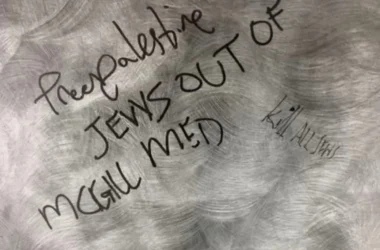
Quebec Minister of Higher Education Pascale Déry has recently come under fire for her interference in course content at Dawson College, where she demanded that a French language course about Palestinian literature avoid sensitive topics. Shortly after, Déry made a similar intervention in a Palestinian literature course at Vanier College. The minister justified these investigations by claiming that the content was “explosive” and that students deserve a “healthy and safe” environment. Déry’s interventions are not unlike McGill’s own actions towards rejecting discussion of Palestine in classrooms, the exclusion of the word “Palestine” or “genocide” in the university’s email communications with the student body, and the Post Graduate Students’ Society (PGSS)’s removal of words such as “Gaza” and “genocide” from their motions of solidarity with Palestine. 

Stifling discussion of Israel’s genocide in Gaza—or any other major geopolitical crisis—dismisses the lived realities of those involved, stunts positive change, and enables educational institutions to remain passive in their own contribution to acts of violence around the world. Suppressing conversation, especially that which is the most contentious and the most uncomfortable, heightens tensions and propagates misinformation. 

Israel’s genocide in Gaza touches so many students in traumatic and deeply distressing ways, and the university setting is uniquely equipped to facilitate discussion around it in a respectful and informed space. As experts and professionals, university professors can act as knowledgeable mediators and encourage evidence-based dialogue in their students. In this way, not only is open discussion of weighty subjects itself destigmatized, but students are open to learning from one another instead of festering in repressed feelings and unspoken polarized conflict.

Geopolitical tensions do not cease to exist if a university chooses not to talk about them. Such silence sends the message that the lives affected by and lost to these injustices are not worth addressing in the classroom, thus enabling a false sense of detachment from those realities. McGill itself is instrumental in the genocide, as it continues to invest over $70 million CAD in more than 50 companies complicit in upholding Israel’s apartheid regime. The symbolic weight of these investments is greater than their monetary value; McGill is a world-class institution of higher education, whose actions set a precedent for other educational institutions in Canada and abroad. 

Suppression of uncomfortable discussion not only pacifies past violence, but reproduces it. After an unidentified group in support of Palestine broke windows in McGill’s Leacock Building in February, President and Vice-Chancellor Deep Saini sent a message to students classifying these protestors as threats to students though no one was harmed. His message ignored the purpose of the protest entirely, instead criminalizing the pro-Palestine cause. This rhetorical tactic imbues reductive biases into the discussion of the genocide in Gaza, while simultaneously villainizing protest—by students or otherwise—and discouraging future action. It is in this fear-mongering environment, where certain causes are hand-picked as acceptable or not based on their convenience for the university, where polarizing narratives and heightened tension are encouraged in place of constructive dialogue and progress. 

McGill’s student body and faculty must continue to hold the university accountable for its ongoing complicity in violence and its suppression of crucial discussion. McGill and its student body must also show consistent and energetic solidarity with Dawson College, Vanier College, and the entire CEGEP system, where the grassroots of student activism in Quebec is growing. 

Ultimately, amidst censorship, suppression, and polarizing curation, it is critical that each of us individually continue to have uncomfortable conversations, both to educate others and to learn from others with an open mind. This could be with friends, family, classmates, or professors, but it must continue. We, as students, must challenge our professors when a syllabus is devoid of Palestinian, women, 2SLGBTQ+, BIPOC voices, and professors—especially those protected by tenure—must encourage and facilitate uncomfortable conversations. The power of individuals and their communal discourses in the fight against suppression is immense—neither the administration nor the McGill community can forget it.

Arts & Entertainment, Books

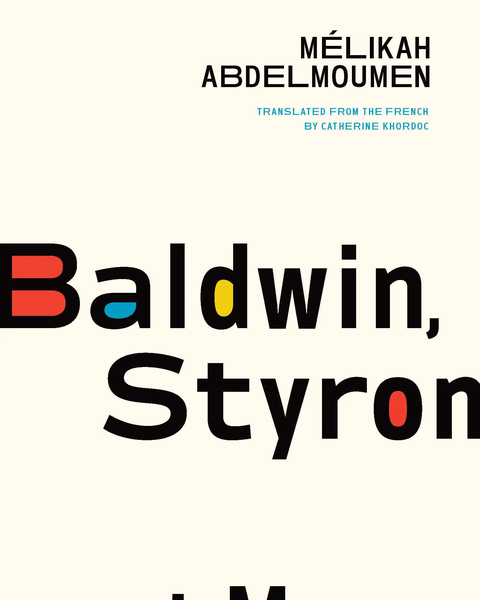
‘Baldwin, Styron, and Me’ is a contemplative exploration of converging identities

Cigarette smoke caresses the wooden beams of William Styron’s colonial Connecticut home. The piercing smell of whiskey drifts across the creaking pine floors. In the airy afternoons, one can hear the clacks of dueling typewriters, marking each side of the historic property as their own. But into these bristling nights, Styron and his houseguest, James Baldwin, find themselves in stimulating discussions: Arguing, compromising, and honing their literary precision into thoughtful exchanges on race, religion, and selfhood. As the grandsons of an enslaver and an enslaved person, respectively, Styron and Baldwin contemplate the nuances of whiteness and Blackness in 1960s America—exploring how writers can contribute to this cultural dialogue that shapes a shared history and what it means to exist in a racist world.

Québécoise writer and magazine editor Mélikah Abdelmoumen’s newly translated book, Baldwin, Styron, and Me, is a hybrid fiction-memoir that weaves the encounters between literary icons Baldwin and Styron—during Baldwin’s nine-month stay with the Connecticut author—into accounts of her own life in Quebec. Born to a Tunisian father and a Québécoise mother, Abdelmoumen navigates the complexities of her cultural identity in a Canadian province deeply tied to a unified, and now racialized, provincial selfhood.

Abdelmoumen explores the complex history of racial congruence through Baldwin and Styron’s relationship. She gives fictionalized dialogue to their encounters, illustriously assuming the literary voice of each author to imagine how they may have spoken to each other throughout their lengthy, conversational nights. It was during this stay that Baldwin encouraged Styron to embark on his new project, the novel The Confessions of Nat Turner. Told from the perspective of Nat Turner, an enslaved man in the Antebellum South, Styron took from the minimal written records of Turner’s life to tell the story of his rebellion against enslavement. Abdelmoumen describes the novel’s initial critical acclaim and subsequent critique. Whether Styron’s creative liberties accurately or respectfully depicted the internal experience of Black identity during slavery is still carefully debated

One writer featured in the literary critique Nat Turner: Ten Black Writers Respond, Vincent Harding, wrote,

“There can be no common history until we have first fleshed out the lineaments of our own, for no one else can speak out of the bittersweet bowels of our blackness.”

When Abdelmoumen’s Styron questions his ability to understand Blackness 100 years prior, Baldwin responds, “In the way that his story resonates in our time. Mine, and yours. By remembering that we are inextricably connected and that your story is my story and that my story is yours.”

Through these imaginations of the past, Abdelmoumen reminds that in the wake of tragedy and trauma, we can only heal our wounds through empathetic, understanding, and direct confrontation with this problematic past. At the same time, she questions to what lengths one could accurately explore the Black identity while using a privileged, white pen: How could Styron even begin to capture the intense legacy of racism and intersectionality in America?

This anecdote of the past seamlessly transports us into Abdelmoumen’s present: On her way home from work while living in Lyon, France one night, she was assaulted, mugged, and called a racial slur. She speaks of her experience as the “Other” in both Québécois and French society, as someone who existed within Quebec and Tunisia in cultural tandem. She also reminds her Québécois readers of the province’s recent spike in racial injustices and hate crimes.

Abdelmoumen posits that once we identify violence and ugliness for what it truly is, we can truly move forward—but not so fast that we forget the traumatic truths of the past. Through these literary explorations, we can listen to and learn from those whose experiences differ greatly from our own. It is in this space that Abdelmoumen realizes her own identity—not in rigid, definitive permanence, but as a fluid thing to be molded and shaped throughout time. 

“Following in no one’s footsteps, I chose my identity: It is not, nor will it ever be, fixed,” Abdelmoumen asserts.

McGill, News, SSMU

The Tribune Explains: SSMU’s new Memorandum of Agreement with McGill

On Feb. 28, the Students’ Society of McGill University (SSMU) and the administration signed a new Memorandum of Agreement (MoA)—a document outlining the two parties’ cooperation. Coming in at 118 pages long, The Tribune breaks down what students actually need to know about the new MoA, how it differs from the previous version, and why it matters.

What is the MoA?

The MoA is a crucial aspect of how SSMU operates. The SSMU is a student-run organization registered as a not-for-profit incorporated under the Canada Not-for-profit Corporations Act. Despite its independence from McGill, the terms of its relationship with the university are central to its functioning—defining its ability to operate on the McGill campus and for clubs and services to use the McGill name. 

Without an MoA, student clubs and services cannot legally use the McGill name or work out of the University Centre, fundamentally disrupting SSMU’s operations.

Typically valid for five years, the new agreement will remain in effect until May 31, 2029. This MoA includes a couple of key adjustments, including new requirements for hopeful SSMU executives and changes to how McGill and SSMU can resolve any Notices of Termination—formal announcements that either party wants to end the agreement. The MoA also includes details on the SSMU office’s upcoming move to the fourth floor of the University Centre. 

What are the new rules for SSMU executive and executive nominees?

Under the previous MoA the only requirement to run for a SSMU executive position was to be an undergraduate student who had taken at least 18 credits in the 18 months leading up to the election. The previous MoA also stipulated that all SSMU executives and Board of Director members would be subject to the Code of Student Conduct and Disciplinary Procedures, although there were no further details on candidates’ eligibility. 

Now, SSMU executives and directors cannot have a disciplinary record at McGill, an offence under the student code of conduct, or have been suspended from the university. 

How has the process of resolving MoA-related issues between McGill and SSMU changed?

The default clause in the previous MoA outlined that an “event of default” would occur if SSMU breached the MoA, its own constitution, Quebec law, or faced serious financial issues. In the event of default, the money “assessed by the University for [SSMU]” would be put into a trust fund overseen by representatives of both parties until the default was resolved. The new MoA no longer includes this clause. Instead, either party can now issue a Notice of Termination at any point, with the issue being taken to an impartial third-party mediator. 

To SSMU President Dymetri Taylor, this adjustment takes away some of the University’s financial power over student union in negotiations over default. 

“The reason for the change was more or less to give some leeway and have it be more of a conversation amongst equals,” Taylor explained to The Tribune.

Where are the SSMU offices going?

Currently located in suite 1200 of the Brown Building, the SSMU offices will be moved to the fourth floor of the University Centre following this school year, taking over suites 401 and 403-409. While most of the space is currently unoccupied, it includes the Club Lounge, the McGill University Photography Students Society office, and the Queer McGill library. The SSMU has yet to finalize where the clubs’ spaces will be relocated to, although he alluded that libraries from various SSMU services may be consolidated into a single space.

As for the current SSMU offices, McGill will take over the space to create more offices for staff on campus. According to Taylor, this is in part due to financial constraints that have forced the university to cut down on its external leases in and around Montreal. 

Science & Technology

How elite coaches navigate adversity and sustain success

What does it take to win consistently at the highest level of Olympic and professional sports? While a growing body of research is examining serial winning coaches—those who have led teams and athletes to gold medals and championships over extended periods—most studies have focused exclusively on their triumphs, leaving a critical gap in understanding how they navigate periods of adversity.

In light of this, Madison Fraser, a researcher at the McGill Sport Psychology Research Laboratory, collaborated with Gordon Bloom, a professor of Sport Psychology at McGill and the lab’s director, to investigate how successful coaches handle difficult seasons. Their study sheds light on the strategies elite coaches employ when facing challenges that threaten team success and morale. 

At the core of high-performing teams is team culture—the shared goals and behavioural norms that unite athletes. While strong team culture fosters unity and cohesion, poor culture can lead to miscommunication and conflict as athletes operate under different behavioural guidelines.

Fraser identified athlete motivation as a key factor in cultural breakdown within the team. 

“Several coaches mentioned a lack of drive within their team, where they had been successful for so long that senior athletes developed a mindset of ‘we’re going to win.’ Winning became more of an expectation [than an aspiration]. They were missing that extra motivation to strive for excellence,” Fraser explained in an interview with The Tribune.

The study also revealed the disruptive influence of what coaches considered “problem athletes”—those who often fail to uphold team values.

“Sometimes there’s role conflict—the athlete wants to be the star player while the coach [envisions them as] a role player. In other cases, athletes might come from environments where selfish behaviour was tolerated,” Bloom said in an interview with The Tribune.

Coaches have developed various strategies to address these challenges, including early identification of potential issues, establishing clear expectations, and building meaningful relationships with athletes.

However, the first encounter with a challenging season often proves particularly daunting, even for experienced coaches. The study revealed that post-season reflection emerged as a crucial practice, with coaches analyzing both their actions and those of their athletes to implement improvements for subsequent seasons. 

Another key finding was the importance of strong social support networks—from family, staff, or organizations—to help coaches better handle stress during difficult periods. 

“Coaches need to feel like they are not carrying the weight of their team’s success alone. That was a real struggle for a lot of them this season. Some even felt their universities weren’t as supportive once the team stopped winning, despite years of success,” Fraser said. “Having that social support is huge. It can really help reduce pressure and support overall well-being, which is something we’ve seen backed up in research, too.”

While this study focused on Canadian university coaches, Fraser acknowledged the need for broader research across different coaching contexts and levels. Future research following coaches over longer periods could provide greater insights into the psychological flexibility that impacts the fluid nature of team culture throughout a season.

Additionally, the findings were limited to the perspectives of head coaches, suggesting future research could benefit from including insights from athletes, assistant coaches, or other team personnel. 

Bloom also emphasized the importance of incorporating crisis management into coach education.

“In coach education classes, we don’t focus on what to do when things fall off the rails. High-level coaches need preparation for handling their first bad season,” Bloom said.

This research underscores that even the most accomplished coaches face significant challenges. Their ability to learn from these experiences and implement strategic changes often determines their long-term success. By better understanding how elite coaches navigate difficult seasons, the sports community can better prepare future leaders for both triumph and adversity.

Science & Technology

Weekly Ozempic shown to improve control of type 1 diabetes

While both type 1 and type 2 diabetes involve issues with insulin—a hormone needed to absorb sugar from the bloodstream to produce energy—their methods of action are not the same. Type 1 diabetes (T1D) is an autoimmune disease in which a patient’s immune system attacks their pancreatic cells, thereby preventing the production of insulin. Type 2 diabetes (T2D), on the other hand, involves insulin resistance and a gradual loss of insulin production. 

For decades, management of T1D has revolved around insulin therapy, requiring patients to balance blood sugar levels by using automated insulin delivery (AID) systems while carefully monitoring diet and physical activity. 

However, a new study conducted by McGill researchers suggests that combining AID systems with semaglutide—an injectable medication that slows digestion, reduces appetite, and stimulates insulin release from the pancreas, known commercially as Ozempic—could help people with T1D gain more control over blood sugar levels while simultaneously using less insulin. This research marks a major step forward, as semaglutide has primarily been used for T2D and weight management.

Melissa-Rosina Pasqua, an assistant professor in McGill’s Division of Endocrinology and Metabolism, conducted this research with 28 T1D patients, observing the effects of semaglutide as an add-on therapy to AID. 

After 11 weeks of gradually increasing semaglutide dosage, followed by four weeks on full-dose treatment while using the AID system, the study found several key benefits from employing both treatments simultaneously. Patients experienced improved blood sugar control, spending 4.8 per cent more time within their target glucose range than a placebo group. 

Additionally, daily insulin requirements decreased by an average of 11.3 units, indicating a reduced need for insulin to manage blood sugar levels. Participants also saw an average of 5.3 kilograms of weight loss—a significant finding given the rising prevalence of obesity among individuals with T1D. Importantly, the treatment did not lead to a significant increase in hypoglycemia—when blood sugar levels are too low—which is a major safety concern for diabetes management. 

“This was in keeping with what we see in other populations using this drug, such as weight loss, blood sugar, less insulin, but it was nice to see it in T1D. Other similar drugs have been studied in T1D, like liraglutide, but never with this form of insulin therapy, and not with such pronounced effects,” Pasqua said in an interview with The Tribune

Even with AID systems, many people with T1D struggle to maintain stable blood sugar levels. Post-meal blood sugar spikes remain one of the biggest challenges for T1D patients, as rapid changes in glucose levels can be difficult to control. By slowing digestion and reducing the need for large insulin doses, semaglutide treatment may help prevent these extreme fluctuations.

“AID is great for overnight glucose control, but there are still issues meeting targets for daytime glucose, mostly due to meals. Semaglutide predominantly helped with this obstacle,” Pasqua said.

Despite promising results, Pasqua noted that additional research is needed before semaglutide can be widely recommended for T1D. Two participants experienced a rare condition called euglycemic ketosis, a state where the body produces ketones—a backup energy source—despite normal blood sugar levels. While this did not progress to serious complications, it underscores the need for further safety evaluations.

Additionally, some participants struggled to tolerate the highest dose of semaglutide, suggesting that personalized dosing strategies may be necessary. Future research will explore how to maximize benefits while minimizing side effects.

“It’s important to take the results with a grain of salt. This drug is not for everyone, and it’s still important to be careful of side effects,” Pasqua said.

For now, semaglutide remains an off-label option for T1D patients, but these results suggest that new treatments are on the horizon. With further research, a weekly injection could someday be a game-changer in diabetes care, offering more control over blood sugar, lower insulin needs, and improved overall health.

Arts & Entertainment, Books

Is ‘Percy Jackson and the Olympians’ a textbook for life?

If you had asked me at age 10 what I most wanted to be, I would’ve said a demigod. No series has ever commanded my attention and captured my affections the way that Rick Riordan’s Percy Jackson and the Olympians saga has. His world dances along the cusp of reality and fiction, stealing my imagination with no intention to return it. 

I fantasized about which godly parent might claim me, donning an orange shirt and brandishing a toy dagger. Riordan’s characters were my dearest friends and teachers, fostering bravery, cleverness, and kindness. I travelled from the entrance of the Underworld to the heights of Olympus, fought battles against Cyclopes and paddled across the River Styx without ever leaving my bedroom. I was privy to a world that no one else could see; so enamoured that during exams I painstakingly forced myself to lock away my beloved books, because how on earth could one be expected to study DNA strands when my darling characters were floundering in Tartarus

This March, back in my childhood bedroom, I revisited my favourite passages. Staring at the worn covers, I wondered what had entranced me back then. As I flipped through the lovingly dog-eared pages (book purists, please stay calm), the sentences bore the same effect that they had on me all that time ago—a world of magic and miracles just as vivid in colour as it was through young eyes, if not more. Revisiting Camp Half-Blood as an adult, I have a deepened appreciation for its complexity. 

I was drawn back by a particular passage in Riordan’s The House of Hades— an argument where Cupid forces demigod Nico di Angelo to confess his heart’s deepest secret. With more naive eyes, I had seen Cupid as a brute, a target of my impassioned anger. But reading it again led me to realize the character personifies an intrinsically real facet of love: The part that’s uncomfortable and terrifying, that strips you to vulnerability. 

The world of mythology walks the line between fantasy and fact, reflecting our day-to-day experiences through lofty quests and fated prophecies. It is because of this parallel that, for centuries, we have felt so strongly for these characters and recreated them age after age. Where other words might struggle to leave the pages of a book and take flight in imagination, mythology comes alive as if enchanted. 

This world of myth and magic followed me through to adulthood, turning my attention towards the Trojan War. My passion for Greek mythology passed from Percy to Patroclus when I read The Song of Achilles by Madeline Miller and wept over his tragic heartbreak. I became enraptured with the song “Achilles Come Down by Gang of Youths, a seven-minute depiction of Achilles’ psychological turmoil, as he’s choked by grief, hovering on a precipice. I was further enticed to read Margaret Atwood’s The Penelopiad, a beautiful blend of prose and poetry in the voices of Trojan War women long forgotten. 

The influence of mythology is timeless throughout art, literature, and performance. Everyone in the modern age has consumed traces of mythology, whether they are aware of it or not. So deeply ingrained in pop culture, it’s hard to notice its presence. It is in our common vernacular—Achilles’ heel, playing at Cupid. It’s in brands we use often: Nike, Amazon. Even Mythology-inspired media: If you’re a Swiftie, you’ve probably heard the song “Cassandra,” based on the myth of Cassandra of Troy. 

Elizabeth Ellison, Department Head of Classical and World Languages & Individuals and Societies at Elmwood School, gave the example of Finding Nemo in an interview with The Tribune. She often uses this as a gateway to introduce Homer’s  Odyssey. Traces of myths exist even in the archetypes that most stories are carved from today, from the oversexualized and underestimated Helen of Troy to the foolhardy and ambitious Achilles.

It is truly singular how mythology has transcended regions and time in this way. But why? Why is it that mythology delights and inspires, centuries after its inception? 

Lynn Kozak, associate professor of Classics at McGill University, suggested in an interview with The Tribune that myths allow for immeasurable multiplicity—infinite “fanfictions” reviving the same stories over and over. These core myths are so robust that no matter how many times they are reformed, much like the Ancient Greek monsters, they continue to attract attention. Within this variation, there are numerous gaps to fill and interpret, allowing for the easy proliferation of new stories. 

Ellison articulated some additional reasons why myths continue to captivate youth today. For her, the core of these stories is their humanness—and it is what draws us back time and time again. In the words of Homer’s Achilles, “[the gods] envy us because we are mortal, because any moment may be our last. Everything is more beautiful because we are doomed.” 

The gods are compelling because they are crafted to be sacred but never rise above human fallibility. Gods, heroes, and monsters alike have become the tropes constantly revisited through culture, their lessons acted out in centuries of art. We cling to them because it allows us to access timeless human elements, to adopt perspectives that provide clarity and connection.

Mythology is accessible not only in its content, but also its form: Storytelling. Ellison shared an anecdote of a time she was stuck on a bus in Athens and decided to share a well-known story to pass the time. Children and adults alike were at the edge of their seats, urging her to go on. Beyond the story itself, sharing it in this form paid homage to how myths were once propagated verbally— a form that, although uncommon, still captivates audiences today. It draws on the human desire for relatedness through imagination by skirting the edges of our reality and touching on the universal struggles and joys that bind us together. 

To consume mythology is to look into a mirror that reflects our own world; but that mirror soon becomes a portal to another world entirely. 

Ellison also notes that these modern reimaginings foster accessibility for young students, funneling them towards mythological interest. They play on children’s innate curiosity about the world, drawing them past the modern retelling back to history. Kozak seconds this notion, describing these interpretations as “gateway drugs”  to discovering the core myths. 

Although modern reimaginings can have wonderful effects, there can be a concern about becoming oversimplified in our adaptations— something that Kozak highlighted. They referenced a paper they co-wrote on Miller’s Song of Achilles, mentioning how it was almost too homonormative. Achilles and Patroclus’ romantic relationship was so clearly defined that it lost the relational complexity present in Homer’s Iliad. They intimated that revisions of ancient myths, particularly attempts to highlight silenced voices, can come at the expense of engaging with the aspects of those characters that already exist. Kozak mentions Atwood’s The Penelopiad as an example where the confident intelligence that typified Homer’s Penelope was eclipsed by something more martyr-like. 

Despite their flaws, I am eternally grateful for myth reincarnations as they’ve granted me both companionship and knowledge. From Orpheus and Eurydice, I learned to trust in love and oneself; from Daedalus and Icarus, to be mindful of hubris and to moderate ambition; and, of course, Hades and Persephone taught me never to accept pomegranates from shadowy men. All equally valuable morals. 

Mythology is a tie that weaves through time and space to bind us. It connects us to history, childhood, and one another. I hope to return to Camp Half-Blood one day, as I know there are infinite adventures to be had and numerous lessons to be learned. But for now, I leave you with the words of Nico di Angelo: “With great power comes… great need to take a nap. Wake me up later.” 

Read the latest issue

Read the latest issue