


Latest News

Off the Board, Opinion

I’ve had enough of yearning

When I open X, Instagram, or Substack looking for something to read, I am often confronted with a series of textbites:

it’s yearning hours what’re y’all yearning for tn

big year for yearning, longing, pining, and obsessing

my playlist for yearning and sighing this month

I don’t know about you, reader, but these make me want to put my fist through some drywall. “Yearning” is yet another in a series of internet buzzwords to grip the nation. Google searches for “yearning” and “longing” have been on the climb for the past two years. The uptick matches a similar swing in melancholic media, with releases like Past Lives and All of Us Strangers, and of course, Normal People, especially the quote: “Marianne had the sense that her real life was happening somewhere very far away, happening without her, and she didn’t know if she would ever find where it was or become part of it.” On social media, Tiktoks about Sylvia Plath’s fig tree abound.

So, why are we yearning? There seems to be a collective sense of deprivation: Years lost to the pandemic, unfulfilled promises of adulthood, wages which buy less than they ought to. Fewer friends, fewer parties, less sex. Endless hours moping in bed, considering our bored disillusionment with adulthood. Sigh. Yearn.

Many people are fine with being home all day, or almost all the time. It’s okay to rot in bed, to want to rot in bed, to normalize that stasis instead of actively seeking fulfillment. This new attitude wouldn’t be a problem if everyone was happy. But I see the emergence of internet yearning as psychological displacement, a hernia-like, Freudian bubble of dissatisfaction.

In Cruel Optimism, author Lauren Berlant postulates that media trends reflect our attempts to represent affect, to create art which encapsulates the way life feels. Berlant explains that the modern individual feels unsteady, without a rewarding job or pension plan, stable government or a nuclear family. All this ‘yearnposting’ seems like a cultural reaction to our feeling of emptiness and absence. Many relationships—platonic, romantic, economic—feel unreciprocated, unconsummated. They offer little, promise nothing at all, or fall short of what you would want. So, we offer less of ourselves in return. It’s simpler this way. When the world is intolerable, you can always go to bed. Embracing dissatisfaction is easier than reshaping your life. 

And yet: The advent of yearning is evidence that despite our efforts to detach, we still crave meaningful connections and relationships. So, what do we do?

Berlant’s work offers a possible avenue. They argue “all attachment is optimistic,” because it forces us to enter the world. Attachment brings “the satisfying something that you cannot generate on your own but sense in the wake of a person, a way of life, an object, project, concept, or scene.” The opposite of yearning is satisfaction—optimistic attachment provides direction, pointing us toward places that can offer meaning when we cannot create it for ourselves. 

Longing is inherent to the human condition, but the emotion itself is not the beginning and end of experience. Yearning should be a catalyst, a forward step in the broader quest for self-actualization. Your desires should not confine you to your bed but lead you forward. As Berlant advises, the things we long for—people, projects, scenes—are guideposts for where we should invest our time, new places we could attach. Our emotions can be a tool for change, if we allow them to be. Yearning should make you do terrifying, embarrassing, rewarding things. It should overpower the lull of routine, shock you out of complacency. If you feel the pang of absence, don’t post about it. Don’t waste time normalizing or examining the feeling. Start looking for what’s missing.


As Maggie Nelson says in Bluets, “When I was alive, I aimed to be a student not of longing but of light.” Do not become a student of your longing. Go looking for the light.


News, SSMU

Provisional injunction against SSMU Policy Against Antisemitism has expired

The Students’ Society of McGill University (SSMU)’s proposed Policy Against Antisemitism sparked intense debates at Fall 2024 Legislative Council meetings, and ultimately faced legal contestation when it was passed on Dec. 5. A Dec. 9 court-ordered injunction prohibiting the policy’s ratification ultimately expired on Dec. 19, allowing the SSMU’s Board of Directors (BoD) to potentially pass the policy this semester.

According to SSMU Vice-President (VP) External Affairs Hugo-Victor Solomon, the proposed Policy Against Antisemitism intends to bridge gaps in SSMU legislation to more sensitively and rigorously address the many forms of antisemitism among SSMU members. A draft of the Policy was initially presented during the Oct. 24 SSMU Legislative Council meeting as a notice of motion. Solomon reported that he had requested consultation on this draft from stakeholders such as McGill’s Hillel, Chabad, Chavurah, Independent Jewish Voices, and the Jewish Studies Students’ Association. Members of some of these groups expressed concerns that the Policy did not use the working definition of antisemitism established by the International Holocaust Remembrance Alliance. Solomon stated that some of these members then met with SSMU President Dymetri Taylor.

“[They] told the President that all of the executives needed to immediately step down, that they needed to issue an immediate statement apologizing,” Solomon said on if the motion passed.

Taylor wrote to The Tribune that he neither agreed nor disagreed when approached with these requests.

The Policy motion was then debated without approval at Nov. 7 and Nov. 21 Legislative Council meetings, during and between which councillors proposed amendments to the Policy. These recommendations led to the Legislative Council removing multiple passages from the Policy by the end of the Nov. 21 session

One of these amendments removed the phrase “between the river and the sea” from the Policy, which had appeared in a clause stating that support for full legal equality for all inhabitants of Israel’s geographic locale would not be considered antisemitic. Solomon explained the removal followed criticism from some McGill Jewish groups.

“Groups like Hillel McGill requested that this phrase be removed in a public letter,” Solomon told The Tribune. “Students felt like that was an attempt to legitimate or provide some kind of tacit support for a political slogan, and as I was able to find other language that accomplished the exact same goal, but without the part of that slogan […] it was removed.”

The Policy was again discussed during the Dec. 5 Legislative Council meeting, unchanged from its Nov. 21 form. The Policy was passed with 16 members in favour of the motion, six against, and two abstaining. 

Less than 24 hours later, lawyers Neil Oberman and Michael Hollander sent the SSMU a demand letter on behalf of groups including McGill’s Jewish Law Students’ Association, Hillel, Chabad, and Israel on Campus. Oberman and Hollander alleged that the vote on the Policy had occurred incorrectly and lobbied for its withdrawal, claiming that affected individuals had not all been properly consulted by SSMU, nor given proper notice that the motion would potentially be passed.

Both parties’ lawyers attended court on Dec. 9, where a judge granted Oberman and Hollander’s request for a provisional injunction against the Policy, set to expire on Dec. 19. SSMU then sent Oberman and Hollander an affidavit alleging that the lawyers had relied on outdated SSMU governance regulations from 2021 to make their case. Oberman and Hollander thus allowed the injunction against the Policy to expire on Dec. 19, requesting that SSMU inform the plaintiff side when the BoD will next vote on the Policy. Taylor confirmed that SSMU executives have not yet established this BoD date while the Policy is reviewed by their lawyers. 

“The SSMU has already approved a budget of $1,000 [CAD] to get a review of the Policy, just to ensure that there are no potential legal concerns, whether those be internal to the SSMU, or external to Quebec law, to ensure that no one’s rights are being invalidated,” Taylor told The Tribune

“As the matter is pending before the courts I cannot comment on it,” Hollander wrote to The Tribune

Representatives from McGill’s Jewish Law Students’ Association, Hillel, Chabad, and Israel on Campus did not respond to The Tribune’s requests for comment regarding the lawsuit.

Sports, Volleyball

Martlets volleyball push through countless long rallies to beat Laval in five-set game

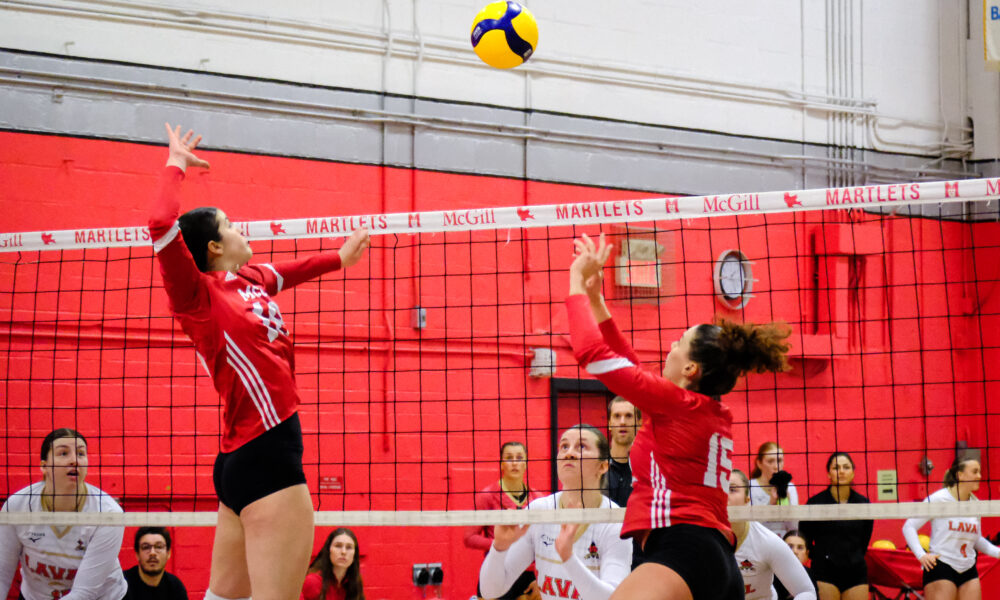
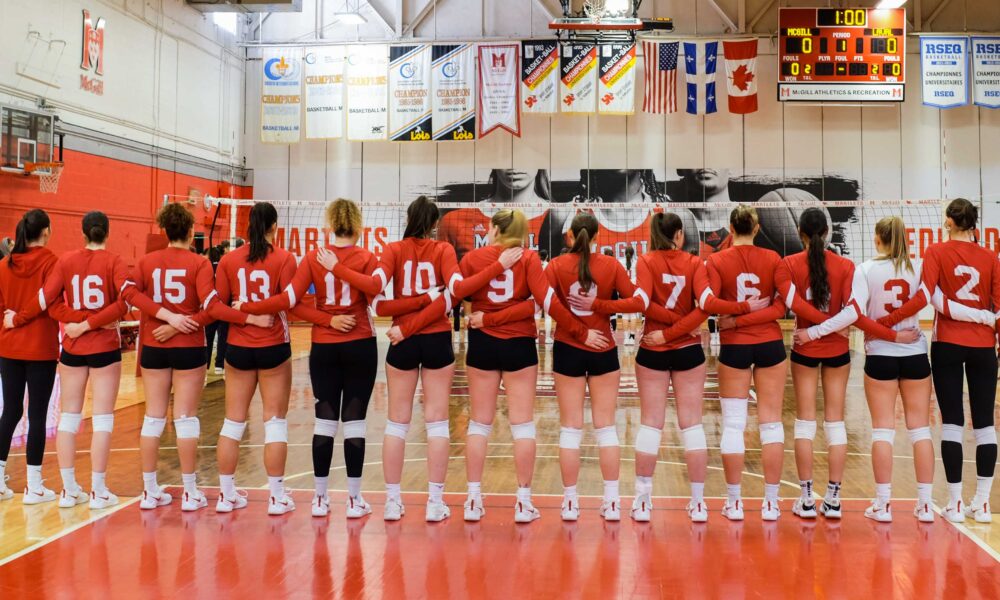
After a surprise victory against previously undefeated Université de Sherbrooke Vert et Or just two days prior, Martlets volleyball (8–9) took to Love Competition Hall on Jan. 12 for a game against Université Laval Rouge et Or. Despite a tough 16-25 loss in the fourth set, McGill triumphed in the final set, winning 15-9. 

Following a strong first set by McGill, Rouge et Or had fought back to win a close second set. With Laval in the lead midway through the third set, McGill began regaining momentum. Decisive hits from outside hitter Rachel Leduc, U3 Management, and strong serves from setter Selima Guidara, U2 Arts, helped the team regain their lead and win the third set 25-21. 

Rouge et Or went on to dominate the fourth set, beginning and ending with long serving runs as the Martlets’s defence waned. In spite of this, McGill claimed an early lead in the fifth set, going 3-0 and forcing Laval to an early timeout. Although Laval managed to regain their footing and fought hard for long rallies, the Martlets powered through to take the final set.

In an interview with The Tribune, Leduc explained that, despite the challenging fourth set, the team went into the final one energized and focused on winning. 

“We really prioritized staying calm, and every point felt like a victory,” Leduc said. “We were going one point at a time, and then as soon as we hit eight first, […] I think we kind of knew we had it in the bag, but we kept our calm.”

Head Coach Rachèle Béliveau explained that the win against Vert et Or on Friday had served as an important motivator for the team going into the game, especially as over half of the team’s players are currently sick. 

“I tried to just keep the energy so that when it was time to push, that we would have the push and then try to recover in the little moments we had,” Béliveau said. “So I’m very proud of them, because it was a really tough situation to deal with, playing […] two of the best teams in the league, and being able to come out with a win.”

Renewed confidence wasn’t the only thing the team took from Friday’s match; Leduc highlighted that during the game against Sherbrooke, the team had experimented with their normal lineup, with position changes such as setter Charlotte Chouinard-Laliberte, U3 arts, hitting right-side. As these changes proved effective in the match against Vert et Or, the Martlets adopted the same strategy going into the Laval game. 

“It was kind of a risk, but it worked really well,” Leduc said. “We’ve always known that [Chouinard-Laliberte] was a good hitter, but she never tried it in a game, so having her on the right side helped.”

Guidara—who had a career-high 45 assists during the game—noted that the Martlets hope to use the momentum from these wins to reach their goal of making the Réseau du sport étudiant du Québec playoffs later in the season. The team is currently sitting in fifth place, with the top four teams moving on to playoffs in February.

“We have an underdog mentality. You know, we’re a young team, [and] we won against some of the best teams,” Guidara said. “I feel like right now, nothing is impossible, and we could make it to playoffs.”

Moment of the game:

Martlet power hitter Elyssa Lajmi claimed back-to-back kills early on in the fifth set, reenergizing the team and the home crowd toward the end of the game. 

Stats corner:

Four players had double-digit kills throughout the game: Lajmi, Leduc, middle blocker Emilia Grigorova, and Chouinard-Laliberte.

Quotable:

“I think we just stepped on the court trusting ourselves and trusting every girl, and knowing what we were capable of doing Friday against a top-ranked team.” — Selima Guidara, on the team’s attitude before the game.

The Martlets will return to the court on Jan. 19 to play against École de technologie Supérieureat Love Competition Hall.

McGill, News

School of Continuing Studies becomes McGill’s fourth faculty union

In a less than 60-day process, on Dec. 31, Quebec’s Tribunal Administratif du Travail certified the Association of McGill Academic Staff of the School of Continuing Studies (AMASCS), forging the fourth faculty union at McGill. The School of Continuing Studies (SCS) marks the first faculty to bid for unionization following a Memorandum of Understanding (MoU) from Oct. 6 between McGill and the university’s inaugural union, the Association of McGill Professors of Law (AMPL). 

The MoU brought an end to over 13 weeks of AMPL strikes which delayed the start of the law faculty’s Fall term by over a month. In return, McGill dropped its contestation efforts of AMPL’s certification and abandoned efforts to block the certification of two other faculty unions—the Association of McGill Professors of Education (AMPE) and the Association of McGill Professors of the Faculty of Arts (AMPFA). 

Another central aspect of the MoU was the agreement to form a confederation for collective bargaining between faculty unions and McGill. According to the McGill Media Relations Office, the confederation would “establish a grouping of unions to negotiate university-wide working conditions for instructors.” Under this system, faculty-specific issues would be negotiated with individual unions, whereas broader issues would be negotiated across the entire confederation. 

Talks to unionize in the SCS emerged in October, explained AMASCS interim Vice President Margaret Levey, and quickly progressed with a supermajority of academic staff in the school signing membership cards. The union applied for certification on Nov. 15. 

In 2021, SCS underwent organizational restructuring “to strike a balance between adaptability and flexibility on the one hand, and stability and consistency on the other,” Carola Weil, Dean of Continuing Studies, wrote in a proposal to the McGill Senate. According to the proposal, these changes were preceded by extensive community consultation. However, Levey and her colleague John Gradek claimed that not only was there minimal consultation, but also that the restructuring added undue layers of bureaucracy which have posed challenges to faculty in the school.

“We are not Arts, we are not Science, we are not Management, we are not Engineering. We are a School of Continuing Studies,” Gradek said. “And to me, that moniker means that we are there to be an extension of what the McGill brand ought to look like [….] What we see happening is that there’s been a strong push, in my opinion, by the current leadership of the School of Continuing Studies to be considered a faculty and with that approach, it’s changed who we are, and it’s changed our mission, and it’s changed how the marketplace sees us.”

Levey told The Tribune that once she and Gradek began discussing the potential of unionization with other faculty members, they found that many of their colleagues faced similar challenges.

“It’s hard for one person to say, ‘No, I reject this as part of my mandate.’ But collectively, if we were all reject it as part of our mandate, then that has a certain weight to it,” Levey said.

Between the restructuring, federal and provincial restrictions on immigration, and McGill’s projected upcoming financial deficit, AMASCS organizers felt it was crucial to have a seat at the table in discussing the future of the school. 

“[I felt like] we’re in danger if we don’t actually […] push back and say, ‘No, we have the right to be involved in this. We’re going to negotiate the right to be involved in the division of the school.’ If we don’t do that, I don’t think we’re going to survive,” Levey said.

Before the confederation can begin negotiating collective agreements with McGill, it must determine a democratic voting system and which subject matters will be negotiated across the unions. AMPL Vice President Kirsten Anker welcomed AMASCS, expressing that the lack of contestation from McGill marks a shift in labour relations at the university.

“The effect of our strike in the fall was to change the culture of faculty unionization at McGill. We’re seeing that it’s quickly led to certification of three other unions and we expect that that’s going to continue,” Anker said. “[We’re] just very happy that this is a significant change of union culture at McGill.”

To Gradek, the lack of contestation from McGill is not necessarily a change in attitude toward unionization efforts but rather a recognition of their existence.

“I think the university has come to the conclusion that […] unionization of its academic staff is inevitable. It’s not worth fighting because it’s going to be [futile].”

Emerging Trends, Local Stories, Student Life

New year, same us: Resolutions McGill students didn’t make for 2025

Perhaps you spent Dec. 31 writing down your New Year’s resolutions with the best handwriting your journal has seen in months. Maybe that impressive penmanship was a first impression for the fresh notebook you bought yourself, committed to the first page of your year of self-improvement. Or maybe, like many other students, you lived Wednesday, Jan. 1 just as you did Tuesday, Dec. 31—without a list of lofty intentions. If your start of 2025 has lacked the transformative energy you think it should have, you are not alone. Here are five New Year’s resolutions McGill students didn’t make this year. 

Stop drinking

For Alex Gagnon, U2 Engineering, the goal to drink less didn’t make it onto her resolution list—not because it’s a bad idea, but because life has other plans. 

“I’m not doing Dry January because I know I have a bunch of events that include drinking, especially E-Week,” she said. 

At McGill, where social life is tied to drinking culture, abstaining from alcohol can feel like sitting out half the fun. And maybe that’s okay. There won’t be many opportunities like E-Week after our time in university, so for now, skipping a Dry January in favour of a moderately misty one doesn’t seem so bad. 

Better sleep

For many students, the elusive “seven to eight hours a night” often feels like a luxury rather than a necessity. Adele Omichinski, U2 Engineering, isn’t losing any sleep over skipping this resolution. 

“As a student, it’s not attainable, and I have too many things to do,” she said. “If I want to do all the things I want to do, then I can’t get all the sleep that I need.”

Between juggling coursework, extracurriculars, and a social life, sleep often feels like the first thing to go. If your schedule doesn’t always afford you eight hours of uninterrupted sleep, perhaps the true resolution should be mastering the art of the occasional power nap.

Healthier eating

“I never have time to actually cook good meals,” admitted Michael Beyrouthy, U2 Engineering. “I’m stuck eating Kraft Mac and Cheese and stuff like that.”

It’s a sentiment many students can relate to. When you’re racing between classes and assignments, balanced home-cooked meals seem like a distant fantasy, attainable only to your parents and Nara Smith. On top of this, the high cost of food on campus and in the city makes healthier eating an even greater challenge.

However, there are some affordable options for students. Initiatives like the Midnight Kitchen offer free, healthy meals, and budget-friendly grocery stores like Segal’s provide staples at more affordable prices. These resources can help students strike a balance between cost, time, and nutrition. 

Language learning

For U2 Engineering student Robinson Libman, a native French speaker, language learning has taken a backseat this year. Although he used to aim to “speak English as much as possible,” he explained. “I think I’ve improved enough in the past few years. Also, we’re in Quebec.” 

Fair point. Between navigating bilingual conversations and deciphering Montreal street signs, McGill students are already living a language-learning crash course daily. The new year brings just as much linguistic challenge as the last, so perhaps there’s no need to formalize any language learning goals. 

More exercise 

Ah, the classic “I’m going to go to the gym more this year” resolution. For some, like Amanda Klunowski, U3 Arts, it’s a well-worn path that no longer leads to motivation. 

“I didn’t make any resolutions regarding going to the gym,” she shared. “If you’re going to make a resolution about it, you’re probably going to give it up anyway. I feel like it’s kind of a self-defeating prophecy.”

Let’s face it: Sometimes the pressure to turn a goal into a resolution is the fastest way to make it feel like a chore.

Campus Spotlight, Student Life

Is Gerts the right venue for your next event?

Gerts Bar’s re-opening on Jan. 6, 2025 marks the return of McGill’s beloved student-run pub. However, the basement-floor room is not just a watering well for off-duty academics; Gerts is also a well-known venue for university clubs and music shows. The Tribune interviewed several club executives who have hosted an event at the bar before to get their insights on Gerts as a venue and collaborator. If you’re planning an event this semester, take a look and stay tuned for how to plan your special affair at the end!

What do students think about Gerts’ booking services?

As part of their celebrations for their opening week, Gerts hosted a live music event by Resonance, an alternative rock and indie music band from Montreal. In an interview with The Tribune, band member and Concordia student Nick Kouniaris discussed their experience with developing their event with the bar. 

“Overall the booking for Gerts is probably the easiest out of the majority of venues we’ve played at. They respond pretty fast and are very understanding of us,” Kouniaris shared.

Mayra Baca, U3 Management, hosted a Halloween party in 2023 at Gerts with her club, K-rave. She explained in an interview with The Tribune that the bar provides certain event amenities at no extra cost, such as microphones and screens to project videos on. While A/V equipment is available through the McGill Library and certain faculties, Baca expressed that it was nice to have the items on location and staff who know how to troubleshoot any issues.

Sarah Kotb, U3 Management, who hosted a karaoke night in 2024 with McGill’s Filipino students’ association as part of Gerts’ culture night event series, echoed that sentiment.

“[The staff] were very accessible. If we needed something, they were very easy to talk to and they would explain to us how to hook up the mics, adjust the music, and how to work with the TV,” she said in an interview with The Tribune.

In the past, the bar has supported a variety of gatherings, from clothing swaps to partnered events with The Player’s Theatre, offering discounted drinks on show nights.

“It’s a good venue for clubs big and small. The staff are extremely flexible,” Baca added.

Kotb also noted that the location is easy to communicate to guests and that passersby can often get drawn in by random events they’ve never heard about—it’s a universal McGill experience to wander into Gerts for a pint only to discover there’s a whole event underway.

However, the limitations of the space and staff should be known to any event organizer. The bar’s capacity sits at 250 people, which can pose a challenge to larger clubs. Additionally, if you’re a small club and can only book half of the bar, it’s hard to create a barrier between your event and regular visitors. 

Baca explained in an interview with The Tribune that the security and bar staff were unable to verify which guests had tickets to her event, leading to some people walking in on the private party. Since their admission tickets included one free drink per person, the confusion also led to several people receiving drinks for free who were not attending the event.

Given that the bar is re-opening with almost all-new staff and managers, it remains to be seen how the crew will deal with pre-purchased drinks and ticketed events in the future.

How to book an event

The scheduling process is fairly simple: Gerts has a form available on the SSMU website where interested parties can input all booking details. These forms must be filled out a week prior to the event at a minimum—though it’s usually better to submit further in advance. It’s essential to have all the little details of your event accounted for, like the expected amount of guests attending and any external items you may need.

Once you submit the booking form, your event will be reviewed by the Gerts manager and a SSMU representative, after which you can sign the final agreement.

Behind the Bench, Rugby, Sports

Ilona Maher’s smashing debut for the Bristol Bears captivates a record-breaking crowd

On Jan. 5, rugby superstar Ilona Maher made her debut appearance for the Bristol Bears against defending league champions Gloucester-Hartpury. Despite the team’s loss (17-40), Maher’s first performance with the Bears was a great success. Following her signing back in early December, the Bears moved the match to a bigger stadium due to the high volume of ticket sales. The match attracted 9,240 fans, doubling the club’s previous match attendance record and breaking the attendance record for a single Premiership Women’s Rugby (PWR) regular-season match.

Maher’s name is recognized by more than just rugby fanatics across the globe. She’s known for her performance at the 2024 Paris Olympics, playing rugby sevens for Team USA, where she led the team to its first-ever bronze medal. Beyond her impressive athletic resume, Maher’s popularity has grown through her social media presence, particularly on TikTok. With over three million followers on the platform, Maher’s content promotes body positivity by facilitating open discussions about women athletes and the criticism they face when their bodies do not fit societal norms. She has openly discussed the hate she’s received about her body “not being athletic enough,” and shuts down online trolls who bombard her with comments about her Body Mass Index, which they believe to be too high. 

Her platform has allowed her to connect with women athletes worldwide and work to normalize all body types. These discussions have created a wider representation of young women athletes. Maher was featured in a Sports Illustrated swimsuit edition back in September, and her cover showcased athleticism and femininity, showing that to be strong is to be beautiful. The cover is contributing to a shift in popular narratives around women’s beauty standards, with people increasingly understanding that muscular bodies are feminine.

While Maher herself had gained popularity before the 2024 Olympics, her performance at the games helped create a lasting impact on under-represented sports like rugby sevens. The 2024 Olympics featured more niche sports and shed light on women’s teams, allowing for more viewership and visibility. While the Olympics are already widely-anticipated events with many in-person spectators and a large online audience, the 2024 Paris edition had a record-breaking 218 million streams on BBC Sports, which was more than double the streams during the 2021 Tokyo Olympics. More than 84 per cent of the global audience—around five billion people—viewed the games, which became an essential form of exposure for these lesser-known sports.

Viewership is key to promoting under-represented sports, as rugby sevens is sustained by financial investments, for instance. Prior to the 2024 Paris Olympics, the sport received a $4 million USD investment aimed at fostering the growth of rugby and ensuring teams could compete in the 2028 Summer Olympics. Investments like these make the sport more accessible to players and fans alike, encouraging participation and fostering local communities around the game. Moreover, the increased exposure and excitement generated by the Olympics helps attract sponsors and spurs interest by players and audiences to further long-term growth.

Athletes like Maher and the platforms they leverage can further draw people to these niche sports. Connecting fans with their favourite athletes through social media fosters an ongoing bond, offering insight into their day-to-day lives in competition and struggles, while keeping audiences engaged. The Olympics are a platform of visibility to lesser-known sports and athletes, captivating audiences and generating excitement for other aspects of their career—like Maher’s signing to the Bristol Bears. By continuing to connect with her fans, Maher’s social media engagement is just one aspect in which athletes sustain the growth of these lesser-known sports and leagues.

McGill, News

Trans students report increased barriers to Hormone Replacement Therapy access at Student Wellness Hub

Some students are reporting increased difficulties accessing gender-affirming care following the temporary leave of Hashana Perera, reportedly the only doctor at the Student Wellness Hub (SWH) willing to prescribe Hormone Replacement Therapy (HRT). For some, this has called into question the ability for the SWH to provide specialized resources for transgender students.  

HRT is a medical treatment and a form of gender-affirming care used to augment levels of specific hormones in the body. According to an official statement from the Trans Patient Union (TPU)—a student organization dedicated to advocating for better healthcare for transgender patients in Montreal—those requiring HRT will now be referred to the Hygea endocrinology clinic for treatment. Students have reported wait times of over three to six months at this clinic for the first of three mandatory appointments they must attend before they can receive a prescription for HRT. 

TPU addressed concerns about patients being referred to an endocrinologist in a written response to The Tribune. The Union claimed that the Hygea clinic is currently understaffed and therefore ill-prepared to manage both their current patients and the Hub’s referrals.

“In Quebec, any general practitioner can prescribe and supervise HRT—it is an unnecessary burden on endocrinology clinics to exclusively shoulder this responsibility, and as specialized medicine, endocrinology is harder and slower for patients to access than general practice,” TPU wrote. 

The union wrote that they have previously expressed concerns to the SWH about the instability of having only one doctor available to prescribe HRT. During Perera’s previous temporary leave, another doctor at the SWH stepped in to provide HRT and other gender-affirming care for students. TPU was reportedly told by SWH employees that more doctors would begin to take on the appropriate training to prescribe this medication. Despite this, the SWH currently has no plans to have another doctor take on this responsibility during Perera’s absence. 

In addition, Perera was also the only doctor at the SWH able to provide recommendation letters for gender-affirming surgeries, a requirement to accessing surgical transition in Canada and a service Hygea is unable to provide. 

In a written statement to The Tribune, the McGill Media Relations Office (MRO) stated that the SWH will continue to provide HRT to patients with preexisting prescriptions and that, in the future, they plan on hiring more doctors able to provide the same services as Perera.

MRO also commented on gender-affirming care at the SWH prior to Perera’s leave, stating that they have always been dedicated to prescribing HRT in a way that prioritizes students’ wishes.

“Specific medication prescriptions are individualized based on many factors but especially the individual patient’s goals of treatment,” McGill wrote.

Despite this, students reported that accessing HRT at the SWH was challenging even prior to Perera’s leave. In an interview with TPU, one student—who wished to be unnamed—reported that the SWH refused to prescribe them above the minimum starting dose for two years, despite the student wanting to increase the dosage over time.

“I felt that my experience was subpar compared to every other care experience I have had before and after attending the Hub,” the student said. “I am very frustrated that I am further behind in my medical transition than I would have been if I had received better care.”

TPU states that while the wait time for gender-affirming treatment at the SWH has gotten shorter over the last few years, the lack of another doctor in light of Perera’s leave has set back this progress dramatically, leaving transgender students at McGill with unreliable and inaccessible gender-affirming healthcare.

“Unfortunately, it simply seems that many doctors at the Hub, and in Quebec generally, do not believe that providing gender-affirming care is their job,” TPU wrote.

Those seeking gender-affirming care can self-refer to Local Wellness Advisors (LWA) or Access Advisors, including one LWA that specifically serves 2SLGBTQIA+ students. Students can also book appointments with a Counsellor or Sexologist at the SWH to navigate services and access support. TPU additionally offers a resource index for gender-affirming care and more on its website.

Martlets, Sports

McGill Women in Sport Program changes the game for what it means to be a Martlet

The McGill Women in Sport (WiS) program, established in September 2018 through a transformative $3.5 million CAD donation from alumni Sheryl (BCom’67) and David Kerr (BSc’65), is dedicated to advancing gender equity in varsity sports at McGill. As one of the few initiatives in Canada focused exclusively on women athletes and coaches, McGill’s WiS program aims to increase women’s representation in coaching and empower student-athletes through services like mental performance training, career readiness workshops, and nutrition guidance. By focusing on leadership development, empowerment, and professional growth, the WiS program is helping pave a path for women in sports at McGill and beyond.     

Roxane Carrière, the current manager of the WiS program, is a driving force of its success. With seven years of experience and research in applied sports psychology, Carrière brings an abundance of knowledge and resources to the program, backed by a passion for fighting injustice and inequity. According to Carrière, this passion derives from first experiencing gender inequity when she moved to France as a teenager. 

“Growing up in Canada, every young girl I knew played soccer, so it was quite a shock to see how [few] soccer teams there were for girls and how difficult it was to find a team to play for in France,” Carrière shared. “That was probably the first time I’d experienced gender inequity in that way.” 

This experience helped to instill a passion for creating more opportunities for women athletes and bleeds into the work Carrière does at McGill. 

A huge testament to Carrière’s work is the WiS student-athlete council she created. Comprised of 10 members, the council serves as a collaborative platform to address the challenges faced by women varsity athletes. The council ensures that WiS services and initiatives align with the needs of women student-athletes. By generating ideas from the students and acting as a liaison between athletes and the program management team, the council plays a pivotal role in shaping a more inclusive and supportive sports environment at McGill. 

Gordon Bloom also plays a crucial role in the formation of mental performance support within the WiS. As the director of the McGill Sport Psychology Research Laboratory, Bloom uses his 25 years of experience in the field to work with the WiS to allocate mental performance support where it is needed within the varsity teams at McGill. 

“We have assigned each Martlet team with a Mental Performance Consultant, who aids the athletes with mental health support, performance strategies, and really just helps them elevate their mental game,” Bloom said. 

Another notable achievement of the WiS program is the increased proportion of women coaches at McGill, which has more than doubled from 16.7 per cent when it was first created to 38.1 per cent by 2022. 

Additionally, WiS fosters a sense of community among women varsity athletes through events like Women in Sport Day, where all McGill Martlets teams come together to watch a sporting event at McGill. The next upcoming Women in Sport Day is Jan. 26 at Place Bell; young student-athletes from the greater Montreal area will be invited to watch a Martlets hockey game and meet the team afterward. Events like this bring together the woman athlete community and help to inspire younger players by giving them role models to look up to as they keep pursuing their athletic aspirations. 

The McGill Women in Sport Program is a significant example of how targeted initiatives can create meaningful change in the world of varsity athletics. By prioritizing gender equity, increasing women’s representation in coaching, and providing support to student-athletes, the program has had a transformative impact on the lives of women athletes not only within McGill but across Montreal and Canada.

“Going forward, we hope that the program continues to elevate the female athlete experience here at McGill, but also that they use these skills they have learned here as a tool to grow as people after their time here,” Carrière stated.

As it continues to expand, the Women in Sport Program not only empowers women athletes and coaches; it also inspires future generations of women and other universities to fight for equality and inclusion in sports.  

Student Life

How to do the ‘To-Dos’

Every year we hear the same thing: “Start off the new year right by making a list of all the things you wish to accomplish during the coming 12 months!” And every year, that’s what we—at least I—do. For the past three years, my New Year’s “resolutions” or “goals” list has looked pretty much the same…just ignore the fact that I never actually reach any of those goals. Nevertheless, I keep on making this Jan. 1 list, because the idea of a fresh start is always appealing. 

That being said, making lists is not only a New Year’s thing. We make lists all the time for anything and everything, from grocery items that need to be bought, to assignments due during the semester, to what movies we desperately need to watch with our roommate before the end of the term. Yet, lurking in every student’s notes app is a trove of to-do lists full of items left unchecked. Here are a few tips to actually start the year right by learning how to do the to-dos effectively. 

Use pen and paper instead of your phone 

It’s 2025, and everyone uses their phone to make lists. It’s easy, convenient, and always within reach. However, the ease quickly becomes a flaw rather than an advantage. Having this tool available at any time can actually make it less effective. With such a low barrier to adding new list items, we start making lists because we think of things we need to do at the moment, but those things will soon be replaced by additional information that needs to be stored in new lists that will subsequently be forgotten. 

In the long run, this will just take up space in your phone storage. Instead, use your phone as a temporary sticky note to remember what needs to be done and, once you’re home, write it down on a piece of paper. You can then stick that paper somewhere in your room so that you’re reminded every day of what you have to do. Handwriting has also been shown to improve memory recollection compared to typing. Plus, making lists on paper means you’re not spending that time on your phone, where you can easily get sucked into Instagram or TikTok instead of actually doing the tasks you’ve written down.

Set deadlines 

Using an agenda or organizing your list by date is the best way to keep up with what needs to be done when. It also helps you to not lose track and feel overwhelmed by the number of things your list encompasses. 

For example, you will keep on adding new lines to your to-do list of homework throughout the entire semester, and that can easily get scary, stressful, or even depressing—especially during exam seasons. Additionally, setting deadlines is a good way to motivate you to be efficient. In the same vein, put a tick or a cross or whatever you prefer to mark each step you’ve completed. That’s a great way to feel a sense of satisfaction whenever you complete one of your goals. 

Allow yourself rewards for checking a box 

Keeping up with to-do lists can be challenging because they often become filled with tasks you keep postponing or things you simply don’t want to do. To help make this process less unpleasant, prepare some rewards for each time you complete a task. For instance, we all have assignments that are easier to tackle than others. You could therefore tell yourself to do one small and easy assignment for each difficult one you submit. Or it could be something that has nothing to do with your to-do list, like allowing yourself to indulge in your favourite activity every time you check off a new item. Overall, the goal is simply to motivate you to complete everything that you have planned or need to do.

Read the latest issue

Read the latest issue