


Latest News

Off the Board, Opinion

Studying politics in a society that is rigged against you

When news reports came out on Aug. 26 about yet another incident of sexist harassment outside the Minister of Infrastructure and Communities Catherine McKenna’s office, I felt a familiar sinking feeling in my stomach. Since I began engaging with politics in my early teen years, my awareness of gendered attacks has taken an increasingly sinister toll on my desire to pursue a career in politics. Though I know the very point of identity-based harassment is to discourage marginalized groups from pursuing politics, it is difficult not to internalize the message that you do not belong when stories of such behaviour are plastered all over every newspaper. Although there are valid critiques to be made of every politician, the line between expressing different political opinions and ad hominem attacks based on the person’s gender, race, or sexuality is often crossed, particularly as politics grow increasingly polarized.

Women are three times more likely than men to be attacked online for their politics, in part due to the legal and social impunity that social media provides. While women and non-binary people in politics are less likely to be attacked physically than men in the same positions, verbal attacks are common and tend to employ gendered language. When I read articles about such attacks, like a man scrawling the word “cunt” on McKenna’s office last October, or Ted Yoho calling Alexandria Ocasio-Cortez a “fucking bitch,” I am reminded that it was not that long ago that women were excluded from politics. Perpetrators of verbal violence, intentionally or not, reinforce the conception that women do not belong in positions of power. 

Women of colour and 2SLGBTQIA+ women often face hatred and vitriol far more intense than white women. These attacks are not unique to Canada: One only has to look across the border, at politicians such as Rashida Talib, Ilhan Omar, and Alexandria Ocasio-Cortez, to see the frequency and force behind such attacks. Racialized politicians in Canada are similarly no stranger to race-based violence. Former Attorney-General Jody Wilson-Raybould was targeted with Indigenous stereotypes meant to disparage her work ethic after she resigned during the SNC-Lavalin scandal. 

Politics tend to reward stereotypically masculine behaviours, such as aggressiveness, reason, and strength. When women attempt to conform to these standards, they are in violation of perceived feminine norms, and are more likely to be ridiculed by the public. On the other hand, when women are perceived as too feminine, this still inhibits their electoral success and opens them up to other lines of attack. When it comes to the way women present themselves to the public, we can’t win. Yet, our speaking styles, clothing, and mannerisms are still constantly dissected.

To young women and non-binary studying political science, like myself, the routine harassment of politicians due to their gender sends a stark message: We are not welcome in politics. Attacks based on race, gender, and sexuality are something that no one should have to bear, and their consequences are grave. Fewer women in politics, in many cases, contributes to a lack of important policies, such as access to safe abortion, childcare, and parental leave. 

Criticizing politicians is fine, and an integral part of our democracy. But when civil disagreements devolve into identity-based abuse, we are actively eroding the civic ethics that are necessary for effective political discourse. While gendered comments are often seen as part of the job, especially since social media has enabled harassment of all sorts, there are no excuses for inappropriate behaviour. As the next generation of politicians, leaders, and activists, we need to take a stand against identity-based attacks and focus on what matters: The issues affecting human lives.


Arts & Entertainment, Comedy

Stand-up comedy in a stay-at-home world

The COVID-19 pandemic has halted the regular bustle of Montreal life, and with it, halted its entertainment industry. Cirque du Soleil was forced to lay off 95 per cent of its staff; music festivals, including Osheaga and Ilesoniq, were postponed; and even the world-famous comedy festival, Just For Laughs, was delayed and moved online. Montreal’s comedy scene has been equally impacted: In fact, it initially ceased altogether. As the lockdown and public health restrictions led to cancellations of every comedy event, Montreal, for the first time in a while, wasn’t laughing.

In the early days of quarantine, performers and producers of local comedy shows were forced to adapt to new public health regulations. Large audiences could no longer gather in small bars, and those who braved social distancing had to wear masks and allow for venues to be sanitized between performances. Essentially, in-person shows went on a break. 

Some attempted to join the ranks of entertainers around the world by performing on Zoom. While these efforts were commendable, a key aspect of stand-up comedy remained missing: A visible audience. Comedy show producer Sid Khullar described the connection between performers and their audiences as integral to the success of a show.

“You want comedy that you can enjoy with other people,” Khullar said. “The audience [is] pretty much on mute. So even if you have 100 people on mute you can’t really see what’s happening [….] There’s a disconnect.”

As public health restrictions gradually lifted, Montreal’s comedy shows only slowly returned. Producers organized outdoor shows in parks and backyards that respected new health guidelines. Khullar even decided to run his new festival, the Montreal Comedy Series, under socially distant conditions. He pointed out that especially with the postponement of Just For Laughs, the city’s comedy shows needed to gain momentum. 

“Every year, when JFL does their festival, the rest of the comedy scene gets […] a little push from them,” Khullar said. “Comedy is no longer in the back of people’s minds.” 

While many producers and comedians adapted their in-person shows to accommodate public health guidelines, others expanded their mediums. Comedian Quinn McMorrow, host of the weekly show Comedy At The Art Loft, was already planning on releasing an Art Loft podcast in the fall, but accelerated his timeline amidst the pandemic. Rather than attempting to do socially distant shows, McMorrow and his roommates started the comedy podcast Artloft Radio. Guests include other comedians, as well as Montreal locals with unique stories. The goal of the show, McMorrow explained, is to provide an outlet away from the politically charged reality discussed in many comedic settings. 

“We thought, why don’t we have a podcast that’s just light and fun and not topical,” McMorrow said. “We can get into serious stuff, but in a lighthearted manner.”

In many ways, the pandemic stimulated comedians’ creativity and drive to generate content. McMorrow pointed out that isolation has taught comedians that a performance can be successful even without typical comedy conventions.

“When summer hit, that’s when you saw people get really innovative and have shows in the park or along the canal,” McMorrow said. “It’s good that we’re all sort of retooling ourselves and seeing what we can do.”

Despite the uncertainty and fear that the pandemic brought, Montreal’s comedy scene has endured. Months of quarantine and logistical challenges may have discouraged comedians and producers at first, but ultimately led to a boom in creative solutions. Zoom shows, outdoor venues, distanced festivals, podcasts, and sketch videos all continue to engage audiences in one way or another, showcasing Montreal creatives’ renewed inspiration for comedy. The city’s community proved that while the coronavirus may persist, so does the resilient spirit of Montreal’s comedy scene. 


Sid Khullar’s upcoming comedy events can be found on Mtlcomedyclub.com. Quinn McMorrow’s upcoming series BOMS (Best Of Montreal Sketch) will be released Sep. 20th.

Sports

A street-Kart named desire

Like most students returning to Montreal for the Fall semester, Matthew Hawkins, U3 Arts, is weathering out his 14-day quarantine in his apartment. During his spare time, he decided to hone his Mario-Kart skills.

“I’ve seen vlogs, read captions, and watched stories of people quarantining, and I knew I’d have to find something besides the beginning of class to keep me occupied,” Hawkins wrote in a message to The McGill Tribune. “During my six month stay at home I unearthed my Wii, and luckily, my favourite (and only remaining) game: Mario Kart Wii.” 

Hawkins had borrowed a projector from McGill’s Information Technology Centre back in early March, which he was unable to return due to quarantine. When he returned to Montreal, he logged some mario kart game hours at home, projecting the game on his wall, and decided to work on his skills while stuck inside.

“During my layover in Toronto, I had an idea: A single person tournament with every character I had unlocked,” Hawkins said. “My friends asked me what that meant and I could not explain it, but I spent my first night in my apartment scheming. What I came up with the next morning was as follows: I put the names of all the playable characters into a bracket—including, after some debate, Mii (Outfit A)—and generated a bracket.” 

Hawkins then laid out some rules. To remove any unpredictable variables, he played each race on time trial—meaning no non-player characters and no items except for the three mushrooms that players start with. It was an easy way to time each race accurately. He also raced each character on their Standard Kart to keep performances as consistent as possible. Then, he raced each pairing one character at a time and logged the winners in the bracket. The race was DS Delfino Square.

“To my dismay, one of the first eliminations was Mii (Outfit A), which felt personal,” Hawkins said. “As of [this message], I’m 72 per cent of the way through the tournament and very tired of Delfino Square. There are some interesting patterns, however. Unsurprisingly, my average time has been dropping, though it has plateaued.” 

One of Hawkins’s main concerns has been not allowing his personal biases of each character to influence the races.

“For whatever reason I’ve always liked some [characters] and disliked others,” Hawkins said. “I know that there wasn’t any tangible difference between them besides Kart classes [….] I’ve come to realize that, above all else, what matters in these time trials is mushroom use. I can play the most technically perfect game, drift in all the right places, aim my jump on the drawbridge perfectly, but if I use the mushrooms in an inefficient place (sharp turns, for example) I’m less likely to win the round with that character, let alone break my all time record.

After 26 races, Hawkins has also pinpointed small factors that add up to a faster lap. Aiming perfectly off the drawbridge jump is crucial, as is getting as many mini-turbos from drifting on the narrow turn section near the beginning.

“As a general rule, I try not to bet against myself, but I have predictions about the outcome of the tournament,” Hawkins said. “Despite the fact that no one character should have an inherent advantage, every time I break my overall record I happen to be playing Peach or Diddy Kong.”

Whether this is a significant development or a subconscious bias emerging, Hawkins predicts that the final match will be between Peach and Diddy Kong. All the while, he will be trying to beat himself at every turn, shatter his records, and finally finish his wild quarantine project. 

Know Your Athlete, Sports

Know your athlete: Jorden Savoury

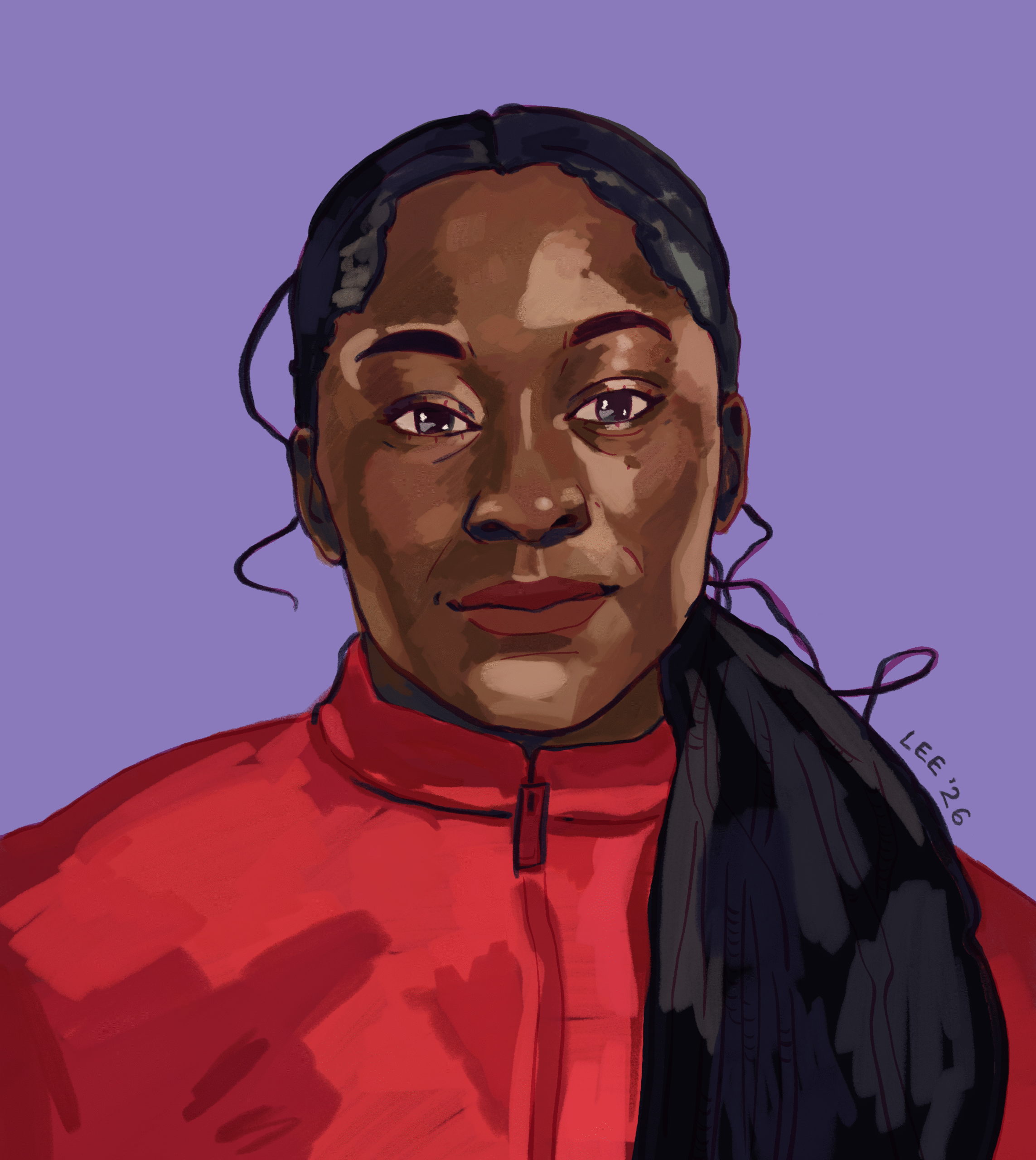
Jorden Savoury, U2 Arts, is one of McGill’s star track and field athletes. She competes in the 60 metres, 300 metres, 4×200 metre relays, and long jump. Her performance in the 25th McGill Team Challenge in January 2020 was nothing short of impressive. Savoury broke McGill records in both the 60 metre relay and long jump. 

“I was very ready for the meet [and] prepared really well,” Savoury said in an interview with The McGill Tribune. “I went into that [meet] very confident, knowing that I am able to do really well and that’s exactly what happened. I got two personal bests.”

Competing in multiple track & field events can be a challenge for many athletes, but Savoury considers these different events to be complementary in her preparation. 

“60 metres is executing your fast speed. Three hundred metres is a long sprint [which requires] speed endurance. [In] long jump, you [have] a lot to work on—your takeoff, landing, run-up, [and] approach,” Savoury said. “Each event I do is technical in its own way, but they help each other.”

Savoury, who is one of Canada’s 2021 and 2024 Olympic hopefuls, takes this status as a motivating force rather than a source of stress. 

“[Being considered an Olympic hopeful] is not an expectation; it’s more of a motivation,” Savoury said. “I [always] have it at the back of my mind. It is my biggest goal. The motivation keeps me on my toes. If I am having a bad day, I think of my dreams and goals.”

Apart from athletics, Savoury has a keen interest in modeling. She has modeled for the Redbird Sports Shop and her outdoor club, Saint-Laurent Select, whose mission is to promote athletic events among youth. 

“[I have] two big different dreams: One is the Olympics and the other is modeling,” Savoury said. “Modeling allows me to express my fashion and true colors as a person [….] Modeling for the McGill clothing line was so fun.”

The pandemic has disrupted Savoury’s training schedule as well as her modeling work, but she has managed to adapt to the social-distancing measures.

“The pandemic has hit us hard,” Savoury said. “In March, I continued training as best as I could. I would do bodyweight exercises in the house, run up and down stairs, [and] sprint on the concrete, which hurt.” 

She also values the company of her teammates and coaches, a comfort lost during the pandemic.

“It’s very hard training on your own,” Savoury said. “You are less motivated [and] it is not as fun.”

Due to the social distancing measures, keeping in touch with coaches and colleagues can be challenging. Despite feelings of isolation, Savoury has stayed connected with her peers both at McGill and Saint-Laurent Select. 

“From March to May, it was very hard [because we were] not in touch that much,” Savoury said. “Everyone was in their own space. We have video calls with Saint-Laurent Select to keep in touch. [It’s] not only about track and field, but [about] how life is going [in general, which] really helped me move forward.”

With the university athletics season indefinitely postponed, Savoury is focusing on the present and taking each day as it comes. 

“I have an outdoor season, [so] I am in the zone of what’s going on right now,” Savoury said. “To know that Nationals and RSEQs will be cancelled makes me sad, of course. All the hard work I have put in will not be proven in [those] big meets.” 

Savoury shares some key life lessons she learned throughout her journey as a student-athlete.

“I have learned about being patient,” Savoury said. “Things don’t always go your way. I had surgery [and] could not do my sport for three years. I train five times a week as a full-time student. I need to plan my week, [my] food, [and] when I am going to study [so that] I am not stressed [….] Patience and time management are two key things I have learned from my sport.”

Album Reviews, Arts & Entertainment, Music

Embracing the new without abandoning the old in ‘Imploding the Mirage’

Imploding the Mirage sounds distinctly like a Killers album: The upbeat, new wave-meets-modern rock style is recognizable to longtime fans of the Las Vegas band. However, it’s impossible to ignore the album references to other artists, styles, and eras. The busy instrumentalism, coarse-sounding vocals, and reinvented ‘80s synth-pop sound is remarkably similar to Arcade Fire’s 2017 album Everything Now, reflecting a current trend of retro nostalgia in musical production. Overall, Imploding the Mirage’s cohesive sound reinforces the story arc it aims to convey, edging the line between inspiration and imitation.

Lead singer Brandon Flowers describes the album as a story of two people becoming one through love, using inspiration from his parents’ marriage and his own relationship with his wife. “Dying Breed” showcases the beauty of a rare love with the lyrics “For the coveted touch of a girl in love / I was taken by the sound of a spirit in need / Baby we’re a dying breed.”

Many of the album’s tunes sound similar to the ‘80s gospel pop anthems. “Lightning Fields” has a high-energy choral quality that is reminiscent of Madonna’s “Like a Prayer.” The song features K.D. Lang, who Flowers explained is meant to emulate his late mother. Lang’s angelic voice sounds to be coming from above the clouds as she sings, “There’s no end to love” in the bridge. 

Along with the album’s more referential material, songs like “Blowback” embody the classic Killers’ sound. The B-Bender guitar adds a vintage rock feel that evokes nostalgia for the band’s first album Hot Fuss. “Caution” and “My Own Soul’s Warning” employs introductory soundscapes, a technique that is very familiar to the group. It’s clear The Killers have not abandoned their signature style but have revamped it in ways that keep listeners on edge.

Editorial, Opinion

Reconciliation must go beyond a toppled statue

The police murder of George Floyd on May 25, 2020 sparked global protests against police brutality and anti-Black racism, giving renewed momentum to the Black Lives Matter movement. In light of these events, McGill, an institution whose history is rooted in violence and enslavement, expressed its intention to put forward a ‘Plan for Addressing Anti-Black Racism’ by Sept. 30. The university’s administration has a history of stalling on equity-related issues. It took months of courageous activism by student leaders such as Tomas Jirousek for Principal and Vice-Chancellor Suzanne Fortier to come to a decision regarding the renaming of the men’s varsity team. Now, McGill must act quickly to implement its Black students’ demands, or else continue to actively contribute to the perpetuation of racism on campus. These demands start, but do not end, with taking down the statue of James McGill that stands by the Roddick Gates. 

The #TakeJamesMcGillDown movement was started over the summer by Black students at McGill. Its three core demands call for the removal of the James McGill statue, the creation of a Black or Africana Studies department, and the establishment of a resource-based office for social equity that prioritizes funding for Black students. Other demands include, but are not limited to, providing additional funding for events like Black Grad and Black History Month, and amending the Harassment and Discrimination Policy. Failure to comply with these necessary and attainable demands, especially as McGill seeks to raise $2 billion through the Made by McGill campaign, would indicate a conscious commitment to upholding the racism that has plagued the school since its founding. 

James McGill enslaved two Black women, one Black man, and two Indigenous children. We know this to be true, yet the McGill administration continues to publicly glorify its founder. Last year, the university announced the creation of two research positions to investigate McGill’s ties to slavery and colonialism, though the administration has not yet announced whether any action will be taken using this information beyond a self-congratulatory media campaign. While this paid work is crucial, it largely ignores the labour of Black members of the McGill community who have already started to uncover and communicate this history, such as former Art History professor Dr. Charmaine Nelson’s Bicentenary Recommendations. 

Of course, the creation of research positions does not mean McGill will actually do anything substantial. During a roundtable with the student media, Associate Provost (Equity and Academic Policies) Angela Campbell did not indicate that any action would be taken following the conclusion of the researchers’ contracts, instead stating that the purpose of the new positions is to recruit and support post-doctoral students. Understanding our history means nothing if it is not paired with meaningful actions that seek to fulfill Black students’ longstanding demands for the respect and equitable treatment that they deserve. 

Black students’ efforts in advocating for more equitable practices and creating safer environments for their communities are not new at McGill. The Black Students’ Network (BSN) has been working since last October to put forward a Black Student’s Bill of Rights. Other Black student groups, like the McGill African Students’ Society, Caribbean Students’ Society, and Black Law Students’ Association, hold and support events for Black community members, whereas the creation of two research positions are the best the university has offered so far. BIPOC students at McGill have and continue to be at the heart of some of the most crucial movements on and around campus. 

Black students should not have to take on this challenging work themselves. All students, clubs, and associations must take action to mitigate the barriers that have harmed and unwelcomed Black students. Non-Black individuals must make space for Black voices, join them in confronting the administration, call out and correct the people that use racist language, and dismantle their own internalized biases. Students should support the #TakeJamesMcGillDown campaign by signing their open letter and showing up to future demonstrations. This must come with a determination to hold themselves and others accountable to ensure that this movement does not lose momentum, which would make it easier for the administration to ignore.

McGill cannot simply take back two centuries of complicity in upholding anti-Black racism on campus and beyond. But it can and must begin to make amends for its past by listening to Black community members and implementing long-overdue changes without delay. 

Montreal, News

Hundreds of protestors demand the defunding of Montreal police

Over 200 people marched through the streets of Montreal on Aug. 29, calling for the defunding of the Service de police de la Ville de Montreal (SPVM) in a protest organized by the Montreal wing of the BIPOC Liberation Collective

The recent police shooting of Jacob Blake, an unarmed Black man in Kenosha, Wisconsin, sparked renewed efforts in Montreal to protest racialized police brutality. Speakers at the protest highlighted the SPVM’s murders of unarmed Black and Indigenous civilians, including the 2008 killing of Fredy Villanueva.

The energetic crowd was undeterred by weather that wavered between a light drizzle and heavier downpour. Ahead of protestors, police cars and neon-clad police officers on bikes patrolled the area, clearing the streets of traffic. Masked protestors chanted “Black Lives Matter,” “defund the police,” and “abolish the police,” and were often met with honking cars and cheers from passersby. 

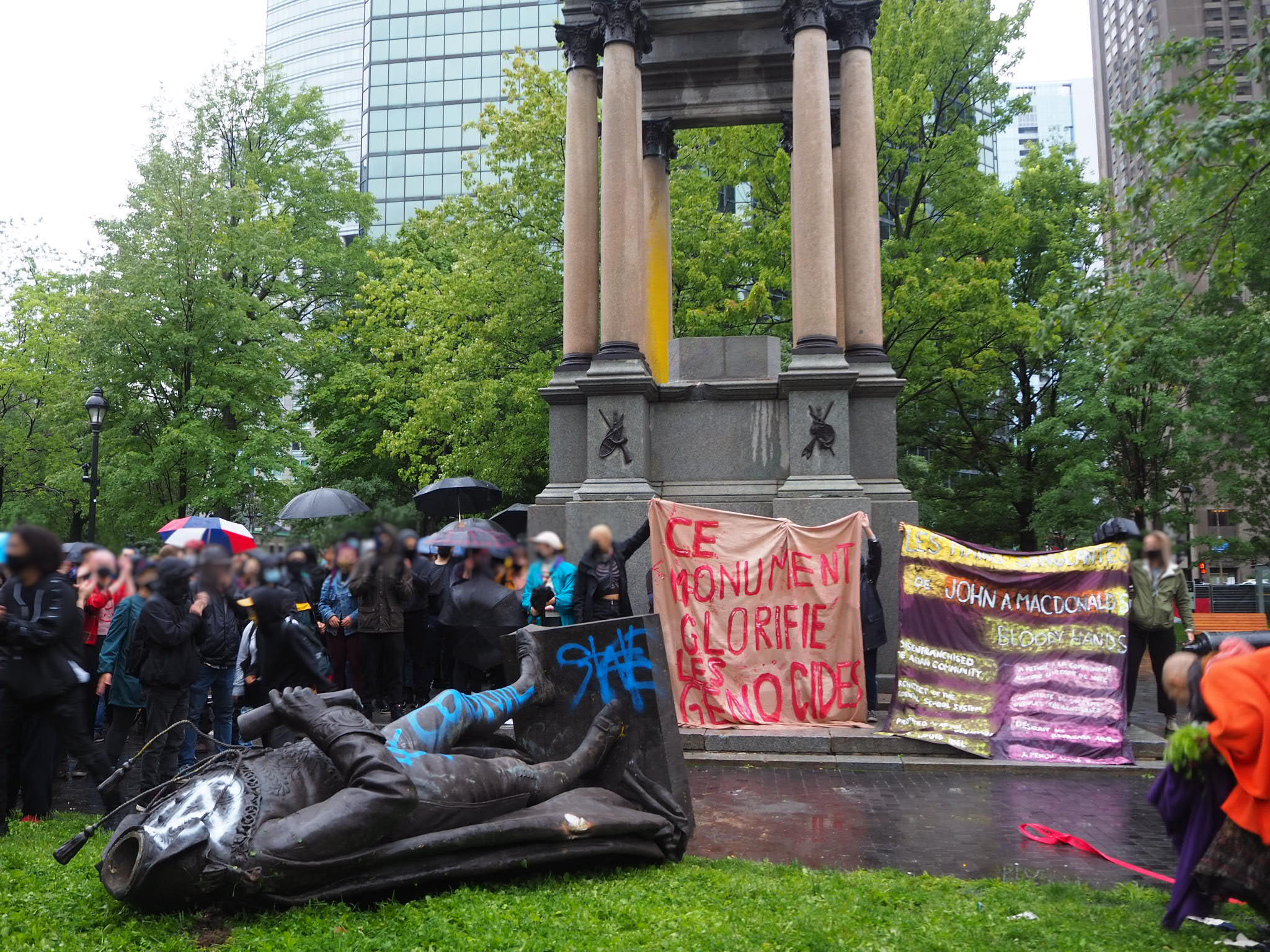
For over two hours, the crowd marched peacefully along Sherbrooke Street and west on Saint Catherine Street, where officers in riot gear blocked the street near the Montreal Police Neighborhood Station #20. Protestors continued west on Boulevard René Lévesque before gathering in Dorchester Square, where organizers gave speeches pushing for the reallocation of police funding. As the crowd reached Dorchester Square, a group of protestors toppled and spray-painted the statue of Canada’s first Prime Minister John A. Macdonald. There were no reported injuries or arrests. 

During the march, one activist with the BIPOC Liberation Collective spoke about the importance of reinvesting in communities as a means to reduce crime. He lauded the crowd’s activism and pushed participants to support BIPOC members in their own communities.

“I’m not going to sit around and watch more lives be lost and more lives be destroyed, because just one is too many,” he said. “And as a community we should understand that, and not be desensitized to peoples’ struggles and not dehumanize groups of people. Because when people become disenfranchised from our communities, [they] resort to the things that we don’t want in our society. And when we hold ourselves accountable for that and we realize that we are all part of the process [.…] We realize that it’s all our jobs.” 

Another activist bluntly assessed SPVM funding.

“Why is education not funded as much as the police?” he asked. “Why does education keep getting defunded [and] public schools beg for subventions [while] the police are there with almost tanks in protests. Why the fuck is this happening?”

Jessica Quijano, Missing and Murdered Indigenous Women Coordinator at the Native Women’s Shelter of Montreal, expressed frustration over her interactions with the SPVM during her work. She explained that she often needs to push for police to open investigations into missing and murdered Indigenous women. 

“How is it that a community has to hire someone like myself so that the police are supposed to do what they are paid to do,” Quijano said. “This is all intentional. The genocide of Indigenous people is intentional [in] Canada, [which] actually does not act. We know what needs to be done. We had an inquiry with 233 recommendations and the government has done none of them.”

Quijano denounced systemic racism in Canada’s criminal justice system.

“The Indigenous population here in Canada is less than five per cent, [but in our prisons], 25 per cent of men [incarcerated] are Indigenous and 40 per cent of women [incarcerated are Indigenous],” Quijano said. “That is a travesty. If you want to think about the U.S., how they have an issue with the prison industrial complex, we have the same thing here. We are no different than the United States.” 

Following the speeches, a handful of protestors, dressed entirely in black, climbed the John A. Macdonald statue, covering it with banners detailing Macdonald’s past. While John A. Macdonald was one of Canada’s founding fathers, he established the residential school system, which forcibly separated over 150,000 First Nation, Inuit, and Métis children from their families between 1880 and 1996. The Truth and Reconciliation Commission of Canada, published in 2015, called the residential school system a “cultural genocide.”

Research Briefs, Science & Technology

Gene therapy provides a potential breakthrough in brain cancer treatment

In the fight against cancer, scientists have long grappled with the ambiguous nature of stem cells. Glioblastoma tumours, the most aggressive form of brain cancer in adults, consist of these cells, which have the notable ability to self-renew. This makes these tumours notoriously hard to treat with targeted radiation therapy and difficult to permanently remove through surgery.

A McGill-led research group working at the Lady Davis Institute of the Jewish General Hospital has now put the invincibility of tumour stem cells into question. In a recent paper, the group details a new technique of sensitizing stem cells to radiation therapy, thereby increasing the therapy’s efficacy. A single mitochondrial gene called oncostatin M receptor (OSMR) was found to influence the energy levels of stem cells. Using the DNA editing tool CRISPR-Cas9, researchers were able to delete the gene and cause cancerous cells to become less resistant to ionizing radiation, the type used in cancer treatments.

Dr. Arezu Jahani-Asl, assistant professor in the Department of Oncology at McGill, has been overseeing this project since 2015.

“What makes [stem cells] unique is their capacity to undergo self-renewal and spur the growth of new tumours, but at the same time, they can evade ionizing radiation and chemotherapy,” Jahani-Asl said in an interview with The McGill Tribune. “They can regenerate a new tumour if there are only a few of these cells left after surgery.”

Considering the tenacity of these cancer cells, researchers consider the identification of the OSMR gene’s role in regulating cell proliferation a promising breakthrough.

Through various molecular techniques, the team tracked the OSMR gene product and its interactions within the cell. First, they established OSMR’s location in the mitochondria, the part of the cell responsible for producing energy. Its location pointed to OSMR’s involvement with the mitochondria’s electron transport chain, a series of protein complexes that produce ATP, the cell’s energy currency. 

Researchers noticed that high expression of OSMR strengthens cancer cells by promoting ATP  production, providing cells with additional energy.

Armed with the knowledge that OSMR affects a tumour’s energy stores, the researchers subsequently removed the gene using CRISPR-Cas9. 

“When we deleted the gene, there was less oxygen consumption rate, which is a means to measure energy production,” Jahani-Asl said. “There was a decrease of activity in Complexes I, II, III and IV of the [electron transport] chain.” 

Without OSMR, the researchers noted that radical oxygen species, chemically reactive molecules that can cause cellular damage, accumulated in the mitochondria. This build-up triggered cell death in mice more often than when exposed to radiation alone. An increased sensitivity of these cancer cells to radiation therapy could feasibly prolong the life expectancy of glioblastoma patients undergoing treatment. 

Despite the study’s use of mouse models in testing OSMR suppression, the scientists also found support for their results in public health data. 

“Based on public datasets, the higher the expression of OSMR, the more resistant [cells] are to ionizing radiation,” Jahani-Asl said. “It is very similar to what we saw in wet experimentation with mice.” 

Consistency between public health data and the results of the study suggests that gene deletion techniques may be viable for brain cancer patients. In addition, effective gene editing tools such as CRISPR are becoming more widely used in preclinical research. It will take further inquiry and experimentation, however, before human trials become possible. 

For now, the lab is exploring a number of options in their continuing study of the OSMR gene, including therapy antibodies and molecular profiling

“At this point, a drug screening is required to find a drug that specifically inhibits OSMR function,” Dr. Ahmad Sharanek, the lead author of the study, wrote in an email to the Tribune.  “Pharmacological targeting of OSMR in combination with the current standard of care for glioblastoma therapy will [become] feasible at a large scale.”

Recipes, Student Life

Back-to-school, back to home cooking

The chaos of the past summer has made many of us turn to a classic comfort: Food.

Food has been a grounding force for those who find comfort in baking a sweet-smelling cake in the oven, chopping fruit in the kitchen, and kneading a dough to make bread. These simple moments allow us to tap into our senses, into our roots, into who we are. The physicality and mindfulness involved in the cooking process, the memories it channels of your grandmother’s kitchen, the creative outlet it provides, and the joy in devouring the meal with friends and family at the dining table are all quite therapeutic. When my grandfather used to say “We are what we eat,” I would add, “We are what we cook.”

With that being said, here are some of my personal favourites recipes to try out during the online semester. 

For a ready-made breakfast – Overnight Oats

Mix two parts rolled oats with one part plain Greek yogurt, one part milk or nut milk, and nut butter and cinnamon to taste in a bowl. Cover with plastic wrap and leave it in the fridge overnight. Enjoy it as-is in the morning or add whatever your heart desires—be it fruit, granola, nuts, honey, or a beautiful layer of crushed raspberries!

For a magnificent meal- Yotam Ottolenghi’s (adapted) caramelized garlic tart 

375 g all-butter puff pastry

3 separated and peeled heads of garlic cloves 

1 tbsp olive oil

1 tsp balsamic vinegar

1 cup water

¾ tbsp castor sugar

1 tsp chopped rosemary

1 tsp chopped thyme plus a few whole sprigs 

120 g creamy goat’s cheese

120 g hard mature goat’s cheese 

2 eggs

6 1/2 tbsp double cream

6 1/2 tbsp crème fraîche

salt and black pepper

Recipe:

Prepare the baking tin:

  1. Roll out the puff pastry into a shallow, loose bottomed, 28 cm fluted tart pan. Place a large circle of greaseproof paper on the bottom and fill up with pie weights. Leave to rest in the fridge for 20 minutes.

Blind bake the crust:

  1. Preheat the oven to 180°C and bake the tart pan for 20 minutes. Remove the weights and paper, then bake for a further 5-10 minutes, or until the pastry is golden. Set aside. Leave the oven on.

Prepare the caramelized garlic cloves:

  1. While the crust is baking, put the garlic cloves in a small saucepan and cover with plenty of water. Bring to a simmer and blanch for three minutes, then drain well.
  2. Dry the saucepan, return the cloves to it and add two tablespoons of oil. Fry the garlic cloves on high heat for two minutes. Add the balsamic vinegar and water and bring to the boil, then simmer gently for 10 minutes. Add sugar, rosemary, chopped thyme and quarter teaspoon salt. Continue simmering for 10 minutes, or until most of the liquid has evaporated and the garlic cloves are coated in a dark syrup. Set aside.

Assemble the garlic tart:

  1. Break goat’s cheese into pieces and scatter in the pastry case. Spoon over the caramelized garlic cloves and syrup. In a jug, whisk together the eggs, cream, half teaspoon salt and some black pepper. Pour this custard over the tart filling to fill the gaps.
  2. Reduce the oven to 170°C and place the tart inside. Bake for 35-45 minutes. Remove from the oven and leave to cool. Serve warm with a few sprigs of thyme on top.

For your sweet tooth – The Ultimate Chocolate Mousse

250 grams dark chocolate

1/2 stick salted butter

2 tbsp vanilla extract

6 eggs

Orange zest to taste

Recipe:

Separate egg whites from yolk into two large bowls. Add vanilla to the yolk. Melt chocolate and butter in medium saucepan on low heat. Once chocolate is 75 per cent melted, take it off heat and keep stirring until smooth. Gently add chocolate mixture to the yolk and mix with a wooden spoon until smooth. Whisk egg whites into stiff peaks (if you flip the bowl, no mousse should fall out). Gently fold in egg whites to the chocolate mixture with spatula. Divide mixture into six mini-bowls, cover with plastic wrap and refrigerate. Let sit for two hours minimum to overnight and enjoy. Serves six.

Soccer, Sports

Mewis to Manchester exemplifies the NWSL exodus

The COVID-19 pandemic has hit the sports world hard, with many leagues initially cancelling their seasons. Some leagues, including the WNBA, the NBA, and the NHL, have since restarted in “bubbles,” and one of the most successful in this restart was the National Women’s Soccer League (NWSL). 

The NWSL was in its off-season when the pandemic hit North America, leaving the league scrambling to fit a whole season into a shortened time frame and safe environment. Their solution came in the form of the NWSL Challenge Cup, which took place between June 27 and July 26 in a “bubble” in Utah. The 23-game tournament was successful in several ways, with no positive COVID-19 tests and a first-time NWSL champion in the Houston Dash

Despite the relative success of the summer’s Challenge Cup, and the announcement of a Fall Series set to run from Sep. 5 to Oct. 17, many players are still choosing to leave the NWSL to play club soccer in European leagues. American midfielders Sam Mewis and Rose Lavelle have signed with the FA Women’s Super League’s (FA WSL) Manchester City, while American forwards Christen Press and Tobin Heath have both signed with Manchester United. It’s not only American players who are leaving the NWSL, however. England’s Rachel Daly and Australia’s Emily van Egmond both signed loan deals with Westham United, leaving behind their American clubs for the time being. Some young North American players are choosing to forego the NWSL altogether, including Canada’s Jessie Fleming who signed her first professional contract with Chelsea FC in June of 2020. 

The situation surrounding the COVID-19 pandemic in the United States means that there is no way for NWSL players to play a full league season this year. The fall series consists of only 18 games, with regional pods that limit each team to playing against only the two other teams in the pod and only playing four games each. Players looking to make their national team rosters ahead of next year’s Olympic Games will need more opportunities for playing time in competitive environments. At the moment, an American league is simply not able to provide this setting. European leagues also present the opportunity to play in multiple competitions, including the UEFA Women’s Champions League and national cups within each country. 

After the failure of two previous women’s professional soccer leagues in the United States, this outflux of top players from the NWSL is a cause for concern. Through a deal with CBS, the 2020 season would have been the first with games aired on network television, increasing the visibility of the league and drawing in more fans and sponsors. Top players leaving the league does not bode well for future sponsorships or television deals; however, CBS did air games from the Challenge Cup and will continue to show games from the Fall Series. This precarity is just one of the many ways in which women’s sports have been disproportionately affected by the COVID-19 pandemic as compared to men’s sports. 

Despite the bad news for the NWSL, players signing in Europe are, arguably, a testament to the development and maintenance of women’s professional club soccer across the world. Despite less-than-ideal circumstances in the U.S., players still have the opportunity to continue playing club soccer. The majority of FA WSL teams are now fully professional, allowing players to spend more time training with better equipment and facilities, thus raising the level of competition in the league. Hopefully, this professionalization can continue to sustainably provide opportunities for women soccer players, even through unforeseen obstacles like a global pandemic. 

Read the latest issue

Read the latest issue