
Latest News

Campus Spotlight, Private, Student Life

Clubs still struggling to find spaces

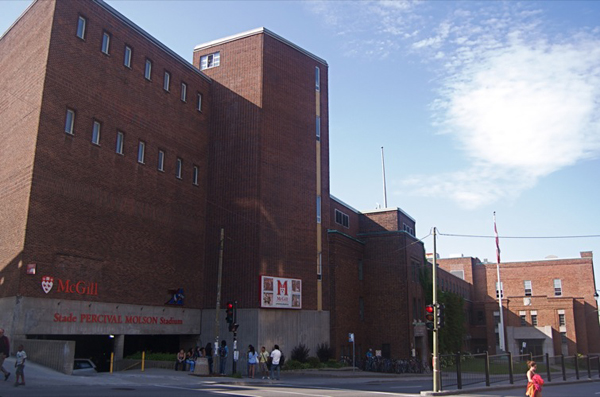
In March 2018, the University Centre, commonly known among students as the “SSMU Building,” closed for much-needed renovations. While the building was scheduled to open by the end of that year, this date has been pushed back to April 2020, 16 months past the initial deadline. During this two-year period, the loss of this crucial space has forced multiple student-run collectives, clubs, and services to relocate. 

The issue of communicating disruptions to student events started to surface weeks before the building was set to close. On Feb. 12, 2018, a preparatory inspection showing a high level of asbestos in the Players’ Theatre’s office caused an unexpected closure of the space. along with major disruptions to the McGill Drama Festival, which was being held at the time. Cheyenne Cranston, Players’ Theatre event coordinator, expressed her disapproval of the lack of forewarning surrounding this problem in an interview with the The McGill Tribune

“Our biggest concern is [why] this wasn’t made an issue before we had 50 students working months to put on this show,” Cranston said.

The need for student-run collectives to adapt with insufficient resources continues to be a problem, as highlighted by the problems Midnight Kitchen, McGill’s own food collective, has faced. With a goal of providing affordable food as well as a space to congregate and work against food insecurity, the club has unique needs which, according to Midnight Kitchen coordinator Leah Freedman, remain unmet. 

“We needed an industrial kitchen on campus, and we never found that,” Freedman said. “We only have an industrial kitchen in Saint-Henri [….] We’re doing a good job keeping up, but [our service] is really limited.”

Other clubs have had to contend with  limitations, such as the lack of wheelchair accessibility in 3471 Peel, which houses many organizations such as the Peer Support Centre and Walksafe. Other issues, such as the lack of on-campus spaces for large events, storage space for equipment, gender-neutral washrooms, and the lack of communication with clubs regarding delays, suggest a greater problem of the administration’s handling of the University Centre closure.

“It feels like [the clubs] are taken out of the conversation, and we are being deprioritized,” Freedman said. “In my opinion, McGill doesn’t want [community] spaces to exist, because it’s not in their best interest, which is profit.” 

Freedman further explains that the deprioritization of these community spaces by the administration impacts the organizing culture of the university. These locations, which are coined as “third places” by sociologist Ray Oldenburg, are breeding grounds for social connections, inclusion, and democracy. While students are also able to go to other hangout spots such as cafes or bars outside campus, spaces that are driven by the community rather than profit are the most inclusive and beneficial for promoting a culture of exchanging and sharing ideas.

The University Centre was one venue where  student-run organizations could share this goal of cooperation and solidarity. For McGill to better support inclusive student-run organizations, Freedman believes they must communicate and plan better.

“It would be better if they came up with a proper solution,” Freedman said. “If they would overshoot the deadline but commit to a viable solution in the meantime, that would be way [better], rather than […] push[ing] the dates.”

Students’ Society of McGill University (SSMU) President Bryan Buraga believes the solutions that McGill have provided are sufficient given the circumstances, but remains equally dismayed by the University Centre’s postponed re-opening. On SSMU’s part, they have stated that they are doing their best to accommodate student groups but there remains more requests for spaces than they have available.

Despite the ongoing dilemmas associated with the University Centre’s closure, Midnight Kitchen remain both adaptive and optimistic.

“We’re as bummed about the closure as anyone,” Midnight Kitchen wrote on the Facebook post regarding the ongoing construction. “But the forced flexibility has kept us on our toes and will likely lead to a new, revitalized perspective once we are back.”


Commentary, Opinion

SSMU Executive Midterm Reviews Fall 2019

Bryan Buraga, President  

In light of the SSMU General Manager’s recent resignation and delays in the University Centre reopening, Buraga has done an admirable job ensuring that there has not been a negative impact on the resources and services that SSMU provides to students. His advocacy for a Fall Reading Week is much needed. However, he has remained preoccupied with a desire to fulfill a number of his ambitious campaign goals, which is rather ill-suited to the primary duties of the presidential position. Hopefully, Buraga will be able to narrow his focus towards a few key aims next semester so he can see the end of projects that he starts.

Billy Kawasaki, VP Student Life  

Kawasaki has improved club executives’ access to the information and resources in various ways, including making it easier to book rooms and request services such as MSERT for club events. Additionally, he is collaborating with the mental health commissioners, the VP University Affairs, and the Student Wellness Hub on several projects and policies to improve mental health resources at McGill. Kawasaki has fallen short, however, with the Club Fund. A proposed $5 increase to the clubs fund fee was included in the Fall 2019 referendum and would have gone toward services like his proposed club portal. Unfortunately, Kawasaki neglected to present a campaign that justified the fee increase to students and the vote failed. 

Sam Haward, VP Finance

Haward has had an excellent first term as SSMU’s VP Finance. Haward’s management of the club banking reset is laudable, as a process that led to a month-long blackout period for club funds last year was completed in just eight days. While the new bank has proven slow at times, Haward has handled this challenge by implementing a system that ensures clubs can still operate during waiting periods. Haward has also proven adaptable in his position by reworking campaign promises when necessary, like with his work on procuring better prices for the McGill International Student Health Insurance Plan. Other initiatives that Haward has taken on include providing certain clubs, such as the Midnight Kitchen, with their own credit cards to ensure unnecessarily slow bureaucratic processes are bypassed, all while holding double office hours to ensure that he is accessible to clubs that need in-person assistance. 

Adam Gwiazda-Amsel, VP External 

During a semester in which protest movements such as Divest McGill and advocacy against Bill 21 have largely characterized student politics, Adam Gwiazda-Amsel has succeeded in supporting student groups aiming to make a difference. While he has encountered challenges in receiving support from the McGill administration, particularly in his attempts to bridge the gap between McGill and Montreal, progress toward his larger goals of integrating students into the Milton-Parc community is underway. Additionally, the creation of the Affordable Student Housing Committee on SSMU Legislative Council has laid the groundwork for further progress next semester.

Madeline Wilson, VP University Affairs  

Wilson has collaborated with and directed various campaigns on campus this semester, including ‘Know Your Rights’, as well as advocating for improved accessibility at the Student Wellness Hub and supporting initiatives pressuring the McGill administration to divest from fossil fuel companies. In the Winter 2020 semester, she plans to create a database of searchable university-related documents, support the Arts Senators including Chloe Kemeni in creating a Black Students Bill of Rights, and research McGill’s assessment policies regarding how students are graded. Although her idea of including an updates corner on the SSMU listserv was not realized, Wilson has used her personal Facebook account to actively support individual students and student groups. 

Sanchi Bhalla, VP Internal 

Bhalla has had a rocky semester, receiving criticism from the student body for poorly-worded French translations in listserv emails, neglecting to formally acknowledge Remembrance Day in a Nov. 11 newsletter, and most significantly, failing to send an important announcement in a timely manner on behalf of the SSMU Indigenous Affairs Committee. While the Tribune recognizes the efforts that Bhalla has made to ameliorate student concerns on these issues, her inability to regain the trust of the Indigenous Affairs Committee and Indigenous student leaders has prevented her from adequately fulfilling her role as VP Internal. Although the time may have passed, the absence of a public statement or apology from Bhalla regarding the concerns expressed by the Indigenous Affairs Commissioner is disappointing. 


McGill, News

Meet the members of the Men’s Varsity Naming Process Committee

Years of activism by Indigenous students and staff of McGill culminated in the decision to rename the men’s varsity sports teams. When Principal and Vice-Chancellor Suzanne Fortier issued a statement of her decision, she announced the creation of a steering committee to pursue a consultative process. 

The committee is composed of 10 members including students, alumni, and coaches who are committed to finding a new name that better encompasses the school’s values. 

The university will publicize the official new name in time for the 2020-21 school year, The McGill Tribune sat down with the six members of the committee who are currently at McGill to learn more about them and their visions for the new name. 

Tia Lore

Tia Lore is in her fifth year at McGill. Hailing from Richmond, British Columbia, Lore is pursuing a major in sociology and a minor in communications. She is the co-captain of the McGill women’s soccer team, playing in the winger position. Lore has sat on the Athletics Varsity Council for three years and now serves as its co-chair. 

“The people [who] make up the committee are people [who] know athletics and the values of McGill well. Having the perspective of athletes and coaches is crucial. As well, having alumni on the committee is important, since their voices have not exactly been heard in the past [and] McGill’s name does represent them. By opening our doors for people to come meet with us and give us their suggestions, the committee tries to listen to as many people as possible. I think having a name that [encompasses] inclusivity, togetherness, and unity is huge. Whether that means that we have one name for the whole school or one name that represents the men’s side is up for debate.”

—Lore, on why the committee is well-equipped to choose a name. 

Lindsay Harttrup

Lindsay Harttrup is a third-year nursing student on the women’s track and field team. Originally from Kitchener, Ontario, Harttup has competed in high jump, shot put, and long jump. She maintains a strong involvement with the varsity community by attending the various events that the council runs and encouraging discussions between teams. 

“I think the purpose of the committee goes beyond choosing a new name for the men’s team. The committee is trying to highlight diverse voices so that when the votes on the name are held, as many components of the [McGill] community as possible are represented. I will be considering a name that is respectful and representative of everyone, especially in the context of the old name. It is important that we encompass McGill spirit and considering how we’d like the school to appear is important. Since there are a lot of potential names, making sure that the chosen name fits well with most people is important.” 

—Harttrup, on the purpose of the committee and the process of landing on a name. 

Sam Tremblay 

Sam Tremblay studies kinesiology and is the captain of the men’s hockey team. He is from Saint-Basile-le-Grand, Quebec and is currently in his fourth year of studies at McGill. After graduation, he plans to pursue his master’s in a biomechanics lab. 

 “We are not too sure of the direction we are going in for the name. Although I don’t have any real direction yet personally, I hope it will relate to Montreal, McGill, and the values [that] the two encompass. We have people from a variety of backgrounds on the committee, and it is important to have every side of the story involved. While I have my own views, it will be interesting to see the opinions of others as the naming process progresses. I wasn’t expecting to be [appointed], but I feel honoured to be chosen to be involved.” 

—Tremblay, on what direction he and the committee are headed toward for the name. 

Rikki Bowles 

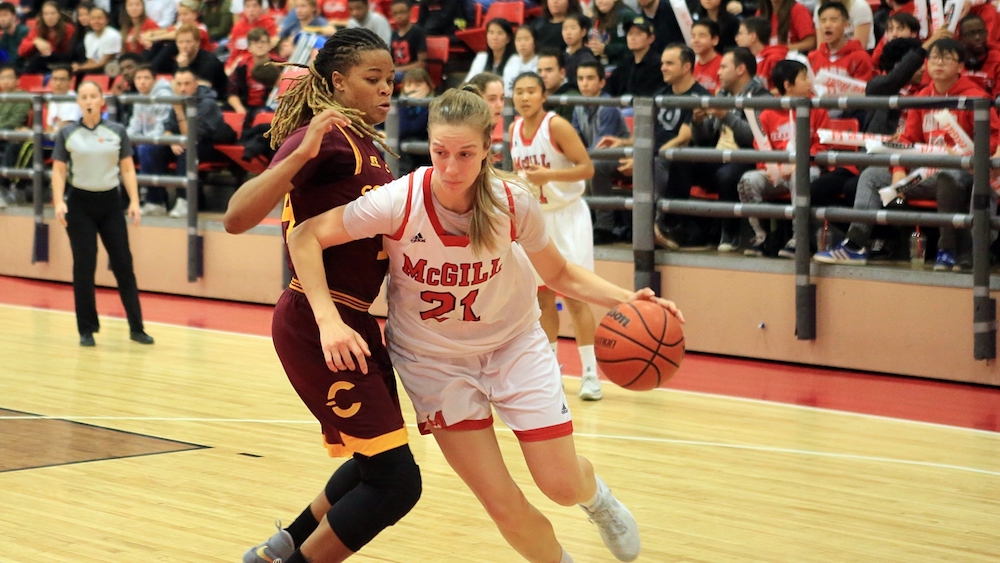
Rikki Bowles is the full-time associate coach of the McGill women’s basketball team. Prior to her appointment to the position in 2018, she acted as the team’s assistant coach from 2011 to 2017. During her time with the Martlets, the team has earned six conference crowns and one Bronze Baby national championship. With support from the Women in Sports initiative, Bowles became the sixth full-time women’s varsity sports coach at McGill. 

“I take being part of the naming process very seriously. It is an opportunity to be part of a process that means so much to so many. I’m committed to working towards a name that will unite the McGill community. After being part of McGill athletics in some capacity for 15 years now, I would say that this may be one of the most interesting and important processes that I will be a part of.” 

—Bowles, on what being on the committee means to her. 

Alexander Pantis

Alexander Pantis graduated in 2019 with a double major in economics and political science. An accomplished athlete, Pantis has been named to the all-star rugby team three times and was on the McGill Principal Student Athlete Honour Roll. He was the recipient of the 2018 Quebec Student Sport Federation (RSEQ) Men’s Rugby Leadership & Citizenship Award and was named the RSEQ 2016 Rookie of the Year. Pantis has been co-captain of the McGill men’s rugby team for two years. He will be pursuing a Graduate Diploma in Entrepreneurship.  

“I wanted to be a part of the committee to be a part of the history of the school. I love McGill athletics, and to say I had an input in it is truly an honour. I want to honour McGill tradition while finding a name that is appropriate for the caliber of the school, a name that is indicative of what it means to go here. As a committee, we are looking to give everyone a voice and an outlet for input. As far as I can tell, each aspect of athletics at McGill is touched by one part on the committee.” 

—Pantis, on what he feels his voice can contribute to the committee. 

Ron Hilaire 

Ron Hilaire has served as the head coach of the football team since 2015, prior to which he acted as the defensive coordinator and defensive line coach. He has been immersed in the football world for 20 years as both a player and a coach. He has also served as the recruiting coordinator of the Montréal Carabins and the defensive line coach at Collège du Vieux Montréal. In 2008, Hilaire was drafted by the Calgary Stampeders to play in the Canadian Football League (CFL). 

“Fundamentally, as a university, we have always cherished excellence. We have been considered leaders in so many fields, academic and athletic, and I believe that with this new name, we will be able to embody the true values of the university. Being on the committee gives me the opportunity to be part of giving a new identity to an already great institution, which has decided to pursue an inclusiveness of all by continuing the traditions of the past while going ahead with the future.” 

—Hilaire, on the importance of the decision to rename. 

Sports

Professional sports after McGill

From March Madness to the Frozen Four, sports fans often follow tournaments in the National Collegiate Athletic Association (NCAA)the organization in charge of American college sportsas fiercely as they follow professional leagues, keeping track of draft prospects and filling up 100,000–seat stadiums. But U SPORTS, the Canadian university sports governing body, is significantly less popular. Despite this disadvantage, McGill student athletes have found success both in professional leagues and on the national stage.

The smaller size of U SPORTS as a league compared to the NCAA means that schools generate less revenue through their sports teams, leaving them with fewer resources to spend on athletics. McGill alumna and former Martlet basketball player Alex Kiss-Rusk played one season in the NCAA with Virginia Tech before transferring to McGill and noted the drawbacks of playing in a smaller league. 

“The NCAA has money and resources that Canadian schools simply cannot match,” Kiss-Rusk wrote in an email to The McGill Tribune. “The vast majority of the money coming into these programs [is] generated by the schools’ football teams [….] The money [the football team] produces has allowed many schools to flourish in all sports.”

Even with the disparity in resources, Kiss-Rusk believes that the cross-border programs are not as different as some may think. 

“Although the competition in the NCAA is obviously superior, […] I can’t say [that] there are tremendous differences,” Kiss-Rusk wrote. “Playing at McGill, I felt as though academics were held [to] a higher standard. But, as for my on-court experience, it was very similar.”

Kiss-Rusk is now playing for BC Pharmaserv Marburg in the Deutsche-Basketball-Bundesliga (DBBL), a German women’s basketball league. She is not the only McGill alumnus to go pro: Laurent Duvernay-Tardif (M.D ‘18) is a guard for the NFL’s Kansas City Chiefs. Additionally, McGill graduates, including women’s hockey gold medalists Charline Labonté and Kim St-Pierre, have triumphed at the Olympics. McGill’s alumni network boasts 28 Olympic medalists, and there has not been an Olympic Games since 1908 without a McGill graduate competing.

Martlet Hockey Assistant Coach and program alumna Alyssa Cecere won three national championships with the Martlets and one Canadian Women’s Hockey League (CWHL) championship with the Montréal Stars (later renamed Les Canadiennes de Montréal). She found that her experiences at university prepared her to compete with the Stars.

“When I played at McGill [we had] high-paced practices, which transferred over to our games,” Cecere said. “With the Stars, it was a bit of a higher pace.”

In addition to the game itself, Cecere said that McGill’s travel schedule transferred well to that of the Stars. As a coach, she now tries to instill a culture of professionalism in her players to prepare them for the workplace, whether that be a hockey rink or not.

Kiss-Rusk has a similar pride in the broader skills McGill taught her, which she believes are crucial to her professional career.

“Understanding how to be a leader on a team is very important [when] playing professionally and is certainly something I learned while playing at McGill,” Kiss-Rusk wrote. “When you’re on a professional team, you are often joining a new group every year. You’re stepping into an important role on the court, so finding a way to lead a new group that doesn’t know you and doesn’t trust you yet is a challenge.”

For many McGill athletes, going pro isn’t the initial or ultimate goal. While NCAA athletes can often start their studies having already been drafted, a professional career was not in Cecere’s plans until her final year at McGill.

“It’s something that you think about as you keep going on, but it wasn’t something I necessarily thought, ‘That’s what I’m definitely going to do,’” Cecere said. “[My] fifth year was kind of like, ‘Well, you know what, I’m not done playing yet.’”

Kiss-Rusk went through a similar process.

“[Going pro] really only manifested itself as an option to me after my fourth year, when we won the national championship,” Kiss-Rusk wrote. “I began getting attention from the [Canadian] Senior Women’s National Team, and my time with them that summer solidified my decision to go pro after university.”

Other players, like Martlet ice hockey alumna Mélodie Daoust, managed to play professionally while still at McGill. She played one game with the Stars during her first year as a Martlet and competed for Team Canada at the 2014 Sochi Olympics in her third year, winning a gold medal. In Daoust’s final year, goalie Tricia Déguire joined the Martlets and soon also began attracting national attention. Déguire, now a fourth-year, has been invited to three Hockey Canada training camps and played at the Nations Cup in Germany. She credits the mentorship of teammate Daoust and assistant coach Marie-Philip Poulin, one of Canada’s most decorated active hockey players, with helping her develop the drive that has brought her this far.

“The thing [Daoust] always told me is to be the best I can be,” Déguire said. “She was always [at her] best when she was going on the ice, so she tried to translate that to me [….] [Poulin] says ‘Just continue to work as hard as you can. Push it through and give it [your] all, so that you can [succeed] after [your] university career.’”

Déguire, Kiss-Rusk, and Cecere, as well as other McGill alumni who are now professional athletes, benefited from McGill Athletics’ support system, which includes mental health support, physiotherapy, and tutoring, among other services. But going pro is, unavoidably, a trial by fire. Whether an athlete is in a North American league or a European league or with a national team, they find themselves playing with more athletic teammates and against stronger opponents than at the university level.

“The speed of the game [with the national team] is a bit quicker,” said Déguire. “The players […] are all strong, good, big players, compared to [the university] team [whose players are] sometimes a bit smaller and weaker.”

In addition to the game itself, athletes find themselves in an entirely new situation, outside of the common network that is university.  

“When I was at McGill, everyone was in the same boat. [We all] had classes, had training, [and] had practices,” Cecere said.

The CWHL did not pay its players during Cecere’s time with the Stars, so she and most of her teammates worked full-time jobs, practicing on the evenings and competing on the weekends.

“I wasn’t always at full capacity, my energy was lower,” Cecere said. “I would spend my full day on my feet teaching [physical education], […] and then I would go from that to CEGEP practice, coach there, and then go to my practice [with the Stars] [….] You’re spent, pretty much.”

Even with these challenges and changes, McGill athletes still consistently achieve excellence: Cecere helped her team win the Clarkson Cup in 2012; Kiss-Rusk led the DBBL in rebounds and blocks in 2018-19; and Déguire continues to hold her own against more experienced players at national camps.

Whether they aim to go pro from the start or discover their options later on, McGill athletes have managed to find their way to professional leagues, despite the smaller size of U SPORTS and the McGill program. McGill’s alumni take their experiences at McGill and thrive—some even, as Cecere did, choose to come back to McGill to guide younger athletes on their own paths.

ssmu council
News, SSMU

Hillel trip controversy dominates SSMU Council

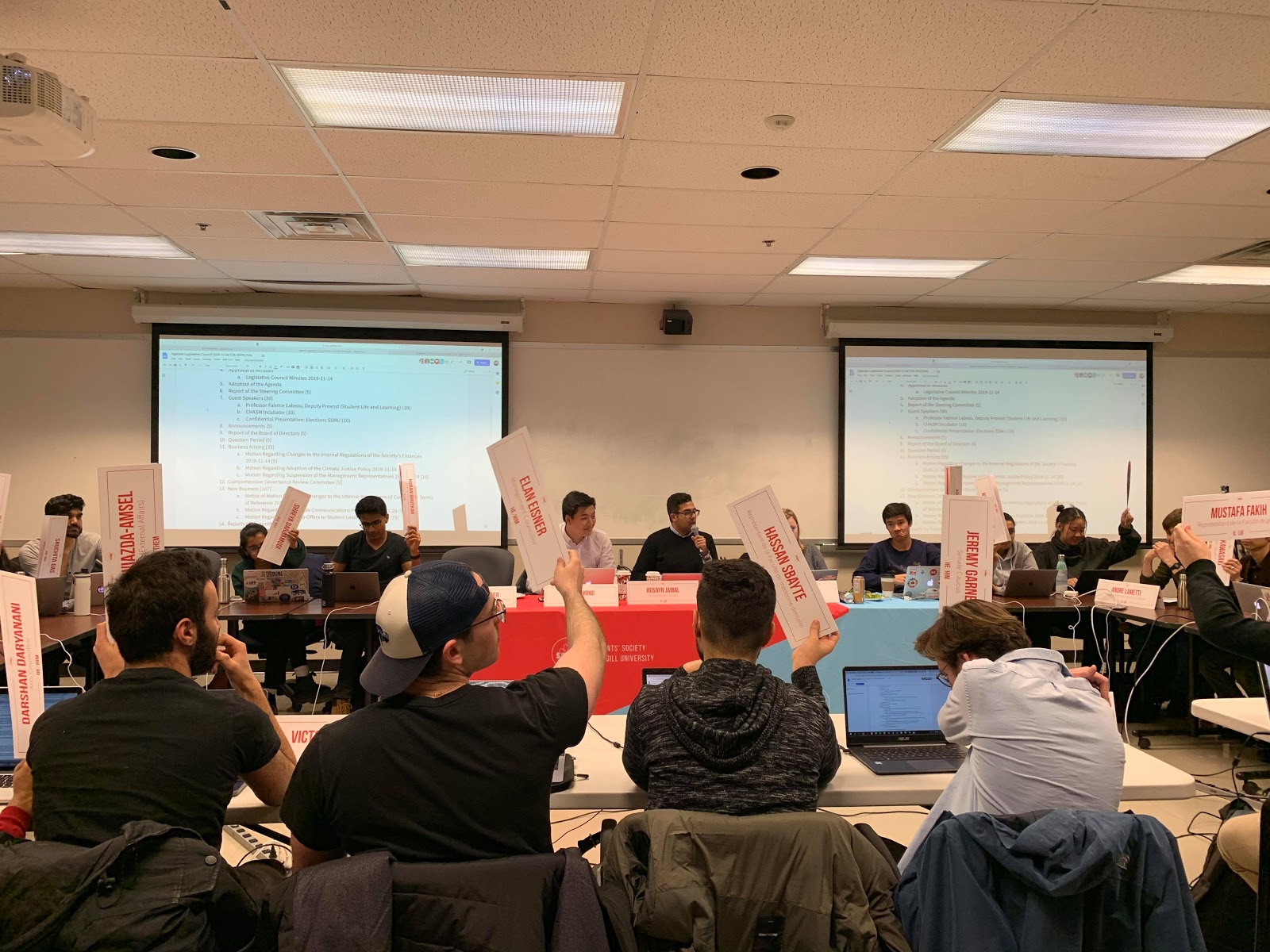
The Students’ Society of McGill University (SSMU) convened for their last Legislative Council meeting of the Fall 2019 semester on Nov. 28. Councillors debated issues including new climate justice policies and changes to finance regulations, but much of the meeting was focused on Hillel Montreal’s all-expenses-paid trips to Israel, which were offered to several McGill student representatives.  

Fabrice Labeau, Deputy Provost (Student Life and Learning), addressed the topic’s divisiveness and called on the council to remain respectful of all student groups in their deliberations.

“What I’m hearing from students is that they feel threatened on campus because of their identity,” Labeau said. “Whether we agree or not with an assumed identity, it is still their identity. Some students say they feel threatened because they identify as Zionists [….] Some people tell me they feel unsafe because they identify as Jews, which is also problematic.”

The SSMU Board of Directors ruled that accepting the offer did not constitute a conflict of interest. SSMU president Bryan Buraga elaborated on the board’s decision.

“The Board of Directors took into consideration all the information that they had […] and they determined that, under the Conflict of Interest Policy, it did not constitute either a real or an apparent conflict of interest with the information that they were provided,” Buraga said. “But, they did see the potential of a conflict of interest should the need arise.”

Senator Jeremy Garneau asked whether SSMU’s Conflict of Interest Policy should be amended in light of the controversy. Council President Husayn Jamal explained that the current policy states that determining whether gifts are conflicts of interest is context sentiment.

“A gift over 50 dollars is not automatically a conflict of interest,” Jamal said. “As defined in the policy, as long as a gift over 50 dollars is appropriately disclosed and the board of directors institutes the steps it deems necessary. In those cases, it’s not always a conflict of interest. In this case, however, the board ruled that this situation does not constitute a gift.”

Flashback:

Guest speaker Charlotte Scott-Frater, president of McGill’s History Students’ Association , presented a request to council that a room in the SSMU building be renamed the honour of McGill Professor Marlene Dixon, who was forced to resign from the university in 1974 for her political activism on campus. Scott-Frater said that Dixon had helped students mobilize to advocate for university services to shed light on feminist, post-colonial, and 2SLGBTQIA+ issues.

Sound Bite:

“The AUS Legislative Council would like to express their profound disappointment with the decision of two members of the AUS executive, [AUS VP Finance] Stefan Suvajac  and [Arts Representative to SSMU] Andrew Chase to attend a trip funded by an interest group, the Maccabee Task Force, whose leaders have explicitly stated their goal to influence the decision making process of student leaders on campus, and call on the two executives to refrain from participating in this trip. Even in spite of this decision, we stand in solidarity with their concerns and with their lived experiences of oppression. We do not believe the ruling of any policy. In this case, the SSMU Conflict of Interest Policy […] should serve as a moral compass.” Arts Councillor Darshan Daryanani, on a statement signed by AUS executives.

News, The Tribune Explains

Tribune Explains: SSMUnion

The Student-Run Service Members’ Union (SSMUnion) officially launched their campaign on Facebook on Nov. 24. Their goal is to unionize SSMU employees to combat issues of overworking and provide support for all full and part-time SSMU employees. SSMU employs a staff of over 100, including volunteer services such as Sexual Assault Center of the McGill Students’ Society (SACOMSS) and Queer McGill, along with paid administrative staff. The launch included the announcement of two events, on Nov. 28 and Dec. 3, where SSMU employees will be able to ask questions, clarify demands, and sign union cards. 

Why do SSMU employees need to unionize?

According to SSMUnion organizers Shaquiera Hamilton and Belle Sullivan, both U3 Arts, SSMU employees are exploited and need more resources, regardless of their employer’s intention. 

“There is a large lack of training, support, and resources one needs in order to actually do one’s job,” Sullivan said. “This sort of inefficiency can make people need to work outside of their contract hours. Because most SSMU jobs are on a 200-hour contract for eight months, if your project takes more than 200 hours,  you either have to drop it or keep working without getting paid.”

Furthermore, a lack of standardized communication between SSMU and its employees has created disparities. Because SSMU executives change every year, employees never know if their projects will continue receiving the same support. 

How is the SMMUnion formed?

According to Sullivan, the process of unionizing is extensive and requires at least one year to complete. 

“In order to become a formal union, you need 50 per cent plus one of the workplace [to desire a union],” Sullivan said. “That can either be done through initial card-signing or, if between 35 and 50 percent of employees sign cards, […] it goes to an election. [The card signing] is going well.” 

After the SSMUnion receives enough signatures, they will be verified by the Quebec Labor Board, which then grants them formal union status. 

“We will then adopt formal bylaws,” Sullivan said. “Right now we are using the bylaws of our parent union, [the Canadian Union of Public Employees] (CUPE), [to] set up a formal union structure and enter collective bargaining. Then we enter formal negotiations with SSMU to put together an agreement [that] we hope will address our list of demands and create a better system that anyone can refer back to when they’re having future problems.” 

Hamilton recognizes that SSMUnion’s goal is ambitious, even with the amount of signatures they already have.

“Our goal [is] to get this done […] by the end of the school year,” Hamilton said. “Given that there is such a high turnover rate of SSMU executives, we do not want to be in the middle of this process with a new group of executives.”

SSMUnion’s parent union, CUPE, is a Canadian national union [that] has experience in Quebec; employees from the Concordia Student Union (CSU) are currently members of a local branch. 

“[CUPE] was also the union that CSU is with,” Hamilton said. “It is really nice working with a union [that] has experience working with a university similar to McGill.”

What will SSMUnion do to help employees?

Over the past year, SSMUnion organizers have collected responses from SSMU employees and are working on a list of demands to present to the executives once the union officially forms. However, the union’s list is still unfinished. 

“We want to get the input of the rest of SSMU’s employees before we start prioritizing certain demands over others,” Hamilton said. “Because there are more part-time staff than there are full-time, we don’t want to prioritize demands [of] part-time staff and then leave out the demands of the full-time staff.” 

Overall, the SSMUnion wants to streamline support for SSMU staff to create a better work environment, comprehensive contracts, and a unified order of communication between SSMU and its employees. 

SSMU is not allowed to comment until negotiations are over.

Season Recaps
Martlets, Men's Varsity, Sports

Fall Season Recaps

Men’s Varsity Lacrosse:

The Men’s varsity lacrosse team had a bittersweet season that ended just shy of a championship. This season also served as a farewell to the team’s head coach of 17 seasons, Tim Murdoch

The team started the year strong with a commanding 13–9 victory over Nipissing University in their regular season opener. In their next game, the first of the season on home turf, McGill kept the momentum going, with an 8–7 double-overtime victory over Trent University in front of an excited home crowd. 

The team stayed red hot throughout the rest of the season, going 10–0 in conference play. Their only loss came in a midseason exhibition game to the University of Vermont, when they were beaten 22–2. Nevertheless, the team bounced back strong to finish the regular season with a commanding 20–4 victory over Carleton University and another close 5–3 win at Trent University. 

The Men’s Varsity team advanced to the Baggataway Cup Championship Tournament, which was hosted on home soil.  In the semi-final round, they faced Western University in front of a record-breaking crowd at Percival Molson Stadium. The team was up 4–1 at halftime and looked well on their way to a championship final appearance. A late-game push by Western was too much to handle, however, and McGill fell 6–5 to the eventual tournament champions.

Although it was a tough finish to the season, the McGill Men’s Varsity lacrosse team has plenty to be proud of and even more to celebrate. Head Coach Tim Murdoch stepped down from his position after a sensational 17-year career in which he guided the team to a record of 190–88–2. Next season will be one of change, but the Men’s Varsity team is well-positioned to return hungrier than ever in pursuit of a championship.  


Men’s and Women’s Cross Country:

Both the women’s and men’s cross country teams ran their last races in early November, bringing their 2019 seasons to a close. The Martlets came into the season with some of the best runners in the RSEQ and high expectations, which they certainly lived up to. Led by fourth-year Elizabeth Hirsch, the Martlets won an incredible four of their six meets, often by considerable margins. They opened their campaign with a resounding victory at the McGill Open on Sept. 15, in which five of their runners finished in the top 10;  Hirsch placed first and fourth-year Chloe Fleurent Gregoire followed in second place. The Martlets kept the momentum rolling all season and secured an impressive win at the RSEQ Championships. Four of McGill’s five runners finished in the top 10 out of 143 runners, with Hirsch finishing second and third-year Sandrine Veillette placing fourth, to help the Martlets edge out Université de Montréal by three points. The Martlets finished their season with a decent showing at the National Championships in Kingston, placing eighth out of 19 teams. They will no doubt look to build upon this season’s success and place even higher at the National Championships next year. 

The McGill men’s team did not have the same success as the Martlets, but their potential is undeniable: Five of their 12 runners this season were first-years including top runner Henry Wellenstein. The team struggled early on, finishing in the bottom half of their first two races. However, they improved noticeably as the season progressed, taking second at the Capital Cross Country Challenge in Ottawa and fifth at the RSEQ Championships, with Wellenstein finishing 15th overall. While the effort was not quite enough to qualify for the National Championships, McGill has high hopes that their young core can help them compete for a national championship in the near future. 


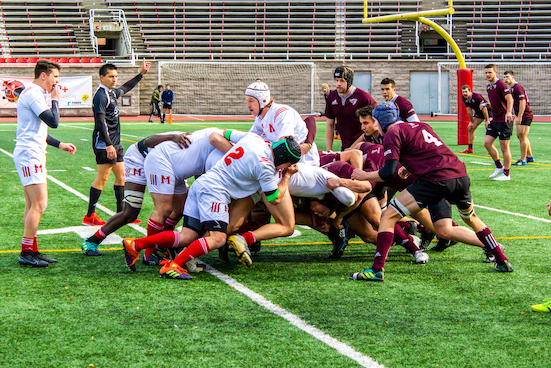
Men’s and Women’s Rugby:

The men’s season kicked off with an emphatic 47–15 win against the Harvard Crimson in the Covo Cup, an encouraging sign for the season to come. 

Unfortunately, McGill lost their regular season opener to their rival, the Concordia Stingers. This didn’t discourage the team, however, as McGill went the rest of the season undefeated, finishing with a record of 5–1, which was enough to place second in the RSEQ standings, just behind the Stingers. This momentum carried into the playoffs, where McGill secured an impressive 37–22 victory over the University of Ottawa Gee-Gees. Unfortunately, the men’s six-game winning streak came to an end against the Concordia Stingers in the RSEQ Championship final.

McGill faired decently at the Canadian Men’s Rugby National Championships, losing in the quarterfinals against the eventual tournament winner Queen’s University and placing sixth in the consolation tournament. 

Much of McGill’s success this season can be attributed to fourth-year second row Michael Nawafubo and second-year fullback Benjamin Russel. Both merited all-team status at the Canadian University Men’s Rugby Championship. 

Even though women’s rugby had a less successful year with an overall record of 1–6, their season wasn’t lacking in small victories.

The Martlets’ season opener against Bishop’s University was an electrifying late-game comeback that ended with McGill on top, 25–22. McGill had fourth-year fullback Dana Silerova to thank for this win: She tallied an impressive 15 points to lead the Martlets to their first victory in nearly two years. For this performance, she was recognized as the RSEQ athlete of the week. Silerova continued to lead the team throughout the season, nearly securing another win against the Bishop’s Gaiters on Sept. 15.

With Silerova staying on the team next year and new additions to the roster, the Martlets will look to build on their early successes next season.


Men’s and Women’s Soccer: 

Having lost a number of veterans the season prior, Martlet Soccer was in the process of rebuilding with nine new players introduced to the roster this season. Despite these changes, the team managed to clinch a playoff berth and finish 14 points ahead of fifth place Laval after going an impressive 14–9–1 on the season. The strong run came to an end after a closely contested semifinal game against the Université de Québec à Montréal (UQAM) Citadins, but the team still has plenty to be proud of: A 3–0 away trouncing of fierce rival Concordia University, as well as victories against the nationally-ranked Université de Montréal (UdeM) Carabins and Laval Rouge et Or, show that the Martlets are headed in the right direction. 

The Fall 2019 season was less successful for the McGill Men’s Varsity team, finishing the season three points short of a playoff spot. The team failed to pick up any points in their last four games, meaning that McGill missed out on the postseason for the first time since 2016 with a 12–3–2 record. Head Coach Marc Mounicot will lose three players this season including fourth-year forward Mehdi Ibn-Brahim, who finished the season as RSEQ’s top scorer. However, the team has gained valuable experience, and there is plenty of room for players to improve. Third-year forward Dalin Saheb is one prospect to watch out for: He finished the season with five goals, only three behind Ibn-Brahim.

Men’s Football:

McGill football’s 2019 season had mixed results. For the second year in a row, they finished third in the RSEQ, with an improved record of 3–5. The offence struggled at times, ranking last in the conference in rushing yards, total yards, and possession time per game. If not for the first week of the season’s 40–14 clobbering of Concordia, they would have ranked last in points scored, with an average of 11.5 points per game in their final eight matches. However, the defence anchored by fourth-year defensive tackle Andrew Seinet-Spaulding, arguably the best player in the country, was outstanding. Aside from Université Laval and the Université de Montréal, McGill limited most opponents to fewer than 17 points per game while creating the most turnovers in the league. A first-round exit in the playoffs was disappointing, but the future looks bright, as McGill look like the most likely candidate to challenge Laval and Montréal next season.

Arts & Entertainment

Another one bites the dust

In another hit to the Montreal independent music scene, DIY co-op and underground punk-rock venue Katacombes will be shutting its doors at the end of 2019. In a Facebook post announcing the closure, the co-op reported that rising rent prices and other financial pressures were to blame.

This announcement follows a host of other independent venues that have had to close their doors or change locations in recent years. In early 2018, indie-scene staple Le Divan Orange shut down, unable to cope with rent and tax hikes. In February of the same year, Mile End coffee shop and music venue Le Cagibi announced its move from the intersection of Saint-Laurent and Saint- Viateur to a nearby space in Little Italy, also citing rising costs.  

Having hosted nearly 2,000 shows spanning many genres in the 13 years since it opened, Katacombes’ abrupt closure marks a severe loss for an increasingly gentrified Montreal neighbourhood. The Latin Quarter, which encompasses large portions of the Université du Québec à Montréal (UQÀM) and the lower half of Saint-Denis Street, has seen an increase in rent prices in response to the development of the Quartier des Spectacles.   

This cultural development project, first proposed by the Quebec Association of the Record, Entertainment and Video Industry (ADISQ) at the 2002 Montreal Summit, intends to house 30 different performance halls. Pre-existing facilities such as Place des Arts and the Musée d’art contemporain (MAC) are included in this project and will be complemented by new constructions. In 2008, Mayor Gérald Tremblay claimed that the project’s $120 million budget would bring in nearly $1.9 billion in private investment. The Quartier des Spectacles subsumes the entire Quartier Latin, and its growth plays a role in the area’s increasing gentrification.

“[The] surrounding neighbourhood has been subject to redevelopment as of late with empty lots and older buildings being transformed into office and condo towers,” CHOM-FM radio station noted in their report on Katacombes’ closure. 

Whether or not this will happen to the lot the venue occupies is still to be seen.

In the Facebook comments of the post announcing the closure, owners of Katacombes guessed that the building will, at the very least, be demolished soon.

Without smaller, independent venues to serve as showcases for local artists, communities risk marginalizing musicians who may struggle to find alternative spaces to play. The loss of Katacombes is another blow to the local artistic identity of the Quartier Latin and to the strength of its legacy.

The replacement of underground hubs with large condos or other corporate driven enterprises severely harms the cultural development of individual neighbourhoods, and repercussions echo throughout the communities. 

In 2017, the City of Montreal claimed to be forming a committee with the goal of looking out for the success of smaller music venues. 

 “[We recognize] that a lot of places are fragile and that they provide a really valuable cultural service without getting any of the support, or any of the funding, that one gets for providing this absolutely essential input into our cultural landscape,” said Christine Gosselin, the city councillor member and executive committee member responsible for culture, heritage and city planning. 

The closure of Katacombes suggests a failure to translate these words into action. If the city refuses to stand up for small independent music venues, it will be up to individual community members to support their local artistic spaces. The venue’s closure marks the end of an important cultural artifact, and it hurts both the up-and-coming artists with nowhere to play and the music lovers with nowhere to go. 

Despite the closure, Katacombes will continue hosting shows until Dec. 31, giving regular spectators one last chance to support a local music staple.  

Emerging Trends, Student Life

Revealing a sense of identity through personal style

I have always been fascinated by personal style, and I often wonder how our unique and individual styles are formed, what causes trends to come and go, and why we dress the way we do. Though we might assume that we can tell a lot about a person based on what they are wearing, in reality, we are only getting a small glimpse into their overall identity.

There is something refreshing and exhilarating about observing the street style in a diverse city like Montreal. For many, the city is a fresh start, a blank canvas for personal reinvention, and there is never any shortage of style inspiration walking down a crowded block in any one of Montreal’s neighbourhoods. From the quintessential Mile End toques and mushroom haircuts to sophisticated downtown workwear, Montrealers consistently express their histories, culture, opinions, and ideas through what they wear.

One possible influence on the development of individual style is the way people were raised and what they wore growing up. The clothes that people were exposed to as children have the potential to affect style choices in the present because they happen to be more available in their minds. Since sartorial tastes can come from subconscious places, it makes sense that our parents and other people we grew up around have the ability to affect our style choices just as they affect our mannerisms, behaviour, and personality. Additionally, people tend to gravitate towards the clothes that remind them of safety and that are associated with fond memories.

A staple of my own wardrobe is a brown suede jacket that I snagged a few years ago from my mother’s closet, much to her frustration. Not only is that jacket a vintage find that I’m sure would be difficult to get a duplicate of today, it also has deep sentimental value. My family used to take annual day trips every fall to a nearby orchard. As a kid, one of the highlights of those trips was the giant slides sitting atop makeshift hay stacks. I have a vivid mental image of my mom wearing that jacket as she slid down the giant slide, grinning from ear to ear with my younger brother in her arms. I might be inclined to purchase a similar jacket if I spotted it in a store today, but the sentimental value attached to the original makes me love hers even more.

Personal style at McGill tends to be highly creative and representative of our generation’s desire to experiment by trying out new trends and styles. Many undergraduates are still figuring out who they are and who they want to be, so for many, university is the opportunity to come into an identity, explore new things, and draw inspiration from peers.

Laura Cohendet, U3 Management, is a co-executive director for McGill’s Fashion Business Uncovered. Cohendet describes her own personal style as minimalistic with staple and long-lasting pieces.

“I like to invest in some quality, basic pieces and repurpose from there,” Cohendet said. “I got a pair of Levi’s jeans from Portobello Market in London, which is where a lot of designers go to seek inspiration and where individual merchants set up shops. You can find a lot of quality pieces there, and my jeans are vintage, so I paid more for them than I would for a pair of fast fashion jeans, but I wear them all the time.”

Cohendet noted that there are people with similar styles worldwide, which creates a sense of community in the fashion industry.

“Everyone has their own individualistic style and curates the image [that] they want to portray to the world every day when they wake up,” Cohendet said. “[…] I think that, within the world, even though you might feel like you’re dressing uniquely, there are other individuals maybe in Brazil or Paris that have similar styles, and that creates tribes that dress similarly [….] I think that everyone belongs to one of these tribes.”

Rachael Atkinson, U3 Management, finds it difficult to pin down her style, but is a big fan of thrifting a range of pieces and using them in different ways.

“My style is hard to define, and its influences are far and wide,” Atkinson said. “[…] But I like to thrift a lot, which gives me a lot of really interesting pieces and has developed my style so that it exists at both ends of the spectrum, from the classic Coco Chanel and Jackie O to the more eccentric and modern Comme des Garçons. I don’t necessarily have one go-to. I draw from […] everything.”

Advertising and mainstream fashion also strongly influence style. The more people see and are exposed to trendy pieces, the more likely they are to react positively to them without necessarily knowing why. If many people see a bizarre new style in a store window, only those with an interest in fashion or a real sense of adventure are likely to buy it immediately. But once everyone has seen it on a few people, scrolled through multiple ads for it, and started to recognize it as something normal, the piece can begin to move from the subconscious to the conscious mind, and the mainstream might end up giving it a try.

Trends also make it easier to fit in with our peers, as we see certain groups of people who identity with different ‘looks.’ Our brains are constantly picking up clues and signals from everyone around us, so it is likely that our styles sometimes resemble those of the people we are with the most.

A study in the online magazine Perception led by assistant cognitive science professor Mark Changizi of Rensselaer Polytechnic Institute showed how direct and repeated exposure to ads increases consumer preference for promoted products, and explained why the most effective ads are often those that consumers do not even realize.

“The frequency with which an individual is visually exposed to an object can provide evidence of this expected gain, and our brains have developed mechanisms that exploit this information, rationally modulating our preferences,” Changizi said to ScienceDaily.

Our culture constantly bombards us with pressure to buy, accumulate, and always seek bigger and better. When it comes to clothes, no matter how full our closets are, many of us complain that we have nothing to wear. Consumers in the Western world generally believe that they are totally free to express themselves and dress how they please. At the same time, however, many try to conform to images from mainstream advertising and media as an approximation of their ideal image. There are norms and expectations imposed on us every day, and the clothes we wear vary according to our goals, jobs, and overall social position. 

Ultimately, style is the ability to sort through an abundance of options, make a distinct choice, and do so in a way that conforms to how we see ourselves and how we want to be seen. Style is a stamp of personal identity and a visible image to the world. It is an ode to creativity and novelty as well as an excursion into self-expression and our personalities. It is a reflection of our unique complexities as human beings, a self-knowledge and self-confidence expressed through what we choose to wear, and a life-affirming symbol of character and spirit.

Arts & Entertainment, Theatre

‘A History of Breathing’ explores faith and trauma in a fantastical hellscape

What do you get when you cross a frog, a murderous soldier, and (maybe) god? This is the question that The McGill University Department of English Drama & Theatre Program ’s performance of  A History of Breathing attempts to answer. This outlandish play combines elements borrowed from creation myths and the post-apocalypse, two themes that appear fundamentally contradictory. While the premise is intriguing, A History of Breathing never seems to reach its potential, and the resolution fails to fully reconcile these themes. However, admirable work from the performers, as well as exceptionally creative set, costume, and lighting design shines through.

The play begins with an interpretation of a Indigenous creation myth: Toad (Oluchi Akinfenwa), Turtle (Cameron Leonard), and Muskrat (Kateryna Fylypchuk) sit on a boat, with no land in sight, waiting for a woman to fall from the sky. They bicker and bother each other, each of the actors committed to presenting the childlike curiosity of their characters.

The play shifts suddenly to a father and a daughter, also drifting along in a boat. The two of them bicker as well, primarily about inane subjects, but also dropping subtle hints as to what happened to this flooded, burning world, building a mysteriously lonely atmosphere. Maddy Corvino plays the daughter, and while her abilities as an actor shine through at certain, more restrained and emotional moments, the character’s near perpetual state of anger makes it difficult to relate to her. The father, played by Gabriela Ray, displays her acting chops, providing a calmer and more comforting presence to contrast the daughter’s fury.

After a while, a stray boat drifts along and its captain, played with captivating ambiguity by Cameron Leonard, offers the family some much needed nourishment in exchange for an oar. Is this man simply another survivor, or could he be god? The other boat, as well as the audience, is kept guessing, and this enigmatic newcomer provides a much needed change of pace.

Just before the end of the first act, the aforementioned murderous soldier is introduced along with his young, silent prodigy (Charlotte Gimlin). Arielle Shiri plays the soldier as an unpredictable allegory for the horrors of war, finally bringing a much needed sense of excitement to the story. Every word the soldier says takes on a sinister edge, making the soldier’s presence intimidating even if the script is not.

The costume design contributes greatly to the play’s dreary atmosphere. The father and daughter’s outfits suggest they were forced to escape with merely the clothes on their backs, while the captain curiously wears fishing attire, despite the apocalypse leaving everyone else entirely unprepared. Each of the animals’ attire is simple and charming, featuring a cap with frog’s eyes, a turtle shell, and a muskrat’s pelt, making it perfect for a creation myth. 

The first act featured creative set designs consisting of boats made to look like nondescript books, and lighting that conveyed the endlessness of the flooded territory. When the curtains opened at the beginning of the second act, the entire stage had changed: Instead of the minimalist combination of boats and lighting, the stage was populated with a massive, whimsically painted tree, a burning house, and  murals featuring demonic sheep. 

Unfortunately, the second act is nothing but a pretty face. While all the performances remain impressive and dynamic, the script itself becomes even more tangled in its own metaphors, unsure of whether it wants to be a commentary on violence, faith, or fatherhood, and promptly fails to deliver on all three. The creation myth aspect of the play contrasts with the murder and profanity of the rest of the production, which not only causes tonal whiplash between scenes, but becomes especially problematic when the two stories finally come together.

The play’s script might be disjointed at times, but every other element makes A History of Breathing more than worthwhile. The McGill Drama and Theatre Department proves that it can impress under any circumstances, and the amount of effort put into every scene left the audience breathless.

Read the latest issue

Read the latest issue