


Latest News

Science & Technology

Rat Park and the War on Drugs

This year, VICE Studios released Rat Park, a documentary that dives into the socio-psychological causes of drug addiction. By looking at drug epidemics in three countries—Portugal, the United States, and the Philippines—the documentary focussed on how class, wealth, social status, life struggles, and politics play into the ongoing war on drugs

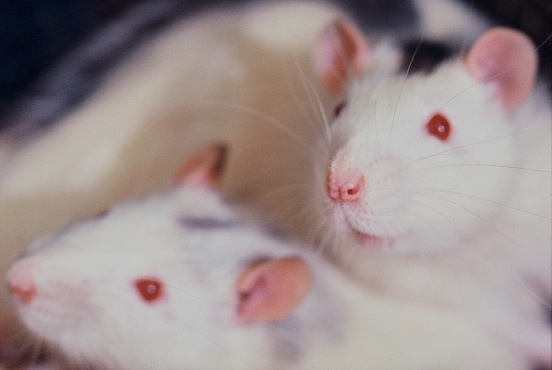
The title comes from an experiment performed by Canadian psychologist Bruce K. Alexander in 1978. He found that by keeping lab rats in isolation and giving them the choice between morphine and water drips, almost all chose the morphine, and many died. However, when the rats were placed in a sort of ‘rat haven’—a ‘rat park,’ as he called it—with open space, activities, and other rats, almost all of them preferred water to morphine. Thus, he concluded that there are numerous factors that cause someone to use hard drugs, and that addiction is not as simple as the drug itself. 

The documentary first peered into the life of Justin Kunzelman, a former drug user in Florida who has started a harm reduction not-for-profit organization called Rebel Recovery. Florida has had an ongoing opioid epidemic for nearly three decades. Before the so-called ‘pain clinics’ were recently shut down, opiates were easily accessible in the state. Now, many who have since become addicted to them have turned to the cheaper alternative: Heroin. With the government’s unsympathetic view of addicts who cannot simply stop using, it is up to organizations like Rebel Recovery to help them through their addiction in the safest environment possible. 

Next, the film covered Vincent Go, a photojournalist in Manila who is actively investigating the killings of drug-users that are being carried out by the controversial president of the Philippines, Rodrigo Duterte. Since his declaration of the war on drugs, over 20,000 people have been killed due to suspicion of drug usage. 

Countries like Portugal, on the other hand, have taken things in the opposite direction. In 2001, Portugal decriminalized possession of all drugs, and according to the documentary, overdose deaths have decreased by 80 per cent since the law went into effect. Tiago Praca, a visual artist from Lisbon who had previously been used heroin and crack cocaine for over 20 years, explained why criminalizing and demonizing drug usage is ineffective in the film. 

“There will always be drugs,” Praca said. “So, if you want to solve […] the problem, you just have to change the attitude.”

Thomas Brown, an assistant professor of psychiatry at McGill, explained that Portugal’s success may cause other countries to follow suit. 

“The data from Portugal are promising, but decriminalization must be accompanied by a concerted, systematic, and an adequately supported bouquet of first, second, and third line preventative mental health strategies,” Brown wrote in an email to The McGill Tribune.

Norman White, a professor in the McGill Department of Psychology, agreed with Brown that decriminalization cannot be the sole solution. 

“It’s pretty clear that the current policy of trying to prohibit all aspects of drug commerce and use is a total failure,” White wrote. “Some kind of harm reduction approach is clearly indicated.” 

Brown supports the idea that drug addiction is a complex concept. 

“Contribution to addiction is multifaceted: Environmental factors including drug accessibility, poverty, early life stress and trauma, [and] social genetics [are all factors],” Brown wrote.

Indeed, Rat Park showcases that putting people—and rats—in an environment where they can thrive socially and experience a high quality of life drastically diminishes their propensity to turn to drugs.

Science & Technology

Science capsule: The first hot air balloon flight

Nov. 21, 2019 marked the 236th anniversary of the first untethered, manned hot air balloon flight. The flight was the result of the work of Joseph and Etienne Montgolfier, brothers from the small town of Vandalon, France. Their father’s lucrative paper company enabled them to fund their scientific endeavours and also provided them with lots of testing materials. The brothers discovered that filling a lightweight paper fabric bag with hot air caused the bag to float, since the heated air becomes lighter than its surrounding air, and the balloon rises. 

For hot air balloons to carry a 1,000-pound object, 65,000 cubic feet of air must be heated, a number equivalent to the weight of 2,560 hot tubs. The brothers, however, were not aware of this, and initially believed that they had found a new gas lighter than air.

Although the Montgolfier brothers’ 1783 hot air balloon flight was one of the first times that humans took to the skies, humanity’s itch to fly was present much earlier. After the invention of the kite in 400 BC China, people unsuccessfully tried to fly like birds by strapping wings to their arms.

The hot air balloon did, however, inspire further exploration into the world of flying. In 1799, George Cayley created a glider for humans to drift above the ground. Later, in 1891, Otto Lilienthal created a more complicated glider that could fly longer distances. With the help of the engine, Orville Wright piloted the ‘Flyer’ plane into the air in North Carolina in 1903. 

All of these flying machines used a mechanism to lift themselves off of the ground. Lift, weight, thrust, and drag are four forces that determine how high and fast a machine will take off into the air. While hot air balloons rise due to a temperature difference between the air in the balloon and that of the surrounding air, a plane is able to take off due to the shape of its wings. Since an airplane’s wings have a curved top shape with a flat bottom, the air is able to glide over the top of the wing faster than the air on the bottom, enabling it to take to the air.

The Montgolfier brothers first displayed their hot air balloon discovery on June 4, 1783 in Annonay, France, when they burned straw and wool to send an unmanned balloon 3,000 feet into the sky. In their second test, they sent a sheep, a rooster, and a duck into the air. At the time, a sheep’s physiology was considered similar to that of a human’s, making it a good non-human test subject. The duck and the rooster were the controls in the experiment, since they were used to flying, although the rooster to a much lesser degree. 

After these animals successfully completed their hot air balloon mission unharmed, the first human passengers took flight, achieving what had previously been considered an impossible task in front of an excited crowd.

“We observed [the balloon] lift off in the most majestic manner,” spectator Benjamin Franklin wrote in his journal. “When it reached around 250 feet [76 metres] in altitude, the intrepid voyagers lowered their hats to salute the spectators. We could not help feeling a certain mixture of awe and admiration.”

The sentiments that Benjamin Franklin expressed when viewing the majestic hot air balloon still hold true for people today. Every August in Montreal, the International Balloon Festival attracts people from all over the world to witness untethered, manned balloons jet off into the sky. The Montgolfier brothers would not be disappointed with the evolution of flight that their invention initiated and the joy that it has brought to generations.  

Arts & Entertainment, Music

‘Back to the House Concert’ is a rousing success

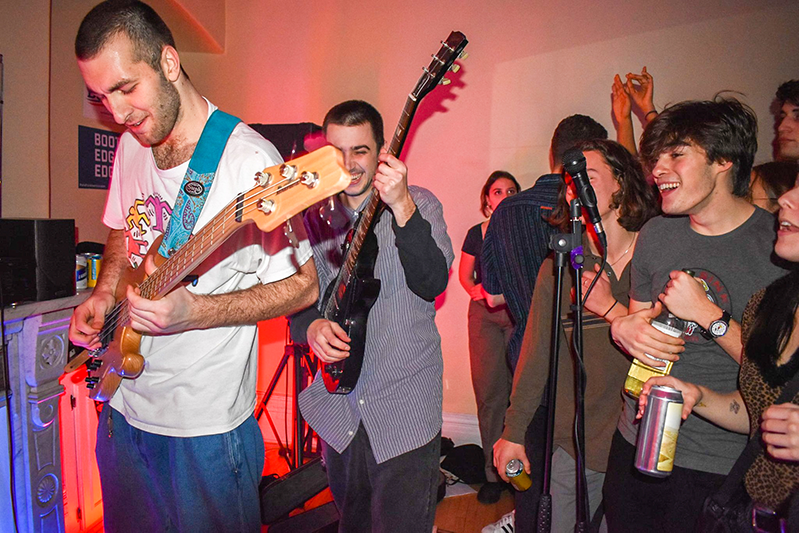
Cramming 100 people inside an apartment kitchen is not easy. It also is not easy to play live rock music on a residential street without getting a noise complaint or two. But the “Back to the House Concert,” which raised funds for the charity Jam for Justice, managed to accomplish both.

The retro-themed house concert featured four artists playing back-to-back:  Enter the Mojo, Parker Konz, Societal Siege, and Alyssa Nazmi. Each act brought something unique to the show, but there was a clear through line: Fun. From the groovy keys and funky guitar riffs of Enter the Mojo to the punk-infused rock of Societal Siege, it was clear that everyone showed up to have a good time.

The night began with the timid ambiance of most house parties, which really get going about an hour or two after the posted start time. With the crowd slowly filtering in, Enter the Mojo probably got a better chance than anyone to show off their sound without crowd-noise. Playing covers of both Childish Gambino’s “Me and Your Mama” and “Redbone,” Enter the Mojo got everyone in the mood to dance, playing with technical skill that most amateur bands would envy.

But as the night went on, it became difficult to make out the specifics of what was happening on stage. From the start of Parker Konz’s set until late in the show, the crowd was so thick that the only way to see the performers was to climb onto the counter or to push to the front of the room. The fact that so many did is a testament to the atmosphere of the show. Instead of being a detriment, the chaos simply added to the setting’s intimate vibe. The concert increasingly became a rowdy and electric experience as the night went on. Parker Konz’s cover of Arcade Fire’s “The Suburbs” seemed a fitting late-decade tribute to one of the most successful indie acts from Montreal, and the crowd’s response proved that it still remains one of Generation Z’s most powerful anthems.

Despite how great each band was, the show really peaked with Societal Siege’s pulsing rock-and-roll set. What had been a present but simmering mosh pit throughout the night exploded into a frenetic boil. The original tunes that Societal Siege played were instantly catchy without being predictable, and they allowed everyone to get in on the energy. Multiple attendees launched themselves onto the crowd for a quick surf, and somehow the front rows stayed far enough away from the band to not interfere with their performance.

A DJ set by Alyssa capped off the night of music, which ended up lasting from 9:30 to well past midnight without feeling too long or stretched out. There were rooms in which to hang out and take a breather away from the music, with samosas and free drink samples for all. These spaces provided a nice touch to an already fantastic event, allowing concertgoers to take comfortable breaks over the course of the long night.

Four great acts entered one house and the crowd did the rest. The result was one of the best student-run indie concerts of the year.

Art, Arts & Entertainment

Knockin’ on heaven’s Fridge Door

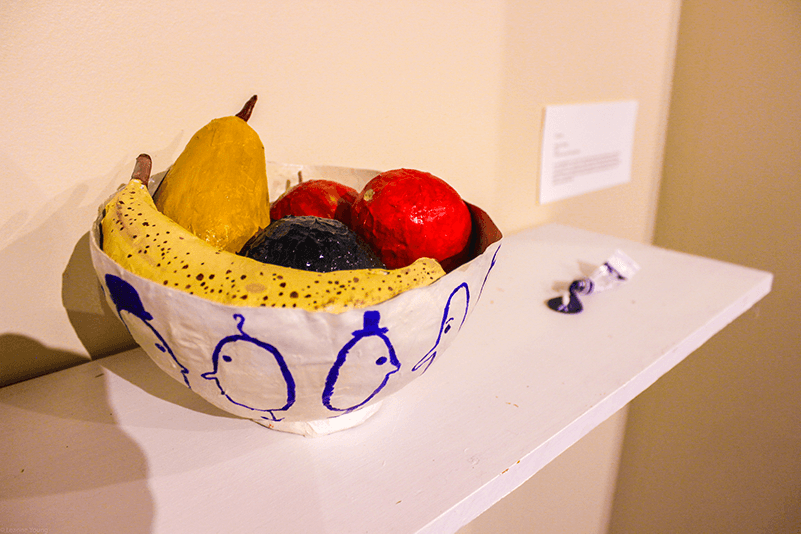
A staple of the student art community on McGill campus, the Fridge Door Gallery (FDG) continuously offers high-quality programming, filling the absence of a formal fine art program. On Nov. 22, the FDG hosted their fall vernissage, In Present Tense, offering free wine, homemade bread, and art to the public. The event attracted a full crowd to the small venue, Espace 8. The FDG hosts two exhibitions each year displaying sculptures, paintings, and mixed media pieces from McGill student artists. In Present Tense was thoughtfully curated with earnest and intimate art, exploring what it means to carry the weight of the past in the present.

The theme for the exhibition was the “historical present,” a phrase often tossed around when discussing contemporary art, but one that is tricky to define. FDG’s curatorial statement describes it as the point when “our present become[s] our past—rational rather than affective.” 

Rather than an exact moment, the historical present tense is a transitional relationship between the present and past that the works attempt to catch. Many of the works feature bodies depicted in relation to time: As we are constantly in the process of ‘growing up,’ our lived experience are often expressed visually or through emotion.

Grace Pooley’s tapestry-sized acrylic paintings exemplify both the decay and fullness of life through paintings of women’s bodies. In a similar sense, Maddy Holton’s mixed media piece, //stain//, shows the material impact of lived reality on the clothes we wear, adorning space and time with the experience of a stain on a shirt. As the curatorial statement reads, “These works consider what it means to be a body in time-mutable, conditioned, and conditioning.”

A standout piece from the exhibition was a photograph entitled New Jacket by Marie Saadeh. Featured on the cover of the exhibition guide, the image encompasses the historical present gracefully in a captured moment of vulnerable transience. The picture depicts an older man trying on a jacket in a thrift store, examining the jacket and his own figure in the mirror. While he inspects the jacket from the side, he turns his head as if he is hesitant to confront the image before him. The jacket represents hope and possibility, a means of self-preservation and self presentation. The framing of the photo adds to the sense of intimacy—an out-of-focus door frame surrounds three sides of the picture, yet viewers get a crystal clear view of the man’s mirror image. The mundane act of buying a new jacket at a thrift store is incorporating a piece of history into your own. New Jacket gives an intimate look into a moment full of vulnerability and possibility.

The artists’ statements were beautifully eloquent, a testament to the fact that many of the student artists are in McGill’s Department of Art History and Communication Studies. Additionally, the inclusion of each artists’ Instagram handle next to the titles reflects the present state of the art world—often, the only way to access a student’s art collection is through online display. While the works in the gallery were presented in a physical form, many of them focused on digital subject matter. Gemma Else’s watercolour selfie series not only demonstrates that selfies are modern-day portraiture, but also comments on how they are displayed. Aidan Hepburn’s still-life window scenes were originally made on digital mediums, seeing it portrayed on a scale larger than a laptop screen allowed its intricate artistry to shine through in a public setting, far away from a private desktop. 

Overall, the vernissage was a delightful evening celebrating the artistic talent and passion of McGill’s student artists. Without a formal fine arts program at McGill, the FDG provides a valuable platform for promoting student creativity in a public setting.

McGill, News

Unsolicited phone call elicits concern from students about patient privacy

Social media posts made by a McGill student about the Student Wellness Hub sparked criticism about the Hub’s accessibility. Charlie Baranski, U3 Arts, tweeted on Nov. 15 about the Hub rescheduling a therapy appointment which he made over 80 days prior. Two hours later, he received an unsolicited phone call from one of the assistant directors of the Wellness Hub who wanted to address his tweet.

Baranski felt that his privacy was breached and expressed his frustration to The McGill Tribune.

“We spoke for about 15 minutes, and he told me [that] he got my number from my record and wanted to address my complaints,” Baranski said. “Obviously that was insane to me. I felt very uncomfortable knowing that my information had been accessed like that and I was thinking if I had been at the same place with my mental health as I was a couple years ago […] that would not have helped my situation to say the least.”

On Nov. 18, Baranski made a post on his Facebook page, suggesting that the Hub’s immediate response to his tweet demonstrated that public image was a higher priority to McGill administrators than student well-being. He discussed his concern for those in more dire mental health circumstances.

“It’s pretty obvious that the system at [McGill] is set up to protect [the] reputation of the Wellness Hub first and the health of students second,” Baranski said. “[This] is completely insane, because there are students at McGill who are more vulnerable than me, who are suffering because of this obsession [with] reputation. If they helped those students, their reputation will get better, because then the Facebook posts and tweets will get a lot better.”

In an email to the Tribune, Executive Director of Student Services Martine Gauthier explained that this issue has been addressed with student representatives, and that phone calls of such nature will not happen again.

“When we hear about students who have had trouble accessing services, we try to find solutions,” Gauthier wrote. “In some cases, we reach out by phone.  In our conversations with student representatives, it’s been made clear that expectations about communication have changed and that we need to stick to the platform on which we’re addressed [….] We deeply regret if we have offended students that found this intrusive.”

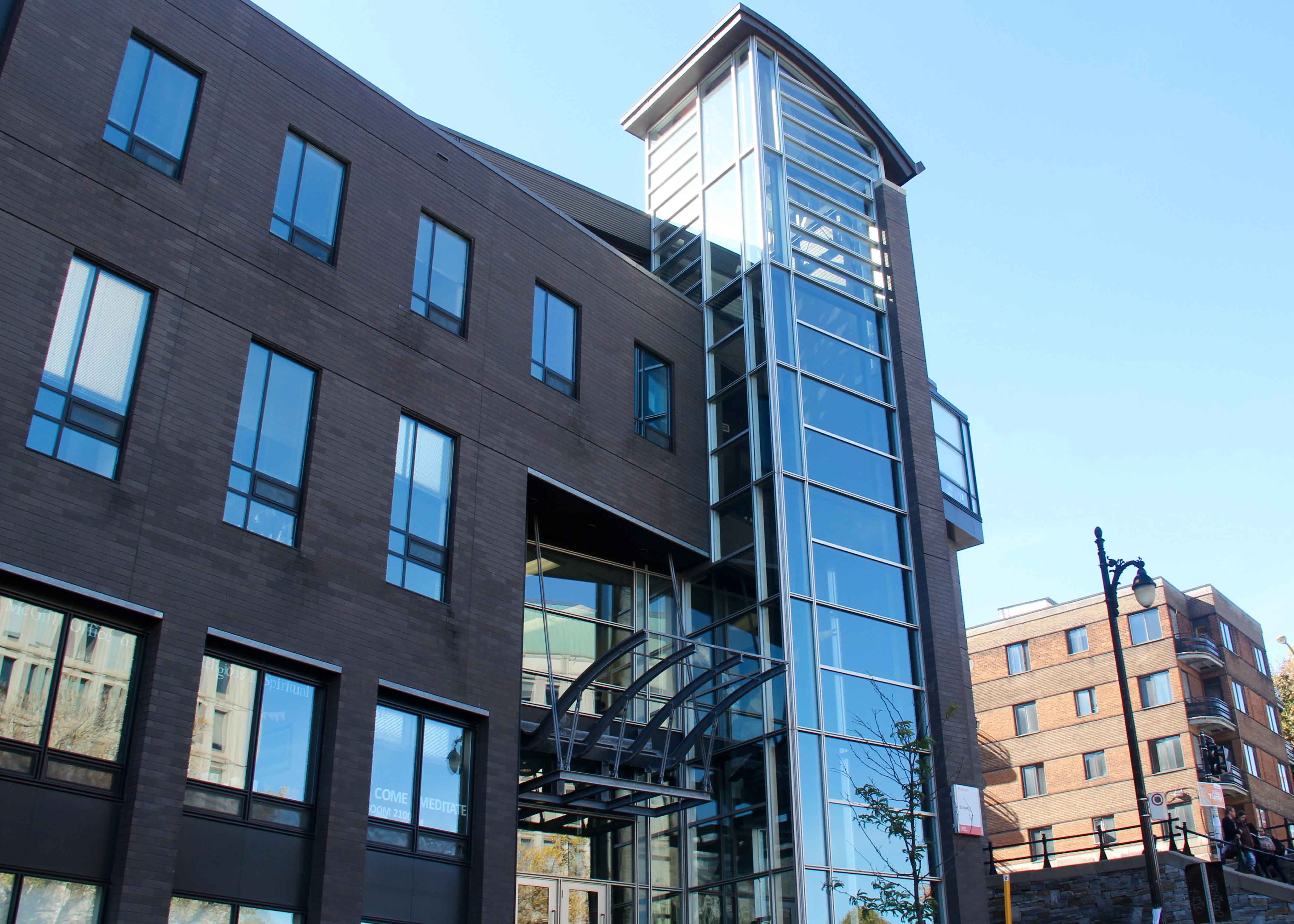
Student dissatisfaction regarding wait times to access services, physical inaccessibility of the building, and the cost of student health plans were highlighted during a protest outside the Brown Student Services Building on Nov. 12. Students’ Society of McGill University (SSMU) Vice-President University Affairs Madeline Wilson emphasized more accessibility barriers that need to be addressed by the Hub.

“[Further barriers include] not having a counsellor dedicated for racialized students, not having a non-cisgender member of the Pride Team, not being able to afford the cost of private or community care they know they’ll be triaged out to, or not even being able to physically access the Brown Building because the button on the automatic door is broken,” Wilson wrote in an email to the Tribune.

Vera Romano, Director of the Student Wellness Hub, maintains that student feedback currently being collected will help the Hub increase its accessibility. Although three psychiatrists, six general practitioners (GP), and three nurses, have been added to the team during the Fall 2019 semester, Romano explained that the structure of Quebec’s healthcare system has limited the recruitment of healthcare professionals.

“The provincial health ministry doesn’t include hours spent with our students in the hours doctors are required to work, so all of our GPs give time above and beyond their already full workload,” Romano wrote in an email to the Tribune. “The average number of drop-ins with GPs has nearly doubled since the beginning of the semester [….] We have increased the average number of pre-booked appointments available by approximately 150 per cent.”

Baranski urges the Hub to use their resources more effectively.

“Get off the phone with me and give students the therapy [that] they need,” Baranski said.

Commentary, Opinion

SSMU Executives are not paid enough

Many McGill students do not seem to hold Students’ Society of McGill University (SSMU) executives in high regard. In fact, one can easily find criticisms of these officials in student publications and on social media. What is more, the majority of students cannot even be bothered to vote in SSMU elections. Faced with these facts, it is only natural to start questioning the validity of a student-funded $30,000 annual salary for these apparently unpopular executives.

As students’ representatives to the McGill administration, however, SSMU executives carry a significant and crucial responsibility, one that comes with its fair share of work and stress. Any decrease of their salary would prove harmful for the health of the university’s student union, and disrespectful of the time and effort they put into their work. Being a SSMU executive is a full-time job, and therefore, it should be compensated as such. 

On Feb. 3, 2016, McGill students voted “no” to a SSMU semesterly fee increase which was designed to, among other things, fund the salaries of SSMU executives. Ben Ger, the SSMU president at the time, lamented the outcome of the vote. According to Ger, his pay does not adequately reflect the sheer volume of work the job requires from him and his fellow executives, who are expected to work a standard 40-hour work week, but routinely work up to 90 hours per week. Juggling class and work, SSMU executives regularly find themselves paid well below the $12.50 Quebec minimum wage. 

Individuals holding official positions in student unions across the country are unequivocally overworked to a damaging extent. Additionally, executives frequently find themselves the recipients of criticism from the student body, which can be equally harmful. In October of last year, then–Vice-President (External Affairs) Marina Cupido resigned due to mental health concerns. Beyond McGill, the  University of Toronto Students’ Union Vice-President External resigned last year over ‘mental trauma’ caused by an allegedly ‘toxic’ work environment. Similarly, the Concordia Student Union has expressed concern about their employees’ psychological well being, and are considering adopting extra measures to address mental health within the union. 

The insufficient salary of SSMU executives also hinders accessibility to students who wish to participate in student governance but do not have the means to do so. Indeed, students at the school pay some of the highest residence fees in the country. Many of them are also experiencing the financial pressure that comes with living alone for the first time. For these students, a mediocre salary, coupled with the stress of long hours, becomes a barrier to participation in student government. 

Despite the crushing pressure of their jobs and the endless tides of complaints directed against them, SSMU executives often prove to be fantastically productive. Annually, The McGill Tribune publishes a review detailing every acting SSMU executive’s achievements during the previous year, and the list is invariably extensive. The first floor of McLennan library is open 24 hours per day thanks to SSMU. Activity Nights and Frosh both exist as results of SSMU initiatives. This isn’t to say that the executives are perfect, a quick scroll through Reddit’s /r/McGill forum will give the reader a detailed description of SSMU’s flaws. But then again, no elected public representative can escape the criticism of those they represent. In a functional democracy, one could argue that it is precisely the elector’s role to keep the elected in check. 

SSMU executives’ low salary is indicative of a larger issue of undervalued labour on campus. Services such as Walksafe, the Sexual Assault Centre of McGill Student Society (SACOMSS), Nightline, and the Peer Support Centre do indispensable work, and are not nearly close to being compensated enough for their emotional labour. Students are forced to choose between extracurricular opportunities and financing their degrees; therefore, these opportunities must become more accessible. 

Listening to McGill students’ persistent criticism of SSMU executives, one might be surprised that they are paid anything at all for their labour. It is important to recognize, however, that these executives are faced with the severely demanding task of overseeing multiple aspects of student life, a responsibility that often comes at the cost of mental and financial stability. The modest annual salary of $30,000 given to SSMU executives is not nearly enough when one considers the significant sacrifices in time and effort they have made in service to McGill students.

Campus Spotlight, Student Life

At home at ECOLE

Throughout the year, McGill and Milton-Parc community members can be found at the ECOLE house, located at 3559 rue University, working to advance social and environmental sustainability through a range of groups and projects. Originally called Alternative University, ECOLE was born out of the 2012 Quebec student movement, wherein students protested tuition increases and advocated for a place outside of McGill to learn, exchange ideas, and create. Today, ECOLE is a hub where students groups related to social or environmental sustainability can host events on their own or in partnership with ECOLE. 

“[ECOLE serves as a] community organizing and collective living bootcamp,” Jesse Grindler, a coordinator at ECOLE, said.

ECOLE receives funding from the Students’ Society of McGill University (SSMU) and works closely with the organization alongside the broader Milton-Parc community. Sarah Mitchell, U4 Agriculture and Environmental Engineering and an ECOLE facilitator, emphasized its importance in working within the community. 

“[ECOLE focuses on] bridging the gap between McGill students and the Milton-Parc community,” Mitchell said.  

The Milton-Parc community has both the greatest concentration of collectives in North America and a history of activism for social change that ECOLE enhances. The first facilitator training revolved around the history of Milton-Parc, beyond being the “McGill Ghetto,” and facilitators learned about the history of citizen’s movements in preventing big industry from moving to the Milton-Parc community. ECOLE supports SSMU’s projects, such as Trash 2 Treasure, which allows Milton-Parc residents to donate their belongings during move-out week and reduces waste in the neighbourhood.

As an ECOLE facilitator, Mitchell is one of 10 upper-year McGill students who live at ECOLE. These students learn, live, and work together, creating an environment where sustainability is ingrained in everyday life. 

 In addition to their household responsibilities, facilitators carry out Applied Student Research (ASR) projects to implement more sustainable practices in the house and in McGill student life. Mitchell describes her life in the house as being energizing, though balancing schoolwork with a separate, nonacademic focus is challenging.

“[Life at ECOLE is] you have school, your club, and your house all in the same place, but your club is like three different clubs,” Mitchell said. 

Two coordinators, including Grindler, support the facilitators and the house as a whole, doing the necessary behind-the-scenes work. A board made up of representatives from all of the different stakeholders in the community also directs the vision of ECOLE. The board consists of an ECOLE facilitator, a SSMU Legislative Councilor, McGill students, McGill staff and faculty members, as well as additional Montreal community members. 

A collective will be launched in January that will allow people living outside ECOLE to get involved in leadership. The collective is just one example of how ECOLE is questioning their previous practices and reorienting for the future.

“[ECOLE is now] in the phase of seeing how it will be sustained [in the] long term,” Mitchell explained. “This means […] maintaining their flow year after year even when facilitators change and maintaining an institutional memory.”

Even the ASR projects are being reshaped to focus on smaller, more incremental changes rather than tackling more daunting issues. For example, Mitchell focused in on bulk shopping for the house and pieced together shopping bags from spare pieces of cloth. Additionally, Mitchell is working on upcycling an old bike to generate electricity.

On Nov. 27, ECOLE’s Annual General Meeting, which Grindler described as an accountability tool for the nonprofit, will take place. The meeting will be open to the public and is a great chance for students to learn about ECOLE and support its future. ECOLE’s biweekly Sunday potlucks and Thursday afternoon coffeehouses, organized with the SSMU Environment Committee, are another chance to get involved.

 Despite its renewed focus on its future, ECOLE still centres on motivated stakeholders coming together to learn from each other and advocate for sustainability.

Out on the Town, Student Life

A fast-paced night showcases slow fashion in Montreal

The McCord Museum’s ‘After Hours: Slow Fashion’ event on Nov. 21 brought together members of Montreal’s fashion community for a night of celebrating sustainable style. The night’s programming focused on promoting creative and eco-friendly clothing and highlighted creative and ethical alternatives to fast fashion, the inexpensive clothing produced by mass-market retailers to capture current fashion trends. The so-called ‘slow fashion movement’ incorporates natural colours, recycled fabrics, and locally sourced fibres as sustainable options in clothing production.  

The evening’s main spectacles were two consecutive fashion shows presented by CÉGEP Marie-Victorin’s School of Fashion. In collaboration with Ardène, the School of Fashion graduates created a line named “Remodeler,” which was on display at the McCord Museum that night. The fashion shows unveiled 20 repurposed fur coats with sustainable consumption and circular creation in mind. The after-hours event also featured pop-up shops that showcased the work of local designers and creatives, all of which incorporated sustainability into their products. 

One vendor on display was Once Again, a local fashion collective that aims to educate consumers about the socioeconomic and environmental impacts of the fashion industry. The brand offers three ethical clothing lines, each with its own unique products and solutions. Their ’Nouveau’ line, displayed during the event, features textiles made of organic, natural, and synthetic fibers coloured with a range of natural dyes. Lawrence Lambert, a co-founder of the eco-friendly studio, highlighted the importance of sustainable and ethical fashion practices.  

“[The] clothing industry is the second-most polluting industry in the world.” Lambert said. “[Designers] should see [sustainability] as a creative opportunity.” 

When asked what motivates the brand’s eco-friendly practices, Lambert mentioned that her design choices are influenced by her passion to make change. 

“[Sustainability] nurtures my inner self [by contributing to] something that’s bigger than me,” Lambert said. 

Eliza Faulkner, a Canadian fashion designer based in Montreal, also displayed some of her latest designs. Her clothing lines incorporate ultra-feminine dresses and bold use of colour. Faulkner always seeks to be more sustainable in the design and manufacturing processes.

“It’s just about making really beautiful clothes that happen to be ethically made,” Faulkner said of her clothing range. “We try to use as many sustainable practices as we can. We manufacture everything in Montreal […] [and] buy a lot of deadstock fabric [and] natural fibres.” 

Another unique vendor featured was the up-and-coming resale app Upcycli. This start up, co-founded by Elodie Lourimi and Christopher Montoya, is the first mobile app in Quebec dedicated entirely to the purchase, sale, and “upcycling” of second-hand clothing. Upcycling fashion involves using pre-existing clothing, accessories or other items and transforming them into new garments.

“We launched the app because we want to help people buy [fewer new] clothes,” Christopher Montoya, one of Upcycli’s co-founders, said. “We want to reduce [fast fashion] [and], we want to give a second life to our clothes.

Although Upcycli only operates in Quebec for now, Montaya assured that they hope to expand into other provinces across Canada. 

The vendor pop-ups were joined by numerous workshops centred on eco-friendly practices, including stations dedicated to paper-making with recycled fabrics and linen paper spinning. One workshop was led by Mariane Laforest, founder of textile studio Atelier 1n, which offers workshops and creative classes to those interested in learning about natural dyeing and textile design. 

“Natural dye[s] are better for the environment because there [are] no chemical products [left] in the water after,” Laforest said.  

However, this natural dyeing process can also have negative environmental repercussions. 

“Natural dye can also be a problem for the environment because you need to use a lot of water with natural dye” Laforest said.

This unique event was successful in promoting sustainability as an ethical and creative opportunity for designers, as well as inspiring people to search for eco-friendly options when making style choices.  

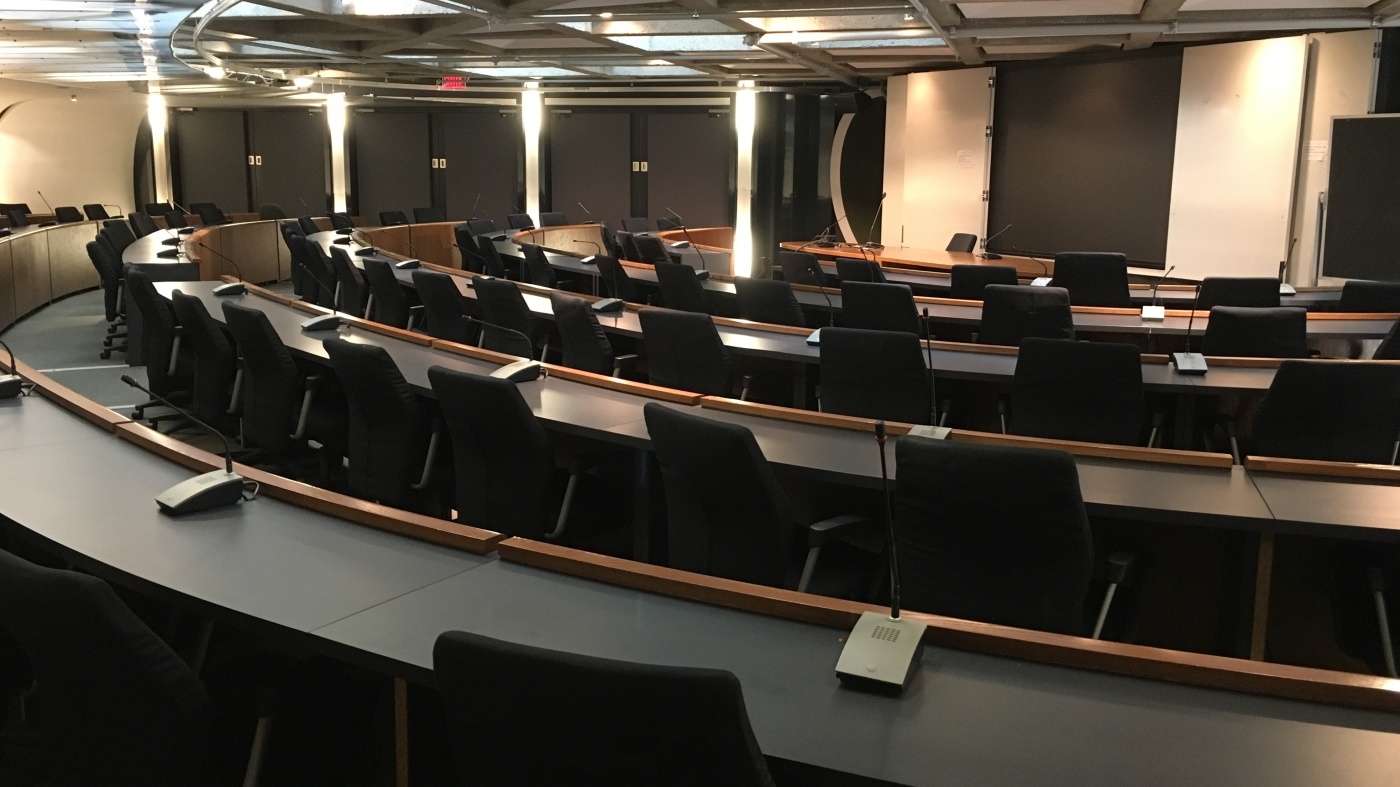
Photo of senate room
McGill, News

Senate discusses free speech and naming policies

McGill’s Senate convened for the third time this academic year on Nov. 20 to discuss the lack of policies in place for screening external organizations that use McGill facilities, the naming of university assets, and the future of international diversity on campus.  

Students’ Society of McGill University (SSMU) Vice-President (VP) University Affairs Madeline Wilson confronted Provost and Vice-Principal (Academic) Christopher Manfredi about the university’s attitude towards external organizations being permitted to utilize McGill facilities. McGill currently has no official policy to screen organizations seeking to use university venues. Wilson expressed concern that members of the community may feel offended or denigrated by the presence of certain organizations or individuals on campus.

In response to a question by Wilson, Manfredi defended the right for free speech, even when it may offend certain students.

“McGill’s recognition of the rights of individuals and groups to express views that may be perceived by some as [harmful] or offensive does not derogate from its overarching commitment to equity, diversity, and inclusion on our campus,” Manfredi said. “It would be very dangerous for the university to try to implement a policy that put prior restraint on freedom of expression, academic freedom, and the very purpose of the university.” 

The Senate also discussed the future of international diversity at McGill. Senators expressed concerns about a lack of funding for international research projects and the need to further promote McGill globally. Arts Senator Henrique Mecabô addressed the recent increase in international student tuition, which have posed a financial challenge for some students, and questioned how the university plans to attract top international talent given the additional financial barriers. The administration responded that they are trying the best they can to ensure accessibility for international students despite recent cuts in government funding.

Vice-Principal of University Advancement Marc Weinstein concluded the meeting by presenting proposed revisions to the university’s policy for the naming of assets, including buildings, and scholarships. The urgency for a revised policy was heightened by the launch of the “Made by McGill” campaign, creating the expectation of many large donations, each with a naming opportunity.  The new policy clearly outlines the protocol for naming assets and is based on the policies of other North American academic institutions. Senators were concerned that naming assets after individuals with poor reputations would reflect badly on the university.

“We use due diligence when naming assets […] to make sure that the individual has a ‘clean bill of health,’ if I can put it that way,” Weinstein said.

Soundbite: 

“I think that the reason why, at this university, we keep asking this question about international tuition is because, at least in my perspective as a student and speaking for myself, I felt that the administration is a bit tone-deaf when talking about this. All we hear is McGill is getting more money but there is never really a recognition of the fact that it is costing students more money.” Senator Madeline Wilson, SSMU VP University Affairs

Flashback: 

Principal Vice-Chancellor Suzanne Fortier stated that the university has reached out to all 22 McGill students currently on exchange in Hong Kong and ensured that they are safe amit widespread political unrest in the area. Some students have decided to stay in Hong Kong, while others are returning to Montreal. Fortier also assured that McGill is maintaining regular contact with their host institutions.

McGill, News

A conversation about sexual violence against Indigenous peoples

As a part of Quebec Public Interest Research Group’s (QPIRG) Culture Shock 2019, the Sexual Assault Center of the McGill Students’ Society (SACOMSS) collaborated with the group to host a panel discussion on Nov. 23 about the National Inquiry into Missing and Murdered Indigenous Women and Girls (MMIWG). The activists also discussed the intersection between anti-colonialism and sexual violence against Indigenous communities. 

Palm Springs Cahuilla educator Isabel Vasquez explained that her path to educating the public about issues facing Indigenous peoples began after her and her family personally experienced sexual violence and abduction. She also explained how invisibility perpetuates the violence that many Indigenous peoples face in North America.

“In my family in particular, [in] every generation there’s been somebody [who has] gone missing, or had an attempt on their life, or [had] been [human] trafficked,” Vasquez said. “One of the greatest contributing factors to the rates of violence against Indigenous people is the way that we are left out of society’s collective consciousness in colonial countries.”

Judy Sackaney, a Mushkegowuk Cree from Albany First Nation on Treaty 9 territory, stated that the stigma around sexual violence and alcoholism persists in Indigenous communities. 

“I didn’t learn the history, or hear people’s stories, [until] I was much older,” Sackaney said. “[I didn’t hear] about sexual violence [that occurred to people] close to me [….] I didn’t know then, maybe because I was a kid then myself.”

Sackney emphasized the importance of finding spiritual ways to heal from the trauma of sexual violence. 

“We don’t let it define us, because it wasn’t our fault,” Sackney said.  “It wasn’t anybody’s fault. [….] We use our tools, our ceremonies, our ways of healing, even praying [to cope]. I’ve grown so much spiritually [from] learning the ceremonies.”

Vasquez acknowledged that the traumatic nature of these experiences, and their ongoing connections to settler-colonialism, make them difficult to share when educating the public about  Indigenous peoples’ experiences. 

“It is very hard to share these very personal stories and perspectives,” Vasquez said. “When we’re talking about history and consistent instances of abduction, sexual abuse, [and the] trafficking of Indigenous people, we’re talking about something that isn’t just random [….] This is a history that is deliberate.”

Vasquez explained that non-Indigenous people have a responsibility to act as allies by raising awareness within their own communities.

“People who are non-Indigenous […] need to talk to each other about how they perceive Indigenous people,” Vasquez said. “When you hear these [misconceptions], I want you to think about why this is the reality that we are all accepting [….] This isn’t just our work to do.”

During the question period at the end of the panel, an audience member addressed that The Final Report of the National Inquiry into Missing and Murdered Indigenous Women and Girls did not acknowledge many incidences of police violence against Indigenous peoples. Panelist Dayna Danger, a visual artist, organizer, and drummer, responded that, for Indigenous communities, relationships with police remain fraught.

“As much as we want to say ‘fuck the police,’ […] there is work that needs to be done because we still have to address these systems,” Danger said. “We’re still in this society. We can’t really escape that at the moment. People are still earnestly trying to find their family members, but unfortunately, the response [from the police] has not been great.”

Touching upon Indigenous attitudes toward the Montreal police specifically, Danger commented that Indigenous people often have to do the work of law enforcement themselves. 

“I think that there is good work that is happening,” Danger said. “But I’d be [hard] pressed to find an Indigenous person who really waits for the police to catch up [with Indigenous community organizing] at this point. This is still work that needs to be done.”

The panel concluded with Danger leading the audience in the ‘Strong Woman,’ a traditional song that many Indigenous communities have used to raise awareness about missing and murdered Indigenous women, which has modified lyrics for each community. A fourth panellist, Kiki Harper, an Indigenous two-spirit person who creates music, joined in the performance.

Read the latest issue

Read the latest issue