

Latest News

Ask Ainsley, Student Life

Anxious about the return to in-person learning

Hi Ainsley,

With September approaching, I am feeling anxious about returning to in-person learning. I am starting my second year at McGill after finishing the first one entirely online, and I have not had the chance to connect with a lot of people in my program. I feel a little lost socially.

What should I do?

Sincerely,

Intimidated by Return to Live Learning (IRL)

Dear IRL,

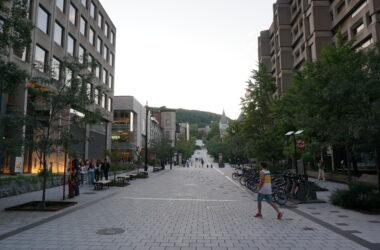
Thank you for your question. Your feelings are totally valid; this past year and a half has forced a new reality onto students, and many have found adjusting to online learning to be a challenge. Now, students are expected to come back to campus, interact with classmates in person, and generally embrace pre-pandemic activities. That can be overwhelming and scary, especially for those who have gotten used to studying from home with limited social interaction. Remote learning can be particularly frustrating for second-year students, who may be familiar with their program, but not necessarily with the McGill campus and its student life. 

The first thing you can do is acknowledge your feelings and accept them. It is okay if you are feeling this way, not just because others probably are as well, but because letting yourself feel is so much healthier than repressing your emotions. If the anxiety is overwhelming you, try to reach out to family or friends who you feel would understand what you are going through. If they are unable to provide the advice, support, or reassurance you need, consider discussing your situation with a counsellor from the keep.meSAFE support program or the Student Wellness Hub. The keep.meSAFE counsellors are available 24/7 and covered by your student fees—you can reach them at 1-844-451-9700 within Canada and at 1-416-380-6578 internationally. 

If you are looking to connect with people from your program, your faculty or cohort may have a Facebook group through which you can interact with classmates. If you prefer to stay away from social media sites, McGill offers events and workshops through the  MyInvolvement portal. If you are a graduate student, consider attending the Grad Breakfast Club event offered on Mondays at 10:30 a.m., where graduate students discuss their week ahead. If you are an undergraduate student, check out the bimonthly Pandemic Drop-in Support event at 10:00 a.m. on Tuesdays. 

While club activity at McGill is more limited during the summer, you can check out the list of clubs on the SSMU website and email those you are interested in joining. Once September arrives, make sure to attend Activities Night, a biannual SSMU event that showcases all the ways to get involved in student life at McGill. In addition, you may find comfort within your program’s student association. For example, if you are an Engineering student, you can attend the events hosted by the Engineering Student Society, where you are guaranteed to meet people from your program. Eventually, you may even elect to run for an executive position and hold a leadership role.

These recommendations may not entirely remove your anxiety or your feeling of being lost socially, but they might ease you back into in-person learning and help you connect with other McGill students with similar emotions. With everyone having been distanced for so long, I am confident that the student life at McGill will return with renewed vibrancy. A positive outlook will be your best ally right now. 

Take care,

Ainsley
Student Life

Adventures from my balcony

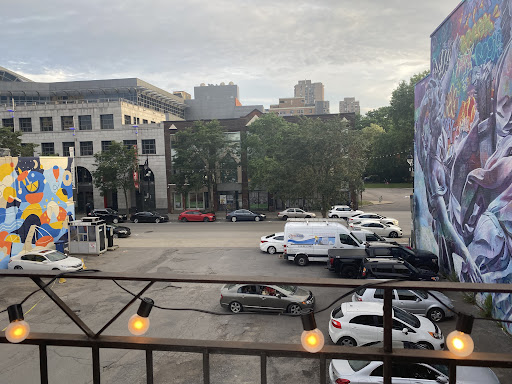
I have been spending a lot of time on my balcony this summer. It overlooks a parking lot that spills onto St-Laurent Boulevard, and at night, the bulbs spanning the street fill the whole place with light. I am learning that there is a lot you can do from your balcony; this small space provides an escape from an often claustrophobic interior life. 

Impulsive decorating

I am a restless person by nature, a fact that the pandemic has confirmed for me. Attempting to channel this restlessness into productivity has led to what I have called “impulsive decorating.” With the help of McGill’s Free and for Sale, I furnished my balcony with a small IKEA table and stools. A plant from the corner store sits on the table, and Edison lights illuminate the railing. 

Murals

I am fortunate to look out onto a parking lot with no less than five bright murals, one of which is, in my opinion, the best mural in the city. The piece, commissioned for the Montreal Mural Fest, is by the artist duo PichiAvo, and represents the goddess Artemis and features two ethereal figures overlaid with graffiti-like designs. Another notable mural is Ron English’s “Popagandaa,” a portrait that resembles the Mona Lisa with a skeleton smile. An underrated form of visual excitement, these murals are a much-needed retreat into a world of art separate from the endless days stuck indoors.

People-watching

At times, I enjoy watching people photographing the murals more than the murals themselves. Tours visit the space several times daily, and groups of 20 people disperse across the parking lot to photograph the murals. It is funny how living in front of a tourist destination makes you feel surprised that other people would want to visit it.

The murals also provide the perfect location for Instagram photos. Bo Burnham aptly said that the physical world is a performance space for the real world of social media, and watching 10 different people snap photos in front of the murals every day seems like the perfect proof. I once witnessed a girl arriving in a yellow dress to contrast the blue of the underwater-themed mural behind her. She stayed for an hour to snap the same photo over and over again. My roommate told me about another woman who posed with her lips puckered, pretending to kiss the whale in the mural. 

The Waving Game

Recently, I have taken to sitting on the balcony with my roommates with a few drinks in hand to wave at passers-by. The number of people that walk through the parking lot on their way to St-Laurent Boulevard is significant, and they always seem to look up at our little balcony. Their distance from us makes them feel bold enough to stare longer than they should, but I feel powerful looking down at them, and I wonder if it is us or them on display.

We have transformed this exercise into a competition: Whoever waves at the most people wins. This juvenile activity has led to some surprisingly wholesome encounters. Most strangers do not expect you to wave at them and are quite delighted when we do so. One man, who had his hands full with a giant cooler, waved it frantically in the air, then transferred it to his shoulder and flashed us a thumbs up. Another did not stop waving until he was out of sight.

Like many things, the balcony is not without its flaws. Sometimes it soaks up too much sun, burning my skin and making me think I should get an umbrella—perhaps the next step in the decorating process. More often, however, when the wind is blowing just enough and the sun is setting, it is the perfect place to be—a small space turned into a large pleasure.

Student Life

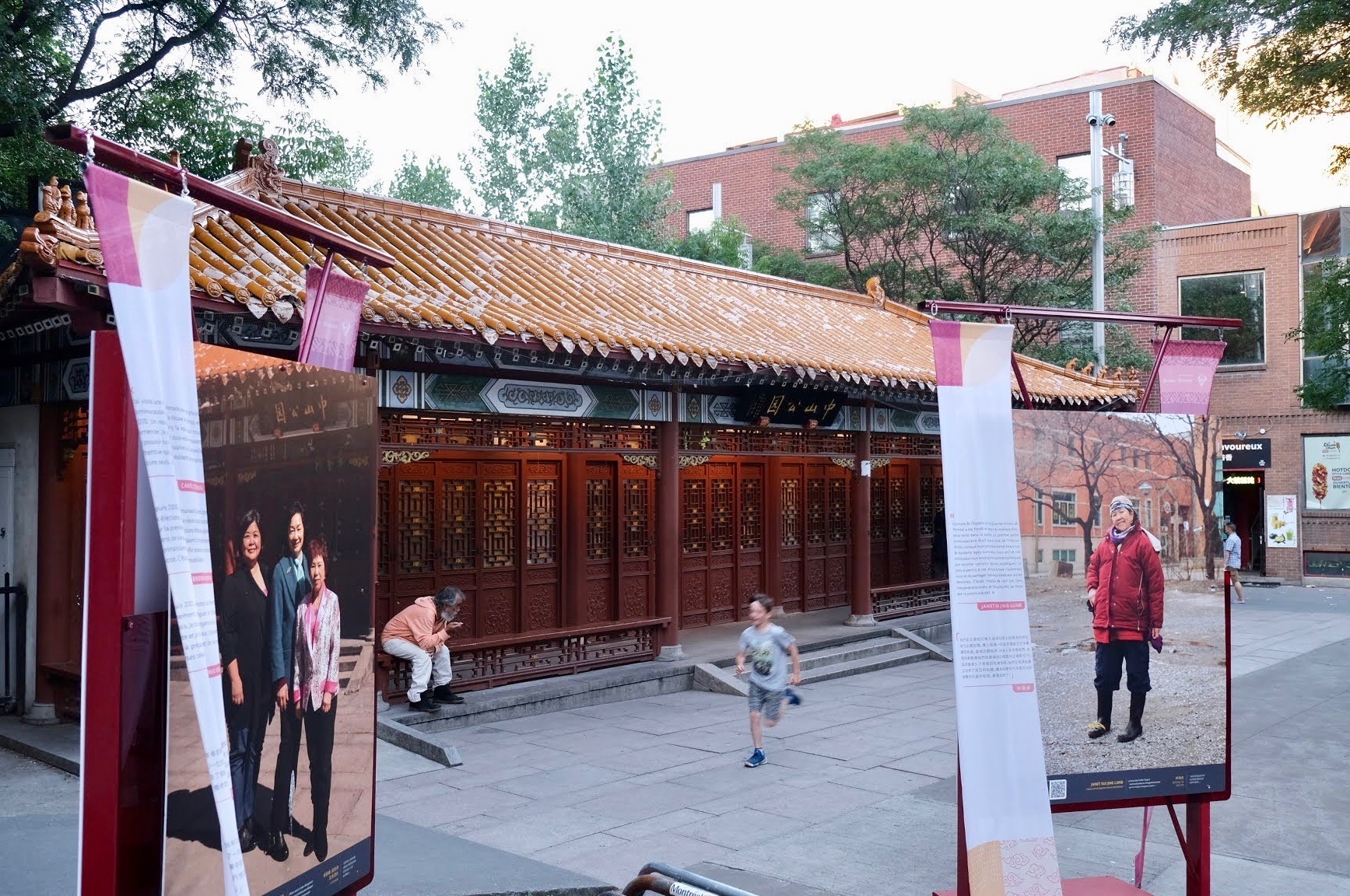
Centering the faces and stories of Chinatown’s residents

On May 26, Rue de la Gauchetière, the main street of Montreal’s Chinatown, welcomed Dialogue with the Sino-Montreal Community,” a photo exhibition showcasing the diverse faces and experiences of its residents. Presented in partnership with the Centre des mémoires montréalaises and the Chinese Family Service of Greater Montreal, the project was initiated in a context of continuing gentrification and displacement of the Chinatown populace. Through photo modules accompanied by personal voices, the featured individuals present the often obscured cultural heritage of a storied, resilient community.

Montreal Chinatown’s 200 years of history has been repeatedly ignored by plans of large-scale real estate developments. With extensive infrastructure projects starting to invade in the 1970s, the district lacks architectural protection and has lost crucial sites of community and culture. Most recently, in January 2021, the city of Montreal approved developers’ request to acquire multiple of the most historical buildings in the neighbourhood. Parker Mah, artistic director and curator of the exhibition, sees the sanctioning of such encroachments as a neglect of Chinatown’s historical and cultural significance.  

“The fact that [large-scale developments] have continued to get licensed despite all our best efforts to engage the city through the consultation process bears witness to the apathy of municipal and provincial government [toward] the tangible and intangible cultural heritage of Chinatown in Montreal,” Mah said in an interview with The McGill Tribune. 

Alongside underscoring Chinatown’s architectural history, the project reveals the intangible cultural heritage rooted in the daily lives and memories of its residents. While community leaders—often Chinatown’s spokespeople in the media—perform crucial work to protect the neighbourhood, the exhibition team sought to make visible residents whose persistent service to the neighbourhood is obscured both in the community and public eye. 

“We wanted to find people who come to work everyday, and run a restaurant or work as a cashier,” Mah said. “They are contributing just as much, in my mind, as [Chinatown’s] VIPs. Their sweat and blood is keeping Chinatown running through this difficult pandemic period.” 

Community members featured in the exhibit, such as the owners of Chow Patisserie, one of the last places in Montreal that offered pastries hand-crafted with traditional Guangzhou techniques, or Timothy Chan, a long-time member and de facto historian of the community, bespeak the traditions and inherited expressions of culture facing erasure.

Due to language barriers, residents often face difficulty inputting their opinions in the decision-making process of Chinatown’s development. In order to meet community needs, Jerry Lan, McGill BCL ‘23 and volunteer translator with the Chinatown working group, believes there should be a greater integration of resident voices in conversations about Chinatown’s future. 

“The city wants people who speak French [but] it’s hard for some of the folks who are actually in Chinatown, active in the community. ” Lan said in an interview with the Tribune. “[The language barrier] can create a dissonance in the conversation with what the community actually wants.” 

The exhibition’s large photo modules, prominent along Chinatown’s busiest street, are a rare public commemoration of Chinese identity for the neighbourhood. While wedged between the heavily saturated cultural sites of Old Montreal and Quartier des Spectacles, Chinatown itself receives few forms of cultural investment. Mah described how the exhibition creates a sense of pride among community members who may, in differing ways, identify and celebrate themselves with the displayed stories. 

“It’s pride for them,” Mah said. “Not just for the people in the exhibition but for the people who live in the area to see that something’s being done, that your face and people are being put forward and recognized.”

The exhibition’s guided tours, offered on several dates between June 16 and 27, aim to share and spur discussions with the public on Chinatown’s histories. Led by youth volunteers, the tours allow younger generations to continue preserving Chinatown’s culture and heritage. 

“[The tour animators] are not experts in Chinatown’s history, but are there to engage in dialogue with visitors about their experiences as young people growing up in Chinatown,” Mah said. “It’s really about opening up conversation.” 

The exhibition will be on display until October 15, 2021.

Arts & Entertainment, Dance, Theatre

Japanese urban dance film ‘Dreams on Fire’ sets Fantasia Festival ablaze

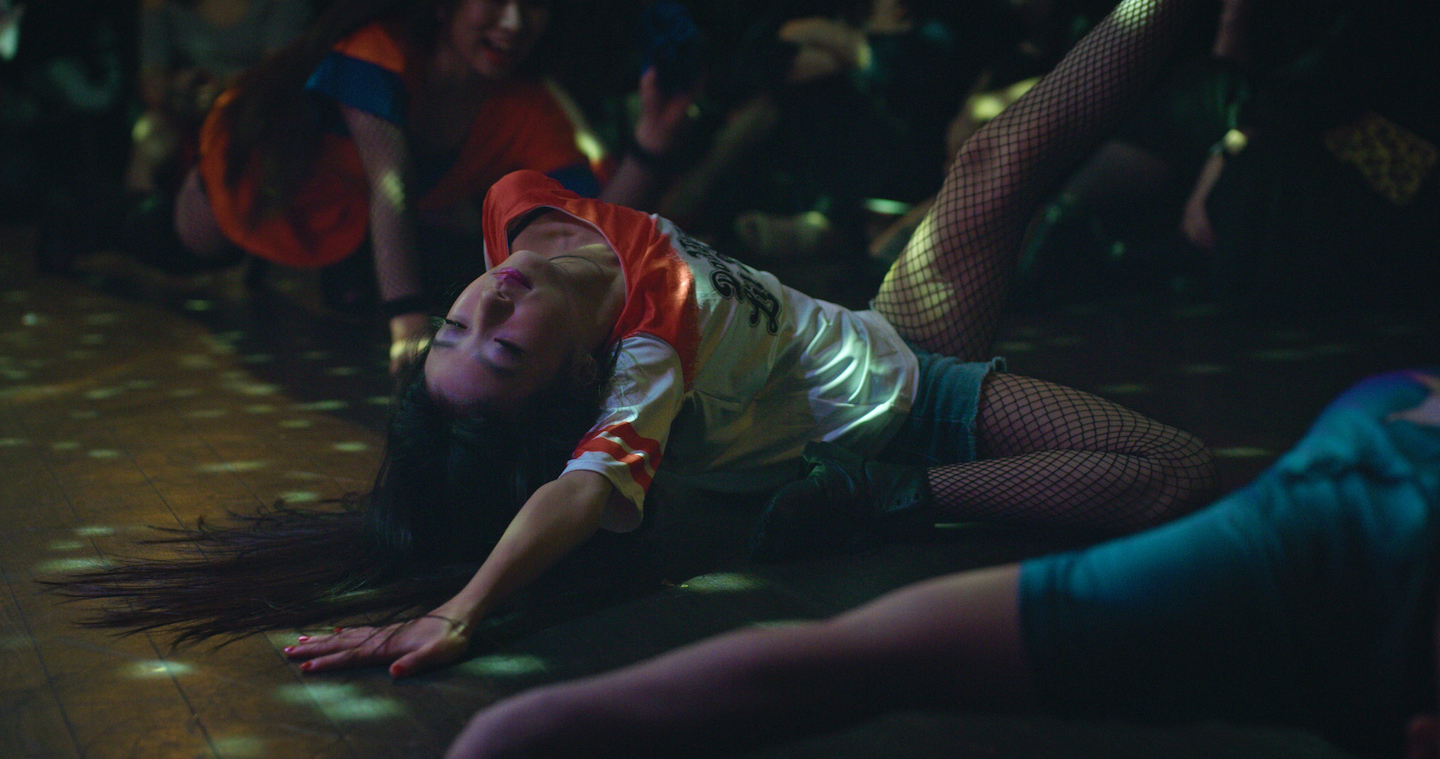
On Aug. 8, Dreams on Fire made its North American debut at the 25th edition of the Fantasia International Film Festival. Written, directed, and produced by Montreal-born filmmaker Philippe McKie, the film follows Yume’s (Bambi Naka) pursuit of fame as she moves to Tokyo to become a dancer. There, she grapples with the crushing disappointment of failure, the relentlessness of the hustle, and eventually, the euphoria of making it in the big city.

The screening took place at the Cinema du Musée, in the Musée des Beaux-Arts de Montréal, to a sold-out audience packed with Fantasia newbies and veterans alike. The energy of the crowd was unlike the rowdiness of festivals past; instead, there was a sense of reverent appreciation for the event’s return to in-person showings.

From its very first frame, Dreams on Fire establishes dance as its lifeblood—and also as Yume’s sole focus in life. Haunted by the family she left behind in the countryside, she launches herself into the gritty, electrifying world of urban dance, taking lessons when she can and working a string of exploitative jobs to support herself. Although Yume’s performances are stunning, the audience quickly realizes that she is but a tiny fish in a massive pond—her competitors are  at the top of their game. Their skills aren’t just for show, either; McKie insisted on only casting professional dancers for dance roles in the film. 

“Picking actors versus picking dancers, there is a gamble either way,” McKie said in an interview with The McGill Tribune. “My gamble is, can they act? I am gambling on a lot, but at least the dance is going to be sick. This is the first-ever Japanese urban dance film, so nothing else matters.”

Yume delves into many different underground scenes in Tokyo, as she finds work at a hostess club and a BDSM-themed bar, visits drag shows, and tries to land a gig as a go-go dancer. The young performer faces exploitative bosses, predatory customers, and poverty. Her misfortune would feel relentless if it were not for the acts of kindness carried out by the women in the film. Dreams on Fire does not waste time on romantic subplots: Instead, it foregrounds female friendships. Yume’s bond with seamstress Chocho (Medusa Lee) reminds viewers that in the cut-throat Tokyo underground, knowing the right people is a survival mechanism in itself. 

“It was important to me that there would not be romance,” McKie said. “I’m tired of being force-fed those narratives in film. When you are hustling, sometimes there is no time for anything else. [There is] survival, and then the dream.”

As the camera follows Yume’s claustrophobic journey through Tokyo’s crowded streets and the tiny net cafe she lives in, the audience longs for her to spread her wings. Although viewers are treated to Yume’s spellbinding dance performances, recognition seems to escape her at every audition and competition. 

The film is achingly effective at portraying the pain of rejection. However, McKie prefers the term “failing forward” to describe Yume’s story: At every misstep or letdown, she forms a connection that leads her to another opportunity. 

“A lot of what the character goes through mirrors my own experiences,” McKie said, laughing. “The way that she does not let herself get destroyed, and keeps going, is kind of like my philosophy on life. In cinema, especially coming out of Hollywood, there are so many stories where there is one big challenge and the next time you win, but I don’t think that is representative of reality.”

McKie, who attended film school at Concordia but moved to Japan to embark on this ten-year-long project, hopes to expose Quebecers to the dynamism of Japanese cinema and to strike a balance between intrigue and authenticity. With Dreams on Fire, audiences cannot help but be captivated. 

The film will be streaming on the Fantasia Festival website until August 25. 

Arts & Entertainment, Dance, Theatre

Festival TransAmériques 2021 reveals the human condition through performance

Founded in 1985 by Marie-Hélène Falcon and Jacques Vézina, the Festival TransAmériques (FTA) is an annual contemporary dance and theatre festival that brings artists from across the globe to Montreal to kick off the summer season. 

This year, dance and performance artists dusted off their costumes and laced up their pointe shoes for 26 performances that ran live from May 26 through June 12 at the Place des Arts. Ranging in artistic format and content, the performances explored the complexities of the human experience through dance, speech, and theatre. 

La Romance est pas morte by 2Fik!

La Romance est pas morte, 2Fik! or Romance ain’t dead, 2Fik!, followed the performance artist 2Fik’s examination of the absurdity and danger of online dating apps. Set in a colosseum-like structure lined with cardboard cutouts of countless fictional dating profiles, 2Fik chameleonically transformed himself into each one of them. Embodying each of the 100 characters he created for the project, 2Fik invited viewers to visit a fake dating website—romanceala2fik.com—to chat with his character while on the stage.

The set was a shuttered three-room faux-apartment: a bathroom, a kitchen, and a bedroom sat in the centre of the stage. Three screen panels hung on the audience-facing walls and linked to the fake dating website. The leftmost panel displayed a “hot-or-not” rating of the most upvoted characters on the app. The rightmost panel played a live-time list of all of the anonymous texts the audience sent him, while the central panel displayed the character 2Fik was playing. 

Whether straightening a wig or throwing on a leather jacket, 2Fik transformed into his characters, running the gamut of age, sexuality, gender, class, religion, and nationality. In a Deveare-like fashion, 2Fik demonstrated not only his own talent, but also his fluidity of these identities—and perhaps the triviality of such labels. Breathing life and nuance into each of his characters, 2Fik’s digital caricatures revealed the hypocrisy of dating-app users: A boomer trucker posts a picture of himself at a strip bar while his bio condemns the younger generation’s obscenity; a tech bro in his late 20s frequently quotes his mom; a recent divorcée of 40 features five of the same unflattering selfies on her profile. The performance ultimately revealed the falsity of digital personhood, the nonchalance with which we flatten human beings into sentences and photos, and the cruelty therein—fundamentally, the farce of online dating.

Stations by Louise Lecavalier

In Stations, Louise Lecavalier’s first solo dance performance, the music takes the reins. Opening in total darkness, the show began with a low rumble that eventually gave way to four rods of light on the corners of the stage. These created a metaphorical boxing ring in which Lecavalier danced at the mercy of the melody.

Moving through different parts of the performance, Lecavalier engaged in a ritualistic trance; when the music beat with an intense electronic throb, her body shook, her arms bobbing like a raggedy pierrot. When the rhythmical pulse of the electronica became a frenetic fast jazz, Lecavalier swung around erratically; her legs kicked and tugged one way, her arms jerked her another, her head wrenched upwards, downwards. When a slow ballad crooned, she moved as if through molasses, her head bent backwards while her arms crawled out from under it. In the end, a beam of white and the red-orange light singled out Lecavalier, who buried herself to the ground, crouching down, into a final, sweet beat of silence. 

Ultimately, the performance was able to communicate the universal human truth of instinctual, animal-like intelligence, and showed that what cannot be said through words, can often be said through movement. One could sense that the artist had gained control over the music, rather than vice versa. It seems, in the end, that she had won.


Album Reviews, Arts & Entertainment, Music

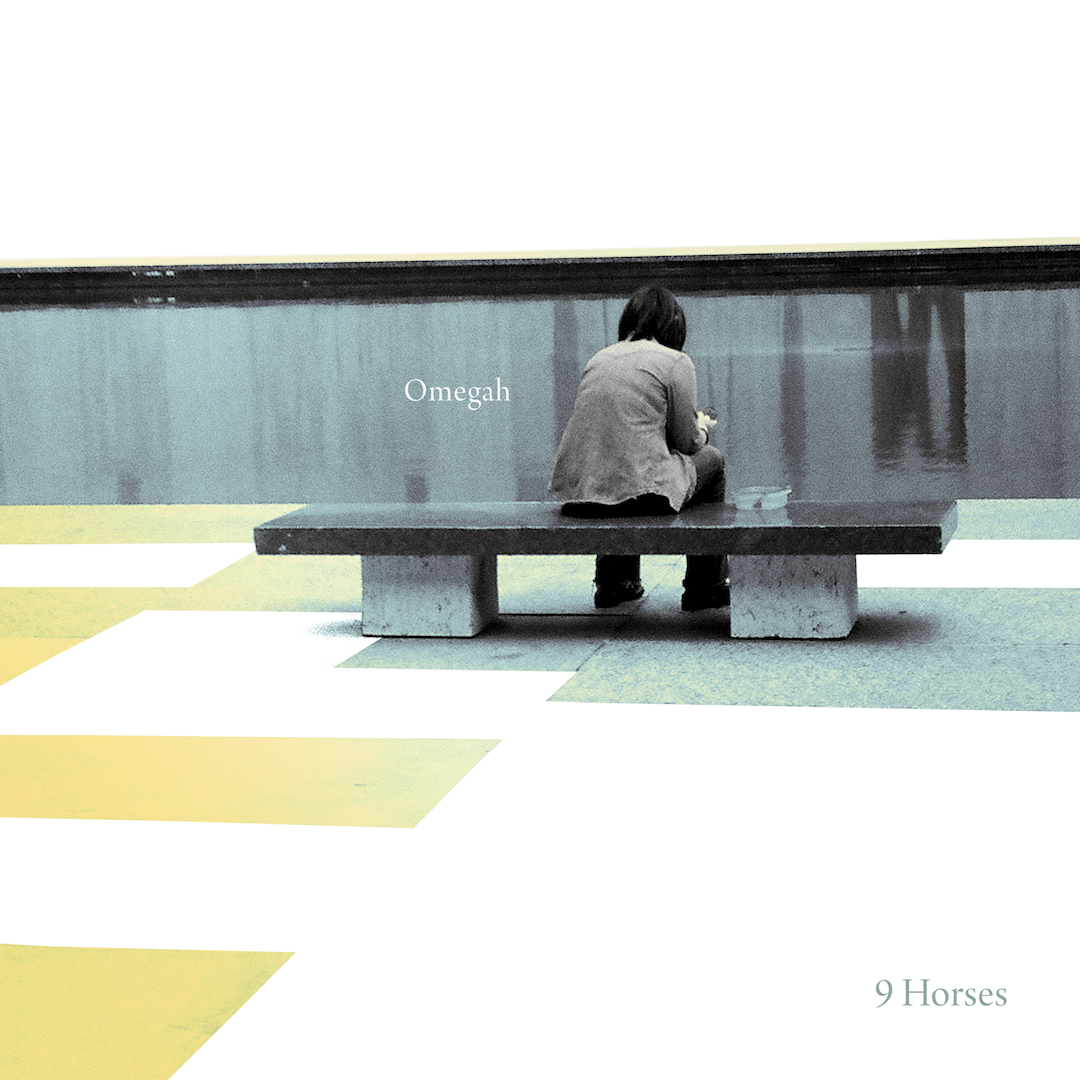
Evolution and 9 Horses’ ‘Omegah’

The genre-bending music of New York City’s chamber jazz trio 9 Horses proves that just three instruments are capable of creating anything from prog rock to folk music, with sounds both melodic and jarring. At least, it does for composer and mandolin player Joseph Brent, violinist Sara Caswell, and bassist Andrew Ryan. On Aug. 6, the group released their fourth project, a nine-track album titled Omegah—their first release as an independent music group under their newly founded label, Adhyâropa Records

Omegah embodies 9 Horses’ musical evolution, as they worked with heavier musical production and featured other instrumentalists than in past projects, diversifying and expanding their sound. This change is paramount in the album’s fifth track, “Max Richter’s Dreams,” which features rich vocal layering over an equally gorgeous violin melody. In an interview with The McGill Tribune, Ryan, who will be starting his master’s degree in sound recording at McGill’s Schulich School of Music this fall, detailed the magic behind the album’s creation.

“The record has grown out of just three core members into something that is really collaborative, [and] also uses elements that go beyond the traditional aspects of performance,” Ryan said. “Not only do we have people playing drums and playing piano, but then we have producers who will manipulate the sounds that are being made by those acoustic instruments to change the flavour.”

Such artistic development was not without setbacks, however: While the trio had begun recording Omegah in music studios before the COVID-19 pandemic, they had to switch from recording the album from their home in March 2020. 

“There are definite hurdles that get in place when you start recording from home because part of recording is creating a sonic environment for all of the instruments to live and interact [in],” Ryan said. “In studios, usually, that is quite easy to do because at least a couple of you are in the same room, and the engineers are priming every microphone to give off this consistency of sound.”  

Additionally, Omegah is the band’s first release as an independent label under their own record company, Adhyâropa Records. Responsibilities such as contracting promotional agents and scheduling performances were up to the band. Fortunately, because of Ryan and the band’s experiences as freelance musicians in New York City, they were confident they would thrive without guidance or assistance from a label. 

“Going with more of an independent release, […] you are on the hook for more,” Ryan said. “You get out of it what you put in, and you have to do more of it yourself. There is not an infrastructure in place of people who are trained and have been doing this and have the connections for years and years and years.” 

Overall, the tone of Omegah is consistently multicoloured. From the title track’s dramatic, metallic chords to the upbeat background percussion on “let’s just make It me and you,” listeners can expect a mixture of folk, jazz, rock, and much more in between. Across the entire album, such predictable unpredictability, all done with style and poise, makes for a riveting auditory experience. 

“The goal when we make records is that […] folk music listeners could come to this record to hear something that they want, and a jazz singer could come to the record and [hear] something that they want,” Ryan said. “And a classic listener, or a new music listener, or somebody who listens to [progressive] rock. That is the hope from an audience’s perspective.”

9 Horses looks forward to their performance on Oct. 10 at the Rockwood Music Hall in New York City. 


Album Reviews, Arts & Entertainment

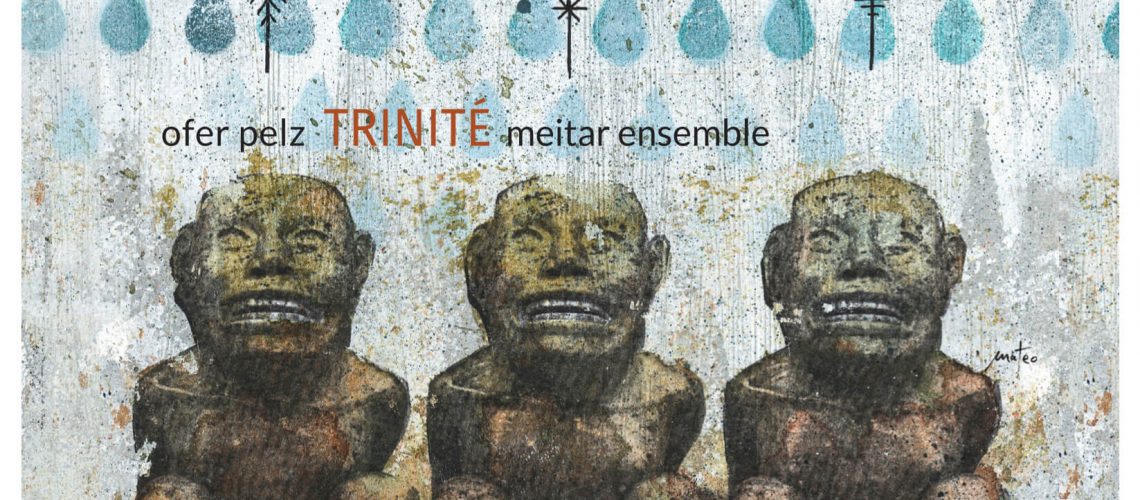
Ofer Pelz’s ‘Trinité’ experiments with audible embodiments of visual perception

Composers have experimented with the art of musical composition for centuries, but rarely have they gone so far as to remove something so integral to music as melody itself. Ofer Pelz is a Montreal-based composer, pianist, and improviser who uses traditional classical music instrumentation to create unique, experimental sounds that often lack such a mainstay of classical music performance. On June 11, Pelz released Trinité, an album containing five of his compositions performed by the Meitar Ensemble, a Tel-Aviv-based music group with whom he has shared a long-lasting relationship, as well as being Israeli, like Pelz himself. 

Pelz wrote and recorded the songs for Trinité over a span of seven years, from 2010 to the completion of his doctoral research in Composition at the University of Montreal in 2017. In an interview with The McGill Tribune, Pelz discussed the album’s creation and reception a month after its release.

“It is a celebration of a lot of years of work,” Pelz said. “Putting it all together, [it is] a product that can be distributed and can be seen by people who did not have access to my music before, and to the ensemble’s work before, so it’s great. I see that it arrives at people and places I did not  imagine, which is really cool.”

Each track is temporally and thematically independent, stemming from different places in Pelz’s life. Despite the subject of Pelz’s doctorate, ‘unstable repetition,’ the theme of predictable unpredictability ties these songs together into a cohesive project. 

“When you repeat something for a very long time, it might be interesting, but only in a meditative state,” Pelz said. “I try to keep the listener on the edge of the chair and to not just relax and enjoy the known things. Instead, I want to invoke their anticipation.”

Pelz explained that his music often  merges the audible and visual realms of perception during his creative process, using pictures and movements to inspire the sounds he writes. He might start with a specific word, or image, and allow his composition to mimic it.

“I try to go through the visual aspects of [a song], to draw it, or to give it words, but a lot of time it is on the visual side,” Pelz said. “I may forget what the initial sound image that I had was, but many times this is the beginning of the process.”

For example, the third track on the album, “Convergence,” sonically mimics the movement that a rubber ball takes once it is dropped and bounces on a floor until it stops. The piece features a light, jumpy flute performance by Meitar Ensemble musician Roy Amotz, beginning with turbulent, discordant notes and eventually ending in tranquility—mimicking the ball’s loss of energy. 

“This image of acceleration and something that hits and jumps and has its own energy to continue to jump […] is the kind of process that happens in general, in the piece,” Pelz said. “It starts from this throwing and ends by a long, empty sinus wave of sounds, which is kind of how everything converges.”

Members of the Meitar Ensemble, who perform the pieces on Trinité, are no strangers to Pelz’s work. The artists have collaborated since 2007, after one of Pelz’s professors recommended that they work together. 

“We have a big history together, and the relationship between composer and ensemble became a friendship,” Pelz said. “I know them very well, they know me, and it is good to have this kind of relationship because I write […] for friends and people I know. They are an amazing ensemble and it is very different than working with a new ensemble who I don’t know.

Pelz’s artistic process constitutes an exemplar of artistic vision in action. Trinité is this vision, fully realized. He encourages other artists, musical and other, to devote themselves to their own potential.

“Be true with yourself, and try to always search for what you want to really say. Continue to do that as much as possible,” Pelz said. 

Montreal’s Ensemble Paramirabo perform Pelz’s music live this coming September.

Album Reviews, Arts & Entertainment

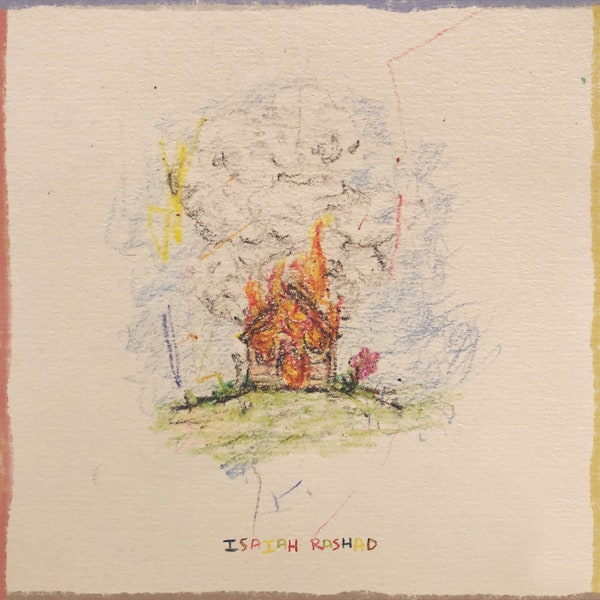
Isaiah Rashad’s ‘The House is Burning’ incompletely embodies its fiery namesake

More than half a decade has passed since Isaiah Rashad released his dense, jazzy sophomore album, The Sun’s Tirade. While hip-hop music trends come and pass quickly, the release of Rashad’s new album The House is Burning on July 30 proved that he remains in the unique conscious, melodic, lo-fi-style lane of hip-hop that he has carved out for himself. 

The album expands this sound into a more complete and diverse listening experience. However, not all of this growth leads to success, as minor sonic inconsistencies upset the project’s general flow. 

Rashad is at his best when his album’s lyrics are introspective and the production soulful. On its second single, “Headshots (4r Da Locals),” Rashad becomes self-reflective on poetic rhymes such as “I see God when I be ridin’ out / Boy, you always ridin’ round with a target on,” over a beautiful vocal sample. Rashad showcases his skillful breath control and smooth flow on songs like “9-3 Freestyle,” where he raps quickly and effortlessly without sacrificing his voice’s tranquil nature.

While Rashad’s experimentation with trap instrumentals is effective in diversifying the album, his repetitive flow and the heavy percussion on “From The Garden” becomes obnoxious and tiring to listen to, not to mention the unexpected—and unwanted—feature from Lil Uzi Vert. Similarly, Rashad’s attempt at singing on “HB2U” lacks enough harmony or expression to make up for the absence of any solid verses, leaving much to be desired in spite of a mesmerizing vocal sample. While these tracks bring variety to The House is Burning, they take away from its greater enjoyability. 

Overall, Rashad develops both himself and his sound into an album’s worth of hard-hitting and simultaneously lo-fi rap music on The House is Burning. The album’s many highlights, such as “RIP Young” or “THIB,” outweigh its occasional missteps. 


Album Reviews, Arts & Entertainment

38 Spesh holds back the potential of Benny the Butcher and 38 Spesh’s ‘Trust The Sopranos’

Riding a train powered by the gritty, imaginative imagery of street crime and new-age lyricism, Griselda Records member Benny the Butcher’s 2020 and 2021 albums have been consistently potent. 38 Spesh, one of Benny’s lesser-known yet widely accredited contemporaries, collaborates with Benny on Trust The Sopranos, an 11-track LP. To the dismay of listeners looking to lose themselves in vivid coke-rap poetry and warped, classic soul and R&B samples layered upon heavy 808s, Benny’s powerful presence is too insubstantial, and the instrumentals too hackneyed, to save this project from its biggest mistakes. 

While both Spesh and Benny possess similar grunge, noir-lyrical aesthetics, they lack the cohesion necessary to give the album a consistent and original texture. For instance, “Blue Money” features an outstanding verse from Benny, yet Spesh’s flow is too slow and his cadence too relaxed—a delivery that is incompatible with Benny’s aggressive, wicked style. Both artists refuse to meet each other half-way, giving the album an eclectic and hastily-constructed sound. Benny’s irregular appearances only compound the rappers’ mutual exclusivity.

All of Benny’s verses are powerfully vivid and focussed, but they only appear on six songs, encompassing a minor amount of the album’s 30-minute run time. Witty, creative lines like “Linked with execs who don’t know where no ghettos at / Where they get hit and bring no purple medals back” on “Immunity” prove that Benny adheres to his high standards when on the mic. Integrating quotes from early 2000s crime TV show The Sopranos on “Spineless,” Butcher mixes mobster and street-thug aesthetics to summate a lavish, calculated, and coldblood lifestyle. These highbrow moments, however, are too far and few between. While the numerous features—including the appreciable performance from Che Noir, Klass Murda, and Ransom on “Price of Fame”—appear to fill in this void, the inclusion of guests is ultimately unsatisfying knowing that Benny could, and should, be on these tracks.  

Spesh’s rhymes are also insubstantial, especially when coupled with half-baked instrumentals like the cliché, retro-soul sampling on “Tokyo Drift.” However, a few beats embody the old school hip-hop vibe that the project strives for; the keys on “Long Story Short” are effectively grim, keeping pace with the lyrics, and the spacey, minimal chord progression on “Silent Death” complements Chase Fetti’s dark performance. 

Overall, Trust The Sopranos has its highlights—specifically Benny the Butcher’s moments—but its tracks are not sonically or lyrically cohesive enough to fulfill the LP’s potential. Too many songs feature forgettable verses which, when coupled with generic instrumentals, become carbon-copies of a coke-rap formula that is becoming a tired hip-hop trope.

Research Briefs, Science & Technology

From benchtop to bedside: How tendon-inspired sutures can help heal wounds

Sutures, the threads designed to close wounds and promote healing, have been used for thousands of years, having originated in ancient Egypt. Since their invention, physicians and scientists have experimented with a wide array of materials, from hemp and cotton to more modern synthetic fibres. New techniques have been developed that improve patient outcomes, reducing infection risks, facilitating the natural healing process, and lessening the appearance of scars. 

The current standard of care for suturing is far from perfect, however; suture materials can slice and damage already fragile tissues or cause inflammation by rubbing against adjacent tissues. This damage occurs because the materials used are dry and rigid, having been developed to bear tension as the wounds close. The rough fibres of sutures also conflict with the soft tissues they interface with, sometimes leading to postoperative complications. 

Zhenwei Ma, a PhD student supervised by Dr. Jianyu Li, assistant professor of McGill’s Department of Mechanical Engineering, looked to the human body for solutions to this problem. Ma led a team of engineers, clinicians, and pathologists to develop the tough gel sheathed (TGS) suture—a new suture technology inspired by the human tendon. 

Ma hopes the bio-inspired design could offer a solution to the drawbacks that traditional sutures present. Like the human endotenon sheath, the next-generation TGS suture is designed to bear tension. TGS’ hydrogel surface is also less stiff than that of sutures currently being used, reducing friction with surrounding tissues. 

“For our TGS surgical sutures, our design is inspired by […] the endotenon sheath, which is both tough and strong due to its double-network structure,” Ma wrote in an email to The McGill Tribune “It binds collagen fibres together while its elastin network strengthens it. This clever design found in nature inspires us to develop a tough double-network hydrogel sheath for surgical sutures with advanced wound-management functions.”

The TGS sutures can be used to deliver medication directly to the wound and monitor healing with near-infrared imaging. The team was inspired by limitations of current medical technology and Ma hopes other researchers will leverage this design to tackle different clinical challenges.

“We [were] inspired by the limitations of existing medical devices and biomaterials used in operating rooms and clinics,” Ma wrote.  “Building upon this platform technology, we are planning to extend the surface functionalization strategy to other fibre-based biomedical devices. Hopefully, this technology will also inspire and be leveraged by other researchers around the world to functionalize their biomaterials-of-interest.”

Although the team is currently working closely with clinicians in local McGill affiliated hospitals in Montreal, they believe this technology can be adapted to different biomaterials to meet distinct needs around the world, such as combatting rare diseases. Ma also hopes that translational clinical research will spark conversations between professionals from different disciplines and lead to out-of-the-box thinking with the potential to revolutionize treatment strategies.

Nevertheless, bench-top (lab-based) research faces a unique set of challenges before it can be translated into bedside use—from testing efficacy in patients to regulatory approval and product manufacturing. 

“As you can imagine, it would literally take a village and years’ efforts to make it happen,” Ma wrote.

With this new technology, innovation at the intersection of human anatomy and mechanical engineering is resulting in the emergence of translational clinical research as a viable strategy to meet patient needs.

A previous version of this article incorrectly stated that TGS sutures would allow patients to move freely without disrupting their stitches. In fact, sufficient testing has not been performed to confirm this. The Tribune regrets the error. 

Read the latest issue

Read the latest issue