Tucked away at the corner of Duluth and Saint-Urbain, Café Santropol has a delicious selection of food for all tastes and preferences; coffee for overworked university students, delicious sandwiches and salads for park-goers, and decadent cakes for those with a sweet tooth. Since it opened in 1976 to save the building from being demolished, the cafe has turned itself and its sweet, brown bread into a local favourite.
Though its extensive variety of dishes, including vegetarian and vegan options, guarantee the discontentment of the late Anthony Bourdain, Café Santropol’s menu offers a refreshing meatless twist to Montreal’s sandwich scene, too often saturated by steamies and smoked-meat sandwiches. The cafe is home to the iconic “Duluth Sandwich,” which features a brilliant blend of honey-caramelized onions, sharp white cheddar, and sweet pears to highlight the boundless opportunities of vegetarian sandwiches. Here’s how to make it yourself.
Yields one sandwich
Ingredients:
2 slices bread
1/2 onion
1 pear
1 cup arugula
2 slices white cheddar
2 tablespoons butter
2 teaspoons honey
Salt and pepper to taste
Mayo/Vegan Mayo
Optional:
Tomato
Bacon
Homemade mayonnaise:
2 egg yolks
2 teaspoons lemon juice
1 teaspoon Dijon mustard
2 cups canola oil (or any other neutral oil)
Step 1: Caramelize the onions
Finely dice the onion. If you are uncomfortable finely dicing, shave the onion into long strips. Place in a pot with 2 tablespoons of butter over medium heat. Slowly caramelize the onions for 25 minutes, stirring every once in a while until they are browned and a rich, jam-like consistency.
Transfer to a bowl and add honey. Mix until incorporated. Season with salt and pepper to taste.
Step 2: Choice of bread & mayonnaise
To recreate this classic sandwich, your choice of bread and sauce are of prime importance. While you could buy a dark Russian rye loaf to emulate the restaurant’s creation, this is a wonderful opportunity to try baking your own bread. You could use J. Kenzi Lopez-Alt’s no-knead bread recipe, as I did for this recipe, or even make the sandwich with Focaccia. Similarly, try to make your own mayo.
Homemade mayo:
Add egg yolks, Dijon
mustard, and lemon juice into a bowl. Slowly drizzle oil while quickly whisking, creating an emulsion. Season with salt and pepper to taste.
Tip: Make a nest for your bowl with a kitchen towel so that it stays in place when whisking.
Step 3: Assembling the sandwich
Toast both slices of bread and spread a generous layer of mayo on each. Spread caramelized onions over on top, and pile on the cheddar. Next, lightly season arugula with olive oil and salt before placing on top of the cheese. Top your sandwich with sliced pears. Using a variety of local, fresh pears will add interesting sweet and bitter notes, creating a more intricate balance of flavors.
You can insert any additions as you please. Here, I decided to add tomato in one half, and bacon in the other.
Enjoy your easy, week-day lunch or snack. The caramelized onions blend wonderfully with the pears and the mayonnaise, while the arugula provides a kick of acidity. You can make the sandwich with many other ingredients, such as boiled eggs, apples, ham, etc.
On Feb. 16, 90 per cent of students at the Students’ Society of McGill University (SSMU) General Assembly – Consultative Forum voted to adopt the Divest for Human Rights Policy. The Policy mandates SSMU to campaign against McGill University’s investments in corporations complicit in colonial land theft, environmental destruction, war crimes, crimes against humanity, and genocide, both on Turtle Island and abroad. One week later, the SSMU Legislative Council endorsed the Policy with a resounding two-thirds majority.
Based on overwhelming support demonstrated through a democratic process, it was expected that SSMU’s Board of Directors, a largely unelected and unrepresentative body, would ratify the Policy. Yet at their meeting on March 4, the Directors declined to do so. Their justification was that adopting the Policy might provoke reprisals from the McGill administration. Instead, the Directors voted to refer the Policy to SSMU’s Judicial Board to confirm that it does not violate SSMU’s constitution. If the Judicial Board reaffirms the Policy’s constitutionality as expected, the Board has indicated that it may refer the Policy to SSMU’s legal counsel for additional reassurance before deciding whether to approve it.
It is clear that the Directors’ foot-dragging is motivated by their fear of McGill’s potential backlash against SSMU rather than by any objective analysis of the Policy itself. Director Chip Smith expressed opposition to the Policy based on the assertion that naming and criticizing McGill’s investments would raise the risk of legal action from the administration, despite the fact that SSMU has adopted other divestment campaigns in the past. Director and SSMU President Jemark Earle echoed this argument, stating that the McGill administration has been closely eyeing the progression of the Policy, and has threatened SSMU for pursuing human rights advocacy in the past. McGill does this by declaring that SSMU is violating its constitution, which allows the university to threaten to default on its legal agreement with SSMU—the Memorandum of Agreement (MoA)—thus voluntarily jeopardizing the relationship between McGill and SSMU. Due to confidentiality constraints, Directors were unwilling to provide details about prior instances of intimidation by the McGill administration.
When asked by student attendees, none of the Board’s members were able to provide any actual explanation as to how the Policy might violate SSMU’s constitution. Although some Directors framed their decision as a temporary delay of the Policy’s adoption, others stated that the Policy should be rejected outright by the Board if it runs any risk of a threat from the McGill administration. This reasoning is as cynical as it is absurd, given that McGill is clearly willing to issue unfounded threats of default on the MoA regardless of any precautions that the Board might take. The Board’s reluctance to adopt the Divest for Human Rights Policy therefore establishes an outrageous precedent, whereby any democratically approved SSMU initiative could be vetoed by the Board of Directors every time McGill’s administration expresses disapproval.
As students advocating for ethical divestment, we are disappointed that SSMU’s Board of Directors has not shown moral courage in the face of yet another baseless threat from the McGill administration. We are also shocked by the rhetoric of certain Directors, who appear to be exploiting the fear of controversy in their effort to obstruct the Divest for Human Rights Policy. After enduring so many excessive bureaucratic hurdles, we expect the Board to uphold the democratic will of the student body, which has wholeheartedly endorsed this divestment campaign. The duty of our student union is to resist, not assist repressive methods of intimidation, which the university regularly deploys against its own students whenever they seek to hold the institution accountable for its complicity in violent oppression and the destruction of our planet.
In February, my roommate and I decided to register for an online workshop on Filipino cooking and food history. Taking place every Friday night, the 5-part series promised to explain the rich history that lay behind our favourite homecooked meals. Excitement grew as the start of the series drew nearer. But still, it was another addition to the ever-growing roster of virtual commitments.
On the first night of the workshop, we made pork and cilantro dumplings to commemorate the recently passed Lunar New Year. Once we were adequately surrounded by steaming piles of fresh dumplings, our household gathered around the table to listen to the first lecture. However, we did not anticipate the atmosphere of kinship and shared origin that the series brought about. Every Friday night, we shared our dining table with over a hundred other Filipinos calling in from the Philippines and across the diaspora. It felt like a weekly family reunion. After our first session, our apartment began looking forward to what we called “Filipino Fridays.” It was a comforting sense of assurance. At the end of every week, it was guaranteed that we would all share a satisfying meal and learn a thing or two about the many stories behind the food on our plates.
On the first night of the workshop, we made pork and cilantro dumplings to commemorate the recently passed Lunar New Year. Once we were adequately surrounded by steaming piles of fresh dumplings, our household gathered around the table to listen to the first lecture. However, we did not anticipate the atmosphere of kinship and shared origin that the series brought about. Every Friday night, we shared our dining table with over a hundred other Filipinos calling in from the Philippines and across the diaspora. It felt like a weekly family reunion. After our first session, our apartment began looking forward to what we called “Filipino Fridays.” It was a comforting sense of assurance. At the end of every week, it was guaranteed that we would all share a satisfying meal and learn a thing or two about the many stories behind the food on our plates.
This year has placed us all, however unwilling, in Zoom University. Now, weekends are for binge-watching lecture recordings. It’s easy to tire of the everyday routine of Zooming and the stifling feeling of cabin fever, but let’s pause to reflect on some of the positive changes made this school year.
Flexible assessment methods
Exams this year are offered windows of time that range anywhere from six to 72 hours, allowing students to choose when to take their test depending on their time zone, other commitments, and when they feel most productive. To account for technical difficulties, students are also given more time to write exams: Faculty of Science exams, for example, follow the 2x+30 minute rule, which gives students an extra two hours and thirty minutes in addition to the time frame a given test was designed to be completed in. For students who remember how precious the last five minutes of an in-person exam were, having more time is a relief. Additionally, the relative weight of each assignment is more spread out this year. Instead of having heavily-weighted midterms and finals, grades are distributed to numerous assignments and weekly quizzes. While this combats technical glitches that could arise during any single assessment, other students are stressed by the accumulating piles of work. Some professors have also implemented more flexible evaluation systems, such as dropping the lowest quiz score or counting the higher result of two midterms.
Recouping time usually spent commuting
Being sequestered at home constantly can make us realize how much time we spent going from place to place pre-pandemic. Subtract commuting from your apartment to McIntyre, to McLennan Library, to the gym, and you’ve probably saved enough time to write another essay. Furthermore, being in a large online class means that students can sneak in late without easily being noticed. It is much less awkward than being late to an in-person class, mumbling “sorry” while squeezing between seated students to find an empty spot. Similarly, if the Zoom fatigue truly gets to you, pressing “Leave Meeting” is much more subtle than physically exiting a class.
Greater event accessibility
Since shifting to online platforms, many events with restricted access have become open to the public. Students can attend seminars held at other institutions and tune in to conferences happening all over the world. Speakers can give their keynote speeches at events that they previously could not have easily commuted to.
Virtual networking sessions during events are another new reality. Although it may be harder to form personal connections among a sea of black screens, it could also present an opportunity for different, and sometimes less intimidating, types of interactions. For students who are shy to approach a speaker in person, popping into a breakout room could provide a more welcoming space for conversations to begin. Additionally, Zoom displays participants’ names, so potential employers and course professors alike can call students by their names—a precious feature rarely found in Leacock 132 classes.
Rock your outfit and study location
For students who formerly dreamt of attending class in the comfort of their polka-dot pyjamas while stroking their pets, the freedom of being off-camera can be liberating. Behind a blank screen in a Zoom window, students can listen to their lectures while doing whatever their hearts desire with the utmost discretion. By all means, feel free to turn on your camera if you want to share.
Adapting the day to your needs
Early birds and night owls alike can enjoy the flexibility that online classes bring. Students can choose to watch lecture recordings at their own convenience. The option to re-watch lectures is very useful, as it helps to reinforce information before evaluations. Although most Faculty of Science classes were recorded pre-COVID, many Faculty of Arts classes were not. Students who missed lectures usually asked their peers for notes, but hearing a professor deliver the material can allow for a better understanding of course material. Zoom has demonstrated the importance of recording live lectures, especially for students with disabilities who cannot go to campus. This essential accessibility feature will hopefully continue in many McGill courses post-COVID.
In adjusting to virtual learning, changes to evaluation methods and greater event accessibility have often proven to better accommodate students’ unique situations and preferences. As we eagerly anticipate the return to campus life in Fall 2021, let’s remember the positive lessons of virtual learning, such as the importance of being flexible and understanding of others, into the post-COVID future.
On March 12, McGill hosted a town hall to discuss the university’s plan for in-person instruction during the Fall 2021 semester. The administration announced that while remote learning will be necessary for classes with more than 150 students, students are expected to return to Montreal to attend most smaller courses in person. McGill’s promises may be encouraging to students suffering from online education, but the premature decision to return to campus is driven by administrators’ concern for the university’s revenue rather than students’ finances or health.
Unfortunately, Canada’s slow vaccine rollout increases the risk of vaccine-resistant strains of COVID-19, meaning McGill cannot be sure that the public health situation will be safe enough to permit in-person instruction by September. Based on McGill’s announcement, many international or out-of-province students who have studied from home during the pandemic must now find housing in Montreal. But if McGill rolls back plans for in-person schooling, these students will be renting apartments they no longer need. This is particularly concerning for students whose families have endured economic hardship during the pandemic. The university must be more careful about imposing new expenses based on promises that may not be kept.
In general, remote learning has not been popular, and McGill has seen international enrollment decline over the past year. Since international students pay higher tuition than Canadian students, the university has a financial incentive to maintain their enrollment by reintroducing on-campus learning. Yet if it is not safe to reopen classes in September, McGill will be faced with the choice of either putting students at risk of contracting COVID-19 or reneging on their promise to reopen—which would be dishonest to students who only paid for courses under the impression that they would take place face-to-face.
In this effort to secure international tuition, McGill has also overlooked the effects of continued international travel restrictions. The university’s plan predicts that international travel will still not be recommended by public health authorities in the fall and that a “vaccine passport” may be required to enter the country. Since vaccines are not equally accessible around the world, there is no guarantee that all international students can be vaccinated before they arrive. Further, compelling thousands of students to travel to Montreal while authorities advise against it—especially if some have not been vaccinated—is extremely irresponsible. Unvaccinated students will be putting themselves at risk of infection, and if a vaccine passport requirement is implemented, they may not be able to attend classes. The administration’s plan for an in-person Fall semester ignores their own predictions about public health, proving that the hasty decision to reopen fully prioritizes money over student well-being.
Fortunately, McGill’s policies do not neglect international students entirely. The Quarantine Bursary Program will help those who cannot afford the cost of Canada’s mandatory hotel quarantine. However, this program alone is not enough to ensure safety and equity during the Fall term. Students who cannot come to campus should have the option to study remotely to ensure that school remains accessible. Professors can continue to offer remote instruction in many courses by streaming or recording lectures. Above all, McGill must not make students choose between their education and their health or financial security.
Some in-person learning will hopefully become possible as the public health situation improves, but it is unreasonable to expect all international students to travel to Canada if restrictions continue. The past year has proved that online learning is both possible and necessary under difficult circumstances, and until the future is less opaque, it must remain an option for students.
In this episode of the Change Makers podcast, Staff Producer Noah Vaton speaks with the two founders of Designs for a Difference, Jesse Ye and Tai Nguyen. Together, they founded the Non-Profit Clothing Brand, in an attempt to try and help raise money for different organizations. They discuss how the brand came to be, their goal for creating a sustainable business, and their future goals.
A timid McGill student observes a group of classmates talking and laughing, and wishes to join them. As she contemplates whether to approach them, she remembers words of encouragement from a therapist: “You will make friends, you are kind and fun. People like you more than you think.” After recalling those reassuring words, she summons the courage to approach the group. Her heart is beating a mile a minute as she stands, shaking, waiting for the group to acknowledge her. To her relief, the group is extremely welcoming. As they let her in on their conversation, she is overwhelmed with happiness, but still fears not being liked.
(Jinny Moon / The McGill Tribune)
Many individuals face struggles similar to this timid student. Social anxiety disorder (SAD) is a type of anxiety disorder that causes extreme fear in social settings. Between eight to 13 per cent of Canadians struggle with SAD during their lifetimes and approximately seven per cent of American adults suffer from social anxiety.
SAD is characterized by fear, anxiety, and avoidance behaviours that interfere with one’s daily routine. Individuals with a social phobia have trouble talking to people, forging new social connections, and attending social gatherings because they fear judgment from others.
“I think the fairest way to describe it in my personal experience is feeling a bit like an alien trying not to be found out,” Ashley*, U3 Arts, wrote in an email to The McGill Tribune. “It’s as if everyone around you has some kind of cheat, or instruction manual you were not given, and they are all constantly inspecting you trying to prove that you don’t in fact know what you’re doing.”
This constant fear of being scrutinized by others is accompanied by both physical and psychological symptoms. Physical symptoms include excessive sweating, trembling, difficulty speaking, and rapid heart rate. Individuals also experience emotional and behavioural symptoms such as intense fear of interactions, and may spend time analyzing their social performance for flaws.
According to Helen Costin, a clinician at the Student Wellness Hub, these physical and emotional symptoms result in avoidance behaviours.
“A person with social anxiety may go to great lengths to avoid social interactions and will make choices based on avoiding these interactions,” Costin wrote in an email to the Tribune.
The fear of being judged by others, especially in public settings, can interfere with eating and working habits.
“I also have trouble being comfortable doing anything in front of other people, especially eating in public,” Ashley wrote. “There have been many days I haven’t eaten at school because I was alone.”
Other avoidance behaviours include refraining from dating and asking questions in public.
Symptoms of social anxiety often appear in early adolescence, around the age of 13. According to Dr. Tina Montreuil, an assistant professor in McGill’s Department of Educational and Counselling Psychology, both nature and nurture are responsible for the development of the disorder.
“The incidence of anxiety disorders more generally are associated with a genetic predisposition combined [with] an interplay [of] environmental factors,” Montreuil wrote in an email to the Tribune.
Physiological abnormalities such as imbalances of serotonin, a chemical found in the brain that helps regulate mood, and an overactive amygdala, a brain structure that controls fear and anxiety responses, play key roles in the development of SAD. Moreover, anxiety tends to run in families, further supporting its genetic basis. However, an individual’s upbringing is also a pivotal factor.
“Systemic factors such as overly controlling parenting, greater criticism potentially stemming from inadequate parental support, lack of adequate coping skills, and poor sense of personal competence are all associated with a greater incidence of anxiety,” Montreuil wrote. “In some cases, exposure to violence, trauma, or bullying could be [a] trigger of social anxiety.”
Given that SAD has causes and symptoms that are both psychological and biological, psychotherapy and medication are both effective treatments.
Cognitive behavioural therapy, exposure therapy, and group therapy have all been shown to ease symptoms. Cognitive behavioural therapy teaches individuals how to control anxiety through relaxation and breathing exercises, and also how to replace negative thoughts with positive ones. Exposure therapy helps make individuals more comfortable in anxiety-triggering situations by gradually introducing them to social situations. In group therapy, individuals acquire social skills and techniques to interact with other people. Therapists try to provide a safe, non-judgmental environment for patients to practice these skills through role-playing.
Common medications used to treat social anxiety disorder include Paxil, Zoloft, and Effexor XR, which are anti-anxiety medications as well as antidepressants. However, caution must be exercised with medications: Common side effects include insomnia, weight gain, and upset stomach.
The pandemic has only increased the number of university students struggling with SAD. Extended periods of isolation have both eliminated opportunities for students to exercise social skills and cut them off from the social contacts they feel comfortable with.
“What we’re seeing in the data is that students across Canada and the United States are reporting increasing feelings of loneliness and anxiety—it’s a phenomenon that touches all university campuses, not just McGill,” Dr. Vera Romano, Director of the Student Wellness Hub, wrote in an email to the Tribune.
Students suffering from this disorder encounter many academic barriers in addition to feeling socially stunted. Even routine classroom activities such as presenting in front of the class and interacting with peers become harder, potentially impacting their academic performance.
“It could conceivably make it more difficult for such a student to give a presentation, participate in group work, and if severe enough, attend larger classes,” Teri Philips, Director of the Office for Students with Disabilities (OSD), told the Tribune.
Students with anxiety often make their academic choices around the avoidance of potentially triggering situations.
“Trying to take classes with a larger number of people can make you feel less observed [or] scrutinized,” Ashley wrote. “Trying to take at least one class with a friend also helps if you have questions about the course material and are too scared to ask a TA, [as well as] signing up for a class with little or no participation marks.”
SAD can also impact student life outside the classroom such as when joining student clubs or participating in university events.
“I am the only one out of my friends who has not participated in or joined any university groups, organizations, [or] clubs,” Ashley wrote. “Since I don’t have to interact with anyone, I am unable to practice, and I get stuck in a negative reinforcement cycle.”
Despite their virtual delivery, McGill offers services to help students who are struggling to manage the symptoms of social anxiety. Many of these resources are available through the Student Wellness Hub, which attempts to provide basic mental health services as well as peer support programs to students at both the Macdonald and downtown campuses. However, the Wellness Hub is plagued by long waiting times, lack of staff, and absence of long-term support plans.
Other obstacles also further prevent students from accessing these services. Poor time management, already a stressor for those with anxiety, often results in students prioritizing pressing deadlines, pushing mental health concerns to the wayside. Moreover, 90 per cent of people with SAD often have comorbidities resulting in them suffering from an additional mental illness such as depression or a different anxiety disorder. These compounded symptoms and avoidance behaviours constitute serious obstacles for students in need of support.
The university needs to increase access to mental health services, but professors can also ease the burden on anxious students by improving classroom accommodations.
“I have always appreciated any effort to include anonymity by professors [in class participation],” Ashley wrote. “Simple awareness and recognition by professors would also be helpful, such as having multiple options so students aren’t forced into assignments or positions that will induce an anxiety attack.”
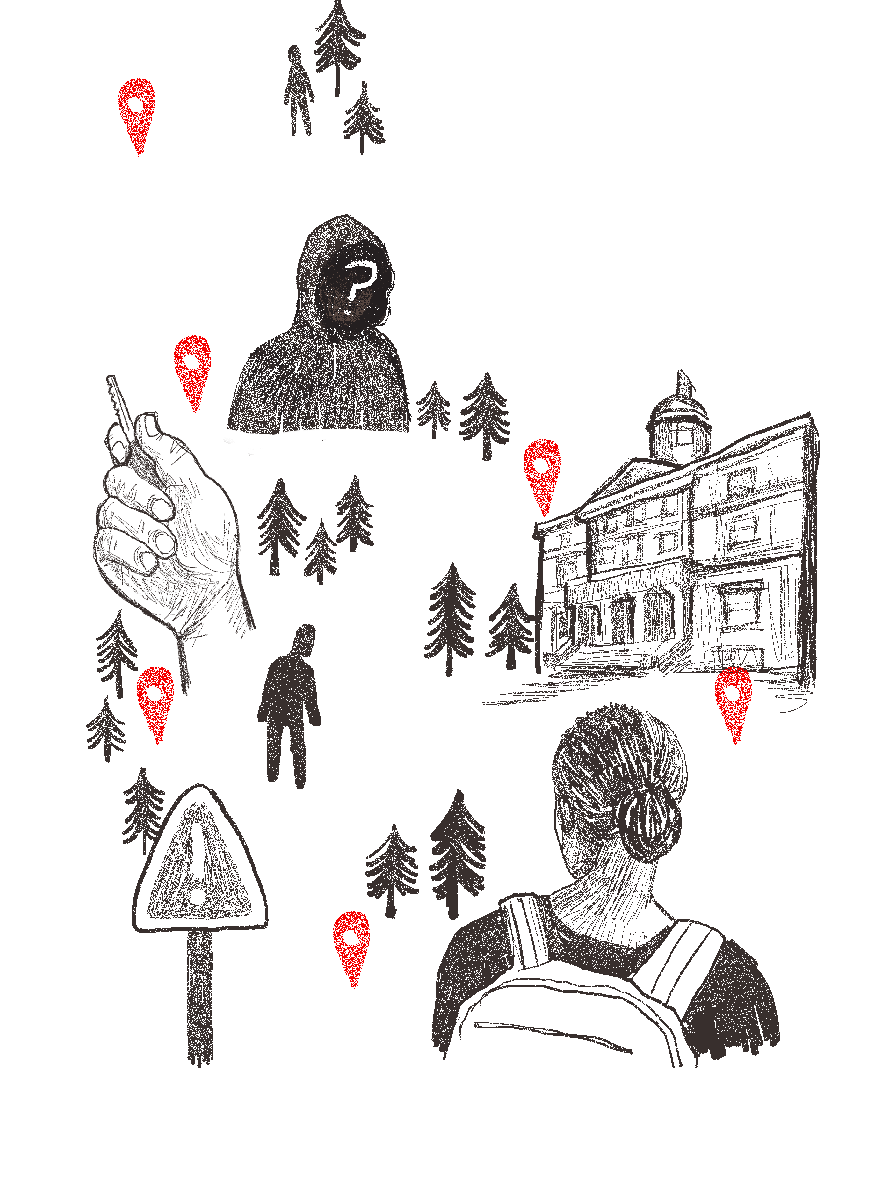
I love walking. From taking in the sights and sounds around me, to feeling the fresh air on my skin, I have fond memories of my walks, both by myself and with others. I often insist on walking home from wherever I may be, even if it means walking alone. The journey itself is almost always preceded by some inner turmoil about how late it is or how safe the route to my destination is—but I am stubborn and almost always end up convincing myself that I will be alright and that there is nothing to be afraid of. Vanessa Richardson, U1 Arts, shares my love of going on walks.
“Walking around downtown Montreal was one of my favourite activities to do while I was on campus last year,” Richardson said in an interview with //The McGill Tribune//. “It was nice being able to walk from my residence to a café to study or get some fresh air to de-stress.”
When I’m alone, I listen to podcasts, my current favourite being Modern Love by //The New York Times//. Otherwise, I will shuffle a playlist that I specifically curated to boost my mood during my solitary walks. I often purposely match my steps to the rhythm of the music, feeling like the main character. When I am walking alone, I usually start off feeling calm. Unfortunately, this feeling does not last long.
The decision to walk alone triggers a recurring cycle most women and female-presenting individuals experience on a regular basis: We overthink our actions out of a need to ensure our safety in a time where gender-based violence continues to skyrocket. While Montreal is fairly safe compared to other major cities, women’s safety is a perpetual predicament. In the past eight weeks, eight women have been killed in Montreal.
Stage 2: The onset of fear
It is usually when I look around and notice that there are few pedestrians that I become painfully aware of my vulnerability. As a 5-foot-2 woman of colour, it does not take much to feel unsafe on the street whether it be a car slowing down near me or a group of men that are on my path. Richardson noted that she was taught to expect the worst from a young age.
“I have always been concerned about safety while travelling as a woman,” Richardson said. “I was taught to keep my guard up at night, so that is what I did. Knowing [that] cases [of gendered violence] are even more common for women of colour has amplified my own fears.”
As I continue on my way, I feel my adrenaline building, the sun has set and my mind is suddenly occupied by statistics and stories. One in three women in Canada experience unwanted sexual advances in public, and in Montreal, several women have been assaulted while walking in the Plateau. I tell myself I should have taken the bus, yet buses are enclosed spaces and even waiting at a bus stop can be dangerous. Taking an Uber also does not comfort me: The company’s own 2019 safety report included over 3,000 claims of sexual assault from clients.
This is where the regret sets in. All the joy and excitement I felt before embarking on my journey home dissipates, and in its place is a feeling of dread. I wonder if anyone will be around to help me if something awful were to happen. The recent case of Sarah Everard, a U.K. woman killed by a police officer on a walk home in March, plagues my mind. For students like Sophie Arsenault, U1 Arts, Sarah’s story is just the latest reminder of the constant threats women face today, when even those who are supposed to keep us safe can harm us.
“Sarah Everard’s story is one which depicts an abuse of power,” said Arsenault “It is difficult not to assume the fear of repetition in incidents when women are found missing on such a regular basis.”
By the time I realize that no mode of transportation can assure me, the pedestrians who initially prompted my anxieties have long passed by. The looming feeling of discomfort, however, does not fade until I arrive home. The cyclical nature of this feeling on every walk is a reflection of what women are taught to deal with from a young age: Discomfort is expected.
Stage 3: Contingency planning
Plagued with horror stories about the dangers of being a female-passing person out and about, we are often taught to plan ahead to avoid the worst. Richardson stays in contact with friends so they know her whereabouts—a practice often foreign to men.
“I [make] sure to text my friends my location,” Richardson said. “[I] let them know how I’m doing throughout the night, and let them know [when] I got home safely.”
I, on the other hand, usually forget to do so until I am prompted by a message. I scan my brain, trying to remember who I shared my location with. The list includes my sister, my boyfriend, and my roommates, but I am not sure if they would check my location if I did not let them know in advance that I was walking home.
I regret laughing off a self-defense course offered in middle school, realizing I would not know what to do if I was confronted by harm.
Stage 4: Self-soothing
Eventually, my walk brings me to campus. Even if it means taking the long way home, arriving in the area always makes me feel better. The familiarity of the fairly-lit Y intersection and the sight of the Arts building brings a sense of comfort I do not feel on Parc or Sherbrooke. Many women, including Arsenault, consider McGill’s campus to be safe.
Whether they know it or not, all sports fans, even casual ones, have probably encountered data analytics, from Sportsnet graphics to a player’s batting average or save percentage. The sheer amount of data used in sports analysis can be intimidating for someone unfamiliar with analytics, but gaining a basic understanding of this data and how they factor into games is easy to learn.
Analytics is the collection and use of statistical data to help teams and individuals measure their performance and improve upon it. These statistics can be basic, like a basketball player’s rebounds, or more advanced, like a football team’s intended air yards per pass attempt. Three major types of analytics are often used simultaneously: Descriptive analytics gather information about previous games, predictive analytics predict outcomes of future competitions, and prescriptive analytics recommend how to improve performance.
Although the use of analytics is now standard across most sports leagues, the practice has only recently become mainstream. Billy Beane, the General Manager of Major League Baseball’s Oakland Athletics from 1998 to 2016, is believed to be the first sports executive to build their team’s lineup and strategy based on data analytics. The Athletics’ successful 2002 season, which culminated in a West Division title, was chronicled in the 2003 book and the 2011 movieMoneyball.
In the two decades since, many other sports have started to use analytics to monitor player data and a wealth of information has been available to the public. Dr. Timothy Chan, professor in the Department of Mechanical and Industrial Engineering at the University of Toronto, has followed the increased use of analytics in hockey for years.
“Back in 2009, when we were starting our hockey work, the data and the statistics that were being captured were still very simple,” Chan said in an interview with TheMcGill Tribune. “In the 10 years since, there has been an explosion of data that leads to advanced stats that we can calculate. The interest [has grown] from pro all the way down to amateur and other levels of sport.”
The applications of analytics in professional sports are endless: Teams use prescriptive models to call plays and create player profiles to decide who to sign or draft. These profiles are often used in contract negotiations and when forming game lineups.
Despite the benefits of analytics, they are not without their troubles, as sports are by and large a “boys’ club,” and analytics is no exception. An estimated 85 per cent of attendees of the 2015 MIT Sloan Sports Analytics Conference were male, and only 22 out of 153 speakers were women. Chan is currently working on a project that aims to provide empirical data on the demographic makeup of the sports analytics community.
“We are trying to get a baseline of what is the state of diversity and inclusion in the field,” Chan said.
According to Stephen Gill, BCom ‘20, founder of the football analytics blog twitrsports, and master’s student at Northwestern University’s Analytics graduate program, the inaccessibility of data can also be a barrier to understanding them.
(twitrsports.com)
“There is a pretty big knowledge gap between the practitioners and the audience,” Gill said. “The practitioners don’t try as much as they should to make [information] accessible, and the audience sometimes can be resistant to change.”
McGill Athletics has started to use analytics for some of its varsity teams, including the men’s ice hockey team. Gianfranco Giuliano, the Director of Analytics for the Redbirds Hockey team, uses analytical data to strategize for games. Their statistical database contains over 75,000 data points, ranging from information about zone entries and exits, to expected goals, and passing networks. Giuliano said he creates post-game reports by analyzing video footage from games and then provides coaches with the data.
“The most important part of my job is communication,” Giuliano said. “Being able to relay these concepts in some form of a digestible, actionable kind of way is the most imperative. [You want to] give [coaches] something they can implement, whether it be a strategy, a lineup change, a concept, […] something where they can find some kind of a positive impact.”
In addition to game reports, Giuliano creates player profiles to better understand how players perform together on the ice.
(McGill Athletics)
“Once you have enough of those profiles amassed, 12 forwards and six [defence], then you can figure out why guys should be playing together, why they should not be playing together, and what works and what does not work,” Giuliano said.
After delving into sports analytics, finding a foothold to produce and share one’s work can be daunting. Some specific knowledge needed—expertise in math and programming languages—and where to find information is not made immediately clear. While one can understand descriptive graphics online without deep knowledge of math and programming, specific skills are needed to produce original analytics data.
A few key steps will go a long way toward appreciating analytics, but the most important is understanding the sport. Reading about Jonathan Drouin’s offensive zone deployment is not without knowing the difference between a power play and penalty kill.
The next step, Gill recommends, is to read as many books, blogs, or Tweets as possible.
“There are a lot of people who have written stuff in the past about every sport,” Gill said. “Twitter is a good spot to get a feel for the lay of the land, and from there, you can tell that there are [websites] that specialize in specific sports.”
Creating original analytics work, however, does require specific coding skills that can only be developed with time and effort.
“Entry-level analysts really need […] good programming skills, so probably Python or R, and a good grasp of basic statistics,” Chan said.
While a formal education in statistics or computer science is helpful, many of the skills needed for analysis can be learned through websites like Coursera, Khan Academy, and Harvard Online Courses that offer free classes on statistics, programming, and data science. For those less mathematically-inclined, however, Giuliano recommends exploring data visualization tools like Tableau or PowerBI—programs that generate interactive graphics and reports—as well as Excel.
Chan, Gill, and Giuliano all emphasize that the most crucial step to embarking on an analytics journey is to begin proactive learning. The process starts by thinking of a question and finding data to provide an answer. Next, publicize the data in any way possible by starting a blog, using Twitter, or attending conferences, and talking to people in the sports analytics community. When it comes to becoming involved in analytics, Giuliano stressed the importance of asking for opportunities.
“Honestly, just ask,” Giuliano said. “It sounds so naive and utopian just to say it out loud, but […] people will always appreciate the help.”
Innovations in analytics are made every day, and conferences and contests like the NFL Big Data Bowl and the MIT Sloan Sports Analytics Conference encourage new ideas. As the world of analytics evolves, there are several new opportunities to learn and collaborate. With a clear picture of the tools available and how to access them, there is nothing stopping anyone from giving analytics a try.