Students’ busy schedules and––mostly––amateur cooking skills makes getting takeout food a huge comfort. During another COVID-19 wave, it’s also especially important to support local restaurants—and when possible, remember to avoid corporate delivery services and order directly from businesses. For when you have no time to cook, or just want to summon a special treat, The McGill Tribune brings you six local restaurants with a wide range of delicious options that can be brought to your door.
Nouilles Zhonghua
Nothing brings comfort, especially in the winter, like a slurp-worthy bowl of noodles.
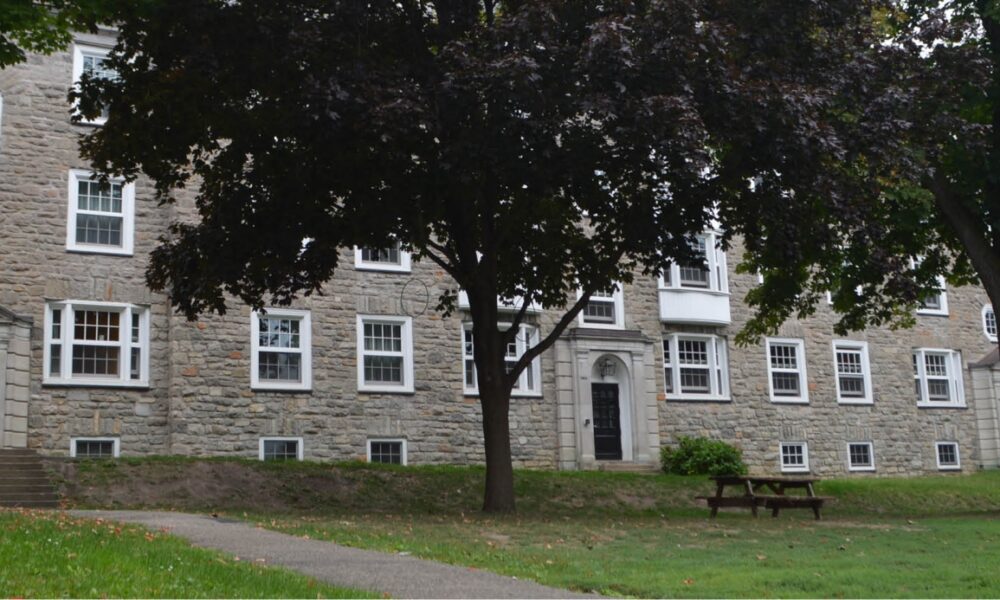
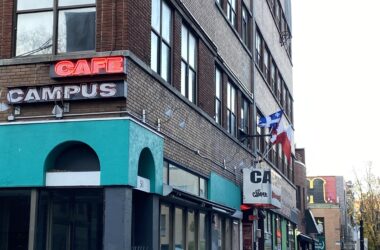
Though students might not be able to pass this quintessential noodle spot on their way to class in person with remote school, they can always bring the tastes of campus home for around $12-15 a bowl. As many students know, the noodles here are hand-pulled, giving them a chewy texture primed for flavour-soaked bites. Try their classic Lanzhou beef noodles, the oil spill noodles for extra spice, or their vegetable noodles, which ditches the meat without scrimping on umami flavour.
Bocadillo
This family-run Venezuelan spot has two locations you can order from—one in Little Italy and the other in the Plateau. Bocadillo is famous for its arepas, a South American staple bread made from cornmeal. Stuffed with a variety of ingredients such as cheese, shredded chicken, beef, egg, avocado, and even passion fruit pork, these tasty creations come in a wide selection of forms to excite your taste buds. If you’re looking to pair your meal with a dessert, try their Venezuelan caramel flan or Tres Leches. Dishes here cost around $12-14, and can be ordered through their online portal.
Qinghua Dumpling
You can find this restaurant’s dumplings at either of their locations, in Chinatown or near Guy-Concordia. They serve a large variety of dumpling flavours in sets of 15, from pork and corn, to beef and cheese, to pumpkin. For a less adventurous and more staple choice, the pork and coriander dumpling is one of the most popular menu items among locals. If you find yourself close to the area, you can also pick up some frozen dumplings or wontons to save for later meals. Though it varies depending on the filling flavour, an order typically costs around $15.
6 Green Banana Grassroots Jamaican Food
Bordering Milton Park and the Plateau, this Jamaican food spot is operating at reduced hours from 12-7 p.m., Friday to Saturday. They offer traditional dishes and vegetarian alternatives. Highlights include the jerk chicken roti and jerk tofu. Locals rave about the rich combination of slow-cooked flavours in each dish, as well as the generous portions, priced at $15.
Restaurant Queen Sheba
Located on Park Ave just steps away from Jeanne Mance Park, this venue offers a variety of hearty Ethiopian dishes, including both traditional meat stews and a vegan menu. As Ethiopian food is usually enjoyed communally, this would be a great spot to order from for a special dinner with roommates. Try the classic Doro Wat, a red-coloured chicken stew simmered in an Ethiopian red pepper sauce and topped with fresh cheese. Queen Sheba’s vegan options are just as flavourful—to share with a friend, or simply to indulge in yourself, try the Yetsom Beyaynetu, a set of three vegan dishes of your choice made complete with their freshly baked injera.
Faroujj Express
Tucked in the Galeries du Parc mall, this Lebanese food spot can be easy to miss in the underground food court if you’re not a regular. The Shish Taouk plate and Shawarma are must-tries that provide comfort without denting your wallet. Their sides—especially the crispy garlic potatoes, seasonally prepared salads, and creamy hummus—deserve their own spotlights. Just make sure to get your orders in early, as this restaurant closes at 6 p.m.
The Winter 2022 semester has started off in uncertainty as the Omicron variant gives rise to unprecedented COVID-19 case numbers and the university moves to implement new restrictions.
In a Jan. 4 email, Student Housing and Hospitality Services (SHHS) informed students in residences that dining halls, gyms, and common areas would be closed indefinitely and that residents could only entertain one guest, from their same residence, at a given time. For residents in double rooms, no guests are allowed. Despite recognizing that public safety is a priority, residents have voiced concerns about widespread mental health problems, reporting feeling discouraged, disappointed, and neglected by both Quebec policymakers and McGill.
Many students have opted to stay home for the duration of online learning, while others have returned to Montreal: McGill recently reported a presence of approximately 6,000 employees and students on campus per day.
Kendal Williams, U0 Education, is among those who choose to return to campus. In an interview with The McGill Tribune, Williams detailed feeling isolated by SHHS restrictions to the detriment of her mental health.
“We can’t have dinner with a friend because [the] cafeteria is closed, we can’t study with a peer because we can’t have anyone over into our dorm room, we can’t go work out to help our mental health because the gym is closed, and we can’t go to a common room to see a friend or study because it is closed,” Williams said. “Overall this wave of COVID-19 has affected us all, but with the strict restrictions placed by [SHHS], it is only making students’ mental health worse.”
Solin Hall resident Alice Dubois, U1 Arts, echoed a similar statement when she spoke to the Tribune, stating that the restrictions exacerbate existing mental health issues.
“Online classes are depressing enough, plus seasonal depression,” Dubois said. “If we can’t spend time with our friends in our apartments, or even go to libraries to change environments and have a place to focus, this is going to be a really rough semester.”
Marketing communication manager of SHHS, Monique Lauzon, detailed the support channels currently accessible to students.
“Our residence life team, composed of floor fellows and residence life manager and our mental health counsellor (residence LWA), actively supports students in need through different events and programming activities,” Lauzon wrote in an email to the Tribune. “As well, we help to orient students to the appropriate mental health resources that are available through McGill’s Student Services / Wellness Hub.”
Of the services Lauzon mentioned, the Wellness Hub is notoriously challenging to access. Lauzon also reiterated that administrators are doing what they can and delivering updates to residents when possible.
“We rely on the government for directives,” Lauzon wrote. “Our priority is to dispense accurate updates to both students and staff in a timely fashion [….] We also reinforce messaging via our social media platforms and digital screens.”
To prepare their readers for online conferences, The McGill Tribune unearthed scenes from various breakout rooms and class discussions over the last five years
Gender Studies
Yeah, I mean, and this is just speaking from experience, Judith Butler might be projecting a bit, don’t you think? Like we get that you perform as a member of the diverse LGBTQ community, but there’s got to be deeper meaning there. I actually used to do improv on Thursday nights at the Second City, the one in Toronto; it’s pretty exclusive if you run in improv circles, so performance is just in my blood. Here are my questions: Who is Butler performing to? Can I get a ticket to see them in action? And that obviously connects to moving hands from chest to head the world around us because there are stages and gender and women, of course.
History
No, I don’t know the date when the Treaty of Paris was signed, but I’ll tell you something more useful. I totally recognize my position of influence as a student of history, because like we study the wars and the fights for justice. It’s not just the past—it’s the present, it’s the future. I’m not so sure everyone knows that, we aren’t that simple, right. One thing I’m becoming increasingly aware of is that just because colonialism ended doesn’t always mean that it has though. So, what do we need to do? I’ll leave you with that food for thought. Maybe you could look at our history and get back to us?
English Literature
Toni Morrison, wow what an author? Right, guys? And what a name? Toni? Must have been a risk in the 1970s. polite laughter. So what was up with that woman killing her baby or whatever? That’s child abuse, and that is wrong. Period. Full stop. I’ve supported children my entire life, always taken on this sort of proto-father role, no exceptions. Did that just happen in Ohio or is that an American thing? The movie was good though. Did you know Oprah’s an actor and not just a Black woman who likes butter in her coffee? And she has a book club?
International Development Studies
We have to be reasonable here. If we accept that the purpose of development is to enact change, we have to reconsider what change and development actually mean, wouldn’t you think? What if there are some reasons that inequalities are in place? Like, that’s the economy? Isn’t that just inevitable? My point is, who am I to interfere, right? I’m, of course, only talking about Europe. That’s not true of the Middle East, Africa, most of Asia, and South America though, as they need us! If you remember correctly and pay attention to the news, you would remember that we as Canadians, as citizens of this country, set the best example for the world.
Political Science
If I could just––and I’m not going to say play the devil’s advocate, that’s bad now, I guess liberals just get what they want––speak to another perspective that is much-needed in this setting and in this cultural milieu, or cancel-culture environment if you’d put it that way, is that politicians make mistakes. Makes eye contact with every member in the conference. That’s life. That’s reality. That’s, therefore also, what politics is. Just to kind of circle back to my own life, I’ve started to realize that, like what noted theorist John Rawls says, dramatic pause we live in a society, and that hurts politics, because society links to politics and back to society.
Philosophy
I’m not going to lie, I had a pretty busy weekend. I won’t bore you with the details, but I was in the audience when Slavoj Zizek debated McGill alum Jordan Peterson, so I’d consider that an extraordinary reason for not doing the reading. I’d beg this question: What if there were 500 people instead of 5 people in the trolley problem? I’ve seen The Good Place a few times, even though I don’t think Jameela Jamil’s funny, and thus I’d argue that numbers and ethics matter in real life, especially when we are alive.
With a laughably talented cast and a whopping $75-million budget, Netflix’s original film Don’t Look Up generates lofty expectations that it ultimately fails to meet. The film follows astronomers Kate Dibiasky (Jennifer Lawrence) and Dr. Mindy (Leonardo DiCaprio)’s attempt to warn the U.S. government and general public about a comet large enough to cause mass extinction barrelling toward earth. By extension, it aims to provide social commentary on how a global population responds to, or simply ignores, crises such as the COVID-19 pandemic and climate change. Over the course of the film, the protagonists’ concern for the future of the human species meets humorously grudging resistance from characters that walk a precarious line of clichés. Don’t Look Up emphasizes the danger of apathy, and media-fuelled politics’ twisting of facts—even as morbid as imminent extinction—into headlines palatable for public consumption. The forced humour and supersaturated clichés detract from the film’s political punch, and bury the moral of the story.
Directed and produced by Adam McKay, the film’s impressive cast and contemporary relevance have attracted much buzz. Regardless of which celebrity’s appearance they anticipated, viewers flocked to Netflix’s streaming platform, amassing over 111 million hours of watch-time in the film’s first two days of release. From a laissez-faire U.S. president (Meryl Streep), to incessantly positive news hosts (Cate Blanchett and Tyler Perry), to a socially anxious billionaire (Mark Rylance), the characters are distinct in their portrayal, yet trite in their stock.
The film’s characters border on the annoying and one-dimensional. Scattered cameos of other actors—such as Ariana Grande’s musical appearance—provide little purpose other than shock value and name recognition. Numerous political allusions are made, though the most obvious is that of the U.S. president and her chief of staff, who bear semblance to the Trump family. Although Streep’s performance as the U.S. President is comedic, it is cartoony—and her son (Jonah Hill) simply fulfills the stereotype of the bland, spoiled rich kid. However, Timothée Chalamet provides genuine comic relief, and rumours that he improvised much of his role are believable. The two protagonists, Kate and Dr. Mindy, manage to narrowly subvert stereotypes: Their frustration evokes sympathy, and their flaws and character development feel authentic.
Still, after two agonizingly slow hours of brain-numbing dialogue, perhaps the most redeemable scene is the last one. It is a well executed balance of calmness and dread, aptly conveying the Everything-Is-Totally-Fine mindset with a biblical nod to the Last Supper. In the simplicity of the dinner party, an almost uncomfortable feeling of acceptance radiates out, allowing for a perfectly melancholy ending. As the rest of the film leaned heavily into satire, here it feels like it’s finally giving up, just like its characters. It is the one scene where jokes are not unnaturally forced into the script and viewers are not spoon-fed political allusions. It stands out as a different caliber of cinematography than the rest of the film.
Ironically, the film itself experiences the same struggles as its protagonists, as its own execution distracts from the main message: We are all going to die if we don’t do something soon. Don’t Look Up was advertised as a political comedy, and though jokes are littered throughout the script, it simply is not very funny. Whether intentional or not, the failed humour of the film acts as a thinly veiled coping mechanism for the societal collapse it alludes to. But as jarring as Kate’s profane explosion on live television was, it seems that seeing Timothée Chalamet sport a mullet or one too many of Jonah Hill’s cringe-worthy remarks is enough to steal the media spotlight. So, like the Dibiasky comet, it seems the moral of this film has gone right over most people’s heads.
With finals period now a distant memory and the add/drop period beginning, stress levels are subsiding as students leave the last semester behind. However, between harsh syllabi guidelines and stigma surrounding asking for help, asking for extensions is often the last thing students want to do. In a competitive atmosphere where prestige is valued over mental health, McGill fosters a toxic environment where students are reluctant to ask for extensions. But as we enter the new semester, hindsight is key—be it 20/20 or in 2022, and students should not hesitate to ask for extensions when they need them.
In many syllabi, asking for extensions is explicitly discouraged, with strict requirements in place to prevent students from pursuing them. Professors often plan out a grading schedule ahead of time, leaving students responsible to manage their own time for assignments. Especially in the midst of a pandemic, where health-care systems are already overwhelmed, medical notes might not be as easily accessible or be the doctor’s first priority. On top of this, assignment deadlines seem firm, unbendable, and unapproachable, contributing to the idea that professors are unwilling to provide any sort of leniency. This generalization, however, cannot be made for all professors; many of them are understanding and happy to extend deadlines.
A blanket overstatement of formality seems to be a common theme: Students often feel dissuaded from even emailing their professors. And the immense level of scrutiny and effort that students put into writing their emails is rarely matched by their professors. Though understandable, this kind of attitude deters newer university students from asking for help, clarification, or expansion of lesson material.
McGill, a university filled with overachieving students who are constantly being chased by the threat of academic burnout, is, at its core, a breeding ground for competition. A level of academic prestige, derived from the common high school mantra, “Professors won’t be this lenient in university!” often prevents students from feeling like it is okay to ask for help. Aside from being academically isolating, especially during the pandemic, a competitive atmosphere like McGill demands the impossible: Get perfect grades, and do it all by yourself.
Furthermore, with thousands of the best students from across Canada—and the world—competing for top grades, asking for an extension carries with it an academic stigma. Because everyone else is assigned the same deadline, if a student cannot make that deadline, it can falsely perpetuate the idea that they are somehow less competent than the others. Asking for extensions should be normalized, as there are often factors out of students’ control, whether mental, physical, or situational, that might affect their ability to complete an assignment on time.
Students need to do their part to combat this toxic academic environment and understand that asking for help is not a sign of weakness. Beyond individual efforts, students should voice concerns to their faculty’s curriculum committees, or the Students’ Society of McGill University (SSMU)’s VP University Affairs. Talk about supporting students throughout the pandemic has suffered from hollow and inconsistent follow through. Students should ask for extensions when they need them, raise awareness in committees that have the possibility to make substantial changes—such as re-instating the S/U policy—and push their student leaders to advocate for their needs.
On Dec. 31, Fabrice Labeau, McGill’s Deputy Provost (Student Life & Learning), sent an email to the McGill community announcing that all learning except for Tier 1 activities would be held online until Jan. 24. Tier 1 activities include clinical activities, project courses, and various activities in music. This announcement follows recent health measures, including closing dining rooms and enforcing a curfew from 10 PM to 5 AM, which the Quebec Government implemented to help slow the spread of the Omicron coronavirus variant.
Basile Guichard, U3 Arts and executive director at Player’s Theatre, said he was ‘saddened’ when he heard that the second semester of his last year at McGill would be starting online.
“I felt so hopeful last semester where most of my classes were in person and we could enjoy the library and have in-person extracurriculars.” Guichard wrote in an email to //The McGillTribune//. “I am very hopeful that we’ll be back in person, and [that] by the time the spring comes back, we as a community can enjoy Montreal and McGill fully.”
Some students are skeptical of a return to in-person teaching by Jan. 24. Marco Kim, U3 Arts and president of the Mcgill Students’ Anime Club, will have spent half of his time at McGill online by the time he graduates. Kim expects online classes to last until the end of February, considering the highly infectious nature of the Omicron variant.
“It is very demotivating to miss out on such a large part of what I consider essential to the university experience” Kim wrote to the //Tribune//. “But what can be done? McGill does not have the power to stop the Omicron variant, only discretion in how to react to it. This is not how university was supposed to go, but we must endure as best we can.”
Sophie Hart, U4 Arts and founder of Mobilizing for Milton Parc (M4MP), explained she was surprised that it had taken McGill this long to shift to online schooling, especially when many universities in Ontario had already called off in-person exams and rescheduled them for the new year.
“I think it’s unacceptable that they kept exams in person for the entire exam period even when Montreal entered a state of emergency,” Hart said. “It seems like McGill is always multiple steps behind other universities’ safety measures, which puts students and staff at risk. I hope we stay online until I graduate in April.”
McGill student groups have found ways to adapt and keep members engaged through posting on social media and conducting events over Zoom. Kim explained that an important part of the Anime Club is the social interaction that it offers. Since the start of online teaching in 2020, they have become accustomed to hosting events online, often through Discord. SSMU (Students’ Society of McGill) have been responsive and have helped clubs through their adaptation.
“We will just go back to what we were doing in Fall 2020, not much will change.” Kim wrote. “We have adequate online resources for our events, though these are largely independent of McGill.The use of the SSMU email has been helpful though.”
Hart explained that she does not feel comfortable asking volunteers at M4MP to do in-person volunteering. However, volunteers will continue to prepare meals in their respective homes for The Open Door and other community serving organizations when requested.
“There’s less of a connection between volunteers and neighbours which is what we intend to build.” Hart wrote. “It’s extremely unfortunate, but the safety of our community is our first priority.”
Guichard finds that, despite difficulty staying motivated and optimistic during these times, he is comforted by the knowledge that he is not the only one going through this.
“I find comfort and resilience in my peers. This pandemic is something that, for better or for worse, is going to make all of us stronger and more ready for our futures.” Guichard said. “To the first-years, I want to say, don’t be discouraged, you’ll be able to have the ‘university experience’ before you know it.”
For many undergraduates, it can be challenging to find opportunities to learn the applied skills of science, technology, engineering, and math (STEM) fields in a classroom setting. Being trapped memorizing facts only to regurgitate them during midterms and finals can quickly stifle the enthusiasm that students would have otherwise brought to the scientific community. As a result, many students at McGill search for alternative ways of practicing scientific methods and propelling their careers forward in STEM.
It can be daunting, however, to find research opportunities and co-ops without prior knowledge of the opaque inner workings of academia. Nevertheless, there are students who prevail, and hearing their stories can hopefully guide others in pursuing their own goals.
Hadrien Helfgott, a U2 student studying cognitive science wanted to get a more hands-on feel for the subject, so he contacted with his academic advisor to explore his options.
“I told my academic advisor that I was interested in labs, and he sent me an old list of labs and professors that were recruiting at the time,” Helfgott said in an interview with The McGill Tribune. “I emailed a paragraph introducing myself and I told them that I was interested in their project. [Before applying] I would read scientific articles on their project so that I had a good idea about what they did [….] The seventh professor emailed me back.”
The professor was running an experiment that required participants, so Helfgott experienced the lab as a participant before coming back to run the experiment himself. Being a participant, Helfgott explained, allowed him to gain a deeper understanding of the purpose of the experiment.
“I can’t talk too much about the experiment obviously, but it involves putting EEG caps on people and measuring their brain waves while we observe specific stimuli,” Helfgott said. “We look at how their brains respond to the stimuli and that allows us to draw our conclusions.”
Darren Li, a U1 student studying quantitative biology, holds a fair amount of experience in lab work. Having reached out to professors in his first semester at McGill, he has been assisting at the Pollock Quantitative Biodiversity Lab research lab for over six months and continues to work into his most recent semester.
“I just went on to the biology [faculty] website and chose professors that I was interested in working with. [Laura Pollock] was the first professor that I contacted and we met and talked about it,” Li said in an interview with the Tribune.
After reaching out to the professor, Li quickly found a role within the lab.
“I made a trait database for every single vertebrate in Canada,” Li said. “And now the lab can use my database […] to publish recommendations on which lands to protect based on different metrics.”
Like Li, U1 pharmacology student Alia Devasahayam decided to reach out to a professor who inspired her. After taking CHEM 120, Devasahayam emailed Pallavi Sirjoosingh to see how she could work with her in the future.
“I was always interested in [science], but after meeting [Professor Sirjoosingh] I was interested in doing it with her,” Devasahayam said in an interview with the Tribune. “Hearing about her work and how she talks about science, it made me think, ‘Yeah, now I’m into it too.’”
Devashayam is also part of the Tomlinson Engagement Award for Mentoring (TEAM). Founded in 2001, TEAM was created to allow students to assist in the teaching of a multitude of courses at McGill. TEAM students are selected to provide peer mentoring to other undergrad students. For Devasahayam, the process of joining TEAM was as easy as contacting her professor, completing a form, and undergoing a selection process.
“Last semester I was a lecture help, so I was answering questions during the lectures, which was really interesting because a lot of people ask questions that aren’t in the textbook,” Devasahayam said. “They’re so curious and I love that.”
The consensus among the students interviewed was that pursuing extracurricular activities in the STEM fields allowed them to develop a deeper practical understanding of their chosen disciplines while creating memorable experiences along the way. It goes to show that there’s more to science than can be found in the classroom, and that there are fantastic opportunities awaiting for those who seek them out.
The Beijing 2022 Winter Olympics in February will boast a range of exciting events, from popular sports like hockey, skiing, and figure skating, to more unique sports, like the skeleton, the luge, and bobsled. These Games will feature 45 per cent female athletes, the largest share to ever compete in the Winter Olympics, due in part to the introduction of more mixed-gender events like the freestyle skiing aerials and snowboard cross. Notable Canadian athletes to watch for include ice dancing duo Piper Gilles and Paul Poirier, as well as bobsledder Cynthia Appiah. On the Paralympic side, notable athletes include Josh Dueck, the first athlete to land a backflip on a sit-ski; Brian McKeever, Canada’s most decorated Paralympian who will retire after the 2022 Games; Ina Forrest, who is looking for her fourth medal in wheelchair curling; and Billy Bridges, one of the most accomplished Canadian Para ice hockey players, who hopes to lead his team to gold against the top-ranked U.S. team.
The Games’ have been shrouded in controversy due to China’s human rights violations, namely their detainment of Uyghurs, a mostly Muslim ethnic minority, in the Xinjiang region. Several countries floated the idea of boycotting the Games, but as it stands, none have officially rescinded their participation—and neither have any competing athletes. Instead, Canada, the U.S., the United Kingdom, and Australia have announced a “diplomatic boycott,” where government officials will not attend the Games. As for pandemic restrictions, Chinese officials are planning to welcome spectators from mainland China who meet the vaccine requirements, in contrast to the Tokyo 2020 Games, which were played in empty stadiums.
Fallout from the MLB lockout
The Major League Baseball (MLB) offseason is always rife with dramatic deals, trades, and contract negotiations. But in December 2021, after the Atlanta Braves took home their first World Series title in nearly 30 years, the MLB imposed a lockout. This comes after a labour dispute between the Player’s Association and the league teams, and their disagreement on player salaries and the competitive disparities among different teams. During this work stoppage, teams are barred from communicating with players, even about simple things like workout regimes, and players are locked out from training facilities. Though the lockout is intended to put pressure on the union to speed up negotiations, the shutdown may extend into the beginning of the regular season, which is slated to start on March 31. Regardless, these restrictions will undoubtedly reduce players’ abilities to build team chemistry and adequately prepare for the start of the season.
Djokovic’s chance at greatness
The Serbian tennis star walked away with the 2021 Wimbledon title, and this year, has the chance to surpass Nadal and Federer for the most Grand Slams of all time. All three greats are tied for 20 apiece, but Djokovic has not been plagued by injury like the other two—that is, if he can even get into the Australian Open. Originally unable to enter the country due to his unvaccinated status, and now waiting to see if the Australian government will cancel his visa, it is unclear whether he will have the chance to compete for the major title. Currently, there is an online campaign to #BoycottAustralianOpen in support of Djokovic’s decision to not get vaccinated; on the other hand, many Australian citizens are against the player flouting the regulations and endangering others. Despite his anti-science stance, the tennis player has donated millions of euros to COVID-19 relief funds in three different countries. Barring what happens (or doesn’t) in Melbourne, Wimbledon in July will serve as another opportunity for the trifecta of tennis masters to tiebreak their three-way majors lead, and is not to be missed.
2022 FIFA World Cup
The 2022 FIFA World Cup is the first to take place in the Middle East, held in Qatar this November. While the milestone is welcomed by many, the host country has come under scrutiny for allegedly bribing FIFA officials for their bid, and using migrant labour to build the stadiums. Potentially qualifying teams for the tournament include Canada, the United States, and Mexico from the Confederation of North, Central America and Caribbean Association Football (CONCACAF). Italy and Portugal have yet to hash it out in the European playoffs, so there is a chance that Cristiano Ronaldo will not be playing in Qatar. The favourites to take home the cup this year are Belgium, Italy, and the Netherlands; however, that could all change if Italy does not qualify. As for women’s soccer, the qualifying competition for both the 2023 Women’s World Cup and the 2024 Olympics will take place in July.
Will Tiger Woods return to the Masters?
Casual and dedicated golf fans alike were shaken when Tiger Woods, arguably the best golfer to ever grace the green, was injured in a life-threatening car accident in February of 2021. He shattered his ankle and suffered two fractures to his legs. After news broke that he would make a full recovery, the world has been waiting to see if, or when, he will make his return to professional golf. After coming second place in the 2021 PNC Championships with his son Charlie, the odds of Woods playing in the Masters shot up significantly. He told reporters after the tournament that he would not return to competition anytime soon, but many fans are still hopeful that he will attend, if not play in, the Masters. More likely is that he will return to the course for the British Open, whose St. Andrews course has fewer hills to climb.
NHL Stanley Cup playoffs and the implosion of the Habs
The 2022 Stanley Cup has a myriad of possible contenders. The Colorado Avalanche, despite failing to make the conference finals since 2002, are a favourite to win. Tampa Bay is another team favoured to do well in the playoffs this year. The Lightning have won the Stanley Cup two years in a row, and the only people rooting for a three-peat are Lightning fans. Tampa Bay’s cross-state rivals, the Florida Panthers, are also having a strong season and could potentially pose a challenge to the defending champions as they are currently tied. In the Metropolitan division, the Carolina Hurricanes are dominant, a shift that could see the organization winning its second-ever Stanley Cup championship. Unfortunately, the Montreal Canadiens, having won only seven of their 35 total games, will not be in contention for the cup this year. The only Canadian team with a real chance of winning is the Toronto Maple Leafs. Just behind the Lightning in terms of points, the Leafs have a roster filled with star players. If they can find a way to make it past the first round of the playoffs, the Leafs could be a team to be reckoned with.
(Nick Turchiaro-USA TODAY Sports)
Formula 1 Season
2022 will bring with it a new car design and a longer season. While the season will feature a new Miami Grand Prix, favourite courses such as Montreal will be reinstated after the COVID-19 pandemic prevented them from hosting in previous years. There will be several exciting battles between teams that finished neck-and-neck in the 2021 season. Ferrari and McLaren will be battling for third place this season, with Mercedes and Redbull a fairly certain top two. Charles Leclerc and Lando Norris have breathed life back into their respective teams and will be extremely exciting to watch this season. Unfortunately for Mercedes, George Russell is ranked eighth in the power rankings, a gap that might allow other teams to better challenge the defending champs. In the midfield, the triple As—Alpine, Aston Martin, and AlphaTauri—will battle it out once again. Pierre Gasly for AlphaTauri is a phenomenal driver and will keep his team in the hunt for fifth place in 2022. Aston Martin finished significantly behind the other two teams in 2021, and while they may have potential, most of it comes from billionaire owner Lawrence Stroll’s potential to spend money. However, he will have to contend with the new spending cap of $140 million for 2022, which aims to give smaller-budget teams a better chance at victory.
A previous version of this article incorrectly stated that Canada, the U.S., and Mexico had qualified for the FIFA World Cup. In fact, all three countries are only potential qualifiers. The Tribune regrets this error.
Multimedia Editor Noah Vaton attends the event held on December 1st that was hosted by Divest McGill and other organizations. The event was in solidarity with the Wet’suwet’en after recent violent arrests have been made on those defending the land from the Coastal GasLink Pipeline. In addition, Divest McGill urges McGill University to divest from TC Energy Corp., the company behind the pipeline.
Everybody has something they’re overly attached to. Whether it’s that old stuffed tiger you had as a kid, or the ever-growing jungle of houseplants taking up your entire living room, we often develop emotional attachments to the inanimate objects that colour our lives. A select few, however, take this a step further. For a certain class of Mile End fuckboys, dads going through a midlife crisis, and general gearheads, bikes are more than possessions. It’s hard to explain what makes cycling so attractive; some do it for the aesthetic, some for the health benefits, and others just like turning an old piece of junk into something new.
For Elias Andraos, U3 Science, part of the appeal is being able to roll up his sleeves and get his hands greasy. In his spare time, he runs a bike salvage shop out of his backyard and kitchen.
Andraos’ love affair with grease and gears began when he started commuting to school on an old beater because of his chronic knee pain. One fateful morning, his rear axle snapped, and he was left bikeless and stranded. Devoid of options, he entered McGill’s bike co-op, the Flat Bike Collective, and found just what he needed.
Nicknamed “the Flat,” “ the Flat Bike Collective is a hub at McGill for all things bike. It offers concrete education, inviting students to come to learn how to fix their bikes with their own tools, and it also offers workshops on bike maintenance. But the Flat also makes bikes accessible to more students by selling them for cheap.
“This one guy Tommy helped me take a look at it,” Andraos recalled. “He kind of just showed me how easy it was to fix these things. Of course, you do need some tools, but the tools are fairly minimal. It just kind of blew my mind that you could just fix bikes that easily. So then I started tinkering more on that bike.”
Andraos’ fascination quickly grew, and after messing around with a few trashed bikes given to him by friends, he decided to make fixing up old bikes a mainstay in his life. He has made a practice out of finding scrap bikes for almost nothing and fixing them up for free and gifting them to his friends.
“I started just browsing Kijiji for broken bicycles, and it’s amazing,” Andraos explained. “You can find someone’s broken stuff there and fix them up. After a while, I didn’t have any friends without bikes anymore, so I started selling them on the listserv of the outdoor club.”
During the many lockdowns last year, repairing beat-up bikes was a great way for Andraos to occupy his hands and mind.
“I just really needed that kind of aspect of working with my hands and seeing the progress,” Andraos said. “You have some unreadable piece of junk, and you work on it, and it becomes better.” Since the re-opening of in-person activities at McGill, Andraos has started volunteering at the Flat.