


Latest News

Science & Technology

Department of Family Medicine introduces new Inuit health module

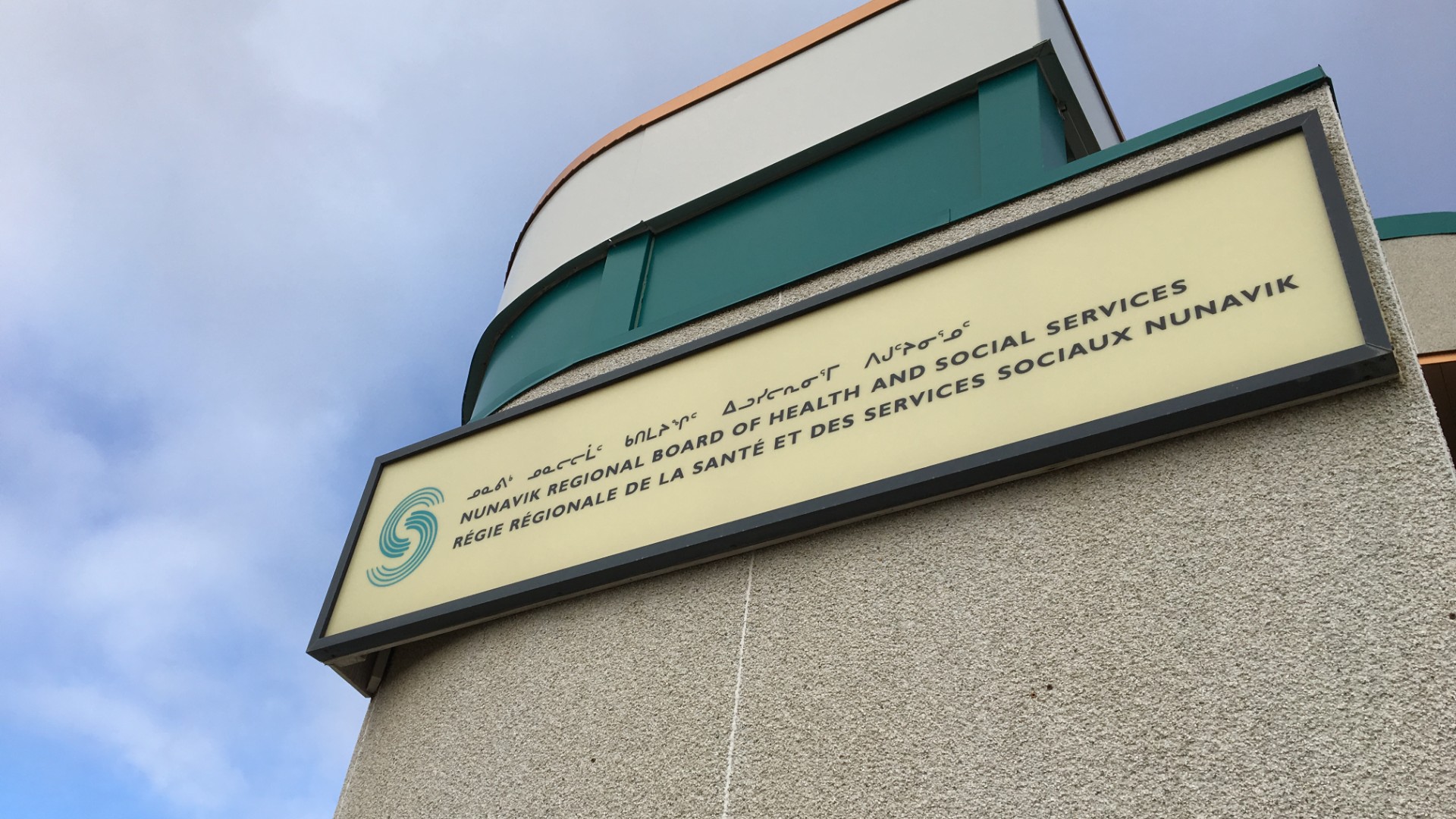
McGill’s Department of Family Medicine is developing a course that aims to help doctors and researchers understand Inuit perspectives on healthcare that they expect to be open for enrollment by the Fall of 2021. Spearheading the development of this new Inuit health module is recently appointed associate professor of Family Medicine Richard Budgell, who is of mixed Inuit ancestry himself.  

Bringing with him over 30 years of experience working with Inuit and other Indigenous groups in Quebec and Labrador, Budgell assures that the new module will foster important discussions regarding a range of topics related to community health in the Canadian north. The module will focus on educating medical students about the Inuit view of healthcare, the historical effects of colonialism on Inuit health practices, and the history of disease as a result of first contact with European settlers.

“The Canadian health[care] system has been imposed on Inuit,” Budgell said in an interview with The McGill Tribune. “[We should] approach people with a sense of humility as opposed to a sense of superiority.”

Despite stereotypes that Inuit reside only in remote areas, Budgell explained that there are hundreds of Inuit who travel from Inuit land claims regions, such as Nunavik in northern Quebec, to receive care in Montreal. For example, it is not uncommon for expectant Inuit mothers to travel hundreds of kilometres to give birth in Montreal. 

Budgell noted that Inuit patients have very different definitions of health than many Canadian doctors, a factor which greatly impacts the quality of care that clinicians can provide. Generally, Inuit regard health as a holistic experience, one that includes an important spiritual componenta facet of health that Western medicine has been criticized for overlooking. As such, when addressing the concerns of Inuit patients, Budgell advises doctors to respect the importance of spirituality. 

“[We’ll be] looking at systemic issues in terms of colonialism and how that has affected [Inuit’s] contemporary experience,” Budgell said. 

Inuit often receive care at institutions that are scarcely staffed by Inuit healers, a systemic issue echoed by the under-representation of Indigenous doctors in the Canadian healthcare system and an outstanding problem that the module seeks to address. Budgell explained how this disparity stems from Indigenous youths’ relatively low high school completion rates in comparison to the rest of the population. When Inuit students are not presented with opportunities to contribute to their communities, students can become discouraged by academic work.

“The education that [Indigenous] people are receiving in elementary and high school has very little cultural relevance to them,” Budgell said. “I’d like to see a world where health facilities in Indigenous communities are dominated by Indigenous people.” 

Before beginning his position as associate professor, Budgell served as the Regional Executive Director of the First Nations and Inuit Health Branch for Indigenous Services Canada, a title with demanding responsibilities. His biggest challenge was confronting cultural stereotypes about Indigenous peoples harboured by many Canadians, biases that he hopes to dismantle in his course. 

Nationwide, high school and elementary school curricula have been slow to incorporate pre-colonial Indigenous history, let alone lessons on Indigenous health practices. A first introduction to the basics of Indigenous culture at the post-secondary level is a reality for many Canadians, but Budgell emphasized that blame should not be put on the students themselves. 

“You can’t blame people for having been the product of poor education,” Budgell said. “The curriculum about Indigenous people has been inadequate probably everywhere across the country.” 

Budgell’s ultimate goal is to engage in a dialogue with students. He encourages them to contact him with questions about Indigenous health in order to begin what are, in his view, long overdue conversations.  

“We all have knowledge and we all have questions,” Budgell said.

Creative

Introducing: The McGill Tribune 2020-2021

There are opportunities for everyone at the Tribune. Our 2020-2021 team looks forward to working with you this year!

Find more information on our upcoming documentary film festival: Resilience on the Facebook or Eventbrite.


Features

Sustainable peace for a sustainable future

McGill often touts its research credentials as among Canada’s best: According to the latest QS rankings, it boasts the 43rd highest research output and 36th best faculty globally. It is no wonder that students flock to Montreal in hopes of rising up through the ranks of distinguished academics. After all, McGill was where DNA was identified as the component of genetics, and home to the inventor of the gas mask and the man who wrote Canada’s national anthem, among the many others who succeeded in making significant contributions to their field of research. But although McGill’s researchers have helped to improve our world, they have also invested in and researched technologies that have contributed to war, and surveillance, creating devastating consequences for ordinary citizens across the globe. 

Science & Technology

Baking with bacteria: The science of sourdough

While the world was in quarantine, many people picked up new hobbies. For some, it was working out; for others, it was watching movie marathons; and for many, baking became a new favourite pastime. On social media, people shared their experiences trying their hand at making bread and pastries in their free time. 

Baking became so popular that many grocery stores around the world experienced yeast shortages. With yeast unavailable, many home bakers got inventive and turned to sourdough starters instead. Sourdough starters are an alternative to yeast that help produce an airy, tangy bread with a crunchy crust. It’s delicious, yes, and it’s also alive.

“A sourdough starter is a microbial community in a dough […] that has the potential to turn the starch and sugar from that dough into carbon dioxide and alcohol to make the bread rise,” Dr. Jennifer Ronholm, assistant professor in the Department of Food Science and Agricultural Chemistry, said in an interview with The McGill Tribune

The fermentation mechanism of a sourdough starter closely resembles that of yeast. Yet, it is the wide variety of bacteria in the culture that gives sourdough its irresistible, tangy flavour. When carbon dioxide gas is released during the setting process, it forms little pockets of air that make the bread rise into a delicious, fluffy loaf. 

“In sourdough bread, the microbial community is composed of some yeasts, but there are […]100 times more lactic acid bacteria than yeast in a sourdough starter,” Ronholm said. “Yeasts produce alcohol and carbon dioxide whereas the lactic acid bacteria produce carbon dioxide, lactic acid, and acetic acid. It’s those other acids that give the sourdough breads their unique flavours.”

The bacteria found in sourdough starters, often of the genus Lactobacillus, do not need to be intentionally added to the starter mix as yeast does in traditional breads. Bacterial cultures in sourdough usually originate from the flour and water used to make the starter, and from the baker’s own hands, which, despite their vigorous handwashing, are covered in bacteria.

In an ongoing project from 2017, Dr. Rob Dunn, a professor of applied ecology at North Carolina State University, found that the bacteria introduced to starters from different bakers’ hands gave their sourdoughs unique bacterial profiles and, by extension, one-of-a-kind flavours. 

Dunn and his team instructed 15 bakers from around the world to bake bread using the same ingredients, but with starters that they had nurtured themselves. The results of the project indicated that the variable bacterial profiles of each starter produced notable differences in flavour when taste-tested. 

“Each bread had a unique ‘microbe flavour’ influenced by chance and the microbes in the flour, on the bakers’ hands, and in their bakeries,” Dunn said in an article for Technology, Entertainment, Design.

Bakeries and home chefs around the world are quick to boast about the quality and longevity of their sourdough starters, passed down over decades from their own parents and grandparents. Sourdough starters do not age like wine or cheese, however—they are constantly changing and growing.

“I think a lot of people don’t realize that it’s different from day to day,” said Ronholm. “A lot of people have these starter cultures that have been passed around for years or some companies have started cultures that are years old, but from hour to hour, day to day, these cultures will be continuously changing. Even though you’re advertising that you have this ultra-old culture, it’s very different from day to day.” 

Not only are these microbial cultures fascinating and delicious, they’re also living beings. Those who make their own sourdough starter often get attached to it, treating it like a surrogate pet-in-a-jar and feeding it flour and water regularly. So, perhaps when this is all over, amateur bakers around the world will have made some new friends despite social distancing guidelines—even if those new friends are microscopic.

Commentary, Opinion

SSMU cannot ignore francophone students’ concerns

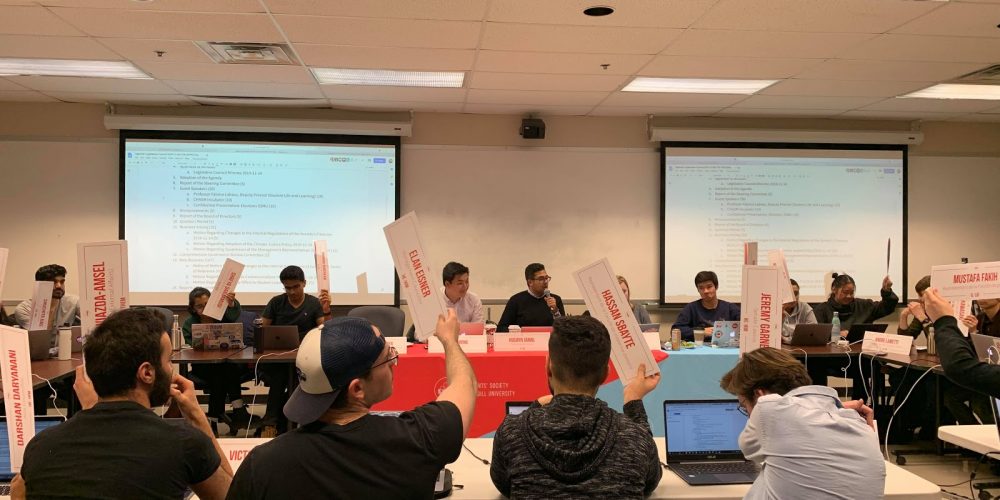
In March, during its Winter 2020 referendum, the Student’s Society of McGill University (SSMU) voted on a new constitution, but a French version of the proposed document was not provided on the ballot. It was not even written until three months later — even though SSMU is officially a bilingual organization. What is more, according to the very constitution that was put to the vote, the French version would have primacy over the English version in the case of minor linguistic differences. Yet it was not available at referendum, which effectively means students were asked to vote on a document they had no access to.

In light of this, SSMU’s Judicial Board unanimously declared the 2020 Constitution illegitimate. Despite SSMU President Jemark Earle’s request that the English 2020 Constitution remain valid until a French version is approved, the justices called for a new referendum in the Fall, where voters would be provided with both versions. They argued that it would be unfair to force Francophones to vote on a constitution many expect them to approve because it would be “impractical” not to do so. Students voting on the English version did not need to consider such logistical factors when they voted during the Winter 2020 Referendum.

Despite this, SSMU’s Board of Directors (BoD) challenged the Judicial Board’s decision, effectively ignoring Francophone students’ concerns and disregarding the fact that one of the new constitution’s objectives was precisely to amplify Francophone voices. But the rationale behind this decision is actually simple: The BoD has only chosen to ignore the concerns of Francophone students in this instance because these concerns turned out to be untimely. If the BoD truly thought SSMU’s bylaws were ill-designed, then the solution would have been to change the rules, not to break them. But the rules were not the problem here. The real problem is that SSMU behaves as if it can neglect its Francophone student body whenever that body becomes inconvenient.

It only takes a glance at SSMU’s recent history to observe this pattern. The 2017 Constitution’s French version, for example, has never even been available on SSMU’s website, and when Le Délit managed to access the document, they discovered numerous spelling and syntactic mistakes. SSMU’s history of publishing poor translations does not stop there. During the 2019–2020 academic year, Francophone Affairs Commissioner Juliette Chesnel had to spend several hours per week overseeing the translations of all SSMU documents—even though it was not her official job—because they were full of mistakes.

SSMU’s negligence towards Francophone students is merely a testament to a wider indifference the McGill community shows vis-à-vis the Francophonie. This indifference explains why the Francisation Fee—which would have financed the translation of all SSMU documents and the establishment of a new budget for the Francophone Affairs Commission—was the only fee that was rejected during the 2020 Winter Referendum.

Non-Francophone students seem to be disconnected from the experiences of Francophone students at McGill. Despite being at home, many French Quebecers feel like they have to make more of an effort to fit in at McGill than English-speaking foreigners. True, McGill is an English-speaking university—although this deserves nuance since many classes at McGill are taught in French, students can take exams in French, and the Faculty of Law and SSMU are bilingual—but sweeping away Francophone students’ concerns is not good for anyone. Borrowing The Tribune‘s own words, students at McGill can actually benefit from “embracing” Montreal’s multicultural reality.

The McGill community needs to understand that if the French language is not actively protected and encouraged, it will simply disappear because the English-speaking majority will prefer English and the French-speaking minority will have no choice but to adapt to the majority. This is already happening at McGill, as French-taught courses are in decline. Defending the Francophonie is a matter of defending the rich cultural heritage of a historical minority at McGill. 

The McGill community usually prides itself on the celebration of diversity and the inclusion of minority voices. That is, apparently, until these minorities become inconvenient. But progress often is, and sometimes should be, inconvenient. Francophones at McGill deserve to be heard and deserve to participate on equal standing in the larger conversation at McGill. Whether we like it or not, there is no McGill without the inclusion of Francophone voices.

Research Briefs, Science & Technology

New evidence of sticky proteins redefines bacterial cell organization

A team of biologists at McGill are changing the way scientists think about the subcellular organization of bacteria. The research group, led by Dr. Stephanie Weber, Assistant Professor of Biology at McGill, examines the spatial organization of living systems using E. coli, a species of bacteria commonly used in laboratory research. In a recent study published in the journal PNAS, the group found that bacteria are far more organized at the subcellular level than scientists traditionally thought.

Bacteria are classified as prokaryotes, meaning that they lack a nucleus and other membrane-bound structures collectively referred to as organelles. Unlike animal, plant, or fungal cells, bacteria do not discretely compartmentalize their cells with organelles.

The lead author of the study, Dr. Anne-Marie Ladouceur, a microscopy specialist at the McGill Advanced BioImaging Facility, found that bacteria may contain primitive organelle-like structures, contrary to what scientists have believed for decades.  

“We still think of [bacteria] as a ‘bag of enzymes,’” Ladouceur said in an interview with The McGill Tribune

Ladouceur believes that this outdated concept of bacteria vastly understates the degree to which these organisms are organized at the molecular level. To better understand how bacterial cells are organized, Weber’s group took a highly technical approach of tracking single molecules. Rather than using historically ubiquitous methods like light microscopy, Weber’s team instead applied techniques for studying a trendy phenomenon in molecular biology known as liquid-liquid phase separation (LLPS). 

LLPS is the emergence of organelle-like structures through “sticky” proteins that aggregate together, rather than being physically contained by a membrane. This phenomenon is similar to the way oil forms distinct droplets in water, rather than mixing evenly throughout. 

In recent years, LLPS has become a well-established mechanism for subcellular compartmentalization in animal models. Still, strong evidence for its presence in bacteria has previously been elusive, a detail that Weber attributes to their very small size.  

“All of the criteria to define phase separation used to require a droplet bigger than [the E. coli] cells,” Weber said in an interview with the Tribune.

In this study, the sticky proteins comprising the bacterial proto-organelles were identified as RNA polymerase (RNAP). RNAP is a key enzyme that functions in the early stages of gene expression, responsible for copying DNA into RNA. The group has identified clusters of RNAP molecules as the first instance of LLPS organized structures in bacteria. Weber noted that this finding provides evidence for an intermediate mobility state between immobile, DNA-bound, and freely diffusing RNAPs.

Interestingly, their data also provides a potential explanation for a previously noted discrepancy between the high number of RNAP molecules and a corresponding, lower-than-expected level of gene expression. The group’s research provides evidence that many of the intermediate state RNAP molecules are not actively transcribing, prompting future studies to account for low levels of gene expression.  

The McGill team also proposed that bacteria may use LLPS in order to quickly and acutely control the location, activity, and accessibility of these RNAP molecules in response to both cellular and environmental cues and in order to rapidly regulate growth.

This study is the first to provide evidence for the ubiquitous nature of LLPS as a mechanism of organizing cells. It is even possible that LLPS played a role in organizing macromolecules in the context of the RNA world hypothesis for the origin of life on earth, Weber and Ladouceur commented. 

“People have found that RNA and small proteins can form these condensates in vitro, and so [LLPS] could be a way to concentrate in the diluted soup of the RNA world,” Weber said.

Ask a Scientist, Science & Technology

Facing the back-to-school blues

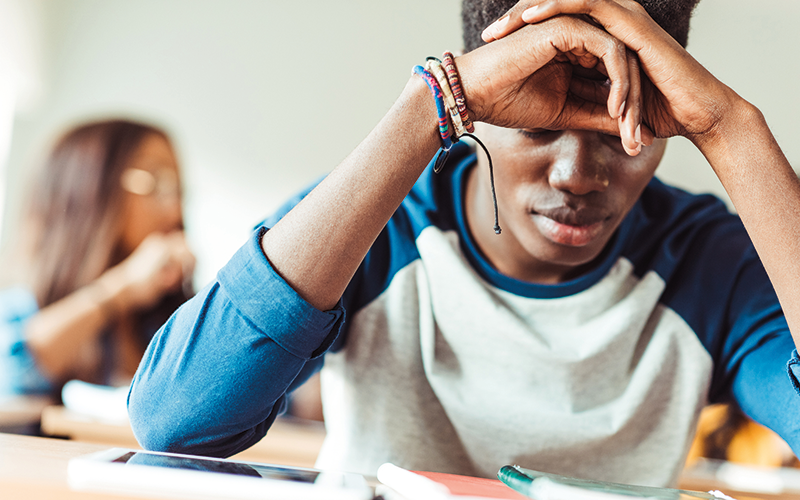
Stress levels of university students have peaked during the COVID-19 pandemic.  Whether these students return to campus or continue their studies remotely, that stress is unlikely to dissipate. In a recent survey, the U.S. Centers for Disease Control and Prevention reported that 62.9 per cent of individuals aged 18-24 disclosed increased feelings of anxiety or depression in June of 2020, compared to only 49.4 per cent in June of 2019. As the new school year begins, anxiety in students is likely to worsen, with the onset of a phenomenon colloquially referred to as the back-to-school blues.

Dr. Kristy Robinson, an assistant professor in the Department of Educational and Counselling Psychology at McGill, investigated the underlying emotional experiences that affect academic engagement and student motivation.

“I don’t doubt [back-to-school blues’] existence. It’s about mourning the loss of activities and fun that one gives up to pursue school,” Robinson said in an interview with The McGill Tribune. “Back to school anxiety is entirely natural for students of all ages and even affects professors.” 

With the added pressure of focusing on schoolwork during the pandemic, students are likely to face unprecedented obstacles while trying to stay motivated throughout the semester. Demotivation, distracting home environments, and a lack of familiarity with online learning are all factors that can contribute to increased feelings of anxiety. 

Motivation is multifaceted and results from the complex interplay between intrinsic and extrinsic influences. Intrinsic motivation comes from finding fulfillment in doing the activity itself, such as enjoying the process of learning. In contrast, extrinsic influences lie outside of the individual. The incentive of achieving good grades, for example, would be an instance of external motivation. 

One study published in the journal Contemporary Educational Psychology, found that internal motivation declines rapidly as the semester progresses. This makes it crucial for students to acknowledge their external influences and establish mental and physical habits early in the semester to support their motivation and reduce anxiety. In situations where students have little control, regularly disconnecting from the source of stress for short periods of time is shown to be a useful coping mechanism.  

Courses that are particularly difficult can create an unwelcoming and highly competitive environment with more sources of stress. 

“Our studies have shown that students who aim to outperform others are more likely to feel stressed and become demotivated quickly,” Robinson said.

Ultimately, fear of the unknown is largely what drives the back-to-school blues. Uncertainties generate complex emotions of frustration and self-doubt, and can become overwhelming. According to self-determination theory, to become motivated, one must realize that determination relies on three basic needs: Competence, autonomy, and social connections. 

For many students, online learning is already a challenging experience due to limited social interactions, fewer opportunities to study outside of their homes, and the expectation to quickly adapt to modified coursework while working equally as hard. 

There are several ways students can approach this semester with more structure in order to manage their anxiety and motivation. To maintain focus while studying at home, students should prioritize building a routine and designating certain tasks to different spaces. Robinson advises to avoid using Netflix or eating at the same desk used to study.

While the aforementioned techniques build concentration, boosting motivation requires a different approach. 

“Write down the reasons you want to do well at the beginning of the semester when you’re most motivated,” Robinson said. “Periodically checking in on those goals can uplift sinking motivation.”

This semester will require students to proactively develop a support system while respecting public health regulations. 

“The best way to stay connected is by sharing our feelings,” Robinson said. “If you’re confused, say it, because it can help normalize the anxiety that many other students may also be experiencing.” 

Art, Arts & Entertainment, Film and TV

Venice VR Expanded Satellite program brings the universe to Old Port

For a limited time, the price of admission to Old Port’s Centre Phi will land you front and centre in your very own episode of Black Mirror. Courtesy of the globally renowned Venice Biennale, Montreal is currently home to the VR Expanded satellite program, the virtual reality component of the Venice International Film Festival. This year’s event features 44 cutting-edge virtual reality (VR) films and games hosted in art institutions from Copenhagen to Beijing, with Montreal boasting the only satellite location in Canada. Guests are invited to delight themselves in two-hour intervals, sampling state-of-the-art VR experiences which organizers claim are a glimpse of the future of digital entertainment.


Immediately upon entry, the Centre Phi looks like an exhibit of tomorrow. The ultra-modern multimedia centre occupies the hollowed-out interior of an Old Port heritage building. VR Expanded is housed in Espace D, a sparse white room encased in one-way glass and illuminated by the calm glow of orange and pink LEDs—somewhere between Mark Zuckerberg’s yoga room and the interior of a kaleidoscope. Once seated at appropriately distanced swivel chairs, guests are instructed to put on the goggle-helmet apparatuses dangling from the ceiling, and the adventure begins.

The experience, at first, is immensely disorienting. Immersing oneself in an artificially constructed reality is genuinely novel, and requires some acclimation. Substituting a screen for goggles allows for a serious reduction of distance between media and audience, which profoundly amplifies one’s sensory experiences. What’s more, the physicality of VR entertainment—standing up, spinning around, reaching out—lends a dynamic that cannot be experienced from the depths of a sofa. It would appear the future of entertainment is both immersive and kinetic, with dizzy spells to spare.

The implications of this novel medium vary across the exhibit’s diverse offerings. In children’s programming—films like Ajax All Powerful and the Canadian animated short In the Land of the Flabby Schnookthe transition is not so jarring, and is more like stepping inside a 360-degree television set than an alternate reality. In the Land of the Flabby Schnook is particularly endearing, as the user glides through an adorably spooky dreamscape while watching two siblings learn to conquer their fear of the dark. In more ominous games, however, such as Vibeke Bryld’s Hush, a Danish installation that slowly submerges the user in the haunted murk of the North Sea, VR raises the stakes. Fear is not exempt from the intensifying effects of VR, and users will quickly find themselves swiveling in their chairs to make sure there is nothing behind them.        

The exhibit’s most exciting promises for the future of entertainment lie in the works that test VR’s capacity to augment emotional experiences. In Randall Okita’s oral history project The Book of Distance, interviews and family photographs are woven together with VR animation to tell the story of his grandfather, who immigrated to Canada from Hiroshima, Japan in 1935. In transforming his grandfather’s life—from departure and integration to forced internment and incalculable loss—into a first-person, interactive experience, Okita alludes to perhaps the greatest virtue of VR: Its power to inspire empathy. Compassion has always demanded that we walk in the shoes of others and look through borrowed eyes at new perspectives; The Book of Distance, like many of the selections at VR Expanded, takes this literally.

Whether or not VR truly is the future of the digital world, works like the ones at the Venice Biennale prove that there is merit to the experiment. There will always be value in works of art that interrupt our solipsism and pull us outside of ourselves—even if only for a brief moment spent standing on the deck of a virtual steamship, feeling the unexpected urge to wave goodbye to a home you never knew.  

The Venice VR Expanded – Satellite Program is running at the PHI Centre until September 12.


Off the Board, Opinion

Studying politics in a society that is rigged against you

When news reports came out on Aug. 26 about yet another incident of sexist harassment outside the Minister of Infrastructure and Communities Catherine McKenna’s office, I felt a familiar sinking feeling in my stomach. Since I began engaging with politics in my early teen years, my awareness of gendered attacks has taken an increasingly sinister toll on my desire to pursue a career in politics. Though I know the very point of identity-based harassment is to discourage marginalized groups from pursuing politics, it is difficult not to internalize the message that you do not belong when stories of such behaviour are plastered all over every newspaper. Although there are valid critiques to be made of every politician, the line between expressing different political opinions and ad hominem attacks based on the person’s gender, race, or sexuality is often crossed, particularly as politics grow increasingly polarized.

Women are three times more likely than men to be attacked online for their politics, in part due to the legal and social impunity that social media provides. While women and non-binary people in politics are less likely to be attacked physically than men in the same positions, verbal attacks are common and tend to employ gendered language. When I read articles about such attacks, like a man scrawling the word “cunt” on McKenna’s office last October, or Ted Yoho calling Alexandria Ocasio-Cortez a “fucking bitch,” I am reminded that it was not that long ago that women were excluded from politics. Perpetrators of verbal violence, intentionally or not, reinforce the conception that women do not belong in positions of power. 

Women of colour and 2SLGBTQIA+ women often face hatred and vitriol far more intense than white women. These attacks are not unique to Canada: One only has to look across the border, at politicians such as Rashida Talib, Ilhan Omar, and Alexandria Ocasio-Cortez, to see the frequency and force behind such attacks. Racialized politicians in Canada are similarly no stranger to race-based violence. Former Attorney-General Jody Wilson-Raybould was targeted with Indigenous stereotypes meant to disparage her work ethic after she resigned during the SNC-Lavalin scandal. 

Politics tend to reward stereotypically masculine behaviours, such as aggressiveness, reason, and strength. When women attempt to conform to these standards, they are in violation of perceived feminine norms, and are more likely to be ridiculed by the public. On the other hand, when women are perceived as too feminine, this still inhibits their electoral success and opens them up to other lines of attack. When it comes to the way women present themselves to the public, we can’t win. Yet, our speaking styles, clothing, and mannerisms are still constantly dissected.

To young women and non-binary studying political science, like myself, the routine harassment of politicians due to their gender sends a stark message: We are not welcome in politics. Attacks based on race, gender, and sexuality are something that no one should have to bear, and their consequences are grave. Fewer women in politics, in many cases, contributes to a lack of important policies, such as access to safe abortion, childcare, and parental leave. 

Criticizing politicians is fine, and an integral part of our democracy. But when civil disagreements devolve into identity-based abuse, we are actively eroding the civic ethics that are necessary for effective political discourse. While gendered comments are often seen as part of the job, especially since social media has enabled harassment of all sorts, there are no excuses for inappropriate behaviour. As the next generation of politicians, leaders, and activists, we need to take a stand against identity-based attacks and focus on what matters: The issues affecting human lives.

Arts & Entertainment, Comedy

Stand-up comedy in a stay-at-home world

The COVID-19 pandemic has halted the regular bustle of Montreal life, and with it, halted its entertainment industry. Cirque du Soleil was forced to lay off 95 per cent of its staff; music festivals, including Osheaga and Ilesoniq, were postponed; and even the world-famous comedy festival, Just For Laughs, was delayed and moved online. Montreal’s comedy scene has been equally impacted: In fact, it initially ceased altogether. As the lockdown and public health restrictions led to cancellations of every comedy event, Montreal, for the first time in a while, wasn’t laughing.

In the early days of quarantine, performers and producers of local comedy shows were forced to adapt to new public health regulations. Large audiences could no longer gather in small bars, and those who braved social distancing had to wear masks and allow for venues to be sanitized between performances. Essentially, in-person shows went on a break. 

Some attempted to join the ranks of entertainers around the world by performing on Zoom. While these efforts were commendable, a key aspect of stand-up comedy remained missing: A visible audience. Comedy show producer Sid Khullar described the connection between performers and their audiences as integral to the success of a show.

“You want comedy that you can enjoy with other people,” Khullar said. “The audience [is] pretty much on mute. So even if you have 100 people on mute you can’t really see what’s happening [….] There’s a disconnect.”

As public health restrictions gradually lifted, Montreal’s comedy shows only slowly returned. Producers organized outdoor shows in parks and backyards that respected new health guidelines. Khullar even decided to run his new festival, the Montreal Comedy Series, under socially distant conditions. He pointed out that especially with the postponement of Just For Laughs, the city’s comedy shows needed to gain momentum. 

“Every year, when JFL does their festival, the rest of the comedy scene gets […] a little push from them,” Khullar said. “Comedy is no longer in the back of people’s minds.” 

While many producers and comedians adapted their in-person shows to accommodate public health guidelines, others expanded their mediums. Comedian Quinn McMorrow, host of the weekly show Comedy At The Art Loft, was already planning on releasing an Art Loft podcast in the fall, but accelerated his timeline amidst the pandemic. Rather than attempting to do socially distant shows, McMorrow and his roommates started the comedy podcast Artloft Radio. Guests include other comedians, as well as Montreal locals with unique stories. The goal of the show, McMorrow explained, is to provide an outlet away from the politically charged reality discussed in many comedic settings. 

“We thought, why don’t we have a podcast that’s just light and fun and not topical,” McMorrow said. “We can get into serious stuff, but in a lighthearted manner.”

In many ways, the pandemic stimulated comedians’ creativity and drive to generate content. McMorrow pointed out that isolation has taught comedians that a performance can be successful even without typical comedy conventions.

“When summer hit, that’s when you saw people get really innovative and have shows in the park or along the canal,” McMorrow said. “It’s good that we’re all sort of retooling ourselves and seeing what we can do.”

Despite the uncertainty and fear that the pandemic brought, Montreal’s comedy scene has endured. Months of quarantine and logistical challenges may have discouraged comedians and producers at first, but ultimately led to a boom in creative solutions. Zoom shows, outdoor venues, distanced festivals, podcasts, and sketch videos all continue to engage audiences in one way or another, showcasing Montreal creatives’ renewed inspiration for comedy. The city’s community proved that while the coronavirus may persist, so does the resilient spirit of Montreal’s comedy scene. 


Sid Khullar’s upcoming comedy events can be found on Mtlcomedyclub.com. Quinn McMorrow’s upcoming series BOMS (Best Of Montreal Sketch) will be released Sep. 20th.

Read the latest issue

Read the latest issue