

Latest News

Science & Technology

Climate change has become a multi-faceted dilemma

The most recent report from the International Panel on Climate Change (IPCC) (drafted on Aug. 7) emphasizes the susceptibility of global food security to changes in climate and land use. The report highlighted that adaptive strategies to reduce total carbon production and preserve natural ecosystems are humanity’s best chance at mitigating the climate emergency’s effects on food production.  

The report stressed the extent of human dependency on land systems. Humans are currently using one quarter to one third of available land’s potential production capacities. Essential products that come from land use, including feed and natural energy sources such as fossil fuels, are crucial to agricultural yields and the sustainability of the food supply chain. 

“Land degradation is a general term describing negative trends in land condition, such as loss in biological productivity and ecological value to humans,” Margot Hurlbert, a Canadian coordinating lead author of the report, said in an interview with The McGill Tribune

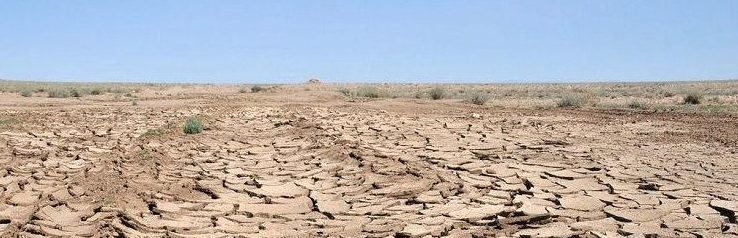
Humanity is consuming resources at an unprecedented rate. Consequently, land has become exhausted to the point that it will soon be unusable. Human disruption of natural processes is leading to adverse, irreversible effects on Earth’s natural systems. 

“The use and emissions of carbon in agriculture is cyclical in nature,” Laxmi Pant, a contributing author to the report, said in an interview with the Tribune. “Modern agricultural practices such as tilling are a major source of carbon output into the atmosphere. But, to produce crops with greater yields, we require the input of carbon back into the land through synthetic sources such as fertilizers.” 

This pattern of replenishing lost carbon through unnatural supplementation disturbs the delicate balance of the Earth’s carbon cycle. As a result, more carbon is released into the atmosphere, leaving the soil unable to reabsorb excess outputs and increasing overall greenhouse gas emissions. As emissions increase, so do global temperatures, causing further water and land stress and exacerbating many of the problems associated with land use and food cultivation. 

The scientific community agrees that the climate emergency will have disastrous downstream consequences on all levels of society. As such, climate change has led to concerns not only of environmental sustainability, but of social stewardship. In reality, the two issues are inseparable. 

“The report takes into consideration people living in areas vulnerable to desertification and land degradation,”  Hurlbert said. “Around half of the vulnerable population resides in already vulnerable areas in South Asia, Central Asia, West Africa, and East Asia.” 

Food insecurity will pose additional problems to people living in susceptible coastal areas, who now face the immediate risk of losing invaluable agricultural and residential land to rising sea levels. 

Moreover, changes in food consumption patterns have created a global divide whereby approximately two billion adults are overweight or obese, yet an estimated 821 million people remain undernourished. Socioeconomic class and geographic location serve as the main determinants for the widening divide. Given sustained increases in mean global temperature, this divide will only deepen without rapid intervention from national governments and international organizations. 

“Socioeconomic choices can reduce or exacerbate climate related risks,” Hurlbert said. “A sustainability pathway with high income, reduced inequalities, and food produced in low emission systems have decreased risks of desertification, land degradation and food insecurity.” 

Exposure and sensitivity to climate change and extreme climate events can impact infrastructure and transport, and can cause direct and indirect changes to the income level and food purchasing power of low-income consumers.  Without a drastic reduction in greenhouse gas emissions or the implementation of carbon-reducing agriculture strategies, the cyclical patterns of poverty, malnourishment, and income inequality will become further entrenched into global society.

Student Life

Wisdom for the youth

Get involved and discover your interests

Leanne Young, Photo Editor

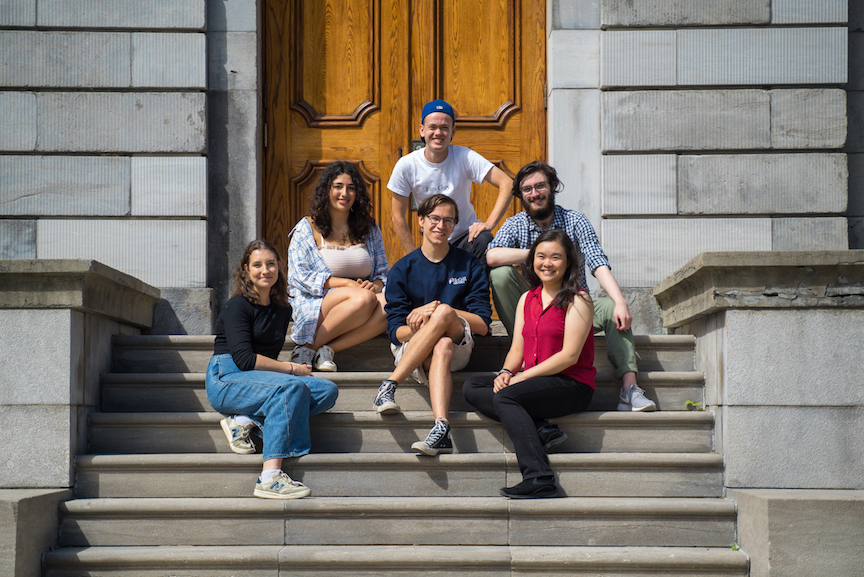
The first year of university is undoubtedly a busy time for students, but it is not just about getting your degree: It is also the best time to explore new interests and develop life long relationships. While you should not stretch yourself too thin, it’s important to keep an open mind, step outside of your comfort zone, and try new activities! Getting involved can help you discover yourself, meet new people, and take a breather from studying, all while giving back to the McGill community.


Drop out of political science, you dunce

Kevin Vogel, A&E Editor and former PoliSci bro 

I came to McGill with big aspirations: I would graduate with a political science degree; get a cushy, bourgeois government job⁠; maybe even become a big-city lawyer. Yet, these expectations failed to prepare me for the reality of student life. I dreaded political science classes, but told myself that things would improve if I kept with the program. When I finally accepted that I had no passion for my major, I had already taken 18 dismal credits in the program. Had I realized this sooner, I could have explored completely different disciplines instead of listening to centrists in international relations conferences defend military interventionism.


Take the classes you like

Gabe Nisker, Features Editor

At the end of my first-year, I sat in my dorm room and stared at my computer. I wanted to take a film studies class, but I needed to be a cultural studies major to take it. At first, I planned to major in economics, and I had circled the next set of economics classes as “musts” for my first U1 semester. However, the film studies classes I also wanted to take conflicted. I was bored by economic theory but pushed through it for the sake of future income and to please my parents. What I wish I had done instead was take the classes I wanted to from the get-go. Get the degree you want first; the job will come next.


Get some sleep!

Sophie Brzozowski, Arts & Entertainment Editor

Being a night owl by nature, I was instantly taken by  McGill’s many opportunities for nocturnal recreation: 24-hour libraries, 3:00 a.m. last calls at the coolest bars, and a selection of fast food joints that delivered, for no good reason, until four in the morning. At first, my sleeplessness was mostly due to the fact that everything was simply too exciting, but by midterm season, I was paying for it. Yes, Montreal is beautiful at night, 2Chow tastes the best at 2:00 a.m., and the upper floors of McLennan the most tolerable in the wee hours of the morning, but getting enough sleep is simply non-negotiable.


Lower your expectations

Keating Reid, Copy Editor

Lowering your expectations is the quickest route to happiness. It may sound cynical, but consider how freighted with cultural baggage our university years are: This is  the time when you’ll meet your lifelong friends and possibly your future spouse, discover your deepest passions, and sculpt the remainder of your time on this planet. Of course, none of this is necessarily true. Friends, partners, and passions don’t come and go on a schedule. The good news is that we’re people; we don’t have “best-before” dates. If the ‘university experience’ isn’t all you expected, don’t worry—they’re only the best years of your life if you let them be.


Ask for support

Abeer Almahdi, Managing Editor

In my first-year, I was constantly comparing myself and my success to other people, which took a toll on my mental health. It is important to recognize that everyone is on their own university journey, and that we are all going at different paces. It is important to ask for help and put you and your health first. Seek out safe spaces in clubs and cultural associations, or finding support from your floor fellow if you’re in residence, your advisor, group therapy, or counselling. Finding support networks is important, especially when McGill resources fall short of expectations.

Student Life

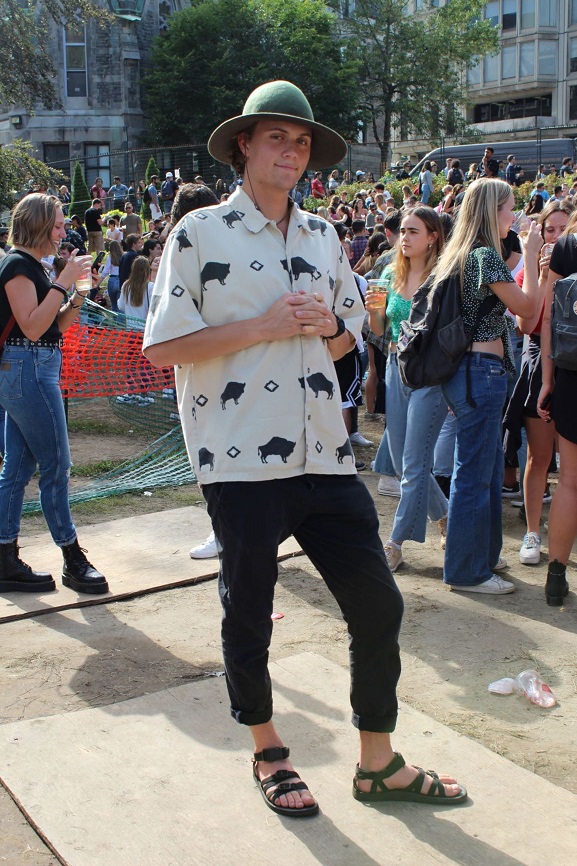
Best Looks on Earth: Student Style at OAP

OAP is more than a back-to-school barbeque; it’s also the perfect opportunity to survey McGill’s unique brand of street style, which this year included an abundance of relaxed-fit pants, one-of-a-kind customized pieces, and lived-in sneakers.

The McGill Tribune spoke with OAP’s slickest students about their fashion inspirations, stories, and favourite pieces, as well as the stories behind their outfits.

Colette Griffiths, U2 (Arts) and Matilda Sjöberg-Fox, U2 (Arts) 

“I love to go to Value Village ‘cause I love a deal. All my stuff is thrifted besides my shoes, socks, and my underwear. I love the 2000’s [and] I like big shorts ‘cause they’re more comfortable. I like baggy stuff.”

“I really like wearing lingerie inspired clothing. I like breaking the […] boundaries of showing off your body and being comfortable in that, and I love seeing other women do that [….] I’m also a diehard baby pink lover, so I always try to incorporate it. [My shoes are] slip-on Converse slides.”

Julia Kechnie, U3 Arts and Paige Kechnie, U1 Arts

“I walked out of the house in a skirt and high heels, and […] I was like, I have to turn around, it’s OAP! So this is the outfit that I chose: Corduroy pants and a crop top and my Converse All-Stars.”

“I love good streetwear. [My Supreme bag is designed by] Mark Gonzales, […] a skateboarder from the 1980s [and] black denim goes with everything. I got my pink cords from Urban; […] I love a wide fit. [My shirt is] another skate brand, [and] I have this keychain around my neck that is Saint Laurent. It says ‘Addicted to Love,’ ‘cause I am. I got this hat [from Off the Hook] in Montreal, and it’s 40’s & Shorties, […]  another skate brand. I’ve got the pastels going on today, that’s the vibe. It’s a pretty day, blue sky, colorful outfit.”

Cristina Venegas, U3 International Development and Ethan Mendall, U2 Cognitive Science

“I unabashedly, unironically love [VSCO girl and e-girl culture]. I love stripes because it’s bisexual/queer girl culture. Horizontal stripes? Lesbian. Chapstick with your hair up in a bun? Queer. [I always wanted to invest in Levi’s,] so I figured, drop the money on [jeans] that are gonna last me a lifetime. And then high-tops because I want the women to know that I like women.”

“So I have always been looking for the perfect pair of overalls, [and I found these] thrifting, […] and they were phenomenal except they were bell-bottoms, so [I] spent 6-7 hours hand-sewing the two legs, [but I sewed them too tight]. I was really upset, like I [had] ruined the dreamiest overalls on the planet. I took them to [one tailor who] was like, absolutely not. So I went to a second tailor, […] thrifted a pair of jeans that were almost the exact same colour, and he [sewed them] in this triangular panel. I’m so grateful that it worked out because I have a perfect piece of clothing that I’m really happy

 Mitch Strong, U2 Psychology 

“[I got my hat when] I was visiting my brother, we were on St. Cat’s. The shirt is from a thrift shop in Bayfield, Wisconsin.”

McGill, News

Première Moisson has served its dernier croissant

Redpath Café opened its doors on Sept. 3 after Quebec-based café and bakery chain Première Moisson failed to renew its lease at the end of the 2018-19 academic year. Canadian chain Toi Moi et Café will serve coffee and baked goods at the new venue, alongside Bento Sushi and Mandy’s salads.

Staff working at the previous Première Moisson location were offered the option to return to the new café in September. Meagan Toohey, who has been working in the Redpath-McLennan building for the past four years, shared her enthusiasm for the cafeteria’s new services.

“We [prepare all our products] in the kitchen each morning so [they’re] all fresh every day,” Toohey said. “We have a lot more fruits, [so the café is] not full of sugary stuff. We have a lot of snacks […] and there are a lot more drink options. Plus, we have the sushi place, which is very popular right now. And the coffee is also a lot cheaper than in the past.”

The Quesada and Bento Sushi locations in the Bronfman Building shut down in April 2018, due to construction on the first and second floors of the building. The work is intended to provide facilities for the Bensadoun School of Retail Management, such as classrooms, office and meeting rooms, and study areas. 

Food and Dining Services informed The McGill Tribune that these renovations, scheduled to end in Nov. 2019, will only include new academic spaces. Quesada has another location in Carrefour Sherbrooke, and Bento Sushi has several outlets across McGill’s campus and residences.

Many students have not yet had the chance to visit the new café in the Redpath basement. Elijah Wenzel, U4 Arts, has yet to form an opinion about the new additions.

“I do think the food is still alright and they still have coffee and tea, which is really what I want the most,” Wenzel said. “They’re still getting set up [….] I was told that soon they’ll have a better menu that shows really what they have […] so I’ll reserve some judgement until they’re really up and running. I [also] think the [pricing] is maybe a little lower, which I appreciate.”

In Jan. 2019, the Tribune conducted an informal survey, which found that only 29 of 314 respondents wanted Première Moisson to remain in the Redpath-McLennan library. However, now that Première Moisson has vacated Redpath, some students have expressed favourable opinions toward the café.

“I thought that Première Moisson was kind of expensive, but at least we had different options in terms of sandwiches or salads,” Clara Sedzro, U2 Arts, said. “I kind of miss Première Moisson. They also had more vegetarian sandwich options.”

Wenzel disagrees that Première Moisson was overpriced.

“I liked [Première Moisson],” Wenzel said. “I know some people thought it was kind of expensive, but I always thought it was a nice place to come down and get a cup of tea or coffee. […] I mostly miss the seats by the window because I really liked sitting there and looking out onto Lower Field.”

Research Briefs, Science & Technology

Hippocampus research introduces a new understanding of stress

In Aug. 2019, a team led by McGill professor and researcher Tak Pan Wong published a new study about the hippocampus and its ability to retain memories of stressful experiences. Published in the Journal for Neuroscience, the study detailed new connections to mental disorders such as depression and post-traumatic stress disorder. By exposing mice to social stress in the form of physical threats from other mice, Wong and his team found that negative memory traces were left on the hippocampus, the part of the brain primarily responsible for memory and spatial recognition.

In an interview with The McGill Tribune, Wong explained that the inspiration for the study was the growing interest in understanding the biological mechanisms underlying sensitivity to stress. Researchers originally predicted that increased sensitivity to stressknown to negatively impact learning and memory—was related to reduced hippocampal function.

“Surprisingly, using MRIs [magnetic resonance imaging] to compare [the] hippocampal volume[s] of mice that [were] either susceptible or resilient to stress revealed a bigger hippocampus in susceptible mice,” Wong said.

The hippocampus is a part of the brain located under the cerebral cortex in the medial temporal lobe. It plays a central role in long-term memory formation and spatial recognition, though the study focused only on the former. The hippocampus is thought to record memories of negative events, which leads to the activation of a group of neurons called engrams. The study found that mice that are genetically more sensitive to stressful environments experienced the overactivation of certain engrams in the hippocampus and were more likely to exhibit depressive and aversive behaviours, namely social avoidance.  

Wong explained that, though spatial orientation and recognition of the outside environment were likely not directly affected by exposure to social stress, the entire hippocampal region was put under distress. A 2018 paper showed that when put in a stressful situation, the neurons in the hippocampus responsible for getting an accurate image of one’s outside environment register poorly, influencing the long-term memory and reactivation when placed back in the same situation. The group of neurons for this place field are thus a lot less responsive when activated by stressful experiences. 

“These findings suggest the presence of distinct populations of neurons for accurate encoding of spatial information and fear memory,” Wong said.

New knowledge on the effect of traumatic memories on the hippocampus can offer new insights on the role that memory plays in people with depressive disorders. Depression is known to have cognitive symptoms such as difficulty concentrating, forgetfulness, and memory loss. In the study, repeated exposure to social stress in some mice led to overactivation in certain parts of the hippocampus, causing depressive behaviours like social avoidance. This is also a common symptom for those with depression or post-traumatic stress, as there is a fear of being judged or criticised. In his research, Wong found that activating engrams led to increased avoidance behaviours, while deactivating engrams reduced these behaviours, thus demonstrating a relationship between an overactive engram and depressive symptoms. 

Moving forward, Wong is interested in exploring whether functional changes to place cells may somehow also be related to stress sensitivity. 

Though the study demonstrated the results of stress exposure in mice, the mental and social abilities of humans are more complex. People experience, respond, and manifest stress in different and more subtle ways. Nonetheless, the study opens a new path for depression research and is a cornerstone to future studies regarding memory formation and depressive disorders.

Features

Signed and sealed

As soon as she heard the allegations, University of Windsor Law professor Julie Macfarlane felt as though she had to speak up. In 2013, Macfarlane learned of a fellow professor who had allegedly pursued predatory relationships with certain groups of students while alienating others. Yet, it wasn’t until early 2015 that the professor was terminated from his position at the university.

Student Life

The value of working a summer service job

For most, the quintessential image of summer calls to mind beach getaways and backyard barbeques, not washing dishes or consoling cranky customers from behind a cash register. By the end of a long school year, students are more than ready to embrace the summer vacation mindset and relax, but the months ahead provide the perfect opportunity to land a part-time job. As a small fish in a big university pond, it is common for students to feel pressured to score a resume-boosting internship, so many feel as though they have failed when they work in retail or service instead.

Internships can provide students with valuable work experience in the professional world, but paid positions are hard to come by in Quebec. Meanwhile, jobs in retail and service are a guaranteed way to earn an income, and they equip students with valuable work skills, building character, and fostering a strong work ethic.

Kirsten Wesselow (BA ‘19) recently graduated and is now working full-time, but she worked service jobs during previous university summers. Wesselow worked as a cook and counterperson two summers ago, as a cashier at La Diperie during Fall 2017, and had another cashier gig last summer.

“I applied to internships every summer, but the only one that ever worked out fell through because of a housing issue,” Wesselow said in an interview with //The McGill Tribune//. “I definitely felt pressured to have an internship and often felt ashamed or like I had failed by working a service job instead. It was especially relevant when all my friends in town for the summer had internships or 9–5 jobs, and I almost never saw them. They often tried to convince me to come hang out with them after a very tiring work day versus them making time for me on one of my rare days off, which made me feel like they did not see my job as real work.”

As students, it can be easy to compare our experiences and feel the need to measure up to peers. Service jobs are likely not students’ ultimate career goal or even their first choice of work, but earning money is crucial for many to help pay for tuition and living expenses.

Philippe Masson, U4 Arts, went home to Maryland for the summer and worked as a camp counselor at a neighbourhood pool during the week and at a bakery on the weekends. In his spare time, he sold pastries at a local farmers market and ran his own neighbourhood landscaping business. Masson worked an internship two summers ago for a Seattle-based startup, but felt that the experience was isolating and boring because he was working from home and staring at a computer screen all day.

“The sales skills at the bakery are applicable skills,” Masson said. “I really enjoy working for the bakery because I get to learn a lot about French cuisine and pastries, as well as interact with customers and improve my sales skills. I wish I could have had a paid internship or something more resume-building rather than working as a camp counselor because it’s not really what I’m interested in doing, but I like working multiple jobs because it’s always different and I can rotate my focuses.”

Customer service skills are a major asset for students entering the professional workforce. Oftentimes, customers are rude, impatient, and demanding, so service employees have to be quick to resolve conflicts without losing any potential business. Service jobs require patience, effective communication, and resourcefulness. There’s something to be said for working long, tiring shifts with few breaks to sit down or catch a breath. Service jobs shouldn’t be seen as a failure, but rather an honourable foray into the workforce.

Arts & Entertainment

Stuff we liked this summer

With classes already in full swing, the season for carefree media consumption has come and gone. From here on out, reading will be mandatory and any TV-watching will be tinged with guilt and anxiety as readings pile up and assignments loom. For the remaining few days of add-drop, however, here’s some stuff that we at the Tribune liked this summer.    

TV Show: Euphoria

Nicholas Raffoul 

Premiering on June 16th on HBO, Euphoria follows the trials and tribulations of a group of students navigating relationships, mental health struggles, drug abuse, and body image issues. The remarkable cast includes Zendaya, Hunter Schafer, and model Barbie Ferreira who star as uniquely exceptional yet relatable small-town teens. The show tackles its often sensitive subject matter with empathy and tact. Filled with much-coveted outfits, hazy fever dreams, and dazzling makeup, Euphoria is a heartfelt and theatrical spin on the coming-of-age narrative.

Album: Cuz I Love You by Lizzo 

Abeer Almahdi 

Lizzo’s third studio album, Cuz I Love You, dropped triumphantly on April 19. Lizzo’s bold persona, mesmerizing vocals, flute solos, and upbeat lyrics undoubtedly defined the summer season. The track “Truth Hurts” will go down in history as one of 2019’s most iconic summer anthems, hitting the number one spot on Billboard Music’s top 100. “Tempo,” featuring the legendary Missy Elliott, is also an amazing collaboration between two iconic vocalists. The album is an unapologetic manifestation of self-love and confidence that is meaningful and fun in equal measure. As a plus-size Black woman, Lizzo decares her space, thrives in it, and ensures that everyone joins her.  

Book: The Overstory

Jonathan Giammaria 

With The Overstory, Richard Powers joins a canon of media and literature begging us to stop killing our planet. With the creative liberty that fiction allows, Powers makes trees his novel’s protagonists and conceptualizes them as the resilient backbone of our natural world. Powers paints trees as benevolent and mythical creatures, alive not only in a technical sense but also as active participants in nature, interwoven with each other but also with all life that extends past the boundaries of forests or jungles. By structuring a narrative around non-human characters, The Overstory challenges the hierarchical assumptions of the relationship between humans and the natural world, scorning our view of an environment meant to be consumed or commercialized. The Overstory is a thoughtful celebration of a towering presence we’ve learned to ignore in our concrete and steel urbanity. 

Podcast: Why Won’t You Date Me? by Nicole Byer 

Abeer Almahdi 

Nicole Byer says she’s been single for decades, so, in a podcast, she attempts to find the reason behind her unlucky track record. Host of Netflix’s original series Nailed It, where home bakers without any professional training attempt to make gourmet pastries, Byer has already won over audiences with her audacious humour. Why Won’t You Date Me? discusses important subjects concerning sex and love: Commitment issues, polyamory, fatphobia, dating apps, and long distance to name a few. Alongside an impressive list of guests, such as Jameela Jamil from The Good Place, comedian Zainab Johnson, drag queen Eureka O’Hara, and plus-size model Tess Holliday, Byer investigates modern romance thoroughly and with a sense of humour. Why Won’t You Date Me? is a positive, witty, and hilarious exploration of the challenges of navigating love.  

Movie: The Art of Self Defence

Joey Caplan

The Art of Self Defence, directed by Riley Stearns and starring Jesse Eisenberg, might seem, at first, to quite ordinary: Just another tale of finding inner strength following trauma through martial arts. As the film progresses, however, the rug is slowly pulled out from under the audience, and what started off as a generic narrative quickly becomes a sinister tale of madness and revenge, rife with entertaining characters and shockingly dark humour. Eisenberg may play the same character in every movie, but, give him a good director and you will be too engrossed to notice.

News, The Tribune Explains

Tribune Explains: Campus Construction

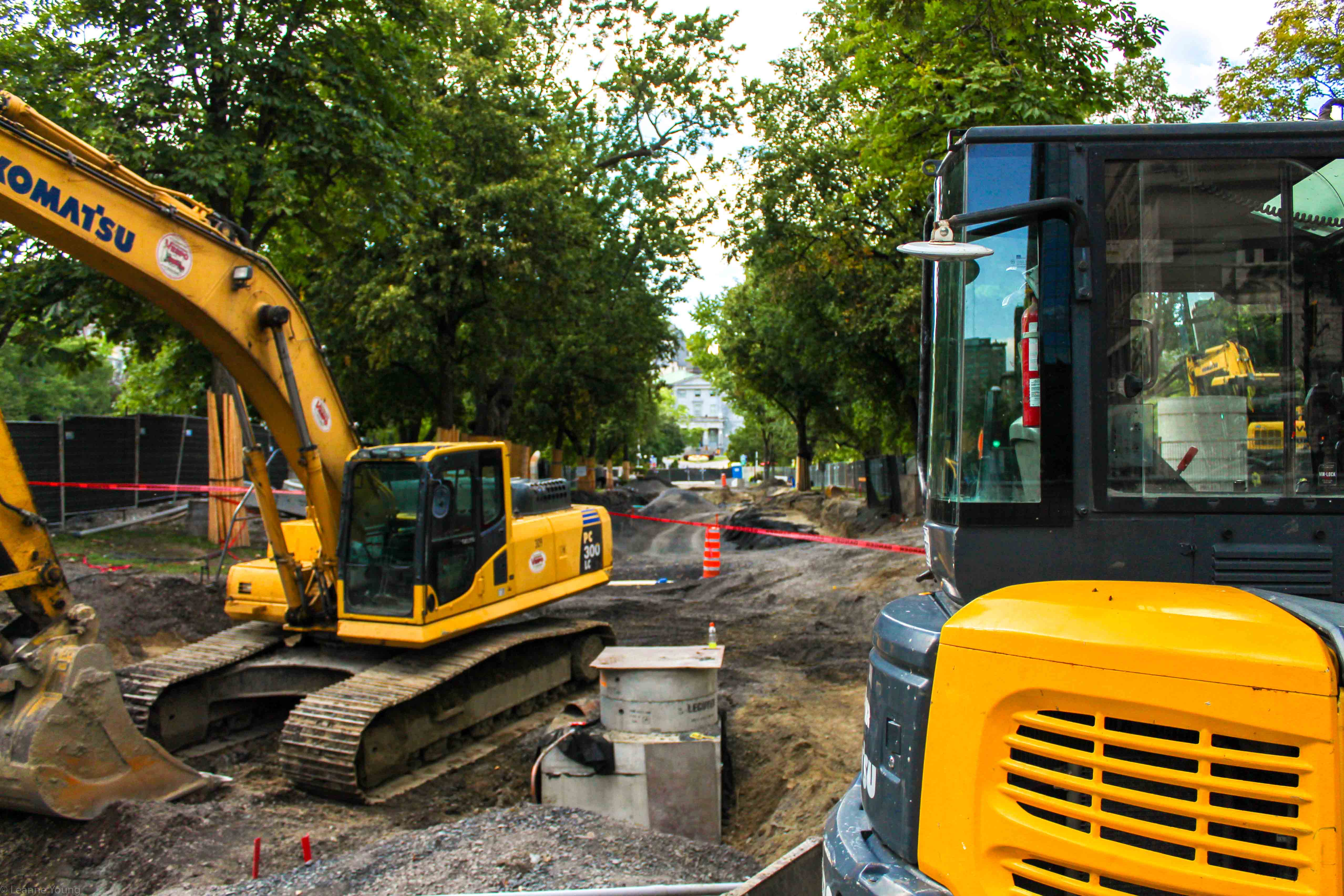
To better understand seemingly never-ending construction on campus, The McGill Tribune delved into McGill’s various ongoing projects.

What structures and buildings will be affected?

There are a handful of projects that will take place within the next few years. Some of the more prominent projects include the Students’ Society of McGill University (SSMU) Building (to be finished December 2019), the Leacock Terrace (December 2020), the reconstruction of the main road (Winter 2020), and the Macdonald-Stewart Building (late 2021), which also houses the Schulich Library. Other projects that may also affect the day-to-day routines of staff and students include renovations on the Stewart Biology Building, Macdonald Engineering Building, Macdonald-Harrington Building, Education Building, the Bronfman Building and the Lyman Duff Medical Building.

Why are there so many projects taking place?

McGill is home to some of the oldest buildings in Montreal, and many of them are in need of major upgrades. For instance, the Schulich library will undergo significant and essential structural repairs and major internal upgrades, which includes the stabilization of the stone structure and the installation of a new HVAC system. Campus-dwellers may also notice an increase in projects taking place due to a recent increase in funding from the provincial and federal governments. This has allowed McGill to increase its projects budget from $80 million to $130 million per year.

Are there updates on the SSMU Building’s status?

Fabrice Labeau, Deputy Provost (Student Life and Learning), confirmed in a recent institution-wide email that the building is estimated to be finished by December 2019 (originally August 2019). As many student clubs and services were previously housed in the University Centre, SSMU officials, such as SSMU VP Student Life Billy Kawasaki, are working to schedule spaces for the new academic year.

“During the fall semester, we will continue to work together with McGill to find space for student groups elsewhere on campus,” Kawasaki said. “ We [will] offer support and insurance to student groups holding off-campus events […and] will continue to collaborate closely with McGill in order to accommodate bookings as much as we can.”

What’s happening with campus libraries, and where can I study?

The Schulich library will be closed for renovations for the next two years. When the work is completed, the library will include more spaces for studying and working, improved accessibility, restored exterior masonry, a new HVAC system, and an expanded number of washrooms. In addition to these features, McGill is working to ensure there are available study spaces for students on campus during this closure. Vincent Campbell Allaire, communications associate from the McGill Media Relations Office, is working to move 700 desks from Schulich library to McLennan-Redpath.

 “Over the months of July and August, the Library has been relocating the Schulich student study desks (approximately 700 seats) to the McLennan-Redpath Complex,” Campbell Allaire said. “The bulk of the desks will be located in a new study area on the second floor of the Redpath Library Building and on the second floor of McLennan.”

What new opportunities should students be looking out for this fall?

In addition to the new desks, the McLennan-Redpath complex will now be open 24 hours a day for the entire academic year. Furthermore, the Schulich Collection, which comprises 160,000 books, has been moved to the Redpath library basement. The Schulich reserve collection has also been moved to the main floor of McLennan in the Humanities and Social Sciences Library Self-Serve Reserves Room for quick retrieval.

Soccer, Sports

What the summer offseason looks like for McGill student athletes

For most McGill students, summer is a much needed break from school, stress, and Montreal construction. For some varsity athletes, however, the summer offseason does not mean that they can enjoy their family and home. The McGill Tribune sat down with three McGill student athletes to discuss their summer experiences and whether they were able to take some well-deserved rest during this time. 

Though the fall sports season does not start until the end of August, McGill athlete practice and train all summer long. Santiago Sandoval, a third-year goalkeeper for the men’s soccer team from Bogota, Colombia explained that players are expected to train and play all summer so that they are in shape and ready to go when preseason camps begin in August.

“I practice two or three times a week with my club team, plus a game on the weekend,” Sandoval said. “I also go train by myself a couple of times [per week].” 

The Martlets basketball team had a more intense summer preparation: They had to attend a rigorous five-week mini-camp. 

“We had three practices a day: A team one, an individual shooting one, and a fitness session,” second-year point guard Delphine Robitaille said. 

This offseason training is crucial for student athletes given how quickly their exhausting competitive seasons get. 

“Our first tournament is [in] the third week of September,” Julie Tian, a third-year badminton player, said. “It comes really fast.” 

Even if the Martlets basketball team’s regular season doesn’t start until October, players are expected to maintain peak fitness year-round, which can make it difficult to enjoy the city or to travel during the summer. However, having time off from classes and studying allows athletes to let off some steam. 

“During the school year, the stress is more intense because we need to keep up good grades and balance school and sports at the same time,” Sandoval said. 

According to Tian, athletes are always thinking about staying fit, but the summer gives athletes the chance to be inventive and mix other sports into their routine. Tian likes to go rock climbing and tries to spare time for volleyball while Montreal is not frozen over. 

“Occasionally, I will play other sports with friends,” Santiago said. “But only for fun and not in an organized league.”

Being a varsity athlete adds greatly to the workload that the students face. Preseason camps can make it difficult to keep up with a summer course, and deferring an exam to the end of August, which is often the busiest time of the year for fall sports, is rarely an option.  

“I’m probably going to have to take an extra semester to get my grades up,” Tian said. 

Each athlete agreed that, although time-consuming, their varsity experiences will benefit them in the end. Robitaille, a transfer from the University of Central Florida, believes these experiences promotes hard work and an organized schedule.

“I know people that graduated in medicine and played sports for five years at McGill,” Robitaille said. “There’s always a way to get where you want to be.” 

Being a student athlete, even with its drawbacks, forces players to be on top of their responsibilities. But, it also forces them to make a choice about what they prioritize over the summer months. 


Read the latest issue

Read the latest issue