


Latest News

Science & Technology

‘I feel you’

Empathy is often talked about in popular culture, particularly within the realms of politics, advertising, and psychology. Articles from ‘Why Empathy May Be Your Most Important Business Skill’ to ‘How to Avoid the Empathy Trap’ are popping up all over the internet. Generally, popular culture labels empathy as a positive, sociable trait.

Despite its universality, though, it seems that there is very little consensus on what empathy actually means. The common confusion is a result of the term’s complexity and wide scope.

“The problem is that empathy is one word that we use for a whole bunch of different things,” Jeffrey Mogil, a professor in McGill’s Department of Psychology, said. “You can functionally define it, but, then, it’s hard to categorize what it is. Is it a cognitive ability, is it an emotional ability, is it something else entirely? [….] That’s why it’s so interesting, right? Precisely because it’s so mysterious and hard to pin down.”

The general consensus is that empathy refers to the understanding and experiencing of another’s emotions. Though both of these endeavours are intertwined in the general definition of empathy, scientists consider each as their own distinct cognitive processes.

Consistent evidence has emerged for two broad forms of empathy at least partially separable at the neural and cognitive levels,” David Vachon, an assistant professor in McGill’s Department of Psychology, wrote in an email to The McGill Tribune. “Cognitive empathy [is] the ability to detect or understand emotions, [while] affective empathy, [is] the tendency to feel the emotions of others.”

Feeling others

One way that scientists have understood the different types of empathy is by studying people with external behavioural disorders, such as narcissistic personality disorder and psychopathy. While psychologists often broadly characterize these disorders by a decreased amount of empathy, it is important to note that empathy does not decrease across the board.

“People with externalizing [behavioural] disorders are not any different in their cognitive empathy, but tend to have lower affective empathy,” Vachon wrote. “They can tell what you are feeling, but they care less.”

Meanwhile, people on the autism spectrum may have the opposite condition. They can have high, sometimes overpowering, affective empathy, and are able to experience the emotions of others. Conversely, though, they generally have lower levels of cognitive empathy, meaning they can have more trouble understanding how other people are feeling in the first place.

Both popular culture and science often link low levels of empathy to violent tendencies. However, unlike certain forms of psychopathy, autism spectrum disorder (ASD) is rarely associated with violent crimes. Based on a meta-analysis, Vachon pointed out that the current model of empathy actually has very little predictive power when it comes to aggression. To address the unpredictability, Vachon and his colleagues posited a third sub-scale of empathy, known as affective dissonance, or ‘anti-empathy.’ This scale measures cognitive and affective empathy in addition to the emotional ‘resonance’ of subjects.

“Empathy can be extended beyond resonant responses (e.g. empathy, sympathy, compassion) to include a lack of response (e.g. callous, unemotional, indifferent) and dissonant responses (e.g. sadism, scorn, schadenfreude),” Vachon wrote.

There is a distinct difference between someone who feels neutral when viewing a sad person and someone who is elated by another’s sadness. The ACME scale Vachon and his colleagues developed includes this important distinction in its measurement, and is a promising predictor of aggression.

Feeling stress

Stress, another key factor in aggression, also plays a vital role in the process of empathy. In 2015, Mogil and his team published a study that found a strong relationship between empathy and stress.

Mogil, a pain researcher, initially came across the link while experimenting on mice. He noticed that a mouse’s pain response would be more dramatic when a mouse that they knew was present in the same room. He explained this as a sign of an empathetic ‘emotional contagion’ between the two mice.

“Emotional contagion is when the emotional state of one animal affects the emotional state of another animal,” Mogil said.

Mogil decided to try this same experiment on humans and found similar results: A person with their hand immersed in ice water experienced more perceived pain when in the presence of a person they knew, as opposed to a stranger. Moreover, the most interesting thing the study found was how to foster emotional contagion.

Mogil’s experiment had three conditions. He divided participants into a control group where two subjects immediately went in, a treatment group where the subjects took a stress-blocking drug, and another treatment group where the two strangers played the music video game Rock Band together for 15 minutes before participating in the experiment.

There was little difference between those that took the stress-blocking drug and those that played Rock Band; both exhibited significantly-higher emotional contagion than the control group that immediately walked in with the stranger. This suggests that the bond of familiarity is more important than the particular activity.

“Once the strangers got into the room to have their pain tested to see if they had emotional contagion, they weren’t strangers anymore, [since] they had just been doing something together for 15 minutes,” Mogil said.

Mogil’s study further showed that the instinctive stress response triggered when encountering a new person blocked emotional contagion, and that this immediately prevents the formation of empathic connections with strangers.

Feeling good

Despite the widespread perception of empathy as morally-sound, there are situations in which it can be a hindrance. Empathy deficits can be favorable in high-stress fields that require quick and unemotional decision-making, such as in surgery or stockbroking.

In fact, empathy’s weaknesses form the entire basis of //Against Empathy//, a book written by Paul Bloom, a psychology professor at Yale University. In a 2017 interview with Vox, Bloom explained some of the key misconceptions about the term, most notably the prevalence of empathic bias.

“I’m [more] likely to feel empathy toward you [the interviewer], a handsome white guy, [than] somebody who is repulsive or frightening,” Bloom said. “I actually feel a lot less empathy for people who aren’t in my culture, who don’t share my skin color, who don’t share my language [.…] Empathy is as biased as can be.”

Bloom cited empathy as a factor influencing individual donations to charities in developing countries. While unconditional donations from sympathetic foreigners can provide short-term benefits they can bankrupt local businesses in the long-term.

“It might feel good, but empathy often leads us to make stupid and unethical decisions,” Bloom said.

McGill, News

Quebec Order of Dentists finds former McGill professor guilty of sexual misconduct

CW: SEXUAL VIOLENCE

Nareg Apelian, a former assistant professor in McGill’s Faculty of Dentistry, has yet to receive a date for his disciplinary hearing, where the Quebec Order of Dentists (QOD) will decide on the consequences for his sexual misconduct. Back in February, the Order found him guilty of groping a student during an off-campus dentist appointment in 2016. The dentistry student, whose identity is protected, made an appointment with Apelian to adjust her mouthguard. Apelian requested to see her at his off-campus clinic, where he groped her in a locked room.

Immediately after the appointment, the student filed a complaint with the Montreal police and McGill. Apelian maintains his innocence, arguing that he required the student to come to his off-campus clinic for accommodations because the necessary equipment was unavailable at McGill. If he is not able to overturn the QOD’s guilty verdict, he may face a suspension of less than five years.

The QOD found Apelian to have violated section 59.1 of the Order of Dentists’ Professional Code, which regulates appropriate workplace conduct.

“The fact of a professional taking advantage of his professional relationship with a person to whom he is providing services, during that relationship, to have sexual relations with that person or to make improper gestures or remarks of a sexual nature, constitutes an act derogatory to the dignity of his profession,” the Code reads.

The police investigation, initiated in response to the complaint, was concluded in May 2017 after the Service de Police de la Ville de Montréal (SPVM) missed the deadline to pursue any charges against Apelian. The SPVM declined to comment on the investigation.

Apelian was placed on administrative leave from McGill in Dec. 2016 following the incident, although the university’s investigations failed to implicate him. He returned to work after the university concluded its investigation in January 2017. After the QOD’s guilty verdict, McGill cut all ties with the assistant professor at the end of February 2019. Associate Provost (Equity and Academic Policies) Angela Campbell attributed McGill’s failure to remove Apelian from the University as a result of the different tools at the QoD’s disposal.  

“An external authority like an administrative tribunal leads a quasi-judicial process and, consequently, has access to ‘tools’ or measures that are not available to the University,” Campbell wrote in an email to The McGill Tribune. “For example, it can issue subpoenas to compel anyone to testify and/or to provide documents and information. The tribunal’s process is based on examination and cross-examination of witnesses and the parties themselves, which provides a better opportunity to test the evidence and the credibility of witnesses. These powers are provided by law. The University does not have these powers. “

Soon after McGill concluded the investigation, the student stated in an interview with CBC that the administration had actively worked to discredit her during her testimony. She stated that she felt as though members of the administration had colluded before meeting with her, enabling them to undermine her testimony throughout the investigation. The Tribune also uncovered a series of emails between members of the administration who had contacted the student’s professors regarding her class attendance without her consent.

The Dean of the Faculty of Dentistry Elham Emami wrote to the Tribune expressing her commitment to the safety of dentistry students.

“This has been a difficult issue for our Faculty, and one that we have taken very seriously,” Emami wrote in an email. “As Dean, I’m committed to ensuring and maintaining a safe and secure learning environment for our students.”

Student Life

Nine hours on campus

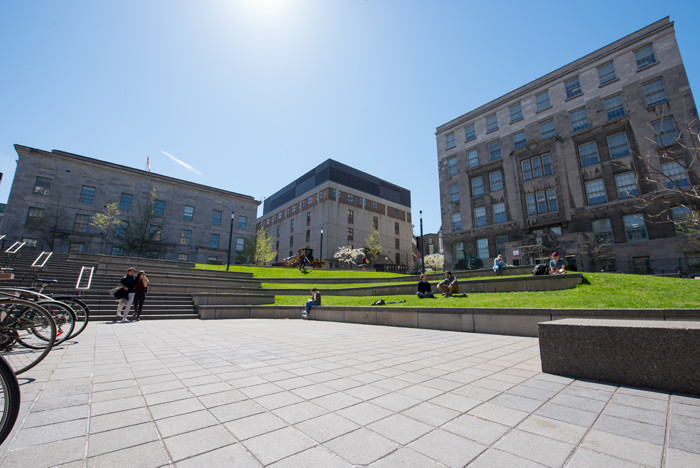
McGill University boasted an impressive 40,036 student population as of Fall 2018. On any given day, at any given moment, there are 40,036 lives in the close proximity that only a university campus can provide; 40,036 schedules, routines, habits, strangers. Although the number can be daunting, I have found that my time at McGill was shaped by the fact that no two students’ lives are the same, a comforting idea that mitigates a socially isolating atmosphere. McGill students lives are diverse, but that does not mean that they do not share any relatable experiences.

9:00 a.m.

Not only does the excessive construction on campus contradict the aesthetic presented in of the school’s brochures, it also infringes on my usual path to class. I have to rely on my quick-thinking skills to navigate a sea of students and unfamiliar territory to travel to my next lecture.

10:35 a.m.

By mid-morning, McGill has already gifted me with two things. The first, a professor that is a genuine expert in their field. They are the type of person that appears as the reference point when searching keywords related to their research. And second, it builds up an overconfidence in my abilities that, more often than not, is destructive. I start every semester excessively confident taking a course that I should have most definitely taken pass-fail. In this next hour, this truth becomes clear.

11:28 a.m.  

I failed the midterm of said class. Never one to downplay its own generosity, McGoll has ingrained in me the expectation of ice cream as compensation for poor performance. As I trek to McConnell Engineering to wallow in pity and free ice cream as a result of my  ‘F’ grade, I can’t help but wonder if indulging in this post-failure ritual is only going to condition me to accept defeat. In the meantime, there’s ice cream.

12:00 p.m.

On my way to meet a professor during their office hours in Leacock, I am distracted by the overwhelming fragrance of a samosa sale. McGill has given me an appreciation for the little things—prismatic, pocket-sized, potato-filled, one-dollar morsel things.

1:30 p.m.  

During my second class of the day, McGill brings out my tendency to tell white lies. That one I time I asked for an extension for my paper was not necessarily because my grandmother was ill, nor because my mother broke her toe, and definitely not because the dog I have had since I was four years old died. Rather, I got a really good deal for a flight to New York and spent the weekend sans laptop. It happens.

3:00 p.m.

McGill, at around this hour every day has gifted me with the phenomenon that I have named the ‘studious step’: the walk that students take on their way to the library. I approach the library with a calm facade, while inside, my stomach coils, my heart rate increases, and beads of sweat slowly form on my forehead, before, I realize that I left my computer charger at home.

3:15 p.m.

I have learned a lot about bad financial decisions during my time at McGill. I usually do not last half an hour in McLennan before hurrying down to Première Moisson to order an overpriced coffee or an even more ridiculously-priced box consisting of two grapes, a four-by-four centimeter block of cheese, and three crackers. What I really learned from this experience is to make the most out of a bad situation. Exhibit A: I can neither confirm nor deny whether I have usually eaten my cookie in line before paying, but I would prefer if the cashiers didn’t check the security footage.

6:30 p.m.

Finally, an adequate hour to leave the library after some ‘productive’ studying. As I walk past the Arts Building and down through the Roddick Gates, the wind carries a whisper past my ear: ‘Study, samosa, studious step, ‘spend’, Suwu, sleep, repeat.’

Cartoons

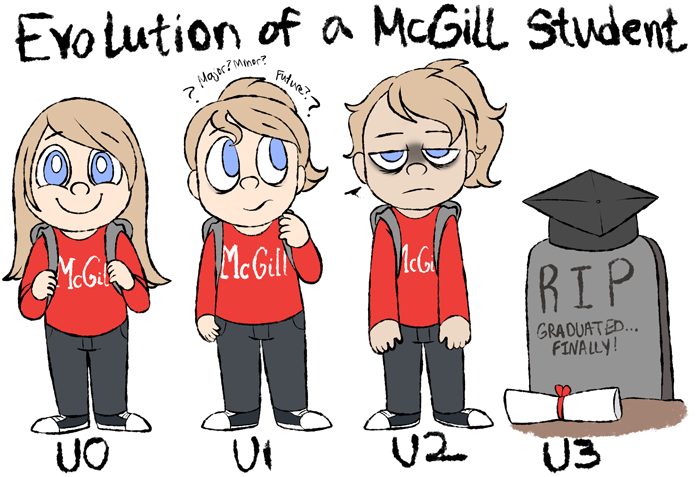
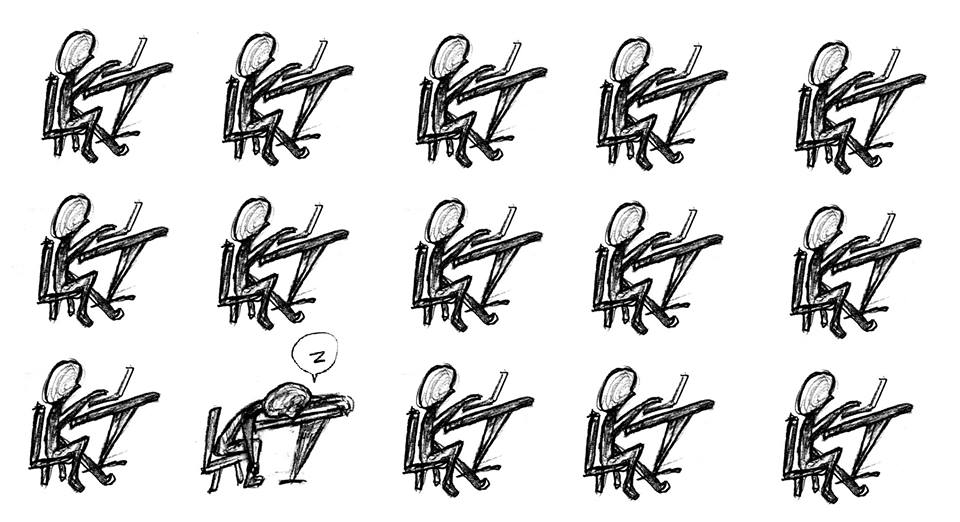
Evolution of a McGill Student


Students should reach out for help if they feel they are in a crisis situation. Campus services are available to offer students professional and medical treatment, including Counselling and Mental Health Services. If you feel that you, or someone you know, is in immediate danger, call 9-1-1, or if you are on campus, Campus Security at 514-398-3000.

Off the Board, Opinion

Fake football, real friends

In my final semester of high school, I joined an online dynasty fantasy football league. We set up a group chat to facilitate league communications, and, after a million on and off-topic messages, a ditched podcast, and a half-dozen new offshoot leagues, the “Dream League” became my steadiest, longest-standing social circle.

I often find myself concerned with the current trajectory of technology—I get little value from my Instagram feed, and I have seen enough episodes of Black Mirror to know where things like Cambridge Analytica lead. But, thankfully, there is at least one positive: The new wave of technological advancement has allowed people the opportunity to access and develop deep, satisfying interactions and friendships entirely on their own terms. As jobs become more precarious and the workforce more competitive, students often prioritize their long-term goals over present-day social lives and require greater flexibility to work around their demanding schedules. While social media has obvious flaws, it also allows people to connect through shared niche interests, and and at their leisure.

It took me 30 minutes to explain to my mom how I grew so closely connected to a group of fifteen 23 to 40-year-old fantasy football degenerates. It took another half-hour to convince her that I probably wouldn’t be abducted. Nonetheless, this crew, as well as a more normal collection of online content channels, has provided me with fulfilling, convenient social outlets that my everyday life hasn’t always offered.

My transition from high school to university opened gaps in my social life that I failed to fill: In first year, I fell out of touch with my high-school friends and struggled to replace them at McGill beyond a single lasting group of three buddies.

An inability to establish a fulfilling social environment is anything but rare at McGill. With an intense, highly-segmented social scene, it can be extremely difficult for anyone to make and maintain friendships on campus. It is even more challenging to find people who share one’s unique, hyper-specific interests. But, the magic of the internet makes it possible for students to fill those voids, and a plethora of social media sites allow like-minded individuals to connect over distance. While most of these connections will probably go nowhere, with time, one can often find a meaningful social circle.

In the past two years, student journalism has ushered a band of new friends into my life. That development came with the stipulation of a hectic weekly schedule that wears me out and, even then, leaves me with little free time before midnight. In turn, I’ve stumbled further into the weird worlds of podcasts and Twitch streams. While most normal people can carve out free time into their afternoons or evenings, anyone can get burnt out. For introverts and extroverts alike, there’s value to the idea of simulating social ‘interaction,’ but without the effort.

Ninety years ago, people would make friends when they went over to see the neighbour’s new 10-gallon hat; today, people can make friends by reacting to Ice-T tweets. This dynamic is new, but it isn’t harmful. It’s hard for friendships to fade with distance when they were forged and exist entirely online. And, after a hectic week of classes, projects, and student journalism, my library of dumb comedy content has allowed me to turn off my brain, laugh, and, most importantly, feel a pseudo-connection to others. Thanks to the internet’s flexibility, that fulfillment can take many forms; for me, it’s talking trades with a web developer from Florida named ‘Sticky.’

Cartoons

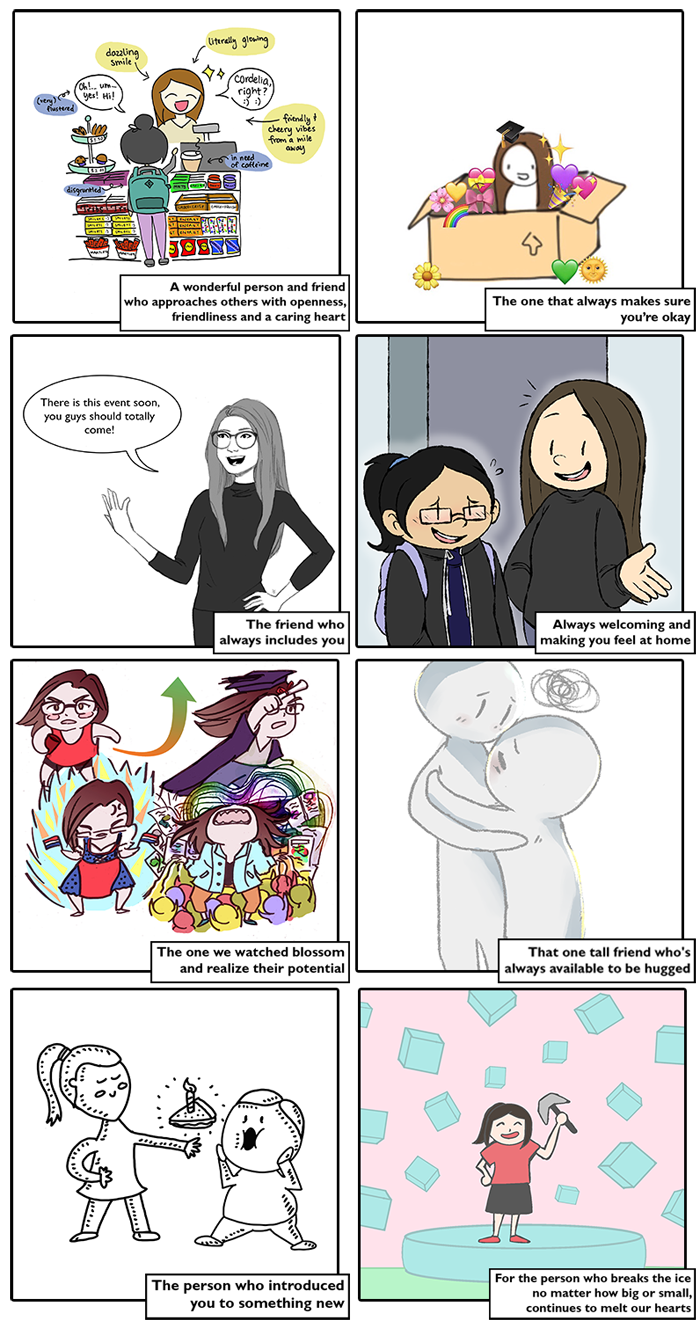
Remembering the friend that is graduating

activism
Editorial, Opinion

Looking back on a year of student activism

The 2018–19 academic year has shown the power of student mobilization, through numerous grassroots campaigns, such as #ChangeTheName and the recent Global Climate Strike, among others. At McGill, activism serves an important role in the community, and student activists are behind most of the social progress that has occurred on campus over its history. While student activists have gathered momentum on a number of issues this year, it is crucial that as the summer approaches and student groups prepare for turnover, that this energy continues to grow.  

Tomas Jirousek, Students’ Society of McGill University (SSMU) Indigenous Affairs Commissioner, started the #ChangeTheName  campaign last year, achieving national news coverage. It is common for activists to face burnout, due to the emotionally and physically exhausting nature of their work, which may lead to plateaus in progress. However, this is not the case for #ChangeTheName. Instead, Jirousek employed a variety of strategies from organized demonstrations and petitions to open letters and op-eds in campus publications, engaging a range of students with the cause. Although Principal and Vice-Chancellor Suzanne Fortier has delayed her decision on the name until the end of this month, the #ChangeTheName campaign has achieved one success already: After a campaign from Jirousek, who stated that the name limited Indigenous students’ ability to comfortably use McGill athletics facilities, students voted against renewing the Athletics Facility Improvement Fee in the Winter 2019 referendum period.

Other campus issues, like McGill’s Policy against Sexual Violence, remain an uphill battle for many activists. On March 27,  The Sexual Assault Centre of the McGill Students’ Society (SACOMSS) posted a statement on their Facebook page explaining their dissatisfaction with McGill’s recently-revised policy, most notably the policy’s exclusion of a ban on staff-student relationships. Associate Provost (Equity and Academic Policies) Angela Campbell cited the findings of Concordia’s Sexual Assault Policy Review Working Group in their decision, explaining that banning relationships between consenting adults would be illegal under Quebec privacy law. Students should not get complacent with McGill’s existing policy and special investigator, and must keep pushing until the necessary changes are made.

Divest McGill and the McGill chapter for the Walkout for Climate Justice launched student’s fight against climate change, to much success: On March 15, over 150,000 protesters in Montreal joined forces for a march for climate justice led by the student movement La planète s’invite à l’Université. McGill Senate even voted to endorse divestment; with more pressure, it is possible for students to get the Committee Advising on Matters of Social Responsibility (CAMSR) to advise the Board of Governors to divest.

Unfortunately, activists on campus still faces challenges. For example, while the culture of slacktivism, which includes sharing social media posts, lower activism’s barrier to entry, they are far less meaningful than forms of activism that require more labour, like demonstrations. The Walkout for Climate Justice proved that students are still capable of mobilizing for important causes; however, this protest was an exception to the rule.

Other causes, like the anti-racism march following the Christchurch massacre, were attended by hundreds of people, but were thousands short of the rallying potential demonstrated by students during the Walkout for Climate Change. All issues of social justice are interconnected; it is important therefore that activists acknowledge intersectionality when campaigning. For example, climate change will disproportionately affect communities of colour, indicating the importance of not only attending the Global Climate Strike, but also the anti-racism demonstration. Students should not just engage when it is convenient or only when it affects them. Solidarity on campus is important, and coalitions like Solidarity Alliance McGill provide a model for future initiatives. Activists should stand up for everyone’s collective rights, especially marginalized communities.

For some students, activism may not be a choice or not even an option. The new provincial Coalition Avenir Quebec (CAQ) government’s bill 21, the infamous secularism bill, which would bar anyone working in the public sector in a ‘position of authority’ from wearing visible religious symbols such as the hijab and kippah. For Muslims, Jews, Sikhs, and other students belonging to a religious minority, fighting this bill is necessary: They do not have the privilege to ‘choose’ to fight this. For others, like low-income students who have to work to support themselves, activism is not available as an option because they may not have the time or resources to engage in it. These situations illustrate the importance of fighting for the rights of marginalized voices, especially when many of them may not be able to do so for themselves.

Passionate student leaders sacrifice time, labour, and energy to organize successful campaigns to the benefit of all students, and their work deserves to be celebrated. The past year has seen a lot of progress, and as the year comes to an end, the Tribune is optimistic to see how future leaders change our campus. 

Commentary, Opinion

One year sober

Content warning: Mention of substance abuse 

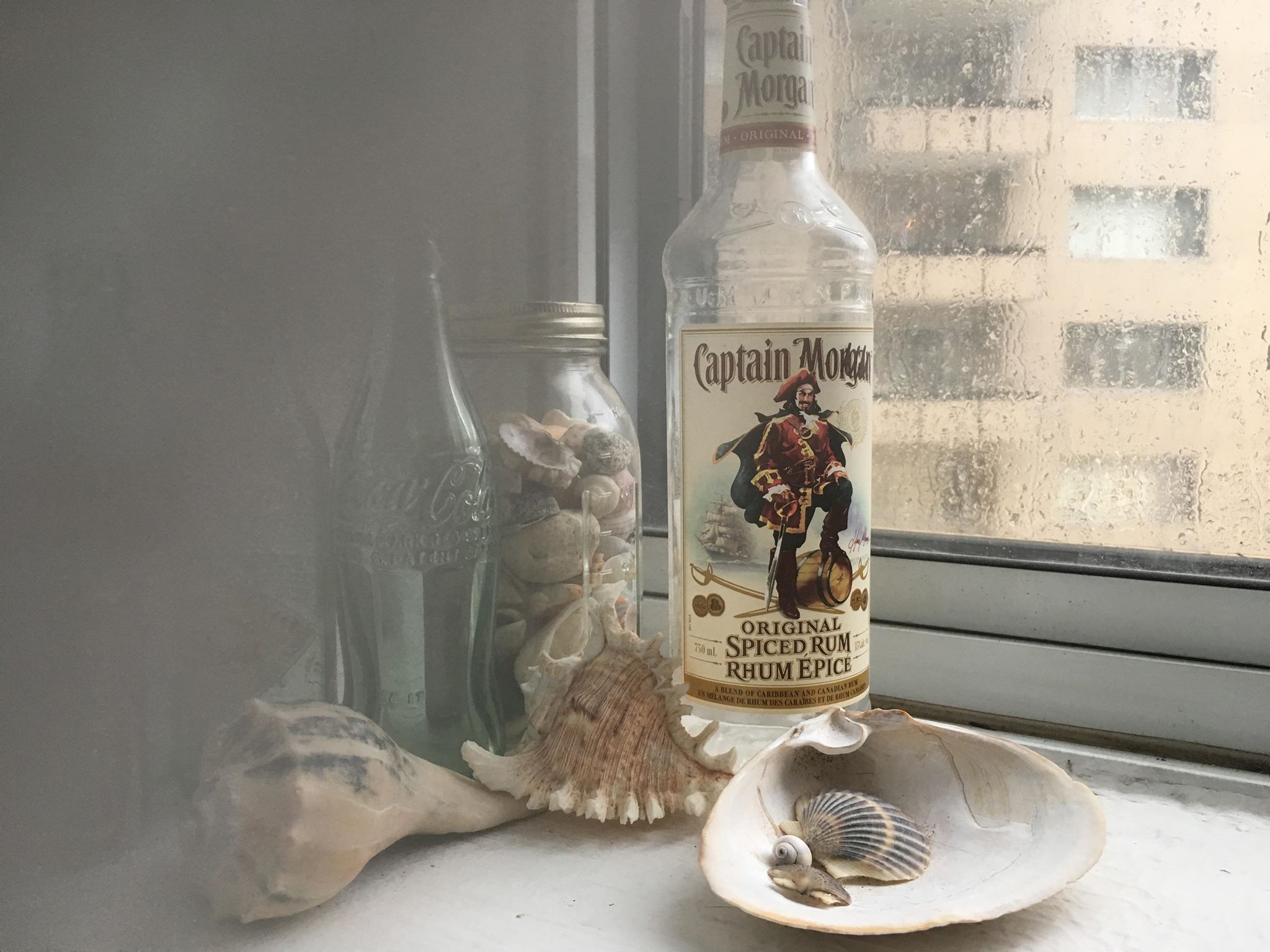
I have an empty bottle of Captain Morgan spiced rum sitting on the windowsill next to my bed. The ‘rgan’ is crossed out, and the label is slightly faded after a year in the sunlight. I bought this bottle in early Feb. 2018. It is the last bottle of liquor I ever bought, and it’s a reminder of how far I’ve come.

On March 1, I celebrated the biggest milestone of my life so far: One year since I quit drinking. To be clear, I did not just spend a year sober—I don’t think that this year would have been possible without nicotine or weed—which fills me with shame, but that’s the truth.

I first tried to quit drinking in Oct. 2017. I knew I had a problem when I collapsed on my neighbour’s kitchen floor, clutching an empty bottle of gin, most of its contents in my veins, slurring my words and pulling heaving sobs from my throat. I was coping with grief and guilt, and the only solution I felt that I had was to drink. I knew it was unhealthy; I knew I needed to stop, but I didn’t have it in me for another four months. In that time, I spent most nights drinking, alone or with friends, blacking out and being cleaned up, trying again and again to quit. I still resent myself for the trouble I caused.

It is easy to just keep drinking at McGill, where Frosh and other drinking events like Science Games and Carinval welcome students, filling the time in between at clubs and bars with weekday specials. It’s much harder to not drink at McGill, surrounded by people who ask if you’re sure when you tell them you quit drinking. Of course I am sure, I didn’t make the decision lightly, and, no, I don’t want to try just a sip. There are also the holier-than-thou straightedge students who were horrified at the idea that I ever got to the point where I had to stop drinking. Hearing their derogatory remarks just makes me want to drink more.

But, the hardest part of sobriety is not the external pressures, it’s the internal realization that the parts of yourself you despise don’t disappear when the alcohol leaves your system. I know people who have never been drunk or who never had more than a few sips of wine because they are terrified of losing control. Since quitting, I have said and done horrible things like when I consistently drank, only, now, I remember it, and I can’t blame it on the alcohol. In reality, the alcohol was never to blame in the first place; it just exacerbated all of my qualities. It has taken me a long time to admit that I am responsible for everything I did while drunk, the good and the bad, what I remember and what I don’t.

Remembering my actions provides a necessary clarity that I didn’t have before to feel better and be better. Knowing that I just got through a whole year without a drink gives me hope that I can do better, that I do have it in me, even when it’s hard. I might not be able to drink again, if it means that I can regain control over my life and relationships. But, I’ve come this far, and I intend to keep going.

Commentary, Opinion

Time to phase out daylight savings

Picture this: It’s March 10, 2019. You wake up in the morning and wonder why you feel like you’ve barely gotten any rest. And, then you remember: Daylight savings time (DST) ended. Presumably, losing an hour of sleep on the last day of reading week was not the best way for students to dive back into school. It is with good reason that the debate over DST has recently been gaining increased traction, with several politicians and constituencies petitioning for the time changes to stop. While the pros and cons of DST are still hotly debated, many citizens and politicians agree that it is far past time to put an end to the annoyance of biannual DST time changes.

DST was instituted in Germany in 1915 to conserve energy and make better use of sunlight during summertime evenings. Previously, some daylight hours would be ‘wasted’ during hours when most people would be asleep. DST aimed to maximize sunlight hours, thus minimizing energy usage to power people’s homes. For example, during WWI, countries throughout Europe used DST to save coal for war machinery instead of using it to power lightbulbs. Throughout the 20th century, the U.S., Canada, and most of Europe slowly began to write DST into law. While DST had several opponents from its very conception, such as scientists who feared machinery malfunctions, politicians still considered it worthwhile enough to save energy in a world fuelled by coal.

Now, almost a century later, the very nation that started the DST craze, Germany, is working toward ending it by 2021. In one European Union (EU) poll, 84 per cent of Germans voted to end the biannual clock changes. The opposition to DST has spread across the Atlantic to the U.S. and Canada, where some legislators are proposing to do the same. California, Oregon, and Washington have passed bills calling for the permanent institution of DST time, which would extend daylight hours into the evening year-round. Arizona, however, is an example where most parts of the state ignore DST, in favour of remaining on standard time year-round. In Canada, several provinces and regions have already stopped adhering to this irritating custom: Saskatchewan stopped biannual time adjustments in 1966, and parts of northern British Columbia followed suit.

Proponents of DST have some compelling arguments in favour of the custom. During the winter months, the adjustment extends sunlight in the morning, which is especially important for regions in the far north where sunrises occur relatively late during the winter. However, the science behind the original claim that DST saves energy is inconclusive: One study by the U.S. Bureau of Economic Research found that, while DST did keep people from turning on their lights until later, it also resulted in an increased use of air conditioning, effectively cancelling out any energy savings.

On an individual human basis, studies also show that the time change, especially in the spring, when we lose an hour of sleep, has a negative effect on our health and safety. The time change in the spring can affect people’s circadian rhythms and cause sleep deprivation, which can be deeply disruptive to students’ ability to focus. According to Cary Brown, a University of Alberta sleep specialist, this can also have a negative effect on those with chronic conditions such as depression, anxiety, and cardiovascular problems. Changing the clock can also be dangerous for pedestrians, a category that includes most students in downtown Montreal. U.S. researchers found that, on the day after the clock falls back an hour, there was a consistent 10 per cent increase in fatal car accidents due to the disruption in circadian rhythms.

Much like any university, a significant portion of students at McGill suffers from mental health issues and sleep deprivation, which can be exacerbated by DST. For the health, safety, and convenience of their residents, Quebec, and the rest of Canada, should follow in the footsteps of other countries, cities, and states and end disruptive and unnecessary biannual time changes.

Read the latest issue

Read the latest issue