


Latest News

McGill, News

Trump win leaves some students reconsidering plans to study and work in the United States

Donald Trump’s election on Nov. 5, coupled with Republican control over the U.S. Senate and House of Representatives, has left some Americans at McGill wondering whether they want to return after graduation. Many students underline concerns about what a second Trump presidency could mean for abortion access, 2SLGBTQIA+ rights, immigration policy, and economic stability.

Some argue that the Republican majorities in the Senate and House could mean that Trump will face less political resistance than he did during his last presidency. Trump’s consolidation of power and his proximity to Project 2025—which calls to restrict access to abortion, facilitate large-scale deportations, and cut funding to renewable energy programs, among other measures—makes many Americans at McGill nervous.

Massachusetts native, Izzy Rudy, U1 Arts, explained that the outcome of the election makes her wary of building her future in her home country. Threats to abortion access, environmental concerns, and Trump’s plan to withdraw from the North Atlantic Treaty Organization (NATO) were the most important issues on her mind.

“Uncertainty is my biggest concern,” Rudy told The Tribune. “I think the person in charge is unstable and erratic, and because I don’t know what he has in store, I also don’t know what I have in store for my future.” 

Hannah Hipolito, U2 Arts, was born and raised in Florida. Her concerns about the effects of a second Trump administration on abortion access and 2SLGBTQIA+ rights also have her questioning going back. Her high school career was marked by protests and counter-protests surrounding the Florida ‘Don’t Say Gay’ bill, which aimed to prevent discussion of 2SLGBTQIA+ issues in classrooms. 

“Growing up in that environment was really hard, and I would be at these protests at my school, and there would be other students waving Trump flags,” Hipolito said. “Seeing that these are my peers, reacting that way to people being queer, makes it really hard to want to go back.”

The election of Donald Trump and the rejection of an amendment to the Florida Constitution that sought to expand abortion access in her home state solidified Hipolito’s belief that the political climate in the U.S. has soured.

“Previous to the election, I was really looking at grad schools in the U.S., very set on returning,” she told The Tribune.  “However, since then, I have been kind of reconfiguring how I see the rest of my life going […] I just feel like the climate in the United States has gotten really bad, and I wonder if maybe I would just be happier somewhere else.”

Since the election, Canadian Immigration Minister Marc Miller has emphasized that Canada may have to prepare for an increase in migration from the U.S. due to Trump’s election. Wendell Nii Laryea Adjetey, Associate Professor of History at McGill, highlighted the effect that the election of Donald Trump could have on Canada as a destination for immigrants. 

“When turmoil unfolds in the United States, Canada is invariably impacted. Students, professionals, and precarious people will come in droves, reviving the myth of Canada as the refuge point,” Wendell wrote to The Tribune.  “It’s plausible that Canadian institutions might appear more appealing to global talent than U.S. counterparts.”

Jacob Wesoky, U3 Arts, is the Executive Vice Chair of Democrats Abroad Canada. This election, Wesoky led efforts to increase the voting rate of Americans living abroad by connecting Americans at McGill with the resources they need to vote through student outreach programs. Donald Trump’s election swayed his plans to eventually work in the executive branch of the U.S. government; however, as an outspoken Democrat, he feels no desire to leave his country for good.

“I think that that’s exactly what the Republicans want. They want us to give up,” Wesoky said about the temptation some Americans feel to remain abroad following the election. “I think that’s honestly a pretty dangerous sentiment. Obviously, I don’t blame people for wanting to leave and move to Canada, but at the same time, I think it’s important now more than ever to stay in the U.S.”
Know Your Athlete, Sports

Know Your Athlete: Emilia Mastromatteo

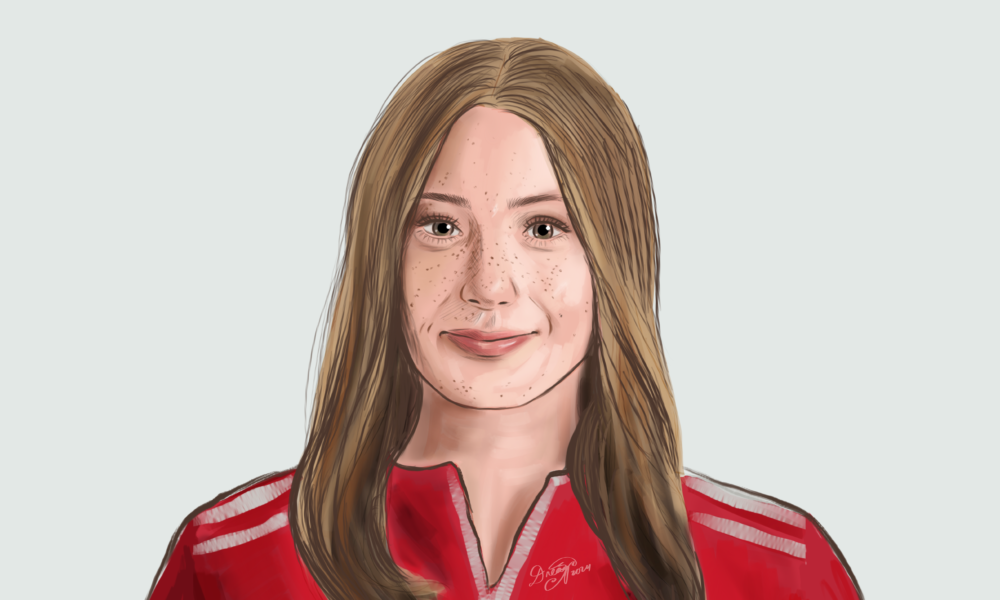
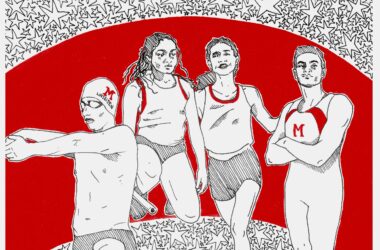
Emilia Mastromatteo, U3 Science, is a shark among the minnows. Hailing from Kenora, Ontario, Emilia has overcome numerous challenges to become a standout swimmer in the pool. A sprinter for the backstroke, breaststroke, and butterfly 50m and 100m, she has made a name for herself within the Martlets Swimming squad. 

Her journey began at four when she joined her local swim club, the Kenora Swimming Sharks, where her mother, Janet Hyslop, is the head coach. Although coming from a family of swimmers, she initially dabbled in various sports before swimming truly captured her heart at 13. She quickly rose through the ranks, achieving national-level success in age-group competitions and catching the eye of Team Canada

Mastromatteo told The Tribune that she likes the collaborative and competitive nature of varsity, as opposed to age group swimming, due to its focus on team spirit. 

However, as she transitioned to varsity swimming, Mastromatteo faced a significant hurdle: Injury. Diagnosed with thoracic outlet syndrome, she began experiencing severe pain and numbness in her arms. Despite this setback, she remains undeterred, leaning on her support network and adjusting her training to accommodate her limitations.

“I’ve had to be really resourceful and innovative in what I do and I’m trying to be innovative with things outside of the pool,” Mastromatteo said. “I am a unique sprinter [due to my injury], so I am in the gym four or five days a week working on a lot of strength components and mobility components. I do a lot of work with healthcare: Physio, osteo, all of them, and they’ve been really helpful.” 

Her unwavering determination and positive outlook have allowed her to continue pursuing her passion for swimming, which has materialized in huge successes for the McGill team this season; she won Réseau du sport étudiant du Québec (RSEQ) Athlete of the Week on Nov. 12, and has been named McGill Athlete of the Week four times this season. 

“I have won gold in all my races to date this season,” she said. “To know that something’s working this early on in the season is really encouraging. Some of the golds are for relays so that’s been really exciting for the girls’ team, just to be a part of the relay team and get a gold with more than just yourself. I think the thing I love most about swimming is the community you build.”

This sense of community is evident in the strong bond between the McGill swimmers. Emilia has witnessed the positive impact of their supportive environment—particularly during challenging times—through the powerful sense of camaraderie between athletes, in the way they turn to each other for advice. 

“The best thing I’ve learned is to rely on older athletes who’ve done it before. So now I try to support some of the younger swimmers who kind of feel those first feelings when they’re adjusting,” she emphasized.

Mastromatteo’s dedication to her sport is matched by her academic pursuits. She credits her success to efficient time management and the support of her coaches. Looking to the future, Mastromatteo aspires to pursue a career in medicine, prompted by her own experiences with injury and rehabilitation. She also wants to stay involved in the sport as a coach, giving back to the swimming community.

Mastromatteo’s story is one of perseverance. She gave some final advice for younger athletes aiming to pursue varsity sports.

“To have a goal and stay true to that goal is really important, but try not to get so fixated on one outcome and one plan,” she said. “You have to always be open to guidance and advice from other people, especially different coaches with different perspectives.”

McGill, News

Discussions of campus security and academic freedom dominate McGill Senate meeting

The McGill Senate convened on Nov. 13 to address issues such as the increased police and security presence on campus, the adjusted move-in date for first-year students, and academic freedom.

The meeting began with memorial tributes to the late Professor Michael Smith, Professor Emeritus Bohumil Volesky, and Professor James Archibald

Next, the Senate moved to its question period where the group discussed moving up the first-year move-in date to be closer to the first day of classes. SSMU Arts Senator Anzhu Wei raised concerns about how the timing would affect orientation events, arguing that it would hinder students’ adjustment to campus life. Interim Deputy Provost (Student Life & Learning) Angela Campbell explained that the change was intended to accommodate the newly-introduced Fall Reading Week, adding that the administration would consult student associations to mitigate any adverse effects.

The topic then shifted to campus security and the presence of the Service de police de la Ville de Montréal (SPVM) since the start of the term. Senators raised questions about SPVM’s communication with the university and asked whether McGill would better inform students of future security measures. SSMU Arts Senator Vivian Wright raised the example of the SPVM’s use of force on Oct. 7, and asked if McGill would discourage police from using tactics like tear gas, particularly on non-protesting students. Vice-President (Administration and Finance) Fabrice Labeau responded that the university has no control over SPVM actions. 

Senators raised concerns about the current mechanisms for reporting incidents involving campus security. They noted that these mechanisms are not widely shared with the student body. Additionally, they highlighted potential issues with ensuring the transparency and accountability of security when reports are directed to the head of security, rather than an outside actor.

“We cannot count on the formal mechanisms of grievance or rights complaints because they have evidentiary standards and don’t tell us about systemic problems,” Arts Faculty Senator Catherine Lu said. “They are also kind of intimidating. I can imagine that many people just won’t do that because they’re already being upset by a situation. Even police officers need civilian boards in which people can convey information away from internal police monitoring mechanisms.” 

Labeau repeatedly expressed that the current mechanisms for reporting incidents with security are a standard procedure. He also underlined that McGill has “fewer and fewer additional security members from outside companies on campus these days.”  

President and Vice-Chancellor Deep Saini paused the discussion of the specific security question, stating it would continue in the open discussion. SSMU VP University Affairs Abe Berglas raised a point of order, arguing that postponing the discussion violated Section 9.3 of the Senate Standing Rules. Saini assured that he was only rescheduling the topic. It ultimately was not directly revisited during the meeting.

The group also addressed the invitation of speakers to campus following United Nations Special Rapporteur on the Occupied Palestinian Territories Francesca Albanese’s talk on Nov. 3. Campbell then presented a hypothetical scenario where a pro-life speaker’s appearance led to protests and physical altercations. Arts Faculty Senator Juliet Johnson suggested that transparent and accountable security measures are essential when managing controversial events on campus.

“If we’re going to allow these controversial events, which I think we should, we obviously need to have security,” Johnson said. “It’s important for the community, on all sides of these events, to trust the role that security is going to play [….] Then security services need to be accountable and transparent [.…] So we need to inform the community about the reports in general and act on them.” 

The meeting concluded with three final items. First, the Academic Policy Committee presented resolutions to establish an M.A. and Ph.D. in East Asian Studies, both of which were approved. Then the Senate discussed proposed revisions to the Policy on Hazing and Inappropriate Initiation Practices to clarify reporting procedures, and recommended them for Board of Governors (BoG) approval. The session ended with the annual reports from the BoG, Academic Policy Committee, and Committee on Physical Development

Moment of the meeting: 

Provost and Executive Vice-President (Academic) Christopher Manfredi began the open discussion period by emphasizing McGill’s tradition of supporting diverse viewpoints, where controversial speakers are welcome unless their speech clearly violates Canadian law or hate speech provisions. Citing a 2012 report on a similar campus incident, he underscored that the issues discussed in the meeting are not new. Senators collectively agreed that the university should continue to be a space for open dialogue within the law’s strict boundaries.

Soundbite:

“I want to be able to argue and then have a beer with them after—or a cup of tea, depending on your particular poison—but I think we’re moving further and further away from that.” –– Medicine and Health Sciences Senator Terry Hébert on inviting controversial speakers to campus.

Emerging Trends, Local Stories, Student Life

New York Times Games: The lockdown trend remains alive

Glancing up from your laptop during a boring lecture and seeing a handful of people lost in today’s New York Times (NYT) Games is part of the ultimate McGill experience. Wordle, Connections, the Mini Crossword, and other beloved NYT puzzles are many student’s go-to games when they have a minute to spare, making them an integral part of many of their daily routines, whether in class, at the library, or at home.

The Tribune spoke with McGill students about what makes these addictive puzzles so popular and whether they still have the same widespread appeal they did when they first launched during the pandemic.

“[The Games] are quick and don’t take much time but still take some brain power,” Nuala O’Connell, U2 Arts, explained.  

The NYT Games seem to have found a sweet-spot between challenging and relaxing, making them a great way to start a study session as they allow students to decompress while simultaneously stimulating their mind.

“I play them at the library right before I start studying or on my study breaks so I can relax,” Anna Bistour, U2 Arts, shared in an interview with The Tribune.

“The games provide some kind of mental stimulation that is not completely devoid of logic,” said Angela Chu, U4 Arts.  Since they are also relatively quick, they’re convenient for short breaks throughout her busy days.  The combination of the post-completion rewarding feeling with the swiftness of the puzzles are irresistible features for most students. 

Another reason the games are a hit with McGillians is that they serve as great conversation starters. 

“They are the same thing for everyone so you can easily talk about them with other people,” Yuval Klein, U1 Science, shared.  

She mentioned that quick questions like “Did you do the Connections today?” provide an easy way to socialize with others. Nerds have been searching for their version of “Did you catch the game last night?” for decades, and the NYT Games seem to have finally filled this void. 

The social aspect of the games extends even beyond the McGill campus as many students love sharing their NYT scores with family. Bistour explained how many people like to send their scores to their family or friends to keep in touch with loved ones every day.

“The games can get kind of competitive when you do them with friends, which is the fun of it,” Bistour further explained.  

Chu went on to highlight how the competitive side of the games is often reflected in class when some people are careful about others “spoiling” the puzzles, as many students stress the importance of being able to do them by themselves. 

Although the NYT Games are still present in many students’ daily routines, there are some downsides to their addictiveness. 

“[I] wasn’t paying attention during lectures and it was bad for focusing on studying,” Klein said. 

She still enjoys the occasional Mini Crossword, just not during every single lecture. 

“I do not play them in lectures because they are very distracting,” Bistour highlighted. 

The level of focus these puzzles require can keep you fully distracted, preventing you from grasping important information during class.

The New York Times Games have become a staple in McGill students’ daily lives, offering a quick mental escape while encouraging interactions between students and their family and friends. These daily challenges have become so cemented in their routines that even the rushed feeling of recognition and embarrassment as you reach for the mute button when the “end of crossword” song starts playing in a silent lecture seem integral to McGill life. Although there are some less desirable aspects of the games, the overall consensus is that they are most students’ go-to amusements, and it would be difficult to imagine the campus without them.

Letters to the Editor, Opinion

Letter to the Editor: In loving memory of student press

For years, The Link has unremittingly stressed that we have a problem. For 45 years, our necessary work in holding Concordia’s administration and student unions accountable depends on extractive work conditions and the burnout of our editors and contributors. Our staff are required to work upwards of 25 hours per week with little to no compensation. This has resulted in our masthead population consisting solely of those economically privileged and those willing to wear themselves thin by juggling numerous financial and academic responsibilities.

In the last volume, we launched the contributor freelance fund and started paying our editors a fairer wage—but both are temporary pilot projects. The project acknowledges a masthead position at The Link for what it is: A part-time job, a full-time commitment. Editors and contributors from diverse backgrounds could work and pay their bills. This pilot project has continued into Vol. 45, but will die without external funding. 

Our financial support is 23 years out of date. The funding inherited per semester from the undergraduate student body reflects the consumer price index of 2001, with our fee-levy currently at $0.19 CAD per credit per student—not including those who opt-out. Funding appropriate for costs relevant two decades ago is not enough to pay our staff and contributors for their work.

We attempted to run for a fee-levy increase four times. In the face of austerity and a precarious political climate, we’ve been denied despite stressing what is at stake.

Hear us when we say we need your help

The denial of an increase suggests an assumption that The Link has enough funding to function. This is the type of thinking that leads to our demise and nurtures a breeding ground for under-compensated labour. The notion that freelancing should remain “volunteer work” is additionally harmful and a blatant disregard for the fruitful labour writers do.

In Yasmin Nair’s 2015 Vox article entitled   “I’m a freelance writer. I refuse to work for free,” she argues for the importance of proper compensation for independent journalists. 

“The publishing industry gets away with conditions that would be considered grounds for litigation in most other workplaces,” Nair writes. “Writing is considered a mere hobby, and awful pay, combined with issues like non-payment, is rampant in the publishing industry [….] What possesses anyone who even halfheartedly claims to be a writer to willfully sabotage their fellow writers’ careers? What does it mean when even leftist writers, writers who aggressively advocate against the exploitation of workers elsewhere, nonetheless become scabs in the publishing world?” 

The Link wants to be a place that uplifts writers and multimedia creators and shows them they are talented enough to carve out a career for themselves. 

The disaster of Vol. 43—felt individually by freelancers daily and student journalists nationwide—is a prime example of the environment perpetuated by underpaying your contributors and your staff. Vol. 43 saw seven editor resignations, partly due to unsustainable working conditions. 

We cannot revert to this exploitative model wherein each masthead member who resigned departed expressing the sentiment, “I am not paid enough for this.” In this perpetuation of a work culture where only the most privileged could participate, The Link became a white-dominated space in which racism, ignorance and insensitivity against Black, Indigenous and people of colour writers and editors festered.  

All current masthead members were asked if they could do their jobs with little to no compensation. The resounding answer is a decisive no.

The Link was extractive to its staff and writers for 43 years until the publication as a whole reached its wit’s end. Our freelance fund, we found, is in part a remedy to the problem, yet without external funding, the fund will remain a pilot project pending expiration. The freelance fund is single-handedly keeping The Link afloat by ensuring we never revert to being an exploitative newspaper.

 The Link acknowledges that a freelance fund such as ours is rare amongst student newsrooms nationwide. Student publications often must treat their staff and contributors as volunteers, where occasionally, a select few receive a negligible stipend for their hard work. This is not the fault of student papers; rather, the institutional framework of universities is to blame. Freelance work is not a donation. Freelance work should not be volunteered; it’s a craft, it’s a talent, and it’s a job.

As a student-led community newspaper that caters to the broader Montreal community, The Link benefits and serves McGill students—and in fact, some of our contributors attend McGill. We are calling on McGill students to equally consider our fight for a fairer industry. The Link might not be dead, but without external funding and support from our community, it will cease to be an ethical workplace that produces ethical, advocacy-centred content—so it might as well be.

This is not an aggrandizing statement; it is a cry for help.

The Link has added a donation box to our website to help keep us alive. All profits will ensure our continuity and pay our staff and contributors

Soccer, Sports

Professional soccer players’ schedules are an increasingly heavy load

The Union of European Football Associations (UEFA)’s Nations League Matchday five of six kicked off Nov. 14, short a slew of several big-name players from the English Premier League (EPL) like Martin Ødegaard, Ollie Watkins, and Cole Palmer. This has led to questions regarding teams’ lineups, their match-ups with various contenders, and even the existence of the competition itself. Eight players withdrew from England’s Nations League squad. In a similar timeframe, eight players made the same decision to leave Ghana’s squad during their preparation for the African Cup of Nations (AFCON). 

The trend reflects growing concerns about players’ welfare amid increasingly congested itineraries. It represents a larger problem in the structure of competition in modern soccer: The international and club leagues (La Liga, Liga F, EPL, Women’s Super League, Serie A, Serie A Femminile) alike play intense schedules. In September, only days before he tore his ACL, Manchester City midfielder and 2024 Ballon d’Or winner Rodri claimed players were considering striking over the UEFA Champions League expanding its schedule for club teams

The injury he suffered darkly underscores the physical toll professional-level soccer can extract. Rodri has played nearly 200 games of televised soccer in the Premier League since his debut in 2019 and performed well enough to win the European Championship with Spain this summer. This has taken a predictable toll on the 28-year-old: He accepted his Ballon d’Or on crutches and confirmed his absence for the rest of this season, an unfortunate price for even the highest honour.

This challenge transcends borders and genders, as both men’s and women’s soccer face gruelling demands that threaten players’ health. The thread of injury among high-level players is painfully easy to follow. It certainly stretches to this year’s Nations League; other notable injuries are piling up for Spain, like 17-year-old phenom Lamine Yamal, suffering from an ankle injury, and right-back Dani Carvajal, now sitting on the sidelines following knee surgery. 

Women’s soccer is experiencing a similar surge in international and domestic competitions but without comparable resources or medical support. Ghana’s Black Queens, for example, have seen significant progress in recent years, yet they often operate with reduced access to facilities and less financial backing than their men’s counterparts. The disparity amplifies the risks women players face when navigating their schedules. As women’s soccer grows, exemplified by record-breaking attendance at events like the 2023 FIFA Women’s World Cup, there is a real danger that the same mistakes made in men’s soccer—overburdening players for the sake of revenue—will be repeated.

The absence of stars is expected to significantly alter the landscapes of matches, team dynamics and tactical approaches. While it presents a challenge for managers, it also creates opportunities for youngsters to gain minutes and an opportunity to shine on the European stage. These moments accelerate the development of emerging talents, offering a chance for them to prove themselves to their clubs and national teams.

At the same time, missing stars leads to less predictable outcomes. Levelling the playing field increases the potential for upsets, injecting excitement but underscoring the need for balanced rosters that adapt without compromising performance.

While competitions like the Nations League and AFCON qualifiers showcase the beauty of international soccer, their value must be weighed against player safety. Governing bodies, clubs, and national associations must collaborate to prioritize recovery and minimize risks. Conversations about the relevance of certain tournaments are touchy but crucial when mismanagement could make or break multimillion-dollar contracts. Players, in opting out of representing their countries this fall, are showing that priorities are shifting: It’s easy for names such as Harry Kane and Trent Alexander-Arnold to reserve their England appearances for the biggest tournaments or Thomas Tuchel’s upcoming takeover of the team, without risking overexertion and or missing out on club football’s wealth.

Players will continue playing under suboptimal conditions. However, no matter the rewards, players should not be made to play under such conditions. Despite the physical toll, as Rodri would attest, such prizes as the Ballon d’Or make the recovery sweeter, if not worth it. However, no one has yet won the award off the back of a Nations League performance.

Arts & Entertainment, Internet, Music, Pop Rhetoric

Where do I begin: Addison Rae

From “talentlessTikTok darling to rising Netflix starlet to pop singer making a splash in the music industry, the public view of Addison Rae has been more unpredictable than Canadian weather. Addison first introduced herself to the public in 2019 with popular but menial lip-sync TikToks, sparking similar trends to those of fellow TikToker and influencer Charli D’Amelio. Her TikTok popularity swelled rapidly, with a current count of 88.9 million TikTok followers. Riding the wave of her newfound internet fame, Rae moved to Southern California in December 2019 to join the Hype House, a collaborative content-creation mansion. 

In September 2020, she began shooting He’s All That, a Netflix spin-off of the classic rom-com She’s All That. Rae notes that she channelled her own experiences into her character Padgett, a rising social media star similarly struggling to be taken seriously. Bright with optimism, she released her first single “Obsessed” in March 2021, which the public eviscerated mercilessly; it soon became an anchor point to corroborate the view that her success was based on anything but talent. The release of “Diet Pepsi” in August 2024 granted her a bit of a revival, but not to the extent of her newest single: “Aquamarine.” Alongside her collaborative remix with Charli XCX on “Von dutch,” “Aquamarine” has launched a public reevaluation of her talent. So how exactly did Rae go from being a TikTok automaton to the next musical “It Girl?”

Despite her TikTok career appearing perfunctory, it provided a clever way to fast-track her artistic aspirations. Rae claims that TikTok was simply a stepping stone to her ultimate goal of working in acting and music production. Growing up in a small town, her ambitions seemed lofty and idealistic, but the rise of TikTok allowed anyone to reach a broad audience very efficiently. Rae used her popularity to boost her profile and begin forging showbiz connections. This alone may not have been enough to garner the public’s favour, but it got her a foot in the door. 

Her next obstacle was reframing herself as someone with substance and creative authenticity. In an interview with Elle, she explicitly highlights the difficulties of escaping public labels within the industry. It is one thing to achieve mindless popularity; people will “like” and follow TikTokers, but that does not necessarily equate to admiration or respect. Rae had to transform the “brainrot” addiction of the public into genuine appreciation for her craft. 

This turned out to be a trial-and-error process. The public received her first musical endeavour, “Obsessed,” as shallow and overhyped. With “Aquamarine” at its core, Rae re-emerges with a newfound style that shifts from being meticulously plastic to free-flowing and enigmatic, capturing the attention of viewers. The two music videos encapsulate this transformation in their style, format, and ambience.

Rae leaves the choppy TikTok style of dancing behind in “Obsessed” for a dynamic, almost liquid type of movement in “Aquamarine,” creating a unique and slightly bizarre atmosphere that sets itself apart from anything else that Rae has done. Beyond style, the lyrics of both songs focus on the idea of desirability—however, “Obsessed” chases whereas “Aquamarine” attracts. “Aquamarine” develops desirability into a story of emerging out of hiding and basking in newfound freedom. 

With her new success, Rae bares her true self with the conviction that others will appreciate it too, her rebrand exuding the confidence of a siren who has found her voice. She has completely captivated audiences, haters, and fans alike. By turning the ripples of her success into a splash, Addison Rae is on the way to making the world her oyster. 

Arts & Entertainment, Theatre

‘Yerma’ A plea for motherhood or relevancy?

The stage lights open on a young couple celebrating their new house. Yerma and John decide they want a child. They bicker as much as they laugh; the cracks in their relationship have already taken shape. Two years go by, and the cracks have become oceans drowning any possibility of a child until only Yerma’s fantasy remains. Yerma, a work originally by Federico García Lorca and adapted for English-speaking audiences in 2017 by Simon Stone, explores a woman’s deep craving for motherhood and the lengths she is willing to go to achieve it. Players’ Theatre’s most recent production, Yerma, directed by Ruby Isaacs, U2 Arts, delivers an evocative retelling of this captivating tale. 

Odessa Rontigiannis, U2 Arts, delivers a compelling and nuanced performance in the titular role. She encapsulates Yerma’s internal struggle between hope and desperation, leading to a gripping presentation of her declining mental health. The cast as a whole brings out the intricacies in Yerma’s various relationships and shows an impressive handling of the complex subject matter beyond their years. 

Ruby Isaacs’ version of Yerma is deeply personal—Players’ small playhouse was the perfect setting. The venue’s size fostered connection between performers and audience, engrossing them in the plot. The set design mirrored the intimacy of the subject matter, consisting only of an armchair, a lamp, and a plant overtop a cozy rug. This established a rapport with the audience and centred the focus on the mental and emotional aspects of the plot.

Isaacs cleverly used the plant to represent the blurring of Yerma’s own aspirations with the expectations placed on her. Struggling with infertility, Yerma internalizes the societal pressure placed on women to bear children. As a popular blog writer, her readers expect vulnerability; however, being watched increases the pressure she already feels to adhere to societal expectations. While her transparency around infertility brings awareness to an important issue, it propels her disappointment into the public eye, thereby amplifying the pressure she faces. It is during the confusion of her motivations that the plant shifts from representing a sphere of intimacy in the home to the liminal space of semi-privacy that is the garden. This new location represents the blend of public opinion and her own goals that get increasingly muddled throughout her life. The complete confusion of the two becomes clear at the end when Yerma exclaims that not having a child is accepting social irrelevancy. 

Through the show’s soundtrack and costuming, Isaacs explores the theme of aging in a society that overvalues youth. At the start of the work, aging is represented as a celebration of career accomplishments and financial security. However, it quickly turns into a reminder of the diminishing possibility of motherhood as expressed by the choice to play the dreamy opening of Lorde’s “Ribs” between scenes. The song speaks of the fleeting nature of youth and a fear of dealing with the responsibilities of adulthood. Yerma’s mode of grappling with losing the social currency of youth is to have a child. When this is no longer a feasible option, she becomes reckless, losing herself to her spiraling thoughts. 

When speaking to Isaacs after the show, she quoted a line from Florence and The Machine’s song “South London Forever” that she said inspired her production: “We’re just children wanting children of our own.” Yerma has a deep desire for motherhood that stems from maternal love and a yearning for social relevance. The play culminates in her return from a reckless night of desperate partying in a short white dress. The dress is on backwards—she can no longer correctly wear the costume of youth. Unable to find her role in society, she decides to take herself out of it completely. Yerma does not offer a solution to the issues it presents, but opens up a necessary dialogue around the overwhelming pressures facing adult women today.

Commentary, Opinion

Supporting youth aging out of care is a community responsibility

I was not a political person. Yet, my identity is politicized, and every action I have taken is seen as a political statement. Driven by the wave of demonstrations in 2020 against police brutality, systemic racism, and the oppression that weighs heavily on our community—including the African diaspora, Indigenous peoples, and other racialized groups—I felt compelled to act. Frustrated by the lack of political will among decision-makers to address systemic issues and by the hesitance among some advocates and activists to commit to meaningful change, I sought ways to channel my energy into tangible solutions. I entered the work of advocacy and community building that year, organizing demonstrations, leading critical race theory workshops, and providing mutual aid support for vulnerable community members.

My work led me to the Maison d’Innovation Sociale (MIS), where I was accepted into their Civic Incubator Program’s Winter 2021 cohort. This initiative supports projects with social and environmental impact, helping them evolve from early ideas to mature solutions. The program’s 2021 cohort, which focused on resilience during the pandemic, was instrumental in my development of the Holistic Afro Youth Center, a nonprofit addressing the systemic challenges faced by youth aging out of institutional care.

At protests, I began speaking out about these injustices. People started calling me an activist and advocate—labels I never claimed but couldn’t ignore. Youth aging out of care face insurmountable challenges: A lack of stable housing, mental health support, educational opportunities, and safety nets that many take for granted. To me, it didn’t feel like activism—it felt like an inherent responsibility to shed light on these struggles and demand the change that these youth, and so many others, desperately need.

In Quebec, around 2,000 youth exit the child welfare system each year, often left to fend for themselves at just 18. While many of us rely on family into our twenties, these youth are expected to immediately become self-sufficient. It’s no surprise they are almost 200 times more likely to experience homelessness than their peers. Programs like the Programme qualification des jeunes offer limited support, but the system that once controlled their lives now leaves most of them isolated and vulnerable.

As McGill students, we hold immense privilege. We have access to world-class education, mentorship, and resources that help us navigate life’s challenges. Nearly half of Canadians aged 20 to 29 still live with a parent, benefiting from financial and emotional support. In stark contrast, youth aging out of care are thrust into independence almost overnight. Many of these youth report childhood trauma: 63.1 per cent experienced abuse, with 51.1 per cent reporting physical abuse and 24 per cent sexual abuse. Over half were involved with child protection services, often beginning before the age of six.

The consequences are stark. Out of every 1,000 foster youth in Canada, only eight will graduate with a post-secondary degree. The barrier is not a lack of ambition but the absence of foundational care networks that make success possible. This is more than a statistic—it’s a call for accountability. Youth from care deserve stable housing, quality education, mental health support, and meaningful relationships, just like any of us. 

Supporting youth aging out of care demands action. By addressing their unique challenges, expanding access to critical services, and investing in their potential, we can empower them while strengthening our community. While McGill has taken steps to support former foster youth through initiatives like the Youth in/from Care Bursary and mentorship programs, more can be done. Expanding financial aid to cover living expenses and course materials, and providing dedicated advising, counselling, and peer networks tailored to youth from care, would create a more inclusive environment. By prioritizing these actions, McGill can set a powerful example of how institutions can break systemic cycles of marginalization. It’s time to stop watching from the sidelines. Let’s advocate for a future where every young person aging out of care has the support they need to build a life they can be proud of.

Formula One, Sports

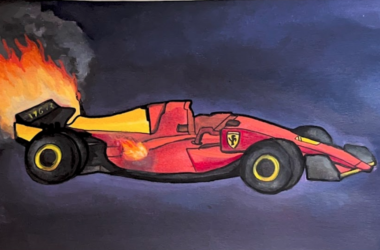
F1 Drivers’ Association clashes with FIA over punishments for swearing

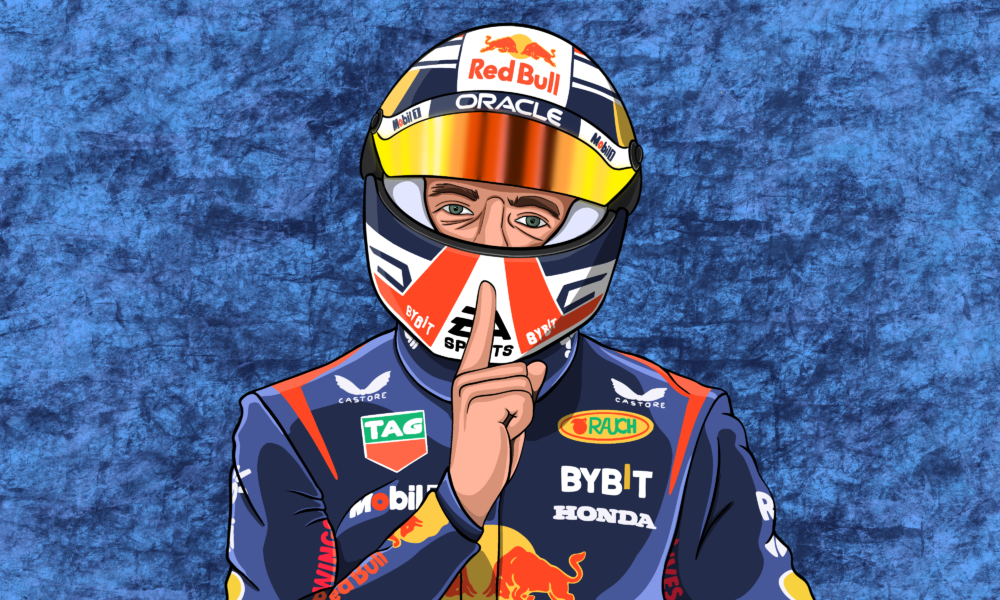
After a less-than-stellar performance in the qualification and race at the 2024 Azerbaijan Grand Prix in Baku, Max Verstappen used an expletive during a press conference when defining his car’s level of performance. From a seemingly innocuous lapse in professionalism by an athlete in the middle of an intense title race came a €10,000 EUR (nearly $15,000 CAD) fine and mandated community service time from the Fédération Internationale de l’Automobile (FIA). This move sparked a debate between F1 drivers and the FIA on the true role of the athletes.

Not long after Verstappen’s infraction, a similar incident occurred with Ferrari’s Charles Leclerc, who, in a press conference following the Mexico City Grand Prix, used a curse word to describe his reaction to an incident during the race where he nearly crashed his car into the barriers. Leclerc, like Verstappen, was fined €10,000 EUR. Following these two incidents, the Grand Prix Drivers’ Association (GPDA)—the F1 drivers’ union—released a statement denouncing the FIA’s actions. The statement says that, while they must abide by the “referee’s decisions” like all athletes, there is a clear difference between cursing directly at someone with an intent to harm them and more “casual swearing” used as a descriptor instead of an insult. The GPDA argued against the FIA’s monetary punishment of drivers and offered to help make rule changes to avoid future controversies.

These two incidents call into question the role of drivers as it pertains to their status as role models. Do athletes always need to be on their “best behaviour,” without any room for slip-ups? That’s not to say that they should be able to say whatever they want, but a €10,000 EUR fine for an expletive not directed at any specific person seems to be quite a steep penalty. Considering that F1 has no problem posting censored videos of their drivers swearing (often directed towards others in an insulting manner) to their own social media to the tune of millions of views, why would Leclerc and Verstappen be punished for cursing at a press conference which would almost certainly have far fewer eyes on it? 

This situation was further complicated when FIA President Mohammed Ben Sulayem made comments comparing the foul-mouthed drivers to rappers and pleaded for them to keep their speech clean—a sentiment many deemed to be racially insensitive. This is not the first time Ben Sulayem has clashed with a driver. In 2022, he repeatedly made statements to the media criticizing Mercedes driver Lewis Hamilton—the only Black driver on the grid—for wearing jewelry, threatening fines if it was not removed. Some of Hamilton’s jewelry was permanent and could only be removed surgically. Hamilton was one of the first to call out Ben Sulayem’s “rapper” comments, saying that there was a “racial element” to them. The precedent of underlying tensions between Ben Sulayem and the drivers is part of why the GPDA was so quick to step in and defend both Verstappen and Leclerc.

Regardless of any of Ben Sulayem’s personal bias towards the drivers, the FIA must seriously consider what the GPDA has to say. These drivers, at the end of the day, are elite athletes who are ruthlessly competitive and should not be expected to regulate everything they say following a disappointing performance. Athletes should not have free reign in their statements to the press, but the FIA must consider if this is the hill they are willing to die on. Considering his already tense relations with drivers, Ben Sulayem and the rest of the organization would be wise to take up the GPDA on their offer to collaborate on the reconstruction of rules and punishments to provide more clarity on what is expected of them.

Read the latest issue

Read the latest issue