


Latest News

Arts & Entertainment, Music

‘Hearing Things’ is a lighthouse for the future of music journalism

In January 2024, magazine conglomerate Condé Nast announced that it would be folding Pitchfork, a music coverage site, into Gentlemen’s Quarterly (GQ), resulting in mass layoffs for the site. This sparked outrage for fellow journalists and readers alike—along with concerns for the future stability of cultural journalism. On Oct. 15, over 10 months later, this story received a surprisingly optimistic update: Five of the former Pitchfork writers have started their own publication, Hearing Things, a worker-owned music coverage site focused on making quality music journalism accessible. 

“An antidote to the information overload that has poisoned the internet, we’re a destination for curated and considered music journalism,” the team told online music publication Resident Advisor (RA) in an article announcing the launch of the site. 

From the outset, the Hearing Things team is prioritizing diversity, both in regards to the music that they choose to cover and the voices that cover it. The public frustration for the layoffs at Pitchfork was twofold: There were large attempts to add more women staff  staff at both the writing and editorial levels over the past decade. This made the layoffs especially frustrating considering that many of the people fired were women, and the website was being folded into a men’s magazine.

Jill Mapes—former Features Editor at Pitchfork and current Hearing Things founding member—  was fired in the mass layoffs from Pitchfork in February 2024. She took to X (formerly Twitter) to share her frustration:

“I’ve referred to my job at pitchfork as being on a ferris wheel at closing time, just waiting for them to yank me down. after nearly 8 yrs, mass layoffs got me. glad we could spend that time trying to make it a less dude-ish place just for GQ to end up at the helm,” Mapes wrote.

Hearing Things wanted to directly address gender marginalization within the workplace while constructing the new publication. On their website, they write about how when streaming was introduced, it promised to be a mass democratization of music. It has instead promoted a more monotonous, algorithmic consumption that leads to a lack of diversity in both the artists doing the creating and the genres they’re working within. 

In an era of algorithmic music consumption, journalism and criticism are some of the only tools of mass media to combat artificial uniformity. Criticism allows us to challenge our opinions on the things we love—and exposes us to new artists, genres, and ways of thinking about them.

As a worker-owned publication, Hearing Things prioritizes labour equity within an industry that is often incredibly exploitative towards its employees, while also granting journalists more creative control. 

On their website, the team writes that they hope to bring an unfiltered look to the work that they review, as well as—occasionally—a more casual tone. By letting their opinions loose and writing in a more approachable manner, they aim to build real trust with their new audience and pull in new readers who might have not previously engaged with art criticism.

Currently, the website’s content is free to view, but readers have the option of subscribing for as little as $7 USD /month or up to $1000 USD/year. This “patron” tier system is designed in the hopes of keeping the writing open and accessible to everyone while still adequately compensating workers. 

It’s exciting to see the ways in which highly creative writers can adapt to publishing in the modern landscape. Whether working with or against social media conversations about music, these five writers have found a way to continue doing what they love while making space for the next generation of journalists to come.


Student Life

How to support your American friends as the presidential election looms

As Election Tuesday approaches, it’s likely to be a tense week for our neighbours to the south. Here’s some advice from a concerned American to help you look out for your friends from the States. 

Check in about their plans for election night

With months of build-up, no clear polling data, and incredibly high stakes, Tuesday, Nov. 5 is likely to be one of the most stressful political days of the year for anyone with a vested interest in the U.S. government. Everyone deals with this in their own way: Some will likely be passing out drunk on the couch at an election watch party, some will be anxiously checking their phones every five minutes while pretending to study, and some will be trying to distract themselves any way they can. Whatever they’re up to, it can be a nice gesture to check in on your American friends to see if they’d like company, support, or a distraction. 

Take a quick break from complaining about Justin Trudeau

Look, we know you’re not a fan of him. We know about the blackface, his inability to say “LGBTQ,” and that his dad has an airport named after him. But honestly, compared to what Americans are dealing with, anyone who can speak in coherent sentences is looking pretty good right about now. 

Look into their local elections

During presidential election years, the race for the top spot usually gets all of the attention, but there are also many crucial elections happening at both the state and local levels. If you know what state or city your friend is from, look up what additional items are on their ballot using websites like vote411.org, or ballotpedia.org for more information on specific measures. Depending on the state, there may be important races for governor, senate, or state legislature. There are also often referendum questions on topics like the legalization of marijuana, abortion rights, and school funding. Familiarizing yourself with some of these ballot items can go a long way towards showing you care—and understanding what exactly your American friends are so stressed out about this week. 

Know the swing states

While every American is affected by the outcome of the presidential race, the election-night experience can be very different depending on whether your state is solidly blue, solidly red, or up in the air. If your friend is from Pennsylvania, Georgia, North Carolina, Michigan, Arizona, Wisconsin, or Nevada, their races are still well and truly considered toss-ups, and their results will have a disproportionate impact on the national outcome. 

Help them out with Wednesday classes

Votes will be tallied well into the evening on Tuesday, so if your friends are staying up to see the final results, it may be a late night. And depending on the outcome, they may not be feeling very motivated to attend class the next morning either. If you share a Wednesday-morning course with an American, it might be helpful to send them your notes or an audio recording of the lecture. 

FAQ: Addressing some common questions so your American friends don’t have to

Are you going to vote?

While voting is a crucial part of living in a democracy, and many American citizens living abroad are eligible to vote in state and federal elections, at this point it’s too late to start the process of requesting an absentee ballot for many states, and any Americans who haven’t voted are likely feeling guilty about it, so no need to rub salt in the wound. 

Do you think you’re gonna move back to the U.S. after you graduate?

They still have no idea. At the very least, you should probably wait until a couple of weeks after Nov. 5 to start asking again. 

Have you seen the results?!

Yes. They have.

Chill Thrills, McGill Recommendations, Student Life

Halloween costumes on a budget

Whether you’ve partied over the past weekend, are about to start a bender on Thursday, or just want to dress up at home, costumes are at the heart of Halloween celebrations. This is your sign to not be intimidated by the planners of our world—those who’ve had their outfits ready since last Halloween—and to embrace creative solutions. The following recommendations for costumes on a budget are not only cheap, but also trendy and easy to put together last minute!

Search for inspiration

Thanks to the internet, there are endless sources of costume inspiration for Halloween. Searching for “DIY halloween costumes” on Pinterest is an easy way to get started. Thousands of photos are available and often more relevant than what you’d find through a simple Google search. When you find something you like, the algorithm will look for similar pins to explore. A costume can be anything you want it to be! Some good places to start are your favourite characters from movies, singers in iconic tour outfits, and even inanimate objects. Gone are the days of needing your choice to be recognized—Halloween is all about enjoying yourself. If you want to go as a jar of pickles, nothing’s stopping you.

Look into your closet

Now that you have an idea of what you want to dress up as, it’s time to take inventory. Before heading to your nearest Spirit Halloween, take a look at your own clothes. If historical accuracy is not a problem for you, then substituting in a shirt or an accessory that’s a few shades off-model is an easy way to save money. It’s a good idea to ask any friends for items as well—just make sure to return it vomit-free afterwards. If your wardrobe is looking a little bare, be on the lookout for clothing swaps, where you can exchange second-hand outfits, or dig through the closet of a generous friend. Additionally, going to a thrift store and checking their seasonal aisle is a budget-friendly alternative. Also, if you’re going to buy a piece of clothing you know you’ll only wear once, try to donate these items once Halloweekend is over.

Get creative

To elevate your everyday clothes to fantastical levels, try a bit of arts and crafts. Do-it-yourself projects do not have to be time-consuming, complicated, or permanent. A few pieces of masking tape can last you throughout the night, and the next morning your clothes will return to normal. With just some scissors, markers, and a basic sewing kit, you can make virtually anything. Plus, it’s always nice to get a compliment on a costume and be able to say you made it yourself!

Don’t be afraid to reach out to friends: The only thing more fun than making costumes is making costumes with friends. If your make-up skills are not up to par, you might know someone who’s eager to test their special effects skills on you. You can even turn a somewhat tedious task into a fun get-together. Just buy masquerade masks from the dollar store and form your troupe of black swans, jesters, or musketeers! 

Some ideas to get you started

Here are some costume ideas you need to try this year:

  • Art, Tashi, and Patrick from Challengers (2024): All of the characters in this film wear pretty normal clothes. If you own a tennis racket, it’ll be pretty easy to dress up as any of the three. This goes for any sports-related costumes: Props are your best friend.
  • Olympic breakdancer: All you need to embody your inner Raygun is a fully green outfit and some confidence. The best part about this costume? You can test out some crazy dance moves and say it’s all in character.

Post-ironic Brat: It’s time to accept that while brat summer is over, brat autumn has just begun. In fact, brat will never end. Between remix albums and world tours, maybe we all need to pick up a sharpie and a neon green shirt this Halloween. The good thing about brat shirts is that you can write whatever costume you wish you’d bought; just make sure it’s in a lower case font.

McGill, News

QPIRG Radical Walking Tour explores Milton-Parc and McGill through a critical lens

On Oct. 21, organizers with the Quebec Public Interest Research Group at McGill (QPIRG) hosted a Radical Walking Tour, stopping multiple times along Avenue du Parc, Avenue des Pins, and on McGill campus to offer a critical presentation of both the university and the Milton-Parc neighbourhood. QPIRG is a student-run collective that seeks to engage students with the Montreal community and with social justice issues.

The Radical Walking Tour is one of the many events of Culture Shock, QPIRG’s annual free fall programming series on “anti-racism, migrant justice, and Indigenous solidarity.” The Students’ Society of McGill University (SSMU) also provides organizational support for the event series.

The tour began at QPIRG McGill’s Office and Alternative Library, which shares a space with the headquarters of the Milton-Parc Citizens’ Committee, a grassroots collective working to preserve the neighbourhood’s spaces and its residents’ rights. Carl Bystram, Working Groups and Community Research Coordinator at QPIRG, spoke to the importance of showing McGill community members the history of the neighbourhood.

“We find that situating people in the wider community around Milton-Parc and explaining the struggles that have happened here, as well as the broader struggles around McGill […] really fits in well within the Culture Shock agenda,” they said.

This site of intergenerational community and collaboration set the stage for the first half of the walking tour, which focused on the activist history and ongoing projects in the Milton-Parc community. The tour’s speakers described Communauté Milton Parc (CMP), the largest co-operative development (co-op) in North America, housing over 1,000 low- and moderate-income individuals in its 616 residential units. The tour guides explained how the CMP substitutes the conventional system of landlords charging rent for profit with a participatory housing arrangement, where residents support building maintenance and governance to cut down on rent-related costs for tenants. Further, the tour stopped at Co-op Bar Milton-Parc, a separate co-op that occupies commercial space from the CMP and acts as a bar and a solidarity space for community events.

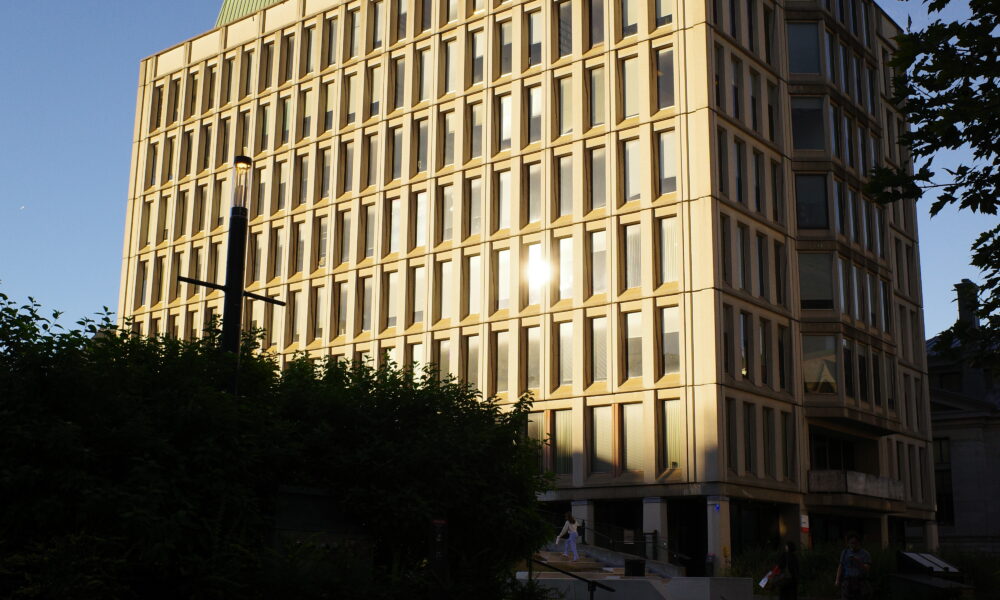
Other Milton Parc resources spotlighted throughout the tour included food bank programs such as St. John’s Lutheran Church, Santropol Roulant, the Climate Justice Hub, and independent social-justice publisher Black Rose Books. The tour then moved onto McGill campus, starting at the Sylvan Adams Sports Science Institute (SASSI)—a construction project commenced in 2022 upon a donation of $29 million CAD from billionaire Sylvan Adams.  

Speakers on the tour criticized McGill’s choice to partner with Tel Aviv University on the SASSI project due to its development of Israel’s genocidal killing of Palestinians and the Dahiya doctrine for bombing civilian infrastructure. 

McGill’s Media Relations Office (MRO) did not provide comment to The Tribune on McGill’s partnership with Tel Aviv University.

The Radical Walking Tour continued by passing the New Vic Project site. There, speakers discussed the MK-ULTRA experiments which took place at the site in the 1950s and 1960s—a project where the CIA performed research on mind control and brainwashing techniques on unconsenting patients, many of whom were Indigenous. Speakers went on to highlight McGill’s ongoing legal battle with the Kanien’kehá:ka Kahnistensera (Mohawk Mothers) to search for unmarked graves they believe are on the grounds.

The tour concluded by pointing out sites on campus where student demonstrations have transpired, including the Bronfman Building—which students blocked on Feb. 22 to call for McGill to cut ties with Israel—and the spot where a statue of James McGill stood until July 2021, which students had long demanded to be removed.

The MRO affirmed the university’s commitment to social justice in light of founder James McGill’s enslavement of Black and Indigenous peoples and participation in the transatlantic slave trade.

“In the 200 years since its establishment, McGill University has evolved to become a world-class institution of higher education marked by pluralism and diversity,” the MRO wrote in a statement to The Tribune.

For SSMU Vice-President External Affairs Hugo-Victor Solomon, the tour’s focus on lived experiences beyond McGill promotes important avenues for community development.
“By participating in Culture Shock, we’re extending the invitation to SSMU membership at large to […] make connections that they wouldn’t otherwise make, and to be sensitized to issues that may really resonate with them that they haven’t had the chance to learn about yet,” Solomon said in an interview with The Tribune.

All Things Academic, Student Life

Office hours: More than an option, a must

Office hours are an essential part of any college curriculum. Amid the hustle of lectures, conferences, and assignments, these hours provide flexible opportunities for students to ask their professors or teaching assistants (TAs) any questions that come up throughout the semester. They offer a safe space for those who might be afraid to ask questions in front of the entire lecture hall, allowing one-on-one time to raise concerns and explore more in-depth questions. Information about professors’ and TAs’ office hours can usually be found on each course’s syllabus. 

Some professors’ office hours only occur once or twice a week, making it difficult for students whose schedules overlap with these times to seek help. Luckily, for larger lectures, there are conferences run by TAs, most of whom have their own individual office hours that any student is welcome to attend. For instance, in LING 201, there are five TAs, all of whom host one to two hours a week in person or on Zoom. This flexibility allows students to get their burning questions answered by someone knowledgeable.

Zlata Odribets, a graduate student pursuing a degree in Syntax, is currently one of the five TAs for LING 201. She hosts office hours twice during the semester. Her last session, just before the midterm, welcomed five students with questions about recent assignments. 

“I think some students appreciate communication that is private, that their classmates can’t overhear. Often office hours provide me the opportunity to answer a question more in-depth when I’m not rushing from one class to another,” Odribets said. “When I was an undergraduate student I asked similar questions [to professors and TAs].”

Although it can be nice to have a direct line to the professor, having additional office hours with TAs allows both students and instructors more flexibility. 

As Ruby Czeban, U0 Arts, explained, office hours also provide a time and space for students to build relationships with their TAs and professors outside of lectures. 

“I think that it can be very helpful sometimes, especially when you have a specific question,” Czeban said. 

The class had posed some challenges to Czeban, so just before a big test, she attended office hours with the professor to clarify questions about the problem set that had been assigned beforehand. Specific homework questions can be overwhelming or simply inconvenient to ask in a class with over 300 students. Additionally, an issue with a specific problem may not be universally applicable, which is why chatting with the professor or TA after class is often the best way to go. 

Alejandra (Sandra) Barriales Bouche, a professor in McGill’s Hispanic Studies department who instructs HISP 219, explained her experience with students who came to office hours. 

“After an exam, students come more often. Usually, they come to ask questions about the exam or doubts about the material. Sometimes they come for future plans, [such as] which courses they should take,” Barriales Bouche explained. “I feel that some of them feel there is a barrier in class. I feel like there is a different atmosphere [during office hours]. It’s an opportunity for the student and me to establish a conversation about how they are doing in the course.” 

More importantly, she added that she hopes students will take advantage of office hours at all times, and not only when they are struggling—which seems to be a pattern among students.

“Don’t come only when you have a problem. Come to let me know that things are going okay, and things that you like in the course,” Barriales Bouche said.

Office hours are not only an option in times of need; they’re a must throughout the entire semester. Professors’ and TAs’ doors are also opened for a simple chat.

In Competition With, Sports

Weekly wrap-up: McGill Athletics at RSEQ playoffs

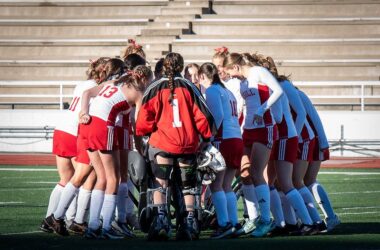
Last week was significant for McGill Athletics, as three varsity teams—Martlets Soccer, Redbirds Soccer, and Redbirds Rugby—qualified for the Réseau du sport étudiant du Québec (RSEQ) playoffs.  

After a 2-0 victory versus the Université du Québec à Trois-Rivières (UQTR) Patriotes, Redbirds Soccer finished the regular season ranked third in the RSEQ. They faced off against the Patriotes in the division semifinals on UQTR’s turf on Friday, Oct. 25. The team concluded the season with a 5–4–3 record, making the playoffs for the first time since 2018. While some teams may feel discouraged playing their first playoff game on the road, captain Stuart Klenner, U1 Engineering, shared the team’s positive outlook with The Tribune.  

“We’re all excited,” he said. “We’ve beat them two times this season, both games we’ve played them. But they’re always a strong team [.…] We don’t mind [playing away]. We’ve played well away, at least against [UQTR].” 

The team’s enthusiasm served them well as the Redbirds beat the Patriotes 2-1 on a penalty kick taken by striker Mujtaba Mirhasan in the second half of added time, and will travel to the Université de Montréal on Nov. 1 for the RSEQ Championships. More notably, though, the victory secures the Redbirds’ ticket to the U SPORTS national championships from Nov. 7-10 in Oshawa, Ontario. 

Martlets Soccer has also been unstoppable this year, and headed into the postseason with a record of 8–4–2, ranking second in the league behind the Université de Montréal Carabins. The Martlets played Laval on Oct. 24 at Percival Molson Stadium in the RSEQ semifinal game. The two had matched up twice during the regular season, with the Martlets tying them on Sept. 15 and losing 4-1 on Oct. 6. Captain Mara Bouchard, U3 Arts, reflected on the team’s preparation for the upcoming game. 

“It’s very exciting,” Bouchard said in an interview with The Tribune. “In all the years I’ve been at McGill, it’s the first time we’re hosting playoffs, the first time we’re finishing second instead of third [….] We know what our main objective is: We want to go to nationals. We know what the steps are. So yes, it’s pretty exciting, but we’re focusing on the [first game] and are going to give everything we have on that day.”  

Unfortunately, the team faced a devastating 1-0 loss against Laval in which a Martlet scored an own goal in the 27th minute. Regardless, the season was one of the most successful in Martlets soccer history.  

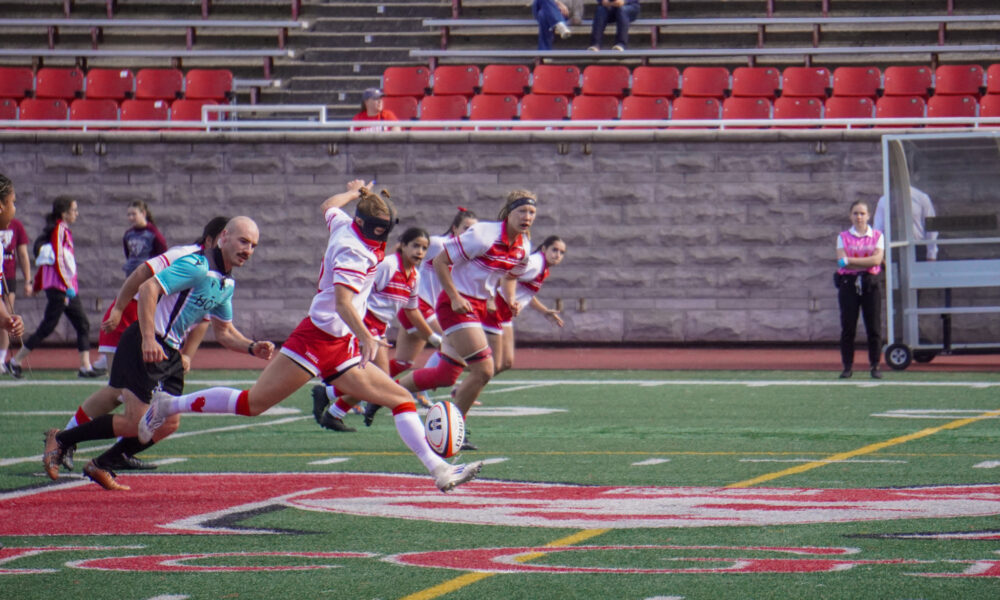
Soccer is not the only sport sending McGill teams to the RSEQ playoffs—Men’s Rugby headed to Matt Anthony Field on Saturday, Oct. 26, to face the University of Ottawa Gee-Gees in a battle for a spot at the RSEQ Championship. Rugby had a successful season, finishing with a 5–1 conference record and ranked third in the league. They entered the semifinals following a 57-0 win over the Harvard Crimsons in the 150th anniversary of the Covo Cup—an honoured tradition that celebrates the first intercollegiate rugby game in North America, played in 1874. Sitting down with The Tribune, flanker Elliot Descarreaux, U4 Science, reflected on what the Covo Cup means to the team.  

“It means a lot to us […] because of the history of it,” he said. “We often speak about how when you put on your jersey it’s not just for the guys you’re playing next to or the coaches, but for the history of our program and our team. It’s also important for keeping the alumni society active. It usually brings them together. This weekend there were 30 or 35 alumni there, so that was really fun for us, and nice to see that our program keeps having lasting effects even after you graduate.” 

Descarreaux shared that the victory was a testament to the team’s ability to work together and that team spirit was high as they approached playoffs.

Despite a valiant effort, the Redbirds lost to UOttawa, falling short with a final score of 24-12

With Martlets Soccer and Redbirds Rugby advancing to the RSEQ semifinals, and Redbirds Soccer heading to the RSEQ finals and U SPORTS national championships, McGill Athletics can take pride in the program’s impressive recent performance. This success highlights the dedication and talent of the athletes and sets a promising tone for the future.  

All Things Academic, McGill Recommendations, Student Life

How do we escape our phone during midterms?

While the end of October highlights the traditional joys of the fall season, such as Halloween and pumpkin-spice lattes, it also stands as a gruelling reminder of midterm season. Given the anxiety and stress that can easily wash over us during exams, we tend to gravitate to our phones as a temporary distraction from these negative emotions. Yet when we browse through feeds, messages, or media platforms, we’re all aware—whether we admit it or not—that doomscrolling only digs us deeper into a hole.

Fortunately, this shared experience has inspired many students around campus to find different approaches to staying focused. Olive Bohdanowycz, U1 Arts, discussed how she manages her school work while being mindful of her screen time, sharing her personal strategies for different study locations. 

“When I’m at Schulich or McLennan, I normally use the phone lock machines to completely remove myself from my phone’s distractions. When I’m at home though, I just rely on DND [do-not-disturb] to silence everything,” Bohdanowycz said. 

In addition to the basic do-not-disturb function, many phones now have versatile personal, work, and sleep modes allowing you to customize which specific apps you receive notifications from. Setting these precise restrictions on your phone can improve self-discipline and help prevent procrastination.  

Daphne Barrett, U1 Arts, also found success with limiting access to her phone. Along with adopting similar do-not-disturb approaches to Bohdanowycz, she used strategies that relied on other people to get involved with her personal screen time limitations. 

“I’ll either have one of my friends or housemates take my phone away, or set timers so I can see how much work I’ve done without my phone,” she explained. “It’s motivating to see my time and track my hours of studying.” 

Through methods like this, Barrett was able to balance effective studying habits with a feeling of satisfaction and progress, specifically through her timer strategy. This approach of transforming screen time restrictions into a motivating process seemed to be effective and popular with many other students as well. 

Juan Garnica, U2 Desautels, mentioned apps that use similar tactics as a motivating tool. For instance, Flora is an app that plants a virtual tree for a set duration of study time. When the timer runs out, the tree appears fully grown in your virtual garden. He explained how closing the Flora app kills your tree, forcing you to restart the process. 

“Seeing that I’ll kill my tree makes me think twice if I really want to go on my screen. It is a way to make me realize my priorities,” Garnica said.

Like Barrett, Garnica uses this app to stay focused on his work by reducing distractions and using the virtual trees as a motivating reward. Turning focused work and studying into a game is an ideal way to get through difficult tasks. 

On the other hand, Shirley Tu, U2 Arts, tries to avoid their phone entirely whenever possible.  

“Usually when I’m listening to music, I try to always connect my headphones to my laptop instead of my phone so if I’m changing the song or volume, I’m not distracted by any notifications or feel the need to look at other apps,” Tu said. 

Using an alternative device like a computer, which lacks the disruptive qualities of phones such as constant sporadic alerts and the ease of getting lost in distractions, can be effective for staying on task. While we may try to justify constantly having our phones close by to listen to music or keep up with text messages or other vital alerts, Shirley’s method shows that it is possible to do these things without a phone. 

While simply silencing their phone may be enough for some, others might need to find alternatives to fight the urge to scroll and keep themselves focused on school. Whether you use a screen time regulation app or completely remove your phone from the equation, these insights can help us develop strategies for balancing work and phone usage. By locking up our phones, we can unlock our full study potential to achieve a successful midterm season.

McGill, News

Recap: Queerness and AI roundtable

McGill community members gathered for a roundtable discussion on Queerness and AI organized by Web Services and Equity at McGill as part of Queer History Month (QHM) on Oct. 23. Three panellists—McGill’s Associate Director of Inclusive Excellence Kit Malo, Senior Employment Equity Advisor Ande Clegg, and Digital Communications Manager Joyce Peralta—led the talk alongside the roundtable’s emcee, Digital Communications Associate Jaylen Gordon. The goal of the event was to interact with and spread awareness about those AI misrepresents and discriminates.

The panellists led guests in an exercise, prompting Microsoft Copilot to generate an image of “Queer McGill University community members for a McGill website.” The resulting picture showed a large group of people holding rainbow pride flags, many with the colours in the wrong order. Attendees observing the image were quick to point out the lack of diversity with Microsoft Copilot depicting the figures in the image as uniform in body type, ability, style, and identity. Throughout the discussion, many participants expressed feeling offended, but not surprised, by the stereotypical depictions of queer communities by Microsoft Copilot. 

The theme of this year’s QHM is visibility, with events and programming slated throughout the month of October. The roundtable also discussed journalist Reece Rogers’s Wired article “Here’s How Generative AI Depicts Queer People.” In it, Rogers discusses how AI’s depiction of queerness relies on and amplifies stereotypes around lesbian, gay, and bisexual individuals while mischaracterizing the transgender community completely.  

McGill offers a “secure version” of Microsoft Copilot to its student body with the disclaimer that “Human biases may skew the data that was used to train an AI tool […] resulting in content that reflects or amplifies those biases” in its general guidelines

The group acknowledged that issues in AI’s depiction of queerness reflect society’s historic and present mischaracterization of 2SLGBTQ+ people. Panel members argued that for AI to begin generating fair representations of the queer community, it must be trained to reject biased and discriminatory images of queerness while embracing fair representation of the 2SLGBTQ+ community. 

Behind the Bench, Soccer, Sports

FIFA accused of “sportswashing” by women’s soccer stars over Saudi deal

This past April, soccer’s governing body, FIFA, announced a landmark partnership and sponsorship deal with the Saudi Arabian Oil Group, Aramco. Owned almost entirely by the Saudi Arabian government and the country’s Public Investment Fund (PIF), this collaboration between FIFA and Aramco marks another milestone in FIFA’s continued relationship with the nation. Saudi Arabia is also set to host the men’s FIFA World Cup in 2034, solidifying the country’s growing presence in global soccer.

Women’s soccer’s biggest names fought back against the deal in the wake of the Saudi government’s continued mistreatment and repression of women and minority groups, such as the male guardianship system, imprisonment of women’s rights activists, and criminalization of the 2SLGBTQ+ community. 

These players claim that FIFA is continuing to assist Saudi Arabia in “sportswashing,” a tactic used by repressive governments and corporations, which aims to distract the eyes of the public from controversies through the promotion of sport. 

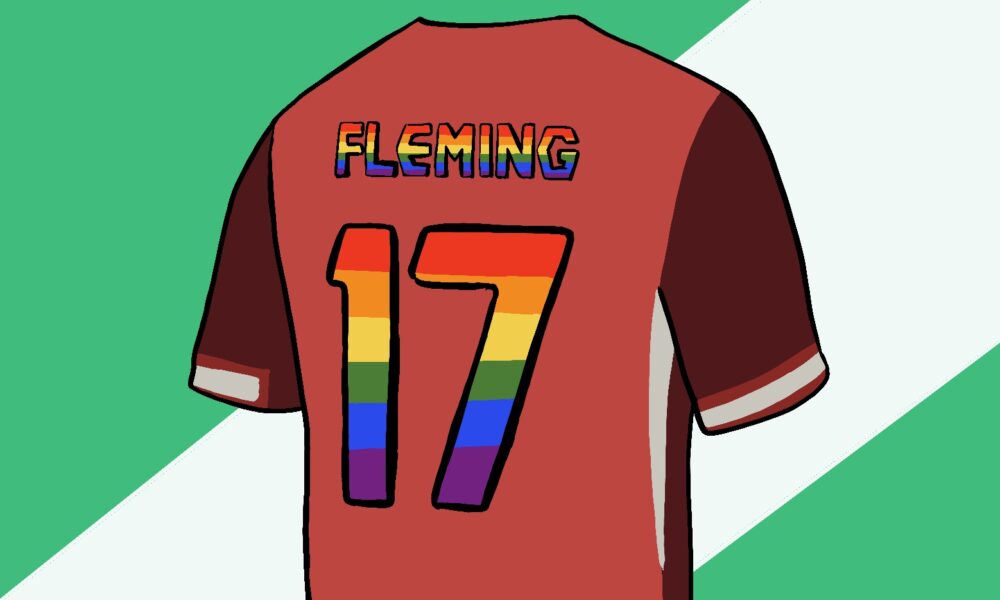
In a letter to FIFA, 130 players, including Canadian legend Jessie Fleming and the Netherlands’ all-time leading scorer Vivianne Miedema came out strongly against the partnership. They expressed feeling let down by people who were supposed to be looking out for the players’ best interest, and that the sponsorship with Aramco went directly against many causes that women’s football players were passionate about. The players cited Aramco’s massive levels of emissions, the continued oppression of the 2SLGBTQ+ community, and the state-sponsored restrictions against Saudi Arabian women as reasons why this sponsorship is antithetical to the continued growth of women’s soccer.

In an era where the growth of women’s soccer outpaces many other sports, fans and players see the Saudi deal as a step in the wrong direction. The letter rightly points out the deal was made by 37 decision-makers, of which only eight are women. Male decision-makers are not at risk of being affected by the Saudi government’s regressive policies, and some of the main stakeholders—women—are typically excluded from the decision-making process. It is an indictment on FIFA and its leadership that the requests of their players are not being heard or acted on. It would be in the sport’s best interest for FIFA to cease relationships with a government that is antithetical to the best part of soccer: Inclusivity. From the No Room for Racism campaign to the Rainbow Laces project, players and fans frequently stand up for marginalized communities. Soccer’s leaders, however, show no such inclination, to the detriment of the sport and its players.

Aramco CEO and President Amin H. Nasser explained in a press release that the partnership with FIFA attempts to use the power of sport to make global impacts and develop the game of soccer. This has been a trend not just in world soccer, but also in many other international and well-recognized sports. The controversial PIF-owned LIV Golf League aims to compete with the PGA Tour to be the foremost golf competition in the world, while a PIF-led financial takeover of Newcastle United F.C. in the English Premier League sparked outrage from fans. Additionally, one would be hard-pressed to watch a Formula 1 race without spotting Aramco advertisements scattered throughout the circuit. In fact, Aramco is the main title sponsor of the Aston Martin F1 Team.

When Nasser speaks of “harnessing the power of sport,” he is not being disingenuous. The end goal of this sportswashing is to use the global adoration of sports to continue to normalize the behaviours of the Saudi Arabian government by injecting its finances and advertising into the sports and teams fans hold so dearly. Normalization will continue as eyes are pulled away from domestic issues within Saudi Arabia. FIFA has made the decision that abuses against the 2SLGBTQ+ community, oppression of women, and poisoning the planet are acceptable in the name of financial gain and brand recognition. They simultaneously profit off of the popularity of women’s soccer and the oil money of a nation whose laws oppress women daily. By pointing out the hypocrisy of this decision, players are taking a brave stand against financial interests, and hopefully FIFA will follow suit.

Off the Board, Opinion

Cross-section pollination enriches our writers and our paper

My first article for The Tribune was not for News, the section for which I’m now an editor, but for the Arts and Entertainment (A&E) section. 

This is not an uncommon story. A&E is one of our most popular sections, and it attracts writers eager to share their takes on music, film, theatre, and television every week. It was this same love for the arts that compelled me to write a review of the show Human Resources in 2022 and to continue contributing to the section. 

The first time I sat in on a meeting for the Sports section, I had originally been planning on attending a Tuesday night A&E pitch meeting. That evening, I peered into The Tribune’s office to find that there was a particularly large group of contributors excited for the A&E editors to get started. Feeling a sudden rush of stress at the thought of joining the crowd, I sat down with the only other section meeting at the same time. This group was mercifully—sorry Sports, it’s just the truth—much smaller. 

I walked out of the University Centre that night having picked up a pitch not on celebrity drama or a local poetry slam, but on Varsity Basketball. I attended the game, loved it, and covered another the following week. A couple of months later, I found myself a Staff Writer for Sports. 

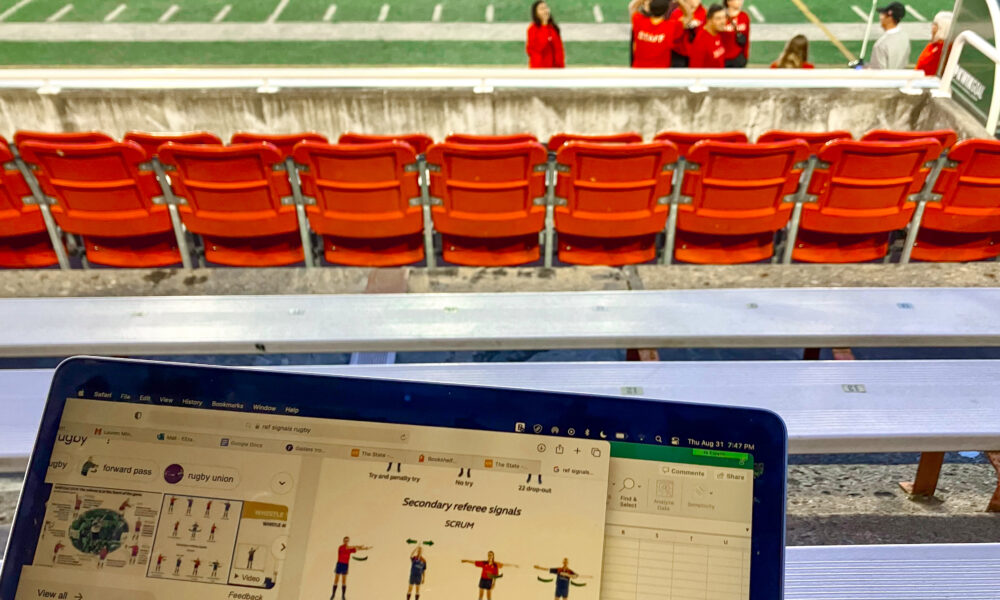
At this time, I had little prior knowledge of many sports that the section covered. I tried my best to arrive at games prepared, but there were moments during play when I had to split the screen of my laptop into two embarrassing halves: My notes on the left side, a diagram explaining rugby referee hand signals on the right. 

I recount this to highlight that complete beginners are welcome in all sections at The Tribune. Our paper seeks to not only produce high-quality articles that carry out our mandate and commitment to anti-oppressive journalism, but to foster a learning environment where students have the chance to grow as writers and reporters. Although I started as a beginner, the guidance of then-Sports Editors Tillie Burlock and Sarah Farnand helped me improve and gain confidence in my coverage.

Picking up the style and method of a new section also led me to unexpected skills and interests that I would have otherwise not discovered. Navigating post-game conversations with coaches and athletes taught me the basics of interviewing. From writing recaps of games, I learned how to summarize events and organize an article around the most crucial details. What started as a kernel of interest for sports coverage grew into a broader passion for reporting. Without Sports, I would have never started writing regularly for News.

I’m far from the only writer to venture beyond my go-to section. By contract stipulation, every editor at The Trib must pen a feature, a governance piece for News, and, uh, an Off the Board for Opinion. Though the paper has a central style guide, each section has its own motivating questions, types of articles, and approaches to reporting that make it unique. To me, this means that when writers venture beyond their typical page of the paper, it’s a chance for them to bring different ways of writing and thinking about university life to other sections. Cross-section pollination enriches the hive as well as the bees.

To any contributors, staff writers, and editors who feel a spark of interest to write for a new section, I recommend following it—especially if it’s telling you to write for News! These days, our pitch meetings are looking very inviting to those afraid of crowds! That curiosity yields multifaceted approaches to student journalism that strengthen our paper, and for me, it led me to the section I now call home.

Split your screen into two embarrassing halves and see where it takes you.

Read the latest issue

Read the latest issue