Latest News

Science & Technology

Finding sonic serenity in the big city

Imagine strolling through the bustling streets of downtown Montreal, where the air is thick with the rumble of traffic and the screeching of construction. It’s not exactly the most relaxing experience, is it? Could urban planners transform these soundscapes into something more pleasant? 

Valérian Fraisse, a PhD student in Music Technology at McGill, is devoted to applying science to music. His research focuses on urban soundscapes—the overlapping environmental sounds that make up our auditory experiences in urban settings—by investigating how to improve environments through sound installations and perceptive evaluations.

In a recent study, Fraisse and colleagues from the Sounds in the City research partnership, led by Professor Catherine Guastavino, explored the transformation of Fleurs-de-Macadam Square. This community space, created from a vacant lot in the Plateau-Mont-Royal, became the site for sound installations designed by the artist collective Audiotopie. Over two summers, sound artists from Audiotopie created and installed four sound pieces: Woodland sounds, voices, synthesizers, and sounds of the sea. 

“Sound artists play an important role in contributing to providing better sound experiments, especially because they are experts in what they do […] they are sonic experts that know what kind of sound could be done to improve or alter the perception of a given space,” Fraisse said in an interview with The Tribune.

While using sound to mask unwanted noise isn’t new, the study reveals these installations can do more than just cover up unpleasant sounds. Through the analysis of over 800 questionnaires and sound level measurements, the researchers found that all four sound installations positively impacted people’s perception of the soundscapes. 

Key findings showed that despite their compositional differences, the sound pieces all contributed to a calmer soundscape. This universal impact suggests that installations that utilize peaceful sounds enhance the tranquillity of public spaces.

However, specially tailored compositions can go beyond making an environment calmer, and actually achieve specific desired effects. For instance, the woodlands installation, which incorporated natural sounds, increased the sense of “being away” from the business of the city. On the other hand, the synthesizer installation, using abstract sounds, created a more coherent and less chaotic soundscape, highlighting how different sonic approaches achieve distinct perceptual outcomes.

“I would say also that the goal of this installation is never to strongly alter the sound environment,” Fraisse explained. “So it’s a very subtle kind of ambient sound. The goal is for it to be nondisruptive, so it can bring a more pleasant atmosphere without deterring people from staying there.”

The sound installations went beyond masking unwanted noise; they promoted “attentional masking” by shifting listeners’ focus to less prominent sounds in the environment. For example, instead of being overwhelmed by traffic noise, listeners become more aware of the quieter nearby construction. The installations effectively helped people tune into the quieter elements of the environment.  

The research also highlights the significance of temporal and spatial variables. A sound installation’s effect can vary depending on the time of day and where people are within the space. Further research is needed to explore these implications and the long-term considerations, such as habituation and changing community needs. 

Fraisse believes that sound installations offer a valuable tool for public urban planners seeking to improve public spaces. 

“In [urban] areas that don’t have a lot of variety, for instance, that are pretty dominated by traffic or noises that are not specifically restorative or interesting, [sound installations] can play a great role by bringing sonic diversity, but also just fostering cultural and social interactions, so there can be many benefits,” Fraisse said. 

In addition to these advantages, the installations are relatively inexpensive, adaptable to various spaces, and versatile in the types of sound content they can incorporate. By adding soundscapes to the urban planning toolkit, they offer a creative and effective way to enhance the enjoyment and restoration of urban environments. 

The study contributes to growing research on the importance of sound in our urban experience. As cities become increasingly noisy, creating oases of calm and tranquillity is essential. In the grand orchestra of urban living, soundscapes can be the key to making a city sing—not just shout. This project is part of the Sound in the City team’s ongoing inquiry, aimed at bridging research and practice to develop improved approaches for urban noise management and soundscapes in Montreal.

Arts & Entertainment, Film and TV

(Non-scary!) Halloween media

Howl’s Moving Castle

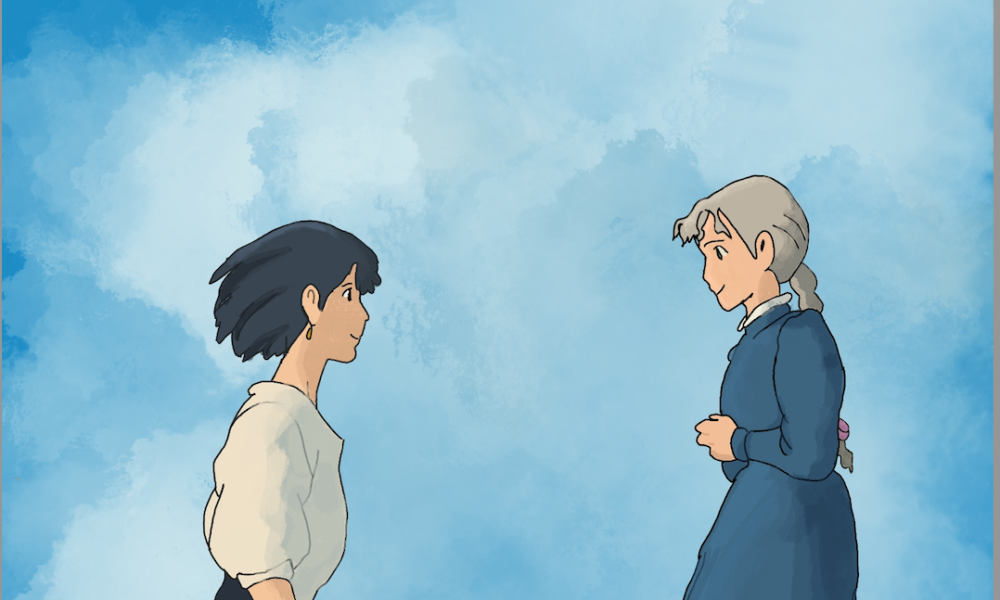
In this Studio Ghibli film, young hatmaker Sophie encounters a mysterious wizard named Howl. The Witch of the Waste curses her by turning her into an old woman. Sophie then meets a mysterious anthropomorphic scarecrow who leads her to Howl’s castle. There, she takes up residence as a live-in cleaning lady, hoping to break free from her curse with the help of the wizard’s magic. The world of the film is filled with sorcery, curses, a magical castle, and an animated flame, making it perfect for Halloween while never being scary. Along with the world and plot of the film, the relationships between the characters and the romance between Sophie and Howl create a captivating story. Not only does this story follow Sophie’s journey of independence and self-discovery, but the film explores anti-war themes with Howl’s critique of the war between two neighbouring kingdoms. The stellar cast of voice actors for the English dub of the film, consisting of Christian Bale, Billy Crystal, and Josh Hutcherson, is the cherry on top. 

Over the Garden Wall

In this animated show, half-brothers Wirt (Elijah Wood) and Greg (Collin Dean) find themselves lost in a spooky forest (for reasons unknown until later in the series), desperately trying to return home. In each episode, the two boys discover a new cast of characters who travel across time and space, while the woods and a few recurring characters connect each new adventure to the next. This critically acclaimed show has adorable and quintessential autumnal visuals, a great original soundtrack, and clever and hilarious dialogue. Over the Garden Wall is also filled to the brim with references and connections to other media, like the plot’s similarities to Dante’s Inferno and 19th- and 20th-century Americana culture. This take on a story about folklore has the perfect amount of spooky vibes while never being overly scary. Interspersed with humour, this show makes for a tremendous non-scary watch for Halloween. 

Agatha All Along

In this new Marvel miniseries, Agatha Harkness (Kathryn Hahn), who first appeared in WandaVision (2021), gets her moment in the limelight. This series returns to the fictional town of Westview three years after the events of WandaVision, with Agatha still trapped under the Scarlet Witch’s (Elizabeth Olsen) spell. After finally being released from the spell thanks to the help of Teen (Joe Locke), Agatha creates a coven consisting of Lilia Calderu (Patti LuPone), a divination witch, Jennifer Kale (Sasheer Zamata), a witch gifted at potion-making, Alice Wu-Gulliver (Ali Ahn), a blood witch (a child of a witch), and Mrs. Hart (Debra Jo Rupp), Agatha’s neighbour and their “green witch,” to embark on a journey through the trials of the Witches’ Road in hopes of regaining her lost powers. Similarly to WandaVision, this series explores different genres and time periods, as each trial of the road takes them to a different place and transforms their costumes to match, like when they were transformed into the 70s for one of the trials. Agatha All Along has a great cast of characters, and the sapphic tension between Agatha and Rio Vidal (Aubrey Plaza), a romantic figure from Agatha’s past, is immaculate. The final two episodes will be released on Oct. 30, just in time for Halloween, making this the perfect binge-worthy show for the spooky holiday! 

A Discovery of Witches 

A Discovery of Witches is a series based on Deborah Harkness’ All Souls Trilogy of novels. The story starts in Oxford, where the non-practicing witch and history of science professor Diana Bishop (Teresa Palmer) discovers a centuries-missing bewitched manuscript at the university’s famous Bodleian Library. This discovery leads to Diana meeting Matthew Clairmont (Matthew Goode), a vampire and professor of biochemistry, who work together to uncover the mystery behind this enchanted manuscript. This show is the scariest on this list, as it does get violent and suspenseful at times, but since I could handle it despite my extremely low tolerance for frightening things, it merits its place on this list. This time last year, I became obsessed with this show; the autumnal dark-academic aesthetic of Oxford, the magic, the mystery, and the romance entrap the viewer into this fantastical reality, making it an excellent watch for Halloween!

Science & Technology

Think your partner is anxious-avoidant? Think again.

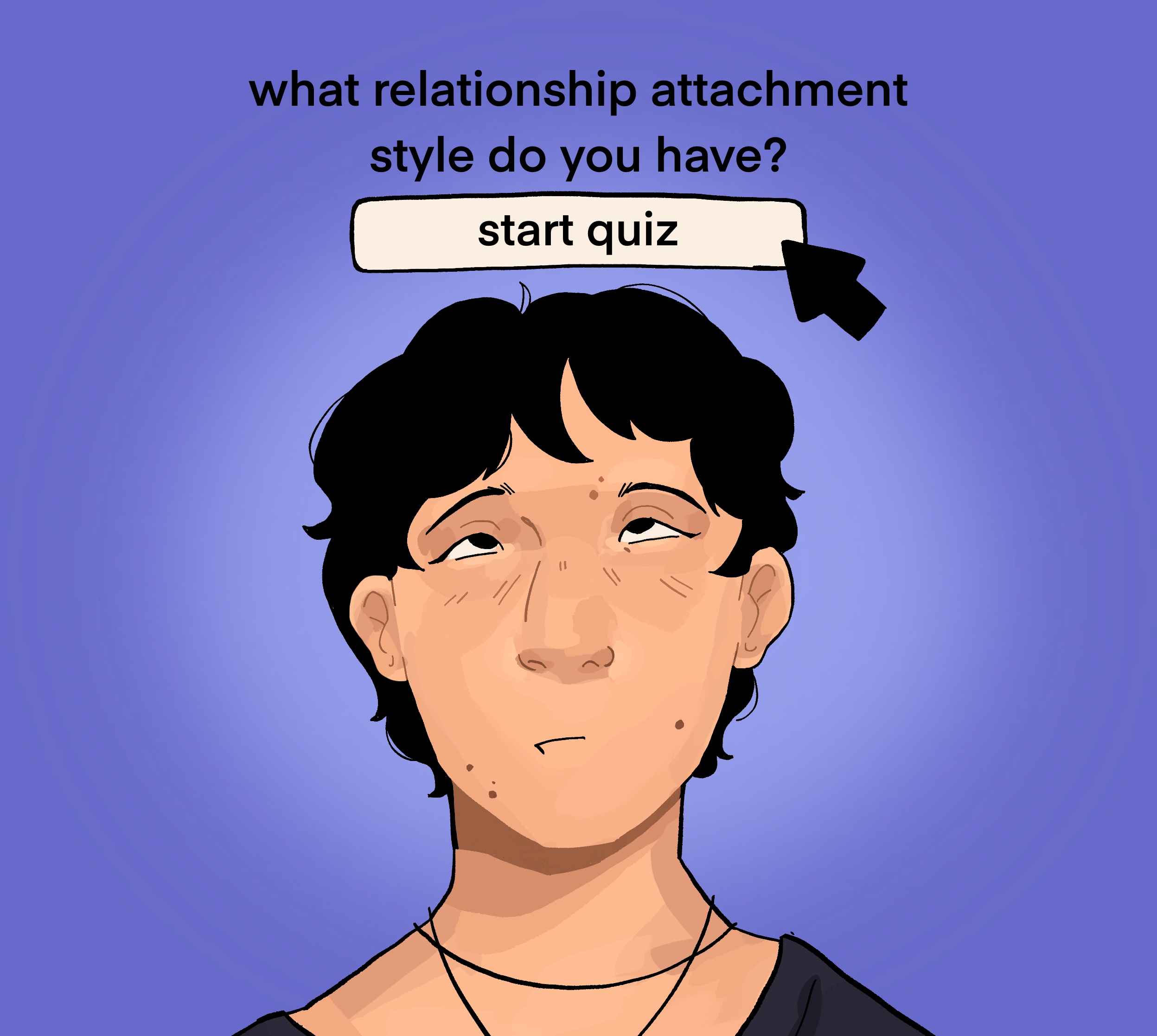
With pop psychology invading every social media platform, the line between self-help and self-sabotage has never been so thin. Pop psychology refers to psychological theories, strategies, or concepts popularized through the media—particularly social media. From attachment style assessments that can make or break your dating life to the allure of “therapy speak” that fills our conversations, these simplified concepts seem harmless—sometimes even empowering. Yet beneath the surface of this accessible facade lies a minefield of misconceptions and a serious potential for harming relationships. 

In the 1950s, psychologists John Bowlby and Mary Ainsworth developed Attachment Theory to transcend the paradigm that we attach to parental figures solely for survival. Their research, along with subsequent studies in the field, identified four attachment styles: Secure, anxious-avoidant, anxious-ambivalent, and fearful-avoidant. 

In recent years, the theory has surged in popularity, especially as unqualified social media “psychology gurus” have capitalized on the trend of making psychology accessible to the masses. While the intent to democratize psychology is commendable, real danger lurks in the oversimplification of mental health issues. Kristina Tchalova, a psychology professor at McGill University, shared her perspectives on pop science’s approach to interpersonal relationships. 

 “I think people might be too quick to jump to a diagnosis of a potential partner,” Tchalova said in an interview with The Tribune. “Once you form this conception of your partner, you risk interpreting all their subsequent behaviour through that lens. Confirmation bias is a powerful force.”

Contrary to pop-psychology beliefs and older research, recent literature views attachment as a continuum, where one falls along dimensions of anxiety and avoidance and moves between them throughout their life, rather than a concrete, categorical measure. Tchalova explained that many people can exhibit different attachment styles across various relationships. For instance, someone who generally identifies as insecurely attached may still have multiple secure relationships that provide stability and comfort. 

“People think of attachment as being unchangeable, very rigid, whereas we know from research that […] attachment can change,” Tchalova said. “At its worst, misunderstanding attachment theory can rob people of their sense of agency or can be used to excuse their bad behaviour.” 

Attachment theory is not the only psychological concept rewritten by social media. Many people, especially those seeking to better understand their relationship dynamics, over-rely on ideas such as the “Love Languages”—originally coined by Baptist Pastor Gary Chapman, with no scientific backing—and misinterpret terms like “gaslighting,” “boundaries,” “codependency,” and “limerence.” The more these terms become watered-down, the more difficult it becomes for victims of real-world situations to identify their struggles. This misconception around terminology is especially problematic when individuals base their understanding of complex psychological concepts on superficial online quizzes.

It is human nature to be curious about the inner workings of our minds, and online resources can be a good start to understanding our thoughts and behaviours—especially when research can be inaccessible, and finding a professional to talk to is harder than ever. However, the risk lies in the overreliance on labels. 

“Often, people stop at the diagnosis or self-diagnosis stage, which leads to the common tendency to be fatalistic,” Tchalova explained. 

Of course, not all internet advice is bad advice. Pascal Vrticka, associate professor in psychology at the University of Essex, is known for his online content addressing common misconceptions in a knowledgeable way and is a great resource to turn to for information on attachment. However, it is critical to acknowledge that consumers, and often producers, of pop psychology content are not experts. Psychological research is complex and messy, and trying to interpret it for a mass audience is fraught. 

So, the next time you encounter a pop psychology trend online, consider Dr. Tchalova’s advice:

“Ask yourself: What am I being asked to believe here? What is the supporting evidence for that? Are there alternative explanations for what’s being described? Seek out contradictory sources and weigh the strength of the evidence.”

Science & Technology

Peaking into the brains of bilingual students

As Quebec tightens regulations around student eligibility for education in English or other languages, the proportion of anglophone and allophone students—those whose home language is neither English nor French—attending French schools in the province has shot up. According to recent data from the Office québécois de la langue française (OQLF), 32 per cent of anglophone students and 92 per cent of allophone students are enrolled in schools where the primary language of instruction is French. These numbers are up from 18 per cent and 79 per cent in 2000. 

With such a high proportion of students going through the school system in their second or third language, researchers are wondering how kids cognitively handle this experience. 

Gigi Luk, a professor in McGill’s Faculty of Education, has been tackling this issue in the context of Spanish-English bilingualism in Massachusetts. Her recent paper, published in collaboration with scholars from Harvard and the University of California, investigates differences in brain activity between English monolingual students and Spanish-English bilingual students when watching a pre-recorded science lecture in English. 

As Luk explained, the study is unique in how closely it replicates natural classroom-style learning. 

“In this particular study, it’s very special, because we developed the videos from scratch using curriculum material in Massachusetts, and we actually used those materials to write a script and then have a teacher help us turn that script into something she would actually say in a classroom,” Luk said in an interview with The Tribune

Nonetheless, students didn’t quite have a normal classroom experience: In Luk’s study, they were watching the lectures from within an fMRI machine

“Nothing is natural when you’re in an MRI scanner, I’m not going to lie,” Luk joked. 

But the fMRI allowed Luk to dig deeper into what was really going on in students’ minds when they were learning in a way that other methods like questionnaires and assessments couldn’t. 

What they found was that the same areas of the brain were lighting up for both categories of students, but when they looked more closely, there were some key differences. Using functional connectivity analysis—a technique that looks at how the activity in different regions is correlated with activity in a chosen “seed” region—they were able to uncover how the bilingual students’ minds were behaving differently. 

“The general finding is that, for children who speak Spanish as a first language, but listening to the video in English, we see largely similar brain area. So it’s not like they’re using completely different brain regions, but in fact they have more diffused and larger networks compared to the functional connectivity pattern in children who only speak one language,” Luk explained. 

What this essentially means is that the Spanish-speaking students were putting more effort, and more different types of effort, into learning the same material as the English-speaking students. 

“When you’re listening to lectures in a language that maybe you’re still developing, maybe there’s vocabulary that you don’t understand, or maybe there are sentence structures that are too long to keep track of,” Luk speculated. “We don’t know exactly what it is, because our study does not allow us to answer those questions, but the task of listening to this lecture was harder for them.”

Interestingly, the researchers also administered several tests to assess the students’ general language abilities in both Spanish and English. They found that, for the Spanish-speaking students, performance in English and Spanish was correlated, so if they scored higher on the Spanish language assessment, they were likely to do better in English as well. 

“Learning two languages is not like a seesaw, where one is better, so the other has to go down,” Luk explained. “The human brain is incredibly plastic, and when we learn multiple languages, they help each other out, rather than cancelling each other out.”

Moving forward, Luk plans to conduct an extension of this study with French-English bilingual participants in Montreal, investigating whether these results hold true in an environment where balanced bilingualism is much more common and the linguistic context is very different.

McGill, News

The Tribune Explains: Final grade submission at McGill

Many students at McGill have faced the prolonged dread of waiting for their final grades to be updated in Minerva. Some have expressed frustration and confusion on the McGill subreddit r/mcgill over grades appearing on their transcripts well past the end of the semester. The Tribune brings you a guide to understanding the university’s rules for professors’ and students’ rights when it comes to grade submission. 

What is the deadline for professors and lecturers to submit grades?

According to the McGill Charter of Student Rights, students have a right “to be informed, in a timely fashion, of their current academic standing or performance in a course.” McGill Media Relations Office (MRO) clarified in an email to The Tribune that the timely fashion depends on the nature of the assessment and the class’ grading scheme. Students may reach out to their instructors, the department chair, the associate dean of their faculty, or the Office of the Dean of Students if they have concerns about timeliness in a particular course.

The deadline for all instructors to enter grades into Minerva for the fall semester is by the start of the following winter semester. For the winter semester, a further requirement for final grades is that professors teaching classes without a final exam must publish final grades on Minerva two weeks after the last class. For classes with a final exam, this requirement is modified to be one week after the exam. The deadline for the Fall 2024 semester is the beginning of the Winter 2025 semester, and the upcoming Winter 2025 semester is May 6, 2025; the final winter semester grade deadline date is around this same day every year. McGill also requires that professors give graduating students priority in receiving their grades before all other students. 

How long does it typically take Minerva to update once professors and lecturers submit grades?

According to the MRO, the timeline for final grades to appear on Minerva depends on the faculty. For most, there is a two-to-three-day delay. For others, final grades are released the day after Committee approval. The MRO explained that these Faculty committees are composed of “associate deans, chairs and program directors who review and approve the grades.” 

Professors and lecturers may enter grades into Minerva in one of two fashions. First, they can input them manually. The other option is to export student grades from MyCourses to Minerva, which is the standard process. However, this option requires that the professor accurately update student grades in MyCourses. 

In March 2024, the option to export student grades from MyCourses to Minerva broke. This means that all Winter 2024 semester grades were entered manually. McGill’s IT Services has stated it has been working on resolving this issue but has not provided any updates about how the issue may affect fall semester grades or if it will be fixed by the end of the semester. 

Professors also have the ability to change final grades on Minerva after they have been uploaded. For example, they may do this after a grade has been appealed. When professors do so, they are required to add a comment on why they changed a final grade.

What is the timeline for students to appeal grades?

The McGill Charter of Student Rights holds that students have the right to discuss feedback and grading for written assignments with professors, teaching assistants, or course lecturers. This means that all students have the right to view their final exams and papers after they have been graded and to receive justification for their marks.

Students also have the right to appeal their grades and ask for an impartial third party to review whether their grade was fair. McGill requires that students make grade appeal requests within a reasonable time frame of receiving their grades. The Policy on Assessment of Student Learning states that a reasonable time frame means students have ten working days after receiving their grade to request a reread. Students can usually expect to receive the results of their rereads within 20 days of the request.  

The process of appealing a grade can vary between faculties. For more information on final grade submission and appealing grades, consult your faculty’s website. The MRO told The Tribune that the Code of Student Grievance Procedures allows students to ask the appropriate Senate Committee for redress if they believe any of their academic rights have been infringed upon by a member of the university.  

McGill, News

Deanna Bowen discusses anti-Black racism in the world of art history

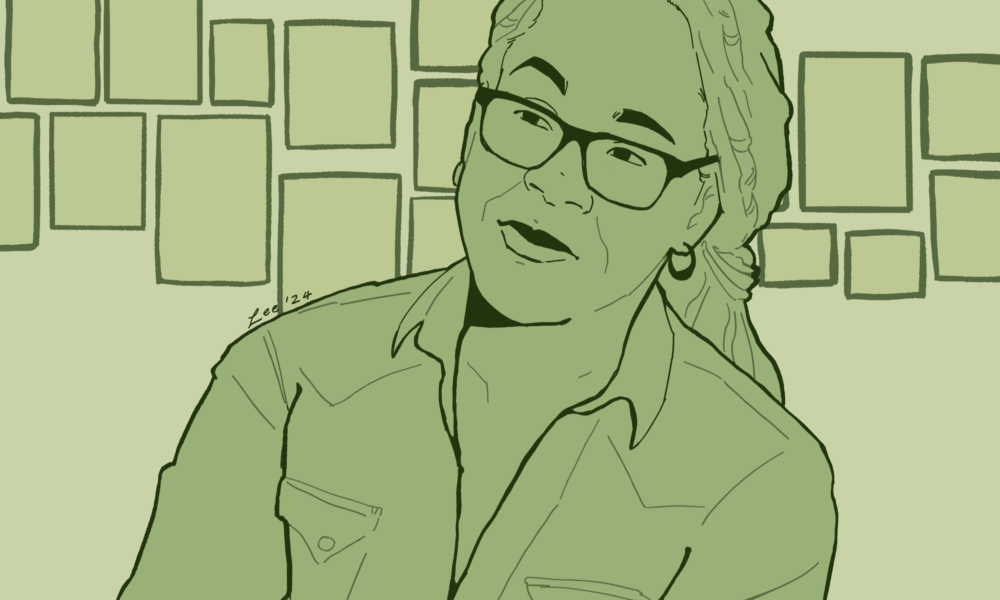
On Oct. 24, approximately two dozen academics gathered in Room W-215 of the Arts Building to hear Deanna Bowen, assistant professor in Concordia’s Department of Studio Arts, speak about her research-creation practice and art exhibits, her family’s history with racism in Canada, and anti-Black sentiment in the art history world. The event is the first of McGill’s Art History and Communication Studies (AHCS) Speaker Series 2024-25, organized by department assistant professors Kenji Praepipatmongkol and Bobby Benedicto

In an interview with The Tribune, Praepipatmongkol explained the department’s motivations for organizing this year’s speaker series. 

“This semester in particular, there’s a few of us [including] myself [and] Reilley Bishop-Stall who are teaching courses on modern contemporary art and visual culture […] with an interest in the histories of ethnicity in relation to art history [and the] racialization of art. So it felt particularly appropriate to invite Deanna,” Praepipatmongkol said. 

After a brief introduction from Praepipatmongkol, Bowen explained that her work is largely motivated by her own family’s silence on the anti-Black racism they experienced in Canada. She then turned to focus on the story of her fluke discovery of a 1911 anti-Black petition from Edmonton, which had requested that former Prime Minister Wilfrid Laurier limit the immigration of Black individuals into western Canada and called for a violent white mob rule. On the petition, Bowen found an unexpected signatory: Barker Fairley, a prominent Canadian artist and proponent of the Group of Seven,  a collective of famed Canadian landscape painters. Bowen proceeded to reach out to the University of Alberta—which hosted many of Fairley’s works—to cross-check Fairley’s signature with that of his art pieces. She found the signatures to be a match. 

“It begs the question: What does it mean? […] What does it mean if this man was willing to sign a petition calling for mob killing of Black and Indigenous people, and then what does that say about the Group of Seven and the work that they produce?” Bowen asked the audience.

Bowen also discussed the violent settler-colonial history of Kitchener, Ontario—formerly called Berlin, Ontario—and how it led to her subsequent project: Black Drones in the Hive.

“It is a site-specific archive based project that looks at the overlapping Black, Indigenous, and white histories of the region surrounding the Kitchener-Waterloo Art Gallery,” Bowen wrote in a statement to The Tribune. “The region is the site of numerous wars between the British and America, postwar German settlement, industrial innovation, anti-Slavery abolition, Black settlement and the Canadian terminus of the Underground Railway.” 

Bowen’s next project, Conceptions of White, includes select artworks that illustrate white origin myths and how the historical foundation of the white man’s burden fuels white guilt and supremacy in the contemporary context. Bowen touched on the violent response she got when the project came out. 

“I was just decimated in the press. I’ve never met any of the white people that came out against me,” Bowen said. “All that mattered in their white male minds was that I blasphemed the Group of Seven [….] I’m telling you, the violence changed my life. I live my life differently now because of the amount of hatred that came at me in producing this work.” 

Abigail Celis, assistant professor in decolonial Art History and Museum Studies at the Université de Montréal, was present in the audience. She spoke to The Tribune about what she hopes art history academics take away from Bowen’s talk. 

“I think the whole questioning of what is the narrative of Canadian art history, who is it protecting, [and] who is it invisibilizing is something to take away,” Celis said. 

Bowen will be the first tenured Black Studio Arts professor in Canada. She touched on the monumentality of the matter. 
“The truth of the matter is that Blackness is a very late addition to Canadian cultural discussions. Most of the new Black faculty entering Canadian institutions were hired in response to Dereck Chauvin’s killing of George Floyd,” Bowen wrote. “At the same time, I am thrilled to be the first Black professor to many of my students. I didn’t have that when I went to school, [but it] would have made a world of difference.”

McGill, News, SSMU

SSMU VP Student Life Chloé Muñoz resigns

The Students’ Society of McGill University (SSMU) Vice-President (VP) Student Life, Chloé Muñoz, announced her resignation from the role at the Oct. 24 Legislative Council meeting. Her resignation is effective Oct. 29. SSMU will run a by-election to fill the position and the remaining executives will share the responsibilities of the Student Life portfolio in the interim. 

In an interview with The Tribune, Muñoz explained that her resignation was due partly to personal reasons and internal restructuring in SSMU which made her portfolio as VP Student Life particularly difficult. 

“These roles take on a huge managerial role, which I don’t think I personally was prepared for, and I think the year-to-year transition makes it at times unfair for the permanent and casual staff that remain,” Muñoz said. “I just think there needs to be a remodelling of what is expected of executives, so that there is more support for people entering the role. The model right now makes the position very overwhelming and difficult for any real progress to be made in a way that can support student groups and students better.” 

Muñoz also mentioned that the bureaucratic nature of SSMU was ultimately at odds with the action that she wanted to enact within the union.

“There were also a lot of structural pushbacks that made it really difficult to uphold the communication and transparency that students deserve, and I no longer wanted to be a part of that dynamic,” Muñoz said.

While she is stepping down from the position, she expressed support to the remaining executives. 

“Ultimately this was a personal decision and I recognize that SSMU just might not be the place for me at the moment and I wish all the remaining executives the best of luck in all that they […] are doing,” she said.

The VP Student Life portfolio covers three main pillars: Student groups, mental health, and family care. As the process for a by-election gets underway, SSMU President Dymetri Taylor explained that he will take on responsibilities regarding services and family care, VP Operations and Sustainability Meg Baltes will take on the clubs, and mental health responsibilities will go to VP University Affairs Abe Berglas.

Susan Aloudat, VP Events for the Arab Student Network, told  The Tribune she is concerned that the lack of a VP Student Life might pose a challenge to student clubs and services.

“It can be really hard working on a service with SSMU when they’re transitioning between execs because it makes already slow processing times go slower and then we can’t provide certain deliverables […] on time,” Aloudat wrote. “It would be nice if SSMU removed a lot of the unnecessary communication that happened between services and SSMU execs, for example room bookings and financial affairs, because the wait and the back-and-forth is what makes it hardest to do our job.” 

The two-week nomination period for the by-election will begin on Monday, Nov. 4 and will be followed by a week-long campaign period. This timeline will be extended if there are no candidates for the role. In the event no one runs in the by-election, the executives will either continue to share the responsibilities, or SSMU will hire staff to help fulfill the tasks. Taylor estimates that if someone is elected, they will likely fully take on the role in January 2025.

To Taylor, this resignation is indicative of a broader issue of a lack of student engagement with SSMU.

“In the past, the SSMU didn’t see as much resignation as it does now, and that is due to an abundance of reasons. One is simply just due to waning interest in the SSMU, which is predictable based on how things have gone for the past few years,” Taylor told The Tribune. “Things remain relevant if they are […] doing things for the student body. They don’t remain relevant when they’re doing things that aren’t really out there and engaging with the student body.”

Arts & Entertainment, Books

‘May Our Joy Endure’ explores the cycle of guilt, accountability, and redemption

May Our Joy Endure is the third and most daring novel written by Québecois author Kevin Lambert. Lambert moved to Montreal to study at the Université de Montréal in his late teens, allowing him to offer unique and personal insight into the city’s urban development. This is where he sets his tale of opulence and demise. Biblioasis published the work on Sept. 3, and Lambert has already won numerous awards for his originality. 

The story follows revered Montreal architect Céline as anti-gentrification protestors threaten her career and reputation. Her downfall in public favour occurs after she undertakes the construction of a large company’s headquarters, which sacrifices the Parc-Extension neighbourhood in favour of a fabulous and artistically impressive architectural feat. Readers are invited into her mind as she grapples with her role as an architect working on projects that contribute to gentrification and further exacerbate the Canadian housing crisis. Lambert’s passion for and knowledge of Montreal comes through in his specificity; his sensitive descriptions of the small, locally-run businesses in Parc-Ex evoke compassion for the neighbourhood’s residents who are especially vulnerable to renovictions.

The narrative voice is particularly intriguing within Lambert’s work. His use of omniscient third-person narration invites readers to consider perspectives on both sides of the gentrification social movement, and his long, winding sentences mirror the fluid development of urban sprawl. Lambert drifts between Fitzgerald-esque descriptions of lavish opulence dotted with Céline’s philosophical musings and the harsh reality revealed through the perspectives of the anti-gentrification activists. 

Even at her worst, Céline is living a life of luxury most could only dream of, swaying readers away from Céline’s excuses and self-pity. While Lambert does voice the perspectives of the non-wealthy, I found myself wanting to hear more from them than just the few pages they are given.  

Themes of guilt and redemption are well-explored throughout the work. Lambert crafts the metaphor of a dying camellia that both predicts and represents the death of Céline’s career. It is revealed in the final pages that as a child, Céline killed her mother’s beloved plant as a desperate cry for love. The scent of weed killer has permeated her mind since the first murmurs of controversy, an omen of her fall from grace. This powerful metaphor places Céline as the active agent that has sowed the destruction of her career, instead of the victim of scapegoating and cancel culture she so often views herself to be. It also frames her flawed actions as an architect as acts of desperation committed by an insecure child. Céline often feels overlooked by her home province of Quebec, and despite her international acclaim, she still craves the approval and respect of her mother country. 

However, the camellia metaphor does not entirely mirror her career loss. When Céline remembers killing the camellia, it is clear that she feels a great deal of guilt—the same cannot be said about the mass displacement and evictions that she has contributed to with her project. While she expresses sympathy for those affected, she always redirects the blame onto her colleagues, the “system,” or the government. 

May Our Joy Endure, the mantra of the ultra-wealthy, represents the ruling classes’ insecurity in the face of social change. It is a plea for mercy and hope for the future, and in the end, it is what keeps Céline afloat. The novel ends with her finding redemption by denouncing her coworkers for their crimes. Yet it is unclear whether she has genuinely joined the movement against the upper class or if she is simply doing this to repair her reputation. This ambiguity leaves readers to wonder how much of the activism promoted by public figures is performative and whether the proletariat has the means of truly holding the upper classes accountable for their actions.  

May Our Joy Endure was published on Sept. 3 and is now available for purchase.

Features

Figuring Yourself Out

TW: mentions of mental illness

I never knew what I would be when I grew up. In fact, I never thought I would grow up. My classmates described their aspirations with vivid imagery: How they would be firefighters, doctors, scientists, and journalists. Though I tried to imagine what I would be, I wondered how I could decide between so many options, each as diverse as they were essential.

Would I be a wildlife veterinarian, travelling the world—treating animals and photographing my adventures? Or the caring third-grade teacher? Or the practiced, accommodating doctor? The options appeared endless; I didn’t know how I could make a decision that felt so permanent.

As we grow up, we are often told we should either follow in someone’s footsteps, or be a trailblazer on a semi-trodden path. We ought to be what someone else, some mysterious nameless external force, wants for us, and these influences extend both within and without. Fortunately for me, my parents had but one ask: They wanted me to do what made me happy.

And though I cherished their support, what exactly would that “happiness” be? 

Throughout my childhood, I could always find solace in my hobbies, which included video commentary, photography, and games. Somewhere along the way, I found an interest in art, and then one in science, nurtured by nature and amazement at all forms of life. I cherished empathy and wanted to help others learn, think, heal, and feel. But although I felt these could give me purpose, I could not determine if they necessarily sparked joy. 

Even as a child, joy didn’t feel profitable—nor did I think it should have to be. I didn’t know how to combine my passions with a fruitful vision of my future. But I also couldn’t imagine devoting myself to a lifelong career that wasn’t driven by love and curiosity. On the other hand, when we link our livelihood, well-being, and future prospects to something that’s supposed to be enjoyable, we threaten the essence of our leisure. It creates a pressure to excel, profit, and surpass others with our hobbies, dimming their appeal. And if the price of maximizing our income is happiness, freedom, and enjoyment, then the ends fail to justify the means.

As I thought about what I could do with my hobbies when I grew up—such as commentary, music, and photography—something like a voice, simultaneously alien and familiar, overshadowed my exploration: “I don’t think you’re interesting enough to be listened to, or good enough for people to hear you play, and who would ever pay to own what you create?” 

I looked to other streamers and commentators, artists, musicians, and photographers, each with vast talent and inspiring dedication. But rather than catalyzing my own journey, I could only worry about how I’d never compare. And as I aged, these thoughts grew louder, unmuffled, and dominating—why bother to pick up a pencil if your work never seems to improve? To play a note, when others are playing better ones? Or to share your thoughts, when those more educated and well-spoken have verbalized already what you could never express?

Doubt has followed me throughout my life’s journey, evolving and disguising itself; it’s loudest when I think about what I’ll do after graduation, and it seems my friends and classmates hear it too.

Compulsive thoughts were voiceless when I was young, but still there, manifesting in obsessiveness and repetition. Eventually, the voice asserted itself as Doubt. It tightened its grasp, tearing at the delicate fabric of my relationships, my life, my senses, and my self-perception.  Counting, sensations, and tics were just a few of the symptoms of an obsessive-compulsive disorder (OCD) that manifested early and has carried on ever since. But as I grew, I realized life is not as bleak as it seemed. Every day, I try to defy that voice of self-doubt and instead remind myself of my strengths. Today, the voice is quieter in nature, a meaningful conversation, a motivated drawing session, or a late-night study effort. 

Once I had discovered a makeshift defence against these thoughts, I decided to refocus on my hobbies and school, which brought a number of struggles of their own. In high school, every test felt like it would change the course of my life; in university, every midterm has felt like life-or-death. I’ve had to learn to put things in perspective, how to study effectively, and how to find joy in a moment of monotony rather than worry about what comes next.

Living with OCD as a university student and a first-time participant in Life, I’m learning my personal limits one day at a time. And for me, this determine-your-entire-life-path-by-the-end-of-the-Fall-semester idea is not ideal.

Throughout the summer and beginning of fall, I watched my friends apply to medical schools—years of dedication, sleepless nights, and tireless efforts summarized in a 100-character limit box. They wrote extensive tests and sought recommendation after recommendation: All things I thought I would also do at this age, until I realized that practicing medicine was not my true passion. But I wanted to believe that I was the kind of person who would. Now, graduate school applications are due within a couple of months: The stress keeps building, and the voice is telling me I’m running out of time, and that I’ll enter the “real world” soon, as if previous years on our own didn’t count. 

But time for what, exactly? Why //do// we feel like the rest of our life is just around the corner called graduation, and only one oversight away from being irredeemable? What makes life after graduation feel so stressful?

Let’s chat: //What’s the rush?//

//School and society//

In our Western capitalist society, any moment spent resting is a moment not working. External factors such as corporations and companies condition us from a young age to be as productive, impressive, and dedicated as we can, despite the consequences on our health or lifestyle. Additionally, we spend any spare time working on other tasks or consuming any media available to distract ourselves from our situations, rather than resting and recovering. This effort to preserve the momentum we’ve spent years building extends to many facets of our lives as university students, whether it be our work, school, social responsibilities, or personal lives. And our school perpetuates these strenuous values as well. Notably, McGill University’s mascot, the legendary martlet, embodies what it wants from its students: A grueling, continuous effort from birth to death. The martlet is supposedly born without legs, condemning it to a life of perpetual flight, for the second it stops flapping marks its end.

//External pressures//

Pressures not only originate from our schools and workplaces, but also from our families, friends, and communities. However, they’re not always ill-intended. Our loved ones want the best for us: To succeed, to afford to live comfortably, safely, and happily, and it seems the fastest route is continuous excellence and overworking oneself. Additionally, we’re all influenced by our heritage and cultures. Some cultures prioritize productivity, devotion and work ethic, regardless of the consequences on one’s health, which encompasses mental, physical, and well-being in every aspect of one’s life. But some youth are challenging this notion, such as the Chinese resistance movement 躺平 (//tang ping//, ‘to lie flat’) against the social culture of overworking at the expense of one’s health, and ultimately inspiring others to take time to heal—a halt in the rat race.

//Who gets rewarded?//

Graduation feels especially nerve-wracking since it seems like this section of our life’s rat race is ending. And while we don’t know for sure where we landed, it feels like others may have played it better than us. And maybe that’s true—but it’s okay. Comparison is an intrinsic human quality tied to an emotional response that can make us feel worse about ourselves. For people with mental illness, comparison can often exacerbate their symptoms; in my case, the endlessly comparing voice tends to be deafening. But just as life didn’t end after high school, neither will life end after university. We have the rest of our lives to determine what we want to do with it, and the only proxy that matters is ourselves.

So, we’ve figured out //partially// where this abstract sense of urgency originates from. But the bigger question now is: What do we actually //do// after graduating? Do we stick to one path? Can we change our minds? And most importantly, should we do what makes us happy at the risk of little to no profit, or do we find something we can tolerate 50 out of 52 weeks of the year?


Of course, making a living is important. But just because something doesn’t feel bad doesn’t necessarily mean it’s right.

The rush to figure out what to do with the rest of our lives draws near, and it feels like any wrong move could preemptively end our efforts. But I argue that life would improve if we took things day by day, and did more of what we enjoyed. If we spoke more spontaneously with others; meandered on a trail; appreciated our privilege of being able to study, meditate, or create art. As humans, one of the great advantages of our evolution is that our brains allow us to change our minds whenever we gain insight that is compelling enough—and what is ‘compelling’ is entirely our decision. We have the agency to choose.

We are made to believe there are two choices: A lucrative career we’re uninterested in and disconnected from, or a monetization of our passions. However, both these options share one ultimate goal: Maximizing our income.  But I suggest an alternative: That we put all this aside, if we can, and live in the moment. That we simply do things (even badly) because we can—because we enjoy them. To try to be more present in our daily lives, and live a little more deeply.

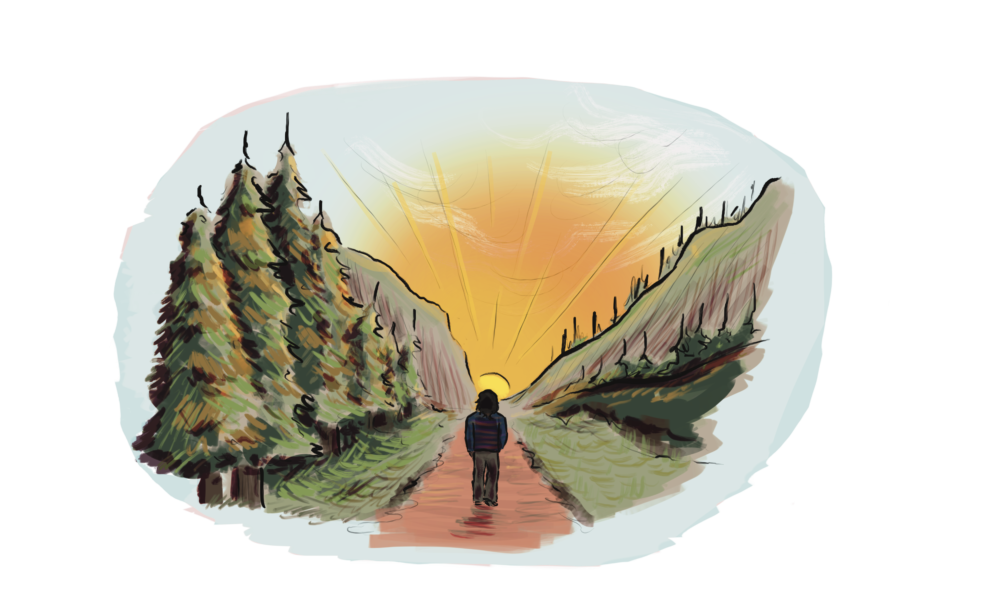
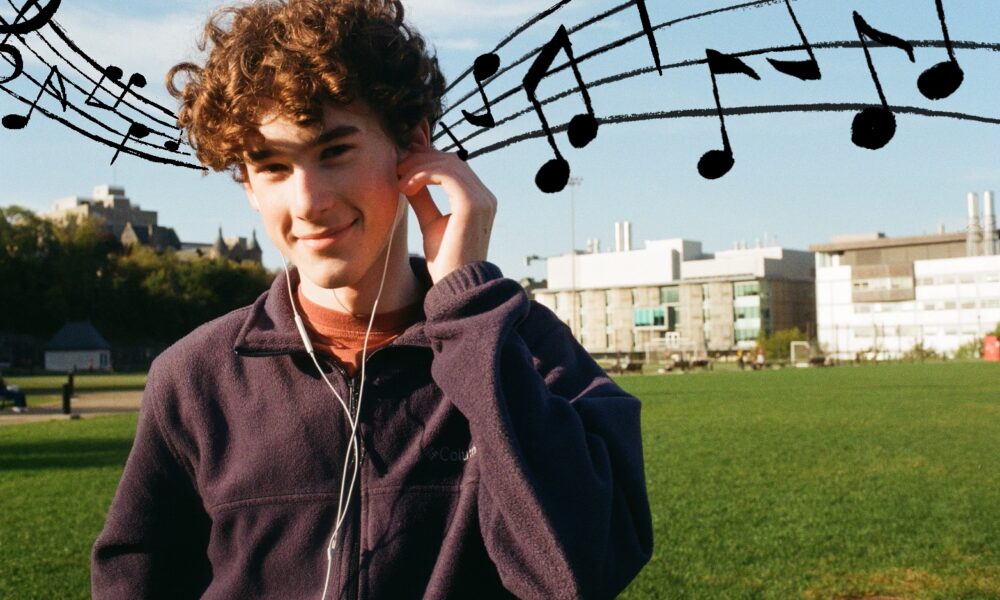
On my way to the lab, I walk down a road I’ve walked a hundred times before, wearing my headphones to dull my senses with music. I pass buildings that have become landmarks to orient myself, timing my turns with certain shapes and colours, and running when I feel the vibration of the metro arriving. I leave the station, walk mindlessly up the hill, and begin my work.


But the next day, I try something new.

I walk down the same road I’ve walked a hundred times before. I remove my headphones and hear how loud my water bottle clacks in my backpack, my hanging carabiners screeching an arrhythmic melody. My shoes squeak, the wind whistles, and I’m reminded of why I numbed the noise to begin with.

But as I continue, I look around. The trees have turned orange without any warning, depositing dead crunching leaves underfoot. Autumn decorations adorn the exteriors of buildings with crackling red paint atop brick, dying ivy spreading over their symphyses. Above me, the clouds form wisps, moving hurriedly towards some common destination amongst a dim blue sky. A crow flies crying to its murder; a lounging cat stares from its forest green porch. The smell of wet autumn leaves, rainfall, and construction dance and swirl. 

I’ve spent my life wondering when it would start, which has caused me to miss out on it all along. Maybe I won’t be able to afford a nice car, a mansion, lavish meals, and to travel every weekend. But without the hypotheticals and fears—anxious worries about what I’ll do for the rest of my life, and how little time I have to do it in—the more I see, the slower time seems to pass, and the previously mundane becomes entrancing. If I’m lucky, I’ll afford to walk a local trail, and have a good conversation in a home that feels warm and safe. 

And I think the most fantastical thought yet: What if I decide to choose myself, as I am right now. Not who I could be, or working towards some version of myself that I will never truly achieve as the bar keeps moving forward; but me as I exist in this moment—with all my insecurities, worries, dreams, and desperations. To choose my passions and interests outside of the lens of productivity and perfection—and enjoy them as they are right now. I think this is a goal worth working towards, and it might just be where I’ll find the happiness I seek.

Read the latest issue

Read the latest issue