


Latest News

Arts & Entertainment, Film and TV

‘Bridgerton’ Season 4: A peek behind the curtain

Warning: This piece contains spoilers.

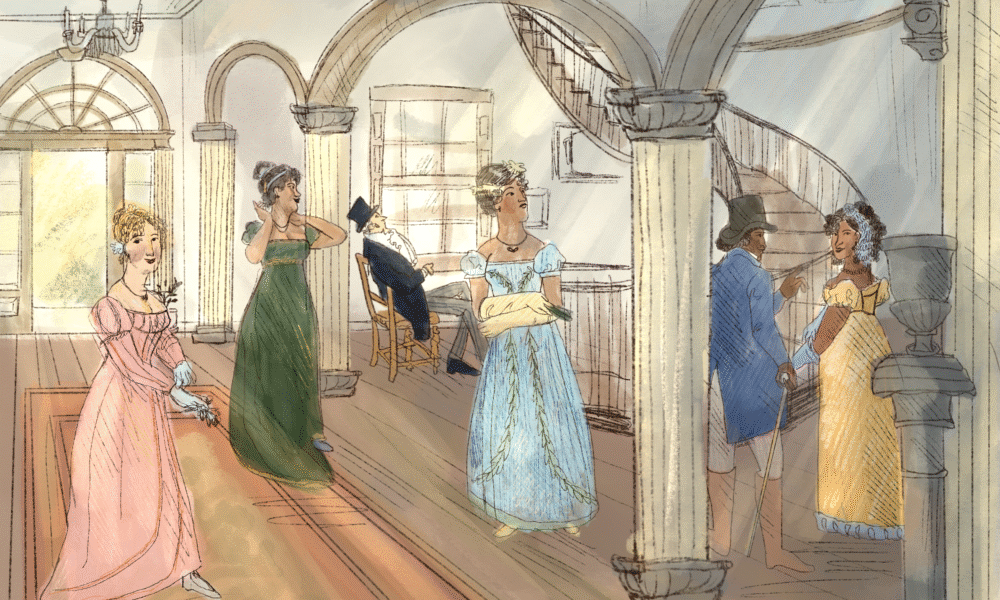
Dearest Gentle Reader: It has come to my most attentive notice that this midterm season is hereby interrupted by the return of Netflix’s crown jewel, Bridgerton, which graces our screens with its fourth instalment. While young McGill students sharpen their minds in the hopes of succeeding in their upcoming examinations, they may find respite in this hit television series, which follows the lives of the Bridgerton family in a reimagined Regency-era England. An adaptation of Julia Quinn’s third novel from the Bridgerton series, An Offer from a Gentleman, the first part released on Jan. 29 with the second arriving Feb. 26. The fourth season explores the blossoming romance between second son and notorious rake Benedict Bridgerton (Luke Thompson) and Sophie Baek (Yerin Ha), the illegitimate daughter of a nobleman who is forced to become a maid by her evil stepmother.

In this reimagined Cinderella story, the beloveds meet at a masquerade ball where Benedict falls hopelessly for Sophie, who is, well, not like other girls. Dissatisfied with society women, whom he deems dull and uninteresting, Benedict has traded his faith in true love for short, passionate, and meaningless encounters. He finds, in Sophie, the infatuation for life that he has been secretly yearning for in a partner, whilst pretending to be a free-spirited bachelor. Unaware of her identity and social standing, he develops romantic feelings for her, which she reciprocates. Yet he cannot pursue her openly, since she is a maid and he, a gentleman.

For the first time, Bridgerton explores the upstairs-downstairs divide between the noble ton and the servant’s working class. Masters need servants to sustain their lifestyle, whilst servants depend on the masters for a living wage and employment. This season delves into the servants’ lived reality, class dynamics and the interdependence between those above and below. Bridgerton highlights how depersonalized that system is and how it keeps the lower class at the mercy of the upper class, exemplified notably when a young maid is treated in an untoward manner by a supposed gentleman, or in the uproar and confusion that the ton experiences because of the Maid Wars. Further, it exposes the unfairness of the fate of children born out of wedlock, who are kept out of society on account of their status as ‘illegitimate.’

This peek behind the curtain is a breath of fresh air, providing a new perspective by centring the narrative on the lives of servants for once. Both Sophie’s story and her romance with Benedict are authentic and a welcome departure from the last season. Ha’s acting is genuine and honest, and her chemistry with Thompson is refreshing. She revealed during her appearance on Royal Court, the YouTube show hosted by internet sensation Brittany Broski, that she worked closely with showrunners to reimagine the role of Sophie, making her more authentic to her heritage. Most notably, she changed Sophie’s family name from Beckett to Baek. As the first East Asian lead of Bridgerton, she shines beside her co-star as a relatable character who deals with real-life problems whilst retaining her individuality. This comes across most notably when Sophie refuses Benedict’s offer to be his mistress despite her attraction to him. She has too much self-respect to debase herself in such a way and teaches Benedict a well-deserved lesson. 

Now, the ton feverishly awaits the next chapter of this season’s captivating drama. Lest we forget the people who make their lifestyle possible and hope that a happy ending soon befalls Ms. Baek and Mr. Bridgerton, who yearns to reunite with the lady in silver that he met at the ball. Until then, this author wishes you great success in your midterms and hopes that you find peace and wellness despite the cold and busy season. 

McGill, News, Recap

Recap: Sabaa Quao calls for creativity among disruption 

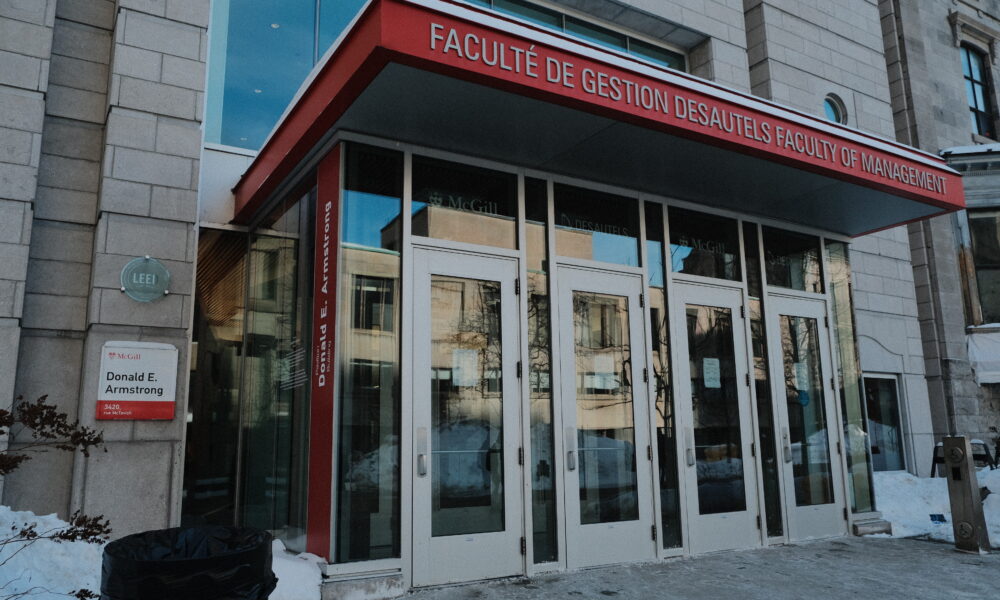
On Feb. 12, McGill’s Equity Team, in partnership with the Desautels Faculty of Management, invited Sabaa Quao, president of PlusCo Venture Studio, to speak at a keynote event in honour of Black History Month (BHM). Preceding Quao’s speech, Yolande E. Chan—the current and first Black dean of the Faculty of Management—took the stage to offer remarks on behalf of the faculty. She brought up two notable milestones: 2026 marks McGill’s ninth official BHM and the 30th anniversary of Canada’s recognition of BHM. 

Following Chen’s opening remarks, Quao addressed the crowd. He highlighted the title of his speech, “One Step Back, Two Steps Forward,” and then transitioned into an analogy of worldbuilding and creative destruction, urging the audience to take a step back. He described how destruction is inherent to creativity and that disruption is crucial to moving forward. Nonetheless, Quao reaffirmed that taking a step back is equally important to see the progress that has already been made. 

Quao then highlighted the ‘dark side’ of stepping back, which he noted is still very powerful. 

“Right now, we’re dealing with an erosion of institutional trust,” Quao said. “We also are in a period where elections [….] Feel like each one is a kind of existential threat. How is it that something that was so consistent in terms of how we used to move forward has now become a point of tension and a point of anxiety? [….] Two things can exist at the same time. We can have a sense of progress that does coexist with unresolved justice. And you’ve taken the same step back in order to be able to recognize that something does have to change. It has to change.” 

Quao referenced a 2024 study by the McKinsey Institute for Economic Mobility which found that it will hypothetically take 320 years for Black people to achieve equal quality of life. 

“Everyone in this room knows in their gut that you have to reject those numbers. Not just for yourself, not just for kids, not just for your grandkids,” Quao affirmed. “Resistance to change is natural and it’s a human tendency. But at some point, […] you ignore the resistance to change. You ignore the hurdles, and you maximize the space of what you need to build [….] The survival instinct is more powerful than the resistance to change.” 

Research Briefs, Science & Technology

How socioeconomic inequality accelerates musculoskeletal decline

As we get older, our muscles and bones gradually weaken, a progression that can lead to falls, fractures, and a devastating cycle of hospitalization and physical decline. But not everyone experiences this decline at the same rate—social and economic conditions over a lifetime can profoundly shape how the body ages, influencing access to nutrition, physical activity, and preventive health care. New research co-published by Gustavo Duque, the Dr. Joseph Kaufmann Chair in Geriatric Medicine and professor in McGill’s Department of Medicine, suggests that a patient’s position on the socioeconomic ladder may play a significant role in how quickly that deterioration occurs—and that the disadvantage begins well before a patient ever reaches a hospital.

The study examines the relationship between socioeconomic status (SES) and bone, muscle, and physical function in 300 community-dwelling adults aged 50 and older in the metropolitan region of Melbourne, Australia.  Researchers measured five indicators of SES—education, income, employment, health care card ownership, and area-level disadvantage—against outcomes including bone mineral density, muscle mass, grip strength, gait speed, and leg power.

Notably, the researchers found that participants who completed post-secondary education had significantly higher bone mineral density, greater muscle mass, stronger handgrip strength, faster walking speed, and greater leg power than those with less education. Higher income and possessing a private health care card—as opposed to a government health card—were similarly associated with better outcomes across most measures. 

Duque said in an interview with The Tribune that the findings confirmed what the research team had long suspected.

“People with lower levels of income and lower levels of education […] were the ones who showed the worst situation in terms of muscle and bone,” Duque said.

One unexpected finding is that employed participants showed different patterns of deterioration, regardless of salary. Duque attributed this to the physical demands of their work, noting that those still employed tended to be active throughout the day. For those who were retired or unemployed and in the lowest socioeconomic brackets, however, the outcomes were markedly worse.

Osteoporosis, a condition characterized by low bone mineral density, which ultimately raises the risk of fractures, affects approximately 18 per cent of older adults globally. Sarcopenia, the progressive age-related loss of muscle mass and physical function, affects between 10 and 27 per cent of individuals over 60. Although a growing body of work links SES to musculoskeletal health, evidence on how social gradients operate in specific musculoskeletal conditions such as sarcopenia and osteoporosis remains limited. Prior studies have typically relied on secondary analyses of existing datasets rather than directly investigating the relationship.

Since the study is cross-sectional, it captures a snapshot of health outcomes at a given point in time and cannot determine whether interventions would prevent or reverse the disparities observed. Duque acknowledged this limitation, which is why his future research aims to explore the longitudinal impacts of socioeconomic status on bone and muscle decline.

The study also raises questions about health literacy—the ability to access, understand, and apply health information—as a potential mechanism linking a lower SES to worse musculoskeletal outcomes. Both osteoporosis and sarcopenia require patients to adopt and maintain lifestyle changes such as increased physical activity and dietary adjustments.  However,  lower education and income are strongly correlated with lower levels of health literacy, meaning that socially disadvantaged groups may be less likely to receive, understand, or act on prevention and treatment advice. Consequently, the same communities that enter older age with weaker bones and muscles are also the least equipped to access the information and resources needed to slow that decline, further entrenching existing disparities.

Duque stressed that prevention does not need to be expensive or complicated.

“It does not demand a lot of resources. A good physical activity can be done in a park or in a mountain,” Duque said. “There are some dietary recommendations, […] there are good sources of calcium that do not necessarily have to be very expensive.”

But he also emphasized that individual behaviour change alone is not enough, and that policy-level action is essential.

“We need a policy [….]The problem is that some of these policies are not necessarily applied, developed, or funded,” he said.Duque’s team is now launching a Quebec-based screening project in collaboration with the World Health Organization to identify musculoskeletal decline early in older adults across the province. Musculoskeletal data cannot close the socioeconomic gap in bone and muscle health alone, but knowing where that gap starts is the first step toward designing interventions that effectively address it.

Out on the Town, Student Life

The unofficial tour guide’s guide to Montreal

I must have missed the fine print when I enrolled at McGill. In my first year, when a sworn enemy from high school reached out to me for nightlife recommendations, I realized that accepting my offer of admission also meant accepting an unglamorous, unpaid part-time job as an unofficial tour guide to Montreal.

Residing in a city as unique as Montreal bestows many of us with the lofty responsibility of shaping the visits of all supplicants (friend or foe) who seek our insights. Unfortunately, owing to our student status, it may feel as though the only part of the city we’re truly experts on is the stretch between Docteur Penfield and Sherbrooke. Unwilling to admit our ignorance, we commit the predictable folly of half-heartedly recommending Notre Dame, Crew Cafe, or—perhaps worst of all—the Orange Julep. But Montreal’s reputation—and your own—is in your hands, and it’s not too late for the city to name you employee of the month.

La Banquise

It’s not often that a 24-hour restaurant is poised to impress. Yet, La Banquise can satisfy a tourist’s interest in poutine at any time of day. This humble joint offers a classic poutine for the purists and newcomers, while churning out a menu full of unexpectedly delicious twists like La Paul Pogo—topped with onions, bacon, and, as the name suggests, pieces of Pogo.

Le Violon

Move aside, Joe Beef. Since opening its doors in 2024, Le Violon has taken Canada’s restaurant scene by storm, placing eleventh on the list of Canada’s 100 Best Restaurants and becoming the backdrop of an infamous photo of Katy Perry and Justin Trudeau. The menu leans French in spirit but plays freely with seasonal Quebec ingredients, resulting in an elegant rotation of dishes. Thoughtful plating, attentive service, and refined decor make it a solid representative of the contemporary Montreal food scene. While certainly a pricier restaurant by student standards, Le Violon is an excellent recommendation for those who’d like to splurge during their trip.

Pumpui

While Montreal is full of impressive upscale restaurants, it’s also home to a host of hip, casual spots that showcase the city’s culinary creativity. Among this variety, Pumpui is a standout. Seated in the vintage Thai diner-style booths, diners can enjoy a menu of no-frills curries, noodles, and salads that boast authentic flavours and satisfying portion sizes. Plus, the restaurant’s no-reservation policy makes it a great recommendation for a memorable last-minute meal when better-known Montreal restaurants are characteristically fully booked.

Boutique Take Three

Tourists are bound to notice that Montreal is a surprisingly fashionable city. While people-watching, visitors may accidentally catch the shopping bug, and Zara, H&M, and Aritzia are powerless against this Montreal-based strain. Luckily, Boutique Take Three is curating a collection that responds to the city’s fashion needs. This Mile End gem combines meticulously selected second-hand treasures with pieces from local designers, ensuring every find feels both unique and quintessentially Montreal.

Baby Far West

Out of spite, I sent my high school enemy to Unity. But in the two years since then, I’ve reformed. For a true representation of the city’s superb nightlife, I now let travellers know that a Montreal tour should end with a night at Baby Far West. With its top-notch DJs, sultry decor, and perfected cocktails (which are free for ladies every Wednesday), this bar offers more than the ideal space to dance. It’s also a labyrinth of small, intimate rooms, each with its own vibe, perfect for exploring with friends or escaping the dance floor for a brief respite. Whether your visitor is the type to sway to the music, chill on a lavish couch, or wander from room to room, Baby Far West guarantees an unforgettable night to round off a trip to Montreal.

News, PGSS

PGSS council votes against SSMU food bank fee levy referendum question

On Feb. 11, the Post-Graduate Students’ Society of McGill University (PGSS) held its second council meeting of the semester to vote on which questions to include in its upcoming May referendum.

Councillors spent a significant portion of the meeting discussing issues regarding access to food on campus for graduate students. With the Students’ Society of McGill University’s (SSMU) closing of Midnight Kitchen (MK), the restricted access to SSMU’s alternative Free Lunch Program, and SSMU’s impending restrictions upon graduate students using the SSMU food bank, some councillors expressed worry over the lack of affordable food options on campus for their peers.

Secretary-General Sheheryar Ahmed presented a motion on this topic to approve the MK fee discontinuation referendum question, which annulled the previous $2 CAD fee per student per term that had gone toward the daily lunch program since MK’s closure.

“The second step will be a referendum question, probably in the fall, to do with the reallocation of the already collected funds from the Fall 2025 semester,” Ahmed said. “[SSMU’s] own internal regulations, as passed in their Legislative Council, would not extend us the access to their service at the $2 [CAD] level. We’d have to pass another referendum question to increase our contribution to their program, to the $8 [CAD] level, for them to give us access.”

Councillors unanimously voted in favour of the motion to approve the MK fee discontinuation referendum question.

PGSS council also discussed the situation concerning SSMU’s food bank fee levy. After PGSS suspended the MK fee, SSMU President Dymetri Taylor presented a motion to restrict PGSS members from accessing the SSMU food pantry during SSMU’s Jan. 15 Legislative Council meeting. However, following concerns over food security on campus, the Legislative Council passed an amendment to the motion to allow PGSS members to retain access to the pantry for the remainder of the Winter 2026 semester, given that 20 per cent of the pantry’s self-reported users are PGSS members.

Ahmed noted that introducing a PGSS fee levy would not resolve governance issues between the two associations, as there are currently no plans to enter a Memorandum of Agreement (MoA) with SSMU over access to the food pantry.

“In the absence of [an MoA], there can be a lot of changes to the service without our consent,” Ahmed stated. “The various ways we have available to us when going into a partnership can include [an MoA]. It can also include seats on the board of directors of that entity [….] These are all very, very helpful safeguards, and in the absence of them, I personally don’t recommend adding this to the ballot.”

Ryan Olegario, a councillor representing McGill’s Chemistry Graduate Student Society (CGSS), expressed worry over the lack of alternatives available to graduate students.

“If this were to fall through, what are the other options that exist for food support of this nature on campus? Are there other options?” Olegario asked. “Because while I do agree that it may be dangerous to enter into an agreement like this without a proper memorandum, I think, for the time being, it also may be important to ensure that this fraction of students still be able to get this kind of food support.”

The PGSS council ultimately voted against including the SSMU food bank fee levy question in the referendum. With nine votes against, eight abstaining, and eight in favour of the motion, McGill’s graduate students will lose access to the food pantry at the end of the semester.

Moment of the meeting:

The council meeting ended after a second motion to extend the meeting by 30 minutes failed. As such, the motions to dissolve committees’ referendum questions were amended to become an omnibus vote motion.

Soundbite:

“I am not against this fee, but I wish the executives could have been more clarifying on their intentions for the fee levy [….] This is just a comment for the future for executives, or in general, to be very clear and transparent about these things. It is unfortunate to have this interaction between executive and councillor.”–Ambre Lambert, CGSS councillor, after an exchange between Ahmed and Olegario over the membership fee increase referendum question to allocate funds to the creation of a new executive role.

Laughing Matters, Opinion

Point-Counterpoint: On the divine right of groundhogs

For the Divine Right of Groundhogs

The media is rich with speculation about The Most Honourable Punxsutawney Phil, the Pennsylvania native behind everyone’s favourite holiday: Groundhog Day. Some doubt his immortality—140 years of age is abnormal for a groundhog—but Phil is no ordinary groundhog. Others argue his eternal rule is undemocratic, a violation of popular will. //Au contraire!// Phil is a guardian of the United States and its people. No other hog could match his talent for serving the nation. 

Look into his piercing eyes and dare question his coat’s lustre. His fur, denoting royal lineage, allows him to sip the Elixir of Life, a nectar every bit as crucial to the nation’s well-being as water.

Phil protects his nation, dictating appropriate February attire since 1886. In fact, he leverages his power to safeguard his country’s freedom. During the heat of World War II, Phil withheld a prediction altogether, unwilling to risk handing such potent climate information to enemies.

Those who doubt Phil’s accuracy only have themselves to blame. Climate change has rendered unrecognizable the weather patterns Phil once knew like the back of his furry little paw. Sustainable climate action must accelerate—not simply for the planet, but for Phil.

Phil is a father and husband. He lives in a humble stump with his kin, devoted to the traditional values that make America great—protecting his burrow, serving his country, and speaking America’s true language: Groundhogese

Quebec’s Fred la Marmotte’s recent passing is a poignant reminder that the U.S. is fortunate to have an immortal groundhog like Phil. Hopefully, his Canadian disciples will begin producing their own Elixir of Life, so that this painful transition of power between Freds might be the last.

All hail Most Honourable Punxsutawney Phil! 

His divine power shall endure, protecting governmental institutions and serving as a beacon of hope for political order everywhere. 

For a groundhog democracy

Tyranny corrupts even the best of groundhogs, and groundhog predictions are crucial for national security. The selection process cannot be left to nepotism. Yet Fred la Marmotte Junior did not earn his power; he inherited it after his father’s death. 

Groundhogs are Quebecers too, and they deserve a voice in groundhog authority. They are jolly participants in the province’s community events, such as the Canadian Grand Prix, where they eagerly await their favourite Formula 1 drivers at the finish line. 

At the Davos World Economic Forum, Prime Minister Mark Carney called for middle powers to pivot away from reliance on and imitation of the ultra-powerful. Might does not make right, a message that the young Fred ought to heed. His American counterpart, Punxsutawney Phil, has consolidated power, causing harm even here in Montreal by exploiting the rich local groundhog labour market.

As any McGill student who has spent time near Upper Residences knows, groundhogs are abundant in Montreal. Their prevalence has created tension at the Notre-Dame-des-Neiges cemetery, where they were discovered digging up graves.

No one should have to worry about groundhogs frolicking with their deceased family members. The root of this problem must be addressed. In this context, Phil’s Elixir of Life now appears troubling. How exactly is his serum crafted, and why is the recipe kept secret? Perhaps nefarious necromancy is afoot.

Clearly, Phil is outsourcing his vile elixir production process to Montreal, taking advantage of the weaker Canadian dollar and the large supply of groundhog labour to excavate bones for his mystical potion. Montrealers are subsidizing an American groundhog’s immortality, as loved ones are snatched from their resting places to fulfill the fancies of a tyrant.

Fred’s arbitrarily bestowed power must be redistributed to the people. 

All groundhogs should cooperate under one Union of the Groundhogs, by the Groundhogs, for the Groundhogs. Under this union, democracy shall be a vessel for careful experimentation with participants’ shadows and conscientious debate, leading to deliberative surveys and a unified announcement of the season’s upcoming weather. 

Down with the Divine Right of groundhogs. Long live groundhog democracy.

Arts & Entertainment, Film and TV

With Valentine’s season ending, which fictional couples are your favourites?

Valentine’s Day may be behind us, but love is still in the air. From timeless classics to new movies in theatres, on-screen romance has a way of capturing the hearts of viewers. The Tribune has rounded up four of the most memorable couples in film. 

Westley and Buttercup
Let’s start off with a classic: Westley and Buttercup, the lead couple from The Princess Bride. Magical and medieval, the movie consists of sword fights, fist fights, and fairytale-esque costumes, all in the name of love. Not only are Westley and Buttercup one of the most adorable and loyal couples, but the movie itself has a sense of whimsical nostalgia. Westley’s iconic line, “As you wish,” immediately hooks you into this relationship, making you realize that he will endlessly dedicate himself to Buttercup’s dreams.

Harry and Sally
If you are a fan of the friends-to-lovers trope, slow burn, and romantic comedies in general, you will love When Harry Met Sally. This movie is a classic, and no love story has made me laugh nearly as much. The couple first meets at the end of university when they drive to New York City together, and though they don’t get along at first, they reconnect as friends years later. Their unmatched tension has you rooting for them throughout the movie. Released in 1989, the comedy is timeless, and the characters are authentic and relatable. You may find yourself screaming at the TV screen, ‘Just get together already,’ but this slow burn is what makes their relationship absolute gold. If you are also a nostalgic McGill student from NYC, this heartwarming movie will make you feel at home. 

Jon and Ygritte

One of the best TV show couples of all time: Jon and Ygritte from Game of Thrones. These two are a fan favourite owing to their forbidden love and utterly tragic ending. The characters suit each other through their raw and natural chemistry, yet viewers knew that their love story was doomed from the start. Jon was originally Ygritte’s captor; the Night’s Watch and the Wildlings are rivals, leading to a wonderful enemies-to-lovers arc. When Jon holds Ygritte captive, he eventually joins her group, called the Free Folk. But seeing that the group goes against his morals, Jon leaves, abandoning Ygritte. They meet again in battle, and Jon holds her in his arms as she passes. Their final conversation discusses the cave where they first made love and how they never should have left each other—her final sentence: “You know nothing, Jon Snow.” This line highlights Jon’s initial ignorance towards the Free Folk and also emphasizes the cultural differences between him and Ygritte; differences which eventually led to their tragic ending. 

Shrek and Fiona
Last but not least, Shrek and Fiona from Shrek. Shrek, an ogre in a swamp fairytale land, goes on an adventure to the kingdom of Duloc and finds the ruler Lord Farquaad, who wants to marry Princess Fiona. However, due to a curse that causes her to switch between human and ogre form, Fiona is confined to life in a tower. After Shrek rescues Fiona from this dragon-guarded castle, they bond and fall in love. Long story short, they get married in the swamp, and Fiona’s true love’s kiss with the ogre breaks the curse. This couple reminds viewers that our expectation of love should not be based merely on looks or societal judgment, but rather on who will bring out the best version of ourselves—this is what makes Shrek and Fiona one of the best fictional couples of all time.

Sports, Winter Sports

The price of daring to be great: What Lindsey Vonn’s crash says about elite sport’s hardest decision

13 seconds. That is all it took for an iconic Olympic comeback to collapse into chaos.

One moment, Lindsey Vonn was charging down the Olimpia delle Tofane at highway speeds. The next, she was tumbling violently down the hill, skis dangerously strapped in as her body crumbled. A stunned silence blanketed Cortina d’Ampezzo while medics rushed to the slope.

The crowd watched anxiously as a stretcher bed dangled in the wind below a helicopter, which would airlift Vonn away. She had suffered a complex tibial fracture just nine days after completely rupturing her anterior cruciate ligament (ACL). For many, it was a grim sense of déjà vu: Another brutal crash, another potential career-ending injury.

But once the shock faded, a question remained: In elite sport, who decides when an athlete is truly ready to return from injury?

The stakes are immense because Vonn’s legacy is enormous. This was not a reckless newcomer chasing headlines, but one of history’s most decorated skiers—an Olympic downhill champion and multi-time World Cup winner who spent two decades mastering a highly dangerous sport.

Athletes at this echelon understand risk intimately. It is woven into every choice they make. This experience suggests that Vonn’s decision to race with a completely ruptured ACL was not an act of carelessness, but of conviction.

At the heart of the debate is athlete autonomy. Elite competitors spend years developing an almost forensic awareness of their bodies. They know the difference between pain and injury, fatigue and failure, fear and focus. In downhill skiing, where racers hurtle down thin snow at breakneck speeds, readiness cannot be reduced to a scan or a checklist. Confidence, reflexes, and instinct matter just as much as ligament integrity. To deprive an athlete of the final decision feels, to many, like stripping them of ownership over their own lives.

However, medical science complicates this narrative. Doctors are trained to see what competitors are incentivized to ignore. While an athlete faces different external and internal pressures—national expectations, sponsorships, and the haunting fear of a closing ‘window’—a physician sees the mechanical reality. A compromised joint increases the probability of catastrophic failure, regardless of how sharp a racer may feel in training. This creates a difficult dilemma: Should medical teams hold absolute veto power while medals and careers hang in the balance?

In a definitive sense, Vonn’s crash was probably not preventable. Downhill skiing routinely claims perfectly healthy racers. This particular accident began with a single, technical mistake—a clipped gate and lost balance. Yet, repeated serious injuries inevitably shift the conversation toward recovery standards and risk tolerance. In the high-velocity world of alpine racing, the distinction between a freak accident and a foreseeable disaster is often only visible in hindsight—and in Vonn’s case, the timing offered some relief: She was reassured that her ruptured ACL had played no role in her Olympic crash just days later.

Another dimension of the debate is the gendered lens through which the public evaluates high-stakes decisions by women in sport. When women in sport make high-risk decisions that end poorly, the backlash is often merciless. The rhetoric that “she should have known when to quit” ignores the psychological gravity of elite competition. For these athletes, retirement is not a simple career change: It is often an identity crisis. Had Vonn chosen safety over the start gate, the ‘what if?’ might have haunted her longer than any physical fracture.

We see this double standard often. When Simone Biles withdrew from Olympic events to prioritize her mental health, she initially faced backlash before later being hailed as a pioneer. When Serena Williams returned from life-threatening childbirth complications, her ambition was celebrated until her results wavered. Women are often applauded for their determination only until it pushes past what spectators deem ‘reasonable.’ At that point, ambition is recast as irresponsibility.

The reality is that for an athlete like Vonn, there is no ‘right’ choice: Compete and risk disaster, or step aside and endure a lifetime of regret. Following her crash, Vonn wrote in an Instagram post, “I hope if you take away anything from my journey it’s that you all have the courage to dare greatly.” For those whose identities are forged in the arena of sport, her words serve as a reminder that both racing and walking away carry a heavy cost—and that the courage to choose, however imperfectly, is what defines greatness.

Off the Board, Opinion

A lesson from the neighbourhood cat

I have a friend who appears without warning, leaves without explanation, and never promises to return. He is profoundly unpredictable, given that he is a neighbourhood cat—but are the movements of human friends any more certain? 

Manchego, lovingly nicknamed by my roommate Katie, is a beloved member of the Milton-Parc community. You’ve probably seen him on his daily patrol, climbing up fences and over mounds of misplaced recycling in his ceaseless hunt for adventure and affection. And while you may even have been lucky enough to have pet the soft orange fur of his ears or hear the hum of his impressively loud purrs, my Reddit research on r/mcgill has informed me that recurrent encounters with him are a rarity. So it is with a hint of pride that I admit he visits me often, meowing needily at the patio door until I crack it open for him to slip inside. 

While I imagine many of you are suppressing a bit of jealousy, (accurately) imagining this gentle ball of fur falling asleep on my chest or climbing on my shoulders while I make breakfast, I must also admit that his visits do not come without their inconveniences. 

Manchego’s roguish explorations of the Montreal wilderness leave his paws perpetually muddy, poised to leave their mark on every surface he touches. And sometimes, much to Katie’s dismay, Manchego arrives with an unannounced plus-one, his standoffish brother who sours the scene with an unmistakable feline disinterest. Most unenviable of all, however, are the inexorable itchy hives that cover my skin after each of Manchego’s visits—though I occasionally escape with the lesser sentence: hours of red, watering eyes.

And yet, this unappealing list has never once deterred me from letting Manchego in. Of course, each hassle could be largely mitigated by limiting our time together. I could open the door only just before laundry day, or when I’m feeling gracious enough to endure the unwelcome guest he brings, or on days when I can recover from an allergic reaction at home instead of sniffling through my classes. But, acutely aware that I cannot anticipate his next appearance, I always unlock the door.

It strikes me that I have granted this unpredictable feline friend a courtesy I have withheld from my more predictable companions. Trusting that they will remain, I have deferred their invitations, mistaking postponement for prudence. Armed with a litany of surmountable—albeit valid—excuses, I’ve ignored the fact that their presence is a brief and fragile gift. 

Our loved ones will not always be available on our schedule. They may move to a new city, study abroad for a semester, accept a demanding job, or enter a relationship that takes up much of their time. The circumstances that bring us together are neither fixed nor guaranteed; they are contingent, unfolding, and often fleeting. For that reason, they are indelibly precious.

To be present with another person is to accept a measure of unpredictability—to make room for interruption and mess. To love people well is to resist the illusion that there will always be another opportunity at a more convenient time. When we enact patterns of postponements, we gradually stretch our presence into absence. Presence, then, is not merely a matter of physical nearness but of orientation. It’s the willingness to turn toward another person whenever the moment permits it. It is a form of attention, but also a form of faith—faith in the worth of ordinary moments. It is a belief that spontaneous participation is what gives a relationship its substance.

Features

Montreal’s will to swing

The story of Montreal’s jazz scene began in spectacular fashion. As a host to many iconic musicians still revered today, the city’s nightclubs oozed with excitement and creativity centred around jazz improvisation, and the demanding after-hours environments allowed emerging musicians to blossom. Additionally, rooted in and around Montreal’s largest Black residential area, the culture provided a safe space for the Black community to thrive in an expressive and economic capacity. 

Despite the local scene’s success, things quickly took a turn for the worse. The neighbourhood that had nurtured the music was demolished, enthusiasm for the genre waned, and one by one, the businesses that upheld what once was a defining element of Montreal’s culture shut down for good. It became apparent that, to survive, the scene needed to veer in a new direction. And it did. As educational institutions across the city established programs dedicated to jazz performance, the scene in Montreal was revitalized,  championing homegrown musicians and community venues. 

Today, Montreal’s notoriety as the jazz capital of Canada is, in many respects, indebted to the popularity of its annual Montreal International Jazz Festival. But the greatness of Montreal’s jazz scene is not one of impermanence. Every day, the city and its culture are uplifted by people who are devoted to keeping the music alive. Montreal’s jazz identity is not shaped by nostalgia or an icon of tourist appeal, but by a living network of students, educators, businesses, and concert-goers who cherish live music and its ability to bring people together. 

//Canada’s ‘Sin City’//

Fueled by the United States’ Prohibition era, Montreal made a name for itself as a jazz capital in the 1920s, as tourists and musicians flocked north to experience Quebec’s lively nightlife. Dubbed “The Harlem of the North,” the St. Antoine District was home to Montreal’s largest Black community, as well as an array of fixtures in Montreal’s catalogue of nightclubs dedicated to jazz. Lasting well into the 1950s, Montreal’s ‘Sin City’ era hosted performers of the highest calibre, with the likes of Billie Holiday, Louis Armstrong, Dizzy Gillespie, and Nina Simone making appearances at esteemed venues like Rockhead’s Paradise. At the same time, Montreal was fostering talent of its own: Pianists Oscar Peterson and Oliver Jones became local staples, as did trumpeter and bandleader Maynard Ferguson.        

But as the 1960s loomed, urban developers began to sink their teeth into St. Antoine. The area was rebranded as “Little Burgundy” and, under the guise of “urban renewal”, broad waves of gentrification expropriated its long-time residents and, consequently, the musical soul the neighbourhood once possessed. Simultaneously, jazz itself was reshaping. Subgenres like jazz fusion, cool jazz, and free jazz ushered in new eras of performers and audiences. By the time Little Burgundy had withered away, disco, pop, and rock and roll garnered the most attention

Montreal particularly felt the shift in public taste. With many Parisians travelling to Quebec, the city acted as a bridge between European and North American influences, predominantly in the realm of disco. Audiences rapidly gravitated towards the movement’s novelty. As early as 1966, Montreal hosted at least 15 discoteques and was deemed disco’s Second City.

In the midst of this cultural transformation, jazz was left behind. The intimacy of Montreal’s listening rooms was eclipsed by the dynamism of the era’s popular movements. Additionally, the after-hours clubs, which served as atmospheres of total independence from “commercial jazz,” were indirectly shut down by city-wide opening hour mandates imposed by Mayor Jean Drapeau, whose intention was to limit organized crime. By the late 1970s, the majority of Montreal’s classic jazz clubs had shut down, and many jazz musicians found that sustaining a career in the city was unattainable.

//A new era begins//

This was not the end of Montreal’s jazz scene, however, for in the empty pitch, new players began to emerge. In 1980, the Montreal International Jazz Festival hosted its inaugural event, serving an audience of roughly 12,000, with headliners such as Chick Corea and Ray Charles. “Biddle’s Jazz and Ribs”, later to be known as The House of Jazz, opened its doors on Aylmer Street in 1981 and quickly flourished as a space for Montreal’s local musicians to enter the limelight. 

That same year, McGill University became the first institution in Canada to offer a Bachelor of Music in jazz performance, and within the next three years, Université de Montréal and Concordia launched similar programs of their own. With a hopeful festival, an up-and-coming venue, and various avenues of academia, scores of prospective students and educators poured into Montreal, sounding off a new beginning for the local scene.

After McGill’s jazz performance degree was established, Professor Kevin Dean was hired to design its curriculum in 1984, and it was not long before students could be found around town exercising their new repertoire. Gertrudes II, informally dubbed “The Alley,” had recently opened in the basement of the University Centre, and the bar served as a jazz hotspot for McGillians looking to watch their peers perform. In an interview with //The Tribune//, Dean reflected on these shows. 

“We had combo seminars a couple of nights a week. We had one night a week that was dedicated to the graduate students, where they played the whole night. And then on the weekends, we had professional people play,” Dean explained. “It was fantastic, but it had to do with whoever was in charge of the food services, right? [….] And after about five years, they got a new company, and the guys walked in, and they looked around and said, ‘We’re thinking sports bar, not jazz.’ And it was over, it’s just done like that overnight.” 

This hiccup was brief, however, as a new establishment was entering the scene. Shortly after Upstairs Jazz Bar & Grill was founded in 1995, McGill and the club owners struck up a lasting friendship. Today, you can find students from all facets of McGill’s jazz program performing every Tuesday night during the academic year with no cover fee included on the bill. 

//When the curriculum moves beyond the classroom//

From its inception, getting students out of the classroom and performing in Montreal’s urban jungle was a core pillar of the curriculum. Jazz performance students are expected to organize their own jazz combos and, after rehearsing, the bands leave the practice rooms and take the stage. However, unlike other universities, McGill distinguishes itself by giving its combos the freedom to exercise any musical avenues that pique their interests. 

“[We] let students form their own groups with the people that are like-minded in the kind of music that they want to play, and let them choose a supervisor that has similar musical tastes,” Dean explained.

As a result, the variety of music found in these combos knows no bounds. One group might prioritize notable Blue Note records, the next might spin its influence on a tune from an Australian rock band, and the last might transport the audience to Brazil with a few bossa nova tunes. Students are also encouraged to write and perform original compositions, especially as a means of developing their own sound. Rather than rejecting the broad spectrum of jazz, the program cultivates an environment that accommodates students and their interests, which, in turn, assures prospective concert-goers that there is something for everyone. 

Students are also encouraged to play with people of all ages and experience. On a given night, an audience might find undergraduate and graduate students playing alongside one another, sometimes even accompanied by a professor. In an interview with //The Tribune//, Vancouver-born saxophonist Ingrid Li, U2 Music in Jazz Performance, shared her own experiences playing in these collaborative spaces. 

“Something so special about jazz is just the culture of sharing the stage with different generations of players, like old players and young players coming together to play [….] When I was in first year, to play with fourth years and hear them, and just be inspired, and have a better idea of the sound that I would like to make for my own horn,” Li explained.

At Upstairs, monthly shows like //Lex French’s Young Lions// and //Kevin Dean Presents The Next Generation// serve as a pedestal for young musicians to play on their own bill, while also experiencing a professional setting with a well-established artist. But professional gigs are not the only undertakings that excite a motivation to practice. Whether through jam sessions at Upstairs, in a practice room, or even in Dean’s office, students are always looking for an opportunity to play alongside other musicians. 

“We play because we want to swing […] and it doesn’t matter if maybe someone’s been playing for four years, or if someone’s been playing their whole life. We can just play the same tune and learn from each other and have a good time,”  Li said.

With the closure of The House of Jazz in 2020, Upstairs and Diese Onze stand as the last remnants of Montreal’s traditional jazz listening rooms. Yet even as the local clubs become increasingly more competitive, students are still finding opportunities to play throughout the city on their own accord. One of Li’s first professional gigs in Montreal was at Barbossa’s Monday Jazz Nights, and she has since performed at countless other venues, including Théâtre Sainte-Catherine, P’tit Ours, and Casa Del Popolo. While these spaces offer productive atmospheres for musicians to showcase their abilities, venues solely dedicated to jazz and its development are few in number, leaving the door for opportunity wide open. 

//Looking ahead//

The success of Upstairs, Diese Onze, and the Off Festival de Jazz de Montréal speaks to the city’s demand for lasting jazz sites that promote local talent. Vigilant of this fact, three musicians seized the opportunity to capitalize on it. Raphael Roy-Dumouchel, Sajid Baina, and Nikola Haddad-Edizel are in the midst of premiering Cabaret Jazz L’Entracte, a non-profit listening room located on Rue Peel & Rue Sainte-Catherine O. The venue will be the only jazz club in Montreal with a stage large enough to comfortably host a big band. Additionally, an organ will accompany the space.

 In an interview with //The Tribune//, Roy-Dumouchel, the artistic director of L’Entracte, as well as a McGill jazz performance student, spoke about the club’s mission. 

“We wanted it from the get-go to be a nonprofit, to make sure we can maintain the mission and vision […] it has to be the musician first [….] The musicians need to be comfortable and respected in the place,” Roy-Dumouchel explained.

L’Entracte is expected to open in the coming months and, with it, a new space for Montreal’s musicians to collaborate, entertain, and engage themselves and audiences in the music they love. 

“Our mission is mainly about the local scene. Let’s put Montreal back on the map for jazz, because it was the jazz capital of Canada, but now it feels like it’s more Toronto. Let’s bring it back here,” Roy-Dumouchel said. “Hopefully, we are going to be able to get big artists, but not only that, we want more of a local scene, a little bit like Upstairs and Diese Onze already do, but with more opportunity for the younger generation.”

A distinct quality that separates Montreal’s jazz scene from other major cities is its accessibility. Audiences rarely feel the burden of a $30+ CAD ticket outside of a prominent concert venue. Consequently, finding musicians to love and support has never been easier. This is especially the case for jazz in all its facets. With a fresh venue in the mix and countless musicians who are uncompromising in their desire to bring music to every corner of Montreal, a time to engage with local artists and businesses has never been more convenient. The environment is constantly changing, accommodating listeners of every taste and walk of life. Its limits are not bound by a temporary spectacle, but by a collective effort of artists, enthusiasts, and audiences who are unwavering in their commitment to develop Montreal’s musical community, day in and day out.  

Go out and experience the music and the culture that accompanies it. Discover an emerging artist or an established one. Support a local business, and be a part of a shared effort to sustain and uplift this community’s creative endeavours. Its doors are open, its energy is unmatched, and you surely will be eager for more. So, find a show, grab a seat, and witness the dynamic atmosphere that Montreal’s jazz scene upholds. 

Upcoming performances: 

February 20th: //Remi Bolduc présente Les Esprits Oubliés//, Diese Onze

February 22nd: //Lex French’s Young Lions//, Upstairs Jazz Bar & Grill

February 24th: //Ingrid Li Quartet ft. Rumi Johnson, Emmet Murray, and Dylan Cudmore//, Upstairs Jazz Bar & Grill

February 27th & 28th: //Mike Bruzzese Quartet Featuring Lenny White, Jean-Michel Pilc & Ira Coleman//, Upstairs Jazz Bar & Grill 

March 22nd: //Kevin Dean Presents The Next Generation//, Upstairs Jazz Bar & Grill

Read the latest issue

Read the latest issue