Latest News

Student Life

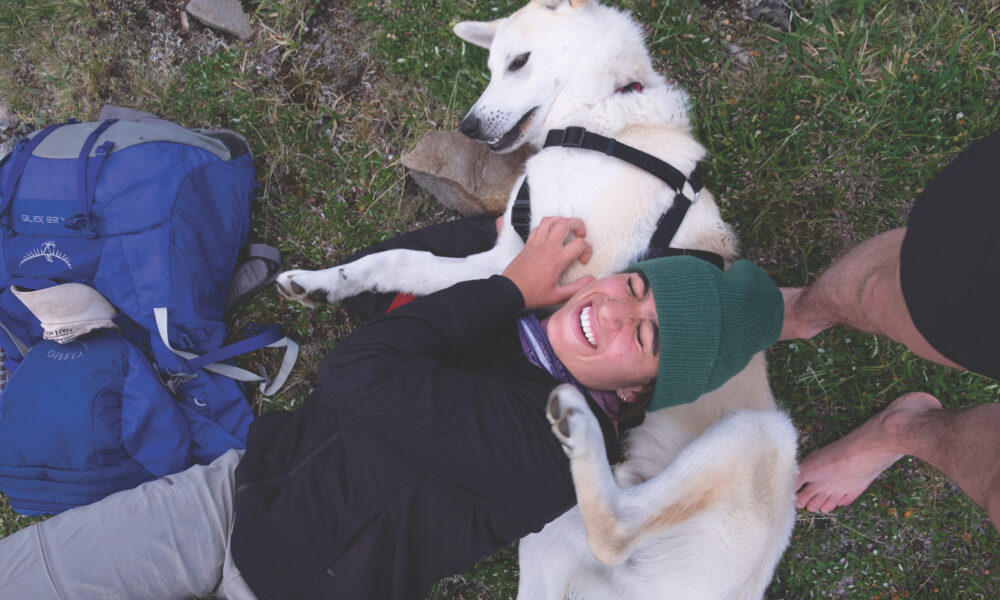
Missing your pet 101

It’s official: October is here and fall is in full swing. If you couldn’t tell from the leaves changing or all the sweaters around campus, that crisp autumn wind is a telltale sign. Somehow we’re already addicted to pumpkin spice and apple everything, and it’s only a little while before the Halloween decorations get put up. While we all start layering up and leaving our windows open at night for that fresh cool air, there’s a strong desire to avoid homework. So put on a classic fall favourite and curl up under some blankets next to someone whose ears pop out from under the blanket and gives you a big slobbery kiss on the cheek. Yep, welcome to missing-your-pet-101!

As a relatively diverse and international university, McGill attracts students from all over the world, who make the exciting journey to Montreal through planes, trains, and long automobile rides—trips that are hard for our furry friends. The reality is that most pets get left at home; even if they could journey to Montreal, uni-student life and city living space are often not conducive to pet ownership. This means we’re left missing our best friends, texting in our family group chats for pet pictures, and then getting upset when they’re too cute. 

For many students, one of the greatest losses of leaving their pets at home is the lack of a constant stress reliever. How can you relieve stress if you do not have that big dog hug, those purrs from that tabby, or the hiss of your (friendly) serpent on call?

Animals can be the best help when you’re overwhelmed as they offer a loving, non-judgemental companionship—something that is so often sorely lacking at university where everyone’s stress levels run high. Whether you’re missing your cat, dog, bunny, or lizard, don’t worry: Here are The Tribune’s tips for staving away the pet blues.

1. Attend a Student Wellness Hub Animal Therapy Session

Hosted every Monday and Thursday from 1-2:30 p.m. in the Brown Building, these therapy sessions are the perfect time to get some puppy love and de-stress while having snacks and conversations in a relaxing setting with other attendees.

2. Make friends with a neighbour who is a pet owner

Although having a pet as a student is hard, many other city residents have pets, which can work in your favour. Make friends with your neighbours and offer to pet sit when they’re away. Maybe you can make some cash while also satisfying the need for a little cat cuddle. 

3. Say hi to pets on the street

Sometimes all a day needs is a little hello from a dog or cat. Politely ask someone who’s walking their pet if you can give them a pat (try to hold yourself back from a whole-body hug—I know it’s hard). A little hello from a furry friend always leaves me smiling!

4. Volunteer at an animal shelter

If these activities aren’t enough for you, and you have some spare time in your schedule, consider volunteering at a nearby shelter such as the Montreal SPCA or Friends of Humane Society International where you’ll get to work with animals one-on-one for multiple hours. Helping an animal find a new home is always rewarding, but the hardest part will be not taking one home with you!

Although you can never stop missing your pets, I hope these tips will help you decompress a little and enjoy the fall. As schoolwork and other stresses accumulate, make sure to take the time to relax and maybe make some new furry friends!

Lacrosse, Martlets, Soccer, Sports, Varsity Round UP, Volleyball

Varsity Round-up: Oct. 3 to 16

Martlets’ Soccer: T 1-1

The Martlets faced Laval’s Rouge et Or in their Homecoming and Alumni match on Oct. 13. Laval tested McGill goalie Sophie Guilmette multiple times in the first half after McGill conceded free kicks outside the box, however, midfielder Chloe Renaud gave the Martlets a 1-0 lead with her second goal of the season in the 43rd minute.

The second half opened with a solid shot on goal from midfielder Hana Yazdani in the 53rd minute. Laval reacted quickly, nearly scoring before making two substitutions in the 56th minute. The Rouge et Or was awarded a free kick in the 63rd minute that Guilmette saved, as she registered seven saves during the game. Laval equalized the score by finding the back of the net with an unlucky rebound after it hit the crossbar in the 76th minute. 

Despite the Rouge et Or having a 12-5 advantage in attempted shots, the Martlets stayed consistent with their pressure and fought for possession in an aggressive manner throughout the game. 

“We were really disciplined. We were really patient with it. [….] We held on […] and we got some momentum going. [….] We stood our ground […] and were able to keep our calm and just keep doing our thing,” winger Stefanie Kouzas explained to The Tribune. 

The Martlets will face UQÀM on Oct. 15.

Moment of the game: McGill goalie Sophie Guilmette saved a last-minute shot in the 90th minute. 

Quotable: “The girls were focused all week. They played well [and] defended well. It’s time to get ready for the playoffs and that’s the kind of game that you need in the playoffs and hopefully nationals.” 

–Head coach Jose-Luis Valdes explained.

Stat corner: The Martlets are undefeated in their last seven games. 

Redbirds’ Soccer: T 1-1

The Redbirds faced off against Laval’s Rouge et Or in their annual Homecoming and Alumni game on Oct. 13. In the first half, Laval conceded several fouls while the Redbirds attempted many shots on a goal. The referee stopped play in the first half after McGill defender Oliver Onye was knocked to the ground in the 35th minute and was able to walk it off. Defender Matisse Chretien scored for McGill in the 39th minute after a free kick led to a scramble around the net. 

McGill started off strong in the second half with a shot on goal in the 48th minute. Laval quickly responded by scoring after a free kick in the 55th minute. Each team was frustrated and the energy on the field escalated as the game came closer to the end, with McGill and Laval picking up 16 and 13 fouls respectively. The crowd shouted when several fouls were called or when they felt that the referee should have blown his whistle. 

In the 73rd minute, Onye exited the field after sustaining an injury. The last 10 minutes were filled with chances for Laval, yet, redbirds’ goalkeeper Chris Cinelli-Faia made an essential save in the 86th minute after a dangerous cross into the box from Laval. As tensions between the teams rose, McGill midfielders Emilio Rossi-Levin and Yosr Frej were given yellow cards for discipline in the 86th and 90th minutes. Cinelli-Faia made an additional save in the 90th minute while Laval hit the post minutes before the game ended in a tie.

The Redbirds will face the University of Quebec à Montreal on Oct. 15.

Moment of the game: As the referee whistled to signal the end of the game, both teams collapsed on the field in frustration. 

Quotable: “I would say the two center backs, Matisse Chretien, Stuart Klenner. They’ve been solid the whole season. But today, I think they did an amazing job of not letting the opponent have chances, especially the first half where they were solid.”

–Defender Bilal Bouchemella on which players played a good game.

Stat corner: This game moves McGill’s conference record to two wins, five losses, and three ties.

Martlets Volleyball: W 3-0

The Martlets volleyball team (1–1) opened their RSEQ season against the Université du Québec à Trois-Rivières’ Patriotes (0–1) on Oct. 13. 

The Patriotes started the game off with a two-point lead before McGill quickly regained an advantage of 5-2. Middle blocker Meaghan Smith had an excellent block and the first set ended 25-16.

McGill dominated the second set and ended it with a 19 point advantage of 25-6 over the Patriotes.

During the third set, McGill scored two points and maintained a lead until UQTR tied the score 15-15. The teams remained within a point of each other until right-side hitter Clara Poire and middle blocker Erin Keating stunned the Patriotes with their stellar defence , allowing McGill a two point lead of 18-16 but UQTR came back to tie the game 21-21. Neither team was able to score the two point lead to end the set until power hitter Rio Pesochin and Smith blocked a return, making the score 28-27 and leading McGill to take the set 30-28 and the match 3-0. 

The Martlets will face the Université de Sherbrooke next Oct. 15.

Moment of the game: Rio Pesochin won five points straight off her serves in the third set. 

Quotable:Rachel Leduc went on a serving run in the second set that ultimately led to us dominating that set. I gotta give so many props to her, she’s been putting in so much work this summer. I could tell how dialed in she was here. And Meg came off the bench in the third set when we were tied 27-27 and she stuffed the ball and that’s the kind of presence you want from your bench. ” 

– Libero Olivia Krishnan on which teammates stepped up and led the way.

Stat Corner: McGill had 32 kills this game, 13 each from Poire and middle blocker Charlene Robitaille and six from Leduc. 

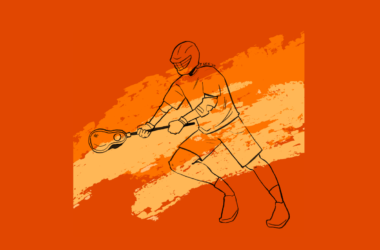
Lacrosse: W 16-4 

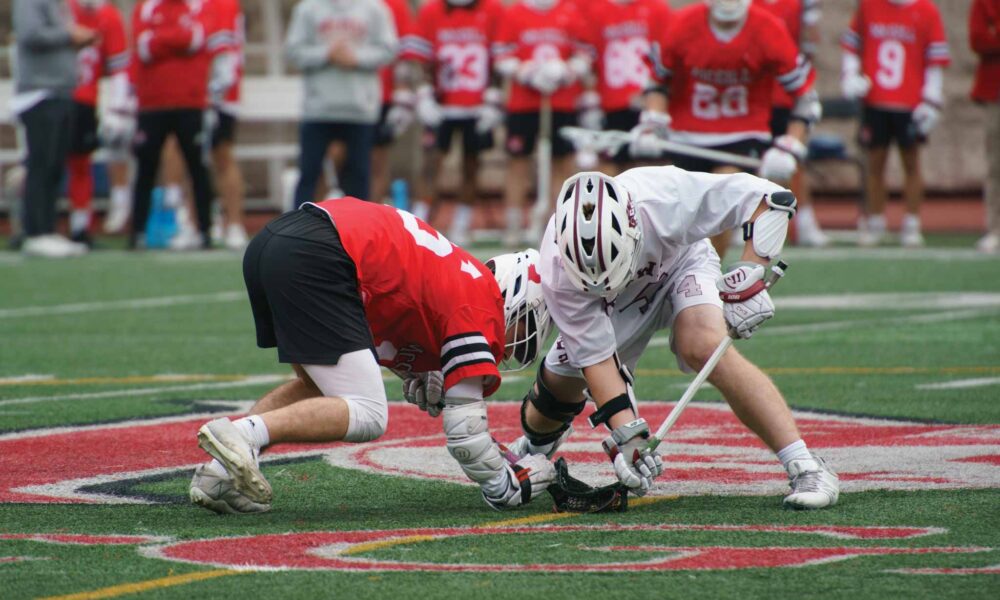
On Oct. 15, the Redbirds lacrosse team (4–2) hosted the University of Ottawa Geegees (0–7) for their annual Homecoming game. The game opened with attacker Isaiah Cree scoring the first goal just four minutes in. The Redbirds peppered the Gee-Gees with shots on net, with midfielder John Miraglia scoring from the top of the crease with four minutes remaining to give McGill a 2-0 lead. Goalkeeper Joseph Boehm made a great save, giving the Redbirds a fast break and allowing Cree to score a final goal to end the quarter 3-0.  

In the second quarter, both teams ramped up the aggression and number of fouls as Ottawa scored just 11 seconds in. Midfielder Dylan James scored a shot from the top of the crease in the 11th minute of play. Miraglia netted two more goals within a minute of each other and the half ended with McGill up 7-1.

Play in the third quarter slowed down and midfielder Joshua Jewell scored a goal at the top of the eighth minute before the Gee-Gees buried their second goal. Face-off specialist Samuel MacDonald won the face off and took off down the field to sink yet another goal and with under a minute left James and Miraglia each scored a goal to make it 10-2. 

With an eight goal lead, Miraglia scored his fourth goal in the ninth minute of play before attacker Massimo Thauvette buried two shots in the net within three minutes. Attacker Mark Symon made the 15th shot of the game before Ottawa scored their last goal of the game. Face-off specialist Chris Koran scored the final goal after winning the face off, securing a dominant 16-4 win for the Redbirds. 

The Marlets will face the Bishop Gaiters (1–4) on Oct. 18.

Moment of the game: After a save, Boehm brought the ball outside the crease, leaving the goal undefended. As an Ottawa player gained control of the ball, Thauvette stepped up and blocked the attempted shot before sending the ball down the field for Miraglia to score the second goal of the game.

Quotable: “A guy that I was really proud of in this game is number 99, Kyle Glick. He’s our fourth long pole so he doesn’t play too much in games. Today [when] his older brother went out with an injury, he went out there and played three and a half quarters. […] He’s just pushing himself up on our roster in terms of guys who should be playing more minutes. It was really fun to see a guy who maybe doesn’t play as much just jump out there and play very well.” 

– Head Coach Nicolas Soubry on players that impressed him.  

Stat corner: The 16-game win streak over Ottawa spans from 9/6/2014 – 10/15/2023 and is the Redbirds’ longest.

Science & Technology

McGill Engine unveils students’ technological entrepreneurship

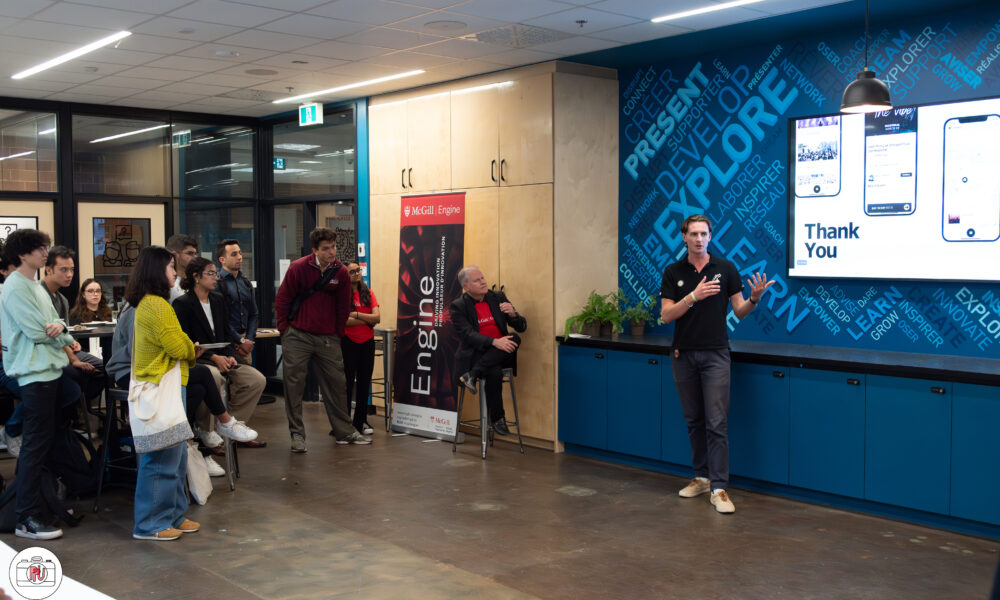
On Sep. 28, 2023, students, faculty, and sponsors gathered at the McGill Engine Centre—a Faculty of Engineering hub dedicated to supporting McGill’s technological innovators and entrepreneurs. 

The TechAccel Showcase spotlighted a total of 11 student teams from both the Winter and Summer 2023 cohorts. As one of McGill Engine’s key experiential learning programs, TechAccel encourages and supports student startups, providing one-on-one business mentorship, project grants, community events, and more. 

During her opening remarks, Dean of the Faculty of Engineering, Viviane Yargeau, reflected on the program’s successes. 

“Since the start of the TechAccel program, […] over $224,000 in funding has been distributed by the Faculty of Engineering Innovation Fund to support students in early stage ventures, and over 200 students have been trained and 40 per cent [of the benefitted students] are from faculties other than the Faculty of Engineering,” Yargeau said. “And that’s something that I’m very proud of because I strongly believe in multidisciplinary approaches to the work that we do.”

Ranging from software development consultancy to sustainable, iron-based energy storage solutions, the pitches at the TechAccel Showcase exemplified the interdisciplinary ventures that McGill students spearhead. 

One of the many groundbreaking technological designs came from Fulcra—a startup focused on orthotic devices to mitigate chronic lower back pain, the leading musculoskeletal issue worldwide. 

“In the market, there is currently nothing available for chronic lower back pain. All of these cases and studies have proven that they develop patient dependencies and increase injury occurrences when you remove [back braces]. Now, heavy lifting, strenuous activities, and labour-intensive jobs are all causes of back pain, and all the current solutions are not appropriate for these situations,” Maria Calderbank, U4 Mechanical Engineering and one of the four co-founders, said during Fulcra’s pitch.

Fulcra, in response, designed a unique orthotic device that boasts the advantages of both a corset and an exoskeleton, drawing upon abdominal pressure to stabilize the spine and consequently reduce lower back pain without the restrictiveness or bulk. By applying this pressure during strenuous movements only, like heavy lifting, their device is more sustainable through wear and tear, making it suitable for chronic cases. 

The innovations at the TechAccel showcase did not stop at Fulcra’s award-winning orthotic device. Reeva Tech Solutions, a startup in IT system custom software development, also pitched its first product, Sterilization DB.

“The problem that Sterilization DB is trying to solve is the limited amount of medical device tracking that is happening in medical clinics of Quebec. This is a problem because the government of Quebec is following suit with the governments of Ontario, Alberta, and British Columbia to develop new laws regarding the mandate of sterilization tracking,” Reeva’s founder and CEO Roko Baljak, U2 Science, said during his pitch.

Baljak noted that medical device tracking is currently tedious, if not outdated. To track equipment, clinics label it with printed QR codes—undergoing a slow, costly process as they are often required to track over 200 devices per day. 

“Sterilization DB is a software and hardware kit that allows medical professionals to track sterilization and usage of medical equipment quickly and simply. We feature a very simple user interface (UI) and all the data that we collect are stored on the premises at the clinic, which makes it very secure,” Baljak said. 

Another significant advantage of this product lies in its compatibility with existing patient management software in Quebec. The current patient record system could easily incorporate Sterilization DB, thus facilitating the tracking of all the medical equipment used during a patient’s visit along with their medical records. 


As the various TechAccel teams continue improving their designs and developing their business ventures, the McGill Engine continues its instrumental work in fostering innovative technologies. On Nov. 30, they will be hosting their ninth annual Celebration of Innovation and Entrepreneurship, bringing together students, faculty, investors, and alumni to highlight emerging technologically-based startups at McGill.

McGill, Montreal, News

Kanien’kehá:ka Kahnistensera express concern over handling of potential evidence on New Vic site

Content Warning:  Mentions of death

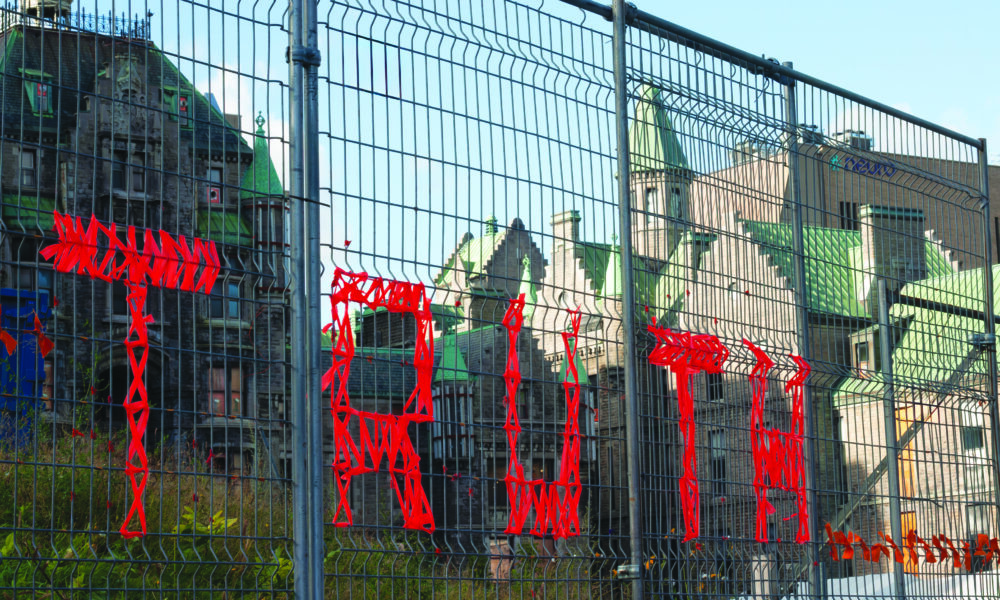
On Oct. 10, McGill’s Provost and Vice-Principal (Academic) Christopher Manfredi sent an email to all McGill students and staff providing updates on the work taking place on the former Royal Victoria Hospital (RVH) grounds, where the university plans to construct its New Vic project—a state-of-the-art research facility for sustainability systems and public policy. This comes as the latest update in the ongoing investigation into the New Vic site, where the Kanien’kehá:ka Kahnistensera (Mohawk Mothers) worry there may be unmarked graves of Indigenous children. 

Manfredi’s email addressed a security concern that took place on Oct. 2, sharing that an individual placed themselves in front of active heavy machinery.  McGill media relations officer Frédérique Mazerolle explained in an email to The Tribune that it was one of the Mothers who found themselves in front of heavy machinery, which posed a serious security threat to all personnel on the site. 

“The incident posed a very serious safety concern for herself, the cultural monitors, and the construction workers on site. As a result, strengthened safety measures, consistent with the terms of the Settlement Agreement, were put in place.”

In an interview with The Tribune, anthropologist and associate of the Mothers Phillippe Blouin explained that leading up to the incident, archaeologists were moving above-ground piles of soil that had already been sifted for potential forensic evidence. However, they proceeded to move piles of soil that had not been sifted for evidence, which the Mothers feared could potentially damage the forensic chain of custody.

“Then, one of the Mohawk Mothers, […] she used a whistle,” Blouin said. “They have whistles there if there’s a problem on the site, to stop the machines, and to have a conversation with the archaeologists, and to see what’s going on.” 

Mazerolle asserted that McGill had not provided the Mothers or anyone else with a whistle on the site. 

Additionally, in a written statement to The Tribune, the Société québécoise des infrastructures (SQI)—one of the key defendants in the case—asserted that the piles of soil were being moved because the heavy machinery operating nearby made the area unsuitable for sifting such a large quantity of soil. Thus, at the request of archaeologists, the soil was moved to be sifted at a safer location. 

The Mothers have not been to the site since the incident occurred, with no current plans to return. 

Manfredi stated that no evidence of unmarked graves had been found on the site; he reported that the ground-penetrating radar (GPR) survey conducted last month identified any anomalies with “likely” grave-type features, but also found several “unknown” feature anomalies. He did, however, acknowledge that some new artifacts were found on the site, including bone fragments and an additional child’s shoe sole. The sole was found in Zone 11 of the site—a zone that covers paved land and thus was previously thought not to contain anomalies.

Blouin alleged that the court-appointed Indigenous cultural monitors were not told about the initial recovery of the shoe—rather, they accidentally stumbled upon it in a ditch on Sept. 28. The Mothers are skeptical about whether an archaeologist was present during its discovery, as their settlement agreement mandates.

“The Mohawk Mothers didn’t receive any proper explanation of what happened [or] why [the shoe sole] was there. Seems like it had been tossed there in the ditch in Zone 11,” Blouin said  “So, we don’t know whether an archaeologist was present when it was found, and if it’s not the case that an archaeologist was present, well, that would be a breach of the agreement directly.” 

Another growing concern for the Mothers is the restricted access to the physical building near the Hersey Pavilion on the New Vic Site—where Historical Human Remains Detection Dogs (HHRDD) previously detected the potential scent of human remains. Archaeologists recommended that a ten-metre radius around the area in which the HHRDD had detected an initial scent should be searched—and the building falls within that radius. Nevertheless, Blouin shared that the Mothers have not been allowed access to the building. 

Farnoush Toupchinejad, U2 Science, told The Tribune that she feels that McGill communications to the staff and student body could be improved. 

“It does seem like, because there is a legal battle going on, like obviously neither side wants to lose, and so, even though McGill does seem like they’re being transparent, it could also be like they’re not sharing a lot of information,” Toupchinejad said. “So even though there is recent evidence that [the New Vic site] could possibly be a grave, they’re still like, ‘Oh well, it could also be this, this, and this.’ They don’t want to kind of be hindered in their goals.”

Arts & Entertainment, Music

Electric, ethereal, and earnest: An evening at Tommy Lefroy’s ‘Le Trashfire’ tour

On Sept. 28, Tommy Lefroy fans at Montreal’s Le Ministère sent seismic sound waves across North America as the crowd chanted along to the duo’s ethereal and addictive harmonies.

With Wynter Bethel and Tessa Mouzourakis—who record as Tommy Lefroy—on electric guitar, and Blake Evans on drums, the hour-long set incorporated both of the band’s EPs Flight Risk (2021) and Rivals (2023) and a dreamy cover of Lana Del Rey’s “Norman Fucking Rockwell.” The show was divinely electric, powerfully precise, and most of all, unapologetically joyful. 

Quebec-based musician and opener Claudelle prepared the audience with French pop tunes, while the tour’s supporting act Haley Blais initiated the night’s melancholy melodies. Blais also professed their love for Montreal bagels, arugula, and her home of British Columbia (BC) between songs “Baby Teeth” and “Coolest fucking bitch in town.”

Each artist expressed their love for the city’s culture. Bethel joked that after their dynamic opening set for indie pop star Samia at Le Studio TD last winter, the band begged their agent to return to Montreal for their North American headline tour. Since Mouzourakis grew up in British Columbia and Bethel hails from Northern Michigan, it was evident all the evening’s musicians hold their northern hometowns close.

Mouzourakis flaunts her Canadian roots in songs such as “Jericho Beach,” where the pair sings about the “seismic renovation” of British Columbia. Introducing the song, she recalled spending time at the spot in Vancouver that inspired the lyrics as a teenager, smiling as BC audience members cheered in recognition. Even more relatable was the description of flight anxiety in “Vampires.” The venue shook with the line “don’t mind the darkness, the ice, or the nightfall / Don’t worry the plane won’t go down out of Montreal.” 

Beyond these Canadian ties, Tommy Lefroy’s unique audience resonance lies in the way they both literally and figuratively tell their fans “I’m just like you.” Bethel and Mouzourakis know what plagues their demographic: The crowd erupted with laughter as they dedicated their critique of a pseudointellectual “hopeless wordsmith” in “The Cause” to anyone who has dated someone with a liberal arts degree. Even their song order tells a story; they open their show with “The Mess,” detailing the realization that their experience of womanhood—the transformation into an emaciated disaster—is incongruent with its portrayal in media, and close their set with “Dog Eat Dog,” a satirical feminist anthem about stopping at nothing to get what you want. By structuring their critical account of gendered existence’s triumphs and tragedies as a cohesive narrative, the band invites their audience to collaboratively exorcize shared anxieties.

As self-professed superfans themselves, Bethel and Mouzourakis credit a shared love for indie supergroup boygenius—whose lyrics nod to Springsteen, the Bible, and literary inspirations—to be what drove Tommy Lefroy’s formation. The fact that their own references to “Springsteen ‘88,” “Take me out tonight,” and “Goliath” require interpretation is then by no means accidental. 

This investment in fan culture pays off: Lyrics like these provide insight into Bethel and Mouzourakis’ artistic genesis while embedding Tommy Lefroy into a larger tradition of work. 

Given that the very name Tommy Lefroy reanimates Jane Austen’s “heartbreaker museThomas Lefroy, and warrants further analysis, it just makes sense that the band would use interactive literary platforms such as Goodreads to connect with fans. By considering the interpretive role of the fan in the legacy of their music, Tommy Lefroy makes use of their inherited genre, while leaning into their own unique literary feminist culture.

Though Bethel and Mouzourakis bind their work to their hometowns and inspirations, a Tommy Lefroy concert transcends individual experience. The band maps the personal onto the universal, and the universal onto the personal—their audience feels seen, and sees them too. Pay attention to the earnest nerd rock of Tommy Lefroy—their sword-like riffs are as mighty as their pens.

Tommy Lefroy’s music is available to stream on all platforms

Research Briefs, Science & Technology

Based on traits: Selecting more resilient wood for future wood-building industries

Before concrete and steel, wood was the predominant material in many human endeavours. Nowadays, while wood has been mostly replaced, its usage remains common. Wood construction specialists, however, continue to rely on only a few species, limiting their survivability against climate change.

To ensure the viability of forestry and building industries, there must be long-term solutions that reduce the impact of such environmental disturbances. Peter Osborne, a PhD candidate at McGill’s Peter Guo-hua Fu School of Architecture, believes that building with more functionally diverse and ecological resilient wood species is the key.

According to Osborne’s paper, ‘functional traits’ are biological characteristics of plants associated with their growth, survival, and reproduction. A ‘plant-building trait-based’ approach, therefore, analyzes tree species based on their ecological and construction-relevant traits. 

“[Trait-based ecology examines] characteristics within aspecies, such as drought tolerance, leaf area, and seed disperaldiameter at breast height that contribute to forest ecosystem resilience. ,” Osborne said in an interview with The Tribune. “[Building-related traits] would be characteristics of wood that are desired in [construction, within] certain ranges of mechanical and physical properties such as fire resistance and pest tolerance.”

By grouping species of similar construction-relevant traits, Osborne compared the current needs of the industry with the internal characteristics of each species. One of his case studies, performed in southeastern Quebec, found that although the construction industry’s perspective designates softwood from coniferous trees as the most desirable wood, overreliance on a few of these species jeopardizes construction systems.

“Softwoods grow faster and straighter. And in Canada, they are extremely abundant,” Osborne said. “The workability, and the general physical and mechanical properties of these species are oftentimes advantageous.”

To enhance the ecological resilience of our forests, Osborne’s forest-building approach advocates for a greater selection of tree species with diverse functional traits. The construction industry should then extend its repertoire of wood construction techniques to encompass a more extensive spectrum of wood species. To achieve this, the forestry and wood industries need to work synergistically. 

Coniferous trees, often used in wood-building, would be an ideal candidate for growing ecologically resilient, climate-adapted forests. Unfortunately, coniferous trees are prone to both fire and damaging insect species such as the moth genus, Dendrolimus.

Conversely, fire cannot climb the tight, smooth bark of deciduous trees, which can reduce forest fire spread. However, the wood from these trees can easily bend and form knots, which is considered inadequate for construction lumber. Although not used structurally, these hardwoods can still be used in flooring for high durability. Osborne elaborated on this point by alluding to silviculture—the science of controlling and managing forests.

“There are also silvicultural reasons why [hardwoods] are not as utilized—primarily due to their age, the time that they have to take to grow, and the facility silvicultural applications that surround them,” Osborne said. “So, a maple [hardwood species] forest is not as functionally convenient to harvest as a pine forest.”

To examine long-term forest dynamics within the region where these tree species grow, Osborne simulates them on the LANDIS-II model by testing four forest management approaches—business-as-usual (BAU), climate change adaptation (CCA), and two variants of functional diversification network (FDN)—under different climate scenarios—current, warm, and hot. Then, he measures the changes in harvest output and species composition of the trees.

“[Although] in the business-as-usual [BAU] approach, there is a substantial increase in harvest volume[,] unless we somehow find ways to utilize the wood more efficiently[,] we cannot really do it under this approach,” Osborne said. “Under the climate change adaptation [CCA] and the functional diversification network [FDN] approach, we find that the standard building groups (BGs) stayed more or less the same in their output, if not increased compared to the BAU approach. But where we found the most increases were obviously BG3-BG7 [hardwoods].”

Furthermore, he found a 40 per cent increase in short-term harvest volume in the CCA and FDN approaches, resulting from a timely harvest at early growth stages. Prioritizing species with overlapping functional traits for harvest while planting ecologically foreign species would increase forest functional diversity. 

Although the CCA and FDN approaches seem to offer promising avenues, the striking reality is that the outcome remains uncertain. Greater functional diversity and ecological resilience may increase chances of survival in case of ecological disturbances.

“This calls for designers and engineers in the industry to become more adaptable in the future to survive in any of these [climate] scenarios,” Osborne explained.

To prepare for the unforeseeable future, it is critical to work with, and not against, our forests—by increasing the adaptability of wood construction and creating a dynamic and flexible usage of wood in response to current needs.

Know Your Athlete, Martlets, Rugby, Sports

Know Your Athlete: Lauren Minns

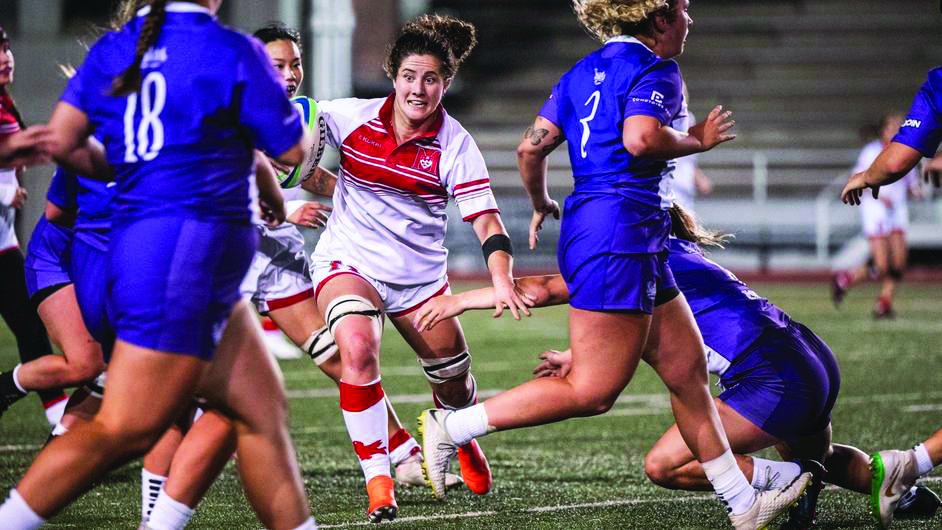
Despite missing the past two seasons due to a sprained ankle and then a coaching job at Vanier College, Lauren Minns was quick to make an impression with the Martlets’ rugby team, scoring three tries in the Martlets’ historic win in the first game of the season. After back-to-back seasons stuck on the bench, Minns sat down with //The Tribune// to discuss her journey to falling in love with the sport and her excitement to finally play a full season at McGill. 

Minns grew up in the Montreal neighborhood of Notre-Dame-de-Grâce, and only started playing rugby as a sport in high school. Growing up, she exclusively played soccer and wrestling. After playing a bit of rugby in high school, she switched her focus to wrestling, but felt that it was not giving her what she wanted from athletics.

“I really missed that team-sport vibe, which is what led me to try out for the rugby team at John Abbott [College] in my third year,” she explained. “Also, wrestling wasn’t [competed] at the CEGEP level, so I wasn’t playing for John Abbott when I wrestled—I was just part of my own club. I wanted to get reintroduced into the student-athlete life in college.”

Minns’ rugby prowess in CEGEP caught the attention of the University of Ottawa (UOttawa). UOttawa representatives invited her to rugby recruitment weekend programs before she later committed to the school. At UOttawa, Minns experienced the glory of a national championship in her rookie year; that season, she won Réseau du sport étudiant du Québec (RSEQ) Rookie of the Year and was a first-team All-Star. She played three seasons for the school before the pandemic wiped out her senior season.

After graduating from UOttawa, Minns came to McGill Law and decided to continue her rugby journey with the Martlets. 

“What I thought was very unique about this opportunity was to just see […] how we can continue helping this program slowly and surely get back to the top—because, at one point, McGill was the best in the RSEQ,” Minns said.

Despite the Martlets’ poor record over the past few seasons, Minns believes that the key to success lies in attitude and in strong defensive play.

“For me, [the mindset] is: How, in any way, shape, or form, can I help decrease the gap between the points we score and the points that the other team scores against us?” she explained. “The goal was to shorten that gap so that every single game felt more competitive, every game felt more like the other team actually had to work for their win, work for every point. I didn’t want [opposing] teams to feel like they could do whatever they wanted.”

In Minns’ eyes, the game against Bishop’s on Aug. 31 exemplified that changed attitude in action as McGill not only rallied to keep their defense tight while scoring points but also made one last try towards the end of the game just to make a point, despite not needing the try to win the game.

At the start of the season, nobody on the team had experienced a win while playing for McGill. With a win under their belt now solidifying their foundation, the team is set up well to keep building their program.

Outside of rugby, Minns is a travel fanatic. Her favourite trip was with one of her best friends to Greece, where she spent six weeks in Sparta volunteering and teaching English to kindergarteners.

“It completely changed my outlook on life—the way people approach life in Sparta is so different from how I was used to approaching it here,” she said. “Nothing felt like a rush there; everyone took the time to do what they wanted to do throughout the day, properly […] the human interaction was so much more genuine and thoughtful.”

The team’s last game of the season was a loss on Oct. 1 against the Université de Montréal. With this season’s conclusion, Minns hopes to make the most of her last year of eligibility in 2024.

Science & Technology

Annual Environment Public Lecture explores an economic approach to clean energy

On Oct. 5, McGill’s Bieler School of Environment hosted their annual Environment Public Lecture. For this occasion, Moyse Hall Theatre was speckled with professors and students curious to hear how Gernot Wagner, a climate economist and lecturer at Columbia Business School, would argue that the solution to the climate crisis lies in the business world. 

In his lecture, Climate Risks, Uncertainties, and Opportunities, Wagner argued that investing in sustainable climate technologies to reach global emission targets is the right thing to do, not only morally, but economically. 

He stressed that the social cost of carbon (SCC)—an estimate, in dollars, of the economic damages that would result from emitting an additional ton of CO2 into the atmosphere—is an effective tool to guide policy creation, as it translates the consequences of climate change into economic language, which are more easily understood by policymakers than future concerns about preserving the environment. 

“$200 [USD] is the bare minimum of the full social cost per ton of CO2 emitted into the atmosphere today,” Wagner explained in his lecture. 

However, this estimate only considers what we already know. What we do not know—the risks and uncertainties—may worsen the climate crisis, and push the value of the SCC higher. In other words, as the crisis worsens, the financial toll of each new ton of CO2 may change dramatically.

Since these unknowns are so critical to the future of climate change, Wagner considered environmental protection a global risk-management problem. He highlighted the importance of higher cost estimates, since inevitable tipping points, such as the Gulf Stream collapse, will likely double the social cost of carbon. 

But using only SCC estimates leads to a seemingly simple solution: If we were to all pay $200-400 per ton of CO2 by policy, we could solve the climate crisis.

“News flash, we don’t live in that world,” Wagner said. “There is no one silver-bullet technical solution, or one silver-bullet policy solution either.” 

Rather than treating carbon pricing as a fix-all solution, to see real change, governments must decide to frontload their funding, as opposed to spending a small portion each year. Although legislators may have trouble justifying this hefty initial sum politically, pure economic reasoning can justify these investments even when we leave out the costs of climate-related disasters, health impacts, and loss of ecosystem services

Wagner explained that, on a global scale, these measures are feasible. If we redirect investments from high-emissions assets, such as fossil fuel extraction, to clean energy, and consider how much is currently spent on clean technologies and infrastructure, then the costs of reaching global emission targets start to shrink. 

“The difference between current policies and net-zero by 2050 is only $25 trillion in total spending over the next 30 years, or less than an extra $1 trillion per year on average,” Wagner said. 

This extra annual cost is less than half the total military spending worldwide in 2022, which amounted to 2.2 trillion USD. 

He stated that ultimately, the right policy would not be to simply price the “optimal fee.” The solution is a mix of different measures: Subsidies and regulations, providing alternative sources of energy, redirecting funds away from high-emissions technologies, and investing in efficient ones. 

For context, Wagner used the example of a U.S. policy set in 2007 that enacted the switch from incandescent to LED lightbulbs. Predictions about initial investments paying for themselves due to dramatically higher energy efficiency drove this policy. Soon after the U.S. implemented this policy, many countries followed suit. 

Wagner ended by emphasizing that the solution to climate change will happen with the right mix of different approaches. A large part of the solution involves applying our scientific knowledge to direct policy and using all of our current technologies to achieve this. 

“It’s technology, it’s behavior, and it’s policy,” said Wagner. “The name of the game is to actually get on with it.” 

Research Briefs, Science & Technology

How exoenzymes changed the fate of organic matter

The very first life on Earth appeared 3.8 billion years ago as individual cells called heterotrophs, which were dependent on external food sources. Over the years, these simple heterotrophic cells underwent countless evolutionary changes, transforming into the planet’s diverse range of present-day animals. Despite the critical importance of evolution for life on Earth, the metabolic processes—life-sustaining reactions that convert food into energy—the evolutionary changes underlying them remain poorly understood. 

In a recently published paper, Nagissa Mahmoudi, associate professor in McGill’s Department of Earth and Planetary Sciences, and her team discussed current evidence in the evolution of Earth’s early oceans, particularly the production of exoenzymes—degradative enzymes used for digestion.

Mahmoudi’s team chose to write a Perspective paper—a type of article showcasing the author’s personal opinion. Perspective pieces are generally speculative and forward-looking. They also aim to raise awareness of the latest research in a certain field. Although a Perspective paper does not allow the inclusion of new data, it permits the re-analysis of existing data.

“The reason that we focused on [marine life] is because we think life started in the oceans,” Mahmoudi said in an interview with The Tribune. “We think that’s where life has evolved and where life is dominant.” 

Mahmoudi aimed to extend the understanding of modern oceans and to make inferences about how early forms of life evolved and functioned in ancient oceans.

“We would like to gather geobiological evidence from the modern ocean where we know exoenzymes are really important and bridge the gap between our understanding of the modern ocean and what it would have looked like in the past,” Mahmoudi said. 

The emergence of exoenzymes represents a vital step in the early evolution of heterotrophs. Exoenzymes break down macromolecules—large molecules composed of smaller constituents—into their subunits. The breakdown of macromolecules is crucial as it makes food particles small enough for the cell to take up. 

“The proteins and carbohydrates are too big for the [cells] to take up,” Mahmoudi said. “If you figure out a way to cut the protein in half to eat it up, then you have access to way more food.”

For complex organisms such as humans, this process occurs in the digestive system in which exoenzymes break down foods into small molecules, including amylases, proteases, and lipases

Cells then take up the small molecules produced by exoenzymes to support various cellular functions essential for life. 

For example, amylases break down complex carbohydrates into simple sugars; proteases break down proteins into amino acids; and lipases break down triglycerides—a type of fat that circulates in the blood—into free fatty acids and glycerol. A molecule with diverse functions, glycerol enables processes such as cellular respiration and photosynthesis. 

Despite the importance of exoenzymes, Earth’s first heterotrophs lacked the ability to secrete them. As such, most food sources, primarily organic matter, were largely inaccessible to heterotrophs in the early evolution of life.

In addition to being a food source for marine microbes, organic matter also contributes to carbon dioxide emissions and marine sediments. 

“In modern oceans, 99 per cent of the organic matter gets broken down and respired back to carbon dioxide, and one per cent is buried and sequestered,” Mahmoudi said. “But in ancient oceans, the microbes weren’t able to break down and take up the organic matter. Then more of the organic matter will end up being buried in the bottom of the ocean.”

This phenomenon suggests that the fate of organic matter in the marine environment has shifted with the emergence of exoenzymes.

“When the organic materials settle down into the ocean, there would have been fewer nutrients available for the microbes in ancient oceans,” Mahmoudi said.

Mahmoudi’s research points to the importance of exoenzymes and their role in the evolution of marine life. Her paper also identifies a need for future research into the processes underlying the emergence of exoenzymes as well as the biogeochemical context in which they appeared.

Off the Board, Opinion

Diary of a Dad Friend

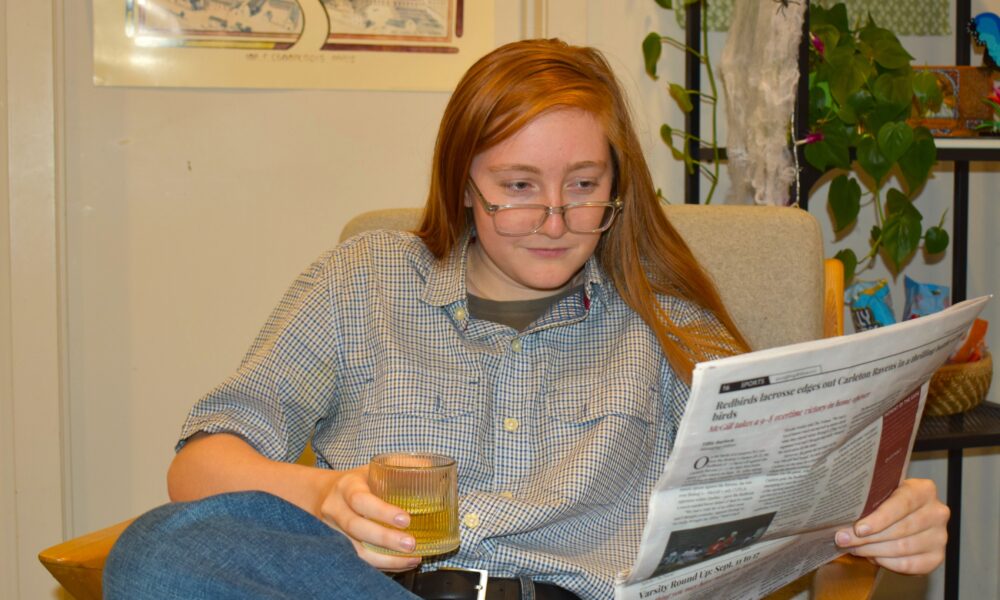
Sometimes I wonder if I was destined to become the “Dad Friend.” The label attached itself to me well before my friends bought me “#1 Dad” socks for Christmas. It became almost certain when my roommate began saying “Thanks, Dad” as they slid over their leftover dinner for me to finish. By the end of my first year of university, I was forced to accept that I had slipped, inevitably and deeply, into this role––I even had the socks to prove it. By the time I looked up from doing the dishes the other day to explain that the song playing was actually a cover of the Grateful Dead, it was old news.

Ticking 21 of the 29 boxes on BuzzFeed’s “Are You the Dad Friend?” quiz, I have to ask myself: How did I get here? 

At first glance, many of these behaviours result from an imitation of my own Dad. The jeans and plain sweater uniform, the habit of ordering black coffee, and the taste for goofy jokes certainly seem to support this argument. Perhaps lesbian stereotypes play a role as well; when it comes to button-downs and working with tools, I sometimes even out-Dad my own father. 

However, I have come to believe that there is something deeper at play here. Some quirk of personality that underlies all these surface-level behaviors. But what is that, exactly? What is this “Dad essence” that my friends are constantly picking up on?

Asking around in preparation for this article, I got a variety of responses. Some friends emphasized a particular brand of “goofy intellectualism” or a “caring disposition,” two traits I think I can live with. But others noted a desire to educate, or even a feeling that they needed to meet my approval. This is about when a troubling word began to surface: “Paternal.” 

“Paternal,” in itself, means simply “pertaining to a father.” However, its connotations are far-reaching, and its counterpart, “paternalistic,” which describes a government that makes decisions for its citizens out of a supposed sense that it knows their best interests, is an important reminder of the key role that unchecked power plays in fatherhood. 

By nature, fatherhood involves an age gap, a degree of physical control over the home, financial authority, and, often, a gender imbalance. All of these factors, in combination with the emotional influence of having a child who will naturally seek their approval, contribute to a huge and unequal power dynamic between father and child. This creates an environment––as with any power dynamic––that can foster emotional distance, manipulation, and even abuse. 

I am, as a result, in an interesting position. I have an “impression” of Dad-ness, but without the age gap, without the financial or physical power (as anyone who’s ever arm-wrestled with me will tell you) and also as someone assigned female at birth. So what does it mean, then, to be a Dad without the power imbalance? Does this position allow me to subvert the unique dynamics of gender, age, and control and make being a Dad Friend an act of rebellion against the patriarchy? Or, is this collection of habits and traits a result of internalized sexism, which recreates and reinforces existing power dynamics, even when the oppressor is absent? 

This reminds me of a classic debate between second and third-wave feminists: The former seeking to imitate men to gain equal power and influence, the latter embracing femininity as its own, uniquely valuable, asset. Perhaps a rewatch of the Barbie movie is in order to help untangle my position here. 

Either way, when I pause a movie for the fourteenth time in the first five minutes, or as I offer an unrequested explanation of the nuances between USB-A, USB-B, and USB-C cables, it bears taking a moment to pause and ask exactly what power structures I’m participating in, exactly what interpersonal relationships I’m emulating, and whether I’m working to dismantle or to strengthen them.

Read the latest issue

Read the latest issue