


Latest News

Science & Technology

HIV care informed by social determinants of health

In 2024, the World Health Organization (WHO) released a report listing 2021’s leading causes of death worldwide. Unsurprisingly, at a global scale, ischaemic heart disease remains at the top of the list, with COVID-19 not far behind. However, when data was divided between high- and low-income countries, leading causes of death diverged. Human immunodeficiency virus (HIV) is one such example. Still listed as the 10th leading cause of death in low-income countries, the HIV epidemic continues to kill hundreds of thousands each year—yet in Canada, there were only 126 deaths directly affiliated with HIV in 2023.

HIV does not yet have a cure, but it can be treated. Most treatment plans use antiretroviral therapy to control virus levels, ultimately reducing symptoms and making patients’ viral loads low enough to prevent it from being detectable or sexually transmittable. Through access to these treatment plans, Canadians with HIV are able to live long, healthy lives with significantly lower risk of severe infections.

However, while Canadians are largely protected from HIV through national health infrastructure and insurance, many migrants are denied this protection. Dr. Bertrand Lebouché and his PhD student Moustafa Laymouna explored this care gap in a recent study. In their paper, published in HIV Medicine, the two researchers explored the link between Canadian migrants’ material deprivation—a poverty standard—and their HIV clinical outcomes.

“There are studies that talk about the relationship and the link between clinical HIV outcomes and material deprivation. [However], no study has been conducted in a context [focusing on] migrants, or the barriers that we try to remove for these participants,” Laymouna explained in an interview with The Tribune. “This is what makes our study more interesting and new.”

Taking place over the course of a year, Lebouché and Laymouna measured the material deprivation of 48 participants at the 4- and 48-week mark. Patients were provided with free HIV medication, along with further medical support such as access to pharmacists, doctors, and social workers.

At each check-in, the effect of patients’ material deprivation on their clinical outcomes was measured—a relationship that research has shown to be negatively correlated. Previous literature shows that material deprivation leads to poor clinical outcomes, as poverty can create additional barriers within care.

Critically, this relationship was not confirmed in Lebouché and Laymouna’s study. Instead, there was no statistically significant relationship between material deprivation and HIV clinical results.

“We saw that there is almost no significant impact in [the participants’] clinical outcome, so it means two things,” Lebouché said. “First, they are very resilient people. It means that they fight a lot to survive in Canada, to survive in Quebec, and they succeed [….] They still are very poor, but they survive. And the second reason is possibly because we give them good care [….] The focus of our research team is patient-centered care [and] patient-centered research [….] [We] give medication on site, free of charge, and […] [patients] see pharmacists, nurses, physicians, social workers, and psychologists or psychiatrists.”

These findings underscore the importance of accessible public health infrastructure. Consistent access to affordable care counteracted the negative health effects of material deprivation, allowing for these patients to have significantly better treatment outcomes.

Lebouché and Laymouna’s study highlighted that overcoming systemic barriers is necessary to improve patient outcomes in Canada. By providing vulnerable communities with additional support, HIV treatments were successful. By investing in support systems, Canadian health practitioners can make a significant difference in the lives of those with HIV; in countries like Canada, where transmission rates have been reduced, improving clinical outcomes and livelihoods is the next step in combatting the global HIV epidemic.

“Something we push for [is that] antiretroviral therapy needs to be free for patients,” Lebouché explained. “Of the characteristics of this population, it’s very important that [patients] don’t have to choose to pay [for] their treatment, their care, or to pay to feed their family.”


Cycling, Sports

Cycling world championships return to Montreal after 50 years

When Magdeleine Vallières won cycling’s world title in Rwanda last year, she became the first Canadian to wear the sport’s iconic rainbow jersey: the mark of the reigning world champion. This month, she will defend her title in Montreal in the Union Cycliste Internationale (UCI) Road World Championships for the first time in over 50 years—just one week after the city’s annual Grands Prix Cycliste de Québec de Montréal.

The 2026 UCI Road World Championships, running from Sept. 20 to Sept. 27, has been named the largest sporting event in Montreal since the 1976 Olympic Games. During the event, over 1,000 athletes from more than 80 countries will compete in 13 events across Montreal and the South Shore. 50 years after the Olympic Games, the city of Montreal expects nearly half a million people to attend the championships, with free admission for all spectators. Montreal last hosted the event in 1974, when it became the first city to hold the World Championships outside of Europe.

The Grand Prix Cycliste is considered one of the hardest one-day races in North America, with 16 laps and 4,304 metres of climbing up and down Mount Royal. The race serves as a dress rehearsal for the World Championships—which will be held on many of the same streets just a week later—when many of the same riders will trade their team jerseys for national colours.

The four events expected to draw the biggest crowds are the shorter men’s and women’s Individual Time Trials, both 39.9 kilometres on Sept. 20, and the much longer Road Race with 273.2 kilometres of men’s and 180.4 kilometres of women’s racing on Sept. 27. The winners of these races will each earn the right to the rainbow jersey, which they will wear in competitions until the next year’s title is decided.

Current rainbow jersey holder Magdeleine Vallières, who is from Sherbrooke, returns home no longer an underdog, but as the defending champion: racing on the same streets she trained on growing up.

Her main challenger, Demi Vollering, a member of the strong Dutch team and last year’s Tour de France Femmes victor, seeks a first World Championships win. The climbing-heavy nature of this year’s course has led to its description as Vollering’s “race to lose”. Vollering has had a mixed relationship with cycling since the start of her career; the 29-year-old did not grow up in a cycling academy. She was previously a speed skater and trained as a florist, only taking up cycling in her late teens.

Defending men’s Road Race champion and current rainbow jersey holder Tadej Pogačar will not be competing in Montreal due to a crash in 2026 La Vuelta a España that caused him to suffer a neck and collarbone fracture, as well as a concussion. The five-time Tour de France winner underwent successful surgery on his left collarbone on Aug. 31.

With the absence of Pogačar, reigning Individual Time Trial champion and Road Race runner-up Belgian cyclist Remco Evenepoel is now considered the man to beat this year. Thirty-nine-year-old Canadian Michael Woods, who retired from cycling in 2025, will return for one final race on his home soil, supporting Canadian team leader Derek Gee.

Due to these events, major driving disruptions will be in effect throughout the month, with 36 kilometres of streets affected across seven Montreal boroughs. Av. du Parc between Mont-Royal and av. des Pins will be closed from Sept. 4 until Oct. 4. Other streets included in the races are expected to be closed during the events and reopened later in the day. Students commuting from the Mile End and the Plateau who rely on the 80 Du Parc bus should consult the Société de transport de Montréal’s trip planner for information on live diversions and cancellation updates.

When the road race takes place on av. du Parc, the rider currently defending the rainbow jersey will be on the same streets she once trained on: the same ones that helped cycling grow in North America, and the same ones McGill students use to get to class every day.

Commentary, Opinion

Clear bags: A simple remedy for Montreal’s lacklustre composting habits?

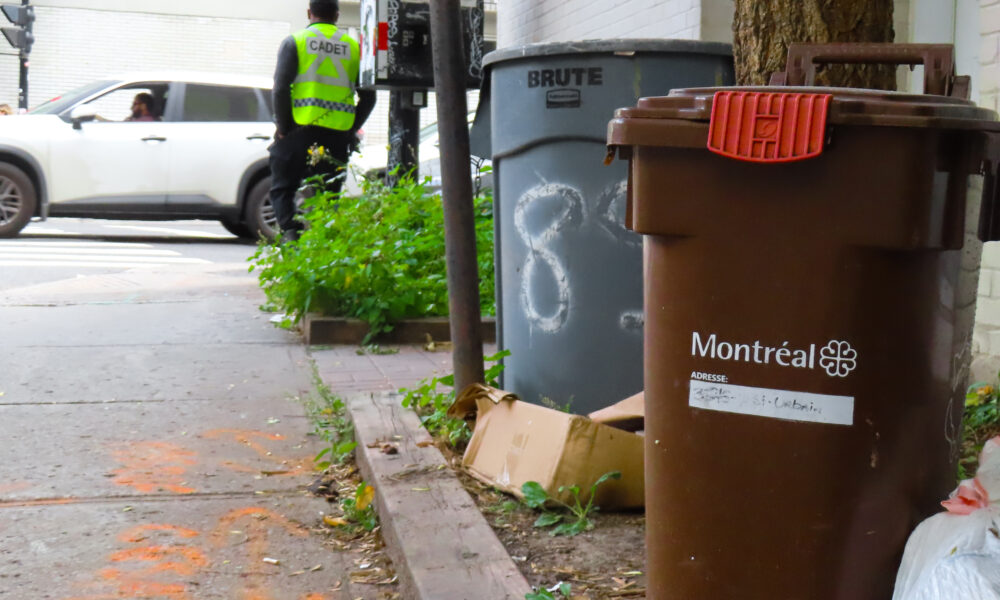
In her most recent annual report, Montreal’s Auditor General Andrée Cossette found that the city is far behind its composting target. Right now, about 55 per cent of the waste Montrealers send to the landfill is organic material that could have been composted instead; the city aims to bring that proportion down to 15 per cent by 2030, as part of its zero-waste target

Disposing properly of organic waste is undeniably more onerous—and more odorous—than sending waste indiscriminately to the landfill. Thus, a successful municipal composting system requires particularly strong accountability infrastructure. Simple and effective means of accountability have been implemented elsewhere in Canada—Montreal just needs to follow suit. In Montreal, a clear-bag requirement for trash would make fast accountability possible for improper organic waste disposal, establishing the foundational incentive necessary for Montrealers to properly sort their waste and lead the city to its zero-waste goal. 

It must be noted that improper compost disposal is anything but innocuous. When organic waste is deposited into landfills between layers of non-organic material, it decomposes without proper oxidation, releasing methane into the atmosphere—a greenhouse gas with a heating potential 80 times more potent than carbon dioxide. In fact, Canada’s 2023 greenhouse gas inventory reported that landfills accounted for 17 per cent of the country’s national methane emissions—further accelerating short-term warming that causes severe flooding, stronger storms, worsening wildfires, and prolonged droughts.

Seeing as composting holds immense power over decreasing Montreal’s greenhouse gas emissions, the city must find a way to close the gap between the amount of compost Montrealers currently send to the landfill and the much-lesser amount necessary to meet the fast-approaching 2030 zero-waste deadline. 

A simple solution can be found on Prince Edward Island (PEI), where, for years, residents have consistently created less garbage and kept significantly more organic waste out of landfills than anywhere else in Canada. Among a number of successful initiatives under its Waste Watch program, PEI implements a clear bag policy for garbage. This way, trash collectors can efficiently ensure that residents are not sending organic waste to the landfill on a case-by-case basis: When collection drivers encounter bags containing organic waste, they simply refuse to collect them. 

In Montreal, regulations and penalties do exist regarding proper compost disposal, but unlike PEI—and other compost-forward Canadian cities like Vancouver and Calgary—these regulations are not backed up by substantial incentives to follow them. For example, Montreal does threaten a $300 to $1,000 CAD fine for improperly sorted waste, but it is difficult to enforce when trash is collected in opaque bags, and thus cannot be assessed upon collection for poorly separated waste. In the case of successful composting, transparency is literally the key. 

Clear trash bags’ track record is consistently successful far beyond just PEI. In Orilla, Ontario, the clear trash bag policy led to a 40 per cent reduction in organic waste sent to landfills and a 20 per cent increase in the amount of captured organics. In Muskoka, clear trash bags reduced landfill waste by 37 per cent and increased proper organic waste disposal by 80 per cent in just one year. 

This is not to say that clear bags will solve all of Montreal’s composting problems, nor should this tactic replace the other initiatives the city is taking to close the waste gap by 2030. The city is pursuing a number of promising strategies to improve its composting system, such as the new Saint-Laurent compost processing facility, the city’s recent move from weekly to bi-weekly trash collection in some boroughs, and the distribution of almost half a million brown bins for organic waste.

These efforts should persist, but there is no reason that they should not be accompanied by the baseline level of oversight ensured by clear bags; it is, really, a no-brainer. 

Montreal should look to PEI’s clear bag policy as an economical and straightforward model that would establish a system-wide foundation of accountability for residents to adhere to proper compost disposal practices—for the sake of the city, the country, and the ozone layer. 

Commentary, Opinion

Meta’s $18 billion USD settlement is just loose change

Meta Platforms, Inc. has signed an $18 billion USD settlement resolving claims brought forward by nearly every American state that the corporation violated the Federal Trade Commission’s Children’s Online Privacy Protection Rule. The lawsuit alleges that the company built Facebook and Instagram’s algorithms, autoplay features, and notification systems to keep children scrolling long after they wanted to stop, told parents and regulators for years that its platforms were safer for teens than its own research showed, and improperly collected personal data from users under 13. 

Signed on Aug. 26, 2026, the settlement is now the largest state-consumer protection deal in American history, trailing only the 1990s Big Tobacco settlements in scale. Yet, treating this settlement as an isolated, first-of-its-kind reckoning neglects a long-standing pattern of addictive, poorly safeguarded content in children’s digital media, one Meta itself has demonstrated long before this lawsuit.

In her book, Digital Playgrounds, Sara M. Grimes, a McGill University professor of art history and communications studies and Wolfe Chair in Scientific and Technological Literacy, argues that industry responses to children’s safety controversies tend to follow a consistent script: shifting the conversation away from children’s right to data privacy and instead toward children’s need for protection from other external dangers online. This reframing allows platforms to cast themselves as the fix for a problem they created—a script Meta followed to a tee throughout this most recent settlement. 

While Meta rolls out teen accounts, message request defaults, and parental supervision tools that promise protection from predators, harassment, and other outside dangers, its attention-maximizing platform design that made children vulnerable to those very dangers in the first place goes untouched, ultimately undermining the purpose of the entire settlement.

Under the settlement’s terms, Meta must enforce time limits, blackout periods, parental controls, and limits to social comparison features for its users in the United States. The settlement also limits when Meta can serve ads to teenagers and dictates when certain features must be switched off; however, it leaves untouched the system dictating what appears next in a user’s feed. That algorithm optimizes for one variable: time spent in the app. 

The same system—according to internal research Meta’s own employees produced years before this settlement—disseminated a disproportionate share of content linked to eating disorders and self-harm to teenagers, all in a reckless effort to keep users scrolling. Social media addiction and misuse also bears profound impacts for youth anxiety and depression, forcing young people into dopamine-seeking cycles and threatening prefrontal cortex development. These symptoms, in the case of students, are also directly correlated with lower engagement in academics, impaired cognitive functioning, and antisocial behaviours

Nothing in the settlement requires Meta to redesign the system to address these pitfalls. Instead, social media companies scapegoat children’s behaviour on platforms as the core issue, distracting from their own role as perpetrators and leaving the infrastructure that enables youth addiction and misuse unquestioned. 

To be fair, the settlement is not negligible. Its restrictions are substantial enough to measurably reduce engagement, and its terms could tighten further if rival platforms agree to adopt similar limits. However, the settlement costs roughly $1.7 to $1.8 billion USD a year, only a fraction of the $60.5 billion USD in net income Meta reported in 2025, and under one per cent of the $196 billion USD the company earned that year in advertising revenue alone. Against those numbers, Meta’s payout is merely loose change at the bottom of its bucket of wealth. A settlement of such a pathetic, fractional size does not create any sense of accountability: Meta’s bucket was never any lighter for it. 

Amidst it all, Meta admits no wrongdoing. After all, an admission would mean conceding that its platform design itself is the problem. Suddenly, the very measures Meta claims provide safer experiences for teens reveal themselves as merely a selling point, masking the veritable issue the company will not address. This is not admission. This is Meta paying the price of getting caught: a settlement low enough to barely register against its profits. True accountability would demand that Meta change its fundamental model. Until its algorithm itself is put on trial, Meta’s bucket remains just as full as it started. 

Student Life

The five stages of back-to-school grief: How to be cheap while you grieve

Everybody knows the five stages of grief, but McGill students know of a sixth—perhaps a seventh. The sixth is coming back to school in August, a week before your friends at other schools; the seventh is coming back with more money on your oneCard than in your bank account. Even if you’ve drained most of your student card’s $500 CAD balance, the new school year comes with a consolation prize: discounts! From entertainment to travelling, The Tribune brings you a guide to grieving the end of August without breaking the bank.

Denial – Monday

It’s Aug. 31, you’re trekking to McConnell Engineering at 8:30 a.m. for your first class, where a two-star professor on RateMyProf—armed with their 17-page syllabus—reminds you that the summer is, in fact, over. Although your student card can’t help you escape McEng 11, it gets you $11 CAD movie tickets. It’s even cheaper on Tuesdays—$8 CAD all day, with a $5 CAD popcorn and drink combo!

Cinéma Beaubien, Cinéma du Parc, and Cinéma du Musée offer you a chance to double your course load and give it to the next day, because if tomorrow’s the day you “actually lock in,” you might as well reject the impending stress and gift yourself another day of summer. Reward yourself by watching Backrooms, with buttered popcorn in one hand and a fountain drink in the other.

Anger – Tuesday

Everybody is suspiciously unworried, in line outside of Redpath (the library, not the museum) to get into OAP. Your carefully schemed plan to sneak in for a $5 CAD hotdog is derailed by hundreds of clueless first-year students who still don’t know they’re not getting in. 

With every afternoon lost to the OAP line, your anger moves from a simmer to a boil. Luckily, yoga classes are cheap and a great way to soothe your nervous system! Who needs an OAP hotdog when you can channel this rage into a few downward-facing dogs at Fyra Yoga for discounted prices? Until Sept. 13, you can get 10 classes for just $160 CAD. Drop-in community classes are also available for less than $7 CAD. Yoga won’t fill your stomach up, but it will fill you with peace over the fact that you are also not getting into OAP.

Bargaining – Wednesday

After yesterday, you’ve decided that food is essential to the human body. But McGill Math dictates that if food is on sale, you’re not spending money—you’re making it. Hop over to Metro on Mondays to enjoy 10 per cent off groceries! If not, check out Shawarmania and Poke Monster for their hefty student discounts. Forget an apple a day; two discounted meals a week should keep your economics professor away!

Depression – Thursday

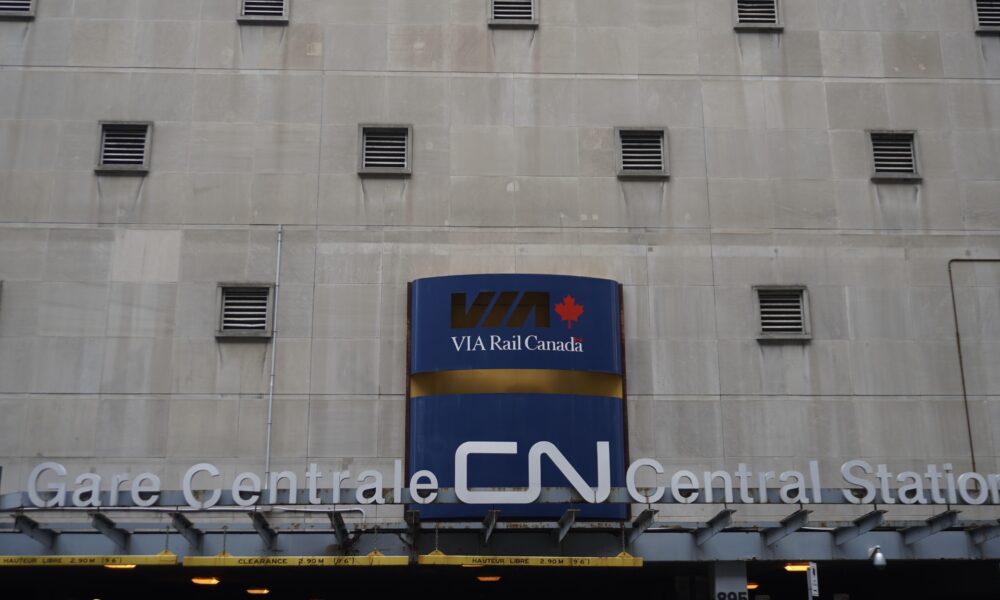
The unopened Outlook emails are piling up, and the number in your bank account is plummeting faster than your Frosh situationship lasted. You have already pondered banishing yourself to northern Quebec to start over as a lumberjack. Alternatively, head to Bar des Arts for $1.50 CAD beers and grilled cheeses! There’s nothing a sweaty basement full of Arts kids can’t fix. And if you’re still spiraling, students also get a 15 per cent discount on VIA Rail tickets. McGill wants you to finish your degree, but the SSMU is committed to helping you escape.

But before you change your legal last name to Bûcheron, remember that McGill offers free mental health support through the Student Wellness Hub.

Acceptance – Friday

It’s Friday, happy Friday! 

You’ve cried. You’ve crashed out. You’ve even considered beginning your chopping era. Somehow, you have also survived a crazy week full of first-years and wicked professors. Now you have the whole weekend ahead! Treat yourself to a free visit at the Musée des beaux-arts de Montréal—it’s a hard-earned reward. 

If you’re under 25, you have free access to the museum’s permanent exhibits all week. But here’s a reminder for the certified curious minds: Temporary exhibits are only free to visit the first Sunday of every month. Don’t get too excited and show up at the doors on a random Friday. You’ve reached acceptance, and we don’t want you to start your five stages of grief again.

Arts & Entertainment, Culture, Music

Remembering Oliver Jones

On Wednesday, July 22nd, Montreal-born jazz pianist Oliver Jones passed away at the age of 91.

Jones’ start in jazz performance could be described as that of a late bloomer, yet his brilliance at the piano was evident from a young age. In 1940, he played in public for the first time at the age of five for Montreal’s oldest Black congregation, the Union United Church. By the time he was nine, he made his debut in the nightclub scene.

During his youth, Jones’ neighbour Daisy Peterson Sweeney classically trained him in piano. Living 12 doors down from Jones in Little Burgundy, Sweeney and her brother, Oscar Peterson, helped Jones develop a musical style that merged classical fundamentals with uncompromising blues and swing.

Jones’ classical training shaped his predominant performance style during his 16-year tour as the creative director for the Kenny Hamilton Showband. Jones, with the group, toured in the Caribbean, the United States, and Puerto Rico throughout the 1960s and ‘70s.

When Jones returned to Montreal in 1980, he committed his time to jazz and studio recordings. Though the pianist was on the tail end of his forties, Montreal immediately appreciated his late, but welcome, arrival on the jazz scene. The year following Jones’ return, he made his debut performance at the Montreal International Jazz Festival (Jazz Fest). That same year, bassist Charlie Biddle and entrepreneur Georges Durst opened Biddles Jazz & Ribs, where Jones became a regular performer.

Jones’ first record—Live at Biddles Jazz & Ribs, released in 1983—immortalizes the nightclub, which ultimately closed under the name House of Jazz in 2020. In the performance, Biddle plays the bass and Bernard Primeau is on the drums, joining pianist Jones to form a trio.

The record’s first tune, “Mean To Me,” breaks into a swing beaming with enthusiasm and a noticeable touch of the Calypso influence that Jones inherited during his time abroad. Following the opening number, Jones transitions into the ballad, “It Might As Well Be Spring,” demonstrating his ability to play brilliantly melodic standards that are equally as breathable as they are monumental. The dichotomy in character between the two performances is a theme present throughout the duration of the set.

The record also features Oscar Peterson’s prominent civil rights tuneHymn To Freedom,” a piece Jones and Peterson iconically performed in tandem at 2004 Jazz Fest. Peterson remained Jones’ greatest inspiration throughout his career. Notably, Peterson is credited as a pivotal source of encouragement for Jones’ commitment to jazz performance; Peterson indebted much of his style to his classical background, and, following in his mentor’s footsteps, Jones channeled his technical precision and intentionality into an intuitive and volatile medium of music.

Jones’ 1984 record, The Many Moods of Oliver Jones, helped to actualize Peterson’s ambitions for solo jazz piano to receive equal reverence as solo classical piano. The record paints a comprehensive picture of Jones’ technique and his ability to pull listeners into a musical world embellished with elegant phrases and strides.

Though the mentioned recordings do not provide a comprehensive measure of Jones’ musical talent or ability, they emphasize the reality of who he was as a musician: someone who could play happiness in one measure, despair in the next, and do so in a way that was as honest as it was direct.

Jones’ playing was imbued with curiosity and excitement, and such emotions are transmitted seamlessly through the recordings he published and the countless performances he gave during his seven-decade-long career. His memory will be a cherished token in the history of Montreal, the musical identity of Canada, and the legacy of international jazz music.

Arts & Entertainment

What we liked this summer break

The Lunchbox: A Musical – Dylan Hing, Staff Writer

Over the summer, I caught the world-premiere musical adaptation of The Lunchbox at the Berkeley Repertory Theatre in California. Based on the 2013 film of the same name, the musical centres on Mumbai’s famously precise dabbawala food delivery system; in a rare mix-up, a lunchbox prepared by Ila (Kuhoo Verma) to win back her husband’s love is accidentally sent to retiring office worker Saajan (Manu Narayan). What follows is a unique friendship facilitated through letters sent by lunchbox.

Ila, stuck in a loveless relationship, and Saajan, alone and trapped in a mundane job, find themselves as pen pals, a premise which is simultaneously simple and fresh. The intricate, tightly-choreographed dances of the performance contrast sharply with Ila and Saajan’s loneliness. Early in the show, Ila, struggling to find comfort in her husband’s coldness, contemplates suicide in a letter to Saajan. Singing from her balcony, she questions, “Does it take courage to live, or does it take courage to die?” Ila considers whether her death would be courageous, but Saajan responds with the simple belief that it would be bolder to instead overcome loneliness. This mesmerizing story is one of courage—bound, one day, to reach the Broadway stage.

Sterling Point – Lia James, Contributor 

Every summer, we seek out media that connects us with the rapture of the season while also containing just enough drama to keep us engrossed. The August release of Amazon Prime Video’s show Sterling Point fills both of these desires. Sterling Point follows the life of New Yorker Annie (Ella Rubin) as she visits a fictional island where her deceased mother grew up, located in the Muskoka Region of Ontario. Over the summer, Annie encounters new friends, unexpected family, and buried secrets that will forever change her life. 

Sterling Point explores the bittersweet nature of uncovering an unknown past: The process can be painful, but it also helps reveal hidden parts of one’s being. While the show begins with Annie attempting to connect with her blood relatives, she creates a newfound family along the way, illustrating the beauty that emerges from making vast discoveries about her mother’s life. The show grapples with themes of queer love, class division, and grief, while also providing moments of comic relief to maintain emotional lightness throughout the series. 

If you are still in denial about the end of summer and wish to watch something that will make you think and laugh at the same time, then Sterling Point may be the show for you.

My Brilliant Friend by Elena Ferrante – Siena Torres, Contributor

This summer, I set myself the task of beginning the Neapolitan Quartet by the pseudonymous Elena Ferrante, a series spanning decades of the lives of two girls in postwar Naples. Recently named the best book of the twenty-first century by the New York Times and adapted to critical acclaim by HBO, My Brilliant Friend is unsurprisingly a masterclass in characterization. By the end of the novel, I was left feeling deeply intertwined with the characters’ lives. The novel is decorated with a cast of peripheral characters so large that I often found myself flipping back to the character list—even though its core focuses on the bond between Elena and her “brilliant friend” Lila as they grow from young girls into teenagers. 

While part of the novel is set in the beachside town of Ischia, My Brilliant Friend is not a light beach read. Ferrante refuses to hide the violence of the girls’ impoverished neighbourhood and the abuse they face from men and loved ones. The book forced me to consider a not-so-distant past when girls’ education was still in peril in the aftermath of fascist Italy. But what most gripped me in my reading of My Brilliant Friend was how Ferrante constructs a fraught female friendship marked by jealousy, resentment, and at times, tenderness.

Student Life

Your McGill program, your next cafe

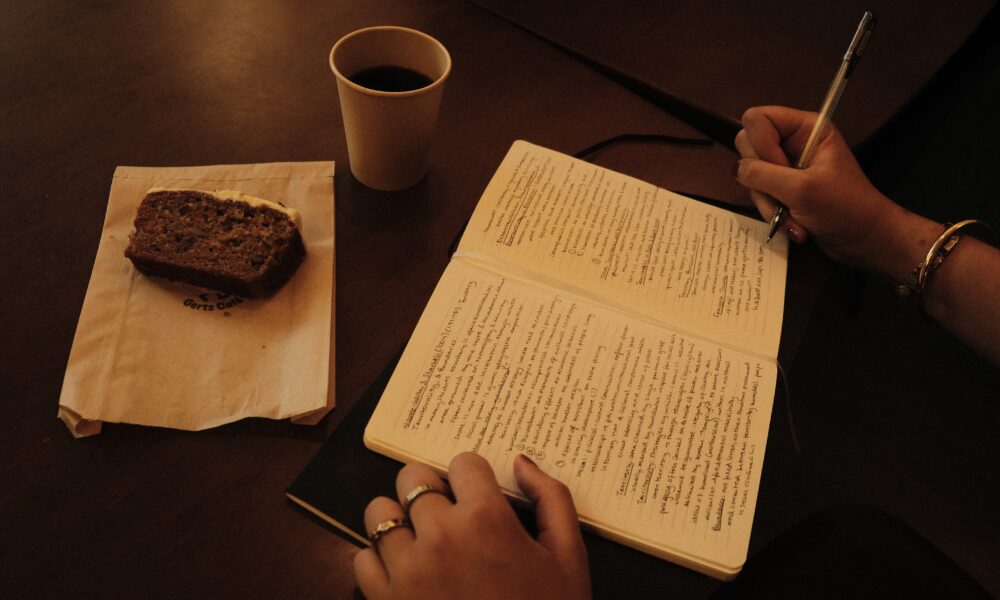
Coffee shops are an undeniable cornerstone of student life in Montreal. While our campus libraries are left hollow by the mass removal of books, cafes beckon us warmly with romantic decor. When we earnestly fight sleep during a three-hour lecture, cafes promise caffeine in all its finest forms. And when friend-group gossip requires a degree of anonymity, cafes cloak us in ambient noise, giving us the space to speak freely. But with new spots popping up seemingly every week, choosing your next cafe can feel like an endless scavenger hunt. Using categories most befitting a student paper, The Tribune recommends your next cafe stop, based on your McGill program.

Arts

In your time as an Arts student, you’ve likely had classes in almost every building on campus—except the actual Arts Building. With every passing semester, you’ve grown more and more accustomed to wandering down unfamiliar hallways and up questionably lit staircases in search of the correct classrooms, only to find abandoned dreams and the ghosts of TAs past. So, if there’s one thing this degree is preparing you for, it’s locating Savsav’s front door. 

Hidden inside an otherwise office-filled building, Savsav isn’t exactly a place you’ll stumble upon. First, you’ll need to find the entrance, and then navigate a series of corridors. But successful completion of this maze will reward you with something far better than anything found in the depths of the Stewart Biology Building. Discover Savsav and find a spacious study spot, equipped with seven-metre ceilings, abundant natural light, and matcha by the pitcher

Consider Savsav the perfect Arts cafe: lacking a clear path forward.

Music

In the lush jungle of Montreal’s music scene, Music students are some of the city’s most well-travelled explorers. It’s hard to deny that the vast majority of vibrant sonic discoveries are nocturnal in nature. From classical concerts to late-night DJ sets, musical moments are typically reserved for the night owls. But at Le Dépanneur Café, you can enjoy live music every day from 10:00 a.m. to 5:00 p.m. For almost 25 years, this cafe has featured up to eight acts each day, with performances ranging from Irish traditional music to jazz. This is a neighborhood spot where you want/to stay awhile, so check out the array of classic breakfast sandwiches that they offer.

While you’re there, take it easy on the musicians playing. You’re in Music—you’ve been critiqued enough yourself.

Science

Between the cell diagrams on your iPad, the bullet points in your notebooks, and the textbook you’re forced to lug around, you require study spots with ample table space. While many of Montreal’s cafes will relegate you and your screens to a single, overcrowded, work-friendly table, Café Parvis is perpetually poised to accommodate your sprawling study spread. Besides its conveniently large tables, this spot further differentiates itself with its menu, which includes all-day pizza offerings with toppings ranging from braised beef to courgette.

The mitochondria may be the powerhouse of the cell, but a personal pie can keep any Science student running.

Engineering

If you’re an Engineering student, then the new semester signals the impending doom of countless new group projects. Although The Tribune can’t secure you group members with time management skills or even ones with the decency to reply to your check-in texts, we can recommend a comfortable location for your group meetings. Café Falco, located in a sunny Mile End warehouse, is equipped with extra-long tables and plenty of seats to accommodate you and all your group members. 

And if the threat of academic failure isn’t enough to get your group together, perhaps Falco’s weekday lunch specials of onigiris, soups, and salads can serve as motivation.

Art, Arts & Entertainment

The Riffo Gómez brothers immerse audiences in a poignant exploration of belonging

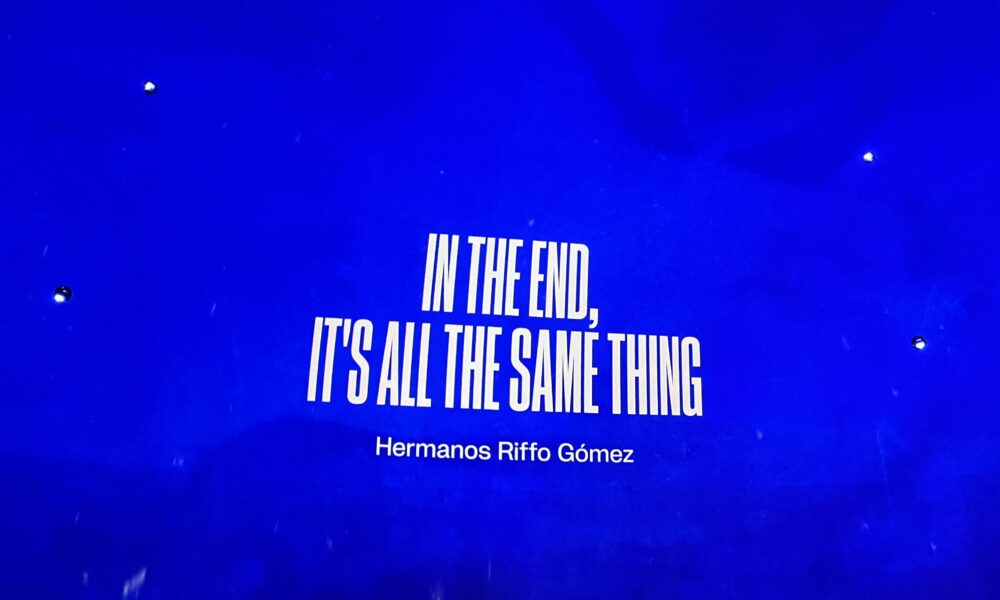
Brothers Cristo Riffo and Francisco Riffo Gómez explore cultural roots, memories of family, and the nostalgia around having moved away from their home country of Chile in their audiovisual experience In the end, it’s all the same thing, projected at the Société des arts technologiques (SAT) from July 28 to Sept. 18.

What started out as a live artistic performance project was partially adapted into an immersive 40-minute recording, projected in the looming dome-shaped theatre of the SAT—a space that allows you to melt into a beanbag and slip into a unique sensory universe.

Viewers first voyage into a 3D-modeled projection of the Andes. The globe presents a disorienting virtual reality (VR) world of deserted nature that weightless watchers drift through. Your gut twists with building motion sickness from the immersive journey; the camera traverses grass blades and canyons before leading you into a house nestled in the mountains.

Suddenly, the screen turns plain. Messy handwriting scribbles messages that blend English and Spanish expressions—“familia,” “hogar,” “Who are you?” The dome becomes a whiteboard, recording cultural confusion and nostalgic memories of the brothers’ native Chile. Cristo Riffo’s face appears against a blurry background, erasing those final words—“Who are you?”—with slow, swaying movements, his cheeks pressed against the screen to silence the attempt to question his identity.

From handwritten notes and verses by Chilean poet Enrique Lihn to a VR exploration of the inside of a soccerball, the project’s contrasting scenes retrace an intimate story of belonging through sensory immersion in multiple acts.

“It’s an opera [….] Every act is very well-defined and talks about different problems […] and then, by the end, it makes sense,” Francisco Riffo Gómez explained in an interview with The Tribune.

With its 93 speakers and eight video projectors, the theatre dome brings to life the brothers’ artistic partnership: While Cristo Riffo designed the visuals for the project, Francisco Riffo Gómez composed the music.

“My brother has been working with this concept of home, genetics, human relationships, and microorganisms in time. He has this theory that microorganisms behave very similarly to human societies,” Francisco Riffo Gómez said.

Cristo Riffo took videos of microorganisms interacting with each other under a microscope to feature them in the project. After seeing his brother’s visual work, Francisco Riffo Gómez composed the pressing electronic and experimental music that completes it. The project heavily relies on audiovisual synergy. According to Fracisco Riffo Gómez, the creative process followed a very instinctive flow.

“The microscope part where you see all of these things and then this repetitive music, it reminded me of a film called Koyaanisqatsi,” said Francisco. “It’s a very visceral feeling. In the first three seconds, I was like, that’s the music that has to go there.”

The creative duo does not shy away from incorporating digital technology into a personal performance rooted in intimate creation. They built In the end, it’s all the same thing not only from handwritten messages, but also using JavaScript, microscopic images, and 4K resolution cameras.

“We just don’t separate human sensitivity from technology. Technology is just something we use,” Francisco Riffo Gómez stated. “Every tool has its way of expressing a different idea of humanity. That was one of the most beautiful things about the show, in my opinion.”

The Riffo Gómez brothers let you float within a scene and sit with the feelings it evokes. The fact that the movie itself is a recording of a live, partly-improvised performance is what makes In the end, it’s all the same thing feel so alive. The film is only one take—one recorded version of the brothers’ multiple and mutable live performances.

“I think the role of improvisation was to make sure that [technological instruments] are [used only as] tools and that we’re not fixing anything in time,” Francisco Riffo Gómez explained. “We wanted to add our own quota of humanity [to every take] [….] It was really refreshing to see how [one live version] would change at a certain moment.”

News, The Tribune Explains

‘The Tribune’ Explains: How to vote in Quebec’s 2026 general election

The Quebec general election falls on Oct. 5 of this year, when voters will choose their representatives in the Quebec National Assembly. For many students and first-time voters, the voting registration process can be confusing. The Tribune breaks down what the Quebec general election is, who can vote, and how you can register to vote. 

What is the Quebec general election?

Quebec is divided into 127 electoral divisions, corresponding to the number of seats in the Quebec National Assembly. The political party with the most members elected forms government. A majority government is one which wins at least 64 seats, representing over 50 per cent of the seats. If it wins fewer than 64 seats, the leading party forms a minority government. 

The current Coalition Avenir Québec (CAQ) government is a majority government led by Premier Christine Fréchette. According to Leger polling, the leading political parties in this election are the Parti Québécois (PQ), the CAQ, and the Parti Libéral Québec (PLQ), while the Parti conservateur du Québec (PCQ), and Québec solidaire trail behind.

Students can stay informed on the provincial parties’ platforms by attending a debate hosted by the Students’ Society of McGill University in collaboration with the McGill Law Students’ Association and the Black Students’ Network. The event is open exclusively to McGill students and will take place on Sept 10. in the University Centre.

Am I eligible to vote?

There are four requirements for voting in Quebec: You must be 18 years old or older, a Canadian citizen, residing in Quebec since April 5 or earlier, and have a domicile in Quebec. According to Élections Québec, a domicile and a residence are different. 

The domicile is a voter’s primary address that is listed on pieces of government identification and used by the voter for tax reasons. Whereas one could have multiple residences where they live regularly, their domicile is the primary address used to practice civil rights. This means those who submit their taxes and list their Quebec address as their permanent address, and have been living in Quebec for at least 6 months, are eligible to vote. 

Students who are official residents of Quebec can vote on campus for the riding in which their domicile is located. Out-of-province Canadian students, however, can only vote if their domicile address is registered in Quebec.

Am I registered to vote?

In order to register to vote, your name must enter the permanent list of electors.Voters can apply to join the list on the Élections Québec website. 

To verify their registration on the list of electors, voters have until Sept. 21 to confirm with Élections Québec. Registration and address-changing remain available until then. Voters who have moved within Quebec may still need to change their information on the list of electors, as the list of electors does not automatically update a voter’s address upon a voter’s change of domicile.

Where can I vote?

McGill University will host polling stations where students and staff members can vote directly on campus. Advance polling stations will be organized in Redpath Library on Sept. 25, 29, and 30, from 9:30 a.m. to 8:00 p.m., as well as on Oct. 1, from 9:30 a.m. to 2:00 p.m. 

In addition to advance polling stations at McGill, voters have access to polls near their residential address throughout the province. Advance polling will take place on Sept. 27 and 28 from 9:30 am to 8:00 pm. On election day—Oct. 5—polling stations have the same hours of operation. McGill classes will be cancelled on Oct. 5 to account for the election.  

What should I bring to the polling station?

If you have registered to vote, your name should automatically be on the list of electors. In order for the polling station staff to verify your identity, you must have one of the following documents: a Quebec driver’s license, a health insurance card, a Canadian passport, a certificate of Indian status, or a Canadian Forces identification card.

Read the latest issue

Read the latest issue