


Latest News

Science & Technology

The harms of transformation diets

Content Warning: Mention of disordered eating, abuse

Diet and exercise: The cure-all for any health issue, right? Social media is smattered with self-proclaimed “fitness coaches” and “dieticians” who prescribe these quick fixes for anyone wanting to lose weight quickly. The truth is that these “transformation” diets prey on those with deep-seated body image issues and internalized fatphobia by promising a new body in a matter of weeks. However, such drastic diets can have extremely detrimental physiological and psychological effects. 

Those who engage in any form of diet become more vulnerable to developing an eating disorder as dieting itself can be considered a form of disordered eating. Extreme dieting can also lead to cardiac dysrhythmias—irregular heartbeats—and even cardiac death if not closely monitored. The heart uses fat, which is released as a result of an abrupt reduction in calories, instead of sugars for energy, putting more strain on the organ’s ability to function. 

Calorie counts and suggested portions are notoriously inaccurate measures of how much one should eat because all bodies are different. The counts on nutrition labels are based on averages that ignore the complexity of digestion and the diversity of each individual’s unique gut biome and metabolic rate.

As Chloé Fleurent-Grégoire, a registered dietician and MSc candidate at McGill explained, restrictive diets are not sustainable and lead to unhealthy eating patterns.

“In general, an individual who is constantly dieting will suffer from negative physiological consequences,” Fleurent-Grégoire wrote in an email to The McGill Tribune. “Retrospective data demonstrates that more than two-thirds of people who pursue weight loss don’t sustain a clinically significant weight reduction (i.e., five per cent of body weight) after five years. This may lead to individuals wanting to pursue weight loss once again, leading to the yo-yo dieting pattern.”

The yo-yo effect of extreme dieting is the process of losing and regaining weight in a cyclical manner. It can lead to micro-tears in blood vessels which can cause atherosclerosis—the hardening of the arteries—as well as other types of heart disease. Severely limiting calorie intake almost guarantees deficiencies of certain vital vitamins and minerals, leading to a less efficient immune system and weaker bones. Other consequences noted by Fleurent-Grégoire include loss of muscle mass, hormonal disturbances, chronic fatigue, interrupted hunger and satiety cues, and much more.

In addition to the physiological effects of these crash diets, dieting can trigger mental health issues such as depression and anxiety. Dieting, according to Fleurent-Grégoire, can create obsessive and dichotomous thinking about food as either good or bad with no in-between, and strict food rules, food guilt, or shame—all of which can lead to further disordered eating. 

Those who become obsessed with thoughts of food may also develop harmful behavioural symptoms such as skipping meals, partaking in exhaustive amounts of exercise, and binge eating. 

“Some people may attribute the “failure” to their poor willpower instead of the unrealistic food rules related to the fad diet,” Fleurent-Grégoire wrote. “This shame attributed to ‘failure’ may lead to reduced self-esteem […] a potential side effect of the binge-restrict cycle.”

It is also important to consider the source of weight gain or the motivations behind diets to begin with. While many of those looking to diet are doing so because of their own insecurities, trauma can also lead to weight gain that cannot be avoided with any quick-fix diet. Obesity is more prevalent in those, especially women, who have experienced physical or sexual abuse. However, because of the pervasive nature of fatphobia, those perceived as obese or characterized as being overweight by the problematic body mass index (BMI) may be prescribed extreme weight-loss regimens by physicians which do not address the underlying mental or comorbid physiological issues.

The normalization of crash diets is fatphobic, dangerous, and unsustainable for those looking to improve their overall health.

For those looking for a healthier lifestyle, Fleurent-Grégoire had several suggestions.

“Flexibility. Making sure to include foods you love and avoid dichotomous thinking,” Fleurent-Grégoire wrote. “[Cook] more often and eat with family and friends.”


Science & Technology, Student Research

NeuroLingo breaks down neuroscience jargon during TED-talk-like event

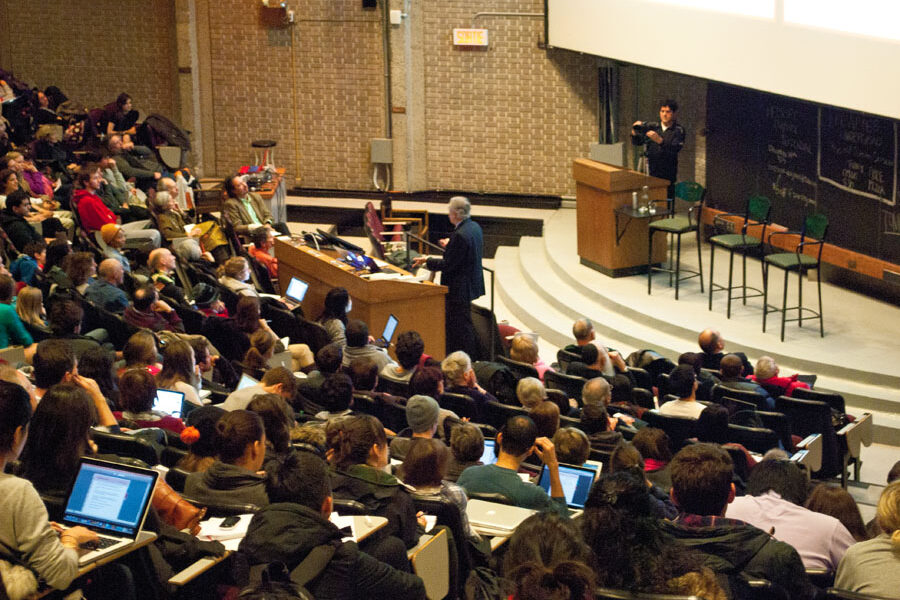
On Nov. 26, NeuroLingo hosted a free public neuroscience event during which researchers shared their ongoing projects. Founded in January 2020 by four graduate students in McGill’s Integrated Program in Neuroscience (IPN), NeuroLingo is a neuroscience outreach initiative with the goal of demystifying complex topics in neuroscience. The six speakers at the event were all neuroscience graduate students at McGill and Université de Montréal who condensed their months-long research into 10-minute TED-Talk-style presentations on topics such as depression, language, and child abuse. 

The common thread that united the six seemingly disjointed talks was science communication. NeuroLingo aims to make neuroscience accessible to those who are not necessarily scientists or familiar with technical jargon. Greater access to digestible science talks is crucial as they provide a platform where scientists can distill concepts down to their simplest forms. 

The first speaker, Gabriel Blanco Gomez, a PhD student at The Neuro, introduced his research about language deficits in children with autism by challenging the audience with philosophical questions about why language exists. Although Gomez was unable to provide all the answers to these inquiries, he imparted the key steps of scientific discovery, like making predictions, analyzing data, and drawing conclusions, that should be applied in the pursuit of answers to such complicated questions. 

“We still don’t have an answer about how humans develop language. But that’s okay. Because language is complex, not just genes and brain structures—[it’s] a lot more than that. It’s deeply rooted in culture and emotion,” Gomez said.

Sophie Simard, a master’s student in Naguib Mechawar’s lab, then introduced the process of neurogenesis, the birth of new neurons, and debunked the long-standing myth that the adult human brain does not generate new neurons. Her research aims to determine the extent to which neurogenesis occurs during adulthood. Hopefully, this phenomenon can be harnessed for new and more effective treatments for neurodegenerative disorders like Alzheimer’s disease.

Candice Canonne, a PhD student and Simard’s labmate, began her talk by noting that if she had to retain one positive aspect of the COVID-19 pandemic, it would be the increased attention mental health has received. She then delved into her research about Von Economo neurons, a particular class of neurons that are thought to be implicated in certain mental disorders.

“[Von Economo neurons] are present in key regions that have been linked to depression and schizophrenia, and [this] leads me exactly to the question I want to answer [by] the end of my PhD. Is there an alteration of Von Economo neurons in depression and schizophrenia?” Canonne told the audience.

Arsenii Prozorov studies neuroplasticity, the brain’s ability to adapt to internal or external stimuli, in relation to Alzheimer’s. To make his research as relatable as possible, Prozorov  explained neural plasticity by giving examples of daily activities, such as attending a social event and being physically active.

“The preventative measures that are recommended for now are much more effective than any of the current medication for Alzheimer’s disease,” Prozorov said.

To understand the strong correlation between child abuse and mental disorders, Claudia Belliveau, a PhD student also in  Mechawar’s lab, researches perineuronal nets (PNNs), which are composed of sugars and proteins that come together around neurons to form protective meshes against toxic substances. Belliveau’s research has suggested that child abuse leads to an increased number of PNNs.

“We hypothesize that abuse during this time where the brain is like soft playdough not only changes the way that neurons communicate but also changes the way that these nets develop,” Belliveau noted.

The final speaker, Hiba Daghar, discussed the importance of raising awareness about rare diseases. In her research, she characterizes rare congenital neurodevelopmental diseases, like glycogen storage disease type III, in different animal models to better understand the underlying mechanisms that would allow for more effective and targeted treatments. 

“Having this capacity to mimic specific genetic conditions opens the door to what we call personalized medicine,” Daghar said.

Out on the Town, Student Life

Dough, gravy, and seriously good baking at Ta Pies

Hope has arrived for the 70-odd Australasians at McGill. No longer must they carry Marmite in their purses to liven up lunches or frantically search Mount Royal for the most dangerous-looking critters to feel at home. Less than two kilometres away from campus, off Jeanne-Mance Park, sits a charming little shop called Ta Pies, with an array of offerings from the lands down under.

A modest terrasse greets customers, with regulars enjoying doughy delicacies in faux-wicker chairs. The small storefront is kitted out with a bold red-and-black colour scheme and a whimsical neon “ouvert” sign featuring a steaming pie. The tiny interior is crammed with homemade and imported Australian and New Zealander products and, puzzlingly, a towering shelf of Hot Ones’ sauces. Jars of appetizing sweets, from Tim Tams to fresh Lamington and Anzac biscuits, top the counter. Facing it is a freezer brimming with frozen shrink-wrapped Australian baked goods and a variety of drinks. For all your pantry needs, a nook nestled by the door holds everything from burger-flavoured chips and Milo powder to candy bars like Peanut Slab. Naturally, there are tubs of Marmite.

But, as this eatery’s name highlights, the real centrepieces are the pies, personally-sized and ready to go from a heated case next to the cash register. Don’t despair if your favourites are gone—the freezer and the case under the side counter have more that can be easily reheated at home. If you shop from the frozen pies, there are tons of additional flavours like Pepper Steak and Thai Curry Chicken, larger sizes, and even a 50-cent discount on each pie.

All pies feature the same blessedly versatile puff pastry dough, holding whatever it must while lending a buttery, flaky component to the flavour and texture profiles. The Classic Beef and Cheese is a concentrated blast of savoury richness, its cheddar and shredded beef combining into a powerful entity within the light-as-air pastry cloud. The Steak, however, can’t match up—chewy strands of meat are stewed to blandness, and adding mushrooms or cheese doesn’t help. Their final beef option is the incredible Ned Kelly (fittingly named after an Australian outlaw). Topped by a crackly layer of sharp cheddar, it consists of ground beef, chewy bacon, a creamy baked egg, a healthy amount of tangy barbecue sauce, and a mess of chopped vegetables for good measure. The pastry struggles, but it ultimately manages to hold together this otherwise lawless expanse of incongruously delicious sustenance.

Their only poultry option is the Butter Chicken, a brick-like mass of curry-tinged dough wasting no time in delivering a burst of warm spices when its crust is pierced. Whole lumps of breast meat and elusive vegetable bits in a thick orange sauce are spiced just enough to warm the palette without requiring liquid intervention. The Sausage Roll could replace a normal pie, a convenient scroll-shaped mound of laminated dough folded around a beautiful melange of spiced pork, beef, vegetables, and a touch of gravy begging to be wolfed down.

If all this talk of meat is tiring you, there are also a few worthwhile vegetarian options. The best is the Spinach, Ricotta, Mushroom, and Roasted Tomato—the classic Mediterranean combo ingeniously upgraded with the earthy bite of mushroom. The Curry Squash is less impressive, with a thick under-spiced layer of pureed gourd atop peppery, crunchy mixed vegetables. At $7-8 per pie, the overall value largely depends on which selections you make.

Rounding off the meal with homemade Australian desserts is essential, especially the dreamy Afghan Biscuit ($4.25)—a decadent lumpy disc redolent of cocoa. Topped by a swirl of rich chocolate icing, garnished with crunchy cornflakes and a walnut crown, its interplay of textures and flavours offset each other to create a rice crispy treat and whoopie pie’s love child. The Anzac Biscuit is simpler, a satisfying thick oat-sprinkled and coconut-filled golden round balancing between snappy and chewy. Just like everything at this gem, it’s warm and comforting, even for a North American like myself.

Editorial, Opinion

The Wellness Hub can’t solve McGill’s mental health crisis

Content warning: Mentions of suicide

Funded by a $14 million donation, McGill opened its Student Wellness Hub in 2019. Since its inception, the centre has been understaffed and strained by unreasonably long wait times for students seeking help. At McGill, there is an urgent need for accessible mental health services and resources: Over eight per cent of McGill students identify as disabled and an astounding 56.3 per cent of students reported having mental health disorders. As of 2019, 16.4 per cent of Canadian university students had seriously considered suicide. While it is critical to address the Wellness Hub’s marked insufficiency, the university must address the systemic shortcomings that both enable and foster a toxic academic environment.

Students should not have to turn to their universities to receive emergency care, but McGill must recognize that Quebec’s health care system is extremely underfunded, short staffed, and overwhelmed. Furthermore, racialized people are significantly more likely to be undertreated and mistreated in Canadian healthcare institutions. As a result, many McGill students have few other options than the Wellness Hub for affordable care. Yet, the Wellness Hub itself is not even equipped to help students in crisis who require immediate attention. Wait times for psychiatry appointments at the centre can be as long as two weeks for cases deemed urgent, and up to 10 weeks for others. The university has consistently reiterated that the Wellness Hub is not supposed to serve as a primary care provider for its students, but rather as a supplemental service that they have graciously offered. This, however, does not absolve the university from its responsibility to take urgent action.

At McGill, there is an endemic culture of celebrating competitiveness and academic achievement at the expense of mental health, and the university actively contributes to this culture. For instance, U2 Architecture students were informed, after registration had already opened, that they would be required to either take 20 academic credits this fall or delay their graduation by an extra semester. The university’s punitive final exam policy similarly exemplifies its unforgiving attitude. Students that seek more than one exam deferral must provide documentation, as well as a written explanation for their request, unless the student has COVID-19. If it appears that a student has not made an adequate effort to address the challenges they have been facing, their deferral requests can be refused. The austere and cynical language employed in the exam policy, underscored by unnecessary assumptions of bad faith, subjects students already wavering under the stress of exams to additional barriers. 

McGill’s mental health crisis must be examined at every level of the institution, starting with day-to-day interactions in the classroom. The COVID-19 pandemic has taken a psychological toll on university staff, as faculty workloads are increasing and general academic stress has been on the rise. The precarity of tenure-track professors’ occupational status creates a stressful working environment, in turn leading to unsympathetic and antagonistic interactions between faculty and students. Additionally, much like at most Canadian universities, Black and Indigenous faculty at McGill are systemically underrepresented, creating an isolating and discouraging climate for marginalized students on campus. Overwhelmed students of colour and queer students may feel less comfortable seeking academic accommodations from their professors than their straight, white, cisgender peers. Furthermore, rising tuition costs, food insecurity, and an ableist post-pandemic climate on campus have created a psychologically harmful environment.

Too much of the burden of accessing mental health services at McGill falls upon its students, and the networks that are supposed to accommodate students’ needs fail to do so. As such, the university must hire additional mental health professionals, while focusing on increasing capacity and expanding resources. The university’s refusal to acknowledge its role in the mental health crisis precludes any meaningful work necessary to combat the systemic dimensions of the problem. The Wellness Hub’s inadequacy is one urgent problem that has relatively straightforward solutions; however, the McGill administration and faculty must work to untangle its systemic web of toxic competitiveness, ableism, academic stress, and structural racism in order to make any headway in solving its mental health crisis.

Out on the Town, Student Life

Soaking up the holiday season at Le Grand Marché de Noël de Montréal

Montreal’s first snowfall brought with it the spirit of Christmas, lighting up Dollarama stores in Christmas decor and my tongue in the green and red of Christmas candy (yes, already, and no, I would not like to watch my sugar intake, Aunt Karen). 

As someone who has never celebrated Christmas and never been in Montreal over the holidays, I decided that this was my year. I would sit at home, binge-watch horrible Christmas movies, bake gingerbread people, trip over wires while trying to decorate a Christmas tree, and freeze to death in outdoor Christmas markets. I began with the final item on the list and dragged my friends to Le Grand Marché de Noël de Montréal at Quartier des Spectacles.

Walking on Ste. Catherine between Balmoral and Clark, we saw stalls decorated in green and red lights and a huge sign indicating that this was, in fact, the great Christmas market.  Hundreds of people were swarming between stalls that displayed goods ranging from warm clothing accessories and unique delicacies to scented candles and handmade woodcrafts. There were also fire pits in the middle, hot drinks, and crepe stands on the side, and an extremely pricey restaurant at the very end.

At the first stall, the vendor was giving out free samples of different kinds of wines, all of which left a tingling maple aftertaste. Intrigued but having sworn off alcohol, I asked my friends to taste-test the Maple Wine for me, and they all endorsed its unique flavour, recommending it to all wine fanatics.  

Next, I stopped at a handmade stone and wood jewelry stall, which sold delicate rings, rustic necklaces, and minimalist earrings on display. Kira Confections, wo-manned by Kira herself, has had a stall at Christmas markets for two years running.

“Since the pandemic has slowed down, so has the business,” Kira told The McGill Tribune

Nevertheless, she still enjoys it and is continuing to sell her work through Etsy. 

I was then drawn to a woman selling the cutest sewn gnomes. As it turned out, Nina Ahrendt, the vendor, also works as a project administrator at McGill and took up this unique hobby to help enliven the Christmas spirit. 

“I have a hobby of creating and sewing gnomes in all shapes and sizes for Christmas, to make sure the Christmas spirit is present in every home,” Ahrendt said. “I’m Danish and we have a great tradition in Denmark to decorate for Christmas.” 

Ahrendt has been setting up stalls at Christmas markets for the last five years and claims that she actually got lucky with COVID-19. 

“People couldn’t spend anywhere else [during the pandemic] so they actually spent money at the Christmas markets, but I think there is less money available this year.”

I then spotted a man with the kindest-looking face advertising some interesting confections, and although I was quite tired of walking by now, I knew I had to chat with him. Elias Masmoudi was selling handmade Tunisian sweets, a venture begun by his grandmother in 1972 that has continued with their family name. 

“We hand-made sweets and sold them for weddings, and then it got bigger, and we now sell them during Christmas and even other holidays, such as Ramadan. We have stores in France, Saudi Arabia, Morocco and Tunisia now,” Masmoudi told the Tribune

Though this was his first time setting up a stall in a Christmas market, Masmoudi has been selling the goodies himself since 2017 and claims the pandemic had helped its success. 

“In 2017, we started online and the online business got better with COVID, it didn’t get worse. 2021 was a great year and 2022 is now alright,” Masmoudi said. 

I asked if I could purchase a $10 sweet box and, after finding out I was writing for a student newspaper, he said he would add in some extra sweets. By the time I got the box, it was filled to the brim with delicious delicacies, bringing a smile to my face. Masmoudi, along with all the other vendors lining the Ste. Catherine walkway, really are spreading the Christmas cheer.

McGill, News

McGill instructors report inequitable employment conditions and academic precarity

There have been mounting outcries over poor labour conditions at Canadian universities as instructors and organizations alike point to problems such as low pay, overwork, difficulty being promoted, and lacking job security, exacerbated by a rise in contract-based positions. McGill, according to some members of the university community, is not immune to this so-called ‘academic precarity.’ 

As of April 2022, 76.3 per cent of teaching staff at McGill were on contract—a category that includes course lecturers, faculty lecturers, and adjunct professors, among others—rather than being tenure-track. Further, salaries for non-unionized staff range widely depending on faculty, program, and appointment. Salaries for unionized staff also vary according to these factors, but less so because they are regulated by collective agreements.

McGill Association of University Teachers (MAUT) president Renee Sieber, an associate professor in both the Department of Geography and the Bieler School of Environment, believes that academia has become a “seller’s market” as more people attain PhDs and qualify for teaching positions. She finds that instructors, even tenure-track ones, are sensing rising instability in their positions.

“If they do feel [precarious], they have to be a lot more cautious, risk averse, just keep their heads down, and do their research and not speak up for say, issues of academic freedom […] or dissent in other ways,” Sieber said in an interview with The McGill Tribune. “Or [they may feel that they] can’t do more service, like serve on committees, because if [they are] not trying to pump out research, you know, 80 hours a week, then [they are] going to be shown the door.”

Alexandra Ketchum, a faculty lecturer at McGill’s Institute for Gender, Sexuality, and Feminist Studies (IGSF), explained in an interview with the Tribune that faculty lecturers find themselves in a difficult position.

“Faculty lecturers are eligible after their contract is renewed for more than six years for permanence, which provides some stability but it is not the same as tenure and does not come with sabbaticals and as much research support and so forth,” Ketchum said. “So, while there are some mechanisms for some forms of stability that don’t exist at other institutions, there is a gap and hierarchy in terms of how the institution treats employees, in terms of what kinds of financial and material support is offered.”

Ketchum brought up that women, racialized, and queer instructors often end up doing more ‘invisible’ work, such as servicing their department or advising students, which is critical but less valued than research by much of the academic community. When it comes time for pay raises or promotions, these individuals are often overlooked. 

“There’s also an issue of respect and culture, in which there’s a way that non-tenure-track employees […] are treated as less worthy of respect and are often treated as less legitimate scholars,” Ketchum said. “Academia is very hierarchical and very prestige based, and so there’s a culture that can undermine a lot of the contributions of non-tenure-track scholars.”

While some academic staff at McGill—including course lecturers, teaching assistants (TAs), and now professors in the Faculty of Law—are unionized and, thus, protected by collective agreements, the vast majority are not. Though organizations like MAUT exist to advocate for non-unionized teachers’ pay, benefits, and rights, they do not have the same negotiating powers as a union.

Emily Benoit, U2 Arts, thinks unionization would benefit not only staff, but students as well. She pointed out, however, that the university seems dedicated to keeping labour conditions as they are. 

“I know that [with] the law profs, McGill threw everything they had at them to prevent them from unionizing. And that’s the law professors—they know the most legal stuff,” Benoit told the Tribune. “It makes all the other profs and all the other faculties […] scared of unionizing because, you know, they can’t necessarily deal with that [….] It would be better for the students because [a union would bring] better working conditions for the profs. So happier profs, happier students.”

Private, Research Briefs, Science & Technology

Hold your breath, make a wish and count to 2.5

Air pollution from industrial processes, cars, and even forest fires means that the air we breathe contains numerous harmful particles and debris. Fine particulate matter, known as PM2.5, are tiny particles in the air released by both natural sources and human activities. Since The McGill Tribune last reported on this fine particulate matter, PM2.5 has only garnered more attention.  Their name is derived from their 2.5 micron width. For reference, a rain droplet is around 10 microns in diametre. PM2.5 is not made of one chemical, but rather a mixture of different pollutants such as pollen, ash, aerosols, and fumes. These particles can be directly emitted by combustion reactions, such as the burning of fossil fuels, or formed through the reactions of different gasses interacting. But no matter how these particles form, PM2.5 poses a serious risk to our health

The microscopic size of PM2.5 means that these particles penetrate deeper into our lungs than larger pollutants, which are typically deposited in the upper respiratory tract. PM2.5 deposition can lead to inflammation of lung tissue and subsequent tissue damage. Short-term exposure to PM2.5 has been found to cause respiratory ailments, such as acute and chronic bronchitis. Long-term PM2.5 exposure is linked to premature mortality, especially among children and people with chronic heart or lung conditions. While the connection between high concentrations of PM2.5 and increased mortality is well established, the safe level of exposure is still being determined. According to a recent McGill study published in Science Advances, a safe concentration of PM2.5 is much lower than previously thought. 

Canada, compared to other countries, has relatively low PM2.5 levels, with a current average annual concentration of 7.1 micrograms per cubic metre. The limited presence of PM2.5 is due to stringent regulations in place for industrial emissions and coal burning, resulting in cleaner air than in countries with more lax regulations. Due to having low PM2.5 concentrations, Canada is an ideal place to study the effects of low PM2.5 levels on health. To study mortality rates related to this type of air pollution, McGill researchers used mortality data and lifestyle data collected in the Canadian census. 

“Our national census […] has been linked to tax records (for residential location) and mortality data,” Scott Weichenthal, an associate professor in the Department of Epidemiology, Biostatistics, and Occupational Health at McGill and lead author of the study, wrote in an email to the Tribune. “This allows us to assign people’s exposures to outdoor air pollution based on where they live and then follow people over time to see if people living in higher exposure areas have higher rates of death/disease.”

After controlling for factors like diet, smoking, exercise, and alcohol consumption, the researchers found that mortality in places with a low concentration of PM2.5 was significantly higher than previously thought. They estimate that an additional 1.55 million deaths worldwide each year are caused by outdoor concentrations of PM2.5. 

“Essentially, what we did is update […] how the risk of death changes with increasing exposure,” Weichenthal wrote. “Previously, the lower end of this curve was left undefined because of insufficient evidence at low concentrations, but we addressed this knowledge gap using a large study we conducted in Canada where PM2.5 levels are low. Our results suggest that globally PM2.5 likely kills more people than previously appreciated.”

The World Health Organization recently changed their guidelines for safe average annual concentrations of PM2.5 to below five micrograms per cubic metre. If PM2.5 levels can be reduced to meet this guideline, millions of premature deaths caused by these fine particles could be prevented.

McGill, News, The Tribune Explains

Tribune Explains: Course Evaluations

As the semester wraps up, many students may have heard in-class pleas and received emails asking them to fill out course evaluations. The McGill Tribune looked into how these feedback forms work and how their results are used by the university.  

How do course evaluations work at McGill?

At the end of every semester, any course at McGill that has five or more students is evaluated through the Mercury online platform. Course evaluations allow students to provide anonymous feedback to their instructors. The evaluation form includes sections for ratings and supplementary statements about the course, its content, and the instructor’s teaching style. Completing a course evaluation can take about five to 10 minutes depending on how much detail a student wishes to provide.

When is the deadline for students to submit course evaluations?

For most departments at the university, students are given a six-week window each semester to complete course evaluations. With approval from the Dean, instructors can opt to close course evaluations prior to the formal examination period, though the default deadline is when formal exams end. Students can consult the Mercury website to find out whether their course evaluation forms close on Dec. 6 or on Dec. 21. 

How are course evaluations helpful for professors and students?

According to McGill media relations officer Frédérique Mazerolle, the university uses course evaluations to determine the effectiveness of an instructor’s teaching style and to improve the future delivery of courses. Course evaluation results may also be used as a component of an instructor’s teaching dossier, which is a portfolio of an academic’s major teaching accomplishments. Mazerolle stressed that administrators and faculty rely on course evaluations for decision making and urged students to participate in the surveys. 

“McGill University values quality in the courses it offers its students,” Mazerolle wrote in a statement to the Tribune. “The more students fill out course evaluations, the more seriously feedback is taken by instructors and administrators.”

According to Mazerolle, each year 5,000 courses and 2,500 instructors are evaluated, but only 50 per cent of students fill out course evaluations.

 How can professors and students see the results from course evaluations?

Course instructors have access to the evaluation results only after they have submitted student grades for the semester. Though course evaluations are entirely anonymous and not linked to student ID numbers, this rule ensures that professors cannot be swayed by course evaluation feedback when grading students.

Students have access to numerical course evaluation results on Mercury or under the Course Evaluation Results tab on Minerva, though written responses are only made available to the instructors.  

How are course evaluations different from Rate My Professors?

Rate My Professors, a website where anyone can post anonymous reviews about an instructor, is another tool students may use to share their experiences with teachers from universities around the globe. Each review rates a teacher from “awesome,” “great,” “good,” “OK,” and “awful,” and ranks difficulty and quality levels of their courses on an ascending scale of one to five. 

Though the posts on Rate My Professors are not moderated or fact-checked, many students rely on the platform instead of McGill’s Mercury system. Susan Aloudat, U0 Arts, did not know about McGill’s internal course evaluations and, instead, consulted Rate My Professors when choosing courses for her first semester at the university. Though she will use both resources when finalizing her schedule for next semester, Aloudat is conscious of the biases of both platforms.“For example, I had a teacher that was like ‘if we can get to 60 per cent [participation in the surveys], then we will help you guys on the final exam’ so I did that but I didn’t have anything exactly pressing to say,” Aloudat told the Tribune. “Mercury would be more for very neutral responses. But if you want an opinion, then you’ll find that on Rate My Professors.”

News, SSMU

Legislative Council approves motion for SSMU to oppose COP-15

The Students’ Society of McGill University (SSMU) held its fifth and final Legislative Council meeting of the Fall semester on Dec. 1. Members passed a motion for SSMU to take a position against COP-15, a motion to approve a renewed version of the expired Free Menstrual Hygiene Products Policy, and a motion to donate $4,000 of winter clothing to Resilience Montreal. Throughout the meeting, members also raised concerns about the Student Support progress report. 

Ajamu Attard, CEO of Student Support, a for-profit startup which provides students access to Calm, Grammarly, and Udemy through an opt-outable fee, reported that 36 per cent of students had paid the fee and were using Student Support’s services. The Student Support fee is currently in a testing period of one year before it will be up for renewal in Winter 2023 for a five-year term. Attard told the Council that most of the funds the company receives from student fees are used to provide the three services, with a small portion being allocated towards marketing. 

SSMU vice-president (VP) External Val Masny questioned whether the collected fees, which amounted to approximately $200,000 this semester according to Attard, was the best use of students’ money, suggesting it should alternatively be used to pay for psychologists. Attard argued that Calm offers a “different value” for students.

“I know for some students they start their journey with Calm, maybe they’re not comfortable going on the phone, or they just need to get something that they can instantly use to deal with whatever they’re going through,” Attard said. 

Near the end of the meeting, Masny presented a motion for SSMU to take a position against COP-15, the 15th World Conference on Biodiversity which will be held in Montreal from Dec. 7 to 19. The motion obliges SSMU to encourage its members to mobilize against the summit and provide financial and non-financial support, such as a teach-in, for those who do so. It argues that the summit’s objectives fail to challenge the role of states’ and corporations’ extractivism in the global decline in biodiversity and “the continued privatization of natural resources.” 

During the debate period, Councillor Benson Wan, Councillor Emily Thom, and Councillor Sedami-Habib Djossou expressed concern about one of the clauses in the motion that would require to SSMU to support the “Coalition anticapitaliste et écologiste contre la Cop 15” as an unaffiliated political campaign. Unlike affiliated political campaigns, unaffiliated campaigns have not received a mandate from either the Legislative Council, a Referendum, or a General Assembly. 

“I have a little bit of hesitancy with supporting this coalition outright in all their numbers without knowing exactly what they’re currently doing and what they will do, especially if they are a public coalition,” Wan said. 

“Perhaps the values are good, but […] [fucklacop15.org is]  quite a provocative name for an advocacy group,” Thom added. 

Wan motioned to remove this clause, and the amended motion passed with 12 councillors in favour. 

Moment of the Meeting: 

In response to councillors’ concerns about affiliating SSMU with the Coalition against COP-15, VP External Val Masny asserted that the coalition is a central base of organizing against COP-15, noting that various student associations in and outside Montreal have offered support. They explained that it would be difficult for SSMU to fully adopt a position against COP-15 if the union was unable to support students involved in the coalition. 

Soundbite: 

“[Education students at UQAM are] currently facing repression by the administration. The administration once marked their classes as withdrawals to discourage further strikes. This is unprecedented and very dangerous to student democracy. As such, we’re in the midst of writing a letter of support to students mobilizing against this repression.” 

— VP Student Life Hassanatou Koulibaly speaking on behalf of Masny about supporting education students at the University of Quebec in Montreal (UQAM) who went on strike for five weeks beginning in mid-October 


A previous version of this article stated that 36 per cent of the McGill student body has not opted out of the Student Support fee. In fact, 36 per cent of students had paid the fee and were using Student Support’s services. The Tribune regrets this error.

Commentary, Opinion

Systemic neglect continues as Montreal’s houselessness crisis worsens

More than 3,000 people remain without a home this winter despite years of tireless advocacy from community organizations around Montreal. Almost half of Montreal’s unhoused population is Inuit, reflecting Quebec’s ongoing settler-colonial project. 

The city’s attempts at resolving the crisis remain inadequate and ineffective. In 2021, the city provided 1,550 emergency beds, created 10 new warming stations in different boroughs, and launched a program giving housing access to 200 people. Despite these efforts, houseless people in Montreal continue to tragically freeze to death. The city’s solutions seem to be nothing more than a ‘one step forward, two steps back’ plan, as the 14 shelters opened during the pandemic were reduced to three in the past year, compounding the shortage of emergency measures when there are no long-term ones in place. Although the provincial government has launched a $280 million investment plan for the next five years, this is not nearly an urgent enough measure to resolve Montreal’s long-lasting houselessness problem and shows that the city does not prioritize remedying it. 

A deeper dive into Montreal’s fiscal policy indicates that houselessness is not the city’s top priority. Mayor Plante’s $125,000,000 investment to build “the biggest park in Canada” as part of her “green deal” is not nearly as pressing as the houselessness issue, and it would take less than a quarter of that amount to provide permanent housing for those on the streets. Beyond this, the major increase of the Montreal police department’s budget to a total $787 million for 2023 ($63 million more than in 2022) is an absurdly unnecessary and ignorant allocation of taxpayer money. These funds, reserved for hiring more police officers, represent roughly 14 times more than what is invested in the city’s five-year plan to fight houselessness.

The city still engages in the brutal practice of evictions, such as the one planned for Nov. 10 near the Ville-Marie Expressway. The eviction was eventually delayed after dozens of protestors marched in solidarity, but the project is still ongoing and will displace an entire camp with nowhere else to go, to supposedly offer them better alternatives.

Though there are initiatives that offer short-term essentials for people in need, they cannot provide solutions for long-term structural problems. Mobilizing For Milton-Parc, a student-run organization that provides essential food and supplies, and the “Leave a coat” project in the Rosemont borough, are both examples of positive community-based approaches. Although these are important initiatives, they work to address the consequences of houselessness but cannot address the root causes of housing insecurity. The municipal government is failing at long-term initiatives and instead relies on band-aid measures. Meanwhile, community-based shelters, such as Resilience Montreal, stand alone by offering unfaltering life-saving services without sufficient government support. 

To bring the crisis to an end, the city must implement long-term programs such as affordable or transitional housing and harm reduction which will keep people in precarious situations safe this winter. If the municipal government truly cared about people experiencing houselessness, then they would divert funding to the social programs necessary to combat the systems that leave the city’s most vulnerable behind.  

The provincial and municipal governments must stop making excuses and finally take thoughtful action for its unhoused population, instead of subjecting them to violence. The burden of solving this crisis cannot continue to fall on the shoulders of community organizers and rather should fall on those of a provincial government that has more than enough resources to execute viable solutions. Unhoused populations need effective long-term support from the provincial and municipal leadership because coats may keep people warm for now, but they won’t provide the structural change necessary to save lives.

Read the latest issue

Read the latest issue