


Latest News

Arts & Entertainment, Dance

‘Why We Dance’ is a masterclass on the science of movement

From McGillian to award-winning documentarian, Nathalie Bibeau’s career is the answer to a question many Arts students dread: “What are you going to do with an Arts degree?”

Bibeau graduated from McGill in 1998 with a Joint Honours degree in history and sociology, before completing her Master’s degree the following year in history at the University of Toronto. After an internship with the United Nations Educational, Scientific, and Cultural Organization, she worked odd jobs, travelled, and met artists from around the world. Through those experiences, Bibeau realized that she could make a living as an artist, a career she once thrived in as a trained dancer and returned to as a documentarian. Her latest directorial project, Why We Dance, was produced for The Nature of Things—a documentary series examining the ways humans interact with nature. Why We Dance premiered on Feb. 25 on the CBC and will be available to stream on CBC Gem for the rest of the year. The documentary explores the intersections between science and art through dance—an activity we all do, whether we realize it or not. In an interview with The McGill Tribune, Bibeau described how her research on dance stretched her understanding of the art form. 

“It opened the floodgates of what is possible in terms of dance, and what I imagined dance to be,” Bibeau said. “I always felt like I was a born dancer. When I started researching, I realized it’s not an activity we choose to do—we actually are all dancers.”

Bibeau’s team interviewed a compelling cast of choreographers, psychologists, and neuroscientists to understand the science behind dance. The diverse roster includes Bronwyn Tarr, an evolutionary psychologist at Oxford, who describes how even before birth, fetuses follow certain movement patterns. Such trends continue into childhood as creatures explore imitation, synchronization, and play as a means of expression. Why We Dance reveals that these tendencies toward dancing are neither exclusively human nor random. They explain developmental variations in social and physical behaviour, mating habits in animal species, and stories of cultural tradition. Fitting each element into a 44-minute run-time may seem absurd, but Bibeau crafts a fully realized picture.

From flamingo sanctuaries in France to MIT’s Immersion Lab to oceanside choreography, the cinematography in Why We Dance is stunning. Bibeau captures impactful frames by marrying the natural world with the man-made, further pushing the narrative forward. A meticulous storyteller, Bibeau also articulated the importance of the post-production process.

“One of the editing styles I was trying to work in for this film is ‘match cut,’” Bibeau said.“I wanted the film to feel like one long conversation. You can do that through narration and the clips you choose, but visually, I wanted to feel that way too [….] You’ll notice if we leave one scene with a turning dancer, we come into the next with someone finishing the turn. It was extremely deliberate.”

Beyond its captivating cinematics, Why We Dance touches on how dancing has served as a survival tool for oppressed communities throughout history. For instance, Bibeau interviewed Sandra Laronde, who is from the Temagami First Nation and serves as the executive and artistic director of Red Sky Performance, a world-renowned company of contemporary Indigenous performance. Through her work, Laronde explores the importance of dance in Indigenous cultures, noting that it was outlawed in Canada from 1884 to 1951. 

“We’re supposed to dance for people who cannot,” Laronde explained in the documentary.

Dance is an empowering act, one that strengthens communities, connects us to the spiritual and natural world, and unites different generations to one another. When asked what viewers should take away from the film, Bibeau responded without skipping a beat: “I hope they dance.” 
McGill, News

Students raise concerns about McGill governance’s accessibility and transparency

McGill’s primary governing bodies, the Senate and Board of Governors (BoG), have recently been subject to criticism from students regarding issues of transparency and accessibility, with meetings being difficult to attend, and recordings not being made public, or only staying up for a limited period of time. Students have also raised concerns in the past about the structure, role, and member composition of McGill’s governing bodies.

Under section 4.7 of the Board of Governors’ Rules of Order and Procedure, no recording of the meeting is allowed before or after the fact—students must attend the sessions live. Moreover, students wanting to attend a Board of Governors meeting must email the Secretariat to secure a spot. 

Senate meeting recordings can also be difficult to access as only current McGill students and staff can attend meetings. In addition, meeting recordings are only made available for a limited period of time before being replaced by the next meeting recording. Some students, such as Bryan Buraga, former Students’ Society of McGill University (SSMU) president who represented students at the BoG and Senate and member of Democratize McGill, worry that the difficulty of accessing the meetings poses concern for transparency.

“[The Senate] has a webcast that is usually recorded, but it is only available for the month in which the meeting was held, and then it gets taken down and you can’t access it anymore,” Buraga said in an interview with the Tribune. “Then, only the meeting minutes are available to the McGill community, [but] the minutes are words on paper. You don’t exactly hear what senators say. The minutes are written up by the Secretariat who are beholden to the administration, so there are a lot of measures that the administration can use to be untransparent.”

In an email to the Tribune, the Secretariat detailed certain practices it uses to ensure McGill’s governing bodies’ meetings remain available to students and the wider community. The office also noted that both the BoG and Senate meetings are live-streamed—a practice that arose over the pandemic in an attempt to maintain pre-pandemic accessibility—and accessible by members of the McGill community. 

“Senate meetings are generally open meetings, meaning that they are open to observation by any member of the university community and accredited press, subject to limitations of space and good conduct,” the Secretariat wrote. “Exceptionally, an item on the Senate agenda may require confidential treatment, in which case the Senate will meet in closed session.”

Unlike the Senate, Board of Governors meetings are not made available online afterward. In their email, the Secretariat disclosed that they would look into the possibility of making BoG meeting recordings available after the meeting had adjourned.

However, concerns about governance extend beyond the question of their accessibility. Last November, a coalition between Divest McGill and Divest for Human Rights formed Democratize McGill, a student organization that calls for more student involvement and representation at the university’s high-level, decision-making bodies. Democratize McGill aims to address the disconnect that it believes exists between the McGill community’s values and the university’s administrative actions.

Democratize McGill is currently looking into potential BoG reforms—ranging from abolishing the governing body entirely to making its membership more inclusive of students, in order to better reflect the views of McGill students.  

In contrast to the McGill administration, the SSMU Legislative Council uploads audio-only meeting recordings to their website—a change from last year’s video uploads to YouTube.


“The pandemic has moved the Legislative Council into an incredibly more accessible model for all students,” SSMU Speaker of the Legislative Council Alexandre Ashkir wrote in an email to the Tribune. “Hosting the meetings online allows people who would usually not want to stay late on campus, for security or for comfort, to participate [….] It lifts an important weight and barrier of entry oftentimes neglected. Time is precious and not all are ready, or privileged enough, to be able to spend these hours on campus on a Thursday night.”

Laughing Matters, Opinion

So you’ve just met an Asian girl

So you’ve just met an Asian girl. There she is, assigned to your group for the final project in HIST 208, with her Hydro Flask and laptop stickers. She’s kind of cute. This could be your chance. Time to shoot your shot: Where is she from?

Oh, she’s Chinese. Yikes! What does she think of that whole authoritarian government thing? Plus, um—COVID! If you want, you can talk about the Economist article you’ve read recently. There was this interesting one about Eileen Gu last week. You know, the skier? Can you believe she’s competing on behalf of China? 

There is something weird about this girl’s face, though. Oh, she says she’s half-white. Explain to her that you’re practically more Asian than she is! After all, you’ve been using chopsticks since the first time your parents took you to Panda Express. Also, you’ve watched like all of Death Note. Was it her mom or dad that was Asian? The dad? Oh. That’s weird. 

Make sure to ask her if she speaks the language. This, along with her facial structure, will determine how authentically Asian she really is. Wow, she doesn’t speak the language that well? That’s funny, because you actually took Intro to Mandarin in college. Konichiwa! Just joking. Proceed to introduce yourself to her in Chinese, following the tones of a 7th-grade oboe recital. You’re probably HSK 7 at this point. In fact, it’s always been your dream to teach English to Chinese children. The one thing you can’t stand, though, is the animal cruelty. No wonder the whole bat thing happened! You’re an ethical vegetarian. Well, Buddhists are okay, you guess. Speaking of food, you’ve always been exceptionally good at eating really, really spicy food. Like, really spicy. Make sure to explain to her that you always drain the Sriracha bottle. 

Oh, Fujian cuisine is on the milder side? You don’t even know where that is. That must be some smaller city.

Anyway. Time to open up a new line of conversation. Has she seen the hate crimes in the news recently? Well, you’ve been against that stuff from the beginning. Racism is wrong. It’s important to you to be on the right side of history. When that shooting in Atlanta happened, you raced to your computer to tweet #StopAsianHate. And things have changed, haven’t they? Or improved, anyway. Not that you’re an authority. Tell her that you’ve been thinking a lot about solidarity with the Asian community. And radical empathy. You’re a big fan of Andrew Yang, actually. 

It really seems like you’re clicking! And she is super cute. Maybe she’s the one? Don’t get ahead of yourself, but remember: You could be the Mark Zuckerberg to her Priscilla Chan. Ask her for her WeChat (yeah, you’re culturally versed). If you really want to get the point across, maybe slide in a subtle reference to your dick size in the chat. Unlike, you know, *wink*— the competition. 

Oh. Huh. It looks like she’s talking to the professor. What? She wants to get reassigned? This is unbelievable. What does she mean, you “made her uncomfortable”? As far as you could tell, she’s been enjoying this conversation from the very beginning. I guess some Asian girls aren’t submissive after all. Uppity bitch. 

Anyway, the class is letting out now. You might as well get some sushi. Maybe you can explain to the waitress at the restaurant that Panasonic has actually always made your favourite line of toasters.

Out on the Town, Student Life

Know your neighbourhood: Little Burgundy

Little Burgundy, also known as la Petite Bourgogne or St-Antoine, is a small neighbourhood of around 10,000 people in Montreal’s Sud-Ouest district. 

Located around two kilometres southwest of McGill campus, Little Burgundy is only a 30-minute walk away. The area borders Shaughnessy Village and the 720 Highway to the north, Pointe-Saint-Charles and the Lachine Canal to the south, Griffintown and Guy Street to the west, and Saint-Henri and Atwater Street to the east. To reach Little Burgundy by public transit, take the metro to stations Georges-Vanier or Lionel-Groulx. 

Architecturally, the district is similar to other mid-density neighbourhoods in the Sud-Ouest, with multiplexes, red-brick facades, and minimal setbacks from the street. Former industrial buildings, now converted to apartments and condos, dot the canal and its surrounding streets.

In the early 20th century, Little Burgundy became the centre of Montreal’s Anglophone Black community. Nearly 90 per cent of men in the neighbourhood were employed by the nearby Windsor and Bonaventure rail stations, despite many of them having college degrees, as few other industries were willing to employ Black workers due to pervasive anti-Black racism. During the sleeping car era, most hires were porters; many described it as demeaning work that fixed the image of Black workers to the railroads. The transport companies provided housing in Little Burgundy for the porters, and as the area became more inhabited, Black-run services and facilities that catered to these workers and their families became concentrated in the area. Other businesses typically refused services to Black customers. 

In the 1920s, a decade now considered a golden period of Montreal’s Black history, there were numerous nightclubs and casinos that catered to white tourists looking to gamble and drink. Musical performances were a key part of the nightlife; Black musicians of the neighbourhood helped Montreal become one of the three main jazz hubs on the continent. Jazz clubs such as Rockhead’s Paradise hosted greats like Louis Armstrong, Nina Simone, and Sammy Davis Jr., while also serving as a launching pad for local talents like Oscar Peterson. 

But when the Great Depression spread to Canada, Little Burgundy was hit particularly hard and the neighbourhood was unable to hold onto the success of the 1920s. To make matters worse, in the 1960s, mayor Jean Drapeau launched a series of urban renewal projects on the island of Montreal. The city’s intentions in Little Burgundy were two-fold: First, they wanted to “modernize” the area with a “slum clearance” project, and second, they wanted to build a highway to connect the majority-white suburbs to the downtown core.

The project was immense and irrevocable. The city sent in assessors to photograph the buildings and identify which ones would be expropriated, and pushed the project through without consulting local residents. Little Burgundy’s homes, restaurants, and business were all expropriated. The final result was a gentrified neighbourhood devoid of the culture and community it had built over the years. Many Black families were displaced: In 1966, the Black population was over 14,000, but by 1973, it had dropped to only 7,000. 

The expropriations of the ‘60s had lasting consequences,, including the dispossession of key institutions that served the Black community. The Negro Community Centre, for instance, was a community hive and safe space where neighbourhood members gathered and immersed in art and music, but it closed in 1989 due to financial struggles and was later demolished. Black Montrealers have called for its revival in recent years. The Black community in Little Burgundy is not as numerous as it had been before the urban renewal programs, but community activists have made local efforts to highlight its past by renaming the streets and parks and installing public art honouring community icons.


Today’s Little Burgundy is quite different from that of the 20th century. In recent decades, the borough has undergone even more gentrification, kickstarted by the creation of a linear park along the Lachine Canal, the revitalization of the Atwater Market, and the redevelopment of former industrial buildings. Members of Little Burgundy today continue to fight the dispossession of Little Burgundy’s working-class population and the neglect of its history—one that is central to the story of Montreal.

Campus Spotlight, Student Life

The companionship and versatility of r/McGill throughout the pandemic

When the pandemic abruptly forced students into quarantine almost exactly two years ago, it brought with it the intangible consequences of physical distancing, such as increased feelings of isolation and loneliness. Unable to connect with peers in person, many turned to the internet to find connection. Though COVID-19 necessarily disconnected the McGill community in some ways, the r/McGill subreddit has offered displaced McGillians a place to find support. 

Students use the McGill subreddit in a myriad of ways. Though the online forum can appear chaotic––frankly reflecting a university student’s brain amid a busy semester––students flock to the page to find practical solutions, solid advice, and a community support system. For example, throughout the pandemic, many students who faced travel restrictions and were not able to physically learn about the housing market in Montreal relied on r/McGill’s dedicated thread on housing for first-hand experiences and opinions.

The forum helped students find lost Jimmy Choo wallets, facilitated advice on how to make friends after returning to in-person classes, and assisted international students in navigating Canadian taxes.

“I use the McGill Reddit page to simply get an overall sense of what the McGill community is feeling,” Thomas Houlahan, U2 Arts, said. “Being an anonymous forum website, people tend to feel very comfortable sharing anything regarding McGill, from questions about classes and exams to gaining career advice from alumni. Best coffee places, best food, best study spots, comedy clubs, live music near McGill.”

The pandemic has given r/McGill an especially meaningful purpose: Mental health support. 

“There are a lot of posts about people feeling extremely down recently, mentions of depression, anxiety, failing classes, losing hope, even suicidal thoughts,” Houlahan said. “I would like to say that of any other social media the McGill people are active on, Reddit is the most open-minded, caring, and appreciative.” 

It’s no surprise that students log on to feel less alone. Some have gone to r/McGill to rant about mistakes and seek reassurance that they will be okay. User u/Majestic_Lifeguard81, who wrote a post titled “Took every wrong turn and crashed into myself,” asked community members at the end, “Anyone else ever make mistakes like this?” Fellow r/McGill community members flooded the comment sections with positive reassurances and pieces of advice. In other situations, some students have made posts about overcoming personal struggles and then give peers advice themselves.

Students have also taken to the McGill subreddit to express frustrations with experiences in their classes or on campus as a way to hold their peers accountable. One user, u/WasabiConsistent1485, used the platform to reach out to a stranger they saw crying at McLennan and offered a word of encouragement. There is even good news Monday, which is all about spreading positivity within the community.

“After being subject to online school and going to university with many online classes, I was slightly worried about the community aspect,” Jonny Shoshani, U0 Arts, said. “But, with r/McGill, I was able to receive tips and advice on how to meet people and clubs to join, so I was able to leave the isolation of online living and embrace the McGill community I was entering.”

The McGill subreddit has been around for years, but, especially in recent pandemic times, it has been a prominent social hub for students. r/McGill provides a community-gathering spot for the lighthearted, but also for the serious—having a space to share feelings of isolation and receive support, or just recognition, can be crucial in the alienating environment of university. 

McGill, News

Ghania Javed clinches next AUS presidency after tight race

Arts students headed to the virtual polls from Feb. 21 to 25 for the Arts Undergraduate Society (AUS) Winter 2022 General Elections, voting on next year’s AUS executive council, as well as the arts representatives to SSMU and the McGill Senate. A referendum on constitutional amendments and fee renewals was also held over the same period. 

The 2022-2023 AUS executive council will comprise of Ghania Javed as president; Charlotte Gurung as vice-president (VP) Finance; Annie Costello as VP Social; Nicklas Rieck as VP Academic; AyeCham Myayh Pan Mort Aung as VP External; Britney Vu as VP Communications; and a VP Internal to be appointed by the outgoing council, per election bylaws. Javed, U2 Arts, won the presidency by a paper-thin margin of 0.6 per cent—the difference of four voters proving decisive amidst 114 (12.9 per cent) abstentions. 

President-elect Javed says awareness and transparency will be a core tenet of her tenure.

“Raising awareness of the services and key infrastructures that student leadership positions and student government offers to students is important,” Javed said. “I look forward to increasing transparency and approachability within the AUS and establishing initiatives that will leave a lasting impact on students.”

The voting period began with a technical stumble that nullified ballots cast within the first 15 to 20 minutes. Current AUS president Adin Chan, U3 Arts, explained that the ballot rerun was because the pen sketches—summaries of candidates’ main campaign promises—were missing from the first ballot. 

“This is really important because in an electorate of 8,000 people, the Facebook events and posters can only be seen by so many,” Chan said in an interview with The McGill Tribune. “The decision was made to cancel that ballot within 15 to 20 minutes of the poll being open—a very low number of people had voted—and make sure the pen sketches were incorporated. This makes it a fairer election, and people are more informed when they vote.”

As a result of the first poll’s annulment, eligible voters received upwards of six emails on Feb. 21, including error messages and new voting reminders, on top of the original communications. Chan explained that while excessive campus listservs and emails can sow irritation among students, they are one of the only channels student government can use to share information and resources about its services.

“We have these two competing things that people are upset about: One is that they don’t know what’s happening, and two is that they get too many emails,” Chan said. “It is sort of a multi-layered problem about student engagement while also being respectful of people’s inboxes.”

Student participation has been in steep decline over the past few years. AUS executive elections in 2017, 2018, and 2019 saw approximately 20 per cent of the electorate participating, a number that dropped to 13 per cent in 2020 and 2021. This year, it hit a record low of 10.2 per cent. Moreover, four out of the seven available executive council seats were uncontested, and there were no candidates for VP Internal. Charlotte Gurung, U2 Arts and incoming VP Finance, said the widespread apathy is of major concern.

“Students have become disillusioned with student government, particularly in light of issues regarding sexism, racism, and toxic work culture in student governments,” Gurung said. “I believe many students are hesitant to get involved. Having uncontested positions is reflective of much larger issues, [and are also] detrimental to democratic process and genuine representation.”

Chan agreed, adding that he hopes that the incoming AUS representatives will rise to the challenge. Although two years of online school have deprived current AUS executives of an empirical foundation for day-to-day in-person functions, the team was able to bring back offline elements and accomplish multiple projects. This year’s council renegotiated their Memorandum of Agreement (MoA) with McGill, launched an AUS store, redesigned the website, and amended bylaws to make governing documents more legible and accessible. 

“There is an impression amongst the student body that faculty associations or student government is a place where people come to bicker and enter scandals,” Chan said. “That stereotype in people’s minds does impact turnout, it does impact people’s association with student government. But I would challenge and say that there’s more to it than that [….] I think this year has shown that a team can overcome challenges and really deliver a strong service. I’m really happy with the momentum we can pass on.”

McGill, Montreal, News

McGill administration speaks to reconciliation initiatives and Mohawk Mothers federal court case

McGill’s Media Relations Office invited student media to a round table interview on Feb. 23 to discuss the progress of the university’s Indigenous Initiatives unit. In attendance was  Christopher Manfredi, provost and vice-principal (Academic); Dicki Chhoyang, interim director of Indigenous Initiatives; and Thomasina Phillips, associate director of Indigenous Student Success.

McGill’s Indigenous Initiatives unit was created in 2017 to implement the university’s 52 Calls to Action framework, which outlines the actions the administration has pledged to take to reconcile with McGill’s Indigenous community. As a subset of the Office of the Provost and Vice-Principal (Academic), the hub aims to supports Indigenous students in a variety of ways, including allocating funds for financial aid specifically to Indigenous students, facilitating student mentorship by hosting Visiting Elders at the First Peoples’ House, and implementing wraparound programs.

The unit works alongside the university to implement the 52 Calls to Action. One of the calls to action Phillips has been overseeing this year is Indigenous student retention and recruitment to the university.  

“There is a need for career shadowing, mentoring, and these kinds of relationships with Indigenous professionals,” said Phillips. “We have been developing, in partnership with university advancement, the creation of an Indigenous Alumni Association. We’re still early in the process.”

The unit also hosts round tables and uses other, more informal outreach channels to glean how to best support Indigenous students. In an interview with The McGill Tribune, Aneeka Anderson, U4 Arts, vice-president Communications of the Indigenous Student Alliance, and communications assistant with the Indigenous Initiatives unit, explained that these initiatives aim to shift the burden away from student activists. 


“I have heard from many Indigenous students at McGill that the university was not a place that they could thrive, it was not always safe, it was at times a place of burnout when students would try and create change on their own,” Anderson said. “What is important about [the 52 Calls to Action] is that it is no longer just students or just faculty […] pushing for this change in a grassroots way, it is the university taking this on. [Before], students would do this without pay [and] without praise, just unseen labor at the cost of people’s well-being.” 

Since its creation in 2017, seven of the 52 Calls to Action have been completed, with the remaining 45 in progress or yet to be started. When students questioned the seemingly slow-moving progress on this front, Manfredi responded that the university is making sure the tasks are completely fulfilled before labelling them as complete.

“Some things may have been completed in one part of the university, but not in another. So we are not going to check it off. It’s done until we’ve got it completed at the institutional level,” Manfredi said. 

When describing the plan’s updates thus far, the administration also pointed to the university’s efforts to increase the visual representation of Indigeneity on campus, like moving the Hochelaga Rock to a prominent position next to the Roddick Gates and raising the Hiawatha belt flag on the Arts building. For Phillips, representation goes beyond symbolic gestures.

“One of the things that we hear from Indigenous students is when they come to a colonial institution like McGill, they want to see themselves reflected in their environment,” Chhoyang said. “For us, what we’re doing with physical representation, it’s not about aesthetics, it’s about meaningful representation.” 

Concerns about the Mohawk Mothers’ federal court case against McGill, the City of Montreal, the Quebec government, and Stantec were also raised during the round table. Manfredi said McGill is willing to collaborate with Band Councils during the investigation into potential Indigenous unmarked graves on the Royal Victoria Hospital site

“The way in which we’ve approached those allegations that were brought forward, I think actually demonstrates the seriousness with which McGill takes reconciliation,” Manfredi said. “So I think it’s actually a positive reconciliation story.”

Responding to Manfredi’s comment in a statement to the Tribune, kahentinetha bear, a Mohawk Mother, contended that there are limits to McGill’s attempts at reconciliation, given that the Band Council is an imposed structure of governance for Indigenous peoples.

“Whether they realize it or not, the band council works for the oppressor and sits on the other side of the bar,” kahnetinetha wrote. “They are a department of the army. Their job is to keep the indians in check [….] If they want to reconcile with us then return our children back to their mother, sit with us and discuss the money they pilfered from our Indian Trust Accounts and return all the money. If they truly want to reconcile, sit down with our people and make agreements according to the great peace kaianerekowa.” 

For any Indigenous students seeking support or resources at McGill, reach out to Indigenous Initiatives at the Office of the Provost and Vice-Principal (Academic): 514-398-4177 or [email protected].

Science & Technology

A potential cure for HIV: Right under our belly buttons?

At the 2022 Conference for Retroviruses and Opportunistic Infections, Yvonne Bryson, an infectious disease researcher and professor at the University of California at Los Angeles, announced that a woman of mixed race had been cured of human immunodeficiency virus (HIV). After undergoing an umbilical cord stem cell transplant to treat her leukemia, the patient exhibited signs of HIV remission. Scientists are hopeful that this research on umbilical cord stem cells could shed light on a potential cure for HIV.

HIV attacks the body’s immune system and, when left untreated, often leads to acquired immunodeficiency syndrome (AIDS). There is currently no cure for HIV. The available antiretroviral therapy (ART) is, however, very effective at preventing the development of AIDS. This form of treatment stops the virus from multiplying in the body and reduces the viral load to very low amounts, making the virus virtually undetectable and impossible to transmit. 

“ART does not cure the person, since the virus remains archived in the body and will re-emerge if treatment is discontinued or interrupted or if drug resistance develops,” Dr. Bluma Brenner, an assistant professor in McGill’s Faculty of Surgery and an affiliated member of the McGill AIDS Centre, wrote in an email to The McGill Tribune

Although effective, ART has its flaws—according to the WHO, 27 per cent of those diagnosed with HIV could not access the treatment in 2020 Ideally, ART would be made more accessible and affordable until there is a surefire cure and roadmap to solving the HIV crisis.

The eye-catching term “cured” has been used extensively in the media coverage of this recent story, garnering widespread attention. In this case, to be cured of HIV meant that the patient stopped ART and remained in remission. Disease remission is characterized by a decrease or disappearance of symptoms. This woman is the third person reported to be cured of HIV, but remains under the watchful eye of physicians as remission relapse is possible.  

“The only [other] cases of HIV cure were the Berlin and London cases, [which] were isolated cases where individuals with cancer received whole body irradiation and who received stem cell transplants,” Brenner wrote.

These two individuals were both recipients of bone marrow transplants containing genetic mutations capable of stopping HIV’s viral entry into the body. However, this type of treatment is invasive and can have terrible side effects such as graft versus host disease, where the recipient’s body is attacked by donor cells. Umbilical stem cell transplants, in comparison, are less intrusive and therefore less likely to cause lasting damage. After the collection of donor cells, the recipient receives an intravenous injection containing the stem cells. Umbilical stem cells work similarly to bone marrow ones by blocking HIV’s entry into the host’s cells, which stops the disease from progressing. Why these umbilical stem cells work so well is still unclear. 

The patient’s recovery was remarkably smooth after the stem cell transplant, making her a novelty amongst those cured of HIV and rendering umbilical stem cells that much more of an attractive option to researchers looking for cures. In addition to her health rebound, she is also the only woman and person of mixed race to be cured of HIV with stem cells—two firsts that could be significant for researchers when investigating a cure.

Her biological sex and race are important because there are very few HIV trials that include women at all, let alone women of mixed race. Fifty-three per cent of HIV patients worldwide are women, and of these women, most are non-white. The disease is especially prevalent in developing countries due to systemic factors such as poverty, lack of access to health-care services, and lack of information on the prevention of spread. Many of these HIV patients are also at a much higher risk of developing AIDS because of compromised immune systems from prior infections. To understand how the disease could be treated universally, it is vital that people of diverse backgrounds are included in cure trials. 

A cure must work for everyone, regardless of race or biological sex, to bring an end to the HIV/AIDS crisis. That being said, it is unlikely that umbilical cord stem cells will be the be-all, end-all cure: Several unavoidable factors complicate the cure, such as ethical issues regarding the acquisition of umbilical cord blood, the overall cost of stem cell transplants, and the complex task of finding the right donor

So, while this case is indeed important scientifically, it is perhaps too specific to a particular set of conditions to inspire a universal umbilical stem-cell cure. But as always, more research needs to be done. 

“One needs to have a cautionary note,” Brenner wrote. “There was a Boston patient and a Minnesota patient who had [a] similar treatment, underwent remission, and experienced viral rebound.” 

Although the news of this cured woman is boosting morale amongst the HIV-affected community, a universal cure still seems far out of reach. According to Brenner, it is not possible to use umbilical stem cells to treat all HIV patients. 

“The mass media loves the magic bullet, the instant cure,” Brenner wrote. “There is no HIV vaccine in the foreseeable future.”

Research Briefs, Science & Technology

Predicting coma outcomes with a high level of accuracy

Treating unconscious patients is a real challenge for physicians. For example, when treating patients with brain injuries, doctors and family are often faced with the decision of either pursuing aggressive treatment or switching to an end-of-life care approach. However, because patients are often unable to communicate, making such decisions is extremely challenging. 

Being able to accurately predict whether a patient will regain consciousness would therefore be an invaluable tool for clinicians. Dr. Stefanie Blain-Moraes, an assistant professor in the Faculty of Medicine and Health Sciences at McGill, and a member of the Brain Repair and Integrative Neuroscience Program at the Research Institute of the McGill University Health Centre, is developing a test that can predict whether a patient is likely to recover within the following three months.

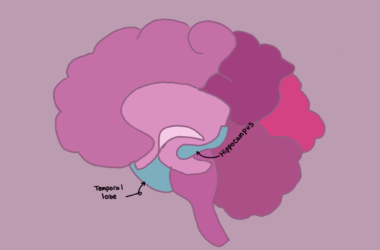
The test uses propofol, a drug used by anesthesiologists in the operating room to sedate patients. When conscious patients receive propofol before a surgery, their brain networks are reconfigured, marking the transition between conscious and unconscious states. The reconfiguration can be observed with an electroencephalogram (EEG), a recording of the brain’s electrical activity which anesthesiologists can then use to monitor their patients’ brain activity after they administer propofol. According to Blain-Moraes, this is done to prevent intra-operative awareness, an often traumatic experience where a patient regains consciousness during a procedure or later recalls what happened during anesthesia. 

Blain-Moraes and her team built their test around this phenomenon of brain network reconfiguration in response to propofol. They administered the drug to patients with disorders of consciousness, including coma patients, and looked at their brain’s responses. They hypothesized that patients who undergo a reconfiguration similar to awake patients, such as those receiving propofol for a surgery, would recover consciousness within three months. Indeed, it would mean that their brain is responding to propofol in the same way that a conscious patient’s brain would—a sign that means that they will likely regain consciousness soon. However, patients who do not undergo this reconfiguration would likely remain unconscious.  

Astonishingly, preliminary results have shown that their predictions were correct. They developed an algorithm that calculates the amount of reconfiguration that appears in the EEG after administering propofol, resulting in a number called the Adaptive Reconfiguration Index. There was a linear separation between the indices of the patients who regained consciousness after three months, and those who remained unconscious. In other words, three months after performing this test, patients with an index greater than zero had regained consciousness, and those with an index smaller than zero had not. 

This study, however, is only based on a small patient pool. Blain-Moraes, who has been named among the world’s top scientists under the age of 40 by the World Economic Forum, is currently co-leading a much larger study to confirm these results. The study’s goal is to recruit 300 participants to confirm the accuracy of the Adaptive Reconfiguration Index in this larger sample. But even if larger studies support their findings, the system still needs to be refined before it can be used in hospitals. The study used advanced, laboratory-grade EEG devices, but many hospitals do not yet have access to this technology. The index should thus be adapted to make sure it is still accurate when using hospital-grade EEG devices. 

“It is still a laboratory technology, not something that can be used in the clinic,” Blain-Moraes said. “The software should be so easy to use that you just drop the EEG into it, and it automatically gives you the index.” 

If the Adaptive Reconfiguration Index is adapted for use in a hospital setting, it could greatly improve the care of patients with disorders of consciousness. The index could be an important tool for physicians, and has the potential to help inform better clinical decision-making, and ultimately, better patient outcomes. 

Student Life

From 1968-2022: Accessing birth control as a student

For many McGill students, university is a time of exploration. And yet, many students struggle to find adequate resources to help them navigate their sexual lives. Unfortunately, barriers to accessing comprehensive resources is nothing new. Since the 1960s, McGill students have been actively working to fill the gaps, creating sexual health resources for their peers. 

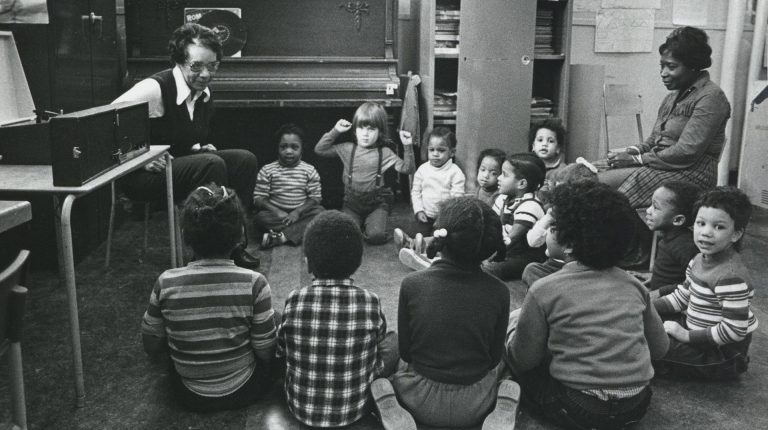
It all began in 1968 when McGill’s Student Council passed a motion to form a Birth Control Committee in order to address the lack of sexual health resources available to the McGill community. From this committee, Donna Cherniak and Allan Feingold created the Birth Control Handbook—a comprehensive guide to sexual health, contraception, and anatomy for university students. Its first edition began circulating in 1968, prior to the Omnibus Bill of 1969 which legalized birth control and decriminalized abortion across Canada. Cherniak and Feingold laid the groundwork for activists who came after, with substantial change eventually taking hold not only at McGill, but at countless universities across North America.  

The 1968 birth control handbook and its three subsequent editions were integral to keeping students safe. However, over 50 years later, adequate sexual health and contraception resources is still lacking. To honour the incredible work of Cherniak and Feingold, the Tribune has compiled some sexual health resources students can use in 2022.

  1. The Wellness Hub

For those looking to get started with contraception or even renew a pre-existing birth control prescription, the Wellness Hub can help. The hub is home to a variety of resources, offering wellness programming to all students and consultations with nurses or doctors and referrals to off-campus specialists. However, appointments fill up quickly, so we recommend calling at 8:30 a.m. on Mondays to snag a spot. 

Services: Consultations for STD and cervical cancer screening, IUD and Nexplanon insertion and removal, as well as access to sexologists—mental health professionals who offer sexual health support in a safe and judgement-free space. The hub’s sexologists can offer support for concerns related to coping with an sexually transmitted infection (STI) diagnosis and communicating diagnoses with partners, BDSM practices, sex work, pregnancy, contraception, and abortion. 

  1. Dialogue and Maple

Both international and out-of-province students also have access to several online telehealth resources that connect students to appropriate health-care professionals who can offer medical advice from the comfort of students’ own homes. Dialogue is covered by the SSMU Health Plan for in- or out-of-province students, whereas Maple is covered for international students under the International Health Insurance Plan. 

Services: Nurse or doctor consultations for contraception, prescriptions, STD screening, access to sexologists, and referral to in-person resources. 

  1. Head and Hands 

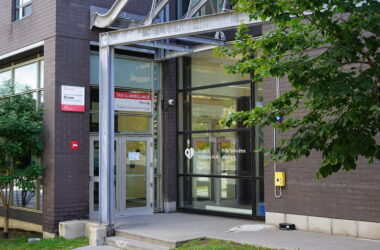
Head and Heads is an organization located in the Notre-Dame-de-Grâce neighbourhood that offers physical and mental health resources to youth ages 12-25. Their mission is to provide youth with the resources they need to make informed decisions about their bodies. 

Services: STI testing for young adults aged 12-25, regardless of sexual orientation, gender, or insurance status.

  1. Montreal Sexual Assault Centre 

The Montreal Sexual Assault Centre is a safe, judgement-free organization that offers services to survivors of sexual violence. Any survivor over 18 years of age can go to one of their four locations across Montreal, even without an appointment. 

Services: Medical examination, STI testing, forensic samples, medical treatment and follow-up, psychosocial support, and information on police and legal procedures. 

Whether in 1968 or 2022, sexual health is an important part of wellness. If you’re looking for other resources or somewhere to go off-campus, you can visit www.mcgill.ca/wellness-hub/campus-care/ for more targeted services and locations. 

Read the latest issue

Read the latest issue