

Latest News

Arts & Entertainment, Books

‘Orcs in Space’ is bloody cute

Fantastical bloodthirsty main characters? Check. High-speed space-chases? Check. Modesty? Not quite. Orcs in Space, Justin Roiland’s new graphic novel published by Oni Press, features 100 pages of amusing, carefree adventures in an uncanny outer space backdrop, all illustrated by Montreal-based artist François Vigneault

Slated to be the first volume of many, Orcs in Space follows three goblin ruffians who, by a stroke of luck, obtain access to the galaxy’s most technologically advanced spaceship and its A.I. operator—who eventually becomes their close companion and confidant. Gor, Kravis, and Mongtar are not afraid to spill blood—and other fluids—on the run in this brash but comedic space odyssey. Alongside these non-traditional heroines stands an array of enemies and allies as diverse as the stars in the sky. Cyborgs, pirates, and tentacled seductresses beware. 

Vigneault’s illustrations leap from the page. Loaded with vibrant hues, his cartoony style soaks the novel’s characters and settings in gaudy, unmoderated detail. Such creativity reigns without restraint throughout Orcs in Space: Every scene, whether it be a bar fight at “the hippest club in the galaxy,” or a laser-blaster shootout with “Space Rats,” presents a smörgåsbord of details that keep the reader engaged and amused. 

Orcs in Space secures the reader’s laughter as if holding a knife to their throats. Each protagonist—one little, one big, and one extremely bloodthirsty—fills a different conversational niche, keeping the plot animated and humorous. Ironic and self-referential Gen-Z comedy bleeds into the realm of the uncanny and bizarre; zany and avant-garde plot twists remind the reader that the story is, literally, out of this world. Jokes leave the reader constantly gasping for breath.

Just as the story takes place in many weightless environments, Orcs in Space makes no claims of having gravitas. Its tight plot and eccentric graphics provide a purely fun and brazen read that will have the reader turning pages at light speed to see the next dismemberment. However, the narrative’s easygoing atmosphere does not override artistic integrity; on the contrary, it bolsters it. The novel presents aesthetics, characterization, and plot development with expertise. Readers may be just going for a joyride, but they should still buckle their seatbelts. 

Volume two of Orcs in Space is currently slated for a February 2022 release. Vigneault’s other works include Titan (2020) and 13e Avenue (2018).

Chill Thrills, Student Life

Falling for Montreal

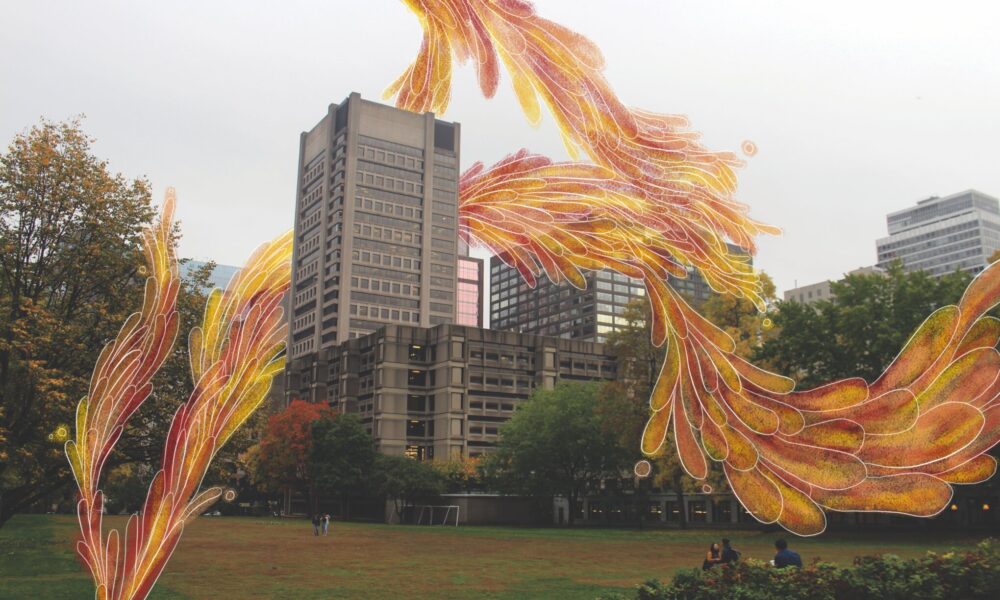
With a winning combination of abundant outdoor activities and cultural events, Montreal thrives during the fall season. The McGill Tribune has compiled a list of seven ways to enjoy the city this autumn—none of which include pumpkin spice lattes.

1. Go apple picking

Though there will be no apple picking at Macdonald campus this year, other farms nearby offer this same iconic fall experience. Among these are Dunham Fruit Paradise in Dunham, Apple Heart orchard in Frelighsburg, and Verger Denis Charbonneau orchard in Mont-Saint-Grégoire, all an hour out from Montreal. When you get home, bake your apples into a delicious pie and pair it with a delightful autumnal recipe.

2. Explore the Gardens of Light

Though the Botanical Gardens are breathtaking at any time of the year, the same location houses the breathtaking Gardens of Light until October 31. Featuring hundreds of colourful silk lanterns in the Chinese garden, this attraction provides the perfect atmosphere for a fall walk. 

3. Have a fall picnic

With the leaves changing colour and filling the city with golden hues, fall is a great time to explore Montreal’s parks. If you’d like a more active walk, hike up Mont Royal. Consider climbing to the top to watch the sunrise at the observatory or the sunset from this lookout point. Other beautiful spots to visit include Parc La Fontaine or Parc Jean Drapeau, where you can look out over the city. Bring along a blanket, some snacks, and some sweet apple cider or this rich mulled wine for the ultimate picnic experience.

4. Attend a spooky event

Spooky season is officially upon us, along with a multitude of Halloween-themed events. If you don’t mind driving, visit La Ferme Forget’s corn maze in Laval, which is open at night from 6 to 11 p.m. For those who prefer to stay in the city, a Haunted Montreal ghost tour is sure to give you chills. Alternatively, head over to St. Helen’s Island for La Ronde Fright Fest, a festival that takes place every weekend from October 2 to 31, to delight in haunted houses, plays, and rides. 

5. Get ready for Halloween at a local thrift shop

If you’re looking for a unique Halloween look but don’t want to break the bank on a costume, try shopping for your costume at a thrift store. Lots of thrift stores close to McGill and offer a wide selection of vintage items. Eva B also notoriously stocks up on Halloween costume items close to the end of the month. However, if a traditional costume doesn’t appeal to you, try out one of these McGill-themed choices, or an even more obscure costume option from the Tribune archives.

6. Stock up on pumpkins 

If you’d like to add a splash of seasonal decor to your apartment, consider going pumpkin picking. Les Citrouillards is a pumpkin patch in Saint-Eustache, only a 35-minute drive from McGill. Carve out creative designs or whip up a pumpkin pie. Funk and Pumpkins, running from October 1 to 31 at the Botanical Gardens, also showcases a large variety of plants from the squash family, and hosts a variety of other spooky activities. 

7. Bask in fall flavours at a local market

Take the metro or BIXI to Jean Talon Market to get your fix of fall produce and other seasonal foods. If you’re keen to head in the other direction, check out Atwater Market. Or, if you’d like to stay close to campus, pay a visit to McGill’s very own farmer’s market. Vegetables in season include squash, turnip, and rutabagas, among others. When you get home, try out one (or all!) of these nine creative takes on squash recipes

Campus Spotlight, Private, Student Life

A feathered allure: Flocking to McGill’s birding community

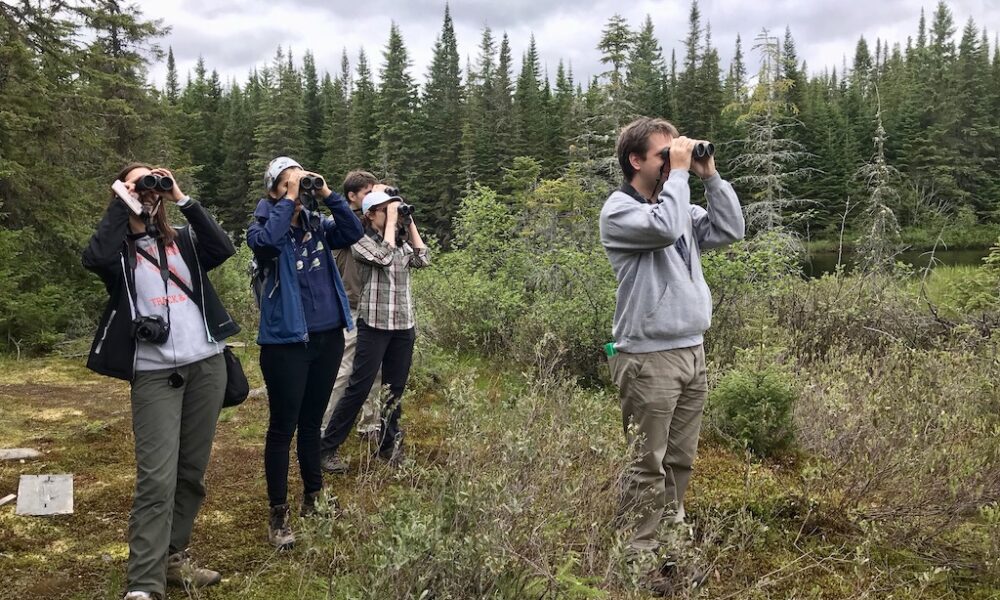
The founders of the McGill Students’ Birding Club (MSBC) met six years ago while taking WILD 420, an ornithology course at McGill. Since the club’s creation, birders of the McGill community have had a place to congregate and share their love for our feathered friends. 

On the club’s Facebook group, members share photos and videos of their sightings as well as news on conservation threats to local bird habitats. Members sometimes request the community’s help in identifying a certain species spotted outside their window or a specific high-pitched call heard on a hike. A few months ago, one member posted an audio recording of bird sounds they recorded on Mont-Royal and said they planned to use it in composing a piece for the McGill Symphony Orchestra. 

One aspect that unites those who flock to the bird-watching community is a curiosity for the environment, explained Anthony Zerafa, M.Sc.’22 and one of the club’s four founders.

“I’ve always had a deep fascination in the natural world, not just birds,” Zerafa said. “[Bird watchers] are interested in the world around them and want to learn more.”

With such an appreciation for the wild, many bird watchers are either already involved in environment conservation efforts or have become involved through birding. 

“When you start to appreciate and learn about the wildlife that can be found around you, you then want to ensure that that wildlife is protected,” Zerafa said. “You want the place you like to go birdwatching, where you may have had many fond memories, to continue to be a good habitat for the birds.” 

After an excursion, birders will often post about their experiences and list the species they spot, taking care to note rarities. Though a successful birding trip requires patience, quiet, and more observance than action, the excitement lies in the accumulation of experience and knowledge. 

“It really can be overwhelming at times when you first start out, but once you start to get a sense of the different birds that are in the environment and what you can see at different times of years, it quickly becomes addictive,” Zerafa said. “It’s very much like Pokemon Go, but in real life.” 

Even as someone with no birding experience, I was reeled in by the passion and flair with which the bird watchers recounted their sightings. As each encounter is unpredictable, the accounts can resemble action adventures, keeping both the birder and reader hooked. 

“Guess it’s time to head home,” one member wrote in a post shared to the Facebook page. “But no! The surprise: A ring-necked pheasant saunters out of the nearest shrubbery, to hang with his buddies the Fox sparrows. Much celebratory dancing.”

In the U.K., birding’s allure is only sometimes a relaxing pastime—other times, it is channeled into aggressive fervor. British twitching, extreme competitive birdwatching, leads to fierce rivalries, “twitcher madness,” and even tricks of sabotage. 

However, for McGill’s community of bird watchers—and for most elsewhere—the hobby remains rooted in a communal appreciation of the vast number of species waiting to be admired. 

“I mean, who cares in reality, if you’ve seen the most birds,” Zerafa said. “It’s mostly just personal competition, trying to challenge yourself to see as many species as possible.” 

Prior to the pandemic, the club hosted weekly bird watching outings and annual day trips to farther birding locations, including Amherst Island in Kingston, Ontario or Victoriaville, a two-hour drive from Montreal. They hope to resume excursions in the upcoming weeks. 

Beginner’s Guide to Birding in Montreal 

Locations

Montreal Botanical Garden: The Garden’s diverse mix of habitats attract a large variety of species and is free to visit during the winter months. 

Mont Royal Cemetery: The Cemetery’s many fruit trees make it a prime spot for bird watchers. 

Morgan Arboretum at MacDonald Campus: The Arboretum has one of the highest numbers of breeding species on the island. 

Tools 

Binoculars: Scan for movement, then train your binoculars when you believe you have spotted a bird. 

Mentor: In order to identify a bird from sight, sometimes only sound, prior knowledge is needed. Zerafa recommends joining others’ excursions or having an experienced mentor provide guidance. 
Merlin Bird ID App: A popular app among bird watchers, Merlin helps identify bird species through visual cues and sound.

Art, Arts & Entertainment

MMFA’s ‘The World of Yousuf Karsh: A Private Essence’ captures the nobles of the 20th century

Situated on the third floor of the Montreal Museum of Fine Arts, The World of Yousuf Karsh: A Private Essence displays 111 works by Yousuf Karsh, one of Canada’s most well-known portrait photographers. Having immigrated to Canada from Armenia at a young age, he eventually gained fame and recognition on the world stage for his work as a portraitist. At first glance, the exhibit exudes a serious air, akin to the feeling of flipping through a grandparent’s childhood album. The tone of the Sunday morning crowd studying Karsh’s photos was one of quiet wonder. The exhibition reflects many of the qualities that make Karsh’s work so unique; though at first the portraits appear unassuming, upon further examination they stun with their breadth of knowledge and experience. 

Filled to the brim with Karsh’s signature silver gelatin black and white photographs, the first of the exhibition’s three rooms is similar to the quiet stoicism of a library. However, the portraits lose this solemnity once viewed up close, for beneath all their formality, the people pictured emit a warmth and liveliness. Arranged in chronological order, the photos in the first room are simple scenes, like his first wife standing beneath a tree or his teacher reading the newspaper. After 1941, they explode into a myriad of celebrity portraits, becoming a window into 20th-century high society.

Displayed prominently at the entrance is Karsh’s most famous photo, The Roaring Lion, which depicts Winston Churchill on a visit to Canada in 1941. It is the same picture, interestingly enough, used on the five-pound British note. Dominating the room with its stateliness and singularity, the portrait is a reflection of what many describe as the characteristics of Churchill himself. This capturing of a person’s essence extends through all of Karsh’s work, from Audrey Hepburn and Nelson Mandela to Canadian steelworkers and farmers.

Although primarily known for his celebrity portraits, Karsh considered his photographs of Canadian workers to be an important part of his portfolio. Karsh depicts these workers as they stand covered in motor oil or knee-deep in grain, looking perfectly at ease next to neighbouring photos of Albert Einstein and Glenn Gould. While the exhibit presents only a few of these modest shots, one of Karsh’s quotes regarding assembly workers speaks volumes: “I tell you, these workers are the peers of those men who are better known. I say this not in disparagement of the great ones, but in humble recognition of the same qualities of greatness in these industrial workers.”

Karsh masterfully captures each individual’s nuanced personality, highlighting even the most subtle expressions. Next to the photographs, short anecdotes of Karsh’s conversations with the people in his portraits enhance the overall experience, allowing viewers to feel as though they know these individuals personally, as if they had been transported back in time to the 20th century. In The World of Yousuf Karsh: A Private Essence the complexity and greatness of individual personhood are fully encapsulated.

The World of Yousuf Karsh: A Private Essence is on display at the Montreal Museum of Fine Arts located at 1380 Sherbrooke St. W until January 30, 2022.

Student Life

Friendsgiving takes many forms among students

Friendsgiving, a Thanksgiving celebration among friends, holds a beloved place in the hearts of students, sometimes even more than its familial alternative. For those who find themselves away from home or simply wish to gather with loved ones, Friendsgiving celebrations foster unique forms of bonding and expressions of gratitude among students. 

Especially due to the fraught history of Thanksgiving, many students choose to focus on expressing gratitude through alternative celebrations. Though it borrows its name from Thanksgiving, Friendsgiving is popular precisely for its casual structure. Since it’s not beholden to any set of familial traditions, it can take different forms for each group of friends. 

For Cathleen Ma, U2 Arts and a second-generation Chinese immigrant, Thanksgiving has never been a part of her family tradition or culture. In university, she used the reading break to see friends kept apart by busy schedules. 

This year, Ma took part in a Friendsgiving potluck celebration. Some brought store-bought items for a stress-free evening, while others made cultural foods. The dinner table was transformed into a mosaic of diverse offerings, including Tandoori rice, a vibrant veggie stir-fry, rotisserie chicken, and even Madeleines. 

“It wasn’t traditional at all,” Ma said. “There was a huge variety of dishes that people made that I could never make at home.”

An occasion often used to gather with one’s chosen family, Friendsgiving conjures images of exclusive, tightly knit groups. But platonic bonds, unlike blood relations, can be more easily formed between strangers. With people bringing their siblings and acquaintances from different social circles, Ma’s friendsgiving brought new and old friends together. 

“It definitely differed from our usual get-togethers because there was [others’] family there […] and it wasn’t just a singular friend group,” Ma said. “It was an opportunity to get to know all these different people.” 

Faith Ruetas, U2 Arts, celebrated the holiday on a smaller scale with her roommate. They made lentil and mushroom Wellington, a dish the two had never tried before, and then went the lazier route for dessert, indulging in a premade blueberry pie. 

When away from loved ones, perhaps one of the best reassurances one can provide is the snapshot of a good meal. Before eating, Ruetas and her roommate arranged and decorated their dinner table before sending pictures to their families. 

“I was really proud of our spread,” Ruetas said. “My popo responded with one word: ‘Wow.’ Even though we’re in different provinces, I’m happy I was still able to share something with her.” 

Arantza Fernandez and Christal OuYang, both U3 Arts, also celebrated the holiday together this year. Though Fernandez is from Mexico, where Thanksgiving isn’t typically celebrated, her time in Montreal led her to observe the holiday with her family.

“It’s not a thing in Mexico,” Fernandez explained. “Last year when I [was] back home in Mexico, I forced my family to have Thanksgiving with me.”

OuYang has always stayed in Montreal for the holiday.

“I’m from Vancouver, and I usually do not go home for Thanksgiving just because Thanksgiving is not really like a big celebration for us,” OuYang explained.

This year, Fernandez and OuYang organized a dinner among friends where each person brought something to the table.

“I think Friendsgiving is having all of the people you care about come together and everybody contributes something in a collaborative effort,” OuYang said.

The meal consisted of chicken, cranberry walnut salad, vegan shepherd’s pie, cranberry sauce, a green bean casserole, carrot cake, banana bread, and wine. They turned all the lights off and listened to a playlist combining jazz and classical music. 

“We played a little game where we were not allowed to talk until we finished all the food and drinks,” OuYang explained. “[We got] to really appreciate each other’s company without words.”

McGill, News

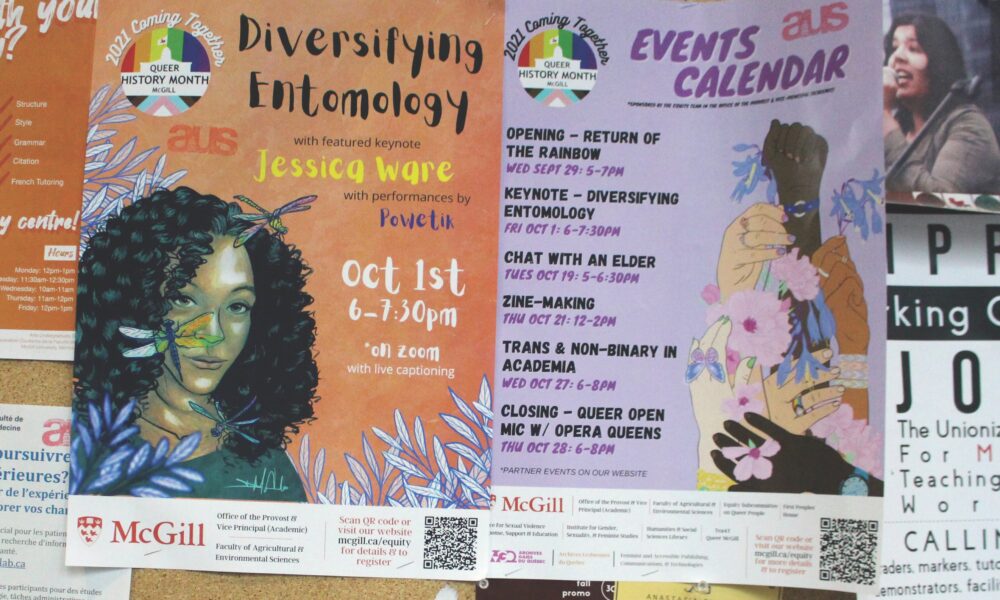
McGill holds annual Queer History Month themed “Coming Together”

Throughout October, McGill is holding a series of events in honour of Queer History Month, ranging from public talks to workshops, centred around the theme, “Coming Together.” The month opened with a homecoming event called “Return of the Rainbow,” which featured Kanien’kehá:ka Elder Kawennotas Sedalia. The event brought together former and current McGill queer community members, including staff, students, and faculty, to foster connections through relationship-building activities and to provide a safe space to share personal stories.

McGill’s Equity Education Advisor (Gender Equity and 2SLGBTQIA+ Education), Andrea Clegg, shared the meaning behind this year’s theme in an interview with The McGill Tribune.

“The theme ‘Coming Together’ is connected to the opening up of communities, including the McGill campus, in relation to the pandemic,” Clegg said. “[It is about] having a renewed opportunity to come together and celebrate and affirm our identities, something […] that varied communities have been impacted by in terms of the COVID pandemic.”

Honouring Queer History Month at McGill is important, explained Clegg, in that it provides space for celebrating members of the 2SLGBTQIA+ community and also includes a commitment to work toward further equality at the university.

“[Queer History Month at McGill] is an opportunity to come together, connect, celebrate our achievements, and identify ways we still need to continue to move forward on issues,” Clegg said.

While the month is primarily organized by the Office of the Provost and vice-principal (Academic) (OPVPA), they partner with many other groups to organize a wide range of events. One such group is McGill’s Subcommittee on Queer People (SQP), which submitted a formal motion to the McGill Senate in May 2021 for Queer History Month to be held and hosted the Return of the Rainbow event. Hiba Zafran, chair of the SQP, underscored the importance of adopting an intersectional approach in an email to The McGill Tribune.

“Equity and accountability are only possible when we both resist white supremacy and coloniality, and queer-ify, amplify and rebuild our ways of doing—together,” Zafran wrote. “It is our collective responsibility to promote the wisdom of, and leadership by, those of us with experiential knowledge. Queer History Month is one of the spaces where we can come together to envision such a politics and ethics for belonging.”

A handful of student-run groups helped organize Queer History Month as well. Queer McGill, a SSMU support service and the oldest queer organization on campus, hosted a documentary screening on Oct. 13 as part of the month’s programming. Jordan Elbualy, U4 Arts and an event coordinator for Queer McGill, spoke to the Tribune ahead of the screening and expressed his appreciation for the month’s events.

“I think [Queer History Month] shows that the administration cares about us a little bit,” Elbualy said. “I like it. It kind of takes the pressure off of Queer McGill’s shoulders not being the only Queer advocacy agency at McGill [and the Queer History Month organizers] do some really good work.”

For more information on Queer History Month and the events being held, visit the official page.

Queer students looking for support can visit Queer McGill’s Facebook.

McGill, News, The Tribune Explains

Tribune Explains: McGill’s new COVID-19 initiatives

In a university-wide email sent out Oct. 7, McGill announced four new COVID-19 initiatives to help track and curtail the spread of COVID-19 on campus. The protocols, which are being implemented throughout October, include measuring CO2 levels to assess the efficiency of ventilation systems; testing wastewater in student residence buildings; distributing thermometers to those in residence; and establishing a new COVID-19 dashboard to distribute weekly updated data. 

Why is McGill measuring CO2 levels in some of its buildings?

CO2 builds up when ventilation is poor, so measuring CO2 levels is a way to track whether ventilation systems are operating properly. Some of McGill’s classrooms and exam rooms already have CO2 monitors, but others do not—a fact that prompted the university to conduct a systematic review of CO2 levels in spaces that previously went unassessed. Testing began on Oct. 4 and continues to be carried out by internal and external Subject Matter Experts (SME). The analysis is set to wrap up on Oct. 26. McGill has yet to announce next steps after the SMEs data is collected. Currently, the “Ventilation in your building” page details the ventilation statuses in specific rooms on campus.

What is wastewater sampling and how would it help prevent COVID-19?

Wastewater sampling is currently underway at La Citadelle, Carrefour Sherbrooke, Royal Victoria College, and Solin Hall. McGill says it will expand the sampling to other residences soon. By sampling the wastewater from these buildings for evidence of the COVID-19 virus, McGill hopes to be able to detect potential COVID-19 outbreaks early. The university has devised three alert levels—vigilance, precursor, and outbreak—that can be activated at residences depending on the results of wastewater sampling. 

To support self-monitoring for potential symptoms of COVID-19, the university has decided to dispense 80 forehead thermometers to floor fellows and reception desks—which will be available to students upon request—and 750 personal stick thermometers, which are being given to students directly.

What is the new COVID-19 Situation Dashboard?

Another initiative McGill has rolled out is the implementation of a COVID-19 Situation Dashboard, which is updated every Tuesday and provides COVID-19 information from the past week. The dashboard provides information about campus and library traffic data, the number of new cases on campus, the number of cases linked to McGill classrooms, the number of calls to the Case Management Group (CMG), and the amount of contact tracing the CMG has conducted. This is more data than was previously available to the McGill community through the COVID-19 case tracker, which only stated the number of confirmed cases in a given week and whether there was evidence of community transmission.

What prompted McGill to implement these extra protocols?

Frédérique Mazerolle, a McGill media relations officer, says these new measures were devised in conjunction with public health officials and demonstrate McGill’s ongoing vigilance toward protecting the community.

“McGill University is working closely with public health officials to adopt policies and put into practice measures to protect students, staff and faculty. The University will continue to take a prudent planning approach that allows us to adapt as the health and well-being of our community remains a top priority,” Mazerolle wrote in an email to the //Tribune//. “The initiatives […] will provide new means of monitoring, keep the community informed with the latest data from around the McGill community and encourage and facilitate vaccination, which remains the best way to keep individuals, and the community at-large, safe.”

What is the McGill community’s reaction to these new measures?

David Juncker, chair of the Department of Biomedical Engineering, believes these new initiatives are useful, but wished they were implemented sooner. Juncker feels that there is still more that McGill could do to keep the community safe, such as requiring vaccination and implementing rapid testing. 

“I wish they had started [CO2 measurements] at the beginning of the semester, and I would encourage [McGill] to proceed faster and to make the results available publicly as soon as possible,” Juncker wrote in an email to the //Tribune//. “[T]he university should develop a strategy for using rapid tests under different modalities based on epidemiological modeling and cost-benefit analysis. Depending on the situation, twice a week screening for everyone could help catch many cases. Alternatively, rapid tests could be used as tests-to-stay or tests-to-enter for people who […] have mild symptoms.”

Commentary, Opinion

McGill should reduce harm, not safety

University is a time of experimentation, exploration, and self-discovery. For some students, this includes experimenting with drugs. However, users rarely have access to comprehensive education regarding safe drug use—a necessary component of a harm reduction approach. For many first-year students, their only “harm reduction” measure is an informal tradition: Floor fellows instruct students to write down the name of the drugs they are doing and tuck it into their left shoe. In the event of an overdose, floor fellows can refer to the note to help identify the drugs and respond appropriately. However, beyond this, there are very few harm reduction initiatives implemented across campus on behalf of McGill, especially in residences—a move that does more harm than good.

McGill has a responsibility to make sure that students’ experimentation with drugs is as safe as possible. Instead of prioritizing their students’ well-being, however, McGill recently adopted a zero-tolerance policy on drug consumption, further stigmatizing drug use on campus. Consequently, students themselves have taken on the responsibility of making harm reduction resources available on campus. McGill’s lack of care for their students’ health and safety places an unfair burden upon students to make campus safer. 

Drug use happens across all university campuses, and McGill is no exception. Students are not naive to this reality, and many are committed to addressing the gaps in knowledge that exist. One student-led group, Making Drugs More Accurate (MDMA), has made it their mission to address the lack of harm reduction education on campus. By providing accessible drug testing, education, and safe spaces, MDMA makes it safer for McGill students to experiment with drugs

What is perhaps most telling about the state of harm reduction at McGill is the overwhelmingly positive student response to their initiative. According to the founder of MDMA, the group handled over 40 orders containing 160 different substance samples that were tested and deemed safe to use over the course of a mere 48-hour period. The group’s online following only continues to grow because of their willingness to do what the administration refuses to. 

This is not the first time students have taken matters into their own hands to protect their peers. A petition on change.org demanding a commitment to harm reduction began circulating in May and has since gained traction, with 400 signatures as of Oct. 18. The petition is demonstrative that McGill students will continue to protect each other even if their university fails to. In the petition, students call on McGill to adopt a compassionate, educational, and non-punitive approach to drug use in residences and across campus as a whole. This approach might include adopting harm reduction techniques set forth by the National Harm Reduction Coalition and making resources such as naloxone available in all residence buildings and campus partners. Additionally, the petition calls upon McGill to embrace the recent postponed motion brought before the Students’ Society of McGill University Legislative Council in March 2020. The motion serves as an exposé against McGill for actively rolling back harm reduction policies by removing floor fellow training and online resources. 

The lack of institutionalized harm reduction resources on campus renders countless students without support when it comes to the safe consumption of drugs. If not for the student mobilization Making Drugs More Accurate sparked, the state of harm reduction at McGill would be virtually non-existent. If McGill refuses to implement life-saving harm reduction measures itself, it must at the very least provide support to student-led harm reduction initiatives and invest in a safer McGill community for all students. The administration’s blatant ignorance and avoidance of the topic of harm reduction can no longer be overlooked. Even if students are willing to take on this burden, it is ultimately McGill’s responsibility to alleviate the pressure by providing adequate resources.

Science & Technology

Where mother-of-pearl becomes glass

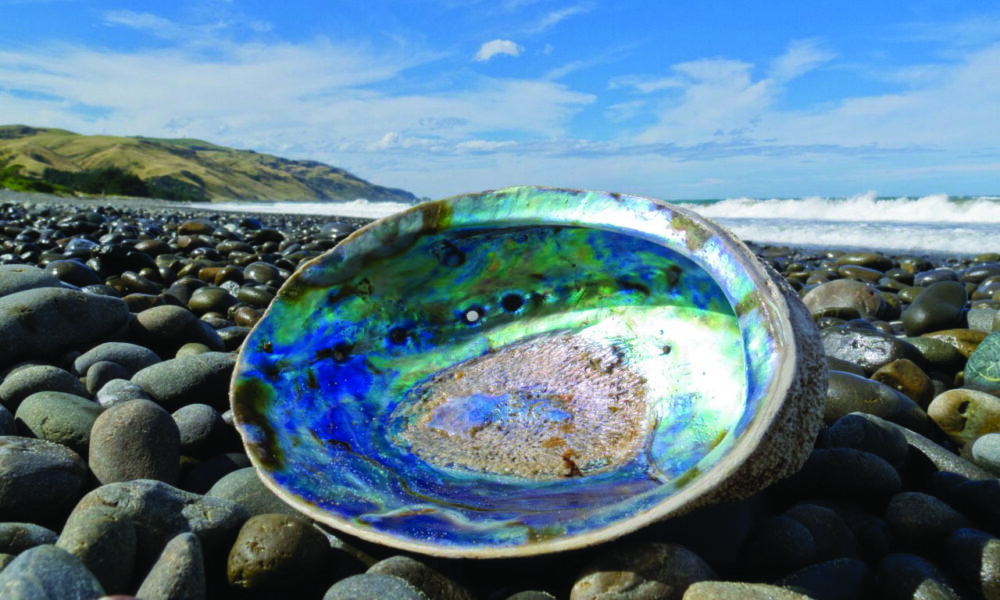
Many would agree that one of the foremost attributes of glass is its fragility. However, a team of McGill researchers have found a surprising model after which to fashion a more durable glass. The team has enlisted nacre, more commonly known as “mother-of-pearl,” to improve glass’ fracture toughness, impact resistance, and light refraction, and created a glass that is as resilient to fragmentation as plastic. 

“The methods for improvement [of glass composites] offer infinite variation and opportunities for novelty,”  Allen Ehrlicher, an associate professor in McGill’s Department of Bioengineering and a member of the research team, wrote in an email to The McGill Tribune

Ehrlicher and his team foresee such a durable glass composite as having the potential to vastly improve common applications, such as cell-phone screens. 

Using small fragments of glass and acrylic material, the researchers were able to adjust flexibility and collision resistance by varying how long the composite was spun in a centrifuge. This allowed them to align microscopic glass tablets into layers of parallel planes, leading to an overall denser structure with greater resiliency. 

To increase the transmittance of light and the overall transparency of the composite, the researchers made the opaque glass and acrylic solid take on the refractive index of glass through the selection of both hard and soft materials. According to Ehrlicher, hard substances provide a necessary backbone for the composite, while more pliable ones increase transparency by preventing the reflection of light, also known as refraction. This allows the clarity of the composite to be identical to that of more common glass forms, including those which are laminated and tempered with heat, but are comparatively weaker. 

“Mollusk shell in bioinspired materials is broadly recognized as an archetype of tough composite materials, and offers a design template in its brick and mortar architecture as well as [a] combination of rigid tablets and ductile connective material,” Ehrlicher wrote. “For the material to not shatter, the material must flex and the energy of deformation must be absorbed more gradually than catastrophically.” 

It is mainly due to the mollusk shell’s structure, rather than the material itself, that such deformative properties can be achieved. 

“[Deformation] occurs through toughening mechanisms in the plastic connective phase between the glass flakes,” Ehrlicher wrote. “By allowing the plastic phase to gradually break, develop cavities, and let the glass tablets slide, this prevents the overall material from breaking, similar to a myriad of mechanical ‘fuses.’ Toughening mechanisms are the processes which allow the material to not be fragile or brittle like conventional glass.” 

Nacre has both hard and soft phases that allow for a high level of rigidity while still being able to absorb and resist impact. Thus, the researchers fashioned their composite out of both stiff and deformable material, resulting in a high level of interface strength due to strong bonding between the different phases. 

The researchers have calculated that their composite is three times stronger than normal glass and over five times more fracture resistant, a sign that this design could have significant real-world applications. 

Even more compelling is that Ehrlicher believes this glass composite is comparatively easier to manufacture than traditional glass. The team is currently in talks with companies regarding its wide-scale production. 

It is hard to believe that nacre, most commonly a protective lining for many mollusk species, could be behind such an exciting scientific development. Yet, Ehrlicher thinks the sky is the limit for nacre and its other biological counterparts. 

“Bioinspired materials has become a field in its own right,” Ehrlicher wrote. While Ehrlicher and his colleagues specialize in cell mechanics, the realm of bio-inspired materials remains an open canvas for experimentation and development. It seems that as scientists discover more about the minutiae of nature, the potential for innovation will only grow.

Hockey, Sports

The NHLPA is leaving player health on the sidelines

On Oct. 7, the Montreal Canadiens announced that goaltender Carey Price voluntarily entered the National Hockey League’s player assistance program (NHLPA). The program supports NHL players and their families through  mental health struggles, substance abuse issues, and other related matters. Earlier that week, Vegas Golden Knights goaltender Robin Lehner tweeted about the situation of Jack Eichel and others whose safety was jeopardized for the advancement of their team. This controversy has launched the NHL and NHLPA into the spotlight, exposing the dangers players face off the ice. While NHL players’ mental health is slowly becoming more of a priority, their physical health is being neglected by their teams in favour of winning results.

It has become increasingly clear that the success of the NHL and its teams is prioritized over the physical health of athletes. Nowhere has this been more obvious than in the case of Jack Eichel. Since March 2020, the ex-captain of the Buffalo Sabres has been out with a herniated disk in his neck. Over the summer, the team and Eichel were at an impasse: Eichel preferred a disk replacement surgery, while the team insisted on a fusion procedure. He remained without operation into September 2020, where he failed to pass his physical and was revoked of his captaincy. Eichel’s wishes to take time to recover were ignored and he was penalized for not yielding to the Sabres’ desires. This instance shows a concerning lack of respect for player health and bodily autonomy, prompting one to question the NHLPA’s ethics.

In his tweet regarding the Eichel situation, former Sabre Robin Lehner divulged that he experienced a comparable situation while on the team. Though he did not provide many details, many speculate that the team cut his post-ankle-surgery recovery short—a move which may have led to his bad ankle sprain. On the same day, he tweeted that teams were giving their players benzodiazepines and Ambien in order to help them sleep on planes. Benzodiazepines can become addictive for some people in a matter of days—in 2020 the FDA ordered a new warning to be put on the drug’s label due to its role in opioid overdoses. Lehner himself admitted to becoming addicted after being given Ambien by a former team. 

Tragedy has already resulted from teams putting their interests ahead of their players. In response to Robin Lehner’s tweets, former NHL player Daniel Carcillo tweeted the story of his best friend, the late Steve Montador. The Chicago Blackhawks cleared him four times in the span of twelve weeks and attempted to have him continue playing following his nineteenth concussion. He decided to seek further treatment, against the advice of his team and management, and was deemed fit to play following two weeks of this treatment. Once he signed his fit to play agreement, he was relegated to the American Hockey League. Roughly two years later, Steve Montador died of chronic traumatic encephalopathy (CTE), a degenerative disease directly caused by repeated blows to the head. The NHL and NHLPA had a direct hand in the death of Montador due to their repeated failure to care for his health.
Montreal has seen its star goalie, Carey Price, approach the NHL for help in his mental health journey, with abundant support outpouring from players and fans alike. While this is a hopeful step forward, there is a distinct lack of mechanisms and programs to protect the physical health of the league’s athletes. This has left Jack Eichel hanging in a long-term injury reserve limbo and Dan Carcillo without a best friend. Lacking substantive support for physical health, players have become another cog in the money-making machine of the NHL, and their humanity has been left behind.

Read the latest issue

Read the latest issue