Latest News

Soccer, Sports

McGill Men’s Soccer draws even with Concordia

The McGill Men’s soccer team (2–1–3) squared off against rival Concordia (2–3–0) at Molson Stadium on Oct. 1. Though the sold-out crowd of nearly 460 fans helped bolster McGill’s strong start, the team could not hold on to their lead as the match progressed, ending the game with a score of 1-1.

The match started with strong play from the back line, a trend that has remained consistent throughout the season thus far. Third-year defender Julian Huster, who came in as a substitute in the second half, saw the team feed off the crowd’s energy to start the game aggressively. 

“The sell-out crowd was amazing, and I felt as though the team rallied around that to bring an extra element of effort during the first half,” Huster said in an interview with The McGill Tribune.

No love was lost between the downtown rivals, with physical play emerging from the opening whistle and leading to three yellow cards in the first half. Despite strong play from McGill’s midfield and defence in the first half, fourth-year goalkeeper Chris Cinelli-Faia had to come up clutch, with a fantastic save on a shot from the six-yard box.

Twenty-two minutes into the game, the crowd was sent into a frenzy when first-year defender Bilal Bouchemalla headed in a goal off the post, assisted by a beautiful corner kick by Reese Carlow

Thirteen minutes later, McGill was dealt a penalty shot due to a poor challenge in the box by Concordia defender Brandon Phelps. Unfortunately, the attempt hit the post. 

Despite the momentum and the team’s enthusiastic supporters, McGill would not convert again in the half. Third-year midfielder Bouba Ouane, McGill’s starting left midfielder for the match, felt the team couldn’t capitalize off the momentum of this goal. 

“The squad really had great energy after the first goal,” Ouane said. “After the missed penalty opportunity though, I felt that we no longer had the same intensity and this definitely contributed to the fact [that] we could not score again before half.”

Despite several missed chances before the half, the Redbirds entered the locker room up by a goal, the crowd still buzzing with Friday night fervour. 

Unfortunately, 11 minutes into the second half, former Western Mustang and current Concordia midfielder Mohammad Reza Nafar capitalized off a failed clearing by McGill’s defence, tying the game and silencing the McGill crowd. 

In a sudden turn, the momentum shifted to the away side. The Redbirds’ frustration was obvious, with four Redbird yellow cards in the second half.

Despite this, the contest ended in a stalemate, with the opposing squads going back and forth without any true success for the rest of the second half.

Although unable to convert, Huster remained optimistic about the team’s second-half performance.

“The ball movement, as well as the defending from the team in the second half was strong after the goal,” Huster said. “Even though the end result was not what we wanted, the team competed well until the end.”

McGill Men’s soccer hope to finish strong as they enter their last few weeks of the regular season—eyeing a top four playoff spot finish at season’s end. 

McGill plays next at Laval on Oct. 8. 

Moment of the Game:

Bilal Bouchemalla scored McGill’s first goal of the game off a header from rookie Reese Carlow, sending the sold-out McGill home crowd to their feet.

Stat Corner:

The rivalry match was a heated and physical affair, with a combined six yellow cards for both squads.

Arts & Entertainment, Film and TV

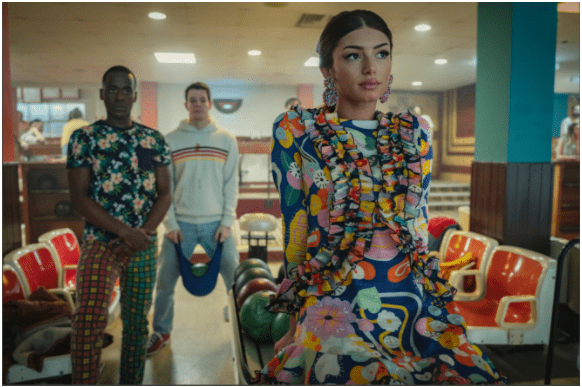
‘Sex Education’ season three is a powerful, yet overambitious, continuation

Warning: Spoilers ahead.

In the wake of the wildly popular first two seasons, Netflix released the hotly anticipated third season of Sex Education on Sept. 17. While the previous seasons of the raunchy coming-of-age series navigated complex topics with frankness and charm, the latest installment’s 8-hour runtime is overstuffed with unresolved issues and shortcomings, failing to deliver on the promises made during its first and second seasons.

Season three strays from the show’s pre-established narrative, which centred around an illicit sex advice clinic run by the timid Otis Milburn (Asa Butterfield) and school rebel Maeve Wiley (Emma Mackey)—all under the shadow of sex therapist and overbearing mother Jean (Gillian Anderson). In many ways, the season’s sexually explicit opening encapsulates the show’s main theme: A raw and unapologetic expression of desire that extends beyond the scope of cisnormative and heteronormative sex. The presentation of virtual reality, costume and fantasy play, sexting, and webcamming represents the complexities of desire and sexual gratification. Absent of any cloud of shame, Sex Education’s subversive and progressive approach to representation of sexuality is rare among many coming-of-age stories.

The main conflict of the season comes from Moordale’s new principal, Hope Haddon (Jemima Kirke), who embodies patriarchal ideologies when she installs an outdated sex education curriculum that preaches abstinence and mandates uniforms. Hope’s strict enforcement of the school uniforms indirectly targets individuality and self-expression amongst the student body, and in doing so, enforces the gender binary. The portrayal of this new headteacher, whose youthful energy initially instills within students a sense of comfort and relatability, quickly becomes a source of oppression: Hope, as ironic as that name may be, enforces a sex-negative discourse with narrow-minded notions of inclusivity and acceptance that is hidden under a cloak of feminism and “hipness.” 

In many ways, Hope’s presence embodies the tenets of heteronormative sexual prejudices. Much like many cultural values expressed today, the new head teacher aims to paint a pretty picture of acceptance and inclusivity on the surface, while dismissing important issues brought up by the students. Echoing derisive accusations commonly aimed at Generation Z, Hope attacks her students’ “fragility”—what she calls “identity-obsessed hysteria”—compared to the “real world.” 

The show prevails in successfully portraying the complexities and vulnerabilities of all the characters in the main ensemble cast—an authenticity achieved in large part by entrusting the role of 2SLGBTQIA+ characters to queer actors. 

However, Sex Education nonetheless causes its own downfall by overextending itself. Despite having successfully avoided it during its previous seasons, its intricate development of existing characters leaves little time to properly integrate new cast members, such as new character Cal (Dua Saleh). Cal, a non-binary student, is almost entirely defined by their gender identity and/or sexual orientation rather than their personality. Additionally, the show spends too much time on problems from past seasons and not enough time solving elaborate issues which would have been better incorporated over long intervals. Condensing them into one episode, oftentimes eclipsed by its simultaneous storylines, creates an eclectic, unsatisfying viewing experience. 

Ultimately, the show’s frank discussions about sex, sexual orientation, and gender identity do not reach audiences as well as its prior two seasons. Sex Education provides unsatisfactory denouements by trying to do too much—it straddles a line between embracing diversity, and turning a blind eye to the complexities of individuality. 

Art, Arts & Entertainment

Computing creativity: A visit to UQAM’s ‘Vers un Imaginaire Numérique’

Upon entering UQAM’s exhibit Vers un Imaginaire Numérique (Designing the Computational Image), tessellated sculptures created from delicate steel and acrylic mesh hang from above. Inspired by biological synthesis, machine learning creates the canopy system, which includes spiralled metallic stars and pyramidal struts. This installation is but the beginning of the exhibition’s computer-generated contraptions, ranging in discipline from film, music production, and sculpture to participant-lead formulation. Thus begins a journey of computational design’s visual and intellectual history.

The first half of Vers un Imaginaire Numérique examines the multidisciplinary use of technological tools. For example, the photograph “Avena + Test Bed” captures geometrical shapes carved into a field, showcasing how agriculture utilizes computational innovation. The emphasis is placed not on the final result, but the photo’s generation, which includes collaboration with agricultural experts, engineers, a tractor driver, a videographer, and a pilot.  The tractor, guided by algorithms, was figuratively transformed into a printer that deposited seeds in a configuration optimized for sustainability.

“Trois Forms Générés Par Évolution Numérique” contains a drawing, a cube-like glass sculpture, and a piece of music. The catch is that these pieces were created algorithmically; after being fed unrelated information, such as radio-astronomical signals, a machine designed the three art forms using artificial intelligence. This process brings to light technology’s versatility and its ability to cross from domain to domain. The end result is asymmetrical, yet graceful, art. The music in particular fluctuates from serene to tense while maintaining an aweing synthetic atmosphere reminiscent of space sound effects in film. 

The historical dimension of the emergence of visual graphics investigates the formative years of computer graphics technology between 1949 and 1980. As visitors wander through the exhibit, examples of architectural and engineering projects trace the progression from geometric skeletons into more contemporary complex models. A large hurdle for computer scientists trying to create a visual products using code was that computational images are numerically restrained, while having to constantly translate numbers to imagery. Here are productions which offer less visual appeal, but illuminate the newness of graphic displays and the solutions offered to represent information when working with limited technology. 

The interactive component to the exhibit generates a newfound admiration for grace in visual technology. In the largest display, “The Coons Patch,” visitors can engage with a rudimentary control panel by manipulating a coordinate in either the x, y, or z direction to manipulate a plane existing in three-dimensional space. Since the display is created from four curves, it morphs and twists in an elegant manner.  The “Coon’s Patch” doesn’t exist purely for pleasure, though; when this technology was initially created, aircraft, car, and ship design industries used it to design and model their curved products. 

Computer graphics programs use “The Coons Patch” to join surfaces together. (Anna Berglas / The McGill Tribune)

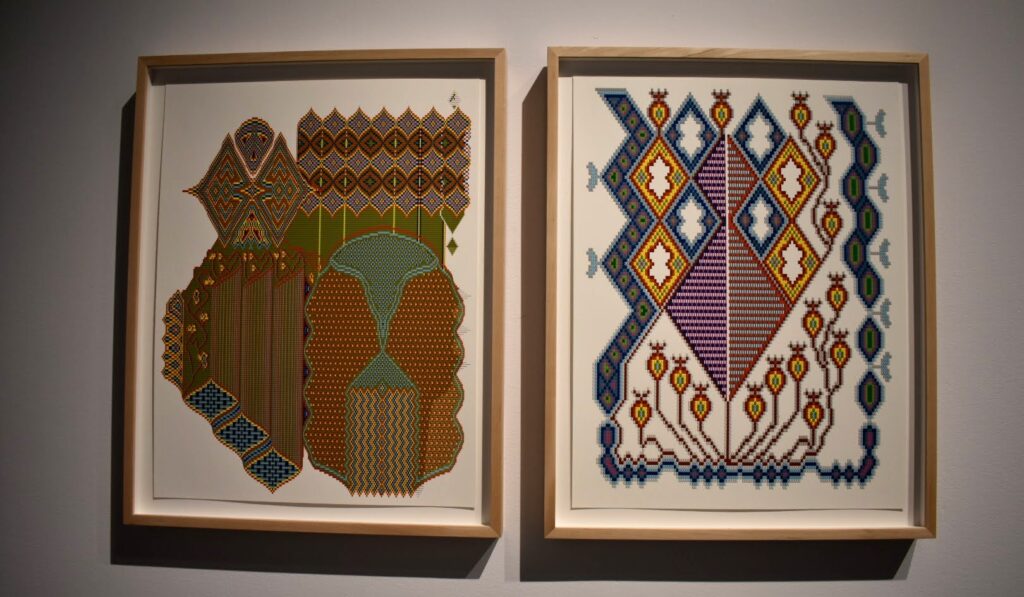
The anticipated inaccessibility of technology can breed mistrust, especially among less mathematics-minded creatives. Those who shy away from mathematics need to look no further than the contemporary art styles the exhibit featured. The tandem pieces  “44NS10F” and “MFPTN1” are constructed from an arrangement of symbols and characters in Microsoft Word. The unusual application of this well-known word processing software enchants visitors, demonstrating that even the most computational novice has the potential for artistic expression.

While not immediately obvious, Toronto-based artist Shaheer Zazai created “44NS10F” and “MFPTN1” using Microsoft Word. (Anna Berglas / The McGill Tribune)

Vers un Imaginaire Numérique covers a lot of ground, tracing the earlier and more simple numerical controls to the most modern computational products, while showcasing both its aesthetic and practical value. Applications of technology are incredibly diverse, but each piece possesses one common factor: The communication of ideas through programs that surpass our individual capacity to visualize. 

UQAM’s exhibit prompts visitors to reflect on graphical development as an aesthetic language. Technology is omnipresent in the 21st century, and embracing beauty in a domain in which it is often forgotten is invigorating. Many of the pieces include intricate details only computers could produce. Still, their intricate details speak to the creators’ ability to transport traditionally theoretical mediums into new creative territories. 

Vers un Imaginaire Numérique is on display at the UQAM Centre de Design until November 7, 2021. Admission is free and hours are Wednesday to Sunday, 12 p.m. to 6 p.m. 

Arts & Entertainment, Film and TV

‘Cinderella’ is a flawed take on a childhood favourite

Remakes of classical fairy tales have long been a popular filmmaking trend, from Red Riding Hood to Snow White and the Huntsman. It is no mistake to think that fairy tales capture an audience in ways that other films do not. It is easy to captivate an audience with a tale of an innocent young woman who wishes only to make a life for herself – a story of hope, dreams, and, above all, true love. Film producer Kay Cannon recognized this, going ahead with her take on the classic Cinderella story, released through Amazon Prime Video on September 3. Cinderella is a fatally modern musical spin on this classic story that fails to preserve the essence of the cherished fairytale. 

The story, reminiscent of the classic 1950 Walt Disney’s Cinderella, introduces us to  the beautiful but mistreated Cinderella (Camila Cabello), who spends her time either in a basement with a few friendly creatures or serving her “cruel” step-mother Vivian (Idina Menzel) and step-sisters (Maddie Baillio, Charlotte Spencer). Her whole life changes once she crosses paths with Prince Robert a.k.a Prince Charming (Nicholas Galitzine). 

On the surface, the remake follows the “classic Cinderella story,” but it strays from it in ways that destroy the original’s allure. The flaws are found in the film’s use of popular “lingo” – the attempt to integrate pop culture into the original plot. Additionally, its characters trail too far from what made the Disney classic a “classic.” The original ‘s attraction rests in its timelessness, as the sensation of impossibility, yet, oddly enough, endless possibility, makes the fairy tale so alluring. Cinderella washes this away with its constant attempt to “correct” the traditional tale.     

This is not to say that the movie has no redeeming qualities. Its musical score is excellent and Camila Cabello’s musical performances are dazzling. The cinematography is similarly marvelous, immersing the viewer in an enchanting far off land. The costumes are breathtaking, notably Cinderella’s dresses. Additionally, the movie makes strides towards a more gender-inclusive take on the story, such as introducing the fairy godmother as a male character.  

Despite these memorable moments, the film revolves around a flawed effort for Cinderella to prove her independence by following her dream to become a dress-maker. Unfortunately, the story over-focuses upon her pursuit of this passion, failing to fulfill the magic in a fairy tale that is the quest of true love. This also goes for other female characters, such as the plotline of Prince Robert’s power-hungry sister which only detracts from the narrative in an attempt to turn beloved characters into social commentary. This has its respective place in movies, but feels amiss in fairytales.    

In short, Cinderella loses all the excitement and emotions evoked by the original story, prioritizing frantic musical numbers and the over-projection of modern ideals. The remake of this classic fairy tale is neither nostalgic nor enjoyable. It is safe to say that traditional fairytales are “traditional” for a reason. 

Arts & Entertainment, Books

‘Beautiful World, Where Are You?’ is a stirring love letter to us all

Mastering the will-they-will-they-not tragicomedy is no enviable task in this day and age. When the world is quite literally on fire, we find ourselves confronted by questions of how cringey Tinder messages, first-dates-gone-wrong, and fleeting insecurities could possibly matter to us in the grand scheme of it all. Well, Sally Rooney has a hunch. In her latest novel, Beautiful World, Where Are You?, the Irish author searches for beauty among all the chaos—and manages to find it.

The novel follows publicity-loathing novelist Alice—who bears a striking resemblance to Rooney herself—and her best pal from college, Eileen, an editorial assistant at a Dublin literary journal. Faced by the spectre of wealth inequality, environmental collapse, and the meaning—or meaninglessness—of life, Alice and Eileen, both pushing 30, begin to feel the weight of the world on their shoulders. 

The two fret about the state of the world via long, sometimes tedious, email exchanges, which nevertheless capture Rooney at her best: Elevating the voices of her generation and bringing their deepest fears to life. “Aren’t we unfortunate babies to be born when the world ended?” Alice at one point writes to Eileen. Doomed as they might be, the pair are able to carve out room for romance in their lives: Alice with the cynical Felix, Eileen with Simon, her older friend whom she has loved since childhood. Rooney fleshes these romantic entanglements out with her trademark wit and soul-baring prose. 

Whether it’s the luck of the Irish or the charm of her all-too-relatable characters, Rooney has a way of making even the most microscopic interactions among us feel earth-shattering. Like brushstrokes, each sentence builds upon the previous, complete with wounded squabbles and broken glasses. There are pining glances and words left unsaid. There is bantering dialogue with freakishly articulate characters. There are Rooney’s infamous sex scenes, some of the most moving you will find in contemporary literature.

Rooney has become ordained as the voice of millennial angst. Her debut, Conversations With Friends, was a smashing hit, and her second novel, the Booker-Prize shortlisted Normal People, went on to be adapted into a quarantine favourite Hulu series. In a way, we might see Beautiful World as just another privileged, upper-middle-class declaration of existential dread. Maybe that’s what ticks off Rooney’s detractors, who typically dismiss her work as frivolous, normcore chick lit. Granted, her plots can be fairly Austenian: Her characters do their utmost to connect but, more often than not, fail miserably from the outset. 

But Beautiful World presents Rooney at her most nuanced. Her Irish youths are simultaneously tone-deaf and self-aware; Alice, a reluctant millionaire, reflects, “but why should anyone be rich and famous while other people live in desperate poverty?” On the same page they wax poetic about Marxist revolution, Alice and Eileen also immerse themselves in dysfunctional relationships. With bull’s-eye precision, Rooney captures exactly what it feels like to be 20-something: To be able to recognize structural realities, while simultaneously remaining hung up on debates of whether one can—or should—text him first. Oh, the joy of being a millennial.

You might be asking where all that beauty Rooney promised in her title is. Why, it’s splashed all over these pages in tender celebrations of relationships and love. Even as the world collapses around us, we can always count on our basest selves to carry on: We who long to fall in love and delude ourselves and make catastrophic decisions about our crushes. We who stumble across the minefields of intimacy.

“So of course in the midst of everything,” Alice writes to Eileen, “the state of the world being what it is, humanity on the cusp of extinction, here I am writing another email about sex and friendship. What else is there to live for?” What else, indeed.

Science & Technology

Science Rewind: Innovators from the last 67 years of Beatty Lectures

As McGill prepares for the 2021 edition of the annual Beatty Lecture with Dr. Anthony Fauci, the chief medical advisor to U.S. President Joe Biden, The McGill Tribune takes a look back at the most memorable scientists and innovators who have been invited to speak since the lecture’s inception 67 years ago. 

The lecture series was created in honour of Sir Edward Beatty after his brother, Dr. Henry Beatty, left a $100,000 gift in his name in 1952. Beatty studied political science at the University of Toronto, pursued a law degree, and rose in the ranks of the Canadian Pacific Railway (CPR), eventually assuming the top role of president in 1918. Beatty got involved at McGill around the same time, serving as its chancellor from 1920 to 1943. 

Since their establishment, the Beatty lectures have welcomed researchers, humanitarians, artists, and other remarkable individuals from around the world, to inspire the next generation of academics.

Peter Ritchie-Calder 

Born in 1906 and hailing from Glasgow, Peter Ritchie-Calder got his start as a court journalist, but made a lasting impact through his work documenting the daily lives of Londoners living through the Blitz—the bombing of London by German forces. After the war, Ritchie-Calder became more involved in science reporting and was the first to break the story about Watson, Crick, and Franklin’s discovery of the structure of DNA in 1953. 

Ritchie-Calder devoted much of his career to campaigning for nuclear disarmament, and delivered his 1971 Beatty lecture, “Science and Social Change,” on that very topic. Wary of the dangers rampant nuclear advancement might bring, he warned that scientific ambition should never take precedence over moral and social consequence.

 Jane Goodall 

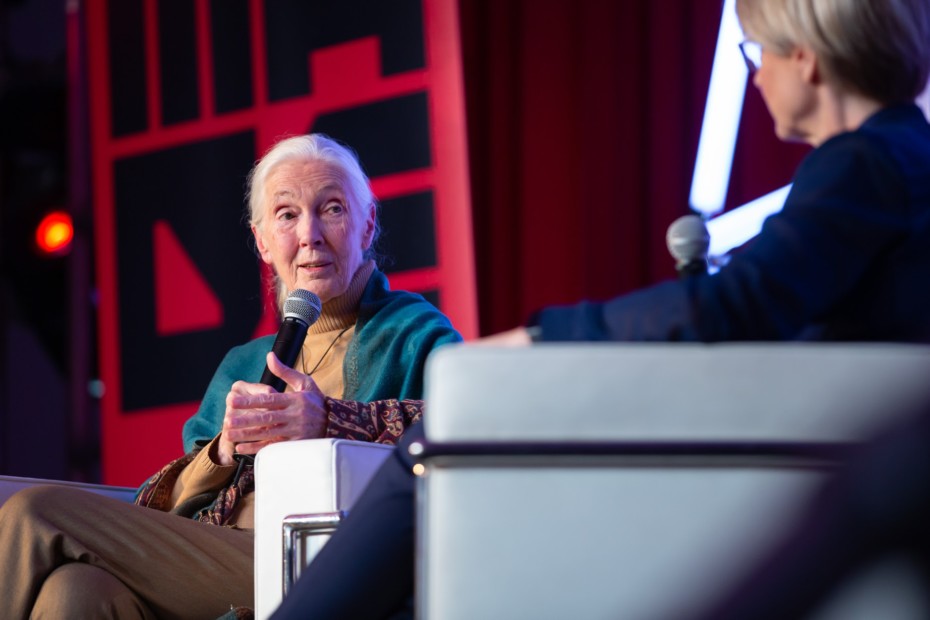
Jane Goodall, one of the best-known scientists on this list, delivered a Beatty lecture not once, but twice: First in 1979, to present her research from 20 years’ worth of observing primates, and again in 2019, where she shared a lifetime’s worth of environmental knowledge. After travelling to Gombe, Tanzania and discovering that chimpanzees are capable of using tools, Goodall was allowed to pursue a PhD at Cambridge University without earning any previous degrees. In addition to being the world’s foremost expert on chimpanzee society, Goodall has dedicated her life to promoting conservation efforts and animal well-being.

“I have seen so much suffering and destruction,” Goodall said in her 2019 lecture. “But my reasons for hope, the main one, is the young people. As you know, they can, and are, changing the world.” 

Richard Feynman 

Richard Feynman was a Nobel Prize-winning theoretical physicist who made astonishing advances in the field, including pioneering a space-time approach to quantum electrodynamics and introducing the idea of a quantum computer. After completing a PhD at Princeton, Feynman assisted with the Manhattan Project—the development of nuclear weapons during the Second World War—a part of his career he would later regret. He was known for his great ability to distill complex scientific concepts into simpler terms, and was referred to as “The Great Explainer” by colleagues and students. A collection of his talks, titled The Feynman Lectures on Physics, later became a bestseller within the scientific community. 

In his Beatty lecture, Feynman spoke about the quantum behaviour of light and matter with his characteristic engaging humour. 

“I’m supposed to be known as an expert in this field,” Feynman joked. “I think it’s true that if I don’t understand it, nobody understands it.” 

Sandra Steingraber 

Sandra Steingraber is an ecologist and writer who turned a personal tragedy into a lifelong career in activism. After going into remission from a cancer diagnosis in her twenties, Steingraber earned graduate degrees in biology and English and started studying the relationship between environmental pollution and growing rates of cancer. Her first book situates cancer within the realm of human rights, citing toxic releases and environmental pollution as direct causes, and her second book examines the impact of contaminants on infant health. 

Steingraber delivered a Beatty lecture in 2002 titled “Protecting the First Environment: The Ecology of Pregnancy and Childbirth,” to commemorate the 40th anniversary of Rachel Carson’s landmark book about environmental pollution, Silent Spring

Richard Dawkins 

Born in Kenya in 1941, Richard Dawkins obtained his master’s and PhD degrees in zoology at Oxford University. Dawkins is best known for his book The Selfish Gene, published in 1976. The book has been likened to a modern-day version of Charles Darwin’s On the Origin of Species, both in terms of reaching a large audience and being a game-changer in scientific advancement. Dawkins popularized the view that genes act as the principal unit of selection in evolution. 

In October 2006, Dawkins delivered a Beatty Lecture titled “Queerer Than We Suppose: The Strangeness of Science,” which focussed on humans’ inability to grasp reality beyond their immediate perceptions. 

“All science is a form of violence against common sense,” Dawkins said in his lecture. “Although the scientific method is grounded in a trained and informed common sense, greater scientists deploy a wildness of imagination, which, in the case of an Einstein or Heisenberg, outclasses the best science fiction.”

Yang Chen-Ning 

Yang Chen-Ning, a Chinese-born American theoretical physicist, made significant contributions to the field of mathematics and physics, particularly statistical mechanics, gauge theory and particle physics. Yang’s doctoral thesis on angular distribution in nucleon reactions landed him a research position at Princeton University, where he later became a professor in 1955. 

In 1957, Yang was awarded the Nobel Prize in Physics for his discovery that when certain chemicals decay, parity—the symmetry between physical phenomena occurring in right-handed and left-handed coordinate systems—is violated. Yang spent his 1991 Beatty Lecture, titled “Symmetry and Physics,” explaining this complex discovery.

Carl Djerassi 

Carl Djerassi, an Austrian-born Bulgarian-American chemist, novelist, and playwright is best known for advancing hormone synthesis methods—specifically ones that led to the development of an oral contraceptive pill known as the birth-control pill

In January 1999, Djerassi delivered a Beatty lecture titled “Science-in-fiction is not science fiction.” Djerassi purchased 500 copies of his own novels with his honorarium, and handed them out free of charge to the audience. 

“Everything in my books dealing with science is accurate, obsessively so,” Dejrassi said in his lecture. “It’s a way to smuggle something into reluctant minds. When people read my books, they will have learned something.”

Steven Pinker 

Steven Pinker, a McGill alumnus, received his bachelor’s degree in psychology in 1976. While he has conducted groundbreaking research in the field of visual cognition and psychology, Pinker’s books have also been wildly popular, earning him two Pulitzer Prize nominations. 

Pinker’s 2020 Beatty lecture, titled “Progress and Enlightenment in the 21st Century,” discussed concepts from his latest book published in 2018, where he argues that human society is improving, rather than worsening, as a direct result of 17th century Enlightenment ideals. This idea has been met with criticism and has sparked a great deal of controversy, especially among those who believe that a serious restructuring of the economic system is needed to solve the current climate crisis.


Hockey, Sports

Quebec University All-Stars face off against Habs rookies, losing 5-3

Closing out the 2021 Montreal Canadiens rookie camp, the top Habs prospects played an exhibition game against the Quebec University All-Stars (QUAS)—a team made up of players from McGill, Concordia, and Université du Québec à Trois-Rivières (UQTR). Despite a strong showing from the all-stars, eight of whom play for the McGill Redbirds, the game finished off with a 5-3 win for the Habs rookies. 

The QUAS squad struck first late in the first period, with a goal by Alexandre Katerinakis, a Concordia Stingers forward. The momentum quickly swung toward the Habs and remained that way until well into the second period, as the rookies managed four consecutive goals—one on Université du Québec à Trois-Rivières (UQTR) goaltender Tristan Cole-Cazenave and the three others on McGill first-year Alexis Shank. The current Redbirds captain, Samuel Tremblay, broke the team’s streak off a backhand pass from fifth-year forward Keanu Yamamoto, burying the puck left as goaltender Joe Vrbetic went right. 

“I got a beautiful pass from Yamamoto and I went on a breakaway and put it in,” Tremblay wrote in a message to The McGill Tribune. “[It] felt awesome to be a difference maker in that game and be a step closer to win it, but we ended up coming short.”

The QUAS stepped it up in the third period, with Concordia Stinger Tyler Hylland cutting the deficit to 4-3. Unfortunately, there just was not enough time on the clock to recover; Shank was pulled and Habs rookie Kaiden Guhle sealed the deal with an empty-netter.

The exhibition game took place on Sept. 21 at the Bell Sports Complex—the Canadiens’ practice arena—but was closed to the public due to COVID-19 restrictions. The match was not streamed but the game stats were updated live, to be viewed by McGill students, die-hard Habs fans, and those intrigued by a matchup between hockey’s most promising athletes. 

Eight of the McGill Redbirds players were selected for the QUAS, including Scott Walford, second-year defenceman and 2017 Montreal Canadiens third-round draft pick. For Walford, getting the chance to compete with such talented players made the experience worthwhile.

“It is always great getting the chance to challenge yourself against great players. I was happy to get that opportunity to not only challenge myself, but also have the opportunity to represent McGill,” Walford said in an interview with the Tribune. “I think the whole experience was special and what made it so special was being able to share it with my teammates.”

Among the others representing the Redbirds were Will Warm, Caiden Daley, Eric Uba, and Jacob Golden. The players will confront their QUAS teammates this season as rivals when McGill plays Concordia on Oct. 22, and UQTR on Oct. 29. 

Walford is looking forward to returning back to the rink for the season after COVID-19 cancellations. 

“I am really looking forward to just being able to play again,” Walford said. “After a year and a half off, you forget all the little things about everyday life at the rink, which is what makes playing on a team so enjoyable. It will be fun getting to play hockey again with my teammates and to compete for a championship.”

The Redbirds hockey season officially kicks off Oct. 13 with the home opener against the Queens Golden Gaels at McConnell Arena.

On the other side of the ice, the Montreal Canadiens have already started their NHL pre-season exhibition games with a 4-1 loss, then a 5-2 win against their archrivals, the Toronto Maple Leafs. 

STAT CORNER

First-year goaltender Alexis Shank saved 29 out of 32 shots against over 40 minutes of play. 

QUOTABLE

“I thought the game went well for us, especially for me personally. The first period was pretty chaotic, but we got better as the game went on. The second period we were all over them and in the third I thought they were pretty tired.” —Captain Samuel Tremblay on his team’s performance against the Habs rookies. 

MOMENT OF THE GAME

Samuel Tremblay’s second period snipe snuck past Canadiens rookie goaltender, Joe Vrebtic, raising the score to 4-2 and attempting to spur on a comeback.

Editorial, Opinion

Quebec must answer for non-consensual sterilizations

Content warning: This article discusses forced sterilization, racism

Radio-Canada recently aired an interview with a 44-year-old Haitian woman, Maria*, who claimed she was sterilized without consent at a Montreal hospital in 2018. She was asked if she wanted to undergo tubal ligation to prevent further pregnancies during her emergency C-section. Maria said that she refused the procedure, and there is no trace of written consent in her medical file. Non-consensual sterilizations are not bioethical dilemmas; they are the result of longstanding colonial practices that inflict disproportionate, irreparable harm on Black and Indigenous women. In a province whose leadership denies systemic racism, the onus is on the Quebec healthcare system to eliminate racial, gender, or other biases—as well as to guarantee that medical consent is given affirmatively and unequivocally.

Some patients might want their tubes tied, and some may opt to undergo the procedure after a C-section. But professionals must ensure that consent is unambiguous, especially when it is solicited from those whose first language is not French or English. Such a decision should never be allowed without the patient’s full and informed consent. 

Despite no written consent, the Quebec College of Physicians is taking the doctor’s word for obtaining “verbal consent.” Although this type of consent may be acceptable in extreme circumstances, even then, it only holds if the doctor makes certain that the patient comprehends the full extent of the procedure. The government should require translators fluent not only in French and English but also in Indigenous languages to be on-site at all times. Even if this is infeasible in the short-term, there are potential translation technologies that could be harnessed if they can be medically verified. 

It goes without saying that patients should not be asked to make such a life-altering decision under the already stressful, and at times traumatic, circumstances of childbirth. Nicole Awashish, an Atikamekw woman who is one of many Indigenous women who have experienced non-consensual sterilization, felt that the pain and stress of her contractions made it impossible for her to fully grasp the details of the procedure. To mitigate the risk of medical practitioners taking advantage of such stressors, patients must be given the time to think about whether the procedure is right for them far in advance and without any external pressure. 

Human rights groups have every reason to be skeptical of physicians, and of medical racism more broadly. Canada has a long history of forcibly sterilizing racialized “Others,” including Indigenous women, Black women, immigrants, and other minorities––and these atrocities are not a thing of the past. In this context—a callous cacophony amplified by a premier who denounces “wokes” for protesting structural prejudices—the government would be abdicating justice if it did not investigate Maria’s case, along with all others like it. 

Premier Legault’s opposition to “woke” activists is a form of rhetorical terrorism against people who criticize his politics, positioning them as enemies of the Quebec nation. Moreover, by fomenting bigotry, his words and labels compound the racism already embedded in the health care system, reinforcing well-founded distrust between racialized women and medical professionals, and discouraging vulnerable populations from seeking care. The government must take accountability for the women whose lives their health care system has irreparably damaged and must also address their underlying causes, lest Quebec hospitals remain structures of indifference and factories of injustice.

Quebec’s health care system has robbed victims of their agency, and their trauma must not be forgotten. Women’s health continues to be taken for granted, their pain minimized and their concerns about racial inequities labeled as “woke” paranoia. In this way, healthcare has become a crossroads of intersecting daggers of discrimination. A radical shift in Quebec’s approach to health care is the only way to bridge the cavernous legacies of oppression that serve to dehumanize and ignore racialized women.

*Maria’s name has been changed to preserve her anonymity.

Features

The art of companionship

As the ending of the 1994 award-winning novel //Snow Falling on Cedars// says, “accident ruled every corner of the universe except the chambers of the human heart.” While I have come to accept that life is unpredictable, I realized that at the very least, we can choose how we face the accidents. I’ve found that enduring hardship becomes easier with companionship—both human and animal. What I have also learned, however, is that pets themselves can have their own complexities, just like the complexities of human life. 

Before the pandemic started, I never considered myself someone who needed a lot of company. But after half a year of staying at home every day, I got to know loneliness in a way I had never before. After the emptiness brought on by the long-term isolation, I decided to officially move in with my girlfriend of a year. 

I’ve never had the desire to own pets, because I dislike taking care of things. Having pets seemed akin to raising a baby—and taking care of myself was already a hard enough task during the pandemic. At the very least, living with my girlfriend definitely helped us deal with a stagnant quarantine. 

I began to change my mind about pets over time, however, after adjusting to her living habits. Before I met my girlfriend, I had no interest in “cute” things––I never liked Barbie dolls or plush toys, even when I was little. My girlfriend is exactly the opposite of me, however: Her apartment is full of plush toys, and she has always wanted to have both a dog and a cat.

After sending me countless Instagram videos of cats and dogs during quarantine, I was convinced, little by little, that a life with pets wouldn’t be as exhausting as I had initially thought. We started casually browsing through the pets on Kijiji and SPCA, though we had not made any official decisions yet. It was the summer of 2020 when we finally decided to adopt a cat, something unfortunate happened to my girlfriend.

Life changed overnight. Without any warning, my girlfriend was suddenly struck by an unknown disease. After rushing to the emergency room, she was hospitalized for two months. During that period, she was sent to the ICU once and almost lost her life. In July 2020 she finally returned home, but still had to go to the hospital every other day for medical treatment. Although her day-to-day health improved, the shadow of sickness constantly hung above us. I was consumed by anxiety, as was she. 

A few months later, her situation stabilized, and she only needed to visit the hospital every month. After her health crisis, both of us gained a deeper understanding of the uncertainty of life. We decided that there would be no more hesitation in our lives: If we wanted to do something, we would go for it. In November 2020 we got our first pet on Kijiji, a male Scottish Straight kitten named Burger. We also joined the waiting list of a breeder to get a Shiba Inu puppy.

Burger’s health hadn’t been in perfect condition from the first day he came to our home—and nobody knew why because of his mysterious origins. He came from an unknown cattery in Kyiv, Ukraine, after which he was purchased by a girl in Montreal and flown to the city by airplane

Burger didn’t have testicles, so we assumed that he was already neutered. During this summer, however, he started behaving like a very horny cat. It turned out that he had cryptorchidism, a condition where testicles do not descend from the abdomen as they should have. After his diagnosis, we had to wait a month for the castration surgery. During that time, having a cat was as miserable as I had originally feared: Burger peed everywhere in the home and ruined at least five carpets with his smelly urine, and we barely slept because Burger screamed every night. But surprisingly, I never felt any hatred toward Burger through this difficult time. Instead, I felt genuinely sad for him, for all the suffering he was enduring. Luckily, after the surgery, he returned to being our sweet cat of before.

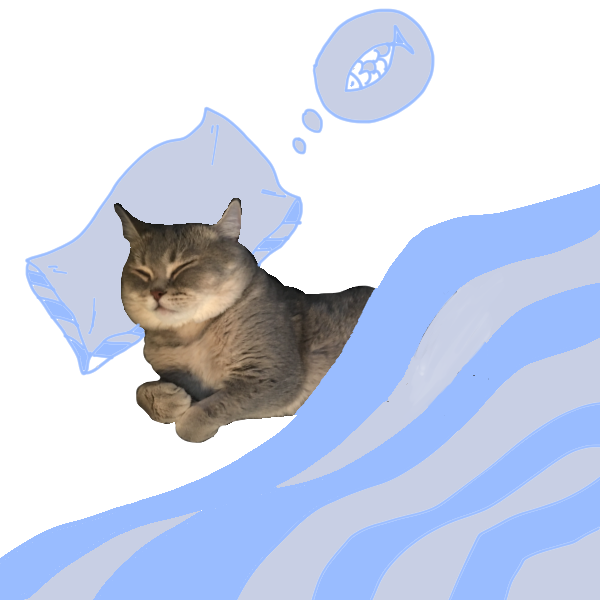
Despite its ups and downs, I began to enjoy living with a cat. Regardless of the painful moments he had brought to us, Burger is affectionate and very friendly. Every night when we go to bed, he will also come upstairs and quietly sleep on the end of our bed, or on the nightstand. Sometimes, he climbs on us and asks to be pet. We call him “little princess” because he is so spoiled.

After adjusting to living with Burger, we took the plunge and purchased a dog, a female Shiba Inu. We named her Kirby after obsessively playing Kirby Star Allies during summer vacation. I quickly discovered that raising a dog requires far more effort than a cat, since we had to train her from zero, and walk her every day. Kirby is naturally dominant, and she doesn’t like to be trained. Her breed is known for being independent and self-willed. She never follows me when I walk her, and she refuses to listen to my instructions. Sometimes she drives me crazy. After dealing with a cat that peed everywhere in the house, a stubborn dog is nothing to me. As I noticed my loneliness fading away living with Kirby, I began to appreciate many dogs’ happiness and joy. Especially during the pandemic, her happiness became a kind of sunshine that punctured my life, and reassured my girlfriend and I that maybe everything would be okay.

Over these last two years, I have become more calm when dealing with the troubles my pets bring me, and I have learned an important quality that I didn’t have before: Patience. Living with pets, of course, has its negative aspects—it requires a lifetime’s worth of responsibility and caring, and involves a lot of frustration and exhaustion. However, I also learned how to love and be patient when dealing with those struggles. In a time of global and personal hardship, my two animals brought colour to my life. After having Burger and Kirby, I feel like my life has two more witnesses. 

Off the Board, Opinion

Finding new words for my identity

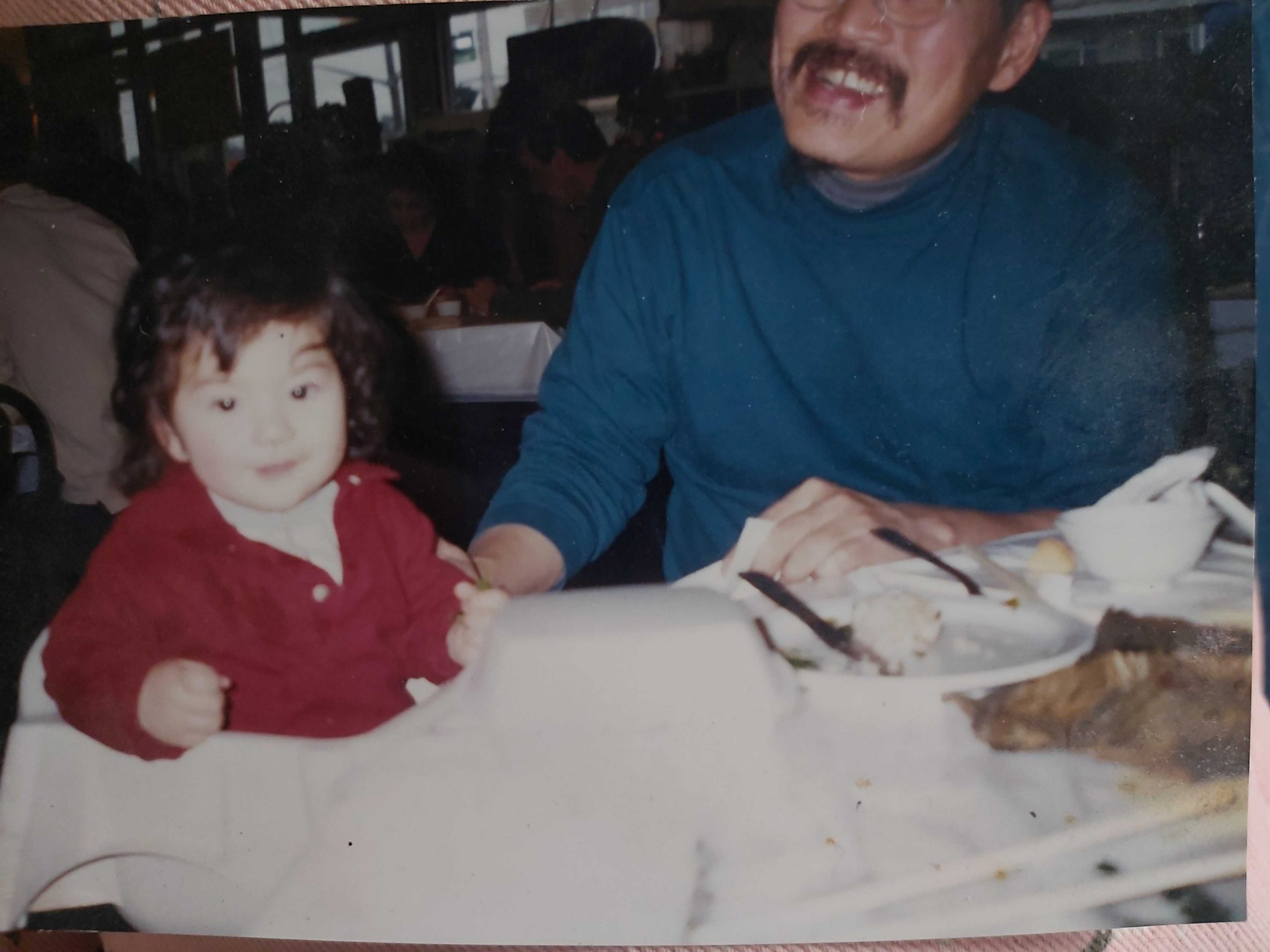
It took me until I was 12 to realize that my father’s English was accented. Before that, it was just my father’s voice: Familiar and melodic, a vestige of his first, tonal language. Like many mixed kids, I was hyper-aware of the racial categories I fit into from a young age. While I often wondered if I looked more white or Chinese, language did not play a part in my identity struggles. At home, we spoke English, and my highly educated father was always able to express himself in his second tongue.

Things changed when my parents decided to move to Taichung for my mother’s sabbatical. While she researched Taiwan’s forests with my father as an ad hoc translator, my world turned upside down. At school, I fought through tears as teachers and classmates attempted to engage me in a language I had never learned. My only allies at school were two Taiwanese girls who knew some English. When I tried to speak Mandarin one time, my friends laughed at my accent. I realized that while I felt somewhat Chinese at home, in Taiwan, I was completely foreign—seen as white as it gets.

We returned to Canada less than half a year later, but my feelings of linguistic inadequacy stuck with me. In the eight years afterwards, I took Chinese lessons with my mother. My accent sounded more natural by high school, enough to be taken for a native speaker—as long as I managed to spit out a few confident sentences. When I was 16, I went to Shanghai with my dad, spending my days in his air-conditioned office wrestling through articles on Baidu, the Chinese equivalent of Wikipedia. 

Although I was half-literate by the end of summer, I was still unable to fully grasp the language. I had learned Pinyin, the standard romanization of Chinese; I had encountered a few thousand characters; I even occasionally dreamed in Mandarin. But nothing ever translated to spoken fluency—probably because I never had anyone to speak to. My father has refused to speak Chinese with me throughout my life, citing his own discomfort using the language, even though he uses it with others. I began to wonder if I’d ever be good enough.

The fall after I returned home from Shanghai, I gave up learning Chinese. I spent my Fridays watching movies with my friends instead of studying grammar particles. There are times when my decaying comprehension of Chinese feels like a wound. But in truth, ending my studies was a huge relief. I stopped feeling that I had to prove my Chinese identity to myself, or make up for a childhood of linguistic immersion I never had. I also began to question the exclusionary paradigm that I implicitly accepted—that identity hinged on a certain grasp of language or a kind of invisible flexibility across cultural spheres. It wasn’t just me who was excluded by this linguistic absolutism, but others as well, like transracial adoptees raised by white families, or native speakers who experienced first language attrition. 

In truth, cultural identities are transitive and expansive, shifting across geographical context. Some diasporic individuals who return home even experience “reverse culture shock,” where familiar elements of their native country seem alien. My father often confesses to me that he has issues understanding modern Mandarin, with its English loan words, Tiktok slang, and novel technological terms that did not exist in 1960s Taiwan. As for myself, to accept that I’m the product of my circumstances, to integrate poorly into one of my cultures—this is a tough thing to face. But it’s also what most new immigrants confront when they try to integrate into a new country.  

My father once explained to me that he learned English by slowly reading books with the help of a Chinese-English dictionary, and I told him I couldn’t imagine learning another language without the internet. Only years later did I understand his response: “There was no other option. I had to survive.”

Read the latest issue

Read the latest issue