Latest News

Research Briefs, Science & Technology

McGill researchers set the stage for new triple-negative breast cancer therapy

A cancer diagnosis can radically change the course of a person’s life. Nearly one in two Canadians is expected to develop cancer over their lifetime, and one in four is expected to die from it. Fortunately, physicians have an increasingly effective array of treatments available to counter this devastating disease. 

Three types of receptors are commonly found on the surface of breast cancer tumour cells: Estrogen, progesterone, and HER2 protein receptors. These receptors fuel the growth of cancer cells. Existing therapies can block any of these receptors and successfully stop the growth of the tumour. However, none of these receptors are present in one specific subtype of breast cancer called triple-negative breast cancer (TNBC). It is the most aggressive subtype of breast cancer and it accounts for about 15 per cent of all cases.

The problem with TNBC is that cancer cell growth is not due to any of the three receptors, so current targeted therapies that block the typical receptors are not effective. The way these tumour cells grow is not yet well understood. 

Recently, a team of researchers led by Dr. Jean-Jacques Lebrun, a senior scientist in the Cancer Research Program at the Research Institute of the McGill University Health Centre (RI-MUHC) and a professor of medicine at McGill University, discovered novel mechanisms through which TNBC tumour cells grow. The team used a state-of-the-art gene-editing technology called CRISPR to screen the entire human genome and successfully identified two key pathways that allow TNBC tumours to grow and propagate. 

“There are absolutely no targeted therapies for this type of cancer,” Lebrun said in an interview with The McGill Tribune. “Patients will undergo chemotherapy or radiotherapy, both of which are largely inefficient.”  

The two pathways they identified include an oncogenic pathway named mTOR and a tumour suppressor pathway named Hippo. Both pathways play a role in the regulation of cell growth and programmed cell death, called apoptosis. In TNBC cells, the pathways become abnormally activated, leading to uncontrolled cell growth and tumourigenesis.

The identification of these two growth mechanisms was a major step forward in the search for a TNBC treatment. 

Lebrun and his team subsequently investigated possible ways to interfere with these growth pathways in a recent study published in Nature Communications. They found two potential drugs that would accomplish the necessary interference: Torin1, a drug known to block the mTOR pathway, and verteporfin, a drug normally used for retina eye diseases that can mimic the Hippo pathway.

According to Dr. Meiou Dai, a research associate in the Lebrun Lab at the RI-MUHC and first author of the study, preliminary research has shown some very encouraging results. 

“Torin1 led to growth inhibition on the cell models, and verteporfin was able to induce apoptosis in cancer cells,” Dai said in an interview with the Tribune.

Their results show that these two drugs are effective at countering the growth of TNBC cancer cells. They also demonstrated that both drugs act synergistically and have an even better outcome when used as a combination therapy. 

Lebrun and his team also tested the drugs for other breast cancer subtypes and found that they were all being affected by their combination therapy.

Although this study has paved the way to an effective targeted therapy for TNBC, there is still work to be done before it can become approved. Trials must be conducted on patients to examine the effectiveness of the combination therapy in humans. However, the fact that these are already known drugs is an important advantage. 

“One [verteporfin] is already approved for an eye disease while the second [Torin1] is currently being tested in clinical trials,” Dai said. “This is very important because it should really shorten the time it will take for the proposed combination therapy to be approved and start benefiting patients.”


Research Briefs, Science & Technology

New aortic prosthesis reduces heart surgery operation time

On May 31, a research team at the Montreal Heart Institute (MHI) became the first in Canada to implant a new cutting-edge biological prosthesis into a patient’s heart. The main purpose of the device is to substitute a faulty aortic valve—a valve that regulates blood flow between the heart’s main pumping chamber (left ventricle) and the main artery (aorta). After a defective aortic valve has been removed from the heart, the prosthesis acts as its replacement. 

The novelty of this device is that the replacement tube and valve come pre-assembled, reducing the time patients spend on the operating table and minimizing the risk of technical errors by surgeons. However, according to Renzo Cecere, the director of cardiac surgery at the McGill University Health Centre (MUHC), the new valve generally shares the same design as older models.

“The advantage now is that we have this conduit that comes pre-packaged and pre-built with a biological valve contained within the conduit,” Cecere said in an interview with The McGill Tribune. “But conceptually, there is nothing new or brilliant about this, it just has not been available on the market.” 

Still, the new device is likely to help many patients suffering from aortic valve disease: In 2017, faulty aortic valves accounted for over two-thirds of all valvular heart disease deaths in the United States. 

Valvular heart disease occurs when the aortic valve does not open or close properly. The valve consists of three flaps that open and close together with each heartbeat and acts as a “gatekeeper” by controlling how much blood flows from the heart to the rest of the body. If the valve is diseased, it becomes either too narrow and stiff to fully open (stenosis) or too wide to close completely (regurgitation), causing some blood to flow backwards. Sometimes, valves can also be malformed due to a birth defect called congenital heart disease.  

Given the prevalence of diseased aortic valves, replacing them is a common operation known as the Bentall Procedure. The process involves removing the aortic valve and root and then implanting an artificial tube with a mechanical or biological (tissue) valve inside of it.

Until recently, surgeons have had to sew the valve into the tube before inserting it into the patient’s heart. This step of the procedure is complex, time-consuming, and carries the risk of surgeons making technical errors when stitching the tube and valve together. This new prosthesis, however, eliminates this step with it being pre-assembled and therefore ready to use.

Fortunately, this device will soon be offered to patients in the MUHC: Cecere has already submitted a formal request to acquire it. However, only a select number of patients could qualify as good candidates for this device—even though the MUHC performs about a thousand heart surgeries a year.

“There are a lot of things we do that are quite niche and not high-volume activities,” Cecere said. “But nevertheless, the patients need to be served. It is our obligation to make sure we have the right tools on the shelf.”

For Cecere, this device is further evidence of the remarkable progress that medical technology has made since he became a cardiac surgeon.

“Whether it is in coronary disease, valvular disease, heart failure, or artificial heart technology, all of them have made a tremendous evolution in the last 15 to 20 years,” Cecere said.  Indeed, the first aortic valve replacement was performed in 1962 and now, nearly 60 years later, there is a pre-assembled prosthesis that can be implanted into a patient’s heart in 2.5 hours.

Sports

Nine best Olympic logos

Every two years, like clockwork, millions of people collectively spend two weeks with their eyes glued to a screen, rooting for their countries’ athletes and watching thrilling sports until our hearts, and our eyes, bleed. The Olympics have been a celebration of athletic excellence since their founding on a global scale in 1896, when Athens hosted 14 nations and 241 athletes at the first official International Olympic Committee (IOC)-run games.

Situating the Olympics historically can provide an interesting window into the past. While records and medals are often most fondly remembered, the logos of the last 51 Olympiads can tell us about design movements, historical moments, and cultural touchstones—and they are also just cool to look at.

Without further ado, here are nine of The McGill Tribune’s picks for most notable logos from the last 125 years of Olympic history.

London 1948

Although the Olympics began in 1896, their early branding largely consisted of distinct fonts, coats of arms, and travel posters—rather than logos. The 1948 London Summer games featured the first real “logo,” including the iconic five rings, which symbolize the five original participating continents in the inaugural games. The depiction of the Elizabeth Tower resembles a woodblock print and the hands on the clock tower are set to four o’clock—the time of the opening ceremony, demonstrating an incredible attention to detail. The presentation of a famous British landmark was meant to symbolize the power and stability of England coming out of the Second World War.

Cortina d’Ampezzo 1956

The Olympic emblem for the 1956 Italy Winter Games was the first logo to be selected through a design competition. Italian designer Franco Rondinelli used lots of colour—a first in emblem design—while also heeding the requirements of the competition by including the Dolomite mountains and the Olympic rings. This was also the first inclusion of a stylized “snowflake” design, with many others following in the subsequent decades.

Rome 1960

The Rome 1960 logo is majestic and sombre, evoking the ancient history of its host city. Pictured are Romulus and Remus, the feuding twin brothers described in the bloody legend of the founding of Rome. They sit beneath a snarling she-wolf, who, according to legend, found the twin boys abandoned on the river Tiber and nursed them back to life. She stares at the viewer from afar, as if daring us to rise to the Olympic challenge. Of course, this emblem would not be complete without Roman numerals, which only add to its overall mythical impression: It is as if the logo were etched into an ancient stone wall. Indeed, the games themselves have gone down in history for the notable achievements of Abebe Bikila, the first East African to win a gold medal—and who did so running the marathon completely barefoot. 

Tokyo 1964

The Tokyo 1964 logo, one of the most minimal designs on this list, is also one of the most aesthetically pleasing. The logo’s striking colour scheme and bold theme were imprinted on programs and posters throughout the games. The main feature, a red disc with a subtle gradient, is drawn from Japan’s iconic flag, named “Hinomaru.” The flag was only officially adopted in 1870, but its earliest origins date back to the eighth century. The red circle represents the rising sun but is distinct from the controversial Rising Sun flag associated with imperial Japan’s human rights abuses. The design itself was submitted by artist Yusaku Kamekura, whose works mixed Bauhaus influences with traditional eastern designs.

Mexico 1968

This design is a visual delight: The slim parallel lines in the font catch the eye and are exceedingly representative of the design wave of the 1960s. “It was making geometry sing,” said Lance Wyman in an interview with Global Sports Matters, the artist who designed the logo. “It was making it expressive, making it beautiful, making it strong. It had a cultural characteristic when we put it all together.” The insertion of the Olympic Rings into the “68” was not only creative and sleek, but was also prominently featured on the advertising and merchandising of the 1968 Olympics, leading to the production of visually stunning hats, stamps, and posters.

Montreal 1976

This simple, yet pleasant design holds a fond place in many Montrealers’ hearts and is still seared into the city’s core, as much of the park and recreation infrastructure built for the games remain integral parts of the city. The rings extending upwards were emblematic of the prevalent design movement at the time called “Canada Modern.” The centre oval represents the track—often seen as the central sporting event of the Olympic games—the three pillars symbolize the medal podium, and the entire design loosely resembles the Canadian maple leaf. This clean and simple design pervaded the entire aesthetic of the games, and was included on everything from the uniforms to the architecture.

Atlanta 1996

The Atlanta 1996 logo is unique from the others on this list for its vibrant colours and the “100,” marking the Olympic games’ centennial. Designed by Michael Collins, the eye-catching multicoloured stars rising out of the Olympic torch are evocative of ‘90s graphic design trends, that favoured bold colour choices and geometric shapes. The stars also symbolize the athletes’ pursuit of excellence. The deep green background brings to mind the laurel wreaths originally worn by competitors in Ancient Greece, as well as the tree canopy featured in much of Atlanta’s urban landscape. These were exciting Games for McGill and Canada, as McGill graduates Tosha Tsang and Alison Korn won silver in the womens’ rowing eights.

Beijing 2008

The Beijing 2008 logo, entitled “Chinese Seal-Dancing Beijing,” departs from its more clean-cut predecessors with its unique, calligraphy-inspired style. The white figure in motion is etched out of the red—a colour that bears significant cultural meaning in China—and gives the emblem the look of a Chinese seal. The figure not only depicts a dancing athlete but also bears resemblance to the Chinese character “Jing” to represent the host city. That year, Montreal rejoiced as McGill student Thomas Hall won a bronze medal in the men’s 1000m canoe race.

Tokyo 2020

Finally, we return to Japan for another exemplary design, this time a chequered pattern known as “ichimatsu moyo.” The design is said to symbolize prosperity due to the colour pattern continuing indefinitely. The lattice is made up of three different types of shapes to express designer Asao Tokolo’s message of strength in diversity. In addition, the indigo blue is emblematic of Japanese culture due to its use as a dye dating back to the 17th century. Though the games took place in the summer of 2021, the Tokyo 2020 banner remained since merchandise was already being mass-produced before it was postponed for a year.

Commentary, Opinion

The SSMU BoD’s ratification of the Divest for Human Rights Policy is long overdue

On July 22, the Students’ Society of McGill University (SSMU) Board of Directors ratified the “Divest for Human Rights Policy” with five votes in favour and two votes against. Back in February, SSMU’s democratic bodies—the General Assembly and the Legislative Council—overwhelmingly voted to approve the policy. However, the Board of Directors chose to delay the policy’s final ratification for five months while subjecting it to absurd bureaucratic obstacles, including a Judicial Board hearing and an expensive legal review by SSMU lawyers. Even after the policy cleared all these hurdles, some directors still resorted to the same old scare tactics that students have come to expect from the Board, claiming that ratifying this policy would provoke financial disaster for the student union due to reprisals from the McGill administration. Thankfully, most directors did not fall for these cynical arguments in the final vote, and instead abided by the student body’s democratic decision. 

This means that SSMU will now be throwing its full support behind the Divest for Human Rights campaign, demanding that McGill University cease all its investments and financial relationships with several corporations complicit in colonial land theft, environmental destruction, war crimes, crimes against humanity, and genocide, both in Turtle Island (North America) and abroad. This campaign will thus complement and reinforce the existing campaign against McGill University’s investments in fossil fuels and colonial pipelines. Such solidarity work is essential, because the destruction of our planet goes hand in hand with the violent oppression and dispossession of colonized peoples, from Wet’suwet’en, to Palestine, to East Turkestan.

The corporations named in the policy are the following: 

TC (TransCanada) Energy Corporation, which is responsible for the ongoing invasion, colonization and destruction of the lands of the Wet’suwet’en and other Indigenous Nations across the continent; 

Lockheed Martin, the developer of weapons used in violent warfare, including the Saudi bombing of Yemeni civilians

Re/Max, which sells real estate in illegal Israeli settlements on stolen Palestinian land, thereby contributing to violent attacks on indigenous Palestinians by Israeli settlers and soldiers; 

Oshkosh Corporation, an industrial truck company which provided vehicles to the U.S. military for its invasion of Iraq, to the Saudi military for its war in Yemen, and to the Israeli military for its apartheid regime and other atrocities in Palestine; 

Puma, Foot Locker, Nordstrom, and Kohl’s, all four of which are complicit in the use of Uyghur forced labour by the Chinese government, within the context of a genocidal campaign of cultural erasure against Uyghurs and other Muslim ethnic minorities throughout East Turkestan (Xinjiang).

In the past half-year, opponents of the policy frequently resorted to the argument that SSMU should not take a strong stance on “geo-political issues.” However, the inescapable reality is that McGill’s investment decisions make it complicit in climate catastrophe, settler-colonialism, imperialism, militarism, racism, and crimes against humanity. The fact that the university funds these investments with tuition money makes students complicit as well. This divestment campaign must therefore be understood as an attempt to end the unwitting complicity of students in these global injustices, in addition to the deliberate complicity of the university itself.

McGill and other universities are increasingly governed like for-profit corporations, where the voices of students are too often trumped by the desires of powerful alumni and corporate donors. Yet our student body and student union have a proud history of championing social justice, environmental protection, and anti-colonial liberation worldwide, including the anti-apartheid struggle at McGill in the 1980s. 

Now that it has finally been fully adopted by SSMU, the Divest for Human Rights campaign must show the McGill administration that students will not accept its violent investment policies. McGill needs to start acting like an educational institution which listens to its students, rather than a greedy corporation engaged in immoral and destructive business for easy profit. Divestment will happen if we continue to struggle together, in the spirit of decolonization, international solidarity, and indivisible justice.

Horoscopes, Student Life

It’s a (zodiac) sign: The McGill club for you

With such a diverse catalogue of student clubs and initiatives at McGill, finding your perfect match can be a challenging pursuit. As the semester draws near, students are figuring out classes, work schedules, and whether or not to get that pink pixie cut. Instead of agonizing over which club to join, trust in your zodiac sign to have the answer.

Aries 

Your energy may annoy your loved ones at times, but will be greatly appreciated on a sports team like the McGill Naginata. The club practices Naginata, a martial art that can help you release your competitive energy in a positive way.  

Taurus 

You usually show patience and significant practicality in the activities you engage in. These qualities will be an asset to the McGill Culinary Society, especially when your friends start requesting homemade gnocchi every Friday night. In this club, you might even find someone to cook with—hopefully that person is not a Leo, as fire signs can often butt heads!

Gemini 

Gemini are known as the two-faced zodiac sign. You will fit well in a club like McGill Improv, where you can unleash your alter ego by playing different characters. Your intellect will help you fashion smart scenarios and witty replies that will delight the attendees. 

Cancer 

Since the crab is a tremendously artistic and emotional creature, you have the potential to create magnificent paintings and calligraphy in the Chinese Brush Arts Club. Putting all of your feelings into your artwork will only work in your favour—your tears will blend into the ink and become a part of the art while you listen to your “2 a.m. sad songs” playlist.

Leo 

No one loves admiration more than you. Fortunately, in a club like the Montreal Di Majesty, you can dance Bhangra, a Punjabi dance with lively and vibrant moves that are sure to mesmerize your audience! As long as you can refrain from admiring yourself in the mirror, you should pick up the dance moves in no time. 

Virgo 

As hardworking as you are, you would be a fantastic addition to the F Word Collective, an intersectional feminist magazine founded and largely run by McGill students. Motivated to produce quality content, you will become a dedicated writer. Just remember to schedule in some leisure time as well, or you might burn yourself out before seeing your work published!

Libra 

There is nothing you enjoy more than being around other people and getting involved in team projects. Effusion A Cappella, a McGill a cappella group, could become your newest passion. Since you are indecisive, however, let’s hope you are not asked to choose which song to sing!

Scorpio 

You are brave and practical—other students should not be surprised to find themselves drawn to your resourcefulness. You would thrive in an environment like the McGill Outdoors Club, an organization that allows Montrealers to immerse in nature and learn new skills through group outings dedicated to different activities, including, but not limited to, hiking, skiing, and ice climbing. 

Sagittarius 

With you, the choice is easy: Your great sense of humor could do wonders in the McGill Comedy Club. Despite your evident charm, you can be quite undiplomatic at times, so you should be careful not to ruffle too many feathers in the audience. 

Capricorn 

You are undeniably a know-it-all, and while this may peeve your classmates, the McGill Trivia Club will welcome you with open arms. Fortunately, you are disciplined enough to teach yourself trivia but inhibited enough to not speak impulsively during a Quizbowl game. Surely, a winning combination.

Aquarius 

You gravitate to clubs of all sorts—as long as they do not require you to share your emotions. Since you have a prominent independent side and enjoy unique endeavours, you would be a strong addition to the SynesthASIA club, which hosts yearly fashion shows featuring local brands. Knowing your character, you might just decide to start a brand of your own!

Pisces 

The McGill Students’ Ballroom Dance Club will appeal to your intuition and gentleness. Because of your emotional side, you will find yourself instantly swayed by the music and falling head over heels for your partner. This special someone should remember, however, that you do not respond well to criticism—so best to keep comments about your two left feet to a minimum.

Ask Ainsley, Student Life

Anxious about the return to in-person learning

Hi Ainsley,

With September approaching, I am feeling anxious about returning to in-person learning. I am starting my second year at McGill after finishing the first one entirely online, and I have not had the chance to connect with a lot of people in my program. I feel a little lost socially.

What should I do?

Sincerely,

Intimidated by Return to Live Learning (IRL)

Dear IRL,

Thank you for your question. Your feelings are totally valid; this past year and a half has forced a new reality onto students, and many have found adjusting to online learning to be a challenge. Now, students are expected to come back to campus, interact with classmates in person, and generally embrace pre-pandemic activities. That can be overwhelming and scary, especially for those who have gotten used to studying from home with limited social interaction. Remote learning can be particularly frustrating for second-year students, who may be familiar with their program, but not necessarily with the McGill campus and its student life. 

The first thing you can do is acknowledge your feelings and accept them. It is okay if you are feeling this way, not just because others probably are as well, but because letting yourself feel is so much healthier than repressing your emotions. If the anxiety is overwhelming you, try to reach out to family or friends who you feel would understand what you are going through. If they are unable to provide the advice, support, or reassurance you need, consider discussing your situation with a counsellor from the keep.meSAFE support program or the Student Wellness Hub. The keep.meSAFE counsellors are available 24/7 and covered by your student fees—you can reach them at 1-844-451-9700 within Canada and at 1-416-380-6578 internationally. 

If you are looking to connect with people from your program, your faculty or cohort may have a Facebook group through which you can interact with classmates. If you prefer to stay away from social media sites, McGill offers events and workshops through the  MyInvolvement portal. If you are a graduate student, consider attending the Grad Breakfast Club event offered on Mondays at 10:30 a.m., where graduate students discuss their week ahead. If you are an undergraduate student, check out the bimonthly Pandemic Drop-in Support event at 10:00 a.m. on Tuesdays. 

While club activity at McGill is more limited during the summer, you can check out the list of clubs on the SSMU website and email those you are interested in joining. Once September arrives, make sure to attend Activities Night, a biannual SSMU event that showcases all the ways to get involved in student life at McGill. In addition, you may find comfort within your program’s student association. For example, if you are an Engineering student, you can attend the events hosted by the Engineering Student Society, where you are guaranteed to meet people from your program. Eventually, you may even elect to run for an executive position and hold a leadership role.

These recommendations may not entirely remove your anxiety or your feeling of being lost socially, but they might ease you back into in-person learning and help you connect with other McGill students with similar emotions. With everyone having been distanced for so long, I am confident that the student life at McGill will return with renewed vibrancy. A positive outlook will be your best ally right now. 

Take care,

Ainsley

Student Life

Adventures from my balcony

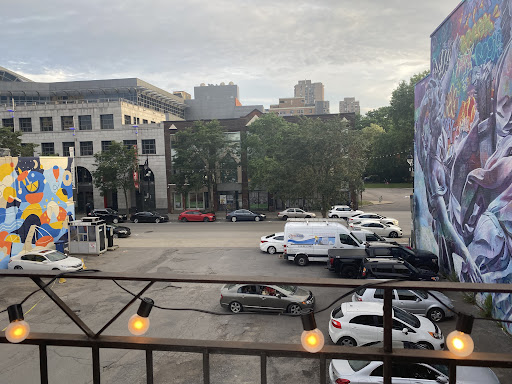
I have been spending a lot of time on my balcony this summer. It overlooks a parking lot that spills onto St-Laurent Boulevard, and at night, the bulbs spanning the street fill the whole place with light. I am learning that there is a lot you can do from your balcony; this small space provides an escape from an often claustrophobic interior life. 

Impulsive decorating

I am a restless person by nature, a fact that the pandemic has confirmed for me. Attempting to channel this restlessness into productivity has led to what I have called “impulsive decorating.” With the help of McGill’s Free and for Sale, I furnished my balcony with a small IKEA table and stools. A plant from the corner store sits on the table, and Edison lights illuminate the railing. 

Murals

I am fortunate to look out onto a parking lot with no less than five bright murals, one of which is, in my opinion, the best mural in the city. The piece, commissioned for the Montreal Mural Fest, is by the artist duo PichiAvo, and represents the goddess Artemis and features two ethereal figures overlaid with graffiti-like designs. Another notable mural is Ron English’s “Popagandaa,” a portrait that resembles the Mona Lisa with a skeleton smile. An underrated form of visual excitement, these murals are a much-needed retreat into a world of art separate from the endless days stuck indoors.

People-watching

At times, I enjoy watching people photographing the murals more than the murals themselves. Tours visit the space several times daily, and groups of 20 people disperse across the parking lot to photograph the murals. It is funny how living in front of a tourist destination makes you feel surprised that other people would want to visit it.

The murals also provide the perfect location for Instagram photos. Bo Burnham aptly said that the physical world is a performance space for the real world of social media, and watching 10 different people snap photos in front of the murals every day seems like the perfect proof. I once witnessed a girl arriving in a yellow dress to contrast the blue of the underwater-themed mural behind her. She stayed for an hour to snap the same photo over and over again. My roommate told me about another woman who posed with her lips puckered, pretending to kiss the whale in the mural. 

The Waving Game

Recently, I have taken to sitting on the balcony with my roommates with a few drinks in hand to wave at passers-by. The number of people that walk through the parking lot on their way to St-Laurent Boulevard is significant, and they always seem to look up at our little balcony. Their distance from us makes them feel bold enough to stare longer than they should, but I feel powerful looking down at them, and I wonder if it is us or them on display.

We have transformed this exercise into a competition: Whoever waves at the most people wins. This juvenile activity has led to some surprisingly wholesome encounters. Most strangers do not expect you to wave at them and are quite delighted when we do so. One man, who had his hands full with a giant cooler, waved it frantically in the air, then transferred it to his shoulder and flashed us a thumbs up. Another did not stop waving until he was out of sight.

Like many things, the balcony is not without its flaws. Sometimes it soaks up too much sun, burning my skin and making me think I should get an umbrella—perhaps the next step in the decorating process. More often, however, when the wind is blowing just enough and the sun is setting, it is the perfect place to be—a small space turned into a large pleasure.

Student Life

Centering the faces and stories of Chinatown’s residents

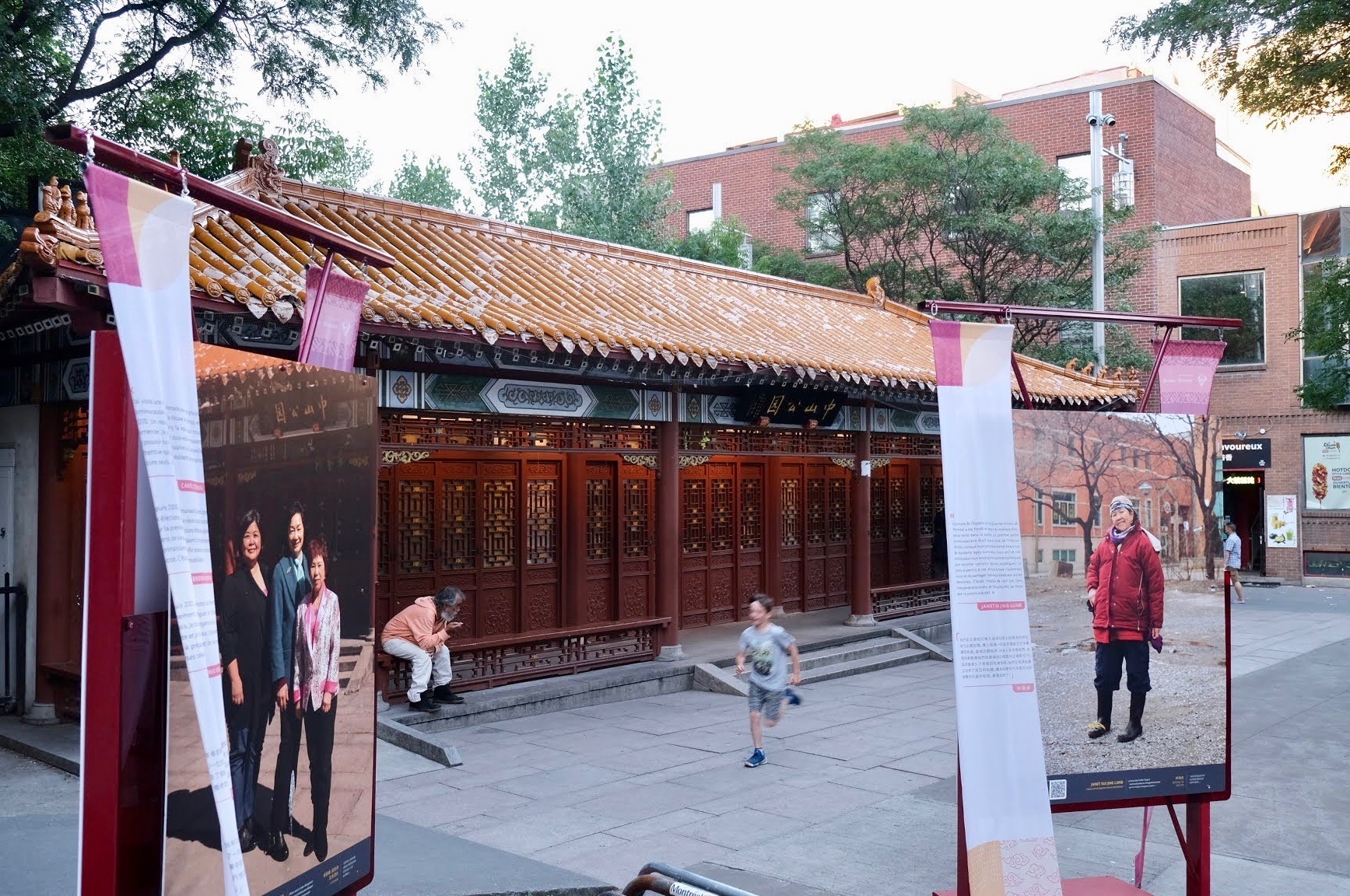
On May 26, Rue de la Gauchetière, the main street of Montreal’s Chinatown, welcomed Dialogue with the Sino-Montreal Community,” a photo exhibition showcasing the diverse faces and experiences of its residents. Presented in partnership with the Centre des mémoires montréalaises and the Chinese Family Service of Greater Montreal, the project was initiated in a context of continuing gentrification and displacement of the Chinatown populace. Through photo modules accompanied by personal voices, the featured individuals present the often obscured cultural heritage of a storied, resilient community.

Montreal Chinatown’s 200 years of history has been repeatedly ignored by plans of large-scale real estate developments. With extensive infrastructure projects starting to invade in the 1970s, the district lacks architectural protection and has lost crucial sites of community and culture. Most recently, in January 2021, the city of Montreal approved developers’ request to acquire multiple of the most historical buildings in the neighbourhood. Parker Mah, artistic director and curator of the exhibition, sees the sanctioning of such encroachments as a neglect of Chinatown’s historical and cultural significance.  

“The fact that [large-scale developments] have continued to get licensed despite all our best efforts to engage the city through the consultation process bears witness to the apathy of municipal and provincial government [toward] the tangible and intangible cultural heritage of Chinatown in Montreal,” Mah said in an interview with The McGill Tribune. 

Alongside underscoring Chinatown’s architectural history, the project reveals the intangible cultural heritage rooted in the daily lives and memories of its residents. While community leaders—often Chinatown’s spokespeople in the media—perform crucial work to protect the neighbourhood, the exhibition team sought to make visible residents whose persistent service to the neighbourhood is obscured both in the community and public eye. 

“We wanted to find people who come to work everyday, and run a restaurant or work as a cashier,” Mah said. “They are contributing just as much, in my mind, as [Chinatown’s] VIPs. Their sweat and blood is keeping Chinatown running through this difficult pandemic period.” 

Community members featured in the exhibit, such as the owners of Chow Patisserie, one of the last places in Montreal that offered pastries hand-crafted with traditional Guangzhou techniques, or Timothy Chan, a long-time member and de facto historian of the community, bespeak the traditions and inherited expressions of culture facing erasure.

Due to language barriers, residents often face difficulty inputting their opinions in the decision-making process of Chinatown’s development. In order to meet community needs, Jerry Lan, McGill BCL ‘23 and volunteer translator with the Chinatown working group, believes there should be a greater integration of resident voices in conversations about Chinatown’s future. 

“The city wants people who speak French [but] it’s hard for some of the folks who are actually in Chinatown, active in the community. ” Lan said in an interview with the Tribune. “[The language barrier] can create a dissonance in the conversation with what the community actually wants.” 
The exhibition’s large photo modules, prominent along Chinatown’s busiest street, are a rare public commemoration of Chinese identity for the neighbourhood. While wedged between the heavily saturated cultural sites of Old Montreal and Quartier des Spectacles, Chinatown itself receives few forms of cultural investment. Mah described how the exhibition creates a sense of pride among community members who may, in differing ways, identify and celebrate themselves with the displayed stories. 

“It’s pride for them,” Mah said. “Not just for the people in the exhibition but for the people who live in the area to see that something’s being done, that your face and people are being put forward and recognized.”

The exhibition’s guided tours, offered on several dates between June 16 and 27, aim to share and spur discussions with the public on Chinatown’s histories. Led by youth volunteers, the tours allow younger generations to continue preserving Chinatown’s culture and heritage. 

“[The tour animators] are not experts in Chinatown’s history, but are there to engage in dialogue with visitors about their experiences as young people growing up in Chinatown,” Mah said. “It’s really about opening up conversation.” 

The exhibition will be on display until October 15, 2021.

Arts & Entertainment, Dance, Theatre

Japanese urban dance film ‘Dreams on Fire’ sets Fantasia Festival ablaze

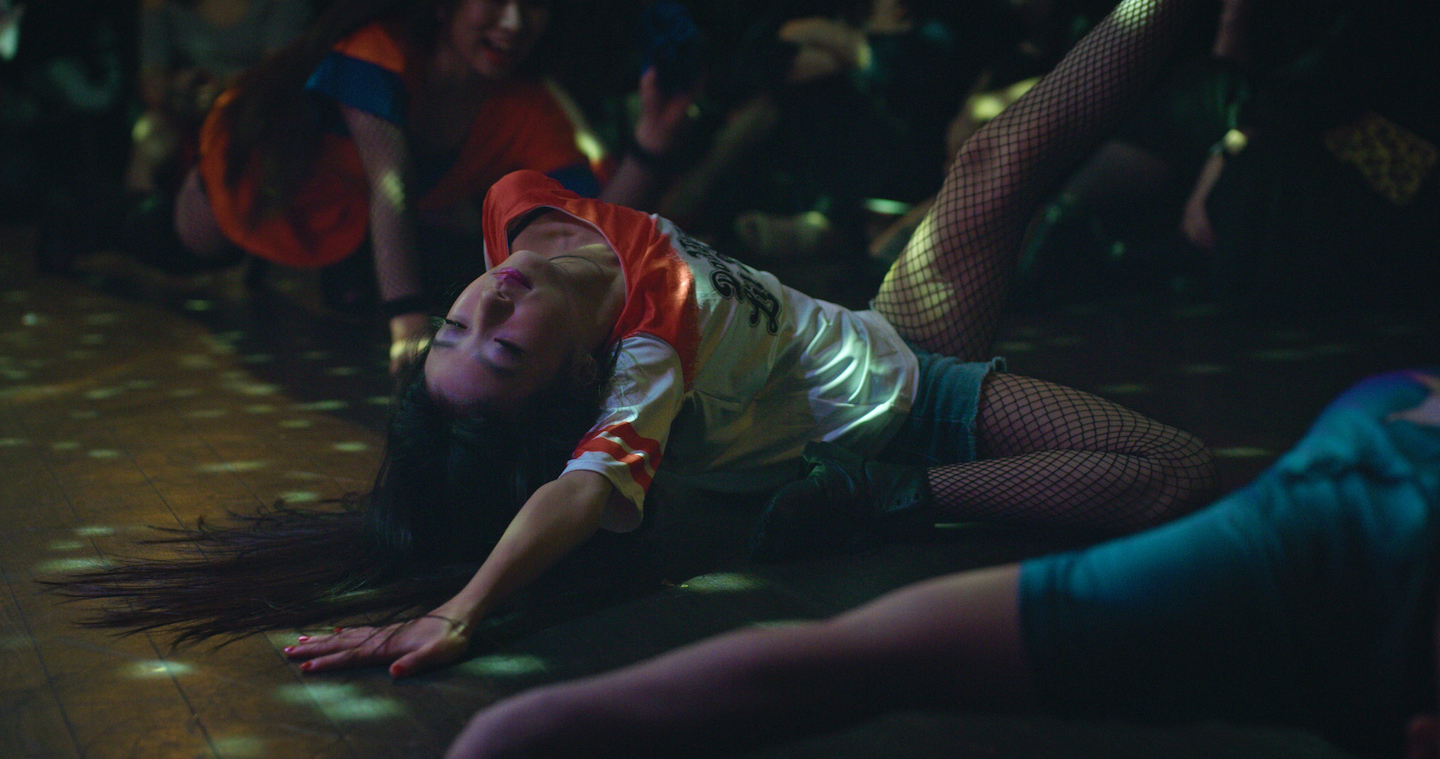
On Aug. 8, Dreams on Fire made its North American debut at the 25th edition of the Fantasia International Film Festival. Written, directed, and produced by Montreal-born filmmaker Philippe McKie, the film follows Yume’s (Bambi Naka) pursuit of fame as she moves to Tokyo to become a dancer. There, she grapples with the crushing disappointment of failure, the relentlessness of the hustle, and eventually, the euphoria of making it in the big city.

The screening took place at the Cinema du Musée, in the Musée des Beaux-Arts de Montréal, to a sold-out audience packed with Fantasia newbies and veterans alike. The energy of the crowd was unlike the rowdiness of festivals past; instead, there was a sense of reverent appreciation for the event’s return to in-person showings.

From its very first frame, Dreams on Fire establishes dance as its lifeblood—and also as Yume’s sole focus in life. Haunted by the family she left behind in the countryside, she launches herself into the gritty, electrifying world of urban dance, taking lessons when she can and working a string of exploitative jobs to support herself. Although Yume’s performances are stunning, the audience quickly realizes that she is but a tiny fish in a massive pond—her competitors are  at the top of their game. Their skills aren’t just for show, either; McKie insisted on only casting professional dancers for dance roles in the film. 

“Picking actors versus picking dancers, there is a gamble either way,” McKie said in an interview with The McGill Tribune. “My gamble is, can they act? I am gambling on a lot, but at least the dance is going to be sick. This is the first-ever Japanese urban dance film, so nothing else matters.”

Yume delves into many different underground scenes in Tokyo, as she finds work at a hostess club and a BDSM-themed bar, visits drag shows, and tries to land a gig as a go-go dancer. The young performer faces exploitative bosses, predatory customers, and poverty. Her misfortune would feel relentless if it were not for the acts of kindness carried out by the women in the film. Dreams on Fire does not waste time on romantic subplots: Instead, it foregrounds female friendships. Yume’s bond with seamstress Chocho (Medusa Lee) reminds viewers that in the cut-throat Tokyo underground, knowing the right people is a survival mechanism in itself. 

“It was important to me that there would not be romance,” McKie said. “I’m tired of being force-fed those narratives in film. When you are hustling, sometimes there is no time for anything else. [There is] survival, and then the dream.”

As the camera follows Yume’s claustrophobic journey through Tokyo’s crowded streets and the tiny net cafe she lives in, the audience longs for her to spread her wings. Although viewers are treated to Yume’s spellbinding dance performances, recognition seems to escape her at every audition and competition. 

The film is achingly effective at portraying the pain of rejection. However, McKie prefers the term “failing forward” to describe Yume’s story: At every misstep or letdown, she forms a connection that leads her to another opportunity. 

“A lot of what the character goes through mirrors my own experiences,” McKie said, laughing. “The way that she does not let herself get destroyed, and keeps going, is kind of like my philosophy on life. In cinema, especially coming out of Hollywood, there are so many stories where there is one big challenge and the next time you win, but I don’t think that is representative of reality.”

McKie, who attended film school at Concordia but moved to Japan to embark on this ten-year-long project, hopes to expose Quebecers to the dynamism of Japanese cinema and to strike a balance between intrigue and authenticity. With Dreams on Fire, audiences cannot help but be captivated. 

The film will be streaming on the Fantasia Festival website until August 25. 

Arts & Entertainment, Dance, Theatre

Festival TransAmériques 2021 reveals the human condition through performance

Founded in 1985 by Marie-Hélène Falcon and Jacques Vézina, the Festival TransAmériques (FTA) is an annual contemporary dance and theatre festival that brings artists from across the globe to Montreal to kick off the summer season. 

This year, dance and performance artists dusted off their costumes and laced up their pointe shoes for 26 performances that ran live from May 26 through June 12 at the Place des Arts. Ranging in artistic format and content, the performances explored the complexities of the human experience through dance, speech, and theatre. 

La Romance est pas morte by 2Fik!

La Romance est pas morte, 2Fik! or Romance ain’t dead, 2Fik!, followed the performance artist 2Fik’s examination of the absurdity and danger of online dating apps. Set in a colosseum-like structure lined with cardboard cutouts of countless fictional dating profiles, 2Fik chameleonically transformed himself into each one of them. Embodying each of the 100 characters he created for the project, 2Fik invited viewers to visit a fake dating website—romanceala2fik.com—to chat with his character while on the stage.

The set was a shuttered three-room faux-apartment: a bathroom, a kitchen, and a bedroom sat in the centre of the stage. Three screen panels hung on the audience-facing walls and linked to the fake dating website. The leftmost panel displayed a “hot-or-not” rating of the most upvoted characters on the app. The rightmost panel played a live-time list of all of the anonymous texts the audience sent him, while the central panel displayed the character 2Fik was playing. 

Whether straightening a wig or throwing on a leather jacket, 2Fik transformed into his characters, running the gamut of age, sexuality, gender, class, religion, and nationality. In a Deveare-like fashion, 2Fik demonstrated not only his own talent, but also his fluidity of these identities—and perhaps the triviality of such labels. Breathing life and nuance into each of his characters, 2Fik’s digital caricatures revealed the hypocrisy of dating-app users: A boomer trucker posts a picture of himself at a strip bar while his bio condemns the younger generation’s obscenity; a tech bro in his late 20s frequently quotes his mom; a recent divorcée of 40 features five of the same unflattering selfies on her profile. The performance ultimately revealed the falsity of digital personhood, the nonchalance with which we flatten human beings into sentences and photos, and the cruelty therein—fundamentally, the farce of online dating.

Stations by Louise Lecavalier

In Stations, Louise Lecavalier’s first solo dance performance, the music takes the reins. Opening in total darkness, the show began with a low rumble that eventually gave way to four rods of light on the corners of the stage. These created a metaphorical boxing ring in which Lecavalier danced at the mercy of the melody.

Moving through different parts of the performance, Lecavalier engaged in a ritualistic trance; when the music beat with an intense electronic throb, her body shook, her arms bobbing like a raggedy pierrot. When the rhythmical pulse of the electronica became a frenetic fast jazz, Lecavalier swung around erratically; her legs kicked and tugged one way, her arms jerked her another, her head wrenched upwards, downwards. When a slow ballad crooned, she moved as if through molasses, her head bent backwards while her arms crawled out from under it. In the end, a beam of white and the red-orange light singled out Lecavalier, who buried herself to the ground, crouching down, into a final, sweet beat of silence. 

Ultimately, the performance was able to communicate the universal human truth of instinctual, animal-like intelligence, and showed that what cannot be said through words, can often be said through movement. One could sense that the artist had gained control over the music, rather than vice versa. It seems, in the end, that she had won.


Read the latest issue

Read the latest issue