

Latest News

Student Life

Amnesty McGill panel highlights the urgent need to address Sudan’s ongoing genocide 

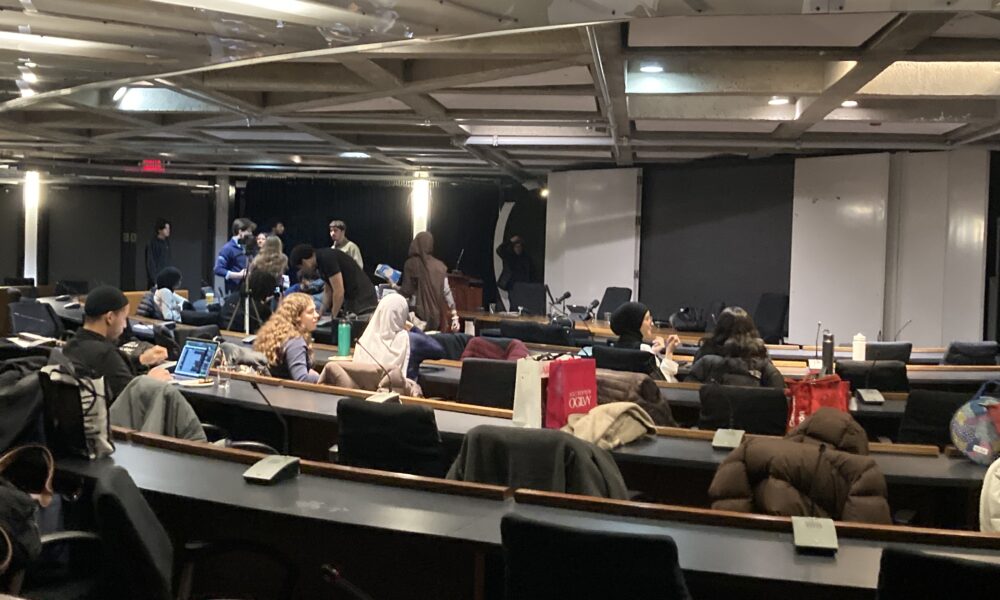
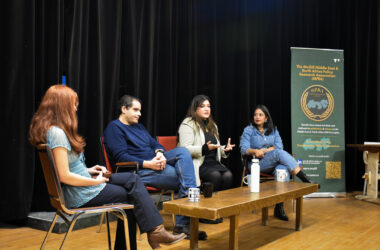
On Nov. 26, Amnesty McGill hosted a speaker panel that brought attention to the ongoing genocide in Sudan—an issue that remains largely absent from mainstream media coverage. The panel featured Professor Jon Unruh from McGill’s Department of Geography and graduate student James Achuli, both of whom study conflict and development in East Africa. Together, they provided important context regarding the history behind the violence in Sudan today, why the conflict has continued, and what makes peace so difficult to achieve.

Amnesty McGill co-president Anna Sophia Everett, U3 Arts, opened the panel, welcoming attendees and introducing the two speakers. 

In an interview with The Tribune, Everett explained why a panel like this matters; actively raising awareness about Sudan is crucial because many students simply do not learn about the crisis anywhere else.

“There’s not any immediate benefit for a Global North actor to involve itself in a conflict like this,” she said, pointing to how geopolitical interests—rather than dire humanitarian need—tend to drive international intervention.

During the panel, Professor Unruh walked students through the history of conflict in Sudan. He explained how Arab militias’ seizure of land from Black farming communities, government corruption, and the rise of armed groups have all contributed to large-scale violence and displacement. He traced how the genocide is inflicted and targeted upon Black, non-Arab ethnic groups, a pattern that began with the Janjeweed militias under al-Bashir and continues today with the Rapid Support Forces (RSF), many of whose fighters were former Janjaweed members. He stated that groups were pushed out of their land, farming communities were neglected, and the interests of colonial powers—including the pursuit of gold and other resources—made the region even more unstable.

Unruh emphasized that stories and messaging play a major role in framing the conflict as militia groups in Sudan seek to justify the acts of violence they commit. 

“Narratives prevail in conflict,” he said. “Each group in the armed conflict has a narrative, a story they tell themselves. It’s a narrative of grievance always. They’re the victims, and those people over there are at fault against us.” 

Unruh emphasized that the presence and messaging of organizations like Amnesty International can reshape conflict dynamics in unexpected ways. While Amnesty’s reports are directed at international audiences—calling for sanctions or intervention—combatants in the field hear them too.

“Even the presence of Amnesty International, [a] well known and powerful group with a powerful voice internationally, weighed in here,” he said. “Even when the organization is simply present in a conflict zone, its reputation in messaging can influence how combatants frame their own actions.” 

While Amnesty International’s messaging was aimed at the international community—calling for sanctions and intervention—it had an unintended effect on combatants in the field who were listening, too. When news of al-Bashir’s indictment for war crimes filtered down to Janjaweed fighters, it disrupted their narrative—suddenly, they questioned whether they would actually keep the land they’d seized through violence. The threat of accountability, even if distant, altered calculations on the ground, he explained. Without mechanisms to hold perpetrators responsible, crimes against humanity fueled by anti-Black racism remain unchecked.

After Unruh’s presentation, the panel opened the floor for questions. Students asked about the role of international actors, how climate and land use shape conflict, and what meaningful intervention could look like. The discussion gave attendees space to connect Unruh’s analysis to other humanitarian issues unfolding today.

When asked about the relationship between the UAE and the RSF, Unruh traced the connection back to Yemen.

“The RSF actually loaned itself out to the UAE in its international conflict,” he explained. “These are Sudanese fighters that ended up fighting at the behest of the UAE in Yemen.” That relationship, he noted, evolved into an arrangement in which gold flows out of Darfur and weapons flow back in.

The second speaker, James Achuli, began by grounding the conflict in lived experience. He explained how decades of instability in Sudan and South Sudan have shaped daily life for families in the region, especially those who have endured multiple experiences of displacement. He explained that displacement is not just a single event—it fractures communities, interrupts education, separates families, and forces people to rebuild their lives with very few resources or guarantees of safety.

Achuli also spoke about the difficulty of creating long-term stability. In his opinion, international actors often respond too slowly or focus on short-term relief rather than supporting structures that foster lasting peace. He stressed that real change cannot come from the outside alone—peace requires both global engagement and local leadership to have sustainable results. 

“It’s up to the South Sudanese people and an international community coming together to create genuine peace in South Sudan,” he said.

To close, Achuli emphasized the importance of humanitarian aid and how organizations like UNICEF help by providing basic literacy, teacher training, and safe spaces for children in Sudan. After his remarks, the floor was once again open for discussion, giving attendees the chance to ask further questions.

During the question period, Achuli was asked more about his personal story. He shared how he grew up when Sudan and South Sudan were still one country, spending his youth in a southern region where educational infrastructure was severely underdeveloped relative to Sudan’s capital, Khartoum. The disparity was a legacy of colonial-era policies that had systematically marginalized southern Sudan, leaving communities without the schools, teachers, and resources that were more readily available in the capital. While the British developed government schools in the north, they left education in the south to Christian missionaries with minimal resources. This colonial policy heavily invested in northern Sudan, creating pervasive disparities. By the time Achuli was born, southern Sudan remained one of the country’s most underdeveloped regions. When civil war erupted in 2013, he was just ten years old and found himself internally displaced, separated from his family while trying to continue his education.

His story underscored why events like this panel matter: They connect abstract policy discussions to the real experiences of those affected by conflict. Closing his remarks, Achuli addressed the event attendees directly. 

“When you sit in here, I’m wondering, what are you going to do with this information?” The question reframed awareness as a responsibility—not an endpoint, but a call to action.

In an interview with The Tribune, Everett shared what makes Amnesty McGill distinct on campus. She explained that the club offers a space where students can engage with human rights issues beyond academic analysis in a class setting. 

“I love school, I love academics,” she said. “But I think the best part about Amnesty is really focusing less on putting the perfect spin on something or trying to analyze it.” 

She stated that Amnesty’s strength comes from pairing strong research with meaningful advocacy. What matters most, she added, is the commitment of the students who attend.

“The nice part is that people do show up. They really care. It’s more so feeling like you’re taking an action on a day-to-day basis, even if it’s on campus.” 

The event elucidates the criticality of keeping conversations about Sudan visible at McGill. By creating space for students to learn, ask questions, and hear from experts, Amnesty McGill aims to highlight a deeply pressing genocide, transforming a conflict that is often ignored by mainstream media into a campus conversation that demands response. As Unruh emphasized throughout his presentation, narratives—including the stories combatants tell themselves, the frameworks international actors use to justify intervention or inaction, the language that shapes whether atrocities are recognized or minimized—determine how conflicts unfold. Keeping Sudan visible on campus is the first step toward holding institutions accountable for their role in perpetuating violence.


Opinion

Campus Conversations: Community

A love letter to the library
Sarah McDonald, Science & Technology Editor

If you’d have told me when I first got to McGill that my closest friendships would be forged in a library, there is no way I would have believed you, not even a little bit. Surely I’d make friends through classes, residence, and sports teams—but the library? No way. 

Little me simply couldn’t fathom how a library—a space for silent studying and wistful peering out the window, wishing you were at Open Air Pub (OAP) instead of Schulich—could ever lead to anything more than a dutifully earned grade and a fluorescent-lighting-induced headache.

What I didn’t understand is how central the libraries are to community life here at McGill. They are, at least in my experience, more than just academic hubs; they are social epicentres. 

When half of my ENGL 311 class agreed to meet to edit one another’s essays last October, I expected to learn a favourite colour or two, fix our essays, and leave. What I didn’t expect is that over the course of the year, those same people would fill my camera roll, my living room, and my heart so completely.

What began as an editing session in a McLennan library room quickly turned into a Wikipedia deep-dive on our professor. This, in turn, morphed into a conversational spiral only a deadline and a sugar rush could inspire. We left that room with two entire inside jokes—not bad for a bunch of strangers.

For the rest of the semester, we prepped for every assignment—whether it be an essay, a midterm, or a final exam—together. The library rooms in McLennan and Redpath became our second home. Those walls watched as we printed and marked up essays, played and re-played Kahoots, and wrote first drafts. But they also watched as we talked and hugged and snacked and vented and laughed and laughed and laughed so hard someone probably cried. 

Even after we had long established ourselves as a real friend group, we still found ourselves returning to the library rooms. After dinner and ice cream one February night, no one really wanted to go home; our roommates were asleep and it was cold outside. What did we do? We booked a library room.

Now, don’t get me wrong; I will be the very first to say there is more to university than just the library. However, there is also more to the library than just solitary confinement. There is something to be said about the feeling of collective camaraderie that only the environment of a library can truly foster. I don’t care if I’m writing a research paper and you’re solving differential equations; when it’s 2:00 a.m. in a McGill library, we’re in the same boat.

Libraries are the centre of our community for this very reason. Whether you’re studying, crying, or keeled over laughing with those soon-to-be friends from your class, the libraries—or at least their talking floors—will welcome you with open arms. I will forever mourn the day my friends and I stop texting the self-explanatory ‘library?’—a place, a question, and a bid for connection all rolled into one.

Goodbye to McGill’s athletics community 

Clara Smyrski, Sports Editor

On Nov. 20, McGill Athletics and Recreation announced the decision to cut 25 of their varsity and club sports teams, effectively ending 202 collegiate varsity careers and the entirety of the 18-team club sports program

For many at McGill, this decision is a mere headline that may catch their eye but will inevitably be pushed to the back of their mind. For others, however, it’s a turning point in their university experience—one that cracks the foundation that has supported them through every challenge university life has thrown their way.

Sports are not just a way to stay active; they teach teamwork, accountability, determination, and perseverance. Sports are arguably one of the most effective community-builders in the world. Sports have the power to bring teammates from completely different backgrounds and contexts onto the same field—and the power to unite entire nations across political and religious divides.

On the McGill Field Hockey team’s Change.org petition, an alumna of the team, Catriona, commented on how field hockey has changed her life beyond university. 

“Playing field hockey was what made me finally feel at home at McGill. It has provided academic and professional mentorship and connections that I would never have had otherwise [….] I know employers that have specifically sought out student-athletes because they work hard, balance responsibilities, and commit to being part of a team,” she wrote. “I will seek [a field hockey team] out wherever I live for the rest of my life—but I would not be doing this had I not been given the chance to play in college.”

Similarly, on McGill Track and Field’s petition, one commenter, Nadine, wrote that universities would not be/universities without sport. 

“My involvement in university athletics had a profound impact on my life. Beyond the medals, memories, and friendships, training and competing taught me how to balance my time, set priorities, and develop discipline and a strong work ethic,” they wrote. “Post-secondary education is far more than what happens in the classroom, it shapes who you become.”
The athletic community at McGill is far from perfect. For years, it has been riddled with unequal resource distribution and tension between teams and their administration. But this decision takes an already crumbling athletics community and rips it down the centre.

Amidst a hiring freeze, Quebec’s new French proficiency requirements, and a nationwide cap on international study permits, both McGill University and McGill Athletics and Recreation are grappling with a new and harsh reality. But when at a crossroads where McGill Athletics could’ve used their international prestige to stand against the Quebec government for the sake of all its student-athletes, they instead chose to succumb to pressures at the expense of their student-athletes. 

McGill has long distinguished itself as an institution that seeks to bring international academic and athletic talent to the province. With this comes a privilege and a responsibility to protect students, professors, and researchers—both current and future. The varsity restructuring decision not only sets a negative precedent for university sports nationwide, but also sows a deep distrust between McGill student-athletes and their administration. McGill Athletics’ continued lack of transparency, their limited and vague communication with teams, and the absence of any accountability mechanisms or appeal processes fracture any sense of trust or community that was previously built.

The athletic community at McGill is invaluable. It is with the heaviest of hearts, a profound agony for a lost future, and a bitter taste in our mouths that we are forced to say goodbye.

Accidental traditions

Rupneet Shahriar, Web Editor

People are often puzzled when I describe myself as an optimistic realist, someone who hopes deeply but holds expectations lightly. Growing up, I moved too often to build traditions. I never decorated bedrooms fully, never sat in the same classroom two years in a row, never stayed long enough for rituals to form. I was always a visitor, carrying only a seasonal pass from one community to another. 

I thought community traditions meant going to church every Sunday or wearing pink on Wednesdays—rituals that stood the test of time. My own immediate family was far more unconventional. Other than wearing new clothes and eating good food on Eid, we didn’t have many annual traditions. But my grandmother did. The night before Eid, her entire house smelled of sugar, saffron, and ghee, each corner steeped in her belief that no one should ever leave her home on an empty stomach. She treated that responsibility like a badge of honour. These moments are the earliest traditions I remember, even if I didn’t see them that way at the time.

I often found myself feeling as though I had arrived after these traditions were already formed, stepping into inside jokes and routines I had no history with. It made the community feel closed off, like something you earned only by staying in one place for years. 

Then something unexpectedly softened: I started noticing moments of belonging I couldn’t explain away. Every Saturday, without fail, I find myself with a warm bowl of food and even warmer company. My friends and I pick a new spot based on the last TikTok we saw, letting our curiosity choose for us. It’s never planned far in advance, and yet it’s become the most reliable part of my week. What matters most to me about this ritual is simple: I am thousands of miles away from home, yet I haven’t spent a single Saturday alone. 

And it isn’t just the Saturdays. Every summer, I find myself back within the yellow walls of a Cheesecake Factory, sharing the same Louisiana Chicken Pasta with the same two friends. Despite twenty other lunch ideas each year, we always return to that same booth—an accidental tradition that has quietly become ours.

It took me a while to understand that community and traditions aren’t predictable. They can be as simple as starting a movie with my roommate and falling asleep twenty minutes in—what matters is that we chose to do it anyway. Traditions show up in the 10:00 p.m. library visits, when you sit beside a friend who’s drowning in notes just so they don’t feel alone. And sometimes, tradition looks like your friends turning off the lights and bringing out a birthday cake every single year. Small communities become something steady, even when nothing else is.

My home will never smell as decadent as my grandma’s, but I’ve learned it can be just as full of love and laughter. In building these small traditions, I’ve begun shaping my own definition of community. Community doesn’t appear once you’ve stayed in one place long enough; it’s about choosing people and letting them choose you back.

Baseball, Cross-Country / Track, Field Hockey, Football, Golf, Lacrosse, Martlets, Men's Varsity, Rugby, Soccer, Sports

Varsity Report Card: Fall 2025

Redbirds Baseball: C+

A rebuilding year showed in Men’s Baseball’s final record: 11–18, with a tough 3–11 mark on the road and no conference play on the schedule entering fall nationals. The team’s strong 8–6 home record kept the season from slipping further, as did steady pitching flashes and an improved structure. However, inconsistency at the plate and difficulty stringing wins together made it hard for McGill to climb above a .500 win rate. This was not a lost year by any means; the team’s foundation was visible as its members tried to reaffirm their identity after key veterans graduated last season.

Men’s and Women’s Cross Country: A-

McGill’s Men’s and Women’s Cross Country teams delivered a strong and eventful fall. On the women’s side, Sophie Courville captured the individual RSEQ championship with an 8 km time of 28:29, becoming the first McGill women’s athlete to win the conference title since 2016. The women’s team also opened their season by winning the 6 km McGill Invitational out of a nine-team field, led by Sienna Matheson’s silver and a bronze by Courville. On the men’s side, the Redbirds secured third place as a team at the RSEQ championship meet, with a standout performance by the 14th-placing Sean Adams, who completed the 8km course with a time of 25:17. Between Courville’s breakthrough individual title, consistent depth from both the women’s and men’s top‑five scorers, and strong showings at key invitationals, the program demonstrates competitiveness and promise.

Martlets Field Hockey: B-

McGill’s Women’s Field Hockey squad faced a challenging fall, finishing with a single win: A hard‑fought 1-0 victory over the Queen’s Gaels on Oct. 19. While their season included some heavy losses, the team showed resilience and determination, especially defensively and through competitive moments against stronger opponents. Despite offensive struggles, their late‑season win demonstrates that the Martlets have grit to build upon and grow from. Their season was a testament to true dedication and sportsmanship. 

Redbirds Football: B 

Men’s Football finished 3–7 in RSEQ play, closing out a season defined by narrow margins and late-game swings. Despite ending with a five-game losing streak, McGill produced its highest number of U SPORTS First Team All-Canadians since 2002; running back Jerry Momo, defensive back Jahnai Copeland-Lewis, and offensive line Domenico Piazza all earned national honours. The talent at the team’s top end is undeniable—but converting that individual success into consistent team results remains Football’s next step. The Redbirds’ season was frustrating but not hopeless, with bright moments such as their upset victory over the Université de Montréal’s Carabins hinting at a stronger 2026 campaign.

Men’s and Women’s Golf: B

McGill Varsity Golf quietly put together a steady fall, as both programs consistently landed in the middle of competitive RSEQ fields. The Martlets finished third at Omnium 1, third at Omnium 2, and fourth at the RSEQ Championship. The Redbirds matched that stability with three straight fourth-place finishes, reflecting the overall team’s solid, but unspectacular, season. While neither team cracked the podium in the final standings, both showed improvement and stayed firmly in contention at every event, bolstered by some gargantuan performances from Astoria Yen—who was named Athlete of the Week and came third in the season’s overall rankings

Redbirds Lacrosse: A

The Redbirds delivered another top-tier campaign, finishing 9–3 overall and 8–2 in conference, powered by one of the Canadian University Field Lacrosse Association (CUFLA)’s most balanced offences. McGill looked like a title threat all season, dominating at home 5–1 and earning a semifinal berth at the Baggataway Cup. Their season ended in a gritty 15-12 loss to the Nipissing University Lakers, despite a hat-trick from midfielder Joshua Jewell. Still, the Redbirds saw five of their players make the CUFLA East Division All-Star Team, underscoring the team’s depth and the program’s continued national relevance. 2025 was a strong year for men’s Lacrosse, and the goal of winning a championship remains at the forefront of the team’s future aspirations.

Men’s and Women’s Rowing: B+

McGill Rowing put together one of its strongest fall campaigns to date, highlighted by their standout performance at the Head of the Rideau Regatta, where the Martlets captured the Kandahar Trophy as the top university program among 10 teams. The Head of the Trent Regatta offered the team valuable racing practice, though without scoring. At the Ontario University Athletics Championships, the Redbirds impressed with a fourth-place finish out of 14, while the Martlets battled through a deep field to place 10th. Both the men’s and women’s team seasons peaked at the Canadian University Rowing Association National Championships, where host team McGill held its own against the country’s best. The Redbirds finished 6th of 28 teams, and the Martlets 10th of 28. The rowing program enjoyed a competitive, upward-trending season that showcased depth and national relevance.

Martlets Rugby: B-

Women’s Rugby’s 1–5 record must not obscure one of the best moments of McGill Athletics’ semester: A miraculous 38–35 comeback over the Bishop’s University Gaiters to close McGill’s season, with the Martlets finally overcoming a 16-game losing streak. Behind by 21 at the start of the second half, McGill stormed back with four unanswered tries, capped by Evelyne Desmarais’s game-winning try and conversion in injury time. While the overall results reflect a rebuilding group, the team showed clear improvement in their structure, fitness, and attacking ambition. Ending the year with their first win since 2023 would have given the program genuine momentum moving forward, if not for the unprecedented cuts to the varsity cohort announced on Nov. 20.

Redbirds Rugby: A

McGill’s Men’s Rugby squad had quite a strong season, cruising to an impressive 73‑3 win over the Carleton University Ravens in their RSEQ opener and finishing with a 5–1–0 record overall—achieving second place in their conference. The season featured several standout performances: A 45‑19 win over the University of Ottawa Gee-Gees, where the Redbirds scored seven tries and a bonus point, and a powerful 50‑25 Hardy Cup victory over the Concordia Stingers that sealed McGill’s status as a top team. Notably, players Henry (Harry) Corkum and Brad Hunger both earned first‑team All‑Canadian honours for their offensive work and consistency. 

Martlets Soccer: B

Women’s Soccer had an up‑and‑down fall season, finishing with an overall record of 5–74, and a fourth‑place finish in the Réseau du sport étudiant du Québec (RSEQ). The team showed grit with a key 3-1 win on Seniors Day and during a 2-0 victory in their final regular‑season match to secure their postseason spot. But offensive struggles held them back for the majority of the season; with just 11 goals scored, their attack lacked consistency. Defensively, the Martlets held together well under pressure, giving themselves chances late in close games. In the end, their playoff qualification and resilience throughout the season impressed, but limited scoring kept the Martlets from notably advancing. 

Redbirds Soccer: B

The Men’s Soccer team had a season of mixed results, finishing 4–4–8 overall to land them just outside RSEQ playoffs. Their highlights included a 3-0 win over Université du Québec à Montréal’s Citadins, and strong individual performances from Lefika Noko, Esteban Roy, and freshman Romain Dallery. But inconsistency took a toll on the team throughout the season, with heavy losses, scoreless draws, and missed goal opportunities limiting their progression. Solid defence and standout players give hope for next year’s prospects, but the Redbirds ultimately did not advance as expected.

Sports Editor Clara Smyrski and Sports Staff Writer Jenna Payette are members of the McGill Women’s Field Hockey team, and Sports Staff Writer Zain Ahmed is a member of the McGill Men’s Rugby team. Smyrski, Payette, and Ahmed were not involved in the writing, editing, or publication of their team’s respective sections of this article.

Research Briefs, Science & Technology

Uncovering Parkinson’s disease

Parkinson’s disease (PD) results from the progressive loss of specific brain cells responsible for movement. As these neurons deteriorate, patients experience tremors and difficulty with balance and coordination. Although treatments can alleviate specific symptoms, nothing slows the progression of the disease. Projections estimate that by 2031, approximately 163,000 Canadians will be living with Parkinson’s, emphasizing the necessity of effective therapeutic options. 

PD is often associated with aging, as most patients are diagnosed after the age of 60. However, some patients develop symptoms decades earlier. Early-onset Parkinson’s—which develops before age 50—puts patients at a particular disadvantage because they live with the disease for longer and consequently face limitations during important stages of adulthood, often experiencing heavier emotional and economic burdens.

Sabrina Romanelli, a third-year PhD student in Pharmacology at McGill, is currently working in the Trempe Lab to better understand the molecular factors that drive this form of Parkinson’s.

“I really wanted to work in PD research because my grandmother had the disease [….] I saw her go through it, and I understood the toll that it takes on people, and the way that people suffer with the disorder,” Romanelli said in an interview with The Tribune.

The Trempe Lab concentrates on early-onset Parkinson’s by studying two proteins: PINK1 and Parkin. These proteins maintain the health of the mitochondria. Under normal conditions, the mitochondria powers cellular functions; however, when mitochondria become damaged, they generate harmful by-products that can cause neuron death. PINK1 detects the damage, stabilizes on the surface of defective mitochondria, and signals that it must be eliminated. Parkin then follows this signal and clears the defective mitochondria. Mutations in either PINK1 or Parkin disrupt this process, preluding to early-onset Parkinson’s.

McGill researchers are particularly interested in how PINK1 stabilizes on damaged mitochondria long enough to activate Parkin. The TOM complex, a protein structure responsible for transporting proteins into mitochondria, is at the heart of this process. One of its subunits, TOM7, may help hold PINK1 in place when mitochondria are damaged; in the absence of TOM7, PINK1 fails to function.

“I’m trying to better understand how PINK1 is able to interact with this complex,” Romanelli said. “And the reason why this is so important is because the PINK1-TOM complex has become this key therapeutic target for Parkinson’s disease.”

The Trempe Lab currently studies how TOM7 influences PINK1’s behaviour to determine how this subunit affects PINK1 stabilization.

“One thing that I’m doing is taking wild type cells and cells that have TOM7 not present and running that on mass spectrometry to see if there’s any key differences between the conference composition of the cells,” Romanelli explained.

Studying PINK1 is challenging because the protein is unstable under normal conditions. Cells rapidly degrade it when mitochondria are functioning normally. As a result, experiments require timing and careful manipulation of mammalian cells, which can be unpredictable and sensitive to their environment. Despite this, mammalian cell systems are essential for Parkinson’s research because they are comparable to the characteristics of human neurons.

“I think it’s an important field to study primarily because […] as the population keeps aging, we are going to see more people being diagnosed with neurodegenerative diseases,” she said. “But I think what’s really good about our lab is the fact that we’re focusing on early-onset Parkinson’s, […] because these people have to suffer with the disease for longer periods of time.” 

Studying the interactions between PINK1 and the TOM complex has important implications for future therapies. The PINK1-TOM7 connection is a promising therapeutic target, and drug candidates may already be affecting this pathway. However, without a good understanding of how PINK1 stabilizes on mitochondria and initiates the removal of damaged components, drug design remains challenging. Understanding this mechanism could allow for the development of treatments that act preventively rather than mitigating existing symptoms.

“What I would want people to take away is the fact that basic research could be very powerful. It starts at the lab bench,” Romanelli said. “I won’t find a cure in my PhD, but hopefully my PhD will bring us a step closer to a cure.”

Commentary, Opinion

Bill C-3 forces adoptees to reconsider their national identity; Canada should too

On Nov. 20, the House of Commons passed Bill C-3, drastically altering the Canadian citizenship process. The bill, also known as the “Lost Canadians Bill,” expands access to citizenship for over 115,000 people born abroad. Previously, second-generation Canadians born outside of Canada couldn’t inherit citizenship from a naturalized parent. Now, formerly excluded “second-gens” are guaranteed citizenship, contingent on their parent demonstrating a “substantial connection” to Canada—such as having lived in Canada for at least three years. Lawmakers have celebrated Bill C-3 as a crucial step towards citizenship equity. Yet, the bill has a critical flaw: It fails to grant automatic citizenship to international-born children adopted by birthright Canadian citizens. Bill C-3’s reluctance to guarantee international adoptees’ citizenship reflects underlying anti-adoption bias and an exclusive attitude towards Canadian national belonging. 

One point of contention in Bill C-3 is its substantial connection requirement, which intends to ensure that prospective citizens have genuine ties to Canada. While domestic adoptees are granted automatic Canadian citizenship, international adoptees to Canadian citizens must meet the same substantial connection criteria as second-generation abroad applicants. It is unsurprising that children adopted from abroad would be subjected to some form of government evaluation before obtaining citizenship. However, international adoptees are already subjected to a thorough and intensive government evaluation as part of the adoption process. In Quebec, for example, prospective adoptees must submit a comprehensive profile documenting their personal histories and special needs before being admitted to Canada. It is therefore redundant for Canada to require further vetting of adoptees as grounds for their citizenship. 

Implicit in Bill C-3’s substantial connection stipulation is the notion that the relationship between adopted children and their parents is of lesser validity than that between biological family members. Even before Bill C-3, citizenship typically passed directly from birthright citizens to their biological children. However, the bill does not afford adopted families this same privilege. 

Though proving substantial connection is a formality that does not pose a significant barrier to obtaining citizenship, the requirement draws a discriminatory legal distinction between biological and adopted families. This legislation forces adopted children to earn the right to their parents’ citizenship, a benefit that is freely granted to biological offspring. It is critical to consider how legislation like Bill C-3 reflects societal biases regarding the legitimacy of adopted families. 

Additionally, the bill’s double standards regarding who is granted automatic citizenship leave international adoptees in a vulnerable position. The vast majority of children born abroad are adopted in their early youth, thus leaving the matter of citizenship to their parents’ discretion. It is unfair that adopted children are not guaranteed the full rights and protections of the country to which they have been brought without a choice. 

Bill C-3’s unequal application of citizenship rights raises a larger question: What does it mean to be a Canadian? If ‘Canadian-ness’ is defined by the amount of time lived in Canada (the government metric used to establish substantial connection), then most immigrants are more Canadian than nationals who moved abroad as children. Yet, if ‘Canadian-ness’ is defined by country of origin, then millions of immigrants are excluded from claim to national identity. 

In Quebec province, similar tensions are emerging regarding regional identity at the nexus of increased immigration and nativist sentiment. The Quebecois government is pushing language preservation policies which, if actualized, would inhibit non-Francophones from fully integrating into society. Yet these policies overlook Quebec’s linguistic and cultural diversity, stubbornly pushing for a homogenized francophone identity. Both Bill C-3 and Quebec’s language policies reflect the same flawed logic: That belonging can be legislated through requirements and restrictions rather than cultivated through inclusion and shared investment in community. Senator Mary Coyle lauded Bill C-3 for expanding citizenship opportunities while still “protecting the value”—in other words, exclusivity—of national status. The idea that exclusivity makes citizenship valuable rests on a false belief that accessibility cheapens community. In reality, an individual’s willingness to invest in a Canadian national community—to support it, to respect it, and to protect it— is what makes Canada special. Thus, the House of Commons must amend the bill to rectify Bill C-3’s oversights, moving toward citizenship equity for international adoptees.

Commentary, Opinion

Without redistributing power, repatriation of artifacts remains incomplete

Reconciliation should not come with an invoice. The Vatican’s decision to return 62 Indigenous artifacts to Canada is being described as a “concrete sign of dialogue, respect and fraternity.” Yet when the Catholic Church maintains control over the timing, framing, and logistics of the return, even forcing Indigenous communities to pay to bring home what was stolen from them, such gestures reveal how colonial power still sets the terms of reconciliation.

For a century, Indigenous belongings—including an Inuit kayak and a set of embroidered gloves from the Cree Nation—sat in the Vatican’s ethnographic collection. The Church claimed the artifacts, and they were added to the Anima Mundi museum as part of its permanent inventory in 1925. Now, the Vatican has decided to return these artifacts to Canada. 

This action, on the surface, is powerful: Indigenous belongings make the long trip home after decades in a European museum. Pope Leo XIV has framed this move as proof that the Vatican is listening to Indigenous demands for justice. Yet, the 62 objects have not been handed directly to Indigenous organizations. Instead, they were formally given to the Canadian Conference of Catholic Bishops, which will then be responsible for working with Indigenous representatives and the Canadian Museum of History to identify each object and eventually route it back to its community of origin. This bureaucratic process reflects a broader pattern in repatriation work. 

Indigenous nations bear a large share of the labour and financial burden in regaining what is theirs: Travelling to museums, documenting claims, hiring researchers and legal experts, and covering transport and ceremony costs. One recent report on the repatriation of Indigenous items in British Columbia estimated that fully returning heritage objects currently held in museum collections would cost these groups $663 million CAD. This system places the burden on systemically disadvantaged communities to negotiate with government-funded institutions, which are grounded in powerful academic and cultural networks, just to reclaim what belonged to these communities in the first place.

The Vatican has framed the repatriated artifacts as gifts, stating the items were originally sent by missionaries to showcase both Catholic expansion and the “cultural richness” of the peoples they evangelized. Such characterizations of these artifacts fail to reveal the true context in which they entered the museum—as belongings stolen under conditions of profound coercion. For generations, the Catholic Church was a central power in Canada’s role in colonialism. Catholic orders operated the majority of federally funded residential schools, facilitating land dispossession and banning Indigenous ceremonies to systemically eradicate their cultures. Yet recent moves by the Catholic Church, such as the repudiation of the Doctrine of Discovery and the 2022 papal apology for residential schools, merely distract from the Church’s duty to reconcile for its theft of these objects, instead casting the Church as a morally awakened actor generously choosing to share what it ‘owns.’

This framing shapes public understanding of what reconciliation requires. If the return of these belongings is treated primarily as a sign of good will, the underlying question of rightful ownership is softened, and the asymmetry of power involved in both the original removal and the present-day repatriation is obscured. 

The return of the 62 pieces is an important step, but incomplete. Tens of thousands of Indigenous artifacts remain in the Vatican’s ethnographic holdings. If institutions continue to control which items are relinquished, on what schedule, and at what cost, they will still retain the most significant form of authority: The power to decide who gets to keep their heritage and who doesn’t.

For reconciliation to move beyond symbolism and colonial facilitation, the logic reinforcing repatriation would need to be reversed. The default must become proactive, institutionally funded returns guided by Indigenous priorities, and a willingness to relinquish interpretive control not only over individual objects, but over the stories museums tell about how those objects arrived in their collection in the first place. 
This responsibility doesn’t end at the Vatican Museums. McGill, situated on unceded territory of the Kanien’kehà:ka, equips archives, research practices, and institutional structures shaped by the same colonial histories that made the Vatican’s ethnographic holdings possible. Whether in Vatican City or in Montreal, reconciliation must represent genuine efforts to repair damage by colonialism—not strategic efforts to save reputational face.

McGill, News

McGill Athletics slashes over half of varsity and club portfolio

Recent provincial pressures on McGill’s finances—from government limits on how many international students McGill can accept, to government-mandated tuition hikes for out-of-province students—have led the university to cut costs. Most recently, McGill cut 25 McGill Athletics varsity and club programs.

As McGill Athletics announced on Nov. 20, the teams that McGill has cut beyond this season are men’s and women’s varsity Badminton, men’s varsity Baseball, men’s and women’s Fencing, women’s varsity Field Hockey, men’s and women’s Figure Skating, men’s and women’s varsity Golf, women’s Lacrosse, men’s and women’s Logger Sports, men’s and women’s Nordic Ski, women’s varsity Rugby, men’s and women’s Sailing, men’s and women’s Squash, men’s and women’s Tennis, men’s and women’s varsity Track and Field, and men’s Volleyball.

Teams that will still compete beyond the end of the 2025–2026 academic year are co-ed varsity Artistic Swimming, men’s and women’s varsity Basketball, co-ed Cheerleading, men’s and women’s varsity Cross Country, women’s Flag Football, men’s varsity Football, men’s and women’s varsity Hockey, men’s varsity Lacrosse, men’s and women’s varsity Rowing, men’s varsity Rugby, men’s and women’s varsity Soccer, men’s and women’s varsity Swimming, and women’s varsity Volleyball.

Community members immediately criticized the university for what they called an “unbelievable” decision. In an interview with The Tribune, varsity Track and Field Co-Captain Ashleigh Brown, U4 Arts, affirmed being “completely blindsided” by the results of the varsity review.

“To give you an idea of how blindsided we were, our head coach was in the middle of doing tours for [potential recruits when cuts were announced],” she said. “Given the standards that [McGill Athletics] set, we thought that we fit most of [the review] criteria, so most of us were confident that our team would be staying. We were never told explicitly that the Track and Field team was under [any] scrutiny.”

Similarly, Vice President Competitive of McGill’s Nordic Ski Club, Matthew Randall, U3 Science, emphasized in an interview with The Tribune that McGill Athletics warned Nordic Ski they would be restructuring only two weeks prior to the decision’s announcement.

“We still don’t have more information about how teams were compared concretely [when] McGill Athletics went about making this decision very quickly,” Randall emphasized. “Nov. 3 is when [McGill Athletics] first told [Nordic Ski] that they were going to be making cuts [….] They told us the review process was sort of months in the making, but this [was] the first we were hearing formally of it.”

In a written statement to The Tribune, McGill Athletics shared some of the main factors they took into account in their review decisions, emphasizing a potential provincial focus.

“[We looked at] overall competitive performance and future potential, [….] availability and suitability of competition venues, […] financial and administrative requirements, […] [and McGill Athletics’] ability to provide appropriate and sustainable support […] while ensuring compliance with McGill University policies,” McGill Athletics wrote. “Through a rigorous review process guided by the new RSEQ model, [we are] aligning [our] programming with the future of sport in Quebec.”

McGill Athletics also outlined the post-restructuring supports they have offered to impacted athletes.

“Administrators continue to meet with affected sports to […] discuss potential pathways for continued participation, including the possibility of transitioning to SSMU club status,” McGill Athletics wrote. “We continue to encourage our students to seek support through the [Athletics] Local Wellness Advisor.”

However, Martlets Field Hockey vice captain Grace Hodges, U3 Arts, expressed in an interview with The Tribune that the mental health resources recommended by McGill Athletics are inadequate.

“[McGill Athletics has] one therapist on staff who [is] obviously wonderful at their [job], but can’t possibly be expected to account for all the athletes [cut], particularly given that trying to get an appointment with them [regularly] takes a month [already],” she stated. 

Hodges further shared that the reactive measures of support McGill Athletics has provided to impacted athletes feel performative.

“They’ve offered meetings with all the teams that were cut,” she stated. “I think that is a response to the media blowback that there’s been [….] You have Olympians who are talking about how embarrassing this is for McGill, […] [so] I don’t think there’s a genuine concern for the athletes. I think [McGill is concerned] for their image and damage control.”

Sports Editor Clara Smyrski and Sports Staff Writer Jenna Payette are members of the McGill Women’s Field Hockey team. Neither was involved in the writing, editing, or publication of this article.

Arts & Entertainment, Music

Dijon transforms Montreal into a playground of sound  

Halfway through his sold-out tour, Dijon walked out onto the barely lit L’Olympia stage in a sweater and jeans—no opener, no fuss—and somehow transformed a 2,400-capacity venue into a jam session in his living room. Before the stage lights even turned on, he slipped into the first notes of “Many Times,” and the room answered with a shout, the kind where everyone realizes they’re flung into something at the same time. 

2025 has been Dijon’s year: The release of his sophomore album Baby to practically unanimous praise, a cameo in Paul Thomas Anderson’s Oscar-bound One Battle After Another, writing credits on Bon Iver’s newest album, and a Grammy nomination for Producer of the Year on Justin Bieber’s best material in years. But in Montreal, all that buzz dissolved, leaving us with something intimate and irreplaceable. Dijon wasn’t playing the part of an artist on a winning run; he was just making music in real time, fully trusting that we’d follow him wherever he took us. 

With his seven-piece band, made up notably of Henry Kwapis on the drums, Amber Coffman from Dirty Projectors, and Daniel Aged, who’s previously worked with Frank Ocean and FKA Twigs, Dijon treated the night like a conversation between musicians: Songs weren’t just played, they changed shape, were remixed and rebuilt in real time. He’d restart mid-verse if the energy felt off, taking suggestions from the crowd. Band members moved around the stage as naturally as if they were rehearsing, tweaking sounds, stepping in and out depending on the track, like they were in a studio session we had the chance to witness. 

The set list swerved between pulse-pounding highs and softer sounds. “HIGHER!,” “Talk Down,” and “Yamaha” hit like quick bursts of adrenaline, the lights flashing on the audience, revealing a crowd swaying in unison. He gave a fresh kick to tracks like “rock n roll” by adding drum weight, creating a version that now only exists in that room. “(Referee)” melted seamlessly into “Rewind,” detonating into the night’s most electric mixes. “FIRE!” leaned heavily on production, sometimes swallowing Dijon’s voice. Still, it didn’t shake the energy in L’Olympia. “my man,” unexpectedly, was the vocal masterclass: A song I wasn’t particularly excited to hear, but one he blew right open. 

When the tempo slowed down, the room shifted with him. “The Dress,” his best-known and beloved track, pulled the audience into a collective trance, thousands of voices singing along. Its transition into “Annie” made the moment land even harder, the two songs folding into each other so naturally that the crowd leaned forward with them, powerless. He surprised the audience with “TV Blues,” an older track, previously untouched on this tour. Dijon’s been keeping fans on their toes, switching up the setlist at every stop, so the second the opening notes hit, you could see the crowd trying to place it, followed by smiles of recognition that ran across the audience.  

After “Kindalove,” he saluted us and left the stage with his band members, but the crowd wasn’t having it. Their applause dragged him back out for a three-song encore: “Big Mike’s,” sped up, “Nico’s Red Truck,” an old single from his discography that had the whole room clapping along to the beat, and finally, “Rodeo Clown.” For that last hurrah, his band slipped offstage, leaving him alone in the spotlight, the audience cast in darkness, singing along. Slowly, the musicians drifted back onstage, folding themselves back into the song when needed. The encore cemented the spell, reminding everyone why he’s one of today’s most surprising and magnetic performers. 

As I walked out, the music still vibrated in my chest, quietly humming, as if Montreal hadn’t just heard a concert but had helped build one.

Research Briefs, Science & Technology

The McGill Engine Centre’s 11th annual innovation celebration

On the rainy evening of Nov. 27, the McGill Engine Centre hosted its 11th annual celebration of innovation and entrepreneurship at the Redpath Museum. The event highlighted the students, faculty, and researchers who applied innovative tech solutions to real-world problems with the help of Engine.    

In an interview with The Tribune, Andromeda Wang—a former undergraduate student in the McGill Desautels Faculty of Management and a current administrative coordinator for the McGill Engine Centre—explained what Engine is all about. 

“Engine is an incubator for early-stage tech-driven startups, and what we do is we help students [and] faculty across McGill with their startup ideas […] by giving them training on more of the business side,” she said. “We are primarily tech-driven, so STEM, anything technologically innovative, science, math, […] medicine is a big one, and […] we offer the kind of business support and support for innovation at McGill.” 

The McGill Engine Centre helps dedicated students turn their tech dreams into a reality by providing them with mentorship, funding, and community, among other things. One of the Centre’s key programs is the TechAccel Program, which is open to McGill undergraduate, graduate, and post-doc students interested in launching their own start-ups. This program has granted over $265,000 CAD in funding since 2016 and is an exciting prospect for students looking to bring their ideas to fruition.

“It’s essentially your tech idea, and you […] get assigned a mentor [because] you get to talk about your ideas, do the market research, and, you know, create community within the startup and technological innovation space at MGill and even beyond,” Wang said.

The TechAccel Program takes three cohorts of students annually, and each cycle lasts around 18 weeks. For those who are just looking to get their foot in the door without long-term commitment, Engine offers a number of additional resources. 

“We also host workshops every week during the school year on pre-startup skills. So it covers market research, how to find your customer, Startup Law 101, those are just a couple of the topics we have,” Wang said. “We also have a more in-depth collaboration with McGill SKILLSETS, which again covers kind of the startup skills you need, but it goes a little bit more in depth.”

The McGill Engine Centre also works with McGill engineering students completing their capstone projects. TissueTinker, one of many tech-driven solutions highlighted at the event, began as one of these capstone projects and is now an operational startup. 

“[TissueTinker] is a cancer modelling solution that allows you to 3D print living human tissue to test new drugs on directly without the need for animal studies,” Madison Santos, one of the company’s three co-founders, said in an interview with The Tribune

The company engineers materials that simulate different bodily tissues, such as organs. These serve as a scaffold into which researchers can incorporate their cells of interest, whether they are from patients directly or sourced commercially. From there, the researchers can load the scaffold into TissueTinker’s bench-top 3D bioprinter, enabling them to print living tissue to use for their research.

Not only does TissueTinker’s work facilitate groundbreaking cancer research, but it also does so while lowering some of the environmental and emotional expenditure associated with animal research. Furthermore, TissueTinker employs many students, ultimately allowing the founders to carry forward the community-building initiatives that the McGill Engine Centre helps foster.  

“We were all students once. I would never have gotten to this point had somebody not taken a chance on me when I was a student, and I feel we kind of owe that to the next generation to take the chance on people that might also be able to do great things and help them get started, whether it, you know, will long term remain with us or whether they will find their own things and fly off,” Santos said. 

The McGill Engine Centre and the companies that it has helped remind us that community-building is essential, as it is these connections which allow us to flourish on academic, interpersonal and societal levels.

Research Briefs, Science & Technology

Do good, feel good: Volunteering and its potential benefits to youth mental health

What if youth engagement in civic activities—volunteering, activism, and advocacy—did more than help communities? What if it also improved the mental health of volunteers? While traditional approaches to mental health include psychotherapy, cognitive behavioural therapy, and pharmacological treatments, some McGill researchers are exploring how civic involvement can contribute to positive mental health outcomes among young people.

In a recent publication in the Adolescent Research Review, Anthony Sciola, a fifth-year PhD student in McGill’s Applied Child Psychology program and member of the Youth Suicide Prevention Lab, examined how civic engagement affects youth mental health outcomes. Sciola’s desire to investigate this topic developed from a broader interest in identifying alternative ways to support and improve individuals’ mental health.

“I always wanted to find something where mental health professionals are not the only source to help people,” Sciola said in an interview with The Tribune. “We always hear about physical activity, therapy, or pharmacological interventions as being something that will help mental health, right? So [I thought], what can civic engagement, getting involved in the community, do for mental health?”

Sciola’s study compiled 13 longitudinal studies—which follow a group of individuals over a substantial period of time—into a systematic review. Volunteering was the most studied civic activity, and depressive symptoms were the most investigated mental health outcome. He explained that separating civic engagement activities into individual subcategories yielded significant results when assessing their effects on mental health.

“Some studies grouped a bunch of civic engagement activities into one construct, and when they did this, the results were usually not significant,” Sciola said. “It’s really when they were separating the activities, like looking at volunteering, activism, and political engagement [separately that] we really started to see something [significant].” 

Sciola found that volunteering seems to be the most beneficial for youths’ mental health, which is not surprising as this type of activity is known to foster a sense of belonging and purpose, and increase positive social interactions.

Sciola also pointed out the bidirectional association between mental health and civic engagement, where a particular state of mental health can impact one’s level of civic pursuit.

“People who had better mental health scores were more likely to engage in civic activities,” Sciola noted. “But again, it really depends on the specific activity you participate in.”

In a follow-up study, Sciola examined five different civic engagement variables—volunteering, charitable actions, political engagement, activism, and community involvement—to further examine this association.

“Our [follow-up] study found that youth at 20 years old who volunteered or participated in charitable actions were found to have less depressive symptoms three years later,” he said.

However, other activities, such as political engagement or activism, tended to produce more complex results.

“We also found that participating in activism actually produced higher depressive symptoms three years later,” Sciola said.

Sciola explained how activism can affect individual people’s mental health differently.

“It’s not to say that we shouldn’t participate in these activities, it’s just there’s a lot of external factors that go into them, such as discrimination, being viewed a certain way, and putting yourself out there, which could lead to a lot of scrutiny,” Sciola said. “These types of activities have a lot more risk than participating in something like volunteering, where you go to an activity that people are usually in positive spirits for.”

Sciola encourages youth to be intentional about the types of civic activities they pursue. 

“The main message I want to give is participate in an activity that you feel closely connected to and that brings value to you, especially if it is something like helping [others],” Sciola said.Overall, Sciola’s study highlights the importance of finding new approaches to improving young people’s mental health. Since mental health issues have risen globally, becoming the primary cause of disability in youth alongside substance use disorders, it is in McGill’s best interest to explore accessible, innovative, and community-based strategies that support students’ well-being.

Read the latest issue

Read the latest issue