

Latest News

Art, Arts & Entertainment, Film and TV

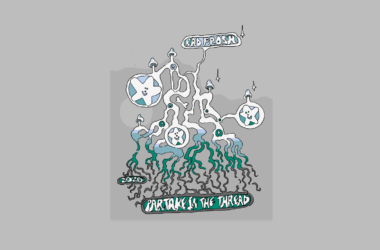
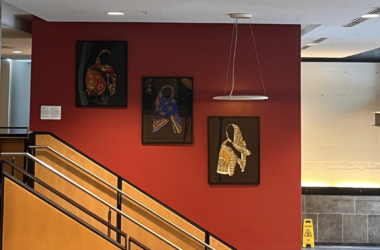
Caroline Monnet welcomed as McGill’s first Indigenous Artist in Residence

On Jan. 28, artist Caroline Monnet presented a virtual Artist Talk as McGill’s first Artist in Residence. Co-organized by the department of Art History and Communications Studies (AHCS) and the Indigenous Studies and Community Engagement Initiative (ISCEI), the event marked not only the beginning of Monnet’s residency, but also a momentous step towards including Indigenous voices in the university’s academic context and community. 

In conversation, Monnet is friendly and humble. In the art industry, she is an incredible, almost intimidating force to be reckoned with, boasting numerous accolades, residencies, and exhibitions—both local and international. Part Algonquin and part French, the visual artist and filmmaker largely focusses on the Indigenous experience in her artwork: Monnet edifies audiences on historical and contemporary Indigenous issues and reflects on her own lived experiences with biculturalism. One of her goals as an artist, Monnet suggests, is to examine society, and highlight what she sees.

“I see artists a little bit like sociologists, because our role is to respond to the world around us,” Monnet said.

With nearly 100 people in attendance, Monnet discussed her inspiration and motivation for her work, and walked the Zoom attendees through some of her films and visual artwork. She began with a viewing of Ikwé (2009), her first officially released film. Translating to “woman” in Cree, Ikwé is a personal reflection on the importance of connection to one’s past, showing interspersed images of Monnet and of a moon, representative of Monnet’s eldest grandmother. Monnet explained her interest in the moon’s control over the tides of bodies of water, and how it affects environments and migration patterns. 

“I was interested in how we physically shape and impact our environment and how [it] influences the people that we are,” Monnet said, referencing the motif of both physicality and metaphor that is so often present in her work.

A skilled multidisciplinary artist, Monnet’s work extends beyond film. Like ships in the night—her art installation that features video, concrete, copper, and a triptych of photographs—details a 22-day journey across the Atlantic that Monnet took in 2012, in which she left a Dutch port on a steel-carrying cargo ship and traveled to Montreal. Monnet documented her journey with a video camera, examining the emotions of fear and serenity as she traveled, while also noting the Atlantic Ocean as a medium for colonial trade.

“I wanted to challenge colonial organization of land, body, and time by exploring how communication and the cycle of the moon and tide can actually bridge physical and psychological divides,” Monnet said.

In an interview with The McGill Tribune, Monnet spoke on her new position as Indigenous Artist in Residence, noting the importance of artists and Indigenous voices in academia.

“I think institutions like McGill are starting to see the role they can play in giving more space to Indigenous students and Indigenous representation within their institution,” Monnet said. “ I believe this type of initiative can be a transformative experience, expanding knowledge, nurturing critical thinking and inspiring new ideas, creativity and innovation. It is surprising that it took this long, until 2021, to have such initiatives, but it’s better late than never.” 

Despite the virtual nature of her position at the moment, Monnet hopes to actively engage with the McGill community. 

“I’m hoping to exchange as much as possible with faculty and students [and] to be able to share as much as possible, to be available for students or anyone that wants to talk to me or learn more about my practice,” Monnet said. “I’m starting to see a few people reaching out and wanting to chat about art or Indigenous issues and I just think that’s what’s important right now, [to] have conversations.” 

While also working on her first feature film, Monnet has an upcoming exhibition that will be presented at the Montreal Museum of Fine Arts in April 2021. Office hours can be found here.


Commentary, Opinion

Finding fulfillment beyond the podium

The show makeup plastered on the faces of figure skaters often hides more than just cosmetic imperfections. While figure skating is frequently associated with elegance and agility, the world of competitive skating can be just as harmful as movies like I, Tonya make it out to be. Over the course of my nine years as a skater, the ongoing pressure to work harder, look better, and finish stronger turned my love for the sport into a complicated “love-hate” relationship. It was not until this past week, however, when I laced up my skates for the first time in over a year in Montreal’s iconic Parc La Fontaine, that I realized just how many of these negative feelings were towards the environment in which I skated rather than the sport itself. Although the world of competitive figure skating must reduce the pressure it places on its athletes, prioritizing recreation and enjoyment requires a greater cultural shift beyond the realm of sports, and starts at an individual level. 

Despite my love for skating, the constant pressure and intense commitment pushed me to retire from the sport fairly early. I had hoped that hanging up my skates would also eliminate my propensity for pushing aside other interests to match my achievements and physique to those of the athletes around me, but this was not the case. My final curtsy on the ice did not signal a farewell to the “no pain, no gain” mindset. After coming to McGill, I quickly realized that the self-induced pressure was not a product of the figure skating environment alone: The figure skating culture, which led me to believe that pressure and intensity were necessary to achieve success and fulfillment, dominates academia as well.

It would be wrong to say that figure skating is a toxic sport in its entirety. The hours I spent training both on and off the ice taught me valuable time management and social skills while fostering my ongoing love for fitness and sports. Nevertheless, the constant pressure to maintain a specific weight and skill level, which intensified with each medal I earned, is a product of the sport’s tendency to prioritize skill and athletic ability over mental health. By conditioning skaters to believe that success in the sport can only be achieved at the expense of their other hobbies and overall well-being, figure skating contributes to the notion that pursuing something for the sake of sheer enjoyment is pointless and a hindrance to personal achievement. 

More professional skaters are shedding light on the harmful dynamics of the sport, which have been glossed over by the idea that specific body standards and rigorous training schedules are necessary for maximizing performance. However, prioritizing unattainable standards over personal contentment goes beyond the walls of the rink, and it cannot be combated by the testimonies of celebrity skaters alone. 

Focussing on recreation and enjoyment does not mean throwing away the dedication that characterizes both figure skaters and McGill students alike. Similar to landing a new jump, the process of earning a degree from a prestigious university demands grit and determination. Yet, too often, students think they must push the courses and extracurricular activities that actually spark their interests to the academic backburner for the sake of getting As on their transcripts. Students should realize that not everything worthwhile and fulfilling needs to be accompanied by stress, pressure, and unwavering focus. Sometimes, pursuing something for the sake of pleasure is just as crucial to personal success as coming out on top.

Instigating a widespread cultural shift, both within and beyond the skating community, is unlikely to happen overnight. In the meantime, athletes and students should work to protect their love for various interests and hobbies from environments prone to fostering intense competition. For me, this meant dusting off my skates and stepping onto a frozen pond to rediscover my love for the ice.

Arts & Entertainment, Film and TV

‘Forbidden’ fights for intersectional justice

On Jan. 27, the Union for Gender Empowerment (UGE) at McGill hosted a virtual screening of the documentary Forbidden: Undocumented and Queer in Rural America, which follows Moises Serrano, a young, undocumented, gay man. Directed by Tiffany Rhynard, Forbidden’s 88 minutes immerse viewers in Serrano’s life and his grapple with the various socio-political tensions underlying his identity. Released on July 12, 2016 and screened one week after President Joe Biden’s inauguration, the film is a historical marker of the impact of recent discriminatory legislation in the United States.

The film opens with the provoking cries from a familiar face. He rallies the crowd, persuades them, and calls for a solution to a shared “issue.” His audience cheers, enthralled with the seemingly new possibilities. The familiar face was then-candidate and now-former President Donald Trump, uniting his supporters around building a wall at the Mexico-U.S. border. The frame then shifts to a large group of undocumented immigrants, Serrano among them, at a pro-immigration demonstration in Greensboro, North Carolina, where a pastor recalls a main tenet in the Bible: Treat others right. One minute into the movie, the audience witnesses the uneven war where one side wants “their” country “back” while the other side wants freedom and humanity. Rhynard’s opening draws battle lines between politics and reality, and in continuing to mix major political decisions with Serrano’s impassioned speeches and snippets from his life, she situates Serrano and others’ stories into a broader context.

The son of Mexican, undocumented immigrants, Serrano grew up in Yadkinville, North Carolina, a rural farming town an hour outside of Charlotte. Despite its diversification as part of the “New South,” North Carolina has been a bastion of cultural conservatism, recently under scrutiny for the now semi-repealed 2016 Bathroom Bill. At the height of the conservative mid-2000s, Serrano was in high school, hiding the fact that he was gay and undocumented. Yadkinville was especially hostile, with some townspeople connected to the Klu Klux Klan, often staking out white crosses on porches. The camera rolls over the open lands, sprawling and without trees, prompting the question—where can minorities hide? But, as immigration attorneys relay details about legislation, the second question is—why should they have to hide in the first place?

The film follows Serrano’s life up until the 2016 election. He starts a relationship with Brandon, a kind-hearted guy from town. Serrano’s activism extends to sit-ins, speeches at council meetings, and openly embracing his identity. After graduating from high school, he works to apply to university. 

The audience grows up with Serrano as he hardens in the face of political injustices and its discontents. In recalling a meeting with Congresswoman Virginia Foxx, Serrano informs the audience of her repeated use of the slur “illegals.”

“She said, ‘I don’t support immigration reform, but I do support you personally,’” Serrano said, questioning whether that would make any difference.

The most gripping moments of the documentary occur when Serrano takes the camera into his own hands: In one powerful scene, he videotapes his reaction upon learning of the legalization of same-sex marriage in the U.S. 

On the way, Serrano and other undocumented immigrants face the 2007 Real ID Act, the threat of mass deportations by the Bush and Obama administrations, and the introduction of the Deferred Action for Childhood Arrivals program. The pathway to citizenship for undocumented immigrants was—and still is—bleak and lengthy.

As the documentary ends, viewers are left empathizing with Serrano’s and others’ stories while watching the overarching reach of government first-hand. Four years of increased alienation due to Trump’s enabling of xenophobia and bigotry shows how much more progress needs to be made for queer and undocumented immigrants. With a new administration that promised to restore the country’s soul, the film asks its audience to hold its governments accountable, to push for humanity alongside concrete changes, and for inclusivity in the American dream.

McGill, News

SSMU student fee investigation reveals lack of due diligence, financial accountability

The Students’ Society of McGill University (SSMU) released a report titled “Investigation into the SSMU’s Student Fee Policies” on Jan. 21, coming after years of student concerns regarding the levying and administration of ancillary fees. The report revealed a lack of financial due diligence and accountability in current practices and contains recommendations to rectify these issues. 

Spearheaded by the SSMU Finance Committee, the report examines the approval process, levying and accountability of student fees directly under SSMU’s control, primarily the Student Society Fees. Student Society Fees include all fees falling under S.52 of the Act respecting the accreditation and financing of students associations, legislation that governs student societies province-wide and stipulates that new fees, or increasing existing fees, must be approved through a student referendum.

Any student group wishing to start collecting fees must first gain the Legislative Council’s approval by way of submitting an official motion. Aside from including the amount per person that the group wants to levy, whether the fee can be opted out, and the duration of the fee, groups seeking approval are not required to provide any budgetary information to the council. If endorsed by the council, the fees must then be approved by a student referendum before they are automatically applied to students’ bills. SSMU Finance Commissioner Sebastien Duckett explained that the current requirements for submitting a financial motion to the Legislative Council lack due diligence.

“Traditionally, they haven’t done it as the industry standard,” Duckett said. “[What is] problematic is that a lot of groups will make up a number and then spend that money later.” 

The report found that between 2015 and 2020, the Legislative Council approved 95 per cent of fee applications—a number, the report suggests, that demonstrates that the current policies in place hinder the council’s ability to make informed judgements when voting on whether or not to approve fees. The report also found that fee proposals gained “overwhelming support” at referendum, but voter turnout is often below 20 per cent

One recommendation contained in the report suggests consolidating SSMU Services Fees, SSMU Funding Committee Fees, and other SSMU Fees into the SSMU Membership Fee, as the SSMU Membership Fee is subject to a rigorous external audit every year, whereas the other fees are not. Consolidating the fees would give the Legislative Council power to freeze, reduce, or transfer surplus funds to different services—subject to council approval. Implementing this recommendation would involve cancelling all of these fees and proportionally increasing the SSMU Membership Fee, and would have to be approved through a referendum.

“It’s easier said than done,” SSMU Vice-President of Finance Gifford Marpole said. “Obviously, the ultimate goal is to consolidate all the fees into the base membership fee [….] It might take a few steps, but it will likely be rolled out throughout this year and next year.”  

The report also recommends adjusting Legislative Council powers to enable action against any student groups underusing fees, and in some cases, improperly using fees and running large surpluses.

According to Marpole, several of these recommendations could be implemented during this year starting in June 2021 when the new SSMU fiscal year starts. 

Through a survey on the student body’s opinions about the levying, administration, and value of ancillary fees, one question showed that 35.2 per cent of respondents felt the transparency, accountability and fairness for fees paid was not adequate.  

“[The confusion around finances] has existed for decades,” SSMU President Jemark Earle said. “We have the ‘where’s my money going’ document which we published […], but I think there can be a lot more […] town halls [and] presentations to the student body that make this language more accessible [….] In the long term planning, SSMU can do more […] than just post a document online that outlines where the money is going, but actually take the time to walk through the document with the student body.”

Arts & Entertainment

Winnie Ho and Charo Foo Tai Wei push the boundaries of dance

When we think of dance, we often think of grace, rhythm, and elegance. In its most traditional sense, dance is a beautiful artistic expression of the body. However, dance has been challenged to push its boundaries and reach new limits. Indeed, that is the objective of contemporary dance, as realized through Winnie Ho and Charo Foo Tai Wei’s performances. 

The virtual event, CanAsian Dance, was presented by Tangente, a Montreal-based contemporary dance company that encourages dance to be innovative and imaginative. The goal of CanAsian Dance, created by Festival Acces Asie, was to encourage each choreographer to create a piece that challenged them to take a new direction with their work. Through contemporary dance, the dancers experiment onstage, performing without rhythmic melodies, using a mixture of everyday sounds like raindrops for music, or even dancing in complete silence. This experimental genre seems like the most apt to adapt to this virtual context, allowing for dancers to find new ways to perform. Ho and Charo Foo successfully took on the challenge of dancing despite the absence of an in-person audience. 

The first performance was Winnie Ho’s aWokening, in which she attempted to reconnect with her roots from Hong Kong. Ho’s choreography revolved around a wok, a traditional Chinese cooking instrument. The wok is special to Ho as she clutches it close to herself, and it remains attached to her while she performs. Ho’s choreography seems surprising at first, as she dances naked with a wok and with no music. However, as we learn about Ho’s approach and her connection to the Chinese diaspora, her performance becomes a deeply personal, authentic and unmediated expression of her cultural roots. During the intermission, Ho told the audience that her main challenge was to perform inside a theatre, as she has a strong spatial sensitivity and usually dances in open spaces. Ho attempted to create her own environment in the enclosed setting, considering it a new open canvas—effectively using the indoor space to convey her interior world to the viewers. 

The second performance was Charo Foo’s The Golden Stick Ritual. The piece was inspired by her aunt, who practiced healing rituals throughout her childhood. Charo Foo seeks to recreate the intensity and energy her aunt possessed in her rituals, combining the technical precision of classical training with the complete fluidity of contemporary dance. In linking her background in classical Chinese dance to this new style, she defies traditional form and moves in entirely new directions. Charo Foo’s choreography imitates the healing ritual’s force through the strength of her gestures and articulate facial expressions. Her performance is a voyage through herself, a transcendent experience where Charo Foo’s different emotions—resistance, pain—are embodied in her movement. She is able to synthesize these sensations into something beautiful and to share these feelings with the public. 

Through their innovative performances, Ho and Charo Foo examine their pasts and interior selves, merging these concepts of identity to form a new, innovative style. Contemporary dance does not commit to the elegance and structure that this art may provide in its conventional sense, but rather searches for a new path. Eschewing the prescriptions of grace and conventional rhythm, both dancers instead sought out inner experience for all its raw intensity, rendering emotion completely physical. Ho and Charo Foo’s performances pushed dance to transcend across cultures, across genres, and across screens.

Soccer, Sports

The Premier League title is up for the taking

The 2021 Premier League season is halfway finished and has been rather unpredictable. Liverpool, last season’s champions, are currently four points behind current league leaders Manchester City, who have 44 points and an extra game to play compared to the rest of the top four teams. Right behind Manchester City and ahead of Liverpool is Manchester United, who are three points back from first. Rounding out the top four is Leicester City, who lag five points behind the leader. 

Currently in the middle of the standings are traditional powerhouses as well as some unforeseen dark horses. Powerhouses Chelsea and Arsenal both have 30 points after 20 games. Chelsea seems to be trending downwards, while Arsenal is trending up after the loan signing of creative midfielder Martin Odegaard, eliminating 16 points from their last available 18. Joining Arsenal and Chelsea are Aston Villa, Southampton, and Leeds United, who all have a game in hand on the London sides. The McGill Tribune shares its predictions for the rest of the season.

Top Four Predictions

Fourth, Leicester City 

It will be no surprise if Leicester City replicate their 2015-2016 Cinderella story title run, as the Foxes sit a mere two points behind Manchester City. Leicester may temporarily lead the league with a decent run of fixtures coming up, including Fulham, Wolves, and Leeds. However, the Europa League campaign will pick in February, meaning Leicester will have to travel across Europe midweek. Ending the season with United, Chelsea, and Tottenham means capitulation may be in the cards for the Foxes, leading to a fourth place finish this campaign.

Third, Manchester United

United had the chance to move up to the top of the ranks on Jan. 27, when they played the worst team in the league, Sheffield United. However, they lost 2-1, a result that sums up their campaign: Inconsistency mars this Manchester team. While heroics from the likes of Paul Pogba and Bruno Fernades could win them unexpected points, it is far from sustainable for a title charge. Third would not be a bad finish at all, considering Ole Gunnar Solskjaer’s relationship with the hot seat as manager.

Second, Liverpool 

Liverpool were dominant in their last campaign. The reigning champions won their first Premier League title in style, finishing with 99 points, 18 points clear of the next closest side. This year however, long term injuries to center backs Virgil Van Dijk and Joe Gomez have hindered the side, in addition to their attacking woes. Until their 3-1 win against Tottenham on Jan. 28, Liverpool had gone 486 minutes without a Premier League goal and 40 days without a Premier League win. There’s no doubt Klopp’s side is still one of the best, but they need to be perfect to make up for their injury losses—so far, this season has been far from that.

First, Manchester City:

Pep Guardiola is a tactical genius. No one can deny that. However, his recruitment and management prowess tends to fly under the radar. Manchester City boast incredible depth—an integral aspect to a title-winning team normally, but even more so during a pandemic. Although star playmaker Kevin De Bruyne is out injured, that did not stop City from a 5-0 victory against West Brom on Jan. 26. Midfielder Ilkay Gundogan has looked revitalized this season, with six goals in his last seven Premier League games. Wide players such as Raheem Sterling, Riyad Mahrez, and Bernardo Silva give Guardiola immense amounts of creativity at his disposal. At the back, Ruben Dias looks to be the signing of the summer and forms a formidable partnership with John Stones. This City side has all the makings for a title run, so only one thing can stop them: Themselves. We have seen Guardiola overcomplicate his tactics before. Regardless, if City keep playing like they have been, this title is theirs.

Trending up, Arsenal

Mikel Arteta was given an almost impossible job last season: He was tasked to take over midseason, in his first head manager role, and bring a “Big 6” club back to its former greatness. While Arsenal finished eighth in the league, they went on to win the FA Cup, securing a trophy and a European qualification. All signs were pointing to a good campaign this season from the Gunners. However, before Boxing Day, Arsenal was sitting in 14th place and had relegation on their mind. A Boxing Day win against Chelsea turned into a fine run of form, bringing the Gunners up to the top half of the table.

Trending down, Chelsea 

The Blues started well with promising performances in the beginning months of the season, even though their new signing, Kai Havertz, did not replicate his form from the Bundesliga. However, the nightmare started in the December-January period, when Chelsea struggled to win. Frank Lampard, club manager until Jan. 25, was let go due to his inability at making a consistent plan to win games. Thomas Tuchel, now in charge, will have a tough task ahead to keep Chelsea in the top four with the upcoming Champions League and FA Cup.

Liverpool FC 2020-2021 squad, worldfootball.net

Relegation predictions

20th: Sheffield United

Sheffield have the worst start to a top flight season in English Football history. The Blades have scored just 12 goals in 21 games so far and are 10 points behind a non-relegation zone team, Brighton, who still have a game in hand. The club has lost 17 games and won only two so far. With this record, they are bound to finish 20th and become relegated from the Premier League.

19th: West Brom

The first half of the season has not been successful for West Brom, who have won only one of their past five games. They have the worst goal differential in the Premier League of -33. Slaven Bilic, West Brom’s previous manager, was let go in December last year, and was succeeded by Sam Allardyce. Allardyce, who has managed successful escapes from the relegation zone in the past with teams like Bolton and Sunderland, will require more than a miracle to get West Brom out of relegation this year.

18th: Fulham

Fulham have won only two out of 20 games so far and have been in the bottom three every season. They have not won a game since November and have 10 draws. It would require many unlikely wins for the team to escape the relegation zone.

Overall, this season is wide open, with about 20 games left for each team to play. With the Champions League round of 16 matches approaching in February, Liverpool and Manchester City face a challenging game schedule ahead, which could eventually narrow the race for the title.

Ilkay Gundogan, www.outlookindia.com
Research Briefs, Science & Technology

Disappearing giants: How warming oceans are suffocating large fish

Since 1981, the mean global ocean temperature has risen at an average rate of 0.18 degrees Celsius per decade. This has had serious impacts on the health of marine species; as oceans warm across the world, fish that are unable to cope with climatic changes, such as cardinalfish, are disappearing at a staggering rate.

A new study conducted by an international team of researchers from McGill, the University of Montana, and Radboud University examines this alarming trend. Published in the Proceedings of the National Academy of Science (PNAS), the study explores how water temperature and oxygen availability affect the metabolism as well as survival fitness of fish. The research team was particularly interested in how rising ocean temperatures impact oxygen consumption.

“We investigate how water temperature and oxygen availability together affect aerobic metabolism (i.e., the rate of oxygen consumption) of fish,” Juan Vicente Gallego Rubalcaba, a postdoctoral fellow in the Department of Biology and author of the study, wrote in an email to The McGill Tribune.

In order to achieve their goals, the researchers developed a model based on the metabolic theory of ecology.

“We build on the equations of [the] metabolic theory of ecology (MTE) to include physical mechanisms of oxygen transfer,” Rubalcaba wrote. “This theory explains how metabolic rate increases with temperature and body mass, but does not account for oxygen uptake or availability.”

Metabolic rate refers to the rate at which an animal burns calories to produce energy. This updated metabolic-based model evaluates how water temperature and body size affect oxygen consumption and diffusion. The model assesses how oxygen is extracted from water and distributed by a fish’s gills throughout its body. 

“We developed a model based on physicochemical mechanisms of gas diffusion to calculate oxygen consumption rates as a function of water temperature, oxygen concentration, gill morphology and fish body size,” Rubalcaba wrote.

The model predicted that oxygen limitation would impose more constraints on the metabolism of larger and more active fish. To support their hypothesis, the scientists compared their predictions against actual measurements of metabolic rates in 286 fish species. The oxygen consumption rates of fish of different body sizes were studied at different water temperatures.

The results of this comparison were consistent with their predictions. Indeed, the researchers found that increased oxygen limitation, tied to the temperature increase caused by climate change, had a greater impact on larger fish.

“Metabolic rate (especially active metabolic rate) increases with temperature to a greater extent in small [fish] than in large fish,” Rubalcaba wrote. “This means that smaller species are able to increase their metabolic demand for oxygen in warmer waters, while larger species may not be able to do so.”

Since larger fish have more difficulty adapting to temperature increases, species already in decline are at greater risk. The Manaaki tuna of New Zealand, for example, experience low oxygen availability due to polluted waters that could be exacerbated by rising temperatures. 

“Constraints may be especially important in large fish, because they have small gills relative to their body size (although this is a much-debated hypothesis),” Rubalcaba wrote.

The decrease in oxygen levels caused by increased ocean temperature has massive impacts on the physiology and behavioural patterns of large fish. Fishes’ inability to extract enough oxygen from warmer water through their gills leads to shifts in body size and changes in reproductive behaviour.

“Water temperature is already rising worldwide as a consequence of climate change and many fish species need to cope with this rapid temperature change, either migrating toward colder regions or adopting different life strategies such as growing smaller to avoid respiratory constraints,” Rubalcaba wrote.

Fortunately, actions such as limiting greenhouse gas emissions and restoring marine and coastal ecosystems can be taken to mitigate oceanic warming. Given that approximately three billion people depend on fish as a primary source of nutrition, protecting fish from warming oceans must be a priority.

McGill, News

Students in Mind visionary event re-imagines mental health beyond the pandemic

The McGill student organization, Students in Mind (SiM) hosted a three-day conference, Forging a New Normal, from Jan. 29 to Jan. 31, focussing on the successes and drawbacks that the COVID-19 pandemic has posed on mental health. The eighth annual student-run conference, conducted via Zoom, consisted of several keynote presentations with topics ranging from mental health in school curriculums to the use of artificial intelligence in depression treatments. The event also featured several interactive workshops, such as “Thriving in the Face of Doom,” in which participants were asked to partner up and reflect on eco-anxiety.

Julia Caddy, U3 Arts and co-president of SiM, explained that a key theme behind this year’s panels was envisioning a path forward in mental health awareness and action beyond the pandemic. 

“As a lot of people are saying these days, […] we can’t go back to the same normal that we had before,” Caddy said. “[…] Forging a new normal really has to do with reflecting on our own experiences over time, but especially in the past year, and looking at what changes […] we want to embrace to move forward to create a […] mentally healthier campus.”

During a panel that discussed the intersection of mental health and race, the moderator asked keynote speakers to share their thoughts on the debates surrounding the annual Bell Let’s Talk campaign. Vinciane de Pape, a director of learning and culture at Versett, a Canadian digital consulting firm, acknowledged the initiative’s broad reach while expressing skepticism towards corporate activism and Bell’s exclusive contract with provincial prisons.

“Although I think it’s a great entry point for many to start the conversation around mental health, there are a lot of problematic aspects to such a major corporation pushing a PR campaign that has shown to be a lot of talk without a whole lot of action,” de Pape said. “So you can argue that it’s a multi-million tax write-off, with largely white, wealthy representation [….] Bell also has a monopoly over telecommunications in prisons, which ends up harming incarcerated people.”

The panel also discussed the failings of mental health institutions in handling intergenerational trauma. Jaime Morse, an Indigenous educator at the National Gallery of Canada, spoke about the fraught relationship between Indigenous people and Canada’s healthcare system and advocated for better-educated, trauma-informed counselling practices. 

“There’s a mistrust [towards counsellors],” Morse said. “In my own experience with going to a counsellor, there was an immediate switch to ‘OK this is a white woman […] she has no idea about the intergenerational effects of residential schools [….] She’s the only one available.’ For two sessions, it was a very expensive way to teach somebody about Indigenous history and culture.”

The second day of the event featured mental health advocates from a number of Canadian universities. Molly Zhang, a third-year neuroscience and mental health student at Carleton University, spoke on the lack of transparency associated with campus resources.

“There’s a lot of resources out there, but a lot of people just don’t know where to find them,” Zhang said. “Some students will never get exposed to our organizations.”

Zhang also called on professors to increase exposure to campus support systems.

“We need to get all profs to care about mental health, and not just those who are prone to be understanding,” Zhang said. “I think one of the easiest ways to make mental health accessible to students is to have professors show that they care as instructors and that the school as an institution cares about their students.”

Jake Frank, a fifth-year biology student at the University of Windsor, expressed optimism that the pandemic might be a watershed moment in mental health awareness, noting that it has helped bring campus mental health support services into more students’ purview.

“There’s definitely more posts, more clubs, more student groups that are focusing on mental health,” Frank said. “And through that, certain resources that were under-utilized in the past have been actually getting their due.”

Hockey, Sports

McGill men’s hockey team celebrates 144th anniversary

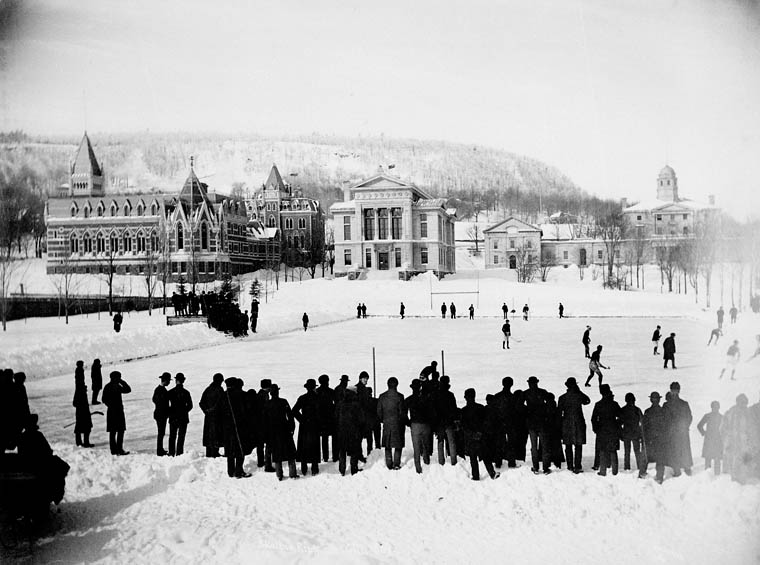
Jan. 31 marked the 144th anniversary of the first McGill men’s hockey game. Not only was this the beginning of McGill’s men’s hockey program, which now boasts 22 championships, it was also a crucial development in hockey itself: McGill men’s hockey is believed to be the first-ever organized hockey team.

In 1877, two years after the first organized indoor game of ice hockey was played at the Victoria Rink in Montreal, McGill students returned to face off against the Victorias, winning 2-1. The seven rules of this game, believed to be the first published ice hockey rules, appeared in the Montreal Gazette a month later.

While Montreal remains fiercely proud of its hockey history, hockey’s birthplace is still widely debated. Simple stick and ball games were played in ancient Greece, China, and Egypt, as well as by Indigenous peoples in North America, most notably the Mi’kmaq. Non-standardized hockey-like games like shinny, shinty, and hurly were played in Scotland and Ireland and brought to the Maritimes in the early 1800s, leading some to believe that Halifax is the birthplace of modern hockey, as these games evolved into the hockey we know today. 

Others believe that these games were too far removed from modern hockey, and the “true origins” of hockey lie in those first games played in Montreal. 

James Creighton, the McGill student who organized the 1875 game, was originally from Halifax, which suggests a mix of the two stories: Creighton may have brought his familiar form of hockey to McGill and refined it with the help of Montrealers.

The 1875 game was the first game in which a wooden puck was used instead of a ball. However, it was still very different from modern hockey games, namely that there were nine players per side instead of six. At the historic 1877 game, the rubber puck was introduced, as well as several other aspects of hockey that are still in place today, such as the offsides, penalties, and the faceoff, then known as the “Bully”. Elements like numbered jerseys, assists, and artificial rinks would not be used until the founding of the Pacific Coast Hockey League in 1911 by brothers and McGill alumni Frank and Lester Patrick. 

Other aspects of the modern NHL game were developed gradually: In 1911, teams shrank to six players. Minor, major, and match penalties were established in 1918although fighting was not made a major penalty until 1976and the expansion of the forward pass between 1927 and 1929 boosted offence. In addition to various evolving regulations about the colour of uniforms and length and curvature of sticks, helmets were made mandatory for players in 1979. Sudden-death overtime was re-established in 1983 after being discontinued in 1942 due to the restrictions on train scheduling during World War II. Finally, ties were eliminated with the introduction of the shootout in 2005.

Years after the first game, Montreal’s Winter Carnival hosted the first hockey tournament in 1883. McGill was victorious, beating the Victorias and tying the Quebec team. The next year, five teams entered the tournament while local and intercollegiate tournaments continued to grow until the first league, the Canadian Amateur Hockey Association, was founded in 1886. The first women’s hockey team at McGill played in 1896, although the existence of intercollegiate women’s hockey leagues and teams such as the Martlets were sparse until 1963.

Today, there are dozens of professional hockey leagues around the world. Thirty-seven men’s teams and 14 women’s teams have participated in Olympic hockey. While it is difficult to pinpoint precisely where and when it all started, there is no denying that McGill hockey kickstarted the sport 144 years ago.

Student Life, The Viewpoint

Reconnecting with myself through recovery

Content warning: The following deals with topics centred around disordered eating.

Between the ages of 16 and 20, I was missing a vital aspect of my health: My menstrual cycle. If this predicament ever came up in conversation, people expressed concern for my well-being, but I was quick to brush it off. 

I used every excuse in the book to explain my strange situation: “I’m an athlete. Many female athletes lose their period,” or “my mother lost her period in university, it’s probably just genetics,” and, worst of all, “I feel great and I’m not planning on having children soon, so what’s the big deal?”

Little did I know, it was a big deal. Missing a menstrual cycle has profound negative impacts on bone density, cardiovascular health, and can increase psychological stress. The medical term for missing a period due to disordered eating, psychological stress, and/or excessive exercise is hypothalamic amenorrhea (HA), and I was its poster child.

When I lost my period, I was deeply entrenched in diet culture. What started in the tenth grade as a bid to lose weight for a vacation turned into a four-year battle with orthorexia. 

Annyck Besso, a registered dietician at Sooma Nutrition Counselling and Therapy Montreal spoke with the Tribune about orthorexia. 

“[Orthorexia] is an obsession with eating healthy, [like] eating natural foods, natural ingredients,” Besso said. “It can present itself [as] a compulsiveness to be healthy and seek health in your eating habits and exercise habits. [Orthorexia] is not officially recognized in the DSM-5 […] but I would say orthorexia is a lot more prevalent [as of the last five years, and we have learned more about it.]”

The pervasiveness of diet culture in the media contributed to my disordered behaviour by pushing the narrative that thinner was always better, regardless of the costs. 

Julia Caddy, the Students’ Society of McGill (SSMU) Mental Health Commissioner, U3 Arts, expressed that media messaging can play a large role in the development of disordered eating habits.

“Eating disorders are so closely tied with perfectionism and […] when you have a society and media that posits losing weight and looking a certain way and eating a certain way as good, and the opposite as bad, and you combine that with perfectionism, it makes sense that people develop eating disorders,” Caddy said.  

For me, losing weight through over-exercising and food restriction became addictive. Each time I stepped on the scale and the number dropped, I breathed a sigh of relief. People in my life began to notice that my desire for control was becoming out of hand. 

According to Besso, this obsession with control is prevalent among people suffering from eating disorders. 

“I would say that eating disorders are typically misunderstood to be superficial disorders, but they really are disorders of control,” Besso said. “Emotions and circumstances are sometimes out of our control […] so if it’s difficult to sit in that discomfort […] focussing on controlling your body does feel really productive.”

In the eleventh grade, I had a harsh encounter with reality when I visited the doctor for a routine check-up. After running some tests, the doctor informed me that my blood pressure and hormone levels were shockingly low. She warned me that if I continued down this road, the consequences would be ugly. 

That year, I started working with a therapist and slowly started to break the food and exercise rules I clung to so religiously. I was fortunate that, by the time I arrived at McGill, my relationship with food and my body had improved. 

Cody Esterle, general coordinator at the SSMU Eating Disorder Resource and Support Centre (EDRSC), explained that the university context can be extremely triggering for many suffering with disordered eating. 

“Part of it is […] having no parental supervision over food […] and the whole concept of the freshman 15, and these pretty toxic ideas about the way your body should look,” Esterle said. “Life is very overwhelming and managing food is an additional thing [….] Students are pretty tight on money [and] the stress and amount of work that McGill puts on us makes it harder to put yourself first and your needs first.”  

Despite the progress I had made in university, I was still over-exercising and my period had not come back. I remained in a state of quasi-recovery for over a year. 

Besso described quasi-recovery as the point when someone starts refeeding and breaking some of their disordered rules, but does not fully commit to recovery. 

“The quasi-recovery is in committing to changing some of your habits, but very much staying grounded in some form of control and eating disorder rules,” Besso said. “You’re still restricting and your body is still malnourished, though it feels like you’re eating a lot more than you were before.”

One of the biggest detriments to my recovery was the external validation I received for my thin appearance. Esterle described how the glorification of thin bodies in the media makes it much harder for certain people to recover.

“It’s seen as an accomplishment [to lose weight, so] the type of eating disorder voice that’s developed in one’s head is harder to fight back against,” Esterle said. “Diet culture makes it a lot easier to get an eating disorder […] fatphobia is a part of diet culture and plays a huge part in eating disorders.” 

It was not until I discovered the book No Period, Now What? by Dr. Nicola J. Rinaldi that things started to shift for me. The book offers a science-based, comprehensive guide for how to recover from HA and anecdotes of other women’s recovery journeys. Reading other women’s success stories inspired me to take action. 

In March 2020, I went “All In” to recover from HA. As described in the book, the All In approach involves eating to complete satiety every day and reducing exercise until one has  three consecutive menstrual cycles. No foods were off limits, and there was no maximum number of calories you could eat per day. 

The experience was extremely challenging, but also liberating. I had the freedom to eat every food I had previously demonized without guilt or shame. 

Letting go of the size I had idealized in my head was difficult, but moving beyond my physical appearance gave me an opportunity to express gratitude for all the things my body did for me. Whether it was keeping my heart beating, helping me hug my family, or allowing me to dance, my body was working for me everyday. 

For Caddy, recovery meant reconnecting with the things she loved again. 

“The true ingredient in recovery was finding my identity again and filling in that gap that used to be filled with the eating disorder,” Caddy said. “For me, the defining feature of recovery is, when I face any opportunity to engage in a behaviour or obsess over certain things, it’s making a decision [….] Am I deciding between being sick again or being myself and living my life with all of these things that I love?”

My work eventually paid off: I regained my period right before my twentieth birthday and it has been regular ever since. 

While I still struggle with my body image from time to time, I have cultivated a relationship of respect and appreciation with my body that has helped me overcome the tough times. 

What I did not expect when I gained weight was that I would also gain confidence, vitality, and happiness. Recovering was the best decision I have ever made because my life is so much richer than when I was confined to such a small box. 

Sooma is a team of registered dieticians and psychologists that specialize in eating disorder treatment and sports nutrition. They can be found on Instagram at  https://www.instagram.com/s.0.0.m.a/


Read the latest issue

Read the latest issue