


Latest News

Homelessness
Montreal, News

Advocates argue for more resources after Quebec Superior Court rules to exempt the unhoused from curfew

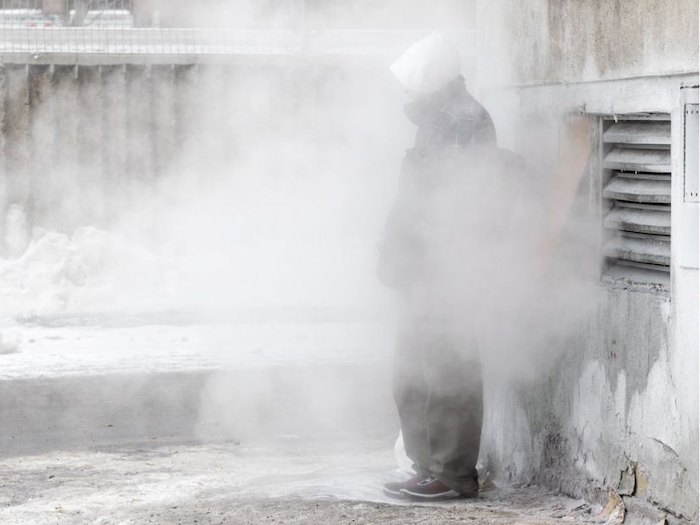
Following the death of “Napa” Raphael André, an unhoused individual who froze to death on Jan. 16, Quebec Superior Court Justice Chantal Masse ordered on Jan. 26. that unhoused populations be exempt from the province-wide curfew. In Justice Masse’s decision, which came after much public outcry, she stated that the province-wide curfew is discriminatory towards the unhoused.

Quebec Premier Francois Legault introduced the curfew, which is currently in effect between the hours 8:00 p.m. and 5:00 a.m., as a measure to control a record number of COVID-19 cases in the province. After he ordered the curfew, many individuals online were quick to raise their concerns about how this policy would affect the unhoused.

Sophie Hart, U3 Arts, is the director of Meals for Milton-Parc, a community-based group that supports the unhoused population in the Milton-Parc neighbourhood. In an interview with The McGill Tribune, Hart expressed her disappointment in the inaction and delay from government officials.

“The ways in which we had to fight long and hard for the unhoused […] shows how there is no level of care for people who are unhoused or are vulnerable,” Hart said. “People say that there is no simple solution, and I do believe that this issue has many layers, but to some extent, there are ways […] to minimize damages.”

Hart pointed out the disparity between those items considered essential and non-essential by housed and unhoused individuals. Hart explained that some items deemed non essential may be required by unhoused citizens to survive Montreal’s harsh winter conditions.

“The regulation of essential and non-essential items are created by people who are housed and do not need to think about specific survival aspects that many unhoused people face,” Hart said. “Items such as socks and hand warmers are deemed unessential at stores like Dollarama. In winter, [these items] get wet and ruined very quickly and having access to these items is crucial.”

The Clinique Juridique Itinérante (CJI), through the pro bono work of the law firm Trudel Johnston & Lespérance, represented the unhoused in the court challenge. The CJI is a social justice advocacy group that serves disadvantaged and marginalized groups. 

Jeremy Wiener and Anna Gignac-Eddy, 2L Law students, are both volunteers at the CJI. Wiener and Gignac-Eddy reflected on the recent Superior Court decision and explained the curfew’s systemic implications on poverty in an email to the Tribune.

“The curfew contributed to the systemic and long-standing criminalization of poverty and homelessness in Quebec and Canadian society,” Wiener and Gignac-Eddy wrote. “The recent decision brings a wave of relief to the homeless community. [The decision] alone is insufficient. We must do more to protect society’s most vulnerable.”

Contrary to Premier Legault’s claims that “there is enough room available” for the unhoused in Quebec’s shelter infrastructure, shelters throughout the province have experienced notable resource, staff, and room shortages.

Béatrice Genest is a volunteer at Resilience Montreal, a non-profit day shelter that offers food, clean clothes, community support, and temporary housing to those in need. Genest claims that there is a gradual decrease in space available for the unhoused population. 

“As it got closer to winter and COVID-19 cases began to rise, the shelter received fewer donations, and less volunteers,” Genest said. “The shelter was also designed to have a natural area where people could stay, but the pandemic changed the dynamic of the shelter and the way everything was organized [….] We had to give food and clothes away at Cabot Square next to the shelter. The square was a popular spot of refuge for the unhoused, but a part of it now is blocked off because the city has installed an ice rink.”

News, SSMU

SSMU Legislative Council approves motion to support Dollarama workers

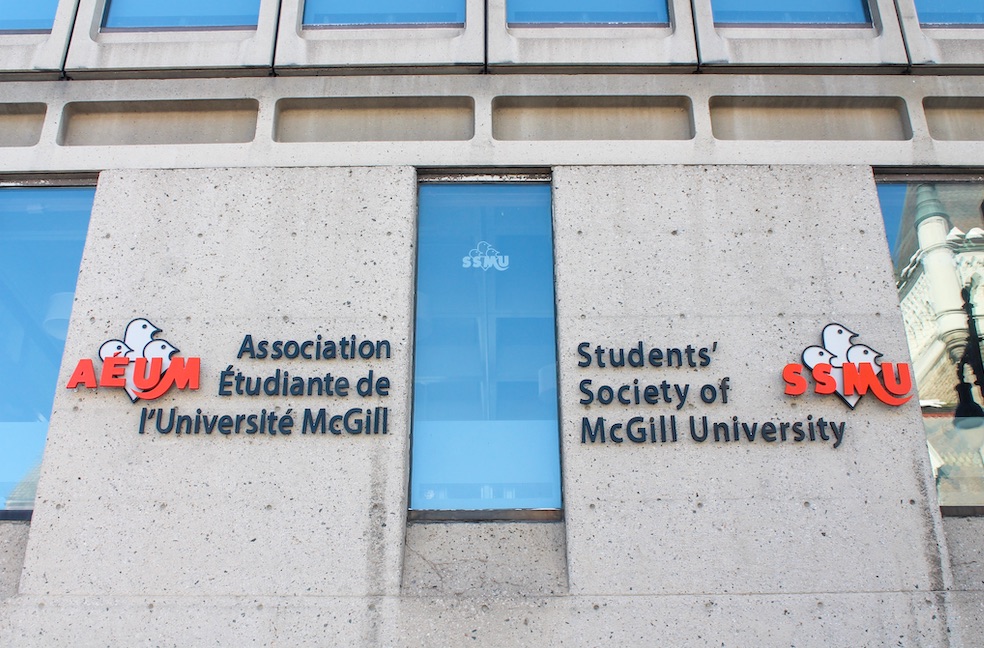
The Students’ Society of McGill University (SSMU) Legislative Council assembled on Jan. 28, where they passed several motions and reviewed the Financial Committee’s Investigation into SSMU’s Student Fee Policies (I.S.S.Fee.P). The meeting hosted an organizer from the Immigrant Workers Centre (IWC) who presented on the labor conditions in Dollarama warehouses and attempted to gain the Councils support given McGill’s investments in Dollarama. The Council also passed a motion to approve the Academic Wellness Proposal

Finance Commissioner Sebastien Duckett presented the results of SSMU’s investigation into its existing student fee policies. The report outlined five main issues with how SSMU’s fees are levied and administered, including a lack of due diligence and transparency on the underusage of ancillary fees, the process for fee approval, and information surrounding how fees are spent. Duckett detailed the report’s five recommendations for addressing these issues, which includes consolidating all SSMU fees into the SSMU Membership Fee.

“Just looking at the bill and seeing all the lines of fees, irregardless of how much money it adds up to, that in and of itself seems to be something that has a negative perception among the community […],” Duckett said. “It makes sense to show students how much it actually costs to run our organization and provide the services we do by reflecting that in one simple number.”

Next, Mostafa Henaway of the Immigrant Workers Centre (IWC)  presented on the working conditions of some Dollarama employees to gain SSMU’s support for Dollarama warehouse workers, given that McGill has investments in the chain. Henaway highlighted the importance of spreading awareness of the company’s treatment of its workers among McGill students.

“We’re trying to put pressure on people who have [invested], because if Dollarama is not going to listen to workers or us, maybe they’ll be afraid of other investors,” Henaway said. 

He detailed the IWC’s campaign to help workers, many of whom are racialized immigrants, gain better labour conditions. Currently, workers are not hired by Dollarama directly but by an outsourced temporary placement agency where they do not have union protections. 

Following the presentation, the council voted unanimously to approve the motion, mandating the Office of External Affairs to support student solidarity with Dollarama warehouse workers organizing to demand better working conditions. 

Councillors also passed a motion to condemn the effect of Quebec government’s pandemic response on marginalized communities, with 26 votes in favour and two abstaining. 

The last motion to pass regarded the adoption of an Academic Wellness Proposal. Mental Health Commissioner Julia Caddy spoke on the need for increased support for students’ mental health. The proposed solutions include expanding mental health resources that are paid for by McGill, such as embedding WellnessWorld, a digital wellness platform, into MyCourses. 

“The general idea and focus here is to take the upstream approach to the state of mental health [of] our students,” Caddy said. “[This reflects] studies that continue to show that academic pressures and expectations are the number one cause for distress, and that [this is] being exacerbated amongst the McGill population.” 

Soundbite

“We have encountered a lot of students who, especially for marginalized groups, don’t see their needs met at the Wellness Hub [….] Our hope is by having WellnessWorld embedded within McGill, and if [it is linked] directly on MyCourses so that it is on the forefront of student’s academic life, that they can more easily access the resources that will cater to their specific needs.” 

SSMU VP Student Life Maheen Akter on the need for expanded mental health support regarding the motion to adopt the Academic Wellness Proposal. 

Moment of the meeting:

During the presentation on Dollarama workers, Gaurav Sharma, an IWC organizer and former Dollarama warehouse worker, shared his experience with the council. He detailed the challenges he faced at Dollarama, including sustaining an injury on the job and Dollarama’s lack of medical aid for workers.

Student Life

The small pleasure of the postcard

Every morning, when I wake up, Leonard Cohen stares back at me. So does the Queen of England, a neon pink cat, and a small Tuscan countryside. They are the faces of the many special edition stamps on my postcard wall, a section of my room dedicated entirely to the letters I have received from friends over the years.

A variety of postcards grace the wall, from a photo of the waterfront at Trois-Rivières, to a watercolour painting of various root vegetables with the words “I’m rooting for you” scrawled underneath.

Normally, my postcard wall is a small pleasure, but these days, it has become an especially large one. It seems to quietly insist that there is a wide, expansive world beyond the walls of my Plateau apartment. As it turns out, I’m not alone in my growing appreciation for postcards and letter writing

Alana Dunlop, U3 Arts and Science, also started writing letters to her friend last April, when she moved back to her small hometown in Ontario. For Dunlop, her letter-writing was born entirely from the pandemic.

“It made being stuck at home more bearable,” Dunlop said. “I would check the mail every week to see if there was a letter.” 

Dunlop and her pen-pal also included trinkets in their letters. 

“I would put SpongeBob stickers over the envelope and we would include stuff we found in them,” Dunlop said. “She sent me laptop stickers and this little pamphlet with the Mont Royal cross on it.”

With nearly all of our social interactions taking place online now, it is refreshing to communicate through pen and paper. 

“It’s a lot more exciting to physically open something than to get a text,” Dunlop said. “It’s a great way to practice writing. In letters, there’s a lot more emphasis on writing well.”

Shelly Bahng, U2 Arts, shares a similar experience, having also taken up letter-writing during the pandemic. 

“[Before the pandemic], I would only write letters on special occasions,” Bahng said. “When the pandemic started, I made the decision to start writing more.” 

Bahng explained how she agreed with friends to write letters to one another instead of text. The proposition was born from a desire to eliminate the stress of having to text someone back immediately. Indeed, exchanges through letters can take us away from our screens, where we tend to spend a great deal of time these days.

“There’s so much pressure [with texting],” Bahng said. “I suggested letter writing because there’s a smaller expectation of any reply because we wouldn’t know when we sent it or if the post office was busy.”

Bahng wrote letters to her friend who had moved back to Toronto, sending stickers and any flat object that would fit in an envelope, including a key chain from Korea. For her, letters are valuable because they serve as a record of messages that might otherwise be lost.

“I have often thought about how these days, because everything is online, we don’t really send letters to each other so all of our conversations aren’t being archived [on paper],” Bahng said. “I was reading a lot of authors who had letter correspondences with each other. I wondered [if there] would there be any physical proof of the exchanges between my friends and I.” 

As our time in isolation stretches on, people are sending more and more letters. A headline from CTV News Montreal announced an unprecedented increase in stamp sales over the holidays. It turns out that the 14 Christmas cards I mailed to friends and family this previous holiday season were only a few of the thousands of cards Montrealers were sending. The letter in the mail—no longer a relic of the past—is making its great comeback.

As I drop my Mexico City-bound postcard into the mailbox, I join my fellow Montrealers in our excessive consumption of postage stamps. I gain a final glimpse of that small stamp that appears to have a certain kind of power we do not: Unlike us, it can go anywhere it wants.


Student Life

French at Work seminar series expands students’ linguistic horizons

For students with French as a second, third, or fourth language, navigating Montreal can be challenging. Although McGill is an anglophone university, the ability to speak some French is useful when exploring other parts of the city, since it has been the official language of Quebec since 1969. Gaining sufficient conversational French skills to make the most of living in the city can be difficult, but navigating the Quebec job market is another challenge entirely.

Luckily, the French Language Center (FLC) seeks to help students develop their French language skills so they can navigate Quebec’s job market with ease. The FLC’s Series French at Work – Français au travail seminar series helps students with intermediate to advanced French backgrounds develop their verbal and written French while also connecting them with employers throughout the province. 

The series is organized in collaboration with McGill’s Careers Planning Service (CaPS) and participation in the series appears on students’ official McGill co-curricular records (CCR). Recognition on this document provides both intrinsic and extrinsic motivation for students to attend the seminars.

French Studies lecturer Joannie Proulx is confident that the FLC’s services are meeting a student demand.

“The French professional communication workshops were strongly motivated by concrete needs expressed by our students,” Proulx wrote in an email to The McGill Tribune. “Many of our students want to remain and work in Quebec after their studies, but have expressed not feeling prepared enough to transition into the French workplace.”

Marion Vergues, Faculty of Arts lecturer and the director and academic coordinator of the series, believes that the ability to speak French is invaluable to students seeking a job in Quebec after graduation.

“Being able to work efficiently in a multilingual environment [provides] more confidence in one’s ability to adapt to an ever-changing job market, as well as more opportunities [for] growth,” Vergues wrote. “French plays a major role in this part, of course in Quebec and in all Canadian provinces because of bilingualism requirements, but also in our globalized world.”

The series provides students with the tools necessary to develop a profile, write a CV, and participate in interviews in French. Vergues has enjoyed leading several of the seminars. 

“I find them nurturing,” Vergues wrote. “I have been teaching French for Professional Communication for a while. It allows me to interact with students by teaching French for specific objectives, which is still underrated in language curricula at university level [compared] to literature for example.” 

Like most events, the seminars have had to take a different form since COVID-19 hit in March 2020.

“Since the beginning of the pandemic, the French Language Centre has had to adapt to remote teaching and learning to ensure access to high-quality courses and activities,” Vergues wrote. “It has been both a challenging and rewarding process due to a unique pairing of self-driven and skilled instructors and engaged students.”

Although the “Series French at Work – Français au travail” seminars are geared towards students who already have an intermediate or advanced background in French, the FLC’s offerings are diverse. Proulx helps ensure that there are opportunities for beginners to enjoy being in a bilingual city and become familiar with the French language.

“I coordinate a team of amazing French language assistants (monitrices de langues), who create and facilitate fun pedagogical activities for students learning French, such as field trips in Montreal or Quebec [City] (before Covid), French meetups, a language partnering program, game nights, and a tutoring service,” Proulx wrote.

Both Vergues and Proulx emphasized the importance of engaging in the FLC’s events.

“I would encourage students to try and participate in a French activity, whether it is a game night or the language partnering program,” Proulx wrote. “Since we all shifted to remote […] interactions, I think it’s now more important than ever to connect with people. Why not pick up some French in the process?” 

Vergues described the benefits of student engagement with the FLC.

“Take advantage of all opportunities to engage in activities offered in French on the campus,” Vergues wrote. “Get to know [the] Francophones of McGill. They are proud ambassadors of the French [language], and passionate about it!”

Solin Hall Annex
McGill, News

Students excluded from residences for noncompliance following policy change

In response to increasing COVID-19 cases in Montreal, the McGill administration updated the Residence Handbook, eradicating the three-strike policy for breaking COVID-19 measures. The new policy, implemented on Jan. 13, maintains that a written warning or a disciplinary meeting will follow a first offence, with the possibility of up to a 10 day exclusion from residence, or even a complete lease termination. On Jan. 21, as a result of noncompliance with COVID-19 restrictions, between 15 and 20 students were notified of their exclusion from residence for seven days, and had their student IDs confiscated, preventing them from using their meal plans and accessing McGill facilities. 

Noa Crébassa, a U2 Arts student in Solin Hall, said that she was not surprised about the change in policy.

“I would say the [new] one-strike [policy] makes sense because of all the violations taking place in New [Residence] and Royal Victoria College last semester,” Crébassa said.

Tom*, a U0 Arts student living in Campus 1, expressed his frustrations with the lack of communication between the university and its students.

“[McGill] is not communicating what the rules are,” Tom* said. “Students received emails saying they had to leave by 10 a.m. the following day, giving them less than 24 hours to find places to stay.”

Some of the students who were excluded from their residences had nowhere to go and said that the university had sent them a list of hotel suggestions, but people under the age of 18 are unable to book rooms themselves. 

“Airbnb check-ins are at around 3 or 4 p.m., so students had nowhere to go [at 10 a.m.],” Tom said. “[Students] weren’t allowed to use their meal plans either. They were pretty much stranded until they could find a hotel or an Airbnb.” 

Vikram Nathan, a U0 Science and floor 14 representative of New Residence Hall council, said that the situation sparked anger among many students.

“In one severe case, a student had to spend the night unhoused,” Nathan said. “She spent it at a subway station. Students have to pay out of pocket for their housing [….] This is all just disastrous from a mental health standpoint.”

Tom described students’ frustration due to the lack of communication from the university. 

“I understand that students are breaking COVID guidelines, which I know is not a good thing, but the way that McGill is handling all of this is not right, especially in regards to evicting students with no prior strikes,” Tom said. 

Nathan pointed out the lack of support that McGill is providing students in residences. 

“This all feels very unsympathetic,” Nathan said. “There’s a massive disconnect between what [McGill] thought they could achieve by putting us all in [residence] and what is actually happening,”

McGill Media Relations Officer Frédérique Mazerolle said that the university has always communicated its rules to the students. 

“The safety of our students and staff is our foremost guiding principle,” Mazerolle said. “McGill continues to work hard to create a safe and welcoming experience for all students who have chosen to join us in residence.” 

Mazerolle disagreed that students were not adequately informed of the changes in regulations.

“The university has been very clear that students living in residences are expected to abide by these new rules and regulations,” Mazerolle said. “A number of students have faced short-term measures for non-compliance to public health authorities and McGill’s COVID-19 regulations in residences.”

*Names have been changed to protect the privacy of individuals.

A previous version of this article quoted Crébassa saying that there was no warning before the implementation of the new policy. In fact, she was not surprised about the change in the disciplinary policy. The quote has been updated. The Tribune regrets this error.

content warning ed, McGill, News

EDRSC panel brings attention to misrepresentation of eating disorders in media

CW: Eating disorders

The Students’ Society of McGill University’s (SSMU) Eating Disorder Resource and Support Centre (EDRSC) held a panel discussion on eating disorders and their representation in mainstream media as a part of SSMU’s Mental Health Action Week. Held on Jan. 27, the “Misrepresentations of Eating Disorders in the Media” panel examined the intersections between eating disorders, race, gender, and sexuality. Panellists discussed how these topics are portrayed in popular culture, the effect of stereotypes, and obstacles to obtaining treatment.

Drawing upon personal experiences, panellists discussed how mainstream media tends to portray eating disorders as being the same as experiencing a negative body image—specifically as women trying to comply with heteronormative beauty standards. 

Roselyne Douge-Charles, an educator and professor at Algonquin College, spoke about the representation of eating disorders within the Black community. Douge-Charles highlighted the importance of open discussions—which might validate lived experiences more so than clinical reports—as a tool to bring about change in how we understand and represent eating disorders.

“I don’t know if we need more research,” Douge-Charles said. “Just […] having people [at this panel] and listening to people saying that this is real for them should be enough to be a catalyst to see if we can create some changes in the way individuals are supported around eating disorders [….] Sometimes saying that we need more research is a way to deny what we already know. [It’s] like a cop-out. [We] already know what’s going on [and we] need to fix it”.

The panellists delved into misrepresentations of eating disorders and how a lack of representation in treatment spaces can create barriers to accessing support. The panel focussed on how the treatment process needs to be re-examined, especially as we learn more about how eating disorders affect individuals from different backgrounds. 

Support volunteer for the EDRSC, Liam Fowler, U1 Agriculture and Environmental Sciences, explained how stereotypes and assumptions can be harmful to individuals living with eating disorders.

“One of the things I’m hearing [in this discussion] is the idea of trying to fit into either a diagnosis or trying to fit a physical or mental narrative,” Fowler said. “The consequence of this is that if you are dealing with some of these feelings, conditions, or habits, you might not be able to identify that yourself because it is not the image that’s being portrayed [to you].”

The panellists focussed on how positive forms of treatment, like peer-led discussion groups, can help reduce trauma that can stem from traditional treatment services. Long waitlists, difficulties accessing treatment, and a lack of representation exacerbate a dangerous cycle for those seeking help. Co-founder of the EDRSC, Cody Esterle, BA ‘20, called on universities and other institutions to provide better support for students living with mental illness.

“This is a huge problem in universities that is facing so many students […] and in order to access [resources] a lot of people need to drop out, [putting] their entire life, education and plans on hold,” Esterle said. “It is not a system that is set up for people to survive in the long run [….] There are events like #BellLetsTalk that just populate the entire narrative and conversation, and you’re not talking about the deeper issues, support systems, [or] resources that [are needed].” 

EDRSC is hosting its third annual Eating Disorder Awareness Week from Feb. 1 to 5, with programming offered daily to help raise awareness about disordered eating, provide resources for those struggling, and explore the impact the pandemic has had on eating habits. The centre also offers weekend support groups for those with loved ones struggling with disordered eating and related issues.

Additional information about resources and group support sessions will be posted on the EDRSC’s Instagram and Facebook accounts throughout the week.

Arts & Entertainment, Film and TV

‘Euphoria’ bridge episodes give special insight into the show’s leads

Fans of HBO’s Euphoria were given two bridge episodes to stave off their hunger for a second season of the acclaimed show. Released on Dec. 6 and Jan. 24, respectively, the bridge episodes provided stripped-down character studies for the show’s protagonists and main couple: Rue Bennett (Zendaya) in “Trouble Don’t Always Last,” and Jules Vaughn (Hunter Schafer) in “Fuck Anyone Who’s Not A Sea Blob.” 

After its initial release in 2019, Euphoria was lauded for its distinct visual style. Through innovative camera movements, eye-catching uses of colour, trendsetting makeup, and tons of glitter, Euphoria captivated audiences from its first episode. Global lockdowns in response to the COVID-19 pandemic in early March postponed production of the highly anticipated second season, but showrunner Sam Levinson gave fans two special bridge episodes to tide them over until season two could be filmed in all of its hyper-stylized glory. Levinson, who also wrote and produced Malcolm & Marie, the first feature movie filmed in quarantine, found a way to film safely in accordance with L.A. public health directives, which subsequently meant restricting the show’s eccentric visual style. 

“Trouble Don’t Always Last” begins with the show’s star-crossed lovers in a scene that seems too good to be true—because it is. Jules is nowhere to be found, while Rue, relapsing on Christmas Eve, sits in a diner with her Narcotics Anonymous sponsor Ali (Coleman Domingo), eating pancakes and talking about life. The episode, which almost entirely takes place in a single diner booth, gives us an emotional look into Rue’s thoughts in a detailed account that departs from a typical fast-paced Euphoria episode. 

Levinson gives brilliant monologues to both Rue and Ali, touching on everything from spirituality, Jules, and revolutions, though ultimately returning to Rue’s sobriety. Levinson’s stinging account of addiction comes from personal experience, with Rue’s narrative being semi-autobiographical to his own life. The episode features more dialogue-heavy scenes that would otherwise be absent in normal production—but Levinson used COVID-19 restrictions to his advantage to shape the narrative in a different but engaging manner

Zendaya gives a stellar performance in this episode, portraying a vulnerability in Rue that viewers have never seen before as she decides whether her life is worth saving by sobering up. Domingo delivers a similarly remarkable performance, giving an emotional account of someone who tries to keep a positive outlook on life, despite losing his family to his addiction. 

The second bridge episode, titled “Fuck Anyone Who’s Not A Sea Blob,” was released less than two months later. It functions as Jules’ redemption arc after some fans of the show labeled her as the series’ villain for her so-called toxic behaviour in her relationship with Rue. In this episode, Levinson allows the audience to see the world through Jules’ eyes and better understand the reality of what it’s like to love someone with an addiction.

“Fuck Anyone Who’s Not A Sea Blob” partially mirrors its previous episode in its one-on-one conversational structure, with Jules facing an identity crisis and speaking with a therapist. One of the episode’s compelling conversations stems from Jules’ thoughts on detransitioning, not because she no longer desires to be a woman, but because she fears she has crafted her femininity based on what men want. While the first episode practically features 50 straight minutes of conversation, “Sea Blob” uses flashbacks and dream sequences throughout the therapy session to give insight into Jules’ thoughts. While this formal choice provides some relief from exposition-heavy dialogue, the interspersed use of both flashbacks and dream sequences sometimes proves to be confusing—though this effect may be intentional, as viewers experience the same sense of disorientation that Jules feels. 

While the pandemic is to blame for the scaled-down production of these episodes, audiences also have it to thank for them existing in the first place. Without the bridge episodes, we would have never had the opportunity to so thoroughly understand these complex characters. 


Creative, Podcasts

The T: Residence Exclusions and an Open Letter on Academic Freedom, Jan. 29

News Editor Sequoia Kim provides a weekly roundup of McGill news. Listen here through SoundCloud, or search for the title on Apple Podcasts and Spotify.

This week on the show: 

In conversation with first-years facing 7-day temporary exclusion from residence following outbreak in residences 

An open-letter concerning Theology Professor Douglas Farrow Student governance: McGill Senate meeting 

Webinar of the Week: “Black Racialization and Resistance at Elite Universities” 

Episode links: 

Student groups write open letter concerning Religious Studies professor, by Student Life Staff Writer Maya Mau 

McGill Senate approves creation of a Global Engineering program, by Sports Editor Sarah Farnand 

Professor Rosalind Hampton hosts talk on building anticolonial strategies, by Contributor Elizabeth Strong 

Host: Sequoia Kim, News Editor 

Podcast Producers: Multimedia Editors Sarah Ford & Alex Hinton, Creative Director Aidan Martin, Editor-In-Chief Helen Wu. 

Artwork: Design Editor Chloe Rodriguez

Creative, Podcasts

Change Makers: Andrea Brazeau

In the first episode of the Change Makers podcast, Multimedia Editor Sarah Ford speaks with Andrea Brazeau, an Inuk fourth year Education student who has been fighting for the Quebec government to provide better wifi to Nunavik. They discuss the implications of the issue, the government’s inaction, and what McGill students can do to help.

Science & Technology

Trained Immunity: The immunologic memory that humans have always had

Memory is invaluable when it comes to the immune system. The immune system is the body’s natural defence mechanism against infection or foreign pathogens and is made up of two key systems. The innate immunity is a rapid, non-specific first response to pathogens or tissue injury. In contrast, adaptive immunity provides a highly specific and prolonged response by remembering attacking bodies and eliminating recurring infections.

For several years, researchers have maintained that immunologic memory is exclusive to adaptive immune cells called lymphocytes. Trained immunity, however, challenges this dogma by suggesting that the body’s immediate responders, innate immune cells, are also capable of immunologic memory to a certain degree. It proposes that the body’s innate immune system is able to adapt and resist subsequent infections with a more potent, persistent response than previously thought. 

In partnership with the RIKEN institute, McGill Microbiology and Immunology professor David Langlais looks to explore the mechanisms of trained immunity by using an interdisciplinary approach of genomics and immunology.

Immune cells are often regulated by signalling pathways. Cell signalling, a form of cell-to-cell communication, is responsible for coordinating functions between multiple cells.

“It has been known for a while that a combination of signal inputs from different cells can influence a different output,” Langlais said in an interview with The McGill Tribune. “Trained immunity is the product of these input interactions that can change how the cell adapts itself to the next signal it receives.”

The functional reprogramming of innate cells was first observed in plants and invertebrates, organisms that lack an adaptive immune system. It was noted that foreign triggers could boost recurring immune encounters by enabling stronger, more rapid responses. Response molecules called cytokines were released upon exposure to subsequent challenges. These reactions are hypothesized to stem from modifications in mechanisms responsible for gene expression, known as epigenetic regulation, instead of the genetic code itself. 

“Rather than changing the DNA sequence of the genome, knowing when and how a gene is expressed […] can not only explain reprogramming of cells, but also raise questions on the possible trans-generational and disease-causing effects it may carry,” Langlais said.

The challenges of elucidating the mechanisms of gene expression are mainly due to the limited tools available for isolating trained immunity within individual cells. Langlais believes that McGill’s collaboration with RIKEN could change that. 

“We are restricted to studying chromatin changes to cell clusters, which is not as effective as being able to see how each individual cell’s DNA expression is being altered to reprogram current and future innate immune cells,” Langlais said. “Using the resources of both institutions, we will use single-cell genomics to develop a new bioinformatics tool to address this limitation.”

Researchers are actively investigating trained immunity in the context of the current pandemic. A preprint study reported on the potential effectiveness of leveraging non-specific innate immunity to protect against COVID-19 by providing a booster dose of the Bacillus Calmette-Guérin (BCG) vaccine, usually used against tuberculosis bacteria. None of the 71 participants who received the booster vaccine fell sick. 

“The role of the BCG vaccine trials in [fighting] COVID-19 is not to generate a specific response against [the coronavirus],” Langlais said. “It is being used to change the functional state of the innate immune system at the genomic level so it can adapt its existing response to a second infection by giving a higher magnitude and modified speed of response.” 

Indeed, a higher infection rate of 8.6 per cent was observed in the unvaccinated group. Although the tuberculosis bacterium and SARS-CoV-2 virus are different pathogens, these results show that mobilizing the immune system against one could potentially protect against the other. 

While COVID-19 has brought more attention to trained immunity, research on this subject is often forgotten due to the lack of resources available to produce more relevant, accurate evidence on its impacts at the genomic level. With increased funding in this domain, researchers can not only improve upon classical immunology but provide new approaches to treating inflammatory diseases.

Read the latest issue

Read the latest issue