

Latest News

Commentary, Opinion

If McGill refuses to protect students, it should at least protect its reputation

On Nov. 30, the Students’ Society of McGill University (SSMU) published an open letter regarding McGill’s Statement on Academic Freedom, arguing that the statement’s unclear wording allows professors to engage in bigoted behavior under the guise of academic freedom. SSMU demanded that McGill do more to protect students from discriminatory language, and requested that McGill strip Philip Carl Salzman of his title Professor Emeritus in anthropology, citing several prejudiced and discriminatory pieces he has posted to public forums in the past several years. His articles direct harmful rhetoric towards minorities, especially Muslims and Arabs.  The university’s retort two weeks later defended Salzman’s speech as his academic right, but students remain concerned by their response and lack of action. McGill should be incentivized to remove the title of Professor Emeritus from Salzman, if not because they care about defending students from racism, but because it is in their own self-interest. The issue has put McGill in the centre of a controversy that threatens the university’s reputation, one they would seek to preserve even as they prioritize a twisted form of free speech over their students.

Among some of Salzman’s articles published in the last five years are titles such as “’Islamophobia’ Invention Has Served Its Purpose Spectacularly Well,” and “Arabs Strive for Honor, Not Peace,” which clearly single out Muslims and Arabs. The texts themselves are even more disconcerting—the former piece claims that Islamophobia is a creation to silence dissent towards Islam in its first sentence. Not only is that an extraordinarily racist view on the subject, but it ignores significant acts of violence towards Muslims, such as the Quebec City mosque shooting in 2017. 

Although Salzman’s works are harmful to the university’s reputation—and more importantly, to its students—McGill declined to take action on the matter in a response penned by Provost Christopher Manfredi on Dec. 15. In fact, the controversy triggered a wave of opinion pieces, including one published in the Montreal Gazette, which defended Salzman’s writings as part of a necessary diversity of thought in society and academia. A petition was also made that directly asked that McGill make a “public vindication” of Salzman. Despite having been started by the nonpartisan-sounding National Association of Scholars (NAS), the group is actually a conservative, American non-profit that champions the teaching of “Western civilization and American history.” The term “culture war” was coined in the 1990s to describe a phenomenon where the left and right struggle for cultural consensus on controversial topics, such as free speech. The fact that culture war obsessives like the NAS have picked this controversy to focus on should worry McGill’s administration, as they are drawn into a political fight that could damage the university’s reputation.

Salzman’s writings cross a moral boundary that harms students, but if the university refuses to acknowledge that, it must think of this situation from a pragmatic standpoint. SSMU’s letter does not necessarily call for radical change: It seeks to clarify the academic freedom policy rather than letting it be used as a blanket defense. Clarifying what McGill views as protected speech will serve to avoid such issues in the future. Such simple steps should not be rejected as carelessly as in the Provost’s statement addressing the situation.

McGill’s administration may view itself as being neutral, but neutrality is a matter of perception, and their inaction will continue to harm students. It is not as if academics being stripped of titles will stop them from publically espousing toxic views. Famous geneticist James Watson has claimed race is linked to intelligence, and the subsequent stripping of his titles has not stopped him from making these comments repeatedly over the last two decades. So by allowing Salzman to keep his title despite making similarly racist claims about Middle Eastern culture being warlike and cruel, all McGill is doing is making itself a target in this case and in future cases. 

Editorial, Opinion

Moving past academic austerity

Students returned on Jan. 7 to remote classes and the biting cold of yet another brutal academic winter. Unrested after a break that felt too brief—even after the three-day extension—and unassured by McGill’s short-term solutions, many will continue to suffer from the same predicaments that arose in the fall. From declining mental health to surging financial insecurity, a whirlwind of student problems was unleashed when the pandemic punctured the overpressured hot-air balloon that is higher education. A new teaching model must emerge from the ruins of the old: Universities, and society more broadly, must recalibrate standards of success and embody compassion into education rather than perpetuating academic natural selection for “best.”

Many students have struggled with online learning, and even those who have seen their grades improve are haunted by insecurities about it. After all, it is unclear how grades obtained this year will be evaluated by law, medical, and other post-graduate programs. Although McGill has reimplemented an emergency Satisfactory/Unsatisfactory (S/U) policy to ease students’ burdens, future admissions councils may hold it against them. McGill should ensure that its admissions officers are mindful of the pandemic’s dire consequences for students’ performance. McGill alone cannot uproot the vicious sink-or-swim mentality that has long characterized academia: All educators must recognize the immeasurable toll that remote learning has taken on students’ well-being.

Yet this understanding cannot be forgotten once in-person learning resumes. Because usual study habits are often not conducive to remote learning, students—notably first years who have taken important prerequisites and other courses online—may be left to flounder if the old metrics of examination are reinstituted again. Any return to the classroom must be forgiving to accommodate this period of realignment. Instructors should continue to use alternative modes of assessment, such as offering essays or projects in lieu of exams, not just to account for different learning styles but also to give students time to relearn old habits.

Meanwhile, outside of the classroom, hundreds of internships and fellowships were cancelled due to the pandemic. Thousands of students who depend on them for professional advancement will be disadvantaged as a result—especially considering that students’ resumes may be weighted heavier by employers and admissions committees in the future, as the remote conditions may undermine the perceived value of transcripts. Moreover, numerous universities have eliminated—possibly for good—certain graduate programs, particularly in social sciences and humanities. For many McGill graduates who relied on paid internships, scholarships, and bursaries to remain afloat, the consequences could be devastating, as the simultaneous depletion of the job market may leave them entirely dependent on government aid, which may not even be available to some international students. 

Remote learning has also stifled networking opportunities and other means of career development. This has rendered students highly dependent on McGill’s Career Planning Services (CaPS), faculty advisors, and other services that were underfunded as well as overburdened before the pandemic—and which are now increasingly inaccessible. 

Consider that those who can afford unpaid internships or have professional connections are privileged over minorities and other economically disadvantaged persons. The same holds true of disparities in study environments, including internet access and other resources. 

Universities are not powerless to mitigate this crisis. For example, they can open up library spaces for students taking standardized exams such as the LSAT to counter internet inequalities. McGill could invest more resources in career development to properly arm students to find internships and work in spite of the pandemic. But it should go even further and rethink antiquated practices, perhaps following the lead of universities like Concordia in establishing co-ops for students in Arts disciplines and expanding research outlets for STEM students. 

Above all, students need to be assured that their work will count for something and that they are not alone in their struggles. The pandemic must force academia to evolve past the doctrine of survival of the fittest, and McGill can take the lead by ensuring their students survive remote learning and the pandemic economy.

Research Briefs, Science & Technology

When the world of dinosaurs was rocked, so was the climate

As tropical forests are cleared for agriculture and coral reefs overheat from rising temperatures, thousands of species vanish into oblivion, unable to survive the rapid climatic and environmental changes of the Anthropocene—the age of the sixth mass extinction. The Anthropocene epoch is an unofficial unit of geological time used to describe the current historical period where human activities have massive climatic and ecological ramifications. 

To fully understand the current climate crisis, we must turn to the Earth’s last mass extinction: The Cretaceous-Paleogene period. The environmental changes of the asteroid impact that caused this extinction have long been an enigma. However, the mystery has finally started to be unveiled. 

In a new study published in Paleogeography, Paleoclimatology, Paleoecology, a group of McGill researchers shed light on this mystery by exploring the secrets buried inside Canadian rocks. To examine how the dinosaur extinction transformed the surrounding environment, the team extracted plant wax samples from river sediments in southern Saskatchewan. 

“Plant waxes are small molecules found on the surface of plant leaves. They help protect plants from being dried out,” Dr. Peter Douglas, an assistant professor in McGill’s Department of Earth and Planetary Sciences, wrote in an email to The McGill Tribune. “They are useful to geologists because when they are washed into sediments in rivers, lakes, and the ocean, [where] they can be preserved there for millions of years. They are like molecular fossils that we can dig up and examine later.”

The researchers extracted samples spanning the Cretaceous-Paleogene boundary, the time period between when dinosaurs were alive and after they went extinct.

These plant wax samples allowed scientists to reconstruct changes to plant ecology as well as carbon and water cycling within this timeframe. The researchers estimated the precipitation and vegetation patterns of the era by measuring the ratios of carbon and hydrogen isotopes.

The team found that local ecosystems and plant communities experienced a long-term shift from aquatic to terrestrial plants. They speculated that this shift was due to the extinction of large plant-eating dinosaurs, allowing terrestrial plants to expand their reach unchecked on land. The changes in precipitation patterns, which were found to be relatively minor and short-lived, could possibly be due to changes in either vegetation or isotopic fractionation related to soil evaporation and transpiration.

Overall, these findings have significant implications for the future of paleontology and add to knowledge on the Cretaceous-Paleogene extinction.

“I think coupling these kinds of molecular methods with traditional paleontology has a lot of promise for better understanding how environmental changes were linked to the extinction of different species,” Douglas wrote. 

Despite its focus on the past, the study has important implications for the present. 

“Trying to understand future changes in precipitation is a really important goal of climate science, and looking at past changes of precipitation when the Earth was warming or cooling can help us better understand this,” Douglas wrote. 

While the past might help in understanding the world today, it is important to remember that a direct comparison cannot be drawn between the Cretaceous-Paleogene extinction event and the ongoing Anthropocene extinction.

These insights can help determine the ways in which current climatic changes might alter precipitation patterns and affect ecosystems. For example, changes in precipitation levels, like droughts, can be very harmful to wildlife. Additionally, the study can also shed light on how the disappearance of large herbivores like zebras might affect the health of our ecosystems. 

“Our results are also consistent with a lot of other research that shows extinction of large herbivores can cause big changes in plant ecology,” Douglas wrote. “This could have implications for the widespread extinctions happening on Earth now, which will likely have important effects on present-day plant ecology.”

Off the Board, Opinion

Learning from the media’s failures

In an apparent effort to attract support and attention for a white nationalist group claiming an affiliation with McGill, flyers began to appear around McGill’s downtown Montreal campus in December 2020. The group quickly garnered substantial negative attention online. Spurred on by a tidal wave of public outrage, the actions of this thinly-veiled white supremacist group soon made headlines in several prominent local news outlets, such as CTV News Montreal, the Montreal Gazette, and an independent student newspaper at Concordia University, The Concordian, despite reassurance from the Students’ Society of McGill University that the group was not a registered student group. 

Purposely provocative actions and statements, such as publicly recruiting for a white nationalist group, have long been a hallmark tactic of far-right extremist groups. Incendiary costumes and inflammatory spectacles like those practiced by the Ku Klux Klan in the Reconstruction period and civil rights era, were designed to attract public and media attention. Thus, it is unsurprising that media coverage of such offensive, attention-seeking stunts have served to normalize and even legitimize the most fringe sectors of right-wing extremism. 

One could argue that this article falls into the same trap; however, at a moment when right-wing extremism is becoming more common, it is crucial for student journalists to take this opportunity to partake in a discussion about understanding and interacting with extremist movements. By questioning the practices of our media institutions, we may better understand the ramifications of our own actions in shaping our political and social realities. While the salacious headlines that extremism produces may generate clicks, retweets, and shares—and thus capital for news organizations—media outlets must acknowledge the fact that they possess enormous reach and therefore need to carefully consider to whom they spotlight. 

This is not to say that rising levels of extremism in Western society should be allowed to go unchallenged, ignored by journalists out of fear of giving extremists a platform. Instead, student journalists must learn from the media’s past failures and seek to improve upon those foundations of journalistic integrity that have been laid. This means prioritizing social responsibility over profit and thus withholding a public platform to those with bigoted views. Journalism is a powerful tool, and it must be used responsibly. 

The essential issue that characterizes how newspapers address issues of extremism is their tendency to present these so-called movements as novel or “click-worthy,” rather than components of larger social and political problems. It is common for journalists to consider acts of hate, like the creation of a white-nationalist group, without adequately considering the context from which these actions arise, instead focussing on their shock value. While reporting on attention-seeking extremism may seem inconsequential on its surface, this oversimplifies and often ignores the origins of hate groups while disseminating their message to a large audience. By interviewing a white supremacist about his motivations, CTV News Montreal permitted this individual behind McGill’s white student union to frame himself in his own words, thereby endowing him with sympathy and divorcing him from his position as a cog in Canada’s long history of racism and bigotry. Instead of falling prey to the outrage white supremacists or other alt-right movements foster, journalists must not shirk their responsibility to report the full story of extremist movements. We should not resort to sensationalism to boost readership, but educate the public on the history of hate groups and why they exist today in addition to condemning them.

With the rise of the fake news conspiracies and the issue of social media misinformation, the power and reputability of journalism is hanging in the balance. Students wishing to pursue careers in journalism will soon be responsible for addressing some of these issues themselves, and to do so, they must learn from the failures of those who came before them. For student journalists, this means realizing the power that the industry holds in shaping social and political realities.

Sports

The looming issue of McGill athletic games attendance

McGill Athletics and Recreation boasts stellar facilities, including the Memorial Pool, an indoor and outdoor track, outdoor tennis courts, and squash courts. The university’s Molson Stadium is also home to the CFL’s Montreal Alouettes. McGill has 29 men’s and women’s varsity teams across 17 sports, over 25 intramural teams, and 14 sport clubs. These athletic offerings are some of the best in Canada, so one might expect these activities to attract attention from the 40,000 undergraduate and postgraduate students who attend McGill.

Despite the sheer number of McGill Students, most of the attention that McGill Athletics and Recreation has received from students over the past few years has been connected to the Change the Name campaign, which has inadvertently cemented many students’ negative views of McGill Athletics. 

Attendance numbers at sports events reflect this attitude. Love Competition Hall, where McGill’s basketball and volleyball teams play, has a capacity of 950 people, but the average attendance for men’s basketball games only broke 300 attendees three times in the past seven years. The highest attendance at a McGill Men’s Varsity game in the 23,420-seat Molson Stadium in almost 60 years was 6,218 during a 2008 “Fill the Stadium” match against Bishop’s University. In a Facebook survey of 49 McGill students and recent graduates, over one third reported never having attended a varsity, intramural, or club event.

The reasons students gave for not attending were mixed: Aside from students who simply are not interested in sports, obstacles included not knowing when events were happening, living too far from campus, being too busy with schoolwork, seeing the environment as “super unwelcoming,” and experiencing “no hype.” One student reported attending a varsity basketball game in their first year after winning free tickets, but said that they were unwilling to pay the five-dollar student entrance fee themselves to attend more games.

When students do attend games, their experiences are anything but uniform. 

“Those in my social circle have only positive things to say about McGill Athletics,” Hailey Evelyn, U3 Nursing, wrote in an email to The McGill Tribune. “I enjoyed the atmosphere of each game and it was nice to feel part of such a large crowd.” 

One student in McGill Fight Band said they had fun, but wished the crowds were bigger and more enthusiastic. 

“The atmosphere of games can often feel a bit dispassionate [….] [Fight Band] often [comprises] a majority of the ‘spirit’ in [smaller] audiences,” India Ainsley, U4 Arts and Fight Band member, said. 

Unlike other schools, athletics are seldom perceived as part of the McGill experience. While Canadian universities do not have an equivalent of the sprawling American NCAA games, Queen’s University’s Homecoming is known for its attendance, garnering between 7,000 and 9,000 fans each year since 2013. A 2019 game between McGill and Laval University in Quebec City drew 14,169 attendees.

“[Athletics] are not necessarily part of McGill’s history,” Sarah Canzer, McGill Athletics Social Media, Community and Fan Engagement Administrator, told the Tribune. “It’s not a huge part of our culture historically.”

Although attending games is not McGill students’ forte, the school itself has produced 121 Olympic athletes, countless professional athletes in several leagues, and the creators of modern forms of basketball and ice hockey. Despite beliefs that McGill teams often lose, the men’s ice hockey team won championships every year from 2008 to 2012, and the women’s team were very successful from 2006 to 2010. The men’s baseball team won a record-breaking four championships in a row between 2014 and 2017. Clearly, McGill students are not lacking in athletic talent, but students still seem apathetic about watching their teams play.

The problem of attendance is not a recent phenomenon. The Tribune has published several articles dating back decades remarking on the lack of attendance. McGill Athletics and Recreation faces obstacles that students fail to consider and, as a result, efforts to increase attendance have varied. With so many campus events, clubs, and activities, opportunities to attend sports events often slip off students’ radar because the range of choices feel overwhelming.

“With our limited resources, we can’t promote every single game,” Canzer said. “So we choose every week the game that we’re going to highlight and push, and then it’s up to the students, the athletes, other than that.”

According to Canzer, the most successful promotions are the ones done with the support of students. The International Student Network, with the help of McGill Athletics, often organizes an event in which international students attend a free pizza party hosted by the women’s hockey team, learn the rules of the sport, then watch a game. Several years ago, the men’s soccer team attended an intramural soccer game, cheered on the teams, and handed out free tickets to their next game. Collaborative events allow students to take an active role in the McGill Athletics community, helping them connect with the athletes they are rooting for. 

When events do not involve students, however, they are less successful. 

“[McGill Athletics] really seems to like the idea of bringing outside activity coordinators or DJs to fill up time between periods of play,” Ainsley said. “It might behoove them to try and get more activities or events offered by student groups in order to reach out to the general student population.” 

From attending a tailgate in a small town, to massive university homecoming games, to cheering on the Habs from the nosebleed seats with a group of friends, the social aspect of sports is one of its biggest draws. For McGill students who do not personally know any athletes, this incentive to support their peers is missing, limiting attendees to friends, family, and hardcore sports fans.

“People typically go to sports games as more of a social thing, or to cheer on their athlete friends as opposed to going to see McGill win,” Annina DeLuca, U2 Management, said.

Most of the initiative in collaborative athletic events is taken by students, whether they are promoting events themselves or organizing events like the International Student Society. To increase attendance at regular events, McGill Athletics should reach out to student organizations for help with promotion or entertainment.

Poor attendance at games is a self-perpetuating cycle: Students do not enjoy games with no crowd energy, so stands remain empty. McGill students who are unaffiliated with the athletics department could benefit from taking a risk by leaving their comfort zones and becoming engaged. A crucial part of the McGill experience is independence and exploration; attending sports games or joining an intramural or club team should be a part of this just as much as exploring the Plateau or taking a night off from studying to go to Blues Pub.

“It is refreshing to come to sporting events and see a bunch of McGill students from different years and programs,” Evelyn said. “It reminds me that I belong to a larger community and I enjoy being part of the crowd cheering for the same team.”

Despite what the mere attendance statistics say, McGill students want to support each other—and McGill Athletics could help them to do that.

Science & Technology

Factors affecting COVID-19 vulnerability

Since the beginning of the COVID-19 pandemic, observations have shown that the virus does not affect everyone equally. Humans, cats, and dogs can get infected, but not cattle or swine. Additionally, some experience mild symptoms, while others must be hospitalized and can even succumb to the disease. A recent study led by McGill researchers provides a possible explanation behind these discrepancies.

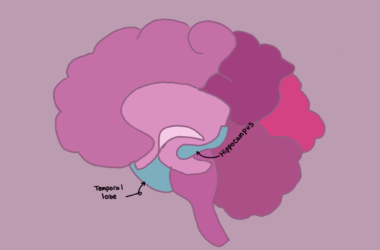
The study examined the site of primal interaction between the viral particle and the host cell. At this location, the virus’ infamous spike proteins interact with the angiotensin-converting enzyme 2 (ACE-2), a receptor used as the coronavirus’ entry point into the cell.

If the spike protein binds properly to ACE-2, the viral membrane fuses with the host membrane, and the virus successfully infects the cell. If this primary binding does not occur, the virus will be unable to infiltrate the cell. According to the study, this is why some species can be infected while others cannot.

Led by Dr. Jaswinder Singh, a redox biologist and associate professor in McGill’s Department of Plant Science, the study found that viral binding relies on the presence of disulphide bonds between small subunits of proteins called cysteine residues. These are strong bonds that create a loop conformation within the structure of proteins, allowing the virus to hold onto the host cell and penetrate it. Without disulphide bonds, the virus cannot infect the cell.

“When we tested the ACE-2 protein sequence for different animal species, we found that some of them are different,” Singh said in an interview with The McGill Tribune

The research revealed that some animals lack one specific cysteine residue, and therefore cannot form disulphide bonds. These animals, which include cattle and swine, are also impervious to COVID-19. In animals that possess both cysteine residues in their ACE-2 receptor, like humans, cats, and dogs, the disulphide bonds can form, and the spike protein can attach to the cell.

COVID-19 pathogenesis and severity within the human population is also determined by other factors. Older adults tend to have a more depressed immune system which makes them more vulnerable, but this is not the only explanation. Singh and his team demonstrated that a larger determinant of susceptibility is the oxidative stress within cells. This refers to the presence of free radicals: Toxic compounds which can damage the cell’s machinery if not counteracted by antioxidants.

The study revealed that the disulphide bonds identified as critical for the virus-host interactions are redox-active, so they can form and break depending on the oxidative state of the cell. 

“This study is unique in a way that we are the first to mention that the coronavirus interaction with this receptor is redox-dependent,” Singh said. “In a more oxidative cellular environment, which we see in old people and those with underlying health conditions, we found that disulphide bonds can form more easily, which will help the interaction.”

In short, ageing and disease cause the accumulation of oxidative stress in cells, facilitating the formation of disulphide bonds at the virus-host interface and the entry of the virus into host cells. This leads to faster and wider proliferation of coronavirus throughout the body and thus a more severe infection. 

The study draws attention to new horizons in COVID-19 treatment and prevention. For instance, increasing the expression of thioredoxin, a chemical that provides electrons to reduce reactive oxygen species in the cells, thus lowering the oxidative state, can be a possible preventative measure along with other antioxidant therapies. 

Singh explained that simply increasing antioxidant intake in our diets by consuming more dark chocolate, berries, and vitamin D can be of help, but is not the sole preventative measure.

Commentary, Opinion

Residence should be a safe space for students

Living in student residences is an experience that many first year McGill students cherish, and for the 2020-21 incoming class, one of the only in-person aspects of McGill left. Yet for many women in New Residence Hall this year, living in residence quickly became a painful part of their first year experience. In mid-December, students began a justice campaign when multiple women came forward with allegations of sexual violence at the hands of a fellow student in residence. McGill’s response to this was disappointingly inadequate. While McGill is bound legally from sharing information about the proceedings, acknowledging how damaging this experience is for women in residences is necessary. With the new COVID-19 restrictions in place, McGill’s negligence is more shameful than ever. 

After the women’s stories came out, students flooded the comment section of McGill’s official Instagram page, demanding action from the university. Meanwhile, a petition started by the survivors reached over 50,000 signatures, amounting to much more than the total student population at McGill. McGill made an unsatisfactory statement stating that they are aware of the allegations and looking into the situation. Now, a month later, the women still need to be on alert to spot an alleged predator in their classes. As an institution that demands tolerance and respect from those staying in residences, as well as all students, this is unacceptable. The fear amongst students, especially those living in residence, will not be mitigated until McGill takes action by removing this student from McGill classes if evidence holds. Additionally, a better statement could make clear the consequences of predatory behaviour on campus without sharing private information. 

McGill’s silence has resulted in not just anger and fear amongst students, but has gone even further to jeopardize the academic performance of women in residences. Feeling unsafe in residence means feeling uncomfortable in your home: The very environment where students study, socialize and sleep. Enabling predators to inhabit these spaces results in increased stress amongst the residents. This stress can lead to isolation, decreased sleep quality, and difficulty concentrating in classes. McGill is supposed to foster a space where students can succeed. The university can offer services like OSVRSE for victims of sexual violence, but until they demonstrate that they wholly condemn predators, those services are inadequate. 

Montreal’s new COVID-19 regulations further exacerbate the situation at hand. Quebec recently implemented a curfew, lasting from 8 p.m. to 5 a.m. each day, confining those living in residence to a home where they feel unsafe. While the curfew disproportionately affects women, McGill has the power to do something to remedy the situation in residences. Students should not be riddled with anxiety or fear at the thought of leaving their rooms to go to the cafeteria, especially when that is a place they need to go. 

Students in residence are now stuck there for at least nine hours of the day; not to mention that other than walks, there are few opportunities to spend time outside during Montreal’s frigid winters. McGill’s first years need support, and the new lockdown has added another layer of urgency. The university’s inaction is affecting students’ mental health and potentially even their academic record, a permanent reflection of their studies. McGill should be mitigating its students’ stress, not adding to it. Women at McGill deserve answers. This is the administration’s opportunity to show students at McGill that sexual violence on campus will not be tolerated and that victims who speak out will be heard and protected.

Arts & Entertainment, Pop Rhetoric, Theatre

Pop Rhetoric: How TikTok democratized Broadway during a global pandemic

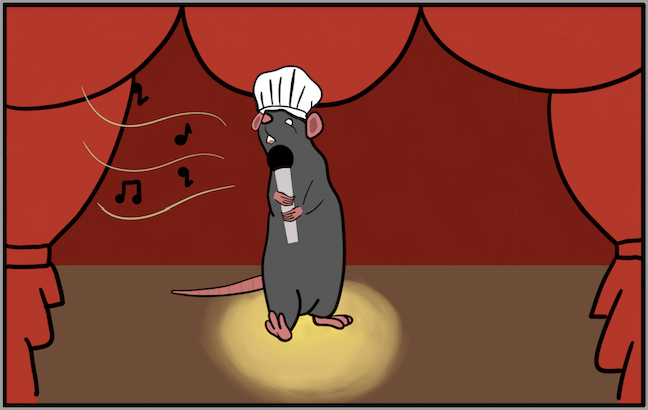
The first musical of its kind, Ratatouille: The TikTok Musical served up a delicious community-baked Broadway treat this January. Based on the Disney-Pixar 2007 film Ratatouille, the project began last year on Aug. 10 when TikTok user Emily Jacobsen posted a TikTok of her squeaking out a high-pitched ode to Remy, the film’s rat protagonist. A few months later, on Oct. 19, composer Daniel J. Mertzlufft adapted the song, adding orchestration to create a full-blown musical finale. The idea grew from a simple meme to a creative prompt—hundreds of theatre-minded creatives followed with their own songs, dance choreographies, stage sets, lighting designs, costume ideas, puppets, and even theoretical playbill designs

Some particularly outstanding songs were those written by Gabbi Bolt, such as “Trash Is Our Treasure,” (and its tragic reprise) for Django, Remy’s father. Bolt was also easily matched by the songwriting superpower of 17-year-old Blake Rouse, who astounded with multiple compositions such as the Finale, an upbeat number for Remy’s brother Emile, The Rat’s Way of Life, and the electrifying, tension-filled Colette’s Tango, featuring a pas-de-deux between the fiery Colette Tatou and the clumsy Alfredo Linguini. Many other artists and composers contributed to the musical repertoire, most notably Sophia James, RJ Christian, Nathan Fosbinder, and Katie Johantgen, among countless others. 

But they weren’t alone. The project quickly enticed many Broadway superstars, including the likes of Dear Evan Hansen‘s Andrew Barth Feldman and Hollywood veteran Kevin Chamberlin. Only a few days after graphic designer Jessie Siswick posted her playbill, the company itself reached out to her and requested to repost it on their website. A few hours later, Disney and Pixar tweeted it. Two days after Disney’s tweet, two-time Tony-award-winning Broadway producer Ken Davenport posted a TikTok expressing his interest in producing the musical on the big (computerized) stage. 

Just like that, an idea that started as a joke and simmered as a community project of creatives from around the world had dished out the first virtual, TikTok-produced, Broadway spectacle ever made. The performance was streamed on TodayTix.com from Jan. 1-4, and even had an encore performance, raising a total of two million dollars for The Actors Fund. As such, Ratatouille: The TikTok Musical served the industry in two ways—as an entertainingly delightful production for musical-deprived drama lovers everywhere, and as a revolutionary work of theatre.

Broadway has always been a cutthroat industry. It is not unheard of for actors seeking a paying career to attend top-tier performing arts academies or conservatories, relocate to New York City, and spend years of their life and exorbitant sums of money for a chance to step foot into the audition room. Even with experience under their belt, only 10 per cent of musical theatre performers get cast. 

The multi-million-dollar success of Ratatouille: The TikTok Musical has demonstrated, to some extent, the gratuitous needlessness of these institutions. Performers of many ages, backgrounds, and levels of training were able to collaborate on a musical from the comfort of their own homes thousands of miles across the globe.

Already, artists are working away on a Bridgerton musical that similarly started as a joke posted by creators Abigail Barlow and Emily Bear. It quickly gained the attention of choreographers, singers, songwriters, graphic designers, and intimacy directors—ultimately being picked up by the BBC and Playbill just thirteen days later. Had Ratatouille: The TikTok Musical not been the magnanimous, unforeseen sensation it had been, there would absolutely not be the same level of trust in small creators to produce a musical.

If Ratatouille: The TikTok Musical has done one thing, it has reminded us that at its core, success in musical theatre does not, and should not, depend on the dog-eat-dog institutions from which it is born, but rather on the radical joy of community, grassroots art-making. After all, as Chef Gusteau always said, “Anyone can cook.”

Arts & Entertainment, Pop Rhetoric

The ‘Steel Magnolia’ Ms. Dolly Parton

As she celebrates her 75th birthday, Dolly Rebecca Parton, of Pittman Center, Tennessee, remains one of the finest country music stars. To some, Parton is simply that: A star. But to others, her body of work is above simple concepts of “stardom.” In 1989, well after the successes of albums Jolene and Coat of Many Colors, Parton starred in Steel Magnolias as a small-town beautician. The film’s title refers to its characters, who are tough as steel yet sweet as magnolias. But the reference goes past the characters; it defines Parton in her personification of the all-American feminized good.

Parton’s upbringing was difficult, as she grew up impoverished in rural Tennessee. Due to this background, Parton faced criticism and judgment, and was called superficial insults like “trailer trash” or “hillbilly.’ Her famous look, marked by her blond wigs and figure-hugging outfits, also attracted an outpour of misogynistic and classist remarks. This never fazed Parton, and she would never disavow her home or appearance. Her upbringing molded the iconic Southern Belle ideal of politeness, respect, and hard work we know today. In shaping her look around her hometown’s “town tramp,” embodying a type of shunned sexuality, Parton supports women unfairly judged by circumstance and subverts the common idea of an “angel’s” look.

Through the ‘60s and ‘70s, Parton’s career flourished with hits like “I Will Always Love You” and “Here You Come Again.” Along the way, she helped foster the careers of other female musicians such as Emmylou Harris and Linda Ronstadt and collaborated with Donna Summer. Her openness to collaborate with other artists and genres led to successes in the pop and bluegrass charts, fulfilling Parton’s childhood dream of making as many people happy as she could.

That dream was fruitful. Appealing to the public usually requires a celebrity to avoid all controversy, often leading to an apolitical, neutral stance. Yet, Parton balances having mass appeal while firmly keeping her integrity and beliefs. Parton is a child-literacy philanthropist, a long-time supporter of civil rights, and uses the Dollywood foundation to aid her hometown with counseling and food resources. During the pandemic, Parton donated one million dollars to research for the Moderna vaccine

As the United States has become increasingly polarized, celebrities have either entered into political conversations or remained silent on partisan topics. For the entirety of her career, Parton has remained in the second camp, eternally elusive on her political leanings. For some, Parton should get involved in politics, given the outright, politically-aligned principles grounding her work. In an economically and racially diverse state like Tennessee, where Democratic strongholds like Memphis and Nashville are at odds with the rural remainder of the state, Parton’s influence could wield significant sway. 

On the other hand, Parton’s philanthropy could be the reason why she avoids political interference. Perhaps her focus is on real change; not questionable lip service, but rather on the tangible benefits that come from her donations. Rather than working inside of the system like the celebrities at the Democratic National Convention, this outsider approach makes a visible change to Tennesseans’ lives. From being a sympathetic employer to a quasi-librarian, Parton’s work directly affects issues of education and literacy, which cycles back to employment. Whether she is a “cut-from-the-cloth” conservative or a “til-the-sun sets” socialist, Parton enacts an agenda for the common good, which is more than an endorsement could ever do.

Parton’s global impact is timeless. She will always remain relevant to this generation—not just because of the anti-capitalist, pro-worker message of “9 to 5,” the subtle queer undertones of “Jolene,” or her heartwarmingly protective relationship with god-daughter Miley Cyrus, but because of her unabashed perseverance to be herself against all expectations. Parton’s kind, altruistic, and hard-working authenticity makes her a Steel Magnolia like no other. As she celebrates her 75th year, having given the world so much, it is only fair that we celebrate her, too.


Arts & Entertainment, Books

The 123’s of the ABC’s

Amidst the final days of the add/drop period and reshuffling schedules, the McGill Library has brought a different type of organization to the forefront. On Jan. 22, the McGill Library hosted a Zoom discussion by social historian and author Judith Flanders on her latest book, A Place for Everything: A Curious History of Alphabetical Order. Flanders spoke about how she became interested in the subject, as well as the historical basis of the written word, the development of different systems of organization, and the autonomy and ambiguity of alphabetical order as we know it.

Flanders fell into the subject in a way many students can likely empathize with—through Wikipedia. While reading a review of a book about the online encyclopedia service, Flanders was intrigued by the reviewer’s disdain for the author, whom the reviewer claimed did not address how Wikipedia’s system of organization proved that encyclopedias no longer needed to be alphabetized. Around a month later, at an art exhibition, Flanders gained a renewed interest in the historical past and differentiation of information classification, and came to find that Wikipedia’s method of organization was not as innovative as the reviewer believed.

Early in the talk, Flanders established the important distinction between the English alphabet and alphabetization. Although any alphabet is integral to reading and writing, attempting to find meaning in the alphabetization of the letters is effectively pointless. The alphabet has an established order, but it means basically nothing, since it does nothing to teach people how to read and write. 

“It’s interesting that we go back to meaning, since alphabetical order as a sorting tool is meaningless,” Flanders said. 

Flanders explained that there is no available historical evidence to explain why the English alphabet is ordered the way it is; there is only evidence demonstrating how it became such an integral system of organization, which it wasn’t always seen as. For centuries, other methods of organization, such as chronological, geographical, and hierarchical order, were perceived as more natural and therefore favoured over alphabetical order.

“When you ask somebody today to put the days of the week or the months of the year in alphabetical order, you have to think quite hard to do it,” Flanders said.

While those methods might be more naturally apparent and do not necessarily require any knowledge of the alphabet, they eventually became more laborious to use because they required significantly more effort and knowledge to access information. Flanders fleshed out this notion with the example of a doomsday book detailing land occupancy in England and Wales in the 11th century—it was organized first by status, then geography, then back to status, and lastly by wealth. It was originally commissioned by William the Conqueror, the king at the time, for tax purposes. Future readers looking to understand the information needed to develop a complex knowledge of the hierarchies and groups within each of the geographical regions. In contrast, alphabetical order requires no substantial previous knowledge of history and society. 

Towards the end of her talk, Flanders spoke on the duality of alphabets and alphabetical order in the world. 

“Alphabetical order is both omnipresent and invisible,” Flanders said. “It’s something that everyone knows how to use and something nobody knows anything about.” 

The system is ingrained in modern society and culture, but its existence and role in the world creates a massive contradiction: While the lack of inherent meaning or bias makes the order amenable to many contexts, it also could be seen as too meaningless to be important. 

When answering a question from an audience member about the potential longevity of alphabetical order, Flanders observed that the system was not widely used until the 13th century and that there is a very likely possibility that it will become obsolete in the future. But despite the existentialism behind questions of what a world without mass alphabetical order would look like, Flanders seemed excited to see where it goes.

“Will [alphabetical order] end up being a phase?” Flanders asked. “An 800-year phase, maybe!”


Read the latest issue

Read the latest issue