


Latest News

McGill, News

SSMU hosts presentation on tenant rights and gentrification

The Students’ Society of McGill University (SSMU) Affordable Student Housing Committee  hosted a presentation on Jan. 12 called “How to not get screwed over by your landlord.” Student speakers Julianna Duholke, 3L Law, Alex Apostolidis, U3 BFA, and Andrew Faber, second-year M.U.P., called on their peers to know their rights as tenants and to combat gentrification in student-dense areas in Montreal. 

Julianna Duholke, director of community services at the Legal Information Clinic at McGill, brought attention to the common practice of landlords hiking rent prices and explained that such increases are only lawful under specific circumstances. 

“Demand [due to the COVID-19 pandemic, for example] is not really a legitimate reason [to raise the rent],” Duholke said. “It has to be based on things like actual increase in expenses, like property taxes or huge renovation costs.”

Duholke noted that while landlords often frame the notice of a rent increase as a non-negotiable issue for their tenants, students still have a right to negotiate their rent. 

“A lot of people think that they automatically have to accept a rent increase, but you absolutely don’t,” Duholke said. “So, if your landlord is trying to increase your rent, you can reject that, in which case the landlord can either accept your rejection, or then they themselves would be the one who would have to go to the administrative tribunal to get them to fix the rent [….] Then it’ll be for the tribunal to decide whether the increase was legitimate or not.”

Apostolidis, Housing and Job Legal Information Assistant at the Concordia Student Union, believes that the refusal to accept a landlord’s rent increase is a crucial part of student engagement in anti-gentrification

“I think it’s important to recognize that a lot of people need affordable housing, not just students,” Apostolidis said. “Although it’s not our responsibility as students to control the whole housing market, there are certain things that we can do to lessen the impact of gentrification on certain neighborhoods.”

One of the ways students can reduce their effect on gentrification, Apostolidis suggested, is to choose student housing. 

“A benefit of student housing in gentrification terms is you are not going to be displacing families or other non-students that need affordable housing, because you are going to live in housing that’s dedicated for [students],” Apostolidis said. “The downside about student housing is frankly [that] a lot of the time [it] is way overpriced and can be very loud or other things that you don’t want to have to deal with as a student.” 

To help remedy unaffordable student housing, Faber, a member of the SSMU Affordable Student Housing Committee, explained that the committee has a plan underway to provide housing close to campus managed by students, for students, in the coming years. In collaboration with UTILE, a non-profit organization that will aid in building design and fundraising, the project could be finished construction as soon as 2023. 

“[The rent is] going to be 15-30 per cent below market value,” Faber said. “It’s not a for-profit model [….] It’s a cooperative model, so it only goes up with inflation and repairs and things of that nature.”

All of the speakers at the event found a common hope in students’ ability to generate change within their communities. Apostolidis urged students especially to make informed decisions when moving into a new apartment to combat gentrification and inflation. 

“Get informed about the city you live in and the history of your borough,” Apostolidis said. “Deny your rental increase [….] Transfer your lease whenever possible. Live in student housing if possible [and] if not, a student neighbourhood. [Be] cautious of where you’re going to be moving into and who your neighbours are [….] Always inform people around you about your rights, because why wouldn’t you do that?”

Chill Thrills, Student Life

Journaling past present uncertainty

With innumerable ways to define the uncertainty of present times, many have started to capture their lives on paper, whether as a tool to record their role as witness to a pivotal historical juncture or to make sense of the chaos through the process of writing. 

During the first days of quarantine, Hannah Judelson-Kelly, U3 Arts, could not be certain of much beyond the moment’s importance and had an urge to articulate and document the present reality.  

“I wrote an entry near the beginning of COVID,” Judelson-Kelly said. “I just remember thinking very clearly that you should write down that COVID is happening.” 

Journals from the past serve as valuable accounts of history, offering access to an individual’s perspective as they live through historical events. Museums and historians are already seeking out artifacts from diverse experiences of the past year to construct narratives for posterity. Janis Whitlock, a research scientist at Cornell University who focusses on young adult mental health, created a global project called “Telling Our Stories in the Age of COVID-19” to collect journal entries from the pandemic. 

During extraordinary times, chronicles of life’s banalities provide intimate details that enable future generations to understand our current realities. Diaries from the influenza pandemic of 1918 reveal a doctor’s sense of inadequacy for his patients and—as restrictions lifted—a young girl’s eagerness to see the newest movie in theatres. A record of the first moment one can attend a concert or hug a stranger again post-coronavirus will likely be just as valuable. 

Many, however, prefer to journal not for any historical archive but rather as an aid to their more urgent, present lives. 

By releasing her emotions in writing, Judelson-Kelly is able to discover clarity in them. 

“For me, solving [problems] comes with talking to people,” Judelson-Kelly said. “In a way, my journal is a person to talk to. I need space to allow the idea or emotion to breathe and a journal gives me that [….] Solutions sometimes come afterwards or during that.”  

Jackie Lee, U1 Arts, documents her life both for personal remembrance and management of anxieties. Lee practices honesty in her writing, but often finds herself still keenly aware of an external reader’s gaze. 

“Every single journal I have, the first page is a disclaimer for myself saying I can write however I want,” Lee said. “It’s this weird dual awareness of myself being genuine and totally raw in this space, but [also] of writing for my grandkid in 200 years to look back on and see as an artifact.” 

It can be difficult to escape the sense that one’s private thoughts might be exposed or serve to represent something larger than oneself. In journaling, the writer often not only releases their inner feelings but also gains a fraction of control over them. They become conscious of the passage of time, compelled to imagine the foreign empathies and judgements of a future reader or self. 

This detachment from the present moment, however, can also help us endure through it. When Judelson-Kelly looks back on her past journal entries, she laughs at their intensity. For her, reading them is reassuring. 

“There’s times when emotions will come up in my life, and when I flip back, I’ll find that a couple of years ago, I was feeling the same thing,” Judelson-Kelly said. “It’s reassuring to me. There’s evidence right here in your writing where you’re feeling the same exact feeling. Stop feeling sorry for yourself because you’re going to get through it!” 

Forcing us to recognize the ephemerality of the moment, journaling can give us greater confidence and perspective in the face of adversity.

Judelson-Kelly admits to being just as emotional and dramatic in her current writing, knowing perhaps that she will one day find comfort in her present uncertainties, as confounding as they may seem now.

While helping us create narratives of historical and personal change, journaling might also reveal instances when history repeats itself in the present, providing guidance and assurance that this moment, too, will pass. 


Hockey, Sports

USA hockey defeats Canada to win the World Junior Championship

The World Junior Hockey Championship, an annual global ice hockey tournament organized by the International Ice Hockey Federation, wrapped up on Jan. 5 after 12 days of fierce competition. This year, the competition was hosted in Edmonton and Red Deer, welcoming teams from 10 different countries. The tournament was carried out in a bubble, requiring teams to quarantine before meeting to play and without an audience. The tournament maintained its “best on best” format, in which countries send their best players under 20 years old to compete for the gold medal. The championship also serves as a platform for drafted NHL players to be evaluated by their teams and undrafted players to gain exposure, giving fans a glimpse of future NHL prospects. Team Canada, the reigning champions, has won 18 gold medals—the most of any country. 

Canada opened the tournament by defeating Germany in a whopping 16-2 score. However, the German team could only form a roster of 14 players after eight players testing positive for COVID-19. Canada topped its competition pool after the preliminary round, moving on to defeat the Czech Republic in the quarter finals and Russia, the 2020 silver medalists, in the semi finals to reach the gold medal game for the second consecutive year. While Canada had easier competition for the preliminary rounds, the Americans faced tougher competition in the Czech Republic, Sweden, and Russia, and won games by significant margins, defeating Czech Republic 7-0, and Sweden 4-0. This gave the United States good practice and a confidence boost before they eventually faced Canada in the gold medal game. 

“I honestly don’t think [Canada] ha[s] been tested with a real team yet,” said United States centreman Trevor Zegras in a pre-game interview with TSN. “I think we are going on all cylinders right now, and I think we’re going to catch them by surprise.”

Zegras was the star of the final, with a goal and an assist leading the U.S. to a 2-0 victory. Zegras, a 2019 first round draft pick for the Anaheim Ducks, was named tournament MVP and was the top scorer of the tournament with seven goals and 11 assists. American goaltender, Spencer Knight, who is considered one of the best goaltending prospects in hockey, blocked 34 shots for his third shutout of the tournament. The United States’ performance in the final was indeed representative of their dominance throughout the tournament, as well their dominance as a program in general, winning four gold medals in the past decade. 

A large part of the success of the United States junior team can be attributed to its training and scouting program—the National Team Development Program (NTDP). USA Hockey founded the program in 1996 as a way to identify elite ice hockey players under the age of 18 and to centralize their training. This training has helped the United States junior team in working together cohesively.

“My time spent at the NTDP was a big turning point in my career as it helped to achieve my goals,” New York Rangers defenceman Jack Johnson said in a testimonial to the NTDP. “I not only developed on the ice, but off the ice as well. The training is second to none, and the chance to represent your country is the greatest feeling in all of sports.”

The rivalry between Canada and the U.S. seems like it will only become stronger. With development programs like the NTDP in the United States, the heightening level of competition in Junior Hockey can only lead to an exciting future for international ice hockey.


climate
McGill, News

McGill’s new Climate and Sustainability Strategy receives mixed reactions

After months of consultation spanning from January 2020 to September 2020, McGill’s new Climate and Sustainability Strategy (2020-2025) was endorsed by the McGill Board of Governors during their meeting on Dec. 10. The strategy addresses the three long-term goals of achieving a platinum sustainability rating by 2030, becoming zero-waste by 2035, and reaching carbon neutrality by 2040.

The new strategy was developed to carry out the goals of the prior Vision 2020 sustainability strategy while also tackling environmental issues through a new perspective. This new approach considers eight areas of importance through individualized flagship actions. The eight areas considered include research and education, buildings and utilities, waste management, travel, waste systems, procurement, landscapes and ecosystems, and community building.

Francois Miller, executive director of Sustainability at McGill, described McGill’s new sustainability strategy as ambitious, yet realistic in its aims.

“These are lofty goals that require the effort of all McGillians but, when attained, will transform our campuses for the better,” Miller said. “[The strategy] is also realistic as there are clear pathways to reach these high-end goals embedded within the strategy [….] In order to become zero-waste, we know that first and foremost we must expand reuse, recycling, and composting efforts across McGill campuses to give our staff, students and faculty members the tools they need to reduce what we send to landfill.”

Miller further emphasized the importance of reducing McGill’s environmental impact and the collective effort needed from members of the McGill community to pursue the strategy successfully.

“In order to achieve carbon neutrality, it’s important that we continue to improve the environmental performance of our buildings, which is [specified in] the Flagship Action for Buildings & Utilities category,” Miller said. “The objectives and actions described in the strategy will guide our steps over the next five years, moving us closer to reaching our targets, with the support of our entire community.”

Divest McGill, a student-led organization that advocates for McGill’s divestment from the top 200 fossil fuel companies, has a less optimistic outlook on the new strategy. Alexia Wildhaber-Riley, U2 Science, and Julius Geist, U2 Arts, outlined Divest McGill’s doubts in an email to the Tribune. 

“With a few commendable exceptions, McGill’s sustainability strategy is an exercise in greenwashing and creative accounting,” Wildhaber-Riley and Geist wrote. “McGill’s Strategy deliberately ignores emissions from its $50-million-dollar investments in the fossil fuel industry, so any target of ‘carbon neutrality’ is meaningless [and] self-aggrandizing. In addition, a tenth of their proposed reductions rely on carbon offsets and sequestration of questionable efficacy

Natasha Edmonds, U2 Arts and president of Liberal McGill, affirmed the organization’s support for the Climate and Sustainability Strategy. Edmonds highlighted how the university’s new strategy aligns with the Liberal government’s climate action plan: Canada’s Net-Zero Emissions Accountability Act.

“Liberal McGill applauds this announcement by McGill University,” Edmonds said. “The goal of zero waste by 2035 and carbon neutrality by 2040 is, as the university affirms, ambitious yet realistic. This commitment complements the Liberal government’s own bold climate action plan. Thanks to the Canadian Net-Zero Emissions Accountability Act, Canada will become a net-zero economy by 2050.”

Nathan Devereaux, U1 Arts and social coordinator at NDP McGill shared Liberal McGill’s enthusiasm but questioned whether this plan was truly enough action from McGill.  

“The NDP Club is happy to see McGill taking steps in the right direction,” Devereaux wrote in a message to the Tribune. “As an institution, McGill has the opportunity to be a leader in the fight against the climate crisis and has not always lived up to its potential. McGill’s Board of Governors voted against divesting from oil and gas stocks as recently as Dec. 5. So, while the NDP club is happy to see progress, we believe McGill could be doing more”

Arts & Entertainment, Books, Film and TV, Music

Stuff we liked this break

This holiday season was a weird one. With not much to do and three extra days not to do it, binging a new series on Netflix or getting lost in a good podcast wasn’t so much an option as it was a necessity. As always, the team at A&E took full advantage of the well-deserved downtime to discover some new favourites in TV, music, and books. Here’s the best of what we liked this winter break.

Your Name Engraved Herein, Tasmin Chu

Set in 1980s Taiwan during the lifting of martial law, director Patrick Kuang-Hui Liu’s/Your Name Engraved Herein [ 刻在你心底的名字] explores themes of shame and desire from the eyes of A-han, a student at an all-boys high school who finds himself falling in love with a new transfer named Birdy. Both A-han and Birdy must decide between staying together or growing apart in an atmosphere dominated by violence, religion, and patriotism. Its moments of physical vulnerability remain firmly grounded in quotidian settings of shower stalls, classrooms, and train cars. It’s also beautiful. The visuals of the film took me right back to attending Catholic school in Taiwan: The omnipresent scooters, the blue-green mountains, the topography of water and light. Despite its tenor of repression and secrecy, this film bursts with an intimacy that feels startlingly fresh and real.

“Driver’s License”, Deana Korsunsky

I used to think that only throwback masterpieces like “American Idiot” and “Mr. Brightside” could catapult me into angsty teenagehood regression. “Driver’s License,” Olivia Rodrigo’s new single, proved me wrong. The High School Musical: The Musical: The Series star released what could only be described as a certifiable banger, a break-up ballad speculated to be about her co-star, Joshua Bassett. The tapestry of background drama details, however, only punctuates the impeccable vocals that Rodrigo brings to the song. From the soft notes of her opening lyrics to her chilling belting in the chorus and bridge, Rodrigo captures bittersweet, unfiltered heartache. A wistful ode to lost love, “Driver’s License” has every right to its triumphant reign on the top of the charts.

Just Kids by Patti Smith, Anna Chudakov

Patti Smith’s autobiography Just Kids delivers an immersive experience into the lives of starving artists in New York in the ‘70s. On her journey of artistic self-discovery that progressed in tandem to her relationship with artist Robert Mapplethorpe, Smith shares intimate details of her life from her teen pregnancy to living at the Chelsea Hotel. The story of how Smith and Mapplethorpe’s devotion to art and to one another sustained their strenuous climb to success is embellished by conversations with legends like Jimi Hendrix, and simultaneously marred by the loss of loved ones. Just Kids leaves you feeling warmhearted, inspired, and gives you newfound appreciation for the work of artists in Smith’s era.

Memorial by Bryan Washington, Jackie Lee

In his debut novel, Memorial, Bryan Washington writes of families born and made, bonds rekindled and lost, and histories passed down from parents to children. Benson and Mike, a working-class Houston couple, are set to reevaluate their deteriorating relationship when Mike departs to Japan to visit his dying father, leaving his mother, who has only just arrived from Tokyo, and Benson as reluctant roommates. Washington’s voice is stark but beautiful, depths of meaning rippling underneath lines that blend dialogue and inner voice. A poignant story contoured with intersections of class, sexuality, and race, Memorial ponders how we communicate and care for one another, and what it means to be home.

Science & Technology

New research on ketamine may lead to novel treatments for depression

Ketamine, a schedule III drug, is often used recreationally for its hallucinogenic effects. Its approved purpose, however, is as an anesthetic in medical settings for animals and humans. Recently, it has also been approved by the FDA to treat major depressive disorder in patients who are resistant to other treatments. 

Published in Nature, a Dec. 2020 study conducted by three Canadian universities found that the presence of a group of proteins called 4E-BPs, which are found in the brain and play a role in memory formation, enable ketamine to produce its antidepressant effect. This knowledge could be crucial in the search for alternative treatments for depression. 

More than 30 per cent of patients with depression are resistant to selective serotonin reuptake inhibitors, more commonly known as SSRIs, which are the most frequently prescribed class of antidepressants. In these cases, alternative treatments for major depressive disorder are needed. 

In the study, researchers removed 4E-BP proteins from specific brain cells in mice treated with ketamine and observed that protein synthesis was inhibited. Within the cells of the prefrontal cortex and hippocampus, these proteins typically regulate ketamine’s metabolites to produce an antidepressant effect. In addition, they are essential for several biological processes, including memory formation. 

The elimination of 4E-BPs blocked the antidepressant effects of ketamine in both inhibitory as well as excitatory neurons. When researchers evaluated the depressive behaviour of mice with a commonly used forced swim test, they found that mice that were bred without 4E-BPs did not show improvements, suggesting the persistence of depressive behaviour. However, mice with active versions of 4E-BPs performed significantly better in these behavioural tests when treated with ketamine.

Gabriella Gobbi, a professor in the Department of Psychiatry at McGill, says that ketamine-based drugs are a last resort for patients who are resistant to common treatments. 

“The first line for people suffering from depression is the SSRIs or other class of antidepressants [such as] SNRI [and] alpha-2 antagonists,” Gobbi wrote in an email to The McGill Tribune. “If the patient does not respond, there is the second line, by potentiating with antipsychotics [like] quetiapine [and] aripiprazole. Finally, the third line, in case of non-response, is ketamine or TMS.”

The use of ketamine as a treatment is somewhat controversial, mainly due to its addictive properties. However, this risk can be mitigated when supervised by health professionals. Additional clinical studies are needed to provide more information on appropriate dosages. 

“In a medical setting, ketamine is used at very low doses and in a limited number of infusions […], thus the risk of addiction is minimal,” Gobbi said. “But of course, in the black market, the addiction to ketamine is an important health problem.”

Even at low doses, ketamine may not be an accessible treatment to all patients who can potentially benefit from it. According to Gobbi, the treatment must be administered under very specific conditions in specialized clinics at a hospital. Gobbi also pointed out that the price of the treatment is very high and not covered by the Régie de l’assurance maladie du Québec (RAMQ). 

A personalized approach to medicine is especially important in psychiatry for several reasons. Major depression is an umbrella term that includes many subtypes of depression like bipolar, unipolar, and depression caused by medical diseases.

“This [classification] requires a very meticulous evaluation, assessment and, of course, personalized treatment, including not only antidepressants but also psychotherapy and psychoeducation,” Gobbi said. 

The study’s insights into the molecular mechanisms of ketamine, such that 4E-BP proteins play a major role in its antidepressant effects, is crucial for designing new alternative depression treatments. 

“Today, the studies of molecular biology, physiology, and pharmacology are helping us to better understand mental diseases and their treatment,” Gobbi said.

Student Life

UpLift Canada renews old clothes

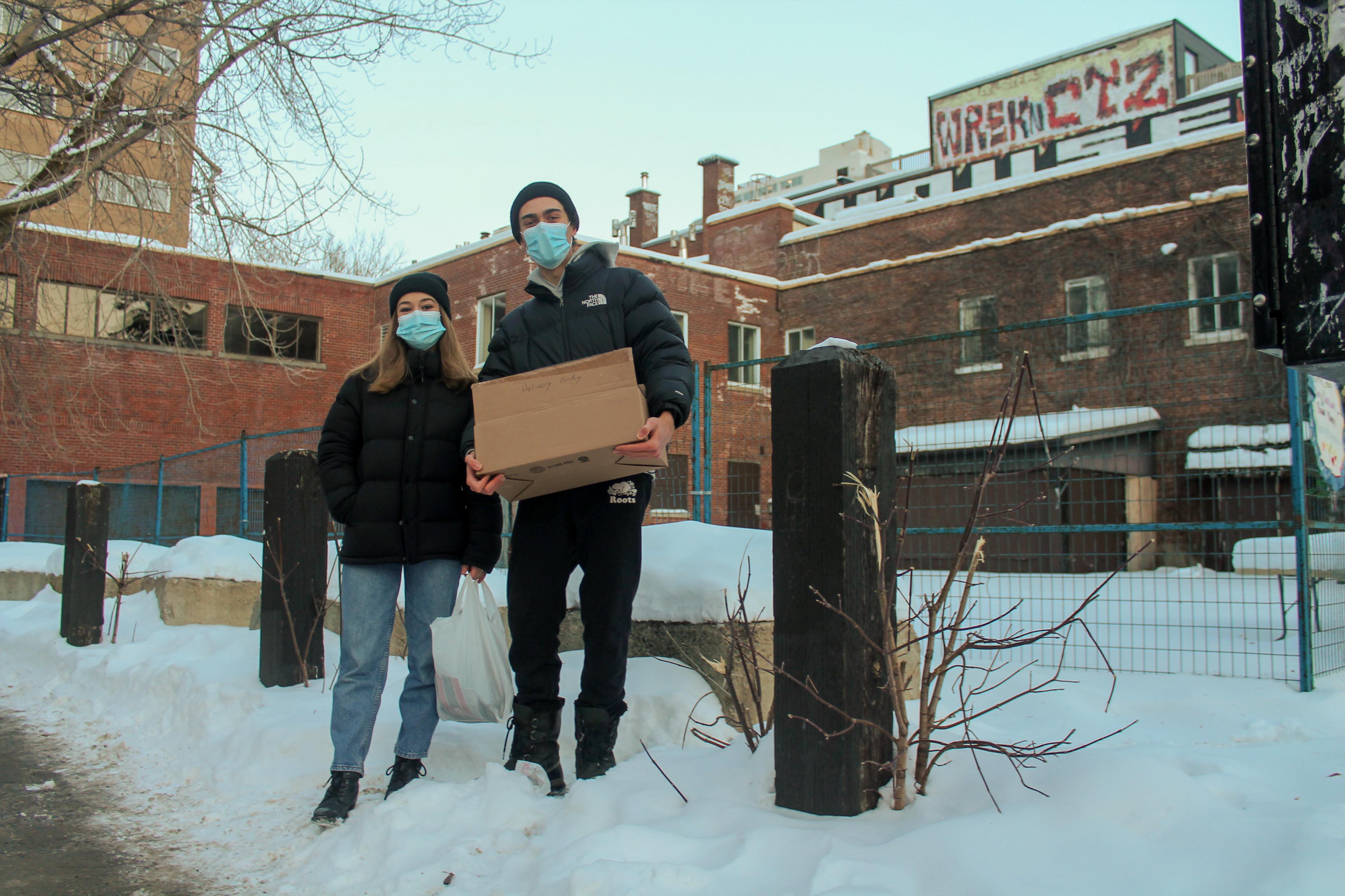
The UpLift Canada Foundation is a newly established, student-led initiative spearheaded by Maggie Larocque, U3 Arts. Perplexed by the 10 million tons of clothing North Americans throw out every single year, UpLift’s founders devised an upcycling process that provides clothing to individuals in housing shelters. In addition, UpLift offers opportunities for volunteers to build relationships with their disadvantaged neighbours while alleviating the environmental damage clothing waste causes. Larocque was stunned and horrified following a visit to a waste management facility in October of last year. 

“I kept thinking about the literal piles and piles of clothing that were going to waste in my own backyard,” Larocque said. “Something had to be done.” 

Compelled to act, Larocque began researching and discussing her ideas with close friends. Less than three months later, those peers now make up the executive team of  UpLift, launched on New Year’s Day in 2021.

UpLift strives to simplify the donation process for both donors and shelters. Each month, the organization communicates with partnered shelters in a selected city to ensure a redistribution that is equitable and tailored towards their specific needs. This January, UpLift is soliciting donations in Tsawwassen, B.C. During that month, individuals will select a time-slot for the UpLift team to coordinate donation pick-up from the given address. 

Following the donation process, UpLift begins its upcycling process. The on-site team sorts all the donations and separates clothing that is suitable for distribution from damaged pieces that are not. Appropriate clothing is then delivered to predetermined shelters the following day. Larocque’s team also takes inspiration from ethical and sustainable clothing companies, such as Patagonia, and researches the practices of facilities that repurpose old textiles. 

Despite founding the organization in the midst of the pandemic, UpLift has achieved what the executive team envisioned. Though accessibility barriers such as costs of incorporation and the submission of legal documents were initial learning curves, overcoming these obstacles has fuelled the initiative’s focus.

Inspired by the virtual workings of the student-club over which Larocque also presides, McGill Students for UN Women, as well as discussions with Tori Ford, the founder of Medical Herstory, the group has forced itself to adapt to remote-based communication. Larocque points to the unwavering generosity of their partnering communities for allowing UpLift to operate efficiently. As of Jan. 14, all donation slots for their Tsawwassen clothing drive have been booked—a testament to the organization prevailing through numerous hurdles.

The UpLift Canada Foundation unapologetically presents itself as a youthful organization. Although the phrase “youth-lead” is featured prominently across its website, the initiative aims to bring a diverse, inclusive, and intersectional set of voices to the table. The group of young individuals are passionate about using a grassroots approach to improve environmental and living conditions. UpLift’s executive team act as practicing activists, intersectional environmentalists, and role models for the next generation, distinguishing the initiative from other clothing donation services.

UpLift’s expansion process is already in the works, with a Montreal launch scheduled for September 2021. Furthermore, the organization is planning to expand nation-wide as its foundation and resources continue to grow. 

In a world full of uncertainty, Larocque hopes to bring reassurance to soon-to-be graduates. 

“If there is one thing I have learned in my entrance into the NPO sector, it is that there are a lot of wonderfully passionate people doing wonderful things all around the world,” Larocque said. “There is always room for help and that has been an overwhelming fact I have learned throughout this entire experience.”

Students wishing to get involved can visit the UpLift Canada Foundation website and contact the organization directly.


News, PGSS

PGSS Legislative Council votes to restructure Health and Wellness Committee

During the Post-Graduate Students’ Society’s (PGSS) virtual Council meeting on Jan. 13, councillors approved the proposed restructuring of the PGSS Health and Wellness Committee and discussed the inclusion of graduate students on departmental faculty hiring committees. 

At the beginning of the meeting, former PGSS Secretary-General Maria Tippler spoke on her resignation to pursue a professional opportunity and fellow councillors exchanged virtual goodbyes. Councillors then passed a motion to accept the resignation and delegate the secretary-general’s portfolio amongst the remaining councillors. 

Next, councillors debated a motion to restructure the PGSS Health and Wellness Committee to better reflect the structure of the Student Wellness Hub. PGSS Health Commissioner Jess Chen explained that the motion would unify the Health Services Advisory Board, Mental Health Advisory Board, and Counselling Services Advisory Board to create the Student Wellness Hub Advisory Board, as well as create positions for two additional PGSS members. 

“From my experience, the Health and Wellness Committee gets quite a few applications from members who want to join and […] I do believe [by] increasing the number [of regular members on the committee], we will be able to fill that number [while allowing] for more engagement from PGSS members,” Chen said.

The motion to restructure the committee was unanimously approved.

As the meeting’s agenda progressed to announcements, Internal Affairs Officer Tina Giordano highlighted a packed calendar of virtual events planned for post-graduate students this month. For upcoming social soirées, starting on Jan. 15,  PGSS will be using Gather, a virtual meeting application that allows participants’ avatars to move around a digital room and enter into smaller rooms based on proximity to one another. Giordano hopes that this technology will mimic the physical spaces these events used to take place in.

“It feels like you’re actually at Thomson House, or at a party,” Giordano said. 

After the announcements, councillors moved to approve the reports. The scheduled question and discussion periods yielded no questions and no proposed discussion topics. 

At the close of the meeting, Charles Brunette, PhD student supervisor in the School of Atmospheric and Ocean Sciences (AOS), presented the progress of including graduate students in the faculty hiring process. Brunette highlighted the benefits and drawbacks of graduate student participation in this process: Namely, that diversifying the voices on hiring committees is important, but that students’ labour will be unpaid. 

A survey of AOS students between Nov. 30 and Dec. 4, 2020 found that while most students agree that graduate students should serve on faculty hiring search committees, few can see themselves actually serving on these committees. 

Brunette reported strong support for graduate student inclusion in this process within AOS.

“We get some very good support from profs,” Brunette said. “Some are a bit hesitant about making it formal [since when] it was difficult to find a student we didn’t want to delay the process [….] But otherwise, profs are generally in favour and some are pushing hard for it [….] I sit on the hiring committee and the help from the students was very much appreciated.”

Councillors then discussed graduate student participation in faculty hiring in their respective Post-Graduate Students’ Associations (PGSAs). The meeting concluded with a reminder of the Feb. 3 deadline for PGSS general election nominations. 

Moment of the meeting: 

The meeting was peppered with minor technical difficulties that reminded the virtual room of the inherent, and often comedic, limitations of virtual communication. Council Speaker Adrienne Tessier reminded attendees to reserve the Zoom chat for business, quipping, “I always say that if we could have a separate memes and snarky comments thread, that would be great.” 

Soundbite:

“The CMA [Committee on Monetary Affairs] decided to add a lot more funding periods to the PGSS Travel Awards [….] Just to be clear, we’re funding only virtual travel […] that is helping cover fees that are associated with attending virtual workshops, virtual conferences, things of that nature [….] We won’t be accepting applications for in-person events because we don’t want to be encouraging travel in that way [….] And we’ve [had] very few applications thus far and therefore, a 100 per cent funding rate.”

—Connie Shen, Financial Affairs Officer, on the addition of new funding periods for the PGSS Travel Awards

Student Life, The Viewpoint

Shooting your shot on Zoom

Remote classes are not an ideal learning method for anyone, but this does not mean you cannot have some fun with it. Beyond adjusting academically, adapting socially to remote learning is a whole other ballpark. Reaching out to strangers online is a challenge to be conquered. 

One of my classmates recently told me that they were asked on a date through a Zoom private message during a lecture. Another told me that someone reached out to them by guessing their university email address. While some students clearly have no qualms about messaging someone they saw in a Zoom lecture—or even shooting their shot—most of us find making friends with people in their online classes intimidating.

Under normal circumstances, students could easily turn to the person next to them in a lecture and bond over common ground, such as the course material, fashion, or a shared interest. However, Zoom classes make it more difficult for such melees to occur, especially with pre-recorded lectures, seas of blank screens, and no opportunity to chat before or after class. Attending small group conference sessions can provide some much needed social interaction, but there are still usually over a dozen people in the room. The randomized breakout rooms have potential to foster natural conversations, but generally descend into a painful, awkward silence. Still, when the breakout rooms close, there is no way to simply turn around and get the contact information of the person you were just talking to. Thus, it can be hard to go from in-class to out-of-class friends. 

With that said, for some students who are either unable to come to Montreal this year or confined by restrictions, meeting people through lectures is one of the only ways to make friends. Personally, I am doubly disadvantaged by being both a first year student and someone living at home. Luckily, connecting with peers over shared academic interests online has lessened the feelings of isolation.

The most important thing to me has been overcoming the fear of being perceived as creepy. Before remote learning, it may not have been as common to receive a Facebook or Instagram direct message out of the blue from an unknown user without the preamble of an actual introduction. Though it is understandable to feel uncomfortable contacting someone unfamiliar on social media, most of us have both sent and received more of these messages amid the pandemic than ever before. It is important to realize that, especially in quarantine, many students have not lost their love of meeting new people. If you have a great conversation with someone in a breakout room, it is completely normal to look someone up on Facebook and reach out. 

Amélie Guillemette, U0 Arts, is in a similar situation to mine. 

“The only way I was able to start talking to some people is through the live Zoom classes, so if teachers don’t have any of those throughout the semester, it’s pretty much impossible to start interacting with people and to have something substantial to talk about,” Guillemette said. “I was lucky that in the first semester I had three classes with live Zooms and with people that had a lot of the same classes [….] But it’s still much harder than if we were in person.”

By paying attention to the people in your classes, you can build relationships. Although it can be uncomfortable at first, most students that you reach out to are more than happy to make a new connection.

Spending at least two semesters of university with classmates scattered across the world is certainly disappointing, but it is still possible to build friendships. Most importantly, it is about having an open mind and being kind to yourself and others. Remember that everyone is in the same boat, and do not be afraid to venture outside your comfort zone.

Student Life

Spending the holidays with chosen family

For many, this holiday season was spent away from loved ones. At a time when uniting with  family feels especially pertinent, the realities of the pandemic remain stark. Nonetheless, students adapted, finding comfort in friends, roommates, and themselves. 

Ollie F., U3 Arts, spent the holidays with their roommate and boyfriend. It was their first time away from family during this time of year.

In previous years, Christmas has meant visiting Provence, France to unite with their maternal side of the family and participate in regional traditions. 

“We have 13 desserts on Christmas day and set up a mini Christmas village,” Ollie said. “Some years we also sprout wheat and barley starting at the beginning of December.” 

The winter break typically offers students a chance to see loved ones from whom they are separated for most of the year. Homecomings, however, were shadowed by a threat to communal safety. Ollie reflected on the family that they weren’t able to see. 

“[During the holidays] the most important thing for me is to be with my sister,” Ollie said. “I miss [her] the most. I’m also really going to miss seeing my little cousins [….] They’re the most awesome kids I’ve ever met.”

Since Ollie’s roommate is Jewish, they lit the menorah for every night of Hanukkah, which spanned from Dec. 10 to 18. Although they might not have enjoyed as many desserts as in Provence, the three still cooked and shared a meal on Christmas. Ollie expressed their gratitude for these close relationships. 

“It [was] strange being away from my family for the first time this Christmas, but I feel so lucky to have this bit of my chosen family surrounding me,” Ollie said. “Our household functions like a family and we all take care of each other, which is something really special.”

Friends and roommates, isolated from familiarity and tradition—as most have been these past months—can be strengthened by the shared experience of grappling with the pandemic’s strangeness. 

Brian Wood, a 2L Law student, hoped to replicate comforts from his home in Barbados. He enjoyed his break with a Barbadian friend visiting from Toronto and cooked meals together that are unique to their home country. 

Barbados’ warm weather was difficult to summon, but food can often be its own form of teleportation. Earlier, Wood shared his traditions and plans. 

“I’m going to miss my mom’s cooking,” Wood said. “On Christmas day, most of us have family luncheons. Our parents would cook a huge meal for extended family, cousins, aunts, uncles [….] One main thing we eat is called macaroni pie [….] It won’t be the same, but we’re going to try.” 

Deciding to stay away from family is paradoxically an easy yet difficult decision. Spending the holidays with her roommate, U1 Arts student Laura Clow explained their choice. 

“We knew it had to be done to keep our loved ones safe,” Clow said. “But, it was incredibly hard to carry that decision out, especially when it came to telling them that we wouldn’t make it home for Christmas.” 

Despite the setbacks, Clow enjoyed creating perhaps the beginnings of their new traditions. 

“We [tried] to make this a positive experience for both of us,” Clow said. “I [was] looking forward to doing everything ourselves this year and feeling like full adults. We [had] a super great gift exchange […] and a delicious Christmas dinner.” 

Read the latest issue

Read the latest issue