Latest News

Basketball, Sports

The McGill Tribune’s look into a unique 2021 NBA Season

Coming off the shortest NBA off-season of all time, the opening weeks of the 2020-2021 NBA season have been anything but predictable. Here are The McGill Tribune’s predictions for the rest of the 2020-2021 season.

The Toronto Raptors

Following a valiant playoff run in the bubble, the Toronto Raptors have stumbled to a 5-8 start to begin the 2020-2021 NBA season. Although COVID-19, a shortened off-season, and relocation to Tampa Bay are significant factors in the team’s lacklustre start, Nick Nurses’ squad’s inability to execute and play sound team basketball is the main reason for the rough beginning. During the off-season, Serge Ibaka and Marc Gasol left for Los Angeles; both were instrumental to the team’s ferocious defense, which has consistently ranked among the best in the league over past seasons. Additionally, the duo added strong rebounding, with floor spacing and timely scoring on the offensive end of the floor. 

In an attempt to replace Ibaka and Gasol, the Raptors signed Aron Baynes as a free agent replacement in November. However, he has been poor on both ends of the floor, earning himself a frequent spot on the bench. The secondary unit, a strong point for Toronto during the past several seasons, has struggled, particularly Norman Powell, who has shot just 37 field goal percentage. 2020 All-Star forward Pascal Siakam has also continued to disappoint following his subpar performance in the Orlando bubble, averaging just 19.9 points per game on 45 field goal percentage, which is not strong enough for a primary scorer on a team expecting to contend for a championship. 

By now, the Raptors are at a crossroads regarding the future. The current team cannot compete with Brooklyn, Philadelphia, or Boston. The front office must decide to rebuild or pursue additional help. Rebuilding around a core of Siakam, Van Vleet, and Boucher would be the better option. Despite all he has done for the city and Raptors organization, moving veteran All-Star Kyle Lowry to another team would be an important start in rebuilding another championship roster. With Lowry’s contract set to expire at the end of the season, President Masai Ujiri will be tasked with making these decisions for the franchise, truly holding the future of the team in his hands. 

The Brooklyn Nets

With a record of 9-6 to begin the season and multiple questions arising surrounding All-Star Kyrie Irving’s off-court behaviour, doubts have started to form regarding the Brooklyn Nets’ chemistry and future success. However, this skepticism has seemingly been put to rest following the acquisition of former MVP guard James Harden. In a four-team deal involving multiple players and draft picks, the Nets traded away their future with the hopes of winning immediately, creating a new “big three” led by future Hall-of-Famer Kevin Durant. Harden posted a 30-point triple-double in his Nets debut, an extremely promising start that led many to believe this squad will challenge the Lakers for the 2021 NBA championship. Assuming a continued successful pairing of former Oklahoma City Thunder teammates Durant and Harden, the front office could decide to trade All-Star guard Kyrie Irving for depth, which the Nets currently lack. The Nets traded Chris Levert and Jarett Allen, among other key secondary players, in order to attain Harden, thinning the team’s bench significantly. Irving has broken league COVID-19 protocols and has only played in half of the games this season, taking time off for “personal reasons”. Irving has been wildly unpredictable since leaving Cleveland in 2017, and the cohesiveness as well as the future of the team could benefit from his departure in an exchange for young, committed role players. 

The Golden State Warriors

Since the slew of injuries that ended the Golden State Warriors’ chances of winning the NBA championship in 2019, the once-dominant team has been looked over as a serious contender for the following seasons. The departure of Kevin Durant to the Brooklyn Nets and the injuries suffered by Klay Thompson and Stephen Curry left the team without a winning core. As a result, the Warriors finished last in the league last year, managing only 15 wins. While some believed the team could return to playoff contention leading up to the season, Klay Thompson’s Achilles tear quickly snuffed out the hopes and dreams of those anticipating the return of the Splash Brothers. 

Although the Warriors had a slow start to the 2020-2021 season, losing miserably to the Brooklyn Nets and Milwaukee Bucks, Steph Curry quickly reminded the basketball world that he was a force to be reckoned with, scoring a career-high 62 points against the Portland Trail Blazers on Jan. 3. This season has seen the advent of a new Steph Curry: Without Kevin Durant or Klay Thompson, Curry has taken on more minutes and become more ball-dominant.

Stephen Curry hasn’t been the only factor in this new Warriors team. Second overall pick James Wiseman has been unexpectedly effective in his first season in the NBA, averaging 11 points and six rebounds per game. His explosiveness as a seven-foot centre combined with his instinctual proficiency in the pick-and-roll has made him a surprising addition to their roster. 

Even Andrew Wiggins, a player that has failed to live up to expectations throughout his career, has shown newfound potential with the Golden State Warriors. His proficient three-point shooting, instinctive savvy on the pick-and-roll, and excellent defence have made him a good fit on a team lacking in those three areas. 

Despite the upsides, the Warriors are still 7-6 to start the season, meaning the team will have to grow into their new roles to win more games. While many of their new assets look promising, more depth will be needed on the roster if the Warriors have any chance of making it to the playoffs.

The New York Knicks

The New York Knicks have been terrible for as long as most can remember, and the last few seasons have been increasingly discouraging for long-suffering fans in the Tri-State Area. Last off-season, the Knicks completely overhauled their front office and replaced their coaching staff. Instead of focussing on free-agency acquisitions, the team has committed to developing their young players and cultivating a culture of hard work and competition. 

The addition of head coach Tom Thibodeau has been instrumental in the team’s improvement. His leadership style screams “never satisfied” and demands a lot from players that, in years past, have played in a losing environment.

Julius Randle has also made a jump, leading his team in points, rebounds, and assists. His performances at the start of the season have put him on track for an All-Star selection. This consistent performance has brought a much needed leader to an otherwise inexperienced team. 

Young players RJ Barrett, Immanuel Quickley, and Mitchell Robinson have shown promise in the first games of this season, performing at high levels in their respective positions. Most notably, Barrett has shown flashes of greatness in closing tight games and defending at a high level. The former second pick has potential to improve and make himself a serious asset in years to come. 

While the Knicks likely will not make a Cinderella run to the top of the league any time soon, the turnaround of a seemingly never-ending dumpster fire has been a highlight of this season. Seeing if the Knicks build on this momentum and further excite an already hysterical fanbase will be a compelling storyline.

McGill, News

McGill Senate approves a retroactive S/U option for the Fall 2020 and Winter 2021 semesters

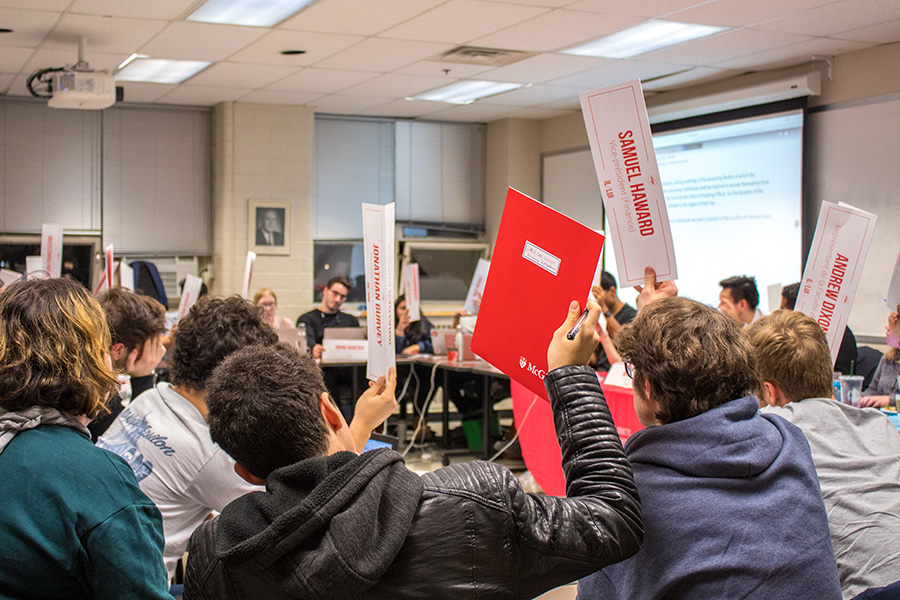
The McGill Senate convened for a special meeting on Dec. 15 to vote on a motion regarding implementing the Satisfactory/Unsatisfactory (S/U) option for the Fall 2020 and Winter 2021 semesters. The Senate voted in favour of the motion after hearing from student and faculty senators, nearly all of whom supported it.

The approval of this motion allows students to take a total of six credits over the two semesters that will be graded using the S/U option and will not count towards the total number of S/U credits that a student is allowed to take over the course of their program. Furthermore, the additional S/U credits may be applied to elective, complementary, or required courses after students receive their grades. The deadline for students to declare which courses they wish to S/U for the Fall 2020 semester is Jan. 19, 2021 and May 12, 2021 for graduating students or May 21, 2021 for non-graduating students for the Winter 2021 semester.

The motion, which was brought forth by senators Brooklyn Frizzle (SSMU Vice-President University Affairs), Kristi Kouchakji (PGSS University Affairs Commissioner), Angela Campbell (Faculty of Law Senator), Fabrice Labeau (Deputy Provost Student Life and Learning), and Gillian Nycum (University Registrar & Executive Director, Enrolment Services), had previously been referred back to the Steering Committee during the Senate’s previous Dec. 2 meeting. The Dec. 15 vote in favour of the proposed S/U option came after pressure from McGill students, who argued that the remote delivery of the Fall 2020 semester had negatively impacted student’s mental health and placed some individuals at an academic disadvantage.  

Derek Nystrom, a professor in the Department of English and senator for the Faculty of Arts, explained that he supported this motion due to the unexpected challenges and steep learning curve experienced by both students and faculty in adapting to teaching and learning remotely

“There were a lot of unintended consequences to our modes of instruction that were undertaken with the best of intentions and in the best forms of good faith,” Nystrom said. “I think [that] one of the things that this addition of S/U options […] does is to acknowledge that in some cases, students got overwhelmed under conditions when their professors were actually trying their best to not overwhelm.” 

McGill is now one of several Canadian universities that have adopted a retroactive S/U grading option. In early December, Concordia announced a switch to an extended pass-fail grading system for the Fall 2020 semester to support students who are struggling with mental health and academic issues exacerbated by the pandemic. 

Arts Senator Darshan Daryanani’s advocacy for the motion stemmed from a desire to level the playing field amongst students at McGill. 

“Remote learning has really had a disproportionate impact on certain groups over others, [such as] visible minorities, international students, low-income students, and persons with disabilities,” Daryanani said. “This motion will really aim to remove some barriers that will allow students to now seek an S/U option, not on the conditions that [it] would threaten their immigration requirements or their scholarships eligibility for the current academic year.” 

Soundbite 

“[I wanted to] recognize the fact that this was a product of immense collaboration and really tireless advocacy as well. I think it’s important to note that over the past few weeks we’ve been able to come from a place of […] conflict to a place of cooperation and collaboration […] that goes quite a long way to supporting students and their needs.”  – SSMU VP University Affairs Brooklyn Frizzle. 

Moment of the Meeting

Law Senator Adrienne Tessier expressed concerns about the impact this motion would have on Faculty of Law students whose current S/U options differ from that of undergraduate students. While law students are only able to S/U three credit hours during their degree, this new S/U option will be available to law students in addition to that current limit. 

News, SSMU

SSMU Legislative Council discusses McGill administration’s stance on the S/U policy

The Students’ Society of McGill University (SSMU) Legislative Council convened on Dec. 4 to pass several motions and discuss recent student activism that has been pressuring the administration into adopting the Satisfactory/Unsatisfactory (S/U) policy for Fall 2020 semester courses. The council also voted to approve a motion which will provide an explicit statement by SSMU on the society’s official stances on a range of political issues. 

SSMU Music Senator Addy Parsons briefed the council on the Senate Steering Committee’s arguments against implementing the S/U policy this semester. Parsons highlighted the shortcomings of the administration’s proposed issues with reimplementing the S/U grading option policy, explaining that many students are struggling with their mental health and that this policy may ease some of the stress.

“It’s heartbreaking, the messages that students send [to us], and mental health is not something to take lightly,” Parsons said. “[It’s] not something that McGill Senate should be pushing aside over technicalities, and this is something that needed to be addressed last night [on Dec. 2], and it was to an extent, but […] to the members of the gallery I do encourage you to reach out to us [….] Reach out to your other Senators in your Faculty.”

Brooklyn Frizzle, Vice-President University Affairs, pointed to the inconsistencies in how the Steering Committee handles addresses points of student advocacy like the S/U option, especially in relation to the Steering Committee’s decisions on Dec. 2. The Senate rejected SSMU’s motion on the basis that the motion lacked sufficient procedural examination, while other motions were approved without the same kind of scrutiny from the Senate, which Frizzle argued is a product of McGill’s bias in governance. 

“I don’t think I’ve ever encountered a quote unquote ‘democratic’ governing body that is as transparently corrupt as McGill’s university governance,” Frizzle said. “The fact that [the Steering Committee] chose to approve a motion it had not even seen while at the same time voting down our motion on the grounds of due diligence is, I think, incredibly telling.”  

The council also voted on a motion by Frizzle which seeks to establish a clearer line of understanding between the SSMU Executive Committee and Legislative Council on the subject of releasing statements to the McGill community. The main goal of the motion is to clarify that it is the Legislative Council’s responsibility to approve of official statements released on behalf of SSMU. The results of the vote showed 23 in favor, six opposed, and four abstentions, and as such the motion was approved. 

The council also discussed the motion regarding the Clarification of an International Political Position, proposing a new set of political endorsements and making it so any official political statements, petitions, or social media posts released on behalf of SSMU must first be approved by a Legislative Council resolution. Arts Councillor Paige Collins, was concerned that the motion included politically charged dimensions and language. 

“It seems to me that all of the articles, or clauses, in the appendix are very political,” Collins said. “I do feel that grouping all these positions together into the one motion does a bit of a disservice to the nuances within at least a few of these positions.”

After making several amendments changing the motion’s wording, the council approved the motion with 18 councillors voting in favor, two councillors opposed, and three abstained.  

Soundbite 

“I’d like to ask how are we issuing a clause that says cultural diversity will be celebrated when the diversity of ideas, the identities of individuals, are practically going to be disregarded [….] or when certain statements may be divisive, as we’ve already acknowledged. How are we respecting cultural diversity? How are we celebrating the ideas of diversity in thought, diversity in people’s cultures, through what may be a divisive statement once published?” —SSMU Arts Senator Darshan Daryanani on the cultural diversity clause of the motion Regarding the Release of Statements and Official Communications. 

Moment of the Meeting

Addy Parsons presented a student statement she had also shared at the Dec. 2 Senate Steering Committee meeting. The student’s heart-wrenching testimony echoed the many others Parsons received; students feel helpless as they are faced with both external and internal pressures to perform well academically in the midst of a global public health crisis. 

Editorial, Opinion

Post-Graduate Students’ Society of McGill University Executive Midterm Reviews 2020-2021

Maria Tippler, Secretary-General

Despite taking up the PGSS Secretary-General position in early October, Tippler has initiated  several advocacy, administrative, and support projects this semester. On the advocacy front, Tippler has focussed on accreditations and tuition fee deregulations, WorkDay HR technical issues, and Bill 21. On the administrative side, Tippler has supported the Recording Secretary in keeping the PGSS meeting minutes and Book of Resolutions up to date, restructured some PGSS staff portfolios, and started translating PGSS governing documents’ updates into French. Taking on duties outside her portfolio this year, Tippler is currently transitioning a new Academic Affairs Officer into the position and has also been filling gaps in the vacant External Affairs Officer and Student Support Commissioner portfolios. Tippler said she hopes the current vacancies are filled by next term so that she can work on more of her own initiatives, like revamping the PGSS website to make it more accessible.

Dakota Rogers, Members Services Officers

Dakota Rogers oversees all services at PGSS, including the Health and Dental Insurance Plan, Graduate Peer Support Program, Keep.meSAFE, and leisure courses. In accordance with the COVID-19 public health guidelines, Rogers successfully transitioned the PGSS leisure courses and the Peer Support Program to an online format. Rogers and the PGSS Health Commissioner have been working hard since the beginning of their terms to implement the new Keep.meSAFE program. Rogers is also in the process of gauging new services for the winter semester; the first is Dialogue, an e-health service that would provide students with access to a vast network of doctors and nurses and the second is the Legal Protection Program, which would give students access to legal counselling and complementary legal representation in certain areas. Rogers hopes that these services will go to referendum in the coming spring for implementation in September 2021. Additionally, Rogers is working on establishing a BIPOC graduate student networking service to provide a supportive space for all BIPOC graduate students at McGill.

Connie Shen, Financial Affairs Officer

Despite taking on additional responsibilities following the PGSS Secretary-General’s resignation in summer 2020, Connie Shen has been hard at work advocating for graduate student funding, increased transparency regarding finances, and ease of access to PGSS services. Given rising financial instability due to the COVID-19 pandemic, Shen has worked with the Graduate and Postdoctoral Studies to make emergency access to extra funding more accessible. While the Thomson House’s bar and restaurant have been closed since red zone restrictions took place, Shen has since been involved in assessing how to safely reopen the space when the government permits it. Finally, in response to the society’s concerns that executives and commissioners not being fairly remunerated for their work, Shen has hired more support staff, and created a working group to further address the issue.

Sophie Osiecki, Academic Affairs Officer 

Since taking on the Academic Affairs Officer position on Nov. 9, Sophie Osiecki has had little time to work on new projects. In the coming months, she plans to rework the PGSS’ committees system by updating committee and commissioner application forms to be more intuitive, developing a plan to standardize communications throughout the committee application process, and revitalizing several PGSS committees. Beyond updating internal PGSS operations, she also plans to promote the existence of the Library Improvement Fund, and encourage applications for virtual services. Finally, Osiecki hopes to put forward more online surveys and related discussion items at PGSS meetings to increase dialogue with PGSS members on academic matters. 

Tina Giordano,  Internal Affairs Officer 

Over the course of the semester, Tina Giordano has attempted to increase student engagement in the society while abiding by COVID-19 regulations. Some initiatives this year have included helping to organize PGSS’ participation in a national trivia competition, working with the Equity Commissioner to start a Voices for Diversity speaker series, and organizing a month-long orientation for incoming students. She has also helped facilitate a virtual ballet class, a book club, and a movie club. Over the rest of her term, Giordano is hoping to create virtual training for the next Internal Affairs Officer by using Google Classroom, which she anticipates will be more efficient than the current training system. All events but one have taken place online, enabling Giordano to build community all while remaining safe.

Consultation
Off the Board, Opinion

McGill must give S/U due diligence

The McGill Senate on Dec. 2 rejected a motion to suspend the body’s standing rules, which prevented it from reintroducing a proposal to implement a Satisfactory/Unsatisfactory (S/U) grading option for students this semester. In a controversial move, they referred it back to the Steering Committee, even though it had already reviewed the proposal. This decision is particularly striking considering that over 105 universities across North America have decided to ease grading accommodations during the Winter 2020 semester, from Harvard College in the United States to Bishops’ University in Sherbrooke. McGill’s relentless academic austerity and pursuit of prestige is a mask for its fragility as well as a pretense to refrain from promoting student welfare. Nevertheless, administrators have a duty to place their commitment as educators above bureaucratic barriers by reintroducing an S/U option as a necessary emergency measure.

In derailing the motion, the Senate invalidated the agonizing testimonials student senators read during the Dec. 2 meeting—some of which disclosed thoughts of suicide and self harm. Administrators cited a lack of “proper due diligence,” but student senators have been advocating for S/U for months only to have it rejected first by the Academic Policy Committee (APC) in September, then by the Steering Committee, and now by the Senate. Although the APC argued that students knew in advance that the S/U option would not be offered this semester, when students registered for classes in April they also did not appreciate the unprecedented struggle that remote learning would entail. Moreover, the APC’s insinuation that the policy would be impractical due to the labour required to implement it appears insincere, as the same was done expediently in March 2020. It avoids giving due diligence to students’ concerns, reflecting administrators’ disregard for the work that student senators have invested in consulting constituents and advocating for students’ wellbeing.

Administrators offered logististical objections as well, arguing that S/U could negatively affect accreditation requirements for certain programs and scholarships. But the proposed S/U policy would be optional: The letter grade would remain the default, and faculties would identify their specific application of the S/U option. Although faculties should advise students of the option’s risks, or even exempt certain programs such as Medicine entirely, these concerns do not discount the need to provide S/U as an option, especially for those who have disproportionately suffered during the pandemic.

After all, other institutions evidently recognize that remote learning is a poor substitute for in-person instruction and that students should not be evaluated by the usual standards. Because the S/U option does not impact overall grade point average, applying the option would eliminate marginal grade discrepancies that hinder learning in general, and which remote instruction has rendered particularly difficult to control. Exacerbated inequities in learning environments and declining student mental and physical health—realities that administrators acknowledged during the Winter 2020 semester—have persisted, contradicting the basic equalization premise of a numerical grade standard.

McGill has historically subtracted students’ humanity from their academic fidelity, and the pandemic has corroded the thin strands of social stability and cohesion that once made it bearable. In a misguided defense of McGill’s reputation, administrators are reducing McGill’s name to a trivial ticket into graduate schools and the workforce. Students do not just come here for a fancy pedigree and latin-inscribed diploma; they come here to learn, and many are capsizing on that journey through the remote learning hurricane. Students should continue to remind administrators of this by submitting testimonials and signing petitions demanding that S/U be reinstated. But the onus is on administrators to heed them. When the Senate hears the motion to reimplement S/U again, it will stand at a crossroads not only on grading standards, but also the underlying pedagogical philosophy propelling McGill into its third century.

An earlier version of the article stated that over 105 universities have adopted an S/U option for this semester. In fact, this statistic referenced the Winter 2020 semester and not the current Fall 2020 semester. The Tribune regrets this error.
McGill, News

McGill Senate extends winter break by three days and sends proposed S/U policy back for revision

Winter break extension

After mounting pressure from the student body for a longer winter break, the McGill Senate approved a motion on Dec. 2 to extend the winter break by three days for all faculties except the Faculty of Dentistry and the Faculty of Medicine and Health Sciences. The first day of classes for the Winter 2021 semester will officially begin on Thursday, Jan. 7, instead of Monday, Jan. 4, as was initially planned. The Senate also discussed at length the feasibility of retroactively implementing a Satisfactory/Unsatisfactory (S/U) option for the Fall 2020 semester and reported on the university’s finances and provisional budgets.

To make up for the three lost days, McGill will shorten the spring 2021 Final Examination Period from 11 days to 10 days; extend the final exam period from April 29 to April 30; and eliminate the “study day” currently scheduled for April 14. Whereas classes were initially scheduled to have ended Tuesday, April 13, with the April 14 study day acting as a one-day buffer before the start of exams on Thursday, April 15, the adjusted exam schedule will see classes end Friday, April 16 and exams commence Monday, April 19.

Gillian Nycum, university registrar and executive director of Enrolment Services, presented the motion and explained that adjusting the Spring 2021 exam period was the most feasible way to make up for the delayed start of the Winter 2021 semester.

“We saw in the Fall 2020 term that there were 25 per cent fewer final examinations being scheduled as compared to 2019, and it is reasonable to assume that there will be a similar trend for Winter 2021,” Nycum said.

In accordance with the adjusted academic calendar, the add/drop deadline will move from Tuesday, Jan. 19 to Friday, Jan. 22, and the deadline for withdrawal with refund will move from Tuesday, Jan. 26 to Friday, Jan. 29, with no other changes in key academic dates for the Winter 2021 term.

Implementing a Satisfactory/Unsatisfactory option

The Students’ Society of McGill University (SSMU) Senators’ motion to implement an S/U policy, submitted minutes before the meeting, opened a lengthy and contentious discussion. Principal and Vice-Chancellor Suzanne Fortier explained that the motion had not appeared on the Senate agenda because the Steering Committee, the governing body tasked with setting and proposing the Senate agenda, had rejected the motion.

“Part of why [the motion] was not accepted by [the Steering Committee] is that the due diligence that is required to bring the motion to the floor was not done,” Fortier said. “In particular, there was information that was simply not accurate, [because] the information that was shared was pertaining to March 2020, which was a very different situation than today. There is a lot of information that people do not have in order to consider the motion carefully.”

Without being listed as an agenda item, the motion would have to be referred back to the Steering Committee for further review in order for it to be presented at a future Senate meeting. Alternatively, if a Senator motions to suspend the Senate rules and the motion passes with a three-quarter majority vote, the Senate could review the S/U motion immediately. Music Senator Addy Parsons’ motion to suspend the rules of the Senate did not pass, effectively sending the motion back to the Steering Committee. Secretary-General Edyta Rogowska said that the Steering Committee will likely convene in the following days to discuss the S/U policy.

Soundbite

“I have received over 150 testimonies of students not asking, but begging us to implement an S/U option. I can say that for the past few weeks, I have received heart wrenching emails from students coming to me and begging for me to do something because they cannot imagine that the university would not support them. None of them can stomach the idea that this has been brought to the university, that this has been presented in September when it was shot down [and that] when efforts were made to do the proper consultations, that it has been continually and systematically shut down at every chance [….] That, honestly, is a difficult pill to swallow.” – Brooklyn Frizzle, VP University Affairs 

Moment of the Meeting

Arts Senator Darshan Daryanani took a moment to acknowledge the student labour involved in extending the winter break and invited the Senate to congratulate students’ work through virtual applause.


A previous version of this article stated that Arts Senator Mary Lynne Loftus submitted the motion to suspend the Senate rules. In fact, Music Senator Addy Parsons submitted the motion. The article has been updated. The Tribune regrets this error.

Read the latest issue

Read the latest issue