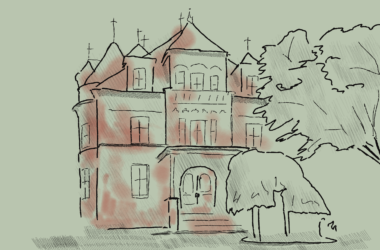
Contributor Brian Shatteman explores the neighbourhood of Le Plateau, bringing viewers along for a mixed-media tour of its buildings, parks, and atmosphere.
Content Warning: Sexual harassment
Every year when December rolls around and finals season ends, McGill students have only one thing in mind—winter break. Sadly, due to COVID-19 restrictions and safety concerns, we know many of you are unable to head home to see your families this year. Fortunately, we have developed a list of tips and tricks to help you simulate the winter break experience from the comfort of your own dorm or apartment.
For starters, whether you’re stuck in residence or a seven-person commune, you can create a festive atmosphere anywhere. We recommend you hang up colourful lights, turn up some Christmas songs, apply makeup to cover your tattoos, remove your piercings, and put on that one degenerate sweater that color-blind Aunt Gladys got you. Remember: Nothing says “Christmas spirit” like silly decorations and the deep, profound dread of disappointing your family!
Homesick and missing conversations with your dad? Go eat dinner, and while you do, have your roommate sit and watch you eat in absolute silence. When you reach for more food, wait for them to raise an eyebrow and ask if you’re sure you want to eat it.
“What are you actually going to do with that major?” is just one of the many fun conversation topics you’ll cover, in addition to, “Isn’t it about time you got a job?” and “Why is everyone TRANSGENDER nowadays?”
Of course, nothing beats the bliss of reading with the gentle sounds of your mom cooking in the background. To recreate the experience, have your early-riser friend get up at 5:00 a.m. and just fucking clang 50 pots in your kitchen! She doesn’t even have to cook, she simply has to clang, bang, and crash that shit like it’s Armageddon and she’s trying to single-handedly beat 382 tin-men to a metallic pool of silver guts with one noisy-ass ladle! After all, she does need to find her favourite bowl.
And who could forget your lovely siblings. Miss having your sister around? Put up a “thrift shop” sign in your closet! Nostalgic for your brother? Replace the Glade in your bathroom with Axe cologne!
Immediate family is great—but what about extended family? Missing your uncle? Call Steve Who Sold You Weed That One Time! That will remind you of how he is always sure to hug you for just a little too long and a little too low. And no one is more fun to play with than your energetic little cousins! Luckily, Apple has recently created an alarm app that keeps you alert with the sound of three small children screaming and goes off right when you sit down to get work done. It also features cool tracks like 14 hard knocks on your door, the sound of a soccer ball being kicked around an apartment, and the hit single Got Any Games On That?
Everyone likes watching their obviously gay cousin squirm in their seat at the dinner table. Thankfully, if you’re the gay cousin, you can replicate those horribly uncomfortable conversations with the snap of a finger. Call a friend, who can stop by your dorm to help you rehearse your repertoire of lines!
“I’m just focusing on school right now,” “Well, it’s cheaper if it’s one bedroom,” and “Georgia should totally recount the votes!” are among the most popular.
At the end of the day, we know that the holidays are tough without your family around. So hopefully, whenever you feel homesick, you can try out some of our tricks to remind you of the reason you stayed home this year—your family.
Students come to McGill for many reasons. For domestic students, it is an affordable, high-ranking, historically anglophone university; for international students, McGill’s prestige is comparable to top schools globally. But many students, especially international and out-of-province first years, are surprised to find that McGill’s services and resources are severely lacking. Most visibly, decrepit buildings bear all of the markings of a university in decline, not a top tier school. Similarly, the Wellness Hub is infamously poorly managed and insufficient. Meanwhile, staff, especially contract workers, are overworked and underpaid. Vastly disproportionate student-to-staff ratios are equally astonishing hallmarks of McGill’s academic austerity.
McGill’s world-class reputation seems to belie this dismal underfunding. Although the university does not receive enough government funding to maintain its international standing, it may also be deepening its funding crisis by clinging onto its accolades rather than promoting student welfare.
But McGill has lacked sufficient operational funds since the 1960s, when Quebec modernized its public education system. In an interview with //The McGill Tribune//, Professor Peter F. McNally, director of the History of McGill project, emphasized that the underfunding of universities in Quebec has been a problem for decades.
“Higher education in Quebec is generally underfunded,” McNally said. “In other words, all universities in Quebec are not as well funded as they need to be or should be.”
This sets Quebec schools apart from similar public university systems in Canada and in the United States, even though they are often compared to them.
“In Quebec rhetoric, sometimes analogies are made between [Quebec’s] university system and the University of California university system,” McNally said. “Well, that’s sort of true, it’s sort of not true. The University of California system is significantly better funded.”
According to McNally, understanding the Quebec university system’s current financial predicament is impossible without grasping political developments in the 1960s and ‘70s. During this period, earthquakes of political discord shook the province as the francophone population demanded cultural self-determination. Above all, the Quiet Revolution—a period of rapid social and political change that loosened the Catholic Church’s hold over Quebec—transformed the province’s education system. However, the implementation of Bill 22 and the violence pronounced in the 1970 October Crisis exemplified the language divide that continues to define Quebec, shaping McGill’s place in its public education system as a leading English-language institution.
Picture this: In the middle of an auditorium filled with students, a professor describes the process of chromosomal segregation. This professor teaches the students about the stages of cell division, the proteins involved, and what happens when chromosomes do not separate properly; a person can have either XX or XY sex chromosomes, the professor explains, or exceptionally, an extra or missing chromosome.
What students are not taught, however, is the differences between sex and gender—the professor fails to acknowledge that beyond the pages of textbooks, identity is more complex than the makeup of one’s genes. The students in this class would walk away with scientifically accurate information, but an incomplete understanding of sex and gender as well as the social implications of their distinction.
Such oversights are common in science courses, where lectures are content-heavy and fast-paced, with barely enough time to cover the materials essential for examination. Faced with an overwhelming breadth of scientific material, students miss out on the larger picture of how science overlooks and, in some cases, exacerbates social inequalities.
At McGill, students in the Faculty of Science are not required to take any courses in ethics or history, nor are they asked to remain up to date on contemporary social justice issues. Many students can complete their degree with no formal instruction on the ways that racism, sexism, transphobia, homophobia, and colonialism continue to manifest in academia.
Following the precedent of other North American universities, McGill could take concrete steps to incorporate social justice lessons into undergraduate science curricula. At the University of Washington, for example, the faculty offers students an interdisciplinary course titled “Science and Engineering for Social Justice.” With a focus on writing and discussion-based classes, students are taught about the impact of science on diverse populations, inequities in access to scientific information, and how to address implicit bias against marginalized groups. Likewise, the Ontario College of Art & Design University offers students courses in inclusive design for digital media and was one of the first schools in North America to grant a Master’s of Design in Inclusive Design.
Everything about the scientific process—from who performs it, to what is researched, to the sources of funding—is bound by political and economic interests. Remaining apolitical and glossing over the dark history of scientific discovery only encourages ignorance by denying students a more well-rounded education.
In the spring of 2020, Alanna Watt, associate professor in the Department of Biology, founded the department’s Equality, Diversity, and Inclusivity Committee, one of the first of its kind in a STEM field at McGill.
“There’s this aspect that we’re not used to teaching about,” Watt said in an interview with The McGill Tribune. “We do have a huge amount of scientific content we’re trying to put in. If you think about genetics courses, there’s a [dark] history in the field that would be [good] for people to understand.”
Indeed, much of modern genetic theory is based on studies that arose from the eugenics movement, which began in the early 20th century, influenced by the work of Francis Galton. Galton, a prominent scientist who made a name for himself developing statistical tools such as chi-square and regression analysis, did so in the interest of promoting his racist and ableist ideology of maintaining the so-called “purity” of the British population.
Although the historical background of scientific inquiry must be addressed, Watt believes that modern education runs the risk of distancing these past issues from the current problems in science.
“For me as a professor, I’ve realized that we have a very diverse student body and it’s very important that we address [social] issues,” Watt said. “It’s like anti-racism. Not doing anything is just not good enough.”
The spectre of racism and sexism in scientific fields is pervasive throughout academic research, publishing, and teaching practices. Critical thinking is a valuable tool in scientific inquiry, but undergraduate courses often fail to foster this skill in social contexts. Studies show that students who are taught about historical oppression are more likely to acknowledge systemic racism and scrutinize their own role in upholding it. Furthermore, relating scientific concepts to social issues can make students more engaged in the material and enhance learning outcomes.
According to Ehab Abouheif, a professor in the Department of Biology, fostering empathy in students is an essential part of training them to be good scientists. Abouheif teaches Evolution and Society (BIOL 436), one of the only biology courses that specifically tackles social issues. Instead of content-heavy evaluations, the course develops critical thinking skills through discussion and debate.
“One of the most important things I will do as a scientist is teach Evolution and Society,” Abouheif said in an interview with the Tribune. “[Most] people who come out of this course have gotten the chance to see how evolution interacts with politics, medicine, and society as a whole.”
Unfortunately, science courses that address social issues are rare at McGill. When Abouheif and colleagues proposed the introduction of BIOL 436 10 years ago, they were met with criticism for proposing a course that was perceived to have too much overlap with anthropology. Abouheif explained that critics voiced concerns over the structure of the course, taking issue with the fact that it is discussion based and commenting that it required too much active participation for a science class. Introducing new courses with themes similar to BIOL 436 will have to come from professors willing to propose and fight for them.
“The next generation of biologists coming up are increasingly more aware of social inequality and justice, and how biology may influence them,” Abouheif said. “We need professors who are better equipped and who [think] more broadly about social change. For this to happen, we have to change the way we define the excellence of a [professor].”
Teachers are not textbooks—they are human beings with their own interests, biases, and backgrounds. Indeed, professors can harbour unconscious biases that leak into their interactions with students and their content.
Students have begun to pick up McGill’s slack in creating equitable spaces for science education at the university. Initiatives around campus have been created to amplify the voices of Black, Indigenous, and people of colour in STEM and to raise awareness of scientific biases. One such initiative is the podcast Broad Science. Its founder, Rackeb Tesfaye, who is a PhD candidate in Integrated Neuroscience, explained that she was inspired by her experiences as a graduate student.
“What surprises me most is the notion of objectivity in science,” Tesfaye said in an interview with the Tribune. “[We are] taught to think that because we have the scientific method, we are inherently not biased as scientists, which is obviously untrue.”
In fact, scientific and experimental methods are riddled with gender and racial bias: The vast majority of health studies are conducted on predominately white male subjects, skewing their conclusions towards one cohort of patients with sometimes disastrous results. Undergraduates should be informed of these research gaps so they can make a conscious effort to fill them in their work or at least consider their shortcomings when applying existing research.
Science is a continual search for knowledge; theories are endlessly revised and adapted as new information comes to light. Moreover, scientific discoveries do not remain isolated within the scientific community, but rather are applied in government policies that can potentially create equitable change in society.
By combining science and society in the classroom, McGill can produce more socially responsible and innovative scientists. Making space for social justice in the classroom is not an exercise in identity validation or an extraneous addition to appease critics, but a more effective way of training future scientists.
“If there’s going to be a truly meaningful understanding of inequity within science, and movements towards rectifying those inequalities, then it needs to be embedded in [what] we learn and [what] we’re taught,” Tesfaye said. “It seeps into every single thing we do in science.”
Eight months in from the start of the COVID-19 pandemic, McGill students are just weeks away from the end of their first fully remote semester. When the university moved its operations online in March, the shift was jarring: Students had to quickly adapt to a new way of learning, and many faced financial uncertainty and declining mental health. All the while, McGill struggled to support them, from unsatisfactory and inaccessible online learning experiences to insufficient mental health resources. But where McGill has fallen short, student initiatives and organizations have filled in the gaps and have continued to uphold a sense of community. Their efforts demand recognition and gratitude, along with continued material support to allow such initiatives to continue.
One of the earliest pandemic-relief student initiatives to arise was the Montreal Student Initiative for COVID-19 Response and Relief, which was founded in March 2020. The organization delivers groceries and prescriptions to those unable to leave their homes to run errands themselves. Meals for Milton-Parc is a similar project dedicated to serving those in need, providing warm meals to unhoused people and organizing winter clothing drives. These mutual aid initiatives, through which communities come together to make up for lapses in government or institutional assistance, are manifestations of social cohesion that have persevered even in the face of social distancing measures. Whereas McGill gratuitously raised international student tuition this Fall, students displayed resilience and compassion by giving up their time, energy, and money to support their communities.
Other student-led initiatives, like the McGill Scientific Writing Initiative (MSWI), go beyond material support. Established in the summer of 2020 by U3 Science students Marine Nystern and Joyce Wu, MSWI offers resources to help students with science communication, since many science courses have replaced traditional multiple choice exams with papers. Similarly, services like the McGill Students’ Nightline and the Peer Support Centre offer on-demand active listening services to help fill some of the gaps in the Wellness Hub’s meagre online mental health care.
Apart from novel support initiatives, clubs and other services have also shown resilience throughout the pandemic. For example, virtual Activities Night in September allowed students to learn about different opportunities to get involved at McGill despite the circumstances. From online dance classes like those offered by the McGill Recreational Dance Company to remote holiday gatherings like that put hosted by the Indian Students’ Association for Diwali, student groups have brought comfort to their members during these hard times. Activists have also continued to demand more equitable practices from the university even with fewer opportunities to gather in person. For instance, over the summer, a group of Black McGill students started the #TakeJamesMcGillDown movement, which gained much traction and support online.
The pandemic has reinforced what students already knew: That McGill students are not Made by McGill. Rather, McGill is made by its students. If the university is reluctant to put its financial interests aside to support its student body, students will always come together to support each other. As the pandemic drags on and the new semester looms ahead, student labour to sustain these initiatives deserve recognition and support through social media promotion, volunteering, or donating whenever possible. It is still important to recognize, however, that students should not have to take on this work all on their own. It is unacceptable that students are forced to take on this labour with little to no recognition while the university continues to profit off of them.
Regardless, although students may not currently be able to come together in lecture halls and events, the past eight months of hardship have proven that our community can prevail even at a distance. The McGill Tribune commends the efforts of those who have gone above and beyond to serve their communities during what has undoubtedly been the most collectively challenging period in recent memory.
Two of my first friends were a pair of retirees with Santa Claus-worthy beards who worked in a small model train shop. From the outside, the store didn’t appear to be much: It was on the second floor of a nondescript suburban building marked by a patched, half-illuminated sign. Yet, inside lay a marvellous world of hundreds of interwoven and interconnected model trains.
My trips to the shop were frequent, as it was just down the road from my grandmother’s house. Every time I went, the retirees would teach me more about the intricacies of model railroading. I learned about scales, gauges, train maintenance, layout design, and countless other fundamentals. At the end of my lessons, my mom would allow me to pick one train car from the discount box. As my collection grew, so did my fascination with transportation. Unfortunately, my compact New York City bedroom was not spacious enough for my hobby, and it was quickly engulfed within a miniature world.
To stop the overflow, my parents prohibited me from acquiring more trains; however, their plan was quickly foiled by my hobbyist retiree colleagues. To make the space issue worse, I started to collect tickets, timetables, MetroCards, train postcards, and baggage tags. For the tags, I often chased after the conductor to request extra hole punches to add to the rarity of the piece.
From trains, my fascination shifted to the sky. I started using paper towel rolls to build rockets, purchasing engines to add excitement. I spent my evenings drawing hundreds of sketches of my imaginary airlines, glued to YouTube videos for hours, tinkering to replicate various designs.
Transportation dominated my childhood. It became part of my identity—yet, as I grew up, my hobby, like many childhood fascinations, started to fade. By the time I was in high school, I was no longer the eager kid standing on the platform, craning his neck to see what type of train was going to emerge. My obsession was buried in high school by all the different activities that defined those years.
When the COVID-19 pandemic hit, I moved back into my childhood home. I was faced with more time in my old bedroom than I could have ever possibly desired. Yet as time passed and I grew restless, I started to go through old belongings stashed in my closet. As I dug deeper into the assortment of belongings, I dug deeper into my past. It was an archeological exploration into my own life, first unearthing science projects and later arriving at my miniature trains.
I unpacked my hobby glue and soldering iron and got to work repairing my well-worn possessions. Each one brought up a memory: A steam engine reminding me of a dramatic family Christmas, a station platform ushering back the moment a raccoon attacked my neighbour’s dog. While a large, frightful hospital tent went up on my block, and my city became the nation’s coronavirus epicentre, I coped by emerging myself in my old hobby. My miniatures offered solace while the world outside my building grew more terrifying with every passing day.
When summer rolled around, and I was able to start seeing my friends while socially distanced, we began to fly our model planes for the first time since middle school. In the fall, after returning to Canada, I began to explore various hobby shops around Montreal, a warm nostalgic feeling flowing through me as I wandered through aisles admiring the selections—a feeling that I had gotten a piece of myself back.
Sometimes when you stop and spend time with yourself, whether you choose to or not, you rediscover parts of yourself you lost in the process of growing up. Reconnecting with these pieces of our younger selves can be an antidote to processing challenging times. Moments where you remember that you’re never too old to do something that makes you happy are truly wonderful and comforting.
Between 1957 and 1964, McGill was home to a subproject of the Central Intelligence Agency’s (CIA) MK Ultra project. Under Dr. Ewen Cameron’s oversight, researchers conducted studies that subjected unwitting patients to high voltage electroshock therapy, weeks-long drug induced sleep, and large doses of Lysergic Acid Diethylamide (LSD). Survivors of the project and their families were forever changed by the lasting effects of this traumatic project and have filed class action lawsuits against provincial and federal governments, as well as McGill—the most recent of which having targeted the Allan Memorial Institute, a part of the Royal Victoria Hospital and the McGill University Health Centre. McGill’s complicity in the CIA’s violation of human rights, regardless of how long ago these atrocities occurred, is appalling. Students must advocate for the affected families and hold the university accountable for failing to release study documents to survivors. Moreover, this project demonstrates the need for medical institutions to maintain high standards and ensure that history never repeats itself.
McGill is morally obligated to rectify its wrongdoings. Survivors of the project deserve the release of all details and information at McGill’s disposal, and the university owes the survivors a public apology. This would act as the first step to make amends for such disregard of the livelihoods of the project’s survivors. Financial compensation is also necessary for the survivors in each of the class action lawsuits.
The MK Ultra project serves as a constant reminder of the power and resources that institutions like McGill possess, and the lack of accountability that often results. Students should apply pressure on the institution to disclose all the details regarding what took place during the experiments and ensure survivors are properly compensated. In particular, students in the Faculty of Law can help make McGill answer for its crimes by providing legal expertise to survivors’ families, upholding and continuing the human rights standards the faculty prides itself on. The McGill Centre for Human Rights and Legal Pluralism works to provide students, professors, and the wider Montreal community with resources to engage with the impacts of the legal system on social justice issues. Students within the Centre for Human Rights are in a unique position to lead efforts to prosecute McGill for actions that do not represent the democratic and humanitarian ideals of the law school.
McGill’s law students are not alone in this challenge. Medical students also have the responsibility of fighting for justice on the part of survivors. McGill is home to Canada’s foremost medical school, and it is critical that McGill’s medical students collaborate with law students to confront the atrocities of the MK Ultra project. McGill has abused this power in the past, and in order to continue to uphold the highest standards of ethics within the institution and among its students, it must address its wrongdoings. Facing the realities of MK Ultra is necessary to produce medical professionals that prioritize their patients’ health over gaining knowledge through unethical means.
McGill’s inaction means that students must step up to continue to voice their condemnation of the MK Ultra project and mobilize to ensure that this act of brutality will never be forgotten or repeated.
Valentina de la Borbolla, Contributor
Talk about the pandemic has been defined by words like “abnormal,” “unprecedented,” and “challenging.” Admittedly, these last months have been all of those things and more, but in the chaos, I have found a sense of normality that I had never-before experienced.
Being alone with all the time in the world has left me craving both flexibility and something constant to hold on to. For me, that became my morning routine. I did have a routine before the pandemic; I am a pretty anxious person, so I usually need structure to function. However, I found that my pandemic routine was a lot more mindful than any of those prior to COVID-19. My morning rituals became a lot more intuitive, and I started doing things that actually made me feel good and not just things that made me productive.
Breakfast was no longer just caloric fuel: It became a mindful half-hour where the most important thing was my milk-to-coffee-ratio and bagel-crispness-level. Listening to the New York Times’ “The Daily” podcast every day stopped being a source of news anxiety; instead, it became a comforting break to hear the same intro-music and anticipate Michael Barbaro’s “Here’s what else you need to know today” at the end of each episode.
But the most important thing about my routine is that I am comfortable changing it. I tend to come up with a routine and stick to it for months on end. However, this is not possible in the pandemic context because now, more than ever, my emotional state is unpredictable. At the beginning of the semester, I was very set on my routine: 7:30 a.m. alarm, have breakfast, shower, make my bed, and start school at 9:00 a.m. Yet, as the months passed and school began to weigh me down, I realized my routine needed to change. This would have been unthinkable a year ago because adapting my routine would have meant being less productive. As I shift my priorities, productivity is slowly losing ground to things like comfort, calm, and enjoyment. So I rejected years of prioritizing academic performance over my health and stopped setting an alarm. I changed up my breakfast; I laid in bed for longer. The Daily stayed, though—that one is non-negotiable.
Although these changes may not seem life-changing, and not everyone has the privilege to be flexible, I have learned to adapt the expectations I set for myself to prioritize my mental and emotional well-being. The pandemic has shown us that we cannot take our health for granted. To me, that means never putting school over my health ever again.
Sepideh Afshar, Staff Writer
I have always found comfort in numbers, in having a group of people around me vulnerable enough to share similar feelings. The COVID-19 pandemic has resulted in many rapidly changing emotions ranging from fear to helplessness but, as the reality of Montreal’s red zone set in, I feel that it has settled on loneliness. Feeling alone is hard, but it’s an inevitable fact of life during lockdown. I have found solace in building connections within the McGill community and knowing that we are all going through these feelings together. I am lucky to live with six girls. We all act as support systems for each other, bound by our shared feelings. These are relationships I have held close to me, as online school has changed the way we communicate with our peers.
Between Zoom classes and online events, forming friendships looks completely different now. It is hard to really understand how someone is feeling when it is impossible to speak face-to-face. However, I find comfort in logging into the Facebook Messenger group chats for my classes and seeing that everybody else is also freaking out, collectively accepting that we are all being penalized 10 points a day for handing in our essays late in the middle of a pandemic.
This online semester has also allowed me to connect with the McGill community in ways I may not have before the pandemic. Together, we have hyper-fixated on the McGill Fight Club incident through memes, and shared disappointment with the choice of the Redbirds as the new name of our Men’s varsity teams. Reactions to these events would not have diffused so far, nor would they have attracted the attention of so many different student groups, had they not taken place online. They have allowed for links between students to flourish where they may not have been able to before.
Beyond relationships between McGill students, the accommodation and compassion shown by professors has allowed me to connect with them more than I may have in a classroom setting, where it is much more intimidating to ask a question. I know that most people are not as lucky as I am, but many of my professors this semester have shown that they want to be as helpful as possible—beyond the regulations McGill sets in place for them.
There is a general understanding that we are all going through this together, and will continue to do so until the virus is snuffed out. No one is exempt from the impacts of COVID-19. Instead, we’ve all come together within this common experience and tried to support each other.
Rory Daly, Staff Writer
Calling me a David Bowie superfan would not be an overstatement. I am in the top one per cent of his listeners on Spotify, I can sing a good third of his catalogue by heart, and a vintage 70s concert poster of his hangs on my apartment wall. I can even tell you what songs he sang at that specific concert. Please don’t think I’m crazy—I just happened to be quite sick for much of my childhood, and music provided much-needed relief for the loneliness that chronic illness can induce. And during this pandemic-enforced isolation, music has continued to serve as a powerful coping mechanism, more so than other avenues like fiction or television.
While I prefer David Bowie, any genre and any artist can provide an experience similar to the one he does, because the greatest value of music is in hearing the struggles and passions of others. Compared to the familiar voices of roommates and family that many have become accustomed to in their quarantine bubbles, listening to an artist you love is like a breath of fresh air. Even instruments work similarly if one focusses on how they are played and the number of individuals that are involved in a piece. To a keen ear, a good song can provide company.
I also enjoyed reading as a kid, but reading a great deal of fictional literature fosters feelings of isolation instead of working against it. Wishing to be in the presence of the prodigious d’Artagnan or the resourceful Bilbo replaced the longing to be around friends with a want for more fictional companionship. Most TV dramas work the same way. But there is something grounding in music, in hearing someone describe their own struggles and experiences, that cannot be found elsewhere.
Recently, I have been returning to Bowie’s Blackstar, an album which in many ways is a reflection of his impending death from cancer. It is hard to imagine a man staring his death in the eye and choosing to create something so powerful with it, but he does. Every minute of the album is tinged with his soul, and one might find comfort in hearing something so human. Not only do I empathize, but I feel I know a bit of the man through his work—just as I do Joan Baez or Elvis Costello. I carry their voices with me in times of isolation, and in turn, they provide me with company in a way that a good book or show never could.
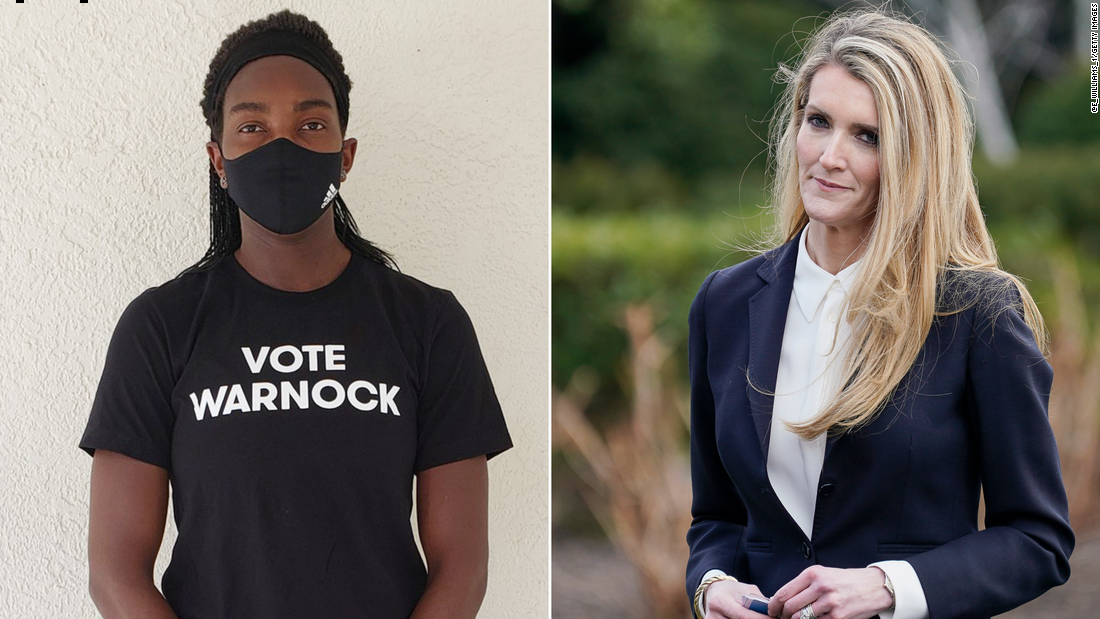
The 2020 U.S. elections have remained heated in Georgia, with Republican Senator Kelly Loeffler facing off against Democrat Raphael Warnock in a runoff in January 2021. Among the groups who helped Warnock advance are WNBA players, including several from the Atlanta Dream, of which Loeffler is part-owner. The players, who participated in some of the most poignant Black Lives Matter demonstrations earlier this year, rejected Loeffler’s claim that sports shouldn’t be political, along with her proposed bill attacking transgender girls in high school sports. Players from all 12 teams in the WNBA wore shirts proclaiming “VOTE WARNOCK” in August—and 32.9 per cent of voters did, propelling him to the runoff against Loeffler, who won only 25.9 per cent of votes.
As COVID-19 swept through Quebec in March, Super Bowl Champion and McGill medical school graduate Laurent Duvernay-Tardif immediately acted to help in the fight against the pandemic. Duvernay-Tardif was assigned to a long-term care facility near the South Shore and focussed on helping by any means necessary, despite playing in the most-watched television program in North America just 10 weeks prior. When the NFL decided on plans to return to play for the 2020 season, Duvernay-Tardif announced that he would opt-out of playing, citing his understanding of the pandemic’s severity. Caring for patients as a doctor seemed a more worthwhile risk than playing football.
Following the shooting of Jacob Blake in Wisconsin, the Milwaukee Bucks chose to strike during a playoff game against Orlando in protest. The decision prompted a chain reaction throughout the NBA bubble in Orlando, with many other organizations following suit, leading to the cancellation of playoff games for multiple days. This type of protest was unprecedented in modern sports. The last NBA team to go on strike for social justice was the Boston Celtics in 1961, who refused to play after Black players were denied service at a Kentucky restaurant.
On Nov. 23, the Chicago Blackhawks hired former Olympic Champion Kendall Coyne Schofield as the first female player development coach in the organization’s history. Coyne Schofield was also the first woman to participate in the NHL All-Stars Skills Competition in 2019, coming in seventh in the fastest skater competition, less than a second behind the winner, Connor McDavid. The first female coach in the 103-year history of the NHL, Dawn Braid, was hired only four years ago in August 2016. The hiring of Coyne Schofield was another step toward equality and representation in the NHL and the sport of hockey in general. Coyne Schofield adds to a growing list of women working for an NHL team, including Canadian Hall-of-Famer Hayley Wickenheiser, who is the assistant director of player development for the Toronto Maple Leafs.
With voter registration initiatives and early voting reaching unprecedented numbers in the 2020 U.S. presidential election, sports arenas contributed to making voting more accessible: Over 35 NFL, MLB, NHL, NBA, WNBA, and MLS stadiums acted as polling stations for both early and Election Day voting. As other polling locations closed and petitions sought to invalidate early votes, these stations proved to be invaluable for the election.
Star tennis player Naomi Osaka announced on Aug. 27 that she would not play in her semifinal match of the Western & Southern Open after the shooting of Jacob Blake in Kenosha, Wisconsin.
“As a black woman I feel as though there are much more important matters at hand that need immediate attention, rather than watching me play tennis. I don’t expect anything drastic to happen with me not playing, but if I can get a conversation started in a majority white sport, I consider that a step in the right direction,” Osaka wrote in a tweet.
Osaka did not play again until her next tournament, the US Open, which she won on Sept. 12 in a 3-set comeback victory against Victoria Azarenka. Osaka brought seven face masks to this tournament, each displaying the name of a Black victim of police brutality.
After four years of dating, power couple Megan Rapinoe and Sue Bird became engaged. The two met while representing the United States at the 2016 Olympics in Brazil. In 2018, Rapinoe and Bird were the first same-sex couple to be featured in ESPN’s Body Issue.
Rapinoe and Bird are already considered greats in their respective sports of soccer and basketball. Rapinoe, in 2019 alone, won the Ballon d’Or Féminin, World Cup Golden Boot, World Cup Golden Ball, and World Cup Final Player of the Match. Bird’s career is equally as impressive, totalling three WNBA titles, four Olympic gold medals, two NCAA championships, and the all-time assist record in the WNBA. Rapinoe and Bird’s relationship will continue to break down boundaries for same-sex couples, similar to how they break down the opposing defence in games.
Marcus Rashford is currently one of the best players in the Premier League, scoring 17 goals for Manchester United in the 2019-20 season. However, this year Rashford made headlines for his work off the field. As a child, Rashford experienced food insecurity and was often dependent on the UK government School Meal Programme, which provides free meals for children in school. When the government decided to pause the programme in the summer holidays during the pandemic, Rashford filed a petition for its continuation, which gathered widespread support and forced the government to reverse its decision. Rashford has also lobbied to expand the eligibility criteria for the programme to include more vulnerable households. For his efforts in mobilizing support for this noble cause, Queen Elizabeth awarded Rashford with the Member of the British Empire award. Rashford’s petition has started a national debate on social welfare programs in the country, especially those relating to children.
Female athletes have historically faced several barriers if they wanted to have children without giving up their playing careers. Issues of unpaid maternity leave, childcare support, and the social expectations that come with being a mother have all been unfortunate realities in women’s sports. However, 2020 brought promising changes to women’s sports leagues that will hopefully set a precedent for the continued support of athletes with children. In January 2020, the WNBA and the Women’s National Basketball Players Association (WNBPA) reached a new collective bargaining agreement that included fully paid maternity leave and other benefits for mothers in the league. Furthermore, the National Women’s Soccer League (NWSL) hosted their Challenge Cup in a “bubble” in Utah over the summer, making sure to find a way to accommodate players with children and ensuring access to childcare.
Another glass ceiling was broken after San Francisco 49ers offensive assistant coach, Katie Sowers, became not only the first female but also the first openly lesbian coach in Super Bowl history. Sowers is a former professional football player, playing as a part of the Women’s Football Alliance, and led the U.S. to a gold medal in the Women’s World Championships in 2013. Her journey has not been an easy one.
“As I was finishing college, I actually got turned down from a volunteer coaching job (basketball) because I was a lesbian,” Sowers told Outsports in an interview. “I was told ‘because of your lifestyle, we ask that you do not come around the team.’”
Sowers has used this discrimination to motivate her, and she believes that although the hate was tough to deal with, she would not be where she is today without it.
On Nov. 17, the McGill Space Institute (MSI) hosted a special public lecture titled “Surveying the Universe,” given by Steven Kahn, the director of the Vera C. Rubin Observatory and a professor of physics at Stanford University. Khan discussed the goals of the Large Synoptic Survey Telescope (LSST) which is located on the same mountain as the Gemini South Telescope in central Chile.
“The idea is actually very simple,” Kahn said. “We build a telescope that can take large-format digital images very quickly so that the entire southern hemisphere of sky […] can be surveyed with these images in just a few nights.”
This process will be repeated over the course of 10 years, allowing researchers to observe moving objects in the sky, track how they change over time, and construct some of the most detailed astronomical images ever taken.
“This will yield catalogues of something like 20 billion galaxies and a comparable number of stars,” Kahn said. “It will be the first time in human history that we know of more objects in the universe than there are people on Earth.”
To capture these catalogues of images, the team of scientists at the Rubin Observatory built the largest-ever digital camera and developed a new optical system with a large enough field of view, the maximum angular size of the object viewed from a given point.
“The field of view for the Rubin Observatory is 10 square degrees, which is roughly 40 times the size of the full moon in the sky,” Kahn said. “The camera for the Rubin Observatory is 3.2 billion pixels. It’s equivalent to about 1,500 of the highest resolution high-definition televisions.”
Even the telescope’s mount had to be specially designed to facilitate the rapid movement, known as slewing, necessary to capture images of the whole southern hemisphere in just a few nights.
“We’re moving this massive telescope every 30 seconds, and conventional telescopes, as you slew them around, take a while to settle and you can’t take a picture until they’ve settled,” Kahn said. “We set a limit that we needed to be able to slew and settle within five seconds, and that had never been done before with telescopes of this size.”
Ensuring that the vast amounts of data that the Rubin Observatory will collect can be easily shared is also a key consideration in the telescope’s construction. Within 60 seconds of the camera’s shutter closing, all the changes that occurred since the image was taken will have been detected and the information saved on a central computer system. A system of optical fibre networks will connect the telescope in Chile to processing facilities in the United States and France. A supercomputer in the Rubin archive will then process the raw data to create usable image files, time-domain alerts (recorded changes of astronomical objects over time), and catalogues.
Kahn explained a number of ideas that prompted the building of the observatory.
“[The] four main science themes that have motivated the design of this facility [are] probing dark energy and dark matter, […] taking an inventory of moving objects in the solar system, exploring the transient optical sky, and mapping the outer regions of the Milky Way,” Kahn said.
The onset of the COVID-19 pandemic in March of 2020 delayed the construction of the observatory and its equipment as Italian and Spanish construction teams returned home and laboratories in California were temporarily shut down. Work on the camera resumed in California in May and the team is hopeful that construction in Chile can resume in January 2021.
“It’s been difficult to maintain morale during this period, but our team is very committed, fortunately,” Kahn said.
Under the new timeline, the observatory is set to begin operations in 2023. The duration of the project is expected to be 10 years in total.
This talk can viewed on the MSI YouTube channel.