Latest News

Features

Making the ‘right’ choices

Ten years ago, Robin Marantz Henig published an article in The New York Times Magazine whose opening header read, “Why are so many people in their 20s taking so long to grow up?” The question referred to those who had entered adulthood in the wake of the 2008 global financial crisis and failed to meet the societal milestones of a generation prior. In 2010, the question echoed the vocal concerns of a nation of worried parents inasmuch as it commented on and empathized with the realities of a new cohort of emerging adults—informally called the boomerang generation. 

While this moniker may have fallen out of fashion in the decade since Marantz Henig’s article (and with it, its implicit air of contempt), the harsh realities of adulthood that plague millennials and older Gen Zers have nevertheless persisted. In Canada, fewer young people are getting married than baby boomers did in the 1980s, with Quebec’s rates being the lowest in the country. Likewise, there is a widening age-range for those completing university degrees and more students are extending their studies with graduate work rather than launching into careers straightaway. It is clear that millennials are intensely reluctant to commit to lifelong jobs as their parents and grandparents once did.

Although they help to capture current trends, a statistics-based focus privileges those normative milestones as the constants against which such young people are “deviating.” In the public-private divide, the expectations of the whole are the default; they override the desires of the individual and take for granted such reasons behind developmental difference as a rebellion against or disillusionment with “the system.” But the blind spot in that logic lies in its holistic top-down rhetoric—if the actions of millenials are automatically tied to their context and judged by it, then an investigation into the crucially personal nature of goals and choice-making falls to the wayside.

Science & Technology

A long road ahead: The obstacles facing COVID-19 vaccine distribution

As the second wave of COVID-19 intensifies and many countries around the world enter another lockdown, scientists and pharmaceutical companies have raced to produce the most effective vaccine. Moderna and Pfizer have emerged as clear winners, with many countries already beginning to administer their products.

With the successful development of these vaccines comes many political and logistical challenges, such as deciding which citizens and locations to prioritize. In particular, government officials must ensure vaccines are distributed fairly and in a timely manner to all citizens.

The Pfizer-BioNTech and Moderna vaccines, both of which are currently being rolled out in Quebec, are 92 per cent efficient two weeks after the initial dose. Both vaccines require a second shot within 90 days of the first, which increases the efficiency to between 94 and 95 per cent. Otherwise, a single shot does not provide complete, long-lasting immunity

In Canada, each province is developing its own regulations regarding vaccine distribution. However, the Quebec government decided to delay the second shot of the vaccine to maximize the number of people who can be protected by an initial dose between now and April 2021. This strategy was met with backlash and provincial leaders suggested that Pfizer could withdraw their supply if the two-dose vaccination schedule is not followed.  

Both Moderna and Pfizer have created mRNA vaccines, containing genetic material that codes for only a small portion of the virus: The spike protein, which allows viral particles to replicate. The vaccine equips the body’s immune system with antibodies against this spike protein, the lack of which renders the whole virus impotent. 

Given the vast spread of misinformation online regarding vaccines, government officials must also gain  citizens’ trust that the inoculation is safe. Despite promising results, some are concerned with the fast-tracked process of vaccine development and clinical testing.

Jasmin Chahal, a faculty lecturer in McGill’s Department of Microbiology and Immunology, explains the importance of effective communication between  scientists and policymakers about the vaccines. 

“[We need to keep] trying to spread accurate information that comes from the clinical trials,” Chahal wrote in an email to The McGill Tribune. “That’s the most that we can do [….]  There are podcasts, blogs, and interviews that scientists are doing to explain the virus and vaccines without scientific jargon.”

Another challenge is the transportation of the doses, particularly Pfizer’s vaccine, as it requires storage at a temperature of -70 degrees Celsius. Such a requirement can be met only with powerful freezers, which are not feasible for storage in pharmacies due to limited space and high cost. Only large medical centres, universities, and some public health departments currently have access to such deep freezers.

“RNA is very unstable,” Chahal wrote. “For instance, DNA is still stable and intact at room temperature after a few days. RNA, however, must be kept cold. If it’s not kept at the proper temperature, it does not remain intact and thus, would be ineffective.”

Pfizer has managed to circumvent this issue by developing a reusable, suitcase-sized shipping container where doses of the vaccine are kept on dry ice and can remain stable for 10 to 15 days. However, dry ice is an extremely dangerous material and cannot be shipped by air or sea, resulting in time-consuming, ground-only transport.

Nevertheless, Pfizer is working on a powdered version of the vaccine in hope of avoiding the cold storage requirements. In contrast, the Moderna vaccine requires a temperature between two to eight degrees Celsius, making it much easier to transport. 

Quebec received a delivery of 34,000 doses of Moderna and 46,800 doses of Pfizer-BioNTech vaccines on Jan. 17, with similar shipments of Pfizer scheduled to arrive weekly for the rest of the month

Off the Board, Opinion

Looking to history for the future

After finishing a B.A. in history last year, I made the terrible life choice of staying at McGill for graduate school. Tuition hikes and dismal job prospects for prospective historians give me plenty reason to regret my decision for years to come, and the continual weaponization of academic history—be it in the service of whitewashed musicals or of reactionary politics—only adds to my doubts. Despite the pretensions associated with this field, I still find hope that history can help agitate for positive changes in the world. Writing in the months prior to his flight from the Wehrmacht in 1940, German Jewish philosopher Walter Benjamin explained that invoking the past means seizing the ephemeral memory of history as it is needed in times of danger. 

With socioeconomic inequities only worsening throughout the pandemic and the far-right mobilizing throughout North America, the present moment certainly appears to be a dangerous one. To use Benjamin’s reasoning, searching for guidance in history entails sparking contemporary hope in the ambitions of past struggles to imagine a better future. Many historians, professional or otherwise, have attempted to do just this. To find solutions to the chronic health issues that plague many Southern communities, Michael Twitty uses his work on the history of African American foodways to revive interest in sustainable agricultural practices. Robert Lee and Tristan Ahtone dug through millions of records to accurately illustrate how the modern American university system developed, and continues to profit from, speculation on stolen Indigenous lands. There are too many other examples to give. Studying the past in each of these cases is not a matter of simply collecting trivia facts for the sake of nostalgia, but rather a reflection upon the historical struggles that continue to persist in the present day.

As McGill enters its bicentennial year, it has the power to reflect on its own blemished history in a similarly meaningful way. The university could interrogate its links to transatlantic slavery, tear down the statue memorializing James McGill, repatriate stolen artifacts housed in the Redpath Museum, and bring about meaningful action on its own prior commitments to truth and reconciliation. But even if the bicentennial commemorations turn into little more than a fundraising gimmick, history will always be a contested field. McGill students have found ways to cut through the obtuseness of the university’s PR stunts in creative ways before. This coming year should not be any different.

Indeed, the past summer shows that grassroots movements can take the interpretation of history into their own hands. While governments and public institutions continually failed to address their roles in historical oppression—and the contemporary memorialization of those wrongdoings—activists took it upon themselves to topple and provide context to racist commemorations. The decapitated, spray-painted statue of Sir John A. Macdonald on the streets of downtown Montreal is as much a history lesson as any plaque or government platitude. 

Looking back to Benjamin’s thesis, it is also prudent to think of the future-oriented nature of historical thinking. By taking control of historical “memories,” we can then examine and interrogate them to advocate for positive change in the world. As many of us think critically about McGill’s bicentennial in the coming months, let this also be a time where we can imagine a future beyond the constraints of academic bureaucracy—a future in which we can work towards a truly inclusive and equitable society. Regardless of what shape it takes, the fact remains that a better world is possible. 

Science & Technology, Student Research

Methods of quantitative modeling revolutionize drug development

Mathematics and computer science are revolutionizing the way new drugs and treatments are tested and implemented. A new paper published in Chaos and written by U4 McGill Physiology and Math major Sofia Alfonso, postdoctoral researcher Adrianne L. Jenner, and Dr. Morgan Craig from the University of Montreal’s department of Math and Statistics, explores new alternatives to the challenges of using quantitative tools.

In the pharmaceutical industry, pre-clinical and clinical trials are challenging, time-consuming, and costly. Virtual drug trials allow researchers to better understand and treat complex diseases such as cancer, diabetes and depression. Conducted faster than conventional clinical trials, virtual drug trials also allow more efficient and affordable distribution of treatments to the public due to high recruitment rates, better compliance, and lower drop-out rates. The paper presents multiple case studies that test experimental medications using mathematical modelling. 

Such studies are considered in silico, as they are conducted by a computer program and do not involve live patients, as an in vivo trial would. These simulations can predict the effect of a medication on virtual patients, leading to important insights about a drug’s efficacy before investing time and money into human subject testing. 

Alfonso and Craig say that the pharmaceutical industry is already using in silico models for research and emphasize the need for collaboration between experimentalists and clinicians in order to develop more accurate and effective models.

“In drug development, for example, study of a novel drug delivery device for anti-HIV therapy contributed to its continued development and ongoing clinical trials of similar devices,” Craig wrote in an email to The McGill Tribune.

One case study explored the potential of mathematical modeling in the development of treatments for infectious diseases, such as the Herpes Simplex virus (HSV) or the Human Immunodeficiency Virus (HIV). Based on data of viral shedding collected from real patients, an experimental drug was administered to a virtual patient infected with HSV. Researchers then optimized the drug’s dose for clinical trials, paving the way for future studies of similar drugs for the antiviral treatment of HIV and HSV. 

“A big challenge is finding adequate parameters in the literature such that the model can be accurately calibrated,” Alfonso wrote in an email to the Tribune, referring to the need for data from clinicians to construct accurate models. “Thus, collaborative efforts that bridge quantitative approaches with experimental work can be integral to developing useful models.”

The researchers are optimistic about the potential of virtual trials in the development of treatments more quickly and less invasively during public health crises such as COVID-19. Transitioning to remote trials could limit the risks of in-person contact, especially in medical settings. 

“Currently, we have been working with an interdisciplinary team on modelling COVID-19 in virtual patients, allowing us to simulate the mechanisms resulting in severe SARS-CoV-2 infection,” Alfonso wrote. “I am hopeful that as we gain more data, our model will provide further clinically relevant findings.”

Given the importance of quantitative methods in physiology, Alfonso emphasizes the opportunities for future physiology students willing to delve into mathematics, physics, and computer science. 

Craig also calls upon physiology students to maintain an open mind on these disciplines, noting that quantitative methods are already being implemented by the industry.

“Many researchers have summer positions for undergraduates that provide hands-on training,” Craig wrote. “In fact, Sofia [Alfonso] started in my lab as a PHGY 461 student and has continued as a research assistant since.”

Editorial, Opinion

Pandemic-era activism calls for sustained support

To most McGill students, the annual return to campus after the winter break usually conjures images of the university’s vibrant activist community. From flyers passed out during the Change The Name campaign to Divest McGill’s weekly demonstrations outside of the Arts building, it was hard to miss the advocacy taking place at McGill. Like with most things students are familiar with, the pandemic has thrown a wrench in these organizations’ ability to raise awareness and promote change in the ways they once would. But this does not mean that their work has stopped—from #TakeJamesMcGillDown, to newer initiatives like Meals for Milton-Parc and Divest McGill’s Metro boycott, students continue to mobilize for a range of causes in spite of the circumstances. Students should make an effort to remain aware of advocacy work in the community and get involved where they can. 

For organizations like Divest McGill, which pressures the McGill administration to divest from fossil fuels, remote learning could have meant that there were seemingly fewer ways to hold the university accountable. In this context, the organization’s Metro boycott is a somewhat innovative tactic. The vice-chair of McGill’s Board of Governors, Maryse Bertrand, also sits on the Metro grocery store chain’s Board of Directors and, according to Divest, holds a $120,000 annual retainer. The idea is to “follow the money,” threatening Bertrand’s financial interests and pushing her to change her position on divesting from fossil fuels. According to Divest McGill, the continued lack of action on the administration’s part means that it is past time for using moral arguments to make their case. It is once again telling of McGill’s priorities that a movement as popular as Divest McGill must resort to an indirect boycott in the face of the administration’s continued negligence. 

The tactic may not be perfect—boycotts can be limited in their effectiveness and fail to take into consideration that their demands can only be fulfilled by those who are privileged enough to be able to grocery shop elsewhere. Additionally, adapting individual lifestyle habits in order to participate in a boycott during a pandemic is not always an accessible option. However, students who have the option to visit local—and often more affordable—grocers like Segal’s can do so to send a message. The initiative signals a creative shift away from usual tactics like protests and instead harnesses students’ buying power. Many can easily participate on their own time without physically gathering with others and risking their safety to demonstrate. 

However, student initiatives cannot work without sustained engagement and support. A key part of ensuring the success of pandemic-era organizing is raising awareness, which is often done through social media. Student organizers can look to Meals for Milton-Parc, an initiative launched by McGill students that aims to provide meals and care packages for local unhoused populations, for inspiration. Their social media presence has increased student awareness, funding, and volunteer support. Similarly, the #TakeJamesDown movement had a strong online presence that helped engage people with the cause. Social media is a complicated tool, as relying on awareness alone can risk being performative and inhibit substantive change. But, if wielded correctly, social media can amplify a movement, especially during the pandemic. 

Just as organizations must diversify their tactics, student supporters must make an effort to seek out ongoing initiatives to get involved with and share with their communities. While student movements, and even certain issues themselves, can seem less pressing amidst a universally difficult and emotionally taxing period of our lives, these campaigns need sustained support and resources. McGill and government administrations should not use the current crisis as an excuse to sweep the needs of their students and citizens under the rug. 

Homelessness
Commentary, Opinion

Addressing the reactionary fight for the unsheltered

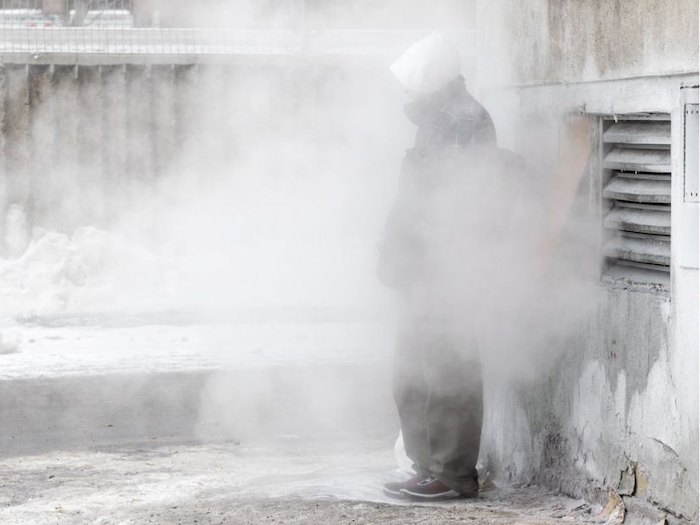
On Jan. 6, Quebec Premier Francois Legault announced that an 8 p.m. to 5 a.m. curfew would be in effect from Jan. 9 until at least Feb. 8. When asked about exemptions for unsheltered Quebecers, Legault falsely claimed that there is enough room for the unhoused in Montreal’s shelter infrastructure, leaving community organizations to fill in the gaps. While the response to Legault’s statement has rightfully been critical, it is disheartening to see many well-intentioned volunteers wondering how to help, and coming up blank.

This paralysis speaks to a troubling trend in citizen engagement on the question of supporting unhoused populations: That of always being in emergency aid mode. Certainly, the spike in the number of unsheltered people due to the pandemic has introduced a new need to put out fires, but as citizens focus on issues ranging from food insecurity, to the lack of public toilets, to the need for larger shelters, creative solutions to relieve pressure on the shelter system are not receiving the attention they deserve. As the valuable time and financial resources of volunteers flood in, immediate suffering is addressed. At a certain point, however, the short-sighted distribution of these resources can frustrate efforts instead of helping them. When new emergencies come up, such as COVID-19 outbreaks or curfew measures, shelters need to focus on expanding their basic offerings to accommodate new unhoused populations. Volunteers, however, have the luxury of pausing to consider where they are best suited to help, and would do well to use this time responsibly. 

Our inability to move past reactionary campaigning leads to an increasingly fragile service infrastructure. As the unsheltered population continues to grow, offering immediate-aid solutions alone will continue to create a rabbit hole demanding further marshalling of resources. Instead of pouring everything we have into meal handouts, volunteers should support a diversity of tactics that have been long promoted by perennially active advocates. Shelters and other community organizations do sometimes find themselves not in emergency mode, which is surprising given chronic underfunding from Quebec’s Ministry of Health and Social Services. In these situations, leaders have focussed on ambitious housing solutions, funding envelopes, and decolonizing the field to address the fragile state of intervention for the unsheltered. 

During the pandemic, students and other Montrealers have come out in impressive numbers to fill in crucial gaps, notably through the provision of food on the weekends. Some have started to ask important questions about the role of shelters, showing up to support the Notre Dame campers who refused shelter solutions they critiqued as paternalistic and unsafe even as they were evicted by a demonstrably racist police force. A McGill original, Meals for Milton-Parc, has undertaken an ambitious program of distributing resources such as food, clothing, and menstrual hygiene products to the Inuit community on Milton and Parc as well as the First Nations individuals on the corner of Saint-Urbain and Sherbrooke. However, students newly looking to get involved may be much more effective agents of change by pressuring Quebec’s Ministry of Municipal Affairs and Housing and the Ministry of Health and Social Servicesneither of which have acted quickly enough to set up supported social housing. Emphatically, having every well-intentioned citizen handing out meals alone is not an effective way to show up for the unsheltered. 

Activists would do well to heed trans activist, writer, and law professor Dean Spade’s warning in his 2020 essay, “Solidarity Not Charity,” in which he argues that activists must avoid self-congratulation and paternalism. Social justice can only be achieved by recognizing people’s dignity to direct their own path to improvement, and offering resources as a hand up, not a hand out. We should not assume people will be staying on the street forever and simply give them the socks, shelter beds, and granola bars they need to get through the day. Non-profits and engaged citizens alike must ask themselves where the line is between actually helping and simply using resources to pay salaries and feel good.

Basketball, Sports

Atlanta Dream activism helps Georgia Senate flip blue

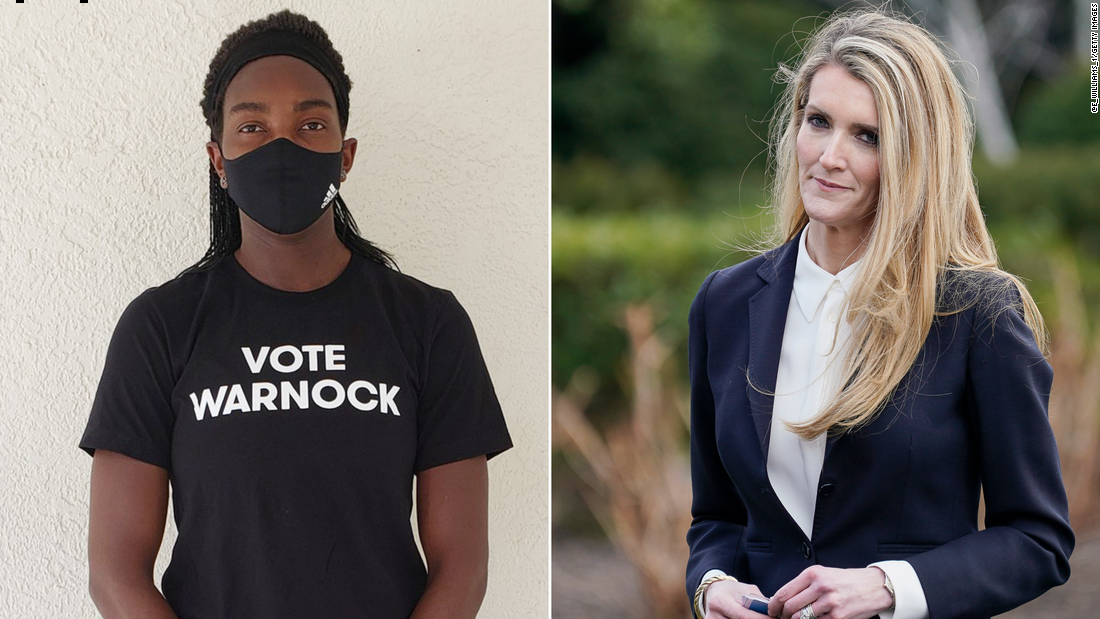
On Aug. 4, the Atlanta Dream walked onto the court for their first nationally televised WNBA game of the 2020 season. Their warmup shirts displayed a simple, yet clear, message. 

“Vote Warnock.” 

Five months later, on Jan. 5, Reverend Raphael Warnock (D-GA) defeated incumbent and co-owner of the Atlanta Dream, Kelly Loeffler (R-GA) in the Georgia Senate runoff election, securing a seat in the United States Senate. Warnock is Georgia’s first Black senator, and his victory was vital in helping the Democratic Party gain control of the Senate. 

The path to the Aug. 4 endorsement from the Atlanta Dream began last summer. 

“Our team, along with the whole league, had decided to make a statement during the George Floyd protests by wearing Black Lives Matter shirts honoring Breonna Taylor, the 26-year-old Black woman killed by police this summer in Louisville, and other Black women killed by the police,” Atlanta Dream forward, Elizabeth Williams, wrote in a personal essay for Vox.

This initial stand in support of the Black Lives Matter movement drew criticism from team co-owner Loeffler.

“This prompted our co-owner, who was appointed as Georgia senator after the previous senator resigned, to make a statement about us. She said she opposed Black Lives Matter and that we need less, not more, politics in sports,” Williams wrote. 

Prior to the start of the season, Williams and the rest of the Atlanta Dream had the chance to speak to Reverend Warnock, who was planning to challenge Kelly Loeffler. Shortly after, they wore shirts endorsing him at their first nationally televised game.

This trailblazing decision was no surprise to those who follow the WNBA. Players within the organization have been arguably the most vocal on social justice issues compared to other professional sports leagues in the United States. 

WNBA players have been at the forefront of social justice movements in sports in recent years,” Sean Gregory wrote for Time Magazine. “Players were among the first, in 2016, to wear Black Lives Matter warmup shirts before games after several incidents of police violence.” 

These efforts, alongside the rest of the WNBA, were crucial to Warnock’s eventual victory, according to Angele Delevoye, a PhD candidate in political science and quantitative methods at Yale University.

“The WNBA helped generate momentum,” Delevoye said. “The WNBA has a long history of activism [….] The players were ready for this moment.”

The results of the runoff election were the culmination of years of hard work in Georgiaa state that has voted staunchly Republican for over two decades. Stacey Abrams, a prominent Georgia Democrat, and former House Minority Leader for the Georgia General Assembly, was one of the few who believed that her state could flip to Democrat leadership, despite her eventual loss to Brian Kemp in the 2018 Georgia gubernatorial race.

Abrams herself met with the Dream in 2018, with hopes of a Democratic future in Georgia.

Had a great time supporting @AtlantaDream and meeting voters last night! Although we fell short, I have a feeling that 2019 will be a new age for the Dream—and for our state,” Abrams tweeted.

Two years later, the work of Abrams, the Dream, and organizers across Georgia led to the historical election of Senator Raphael Warnock and a blue shift in Georgia for the first time in nearly 30 years.

The southern parts of the United States have been a stronghold for Republicans since the so-called “Southern strategy” began in the 1960s. Four years ago, Georgians voted for President Trump, a Republican, by five percentage points. 

In 2020, Georgia voted for Democrat Joe Biden for president and Democrat Raphael Warnock to be one of their next senators.

There is something to be said about the effectiveness of the organizing work done in Georgia, whether it be by WNBA players, politicians who lost their races like Stacey Abrams, or people who care about their state. 

Kelly Loeffler underestimated her team and the rest of Georgia. Ironically, her purchase of the Atlanta Dream was integral to her dream of remaining a United States senator. However, that dream soon turned into a nightmare.

Never underestimate the power of the people when they work as a collective.

Commentary, Opinion

The true meaning of building back better

2020 will go down in the history books as the epitome of a bad year, characterized by a pandemic that has exposed the cracks in our healthcare system and other public institutions. In just 12 months, the lives, livelihoods, and well-being of people worldwide were drastically altered by the COVID-19 pandemic, leaving plans and resolutions unexecuted, and creating an overarching eagerness to label everything associated with 2020 a complete write-off. While the transition to a new year provides a much-needed sense of optimism to those who faced unexpected difficulties and traumas in 2020, it would be a mistake to disregard all of the racial and socioeconomic problems in Quebec exposed by the pandemic over the past 365 days as mere byproducts of a difficult year. 

It is important for students to cut themselves slack when it comes to their personal and academic shortcomings of 2020. Still, lumping Quebec’s broader societal issues underlying the pandemic’s disproportionate effects across the province’s minority populations together with a “worst year ever” mindset, undermines both the progress that was made to address these issues in 2020 and the ongoing need to establish long-term, systemic solutions to avoid similar health and social crises in the future. Students should embrace the new year as a chance to leave behind personal challenges from 2020, but they must not abandon the progressive societal momentum that the year generated.

The onset of the pandemic presented everyone with numerous challenges. From abiding by social distancing and lockdown measures to transitioning to daily Zoom-meeting sweatpants and suit jackets, 2020 forced us to adjust not only how we interact with one another but also where we allocate our time and energy. For students, this task was particularly daunting: Shifting to a remote learning environment while dealing with stressful matters like renewing student visas, living in isolation, and losing loved ones left many feeling unmotivated and unsupported both personally and academically. McGill claimed to prioritize student health and well-being even as the pandemic led to significant changes during the 2020 school year. That students were left to demand extensions to the S/U option and the 2020 winter break, however, reveals the McGill administration’s reluctance to recognize and address students’ stress and exhaustion the pandemic has induced. 

With the emergence of vaccines suggesting an eventual return to normal life and learning environments, it is no surprise that many are adopting an optimistic outlook heading into 2021. This new year mindset, however, which justifiably encourages students to attribute their disappointing academic performances and worsening mental health to the environmental factors that made 2020 so challenging, should not extend to the systemic issues that the pandemic exposed. High mortality rates among BIPOC communities, unequal access to healthcare services and outdoor spaces in low-income neighbourhoods, and the lack of supportive, affordable child and senior care which seemed to characterize 2020, are attributable to longstanding flaws in our government and public institutions. In the same way, the fight to implement institutional changes that address these issues must persist even as the 2020 calendars are replaced. Although 2020 forced students to finally acknowledge the calls for systemic change that some have allowed themselves to ignore, we must recognize that these issues were prevalent long before 2020. This recognition should fuel a continuous drive to address them even as we enter the year in hopes of returning to some semblance of normality. 

The 2020 pandemic did not cause the systemic injustices it exposed, and narrowing our focus to the 2021 Times Square ball drop does a disservice to those who finally brought these issues to the attention of a world that is too distracted to care under normal circumstances. While embracing the concept of Building Back Better on a personal level can mean trying to leave the academic and emotional struggles of 2020 behind for some, it must also come with an active commitment to ensuring that social, political, and institutional spotlights and advocacy efforts remain fixed on Quebec’s gaping inequalities, even if it takes years to see true change.

Arts & Entertainment, Music

In conversation with Motyka

Brian Joseph Schuh of Motyka hopes his new album, By Keeping Spring, will get listeners used to the unexpected. The album, available Jan. 22, fluidly strings together songs ranging from electronic to folk pop in a way that allows listeners to go along without thinking about its eclectic nature.

“I don’t really think of myself as any particular kind of artist. I just follow where I want the vibe to go and pieces organically come together,” Schuh said in an interview with the Tribune. “For me, every album is kind of case-by-case, not so much thinking of myself as any type of artist, where this is gonna be my ‘blank’ album. I just fill in the gaps as I go along.”

Schuh has been making music seriously since high school. He taught himself the ropes of music production on audio workstations where he experimented with samples he found on the internet, and eventually started to produce his own music. While he was at the Crane School of Music at the State University of New York (SUNY) at Potsdam, Schuh worked on projects under several different monikers, eventually settling on Motyka after graduation.

“The name Motyka is actually my mother’s maiden name,” Schuh said. “I come from a pretty musical family, and I wanted to honour them by using that name in association with my music.” 

Although Schuh writes and produces music under the name Motyka, he rarely does it on his own. Since starting the project toward the end of college, he has collaborated with friends and fellow musicians on every step of the production process. Collaboration offers Schuh the ability to incorporate specific styles and instruments he would not otherwise be able to execute himself. Part of the production process for Schuh includes improvising with friends over short tracks he has created. By Keeping Spring is full of improvised sessions featuring a number of musicians, particularly due to the interesting production method Schuh followed.

“I wrote a poem during quarantine and that poem became the track list for the album,” Schuh said. “The seven tracks on the album come from seven lines of the poem. [To compose the album], I just started at the beginning and I did the first song by finding some samples [….] From there, I just did the next song, and it unfolded pretty linearly.”

Schuh explains that improvisation is one of the ways he makes his music more organic and human, and that those elements also help to make the combination of musical genres cohesive. His philosophy is simple: The hook is the key. Focussing on the hook of the song, the part of the song that resonates with listeners and keeps them coming back for more, is the best way to bridge the gap between dissonant genres on a single album. The eponymous track, “By Keeping Spring,” ends its nebulous electronic run with a brief pause, followed by the unmistakable graininess of a record player. Transitioning into the throwback tones of “We Take The Air,” Motyka shifts easily between the sounds of the past and present. The vibe throughout the album is nostalgic, written during the beginning of lockdown when life was full of uncertainty. It is highly emotive, and its unique flow reflects the untamable and often undefinable emotions we all experienced at that time and continue to feel to this day.

By Keeping Spring will be available on all streaming platforms on January 22. “Draw,” “What Separates Us,” and “The Water” are available as singles.

Arts & Entertainment, Music

Playboi Carti’s ‘Whole Lotta Red’ is unique, for the best and the worst


Nearly two and a half years after the release of his debut studio album Die Lit, Playboi Carti dropped his long-awaited sophomore follow-up, Whole Lotta Red, on Dec. 25, 2020. When I tore into the record like a present under the proverbial Christmas tree, I soon came to realize that Whole Lotta Red is Carti’s most unique corpus of work to date. However, Whole Lotta Red’s originality is simultaneously its most enticing feature and its ultimate failure.

The project’s production is unlike any of Carti’s previous projects. Die Lit and his self-titled mixtape both relied heavily on producer Pierre Bourne’s repetitive, psychedelic beats. With Whole Lotta Red, Carti experiments with new sounds and draws upon a broader range of producers, including Art Dealer, Richie Souf, F1lthy, and even Kanye West. The album’s new sounds are distorted, abrasive, and aggressive, especially on tracks such as “New Tank” or “Stop Breathing.” This is not to say that Carti has completely turned a new leaf; “Place” and “ILoveUIHateU” feature Borne’s hypnotic, synth-heavy production and remain absolute bangers. 

Along with the beats, Carti experiments with new vocal styles, ranges, and deliveries—their success, however, is hit-or-miss. For example, “JumpOutTheHouse” features Carti repeating the chorus with a disconcerting frequency; the song sounds like a broken record. Carti gets lyrical on “Vamp Anthem” with lines like “.223 gon’ hit ‘em up, he done got hypnotized / I done made a mil’ in a white tee but I ain’t Franchize,” and, to Carti’s credit, it works. 

The project’s features—which are far and few between—are fun and diverse. For the most part, Carti plays them to his own strengths. Kanye West’s verse on “Go2DaMoon” shows Kanye at his most deranged and egotistical, making for an excellent guest appearance, but Carti follows Ye with a short and insubstantial verse that leaves much to be desired. Fortunately, Carti more strongly synchronizes with Kid Cudi and Future’s verses on “M3tamorphosis” and “Teen X.”

Whole Lotta Red is an innovative, courageous effort at a new sound, proving that Playboi Carti is not a one-trick pony, nor is his music dependent on the aesthetics of specific producers. The project showcases that Carti has found new strengths, but he hasn’t quite got the hang of them, either.

Read the latest issue

Read the latest issue