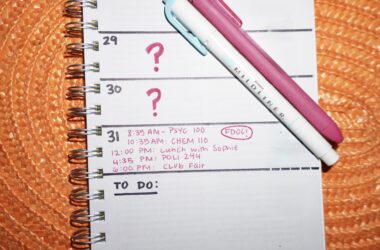


Staff producer Noah Vaton documents how he has attempted to pass the time while Montreal is in a red zone, and provides some words of advice for this challenging period.
Digital technology has advanced more rapidly than any other innovation in human history. Many aspects of daily life have already shifted online, and with the advent of wearable fitness tracking technology, it is not hard to imagine a future where access to all types of health care is possible with the tap of a screen.
On Oct. 14, Montreal Digital Spring, a non-profit organization whose primary goal is to boost digital intelligence, hosted a talk as part of MTL Connect 2020: Montreal Digital Week, their annual flagship event. Luca Cuccia, the co-founder and CEO of Phyla, a digital health company that merges artificial intelligence and microbiomic technology to improve gut health, gave a talk titled “Gut Health in the Clinical Space.”
Gut health is directly related to achieving a balance of the gut microbiome, the bacteria living in the gastrointestinal tract of humans. Changes in the gut microbiome caused by a number of factors such as genetics, diet, lifestyle, stress, and age can lead to metabolic and gastrointestinal disorders like irritable bowel syndrome (IBS) and inflammatory bowel disease (IBD). Both IBS and IBD are chronic diseases, meaning they are not curable but can instead be managed with long term care and therapy.
According to Cuccia, the medical industry is not geared towards helping people with chronic diseases who need care on a day-to-day basis. Despite growing public interest in the gut microbiome, little has been done to update diagnosis and monitoring procedures and improve the treatment of diseases of the gut.
“Everyone on the Phyla team either knows someone or is directly impacted by IBS [or] IBD. We understand how difficult it is for patients. It can take up to five years to be diagnosed, during which patients must endure severe symptoms such as bleeding and weight loss,” Cuccia wrote in an email to The McGill Tribune.
For patients suffering from IBS and IBD, Phyla aims to track their health on a daily basis through two main methods: An application that tracks their disease and lifestyle metrics via self-evaluations, as well as a microbiome test kit shipped to their homes. Disease tracking allows Phyla’s algorithm to identify triggers that cause flare-ups and address problems as they arise, rather than when symptoms and complications become severe.
“[Our] focus is diagnostics and disease monitoring […] to connect how a person is feeling and what they are saying to what’s actually going on in their body,” Cuccia said during his talk.
The underlying cause for the same disease may differ in individuals. Coupled with existing research in the field, user data will allow Phyla’s algorithm to better understand the different causes of IBS and IBD through personalized medicine to ensure that the right treatment is being provided in a timely manner.
“The research linking IBD and [the gut] microbiome still requires lots of work but is currently one of the most exhaustively researched applications of microbiome science, meaning that there is a large amount of data available in this field for us to train our algorithms,” Ryszard Kubinski, co-founder and CSO of Phyla, wrote in a message to the Tribune.
With large corporations like Facebook, Twitter, and even DNA testing companies such as 23andMe recently facing backlash for selling user information, privacy can be a huge concern with any technology that stores personal data. The team behind Phyla is currently constructing a secure data processing and storage framework. To optimize data processing while preserving user anonymity, they use a combination of differential privacy and homomorphic encryption, which allows manipulation of encrypted data without having to decrypt it first.
Phyla is currently preparing for a beta release of their application. In the future, they plan to expand the tool to help patients suffering from other diseases linked to the gut microbiome, such as type 2 diabetes, liver cirrhosis, and metabolic syndrome.
“IBS and IBD are just the beginning [….] In the future, we hope to address as many of these [diseases] as we can,” Kubinski wrote.
August 2017: I’m driving into downtown Montreal for the first time, not as a tourist, but as a resident and student at McGill University. As I cross the Jacques-Cartier bridge after a 10-hour car ride from rural Pennsylvania, I turn on the radio just in time to catch Chumbawamba’s 1997 hit single, “Tubthumping”: “I get knocked down / but I get up again!” It’s just the song I needed to quell my college anxieties and driving fatigue, defining the moment with a click of a button.
As a medium, radio is prone to serendipitous moments such as this one. Each second of a radio show is unique to time and place, making what you end up listening to all up to chance. There is a certain amount of risk that you won’t know (or even like) the song a station will play next, yet there is the possibility that the next track will be one of your favourite songs ever.
The Montreal Student Initiative for COVID-19 Response and Relief, a McGill student-led mutual aid group that formed during the pandemic, shut down on Oct. 1. Along with delivering material goods, such as food and prescriptions, to people in need, the group also organized virtual social events to connect their communities. According to the former leaders of the organization, the group was forced to dissolve after their most significant donor withdrew funds and they lost access to their main distribution hub. However, as the various organizations referenced in the resource document shared in their final Facebook post show, mutual aid in Montreal continues. While many mutual aid organizations formed as a response to the pandemic, they could continue to play an important role in supporting vulnerable communities in the future. As Montreal faces various social issues, including a growing unhoused population and shaky job security for its residents, community-focused aid organizations must be maintained after the pandemic.
Mutual aid occurs when, in the face of a common issue, those who are more privileged within a community support those who are more vulnerable. This can take many forms, from simply donating cash with which to purchase basic human resources, to volunteering, and even to babysitting for working parents. Citizens are responsive to this sort of organizing; one Montreal mutual aid Facebook group has at least 17,000 members. The emphasis is not on serving for the sake of social status, but instead, on taking care of one’s communities through direct aid and outreach.
Despite the benefits that these organizations provide, many groups have formed specifically as a response to inequities exacerbated by COVID-19. It is important to emphasize that the work of these groups is necessary even after the pandemic, and ensure that they do not wither away or become dormant until the next crisis appears. As small, local, and personal forms of direct action, mutual aid organizations excel at supporting the communities that need them most in a way that charities often cannot due to shortages of staff or funds. Black communities in Canada and the United States have practiced mutual aid for a long time due to this reach.
Research suggests there is a reason that many mutual aid organizations are taking up much funding and media coverage during this crisis: People are more likely to donate when faced with a specific individual or group than they are when facing a more distant or less identifiable cause. So when one’s local community is in need, one is far more likely to give, especially in the face of something as impactful as a pandemic.
Montreal is currently facing unemployment issues alongside the COVID-19 pandemic. The Quebec unemployment rate remains twice as high as it was at the start of the year, and economists are warning that the economic impact will likely continue past the outbreak. Homelessness remains a significant issue, with half of the province’s unhoused population living in Montreal, including a disproportionate amount of Inuit.
Unlike the virus, turning one’s back to the community and simply staying isolated inside will not make these difficult situations disappear. But, mutual aid can help to blunt their impact, allowing Montreal communities to take care of their own. There is no doubt that some groups directly related to COVID-19, such as groups providing childcare for those in hospital, will not be necessary when the pandemic is gone. However, the spirit of solidarity that the virus has fostered cannot be allowed to dissipate as well. Mutual aid groups must stay active and local groups must remain engaged for the benefit of the less fortunate in Montreal.
Montreal is a one-of-a-kind city for several reasons: It has a vibrant nightlife, an incredibly rich history, and an amalgamation of diverse cultures. Yet, nothing in Montreal is as iconic as the role of language in shaping the city’s unique culture. As most Montrealers speak both French and English, casual conversation can be a mix of words and phrases taken from both languages. Although linguistic research in Montreal has mostly focussed on French speakers, the content of what Montrealers say in their conversations has, until now, received little scientific attention.
A recent study from the McGill Department of Psychology provides insight into which language bilinguals choose to speak while engaging in various conversation topics. Participants were asked about 21 subjects ranging from news to culture, as well as which language they used to discuss each subject in various environments, including school, work, home, and their social lives. Remarkably, none of these communicative contexts showed the same number of topics or pattern of language use.
Mehrgol Tiv, a Ph.D candidate studying experimental psychology at McGill and lead author of the paper, explained how a novel application of an existing methodology was used to analyze participants’ responses.
“Often, when we conduct research studies in the cognitive sciences, we do so in a laboratory, where many of the elements that make up the real world are controlled or not taken into consideration,” Tiv wrote in an email to The McGill Tribune. “We adopted network science as a robust tool to represent the real-world complexities of language use.”
Network scientists use mathematical tools to map the strength and frequency of connections within datasets, which are then represented as visual models. This method has diverse applications across scientific disciplines, from tracking COVID-19 transmission to mapping neurons in the brain.
Using this framework, Tiv and her colleagues calculated the total number of conversation topics across different situations, how often the topics overlapped, and which language was used to discuss them. The subjects of each conversation were then visually represented as individual units, called nodes, which form links within the network model to other topics of conversation. Researchers use lines of differing thicknesses to estimate the rate of co-occurrences between two or more topics. When translated into a graphic, these colour-coded nodes and links describe a complex network of speech patterns.
“The content of conversation makes up the collective discourse, which can tell you a lot about the goals and values of a group of people or a society,” Tiv wrote. “It answers a different set of questions than studying how people speak. Many of [these questions] are social in nature.”
Researchers surveyed 115 university-age participants, who completed questionnaires about their language use and conversational patterns in different areas of their lives. The results demonstrate just how dynamic bilingualism in Montreal really is. No two communicative settings showed the same distribution of French versus English, suggesting that language use is connected to social and contextual cues.
According to the study, bilinguals use their dominant language across a broad range of conversation topics and within a greater number of contexts, including at home, school, and work. In contrast, they found that participants engaged in discussions on a more narrow range of topics in conversations held in their non-dominant language.
The focussed, repetitive environment of many workplaces could explain why participants reported speaking mainly in their dominant language and about fewer topics. Social settings, which tend to invite dynamic conversations with larger groups of people, showed the most variation in both conversation topic and language use.
The study’s findings are consistent with a linguistic theory called the complementary principle, which proposes that bilinguals tailor their language use in different social situations. This is certainly the case in Montreal, where fluency in both French and English can greatly improve job opportunities.
“There is a lot going on linguistically in Montreal,” Tiv wrote. “It’s the culmination of historical forces like colonialism, modern-day immigration, and a host of other social factors which give rise to Montreal being a unique place to study bilingualism.”
A classical music fan even as a child, I went to my first symphony at 11 years old. Just before the conductor began his elusive dance, he cued a single, collective breath—an upbeat, as I would later learn. That instance was electric, the orchestra and audience anticipation alike generating a tangible energy felt through the hall. Suddenly, music coloured the air, players moving in tandem. I listened, enraptured. And after the thrill of the performance, epic as a raging storm and tranquil as a dew-covered petal—another silent beat, and then thunderous applause. I fell in love.
I started learning to play the cello in seventh grade in my middle school’s strings program. Encouraged by my teachers, I applied and was admitted to a specialized arts high school. I was not an accomplished player; rather, through instruction and hard work, I cultivated my skills alongside my peers. In many ways, music shaped my identity: I fostered friendships with stand partners, built my self-confidence, and found my community. With each mid-performance smile shared with friends across the stage, I was tapped into the orchestral magic that had first resonated with me years earlier.
Halfway through high school, however, I realized that I could not be a professional musician. I enjoyed the creative and community elements, but the constant rehearsals, lessons, and practice sessions were tedious. Though manageable, if I planned to audition for music programs, my playing calibre and practice intensity would need to increase significantly. Looking forward, I could see that such rigorous obligation would taint my passion if I were to bind myself to my cello as a livelihood, and a mixture of self-doubt in my abilities and fear of commitment rendered that avenue unattainable.
In deciding to let go of professional expectations, I was free to do what I wanted. Despite my senior year being chock-full of music-related responsibilities, the pressure to perform well came from a need to do my best for my teachers, peers, and my own standards, without future stress looming over me. This meant I could dedicate more time to academics and chamber groups that I could play in for fun. It also gave me time to prepare for my very first Royal Conservatory exam, a metric by which many Canadian music students gauge their skill level. Completing it would be both concrete proof and a fitting capstone of my progress. After scheduling the date in June, the summer months became a flurry of frantic practicing, and, just days before moving to Montreal, I completed the grade-eight exam, ending my cello career.
Well, not quite: I still played at home, for my family and myself. I did feel a significant loss, though, even knowing that I couldn’t bring my instrument with me to university. Besides missing the camaraderie of rehearsals and the excitement of concerts, I also lost my callouses, which I had built up over six years—a physical reminder that this new identity I would forge myself would not revolve around music.
I know this all sounds dramatic. I’m incredibly privileged to have had these opportunities, and I’ll always be grateful. Regardless, leaving something you love, even intentionally, will always be bittersweet.
Although we’re told to “follow our dreams,” sometimes it’s best to separate a personal interest from a career—adhering to impossibly high standards should not impede your ability to enjoy your craft. In choosing to not pursue music professionally, I redefined my creative passion to one influenced by internal motivations rather than external pressures. It is a conscious decision not to monetize your every interest; it will still always be worth it to find fulfillment in the arts, no matter your age, skill level, or commitment. Be the architect of your own joy, and support artists who share theirs with the world. Professional musicians continue to inspire me: Every time I watch a live performance, experiencing an orchestra weave pure magic from a seat instead of the stage, I fall in love all over again.
Although the 2021 season has been cancelled and training in quarantine is far from ideal, McGill Men’s Varsity Hockey Captain Samuel Tremblay remains committed to the success of the team and sees teamwork as a key factor in future accomplishments. As the leader of a storied program, he understands the responsibility that comes with success.
“I care so much about the success of the team and I always try to see the big picture, which is winning another championship,” Tremblay said in an interview with The McGill Tribune. “I’d do anything to win again and people know that, which, I think, might be a big reason why I’m in this [leadership] position right now.”
Although Tremblay recognizes the guiding role he must play as the team’s captain, he knows that his leadership is only possible with the help and trust of his teammates.
“There are just so many different ways you can be a leader, and, to be honest, I wouldn’t be in this position here without the guys surrounding me,” Tremblay said. “Leading is a team effort. You can be the best leader in the world, but if you don’t have good followers around you, I truly believe you’re not going anywhere.”
Tremblay credits his mentality of sharing the team responsibilities to past McGill Hockey leaders.
“[In] my first year, I had the privilege to play with Pat Delisle-Houde, our captain that year, and since then he [has been] like a mentor [to] me,” Tremblay said. “In terms of leadership, he seemed always in control and always had an answer [….] During second year, I lived with former McGill Captain Nathan Chiarlitti, and Jan Kaminsky, [who was a] former assistant captain [….] I got to learn from two great leaders and mentors who were very different from Pat, but just as good. These past captains were the ‘glue guys,’ and they just made everybody feel part of the team with their energy.”
The team was determined to return better than ever for the 2020-2021 season, but the COVID-19 pandemic made it difficult for some players to stay focussed and motivated as many facilities shut down and the upcoming season was cancelled.
“At the beginning [of the season], it was pretty challenging,” Tremblay said. “Everything was closed, and I was not motivated at all to train at home. I actually hated it. It was hard mentally, but I got to bike more and enjoy being outdoors. Outside of training, I usually spend time with the guys, though that was not possible. However, I was able to spend more time reading and playing the guitar.”
Tremblay expressed his disappointment regarding RSEQ’s decision to cancel the upcoming winter season, but understands that it is a necessary measure to ensure the safety of staff and players.
“It’s obviously very frustrating because we’re trying to stay in good physical and mental shape,” Tremblay said. “At the end of the day we [have] to follow the rules and try to protect each other, so I respect that. It’s just very upsetting.”
Tremblay graduated with a B.Sc. in Kinesiology in the Spring of 2020, and is currently pursuing a master’s degree in biomechanics, making him eligible for a final season in the McConnell Arena. However, Montreal and McGill are not the end of Tremblay’s hockey journey.
“When my [master’s] is done, I’ll head overseas to play professional hockey and travel the world,” Tremblay said. “It’s one of my dreams to go play in Europe. [I will] put a bit of money [aside] while traveling the world, and in a few years, I’ll come back here to work in biomechanics or in hockey.”
With a future full of possibilities, Tremblay is excited for what his final year has in store.
You will see me again for a sixth year,” Tremblay said. “Luckily for me…I can come back next year to play my last season, but I can’t say the same for guys on the team [who] are graduating this year.”
It all began with bacteria: The observation and study of these single-celled organisms in the early 1980s allowed scientists to get a glimpse of the bacterial genome. In bacterial DNA, researchers found a class of repetitive nucleotide sequences, which they called Clusters of Regularly Interspaced Short Palindromic Repeats, or CRISPR.
This finding was the basis of what would become CRISPR-Cas9, the gene editing tool that won this year’s Nobel Prize in Chemistry, awarded to Dr. Emmanuelle Charpentier and Dr. Jennifer Doudna, who began their work in 2011.
Like human cells, bacteria have the ability to recognize invading pathogens that attack their DNA. Unlike human cells, which have a variety of ways to kill viruses or inhibit their replication, some bacteria incorporate a part of the virus genome into their own DNA, using it as a guide to detect DNA from similar viruses during subsequent infections. These viral segments are known as “spacers” and are integrated into the bacteria’s CRISPR sequences for later use.
The other component of the CRISPR system is Cas9, a bacterial enzyme that cleaves foreign DNA marked by CRISPR sequences. If the bacterial cell detects the same virus a second time, a copy of the viral DNA is transcribed to the Cas9 enzyme, giving it a molecular “clue” of what to search for in the cell. Once it matches the clue sequence to the invader’s DNA, Cas9 acts like a pair of scissors, cutting the viral DNA and preventing reinfection.
While working with one bacterial species, Charpentier found RNA sequences which play a key role in the cleavage mechanism of CRISPR-Cas9. In collaboration with Doudna, they succeeded in recreating the Cas9’s genetic scissors in a test tube, showing that upon fusing an RNA transcript (also called a “guide RNA”) with Cas9, they could develop a simplified system that reproduces that same cleavage mechanism.
Over the next 10 years, Charpentier and Douda refined their method of gene editing, allowing them to excise and insert DNA sequences of their choosing. In an interview with The McGill Tribune, Dr. Yann Joly, a bioethicist and assistant professor in McGill’s Department of Human Genetics, commented that their discovery would revolutionize the idea of gene editing.
“Charpentier and Doudna used this knowledge about an obscure bacterial immune mechanism (CRISPR) and transposed it into a tool that can simply and cheaply edit the genomes of everything living organism: Human, animal, or vegetable,” Joly said.
The advantage of this method is that it enables not only cutting, but also the pasting of new DNA sequences at the site of the excision. Guide RNAs can also provide a template for repairing broken DNA.
“Many genome editors existed before CRISPR, but using them was time consuming, cumbersome, and expensive,” Joly said.
A technology that has the power to edit the genetic makeup of humans raises ethical concerns.
“Because CRISPR-Cas9 is so easy to access and use by anyone with [any] scientific knowledge, it means that the technology is also vulnerable to misuse by biohackers and bioterrorists,” Joly said. “Given potential limitations and [possible] side-effects of the technology, along with the potential for editing the germline, the consequences could be far reaching. Such misuses are also very difficult to prevent through traditional ethic[s] policies and regulations.”
One current debate discusses the extent to which CRISPR-Cas9 should be regulated in clinical research involving human subjects. Although there are legal implications, this discovery has potential for revolutionizing the field of gene therapy and targeted medicine. Regardless, CRISPR-Cas9 still has a long way to go, both mechanically and ethically, before its use can become widespread.
“The potential [uses of CRISPR-Cas9] in medicine and agriculture [are] extremely promising but the technology still needs a lot of fine tuning,” Joly said. “Research and experiments on computer models and animal models [remain important to understanding] off-target effects, [such as] mosaicism and unknown long-term effects.”
With cold weather looming and assignments piling up, getting out to exercise can feel like a daunting task. Physical activity is a vital part of both mental and physical wellbeing, yet it can often have negative connotations. One problem is the common perception of exercise as a punishment, rather than a reward. This idea often stems from individuals’ issues with body image and lack of self-love that can become compounded in university with the concept of the “freshman 15” and the toxic culture surrounding food. Some people will need more concrete resources than just a change in mindset, but for many, inspiration or a shift in thinking is often all it takes to learn to love to exercise.
Working out should never be a punishment for eating too much or for looking a certain way. Instead, it should be a tool to destress and enjoy the power of the human body.
“Many women hate to work out because we’ve been taught to do it for the wrong reasons,” Michelle Segar, a behavioural psychologist at the University of Michigan, said in an interview with Elle.
While Segar focusses her research on women, this idea is important for any gender. Workouts should be about getting stronger mentally and physically, not about losing weight. Exercise can also be a great way to get outside and enjoy the fresh—or in Montreal, often freezing—air.
While many students use their lack of time as an excuse for not exercising regularly, time management is often the real culprit. Every day, block out at least 30 minutes to engage in some physical activity. Since exercising increases productivity, after a workout, one can more efficiently accomplish tasks for school, making up for the time spent exercising.
To fully enjoy working out, pick an activity that is fun and engaging. Physical activity is not only running or lifting weights. A workout could be as simple as a brisk walk with a friend. During this time when most students spend the day stuck in their apartments, getting out—when regulations allow—and going for a walk with a friend can be a great way to get steps in and simultaneously blow off some steam. For the days when leaving the apartment is not an option, dancing to music is a fun and easy way to get your heart rate up and improve your mood. As the weather turns colder, the possibilities for exercise do not have to dwindle, even in Montreal. Ice skating, cross-country skiing, and snow-shoeing are wonderful socially distant exercises to try. The McGill Outdoors Club is a convenient resource for rentals and opportunities for physical activity.
One of the best ways to improve cardiovascular health is running. Running can be painful at first, but it can also be fun. If possible, invest in a pair of proper running shoes to avoid leg injuries. The best approach to running is to start small; don’t expect to be Usain Bolt when starting out. Try running for five minutes, and if that feels easy, try 10 minutes and keep increasing your time running until it becomes difficult again. The key to running is consistency. Even if it is only 15 minutes per day, routinely running will make it easier and less painful. Another way to make the idea of running more palatable is to put together a playlist of inspiring, upbeat music and try running to the beat of your favourite tunes.
On top of exercise, there are simple ways to lead a more active lifestyle. Instead of sleeping through that 8:30 a.m. Zoom class, try standing for its duration. When going to the grocery store, walk the whole way instead of taking public transport or driving. Use the stairs instead of the elevator when possible. Even cleaning your house or apartment can count as physical activity.
Forming a healthy and positive relationship with exercise can be difficult. However, by making an activity fun and taking pressure and expectations away, it can become something to look forward to. Working out for personal growth and happiness rather than to fit societal expectations is incredibly empowering.
Loss is hardly a new subject for Bruce Springsteen: Many of his most popular songs surround this absence from arena anthems like “Born in the USA”, to heart-wrenching ballads of dying dreams like “The River.” His new album, Letter to You, returns to this well once again, but with a far more personal and honest tone than his previous work. Many of Springsteen’s classic tracks tell stories of a narrator coping with a world that they feel is leaving them behind. Shuttered factories, highways that never slow down—if you’re the main character of a Springsteen song, you’re probably not all that happy about it.
But Springsteen himself has never lived that life, and he doesn’t hide it either. In Springsteen on Broadway, his (almost) one-man-show, he confesses to the audience that he never held a nine to five job at all. He’s played this character for more than 50 years, and he plays it well.
Letter to You feels different in its reflections. When Springsteen sings about a young man’s dreams, they’re specifically his. When he reflects on his life and career, just as he does in The River, it’s not about a construction worker chasing a feeling, but rather a reflection on his younger years of playing the dive bars of the Jersey Shore circuit. Springsteen conveys his loss musically rather than just lyrically—though he does that plenty, especially in his closing song “I’ll See You in my Dreams.” The deaths of Danny Federici and Clarence Clemons, longtime members of Springsteen’s backing band E-Street, can be felt by their lack of musical presence. The band hasn’t ditched Federici’s and Clemons’s organ or saxophone altogether, but when they are used, it feels tasteful and reverential without the risk of careless replacement.
What struck me during my first listen of the album in full was how little I related to his stories. Sure, I grew up in New Jersey and occasionally spent time in Asbury Park, but I never had a garage band or spent teen nights on the beach and boardwalk. And yet, Springsteen has completely mastered one emotion: Nostalgia. It is universal across his music, and appears strikingly in Letter to You. The longing in Springsteen’s lyrics reaches out from his life to his listeners, forging a necessary intimate connection. Just this once, the master of crafting nostalgia will let you into his own.
This pull towards a past that is not my own fascinates me. I’m 21, in school, can’t legally drive, and I’m not a rockstar, yet I feel a strong emotional connection towards Springsteen’s music. Many of my closest friends feel the same as I do, and while we influence each other’s music taste to some extent, loving Springsteen is something we’ve all arrived at independently. Although his music can be easily dismissed as “dad rock,” younger audiences surely enjoy his music for another reason.
One of my favourite songwriters, Glen Hansard, has advised hopeful songwriters to write about something specific and personal so that people will relate to it. It’s a bit counterintuitive, but perhaps that is what’s at play here. Springsteen doesn’t just create the longing from nowhere—the intimacy in his stories brings out a nostalgia that is dormant inside us. By writing these immensely personal stories, even if fictitious, Springsteen allows us to attach our worlds, our meanings, and our stories to them. This may even be behind the dedicated young POC and 2SLGBTQIA+ people who are becoming ever more present within the fan base.
Letter to You is a masterpiece of E-street proportions. It tugs on the heart, it puts the roar of a stadium in the listeners ear, and above all, it reminds listeners that we all have a capacity for longing that doesn’t just span a half-century career, but also connects us to our most empathetic selves.