


Latest News

Fact or Fiction, Science & Technology

From the BrainSTEM: A COVID-19 vaccine is only as effective as it is trustworthy

As the COVID-19 pandemic continues into its eighth month, developments in the search for a potential vaccine have fueled hopes of a return to relative normalcy. Over 100 potential vaccine candidates are currently in various stages of human clinical or animal preclinical trials, as private companies and university researchers compete for billions of dollars of government funding. However, widespread focus on the search for a single solution is unrealistic and deeply harmful to the perennial struggle against infectious diseases.

Protecting people from a virus on a large scale depends on a concept known as herd immunity, in which a large enough portion of the population develops resistance to a disease to stop it from spreading. Herd immunity typically requires 70 to 90 per cent of the population to become immune, either through infection or vaccination. In the case of  COVID-19, however, the exact threshold is still unknown. This is complicated by the fact that immunity to coronaviruses such as the one that causes COVID-19 does not typically last very long. Immunity to the coronaviruses that cause the common cold usually lasts a year or two at most.

In addition to vaccine efficacy, reaching herd immunity will require public trust. Recent polling suggests that only three out of four Canadians are willing to receive a COVID-19 vaccine. Additionally, a growing anti-vaccination movement has questioned the government’s ability to widely distribute a vaccine. As recent anti-mask protests in Montreal and across Canada have shown, a small portion of the population is not only losing trust in its government, but is proud to display their beliefs. How the government handles current public concerns is essential to the process of building trust in the vaccine it will eventually endorse.

Distrust of foreign governments and private companies is another common barrier to vaccine development. Russia’s vaccine claims have been met with controversy, with many scientists voicing significant safety concerns. Pharmaceutical giant AstraZeneca has recently resumed testing its vaccine candidate following one participant’s unexplained illness that forced the trial to abruptly pause in early September. However, AstraZeneca has not always been transparent with their research practices. The company spent multiple years concealing significant risks concerning an antipsychotic drug it produced prior to its approval for use in the United States. Governmental failure in ensuring the safety of medical treatments is harmful to public trust in their ability and dedication to protect their citizens’ health.

Once a vaccine for COVID-19 is successfully approved and distributed, the risk of the next major disease outbreak remains. The current pandemic is not a random occurrence, but rather part of a recurring pattern threatening humanity’s safety and well-being. 

Multiple epidemics have occurred over the past decade, including the 2013-2016 outbreak of Ebola virus in West Africa and the 2013-2019 outbreak of avian flu that affected parts of Eastern China. These threats come mainly from an increase in human contact with wild animal populations. Mining and logging camps, the wild bushmeat trade, and deforestation all put workers in close proximity to wild animal populations, increasing their risk of contracting new diseases.  

Preventing the next pandemic is possible, but it will require significant changes to how companies exploit natural resources, the tightening of regulations on the global wildlife trade, and continued support for communities that rely on wildlife as an essential food source.

Governments are responsible for gaining the trust of their citizens and cooperating on an international scale to regulate the corporate exploitation of the planet. Protecting humanity from this pandemic and future ones is crucial, and it will require leaders in healthcare and governance to prioritize human life over private profit.
Commentary, Opinion

Far-right COVID-19 conspiracies must not be taken lightly

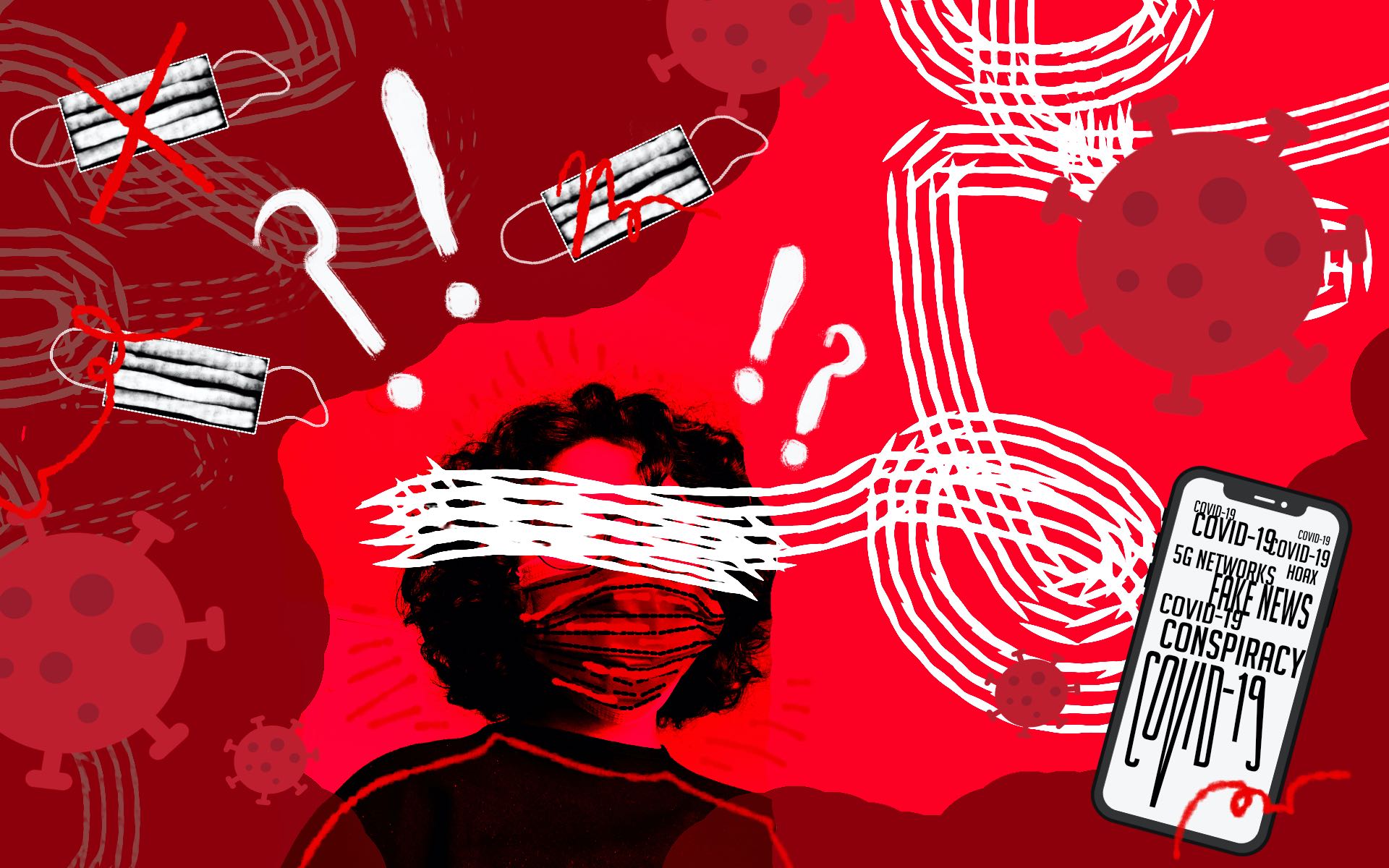
If one was to pay attention to recent events, it would appear that QAnon zealots, anti-WHO “activists,” and alien truthers have a lot in common. Two weeks ago, all three groups were active participants in anti-mask protests that occurred in Montreal, where Q-related shirts and anti-mask signs seemed to take up equal space. This was not the first protest of its kind within the city, with a similar event taking place in August. The absurdity of protesting against important health measures because of a belief in aliens, pedophile cults, and a New World Order may seem mildly amusing to students. But there is a danger to detached mirth. When conspiracies oppose science and put others’ health at risk, McGill students have a responsibility to debunk and reject these ideas where they can and diligently adhere to public health guidelines. 

To be clear, not all conspiracies are harmful, and enjoying some of them is not wrong. A great example is the glitter conspiracy of 2018. The New York Times published an article about the industry, reporting that one of the most prominent producers of glitter, Glitterex, was secretive about where the vast majority of its glitter was going. Some investigated this strange industry secret and eventually discovered the truth: The glitter was being used for car and boat paint. While glitter purchases are not exactly the most esoteric topic to theorize on, no one is going to become a glitter truther, or put anyone at harm over it. The same cannot be said for QAnon.

Starting as a series of cryptic and bizarre posts on 4chan’s /pol/, the platform’s political discussion board, the QAnon conspiracy has since garnered many followers and widespread press coverage. It puts forth that U.S. President Donald Trump is battling a circle of sinister, pedophilic elites, including top Democrats who he will purge in an event known as “the Storm.” All of this is being communicated to the loyal public by the supposed means of a high-up figure, the supposed poster, “Q”. As some have noted, the conspiracy has drawn in many adjacent theories, creating a big-tent scenario where different beliefs blend and morph, often into more dangerous variants. Most related to COVID-19, of course, are the mask-related theories.

Some of the more insidious theories take elements of the everyday and peddle them as truth. For example, some people find it hard to breathe in masks which has led to theories stating that masks lead to brain damage by lowering one’s oxygen levels. This is false, but the spread of this claim has not stopped. Another popular theory states that COVID-19 is an exaggerated threat, and that masks and current safety guidelines are meant to control the public, rather than the spread of the virus. This is also incorrect.

COVID-19 is not an exaggerated threat: Of an estimated 32.3 million cases worldwide, there is roughly a three per cent death rate. In Canada, those numbers at press time are 149,094 cases and 9,249 deaths. That is closer to six per cent. And in Quebec, that number is closer to 8 per cent, with 5,814 deaths from 70,307 cases. Even beyond death, COVID-19 can lead to long term and severe complications.

While silly theories about glitter, aliens, and the Kennedys allow for a disengaged amusement, one cannot allow the necessary isolation of COVID-19 to dim their empathy as well. People are dying and misinformation is spreading. As residents of Montreal, as well as people who care about the wellbeing of fellow community members, the student body has to be active in its rebuttals of misinformation, as educated on the recent statistics as they can, and be dedicated to discussing these issues online. If such a rebuttal reaches just one person who is prone to these beliefs, or even is a full believer, that is one less person at risk.

Art, Arts & Entertainment

‘The World Is Bound By Secret Knots’ warns against over consumption

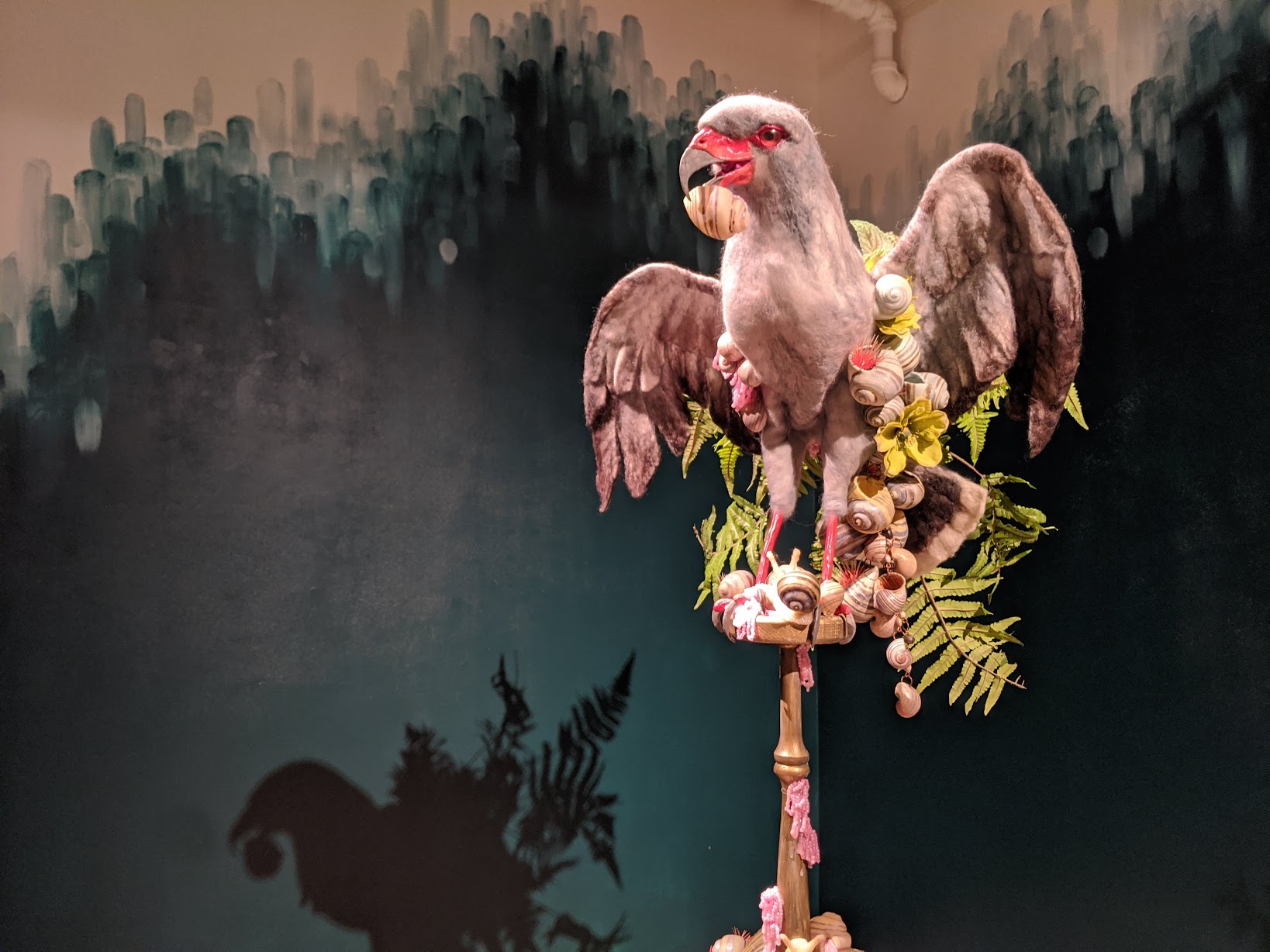
At once familiar and shocking, tame and wild, gluttonous and skeletal, moving and lifeless, The World Is Bound By Secret Knots is a rainforest of mesmerising, ersatz creatures. From Sept. 5 to Oct. 24, the Art Mûr gallery in La Petite-Patrie is showcasing Montreal-based artist and writer Emily Jan’s animalistic sculpture installations, inspired by Jan’s time spent in the Amazonian Rainforest. Jan’s vision for the exhibition focusses on ideas of temporality, death, and how we as human beings interact with—and harm—the flora and fauna around us.

Combining materials such as resin, silk, faux flowers, and common objects, Jan creates sculptural installations that display mystical combinations of animal bodies, human artifacts, and false greenery. Apologue IX: Honey Creeper, 2018 is a splendid example of this hybrid multimedia work. Featuring a Honeycreeper bird with a glaring, red, bulbous plastic eye, Apologue IX: Honey Creeper, 2018 hangs from the exhibit’s ceiling on a craggly plastic branch, its scaly claw grasping around the edges. The bird’s beak and body are built of a tree-bark material, and as the bird curls and becomes one with the tree: Its tail sprouts leaves, first green, progressively yellowing, and finally shooting up with a burst of pink flower blossoms. 

The bird is visibly and garishly synthetic, and yet, the attention paid to the form and fold of its body makes it feel as if viewers are actually staring at the taxidermied figure of a Honeycreeper. Jan’s work thrives in this space of phoney kitsch and underlying macabre realism. 

As the exhibition progresses, Jan’s work becomes darker, as the animals are no longer just made up of consumer goods, but are engulfed by them. Particularly striking, Apologue VI: Octopus, 2018 features a pink octopus made of wool and resin drowning in human waste, suffocated in shattered tea cups, ribbons, vases with prickly flowers, and a gurgling yellow liquid, all served on fine china plates. With a glossy life-like eye, it is impossible to look away from the struggling animal as the gluttonous artifacts swallow it whole. The piece is strongly reminiscent of photos of octopi making homes in human waste and of other sea creatures trapped in beer cans and plastic bags.

Jan pushes this idea even further as objects begin to consume the animals, causing them to lose their limbs and even their faces. In Apologue IV: Slow Loris, 2017, a monkey and a bird communicate through a telephone wire. Rather than seeing the animals wholly, we see only the ominous tail feathers of a poultry bird sticking out as her body dips into a rose-rimmed china tray, while the monkey’s face is replaced with a stream of plastic white flower necklaces. The stylized bizarreness of the work is highlighted by the plastic pears strewn around the table, placed in a purposefully asymmetrical and eerie manner, reminding viewers that human hands have irreversibly altered what they have touched.

By the end of the exhibit, the message becomes clear. The shells filled with pink-bead bracelets instead of tentacles, the slugs slinking upon Christmas ornaments tangled in dead white coral, the birds with nests made of shredded money perched upon dehydrated cacti, are all begging the viewer: //Remember us//. Through the juxtaposition of wildlife with everyday objects and plastic decorations, Jan shows how inhospitable of an environment humans have created for animals, and warns us of the effects that our careless consumerist culture has had on the natural world. We have a responsibility to nature, Jan reminds us, and we must do better.

News

McGill professor Dr. Debra Thompson leads ‘Blackness and Belonging’ seminar

On Sept.15, the University of California-Berkeley held an online seminar titled “Blackness and Belonging in North America” to explore the complex experiences of Black people living in North America. McGill political science professor, Dr. Debra Thompson, an expert on race and ethnic politics led the event. As a Black woman with ancestors who were enslaved, Thompson explained that she felt labeled as a societal anomaly in an indifferent world. Thompson noted the violence and microaggressions that actively marginalize Black people in society. 

“Black experience in any town or city in the Americas is a haunting experience,” Thompson said. “History is seated at the empty chair in a room when one arrives. African descendants in the Americas are affected by the horrors of the Trans-Atlantic slave trade, [being] commodified as objects, forcibly transported to the ‘New World’ and [being] traded as property. In recognizing this, I’ve realized that I am my ancestor’s wildest dream.”

Thompson stated that many Black people living in Canada and the United States are coping with the emotional, mental, and physical impacts of institutionalized racism. Thompson emphasized that while there is a sense of identity within Black communities, finding acceptance is challenging when Black people are often politicized, segregated, and categorized by systems of governance, courts of law, and socioeconomic status.

“We shouldn’t tell our children to idolize Mr. Martin Luther King’s speech without telling them that he was brutally murdered by white supremacists, just as many other [modern-day] martyrs,” Thompson said. “[We should tell them that] exhausting, disproportionate, and arbitrary encounters are demonstrative of the fact that weaponized privilege can so quickly lead to the loss of a life.” 

Thompson noted the importance of recognizing that racism is not confined within the United States’ borders. Racism in Canada is fervent, pervasive, and indicative of institutions that fail to recognize the humanity of Black Canadians. 

“The inauguration of Barack Obama was a symbol of progress, [and] perhaps we could even have a Black Prime Minister of Canada one day,” Thompson said. “Years later, Canadians are confronted with a Prime Minister who half-heartedly apologized for wearing blackface. Canadian racism is insidious, hard to identify, and unambiguous under the cloud of inexistence it inhabits within.”

Noah Tonnesen, U1 Science at an American university, believes that Thompson’s talk provided an opportunity to openly discuss the importance of recognizing privilege, systemic inequality, and advantage in an academic setting. 

“In order to fulfill the promises of our constitution and truly bring racial justice, it is important that people in privileged positions are able to recognize their advantage over others,” Tonnesen said. “[To help us] work towards providing equal opportunities and outcomes for all.” 

Delice Thomas, alumnus of McGill (B.A. ‘12) who is now completing her graduate studies at the University of Toronto, explained how she was unconsciously excluded from many opportunities during her time at both institutions. 

“Segregation isn’t buried. It is found in modern-day academia and strengthened through privilege,” Thomas said. “Social recognition and awareness is only the beginning […] there is much more work to be done.”


Arts & Entertainment, Music

In conversation with Cosmos Island

Amidst the turbulence of the COVID-19 pandemic, Cosmos Island’s new EP Someplace offers its listeners an escape to a psychedelic dreamland. Someplace is an eclectic mix of ‘60s psychedelic rock and ‘80s synth pop with a modern indie rock flair with songs centered around finding a personal escape during difficult times. The first track, “Winston Meet Julia,” explicitly outlines this desire for freedom with the lyrics “Some people may dislike our conversation / But this is how we can escape.” Someplace is sonically complex, featuring disjunctive song structure with unexpected key changes and percussive variations. 

For example, the verses in “Bring Me Up” use acoustic instruments and a straight rhythm, while the pre-chorus features a synthesizer playing jazz chords in a swing rhythm. The unpredictability of the melodic changes gives the song an uncanny feeling—as soon as the listener becomes comfortable with the melody, it takes a 180-degree turn. Someplace is an exciting listen, crossing a multitude of genres and musical eras without getting too comfortable with one specific style. 

In an interview with The McGill Tribune, Cosmos Island’s Dan Desjardins spoke about his inspirations for his record.

“I listen to a lot of sixties music […] and I wanted to mix that with […] a phosphoric new wave style, so I kind of work it out like this, but everytime I try to make something [specific] it always [becomes] something else,” Desjardins said. “The sound that came out of this was like some kind of experiment.”

Desjardins explained that he does not identify his artistry with one specific genre of music. Many songs on the album offer a sense of sentimentality for the surf-rock style that artists like the Beach Boys are known for. “Winston Meet Julia” starts with a bright riff on a synthesizer that gives the song a dreamy feel, which softly melds into a blend of electric guitar and muted drums. The first track lays out the sonic themes of the EP, incorporating psychedelic elements that give the listeners a feeling of being transported back to a 1960s hallucinogenic dreamland. 

Cosmos Island also uses sound production to imitate non-musical sounds in a descriptive way. “Sure Thing” starts off sounding as though a helicopter is landing, further cementing the illusion of being transported someplace.

Someplace features an impressive variety of instruments, allowing Cosmos Island to achieve a unique sound that pulls from a variety of genres. The percussion instruments provide a steady base, while the synthesizers add colourful ornamentation throughout the songs. As Someplace is Desjardins’ first solo project, he explained that he had to play each instrument himself and recorded the entire EP in his basement. Desjardins elaborated on his solitary recording process. 

“I go instrument by instrument, song by song,” Desjardins said. “I never record two songs at the same time, which I was doing in the past and it never came out correctly. If it sounds good in my head, I keep it.”

While the pandemic derailed some of Desjardins’ plans to promote the album, such as performing physical shows, it has given him more time to make new music. Desjardins’ production process was not heavily affected by working in isolation, but his feelings of melancholy became more pronounced in his lyrics. “Bring Me Up” conveys a relatable feeling of loneliness and confusion: “Double feature on the screen / I want to see and I want to leave / But I don’t have nowhere else to go / So I just stay here, waiting for the show / And it’s really getting weird today / And it’s hard to breath, it’s hard to say.”

“The idea was to make the album and then find other people to make some shows with it,” Desjardins said. “Right now it’s going to be difficult, so I’m working on a second EP which will probably come out next summer.” 

Someplace successfully combines a variety of musical genres and eras to create a unique sound. Through Desjardin’s deft lyricism and psychedelic sound production, Someplace provides a sonic escape, making this a wonderful record to enjoy from the confines of a bedroom.  


Montreal, News

McGill students commemorate human rights defenders in the Philippines

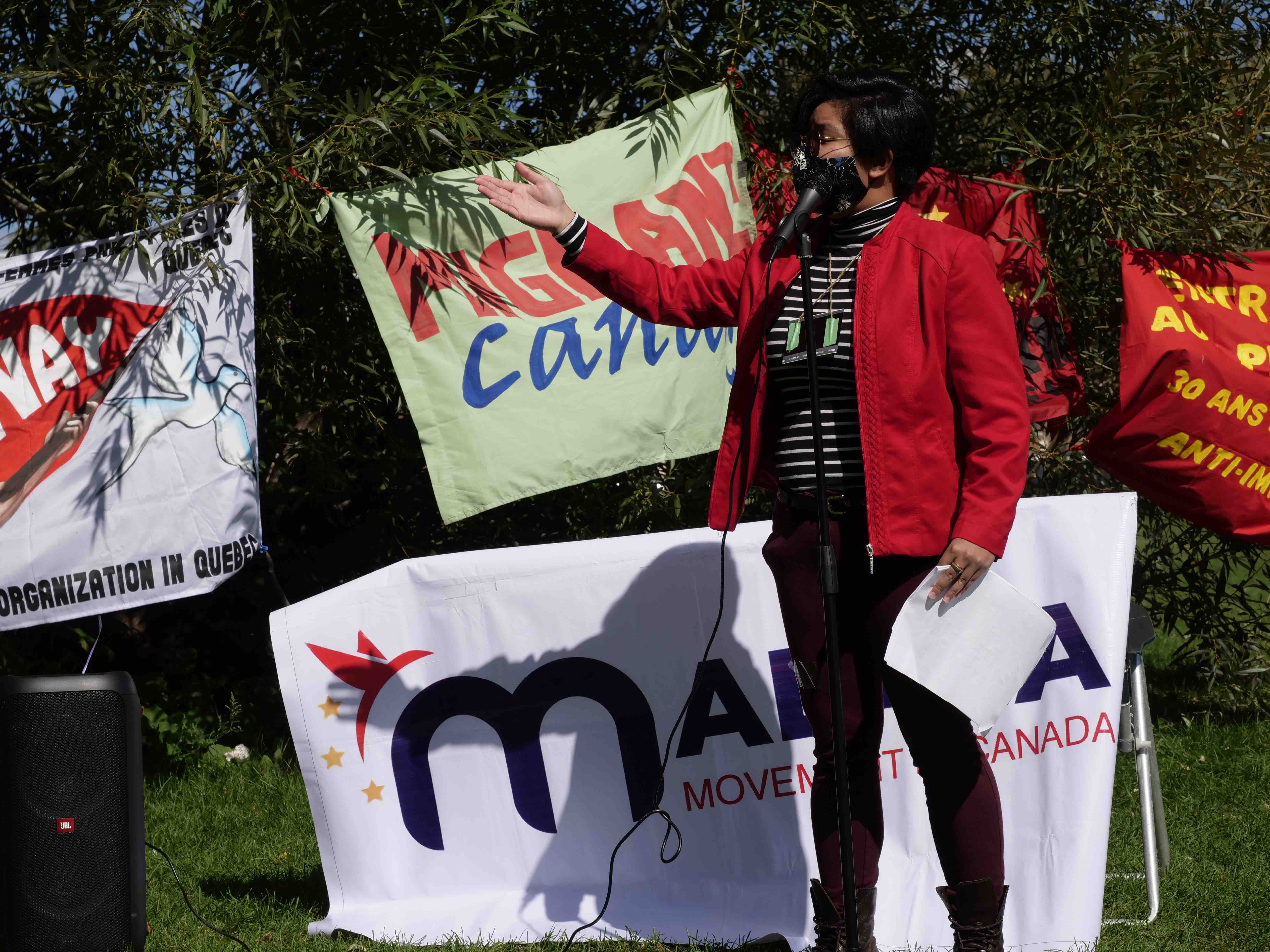
On Sept. 20, human rights activists and McGill students gathered at Parc Mackenzie-King to honour the victims and heroes who lived through military rule under late dictator Ferdinand Marcos. Organized by PINAY Quebec, the International Coalition for Human Rights in the Philippines, the Center for Philippine Concerns, Malaya Canada, and Anakbayan Montreal, the event was a part of a broader global movement to remember and respond to human rights abuses in the Philippines over the past half-century. While practicing social distancing, the commemoration featured speakers, a visual art exhibit, and cultural performances.

Veronica Bertiz, education officer for Anakbayan Montreal, explained the significance of the gathering to The McGill Tribune.

 “Our goal was to remember the lives that perished during the Marcos era,” Bertiz said. “We owe it to them to understand the brutality of Martial Law and to try our best to prevent another one from happening.” 

Members of the Filipino-Canadian community delivered rousing speeches in solidarity with survivors and called for international support. Many speakers noted that human rights abuses experienced under Marcos are not just a relic of the past but persist in the present, citing parallels between Marcos and current President Rodrigo Duterte. 

“The current political climate in the Philippines resembles the 21-years rule of Marcos,” Bertiz said. “Every day, we hear awful news about the Philippines. Every day, someone is killed.” 

For Thelma Aliado, a Malaya Canada organizer, the resistance against the oppressive regimes of Marcos and Duterte requires both grassroots efforts and mobilization from Filipinos on a large scale.  

“The struggle is worse than before,” Aliado said. “Nothing has changed from that time to now. The forms of oppression and exploitation of people continue. But I’d like to remind you that despite everything, there was People Power.”

People Power was a nonviolent revolution in the Philippines that led to the ousting of President Ferdinand Marcos in 1986. Aliado explained how this movement ultimately restored democracy and served as an important symbol of self-determination within the country.

 “It appears that almost every week and every day you see that people are […] struggling, and fighting, from farmers to workers, […] trying to say ‘stop the terror law’” Aliado said. “I am hopeful that People Power will happen again.”

Father Artemio Calaycay, a priest at Iglesia Filipina Independiente now living in Montreal, shared his personal account of living under Marcos’s rule.

“I personally experienced the dark side of the Marcos regime when we were arrested and put in jail in Iloilo City because of our critical stance against Marcos,” Calaycay said. “Our seminary was put under surveillance [and] they curtailed our freedom and movement even [after I] was ordained [.…] I thought that the Philippines had changed when the Martial Law regime of Marcos was over. Ironically, our condition has gotten worse.”

Martial Law—Marcos’s infamous 1972 proclamation that initiated a 14-year period of one-man military rule in the Philippines—is a polarizing topic amongst Filipinos, including for those who live overseas. In recent years, President Duterte has used the threat of Martial Law to threaten and intimidate political opponents. 

“We have a government that has a propensity for political oppression, violates human rights, and suppresses peoples’ dissent with impunity to keep the regime in power,” Calaycay said. “We live under a dangerous regime.”

Jackie Colting-Stol, a Ph.D student at the McGill School of Social Work and Secretary General of Anakbayan Montreal, encouraged students to take part in raising awareness on human rights issues. 

“Students have a critical role in understanding and contributing to the concrete conditions of people who face oppression, the ways to understand and highlight these conditions, and then how to mobilize with each other on- and off-campus to have an impact.” Colting-Stol wrote in an email to the Tribune. “[Students] can take internships with community groups and organizations, use research in collaboration with them, and bring these issues to light in academic settings.”

Arts & Entertainment, Internet

Mark your calendars, Tanner Armstrong’s ‘Gay Agenda’ is taking over

When Tanner Armstrong, U3 Arts, joined TikTok, he did not expect to build a following of over 54,000, let alone an online 2SLGBTQIA+ community. Yet, when a comedic video he posted this past August went viral, the idea of a “Gay Agenda,” initially just a shared Google Calendar of comedic fake events, swiftly evolved into a collaborative Google Drive. Now, the Gay Agenda, as it is known, provides a digital safe space for people of any sexual orientation and gender. 

What would become Armstrong’s first of many in his Gay Agenda videos series was initially intended to satirize a term that right-wing conservatives often use in their attempts to denigrate queer activism. After posting the video and login information to a Google calendar, Armstrong received comments from enthusiastic viewers, saying that they had contributed to it. To his surprise, Armstrong later found it laden with hundreds of events, from Sunday’s “Go to the gay coffee shop to drink ur gay iced coffee and meet other gays,” to Wednesday’s “Simp for equal rights.” 

Nonetheless, the Gay Agenda was not enough for TikTok’s zealous, queer creatives. Unbeknownst to Armstrong, his viewers began creating documents in the Gmail’s corresponding Google Drive. 

Beyond the initial collaborative calendar, the Google Drive contains a bevy of comical content, as well as helpful resources. The Drive is organized by folders including “Memes,” “Specific Sexualities,” and many more; the folders contain specific documents that range from book recommendations, to pen pal signups, to resources for 2SLGBTQIA+ members of different religions. 

“It’s a community,” Armstrong explained in an interview with The McGill Tribune. “It’s an avenue for people to express themselves, an opportunity to laugh and relate from queer humor and [the] different nuances there.”

Although the Gay Agenda began as a source of comedy, it has grown to be a safe haven for 2SLGBTQIA+  Tik Tok users around the world, offering educational resources, social connection with other members, links to members’ small businesses, and an overall atmosphere of self-acceptance. 

“I think that [the Gay Agenda] is such a tremendous opportunity to help so many people,” Armstrong said. “It’s reflected in the countless comments and DMs that I’ve gotten from people that are closeted, and are younger, and also from people that are in their 30s that have messaged me saying ‘Dang, I really wish I had this when I was a teenager.’” 

The resource also offers an “Advice” folder to guide individuals who are just beginning to explore their queer identity. 

“I think that [part of the popularity] goes back to […] sorting through [one’s] identity and trying to figure that out,” Armstrong said. “It’s such a daunting task on its own without the pressures from a conservative family, or other people’s opinions of you.” 

Despite the fact that any one of the 19,000 participants can edit or delete anothers’ Drive content, there have been no such instances, demonstrating a shared sense of trust amongst Gay Agenda members.

Armstrong—while incredibly thankful for the community he created—is careful to point out that his target audience still includes heterosexual and cisgender people.

“I want to be cognizant of being able to reach [out to] other people and try to incorporate different aspects into my [TikTok] content that aren’t exclusively for the [2SLGBTQIA+] community, but also [for] allies,” Armstrong said. “I think we have to have everybody at the table to have these conversations.”

While heteronormativity and homophobia persists, Armstrong’s Gay Agenda provides a much-needed a space for members of the 2SLGBTQIA+ community to repose, create, and connect. The community reclaims and redefines the homophobic term “gay agenda,” transforming it into a welcoming space for empowerment and camaraderie. As Armstrong maintains the Drive and keeps his TikTok followers updated on its content, he exemplifies the power that social media has to connect and uplift passionate creatives. Today, Armstrong continues to grow the Gay Agenda—and with it, the confidence and verve of TikTok’s 2SLGBTQIA+ members.

All Gay Agenda info, including the Drive form, can be found on linktr.ee/__tannerjames

Student Life

Creating the baby zoomer generation

Zoom, a company that would have been unknown to many this time last year, has become a mainstay in our everyday lives. The COVID-19 pandemic transformed this little-known video conferencing application into a multi-billion dollar company, and for good reason: It offered an effective and simple video-call platform for workplaces and schools in desperate need of remote communication tools. To better understand Zoom’s phenomenal rise to the top, it is worth examining its beginnings. 

In 2012, long before mandatory online classes and virtual parties, a former Cisco employee named Eric Yuan created Zoom. Yuan left Cisco to begin the project that would become Zoom after Cisco failed to improve their web-based video conferencing platform, WebEx. The first version of Zoom was released in 2012, and by 2013 the application was hosting 5,550 calls per day. Set apart by its user-friendly interface and capacity to host 40 people in one call, Zoom’s innovative features distinguished it in a crowded market with little room for newcomers.

“Zoom worked on some issues of other video conference tools and offered a solution with high video and audio quality,” Anton Stiglic, seasonal lecturer at McGill’s School of Information Studies, wrote in an email to The McGill Tribune. “Zoom also offered certain features that made it particularly attractive, such as being able to set a background, commanding a meeting by being able to mute certain participants, a raise-the-hand feature, and many more.”

With these novel features, Zoom was initially able to upstage several of its strongest competitors, including Skype. However, Zoom’s true moment to shine would not come for another seven years.

Since the start of the COVID-19 pandemic, Zoom use has grown exponentially. Stuck in quarantine, many began using this software to stay virtually connected. Zoom’s biggest success, however, was its universal acceptance in schools and workplaces. 

Zoom has several features that support team collaboration, such as the Zoom Chat and easy integration with other leading workplace tools like Salesforce. In education, Zoom’s ability to facilitate live, online teaching while encouraging student engagement has been met with praise. Unlike the former poster child of video conferencing technologies Skype––which was hard to install, buggy, and prone to spam calls––Zoom is much more user-friendly.

Unsurprisingly, Zoom’s meteoric rise came with serious downsides. The application faced privacy concerns and online harassment issues.

“Firstly, there were a couple of vulnerabilities found in various Zoom software clients exposing peoples computers and devices,” Stiglic wrote. “There were issues with Zoom’s privacy policy, and misinformation [spread] about what Zoom can do with your information, messages, and audio. There were also problems with the encryption they implemented, which was not as secure as they claimed it was.”

One phenomenon emerged, known as “Zoombombing.” Individuals with malicious intent began overtaking public video chats and displaying graphic content or racist comments, leading some institutional clients to switch to other conferencing softwares. Zoom eventually took measures to rectify these issues.

“Zoom did take all of these issues in hand and they have put serious effort into solving them,” Stiglic wrote. “They have tightened and clarified their security policy [and] re-architected their solution to offer real end-to-end encryption, including for the free version. Zoom also created a ‘waiting room’ feature for additional participants and requires a password to enter a meeting.”

Some security issues unfortunately remain, including susceptibility to certain malware programs. Zoom’s ease of use continues to make it a prime target for internet trolls and hackers. 

In light of these security concerns, Stiglic believes that in order for Zoom to retain its momentum, the company must continue to patch bugs in its software and offer new, innovative features to aid university lectures and business meetings.

“There is a lot of competition in the field of videoconferencing solutions,” Stiglic said. “Only time will tell which ones will [survive]. But one thing is certain: The survivors will need to take security and privacy seriously in order to offer a quality solution.”

Research Briefs, Science & Technology

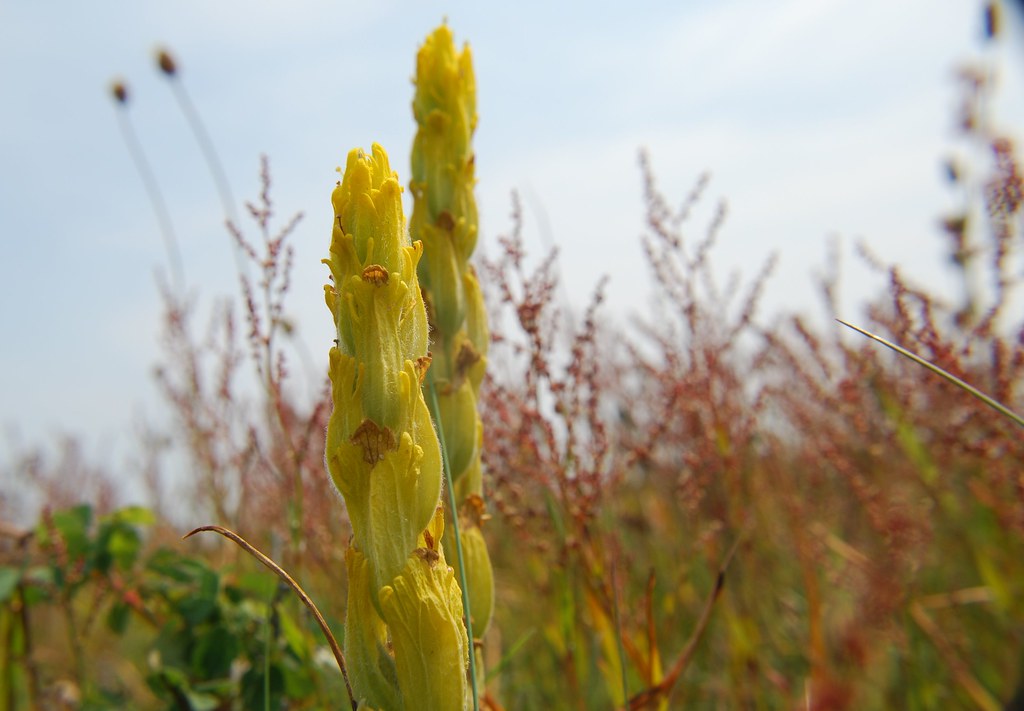
Living on the edge: Protecting endangered plant species in the Canadian North

From the boreal forests of Newfoundland to the majestic Douglas firs of British Columbia, Canada boasts some of the most astounding plant life the world has to offer. Yet, Canada’s flora are becoming increasingly threatened by climate and land-use change. Conservation biology is an important area of scientific research that recommends strategies to conserve and protect wildlife in the face of these challenges. However, problems arise when scientists lack the data necessary to determine which conservation efforts to pursue. 

A recent comprehensive study released by McGill’s Hargreaves Lab explores the extent to which at-risk plant species are under-represented in conservation research. A critical factor in this study is the location of species within their native ranges, the geographic region where a particular plant type can be found during its lifetime. Since Canada stretches so far north, many species are found in the most extreme conditions that they can withstand. This peripherality is defined as the occupation of 20 per cent or less of a plant’s total range and has become a point of contention in conservation policy. 

“A species at its range edge has two options,” Pascale Caissy, a Hargreaves Lab alumna and one of the lead authors of the paper, said in an interview with The McGill Tribune. “It is either really well-adapted to harsher conditions, or it’s doomed and cannot cope. That’s why there is so much controversy around protecting [range-edge species].”

Using spatial analysis while reviewing the literature, the study found that over 75 per cent of threatened plant species in Canada are considered peripheral. Notably, the plants in most dire need of habitat protection are found within the smallest portion of their range. Researchers suggest that the prevalence of at-risk species living near or within the edges of their range is especially troubling, and requires increased attention from conservation groups.

For years, plant biologists have posited that range-edge populations are important guardians of biodiversity, as they may acquire special traits that other members of the same species do not possess. As the climate crisis intensifies and Canada’s southern regions continue to warm, these plant taxa are left in a precarious position as they begin to shift northward in an attempt to remain within their preferred temperature conditions. 

“We don’t know how often range-edge populations are critical in climate-driven range shifts globally, or in Canada,” Dr. Anna Hargreaves, co-author of the study, wrote in an email to the Tribune. “We don’t have the data, and that is one of the most important points the paper makes.” 

The lack of data on endangered plant species makes it more difficult for organizations such as the Committee on the Status of Endangered Wildlife in Canada (COSEWIC) to determine the threat status of many native plants. According to the study, only 3.7 per cent of at-risk plant species in Canada have their habitat area protected. 

The limited research into endangered plant species is surprising, given the praise that Canada receives for its animal conservation efforts. Taxonomic bias, the tendency of research to be focused on well-known, congenial organisms, puts plants at a disadvantage—especially if they are at their range edge. For example, the at-risk marbled murrelet is featured in more than 50 scientific studies, while many peripheral plants receive little attention in scientific publications. 

“I think people easily relate to animals and their stories, whereas plants live out their life on a different timescale than people, so we don’t always relate to them,” Hargreaves wrote. 

Neglecting smaller, peripheral plants because they are not as beloved as polar bears or whales leaves scientists with an incomplete picture of our ecosystems. Yet, nature does not exist in a vacuum; if the plant life essential to ecosystem function is not protected, then the entire community is put at risk. 

“Conservation is a social, value-based decision, not a scientific one,” Hargreaves wrote. “Scientists can estimate how species are doing and what would happen if we lost them, but we as Canadians have to decide what we value.” 

Football, Sports

Know Your Athlete: Dimitrios Sinodinos

Often regarded as one of the most important positions in sports, the quarterback of a football team must command a roster full of players eager to display their athleticism on the gridiron. McGill’s fourth-year starting quarterback Dimitrios Sinodinos strives to use his leadership role to build a better team. 

“In the context of football, leadership is incredibly important,” Sinodos said in an interview with The McGill Tribune. “Leadership is all about making everyone around you better, not just improving yourself. It’s easy to just focus on improving yourself, but the real challenge is making your teammates commit to the same standards.”

Sinodinos took on the starting position during his second year at McGill, and having gained that valuable experience early in his career has helped him and his team perform better. Despite this, he knows that his improvement going forward will be instrumental to the team’s success. A key part of constant improvement is modeling both his on-field play and his off-the-field behaviour after successful NFL signal callers. 

“Without a doubt, a quarterback whose leadership I try to model [my own] after is Tom Brady,” Sinodinos said. “He is the definition of making everyone around him better. He inspires everyone with his work ethic and confidence. A quarterback that I look up to for his on-field play is Russell Wilson. He has the tools to extend plays and make any throw from inside and outside the pocket”

Listed as 5-11, Sinodinos is shorter than the average quarterback, but he does not let his height impact his confidence and future aspirations. Sinodos hopes to participate in the CFL combine following his time at McGill. Sinodos looks to Russell Wilson as inspiration for someone similar in stature.

“I look up to him because he exhibits sustained greatness while being largely underrated his entire career and overcoming the stigma against Quarterbacks that are not above 6-2,” Sinodinos said.

The off-season is a critical time for players to improve their skills, strength, and intelligence by weight lifting, studying film, and practicing with teammates. Unfortunately, for Sinodinos and his teammates, the 2020 off-season was full of challenges due to the COVID-19 pandemic. However, Sinodinos adapted well to the obstacles. 

“Personally, the pandemic has not hindered my development at all,” Sinodinos said. “My father and I decided to invest in a home gym that I regularly used to perform team workouts.”

Social distancing guidelines even proved advantageous for Sinodinos and his teammates. 

 “Football fields were empty, making it easy to run and throw with either teammates or a quarterback coach three to four times a week,” Sinodinos said. “Additionally, I, as well as my teammates, have taken the opportunity to have more football meetings with our coaches via Zoom to ensure our football IQ stays sharp.”

Despite the time apart from each other and the cancellation of the 2020 RSEQ season, Sinodinos is confident that the team will remain tight-knit. 

“The word family is indicative of the relationship of our team,” Sinodinos said. “We are a veteran team where most of us have been together for more than three years. We also try to make the rookies feel welcome every season by inviting them to extra workouts and events.”

With the extra time to pursue other interests over the summer, Sinodinos enjoyed taking free online courses, learning about new programming languages, and learning about android phone application development. These courses have increased both his interest and understanding in his electrical and computer engineering major at McGill. 

As Sinodinos enters his final undergraduate year working towards an electrical and computer engineering degree, he plans to apply to McGill’s graduate school for a master’s in electrical and computer engineering after he graduates in Winter 2021. He believes this will help with his future employment opportunities, while allowing him to continue playing for McGill’s football team.

Read the latest issue

Read the latest issue