


Latest News

Commentary, Opinion

Is WE “A global force for good?” — An alumni’s perspective

As a nine-year-old, I became committed to ‘doing good’ through my involvement with Little Women for Little Women in Afghanistan, a non-profit organization that helps girls in Afghanistan receive an education. Since then, activism has been a prevalent part of my life. When it came to choosing my university major, the natural next step was to delve into an academic understanding of my passions by studying International Development at McGill. WE, an organization that calls itself a “global force for good,” has played a central role in my activism journey. I went to ‘WE Days,’ joined the ‘Me to We’ club at school, attended ‘Take Action Camp,’ volunteered at their Toronto offices, and, most recently, went on a “Women’s Empowerment” trip to India in 2017. My experiences left me with nothing but admiration for the organization. Prior to beginning my degree, this optimistic outlook largely filtered how I viewed development work.   

While sitting in my first International Development class, however, I learned that being critical of development is a key component of work within the field. It became apparent to me that not only are there negative aspects to international development, but that they should be pointed out and addressed. However, as my class explored the problematic effects of voluntourism, I continued to tell myself that WE Trips were different. 

I had many exceptional experiences with WE and met plenty of people that genuinely wanted to positively impact the world. However, the recent scandal surrounding WE has encouraged me to critically reflect on my trip to India. As participants, we had no educational background in development to contribute, nor did we have any particularly useful skills to provide. The trip instead emphasized creating an experience for us, the customer, rather than on making a sustainable impact for the local communities we were there to help. Although it was a life-changing experience, it would be unethical for me to focus solely on my personal gain and to prioritize my own development over evaluating whether the trip had meaningful effects on the local communities. 

My major has instilled in me the importance of being critical of “good” work. I say “good,” because a distinction must be made between work that is only good in its intentions and work that holistically generates positive change without introducing harm. The merging of my education and my wanting to ‘do good’ morally compels me to be critical of WE Trips. Through the trips, WE creates a false narrative of what development work looks like by presenting it in a digestible and simplistic package. Some believe that just doing something is better than nothing, but naively accepting WE’s work as ‘good’ allows it to persist by distracting from the fact that a better approach is necessary. 

The increased scrutiny surrounding WE’s work has prompted alumni to reflect on how the organization’s core values of inspiring young people to advocate for social justice have drifted—how the ‘Spirit of WE’ has been clouded over.  Longtime supporters have voiced criticism about WE’s involvement abroad by questioning the usefulness of volunteer work, and WE staff has been calling out oppressive behaviour towards staff members of colour. Still, over the years, WE has played a key role in encouraging many to speak up about social injustice, and it is this ‘Spirit of WE’ which is worth salvaging. WE helped shape me into an activist, but my degree has turned me into an individual capable of the discernment needed to hold the organization accountable.

If I fail to learn from this, to make my own positive contribution to the field, I would not only be betraying the ‘Spirit of WE’which teaches to not stay silent when injustices occurbut also the field of international development. It has been challenging to criticize an organization that I’ve looked up to for such a long time and for which I believe has the potential to do better. However, being critical of “good” work does not equate to being cynical. Rather, being critical is quite the oppositeit is necessary in development work to build better organizations that can serve communities in less oppressive and more ethical ways. Being critical of “good” work is not something to be afraid of. 

online lab
Science & Technology

Lab classes move online, revamped for distance learning

Laboratory classes have long depended on hands-on teaching, the kind that instructors can no longer provide as the COVID-19 pandemic pushes the Fall semester online. Lab skills, however, remain an essential component of many science degrees, prompting professors to develop creative solutions to ensure that students can continue to learn a variety of skills, both on and off the lab bench.

According to Danielle Vlaho, an academic associate in the Department of Chemistry who is coordinating the switch to online labs, students taking general chemistry will require “take-home” lab kits. The kits will allow students to run experiments over Zoom, under the supervision of teaching assistants. Students will continue to submit lab reports and take online quizzes. 

For some courses, instructors like Vlaho also plan on filming themselves completing lab work to walk students through experimental procedures. 

“We’ll be filming interactive videos in the lab of myself doing the techniques […] so that [students] at least kind of see how techniques are done and what good form looks like,” Vlaho said in an interview with The McGill Tribune

Smartphone applications will also be used as a tool to help students perform experiments at home. Applications such as iNaturalist will be used to encourage students in BIOL 111 to take photos of plants and animals in their neighbourhood. 

“We thought we could use these tools for students to connect and to share their observations, but also to discover what kind of biodiversity they have around them,” Léa Blondel, a teaching development fellow in the Department of Biology, said in an interview with the Tribune.

Computational science labs will also be reimagined. On the Office of Science Education’s webpage, professor Giulia Alberini of the Department of Computer Science explains that the practical component of COMP 202 will involve assigning students to breakout rooms on Zoom. There, students are being asked to to collaborate on presentations, peer assessments, and discussions.

For other courses, such as organic chemistry, the transition to digital platforms has proven more difficult, as many of the necessary materials are too expensive or hazardous for students to use at home. Instructors have decided that chemical theory will be taught online during the fall semester, while in-person labs are to be delayed until the winter or summer semesters.

Jean-Marc Gauthier, Director of Undergraduate Chemistry Laboratories, remains confident that the quality of teaching will not be diminished by the transition to online learning.

“You are not losing anything by getting these courses delivered remotely,” said Gauthier. “We made sure that at the end of your academic year, you will have the same preparation and the same outcomes as in a regular semester.”

Some students have voiced concerns about the accessibility of remote courses, which could disadvantage students with disabilities as well as students with limited internet access. Other students are skeptical that the plans for online labs will make up for the loss of an in-person learning experience. 

“I think [holding labs online] is going to really impact the learning experience,” Clara MacMahon, U4 Science, said in an interview with the Tribune. “You learn by doing, especially in labs [….] You need to be ‘good with your hands’ in a lab, which you can’t really improve on in front of a computer.”

Lab coordinators, however, are taking the opportunity to update and explore new ways of delivering course material. 

“[Now, online,] we’re looking at computational chemistry, rather than experimental chemistry,” Vlaho said. “It’s something that our students are not actually introduced to until much later on in their academic careers.”

Gauthier hopes that lab courses will prove to be a successful experiment in online teaching, even if that means instructors and students have to adapt to this new normal. 

“We’re preparing students to work in science, and experiments and research are about investigating something new,” Gauthier said. “That’s part of the training too. We have a new experiment here. Let’s see if it works as well as we thought.”

Science & Technology

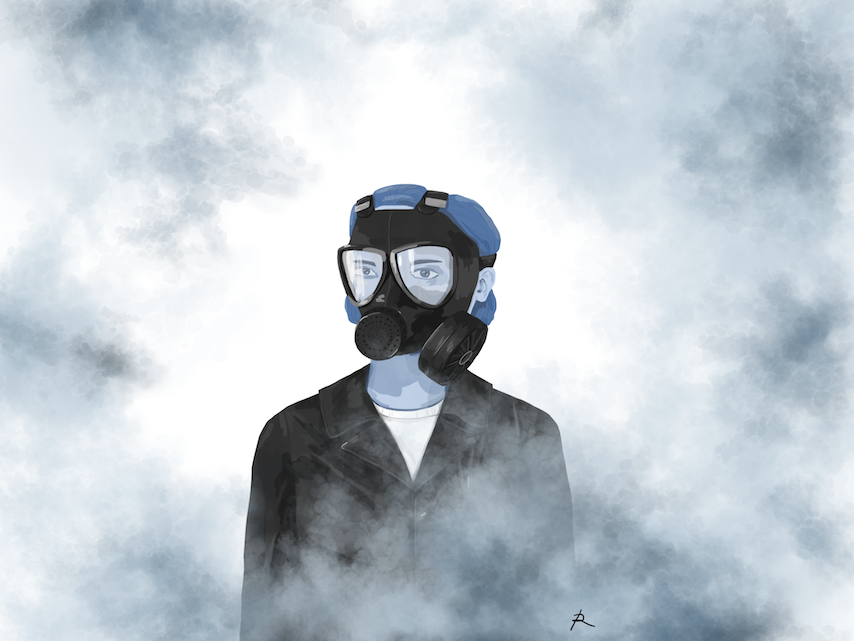
The science of tear gas

In an effort to dismantle protests, police departments across the U.S. and Canada, including in Montreal, have taken violent measures to repress civil demonstrations. From rubber bullets to water cannons, police units and municipal governments have been criticized for what many are calling the use of excessive force to disperse peaceful protests. The image of a smoking canister of tear gas has become emblematic of police responses to protests.

The use of tear gas on civilian protesters has sparked worldwide outrage, with some government and public health officials calling for its removal from police arsenals. However, other authorities—including top lawmakers in the U.S.—continue to defend its use

While the science behind tear gas remains a mystery for advocates on both sides of the dispute, proponents of its use may be surprised to find that tear gas is not a single compound, but is instead used to reference a wide variety of chemical agents.

“Tear gas refers to a range of chemicals that are all lachrymators,” Joe Schwarcz, director of the Office for Science and Society at McGill, said in an interview with The McGill Tribune. “Anything that causes tearing [of the eyes] is a lachrymator.”

There are several types of lachrymators. Until the 1950s, the most commonly used types of tear gases were CN and CS, two gaseous chlorine-based compounds, although neither remain in police arsenals today. According to Schwarcz, that title now rests with the more widely available compound capsaicin, better known as pepper spray.

Pepper spray, which was developed as an animal repellent in the 1960s, was first used by American law enforcement agencies in the 1980s. Despite their variability in terms of potency, toxicity, and chemical makeup, CN, CS, and pepper spray are all functionally similar, targeting the same part of the respiratory tract.

“What all of these substances do is irritate the mucous membranes,” Schwarcz said.

Mucous membranes line various body canals and openings such as the mouth, nose, eyelids, and lungs. The secretions that they produce are the primary form of protection against particulate matter and pathogens, including the chemicals that compose tear gas. 

“The function of the mucous membrane is to protect the body,” Schwarcz said. “So, chemicals [of] the mucous membrane perceive tear gas to be a foreign substance that needs to be eliminated.” 

Excessive irritation of the mucous membrane can cause tearing, coughing, and sneezing. However, the more acute effects of tear gas can also lead to difficulty swallowing, chest tightness, shortness of breath, blurred vision, and feelings of choking. These effects usually last for about 15 to 30 minutes, but can have lasting and permanent damage to the eyes and lungs.

“There are people who have had corneal scarring because of some tear gas and also exacerbation of asthma,” Schwarcz said. “Some people [also] have allergic reactions to the chemicals and that can cause rashes all over the body.”

Blindness, glaucoma, and respiratory failure are other possible long-term effects of tear gas exposure.

The history of tear gas is as long and as fraught with controversy as its appearance on city streets in recent months. The first tear gas compounds were developed during World War 1 as a form of chemical warfare. Following the end of the war, the use of chemical and biological weapons in war was banned by the Geneva Protocol of 1925. By 1993, the United Nations General Assembly finalized the Chemical Weapons Convention, which further limited the use of riot control agents on the battlefield, but included a now-controversial exception which allows law enforcement to use chemical agents for domestic riot control purposes. 

Given tear gas’ complicated past and potent consequences, many have asked why police forces continue to use it today. The answer is simple: Effectiveness.

“If you are exposed to a bit of tear gas […], you want to turn around and get out of there as fast as you can because it is extremely irritating and very painful to the eyes and the nose,” Schwarcz said.

Student Life

Making a statement with face masks

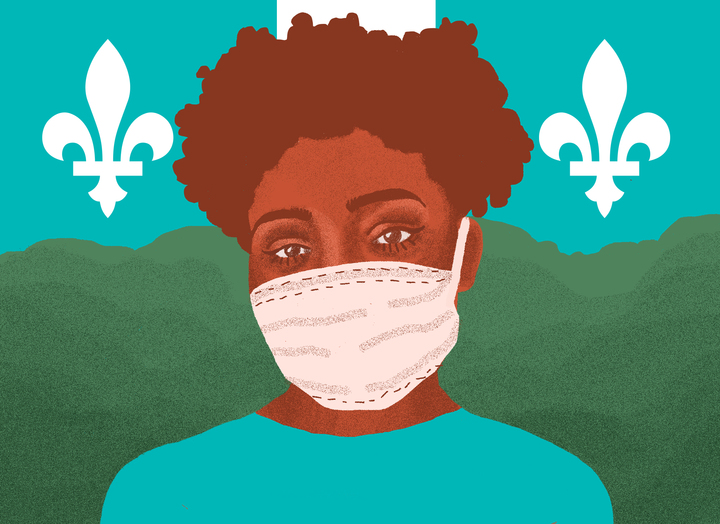
As the COVID-19 pandemic continues, face masks have become a part of everyday life. In Quebec, it is mandatory to wear a face covering in indoor public spaces, which includes retail stores, shopping plazas, and grocery stores. While face masks are important for health and safety reasons, colourful and personalized options are a way for people to actively express themselves. Montrealers can integrate face masks into their individual style and wear it as a creative accessory.

As face masks become the norm with our daily apparel, the demand for fashionable options has risen considerably. According to Allied Market Research, the production of face masks has not only increased during the pandemic but is also predicted to consistently rise until 2027, which has led to a surge in fashion-forward face mask options. While various high-end brands such as Rag & Bone and Tory Burch have started to sell luxury face masks aimed at affluent shoppers, affordable options on Amazon and Etsy have boomed. Etsy disclosed that between April 4th and 6th, the term “face mask” was searched more than two million times. The reach of face masks in fashion has also been widened further with the presence of face coverings on the runway and in haute couture. Earlier this year, Paris Fashion Week introduced the idea of couture face masks, and this sentiment was followed by a recent Seoul fashion show where facial accessories complimented the clothes adorned by models. 

Despite the growing popularity of face masks in fashion, purchasing a face mask is not the only way to obtain appropriate face coverings. A more creative way to approach the face mask policy is through DIY methods. While a common technique is the scarf hack, which uses a total of three items, the top alternative is the T-shirt hack. In lieu of alternative coverings, some creators have used traditional face masks as a medium to express their creativity. Artist Linda Woods has promoted her work by using fabric printed with her paintings to make custom masks. Similarly, the M.AD School of Ideas has created “FUN MASKS,” which seek to familiarise children with face masks through the use of their own art skills. While innovative designs can encourage creativity within the realm of public health, art is not the only way face masks have been used to display thoughts. 

The creative expression afforded by face masks can even make political statements. Take inspiration from Nicola Sturgeon, First Minister of Scotland. Her go-to mask—a simple, grey colour highlighting the Scottish pattern with different coloured lines—was a nod to subtle patriotism. The impact was entirely the opposite, though, spiking sales and promoting Scottish culture, charities, and businesses. Alternatively, since face masks became mandatory for many restaurant and retail workers across the United States, many employees have walked out in protest of not being allowed to wear masks in support of the Black Lives Matter movement. This version of political activeness has prompted questions about first amendment rights in America, leading to a rise in face masks with statements that reflect individual stances on political issues.

The importance of face coverings in containing COVID-19 is pivotal, but it also presents a new avenue of creative expression for those who want to transform a face mask into a statement. Montrealers can mold face coverings into a unique and personal accessory by using inspiration from politics, fashion, or art. At the end of the day, whether you buy a face mask or make a face mask, just ensure that you wear one and stay safe.


Basketball, Sports

In conversation with Ryan Thorne

On June 22, Ryan Thorne, Martlet Basketball Head Coach of 17 years, signed a new contract as head coach of McGill’s men’s basketball team. Thorne will be succeeded by Rikki Bowles, whose experience as an assistant coach with the women’s team for the past four years will help make for a smooth transition.

“I battled with this decision for a number of weeks [.…] It was a tough time to communicate [this decision] to a number of players,” Thorne said in an interview with The McGill Tribune

Thorne’s experience playing at the U SPORTS level his entire university career has helped his coaching evolve. He expects a lot from the players, but understands that each student athlete is different. 

“You’ve got to coach athletes to the level they want to be coached,” Thorne said. “You can’t project what you want for them onto them. Everyone comes in with their own opinion on what they want to do and what they want out of this experience [….] If you try to give them what they don’t want, [it makes] the relationship sour.”

Thorne also described the importance of effective communication between coaches and student athletes.

“We don’t all see things the same way,” Thorne said. “We don’t receive information the same way [….] Even if the information is right, if [student athletes] are not receiving [that information] in the right manner, it can create a bad vibe or bad connection between the [coach and the athlete].”

Thorne emphasizes the importance of the learning process and coaching each game rather than the sole objective of winning a championship. 

“If your [only] goal is […] winning  a national championship, then you are probably missing out on [the] great successes […] of your […] athletes,” Thorne said. “You have to celebrate [small successes] as they go. As a coach, one needs to be a lot more transformational as opposed transactional.” 

Heading into the next school year, one of the team’s main priorities is strengthening relationships.

“The game is not changing, I’m just coaching different athletes,” Thorne said. “The most important thing for me is building trust [and] building confidence. Those things are important in any relationship.”

Thorne does not plan to drastically change his coaching techniques in this transition, and any adjustments will be based on past experiences with the Martlets. 

“[I will] definitely try to bring my experience from the women’s side to the men’s side,” Thorne said. “The difference between the men’s and women’s game has more to do with athleticism, so there might be some things on the side of athleticism that I might be able to implement.”

In this period of uncertainty caused by the COVID-19 pandemic, Thorne advises student athletes to follow the provincial health guidelines and remain optimistic. 

“I think the toughest thing right now is not seeing your teammates,” Thorne said. “Find any means you can to stay connected. Regardless of what kind of isolation, there has to be a connection with friends and family [for you] to stay stimulated and engaged.”

To Thorne, social interactions and support networks are also important for mental health during this time. 

“This is a time when mental health issues can be really brought out and you need people,” Thorne said. “We lean on each other, we talk to each other, we communicate and benefit from that communication.” 

Both the men’s and women’s teams have arranged regular video calls on Zoom to  stay connected with their teammates. 

“We do Zoom workouts, see each other on camera, have meetings about what’s going on,” Thorne said. “Both groups meet on Zoom three times a week. On the women’s side we have workouts and a basketball IQ lab, and [sometimes we have] ‘how you are feeling’ sessions and talk about what’s going on in our lives. On the men’s side, we’re just chatting and getting to know each other.”

The varsity basketball seasons are currently suspended due to the pandemic, and there is uncertainty around when the regular season will resume.

Album Reviews, Arts & Entertainment

The painfully beautiful storytelling of ‘folklore’

Taylor Swift surprised her fans on July 24 when she released her eighth studio album, folklore, which she wrote and recorded in isolation. Folklore is filled with tragically honest storytelling that blends confessional subject matter with fictional tales. While the song production of folklore is simpler than Swift’s past albums, her deft lyricism shines through. 

Unlike Swift’s past three albums, folklore does not rely solely on chart-topping pop songs but rather uses a stripped-back sound to explore complex issues such as death, grief, and heartbreak. 

The album’s folksy tone can be attributed to the writing assistance of The National’s Aaron Dessner, while Jack Antanoff, Swift’s frequent collaborator, appears as a producer on tracks such as “my tears ricochet” to lend a sense of familiarity of Swift’s most celebrated music to longtime listeners. 

Swift has never shied away from writing tear-jerking songs, and this album is filled with them. Rather than creating a sense of escapism from the COVID-19 pandemic, folklore addresses it head-on.  

“Epiphany” finds the album at its most melancholy and morbid. Swift wrote that she took inspiration from her grandfather’s experience as a soldier fighting in Guadalcanal in 1942. Swift draws parallels between the grief of war to the current health crisis: “Hold your hand through plastic now / Doc I think she’s crashing out / And some things you just can’t speak about” evokes the sense of trauma that many medical professionals are feeling. Eerily, the instrumentation near the end of the song mimics the sound of a ventilator beeping. 

Another song that conjures a sense of realism is “exile,” co-written and sung by Bon Iver’s Justin Vernon. This song emulates the miscommunication that often leads to heartbreak, with Vernon and Swift singing “You never gave a warning sign / I gave so many signs” in turn. The contrast of their voices and the contradictions in their lines represents a holistic approach to a break-up song—instead of prioritizing a single perspective, both voices tell the full story of a relationship. 

folklore is as refreshingly honest and heartbreaking as it is comforting. Songs like “betty” and “august” offer a break in the sadness and give the listener a sense of nostalgia for better times. The album plays out like a series of short stories that tie together the experiences of many different walks of life. Folklore requires a few listens and a box of tissues, but is worth every minute. 

McGill, News

McGill students protest for the removal of James McGill statue

Around 100 members of the McGill community rallied just north of the Roddick Gates on Aug. 1 to push for the removal of the statue commemorating James McGill—the founder of McGill University and slave owner. Protesters stood in solidarity with members from the Black Students’ Network of McGill (BSN), the McGill African Students’ Society (MASS), the Caribbean Students’ Society of McGill University (CSS), and the Black Law Students’ Association of McGill (BLSAM).

The demonstration began with a speech from Students’ Society of McGill University (SSMU) Vice-President External Ayo Ogunremi and later President Jemark Earle. Both speakers decried McGill’s inaction against its colonial legacy and its failure to support BIPOC students in an academic environment of systemic anti-Blackness.

“The reasons that we’re all here today […] on this land that is now called McGill University are colonization, exploitation, and white supremacy, and everybody needs to be able to articulate that if we’re going to go anywhere,” Ogunremi said. “We are tired of being treated like we don’t exist. We are tired of being targeted for public execution by the police. We are tired of being targeted for harassment and exclusion by the university.”

Earle recounted his shock and disappointment when learning of James McGill’s racist history, which has yet to be publicly acknowledged by the university, except for an addendum on its “Meet James McGill” webpage. He denounced McGill for failing its Black students, most notably its failure to celebrate Black History Month until 2017. Earle made clear the university’s shortcomings through the demands listed in an open letter to the McGill administration, “ENOUGH IS ENOUGH: TAKE JAMES MCGILL DOWN,” a document which partly inspired the protest.

“The ‘Take James Down’ campaign is not just about the removal of this statue,” Earle said. “The demands of the campaign are clear: A permanent physical memorial must be created to honour these [enslaved] people, on the backs of whom James McGill accumulated his wealth. All scholarships, chairs, prizes, and buildings bearing James McGill’s name must be changed to honour these people he enslaved. If these items are to retain their original name, they must clearly acknowledge James McGill’s role in entrenching slavery in Canada.”

Chief among the demands in the open letter is the establishment of a “well-funded Black Studies or Africana Studies department” at McGill. In an interview with The McGill Tribune, BSN President Heleena De Oliveira explained that the need for a Black studies department, as with many of the demands in the letter, have been articulated for over 40 years. 

“Everything that [students of colour have] been asking for, we’ve been asking for literally since the ‘70s,” De Oliveira said. “The demands are not different. What we’ve been doing to garner their attention is not different either. We’ve been [holding] protests, we’ve been speaking out, we’ve been speaking to news outlets, we’ve done all those things. What changed and what has made [the McGill administration] start to listen to us is [external pressures], and as an institution they have to respond to what’s happening.”

De Oliveira explained that BSN had held a meeting with the Office of the Provost to discuss potential anti-racist measures on campus. 

“As a result of that meeting, a plan was released on July 3rd by the provost to tackle systemic racism on campus,” De Oliveira wrote in a message to the Tribune. “The BSN [has] taken part in three focus group meetings with Angela Campbell and other members of the equity team for the creation of an anti-racism education module, much like the ‘It Takes All of Us’ campaign. And the BSN will shortly begin working with the administration and SSMU to ameliorate the policy on harassment and discrimination.”

De Oliveira remained hopeful about the protest’s potential to spark progress towards a better future at McGill.

“I think with the message that we sent, and with what the speakers said, […] we set out a clear precedent of what we want to see and what we will not [accept] from the administration,” De Oliveira said. “I thought that it was successful in that way.”

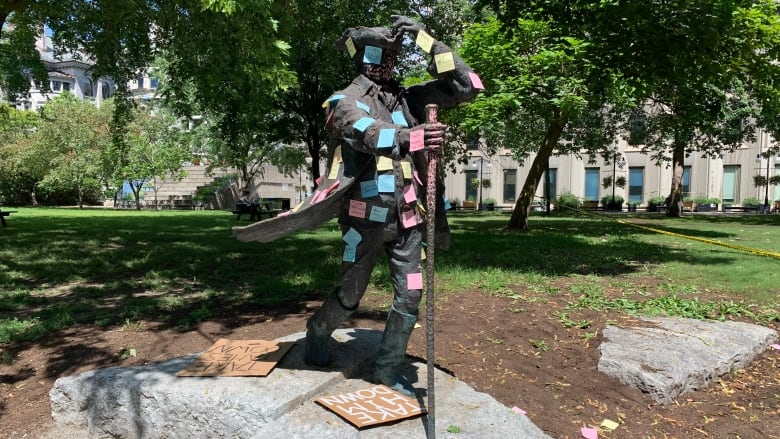
By 1:00 p.m., James McGill’s statue was covered in sticky-note messages written by protesters. The group marched towards the McCall McBain Arts Building, chanting “Take James Down,” which rang through campus.  

A previous version of the article included a quote from De Oliveira stating that a meeting between the McGill administration and Black students resulted in no action from the administration. In fact, De Oliveira confirmed that an action plan against systemic racism was released. The quote has been updated. The Tribune regrets this error.

Student Life

Reshaping public commemorations in Montreal

This summer’s series of Black Lives Matter protests around the globe have sparked greater awareness of colonial legacies that persist in public spaces. Recent petitions calling for the removal of the James McGill statue and Sir John A. Macdonald monument, and a name change of the Lionel-Groulx subway station have forced Montrealers to reconsider these celebrated figures and their history of upholding racist beliefs and practices. 

The university honours its founder, James McGill, in many respects on campus. From the Le James Bookstore to the James Administration Building and his statue near the Roddick Gates, his image is omnipresent at the university— however, any acknowledgement of his participation in slavery is absent 

According to Dr. Charmaine Nelson, former professor in the Department of Art History and Communications Studies, James McGill owned between five to seven slaves, at a time when it was rare for Montrealers to own more than two, and represented other white community members in the sale of slaves in Montreal. 

The success of the #ChangeTheName campaign has demonstrated that collective movements are effective tools to drive change on campus. McGill students are now using petitions to force the university to reconsider the legacy of its founder, James McGill. Hannah Wallace, a first year undergraduate student working towards a Bachelor’s of Education at McGill, created a petition demanding that the administration remove the statue of James McGill and acknowledge his racist past. 

Beyond campus grounds, Montrealers are taking action by demanding that monuments of racist historical figures be removed from public spaces. Isobel Walker, the creator of the petition to remove the Sir John A. Macdonald statue, explained how recent protests have led us to rethink the meaning of these monuments. 

While some have had the privilege of simply observing this monument and not actively questioning its racist roots, for many it has always stood as a monument to white supremacy,” Walker said. “I think recent events have shifted the focus of many Canadians towards the latter.” 

Timothy Stanley, a professor in the Department of Education at the University of Ottawa, argued that Macdonald’s biographers often justify his racism against people of Chinese and Mongolose descent and Indigenous peoples as a product of the time. Stanley noted that other members of the Canadian Parliament, who were in office at the same time, strongly opposed Macdonald’s discriminatory policies.

Walker is optimistic that the recent public awareness in the history of monuments will result in progress towards racial justice. 

“Montreal has always prided itself on being a multicultural and open place, and yet the municipal, provincial, and federal government continue to place certain voices, bodies, values above others,” Walker said. “The fight is not over yet, and I think it is of the utmost importance for individuals to continue showing up for others in hope [for] a better future for all.” 

Many are also demanding name changes to public spaces. In June, infection control practitioner at the McGill University Health Centre and IR-CUSM, Naveed Hussaincalled for the Lionel-Groulx subway station to be renamed after jazz musician Oscar Peterson. 

Lionel Groulx, who was a proponent of the nationalist movement in Quebec during the silent revolution, also discriminated Jewish people and anglophones in the province. During World War II, Groulx created a campaign to boycott Jewish-owned shops. 

It is difficult to come to terms with the fact that many commemorated figures have upheld racist attitudes in Canadian society. Such social movements can teach us how honouring historical figures, without discussing the ways in which their personal prejudices negatively affected certain populations, oversimplifies their legacies. These petitions help us consider not only who we are honouring in public spaces, but also what values we are placing on a pedestal. 

McGill, News

McGill aims for online and in-person options after Education Minister’s decision to reopen schools

McGill is standing by its May 11 decision to offer instruction primarily through online delivery platforms for the Fall 2020 semester after Education Minister Jean-François Roberge’s announcement on June 16 that schools across Quebec can reopen in September. 

McGill will conduct all essential class activities through remote instruction, but hopes to facilitate the resumption of some on-campus learning. In an interview with The McGill Tribune, Associate Provost of Teaching and Academic Programs Christopher Buddle expressed the university’s renewed commitment to remote delivery.

“[McGill’s initial] announcement set the stage for planning and we haven’t changed that at all,” Buddle said. “In fact, the minister’s announcement confirmed [our plan]. We want to offer some in-person experiences to students who are in the Montreal area, but we also recognize that many of our students will not be able to be here, so the main components of our courses will be delivered remotely.”

Potential on-campus activities will be reserved for those courses which are enhanced by face-to-face interactions, such as labs, lecture conferences and graduate seminars.

“In a lot of the larger [introductory level] arts classes, [where] there might be […] 10 conference sections […] maybe one or two of them can be offered in person,” Buddle said. “There might also be a graduate class where all the graduate students are in Montreal already doing research, and the professor involved might decide to hold some or all of the graduate seminars in an in-person environment [….] But for the vast majority of students, classes will be online.”

Some students are questioning the effectiveness of online instruction as a teaching medium, especially in the delivery of hands-on learning experiences such as science labs. Kiara Guidote, U2 Science, expressed her concerns about lab-based courses, as well as the lack of communication between professors and students regarding the new school year.

“I’m scared that the learning experience, especially for health science [students] like me, may be diluted […] because of online learning,” Guidote said. “Even though I trust the process and the administration, I wish there was more communication between professors and students like me [at this time], because I know so little about the academic plans for my classes.”

Buddle highlighted a focal point in the administration’s planning process, which is ensuring that on-campus experiences will not academically compromise students who are unable to physically be present. 

“We’re working with faculties to make sure that any in-person activity is not [disadvantageous to] students who are not going to be here,” Buddle said. “We’re committed to making sure that courses are delivered remotely in a way that is collective and robust, so students do not have to feel that they need to come to Montreal if they are unable to do so.”

Buddle added that access to study spaces has been a top priority in preparing for the upcoming semester. Whether these spaces will be available in McGill’s libraries or other secluded areas on campus has yet to be determined. 

Professors have also faced a steep learning curve in transitioning to online instruction. Dr. Sheryl Smith-Gilman, assistant director of the Undergraduate Teacher Education Programs and professor in the Faculty of Education, emphasized the significance of offering creative and engaging instruction methods. 

“When I first heard that we were going remote in the fall, I realized that I have got to learn a whole new language,” Smith-Gilman said. “For us to be able to accomplish this across cyberspace has really given me, as a professor, an added layer of thought and creativity. Maybe in the long run we can look at it positively. Maybe it will make us look at and reflect on how we teach what we teach, and ensure that teaching is not mundane. Maybe there’s some silver lining to all of this.”

Science & Technology

Global study exposes the disproportionate impact of pollution on Indigenous Peoples

Indigenous communities all over the world, from the Cree of Waskaganish to the Sámi of Sápmi, differ greatly in language, history, and culture. However different they are from each other, a common belief that informs the traditional practices of many Indigenous Peoples is the interconnectedness of humans, animals, and the Earth. Yet, the colonial infrastructure of industrialization – and the adverse effects it has on Indigenous lands – are endangering the health and cultural practices of Indigenous communities worldwide. 

Researchers from the University of Helsinki, in collaboration with the Department of Natural Resource Sciences at McGill, sought to better understand the effects of pollution on the health of Indigenous Peoples. The study draws data from close to 700 research articles, books, and government reports. They found that Indigenous Peoples across the globe are disproportionately affected by the adverse impacts of environmental pollution despite their continued resistance to resource exploitation. These effects include severe health ramifications, such as higher rates of cancer and diabetes, and social repercussions that lead to the deterioration of cultural traditions. These consequences are reinforced by physical changes to their lands. 

“Sadly, Indigenous lands represent to the global economy some of the remaining frontiers of resource extraction, and because of this, they are often the targets of operations that entail pollution risks,” Álvaro Fernández-Llamazares, lead author of the study and environmental scientist at the University of Helsinki, wrote in an email to The McGill Tribune. “Indigenous Peoples are among the populations at highest risk of impact by environmental pollution of water, land, and biota through both exposure and vulnerability.”

Abandoned mines, oil pipelines, and waste facilities are just some examples of environmental hazards to Indigenous Peoples that are a result of industrial development. In one case, the study found that oil spills from natural gas exploitation in the Peruvian Amazon had seeped into waterways vital to Indigenous Kukama communities, and were linked to an increase in blood mercury levels in children. Mercury poisoning can have toxic effects on the brain, kidneys, reproductive system, and cardiovascular system, and is especially harmful to pregnant women and young children. 

Indigenous groups that rely on waterways for sustenance are especially affected by chemical contaminants. Many First Nations’ traditional fishing practices involve consuming all parts of fish, including fatty tissues where heavy metals accumulate. Consequently, river pollution not only presents an increased health risk, but also compromises the safety and longevity of First Nations dietary customs.  

The impacts of pollution on Indigenous communities is a contributing factor to a larger  human rights crisis, as Indigenous Peoples worldwide defend infringements upon their right to a clean environment. In many First Nations communities across Canada, such as the Neskantaga Ojibwe Nation, the Canadian government has allowed 20-year boil-water advisories to persist despite its obvious health hazards.  

Niladru Basu, professor of Natural Resource Sciences at McGill and co-author of the study, advocates for an integrative approach to scientific research and community activism. 

“The traditional way that we would study these issues from a Western scientific perspective is to measure exposures and to relate that epidemiologically to health outcomes,” Basu said in an interview with IEAM. “If we […] look at it holistically, there are other important dimensions from the Indigenous perspective concerning social wellbeing and cultural awareness.” 

The deep connection between Indigenous Peoples and their traditional lands is sacred and inextricable. Any contamination inflicted upon their physical environment is also detrimental to the spiritual and social health of those communities and traditions. Therefore, the environmental knowledge of Indigenous Peoples must be held in utmost consideration of both scientists and policymakers. 

“It is critical to educate and empower Indigenous Peoples and enable them to have their stories heard,” Basu wrote in an email to the Tribune. “As such, policymakers must ensure active and meaningful participation of community members in science-policy efforts.” 

Read the latest issue

Read the latest issue