

Latest News

Research Briefs, Science & Technology

Gene therapy provides a potential breakthrough in brain cancer treatment

In the fight against cancer, scientists have long grappled with the ambiguous nature of stem cells. Glioblastoma tumours, the most aggressive form of brain cancer in adults, consist of these cells, which have the notable ability to self-renew. This makes these tumours notoriously hard to treat with targeted radiation therapy and difficult to permanently remove through surgery.

A McGill-led research group working at the Lady Davis Institute of the Jewish General Hospital has now put the invincibility of tumour stem cells into question. In a recent paper, the group details a new technique of sensitizing stem cells to radiation therapy, thereby increasing the therapy’s efficacy. A single mitochondrial gene called oncostatin M receptor (OSMR) was found to influence the energy levels of stem cells. Using the DNA editing tool CRISPR-Cas9, researchers were able to delete the gene and cause cancerous cells to become less resistant to ionizing radiation, the type used in cancer treatments.

Dr. Arezu Jahani-Asl, assistant professor in the Department of Oncology at McGill, has been overseeing this project since 2015.

“What makes [stem cells] unique is their capacity to undergo self-renewal and spur the growth of new tumours, but at the same time, they can evade ionizing radiation and chemotherapy,” Jahani-Asl said in an interview with The McGill Tribune. “They can regenerate a new tumour if there are only a few of these cells left after surgery.”

Considering the tenacity of these cancer cells, researchers consider the identification of the OSMR gene’s role in regulating cell proliferation a promising breakthrough.

Through various molecular techniques, the team tracked the OSMR gene product and its interactions within the cell. First, they established OSMR’s location in the mitochondria, the part of the cell responsible for producing energy. Its location pointed to OSMR’s involvement with the mitochondria’s electron transport chain, a series of protein complexes that produce ATP, the cell’s energy currency. 

Researchers noticed that high expression of OSMR strengthens cancer cells by promoting ATP  production, providing cells with additional energy.

Armed with the knowledge that OSMR affects a tumour’s energy stores, the researchers subsequently removed the gene using CRISPR-Cas9. 

“When we deleted the gene, there was less oxygen consumption rate, which is a means to measure energy production,” Jahani-Asl said. “There was a decrease of activity in Complexes I, II, III and IV of the [electron transport] chain.” 

Without OSMR, the researchers noted that radical oxygen species, chemically reactive molecules that can cause cellular damage, accumulated in the mitochondria. This build-up triggered cell death in mice more often than when exposed to radiation alone. An increased sensitivity of these cancer cells to radiation therapy could feasibly prolong the life expectancy of glioblastoma patients undergoing treatment. 

Despite the study’s use of mouse models in testing OSMR suppression, the scientists also found support for their results in public health data. 

“Based on public datasets, the higher the expression of OSMR, the more resistant [cells] are to ionizing radiation,” Jahani-Asl said. “It is very similar to what we saw in wet experimentation with mice.” 

Consistency between public health data and the results of the study suggests that gene deletion techniques may be viable for brain cancer patients. In addition, effective gene editing tools such as CRISPR are becoming more widely used in preclinical research. It will take further inquiry and experimentation, however, before human trials become possible. 

For now, the lab is exploring a number of options in their continuing study of the OSMR gene, including therapy antibodies and molecular profiling

“At this point, a drug screening is required to find a drug that specifically inhibits OSMR function,” Dr. Ahmad Sharanek, the lead author of the study, wrote in an email to the Tribune.  “Pharmacological targeting of OSMR in combination with the current standard of care for glioblastoma therapy will [become] feasible at a large scale.”


Recipes, Student Life

Back-to-school, back to home cooking

The chaos of the past summer has made many of us turn to a classic comfort: Food.

Food has been a grounding force for those who find comfort in baking a sweet-smelling cake in the oven, chopping fruit in the kitchen, and kneading a dough to make bread. These simple moments allow us to tap into our senses, into our roots, into who we are. The physicality and mindfulness involved in the cooking process, the memories it channels of your grandmother’s kitchen, the creative outlet it provides, and the joy in devouring the meal with friends and family at the dining table are all quite therapeutic. When my grandfather used to say “We are what we eat,” I would add, “We are what we cook.”

With that being said, here are some of my personal favourites recipes to try out during the online semester. 

For a ready-made breakfast – Overnight Oats

Mix two parts rolled oats with one part plain Greek yogurt, one part milk or nut milk, and nut butter and cinnamon to taste in a bowl. Cover with plastic wrap and leave it in the fridge overnight. Enjoy it as-is in the morning or add whatever your heart desires—be it fruit, granola, nuts, honey, or a beautiful layer of crushed raspberries!

For a magnificent meal- Yotam Ottolenghi’s (adapted) caramelized garlic tart 

375 g all-butter puff pastry

3 separated and peeled heads of garlic cloves 

1 tbsp olive oil

1 tsp balsamic vinegar

1 cup water

¾ tbsp castor sugar

1 tsp chopped rosemary

1 tsp chopped thyme plus a few whole sprigs 

120 g creamy goat’s cheese

120 g hard mature goat’s cheese 

2 eggs

6 1/2 tbsp double cream

6 1/2 tbsp crème fraîche

salt and black pepper

Recipe:

Prepare the baking tin:

  1. Roll out the puff pastry into a shallow, loose bottomed, 28 cm fluted tart pan. Place a large circle of greaseproof paper on the bottom and fill up with pie weights. Leave to rest in the fridge for 20 minutes.

Blind bake the crust:

  1. Preheat the oven to 180°C and bake the tart pan for 20 minutes. Remove the weights and paper, then bake for a further 5-10 minutes, or until the pastry is golden. Set aside. Leave the oven on.

Prepare the caramelized garlic cloves:

  1. While the crust is baking, put the garlic cloves in a small saucepan and cover with plenty of water. Bring to a simmer and blanch for three minutes, then drain well.
  2. Dry the saucepan, return the cloves to it and add two tablespoons of oil. Fry the garlic cloves on high heat for two minutes. Add the balsamic vinegar and water and bring to the boil, then simmer gently for 10 minutes. Add sugar, rosemary, chopped thyme and quarter teaspoon salt. Continue simmering for 10 minutes, or until most of the liquid has evaporated and the garlic cloves are coated in a dark syrup. Set aside.

Assemble the garlic tart:

  1. Break goat’s cheese into pieces and scatter in the pastry case. Spoon over the caramelized garlic cloves and syrup. In a jug, whisk together the eggs, cream, half teaspoon salt and some black pepper. Pour this custard over the tart filling to fill the gaps.
  2. Reduce the oven to 170°C and place the tart inside. Bake for 35-45 minutes. Remove from the oven and leave to cool. Serve warm with a few sprigs of thyme on top.

For your sweet tooth – The Ultimate Chocolate Mousse

250 grams dark chocolate

1/2 stick salted butter

2 tbsp vanilla extract

6 eggs

Orange zest to taste

Recipe:

Separate egg whites from yolk into two large bowls. Add vanilla to the yolk. Melt chocolate and butter in medium saucepan on low heat. Once chocolate is 75 per cent melted, take it off heat and keep stirring until smooth. Gently add chocolate mixture to the yolk and mix with a wooden spoon until smooth. Whisk egg whites into stiff peaks (if you flip the bowl, no mousse should fall out). Gently fold in egg whites to the chocolate mixture with spatula. Divide mixture into six mini-bowls, cover with plastic wrap and refrigerate. Let sit for two hours minimum to overnight and enjoy. Serves six.

Soccer, Sports

Mewis to Manchester exemplifies the NWSL exodus

The COVID-19 pandemic has hit the sports world hard, with many leagues initially cancelling their seasons. Some leagues, including the WNBA, the NBA, and the NHL, have since restarted in “bubbles,” and one of the most successful in this restart was the National Women’s Soccer League (NWSL). 

The NWSL was in its off-season when the pandemic hit North America, leaving the league scrambling to fit a whole season into a shortened time frame and safe environment. Their solution came in the form of the NWSL Challenge Cup, which took place between June 27 and July 26 in a “bubble” in Utah. The 23-game tournament was successful in several ways, with no positive COVID-19 tests and a first-time NWSL champion in the Houston Dash

Despite the relative success of the summer’s Challenge Cup, and the announcement of a Fall Series set to run from Sep. 5 to Oct. 17, many players are still choosing to leave the NWSL to play club soccer in European leagues. American midfielders Sam Mewis and Rose Lavelle have signed with the FA Women’s Super League’s (FA WSL) Manchester City, while American forwards Christen Press and Tobin Heath have both signed with Manchester United. It’s not only American players who are leaving the NWSL, however. England’s Rachel Daly and Australia’s Emily van Egmond both signed loan deals with Westham United, leaving behind their American clubs for the time being. Some young North American players are choosing to forego the NWSL altogether, including Canada’s Jessie Fleming who signed her first professional contract with Chelsea FC in June of 2020. 

The situation surrounding the COVID-19 pandemic in the United States means that there is no way for NWSL players to play a full league season this year. The fall series consists of only 18 games, with regional pods that limit each team to playing against only the two other teams in the pod and only playing four games each. Players looking to make their national team rosters ahead of next year’s Olympic Games will need more opportunities for playing time in competitive environments. At the moment, an American league is simply not able to provide this setting. European leagues also present the opportunity to play in multiple competitions, including the UEFA Women’s Champions League and national cups within each country. 

After the failure of two previous women’s professional soccer leagues in the United States, this outflux of top players from the NWSL is a cause for concern. Through a deal with CBS, the 2020 season would have been the first with games aired on network television, increasing the visibility of the league and drawing in more fans and sponsors. Top players leaving the league does not bode well for future sponsorships or television deals; however, CBS did air games from the Challenge Cup and will continue to show games from the Fall Series. This precarity is just one of the many ways in which women’s sports have been disproportionately affected by the COVID-19 pandemic as compared to men’s sports. 

Despite the bad news for the NWSL, players signing in Europe are, arguably, a testament to the development and maintenance of women’s professional club soccer across the world. Despite less-than-ideal circumstances in the U.S., players still have the opportunity to continue playing club soccer. The majority of FA WSL teams are now fully professional, allowing players to spend more time training with better equipment and facilities, thus raising the level of competition in the league. Hopefully, this professionalization can continue to sustainably provide opportunities for women soccer players, even through unforeseen obstacles like a global pandemic. 

woman holding cellphone in the dim room
McGill, News

Anonymous Instagram pages highlight student experiences with discrimination at McGill

As recent Black Lives Matter (BLM) protests against police brutality have ignited a global reckoning with racism, new McGill-related Instagram pages are platforming anonymous Black, Indigenous, and people of colour (BIPOC) students’ experiences with discrimination at the university. Untold McGill and Black At McGill have highlighted disturbing instances of racism at the hands of fellow students, professors, advisors, and student organizations within the McGill community. The creation of these McGill-related Instagram accounts to amplify marginalized voices follows a surge of similar pages connected to university campuses across North America.

The McGill Tribune spoke to the administrators of both the Untold McGill and Black At McGill accounts about the inspiration behind their work and what they hope to accomplish. 

“We were inspired [to create Untold McGill] by a lot of the conversations surrounding [Black Lives Matter], but also conversations surrounding anonymous pages from other Universities [such as] Stolen by Smith, Black at Harvard Law, [and] Black at Cornell,”  an Untold McGill administrator said. “[BIPOC students] have, in one way or another, experienced marginalization at McGill, so we really thought it would be important to create a safe and comfortable environment within our own community where people like us and people unlike us can feel safe to share their stories [that would] otherwise […] go untold.”  

Another administrator from Untold McGill explained the importance of addressing discrimination within Canadian universities, as institutional racism is often only discussed in an American context.

“As Canadians, we always want to compare ourselves to the United States,” the administrator said. “[But] Canada is not innocent in systemic racism, and it’s really important for us to acknowledge that. In higher education, a lot of us [think that], we are [educated] and [believe that] education often comes with more progressive ideologies. Except, there’s an inherent elitism and classism [that intersects] race and sex. I just think that’s built into universities.”  

While Untold McGill shares students’ experiences of race, gender, and sexual orientation-based discrimination, the Black Student Network (BSN)-affiliated account, Black At McGill, serves to share the experiences of Black students. 

“We wanted to amplify the voices of Black students who are victims of systemic racism on this campus,” an administrator from the Black At McGill account said. “This Instagram page also serves as a way of proving that the demands Black students are calling for, through initiatives such as ‘Take James Down’, are not unwarranted. The reception and execution of these demands is highly necessary.” 

Alongside individual instances of discrimination at McGill, many of the posts highlight racism and discrimination at the institutional level: Student organizations, such as Greek life and The McGill Tribune, as well as various faculties, have been denounced for perpetuating systemic racism. 

Untold McGill has already successfully held various McGill organizations accountable. Among several organizations that were mentioned on the page, the Management Undergraduate Society (MUS) was prompted to make a statement reiterating its commitment to supporting students of colour. 

“The MUS Board of Directors and Executive Council is committed to enhancing equity within our student society, and has set a few action items aside with the intention of making the MUS a more inclusive place,” MUS President Jonathan Gurvey wrote in an email to the Tribune. “There’s never a bad time to have an inward look at our organization’s procedures and practices to see how we can do better. We at the MUS are committed to perpetual improvement.”

VC Renaud, Queer McGill’s (QM) administrative coordinator, explained how Untold McGill impacted the organization.

“We at Queer McGill understand that QM has historically been a space dominated by white people [and] has definitely lifted up white voices over other voices, which has made our events and offices and resources inaccessible to QTBIPOC students,” VC Renaud said. “[However], we are, as an organization, actively working to change this, as our mandate states that we work from an anti-oppressive, intersectional, and feminist orientation.” 

While organizations like the BSN and the Indigenous Student Alliance (ISA) have long been working to advocate for the rights of BIPOC students on campus, Untold McGill and Black At McGill hope that their platforms will empower individual students affected by both institutional and individual discrimination.  

“If the comments on certain posts are any indication, it’s clear that a lot of students have encountered some form of discrimination, and a lot of students are aware of what is happening within the university,” an Untold McGill administrator said. “I think that this page has […] shed more light on these issues, and it’s definitely given a wake-up call to some people who may have stayed quiet or were too scared to speak up.”


Martlet holding a gavel illustration
McGill, News, PGSS, SSMU

McGill Governance 101

STUDENTS’ SOCIETY OF MCGILL UNIVERSITY (SSMU)

What it does:

SSMU is McGill’s highest level of student government responsible for supervising undergraduate clubs and extracurricular activities, managing and ensuring the sustainability of long-term operations such as the student bar Gerts’, advocating for student interests in the McGill Senate, and planning social events for the student body. SSMU is led by seven student executives who are elected by the student body at the end of each academic year. Legislative Council, which is composed of the SSMU executives and 30 other councillors that represent faculties and clubs, determines policy directions. Undergraduate students can directly influence SSMU by attending its virtual General Assemblies and voting in online referenda, both of which are held once every semester. 

Recent Events:

The 2019-2020 school year was an important year for SSMU: In addition to finally securing a long sought-after reading week for 2021, it is also working with UTILE, a housing organization, to organize affordable housing for McGill students. This year, SSMU executives are advocating for racial justice at McGill; they have supported several faculty statements addressing racism and are recruiting a Black Affairs Commissioner to better address Black students’ needs.

POSTGRADUATE STUDENTS’ SOCIETY (PGSS)

What it does: 

Elected by graduate students and postdoctoral fellows, PGSS representatives meet once a month to discuss and vote on new policies. The PGSS executives plan social events and workshops, many of which take place in their headquarters at Thomson House. Their mandate is to provide accessible networking opportunities for postgraduate students. Additionally, the society advocates for the interests of graduate students by liaising with other governing bodies at McGill and beyond.

Recent Events:

At a meeting in February 2020, PGSS members outlined their plans to create an area specifically for the use of graduate students in the McLennan-Redpath Library complex, which will be undergoing renovations as part of the Fiat Lux Building Project over the next several years. In addition, PGSS is debating joining the Quebec Student Union, which advocates for student interests at the provincial level. Currently, PGSS sits as an observer, as opposed to acting within the capacity of a full member.

BOARD OF GOVERNORS (BoG)

What it does:

The McGill BoG acts as the final authority over all of the university’s academic and financial affairs. Two student representatives sit on the 25-person board, with the rest of the seats belonging to other stakeholders. Composed of nine standing committees, including the Finance Committee and the Committee to Advise on Matters of Social Responsibility (CAMSR), the BoG governs the daily operations at McGill. 

Recent Events: 

The Board of Governors disappointed many last winter when, on the advice of CAMSR, it advocated for a lower-impact “decarbonization” plan instead of deciding to divest from fossil fuels. Despite Philosophy Professor Gregory Mikkelson’s resignation from his tenured position to protest the decision, Principal Suzanne Fortier and the rest of the BoG showed no interest in reassessing the matter.

MCGILL SENATE

What it does:

The Senate governs academic policies, such as the development of curricula and academic requirements for McGill’s degrees and diplomas. It also takes on a broader role at McGill by managing the university’s libraries and administering Student Services. The Senate is composed of 111 members and nine standing committees, which include the Senate Steering Committee and the Committee on Libraries. The Senate meets on a monthly basis, during which standing committees deliver reports and senators vote on policies and nominations.

Recent Events:

The Senate has devoted its past several meetings to discuss how the COVID-19 pandemic will affect learning this year and has adjusted its priorities in accordance with new requirements. In addition, it endorsed the Equity, Diversity, and Inclusion plan which aims to address hiring biases and retention rates among BIPOC faculty and staff, in addition to hiring researchers to further investigate the history between McGill and slavery.

Arts & Entertainment, Film and TV, Internet, Music

What we liked this summer: Pandemic edition

With the start of virtual classes, it feels like we’ve been jolted out of a limbo. Still, with Netflix binges about to be replaced by Zoom classes, we can at least say that our five months indoors have given us plenty to watch, listen to, and read. The pandemic aside, here are some favourites that helped us through the summer.

You’re Wrong About, Podcast – Erika Mackenzie 

Summer is the season of podcasts, and this one is definitely worth the listen. Freelance reporters Sarah Marshall and Michael Hobbes dive into memorable events, people, and random phenomena throughout history, questioning popular preconceived notions. Rather than a simple debunking, You’re Wrong About delves into the social implications of widely held beliefs. Exploring topics from Stockholm syndrome to the O.J. Simpson trial, You’re Wrong About has no boundaries on what it will cover. Marshall and Hobbes are not only informative, but they also have an excellent sense of humour and keep listeners on their toes.

SAWAYAMA, Album – Jonathan Giammaria

Rina Sawayama cackles her way into the nu-metal chorus of her pop album’s third track, “STFU!” On paper, this eclectic mix of genre and vocals seems bizarre; however, when listening, it becomes one of the album’s most memorable performances. SAWAYAMA is full of bold creative choices: “Paradisin’” is set to the beat of a hyper 8-bit video game; “Comme Des Garçons (Like The Boys)” pairs a fashion brand roll call with groovy disco. And with songs covering climate change, family heritage, platonic breakups, and consumerism, SAWAYAMA’s subject matter is as varied as its sound. Though the album isn’t beholden to thematic or sonic cohesion, it nevertheless soars as a wholly original work from a singular, new voice.

TikTok, App – Deana Korsunsky

From viral dances to lifehack tutorials, the video app TikTok became a worldwide phenomenon thanks to the quarantine of Summer 2020.  Although the video app started as Musical.ly in 2016, TikTok now hosts communities from tweens to baby boomers, offering content as relatable as pandemic confinement, to those as niche as canned beans fan videos. The TikTok feed is an endless void of passion and creativity. What may start as a simple scroll through one’s feed will undoubtedly evolve into a 40-minute session of chuckling, liking, and commenting. The platform provides a convenient and much-needed source of both amusement and education, allowing those of different walks of life to share their creativity and stories with the world.

Da 5 Bloods, Film – Julian Miller

A mid-June Netflix release brimming with lushness and fury, Da 5 Bloods is both Spike Lee’s latest masterwork and, heartbreakingly, Chadwick Boseman’s last film released before his passing. The film follows five ageing veterans of an all-Black platoon as they journey back into the Vietnamese jungle in search of a twofold treasure: Buried gold and the remains of a beloved comrade left behind long ago. The men’s foray into the jungle ultimately becomes a volatile yet deeply compassionate exploration of the many faces of trauma, the impossible burden of loyalty, and the irreconcilable paradox of fighting and dying in the name of your oppressor.

Boys State, Film – Angelica Voutsinas

Documenting a week-long leadership camp run by the American Legion, directors Amanda McBaine and Jesse Moss set out to study the deep-rooted polarization that is so intrinsically tied to American politics. Boys State follows four out of one thousand participants in the 2018 Texas Boys State, where 16-year-olds play mock government for a week: Electing government officials, enacting laws, and running election campaigns that parallel the dirty politics of real life. The film is a cynical snapshot of the next generation of American politicians, but also shows the growing minority of youth in politics who genuinely want to better the lives of others. Boys State is emotional, captivating, and a must-watch for anyone casting their ballots on Nov. 3.

Out on the Town, Student Life

Reinventing a life of leisure

Since the Quebec government declared a public health emergency in March 2020, Montreal, the province’s largest city, has lost hundreds of millions in tourism revenue. Many of Montreal’s major cultural events, such as the Montreal International Jazz Festival, the Just for Laughs Comedy Festival, and Osheaga, which altogether bring in an estimated $374 million to the local economy, have been postponed or cancelled until 2021. 

In light of the COVID-19 pandemic, Montreal has focused on new ways of bringing people to the city in order to make up some of the approximately $4.5 billion that tourism generates for the local economy annually. According to the City of Montreal, $400,000 is being invested into stimulating the downtown core’s economy. Events and activities, such as apple tasting at the Botanical Gardens and the reopening of the Montreal Biodome, were offered throughout the summer and will continue into the fall. An additional $200,000 has been put toward the Relancez l’été campaign, which encourages Montreal and Quebec residents to explore the city’s downtown. 

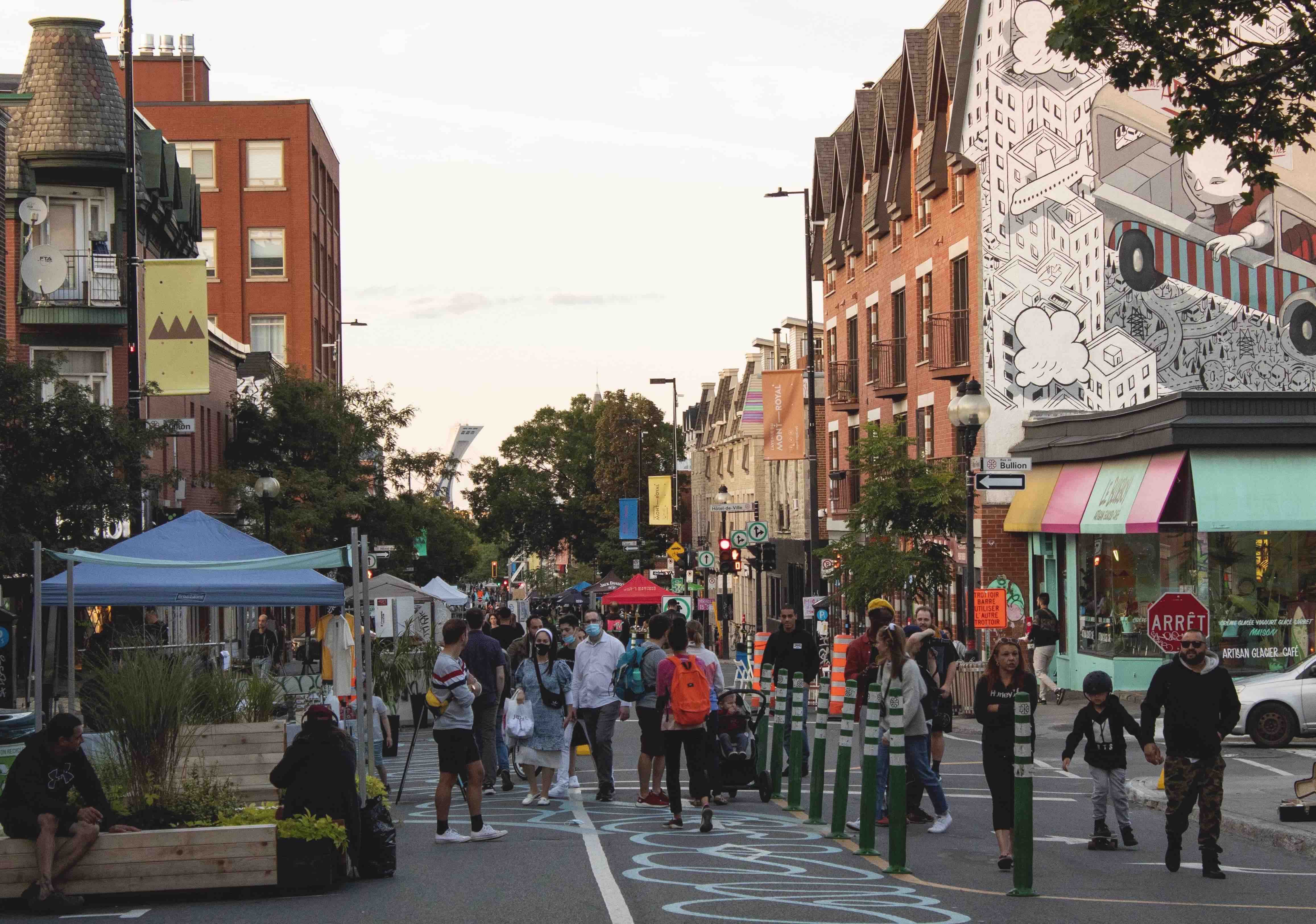
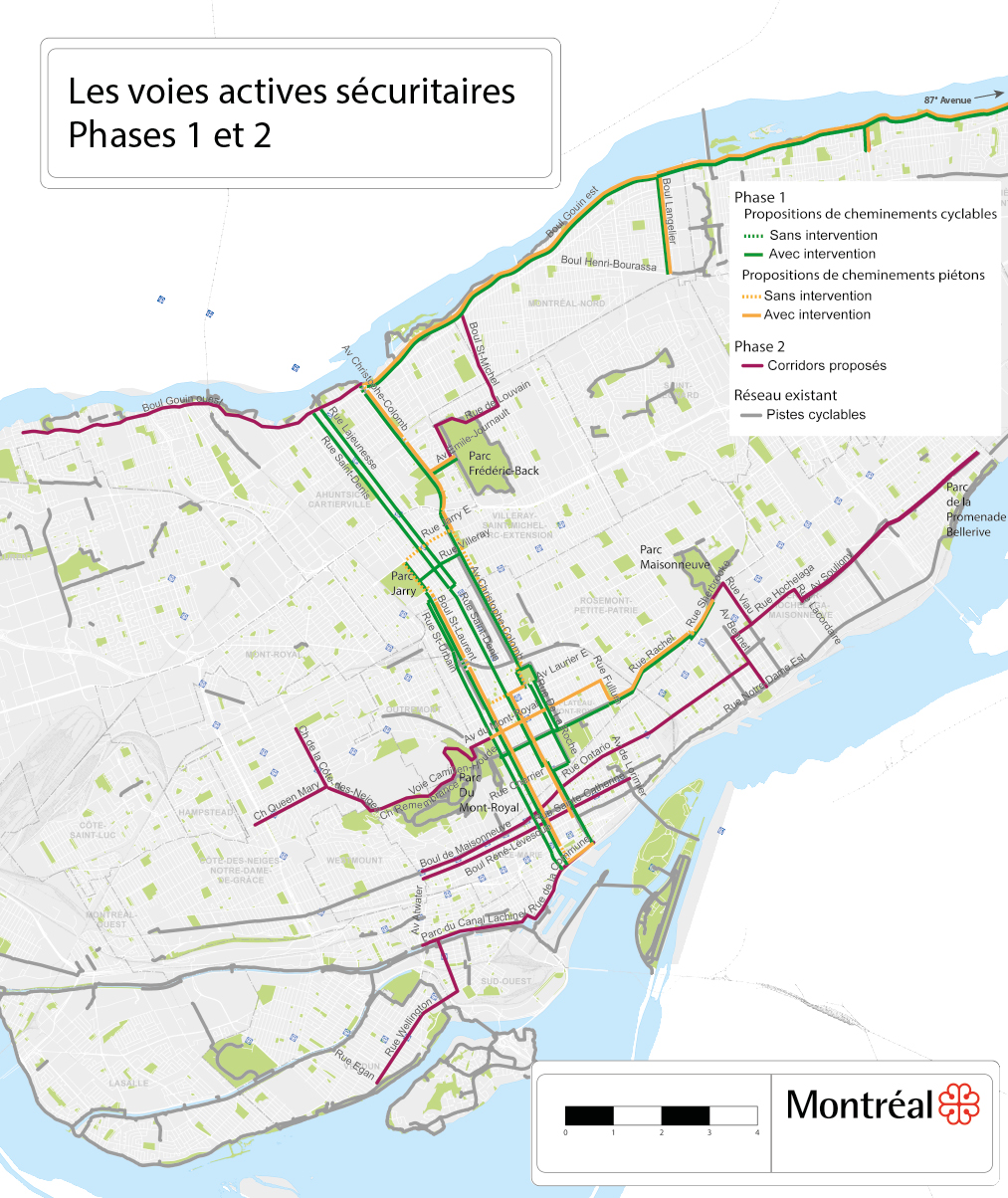
Further, Mayor Valérie Plante has introduced newly pedestrianized streets and cycling lanes. These changes aim to draw Montrealers to the shops and activities while maintaining a safe distance from others along Mont-Royal Avenue, St-Laurent Boulevard, St-Catherine St. W., St-Denis St., and de la Commune St., and will persist until the end of October. 

Most public spaces, such as parks, public markets, and businesses have been permitted to open by Quebec’s provincial health authorities, allowing for patrons to safely peruse and shop. Visitors are reminded to stay at least two meters apart when possible. Masks and other types of face coverings were made mandatory in all indoor public spaces and public transit as of July 18. 

Slowly, museums throughout Montreal have reopened with safety measures put into place. Running at limited capacity, many museums require visitors to book a time slot online to visit in person. Maude Béland, Media Relations Officer for the Montreal Museum of Fine Arts (MMFA) highlighted the importance of patron safety at the museum.

“Safety measures are indeed very important for us. [We have] worked very hard and put every measure in place to ensure visits are highly enjoyable […] yet intimate, and, above all, safe,” Béland wrote in an email to //The McGill Tribune//. “All of the recommendations of the Government of Quebec and the Commission des normes, de l’équité, de la santé et de la sécurité du travail (CNESST) have been implemented so that the public feels at ease and entertained during their museum outing.”

Safety measures implemented at the museum include a one-way exhibition path, free audio guides on the MMFA mobile app, and the suspension of permanent exhibition spaces.

Likewise, Montreal’s historic Old Port has taken steps to accommodate its visitors. One novel addition are the blue Bienvenue/Entrezinitiative decals, which allow shoppers to identify which local businesses are open and to show when businesses are at capacity. Signs with up-to-date public health measures and hand sanitizer stations have also been placed throughout Old Port. 

More kinetic Old Port attractions remain adaptable and open. Both the MTL Zipline and the Montreal Observation Wheel have been opened to the public with increased sanitation and social distancing. Sam Cadotte, president of the MTL Zipline, is thankful for the ability to provide a safe and fun experience for the attraction’s customers.

“In general, we are very pleased with the way our customers respect our sanitary measures,” Cadotte said. “We consider ourselves lucky to be allowed to operate in these special times and understand that we have an important role to play in keeping our customers safe.”

As we continue to learn how to live with COVID-19, business owners and event organizers are hoping that the safety measures they have put in place will encourage people to get outside and explore Montreal this fall. With fewer tourists, the next few months may be the perfect opportunity for students, residents of Montreal, and Quebeckers to rediscover the history and charm of Quebec’s metropolis.

Student Life

Spotlight on the Canadian Advisory of Women Immigrants

Since the beginning of the COVID-19 pandemic in March 2020, immigrant women in Canada have experienced considerable negative impacts in areas such as employment, home life, social networks, and health. In response, Hani Rukh E Qamar, U1 Psychology and Neuroscience, founded the Canadian Advisory of Women Immigrants (CAWI) to empower immigrant women with services such as English classes, networking events, and mental health resources. 

Qamar was inspired to create CAWI after noticing a clear disparity between immigrant and non-immigrant women in both Montreal and her hometown of Regina, Saskatchewan. 

There is always a divide between immigrants [and non-immigrants], not to mention the divide within the immigrant community as well,” Qamar said. “So, I really wanted to put an emphasis on the importance of diversity and create a network of women immigrants who are willing to offer opportunities to other women, as well as take [away] some leadership skills from our initiative.”

The pandemic has created additional financial strain for immigrant women, as many have lost their sources of income. In April 2020, Canadians lost nearly 2 million jobs—affecting certain employment sectors that many immigrants occupy. These sectors include accommodation and food services, for which immigrants accounted for 34.7 percent of the employed population in 2017. 

While unemployment rates have risen during the pandemic, the issue of securing employment in Canada is not new to immigrant women. Immigrants faced higher rates of unemployment from 2006 to 2010 than both Canadian-born women and male immigrants, according to the Labour Force Survey.

Historically, immigrant women have struggled to have the education or job experiences obtained in their home countries recognized in Canada. A 2005 study of 15,400 immigrant women between the ages of 25 and 44 found that 37 per cent of women surveyed reported an inability to secure employment in Canada because of difficulties in transferring their foreign qualifications. Many also said that they lacked adequate Canadian job experience. 

Qamar believes that systemic racism plays a significant role in the employment gap between immigrants and non-immigrants. 

“Women immigrants face racism, systemic racism and other inequalities that prohibit them from getting the jobs they want,” Qamar said. “Although it is hard for women in general to get jobs, it is [especially] harder for women immigrants.” 

Qamar also explained that lack of social networking is one of the biggest challenges that immigrant women face in employment security. To help overcome this obstacle, CAWI offers a number of networking programs, including the Sisterhood Project. The Sisterhood Project is designed to bring immigrant women together through activities such as café meet-ups, board game events, and reading nights. The goal is to foster relationships among immigrant women of different backgrounds. 

In addition to the financial strain of COVID-19, immigrant women also face a greater risk of domestic violence during the pandemic. In a recent Statistics Canada survey, 12 per cent of immigrants reported concerns about violence in the home during the pandemic compared to seven per cent of non-immigrants. Qamar described this phenomenon as “the shadow pandemic.”

“The ‘shadow pandemic’ is basically how the pandemic is worsening the situations for women facing abuse, as many women are confined to their homes,” Qamar said. “They cannot go to school nor escape the horror realities that is their home, so COVID-19 has worsened [their] conditions.” 

Furthermore, immigrant women have reported greater concern about their health during the pandemic than non-immigrants. In particular, non-status women working as frontline workers are at greater risk of poor working conditions, such as low pay, lack of paid sick leave, and a heightened risk of contracting COVID-19. 

Organizations like CAWI are spreading awareness about the challenges that immigrant women face and offer invaluable support through their programming. At a time when many people are experiencing turmoil caused by the pandemic, it is important to recognize the ways in which gender, nationality, and legal status intersect to create additional barriers in employment opportunities, safety, and health.

Commentary, Opinion

McGill cannot leave incoming first years behind

The end of the last academic year was extraordinary: COVID-19 barrelled through our lives and took the world by storm, instruction moved online at many universities, and the entire education system was uprooted. Unfortunately, the pandemic’s effects were particularly harsh on graduating high school seniors—students who will now be burdened with a steep transition from secondary to post-secondary studies. It is time for McGill to break from its cold, imposing reputation, which is purported by students on college admissions forums, McGill’s unofficial subreddit, and former CEGEP students. In these uncertain times, the administration must step in to provide extensive support for the incoming cohort. 

Assistance is necessary because there are gaping discrepancies in the academic preparedness of incoming first-years. The Canadian educational response has been incredibly diverse as it is organized at the provincial level. Studies show that disparities in post-lockdown instruction methods have had detrimental impacts on students’ achievement levels in the United States. It may be fair to imagine, therefore, that this year’s new students will not be as prepared for first-year as their counterparts in upper-years were. 

McGill has the steepest minimum entry grade requirements of any Canadian university. Normally, this helps ensure that admitted students are adequately prepared. After all, to get into McGill, students have to be among the highest achievers at their secondary schools. But in light of the rollercoaster semester that incoming students have experienced, it may be a stretch to assume that most students will be ready for classes. 

Other universities have acknowledged this reality. For example, the University of British Columbia offers free academic essentials courses to help support its freshmen. If McGill does not take further measures to support new students, they could leave first years at a disadvantage. McGill has many options for giving incoming students support. For example, this last semester, students were allowed to exercise the Satisfactory/Unsatisfactory (S/U) grading option for all their courses. However, at the moment, this will not extend to the Fall 2020 semester. A high school course online is not the same as an online university course, much less one at a top institution. To throw students into this new environment without any sort of cushion could be disastrous. And although resources exist to help new students understand what the Fall semester’s course offering will look like, they may not sufficiently ensure the smoothness of students’ transitions to post-secondary learning. 

McGill should adopt new policies to assist first-years. Reinstating the S/U format from the Winter semester, for instance, could level the playing field and help to ensure that students are not penalized for gaps in their knowledge resulting from events beyond their control. While some graduate programs, medical schools, and law schools may frown upon the pass/fail grading structure, McGill can counter by allowing new students to convert their S/U to a letter grade after the semester is completed, thereby mitigating concerns. Administrators could also mimic the response of Duke University, and include a designation denoting exceptional circumstances on the transcripts of incoming students. This way, students can feel confident as they enter online learning at McGill, equipped with some experience and aware of the academic expectations that will be required of them. 

The McGill Media Relations Office has confirmed that there are no plans at the moment to offer any of these options. Instead, McGill will conduct short workshops during orientation week to teach students new learning strategies, how to navigate Zoom instruction, and use library resources. Rather than offering in depth courses like UBC or special designations on student transcripts like Duke, McGill has once again opted to stick by its frigid reputation and only offer the bare necessities. It is imperative that new students are not left behind. More resources are needed to support incoming students, and there is a clear path for the administration to help. McGill cannot leave incoming first-years behind. 

News, SSMU

Judicial Board renders 2020 SSMU Winter Constitution invalid, SSMU responds

In a unanimous decision made on Aug. 17, the SSMU Judicial Board (J-Board) rendered the 2020 SSMU Winter Constitution, which was put to vote without a French translation, invalid. During a Board of Directors (BoD) meeting on Aug. 20, SSMU voted not to ratify the J-Board’s decision, sending the judgment back to appeal. 

The J-Board’s decision came after a spring petition that demanded the suspension of the new constitution, citing the absence of a French version that was included during the 2020 SSMU Winter Referendum. The petitioner, Daniel Benjamin Miller, U3 Arts, noticed that the new constitution adopted after the referendum was illegitimate because it neglected a SSMU regulation that states that all SSMU constitutional amendments must be provided in both French and English.

“At the time, I wrote to Chief Electoral Officer, Pooja Patel,” Miller said. “I asked for a copy of the French version, and she told me it didn’t exist, which raised a red flag to me. I think that rules need to mean something. Every member of McGill has the right to see that constitution in French.”

The J-Board ruled with the petitioner, appealing to the right of French constituents to a fair vote and asserting that doing otherwise would imply a refusal to make meaningful change. The J-Board also noted that not providing a French translation violated French-language rights protections, as stipulated in the Board’s own constitution and in SSMU’s Internal Regulations.

During the Sept. 3 BoD meeting, two members voted not to ratify the decision, one voted against, and seven, including SSMU President Jemark Earle, abstained from the vote. Explaining his choice to abstain, Earle said that while he recognizes that the lack of a French translation during the referendum was a mistake, he also wanted to highlight one of the consequences of the constitution’s reversal: The removal of councillors that were elected under the new constitution to represent marginalized voices, as their contracts needed to be renewed under the new document.

“[This omission] shouldn’t have happened last year,” Earle said. “No one disputes that fact. I abstained because [although] I understand the Judicial Board’s rationale, I [also] believe more weight should have been given to the fact that we would have to remove four legislative councillors [elected under the 2020 SSMU Winter Constitution], most notably, the SSMU Equity, Francophone Affairs, and Indigenous Affairs councillors.”

In addition to addressing the petition, the J-Board’s decision also recalled broader sociolinguistic issues, such as SSMU’s promise to serve its sizeable French student body, and the treatment of Francophones as minority constituents on campus. 

These larger principles advanced in the J-Board’s decision were noted by Marco-Antonio Hauwert Rueda, U2 Arts, who believes that there must be improvements in the way McGill treats its Francophone community, as he feels victories such as this are few and far between. 

“Francophone students’ concerns at SSMU have always been dismissed as inconvenient,” Rueda wrote in an email to the Tribune. “[SSMU does not] deliver in practice, whether it is regarding translations, student services, or funding. This is not only the case at SSMU, but also among the wider McGill community. Students at McGill absolutely love diversity in principle, but shy away when they have to make the slightest concession to favour that diversity in practice.”

The J-Board is allowed 21 days to decide whether to uphold or change its decision before delivering its final judgment. Should the J-Board choose to maintain its initial decision, Earle stated that SSMU will move forward with the ruling.

Earle explained that SSMU is working on passing new measures that will prevent the issuing of any constitutional amendments that are not available in both English and French.

“Something that we are [working on] is bringing forth a motion that automatically strikes down changes to the constitution that [are not also] made in French,” Earle said. “I know we, our new executives, have learned [and] we are committed to ensuring that this doesn’t happen again.”

Read the latest issue

Read the latest issue