

Latest News

McGill, News

McGill begins Black History Month celebrations with Opening Ceremony

McGill held its fourth annual Black History Month Opening Ceremony at the Faculty of Law on Feb. 3. The event was a collaboration between the Office of the Provost and Vice-Principal (Academic) Christopher Manfredi, the Black Students’ Network of McGill (BSN), and the McGill African Students’ Society (MASS). The ceremony featured keynote speaker Professor Wendy Greene, who presented “Rooted: Locking Black Hair to Human Rights Activism,” a talk about discrimination against natural hair. Greene is the first African American woman to be a tenured faculty member at Drexel University’s Kline School of Law.  

Greene first became interested in the legal precedent around natural hair discrimination while working at a labour employment firm. According to Greene, natural hair discrimination refers to policies in schools and workplaces that target hairstyles worn by Black individuals.

“We would get all these cases dealing with grooming and appearance,” Greene said. “And you know, honestly, there’s not a lot of protection under our federal civil rights laws [….] I was most intrigued by the cases that dealt with, say [legal] challenges against natural hair discrimination, challenges to regulation of African descendants who were wearing natural hair styles like locks, braids, twists, Bantu knots, and so forth. [I thought about] how to really right [the] wrongs that I was seeing in federal jurisprudence.”

Greene referenced several cases of natural hair discrimination, including Andrew Johnson, a high school wrestler who was told to cut off his dreadlocks or forfeit a wrestling match. Greene explained the hurdles faced by those who challenge this discrimination in the US. While American courts often recognize policies against afros and other hairstyles deemed ‘immutable’ as racial discrimination according to the Title VII of the Civil Rights Act of 1964, the law offers no protection for those wearing dreadlocks, twists, Bantu knots, and similar hairstyles.   

“We have courts declaring that discrimination, unlawful race discrimination, is only when you’re discriminated on the basis of immutable characteristics,” Greene said. “Under this immutability doctrine, what has happened is that the courts have made what I call a hair-splitting legal distinction [….] They say that if an employer discriminates on the basis of an afro, that could be unlawful race discrimination. But if you twist, lock, or braid the afro, then magically it’s no longer about race. It’s about culture. [And] Title VII does not prohibit discrimination on the basis of [culture].”

As a result, Greene introduced a legal definition of race that instead defines race as a culturally produced phenomenon.

“Race is not a biological construct,” Greene said. “It is a social construct, and we should be interpreting our protections against race discrimination through this lens.”

Dean Robert Leckey of McGill’s Faculty of Law expressed his gratitude towards the Faculty of Law for their collaboration with the Provost’s office to hold this event.

“I’m just delighted that the Faculty of Law was given the opportunity […] to be a partner in presenting the opening ceremony of Black History Month this year,” Leckey said. “I’m particularly proud of the students in this faculty, especially the black and other racialized women, who are demanding a more just future and working in very concrete and visible ways.”

The presentation was followed by cocktails and a performance by Montreal steel pannist Ukpöng “Mr. Pöng” Etang. Equity Education Advisor (Anti-Oppression and Anti-Racism) Shanice Yarde, who helped to organize the even, expressed her thanks to the past and present student groups that made the event possible.

“I think it’s so important in a university, which exists because of students, that students are centred in any organizing that we do,” Yarde said. “I’m so grateful for the legacies of black people who have paved the way for us to be here, who have done this work and are continuing to do this work [….] It is so important that we don’t erase that history, especially when we’re feeling the momentum of progress.”

Off the Board, Opinion

Where Tim McGraw meets Fairuz

I’ll admit it: I like country music. Call me what you want, but Josh Turner’s “Would You Go With Me” and Tim McGraw’s “Just to See You Smile” will always make me feel some type of way. 

Though a lot of the newer music can be painful to listen to, I still find comfort in country songs from the 2000s—give me Rascal Flatts any day. Growing up in Maryland, I spent many hours with my mom in the rural countryside. We would drive down bumpy, narrow roads to go ride horses together, and even ran a little barn that my mom let seven-year-old me name “Everything Fancy Farm.” As a child, my favorite pastimes were mucking stalls and playing with barn cats in the company of my mom. Country music was the soundtrack for that time with her.

After hours passed at the barn surrounded by dust and animals, there would usually be a plate of Lebanese food waiting for us at the dinner table when we got home. My dad immigrated to the US when he was 25, leaving a war-torn Lebanon in search of better opportunities. When my brother and I were growing up, he made sure that his culture was a part of our lives, despite living thousands of miles away from the Middle East. My dad’s homemade hummus and kibbeh were my favorite foods, and Arabic music always played faintly in our living room. I would sing along to the music my dad played, like the iconic Fairuz or Kazem Al Saher, the same way I would to country music with my mom—except I didn’t understand the lyrics that I was belting out.

The time I spent surrounded by farriers, barn-hands and riders gave me an appreciation for a different pace of life in rural Maryland. My American mom taught me to enjoy country music just as much as getting my hands dirty. My dad never understood what was so great about driving an hour to a little barn only to come back smelly and exhausted, but he did teach me how to enjoy a soccer game, crack a good joke, and be proud of my Lebanese identity. He told me stories of his experiences in his beloved Lebanon and as an immigrant in America, and always encouraged me to think beyond a Western perspective as much as possible. Both of my parents taught me that I can appreciate America as my home while still acknowledging its flaws. 

Seeing my parents navigate their cultural differences and learn from one another while doing so was all I ever knew. When I was little, I was used to it, but as an adult, I realize how special it was. My mom learned Arabic so she could speak with my dad’s parents, and my dad even took up horseback riding for a few years before he came to his senses. Even now, family dinners often include some sort of debate that reminds me of their different upbringings. There is a constant cultural exchange between my parents, and witnessing it was a formative influence on how I interact with other cultures in my life. Their celebrations of their respective cultures made me embrace my own personal mixture of the two; during my childhood, I loved that I looked Arab and could act like a country girl, too. 

 At special moments, my parents’ contrasting cultures blend magically. One summer night during a recent trip to Lebanon, my cousins and I drove through the mountains near my dad’s hometown. We  rolled the car windows down and blasted country music, to all of our enjoyment. It felt like a beautiful intersection of two cultures that I love. Now, from time-to-time in Montreal, I’ll play my favorite Lebanese songs for my friends. Nothing makes me happier than seeing them get up to dance along.


Research Briefs, Science & Technology

The ubiquity of human song

From songs on the radio to birds chirping outside, humans are constantly surrounded by music. However, while making music appears to be a universal phenomenon, the vast diversity of music across different cultures also seems to point toward variation. Furthermore, human song’s global similarities have never been proven through research. 

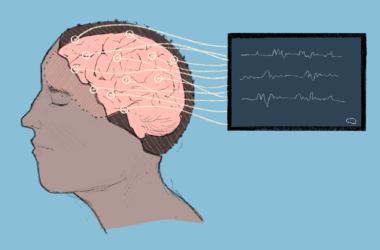
In a November 2019 study conducted over five years, an international team of researchers composed of political and data scientists, musicians, and linguists tried to answer questions related to commonality in human song. 

According to Timothy O’Donnell, an assistant professor in the McGill Department of Linguistics and a lead member of the research team, the inspiration for the study stemmed from the lack of a cross-cultural music database. 

“We wanted to study music in various societies in great depth, but no one had […] built a database that allowed this kind of breadth,” O’Donnell said in an interview with The McGill Tribune. “What kind of questions could we ask [once we had these data]?”

The project was essentially a large study of songs across different cultures around the world. For this purpose, two databases were built, the first of which was called Ethnology. Human Relation Area Files (HRAF), which has records annotated by anthropologists, was a major resource for this database and for cross-cultural study in general. 

“We extracted all the references to human song from [HRAF] and built our own database of references to songs and further analyzed and annotated those,” O’Donnell said. “Basically any time any ethnographer that had studied [a] society in the world had mentioned a song, we were able to pull that out and see what they had mentioned, whether it was a war event or a childbirth event, and analyze the basic components surrounding the event.”

Although the second database was a relatively small collection of 120 song recordings, it required an enormous amount of work to gather them.

“These were very old, sometimes obscure recordings that we had to go to archives to find and [that were] in some cases from societies that no longer exist,” O’Donnell said. “So, we built that, and we called it discography. [It was a] tremendous amount of leg work. Sam Mehr [the lead author] spent many months tracking down these recordings, and then the team spent many years transcribing and translating them.”

O’Donnell contributed his skills as a data analyst to the project, applying the artificial intelligence techniques that he usually uses on language to music. 

“Most sophisticated analysis was in Ethnography, which was analyzing text,” O’Donnell said. “We took huge amounts of data and did dimensionality reduction such as histograms on [them], using techniques from [natural language processing] that are widely used in political science.”

The study revealed that there was more variability in music events within cultures than between cultures. 

“Most cultures seemed to display most kinds of music,” O’Donnell said. “It wasn’t the case that one culture only used music for healing and another for war, but [rather] that all tended to use music for similar functions.”

The research team also found some preliminary evidence for music features that were universally shared, such as rhythm and tonal structure. Another important conclusion was that music is not a fixed biological response with a single function. It is used worldwide in many contexts that vary in formality, arousal, and religiosity.

The team is currently building a larger dataset with 1,600 recordings from all over the world. Using more sophisticated and thorough analyses, they hope to answer questions such as whether tonality is universal, a cultural construction, or the product of some auditory effect.

Bowling
Point-Counterpoint, Sports

Point-counterpoint: Is bowling a sport?

This week, The McGill Tribune placed an incredibly contentious issue on the debate floor: Is bowling a sport? The answer is less clear than you may think. 


Bowling is just like any other sport

Gabe Nisker

Bowling, on a surface level, seems fairly accessible: Grab some buddies, beer, and a pair of clown shoes and head down to the alley. But that is where the Professional Bowlers Association tricks you. Its design is accessible, but once you’re in, you’re in. Underneath the surface, the sport––yes, it is a sport––is ruthless, competitive, and challenging to the highest degree.

Bowling is likely the oiliest sport out there, but that slick quality makes it all the more difficult for one to succeed. Every bowling lane is coated in oil to protect it from catching fire. Most recreational bowling uses “house” coating, which helps funnel the ball toward the centre of the lane for greater shot success. Professional bowling uses a “sport” pattern, a more even distribution of oil across the surface that allows for little margin of error, which makes every shot a precise calculation. 

According to Nick Bonahan, the sports performance specialist for the United States Bowling Congress, being an elite athlete alone is not enough to make you an elite bowler. However, elite bowlers are always elite athletes with impressive leg strength, flexibility, balance, and control. Their adaptability makes each shot—unique due to the changing oil surface—a different challenge that bowlers are well-equipped to handle. The physical and mental difficulty of hurling bowling balls at around 20 miles per hour regularly for 10 frames is not to be understated. The combination of mental and physical makes bowling similar to other sports, such as hockey or basketball, whose legitimacy as a sport is never questioned.  


Bowling is nothing more than a casual weekend activity

Jack Armstrong

According to the Cambridge Dictionary, a sport is “a game, competition, or activity needing physical effort and skill that is played or done according to rules, for enjoyment and/or as a job.” 

Bowling is played according to rules, and it can be played for enjoyment or a job, but it requires almost no physical effort. Many people compare the physical exertion of bowling to the established sport of golf, but in reality, golf is noticeably more physical. The only motions required to be proficient in bowling are walking a few paces and rolling a ball less than 20 metres down a slick surface. Almost anyone can do it. In golf, however, a player must be able to hit a ball nearly 180 metres in order to be considered any good. This requires an enormously forceful swing that not everyone can accomplish–and that is the key difference between the two activities. 

This is not to say that there is no skill to be observed in bowling: There is obviously a gap between good and bad bowlers. However, the skills used in bowling are overwhelmingly mental, much like the game of chess, which is is decidedly not a sport. Knowing where to throw the ball and how much spin to apply is so much more important than how hard you throw the ball, which is why players almost always roll strikes in professional games: They know exactly where to throw the ball. Knowing where to put the bowling ball, however, is not a physical skill. Since bowling’s skill set is overwhelmingly mental, rather than physical, it should be considered a fun activity for all ages but not a sport. 


Editor’s Pick

Bowling is an activity that is generally not associated with superhuman athleticism or intense competition and cash prizes. But the reality is that both of these elements that are intrinsic to professional sports exist in bowling. Bowling is a sport and should be afforded the appropriate respect. 

Commentary, Opinion

White activists—stop hijacking social movements

The future Black, Indigenous, and other people of colour (BIPOC) imagine for themselves is always in relation to their present-day lived experiences. Since June 2019, students have been expressing their discontent with Bill 21—McGill students consistently rally for climate justice, but the campus’s attention is not given to all causes. On Sept. 25 2019, the Arts Undergraduate Society (AUS) voted to strike in support of the Sept. 27 climate march: Roughly 900 members of AUS showed up, surpassing the 500 needed to reach quorum. However, only 90 students attended the Jan. 17  AUS General Assembly (GA) to strike against Bill 21––a law banning public sector employees, such as bus drivers, teachers, and police officers, from wearing any kind of visible religious symbols. Often, campus activism is white activism, and students need to diversify their causes to create substantial change.  

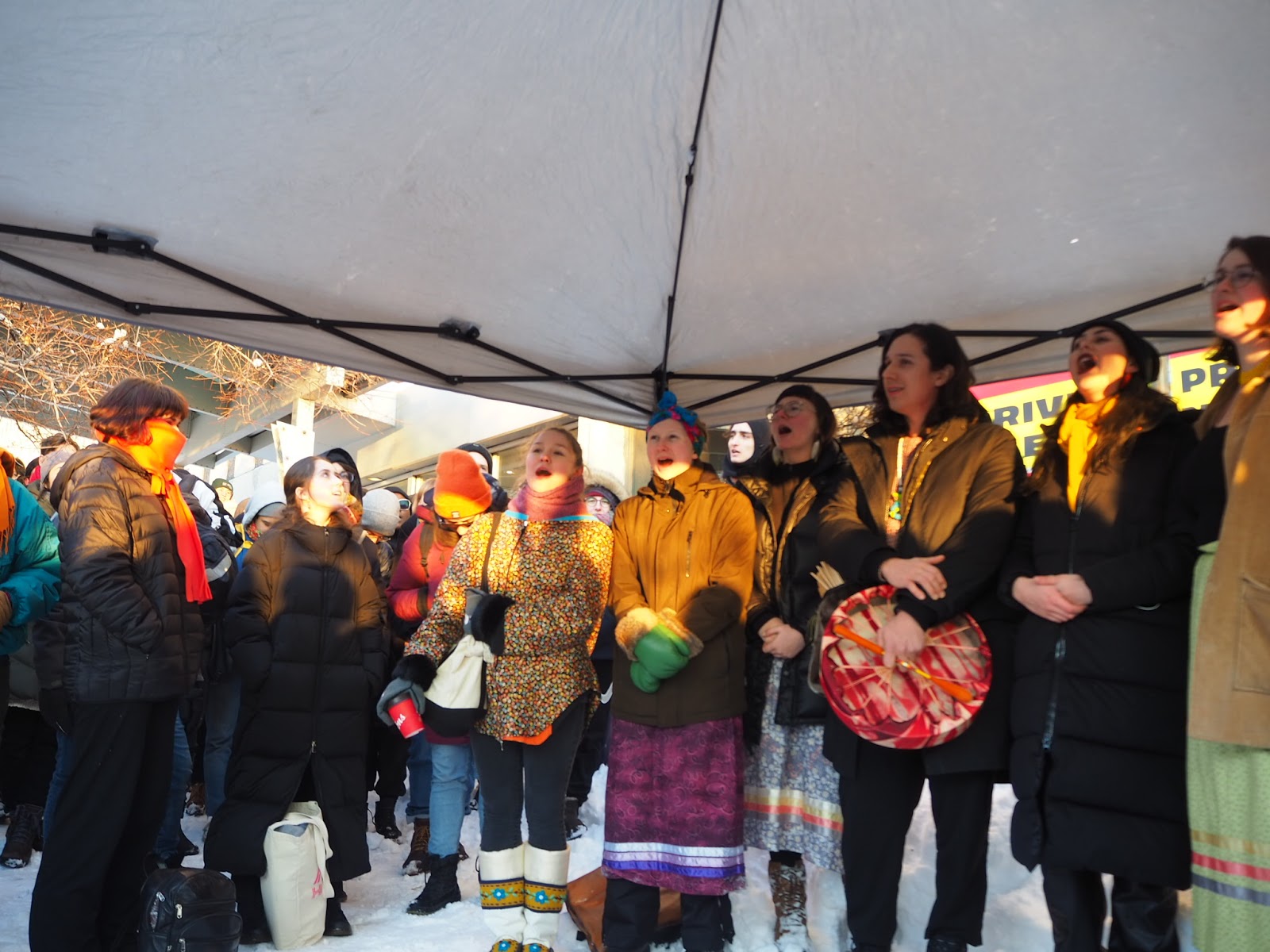
Even when they show up for issues that affect racialized students, white students too often rally behind causes that also affect them. When white activists take a stand, sometimes it takes space from marginalized voices: For example, during the September Climate Strike, because of the presence of exclusionary white activists who participated in ways which were alienating, BIPOC felt unsafe: Members of the climate activist group Extinction Rebellion aggressively barged through a group of Indigenous activists in order to make their way to the front of the march. 

Proven by the failure of AUS to meet quorum on Jan. 17, it is difficult to raise momentum for causes at McGill if white allies choose not to mobilize: White students did not show up to the GA, and as a result, there was no strike. 

White students shouldn’t rally solely for movements that affect their futures; the future white activists are striving for is a future that BIPOC have not even begun to imagine. Many BIPOC, such as victims of war, are focussing on surviving for tomorrow. By failing to use their privilege to uplift BIPOC in their activism, white activists hijack social movements by placing themselves and their feelings at the centre of every cause. White activists must, therefore, make an active effort to diversify their movements in order to create safer and more inclusive activist spaces for BIPOC.

“By failing to use their privilege to uplift BIPOC in their activism, white activists hijack social movements by placing themselves and their feelings at the centre of every cause.”

Having specific demands can help accomplish goals in activist movements, however, when these demands become too insular they can also turn multifaceted movements into one-dimensional issues. Activist groups should seek to articulate practical aims for themselves while also acknowledging the complex context that accompanies ethical issues. Often campaigns headed by white activists are guilty of having ‘tunnel-vision’ which prevents them from addressing injustice comprehensively. For example, Divest McGill—an environmental justice group—was created with the goal of focussing on fossil fuel divestment; but solely focussing on one aspect of McGill’s unethical investments distracts from all the other investments the university has in other domains, notably in the military-industrial complex and the illegal occupation of Palestine. Divestment, therefore, means more than just divesting from fossil fuels: It means divesting from all unethical industries.  

The complexity of injustice expands to issues beyond climate change. Since the passage of Bill 21, there has been an increase in hate crimes towards racialized people, and McGill’s campus is not safe from hate either. Bill 21 is an example of institutionalized racism, and although the CAQ claims that the policy is part of its effort to secularize Quebec, it has the opposite effect: Bill 21 limits the religious freedom of racialized communities. With the passing of the law, racialized students are reminded that they are not welcome in Quebec, as well as at McGill, because of the university’s inability to properly respond to the law. 

White activists must alter their perspectives on injustice to recognize nuance. If one wishes to truly call themselves a climate activist, they should recognize the intersectionalities of climate change and war. POLI 339––a comparative political science course which is taught for half its term at McGill and for the other half in Israel––is an example of an issue with multiple intersections. Israel is a settler-colonial state and has been accused of greenwashing––a practice involving pretending to be ‘environmentally friendly’ in order to cover criminal activity. Despite students democratically showing discontent by voting against the authorization of the course, the AUS Executive Committee overturned the decision, and the course is being offered for a second time this Summer. The existence of a course like POLI 339 makes Palestinian and other Arab students feel unsafe on campus and this is a notion which has not been given enough attention in the on-campus narrative surrounding the course. POLI 339 is another example of why one who wishes to truly be an ally must include BIPOC issues in their activism. 

Injustice is intersectional by its very nature: It can manifest through race, gender, class, colonialism, migration, and war. Yet, these complexities are often dismissed by white activists. White allies should show up, but show up acknowledging their own positionality, and stand in the back. Let BIPOC be the leaders of their own fights—that is what being an ally means.

“White allies should show up, but show up acknowledging their own positionality, and stand in the back. Let BIPOC be the leaders of their own fights—that is what being an ally means.”

Off the Board, Opinion

Finding solitude in a digital world

I am astonishingly bad at being alone. I mean this in every possible interpretation of that phrase. I struggle at being comfortably single as opposed to being in committed relationships. I experience anxiety if I go a large portion of the day without talking to or interacting with someone else. With these things in mind, I have chosen to live in an apartment in the Plateau with four other people for the last two years. When I walk north along my street to return home at the end of the day and see a darkness emanating from the front window signifying that none of my roommates are around or awake, I feel dismayed. However, over the last several months, I have been trying to do more things that I find difficult, and one of those is spending time by myself. In doing so, I have come to appreciate the significance of time spent untethered from others. However, I have also confronted some of the harsh realities of attempting to be truly alone in the era of social media.

In his New Yorker piece “Farther Away,” Jonathan Franzen, one of the preeminent fiction writers of the last 20 years, discusses solitude as it manifests itself in literature, tracing its increase in thematic frequency with the rise of the contemporary novel. However, he also addresses solitude as he seeks to experience it in his personal life, noting how the explosion of the internet age has produced unique forms of isolation, ones previously inaccessible to the global populace which members of the smartphone generation are now uniquely privy to. Franzen’s argument does not share any intellectual territory with stereotypical anti-smartphone, Boomer sentiments. He writes about the internet as something which has transformed how human beings think of themselves as individuals. While the rise of individualism in the modern-novel created a similar mechanism, one that maps ‘the-self’ onto a narrative, the internet has taken that relationship and made it global, mapping ‘the-self’ onto an entirely digital world. 

The ability to access an infinite network of millions of people at any time and in any location is a reality of contemporary life. One of the most overlooked ways that smartphones and social media have altered the course of humanity is by making the experience of true solitude nearly impossible. Validation is the foundation upon which all social media platforms operate. It feels powerfully satisfying to tell others, in words or pictures, what you might be doing or thinking at any given moment. Inversely, seeing into the worlds of your friends or acquaintances through the lens of Instagram or Facebook results in a gratifying feeling of inclusion, of being ‘in-the-know.’ Through social media, we gain shallow recognition of our own behaviors and we get to appreciate the sepia-filtered lives of our peers. Both dynamics make us feel special and both make us feel like we are not alone. And yet, one of the supreme tragedies of the 21st century is that we have begun to live in a world where people rarely feel alone, because feeling alone is so important. Without solitude, people do not have the opportunity to introspect and truly understand themselves.

One aspect of solitude I have come to value is the fundamental role it plays in self-development. Spending time in isolation, entirely unstimulated, initiates a species of reflection which is alien to more social circumstances. This kind of reflection, one in which we carefully examine our own identity, thoughts, and behaviors can be an intimidating prospect. However, introspection is the singular component that makes personal growth a positive process. It is the times where we find ourselves bored, restless, and perhaps even uncomfortable with being so solitary that we make significant discoveries about who we are and who we want to become. Social media is taking these discoveries away from us. I worry about becoming more intent on maintaining illusive linkages to others than understanding myself. 

I am scared that the defining aspects of individuality are being stripped away, melted down, and reformed into a collective digital consciousness. I hope that as we move forward into a connection-defined era, we take the time to become reacquainted with solitude, and in doing so, come to know ourselves. 


Basketball, Sports

Cabillo-Abante shines for Martlet Basketball at Beach Night

Martlet Basketball (6–8) lost in a thrilling double-overtime match on Feb. 6 against the Bishop’s Gaiters (8–5) by a final score of 77–69.

The first quarter started with Bishop’s gaining a steady lead over McGill. A three-pointer from fifth-year guard Geraldine Cabillo-Abante got the Martlets back into the game, and they owned a 12–9 lead at the end of the first quarter. The Martlets held this lead through the end of the half, ahead by a score of 27–24. 

After half-time, however, the tide turned against the Martlets. Bishop’s was back in front 42–40 at the end of the third quarter. The Gaiters carried on this momentum into the fourth quarter, exposing holes in McGill’s defence. The Martlets trailed 44–50 with only five minutes remaining in the fourth quarter but later reduced the deficit to three points (53–56) with only 15 seconds to play. A brilliant shot from second-year guard Delphine Robitaille tied the score at 56 with a three-pointer at the buzzer. 

The game went into overtime, where both teams put up a good effort for the full five minutes. One overtime period was not enough to separate the two sides, however, and the game went to a second with a 63–63 score. Bishop’s dominated in the second overtime, taking the win with a final score of 77–69.

Martlets Head Coach Ryan Thorne was disappointed with the team’s performance, citing a need for more disciplined play.

“We had 32 turnovers in the game, and I think that is ridiculous,” Thorne said. “We let them dictate what was going to happen. We gave up offensive rebounds. They had 16 offensive rebounds, [and] they were better than us. We had a game plan, [but] so many times in the game, we did not execute it.” 

Cabillo-Abante agreed that the team did not adhere to the game plan.

“If we are not sticking to the plan, then that’s going to hurt us,” Cabillo-Abante said.  

Robitaille noted the importance of perseverance in close games.

“Basketball is a game full of ups and downs,” Robitaille said. “When you are down, it’s not a matter of staying down. It’s what you do to get back up. We fought, but not [until] the end.”

The Martlets next play at home when they face cross-town rival Concordia (4–9) on Feb. 15. 


Moment of the game

With only three seconds left in the fourth quarter and the Martlets down by three, fifth-year guard Gladys Hakizimana hauled in a critical offensive rebound and found second-year guard Delphine Robitaille behind the line to drain a stunning three-pointer and send the game to overtime.

Quotable

“I think [the players and the fans] have different viewpoints on what the game was. The fans see this as an exciting game. Double overtime, that’s exciting. But […] I do not think we played well.” – Head Coach Ryan Thorne on the team’s performance. 

Stat Corner

McGill shot a sweltering 37 per cent from three and 91.7 per cent from the free throw line, but 32 per cent on field goals was too poor to overcome. 

Creative

The resurgence of film photography

Staff producer Alex Hinton and contributor Zoe Lubetkin meet with Montreal photography studios and film photographers to explore their take on the resurgence of analogue photography.

Video my Alex Hinton and Zoe Lubetkin


Sports

Know Your Athlete: Camille Vibert

A mountain undergoes several rounds of deterioration and decay over time. Piece by piece, the cliffs chip away and the rocks weather, but when the snow settles and the trees fill in, the mountain, continues to stand strong. Such is the spirit of Camille Vibert, a second-year alpine skier from Orillia, Ontario, who is a natural-born athlete and a symbol of fortitude to those around her. The RSEQ Rookie of the Year has faced and conquered several hurdles over her career, and when it comes to the question of her legacy, she is only just getting started. 

“I didn’t really have high expectations for [skiing] last year,” Vibert said in an interview with The McGill Tribune. “I just kind of wanted to continue [skiing] and have fun with it, just love it again. [But] then I ended up having a pretty solid season, so yeah, […] the ceiling’s pretty high.” 

Vibert credits her confidence and success, in large part, to the many obstacles that have shaped her competitive personality over the years. 

“[I] would always get mad at card games,” Vibert said. “[I was] just always fighting for everything. I wanted to be the best at everything. But when I was 13, I was diagnosed with type 1 diabetes. I had to be independent, even more so than I already was. It was difficult, of course, but it made me more responsible as a person. So, that was what really shaped me as a personnot wanting to give up, ever.”

Vibert maintained this drive throughout high school, excelling in several sports. Her talent in skiing eventually earned her a spot on the provincial ski team. Her time with the team was tumultuous, however, as she suffered a career-threatening ACL and meniscus tear in her very first race. 

“I didn’t really mesh well with [the coaches] and [then] […] there were also all the injuries,” Vibert said. “After a while […], I [realized] that I wasn’t really [skiing] for me but for others and their expectations.” 

Vibert worked her way back to health, ready to take her next big step. With the aim of rediscovering her passion for skiing, she chose to continue her career at McGill. 

“I wasn’t really enjoying skiing for a while but wanted to rediscover my love for it,” Vibert said. “McGill has a competitive skiing program plus […], I’ve always wanted to explore in Montreal, [..] so it was a no-brainer really. My grandpa would be proud that I’m practicing my French, though.” 

As for her life outside of sports, McGill has been quite a ride for the skier. 

“Oh, it’s so busy,” Vibert said. “I am a very social person, and […] I just love going out and enjoying all the events like Hype [Week] and Carnival. But it’s obviously hard to balance with everything. Skiing, I find, helps me manage my time. The added pressure just forces me to keep things in check, and I sort of just need to keep going, going, going, or […] else I just shut down.” 

With a month remaining before the RSEQ championship at Mount Stoneham on Mar. 13 and 14, Vibert remains calm and composed. 

“I have a bit more expectations for this year [and] just a little more pressure, but honestly, I just want to have fun with skiing,” Vibert said. “It’s just really fun, and I’m happy to be able to be doing it while studying.” 

Life after graduation remains an open-ended question. She has professed a love for psychology but has promised to remain an active sportsperson. Despite the lingering uncertainty, one thing seems clear: Vibert will continue to conquer every obstacle in her way. 

“It’s kind of funny because my brother, when I first got diagnosed with diabetes, he [came] to me and he [said], ‘Your pancreas is a quitter, but you’re not,’” Vibert said. “So, that’s sort of my motto. If life knocks you down, you just gotta keep getting back up.”

Read the latest issue

Read the latest issue