

Latest News

Student Life

Running toward a brighter future

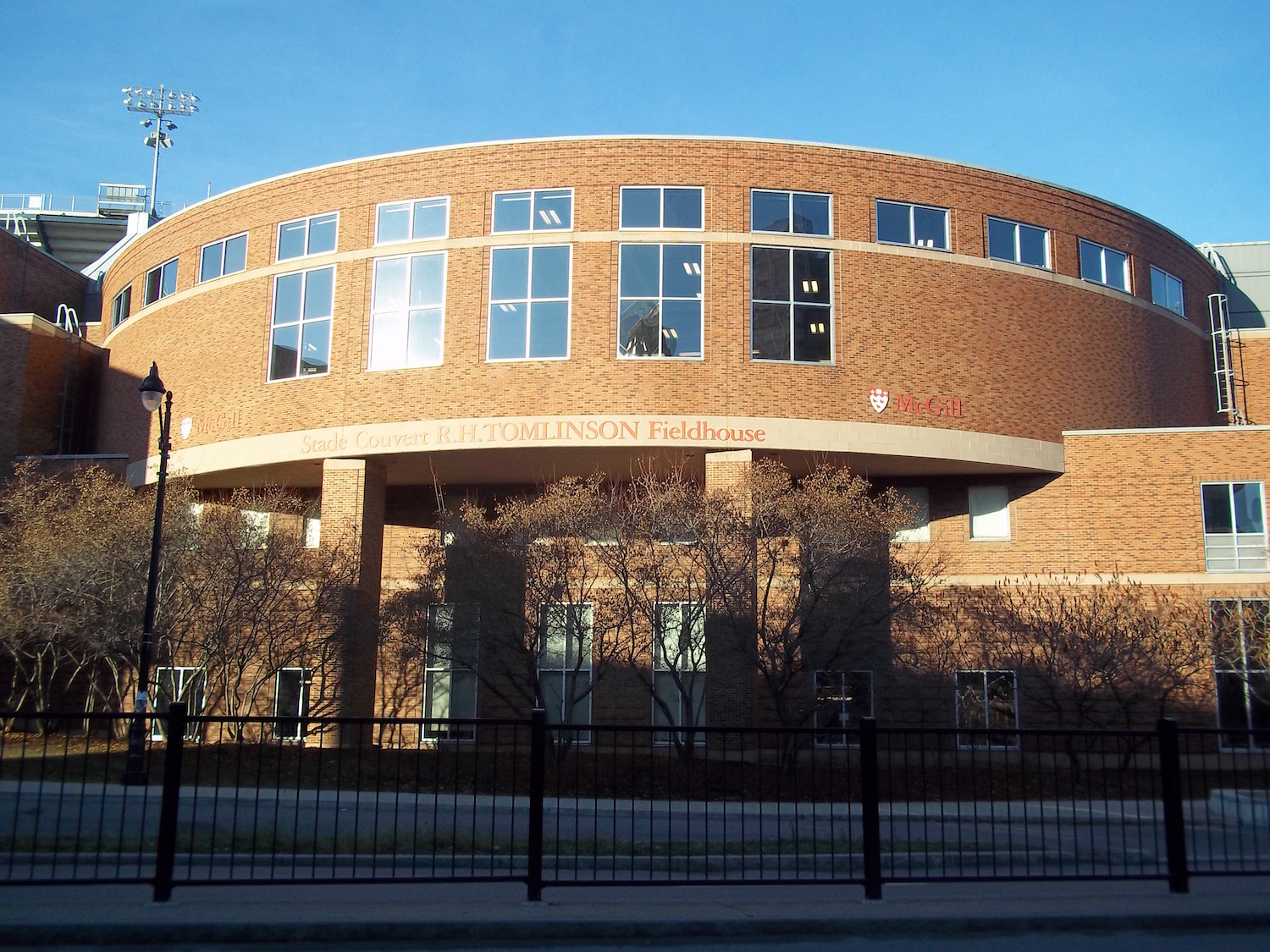
On Jan. 31, the McGill Students’ Cancer Society (MSCS) invited students to run around McGill’s favourite finals room for 12 hours straight for their seventh annual Relay for Life. After months of promotion and organization, the night kicked off at 8:30 p.m. with a welcoming ceremony and the introduction of the event’s many teams. By reaching out to other universities around Montreal, club coordinators brought together students from Concordia, UQÀM, McGill, and other schools in the area.  Many of these students rallied behind creative movie-based names including “Harry Potter and the Goblet of Life” and “Eat, Pray, Run!” Working closely with the three Canadian Cancer Society representatives supporting the university’s chapter, MSCS sought to raise awareness for contemporary cancer research, pursuing an ultimate goal of $30,000.

The overwhelming support from both the executive team and participants spoke volumes to the committed members of the Montreal community dedicated to fighting cancer. Spectators set up picnic blankets, sleeping bags, and lawn chairs to last through the night. Food was provided by a myriad of local sponsors such as McGill’s own Student Housing and Hospitality Services and Deville Dinerbar. Allegra Mendelson, U3 Arts and MSCS president, showed enthusiasm about the growing support of external sponsorships over the years.

“It’s unparalleled, we have over fifty different sponsors,” Mendelson said. “We were able to have all food and prizes provided whereas in the past, we’d have to negotiate deals or buy food ourselves.” 

As the Ontario division’s youth advocate in her years leading up to university, Mendelson helped found her high school’s cancer education group. In the past year, she has helped bring in larger sponsors to fund expenses such as the event’s food and prizes. Mendelson expressed great pride in the continual efforts of her executive team’s publicity efforts which have led to a yearly increase of the annual donation sum. 

“Last year saw a $10,000 increase [of participant contributions] from the previous year, and this year we’ve been on track to have a $5,000 increase,” Mendelson said. 

At 11:00 p.m., participants still showed incredible energy and devotion to the cause, spreading themselves across the track floor while eagerly awaiting to learn which team had raised the most funds and would therefore get to choose the movie that would be shown at 3 a.m. Sophia Stegeman, U2 Science and director of entertainment for MSCS, explained why they incorporated team-based activities throughout the event. 

“It’s not a competition between the teams, it’s all about rewarding the participants,” Stegeman said.

Stegeman described the effort that went into meticulously planning the night’s events such as heartfelt a cappella performances, a fierce lip sync battle, and the highly anticipated dodgeball tournament. 

“As an [executive], we’re constantly on our feet,” Stegeman said. “I’ve practically run the entire night [in previous years]”.

Having surpassed their donation goal with $31,609.74 raised, Relay for Life concluded with a celebratory round of Timbits for the hungry crowd. According to the Canadian Cancer Society’s website, half of this funding will go towards research grants. With clinical trials underway using new breakthroughs such as CRISPR, which can be used to manipulate a patient’s immune system to destroy previously undetectable cancer, the funds raised support advances in cancer treatment. The remaining half of the funding goes to supporting programs and resources like Relay for Life across the nation. In the spirit of Terry Fox, many participants kept running long into the night in solidarity with those currently affected. With such support, MSCS successfully proved that even one person’s willpower is enough to encourage students, faculty, and staff to look forward to a cancer-free future.


Arts & Entertainment, Film and TV, Music

‘Miss Americana’ is a shallow depiction of stardom

Taylor Swift—renowned singer-songwriter, multi-millionaire, 35-time Grammy award nominee, 10-time Grammy award winner, one-time Kendrick Lamar collaborator, two-time Kanye clasher, and attempted Pennsylvania political reformer—sits on her couch in tears because her then-recent album, Reputation, was not nominated for Album of the Year at the Grammys. This devastating moment occurs about halfway through the new Netflix documentary, Miss Americana, which revolves around country-pop idol Taylor Swift. As crushing as it might have been for Swift, the moment is impossible to relate to. Miss Americana tries to frame this moment as her “rock bottom” but it does not land: To the audience, this just seems like an outrageously inconsequential and self-indulgent moment for an already ludicrously famous person.  Furthermore, the doc glances over the fact that Reputation was nominated for Best Pop Vocal Album, which further cushions the blow of Swift’s. 

Many will remember the infamous “Imma let you finish” moment: As Swift began her victorious speech at the 2009 Video Music Awards, Kanye West, the dastardly industry villain,  pounced on stage to declare Beyonce’s video one of the best of all time, and the true winner of the Best Female Video category in his head-canon. Both artists made amends, or at least until 2016, when Kanye released his song “Famous” in which he takes credit for her fame and callously suggests potential for intimacy between them. While the documentary rushes through the debacle, the same questions remain unanswered regarding Kanye allegedly getting permission to record the racy line: Did Swift actually give it the go-ahead, only to backtrack once it went public? Rather than discussing the controversy, the documentary rapidly moves on to more footage of Taylor writing songs on camera.

Real, important issues Swift has addressed in the past are also pushed to the wayside. While the film broaches more sensitive topics, such as Swift’s struggles with body image or her mother’s cancer diagnosis, it ultimately spends the majority of its runtime paying lip service to Swift’s career. Miss Americana constantly reverts back to embracing disingenuity. Her valiant attempt to make sure Pennsylvania’s election swung Democratic in 2018 could have been a moment of triumph in the narrative (despite the election’s unfortunate results), but instead it feels like the effort is a footnote in a film that would rather tell the tale of hardships easily overcome. Miss Americana’s sub-90 minute runtime is bloated with scenes that make Taylor appear approximately as entertaining as being stuck in traffic, which is especially frustrating when there is clearly evidence of at least some worthwhile points of interest among the monotony.

Miss Americana fails to offer any meaningful insight into the most allegedly “down-to-Earth popstar” on the planet. Taylor Swift has had a relatively easy life. If this film were a lighthearted flick about all the fun Swift has had touring and performing, it would not be such an easy target for ridicule. However, framing it in such a way that makes it seem like Swift finds adversity around every corner is frustrating and condescending. Miss Americana tries its best to make Swift appear vulnerable, but all it does is show her as she truly is: Dull.


Basketball, Sports

2020 NBA All-Star mock draft

The 2020 NBA All-Star Game draft may have come and gone, but The McGill Tribune thinks that things could and should have gone differently. Here’s a look at two alternate teams from the Tribune sports section. 


Team LeBron

Alec Regino

Bearing in mind the dynamic new format for the All-Star Game this year, Team LeBron is built for the playful, buddy-buddy nature. But do not be fooled—there are two clear reasons why LeBron’s team has won in the past: Raw talent and strong bonds. I’ll be drafting players with the understanding that LeBron’s previous success has been predicated on team chemistry.

First Round: Starters

Anthony Davis (pick #1)

I can’t imagine the fall out from not drafting your all-star teammate with your first pick. With their chemistry on the Lakers, the James-Davis one-two punch combo is simply too good to pass up. 

James Harden (#3)

The league’s leading scorer—averaging an astronomical 35.4 PPG—is an obvious choice for LeBron’s second pick: The All-Star Game is about getting buckets, and that is what Harden does.

Pascal Siakam (#5)

Pascal Siakam has had a career year following the loss of Kawhi to the Clippers. LeBron will be betting on the first-time all-star relishing the opportunity to put the clamps down on his former teammate in front of the league’s best players. 

Trae Young (#7)

While fun, Trae Young is just not on the same level as the other starters. At the very least, we will get to see what Young can do when he shares the court with talent that will make up for his defensive deficiencies.

Second Round: Reserves

Damian Lillard (#10), Ben Simmons (#12), Chris Paul (#14), Jayson Tatum (#16), Bam Adebayo (#18), Nikola Jokic (#20).

The Final Pick

Russell Westbrook (#22)

While LeBron would love to watch Westbrook chuck up terrible three-pointers or stomp down the lane and draw an offensive foul, he probably wants to win this game, so Westbrook gets picked last.


Team Giannis 

Adam Burton

Ever since losing to the Raptors in the 2019 Eastern Conference Finals, Giannis has been on a warpath to prove that he is the best player in the league. His loss in last year’s All-Star Game is sure to have him scouring basketballreference.com for hours in preparation for this year’s draft. With that in mind, I’ll be picking players most suited to Giannis’s dominant, high tempo, slash-and-kick offence. 

First Round: Starters

Kawhi Leonard (#2)

Fresh off a Finals victory, Kawhi is arguably the best player in the league. Giannis will need his incredibly efficient and overwhelmingly precise skills on both offence and defence. 

Luka Dončić  (#4)

Dončić is not just an unprecedented offensive talent; he is a symbol of the rising tide of young players that is slowly but surely flooding the league, harkening a new era of basketball. Giannis will be sure to include the second-year phenom as his deadly starting shooting guard.

Kemba Walker (#6)

Ever since his tenure began in Boston, fans would be hard-pressed to find a teammate that has anything bad to say about Walker. This is not hard to believe considering that he had the “good vibes Celtics” all over for Thanksgiving. In addition to being a straight-up good guy, Walker is also an elite point guard, capable of passing and scoring with a quick style of play that will take Team Giannis to the next level.

Joel Embiid (#8)

Despite his offensive production and health inconsistencies, Embiid has moments where he looks like the most dominant centre since Shaquille O’Neal. Considering the notoriety of the All-Star  Game, Embiid will be sure to bring his A-game.

Second Round: Reserves

Khris Middleton (#9), Jimmy Butler (#11), Kyle Lowry (#13), Brandon Ingram (#15), Domantas Sabonis (#17), Donovan Mitchell (#19).

The Final Pick

Rudy Gobert (#21)

Let’s face it: The All Star game isn’t a show of defensive abilities. Unfortunately for Gobert, that is most of what he brings to the table. While his talents definitely merit him a spot on the team, Gobert probably won’t see much playing time.

Arts & Entertainment, Theatre

Apocalypse is at the centre of Centaur Theatre’s ‘The Tropic of X’

At first glance, Caridad Svich’s The Tropic of X seems like an ordinary science fiction play depicting a dystopian future. However, it is clear that Svich grounded this political drama in reality. Criticizing North American colonialism, capitalism, and consumerism, the narrative becomes a commentary on the negative conditions that such structures create. The Tropic of X features an entertaining cast of actors with effective lighting, sound, and costume design techniques which contribute to its convincing depiction of the future.

The audience is greeted with a stage resembling an impoverished urban community. Graffiti on concrete walls, wooden huts lit by a single flickering light bulb, and mountains of garbage bags set the tone for the lives of people that have been discarded by the upper-class. Using explicit symbols of nationalist ideologies in the script, such as the forced use of English and suppression of any other language, The Tropic of X effectively communicates its themes of injustice without distracting the audience from the occurrences of its principal narrative. The two main characters, Mori (Braulio Elicer) and Maura (Arlen Aguayo Stewart), are two lovers comparable to Shakespeare’s Romeo and Juliet. Their relationship is challenged by a society that is exploiting them for crimes like selling drugs and prostitution, which are their only means of providing for themselves. These themes are only an introduction to the darker occurrences of this performance, as agonizing fight scenes, and the prolonged torture of one of the characters standing bare-skinned, present the harsh reality of poor communities in an uncensored manner.

Mori and Maura’s romance relieves some of the play’s tension. The two are often seen playfully punching the air while making jokes about the last tourist they robbed. As the two look for any form of excitement in their monotonous lives, Kiki (Victor Andres Trelles Turgeon), a transgender woman who is an escort in the slums, seduces Mori into the drug trade. This ongoing conflict creates great tension between the characters, as what once started out as a friendship with Kiki becomes, for Mori, a risk of descending into a life of drug addiction, forcing him away from Maura. Hilton (Gitanjalijain) narrates the story as a radio host.  One such radio announcement warns of Fabian (Eric Davis), a mysterious character who prefers to stick to his cloak-and-dagger nature while he kidnaps new victims, tortures, and brainwashes them. Mori eventually becomes a victim of Fabian’s practices, leading Maura to a rescue mission driven by passion to save the love of her life. These five characters each portray a dog-eat-dog existence, in Svich’s criticism of a society too fixed on individual success and disregard for the impoverished. 

Vivid technical components complement the narrative extremely well, allowing a deeper immersion into the scene. Latin-style drums playing in the background, designed and composed by Mariano Franco, reflect the globalized nature of the world the characters inhabit. Other sound-related elements, such as the gunfire of police coming to dismantle drug operations, or the voices of characters communicating telepathically, add to the authenticity of the worldbuilding. Sonoyo Nishikawa’s lighting design is one of the performance’s most notable aspects, as blood-red hues douse the stage after a stabbing, or lights flash neon green and pink when the characters get high.

The Tropic of X is an explicit, daring play that is not afraid of depicting the realities of economic inequality. A diverse ensemble of characters whose stories are underscored by evocative technical elements make up an entertaining performance with realistic underlying themes. While the play may not be as romantic as Romeo and Juliet’s story, The Tropic of X is a cautionary tale that depicts what may arise from the political nature of the present.

McGill, News

SUS General Assembly does not meet quorum and supports the AUS

The Science Undergraduate Society (SUS) convened on Feb. 5 for their first General Assembly (GA) of the Winter 2020 semester. While the majority of the executive team and representatives from the various departmental groups were in attendance, the meeting did not reach quorum for a GA, with only seven constituents present. 

Given the low turnout, gallery member Asa Kohn, U2 Science, inquired if SUS would plan another General Assembly this semester. SUS President Marjan Ghaz, responded by pointing out that GAs typically do not have high turnout. Despite this, Kohn urged the council to consider holding another one before the end of the school year. 

“All of [the] miscommunications and errors [lead] to a very low turnout of the GA,” Kohn said. “I hope the executives will consider holding another one, so that we, as constituents, can actually participate in democracy.”

During the meeting, motions to renew many of the SUS-backed fees were passed unanimously. This included the Science Undergraduate Research Awards, the SUS Ambassador Fund, and the SUS Work Study Program. 

Scheduled last was the motion for the approval of the timeline of the Winter 2020 SUS Election. At this point, the VP External for the Bachelor of Arts and Science Integrative Council (BASiC), Alexandra Millar, noted the recent motion put forward in the Arts Undergraduate Society (AUS) Legislative Council on extending the campaign period to include the election days. 

“This is something that was […] brought up at the AUS last week about the campaign period,” Millar said. “A lot of our constituents do not interact with our campaign material […] during the elections calendar. There’s talk of extending the campaign period during the polling sessions so that, for our constituents that do not really know [the candidates], can […] check people’s Facebook pages.”

Vice-President of the Physiology Undergraduate League of Students (PULS) Jamie Halperin was hesitant to introduce this policy during the SUS elections due to possible misconceptions by the student body.

“I personally find it really important to end the campaign period before voting,” Halperin said. “With Facebook events still active [during voting], people would say, ‘oh this candidate has 1200 people in there while this person only has 400’, or that ‘this candidate shared a bomb meme’. I just find that [by] having that campaign ending with the voting page, you get to [only] see each platform [and the] constituency can still reach [out] for more information. I think [that is] the purest form of democracy that we can have in student government.”

Speaker of the Council Haoyi Qiu reminded the gallery that the motion was for the dates of the election timeline rather than amendments regarding advertising during the campaign period. With no demands to extend the debating period, the dates were subsequently passed and the meeting was adjourned. 

Flashback:

The email announcing the GA was sent out on the night of Jan. 22, less than an hour before the supposed deadline to submit motions to the Speaker. According to the Speaker Qiu, they were still accepting proposals until the following Monday. The reasons for the delayed announcement were unknown due to the absence of the VP Communications, Karim Almallakh, but factors suggested by the Executive Administrator, Sydney Merritt, were the difficulty in booking a larger room for such events. 

Soundbite:

“Thank you for all your patience, I know it’s difficult to deal with a change of leadership so late in the year. I have my contact info listed, as well as my office hours […] so please do reach out on any questions about SUS you may have.” – President Marjan Ghazi, addressing the recent change in leadership following the resignation of former President Dylan Wong in December. 

Student Life

The Med Café reimagined

On July 13, 2018, a fire broke out in McIntyre Medical Building, known among students as McMed. According to the CBC, the fire started on the outdoor terrace of the building, with most of the damage sustained on the fifth floor, where Med Café is located. This left the building without any dining locations. Though most of the building was up and running again by the following semester, Med Café remained closed until December 2019, when it quietly reopened with a renovated seating plan.

According to Marisa Albanese, the senior director of Student Housing and Hospitality Services (SHHS) at McGill, the re-opening of Med Café with a new seating plan, was a concerted effort that involved several McGill organizations working together.

“[SHHS] is responsible for food services on campus,” Albanese said. “We worked in collaboration with Facilities Management and the Faculty of Medicine [on this project]. There was an [in-depth] design process, and the whole area was renovated.”

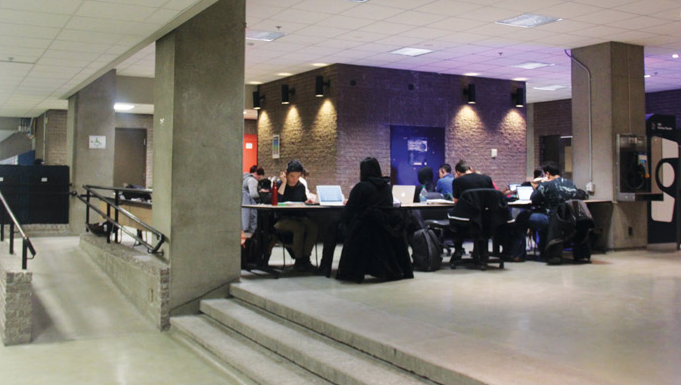
While the previous seating area featured long tables reminiscent of a classic high school cafeteria, the new space feels warmer and more welcoming, with smaller, round tables. Additionally, the café added a lounge area in the back, which features carpeted flooring and colourful couches for students to relax on. Furthermore, more microwaves are now available in the seating area to allow students and staff to reheat food from home.

“What we want is for students to feel comfortable in the space, to study and […] hang out with their friends,” Albanese said. “You’ll notice that the back room […] was actually walled off before, so the Faculty of Medicine made a decision to tear down that wall and extend that space, [to] add more seating for students [….] You’ll notice [that there is more] window space [now]. We have a banquette that goes along the windows and seating, so you can actually sit outside while eating.”

Samuel Rahman, U3 Representative for Pharmacology Integrative League of Students (PILS), feels that the new cafeteria is a much more inviting and comfortable space compared to what it was before.

“The food is relatively the same, but the actual cafeteria is much nicer now,” Rahman said. “It’s actually [incredibly] nice. There are more seats, and if you actually go inside, there [are] sofas and a nice lounge area.”

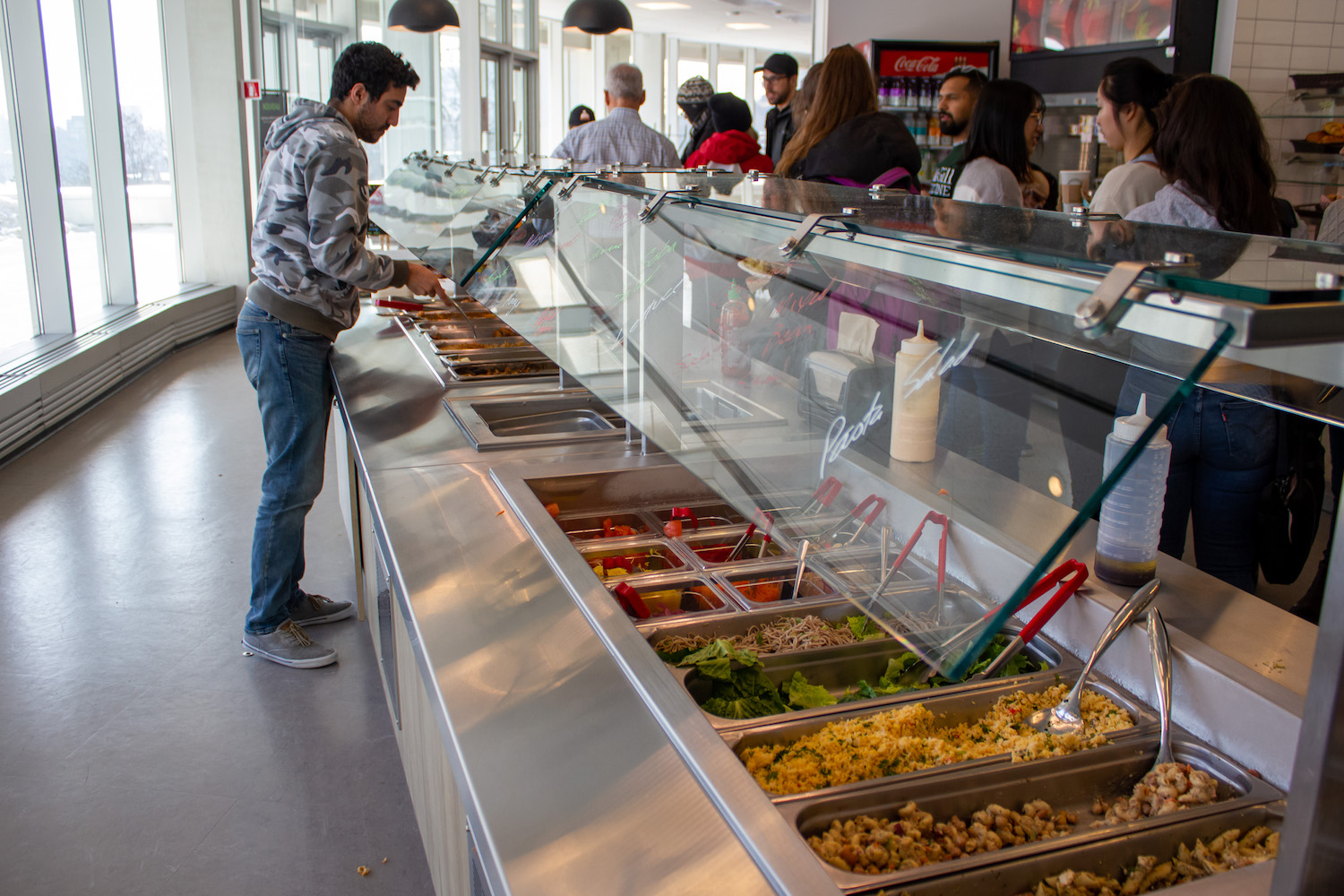
While Med Café has made tremendous changes in revamping their appearance, the menu did not change drastically. Med Café offers the same selection of grab and go snacks, found in other spots on campus. There is also a self-serve salad bar and a hot food buffet that offers both vegetarian and vegan meals. Options for the hot food buffet are changed frequently to allow for a variety of food from different cuisines, ranging from roasted potatoes to Asian-style crispy pork belly with buns. These selections remain relatively homogenous to other campus-owned cafés, since many spots on campus are owned by one operator, Dana Hospitality

“The [food options] aren’t dramatically different,” Albanese said. “[They are fairly] similar [to what they were] in the past [….] The only difference is that there’s a new operator managing the café [….] That really [motivated] all of our cafeterias and all restaurants on campus to get started with the new vendor in June 2019.”

The re-opening of Med Café is important for students like Rahman, who work long hours in McMed. While the lower half of campus contains a multitude of food options within a short walking distance of each other, finding food on the upper side of campus—Stewart Biology and McMed—can be a trek. 

“I work in a lab on the 12th floor, so I’m always [in McMed],” Rahman said. “Med Café is one of the only places in the area [to easily grab food or a coffee]. The [second] closest option is Second Cup [inside the Stewart Biology building] or the Subway [located on Dr. Penfield]. It’s not great, [especially] the coffee at [Second Cup], which is expensive.”

Especially during the winter, McMed can feel isolating. Diana Di Lorio, U3 Representative for Physiology Undergraduate League of Students (PULS), is happy that Med Café offers more expansive food options than Second Cup. However, she believes that Med Café can still do better in terms of its pricing.

 “The options available in the café are on the pricey side,” Di Lorio said. “I’ve been to [… Med Café] during lunch hours and have seen more options than in the original, but [I still thought] it was pricey. In fact, I have [overheard] other people discussing the food prices [in Med Café] before, so I [don’t] think I’m [alone in this.]”

Issues with food affordability and availability have long been a point of discussion among McGill students. First-year students living in residence pay $5,975 for the mandatory meal plan, but often face a lack of options for their dietary restrictions. A 2017 article in The McGill Tribune argued that residence dining halls should have more gluten-free, vegan-friendly, and non-dairy items for students who need them. In 2014, the Tim Hortons in Redpath Library was controversially changed to a Premiere Moisson, sparking debates about rising food prices on campus. Posts complaining about expensive food and the lack of good quality food can be found all over r/McGill.

However, Albanese explained that her colleagues had given positive feedback on the menu pricing at the new Med Café, saying that the food that they had bought was cheaper than expected. 

“My understanding of the hot and cold food items that [can be] purchased there is [that they cost] about nine to 10 dollars, because it’s all about the weight,” Albanese said.

Rahman noted that he was surprised when Med Café had re-opened because it seemed out of the blue.

“I think it opened during late winter exams, but no one was here [so no one knew about it,]” Rahman said.

For now, Med Café remains a quiet affair, owing to the lack of announcements to its reopening.

“We [haven’t] done [any] advertising yet,” Albanese said. “We’re going to have a small launch very […] soon. We were set to have one last week, but we had to cancel unexpectedly.”

Even with some publicity, Med Café remains a cafeteria whose purpose is to serve the needs of the students and faculty who study and work in upper campus. With this purpose in mind, many students have voiced their admiration for its improvements in where they eat and study, as well as their disappointment in the lack of what to eat between their study period. 

Out on the Town, Student Life

Dining in a movie scene

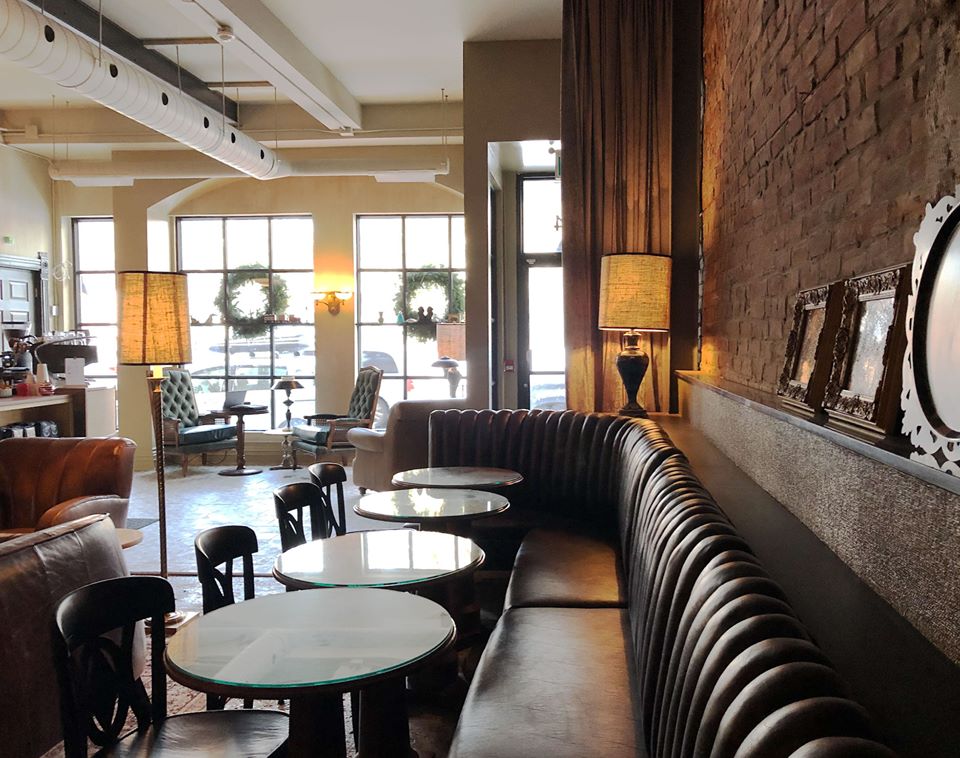
This year, you can spice things up for Valentine’s Day by travelling through time. Le Roseline, located at 5014 Saint-Laurent, is the product of Jean-Marc Renaud’s work. With an illustrious career working on set design in TV shows and advertisements, Renaud opened a cafe-bar in December 2019 that recreates the atmosphere of Montreal in the ‘30s, giving customers a chance to experience what it would have been like to socialize in that era. Before going into the film industry, Renaud had previously been immersed in the world of dining but grew disillusioned with the field. Le Roseline represents his return with a new perspective on participating within the domain.

“So I said to myself, ‘I should try to go back into the restaurant industry, but with a different eye, a different way of doing it,’” Renaud said. “I didn’t like the energy back then which is why I quit, but now it’s different [….] I am going to combine all my experience doing movies and TV series, and I am going to create [a restaurant], like it is [in] a movie.”  

Renaud had a lot of experience with hospitality growing up. His parents converted their family home in the Sainte-Rose district in Laval into a restaurant. The memories he made during this period of his life contributed to the design of Le Roseline as he was inspired to recreate the environment of their hospitable family restaurant.

“When I finished [hotel management school], my parents opened their own restaurant in Sainte-Rose, Laval in our family home,” Renaud said. “It was a Victorian house, transformed into a restaurant, and maybe that’s why you look at the place here and you feel the homey kind of atmosphere.”

Renaud explained that he has always had a passion for design and wanted to be a furniture designer. He drew inspiration from a combination of his family, Montreal identity, and filmmaking expertise to create the atmosphere in Le Roseline. 

“It’s a combination of my roots, I am a 100 per cent Montrealer,” Renaud said. “[…] My grandma was a musician, she was in a band in the early ‘30s, so what I created in the middle is inspired by my grandma’s living room, with this kind of carpet [and] with the sofa.”  

Renaud also designed a menu that reflects the classic dishes of the time. The restaurant serves traditional dishes with minimal reinterpretation to fully capture the culture of Montreal cuisine at the time, which was heavily influenced by French culture. 

“[For example], the omelette norvégienne we do a flambé,” Renaud said. “No place in Montreal does [omelette norvégienne] flambé anymore […but] we decided to bring back this dessert that was very popular in the ‘30s. Even the cocktails, […] we have the Mary Pickford cocktail, we have the French 75, and the Old Fashioned. Mary Pickford was an early actor of the early ‘30s [who] came to Montreal in 1949 [and stayed at the] Queen Elizabeth Hotel, and they created a cocktail for her. We make it here because it is part of the experience [of 1930s Montreal].” 

Renaud adds that he hopes customers can get a real feel of what it was like to socialize and relax in the ‘30s, adding that people during that time were more at ease. Open Tuesday through Sunday, Le Roseline hopes to take customers  away from the stress of modern day reality. 

“It’s really the vibes of the early ‘30s you feel here,” Renaud said. “[… I wanted] to do something to transport people back to the old times [….] [I wanted to] do something that allows people to disconnect with their own reality and go back in time and see how it was [in 1930s Montreal].”

McGill, News

PGSS Council approves upcoming referendum questions

The Post Graduate Students’ Society (PGSS) Council convened on Feb. 5 to discuss questions for the upcoming referendum and the creation of the position of Macdonald Campus Commissioner. Many significant referendum questions were approved during the meeting, including the approval of the use of the keep.meSAFE mental health support system, making revisions to the PGSS Health and Dental Plan, the Students’ Society of McGill University (SSMU) Daycare, and the Library Improvement Fund.

Currently, there is no dedicated point of contact between PGSS and the Macdonald Campus Graduate Students’ Society (MCGSS). External Affairs Officer Esteban Gongora Bernoske expressed that he had been serving as an ad hoc bridge between PGSS and MCGSS, facilitating communications during orientation events on both campuses. This was due in part to his prior experiences as a Macdonald Campus student. 

“Someone like me who knows both organizations will not always be around, so in that case, there [would be] no strong link between the two,” Bernoske said. 

A common theme of the proposed referendum questions was healthcare. The proposal to add a referendum question to replace the current telecom mental health provider, empowerME, with keep.meSAFE passed. Not attached to the Wellness Hub, keep.meSAFE will be funded through McGill student services and a $2.75 per semester student fee. In addition to on-campus mental health resources, keep.meSAFE would have no cap on student use. PGSS also noted that the website would provide more options for coverage, including in person services. 

Similarly, a motion to increase coverage offered by the PGSS Health and Dental Plan passed. Secretary General Dakota Rogers noted that the current plan has many faults that lead to unfair servicing.

“An addition to [the plan] is capping how much dentists can charge our insurance plan on scaling [….]” Rogers said. “For example, dentists will commonly charge [students for 90 minutes] of scaling [….] No one sits in a chair for an hour and a half. But they can do it because it’s not a verifiable service.”

The new plan would have stricter caps on specific services, as well as more payment options for students. 

All but two of the proposed referendum questions were approved to be added to the ballot. The Council voted to reject a student-submitted question on joining the Quebec Students’ Union (QSU) and a vote on the creation of a committee to consider the health insurance plan unification. Founded in 2015, the QSU currently represents eight student unions across Quebec, and is the sole remaining provincial federation that advocates for student union interests at a government level. However, members of PGSS expressed concern over the practicality of joining the QSU.

“It’s true that lobbying work is important,” Bradley Alexander, member of the Graduate Law Students’ Association (GLSA), said. “But what I think we should be doing is having a conversation about what PGSS should be doing [for] the student movement. For years, we’ve been having this depoliticized conversation about whether or not we should join QSU [….] But, what we should be doing is talking about how we want to be involved in the student movement.”

Moment of the meeting: 

The last question to be approved for the referendum was a proposed $300 to install an industrial shredder in the McLennan-Redpath Library. Following heated discussions on accessibility and healthcare, this trivial addition to the ballot drew laughs from the tense room. 

Sound bite: 

“This is a political decision and […] the QSU has politics and talks with the government. So that’s my problem with this. We’re looking forward to joining a political organization that’s going to go to a very problematic provincial government [and] we should be discussing how we want to relate to them.” — Bradley Alexander, GLSA member, expressing opposition to PGSS joining QSU.

Free speech
Commentary, Opinion

Profanity is powerful, not unprofessional

The Students’ Society of McGill University’s (SSMU) Accountability Committee recently presented a report to the Board of Directors (BoD) recommending that Vice-President (V University Affairs (UA) Madeline Wilson be suspended for five days without pay. The recommendation came in response to a complaint against Wilson for her use of profanity in a Dec. 4 Facebook post on the UA page that condemned McGill’s failure to divest from fossil fuels, following a similar incident in October. Ultimately, the BoD chose only to suspend her social media privileges for three days, however, the Accountability Committee’s recommendation was an overreaction and represents a larger issue whereby those who speak out against injustice are held back by minor controversies while the perpetrators generally face no consequences.

This controversy marks the second time that Wilson has been reprimanded for her use of profanity on SSMU-associated social media. On Oct. 31, she made a post telling those harassing student activist and Indigenous Affairs Commissioner Tomas Jirousek online to “go fuck themselves” without a content warning. Despite the Nov. 28 motion to ban the use of profanity in SSMU communications, Wilson defended her choice of words, explaining that she thinks carefully about the way she uses language. The Dec. 4 post included a content warning, recognizing that some may not feel comfortable with the profane language. 

However, using strong language can serve to highlight an important point, and does not equate to being unprofessional. This is precisely why the context of Wilson’s comments is crucial. Both of the issues she spoke out against are important and recurring for McGill’s student population. Frustration has continued to grow as the university’s administration fails to take substantive action to help address the climate crisis. When it comes to concern for Indigenous peoples, the #ChangetheName movement sparked the enthusiasm of students on campus. On top of this, many have recently engaged with important events and causes surrounding Indigenous issues, including the recent event in solidarity with the Wet’suwet’en. 

Seeing as how these kinds of issues directly impact some members of the McGill community, using profanity in such a context is justified. There is a significant difference between swearing without reason and employing strong language to draw attention to something important.

Those who care about social and environmental issues on campus should be rallying together to work against oppressive forces as opposed to infighting amongst each other about the varying strategies individuals choose to use to address injustice. SSMU has shown a commitment to equity and advocacy; this is evidenced in part by its equity policy and initiatives, which fall under the UA portfolio. When governing bodies within SSMU take this much time to debate and pass legislation to regulate communications, it takes time and resources away from lifting up activist movements on campus and beyond. Those who should be condemned in these situations are those at the root of the problem. The student-body should focus its efforts on problematizing targets like McGill, for refusing to divest, or internet trolls, who harass marginalized students online 

As opposed to tone policing one SSMU executive, time and resources can and should be redirected in order to help address issues related to environmental justice and discrimination, which have a tangible effect on members of the McGill community. There are a range of initiatives on campus working to address these very concerns through events, education and fundraising, including those led by clubs like Divest McGill and the Indigenous Student Alliance.These groups and initiatives cannot function without substantial support from the rest of the community, including SSMU.  Rather than the language Wilson has used to discuss such issues online, it is the issues themselves which deserve the attention of the SSMU executive body and the BoD.  


Arts & Entertainment, Film and TV

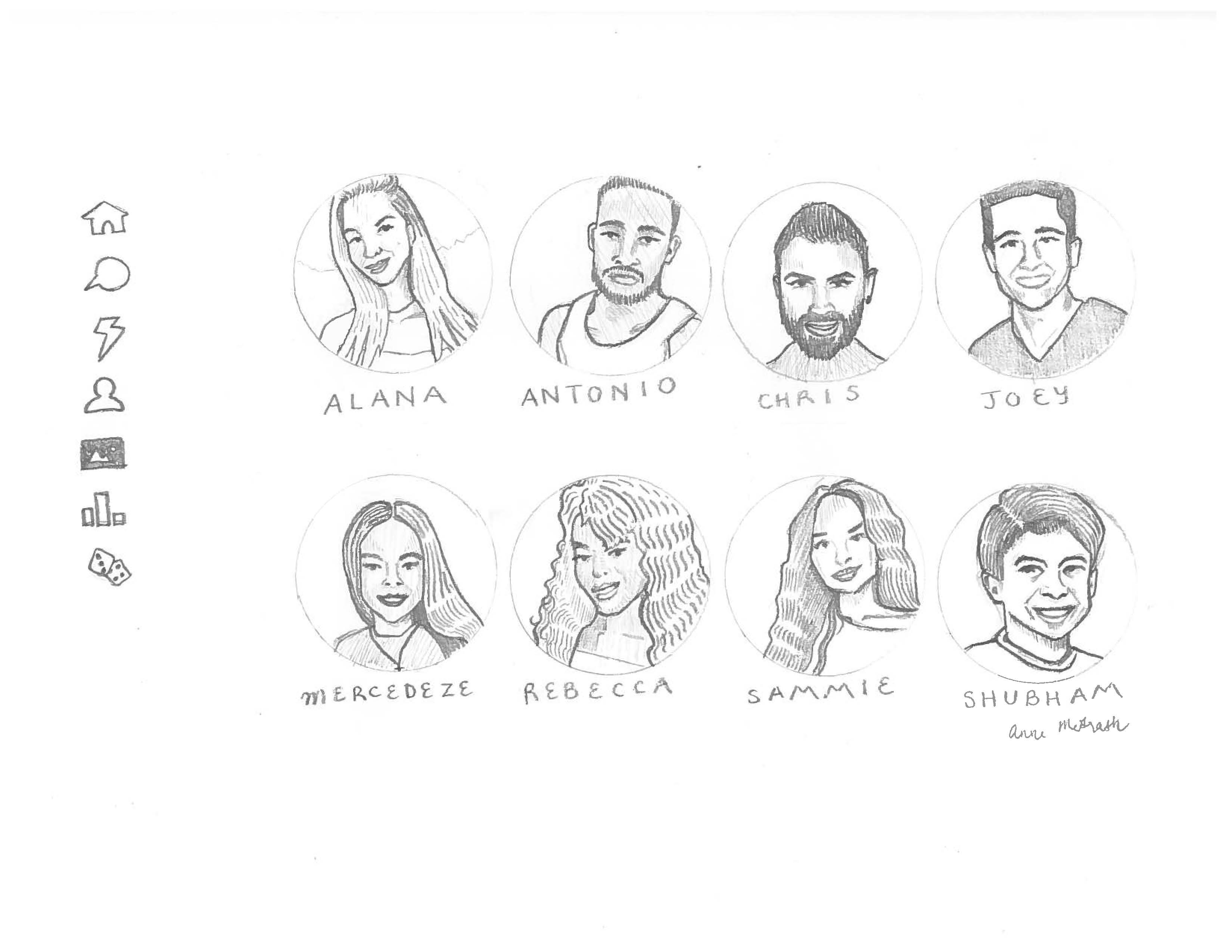
‘The Circle’ offers an innovative twist on the reality TV drama

In the age of daytime cable television, reality shows permeated every network: Food Network had MasterChef, MTV had Jersey Shore, TLC had Dance Moms, and the list went on with every change of the channel. While the genre has dominated television since the turn of the millenium, it is quickly evolving to fit into the new era of streaming and social media. Last month, Netflix released The Circle, a remake of the successful British TV show of the same name. Heightening and parodying everyday social media interactions, The Circle is an odd but surprisingly endearing reality show about what really unites people. 

Marketed as a mix between Big Brother and Catfish, The Circle invites eight contestants to live in separate rooms of one hotel, never interacting with each other but instead communicating through a social media interface known as ‘Circle.’ They post pictures, update statuses, and chat with each other in an attempt to win each other’s affection through entirely virtual encounters. They rank each other on popularity, and the lowest rated player gets ‘blocked’ by the highest. Think of it as a game-show version of Black Mirror’s “Nosedive” episode, but with a hefty $100,000 prize waiting at the end for the best-rated player.

For a competition show, there is little strategy involved, or rather, deliberately invoked. A common character trope in reality television is the cutthroat, competitive player who says something like, “I didn’t come here to make friends, I came to win.” Ironically, the entire strategy of The Circle is based on who can make the most friends. As the season progresses, some new players enter The Circle after the original players have gotten to know each other. You would think that the newcomers would have an advantage as they have less opportunities to get booted off, but this is not the case. The Circle is ultimately a game of loyalty and competitive friendliness, not strategy.

Perhaps the strangest aspect of this show compared to others is the lack of action. The players hang out in their hotel rooms all day, reading books and cooking meals—it might be the easiest way to earn $100,000 on television. Yet their interactions are just as entertaining as those in the real world. The Circle offers incredibly moving moments that offer a new perspective of identity on the internet.

The question of authenticity influences every encounter in the show: Does authenticity matter online, and does it even exist? The Circle suggests that being ‘fake’ on the internet is just a fact of life. For example, as the players dictate messages to the interface, they say things like “I’m dying of laughter! LMAO” or “I can’t stop crying right now” in a deadpan voice, with no expression on their faces. This is not portrayed as manipulative or deceptive, just as how regular humans virtually interact via text. More significantly, some players choose to catfish—use someone else’s pictures to create a false identity—not out of malice, but as an opportunity to challenge stereotypes. Their motives are a product of their social environment. For instance, Sean, a plus-size woman, chooses to use a model’s pictures for her profile; likewise Karyn, a butch lesbian, uses a random glamourous woman’s pictures. For these players, the anonymity of the internet offers a disguise that allows many of them to transcend toxic beauty ideals. 

Social media often questions human genuineness, but reality TV has been exploring and subverting that issue since its conception. That is why The Circle works so well. It does not try to be a deep critique of modern society, but it nevertheless shows astute observations about the norms of online self-presentation and relationship building, making it well worth the watch.

Read the latest issue

Read the latest issue