Latest News

Arts & Entertainment

MMFA’s Egyptian Mummies exhibit explores six lives from ancient times

Ancient Egypt has long been a subject of fascination and imitation in Western culture. Particularly, the mummy is best known as a horror movie icon and easy Halloween costume. But seeing an actual mummy is a stark contrast to seeing your friend wrapped in toilet paper. Mummies represent both a sacred burial practice and serve as long-lasting records of life in a past society. Beginning on Sept. 14, the Montreal Museum of Fine Arts (MMFA), in collaboration with the British Museum, is presenting Egyptian Mummies: Ancient Lives, an exhibition featuring six mummies from ancient Egypt, who lived and died between 900 BC and 180 AD. By examining each mummy with non-invasive technology, the exhibit provides a glimpse into Egyptian life and death.

One of the most notable features of the exhibit is the display of advanced technology that assists in the study of the mummification process. Rather than unwrapping and damaging the bodies permanently, the museum provides footage of three-dimensional CT scans that show cross-sections of the mummies on display. The digital recreations showed amulets hidden inside the mummies’ wrapping and filler materials that replaced the organs. Even though they are computer-generated, the 3D images allow the viewer to see beyond the outside layer casing the mummy. 

Each room of the exhibit is organized similarly to the way that the mummies would be buried, with the bodies in the middle of the room and their possessions around the perimeter. The mummies sit next to their ornately decorated coffins that depict stories from their lives, interactions with deities, and symbols like the Eye of Horus. The coffins are one of the most visually stunning parts of the exhibit, showcasing both artistic talent and the sheer amount of effort that went into a single burial. The gilded masks of a priest named Irthorru and a statue of an unnamed young child are just as stunning today as they were when they were originally made. 

The rooms corresponds to a topic relevant to the findings from the mummy ranging from religion to health and family life. Artefacts such as cosmetic tools, board games, and musical instruments serve as reminders that some elements of human life have changed little throughout historyancient Egyptians enjoyed beauty and entertainment just as modern audience does.

While the exhibition never explicitly mentions how the British Museum obtained these mummies, ethical questions arise when burial grounds are disrupted and corpses are displayed for the sake of profit. Egyptian Mummies: Ancient Lives does capture the feeling that the mummification practices and beliefs were sacred to the Egyptian people. Nevertheless, audiences are left with the impression that the mummies have certainly not reached their final resting place. Some of the objects and coffins have small serial numbers written on thema small, yet poignant reminder that even after death, the mummies have had a tumultuous history of their own as archaeological findings catalogued for the exhibition.

Nestawedjet, Tamut, and Irthorru might have only lived for around 40 years as humans, but as mummies, they contribute to our cultural knowledge thousands of years later. By preserving their bodies for the afterlife, the ancient Egyptians effectively preserved their history and culture as well. The mummies are as close to immortal as a human can get.

“We are honoured to host these extraordinary witnesses of our common ancestry, so that they may share with us their cultures and trades, their beliefs and sufferings… in a word, their lives,” Nathalie Bondil, chief curator, said in a press release. 

Science & Technology

Space trash: Pollution in outer space

Humans litter everywhere, even in outer space. As people leave behind weather satellites, rockets, and gear from the International Space Station (ISS), space trash, or space debris, is quickly becoming a major issue for governments and space organizations.

Space debris include both natural and human-made objects. However, since natural particles such as comets and asteroids, which are made of rock, dust, and gas, tend to orbit around the sun, they are rarely problematic for humans. While 100 tonnes of tiny meteors bombard Earth every day, these space rocks generally burn up as they enter Earth’s atmosphere and rarely survive to hit the surface.

Human-made particles, however, usually orbit around Earth instead and can damage shuttles, endanger astronauts, and interfere with satellites. This type of human-made space trash encompasses any non-functional parts remaining from satellite launches, spacecrafts, and rocket stages, and can also include radioactive material and residual fuel. Some pieces are huge, spanning the length of a football field, while others are the size of a marble. 

Since humans have been launching objects into space since the 1960s, there is now an astronomical quantity of debris in space. According to NASA, more than 500,000 pieces of space junk orbit Earth. This number only accounts for the pieces that are tracked, some of which are travelling at 28,000 kilometres per hour30 times faster than a typical commercial airplane.

“You do not need to be a rocket scientist to understand that if you put something 100 kilometres in orbit, it will stay there forever,” Ram Jakhu, the associate director of McGill’s Centre for Research of Air and Space Law, said in an interview with The McGill Tribune

Furthermore, rockets are at risk of colliding with space debris, creating an obstacle for the exploration and colonization of outer space. 

“[Space debris] are more dangerous than the bullets of a gun,” Jakhu said.

Calling space debris dangerous might seem trivial, as humans often view space as an empty void. However, most of these objects are located very close to the Earth, and some of them cannot be tracked. 

These untracked pieces have a high chance of colliding with other objects. The Kessler syndrome describes a scenario in which collisions between debris in close orbit around Earth cause more collisions and debris in the future, thus impeding on satellite communications and space exploration. 

Since launching objects in space is extraordinarily expensive, most objects belong to governments, with a few coming from corporations, such as SpaceX’s satellite constellation Starlink. Legal liability becomes a concern as countries become legally responsible if their space debris hits the functional equipment of another nation. Such was the case in 2009 when two communications satellites—one American, and one Russian—collided, spewing debris everywhere. 

The legal picture is complicated, though, because state sovereignty means removing another country’s space trash is not an option. Each country must be responsible for its own contribution to the problem.

“You cannot take away other people’s [space] debris,” Jakhu said. 

Concerted international action will be necessary if humans are to ever tackle the problem of space trash. After all, the future of humanity might just lie in outer space. Space exploration will be limited if too much debris obstruct the way. Jakhu believes that intentionally creating space debris should legally be considered a crime against humanity. This is difficult, however, because space law exists only in the international sphere; it is not concerned with the domestic laws of individual states.

“[Space trash] is a common problem that needs common solutions [such as international removal efforts] as soon as possible,” Jakhu said. 

While the United Nations (UN) Committee on Peaceful Uses of Space (UNCOPUOS) has established a set of guidelines to slow the creation of space trash, more regulations are needed to deal with the debris that already exist. Thus, the work of other UN bodies, research organizations such as the Centre for Research of Air and Space Law, and national governments will be vital.

Arts & Entertainment, Books

Drawn & Quarterly sparks local interest with ‘Mile End Portraits’

When La Petite Librairie Drawn & Quarterly opened its doors to celebrate the release of Mile End Portraits on Sept. 20, the normally quiet children’s bookstore quickly found itself packed with residents looking to honour their neighbourhood. Mile End Memories, a local community center dedicated to preserving the area’s cultural identity, collaborated with local creatives and volunteers on their book, which sought to celebrate the neighbourhood’s history and highlight the diverse occupants that liven up its streets. 

Mile End, which likely owes its name to the London suburb of the same name, developed in the 19th century as an industrial hub supplying construction material for Montreal’s residents. Over the latter half of the 19th and better part of the 20th century, it assumed a more residential identity when immigration to the area boomed with Canada’s transcontinental railway system. Following this development, electric tram systems were implemented which increased mobility to and from the neighbourhood. Today, most know the neighbourhood for its artistic establishments and by the various cultural groups it hosts — Greek, Italian, Portuguese, and Hassidic Jewish communities share the space. Yves Desjardins, a member of Mile End Memories, expressed how the book aimed  to explore Mile End’s ever-changing identity and commented on the intercommunal solidarity that continues to flourish within its streets. 

“[Mile End Portraits] is a collaborative project,” Desjardins said. “We’re all volunteers. We love our neighbourhood, we love its history, and we want to share our passion for Mile End’s heritage.”

Sharing in that collaborative spirit were cartoonists Michel Hellman and Pascal Girard, who attended the event to sign autographs and speak with enthusiastic locals. Both reside in Mile End and have regularly featured the borough in their work. Along with the book’s historical excerpts and photographs, the two illustrators peppered in hand drawn vignettes of daily life. Both artists forego realism in favour of quick sketches with sparse and clean linework that depicts flat environments populated by unassuming caricatures, which gives their work a feel lighthearted and casual feel. The pair recreated photos documenting Mile End’s history while also capturing mundane scenes and interactions within the neighbourhood, where characters appear sarcastic or snarky, giving the cartoons a humorous tone. 

Hellman, who has previously published a graphic novel titled Mile End, re-imagines himself in his cartoons as an anthropomorphic bear to offer satirized accounts of his experiences. Though Hellman’s stories can appear introspective, his work also broaches his own interests in anthropology and architecture, and his exploration of space and how it affects our quotidian life suits the book’s purpose of documenting Mile End’s spirit as a community. In Mile End Portraits, he offers a water-colour portrait of the Rialto Theatre, which he depicts as a daunting and imposing building, lighting up a nightscape with a red glow emanating from its rows of windows.

Meanwhile, Girard draws with a distinctly shaky style, with squiggly lines that do not always connect, and imbues his cartoons with a sense of frenetic movement, despite the frequently relaxed postures and mild expressions that his characters adopt. In Mile End Portraits, his pictures feel intimate, the viewer feels almost intrusive bearing witness to the scenes depicted in the book. Girard draws intimate spaces like cafés or tight apartments, with characters who look around or converse with each other completely unbothered and blasé.

Though the two artists heavily focus on ordinary life in the area, the ease with which their characters move throughout the book’s pages and the chance interactions they commonly experience allude to the carefree, yet vibrant way of life that Mile End offers. 

Mile End Portraits, though brief , sets up a charming snapshot of the quarter’s growth and reputation with respect to the entirety of Montreal. With an authentic voice achieved through community participation, Mile End Portraits expresses gratitude to its neighbourhood, positioned as one of Montreal’s premiere sites for creativity and diversity. 

*Quotation was translated from its original French


Arts & Entertainment, Film and TV

‘Undone’ is a poignant yet comedic look at mental illness

Undone, Amazon Prime Video’s new eight episode animated series is a wildly entertaining and emotionally complicated triumph. Created by Raphael Bob-Waksberg and Kate Purdy, the team behind Bojack Horseman, each of the series’ brief, 20-odd minute-long episodes packs in a wealth of depth and wit.

Undone begins with Alma (Rosa Salazar), a woman in her late twenties leading a passionless, meandering life until a severe car accident leaves her hospitalized and comatose for weeks. Following the accident, she begins to see the ghost of her late father, Jacob (Bob Odenkirk), who informs her that not only does she have the ability to travel through time, she must use her newfound ability to go back and save him on the night he was murdered. Though the setup sounds like a typical sci-fi mystery, Undone uses this simple structure to explore Alma’s character and her fracturing psyche, and how her strange and often worrying behaviour is affecting her family. 

Undone’s visual style allows the show to stand out within the cartoon genre. Rotoscoping, a process in which live action scenes are shot and then traced over by animators and, in the case of Undone, combined with original background paintings, makes the series’ aesthetic as unsettling as it is beautiful. This kind of animation allows the show’s creators to orchestrate spectacular, trippy scenes, while also keeping most of the footage grounded in reality. 

While Bojack Horseman juxtaposes its focus on depression with a deceptively wacky cast of characters and visual humour, Undone allows its distinctive art style to complement its unspoken concern with schizophrenia. The issue may not be explicitly addressed until much later, but it lingers just behind every frame: Is it all in Alma’s head? Has she genuinely discovered her purpose in the universe, or is she suffering from a mental illness that has caused her to distance herself from her family while becoming increasingly connected to her imagined father? Alma’s mental wellbeing is the most crucial and fascinating theme of Undone, and touches on issues that are seldom confronted in such a nuanced fashion. 

Regardless of whether she can truly traverse time or not, Alma’s work and social life suffer as her father urges her to escape her normal life and focus all of her attention on him and his death. Her growing disdain for the mundane is mirrored in the art style; the exciting time travel moments flourish with vibrant colours and thrilling mystery, while the scenes where she discusses marital plans with her sister are drab, the only signs of life coming from the characters’ remarkably detailed and emotive faces. 

None of this depth would be possible without Rosa Salazar’s performance. The rotoscoping causes every facial expression to be exaggerated, and Salazar takes full advantage of a style that some actors would surely despise having to work with. Bob Odenkirk, despite his talent, appeared not to have grasped the style as well as his costar; his character often falls flat. It can be difficult for actors to transition from working exclusively in live action to acting with motion capture or voice work, and this transition is more apparent in Odenkirk’s performance. 

Undone’s strange animation and narrative profundity combine to create one of the best television shows of 2019, and its ambiguous ending will surely have people talking long after the credits roll.


Basketball, Sports

Growth of international basketball on display at FIBA World Cup

The 2019 FIBA World Cup concluded on Sept. 15, sending a traditionally dominant American team home with a lowly seventh-place finish. This loss came as a shock to USA Basketball and ended a 58-game winning streak dating back to 2006, leaving many fans wondering what has happened to Team USA.

A lack of coaching, funding, or injuries did not sow the seed of this loss: It was an absence of elite talent. The US team featured only one NBA all-star, Kemba Walker. Team Canada suffered from a similar problem with top players like Jamal Murray and Andrew Wiggins opting out of the World Cup. While American and Canadian fans may be disappointed with the results, they, as basketball fans, should welcome this outcome as a sign of a thriving future for the sport, both internationally and in the NBA. 

This is not the first major slump in enthusiasm for international basketball. In 1988, Team USA suffered a devastating loss to the Soviet Union after sending only collegiate players. In response, however, the iconic 1992 “Dream Team” formed just four years later, including legends like Michael Jordan, Magic Johnson, and Larry Bird. Many fondly look back on the “Dream Team,” which handily won games by an average of 40 points, as the most dominant basketball team ever. 

The fact that Team USA is not effortlessly pummelling opponents any more is not a bad sign for basketball fans worldwide; it signals an era of competition worth watching. During Team USA’s historic 1992 run, there were only 26 international players in the NBA. Today, there are 118, including top-tier talent such as 2018-19 MVP Giannis Antetokounmpo. This makes for far more compelling and competitive play, both in internationally and during the NBA season.

The mass dropout from international play also reflects a change in the mentality of professional athletes. As the NBA grows, players are becoming more than just athletes, taking on roles as brand representatives and content creators. Building a brand requires an enormous amount of time and availability, but it helps athletes ensure a future after their basketball careers come to an end. 

Sports science has also changed the offseason. Top NBA talent can play as many as 98 games per season, and they are finally taking the time to recover from the intense physical pressure by limiting exertion both during the regular season and the summer. For example, former Raptor Kawhi Leonard blazed a trail last season, averaging 34 minutes per game in 60 regular season games. After this Raptors’ victory, Leonard chose to opt out of summer play and rest his body, focusing instead on his long-term health. By choosing to let the offseason truly be just that, players are ensuring that, when the time comes, they can go all in to compete for a championship. 

Looking at the success Leonard and other veteran stars have had on and off the court, it is understandable why young players are declining opportunities to play for their national teams, instead focusing on individual training and recovery. For players like the Denver Nuggets’ Jamal Murray, the decision to forego representing Canada at the FIBA World Cup gave him the chance to legitimately prepare to contend for a Western Conference title and protect against serious injury

Top NBA talent opting out also opens up the floor for lesser-known international players to shine. Canadian fans were treated to the play of Kevin Pangos and Kyle Wiltjer, two skilled Canadian athletes who compete overseas in two of the top basketball leagues outside of North America.

While it is always fun for fans to watch their favourite athletes play and see their flags represented on the podium, it is time to look at basketball as an all-year international sport. With a return to parity in the international game, basketball fans should be excited for this new era of more competitive play. 

Editorial, Opinion

Climate activism requires institutional support

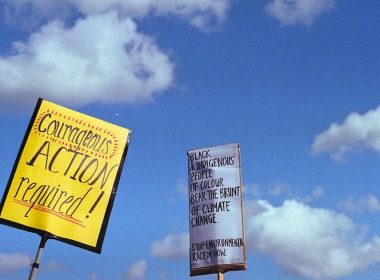
On Sept. 27, Montreal will host one of the most significant climate activism events of the year. Greta Thunberg, a 16-year-old Swedish climate activist of notable internet fame, will be in Montreal to lead a march protesting governmental and institutional inaction on climate change. Since Thunberg is expected to lead the protest, Friday’s march may even be better attended than last year’s. In preparation, educational institutions such as Concordia University, Dawson University, Cégep du Vieux Montréal, and the Commission scolaire de Montréal, Montreal’s largest school board, have all cancelled classes to allow students to participate in the march. However, on Sept. 17, McGill students received an email from Provost and Vice-Principal (Academic) Christopher P. Manfredi stating that McGill would not be cancelling classes on the 27th, but that he would be asking professors to be flexible about attendance to accommodate students who wish to attend. 

Despite McGill’s ‘commitments’ to sustainability that Manfredi cites in his email, the McGill administration should reconsider their decision and cancel classes on the 27th. Manfredi is correct in implying that students could still feasibly attend the climate march without facing harsh academic consequences. Additionally, in a McGill senate meeting on Sept. 18, Dean of Students Christopher Buddle commented on the importance of the “rebellious” nature of strikes. 

However, the significance of the statement made by the upcoming climate march will not derive from the ‘rebellious’ act of students skipping class to protest. The global climate strike should not focus on the aesthetics of a student walk-out: Instead, it should be centered around substantial institutional change in order to combat the most formidable global problem of this century. 

Climate change is not a political issue. Instead, it is a humanitarian crisis that disproportionately impacts people of colour and developing areas, including Northern Canada: Climate change has had specifically devastating impacts on Indigenous communities, and the same can be said for other historically oppressed and disadvantaged groups on a global scale. Sustainability and global climate activism requires a more intersectional approach that continues to acknowledge that people of colour are often the most vulnerable to climate change’s consequences.

McGill has an ethical responsibility not only to facilitate student efforts to combat climate change, but to make its own attempts as well. McGill has taken strides toward achieving sustainability over the last decade. However, it would not be true to say that these actions are proportional to McGill’s $1.65 billion capacity. As of Fall 2019, even after two Board of Governors members resigned in protest, McGill has still refused to divest from fossil fuels. As a leading establishment, McGill influences federal and provincial politics, sets examples for other universities, and creates precedents of moral responsibility in the way that prioritizes its values. In their continued refusal to divest, as well as their decision to not cancel classes on Friday, the McGill administration is sending a clear message: They do not take climate change seriously enough.

While it would be uplifting to see McGill reverse its decision, it seems unlikely that they will do so. That being the case, the Arts Undergraduate Society (AUS) is holding a general assembly on Sept. 25 at 6:00 p.m. in Leacock 132 that, if passed, would enact a student strike in protest of McGill’s decision to not cancel classes. The quorum requires 500 members to pass the motion, meaning that student members of AUS must attend in-person for the motion to succeed. 

Finally, groups like Climate Justice Action McGill (C-JAM) and Divest McGill, with their weekly Friday protest in front of the James Administration building last semester, serve as the foundation for consistent climate activism on McGill campus. More students who are passionate about climate issues should consider joining or supporting these groups in order to reinvigorate regular activism on campus. While structural or institutional changes are absolutely vital to addressing climate change as a global problem, students shouldn’t neglect their individual contributions. Climate change is a challenge that requires a collective response.

Off the Board, Opinion

The neighbour I knew

One night in August of 2012, I was torn from my sleep when gunshots rang through the air. I remember the rest of the night in pieces—my mom jumping on my bed to peer out my window over the driveway, sitting on my living room couch as my dad called the police, and later that night, sitting in the back of a police car, entranced by the fuzzy voices coming through the radio. It wasn’t until the next morning that my mum sat my brother and I down and explained that our next-door neighbour, John*, had been killed.

Although shocked, my brother and I reacted calmly. We hadn’t known him well; my parents had been aware that he was involved with gangs and advised the two of us to stay away from him. But my memory of John was very different from the headlines that emerged the next day, which used words like “aggressive” and listed off crimes in which he had been implicated. To us, he was the guy that showed us how to make snowballs with our bare hands so that they stayed together, whose ex-girlfriend would let us play with her three puppies, and who once tipped my brother $18.50 for a cup of lemonade he sold at a stand. We remembered him as a kind person, albeit a bit of an enigma.

This is not a defense of any of the gang-related acts he allegedly committed, but rather an outline of the ways in which my vision of John contrasted with the rest of society’s. Reading stories and watching the news the following day, I saw a picture of a totally different man than the one I thought I’d known, leaving me wondering whether it was possible to separate his kindness from the bad things that he was accused of. 

As I started high school the following week, I continued to struggle to reconcile the image of John in my head with the one that the rest of the world saw. Friends and acquaintances who had known about the situation eagerly asked for details about that night, expecting brutal ones. They seemed disappointed when I revealed what I knew, which, as an innocent 12-year-old, amounted to exactly nothing. 

Over the following weeks, as my mum and a number of other neighbours cleaned out his apartment, I slowly gained more and more tiny glimpses into John’s life: A complicated security system, a series of scales, and tools for tinning your own fish all were packaged up before disappearing, just like his physical presence next door and my memories of him.

As time went on, I struggled to decide whether it was okay for me to remember someone who had caused incalculable damage as a good person. People are morally complex, and it was not up to me to judge someone I barely knew. I’d like to think that his kindness to my brother and I wasn’t a one-off thing.  Limiting one’s perception of a person to a single facet of their identity is dangerous, and for me, it worked in both ways: His good deeds didn’t deny his crimes, and his crimes didn’t define him as a human.

When I think back to the small things, like how he’d yell at drivers who drove down our street too quickly because of all the children who lived nearby, it’s easy for me to forget about the more serious circumstances of his life. When I think of John now, I’m reminded of the importance of regarding people holistically as complex beings, whose isolated actions shouldn’t be judged without acknowledging their larger context.

*Names have been changed

no-smoking sign outside mclennan library
Commentary, Opinion

Stepping off of (vape) cloud nine

Like a category five hurricane making landfall midsummer, swirling clouds of mango-flavoured e-cigarette vapour have descended upon North American university campuses. The vape is becoming as ubiquitous today as cigarettes were 60 years ago. Advertising themselves as safer alternatives to smoking cigarettes, products such as the Juul exploded onto the global market unhindered by the stigma against tobacco products. As one might expect, as the vaping phenomenon has grown, government regulation has inevitably followed. Last year, McGill introduced a new policy that made its campuses largely smoke (and vape)-free. Some applaud the move, while others denounce it as an overreach of authority, but few understand that the policy could not have been avoided given McGill’s legal obligations and economic concerns.

E-cigarettes have become so popular with young people that the companies that manufacture them have been accused of peddling to youth on purpose. Besides the many flavours the pods come in, vapes are both stylish and inconspicuous, while every “hit” carries the promise of a headrush the likes of which no cigarette could ever provide. Nicotine vapes do not contain most of the 69 carcinogens found in tobacco, but the accelerating popularity of e-cigarettes has stimulated concern among medical professionals nonetheless. Not only does one Juul pod have as much nicotine as 20 cigarettes, but the United States Food and Drug Administration (FDA) does not require e-liquid manufacturers to disclose all of the ingredients in their products. This is problematic because research has suggested that some chemicals that are not listed, such as acetals, can cause irritation and other health issues.

The present ambiguity concerning the health risks posed by vaping using e-cigarettes has been a driving force behind regulatory measures. This month, the FDA actually lambasted Juul for illegal marketing practices, alleging that the company broke the law “by selling or distributing them as modified risk tobacco products without an FDA order in effect that permits such sale or distribution”. Moreover, there are so many knock-off products that it’s unclear if people actually know what they’re “hitting.” Suspicious products such as these have been implicated in as many as six deaths in the United States, although many of the vapes in question contained oils containing cannabinoids such as delta-9 tetrahydrocannabinol (THC) and other substances.

McGill is not coming after your Juul just because they want to prevent you from giving yourself cancer: The institution is required by law to do so. Under the Tobacco Control Act, the Act To Bolster Tobacco Control, and departmental guidelines within the Quebec Ministry of Health and Social Services, McGill could not have the power to allow vaping to proliferate even if it wanted to. As a public institution, it must comply with these laws, which require universities to establish a smoke-free environment indoors and in doorways. Students are lucky that they can vape at all. 

In addition to having to abide by government law, McGill has a vested economic interest in making sure that it is not associated with the spread of vaping. McGill is public, but it functions as a private institution in that it relies heavily on donations from alumni. Because it manages its own finances, McGill needs to market itself in a certain way to encourage support from donors. Considering the widespread public outcry against vaping, allowing it to proliferate on campus would be detrimental to the university’s public standing. 

An outright prohibition on vaping would be nearly impossible to enforce. In fact, while students technically cannot vape everywhere right now, the fact that people still do vape all around campus should serve as a reminder that there is a difference between what the rules say and how they are actually enforced. After all, according to the McGill Tribune’s survey last year, 47 per cent of those who use e-cigarettes do not adhere to the McGill Smoking Policy. 

Allowing vaping to go completely unrestrained is unreasonable. Students can still smoke or vape at designated areas, which is better than banning it altogether. McGill gets a bad rep for cracking down on vaping, but the administration is being about as lenient as it can afford to be, considering the legal and practical boundaries it faces. 

Commentary, Opinion

Our place in saving the Amazon

The Amazon rainforest is burning, right now. In fact, about 12 football fields worth of rainforest will have burned by the time you’re done reading this article. By 2020, the entire rainforest will be gone if action isn’t taken immediately. 

Over 75,000 wildfires are currently burning in Brazil, with around 40,000 of them actively destroying the rainforest, which marks an 80 per cent increase in wildfires since last year. While wildfires may seem like a natural disaster, in the case of the Amazon rainforest, the devastation is human-made as it is being caused by complicated and unjust political and economic circumstances in the region. It’s crucial that students take individual action and encourage their peers to get involved in order to collectively work to combat this issue as, not only do climate issues affect the regions they occur within, but they affect the future of every individual on the planet. 

Among the many political leaders who have failed to put the climate at the forefront of their agendas is Brazil’s President Jair Bolsonaro. Under the Bolsonaro’s government, penalties for illegal deforestation have been weakened, allowing individuals to burn down sections of the rainforest with no personal consequences. While Brazilian laws protect Indigenous territories, and such peoples have fought for years to protect the Amazon, the far-right Bolsonaro government has turned a blind eye to illegal logging on Indigenous lands to encourage farming. For this reason, many of Brazil’s Indigenous territories have been seized and burned in order to benefit the farming industry.

For cattle farmers, this lack of regulation is a positive; as the demand for beef continues to rise,  having the option to regularly burn down forested land to clear more space for cattle farms serves as a huge advantage. Consequently, over 90 per cent of the land that has been cleared in the Amazon since 1970 has been used to raise livestock for the meat industry. In order to halt this unnecessarily rapid rate of deforestation, McGill students must make a conscious effort to decrease their meat consumption. Though it can be difficult to break habits, it would be much more difficult to live on an inhabitable planet. If we continue to allow the rainforests to burn, there will be no future on this Earth.

The fires that are rapidly destroying the Amazon in Brazil and throughout the region in South America need to be stopped. If this ecosystem is lost, so will be millions of animal and plant species. The Earth will also lose billions of trees that work to reduce pollutants such as carbon dioxide, which will accelerate the rate of climate change. Though environmental issues such as the destruction of the Amazon often feel like distant problems, they happen every day, even here at McGill. Currently, McGill University itself is complicit in the acceleration of climate change as it continues to maintain its holdings in tar sands and fossil fuel companies and  remains associated with companies lobbying for the Plan Nord, a Quebec government strategy that plans to exploit natural resources in northern Quebec. McGill students must realize that it is important to take climate action to bring attention to both local and international environmental injustices.


Though the Amazon crisis is a large-scale problem, every individual has the capability to encourage structural political, economic, and social change. The public can condemn politicians who deny the importance of protecting the Amazon and build a community of resistance by spreading the importance of this issue. On Aug. 23, Brazil President Bolsonaro sent 43,000 troops to combat the fires after a week of being criticized by the public and threatened with trade sanctions by some leaders of the G7. On Aug. 26, G7 leaders pledged to offer over $20 million to fight the fires that are spreading across South America, with President Bolsonaro deciding to accept aid after an initial rejection. By sending emails and letters to elected officials, protesting, and speaking out on social media, society has the power to convince world leaders to put climate justice at the forefront and protect the environment. 

Every individual has the ability to make a change, with the most simple act being to support environmentally-conscious industries and buy sustainable products. The public must also support the Indigenous peoples who are risking their lives to protect the Amazon. By getting educated on how to help, speaking out, contacting politicians, supporting NGOs and environmentalist groups, and supporting Indigenous-oriented and created petitions, the Brazilian government will be pressured to rightfully return Amazonian land back to the Indigenous peoples who will protect it.

Everyone has the power to help save the Amazon, and therefore, a responsibility to do what they can to help. In order to take a first step in combating this environmental issue, make sure to attend the Global Climate Strike: McGill Contingent on Sept. 27. 

Martlets, Soccer, Sports

Martlet soccer suffers 2-0 defeat to UdeM

On Sept. 19 at Percival Molson Stadium, Martlet soccer (3–3–0) hosted the Université de Montréal (UdeM) Carabins (4–1–1). A goal in each half was enough to end a promising McGill two-game winning streak midway through the season. 

This matchup, which has developed into a cross-city rivalry, saw yet another close match end in the Carabins’ favour. Coach Jose-Luis Valdes lamented the opportunity to defeat UdeM. 

“I think we played quite well,” Valdes said. “We moved the ball around […] and combined for some good passes. Even though [UdeM] did not have control of the ball, they capitalized on the two [to] three chances we gave them and [scored] some good goals.” 

McGill started strong, testing a struggling UdeM defence on the wings. Third-year forward Hannah Todd nearly put McGill on the scoresheet with a miss-hit cross five minutes into the game, but the Carabins’ keeper recovered well to deny the Martlets a goal. The visitors then settled in, forcing plays down the right wing. With 26 minutes gone, McGill nearly conceded the first goal of the match as a long-range shot from a Carabins midfielder bounced off the post. Eight minutes later,  UdeM put a similar shot past second-year keeper Annabelle Matysiak to take the lead. The resolute Carabins held off the McGill resurgence, and the hosts ended the first half trailing by one goal. 

“[Coach Valdes’s] instructions were to secure more balls,” third-year forward Ariane Ducharme said. “He advised us to […] switch flanks [and] make sure [we] unsettle them.”  

The Martlets returned after the break with newfound energy, passing well in the final third as they searched for the equalizer. A defence-splitting through ball from first-year midfielder Sara Smyth in the 55th minute set up first-year forward Liliane Lefebvre with an opportunity in the box, but she was unable to convert. McGill’s offensive momentum was interrupted in the 69th minute when a defensive error left a Carabins forward with only the keeper to beat. Evrard reacted well, however, coming off her line to secure the ball. The Martlets responded two minutes later with a dazzling run by third-year forward Giovanna Tiberio, whose shot was just wide of the goal. Tiberio was back at it again in the 79th minute with an effort that narrowly hit the post. UdeM added a late goal off another defensive lapse in the McGill backline, putting the game beyond reach for the home side. 

The Martlets remain winless against the Carabins in 15 straight games dating back to 2016. Despite the loss, Valdes remained optimistic. 

“On the field […], we had three rookies and a couple of second-year players,” Valdes said. “[They have] matured well over the season […] and combined well in the second half.” 

The team’s energy and spirit was on display as the Martlets fought hard to restore balance, putting up a strong defence against the fourth ranked team in Canada. The Martlets are undergoing a rebuild after the departure of several key starters last year, but remain optimistic about their playoff chances this season. They play the Sherbrooke Vert et Or (0–4–1) on Sept. 22, followed by a homecoming game against the UQAM Citadins (5–0–0) Sept. 27. 


Moment of the game: 

Third-year forward Giovanna Tiberio’s mesmerizing dribble from the half line, skipping past two UdeM defenders before launching a missile toward the far-post, could have flipped the game had the ball found the back of the net. 

Quotable:

Homecoming […] is always emotional, but we have to remain focused. Play the 90 [minutes] and celebrate after.” – Third-year forward Ariane Ducharme on the pressures of the upcoming homecoming game. 

Stat Corner:

The Martlets registered four shots in the second half, putting significant pressure on the Carabins defence for 45 minutes. 

Read the latest issue

Read the latest issue