

Latest News

McGill, Montreal, News

Freeland and EU High Representative Mogherini affirm transatlantic unity

Federica Mogherini, the High Representative of the European Union (EU) for Foreign Affairs and Security Policy, and Chrystia Freeland, the Canadian Minister of Foreign Affairs, met on Nov. 6 to discuss trade relations between the EU and Canada. The public discussion, titled “Navigating uncharted waters: EU and Canada closer than ever,” touched on the implications of foreign policy, Brexit, and what it means to be a woman in the current political landscape.

Mogherini served as an Italian member of the Chamber of Deputies before being promoted to Minister of Foreign Affairs and International Cooperation, and now represents the EU at the United Nations (UN). She was a key player in drafting the Iran nuclear deal in 2015 and making climate change a prominent topic of conversation. In her opening remarks, she expressed optimism for the EU’s relationship with Canada.

“I think, with Canada, we share not only interests and policy agenda, I think we also share a [cooperative] philosophy of international relations that looks for the common grounds, win-win solutions, and finds a way to accommodate things [by] finding practical solutions,” Mogherini said. “I think we also share one fundamental thing, [and] that is the value of diversity.”

Chrystia Freeland was appointed Minister of International Trade in 2015 and Minister of Foreign Affairs in 2017 under Prime Minister Trudeau. She has since succeeded in renegotiating the North American Free Trade Agreement.

When asked about how Brexit will impact trade negotiations with Britain and the EU, Freeland appealed to deep historical ties.

“We are supportive of both the UK and the EU in what is a difficult process,” Freeland said. “All Canadians are pretty familiar with the complexity [and the] the existential national character of a trade negotiation [….] I think, for Canada, this is just about continuing some great relationships in a new configuration. Canada has an extremely close, deeply-historic relationship with Britain. We’re more than historic allies: We’re family.”

In response to a question about being a woman in politics, Freeland asserted the importance of providing equal opportunities.

“When I think about myself and how being a woman shapes my own [life], one of the things that has struck me the most is that I really hate it when, in international relations, people assume that a particular group of people, by virtue of their ethnicity, or their history, or their religion [are not] desiring of the full panoply of rights that we enjoy in a liberal democracy,” Freeland said.

Attendees brought forward additional queries on current issues with a focus on sanctions on Russia and trade with China. Throughout the discussion, both women emphasized the importance of multilateral cooperation in their economic relationships with the rest of the world.

“What I have noticed […] is that, around the world, more and more people are looking at Europe, at Canada, and at us together as a point of reference,” Mogherini said. “When it comes to human rights as a basis for foreign policy, when it comes to free and fair trade, when it comes to [supporting] the UN system, peacekeeping, you name it, countries [and economies] that, maybe, are smaller than ours are looking at us as ones that can help them join the club of those that are supporting multilateralism.”

In his closing remarks, the Chair of McGill’s Board of Governors Ram Panda elaborated on the faces behind the trade deals and Canada’s role in peacekeeping.

“It’s quite easy to forget, when we talk about free and fair trade, [that] it is always negotiated by people, [there are] individuals behind it who exhibit a sense of warmth and wisdom,” Panda said. “Creating the world that you would like to live in is an essential part of creating peace [….] I’m so glad to see that Canada and Europe remain the torch-bearers of the flame of peace. Our peace and prosperity depend on the peace and prosperity of everybody in this world.”

Homelessness
Commentary, Opinion

Left out in the cold: Homelessness in Montreal

The month of November is often the time that Montreal gets painfully, unbearably cold. Suddenly, a five-minute walk to campus feels like a frigid expedition, a treacherous hike through white, icy streets. While this expedition may be momentarily uncomfortable to students, others call Montreal’s streets home throughout the winter.

Montreal’s homelessness crisis is multifaceted and there are thousands of Montrealers suffering insecure housing situations. Despite a 2015 report indicating that there were 3,000 to 3,500 homeless people in Montreal, the number might be significantly larger, as it fails to recognize the ‘hidden homeless’. The hidden homeless are those who temporarily have no fixed address and are potentially couchsurfing or living in their cars. These experiences are not always represented in official reports, impeding their ability to access the help that they require.

While some can’t access the help that they need, others can’t find the right kind of help. Meeting the needs of the homeless cannot accommodate a one-size-fits-all approach. Like everyone else, their hardships are heterogeneous and can’t be understood at a glance. While dealing with the gruelling hardships of hunger, cold, and uncertainty, Montreal’s homeless people also carry the weight of racial, gendered, ageist, and ableist discrimination. Likewise, homelessness and mental health have a nuanced relationship. With a reported 20–25 per cent of the Canadian homeless population suffering from severe mental illness, it is imperative to offer specialized support.

According to a paper published by Columbia University, having a stable and secure place to live is a key determinant of health. Mental health and homelessness cannot be addressed independently, as they are uniquely intertwined as both antecedents and consequences. Health problems associated with homelessness include chronic schizophrenia—which can impede one’s ability to cope with their external environment—malnutrition, hypothermia, and trauma resulting from assault and rape. By providing necessary and tailored help to Montreal’s homeless populations, the city can address the root of the problem.

As part of a three-year plan to aid the homeless, the Plante administration sought to introduce a 950 new housing units and a wet shelter, which offers refuge to alcoholics without prohibiting drinking. However, the plan hinges on the support of the new Coalition Avenir Québec government, which plans to cut taxes and government spending. This philosophy, however, will do little for the bracket of homeless who are unable to pay taxes.

The cost of inaction will be greater in the long run. By neglecting the underlying causes of homelessness, a significant number of people are being re-circulated through a variety of government-funded services without ever receiving the help they need.

Several avenues exist whereby students can offer their support to the homeless. Groups on campus like 5 Days for the Homeless, Health and Hygiene for the Homeless, and Monthly Dignity all raise awareness and offer meaningful support to those without access to housing. Monthly Dignity, for example, raises financial and material funds to supply feminine hygiene products to homeless women in Montreal.

Although many of us only call the city home for eight months of the year, students can play an active role in ensuring that more Montrealers have access to a home year-round. Homelessness may not be solved overnight, but through dedicated efforts, students can help mitigate its effects. Students can help the city focus on preventative measures that will not only provide a roof over their heads, but also create a foundation under the feet of the homeless and at-risk populations in Montreal.

Arts & Entertainment, Gaming, Pop Rhetoric

Queering video games

My first encounter with a gay relationship was as a kid playing The Sims 2, when I selected the ‘flirt’ action for two male avatars. Taking caution to make sure that no one was watching my computer screen, I didn’t know what two boys ‘flirting’ even looked like. I thought it was a glitch in the system that would probably crash my game—it didn’t.

It made me feel a bit weird, but my two Sims seemed to enjoy it, so I let my boy Sims make out and ‘WooHoo’ with each other. A sense of shame lingered though, and I wouldn’t allow them to get married, even when their relationship bar was at a full 100.

Ever since then, I’ve had very few other chances to explore same-sex relationships in mainstream video games. Only a handful of games have queer protagonists, and representation is even more bleak for lesbian or trans female playable characters—according to Feminist Frequency, as of 2017, only seven per cent of video games had female-identifying lead characters.

One explanation for limited representation in video game characters is the lack of diversity among game companies and developers. A report by the International Game Developers Association in 2017 showed that 74 per cent of game developer employees identified as male, 21 per cent identified as female, and only three per cent identified as transgender.

Even more troubling, the report showed that 81 per cent of respondents were heterosexual, 11 per cent were bisexual, and five per cent were homosexual. As for ethnic backgrounds, 61 per cent of the respondents are white.

Due to a clear lack of ethnic and sexual diversity, content produced by scruffy white men in unwashed hoodies dominates the industry. With a lack of representation and perspectives, video games reach a creative and commercial standstill.

In recent years, video game developers have noticed the industry’s failings and have recognized the importance of representing a wide variety of queer and racialized characters. Games like Bethesda’s The Elder Scrolls V: Skyrim give players the option to have relationships with characters of the same sex.

Overwatch, too, is another game commendable for its diverse and inclusive character range. Produced by Blizzard Entertainment, Overwatch features characters from a multitude of cultural and ethnic backgrounds, and offers gender-bending playable avatars. In a comic released online, Blizzard revealed that at least one of the game’s characters is queer. In the comic, the character in question, Tracer, comes home to her girlfriend with a Christmas gift.

Giving players the option to play queer and gender non-conforming characters is a small tweak to the gaming experience that allows queer gamers to feel seen and included.

With a lack of queer representation in my everyday life growing up, gaming was one of the few ways in which I could comfortably experiment with my gender and sexuality. Being able to customize characters in a safe and non-judgemental environment was a luxury I was not afforded in my day-to-day life. Representations of queer characters in games have helped me discover who I am today and continue to give me a space that validates my identity.

Today, I am happy to announce that my two boy Sims have moved in together, are happily married, and have adopted two kids.


McGill, News

“Women, Media and Politics”: the changing role of women in politics

McGill Students for UN Women hosted “Women, Media and Politics: A Panel Discussion” on Nov. 8 to examine how the changing media landscape has affected women’s roles in the public sphere. The panel, moderated by Political Science professor Elisabeth Gidengil, included Jennifer Maccarone, a Liberal Member of the National Assembly (MNA) in Quebec; Justine McIntyre, party leader of the municipal political party Vrai Changement pour Montreal; Vino Wijeyasuriyar, a McGill student and coordinator of McGill’s Women in House program; and Mira Ahmad, communications and operations manager of the leading Canadian political think-tank Canada 2020.

The panelists first discussed the general trend of having more women in government. Maccarone, who is the first female MNA to represent the riding of Westmount-St. Louis, elaborated on the benefits of having a diverse array of opinions when drafting legislation.

“It is specifically important in parliament […] because women bring a different perspective,” Maccarone said. “At the end of the day, we want equality, we want gender parity, but also what that means is that we need to have the diversity of opinions around the table.”

Maccarone regards the Oct. 1 provincial election as a historic moment for female representation in the Liberal Party of Quebec, with women comprising 16 of the 29 Liberal Party MNAs. In total, women now make up 41 per cent of the entire National Assembly.

“It is a challenge, and I know that we’ve seen a lot of changes right now [within the Liberal Party] in the National Assembly,” Maccarone said. “For the first time […], there are more women than there are men [among Liberal MNAs]. And, [because of this], you see a definite change in the [types of conversations that are being held…], who is taking on what roles, and the responsibilities that women are taking.”

Panelists also considered the ways in which women are commonly portrayed in the media. Justine McIntyre, who was a member of the Montreal City Council from 2013 to 2017, discussed the internal struggle that many women experience: The fear of appearing too lenient or too aggressive. She described her own experiences in trying to appear less intimidating in Council so as to be taken more seriously.

“I’ve often found myself thinking that I was presenting a really strong case for something, and thinking that I [had gotten across] this really powerful delivery of this argument, and then I’d watch it and be disappointed,” McIntyre said. “[I’d] think ‘that was kind of soft.’ And I’ve realized that I was sort of tempering what I was saying, I was reeling things in a little bit. I think channeling the kind of passion and energy and emotional response into a strong debate is really powerful.”

Visibly-passionate women are often dismissed as ‘emotional,’ which Mira Ahmed advised countering by effectively presenting oneself to the media.

“Speaking from the heart is very important, but you also want to be strategic,” Ahmed said. “Being able to communicate a message effectively to make sure that someone who is going to hear what is being said is going to get that message and not be distracted [is the most important thing].”

Finally, the panelists shared advice for women interested in getting involved with politics. Vino Wijeyasuriyar provided insight for those who are unsure where to begin.

“I always say that, if there’s something that frustrates you, that’s usually a good thing because that provides a space where you can do really good work,” Wijeyasuriyar said. “Even if it’s something small, like ‘public transit is too expensive,’ these all translate into public policy issues. So, take those little things, […] and channel that into political energy. And, once you get there, I think it’s really important to look at the people who are where you were before you started […] and offer the sort of help that you wish somebody had offered you.”


A previous version of this article incorrectly stated that Justine McIntyre was a member of the Montreal City Council since 2013. In fact, she left the position in 2017. The Tribune regrets this error.

Science & Technology

Follow your nose

Those who can easily navigate new cities and unfamiliar locations might also find they have an unusually-precise ability to accurately identify a plethora of different smells, ranging from basil and cinnamon to strawberry and peppermint.

A recent study conducted at the McGill Department of Psychiatry demonstrated the surprising link between navigation and olfaction, the chemical reaction that grants us our sense of smell. To capture the experience of a student in a new area for the first time, the study asked participants to explore a virtual city and discover its important landmarks including streets, schools, and shops. To test their navigational skills, participants had to find the most direct route between different landmarks. In a separate test, the study assessed participants’ olfactory skills by asking them to identify over 40 different smells.

Using these tasks, the Bohbot Lab showed that people who have good spatial memory are also able to identify odours better. Through magnetic resonance imaging (MRI), they identified the medial orbitofrontal cortex, or mOFC, and the hippocampus as specific brain regions involved in both smelling and directing oneself. Participants who were skilled at both tasks had thicker medial orbitofrontal cortices and a higher hippocampal volume, suggesting a possible role for these regions in olfaction and spatial awareness.  

The researchers found that patients with damage to the mOFC suffered deficits in both olfaction and spatial memory, whereas damage in other brain areas had no effect, suggesting that both tasks are related to the same region of the brain.

Louisa Dahmani, the graduate student who conducted the study, explained why the seemingly-unrelated capabilities of navigation and smell are linked.

“The current research uncovers a link between spatial memory and olfaction which may find its roots in evolution,”  Dahmani said. “The theory [is] that the olfactory sense evolved for navigation purposes.”

This hypothesis is logical, Dahmani explained, given that most animals use smell, rather than vision or hearing, to navigate and find food. Black bears, for example, have an extremely refined sense of smell, which they use to hunt food up to 20 miles away. Similarly, dogs have an olfactory organ in their brains that is 40 times larger than ours. The human reliance on sight and sound is actually uncommon in the animal kingdom, which is why Dahmani was surprised by the outcomes.

“The most surprising result was that we found the existence of this link [between olfaction and spatial memory] in humans, as we don’t very often rely on our sense of smell to navigate,” Dahmani said.

Deficits in navigation and smell often occur simultaneously with some disorders, such as Alzheimer’s disease and schizophrenia. A recent study of over 3,000 seniors showed that participants who were unable to identify at least four out of five odours in a simple smell test were twice as likely to have dementia five years later. Now, with the Bohbot Lab’s conclusion, researchers are seeking to use olfactory and spatial memory tests to see whether they can identify the risk for these disorders.

“I think this is an important line of investigation as we may be able to intervene in these individuals before the disease declares itself,” Dahmani said.

Greater understanding of the links between spatial awareness and olfaction has crucial diagnostic implications. Utilizing smell tests in patients predisposed to develop certain diseases of the brain, preventative treatments could be successfully administered much earlier on in the course of the disease’s development.

McGill, News

Environmental policy in a new era of Quebec politics

McGill students listened to a panel comprised of ecologically-minded professionals discuss the future of Quebec’s environmental policy on Oct. 31, entitled “Looking Ahead: A New Era of Environmental Policy in Quebec”. The speakers agreed that the election of the Coalition Avenir Québec (CAQ) in October could be a major setback to making the province more environmentally-friendly. Organized by Greenpeace McGill, the panel featured speakers from a wide range of academic backgrounds and careers, including Alex Tyrrell, leader of the Green Party of Quebec; Nicolas Chevalier, Concordia Environment student and co-founder of the environmental group Leap Montreal; Katia Opalka, environmental lawyer and adjunct professor in McGill’s School of Environment; and Shaun Lovejoy, a professor of atmospheric physics at McGill and one of the original founders of Divest McGill.

Tyrrell thinks that the election of the CAQ is an opportunity for environmentally-conscious citizens to mobilize. He encouraged Quebecers of all stripes to get involved, as a transition toward energy sources that will minimize carbon emissions would require a lot of labour from many different sectors of the workforce.

“We now have a party that is pretty openly anti-environment,” Tyrrell said. “People understand very well that the environment is not where the priorities and the values of CAQ lie. So, one of the advantages of this is that the left of the environmental movement can be more mobilized now because we have a very good target.”

In the spirit of mobilization, Chevalier believes that social movements are most powerful when broad coalitions work together to achieve common goals.

“CAQ is not only [going to] take away the environmental rights […] but also the human rights and the rights of immigrants,” Chevalier said. “Putting these values tests, putting a limit on migration […] is a crime of environmental justice, also, and not just social justice. [Causes are] all connected […], and, oftentimes, movements, as much as governments, don’t make these connections, and that’s a problem because then we become fragmented into smaller movements.”

When asked about how their different fields of expertise might contribute to the environmental movement in Quebec, Opalka weighed in on the challenges of solving environmental issues by using Western codes of law.

“The cornerstone of law in the West is human freedom, it’s not environmental protection,” Opalka said. “But, if we decided it was environmental protection instead of human freedom, then there is a lot of stuff that you can do. If we could dispense with democracy and [agree] that this is far too important to be left to people electing random [unqualified public officials], we could just do it.”

Lovejoy emphasized the importance of students getting involved, both on- and off-campus.

“If you are a McGill student one thing you could do is join Divest […and], if you are politically-inclined, support the Green Party or Québec Solidaire,” Lovejoy said. “Québec Solidaire’s main campaign was around the climate and the environment. Young people are going to be the ones who are going to be suffering from the consequences of what is happening, so it’s clearly really important.”

Campus Spotlight, Student Life

A COMunity for Commuters

Of the 40,000 students attending McGill University, over 37,000 are considered commuters. In order to accommodate this population, the Off-Campus and Commuter Student Support (OCCSS) program at McGill has developed a program geared toward students who do not live in a McGill residence: Project COMunity. The initiative provides a useful resource for these students, providing them with effective resources for adjusting to life off-campus.

The project’s organizers believe that commuter students previously lacked an area on campus to unwind and spend time with their peers. In response, Project COMunity created a space for individuals to relax between classes and engage with other students before their evening commutes home.

Founded nearly four years ago, COMunity has recently developed more extensive support systems for first-year commuter students, who, otherwise, lack an outlet to socialize with their peers. COMunity connectors, a team of upper-year students who are commuters themselves, facilitate the services on offer and plan social events for students living outside of McGill residences.

The connectors collaborate with on-campus clubs and services and work to ensure commuter students have similar access to campus resources as those living in residence. For example, floor fellow-like advisors aid the students’ transitions to university. Additionally, the connectors hold workshops that advise commuters on a variety of topics, such as how to make commuting productive with better time management and how best to schedule downtime on campus. According to Claudia Belliveau, a program intern at the OCCSS, commuter students have a different experience at McGill than those living in residences and, consequently, may need auxiliary support.

“Commuter students have a different experience at university because they spend less time here,” Belliveau said. “Their engagement on campus is much lower. We are here to help. We are all commuter students, so we understand what they go through.”

Throughout November, COMunity is hosting the ‘COMon Ground’ lounge on Monday mornings, a social gathering open to all commuters. During these events, COMunity connectors invite these students to come and enjoy free food and coffee, relax, study, and get to know each other in a space of their own. In the future, COMunity hopes to expand their presence at McGill.

“Our main goal in the next five to 10 years is to create a commuter lounge,” Belliveau said. “A COMon ground for students to meet, hopefully with a kitchen, […] maybe with the ability for some students to spend the night during finals.”

The connectors also try to bridge the gap between students living in residences and those living off-campus; for example, first-year students living outside the McGill bubble can participate in Rez Wars on a team of off-campus students. The organizers hope that these sorts of experiences will help commuters better connect with the McGill community.

“COMunity is a program that strives to make commuter students feel at home on campus just as students living in residence have a home,” Belliveau said.

Ultimately, the COMunity connectors recognize the difficulties of commuting and are dedicated to improving the off-campus student experience. As students, time management is a difficult task, and adding travelling time to a long list of activities can be a struggle. Moving forward, the connectors hope to see more students in their COMon Ground lounge and at future events to extend their impact.


Campus Spotlight, Student Life

What to do at McGill’s Gault Nature Reserve

Most McGillians seeking an escape from the city ascend the stairs of Mount Royal or roam the winding concrete paths at Jean Drapeau Park. However, those looking for an authentic adventure in the wilderness should venture out to McGill’s Gault Nature Reserve, a 1000-hectare property owned by the university. Though often unexplored by students, the 60-year-old reserve is situated on Mont St. Hilaire and hosts a variety of athletic and educational activities that are open to the public year-round.

Test out the hiking trails

Students looking to enjoy the quiet countryside can amble along Gault’s secluded pedestrian paths during their visit. On autumn hikes throughout the property, visitors can take in sweeping vistas, local wildlife, and the changing foliage. Gault maintains eight trails of varying intensities which are accessible to the visitors 365 days a year. The trails span across 25 kilometres of forest and allow walkers to navigate their way along Lac Hertel and up the rocky Mont St. Hilaire hillsides. Though novices may find some of the trails challenging, staff is available at the visitor pavilion to advise hikers on their itineraries.

Snowshoeing

Once snow falls, outdoor enthusiasts are welcome to snowshoe across the reserve. The activity is difficult to attempt in an urban setting in which snow is regularly shoveled, but the reserve’s peaceful rural trails make this the ideal place to try the sport. Students can rent snowshoes from the university for 13 dollars, and, other equipment, such as snow poles, is also available. Though guests are only permitted to snowshoe on specified trails, the snow is fresh, and there is little foot traffic.

Observe research in action

Founded with the dual mission to provide public outdoor space and an open-air research facility to McGill students, Gault is home to a variety of scientific projects that visitors can observe around the property. Current field projects include Assistant Professor Virginie Millien’s investigation on the relationship between genetic mutations in mice and climate change. Also on site is Professor Andrew Gonzalez’s Large Experimental Array of Ponds (LEAP) project, featuring artificially-constructed aquatic communities used to study the impact of environmental stressors on freshwater ecosystems. Other smaller fieldwork projects also regularly take place on the grounds, and, if they are lucky, guests can witness scientific history in the making.

Learn about the local ecosystem

As an outdoor classroom, the bucolic reserve offers several opportunities to learn more about Montreal’s flora and fauna. In 1978, Gault was the first Biosphere in Canada given special status under the UNESCO’s Man and the Biosphere Program for its diverse ecological community. Today, the reserve is home to a diverse selection of fish, plants, and reptiles. Partnered with the Société d’ornithologie de la Vallée du Richelieu (SOVDR) bird-watching group, researchers have identified an impressive 200 species on the reserve. For students interested in learning more about the natural populations at Gault, the reserve also hosts lecture events throughout the academic year.  

From downtown Montreal, students can access the Gault Nature Reserve via the 11 bus to Mont-Saint-Hillaire and the Ligne Mont-Saint-Hilaire, which departs from Montreal Central Station.

Basketball, Men's Varsity, Sports

McGill men’s basketball holds off UQAM in thrilling victory

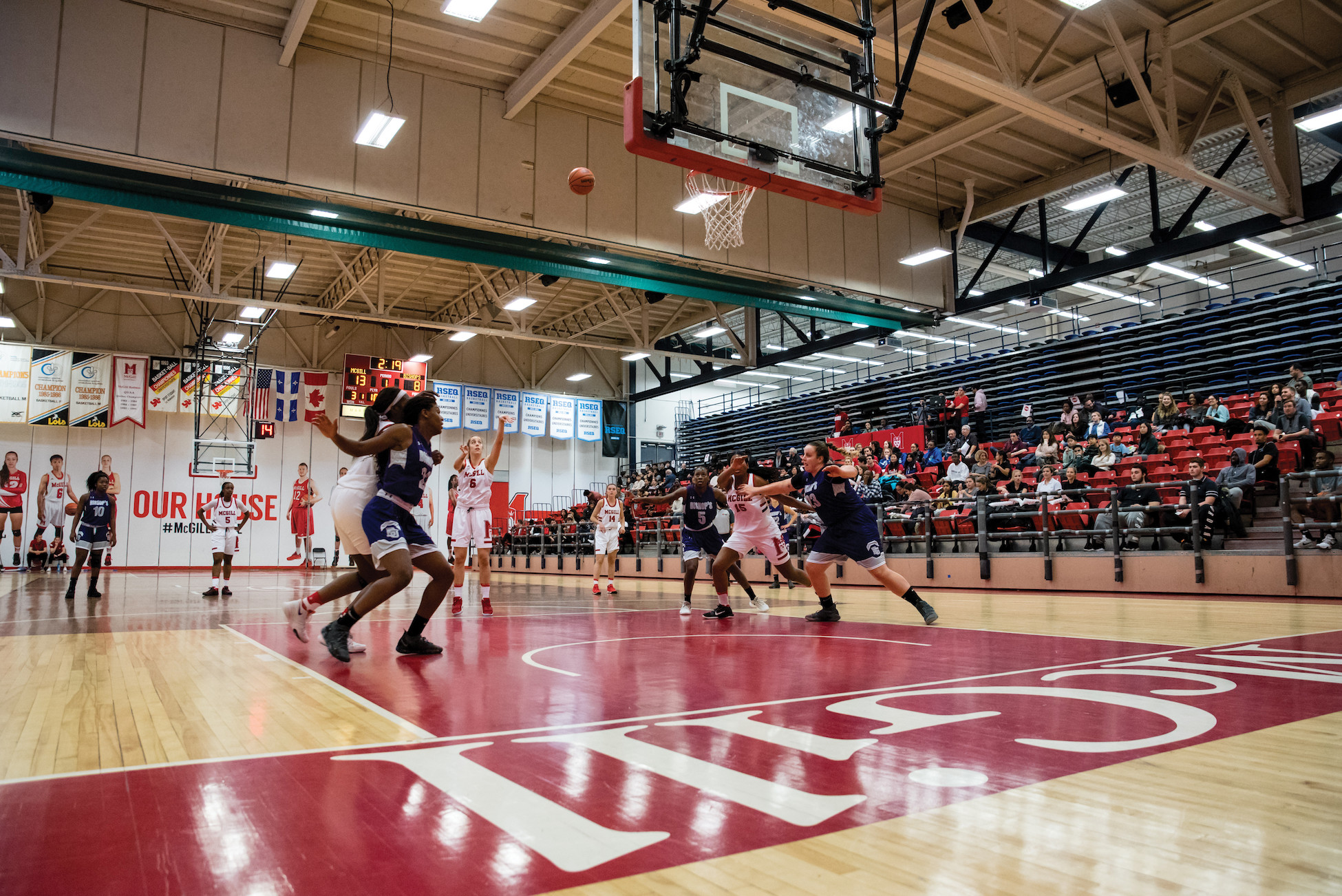
On Nov. 8, the McGill men’s basketball team (2-0) opened their season at Love Competition Hall against the Université du Québec à Montréal (UQAM) Citadins (0-2). In a hard-fought game, McGill won in the final seconds by a score of 62-60.

McGill started quickly, taking a 15-5 lead out of the gate. Fifth-year point guard Alex Paquin was red-hot, scoring the team’s first seven points. The game started to even out as UQAM began hitting their shots and gaining momentum, but fourth-year-transfer McGill forward Levi Londole hit a buzzer-beater, and McGill finished the first quarter up 23-11.

Londole carried his dominating play right into the second: He converted a three-point-play right out of the gate, and McGill stretched their lead to 17, their largest of the night. However, McGill then faltered, letting the Citadins back into the game. UQAM went on a 10-3 run to get back within striking distance before McGill pulled away, once again, to finish the half up 35-24.

“We knew they were [going to] come out hard, so we made sure we were [going to] come out as hard, if not harder, to not give them hope from the beginning,” Paquin said.

At the start of the second half, UQAM turned up the intensity, starting the second half just as strong as McGill did to open the game. The Citadins put up a quick 14 points to McGill’s four, bringing the score to 39-38. With the help of a deep three-point shot by Paquin and a string of crucial defensive stops, McGill brought the game back under control. At the end of the third quarter, they led 48-43.

The two sides traded control of the game throughout the fourth quarter. Late in the frame, McGill went on a quick 6-0 run to give them a 56-48 lead. With momentum shifting, it seemed like enough to carry them to victory. However, UQAM answered with 12 consecutive points to take a late 60-56 lead with 58 seconds left on the clock, shocking the packed crowd.

The home side stayed focused: McGill fifth-year guard Avery Cadogan scored a key three-pointer to cut the deficit to one with 30 seconds left. On the next play, fourth-year point guard Isaiah Cummins got the ball off of a defensive rebound, drove right to the basket, and scored with 17.8 seconds remaining. He also drew a foul and sunk the free throw to make it a 62-60 game.

“I just made [a] few bad plays the few plays before, so I had to make up for it,” Cummins said. “So, I was going to the rack, and I knew we didn’t have much time left, and […] there was only one guy in front of me. So, I just took it to the rack.”

After Cummins knocked down the free throw, fifth-year McGill forward Noah Daoust made a key block, preserving the lead and sealing the game.

McGill moved to 2-0 with a win against Université de Laval (0-2) on Nov. 10 and will next play at home against Bishop’s University (1-0) on Nov. 15.

Moment of the Game

With 17.8 seconds left, fourth-year guard Isaiah Cummins won the game for McGill with a driving three-point-play.

Quotable

“We [have to] do a better job with our young kids and having them understand the scouting report and who we want to shoot the ball and who we don’t.” – Head Coach David DeAveiro on how to prepare themselves for their next game.

Stat Corner

With strong play on both sides of the court, Levi Londole filled the stat sheet. He put up 13 points, a team-leading nine rebounds, and two blocks.

Science & Technology

Cannabis as a key for chronic illness

Since the legalization of cannabinoids—chemical compounds found in cannabisfor medical purposes in 2001, a growing number of Canadian physicians have turned to medicinal marijuana for patients suffering from cancer and other chronic disorders such as multiple sclerosis and arthritis.

Cannabinoid receptors, which bind cannabinoids, influence cognitive and physiological processes and are part of a larger network of receptors that compose the body’s endocannabinoid system. These receptors respond to the two active cannabinoids in cannabis, cannabidiol (CBD) and tetrahydrocannabinol (THC). Positive effects from cannabinoids include pain suppression, enhanced mood, and increased appetite.

Some members of the medical community are eager to use the benefits of cannabinoids to treat their patients. Michael Dworkind, a physician at the Jewish General Hospital, co-founded Santé Cannabis, a Montreal-based medical organization which provides patients with medical cannabis prescriptions, in 2014. Santé Cannabis connects patients to a network of healthcare workers including physicians, educators, and cannabis suppliers.

Specifically, Dworkind is interested in cannabinoids as a potential solution to Canada’s growing opioid crisis, working as a substitute, or at least a complement, for opioid treatment. Currently, 13 per cent of Canadians use prescription opioids, which remains the most frequently-prescribed treatment for chronic illness despite a 5.5 per cent risk of addictive use.

“Opioids and cannabinoids work extremely well together,” Dworkind said. “They are synergistic in their benefit.”

Under Dworkind’s process, following an initial interview process with a doctor, the patient must meet with an educator to learn how to use cannabis responsibly. Only after the patient has completed this process are they put in touch with licenced suppliers. Working with the suppliers to personalize the THC-to-CBD content gives them a newfound degree of involvement in their treatment options.

Despite Dworkind’s optimism, some doctors are not as convinced by the effects of cannabinoids; according to him, only five per cent of doctors in Quebec prescribe cannabinoids. Jeff Blackmer of the Canadian Medical Association emphasized the need for further research, attesting to the fact that eight out of nine physicians in Canada are uncomfortable discussing or providing access to medical cannabis.

“It’s important to recognize that, by and large, that [the] level of evidence [for cannabinoids’ benefits] doesn’t reach the quality that we demand for every other product that physicians prescribe,” Blackmer said in an interview with CBC.

Blackmer’s apprehensions are not unfounded. Like alcoholism and similar psychostimulant abuse disorders, cannabinoids may foster psychological dependence. To combat this effect, doctors who prescribe medical cannabis in Quebec remain in contact with suppliers to ensure that patients are getting the right amount.

“When we see a growth in consumption […], we have to put limits on it, or we ask them to leave the program,” Dworkind said.

Synthetic cannabinoids, such as Nabilone, as well as cannabis-derived medications like Sativex, are commercially available but possess their own set of risks. Similar to cannabis, these options are not covered by provincial health insurance plans.

“Whereas the conventional therapies are covered by the government, non-traditional cannabinoid therapy is not [covered by the government],” Dworkind said. “A bottle of Sativex, which would last two weeks, costs $150.”

Nonetheless, cannabis is a cheaper option for patients on a budget.

“People who have work-related injuries are on a dozen drugs,” Dworkind said. “Total up that amount and compare it $5-$10 a gram, a gram or two a day of cannabis. Cannabis treatment is cost effective.”

The team at Santé Cannabis continues to push forward, educating patients in the hopes that they will embrace cannabinoid treatment for their own sake.

“All of this is about human rights and politics,” Dworkind said. “Quality of life is our bottom line, after all.”

Read the latest issue

Read the latest issue