

Latest News

Features

Hooting and Hollering: A beginner’s guide to Montreal’s burlesque scene

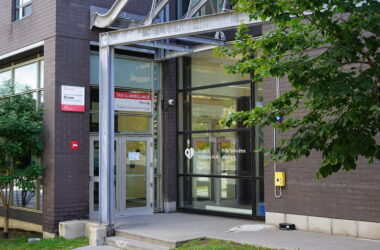
Deep in the underbelly of St-Laurent’s nightlife scene lies the Wiggle Room—Montreal’s iconic burlesque club. Founded in 2013 by Jeremy Hechtman, the man who produced the annual Fringe Festival and opened the Mainline Theatre—the club is somewhat well-hidden behind a large black door. Only a small label on the mailbox and a bright orange pinup sign indicate what lies beyond the venue’s exterior. Upstairs, however, the Wiggle Room makes up for its subtle first impression—flaunting red velvet curtains, a classy-kitsch décor, and an impressively stocked cocktail bar. Every week, several burlesque shows with novel themes, ranging from Batman to Stephen King to Gwen Stefani, are performed on the Wiggle’s stage in front of boisterous crowds.

Campus Spotlight, Private, Student Life

Environment and society unite to address sustainability at student-run panel

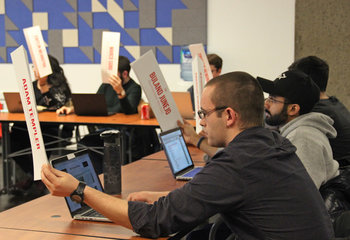
On Jan. 17, World Wide Fund for Nature (WWF) McGill and the Arts Undergraduate Society Environmental Council (AUSEC) hosted a panel discussion titled Society & The Environment: A Multidisciplinary Perspective.

Leacock 26 was packed as students gathered to see experts discuss the current ecological crisis—but as the name of the event suggested, the emphasis was more on the socio-economic implications of climate change. Over the course of the evening, speakers discussed the way that economy, politics, and indigenous cultures relate to climate change. The major focus of the night was on inspiring social change, as it is not just scientists, but members of society, that will decide the fate of the planet.

The panelists included Madhav Badami, a professor in the McGill School of Urban Planning and the School of Environment; Jennifer Gobby, a PhD student in Renewable Resources at McGill; Jad Robitaille, board member of Maisons Passive Quebec, which is a non-profit organization that publicizes energy efficiency standards and certifications in buildings in many European cities; Holly Dressel, a journalist, author, and documentary writer; and Nicolas Kosoy, associate professor in the McGill Natural Resource Sciences Department.

For Celeste Welch, U3 Science student and president of WWF McGill, it is important for students to recognize that sustainability is multidisciplinary. Welch hoped that the event would showcase a specific type of environmentalism that examines the interactions between the environment and society.

“Via this [multidisciplinary] perspective, students are able to see that society itself is largely reliant on the environment, and [that] social values often dictate decisions in environmental policy,” Welch said.

The first speaker of the evening was Professor Badami, who discussed population control. He reminded attendees that one of the greatest challenges facing humanity is providing for a population that is likely to hit 11 billion people by the end of this century, which demands more food and energy production. 

Badami also spoke about renewable energy. One massive obstacle in switching to renewable sources of power, such as solar or wind, is the transportation industry. He also referenced coal-mining towns in the Appalachian mountains in the United States as a challenge to environmental sustainability. As society moves toward cleaner alternatives of power, the future of these communities, which are economically reliant upon the coal industry, is a political unknown.

“In the recently concluded U.S. elections, what’s happening to coal country in Appalachia became a political hot potato,” said Badami. “You want to transition from coal to cleaner energy sources, but on the other hand, what happens to this industry […] and entire communities that are dependent on coal?”

Politically, the transition from fossil fuels to renewable energy is a lengthy process, but nonetheless a viable solution. Badami explained that pricing is another climate change mitigation strategy; fossil fuels must be taxed, and their extraction shouldn’t be subsidized.

While Badami focused largely on population and environmental policy, Robitaille took on energy conservation from an urban planning approach. According to Robitaille, buildings produce about one third of the greenhouse gas emissions in Canada, and as houses grow in size, so does the total area that must be heated and cooled. In addition, the rating systems of building sustainability are voluntary, and are often used by companies purely as a marketing ploy to advertise their spaces as “green.” 

Robitaille explained the two schools of thought when it comes to living more sustainably. The first is called “techno-fix,” which places the onus on urban planners and building companies to design buildings in ways that decrease the amount of energy consumed. The second is “behavioural change,” which places responsibility on individuals  to revert to a natural way of living.

During her talk, Robitaille asked students to raise their hands in favour of one school of thought. Nearly the entire room approved of behavioural change. However, when asked, “How many of you actually do this?” only a portion of the crowd raised their hands. For many university students, the thought of changing the way they live while balancing their packed social and academic lives may seem overwhelming. 

"There are some lifestyle changes that I've made while I've been at McGill, like recycling more, not using a car, eating less meat, and learning how to ride a bike,” Deanna Schrock, U0 Environment student and event attendee, said. “But the behavioral changes that were talked about in the presentation were on a much larger scale and are harder to achieve. Institutional change like techno-fix, in addition to manageable behavioral changes, is where we'll find  success in the long run.”

There are a variety of perspectives that must be considered when tackling environmental degradation. Though the science is clear, finding locally organized solutions and an understanding of other cultures is not always so. 

Kosoy explained the need for interdisciplinary approaches to climate change as a matter of consulting local communities affected in any decisions made about addressing it.

"We can only embrace interdisciplinary and multidisciplinary, […] we can only embrace participatory methods [if] communities have a say and they are the ones that can teach us way more than any books,” Kosoy said. “Understanding that that is the premise of any research in environment, any research in socio-ecosystems, brings our whole discussion together. It is inevitable for all of us in this room to be multidisciplinary." 

As part of respecting the needs of local communities—in particular, indigenous communities—affected by climate change, Kosoy placed emphasis upon taking ideas for solutions from cultures other than our own.  

“It's the 'otherness' that we have to embrace, respect, and understand,” Kosoy said. “Therefore, we don't have any other option but to dream a different world." 

Laughing Matters, Opinion

Breaking: It’s still winter in Montreal

Don’t be fooled by the recent thaw: It’s still winter in Montreal. Lest we forget, somewhere between Halloween and finals, it got really cold. The trees lost their leaves, the birds headed south for warmer weather, and the squirrels took a break from chewing through our trash bags outside. Seasoned veterans know that the Montreal winter is a unique phenomenon that affects each and every one of us. For those who have not experienced Montreal winter yet, a few surprises still lie ahead.

If you are brave enough to walk outside, there is a good chance you will arrive at your destination with little-to-no feeling in your hands, feet, and face. Knowing this, it is wise to plan accordingly and show up to important meetings, social gatherings, and events with sufficient time to defrost. A time tested standard is five minutes defrosting for every twenty spent outside.

Winter also affects our social interactions. From Dec. 21 until March 19, approximately 73 per cent of all conversations amongst students will begin with a comment about how cold it is outside, how many centimetres of snow their bike was buried under, or how many times they almost slipped on ice getting down their apartment stairs. Scientists are still not sure why we discuss the season so frequently, but a widely accepted theory is that winter cannot stand when people are not talking about it, so it pulls stunts like these to remind everyone that it is here and demands full and undivided attention.


It can be neither denied nor confirmed that winter is the reason fusion restaurants exist.

Besides physiological and social phenomena, winter has psychological effects on us as well. Studies suggest a perfectly negative correlation between temperature and creativity. They say necessity is the mother of innovation—when it is negative 25 degrees Celsius outside, and the only things in the fridge are tofu, cheddar cheese, pesto sauce, and an onion, you tend to get very creative with meals. It can be neither denied nor confirmed that winter is the reason fusion restaurants exist.

Winter also changes how we see everyday things in our environment. For instance, in the summer, a bus stop may be just a bus stop. In the winter, however, this shelter is astonishingly repurposed into a safe haven from the cold on a long walk at night. In the summer, a local dep may be a convenient place to buy snacks and drinks—in the winter, it too becomes a place of shelter from a snowstorm. And, of course, there is the McLennan library. In the spring and autumn, it is a place for students to focus on their schoolwork; however, come winter, it is miraculously transformed into a sanctuary to avoid the icy walk home. With its 24 hour accommodations, winter refugees never even have to leave. Simply stake out a seldom visited aisle on the sixth floor and sublet your room in your Plateau apartment.

One can go on for hours about what a Montreal winter actually is, and the ways it makes us feel, think, and act. It introduces a new dynamic into our lives, even if that dynamic means testing how long we can stay in our homes before going absolutely crazy. Whether through a frosty breeze off the Saint Lawrence river or a nice chunk of snow falling on your head on the walk to school, the Montreal winter builds an icy resolve in all who brave it.


Michael Kalman is a U2 Management student.


McGill, News

Senate Report on CAMSR Open Forums on Sustainability seeks to address participant frustrations

At the Jan. 18 meeting of the McGill Senate, Provost and Vice-Principal (Academic) Christopher Manfredi presented a Report on the McGill Committee to Advise on Matters of Social Responsibility’s (CAMSR) September Open Forums on Sustainability and a written response to its recommendations. In addition, senators addressed questions submitted by Students’ Society of McGill University (SSMU) President Ben Ger and Vice-President (VP) University Affairs Erin Sobat regarding the Senate’s capacity to make recommendations on the governance practices of the Board of Governors (BoG).


Report and response to CAMSR Open Forums on Sustainability

A report on CAMSR’s Open Forums on Sustainability, as well as Manfredi’s written response, were presented to the Senate. In September 2016, CAMSR held three Open Forums on Sustainability to gather community input on the recommendations of the CAMSR Report on Divestment that was published in March 2016. The Report on Divestment was released in response to Divest McGill’s February 2015 petition, which called for the university’s divestment from major fossil fuel companies.

The forums were held to address Divest McGill’s dissatisfaction with CAMSR’s rejection of divestment and with the way the report was conducted. Specifically, the student group took issue with CAMSR’s lack of transparency in its consultation with experts and the insufficient community input on the report’s findings. In response to these concerns, Principal and Vice-Chancellor Suzanne Fortier committed to holding public forums in order to invite community dialogue on sustainability and the CAMSR recommendations.

The open forums sought community responses to two specific recommendations of the 2016 report: The creation of a plan to reduce McGill’s carbon footprint while pursuing ongoing sustainability research and education, and the development of concrete measures to ensure that all of McGill’s investments comply with recognized Environmental, Social, and Governance (ESG) principles.

“I was truly impressed with how the community came together,” associate professor of law Frédéric Bachand, who chaired the three open forums, said in his remarks to the Senate. “To offer advice and insight on how to improve McGill’s response to what is surely one of the greatest challenges of our time.”

Disappointment with the recommendations of CAMSR’s 2016 report and consequently weakened sense of trust in the administration’s commitment to sustainability were common themes of the open discussions, according to Bachand.

Given these findings, Manfredi’s response identified several measures for relevant university actors to pursue. These included setting a target date and plan for McGill to become a carbon-neutral institution and continuing to develop channels for community engagement with respect to sustainability.

“[It was] the trust and the breaking of trust that was a major concern to the McGill community,” Science Senator Sean Taylor said regarding forum participants’ frustration with CAMSR and the BoG’s handling of Divest McGill’s petition.

Sobat also underlined Manfredi’s failure to address the recommendations related to the loss of trust in the administration.

“Something I noticed [that was] not included [in the response] were recommendations or responses addressing section A of the report, around the breakdown in trust, specifically with administration and governance practices in the university,” Sobat said.

The report and response will be presented to the BoG on Feb. 2.


Question regarding university governance best practices

In December 2016, SSMU President Ben Ger proposed a comprehensive review of McGill’s governance structure and statutes. The aim of this review would be to compare McGill’s existing structures with those at other universities in order to determine the best practices to improve community engagement. Various members of the board opposed the proposal. BoG Chair Stuart Cobbett said that the review was not the best use of BoG resources and that the proposal lacked specificity.

“It is just you need to understand what it is you are looking for and questions need to be focused so the answers can be focused,” Cobbett said. “We are not running a broad ranging discussion, we need to have focused questions and we need to have focused answers.

On Jan. 18, Manfredi provided a written response, on behalf of the Senate, to two questions submitted prior to the meeting. The questions submitted were “What opportunities exist for Senators, and Senate as a whole, to provide recommendations regarding governance practices to the Board of Governors?” and “Given that the cyclical review process has recently been extended to include administrative units, would the University consider implementing this model for a review of governance bodies?” posed by Ger and Sobat. The questions were prompted in part by the SSMU November 2016 “A Seat at the Table: An Analysis of the McGill University Board of Governors” report that evaluates the current structure and administration of the BoG.

Manfredi said that when reviewing governance practices that implicate the academic mission of the university, the BoG has received and will continue to receive recommendations from the Senate. Manfredi’s response outlined the existing channels through which senators can provide recommendations, including the newly implemented bi-annual Board community sessions.
SSMU’s request for a cyclical review process for the BoG was rejected, as it would place the Office of the Provost and Vice-Principal (Academic)—the body currently responsible for the cyclical review of other administrative units—in charge of reviewing the unit to which it ultimately reports.

A previous version of this article incorrectly spelled Board of Governors Chair Stuart Cobbett's name. The Tribune regrets this error.

Editorial, Opinion

McGill must demonstrate why it matters for millennials

Last week, McGill Principal and Vice-Chancellor Suzanne Fortier attended the annual World Economic Forum (WEF) in Davos, Switzerland on behalf of McGill—the only Canadian university invited. In an article for The Montreal Gazette, titled “Why Davos Matters for Millennials,” Fortier discussed the purpose of her trip and the message she presented. She emphasized the importance of working with a variety of industries to better prepare university students for the “intractable problems” of the future, like climate change and income inequality.

Fortier’s presence in Davos directly reflects the continued value of promoting McGill’s brand on the world stage. She was accompanied by several preeminent McGill researchers and academics, who presented at Davos on issues of sustainability. McGill’s status as the only Canadian university present at the conference speaks to the weight of the McGill name; Fortier’s participation will hopefully help ensure that the university continues to be seen as a world-class institution that is active on the international scene. A university’s global reputation for providing a quality education is more important than ever in many of today’s highly competitive job markets.

The Davos conference is a reminder of the Principal’s role as the public face of the university. One service the Principal can provide is ensuring that other schools, academics, and prospective employers see a McGill diploma as a valuable and respected commodity.

However, promoting and maintaining respect for the McGill brand goes beyond promises from Fortier, or participation in conferences like the WEF. To preserve and further develop itself as an institution for the twenty-first century, McGill must attempt to impress not only international elites, but also other groups, like current and prospective students, faculty, and alumni. Each of these groups evaluate  the university based on different criteria and their judgements have important consequences for the McGill brand. 

Students, for instance, look to aspects like the university’s quality of teaching, transparency, and responsiveness to student demands when assessing their school. Poor performance in these areas could result in disgruntled graduates who are less inclined to recommend the school to others. Fortier has garnered criticism in the past for being out of touch with the student body, such as in her opposition to alumni and student calls for divestment from fossil fuel companies. Representing the university externally should not mean losing contact with the genuine concerns of its more local community members.

Furthermore, Fortier’s statements about Davos were conspicuously lacking in specifics. Her talk of McGill as a university stepping up to the challenges of the future may help the school’s brand, but following up with concrete action to ensure that McGill meets those challenges is most important. For instance, Fortier wrote of the growing need “to expose students to learning opportunities outside the university,” yet gave no concrete indication of how McGill plans to accomplish this goal. The vision Fortier laid out for McGill at Davos is commendable, yet still needs to be translated into tangible and effective action. 

To best prepare McGill students for the future, it is essential that the university improve itself in areas beyond research. The examples for areas of improvement are countless, and include indigenous representation, equitable hiring practices, and mental health support. The recent Report of the Ad Hoc Working Group on Systemic Discrimination revealed continued discrimination in the McGill faculty. McGill offices, student societies, and community members are working hard to promote change in these and other salient issue areas. Without concrete action here at McGill, its portrayal abroad may come to feel disingenuous to the university’s closest stakeholders. 

McGill’s reputation–like that of any university today–is a complex and multifaceted topic. Fortier’s presence at the WEF certainly benefits the university, yet the audience of Davos is only one of the many groups that McGill must satisfy if the university wants to retain its position as a premier institution. Going forward, the administration must now focus on making a reality of Fortier’s promises at Davos, as well as its obligations to its students and faculty at home. Only in this way can McGill show its students and staff, as well as the international community, that it is deserving of its reputation.


Podcasts, Sports, The Sport Authority

McGill Tribune Sports Podcast: Discussing mental health issues with Michael Landsberg

Aaron Rose and Wasif Husain chat with Michael Landsberg about mental health issues and Bell Let’s Talk day. Landsberg shares his story about his struggle with depression, the moment he realized he could help, and an emotional story about saving someone’s life. They talk about how professional athletes and men in particular deal with and mask mental health issues. With suicide accounting for 24 per cent of all deaths among 18 to 24 year olds, they discuss how today’s youth can notice and help their peers struggling with mental health issues. Lastly, they talk about how to get involved in Bell Let’s Talk day on Jan. 25 and support mental health related issues the rest of the year through Landsberg’s website sicknotweak.com.

[soundcloud url=”https://api.soundcloud.com/tracks/304196794″ params=”color=ff5500&auto_play=false&hide_related=false&show_comments=true&show_user=true&show_reposts=false” width=”100%” height=”166″ iframe=”true” /]

If you or someone you know is struggling with mental health issues, the following services are available to help.

McGill Peer Support Centre

Students’ Society of McGill University (SSMU) Building

Room 411 (4th floor)

3480 Rue McTavish

Montreal, QC H3A 0E7

Hours: Monday – Friday, 11AM – 7PM

Nightline

7 days a week

6pm-3am

Tel: 514-398 6246

Quebec Suicide Hotline

24/7 phone service for those in crisis

Tel: 1-866-827-3553

Mental Health and Counselling services

Brown Student Services Building

3600 McTavish, Suites 4200 and 5500

Montreal, Quebec

H3A 0G3

Tel: 514-398-6019 or 514-398-3601

McGill Mental Health Hub

Mcgillmentalhealthhub.ca

—————————————————–

Produced and edited by Noah Sutton and Aaron Rose

Music provided by Fyodorovitch, "Depression" / CC BY.

Martlets, Sports

Martlet volleyball dig their way to victory

After splitting the first four sets, Martlet volleyball (6-7) rallied 18-16 in the final set to upset the visiting Laval Rouge et Or (7-6) in RSEQ play at the fifth annual Dig for the Cure game on Friday, Jan. 20. 

Martlet third-years Myriam Robitaille, Thara Dawoodjee, and Emilie Matte de Grasse were critical in the victory. Robitaille and Matte de Grasse combined for 27 kills, while Dawoodjee put up a game-leading 45 assists. 

“[We had] really good offence,” Head Coach Rachele Beliveau said. “We still need to work on the defence, but the defence today was much better than all [of our] other games and that kept us in the game.” 

Friday’s match marked the fifth edition of Martlet Volleyball’s annual Dig for the Cure game, with 50 per cent of ticket sales going to the Quebec Breast Cancer Foundation. Additionally, throughout the week, Martlet sports raised money through bake sales. On game day, the team donned pink jerseys and donated $2 per dig to breast cancer research. The Martlets managed an impressive 58 digs over the course of the night, raising an additional $116. 

“I think we had one exchange that was probably […] 10 digs,” Robitaille said. “Dig after dig after dig. [It was] like a $20 exchange.”

 The Martlets are just past the midpoint in their 20-game season. After Friday’s win, they travelled to Ottawa, where they downed the Gee-Gees 3-1 on Jan. 21. As they look towards the remaining seven games of regular season play, the Martlets aren’t taking any opponents lightly.

 “Our league is very tight,” Middle blocker Érika Cournoyer said. “We only have one or two games between each other.”

 This weekend’s results moved the Martlets up one spot into fourth place, giving them a playoff seed. While day-to-day preparations wane as the season draws on, the Martlets are doing their best to focus on their immediate future hoping for a postseason berth.

 “We go one by one,” Beliveau said.

The Martlets next play UQÁM at home on Jan. 28. The two squads have split their previous meetings this season, taking both games to five sets. Expect a hard-fought game as the Martlets look to carry this weekend’s momentum into next weekend’s match-ups.


Stat Corner

The McGill attack had a 0.223 hitting percentage, while Laval only manage a 0.050.

Key Moment

Every single combination between setter Thara Dawoodjee  and  middle Myriam Robitaille.

Quotable

“Seriously, it’s Dig for the Cure and we [dug] like hell today!” – Middle blocker Érika Cournoyer.

News

Canadians join the Women’s March on Washington

On Jan. 21, the day after Donald Trump’s inauguration as the 45th President of the United States, over 200,000 people are expected to take to the streets of Washington D.C. to make their voices heard for human rights.

The movement started with Hawaiian grandmother Teresa Shook, who posted on Facebook in the early hours of Nov. 9 stating that she wanted to protest against a Trump presidency. The idea rapidly grew as thousands expressed their desire to join her, eventually becoming the Women’s March on Washington. Today, six hundred and sixteen sister marches have been organized around the world—anyone can organize a march by contacting the organization. From Montreal to Myanmar, an estimated 1.3 million people are expected to protest, some of whom will be McGill students. Several buses to transport protesters from major Canadian cities to Washington sold out, including every Montreal bus.

The Women’s March on Washington isn’t just for women; hundreds of minority groups have partnered with the March, including Planned Parenthood and the Muslim Women’s Alliance. Nor is the March specifically anti-Trump; it began out of a concern that women’s rights would be at risk under a Trump presidency, but has since grown into a movement calling for governments to respect the rights and freedoms of all genders, sexualities and religious groups, and those with disabilities. As its website states, “We work peacefully while recognizing there is no true peace without justice and equity for all.”

~
The Montreal sister marchManif des Femmes Montreal—will take place from 11:00 a.m. on Jan. 21 at Place-des-Arts. Follow the Tribune on Twitter for live updates from the March on Washington.

McGill, News

Uncover McGill hosts dialogue on justice and forgiveness

Uncover McGill, a series of talks across six days aimed at sparking conversations about spirituality-related topics among members of the McGill community began on Jan. 16. The first day’s panel, “A Dialogue on God”, hosted in the Students’ Society of McGill University (SSMU) ballroom, discussed the meaning of forgiveness and justice among the three monotheistic Abrahamic religions—Islam, Judaism, and Christianity—featured Shaykh Hamdi Ben Aissa, Rabbi Mark Fishman, and Christian scholar Abdu Murray. The talks are organized and hosted by Hillel McGill, the Muslim Students’ Association (MSA), Newman Catholic Students’ Society, Power to Change, ICON, McGill Christian Fellowship, Ravi Zacharias International Ministries, in addition to a collaboration with Queer McGill.


Islam

“What is forgiveness?” asked Shaykh Hamdi Ben Aissa from the Sanad Collective, an Ottawa-based group of Islamic chaplains, teachers, and elders. “Forgiveness is the way to heal the pain we have caused others, caused by ourselves, and being caused by others.”

Speaking to students and faculty members, Shaykh Hamdi emphasized that forgiveness is a critical aspect in Islam by referring to the story of the Garden of Eden. Unlike Christianity, Islam does not believe in the concept of original sin, which is the idea that all human beings share Adam’s sin and must be redeemed by God.

“We don’t see prophet Adam as having caused us to leave the Garden,” Shaykh Hamdi said. “For Muslims, Adam’s story is not one about blame and guilt, but it is about the glory of forgiveness, and the beauty of being able to seek it and receive it.”


Judaism

Rabbi Mark Fishman, from Congregation Beth Tikvah in the West Island of Montreal, began his talk by pointing out that Judaism shares a very different view of forgiveness.

“There is a famous statement made in Judaism,” Rabbi Fishman said. “Before a person can gain forgiveness from God, they first have to be able to gain forgiveness from their fellow human being. If indeed you haven’t received that type of forgiveness from your fellow, it’s not going to help much because heaven isn’t going to help you either.”

Rabbi Fishman cited a story from The Sunflower, a book written by Holocaust survivor Simon Wiesenthal. In the book, Wiesenthal recalls his experience in a concentration camp with a terminally ill Nazi soldier. The soldier, who knows he is going to die soon, asks Wiesenthal for forgiveness; the Nazi soldier passes away before Wiesenthal responds.

Wiesenthal asked leading scholars around the world, including Jewish, Islamic, and Christian intellectuals, whether they would have forgiven the Nazi. 

“And, fascinatingly, the overwhelming majority of Christians who wrote their responses was, ‘Yes, we could forgive.’ And almost every single Jewish response that was given was, ‘No, we don’t forgive,’” Rabbi Fishman said.

Rabbi Fishman added that he didn’t believe the Jewish response was an overwhelming ‘no’ because of Wiesenthal’s ethnicity, but instead underlines the differences in beliefs on the idea of forgiveness.


Christianity

Abdu Murray, the North American Director of Ravi Zacharias International Ministries, highlighted the seemingly paradoxical nature of justice and forgiveness: Justice is getting what one deserves, while forgiveness is receiving something one does not deserve.

From a Christian theological standpoint, however, God must be both just and forgiving. 

“If God is a maximally great being, […] then his justice is a powerful, great-making virtue [that] can never be compromised,” Murray said. “And his forgiveness, which is a powerful, great-making virtue, can never be compromised.”

Murray points to Jesus’ resurrection as a prime example of how God can be just and forgiving: Jesus Christ was nailed on the cross to pay for the sins of mankind, and the resurrection of Jesus proved God’s power to forgive.

“There is a consequence that if you accept the gift God has given you, there is a condition […] before you accept, Jesus says, ‘I get to change you,’” Murray said.

Features

Being Queer: Unpacking the term and its many meanings

Jean-Felix Caron is a U3 East Asian Studies Major from Quebec City. He enjoys playing role-playing video games.

“I am currently in this phase of my life where I’m re-questioning the labels I’ve had in the last few years,” he said. “I’m definitely now in the moment where I identify as gender non-binary [or] genderqueer. Sexuality is something I still can’t really put a label on at the moment so I would go with queer because it seems like the best word to label it with.”

Josika Gupta is a U4 Psychology Major from Mumbai, India. She loves comics, Netflix, and big dogs.

“I personally [describe myself as] queer,” she said, “But I’m primarily attracted to women.”

Muhan Zhang is a U2 East Asian Studies and Art History Major from Vancouver. She is currently learning how to play piano.

“I identify as bi,” she said. “Sometimes I put the sexual on there, but sometimes it’s a bit much.But most of the time I’m just a human being. I think now I say queer more than anything else. If I’m going to throw something out there randomly I’ll say queer.”

Hannah Beach-Byrnes is a U3 Cultural Studies Major from the Greater Toronto Area. She is an experienced fencer.

Read the latest issue

Read the latest issue