


Latest News

Out on the Town, Student Life

In the ‘Loop’: Lighting up the Place des Festivals

From Dec. 8 to Jan. 27, anyone walking through Quartier des Spectacles in downtown Montreal will be able to experience and interact with 13 large luminescent wheels scattered around the Place des Festivals. These are the product of Montreal’s annual Luminothérapie competition, launched Dec. 10, 2015. The winners of the competition, announced in October 2016, were awarded a $300,000 production budget to publicly display their interactive installation over the winter months.

This year’s winning design, known as Loop, is more than just an art exhibit. Jonathan Villeneuve and Olivier Girouard, the artists behind the installation, describe the wheels as manually-activated ‘machines.’

Each wheel depicts a different fairy tale through a series of images on the inside of a vertical cylinder, akin to a life-sized zoetrope. Visitors are able to sit inside the cylinder and rotate the images by pushing a metal bar back and forth, creating a short stop-motion animation. A musical score accompanies the rotating pictures, as well as a spinning, colour-changing light on the outside of the wheel.

The project itself took almost a year to become reality. The initial proposal was presented in January 2016. Once Villeneuve and Girouard were chosen as finalists, they had three weeks in March to put together a plan with a budget and deadline. It took them until the end of September to have a working prototype with all the components, and by the time all the parts had been ordered for the final product in late October, they only had five weeks left to build the thirteen wheels.

“We didn’t sleep a lot […] I think we spent four to five months working seven days a week,” Villeneuve said. “I think I can count on one hand the days where our planning for the day went exactly according to plan.”

The competition required visual, auditory, and interactive components. To meet these requirements, the two artists based the final machine around three main technical inspirations.

It began with the zoetrope, which is a device that can best be described as the equivalent of an animated GIF before film had been invented. It works by spinning a series of images on the inside of a cylinder, creating the illusion of movement. The artists were also inspired by the design of a music box, a metal barrel with strategically placed pins, that when rotated plays a musical score on a loop. Finally, Villeneuve and Girouard drew from the railway handcar, a manually-powered car activated by one or two people pulling levers, as their third source of inspiration. 

These three objects all require manual activation for them to work. The whole project revolved around these three ideas and what they had in common.

“It’s pretty satisfying how we managed to [combine] these three elements that were really far apart into one single device,” Villeneuve said. “It’s the idea of [transforming] these three past technologies […] into really futuristic devices. It often makes people think of a time machine, so there’s really these elements of the future and the past meeting in one device.”

Because operating the machines was can feel complicated for new users, Villeneuve and Girouard initially worried that it would be difficult for the public to understand how to use the installment.

“We really wanted to come up with something that was totally new and invented, but still refer to people’s intuition and make it really obvious […] how to use it,” Villeneuve commented.

In previous years, some art installments in the Place des Festivals were much more intuitive to use, such as the seesaws of Impulse, presented for the Luminothérapie 2015-2016 competition, or the swings of 21 Swings, which has returned each spring since 2011. However, the public reaction this year was extremely positive.

“[The exhibit] worked really well. There was no need to explain to people how to use it, they just understood and found their own ways,” Villeneuve said.

The name of the exhibit itself—Loop—reflects the workings of the simple mechanisms behind each individual machine that Villeneuve and Girouard have combined into one. Although, this title wasn’t the artists’ first idea; they initially chose the title ‘Chimera,’ but after deliberation, ultimately decided against it. 

“We both liked Chimera […] this weird machine with different parts, but then to explain it, it’s already complex. For a public art installation people need to understand right away. It needs to be fast and easy,” Girouard added.

Both artists agreed that in the end it’s the public that decides on the name of the installation, regardless of its official title. Last year’s exhibit for Luminothérapie was titled Impulse, but most people referred to it by its appearance, as the ‘seesaws.’

Despite their anxiety over its title and user-friendliness, the final version of Loop was deemed a success for the artists.

“Even if you take so many different paths to get to the goal, it’s fun when you reach [it] and you realize, ‘That’s exactly the idea I had at first.’ Nothing really changed,” Girouard said.


For more information on Loop visit the Quartier Des Spectacles website.

News, SSMU

SSMU Council passes motion to oppose Bill 62

On Jan. 12 the Students’ Society of McGill University (SSMU) Legislative Council voted to pass the Motion Regarding SSMU Opposition to Quebec Bill 62 and the Motion Regarding Interim Provision for Board of Directors Reporting. Furthermore, faculty committees and SSMU executives gave reports outlining key updates and plans for new projects.


Motion Regarding SSMU Opposition to Quebec Bill 62

Council voted to pass the Motion Regarding SSMU Opposition to Quebec Bill 62, which calls for SSMU to publicly denounce the introduction and passage of the law. Bill 62, introduced in June 2015 by Minister of Justice Stéphanie Vallée, would ban face-covering religious symbols–such as niqabs–for public servants while they’re at work. The motion was moved by Vice-President (VP) External David Aird and President Ben Ger.

“Bill 62 is essentially a watered-down version of what we’ve seen previously under the Parti Québécois government with the Quebec Charter of Value, which called for [the removal] of all religious symbols from government officials,” Aird said. “We see it as a human rights issue [….] The Bill is essentially creating a problem that doesn’t exist.”

Councillors present at the meeting expressed support for the motion. Environment Representative Tuviere Okome provided her input on the necessity of the motion.

“Quebec has always had a strange view on the religion of Islam and this is what this Bill is, it’s perpetuating […] Islamphobia in Canada,” Okome said.

The motion passed with 95 per cent in favour and 5 per cent abstaining.


Motion Regarding Interim Provision for Board of Directors Reporting

Council also voted to pass the Motion Regarding Interim Provision for Board of Directors Reporting, which will introduce a new mandate for the interim SSMU Board of Directors (BoD) reports. The BoD will be required to provide regular and immediate updates to the Legislative Council by submitting a detailed report for each legislative meeting about the matters it has dealt with since the last report.

The Ad-Hoc Democratic Governance Review Committee, which was created in November 2016 to review the BoD and the General Assembly, will still provide a complete report on the BoD by the end of the academic year. Arts Representative Igor Sadikov summarized why the Interim Provision was necessary, despite the role of the Ad-Hoc Democratic Governance Review Committee.

“This is something we thought would be beneficial immediately, [rather than] having to wait for the committee to complete the rest of the report,” Sadikov said. “This interim division would [allow] for [the BoD] to submit a report to council for each council meeting.”

The motion was passed with 95 per cent in favour and 5 per cent abstaining.


Executive Reports

VP Operations Sacha Magder gave updates about the SSMU building, including recent successes with Gerts Bar.

“For the first time ever, we have Carnival, Science Games, and E-Week hosting events at Gerts, which is something I’ve been working on since last summer,” Magder said. “I’m so happy to see these events held at our student bar again.”

VP University Affairs Erin Sobat reported on progress that is being made with the McGill Policy against Sexual Violence, which was approved was approved by the McGill Senate in November 2016.

“[We’ve created] an advisory committee to oversee the implementation of everything in the Policy, [such as] setting up the new office, changing the referral procedures, and looking at educational and training initiatives that are mandated,” Sobat said. “But there is also something we asked for back in May [2016,…] called a Panel for Campus Study, that will specifically look at other policies and procedures that are outside of the scope of the new Policy, particularly disciplinary procedures […] and regulation of conflict of interest, which addresses things like student-professor relationships.”

Science & Technology

Building a virtual brain with network neuroscience

"We've become quite good at collecting data to take the brain apart into individual pieces [….] The difficulty we have is how to pull it back together," said Dr. Anthony Randal McIntosh, University of Toronto Psychology Professor and Director of the Baycrest Centre’s Rotman Research Institute.

On Jan. 10, Dr. McIntosh spoke at the Montreal Neurological Institute (MNI) at a seminar entitled “Bridging clinical and cognitive neuroscience with large-scale computational modelling.”

Dr. McIntosh has been a vital figure in the rapidly expanding field of network neuroscience, which explores how different brain regions interact with each other over time.

With advancements in active brain imaging technology, it’s possible to see where spots of the brain light up’ during given tasks; however, static images often neglect the ways in which different brain regions are highly interconnected and incredibly dynamic, even at rest.

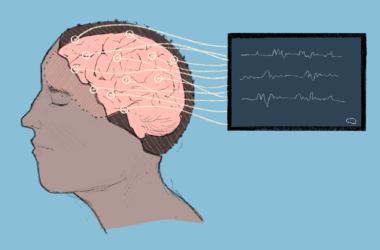
Along with a group of software developers and other neuroscientists, Dr. McIntosh led the creation of TheVirtualBrain (TVB), a free, open-source modelling platform that allows anyone to create a simulation of a brain. TVB uses real-life neuroimaging data from methods like functional magnetic resonance imaging (fMRI), which maps activity over time by tracking blood flow in the brain.

"[The brain] is a very complex system," Dr. McIntosh said. "Complex systems tend to operate as a network, so in order to understand them, we actually have to really capture the network dynamics."

Network neuroscience relies on a branch of mathematics called graph theory, where brain regions of interest can be viewed as ‘nodes.’ The connections between pairs of nodes—or the flow of information between brain regions—can be represented by ‘edges.’ It's an intricate, ever-changing game of connect-the-dots that has been applied to several other fields. For instance, graph theory has been used to analyze relationships in social networks.

Like many other biological sciences, neuroscience turns to computers to find new ways of looking at empirical data—that is, real-life observations—through a network perspective.

"I use the modelling approach to constrain possibilities, to test hypotheses […,] and to take it back, then, to empirical approaches to validate that," Dr. McIntosh said. “It’s a nice reciprocal loop.”

These models are sets of equations and values that tell the simulated brain, with its nodes and edges, how to behave. From there, the simulated brain can be manipulated and visually represented in different ways. Without TVB, scientists would need to perform deep brain stimulation (DBS) or transcranial magnetic stimulation (TMS) for controlled activation of certain areas of the brain.

"You can look at what happens to the network dynamics when you start poking [the virtual brain], like you would for DBS […] or TMS," Dr. McIntosh said. "Are there certain areas that are more effective in transmitting the stimulation?"

Each person's brain connectivity—also known as their connectome—is unique. Brain simulations can be helpful in clinical settings, where virtual brains can be created for each individual patient. For example, by programming and analyzing the unique virtual connectome of a patient who suffers from seizures, scientists can study where in the brain the seizure starts and how activity propagates to other brain regions.

The same can be inferred from stroke patients. Relationships can be found between a patient's behavioural performance during rehabilitation and patterns of certain connections. These models can be used to propose possible interventions before testing them out on real patients.

Dr. McIntosh concluded the seminar with a nod to MNI's recent effort to make research data as available and collaborative as possible. Though network neuroscience is still a relatively young field, there is more to come in its cognitive and clinical applications.

"This is work in the spirit of the open science initiative that McGill has embraced,” Dr. McIntosh said. “The success of things like the modelling platform, the success of neuroinformatics, [and] the success of being able to use this to understand clinical conditions really requires community input."

Science & Technology

In search of a sustainable, nutritious diet

What is the perfect human diet in terms of nutrition and environmental impact? According to McGill’s School of Dietetics and Human Nutrition Professor Dr. Timothy Johns, finding the right balance is the key.

Johns, an ethnobotanist and nutritionist, said that humans are omnivores by nature.

“We’re adaptable, but it’s not just ‘anything goes,’” Johns said. “In terms of nutrition and health, eating less meat and animal-sourced food and more unprocessed plants would be positive.”

The contemporary diet includes a lot of meat, which can have negative health effects, such as increasing the risk of cardiovascular disease and diabetes. However, key elements of our diet, like Vitamin B12, calcium, and certain protein components, are much easier to acquire with more meat in the diet.

Katherine Gray-Donald, retired associate professor in McGill’s School of Dietetics and Human Nutrition, believes that special diets, such as vegan, vegetarian, and Paleo diets, can be adequate, and can possibly improve health as people pay more attention to what they eat, if the diet is properly designed.

“It is important to follow scientific information and not fall into groups that abound with fake science,” Gray-Donald cautioned.

Different diets work for different people, though it’s clear that we didn’t evolve with our processed modern diet in mind. Johns also highlighted that some have cultural, moral, or religious reasons for not eating certain foods, making the issue more complicated. Though there isn’t always a direct relationship, diet choice can also influence causes of climate change.

“Twenty to thirty per cent of the total greenhouse gases [emitted] are related to the production, processing, and transportation of food,” Johns said.

Animal-sourced foods produce more greenhouse gases. To lower emissions from transporting food, local production is typically favourable to global production. Though most types of produce are now available year round, shipping blueberries from Chilé to Canada is //not// an environmentally-friendly option.

The balance between sustainability and diet is also evident in fish consumption. Johns noted that fish provide a lot of health benefits, even though some fisheries are unsustainable.

“Nothing is black and white. Fish farming can take the pressure off wild fish populations, but even so, there are problems with GMOs and pollution,” Johns said. “You have to look at it case-by-case.”

According to Gray-Donald, another environmental problem is food waste. It is estimated that 30 per cent of food grown is never consumed. She suggested that fresh produce should not always take priority over alternatives.

“Frozen fruits and vegetables can provide local foods all year long, and avoid flying in delicate fruits from distant lands in off seasons,” Gray-Donald said. “Dried fruits and even canned fruits are fine.”

The question of which diet best preserves biodiversity is also a tough one.

“In terms of habitat destruction, veganism is probably less destructive,” Johns said. “However, vegans eating these plants and destroying populations is bad for biodiversity and agrobiodiversity. But you need to do this for animal food, too.”

Though it’s not the norm, vegan and vegetarian ‘elitists’ who consume expensive and unsustainable superfoods actually pose a potential threat to biodiversity. Johns puts the blame on industrial-style agriculture as well as demographic pressures as the largest threats to both plants and animals.

Gray-Donald urged people to follow information from reputable sources and avoid forming like-minded groups.

“Many people think they are nutrition experts and seem to pick and choose to believe what they want and not believe the mainstream scientific community,” Gray-Donald said.

Overall, change must begin at an individual level. Changes at the system-level will happen when more people start asking more questions about their eating.

“There must be a change of mindset, attitude, and preferences,” Johns said.

Letters to the Editor, Opinion, Private

Letter to the Editor: Fuck Jordan Peterson

I can’t believe we’re still talking about Jordan Peterson. I'm disappointed that the Tribune found it necessary to publish an article by Gabriel Rincon making the tired argument that there is somehow a deeper free speech issue behind Peterson’s transphobia (“Jordan Peterson’s real thesis lost in U of T pronoun debate,” Jan. 10). Spoiler: There isn’t.

Despite Rincon’s claims to the contrary, Peterson’s opinions on gender and gender pronouns are not a distraction from his views on freedom of speech. They are, by his own admission, central to his argument. It’s precisely because he “[doesn’t] know what the options are if you’re not a man or a woman,” and because he doesn’t think that non-binary gender identities are “a valid idea,” that Peterson can claim that prohibiting gender-based discrimination is a violation of his freedoms. To be clear, Peterson is not concerned with free expression in any meaningful sense, but only with his freedom to misgender students and invalidate their identities.

It is intentionally misleading to articulate this connection through the bogeyman of “political correctness.” In doing so, Peterson and Rincon continue the right’s 25-year tradition of using this “phantom enemy,” as Moira Weigel calls it in a Guardian piece, to target marginalized individuals (in this case trans and non-binary people) and impute bad faith and authoritarian motives to them. To treat Peterson’s legal arguments seriously is absurd: For example, the Ontario Human Rights Code’s definition of discrimination is unrelated to Bill C-16, and is neither new nor controversial in practice. The attack on free speech that Peterson describes is imaginary.

With the help of the media, Peterson has cynically manufactured a controversy that has catapulted him into the public eye and now earns him over $14,000 per month on Patreon. Meanwhile, Peterson’s comments prompted a wave of threats against trans students, rallies in support of Peterson have attracted white supremacists, and a non-binary professor who spoke up against Peterson was extensively harassed on the basis of their gender by Peterson’s fans.

To attack a marginalized group from the security of a tenured position and a place of privilege is not a courageous defence of free speech, but a display of cowardice. Justice would be well served if we stopped defending this professor and never mentioned his name again, unless it is to say: Fuck Jordan Peterson.

Igor Sadikov

U3 Mathematics and Political Science

Arts Representative to SSMU

News, The Tribune Explains

Tribune Explains: The three types of professors you’ll meet at McGill

Think that all professors are the same? Think again. There are three different categories of professors at McGill: Course lecturers, contract academic staff, and tenure/tenure-track staff.


Course Lecturers

Minimum Salary: $7,800 per course


Course lecturers are professors who instruct at least one undergraduate or graduate course on a contractual course-by-course basis without being required to conduct research. Also referred to as “sessional lecturers”, they are represented by the McGill Course Lecturers and Instructors Union (MCLIU) and act in accordance with the union’s terms and conditions.

According to MCLIU President Raad Jassim, course lecturers teach approximately 35 per cent of all the courses at McGill.

“[MCLIU] has about 800-900 course lecturer members per semester and about 1,500 course lecturer members per year,” Jassim says. “[Course lecturers] might vary from one semester to the following. Throughout the year, [some] might teach in more than one university.”

Jassim feels that course lecturers enhance the university learning environment.

“Course lecturers come in with specific designations to teach a [specific] course [or courses],” Jassim said. “They enrich the university in experience and academic progress.”

Course lecturer Karen McAllister believes that the position is a great way to experience the joy of teaching even though the pay is not as high as it is for tenured professors. She believes that sessional lecturers may not be able to put as much time into each course as a result of the flat pay rate per course.

“You get a lot back from teaching and you feed off the energy,” McAllister said. “It’s nice to teach when you have a good energetic group of students who are thinking about new ideas. [But] the more hours you put in as a [course lecturer], the less you are getting paid. You aren’t going to put that amount of work in when you also have to be doing other things to pay the bills.”


Faculty Lecturers

Minimum Salary: $50,000 per annum


Faculty lecturers are a type of ‘Contract Academic Staff’ and are hired to teach on a yearly contractual basis. They are not required to do research and are not eligible for consideration of tenure. At McGill, faculty lecturers are represented by the McGill Association of University Teachers (MAUT). Since MAUT is an association, faculty lecturers are not unionized. Assistant, associate, and full professors can also be contract academic staff on contracts shorter than or equal to three years–too short to be eligible for tenure.

The lack of unions for faculty lecturers can sometimes create non-transparent hiring. According to Jassim, the administration does not always hold open calls for faculty position jobs.

“There rarely are postings for faculty lecturers,” Jassim said. “At Concordia, [the faculty] will announce [the postings], but at McGill they don’t. They will just choose someone to become a faculty lecturer. The chair of the department assigns that faculty lecturer who gets approved by the dean and then the provost.”

According to McGill’s hiring rules, however, faculty lectureship must be advertised. The exceptions to mandatory advertising are clinical appointments that are primarily related to clinical teaching of medical and dentistry students, professional appointments that are similar to clinical appointments, and adjunct professors. Adjunct professors are employed by the government, industry, or an institution other than McGill for at least one academic term.


Tenure/Tenure-Track

Assistant Professor Minimum Salary: $65,000 per annum

Associate Professor Minimum Salary: $77,500 per annum

Full Professor Minimum Salary: $90,000 per annum


Tenure and tenure-track professors are hired to conduct their own research while teaching at the university. Tenure-track professors usually begin at the assistant professor level and are normally considered for tenure in their sixth year. Once tenure is received, professors are guaranteed their position until retirement age, which is 60 in Quebec, except under dismissal with just cause. At McGill, associate professors have obtained tenure or will be considered for tenure in their fifth year at McGill and full professors have been promoted from associate professorship, either already with tenure or automatically considered for it in their fourth year.

According to Associate Provost (Policies, Procedures, and Equity) Angela Campbell, the tenure/tenure-track positions have a highly vetted screening process.

“We have the call for applications and then people apply and then we have long lists and short lists and interviews so the person comes here and gives a talk,” Campbell said.


Professors applying for the tenure/tenure-track positions must submit a CV, recommendations from their department, three letters of reference from outside of McGill, and an optional personal statement.

 
McGill, News

McGill community members appointed to Order of Canada

    The Order of Canada was established in 1967 by Her Majesty Queen Elizabeth II and it is one of Canada’s highest civilian honours. The prestigious title recognizes Canadians who have made outstanding contributions to Canadian society and have enriched the lives of those in our country. Governor General and former McGill principal, David Johnston, announced new members and officers of the Order of Canada in the annual New Year’s list of appointments. Among them includes members of the McGill community Victoria Kaspi, Lorne Trottier, Katherine Carleton, Michael David Dan, John Parisella, and Isaac Schiff.


Victoria Kaspivictoria-kaspi(from-www.cbc.ca)

    Kaspi is a professor of physics at McGill University. Her research is focused on observational studies of neutron stars and the use of radio and X-ray telescopes to study pulsars, which are rapidly rotating neutron stars that regularly emit ‘pulses’ of radiation. Her work is globally renown and her insight into the behaviour of neutron stars is widely respected. In 2016, she was one of the youngest recipients of the $1-million Gerhard Hertzberg Canada Gold Medal for Science and Engineering. Her promotion to Companion of the Order of Canada is recognition for her research preeminence and scientific achievements.


Lorne M. Trottier

lorne-trottier(from_www.mcgill.ca)

    Trottier is best known as the co-founder of Matrox, a computer corporation that specializes in computer graphics. In addition, he is an engineer, businessman, and philanthropist who has contributed over $20 million to McGill for the funding of science buildings and initiatives. He has been promoted to Officer of the Order of Canada for his generosity as one of Canada’s leading supporters of research and education in the sciences.


Katherine Carleton

Katherine Carleton Order of Canada(from_orchestrascanada.org)

    An adept musician and an admired arts manager, Carleton has worked hard defending, promoting, and advocating for the arts and orchestra all over Canada. This McGill University Management graduate has been the executive director of the Kingston Symphony, the Nova Scotia Symphony, and the Kitchener-Waterloo Symphony orchestra. Her appointment to the Order of Canada demonstrates the contributions she has made with her passion for music.


Michael David Dan

dr_Michael_Dan(from_tshfoundation.ca)

    After resigning from his neurosurgery career, Dr. Dan returned home to Toronto and became a generous donor to charities in the area. Dan has been appointed to the Order of Canada in recognition for his contributions and work with indigenous people. He created Gemini Power, a hydroelectric venture that works with indigenous communities in Ontario.


John Parisella

john-parisella-(from_irpp.org)

    McGill Faculty of Education alumnus Parisella’s past roles include serving as chief negotiator of a land claim by the Mohawks of Kahnawake and as chief of staff to former Quebec premiers Robert Bourassa and Daniel Johnson. While teaching at Concordia University, he served as special communications advisor to the university’s president. It was his social, political, and academic engagement, as well as dedication to major governance issues, that earned him this recognition.


Isaac Schiff

Issac-Schiff(from_www.health.harvard.edu)

    After graduating from McGill Medical School, Dr. Schiff went on to serve as the director of the Division of Reproductive Endocrinology at Brigham and Women’s Hospital. He later became chief of the Mass General Department of Obstetrics and Gynecology at the Massachusetts General Hospital, where he initiated the obstetrics program, the in-vitro fertility program, and the division of urogynecology.  In addition, Dr. Schiff is one of the founding trustees of the North American Menopause Society and was editor-in-chief of its journal Menopause since its inception. He has previously been honoured with the Harvard Medical School’s Dean’s Award for the advancements he has made in women’s health.

Commentary, Opinion

Alleviate add/drop woes by shortening the add/drop period

Add/drop distress marks the beginning of every semester. This past fall, students endured 18 dreadful days of waitlist purgatory, and endured 13 days until this semester’s Jan. 17 add/drop deadline. Apps such as //Get A Seat//, which give email notifications when a spot has opened up, only alleviate stress to a certain extent. How do we pragmatically address these add/drop woes? It’s simple: Shorten the add/drop period.

Every new semester is an opportunity to start fresh, and be on top of your courses from the get-go. Having a long add/drop period can get in the way of this. For potentially two weeks, students are unsure of what courses they will be taking, and by the time their schedule is finalized, plenty of material has already been covered. While students cannot be penalized for missed assignments or attendance during the add/drop period, they are still expected to catch up on the work that they miss—so much for a fresh start. A shorter add/drop period means a shorter period of uncertainty and a better chance of being on top coursework from the beginning of the semester.


A shortened add/drop period forces the student to think critically and more efficiently about the qualities they are looking for in their lecturer and course, thus narrowing the difficult decision down to a few concrete questions.

It may seem that shortening the add/drop period would force students to make decisions in a hurry. It’s worth noting, however, that too much time can lead to analysis paralysis—over-analyzing a situation so that a decision is never made—and mentally exhaust the undecided student and further frustrate the ones on the waitlist. A shortened add/drop period forces the student to think critically and more efficiently about the qualities they are looking for in their lecturer and course, thus narrowing the difficult decision down to a few concrete questions. For example, does the professor teach math on the blackboard or (blasphemously) read directly from lecture slides? In such a way, shortening the time to decide could lead to more effective decisionmaking.

Per Parkinson’s law, “work expands so as to fill the time available for its completion.” The habit of expanding a task to the provided time boundaries cannot easily be changed. When given the time, students use the full two weeks or more for course selection. While this time does provide space to try out courses before solidifying a schedule, two weeks is excessive to this end and prolongs stress and anxiety. The obvious solution is to shorten the add/drop period to reduce the time spent in limbo.

Granted, for a shortened add/drop period to work in this way, professors will have to make some administrative and scheduling changes, such as ensuring that course syllabi and grading schemes are accessible well before the start of classes. Such material should not be discussed in the first lecture, as it is an enormous waste of time. Students want to know how a professor lectures course material, not repetitive administrivia. The first lecture should be an honest sample of the professor’s teaching style so that students can make an informed decision more quickly.

The long add/drop period provides important time and flexibility when choosing courses, but this isn’t essential if students prepare ahead of time. Many students have an eloquent (if abstract) answer for what their 5-year goals are in a job interview—they should be able to plan what courses to take for the coming year. Students must be encouraged to plan their academic schedule a year in advance. A shortened add/drop period will work best if students are prepared with a tentative list of desired classes and their backups, and use the add/drop week to test the classes they are unsure of.

To correctly address add/drop frustration, truncate the add/drop period. The currently extended period of uncertainty hinders the chance to start the semester on the right track. Furthermore, a shorter add/drop time frame could encourage better decisions regarding course selection. Less time frantically checking Minerva, more time paying attention in class.


Vivek Gidla is a U2 student at McGill.


@McGillTribOp | [email protected]


Art, Arts & Entertainment

Interpreting reality in a digital age

[metaslider id=49639]

At Projet Pangée’s small gallery on the edge of Place des Arts, artist Lauren Pelc-McArthur is turning the digital into something palpable. With acrylic textures and neon colours, her pieces feel familiar, as if you have seen them before—if you’re a participant in the current worldwide digital age, it’s likely that you have.

McArthur’s pieces are part of Futuristic Future, an exhibit displaying various paintings and sculptures. Acting as a commentary on the digitalization of our world, the gallery, open now through late February, features works by Montreal-based McArthur, in addition to artists Amy Brener and Cat Bluemke. Curator Joani Tremblay, who had followed McArthur’s work for two years, connected all the artists’ pieces together as a means of observing rather than living in the digitalized world. 

Amidst the sea of luminescent paintings, glass prisms, and textured silicone sculptures is a unique take on humanity’s future technological presence. The physical presence of the artwork acts as an anchor in reality as the world launches into a very digital future. 

McArthur’s large, so-bright-they-burn paintings mimic the screens and images that society is inundated with every day. The artist explained the consistent use of backlit-reminiscent pinks and blues throughout—colours mostly seen on the screens of various devices—to make something material out of our digital lives. 

“[I’m interested in] what gets lost in translation when you’re taking work from screen space and turning it into tangible reality,” said McArthur, who has a background in both painting and graphic design. 

When you observe the way the paintings seemingly change as different angles highlight their multifaceted nature, it seems that turning the digital into something physical adds more than just a third dimension.  Walking into the gallery is essentially taking a step away from society’s techno-future. The pieces confront how the world is domineered by the digital and how technology is becoming so ingrained into our very nature that the projected outcome itself is not totally concrete—but the art certainly is. Acting as the ultimate interpretation of the digital age, Futuristic Future provides an artistic and somewhat surreal outlook on what our future will look like.


Futuristic Future will remain open to the public at Projet Pangée’s gallery (372 Sainte-Catherine Ouest) until Feb. 18. 

McGill, News

AMUSE members secure collective agreement with McGill

Two years of negotiations conclude in agreement

On the night of Jan. 9, members of the Association of McGill University Support Employees (AMUSE) voted 86 per cent in favour to ratify a new collective agreement with McGill. The union, which represents over 1,500 casual employees on campus ranging from floor fellows to library staff, began negotiations with McGill in May of 2015. The new agreement was drafted in a Nov. 25, 2016 meeting between AMUSE and the university.

These changes will be finalized when a final draft of the agreement is submitted by the administration and signed by AMUSE. In an email to The Tribune,  Robert Comeau, director of Labor and Employee Relations and part of the administration’s negotiating team, expects the agreement to be finalized sometime this semester.

“The administration is currently preparing the final English and French versions of the new collective agreement,” Comeau wrote. “It will then be reviewed by the union and we are hopeful that signature will take place in early February.”

AMUSE was unable to secure paid sick days for its members and, due to an open complaint they’ve filed with the Quebec Pay Equity Commission, they were also not able to implement an expanded list of job titles in the new agreement.

Although not all of their demands were met, the ratification of this agreement is a major victory for the union. Claire Michela, president of AMUSE, emphasized that their negotiations are not finished.

“[It was] not everything we wanted, but definitely everything was positive,” Michela said. “It’s clear that we had a collective agreement, before that was minimal […and] we were able to get things without giving anything up [….] It's not over.”

AMUSE-MUNACA merger progressing

On Feb. 23, members of AMUSE and McGill University Non-Academic Certified Association (MUNACA), two major labour unions on campus, will meet to approve the conditions of a merger to become one union representing both student and non-student permanent and casual employees.

The first steps towards the merger were approved in February 2015 as a result of pressures that both unions were experiencing in their negotiations with the university, which, according to Claire Michela, the current president of AMUSE, caused tension between the two organizations.

“By pitting us against each other, [the university] is able to reduce the inherent responsibility of management,” Michela said.

On Oct. 13, 2016, members approved proposed merger by-laws and a transition policy. By combining the two unions, both AMUSE and MUNACA hope to facilitate negotiations with the university and minimize any financial loss to the employees as a result of strikes.

Camille Tsalik, U3 Arts, is a work-study student represented by AMUSE and said that the strikes held in November 2016 prevented employees from working and only provided compensation for the time spent picketing.

“As someone [who] depends on my work-study pay for living expenses, the strikes were incredibly frustrating,” Tsalik said.

The current merger conditions propose that there will be three separate agreements, each covering one of the three bargaining units: The floor fellows, the temporary, non-academic employees which are both currently represented by AMUSE, and the permanent non-academic employees, which are represented by MUNACA.

Furthermore, the negotiations between the two unions have resulted in a proposal to consolidate the financial and executive structures of both unions. They will share a budget of approximately $410,000 per year, which will be a combination of their current budgets. Each of the three bargaining units will be represented by a vice-president (VP) and a labour relations officer in the new executive structure and will also share a president, a VP internal, and a communications officer.

“Without merging, the financial and executive structures wouldn’t be able to accomplish as much or be as strong of a union,” Michela said.


The first executive elections for the new combined union will take place in September 2017 provided that the current proposal is approved by both unions and their respective members.

Read the latest issue

Read the latest issue