
Latest News

Art, Arts & Entertainment

The selfless selfie: “Hypotheses” conference discusses narcissism and post-internet art

Since the boom of social media, selfies have gained widespread popularity. It is an art form that is rarely given credibility, often being touted as evidence of the milennial’s supposed narcissism.

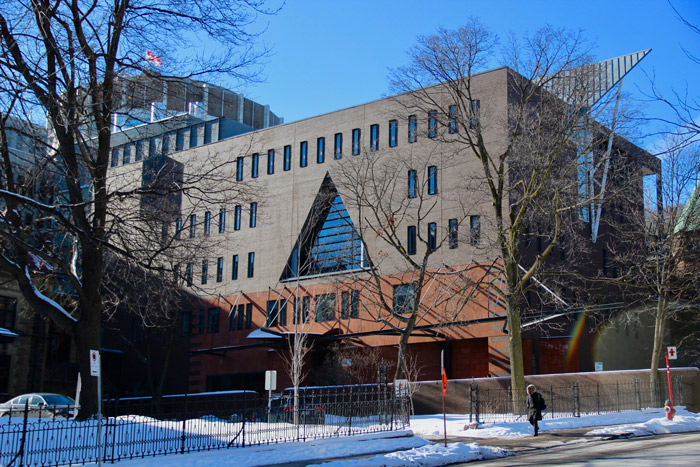
Last week, Hypotheses, an arts symposium, hosted a conferenced called “Posting The Self(i.e.): Performing Bodies and Post-Internet Art” at the Montreal Museum of Fine Arts. At the event, Marina Merlo, PhD Candidate in Film Studies at Université de Montréal, and Estelle Wathieu, M.A. Candidate in Art History at Concordia University, presented their papers, opening up a discussion about performative aspects in photographic selfies and post-Internet art.

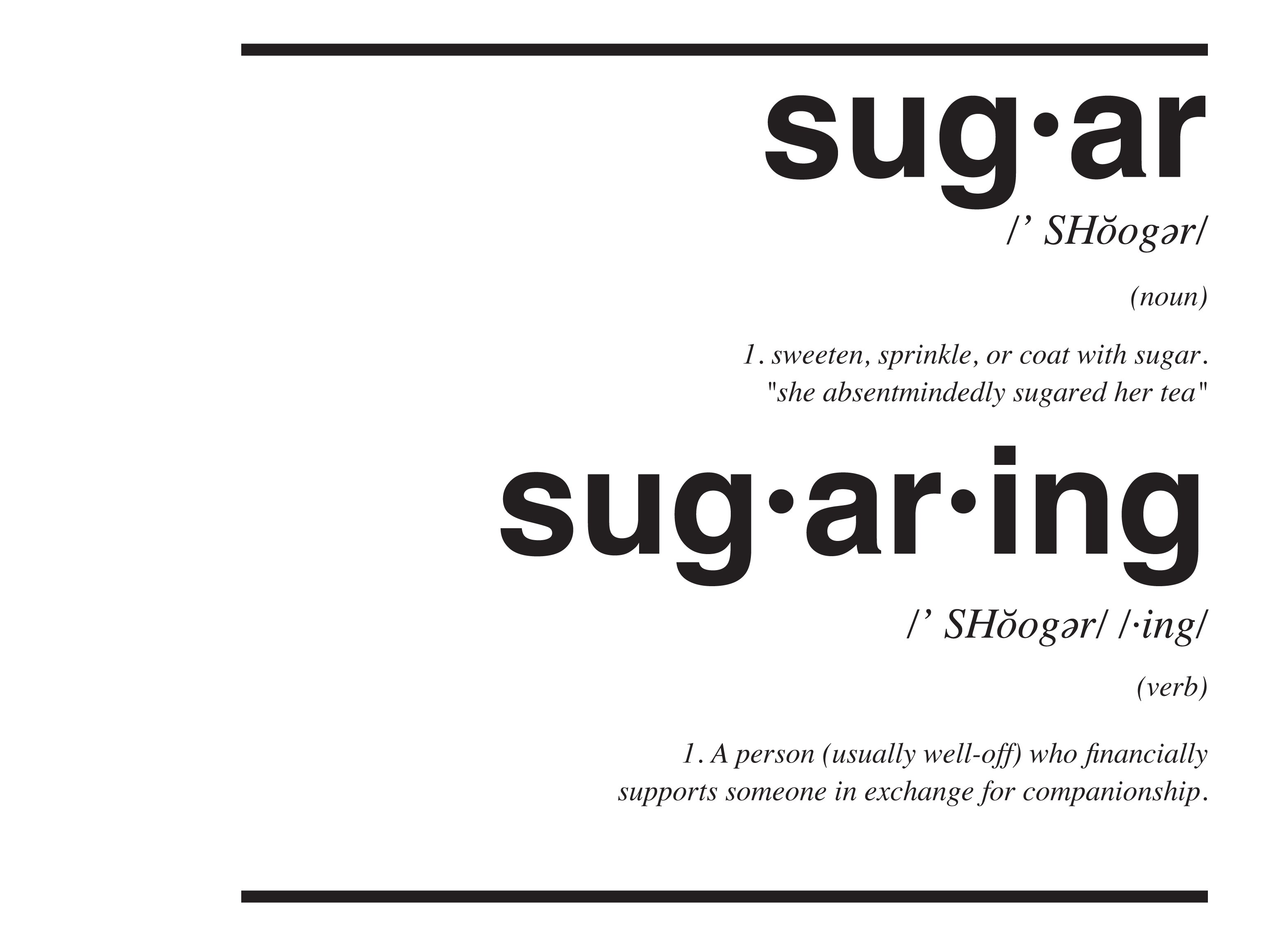
In her paper, titled “Performance and Gesture in Selfies: Excellences and Perfections,” Merlo discusses Amalia Ulman’s 2014 work called Excellences and Perfections. In Ulman’s work, which was referred to by The Telegraph as being the “first Instagram masterpiece,” the artist performed and photographed a changing persona, and documented it through photos uploaded on an Instagram account. First, she presented a character of an aspiring artist, then a sugarbaby undergoing various issues, such as drug abuse and self-harm, and then showcased a phase of rehabilitation to become a character who enjoys fitness and travelling.

Merlo points out that Ulman’s project is a niche case study regarding concepts related to selfies, such female body image, celebrity culture, and authenticity. However, through her paper and her presentation at the conference, Merlo postured that that Ulman’s “selfie” photos, which are mainly taken in front of mirrors, were not traditional selfies.

“To readily identify a basic or traditional selfie, I argue that two things are important,” said Merlo. “Firstly, the photographer looks knowingly into the camera lens, and secondly, the photographic gesture must be very obvious. It must be clear that the photograph was purposely taken by the person in the picture [….] Considering these criteria, ‘Excellences and Perfections’ does not feature any traditional selfies. [For example] a self-portrait taken in the mirror makes the photographic gesture much less obvious, and the bodily interaction with the camera is drastically modified.”

In dissecting these differences, Merlo argues that a selfie is a voluntary and deliberate action. Through exploring the performative nature of selfies, she proposes that the common conception of the narcissistic nature of selfies is complicated. 

Merlo noted the difference between the selfie phenomenon and the myth of Narcissus, in which the Greek hunter falls in love with the image of himself in a reflecting pool. Although Narcissus is seeing his own image, at first he doesn’t recognize himself. 

“Narcissus is, therefore, othered as an image to a point that he believes it is someone else he is seeing [….]” Merlo said. “This form of mythical narcissism does not properly describe what is happening in a selfie, the selfie is always a voluntary action, just like for a performative utterance [….] [A selfie] can’t be an accidental photograph. This is very unlike what Narcissus is doing.”

Wathieu also brought up the topic of selfies in her paper entitled, “From ‘teen-girl tumblr aesthetic' to 'selfie feminism': evolution of the discourse around a complex and ever-evolving network of artists." She postured that the photography of Petra Collins portrays the experiences of racialized women through the lens of white women, thereby reducing the political potential of intersectionality in their project.

In analyzing their work and the political activism behind selfies, Wathieu brought up the topic of selfie feminism. She discussed the 2016 essay Closing the Loop by Aria Dean, where the writer claims that the selfie’s political impact as an act of feminism is limited as the “compounded male, white, and colonialist gazes blur Black women and femmes into oblivion.” Wathieu believes that the act of female self-imaging on the internet is not a cohesive movement that can be analyzed.

“While I agree on [Dean’s] arguments [….] I believe that [her] vision was biased, as soon as she named her object of study, selfie feminism, reducing it to politics of representation,” she said. “What I would like to propose today is to reposit this discourse […] and to propose a vision of this body of work as an ever-evolving and complex network more than as a fixed canon.”

Wathieu and Merlo presented different ideas about what a selfie is, and the role it plays in representation and feminine identity. It is clear that selfies are much more than a syndrome of millenial narcissism, and a practice that is difficult to define in current social and political contexts.


Errata: An earlier version of this article incorrectly named Estelle Wathieu’s paper as "Intersectionality and Post-Internet Art: Petra Collins and Lula Hyers” instead of the correct title, which is “From ‘teen-girl tumblr aesthetic' to 'selfie feminism': evolution of the discourse around a complex and ever-evolving network of artists." Furthermore, the earlier version incorrectly associated a point Wathieu made about the political potential of intersectionality of the works of Petra Collins to the work of Lula Hyers as well. The McGill Tribune regrets these errors.

Science & Technology

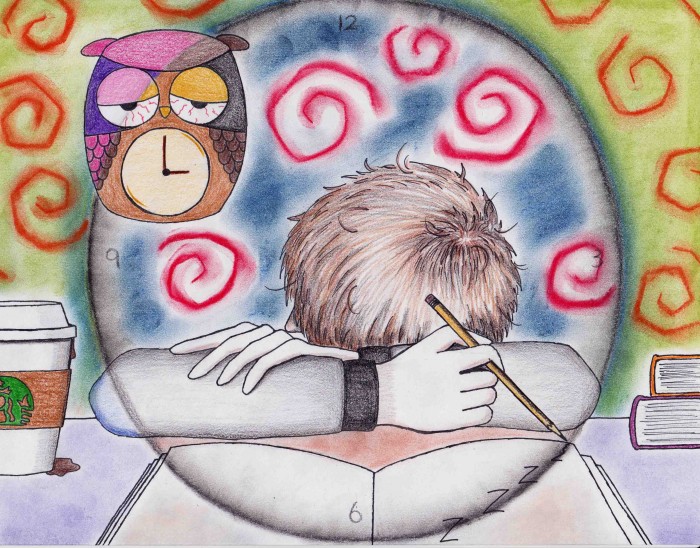
4 tips for a better night’s sleep

Ever wake up feeling tired after getting over eight hours of sleep? You’re not alone. For an activity that we have been doing since we were born, sleeping—at least, sleeping effectively—is not always easy. There are a variety of factors and processes that can make it difficult for students to get a good night’s rest. Fortunately, there are numerous steps individuals can take and changes they can make to ensure that they will be more successful falling asleep, staying asleep, and waking up feeling well-rested.


Avoid laptops and smartphones before bedtime

Your penchant for watching lecture recordings and looking at memes on Instagram before bedtime is most definitely impeding your ability to get a good night’s sleep.  According to findings by the Lighting Research Center at Rensselaer Polytechnic Institute, the blue and white light emitted by digital screens can disrupt the body’s release of melatonin. Melatonin is a hormone that helps people sleep by maintaining their circadian rhythm—which is essentially a 24-hour biological clock programmed in the human body that dictates when one feels tired or awake.

Within an hour or so before bedtime, try doing something that doesn’t involve technology, such as studying with your textbook, flipping through a magazine, or reading the school newspaper.


Limit exposure to sound

Residents of crowded cities like Montreal are constantly exposed to a barrage of sounds and noises. While the screeching of cars and the enthusiastic shouting of bar-goers on St-Laurent might seem like minor annoyances initially, they could be seriously affecting students’ ability to sleep properly at night. Noise does not need to fully awaken a person in order to disturb their sleep cycle. According to the World Health Organization’s Night Noise Guidelines, even a sound as low as 30 to 40 decibels—such as quiet whispering—has the potential to cause sleep disturbance.

Make sure that all of your windows and doors are closed to limit the amount of external noises that can seep into your bedroom. For people living in particularly loud neighbourhoods, listening to white noise—steady, unvarying, unobtrusive sound—during sleep might be helpful. A study published in Sleep Medicine revealed that white noise increased sound arousal thresholds in sleeping individuals exposed to recorded sounds. In other words, white noise helps mask the effect of other, more disruptive noises. Check out Spotify’s white noise playlist or one of the many free apps available online.


Hands off the snooze button

Although it is a pleasurably cathartic experience to hit the snooze button repeatedly in the morning, (especially while dreading the walk to class through a labyrinth of construction), this is a practice that prevents people from feeling fully awake in the morning. By pressing the snooze button and drifting off into mini-sleep, the brain’s sleep cycle starts all over again.

A typical sleep cycle lasts between 90 to 120 minutes, making it impossible for anyone to complete a cycle in a standard snooze period. Therefore, the body is unable to reach a meaningfully relaxing stage of sleep. Even worse, the circadian rhythm ends up being confused in the process. The result is that after the snooze, people typically wake up feeling even groggier.

Instead, try using a smart alarm clock. There are various smartphone apps in this category, like Azumio’s Sleep Time, that generally work by tracking the user’s sleep cycle with the phone’s accelerometer. The alarm goes off within a period of a few minutes before the set time, specifically when the user is not in a phase of deep sleep, essentially waking the person up when their body is naturally ready.


Beds are for sleeping

The bed is a very comfortable piece of furniture—it is tempting to plop into it to enjoy a plethora of non-sleeping activities, such as watching Netflix, reading, or texting. Simple Pavlovian conditioning explains why this habit is not conducive to falling asleep at night. In order to fall asleep faster after getting into bed, people need to associate their bed, a neutral stimulus, with sleep, a biological stimulus. Reinforcing this connection elicits a response of sleepiness when somebody climbs into bed. By mentally linking the bed with another activity, such as watching shows or texting, the person weakens this conditioning.

The simple tip to overcome this: Don’t watch Netflix in bed.

Science & Technology

How McGill invented pain: 1970s pain scale still used today

Has a doctor ever asked you to rate your pain on a scale from one to ten?

Over 40 years ago, McGill University’s Dr. Ronald Melzack and Dr. Warren Torgerson set out to create a quantitative measure for pain—that is, a numerical scale to analyze the condition of patients.

“The McGill Pain Questionnaire consists primarily of three major classes of word descriptors—sensory, affective, and evaluative—that are used by patients to specify subjective pain experience,” Dr. Melzack wrote in the 1975 issue of The Journal of Pain. “It also contains an intensity scale and other items to determine the properties of pain experience.”

In other words, doctor asks their patients to select which words best reflect their pain levels and to assign each a number of intensity. The words patients select each have an assigned quantitative value on the survey, allowing the health care professional to calculate a number for their level of pain.

With the McGill Pain Questionnaire, doctors guide patients through a series of questions, asking them first to select a single word from each group and then circle a specific number of words in specific categories. ‘Pulsing’ and ‘quivering’—both sensory words—are in category one. ‘Agonizing’ and ‘torturing’—both emotional words—are in category 20. ‘Troublesome’—an evaluative term—is in group 16. A quantitative measurement for pain is derived from their selections, coupled with a numerical value given for the intensity of the pain experienced.

While the above adjectives seem to represent a variety of pain levels, other terms are more difficult to differentiate and quantify. For instance, how can ‘frightful’ and ‘horrible’ represent two different types of pain? What’s the difference between ‘nagging’ pain and ‘tiring’ pain? Although hospitals still use the McGill Pain Questionnaire today, many undeniable flaws have surfaced since its introduction in the 1970s.

Inherent shortcomings arise from translating subjective observations into quantitative measurements. A numerical scale, calculation, and ranking all vary based on the person’s past experiences. A mother with two children may consider childbirth a ‘10’—the worst pain imaginable, whereas a young girl with an ear infection might not be able to imagine any pain worse than what she is experiencing.

Most scientists and doctors agree that a less subjective measurement would be beneficial. No such test or questionnaire has yet to be published, but steps have been taken to pursue a less numerical method of categorization.

“There are lots of problems that come with trying to measure pain,” Professor Stephen McMahon of the London Pain Consortium told The Independent on Jan. 10. “I think the obsession with numbers is an oversimplification. Pain is not unidimensional. It doesn’t just come with scale […,] it comes with other baggage. How threatening it is, how emotionally disturbing, how it affects your ability to concentrate.”

However, turning this baggage into scientific data fit for analysis also poses many challenges, making the escape from a numerical system seemingly impossible. Dr. Adnan Al-Kaisy, head of the Pain Management and Neuromodulation Centre at Guy’s and St. Thomas’ Hospital in London, hopes that technology may uncover a way to measure varying types of pain.

“[We’re] trying to develop a tool […] which will give an accurate impression of how active or disabled they are, and tell us the cause of their pain from the way they sit or stand,” Al-Kaisy told The Independent.

Whether or not such a measuring device will be developed in the near future is unknown. However, as pain research continues at McGill’s Alan Edwards Centre for Research on Pain, there’s no reason why what began here can’t continue here. Perhaps the next McGill Pain Questionnaire won’t be a questionnaire at all; maybe it will be the McGill Pain Machine.

Creative

Unity Abroad: Solidarity and Resistance in the Year of Trump

The voices of McGill Students on their anxieties, hopes and fears in the newly tense atmosphere in the wake of the neighboring US election. 

Produced by Noah Sutton
Directed, Shot, and Edited by Alex Gardiner.
Rally footage and additional editing by Noah Sutton.

Music by Emmett McCleary/Easter.
"I Made This Bed and Now I Must Sleep In It."

McGill Tribune 2017

Montreal, News

Protesters worldwide demonstrate to express opposition to President Trump

Crowds of more than 500,000 people gathered on the National Mall in Washington D.C. on Saturday, Jan. 21 to take part in the Women’s March on Washington. It was one of 673 marches throughout the world.

Occurring just one day after the inauguration of President Donald J. Trump, the marches were conducted by individuals from all corners of the world to send a message of power, resistance, and solidarity to the new administration.

The protesters were against Trump’s behaviour and policies. Based on a transcript with Billy Bush, Trump has reportedly condoned sexual assault of women. In addition, many women have issues with his intention to deny access to planned parenthood and his anti-abortion stance.

The streets were full of pink-knit hats, cleverly-crafted posters, and chants of dissent. By 9 a.m., the mall was packed and people were eager to rally. An hour later, the event commenced with a speech by Honduran-American actress America Ferrera.

“We will not go from being a nation of immigrants to a nation of ignorants,” Ferrera said to cheers of support.

Among the attendees of the Women’s March, there was a consensus about the importance of mobilization and resistance. A husband and wife, who asked to remain anonymous, had driven down from Long Island NY to participate in the event. The wife, who marched in Washington D.C. in 1970 to protest the Vietnam War, was deeply moved by the civil societal participation.

“It’s a repudiation of everything that Trump stands for,” the couple said. “What he stands for does not represent our America. Our strength is our diversity.”

Another marcher, Hannah – who declined to disclose her last name –  travelled across the country from Oregon and was marching for her grandmother, who had passed away from lung cancer before she had the chance to vote for Hillary Clinton. When considering the next four years with Trump in the White House, Hannah was reminded of the fascist movements that swept the world in the 1940s.

“I see what people mean when they say [we’re] trading the moustache for the toupee,” Hannah said.

Hannah was not alone in her sentiments. Activist, writer, and feminist icon Gloria Steinem spoke against the new president, standing before crowds of admirers in Washington. During the march, she emphasized the importance of keeping the power in the hands of the people.

“I have met the people, and you [Trump] are not them,” Steinem said.

Over 30 “sister marches” were organized across Canada. In Montreal, nearly 5,000 people gathered at Place des Arts for Manif des Femmes, marching in solidarity with Washington.

Sarah Wimmer, U1 Arts, was one of the protesters at the Montreal event. Wimmer found that the most moving aspect of the march was when women were asked to raise their hands if they had ever been sexually assaulted. Countless hands rose in the air.

“I marched because I know change doesn’t come from silence, and uniting with all of the millions of other marchers proves that one man won’t be able to divide us,” Wimmer said.

A speaker at the event, Rachel Zellars, executive director of the Girls Action Foundation and a PhD candidate in the Department of Integrated Studies in Education at McGill, spoke at the event. She highlighted the value of collective action and unification in a time of such distress.


“Today signifies the end of our grieving because right at this very moment [673] other women’s marches are happening globally,” Zellars said. “We have never needed one another so much as in this very moment.”

News, PGSS

PGSS sends Legal Information Clinic Referendum Question to online ratification

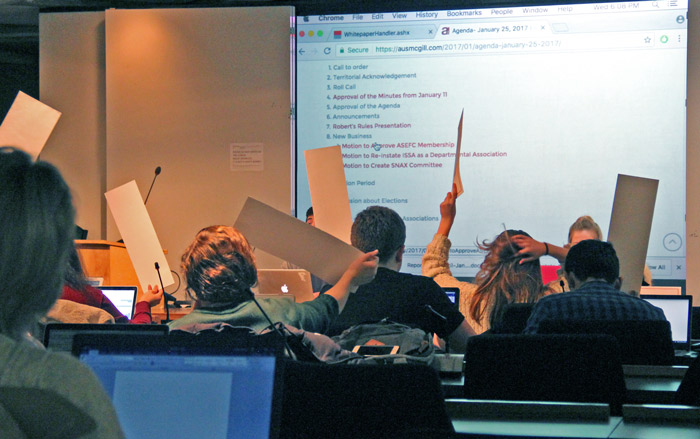
On Jan. 18, the Post-Graduate Students’ Society (PGSS) voted to send the Legal Information Clinic at McGill (LICM) Referendum Question to online ratification, considered an invitation to collaborate on Boycott, Divestment, and Sanctions (BDS), and discussed Thomson House fees.

Legal Information Clinic Referendum Question

PGSS Council members voted to send the LICM Referendum Question to online ratification. The LICM offers legal counselling from law students to members of the McGill student body and the Montreal community. The LICM asked that their non-opt-outable graduate student fee be raised from $2.00 per semester to $4.50 per semester.

According to the LICM Director of Communications Sunny Yang, the LICM is seeking to raise the fee in order to better serve the McGill community by enabling them to rent more space. Yang said an increase would it to handle heavy demand from students and community members.

“With the additional $60,000 [raised from the fee increase], we’re able to rent out more space so everyone who wants to volunteer in the Faculty of Law can actually volunteer here,” Yang said. “We’d have the ability to not close lines and for faster intake.”

PGSS Internal Affairs Officer Mina Anadolu said she supports increasing funds for the LICM due to their effectiveness at providing legal expertise to graduate students.

“The [LICM] has been a huge help to the Internal Affairs Committee in terms of orientation,” Anadolu said. “For the past two years that I have been in this position, [the LICM has had] an active role in orientation and getting information out to students. Also, [the LICM held] information sessions, here at Thomson House, the most recent being ‘Renting an Apartment in Quebec’ [and] ‘Know Your Rights.’”

BDS Resolution Collaboration

On behalf of the AGSA, Anthropology Masters candidate Jason Hirsch requested to form graduate student groups in support of the BDS movement. AGSA has officially endorsed the BDS movement at McGill University.

“AGSA passed a motion in support of [the BDS] movement,” Hirsch said. “[The AGSA] wanted to come to [PGSS] Council for a proposition that [members] could pass this along to your PGSAs [Post-Graduate Students’ Associations]. We wanted to know if there are other groups that are willing to join us.”

Hirsch said the AGSA supports BDS due to the movement’s anthropological connection to colonialism. Meanwhile, Principal Suzanne Fortier previously sent an email explaining the McGill administration’s opposition to the BDS movement, accusing it of being contrary to McGill values of academic freedom, equity, and inclusiveness.

“We felt the need to go through [passing the motion in AGSA] as anthropologists because in our own discipline we have a colonial legacy,” Hirsch said. “Principal [Suzanne] Fortier made a declaration that McGill is opposed to this movement and we don’t feel that [this stance] properly represents the diversity of opinions of the McGill community.”

Thomson House fees

The allocation and transparency of Thomson House fees was discussed at the PGSS meeting. Although the budget for the operation of Thomson House comes from PGSS student fees, clubs are required to pay a booking fee to use some rooms and other space for events or meetings.

Anadolu said she understands the frustration over booking fees, but that they are necessary in order to compensate maintenance staff.

“As Internal [Affairs], we pay for the events that we organize here,” Anadolu said. “Everytime we use a room there are cleaning fees [and] staff fees. Especially if you book a room like [the Thomson House ballroom], you have to pay for the staffing and the cleanup that comes after. I understand the argument that it is counterproductive to charge PGSAs […,] but there are certain charges associated with large spaces.”

PGSS Health Commissioner J. Andrew Dixon, who served on the PGSS Board of Directors last year, said that transparency is an issue when it comes to determining Thomson House costs.

“There’s been a lot of murky water in terms of a schedule for how much everything costs and for what reason,” Dixon said. “So, I think what is really required here is that we need to sit down with the business [management and staff needed to run the restaurant, bar, and prepare rooms] and hash out the details of how much everything costs and why.”

Basketball, Sports

NBA midseason review

Eastern Conference

Led by LeBron James, the Cleveland Cavaliers stand tall atop the Eastern Conference. Despite injuries sustained along the way, the defending champions have held the pace they set last season. They’ve made savvy deals and look ready for another deep playoff run.

The Boston Celtics and Toronto Raptors are Cleveland’s biggest threats to another Finals appearance. After signing Al Horford in the offseason, the Celtics have shown signs of improvement and could finally become legitimate title contenders. Like last year, Toronto has been on fire offensively, but considering how easily the Cavaliers dispatched the Raptors last season, Canada’s team might be more bark than bite.

After the top, there is a clear drop-off in terms of quality. Mid-level teams like the Atlanta Hawks, the Chicago Bulls, and the Indiana Pacers have clear flaws that prevent them from making a serious playoff push.

Western Conference

In the competitive West, the perennial remain on top. With newly-signed superstar Kevin Durant, the Golden State Warriors appear to be the best team in basketball, posting the league’s top record and point differential.

Just behind the Warriors are the San Antonio Spurs and Houston Rockets. Spurs Coach Gregg Popovich has once again proved his wizardry courtside, maintaining his team’s standard of excellence despite losing the legendary Tim Duncan. With a new coach and supporting cast, the Rockets’ rise is one of the league’s surprising stories, spurred by James Harden’s explosive offence and rotation to the point guard slot in the backcourt.

A step behind this top tier sit the Utah Jazz and Los Angeles Clippers. Utah has burst onto the scene after an injury-plagued 2015-16 season, in which they missed the playoffs altogether. With a set of familiar faces, the Clippers should once again prove a tough out in the playoffs, though they must stay competitive without star point guard Chris Paul unil he recovers from surgery in March.

Most Valuable Player

The race for Most Valuable Player has developed into a two-player contest between the Oklahoma City Thunder’s Russell Westbrook and Houston’s James Harden. Westbrook has seen his production escalate to triple-double averages with the absence of Durant, while Harden has posted slightly less flashy statistics, but with exceptional efficiency. Ultimately, Harden trumps Westbrook by virtue of leading a superior team that should be a major presence in the postseason.

Rookie of the Year

In a season filled with disappointing rookie campaigns, the Philadelphia 76er’s Joel Embiid is the clear favourite to win Rookie of the Year. He’s scoring over 10 points more per game than the league’s next highest scoring rookie while providing stifling defence on the other end. Most importantly, his efforts seem to have helped his team turn the corner, as the 76ers have started to show flashes of competence this season for the first time in years.

Finals Prediction

Despite the presence of two  pseudo-contenders in the East, the Cavaliers should sail relatively smoothly to the finals. In the West, the Warriors have a rockier path, but are still in a league of their own. James has shown that his teams are never to be counted out, but with Durant’s added star power Golden State will be tough to overcome. In a rematch of the last two seasons’ NBA finals, the Warriors should triumph.

Basketball, Know Your Athlete, Martlets, Sports

Know Your Athlete: Alex Kiss-Rusk

The 6’4” Arts fourth-year starting centre of the Martlet basketball squad bounds into the room eager to talk about her team. Though a bona fide Canadian collegiate basketball superstar in her own right, Alex Kiss-Rusk is one of the least individualistic, most team-oriented athletes on campus. As she begins what could be her final semester with the Martlets, she reflects on her years at McGill and how she has grown into the leader of the Martlets, both on and off the court.

“I’m captain this year,” Kiss-Rusk said. “We lost three key leaders off the court […] last year […] so that was different. I’ve been here for four years and I never had to worry about anything other than showing up to practices and games. [This year,] it’s been different, but it’s been fun.”

Former captain Miriam Sylla graduated last spring, leading Kiss-Rusk to play an expanded role this year.

“[Sylla] was obviously an amazing player and also a big personality,” Kiss-Rusk said. “We share the responsibility a lot more [now with Sylla gone], but certainly, because I’m the post, it definitely falls on me a lot more.”

Kiss-Rusk doesn’t shy away from the extra responsibility. Despite being a Beaconsfield, Quebec native, She played her first year at Virginia Tech and knows how tough it can be for young players living away from home for the first time to balance an academic workload, athletics, and a new lifestyle. Her experience places her in a position to assist the next generation of Martlets trying to adjust to McGill.

“It’s a bit of a shellshock in terms of school load and basketball and all these things, especially if you’re moving away from home,” Kiss-Rusk said. “We got into that on our team a bit too, where some girls didn’t know how to handle it.”

For Kiss-Rusk, leaving the NCAA to become a Martlet could have been an intimidating experience considering both her parents played basketball at McGill. Instead, she enjoys playing near home and having her parents in the stands each game.

“It’s no pressure,” Kiss-Rusk said. “I think the biggest difference playing here is that my parents can come to all my games [.…] Having them here able to support me […] because they live 10 minutes away, is really fun.”

Combining responsibility with fun is Kiss-Rusk’s mandate. In her final year, she has become more aware on the court and a liaison off the court between her teammates and the coaching staff.

“[As a leader] you have to deal with the things that you thought happened by themselves,” Kiss-Rusk said. “They don’t happen by themselves. There’s a lot going on behind the scenes, a lot of conversations, a lot of video. It has opened my eyes.”

The extra time put into her sport has manifested itself in Kiss-Rusk’s stellar performance this season, leading the team with 12.4 points and 8.5 rebounds per game. Nationally, she is one of the most dominant post players in the country. Her success has had a major impact on the team and has the Martlets consistently ranked among Canada’s elite women’s basketball programs. She has thrived while playing for McGill and whether or not she graduates from the team next year–she does have one more year of eligibility–she is hoping to keep a foot rooted in the game.

“Being involved in basketball […] is going to be important to me when I move on,” Kiss-Rusk said. “Just staying involved in team things.”


Who’s your favourite Redmen basketball player?

Dele Ogundokun


Most bingeable show on Netflix?

Breaking Bad. I’ve seen it three times.


Favourite restaurant in Montreal?

It would have been Altos! But that feels tragic to say.


Best class you’ve taken at McGill?

Developmental psychopathology.

Chill Thrills, Out on the Town, Private, Student Life

La Petite Floride: The magic school bus in the Mile End

Hidden away deep in the Mile End, at the corner of Rue Bernard and Avenue de Gaspé, sits a quaint school bus, a glowing skating rink, and, sitting outside the bus, is what seems to be a bar more fitting for tropical Hawaii than wintry Montreal. The café-bar’s name is written in bold black letters along the side of the bus: La Petite Floride.

This place is a bright spot compared to the dreary warehouses that surround it. Upon entering the bus, one is greeted by thumping dance music and groups of happy people hanging out with friends and strangers alike by either the fireplace outside or inside the bus itself. This bizarre idea of turning a bus into a café-bar came from the minds of a local non-profit organization called La Pépinière, whose mission is to convert unused urban spaces into creative hubs for the community. 

“It was a nice way for us to put winter in a […] place which is warm [and] can have a café. A place we can chill and hang out,” Elisa Schneuwly, one of the designers of La Petite Floride, said. 

The connection between the elements of the café-bar—campfires, skating rinks, and school buses—and Florida, a state that is home to alligators, palm trees, and Disney World, seems tenuous. However, to Schneuwly, the Florida-esque elements of the café-bar serve as a respite from the winter.

(Alex Gardiner / The McGill Tribune)

“[The name] is kind of a joke,” Schneuwly said. “It was because a lot of people from Quebec and Canada go to Florida for the winter and we were like, ‘Why don’t we think of a place where you can […] have fun and hang out? It’s an escape [from] winter for people who have to stay in Montreal.”

La Petite Floride is not a café-bar in its most literal definition, but rather a public space made for and by the community in the Mile End and Rosemont. Its creation was the result of  a collaborative project between Schneuwly’s team and La Pépinière, along with the neighbourhood of Plateau Mont-Royal and Les Amis du Champs des Possibles, to develop an unused piece of land called Agora des Possibles. 

“It’s a meeting place, a cheap place for people to meet from Mile End and Rosemont [….],” Schneuwly said. “We’re doing this project for people in the neighbourhood mostly. But also, people everywhere from Montreal [….] This is a design for the community.”

La Petite Floride was open in December 2016 and will be open until the end of March, a season in which most Montrealers would rather stay home than face brutal -30 degree celsius weather.

“There is a lack of animation and of things happening in the winter. Except huge projects like Igloofest [and] things at Quartier-des-Spectacles,” Schneuwly said. “At Mile End and Rosemont, there’s nothing really going on. So, we wanted to do something here in the winter, cause we see [other neighbourhoods] in Montreal do something there in the winter.”

The bus at La Petite Floride is a tight space, and this limits the size of their menu. Even so, they excel within their limited means. They have made this unconventional and narrow space very hospitable—every customer is greeted by friendly staff. Their small menu, including gooey grilled cheese and craft beer, is a great complement to a weekend get-together with friends and is definitely worth the short bus ride on the 55. 

A previous version of this article incorrectly stated that the owner's and staff have a dog called Duda who greets customers. 

Arts & Entertainment, Theatre

TNC’s “Be Tween” presents pubescent nostalgia

Tuesday Night Cafe (TNC) Theatre latest production, Be Tween, depicts the honesty the ephemeral and profound experience of undergoing puberty with charming honesty. Written and directed by Concordia student Phoebe Fregoli, the play begins with middle-schooler Gemma (Michaela Snoyer) waiting at a bus stop for her best friend Julie (Claire Morse). Here, she becomes acquaintances with Harriet (Hannah Silver), a grubby girl who is not afraid to talk about penises. What follows is a romantic, exhilarating unfolding of a day that transforms the lives of the principal characters. 

Be Tween began as a part of TNC’s 24-hour playwriting competition in which Fregoli composed a 10-minute play. The current production is an expansion of this original work, yet the single act retains the focus of its source material. The narrative is tonally focused and well-paced, with the success of the production resting on a small but strong cast of six characters. As the play follows the ensemble of middle-schoolers through a single day in their lives, its timeline is inevitably compressed. Fregoli’s masterful writing shines; she strikes the balance between expedited pace and nuanced character development. 

Fregoli’s use of space on the stage to mirror the dynamics of relationships between characters is also noteworthy. When Gemma and Harriet wait at the bus stop in the opening scene, the characters stand far apart, at the extreme ends of the stage. As their conversation blossoms, the characters gravitate towards each other. Fregoli uses distance to physically represent the initial wariness of the characters. This meticulous blocking is also noticeable when a character, jealous of the closeness between two other characters, steps between them, literally forcing the pair to separate. 

Other aspects of the production, most notably its set and sound design, complement the direction in making the characters come to life. 

The set, designed by Holly Hilts and Yasmine Dabbous, is unembellished yet artistic. The look of each scene is highly immersive: Two lockers flank the stage, decorated with cut-out photographs of actors from Harry Potter and Lizzie McGuire; multicoloured pennant flags hanging in the background subtly reminding the audience of the narrative’s middle school setting.


The score, curated by Lo Kecaj, is ambient, featuring iconic pop music from the late 1990s and early 2000s—including The Pussycat Dolls’ “Buttons” in a choreographed number, and Lil Mama’s “Lipgloss” in the school dance scene. Catchy and easily recognizable, the tunes lend the production a dimension of nostalgia, since the target audience was all but raised on these songs. In a similar vein, sounds that trigger transitions between scenes are archetypal of ‘90s visual media, but the success of their integration in the production is debatable; at times, the sound effects are forced and jarring, undercutting moments that otherwise had comedic potential. In general, however, the sound design is highly appropriate to the setting of the narrative and assists in making the production deeply engaging. 

Be Tween provides a rich commentary on adolescent lives by scrutinizing the mind of the tween, executed through creative demonstrations of the fantasies of its principal characters. Lighting, designed and operated by Margot Drukker, is critical in quickly transforming the mood onstage. The brilliant use of dimmed red lighting as a character hurriedly constructs a fake account of their first kiss is one notable example of effective set design.

Be Tween is a heartfelt and relatable story: To a tween, middle school feels endless; who partners with whom at the school dance seems capable of changing the course of one’s life. The production’s realistic portrayal of adolescent ignorance is complemented by its sympathetic treatment of the characters, allowing the audience to find meaning in humour, and sincerity in hyperbole.  


Read the latest issue

Read the latest issue